
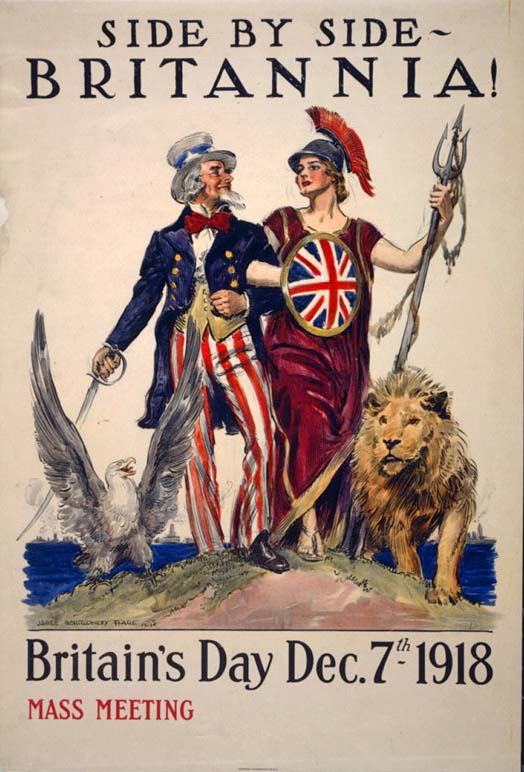
The world economy will collapse IF the United States, Canada, Britain, Scotland, and Ireland, do not become ONE UNITED NATION of English Speaking Peoples. The color of our skin is of no concern. It is how we use OUR language that UNITES US. Rena Easton has committed to memory a million poems that is the beacon of OUR UNITY.
Jon Presco
‘The Nazarite Prophet’
Copyright 2016
https://rosamondpress.com/2016/06/28/helen-of-britania/
Brexit’s Article 50: How 250 words could chart Britain’s future
The article allows a country a maximum of two years to work out the details of an exit. But many say it could take the U.K. longer. Turmoil in the leadership of the U.K.’s two largest parties threatens to leave a political vacuum that could slow a possible resolution.
Unless these questions are answered and a clear path forward emerges, expect the pound to continue to weaken, said Shaun Osborne, chief currency strategist at Scotiabank.
“We think investors should be prepared for the risk of [pound] weakness extending quite significantly in the next few months, while uncertainty surrounding how the U.K. moves forward persists,” Osborne said.
Here are Osborne’s reasons to expect pound-dollar parity in the coming
https://rosamondpress.com/2015/01/12/the-flame-of-liberty/
https://rosamondpress.com/2012/02/28/god-college-bankers-liberty-politicians-and-john-witherspoon/
https://rosamondpress.com/2015/11/18/the-shekinah-of-rose-and-cross/
https://rosamondpress.com/2015/11/15/spiritual-and-creative-work-with-an-avatar/
https://rosamondpress.com/2014/02/05/the-hart-of-the-nez-perce/
https://www.theguardian.com/world/2016/jun/28/meps-boo-nigel-farage-insults-in-european-parliament
His efforts did little to calm the atmosphere as Farage went on to tell MEPs that any attempt to impose trade barriers on the UK would backfire, pointing out German car assembly workers as being among those who would suffer. He said Britain could be “your greatest friend” provided the EU did not thwart its global ambition.
He was booed as he sat down and a number of MEPs turned their backs on him.
The first person to speak after Farage was Le Pen, the leader of France’s Front National party, who hailed Britain’s decision as the beginning of a “people’s spring”.
But a number of MEPs who followed were not so complimentary.
The former Belgian prime minister Guy Verhofstadt said: “I am shocked, Mr Farage. You are presenting yourself as the defender of the little man, while you have an offshore financial construction.”
As Farage laughed, Verhofstadt added: “OK, let’s be positive, we are getting rid of the biggest waste of EU budget: your salary.”
The UK should invoke article 50 of the Lisbon treaty soon to begin its withdrawal from the EU, Farage said. “I don’t think we should spend too long doing it.”
The former broker said people were sick of “merchant bankers, multinationals and big politics” controlling them and gleefully predicted that more EU countries would follow Britain in leaving the bloc.
The first writer to use a form of the name was the Greek explorer and geographer Pytheas in the 4th century BC. Pytheas referred to Prettanike or Brettaniai, a group of islands off the coast of North-Western Europe. In the 1st century BC, Diodorus Siculus referred to Pretannia,[1] a rendering of the indigenous name for the Pretanipeople whom the Greeks believed to inhabit the British Isles.[2][3] Following the Greek usage, the Romans referred to the Insulae Britannicae in the plural, consisting ofAlbion (Great Britain), Hibernia (Ireland), Thule (possibly Iceland or Orkney) and many smaller islands. Over time, Albion specifically came to be known as Britannia, and the name for the group was subsequently dropped.[1] That island was first invaded by Julius Caesar in 55 BC, and the Roman conquest of the island began in AD 43, leading to the establishment of the Roman province known as Britannia. The Romans never successfully conquered the whole island, building Hadrian’s Wall as a boundary with Caledonia, which covered roughly the territory of modern Scotland, although in fact the whole of the boundary marked by Hadrian’s Wall lies within modern-day Northern England. A southern part of what is now Scotland was occupied by the Romans for about 20 years in the mid-2nd century AD, keeping in place the Picts to the north of the Antonine Wall. People living in the Roman province of Britannia were called Britanni, or Britons. Ireland, inhabited by the Scoti, was never invaded and was called Hibernia. Thule, an island “six days’ sail north of Britain, and […] near the frozen sea”, possibly Iceland, was also never invaded by the Romans.

An As coin from the reign of Antoninus Pius struck in 154 AD showing Britannia on the reverse
The Emperor Claudius paid a visit while Britain was being conquered and was honoured with the agnomen Britannicus as if he were the conqueror; a frieze discovered at Aphrodisias in 1980 shows a bare breasted and helmeted female warrior labelled BRITANNIA, writhing in agony under the heel of the emperor.[4] She appeared on coins issued under Hadrian, as a more regal-looking female figure.[5] Britannia was soon personified as a goddess, looking fairly similar to the goddess Minerva. Early portraits of the goddess depict Britannia as a beautiful young woman, wearing the helmet of a centurion, and wrapped in a white garment with her right breast exposed. She is usually shown seated on a rock, holding a spear, and with a spiked shield propped beside her. Sometimes she holds a standard and leans on the shield. On another range of coinage, she is seated on a globe above waves: Britain at the edge of the (known) world. Similar coin types were also issued under Antoninus Pius.
British revival[edit]

In James Gillray‘s Britannia between Scylla and Charybdis(1793), Britannia is shown without the weapons which would invariably characterise her in the 19th century
Medieval use[edit]
After the Roman withdrawal, the term “Britannia” remained in use in Britain and abroad. Latin was ubiquitous amongst nativeBrythonic writers and the term continued in the Welsh tradition that developed from it. Writing with variations on the term Britannia (orPrydein in the native language) appeared in many Welsh works such as the Historia Britonum, Armes Prydein and the 12th-centuryHistoria Regum Britanniae, which gained unprecedented popularity throughout western Europe during the High Middle Ages.
Following the migration of Brythonic Celts, The term Britannia also came to refer to the Armorican peninsula (at least from the 6th century).[6]) The modern English, French, Breton and Gallo names for the area, all derive from a literal use of Britannia meaning “land of the Britons”. The two “Britannias” gave rise to the term Grande Bretagne (Great Britain) to distinguish the island of Britain from the continental peninsula.
Following the Anglo-Saxon settlement of Britain, the term ‘”Briton” only referred to the native British, Celtic-speaking inhabitants of the province; this remained the case until the modern era. The use of the term as an inhabitant of the island of Great Britain or the UK is relatively recent.[7]
Renaissance and British Empire[edit]
It was during the reign of Elizabeth I that “Britannia” came to be viewed as a personification of Britain. In his 1576 General and rare memorials pertayning to the Perfect Arte of Navigation, John Dee used a frontispiece figure of Britannia kneeling by the shore beseeching Elizabeth I, to protect her empire by strengthening her navy.[8]
With the death of Elizabeth in 1603 came the succession of her Scottish cousin, James VI, King of Scots, to the English throne. He became James I of England, and so brought under his personal rule the Kingdoms of England (and the dominion of Wales), Ireland and Scotland. On 20 October 1604, James VI and I proclaimed himself as “King of Great Brittaine, France and Ireland”, a title that continued to be used by many of his successors.[9] When James came to the English throne, some elaborate pageants were staged. One pageant performed on the streets of London in 1605 was described in Anthony Munday‘s Triumphs of Reunited Britannia:
On a mount triangular, as the island of Britain itself is described to be, we seat in the supreme place, under the shape of a fair and beautiful nymph, Britannia herself…
During the reign of Charles II, Britannia made her first appearance on English coins on a farthing of 1672 (see Depiction on British coinage and postage stamps below). With the constitutional unification of England with Scotland in 1707 and then with Ireland in 1800, Britannia became an increasingly important symbol and a strong rallying point among Britons.

A later Gillray cartoon, on the 1803 Peace of Amiens, features a fat and non-martial Britannia kissing “Citizen François”

Britannia Triumphant, poster celebrating the Battle of Trafalgar.
British power, which depended on a liberal political system and the supremacy of the navy, lent these attributes to the image of Britannia. By the time of Queen Victoria, Britannia had been renewed. Still depicted as a young woman with brown or golden hair, she kept her Corinthian helmet and her white robes, but now she held Poseidon‘s three-pronged trident and often sat or stood before the ocean and tall-masted ships representing British naval power. She also usually held or stood beside a Greek hoplite shield, which sported the British Union Flag: also at her feet was often the British Lion, an animal found on the arms of England, Scotland and the Prince of Wales.
Neptune is shown symbolically passing his trident to Britannia in the 1847 fresco “Neptune Resigning to Britannia the Empire of the Sea” by William Dyce, a painting Victoria commissioned for her Osborne House on the Isle of Wight.
New Zealanders adopted a similar personification of their country in Zealandia, Britannia’s daughter, who appeared on postage stamps at the turn of the 20th century[10] and still features in the New Zealand Coat of Arms.[11]

1914 Russian poster depicting the Triple Entente – Britannia (right) and Marianne(left) in the company of Mother Russia. In this depiction, Britannia’s association with the sea is provided by her holding an anchor, an attribute usually represented by Poseidon’s Trident.
Perhaps the best analogy is that Britannia is to the United Kingdom and the British Empire whatMarianne is to France or perhaps what Columbia is to the United States. Britannia became a very potent and more common figure in times of war, and represented British liberties and democracy.
Modern associations[edit]
During the 1990s the term Cool Britannia (drawn from a humorous version by the Bonzo Dog Band of the song “Rule Britannia“,[citation needed] with words by James Thomson [1700–1748], which is often used as an unofficial national anthem), was used to describe the contemporary United Kingdom. The phrase referred to the fashionable scenes of the era, with a new generation of pop groups and style magazines, successful young fashion designers, and a surge of new restaurants and hotels. Cool Britannia represented late-1990s Britain as a fashionable place to be.
In the song “Waiting for the Worms” Pink Floyd makes reference to Britannia in the lyric “Would you like to see Britannia rule again? My friend.”
Depiction on British currency and postage stamps[edit]
Coinage[edit]
.jpg)
Britannia depicted on a half penny of 1936
Although the archetypical image of Britannia seated with a shield first appeared on Roman bronze coins of the 1st century AD struck under Hadrian, Britannia’s first appearance on British coinage was on the farthing in 1672, though earlier pattern versions had appeared in 1665, followed by the halfpenny later the same year. The figure of Britannia was said bySamuel Pepys to have been modelled on Frances Teresa Stuart, the future Duchess of Richmond,[5] who was famous at the time for refusing to become the mistress of Charles II, despite the King’s strong infatuation with her. Britannia then appeared on the British halfpenny coin throughout the rest of the 17th century and thereafter until 1936. The halfpennies issued during the reign of Queen Anne have Britannia closely resembling the queen herself.[12] When theBank of England was granted a charter in 1694, the directors decided within days that the device for their official seal should represent ‘Brittannia sitting on looking on a Bank of Mony’ (sic). Britannia also appeared on the penny coin between 1797 and 1970, occasional issues such as the fourpence under William IV between 1836 and 1837, and on the 50 pence coin between 1969 and 2008.[13] See “External Links” below for examples of all these coins and others.

A stamp featuring Britannia (with Irish Free State overprint)
In the spring of 2008, the Royal Mint unveiled new coin designs “reflecting a more modern twenty-first century Britain”[14] which nowhere featured the image of Britannia. This decision courted some controversy, with tabloid press campaigns, in particular that of the Daily Mail, launched to “save Britannia”. The government has pointed out, however, that earlier-design 50p coins will remain in circulation for the foreseeable future.[15] Also Britannia still appeared on the gold and silver “Britannia” bullion coins issued annually by the Royal Mint.
Then in 2015 a new definitive £2 coin was issued, with a new image of Britannia. In late 2015, a limited edition (100000 run) £50 coin was produced, bearing the image of Britannia on one side and Queen Elizabeth II on the obverse.[16]

 Rosamond Press
Leave a reply to Royal Rosamond Press Cancel reply