
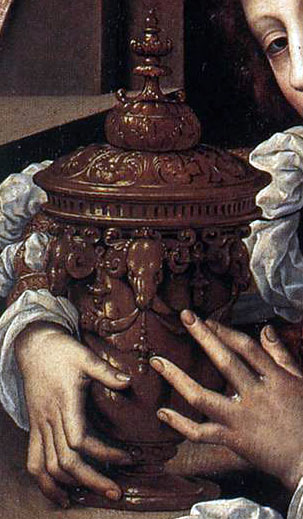
“St. Germaine releases a bevy of roses from her apron, and the Magdalene is shown holding a vase.”
Here is an old post made in my yahoogroup ‘Templar-de-Rosemont’ on April 25. 2006. Consider the apron of Saint Germaine. The true Rose Line was right under your noses. But, they could not smell the Rose of the World, lest, behold ‘The Rose of the World, because they are/were – not artists! They were not related to a famous woman artist, Christine Rosamond Presco, nor were they kin to Elizabeth Rosemond Taylor! I win! They lose! What is the title of that book in her lap?
Hit it Maestro!
When you go to The Garden’ and cut roses from the thorny bush, you come inside the house, and put the roses in a vase. You then add water!
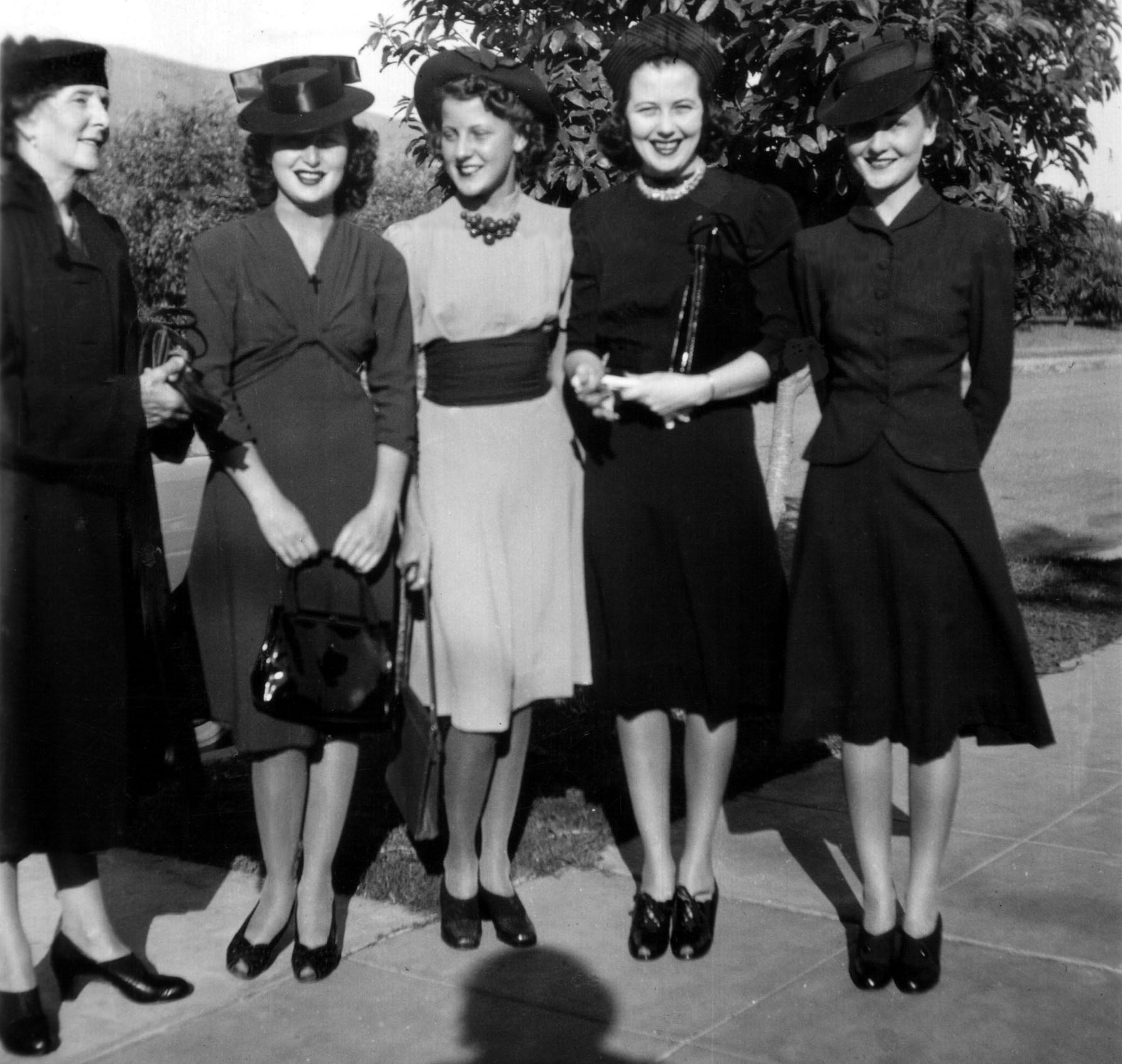
Now do you see? Now do you get it? Here is my grandmother, Mary Magdalene Rosamond, and her four beautiful daughters, sired by Royal Rosamond. This is almost the full story. The End of it will be in my book.
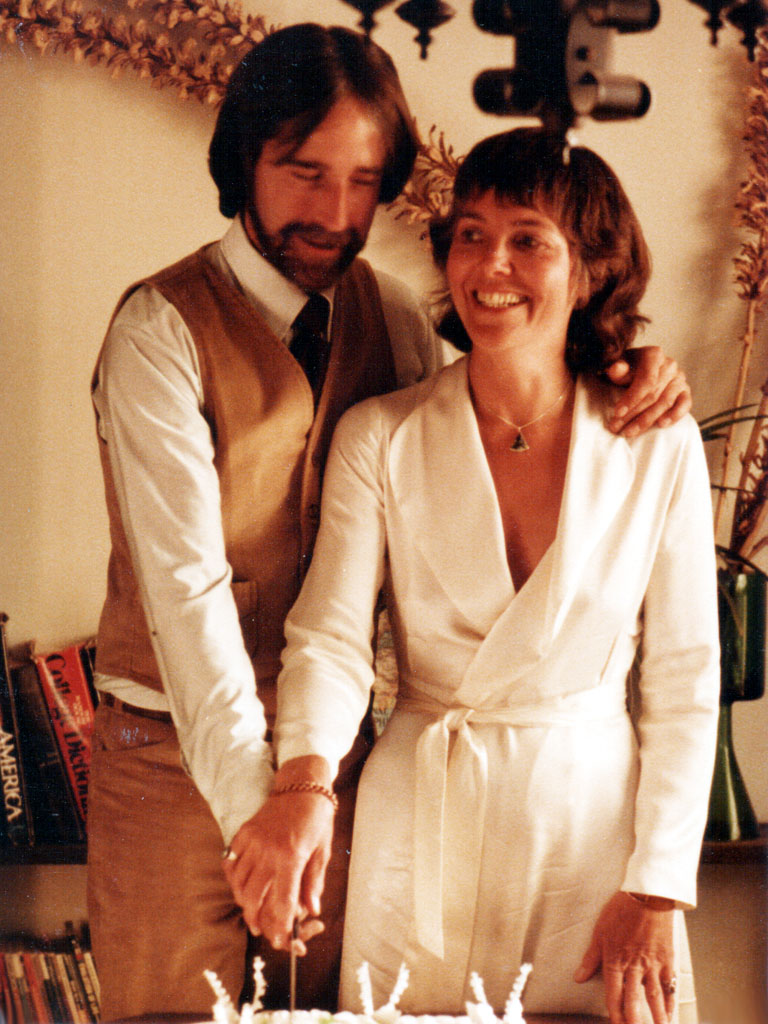
I just got off the phone with my dear friend, and fellow artist, Amy sargent, who said;
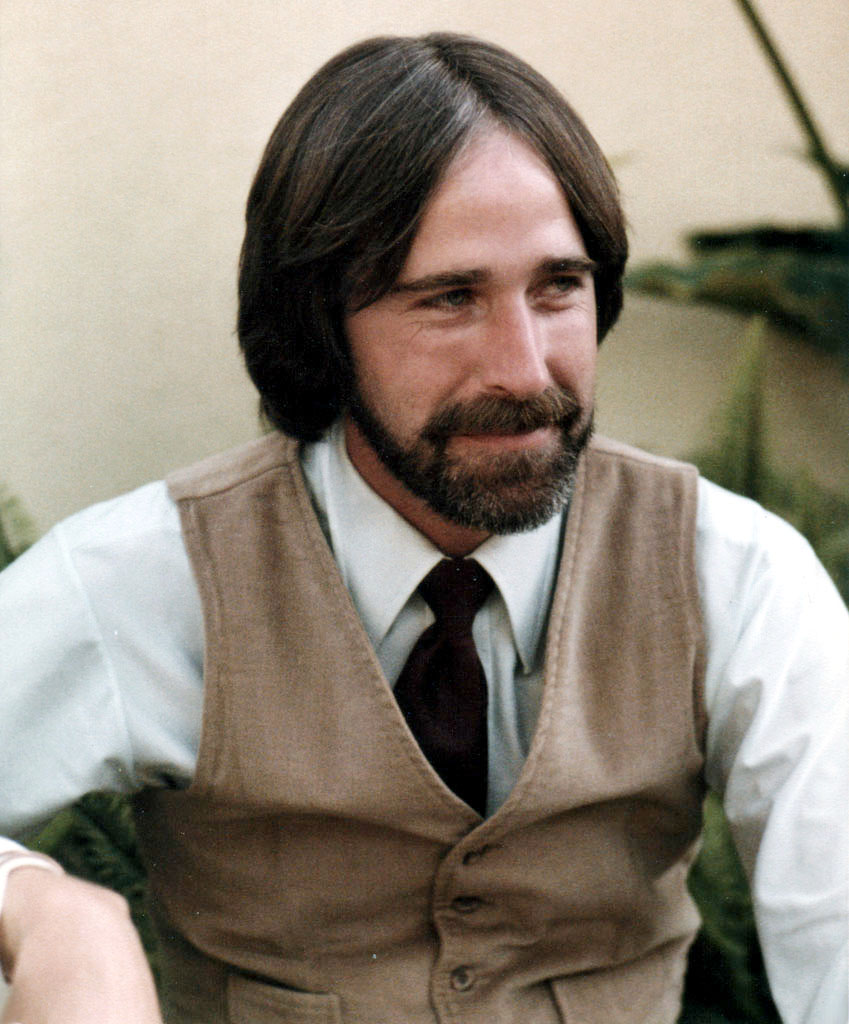
“Boy, you and Elizabeth Taylor’s brother sure look alike!”
Jon Presco
Copyright 2016


http://permalink.gmane.org/gmane.culture.templar.rosemont/1466
https://groups.yahoo.com/neo/groups/Templar-de-Rosemont/conversations/messages
http://witcombe.sbc.edu/davincicode/magdalen-jar.html
After I sent Erin Sullivan the post she wants removed, she responds to my comparison of the image my late brother-in-law rendered to ‘The Da Vinci Code’.
“Boy, could I tell you about Dan Brown . . . I am published by Penguin/Tarcher . . . I was the editor for Arkana Contemporary Astrology, Penguin UK . . . . And, he ripped off my authors and friends, Michael Baigent and Rich Leigh who are the authors of Holy Grail, etc. Rich Leigh who are the authors of Holy Grail, etc. When they lost the lawsuit, Rich died of a heart attack four months later . . . Michael has since died 4 years ago from cancer . . . , When I was forced to read DaVinci, by the tine I got to page 38, I thought it was Rich Leigh under a boring pseudonym . . . AND, it is also straight out of my book on Retrograde Planets, in the VENUS chapter!!!!””
“As for using my words, not verbatim, NO, but we can tell the story . . . BUT . . . no lawsuits. You may couch absolutes.”
https://en.wikipedia.org/wiki/Rose_Line
Clearly, to some degree, the puzzle lies in the layout of the redesign of Sauniere’s church, and his other building projects. The village parish church had been dedicated to the Magdalene in 1059; during the restoration, he found the mysterious parchment (supposedly) in a hollow Visigothic pillar underneath the altar stone. A statue of the demon Asmodeus guards near the door. The plaques depicting the Stations of the Cross contain bizarre inconsistencies. One shows a child swathed in Scottish plaid.
Another has Pontius Pilate wearing a veil. St. Joseph and Mary are each depicted holding a Christ child, as if to allude to the old legend that Christ had a twin. Other statues are of rather esoteric saints in unusual postures: St. Roch displays his wounded thigh (like the Grail King Anfortas), St. Anthony the Hermit holds a closed book, St. Germaine releases a bevy of roses from her apron, and the Magdalene is shown holding a vase. Sauniere’s library and study, the Tour Magdala, is placed precariously over a precipitous chasm at a place where one would be foolish to build such a permanent structure.
http://www.crystalinks.com/rennes.html
Knight von Rosemund of the Priory de Sion
http://www.algonet.se/~tourtel/interests/floris.html
Jeanne de Bar, an alleged Grand Master of the Priory de Sion,
descends from Jeanne de Rougemont, de Bar, Pfirt/Ferrette, and
Florimont.
Henry de Bar married Princess Elanore, the daughter of
Edward "Longshanks" King of England, a PLANTAGENET, and a descendant
of King Henry who some claim married Fair Rosamond. This makes the
PLANTAGENETS kin to the Habsburgs.
Jon Presco
Jeanne de Bar
Wikipedia
Jeanne de Bar
Jeanne de Bar is the grand daughter of Edward I "Longshanks" King of
England and sister of Edouard de Bar. She was the 15th grand master
of the Priory of Sion.
Henri III, comte de Bar
b. circa 1270?, d. circa 1302, #12665
Pedigree
Arms
Henri III, comte de Bar was born circa 1270?. He was the son of
Thibaud II, comte de Bar and Jeanne de Toucy.1 He married Princess
Eleanor, daughter of Edward I "Longshanks", King of England and
Eleanor, infante de Castille, circa 1290. He died circa 1302.
Children of Henri III, comte de Bar and Princess Eleanor:
Jeanne de Bar b. c 1294, d. 1361
Edouard I, comte de Bar+ b. 1296, d. 1336
1. [S467] Généalogie des rois de France, online
http://jeanjacques.villemag.free.fr/, La Noblesse - comte de Bar.
Hereinafter cited as GdRdF.
PLANTAGENET
http://www.answers.com/topic/jeanne-de-bar
Henry III de Bar, Comte de Bar1 (M)
b. before 1278, d. 1302, #104561
Last Edited=23 May 2003
Henry III de Bar, Comte de Bar was born before 1278. He married
Eleanor of England, daughter of Edward I 'Longshanks', King of
England and Eleanor de Castilla, Comtesse de Ponthieu, on 20
September 1293.2 He died in 1302.3
He gained the title of Comte de Bar.1
Children of Henry III de Bar, Comte de Bar and Eleanor of
England:
Lady Eleanor de Bar
Edouard I de Bar, Comte de Bar b. 1294, d. 1337
Joan de Bar b. 1295, d. 1361
Citations
Ct Ulrich II von Pfirt, +1275; m.Agnes de Vergy
F1. Heinrich, +before 1256
F2. Friedrich, Prior at Altkirch (1256-69)
F3. Ludwig von Pfirt, Herr von Florimont, +before
1281; m.N
von Rappoltstein
G1. Ulrich, Herr von Florimont, fl 1281
F4. Ct Thiebald von Pfirt, fl 1309
ROSA MUNDI, REX MUNDI, AND SOPHIA MUNDI
by Jon Presco
Copyright 2003
Rougemont, the ancestral home of the Rosamond family, is located
twenty miles from Montbeliard, and appears to be its closest
neighbor. I have yet to find any trace of a town called, Boron.
Supposedly the Grail author, Robert de Boron hails from there, he
commissioned by Gauthier de Montbeliard to write his Grail Legends
that introduce for the first time a Holy Bloodline, a lineage that
descends from King David, Joseph of Arimathea, and perhaps, Jesus.
This idea has recently been promoted by the authors of 'Holy Blood,
Holy Grail' who begin their quest with a missing treasure, perhaps
the artifacts that were found inside the temple in Jerusalem that
was
destroyed by the forces of emperor Vespian in 70 A.D. Robert de
Boron
in his Prose Percival says Vespian released Joseph of Arimathea who
finds his way to France, and anoints in a manner Parceval's family
in
which in their presence the Holy Grail appears. There is the voice
of
the Holy Ghost that has been titled 'The Rose of the World' by other
authors, and a ascendancy into heaven upon a cross with King David
and a host of Angels standing by.
I suspect Robert was from Hebron, thus his true name was Robert de
Hebron.
From this one book grew a cottage industry that launched a thousand
websites, and at least twenty books that have as its core theme the
Sangraal, a bloodline of Jesus that has been guarded for centuries
by
the Prieure de Sion (Zion) and the Knight Templars. Amongst
Evangelicals there is a prophecy that requires a new temple to be
built in Jerusalem, and suggestions the President of the United
States is catering to this idea in his incursion into the Mideast
with what many have titled a 'Crusader Army'. Only the descendent's
of the Cohen priesthood may build this temple according to the
Jewish
Zionists who have formed an alliance with the Christian Zionists to
fulfill the prophecy in Revelations.
The Prieure de Sion is said to have tried to make the Habsburgs
rulers of Europe during the Fronde. Many authors have suggested they
are related to Jesus, King Arthur and the Grail, but have failed to
show how.No Arthurian scholar has pointed out the fact that the
Ferretti/Ferri family who were the Lords of Montbeliard and
Rougemont
married into
the Habsburg family, and indeed, my be the progenitors of this
famous
family as who this family is has been a mystery.
In 1970 after becoming disillusioned with modern art, and after
discovering the Pre-Raphalite artists, I let my hair grow long and
begin to render works of art after these English artists that were
inspired by the Nazarite artists of Germany who were obsessed with
Arthurian subject matter, as were the Pre-Raphaelites. I began to
paint women from live models. I shared my ideas and images with my
sister, Christine, who would two years later begin to paint in
earnest, she crediting me with being her teacher who let her watch
over my shoulder when I painted, and pointed out in art books what I
thought constituted good and bad art.
Little did we know that her middle name was a major theme of several
Pre-Raphalites in regards to Fair Rosamond, for we did not come upon
her beautiful image, or read Swinburne's poem. This would happen
when
I began to research our family tree after my famous sister (who used
her middle name, Rosamond) drowned on the Carmel Coast.
Dante Gabriel Rossetti, Edward Burne-Jones, and Lilian Gloag would
render images of Rosamond Clifford who may have met King Henry
Plantagenet in France, at Rougemont castle, for I believe Robert de
Boron makes a connection between Percival's father, Alan de Gros who
took twelve knights to England, and William de Gros of Albermarle
where Skipton castle is located that is the ancestral home of
Clifford family. Henry does not reat Rosamond as an English woman,
but constructs the trappings of a unidentified cosmology around her
in the form of a bower in a labyrinth and a watery grotto. I suspect
this has much to do with Sophia Mundi, the lady of light that is
depicted wearing white. The Cathars worshiped her, and the Knight
Templars venerated her as Saint Catherine, she their Patron Saint
who
is beheaded. Is it her head that was worshiped by the Templars and
thus the reason they were persecuted by the Pope, for Catherine may
have been at the core of the Cathar worship.
The Greeks called Cahterine Aekatharina "the pure one" which is the
very meaning of Cathar, also Katheros. The Cathars were linen
weavers, as were the Rougemonts who as Huguenots fled to England
after the repeal of the Edict of Nantes. In Britain they became silk
weavers. Robert Rosemond tells us the Rougemonts went on Crusade
wearing a weavers needle on their tunic, that I suspect was made of
pure white linen. The Knight Templars also linen tunics that paid
homage to Saint Catharine. The Rosamond Cote of Arms depicts a black
cross made from a upright weaver's needle with a bar across. This
cross is surrounded by roses, and may be the source of the legend of
a Rose Cross that may point to a core group of people who rose from
the grave after death, or, continued to live after having their
heads
severed. I suspect this worship is connected to to the cave of Mach-
Pelah found in Hebron where was kept the severed heads of the Jewish
Patriarchs, and where the head of John the Baptist was destined to
come to rest, as I suspect the Nazarites worshiped Sophia Mundi as
the Shekinah "the light of God" also known as the 'Holy Ghost'
and 'Holy Spirit' who is found at the core of the worship of the
original Christian church that we find in acts, she filling those
present at the first Pentecost with divine revelations, they
speaking
in tongues.
What became of the Shekinah after the fall of the temple is not
known. Joseph Flavius says she came to Rome with Titus and his
father, Vespasian. Did he later release the Shekinah that was in the
guardianship of Joseph of Arimathea, and he took her to the area of
Rougemont and Montbeliard where stood several Roman temples? Was she
installed in one of them, such as the temple of Jove, the god of
Augury who is represented by the eagle?
It has been suggested that the Ori Flame is the banner that emperor
Constantine used to defeat his enemies, its appearance bringing him
to convert to Christianity. I have come to doubt this, and suggest
he
was born a member of the original Nazarite church and worshiped the
Nazarite Shekinah. When France is in peril, the Ori Flame is brought
out of the Monastery of Saint Denis - who also lived after his head
was severed. When the French troupes beheld this flag they
shouted "Montjoy" which comes from the Mount of Jove. Pontius Pilate
puts Jesus to an augurs test atop the temple as he was a renowned
Augur, and thus I suspect he was the embodiment of Hermes-Thoth, the
father of augury and Hermetic thought which worshiped Sophia as
the "knowledge of the world".
The Ori Flame was also seen by Percival when he entered the castle
of
his kin, he not knowing at the time they were his relatives. The
Castle of Or (gold)was one of the three castles that along with
Rougemont and Montbeliard formed an alliance and went on Crusade.
This may be the Hieron du Val d'Or who are suspected of being behind
the formation of the Prieure de Sion that was located in Vaudemonte.
Pierre Plantard's wife wrote a book titled 'Le Tresor du Triangle
D'Or. In the Rosamond genealogy Hans Rosamond/Rougemont married Anne
d'Orr. In the story of 'The White Lady of Rosemont' were find all
the
elements of the Prieure de Sion mysteries, including a treasure
guarded by a daemon, who may be Rex Mundi, who appears to be
Asmodius
who is associate with Hiram the architect of the temple of Solomon
that was built to house the Arc of the Covenant that some suspect
held the Shekinah.
For this reason I now suspect Vespasian came to capture the Arc and
the indwelling Holy Ghost, for she had raised quite a stir
throughout
the Roman empire, for she had come to infiltrate and dwell in many
of
the temples built to house the Goddesses of the Greeks and Romans.
This all began when the Philistine's captured the Arc and the cave
at
Mach-Pella, and when the Jews retrieved it, they adobted the core of
the Philistine religion that was born on Crete in the Dactyle cave,
as they hailed from there, the Land of the Labyrinth.
Thibaut, the Count of Champagne, is said to have brought the
Apothecary Rose back with him from the Holy Land, it not quite clear
if this healing rose was the very personage of Fair Rosamond. Joan
of
Arc said that she recieved instruction from Saint Catherine who
spoke
to her directly. I identify our Lady Liberty who guards New York
harbor as Rosa Mundi and Sophia Mundi who holds high the Light of
God, and is our Guardian Angel.
Here is the White Lady of Rosemont.
"The white lady of Rosemont
A young man, while singing, went up the valley of Rosemontoise. He
passed to the foot ruins of Rosemont when it was accosted by a lady,
of white vêtue, and sufficiently tempting to involve without too
much
sorrow the boy in the drill, until proximity of the old castle.
They stopped in front of a small iron grid, posed with the foot of a
rock. The lady touched it: it turned, while squeaking, on its rusted
hinges. The young man realized that they were at the entry of an
underground.
They engaged there, guided by the gleams which shone at the bottom.
They arrived soon to an arched room, slightly lit, in which many
trunks were piled up. The lady raised one of the lids: the trunk was
full with gold coins which shone gently.
In a corner of the room, it lives suddenly, hidden by the shade, a
horrible monster, sitting on its behind and which, the opened mouth,
seemed to keep these immense richnesses.
The boy was not bold and held with the life: he packed up without
awaiting the least explanation. the lady called it, begged it,
shouted to him in vain of the reassuring promises, it did not stop
in
its race until it had found the way of the valley.
It told its adventure. It was taught him that it had met the Lady of
Rosemont. This woman lived a long ago: beautiful and tempting, it
made great difficulty around it. With force to steal people, it had
become rich. It is for that that to its death, it was condemned to
remain with the dreadful demon of the cave to the treasures.
But it preserves a chance all the same: every hundred years, it has
the possibility of regaining its human shape and of returning on
ground; if somebody follows it and accepts his treasures, it will be
delivered for always.
The End
Here are some links to the Prieure de Sion. The House of Bar became
the core of the Habsburg Dynasty.
http://www.mystae.com/restricted/streams/scripts/sion.html
http://users.erols.com/saintpat/ss/1125.htm
The House of Bar began with Count Ludwig im Altkirch that perhaps is
the source of the name Ulrich? This is the Ferry-Ferri-Ferrette-
Pfirt
family. Ludwig married Sophie daughter of Duke Frederick of Upper
Lorraine. The de Bars produced three Grand Masters of the Prieure de
Sion; Jeanne de Bar, a woman, Rene d'Anjou, and his daughter,
Iolande
de Bar who was married to Ferri, Lord of Sion-Vaudemont, where was
found the pagan goddess, Rosmerthe. It says this on page 422 of HBHG;
"During the Merovingian epoch a statue of the Virgin had been
erected
there; and in 1070 the ruling comte de Vaudemont had publicly
proclaimed himself "vassal of the Queen of Heaven". The Virgin of
Sion was officially declared "Sovereign of the Comte of Vaudemont"
Festivals were held in her honor every May, and she was acknowleged
the protectress of all of Lorraine. Our reesearches yielded a
charter, dated from 1396, that pertains to a special chivalric
fraternity based on the mountain, the Confraternity of the Comte of
Vaudemont."
The Comtes of Vaudmont are related to the Ferrette-Rougemont family
and thus is the reason I have been looking at the connection of
these
names, and this chivalric order, as there are accounts of joisting
tournament held at Rougemont Castle.
de FERRETTE, "Ulrich" III
× 1303 de MONTBÉLIARD ; de BOURGOGNE, "Jeanne" - †1324
de FERRETTE, "Thibaut"
× de BLAMONT, "Jeanne" - †avant 1312
de FERRETTE, "Jean" Décès: après 1309
Seigneur de Rougemont.
http://worldroots.clicktron.com/brigitte/theroff/bar.txt
http://ca.geocities.com/christ_is_lord2002/sangraal.html
http://www.tour-magdala.com/Pages/Rennes-le-Chateau_links.html
http://www.xs4all.nl/~kite/Excalibur/prer.html
http://www.abcgallery.com/B/burne-jones/burnejonesbio.html
http://www.artmagick.com/Artists/gloag.aspx
http://65.107.211.206/authors/swinburne/harrison/notes/1n2.html
http://www.css.edu/USERS/phagen/hon4777/4777arthur3.htm
http://www.geocities.com/rokkrx/preraphaelite.html
http://www.hermetic.com/sabazius/swinburne.htm
1307 - 1600: The Reign of the White Queen
Itís not clear what exactly the OdS was up to in the 14th- 17th
centuries, although the "prieure" documents suggest that during this
time it had some fairly august leadership: Leonardo da Vinci,
Nicholas Flamel, Rene D' Anjou, and Sandro Filipepi (better known as
Botticelli). The alchemist Flamel translated the mysterious text of
the Sacred Magic of Abra-Melin, whose original author was
one "Abraham the Jew," through the assistance of some Spanish
Rabbis. Upon his return from Spain, he is said to have achieved
the "Great Work" of alchemy on the "PoS date" of January 17th. As
for "Good King Rene," he seems to have been one of the figures
promoting the mythic theme of Arcadia in Europe, a theme that seems
an idee fixe for the "PoS". It is the appearance of daVinci on this
roster - daVinci, the visionary, the artist, the man who wrote in
backwards mirror writing, the inventor, the man who some say put his
own face on the Shroud (although others claim it is de Molay's) -
that has people most fascinated.
DaVinci seems to have had a "thing" for John the Baptist, which
seems quite consonant with the apparent "PoS" interest in Johannism
(the idea that John was the true Messiah and Jesus a false one, or,
alternatively, that they were equal co-Messiahs). Johannites believe
that there was a secret teaching passed from John the Baptist to
John the Beloved Disciple (whose given name was Lazarus, but he took
the "alias" of John to honor the Baptist), and to a "John" ever
since. (Supposedly, every PoS GrandMaster takes the name "Jean" as
an honorary title, in addition to being known as "Nautonnier" or
Navigator.) Pincknett and Prince believe Da Vinci put his own face
on the Shroud of Turin (despite accounts which suggest it was first
shown at Lirey 200 years earlier), which was confirmed to them by
someone they believed to be a member of the PoS, "Giovanni".
During this time period, the Duke Jean de Berry, who lived in
Bourges, commissioned a picture-book known as Les Tres Riches
Heures. A horological manuscript, illustrating the seasons of the
calendar as well as miscellaneous episodes, the Heures has
fascinated people with some of its strange symbolism. For example,
it shows the Duke de Berry holding a caduceus or serpent-staff. The
picture of the Resurrection also seems somewhat oddly dissonant with
New Testament accounts, also. Certain scenes in the Heures also
appear to be alluded to by the Rennes-les-Bains cleric Henri Boudet.
The 20th century alchemist "Fulcanelli" had a lot to say about
hidden symbolism in the Heures, and he in particular pointed to the
role of Jacques Coeur of Bourges in its creation. Bourges is
considered the esoteric "Coeur" of France.
Queen Blanche d'Evereaux, "The White Queen" of many prieure
documents and listed as a PoS GM in those documents, had a chateau
near Gisors at Neaufles. There was supposed to be a secret tunnel
linking Gisors with her chateau. In the Prisoner's Tower at Gisors
was imprisoned one Nicholas Poulain, an ambassador of the Douglasses
of Scotland, allegedly for being Blanche's secret lover. Poulain
supposedly scrawled a number of alchemical and hermetic diagrams on
the walls of his jail. Poulain may have been connected to
the "Freres-Aines de la Rose-Croix," a group of "survivor" Templar
alchemists in Scotland. Blanche may have given some of his secrets
to her "PoS successor," Nicholas Flamel, whose sigils and diagrams
in his published works resemble Poulain's. Flamel's brother worked
for Jean de Berry. As you can see, all these people curiously
interconnect.
(A group called the Freres-Aines was "re-established" in the 20th
century by Daniel Caro, who called himself "Gaston Phoebus" after
the original man who attempted to bring the Freres-Aines from
Scotland to France at the behest of Cardinal Jean-Jacques D'Ossa,
the future Pope John XXII, who was present at the Council of Vienne.
One of the few places the story of the original Freres-Aines can be
found is in Gaetan Delaforge's book on the Templar
tradition; "Delaforge" (a pseudonym) was a member of the Solar
Temple.)
In 1446, the cornerstone for Rosslyn Chapel was laid. The history of
Rosslyn and the Sinclairs who were its lords since the 1280s - they
appear to have inherited it from the French de Roscelin family - is
like many other things, highly disputed. The Sinclairs claim to be
descended from the Norman Santo-Claros ("Clear Light") of St.-Clair-
sur-Epte. The "prieure documents" also claim that Hugh de Payns
married one Catherine St. Clair, thus establishing a Sinclair
presence in the Templars from early on. Finally, they also claim the
Sinclairs to have been the hereditary "patrons" of Scottish
Freemasonry for several centuries. The implications are obvious;
the "priory docs" present the Sinclairs as the "interface" between
Templarism and Masonry.
The Rose: Rosicrucianism, the Rosy Cross, and rose-line symbolism is
all over the place in this mystery. In Sauniere's church, St.
Germaine de Pribrac releases a bevy of roses from her apron.
The "Fleury Mural" seems to show a rose-filled flowery landscape,
associated with the Fleury family. Go to Rodez, and you will find a
rose-colored cathedral with rose windows emblazoned with the Star of
David. In the Middle Ages, the rose was a symbol of esotericism -
sub rosa means to do something in secret. The Templars' cross pattee
was a red or rose cross.
How interesting, then, to discover, as I have recently, that the
name of several places in France - Rhedae/Rennes, Rouen/Rhodom,
Rodez/Rhodes, are derived from the Greek Island of Rhodes, whose
name itself comes from the rose-goddess Rhoda. Contemporary texts
say that the red-haired Celtic "Redones" or "rose people"
(Rutheni/Rhodanim) setlled both Rennes in the Midi and Rennes in
Brittany - the name derives from the ethnic group. It is said that
the resident goddess of Mount Sion-Vaudemont, the "other Sion" of
the "priory of Sion" in Switzerland, is Rosemertha - the Rose
mother. Interestingly, one interpretation of the King Arthur legends
is that "Arthur" or "Ursus" was really Riothamus, a Dark Age Celt
ruler of a "thalassocracy" that spanned Brittany in France and
Cornwall in England. Many of the places near Breton Rennes are
associated with Arthur and the Grail legends, and many of the Breton
kings had Judaic names. And some derive Riothamus' name from...
Joseph of Arimathea, the supposed bearer of the Grail to
Glastonbury.
http://www.fiu.edu/~mizrachs/poseur3.html
flowery tomb"
The title of the Lord of Rennes and Blanchefort passed upon the
death of Francois d'Hautpoul (the husband of Marie de Negre Dables)
to the couple's youngest daughter Gabrielle. This was because the
Blanchefort lands formed part of her dowry and the title, under
French law, went with the land. She was married to Paul Francois
Vincent de Fleury who became Lord of Rennes. Their son Paul Urbain
de Fleury died in 1836 and was buried in the cemetery at Rennes-les-
Bains. Le Tresor Maudit by Gerard de Sede states that there were at
one time two tombstones for Paul Urbain de Fleury. This has not been
proven.
The "Fauteuil du Diable" (Devil's Armchair) was carved into the
shape of a seat for the Comte de Fleury in the eighteenth century.
"Germaine of Pibrac, shepherdess, Born at Pibrac, c.1579; died
there, 1601."
"But people began to take a different view of her when ir was
reported that one winter's day her stepmother accused her of taking
a loaf of bread to give to a beggar; Germaine opened her apron and
it was full of spring flowers. Not long after, she was found dead,
under the stairs. From 1644 miracles of healing were said to take
place at her grave, which has been a place of pilgimage from that
day to this."
http://www.connectotel.com/rennes/serpnote/serpnote.htm
http://tinyurl.com/3vlfx
My Line to John King of Jerusalem
Jon Presco
http://www.fact-index.com/j/jo/john_of_brienne.html
Guy I de Brienne, comte de Bar-sur-Seine1
b. circa 1129?, d. after 1159, #26661
Pedigree
Also called comte Guy de Bar-sur-Seine.2 Guy I de Brienne,
comte de Bar-sur-Seine was born circa 1129?. He was the son of Milon
de Brienne I, comte de Bar-sur-Seine and Maud de Noyers.3 He died in
1145.4 He married Pétronille de Chacenay, daughter of Anseri de
Chacenay.3 He died after 1159.3
Children of Guy I de Brienne, comte de Bar-sur-Seine and
Pétronille de Chacenay:
Milon II de Brienne, comte de Bar-sur-Seine d. Oct 1151
Isabeau de Bar-sur-Seine+ b. 1159, d. 1211
John of Brienne
John of Brienne (c. 1148-1237), king of Jerusalem and Latin emperor
of Constantinople, was a man of sixty years of age before he began
to play any considerable part in history.
He was the second son of Erard II, count of Brienne, in Champagne.
Destined originally for the Church, he had preferred to become a
knight, and in forty years of tournaments and fights he had won
himself a considerable reputation, when in 1208 envoys came from the
Holy Land to ask Philip Augustus, king of France, to select one of
his barons as husband to the heiress and ruler of the Kingdom of
Jerusalem. Philip selected John of Brienne, and promised to support
him in his new dignity. In 1210 John married the heiress Maria
(daughter of Isabella and Conrad of Montferrat), assuming the title
of king in right of his wife. In 1211, after some desultory
operations, he concluded a six years' truce with Malik-el-Adil; in
1212 he lost his wife, who left him a daughter, Yolande (also known
as Isabella); soon afterwards he married the Armenian princess
Stephanie.
In the Fifth Crusade (1218-1221) he was a prominent figure. The
legate Pelagius of Albano, however, claimed the command; and
insisting on the advance from Damietta, in spite of John's warnings,
he refused to accept the favourable terms of the sultan, as the king
advised, until it was too late. After the failure of the crusade,
King John came to the West to obtain help for his kingdom. In 1223
he met Pope Honorius III and the emperor Frederick II at Ferentino,
where, in order that he might be connected more closely with the
Holy Land, Frederick was betrothed to John's daughter Isabella, now
heiress of the kingdom. After the meeting at Ferentino, John went to
France and England, finding little consolation; and thence he
travelled to Santiago de Compostela, where he married a new wife,
Berengaria of Castile. After a visit to Germany he returned to Rome
(1225). Here he received a demand from Frederick II (who had now
married Isabella) that he should abandon his title and dignity of
king, which, so Frederick claimed, had passed to himself along with
the heiress of the kingdom. John was now a septuagenarian "king in
exile," but he was still vigorous enough to revenge himself on
Frederick, by commanding the papal troops which attacked southern
Italy during the emperor's absence on the Sixth Crusade (1228-1229).
In 1229 John, now eighty years of age, was invited by the barons of
the Latin Empire of Constantinople to become emperor, on condition
that Baldwin of Courtenay should marry his second daughter and
succeed him. For nine years he ruled in Constantinople, and in 1235,
with a few troops, he repelled a great siege of the city by John III
Ducas Vatatzes, emperor of Nicaea, and Ivan Asen II of Bulgaria.
After this last feat of arms, which has perhaps been exaggerated by
the Latin chroniclers, who compare him to Hector and the Maccabees,
John died in the habit of a Franciscan friar. An aged paladin,
somewhat uxorious and always penniless, he was a typical knight
errant, whose wanderings led him all over Europe, and planted him
successively on the thrones of Jerusalem and Constantinople.
John of Brienne married three times. By his first wife, Marie of
Montferrat, he had one child, Yolande, later Queen of Jeruselem. He
had no children by his second wife, Stephanie of Armenia. By his
third wife, Berengaria of Castile, he had 4 children:
• Alfonso (d. 1270), who married Marie d'Issoudon, countess of
Eu, and became count of Eu in right of his wife, and was also Great
Chamberlain of France.
• John (d. 1273), who in 1258 became Grand Butler of France.
• Louis of Acre (d. 1263), who married Agnes of Beaumont and
became Viscount of Beaumont in her right.
• Marie (d. 1275), who married Emperor Baldwin II of
Constantinople.
http://www.fact-index.com/j/jo/john_of_brienne.html
http://genealogy.euweb.cz/bar/bar1.html
Thibaud of Bar, fl 1006; m.Sconehilde N; they had a son:
Ct Ludwig I of Mousson, fl 1022; m.N of Lutzelburg; They had a son:
Richwin of Scarpone, fl 1028; m.Hildegarde of Egisheim; They had a
son:
Ct Ludwig II von Mousson, Gf von Mömpelgard, im Altkirch und Pfirt,
*ca 1019, +1073/76; m.4.5.1037 Sophie of Mousson (*1018 +21.6.1093)
• A1. Dietrich II, Ct in Altkirch und Pfirt, Ct in Bar-le-Duc,
*ca 1045, +2.1.1105; m.ca 1065 Ermentrude de Bourgogne, heiress of
Mömpelgard (*ca 1055, +after 8.3.1105)
o B1. Ct Friedrich I von Mömpelgard, Amance und Pfirt, +1160;
1m: before 1111 Petrissa von Zähringen (+ca 1115); 2m: Stephanie de
Vaudemont
C1. [2m.] Ct Ludwig von Pfirt, fl 1144, +1190;
m.Richenza
von Habsburg (+1180)
D1. Ludwig, +before 1188
D2. Ct Ulrich von Pfirt, +murdered 1197
D3. Ct Friedrich II von Pfirt, +murdered 1234;
m.Heilwig von
Urach (fl 1215/62)
E1. Ct Ulrich II von Pfirt, +1275; m.Agnes de Vergy
F1. Heinrich, +before 1256
F2. Friedrich, Prior at Altkirch (1256-69)
F3. Ludwig von Pfirt, Herr von Florimont, +before
1281; m.N
von Rappoltstein
G1. Ulrich, Herr von Florimont, fl 1281
F4. Ct Thiebald von Pfirt, fl 1309; m.Katharina von
Klingen
G1. Ct Ulrich III von Pfirt, +1324; m.1303 Jeanne de
Bourgogne (+1347/49)
H1. Johanna, heiress of Pfirt, *Basel 1300, +Vienna
15.11.1351; m.V.1324 Duke Albrecht II of Austria (*1298 +1358)
http://worldroots.com/brigitte/theroff/bar.txt
von BREITENLANDENBERG, Herman Ier Source
www21.brinkster.com/bfrordorf/. août 2002.
Famille von BREITENLANDENBERG - von BLUMENBERG ; de FLORIMONT
|-----von BLUMENBERG ; de FLORIMONT, "Jean"
| (Sosa 83462176)
|-----von BLUMENBERG ; de FLORIMONT, "Albert"
| (Sosa 41731088)
von BLUMENBERG ; de FLORIMONT, Adélaïde (41731088-2)
Vit à Turbenthal, Wetzikon, canton de Zurich (source
www21.brinkster.com/bfrordorf/. août 2002)
Retour à la page principale
|-----von BLUMENBERG ; de FLORIMONT, "Jean"
| (Sosa 83462176)
von BLUMENBERG ; de FLORIMONT, "Albert" (Sosa 41731088)
Chevalier. Cité en 1272 et 1314.
Famille von BLUMENBERG ; de FLORIMONT - X
Les 2 enfants du couple von BLUMENBERG ; de FLORIMONT - X
von BLUMENBERG ; de FLORIMONT, "Jean" (Sosa 20865544)
× von GOESKON ; von GOESGEN, "Elisabeth" (Sosa 20865545)
von BLUMENBERG ; de FLORIMONT, Adélaïde (41731088-2)
× von BREITENLANDENBERG, Herman Ier
Retour à la page principale
|-----von BLUMENBERG ; de FLORIMONT, "Albert"
| (Sosa 41731088)
|-----von BLUMENBERG ; de FLORIMONT, "Jean"
| (Sosa 20865544)
von BLUMENBERG ; de FLORIMONT, "Gérard" (Sosa 10432772)
|-----von GOESKON, "Gérard" le Jeune (Sosa 41731090)
|-----von GOESKON ; von GOESGEN, "Elisabeth"
| (Sosa 20865545)
|-----von HINWYL, "Amélie" (Sosa 41731091)
Décès: entre 1363 et 1369
Chevalier. Cité en 1343 et 1363.
Famille von BLUMENBERG ; de FLORIMONT - X
L'enfant du couple von BLUMENBERG ; de FLORIMONT - X
von BLUMENBERG ; de FLORIMONT, "Gérard" (Sosa 5216386)
- entre 1411 et 1417
Retour à la page principale
|-----von BLUMENBERG ; de FLORIMONT, "Jean"
| (Sosa 20865544)
|-----von BLUMENBERG ; de FLORIMONT, "Gérard"
| (Sosa 10432772)
|-----von GOESKON ; von GOESGEN, "Elisabeth"
| (Sosa 20865545)
von BLUMENBERG ; de FLORIMONT, "Gérard" (Sosa 5216386)
Décès: entre 1411 et 1417
Profession: Mercier
Fils naturel. Bourgeois de Bâle en 1373.
Famille von BLUMENBERG ; de FLORIMONT - X
L'enfant du couple von BLUMENBERG ; de FLORIMONT - X
von BLUMENBERG ; de FLORIMONT, Elsi ou Elisabeth (Sosa 2608193)
× BRAND, "Henmann" (Sosa 2608192)
- vers 1398
Retour à la page principale
von BLUMENBERG ; de FLORIMONT, Hermann II Source "Jeanne de
Ferrette" par Gabrielle Claerr-Stamm, Sté d'Histoire du Sundgau-
1996 ; Grand Larousse encyclopédique.
Famille von BLUMENBERG ; de FLORIMONT - von HABSBURG ; de HABSBOURG
|-----von HABSBURG ; de HABSBOURG, Albert
| (Sosa 165996112)
|-----von HABSBURG ; de HABSBOURG, Rodolphe
| (Sosa 82998056)
|-----von PFULLENDORF, "Ita" (Sosa 165996113)
von HABSBURG ; de HABSBOURG, "Helwige" (82998056-4)
|-----von STAUFFEN, "Godefroi" (Sosa 165996114)
|-----von STAUFFEN, "Agnès" (Sosa 82998057)
Naissance: 1223
Décès: 1263
Source "Jeanne de Ferrette" par Gabrielle Claerr-Stamm, Sté
d'Histoire du Sundgau-1996 ; Grand Larousse encyclopédique.
Retour à la page principale
von BLUMENBERG ; de FLORIMONT, "Jean" (Sosa 83462176)
Chevalier. Cité en 1260 et 1281.
Famille von BLUMENBERG ; de FLORIMONT - X
L'enfant du couple von BLUMENBERG ; de FLORIMONT - X
von BLUMENBERG ; de FLORIMONT, "Albert" (Sosa 41731088)
Retour à la page principale
|-----von BLUMENBERG ; de FLORIMONT, "Jean"
| (Sosa 83462176)
|-----von BLUMENBERG ; de FLORIMONT, "Albert"
| (Sosa 41731088)
von BLUMENBERG ; de FLORIMONT, "Jean" (Sosa 20865544)
Chevalier. Cité en 1343.
Famille von BLUMENBERG ; de FLORIMONT - von GOESKON ; von GOESGEN
|-----von GOESKON, "Gérard" le Vieux (Sosa 83462180)
|-----von GOESKON, "Gérard" le Jeune (Sosa 41731090)
|-----von ROETTELN, "Luitgarde" (Sosa 83462181)
von GOESKON ; von GOESGEN, "Elisabeth" (Sosa 20865545)
|-----von HINWYL, "Amélie" (Sosa 41731091)
Naissance: avant 1315
Baronne (Freiin). Vivait au château de Niedergoesgen (source
www21.brinkster.com/bfrordorf/).
L'enfant du couple von BLUMENBERG ; de FLORIMONT - von GOESKON ; von
GOESGEN
von BLUMENBERG ; de FLORIMONT, "Gérard" (Sosa 10432772)
- entre 1363 et 1369
Retour à la page principale
von BLUMENBERG ; de FLORIMONT, "Louis" Source "Jeanne de Ferrette"
par Gabrielle Claerr-Stamm, Sté d'Histoire du Sundgau-1996 ; Grand
Larousse encyclopédique.
Famille von BLUMENBERG ; de FLORIMONT - von HABSBURG ; de HABSBOURG
|-----von HABSBURG ; de HABSBOURG, Albert
| (Sosa 165996112)
|-----von HABSBURG ; de HABSBOURG, Rodolphe
| (Sosa 82998056)
|-----von PFULLENDORF, "Ita" (Sosa 165996113)
von HABSBURG ; de HABSBOURG, "Gertrude" (82998056-3)
|-----von STAUFFEN, "Godefroi" (Sosa 165996114)
|-----von STAUFFEN, "Agnès" (Sosa 82998057)
Naissance: 1223
Décès: 1241
Source "Jeanne de Ferrette" par Gabrielle Claerr-Stamm, Sté
d'Histoire du
Jeanne de Bar
Wikipedia
Jeanne de Bar
Jeanne de Bar is the grand daughter of Edward I "Longshanks" King of
England and sister of Edouard de Bar. She was the 15th grand master
of the Priory of Sion.
http://www.answers.com/topic/jeanne-de-bar
Henry III de Bar, Comte de Bar1 (M)
b. before 1278, d. 1302, #104561
Last Edited=23 May 2003
Henry III de Bar, Comte de Bar was born before 1278. He married
Eleanor of England, daughter of Edward I 'Longshanks', King of
England and Eleanor de Castilla, Comtesse de Ponthieu, on 20
September 1293.2 He died in 1302.3
He gained the title of Comte de Bar.1
Children of Henry III de Bar, Comte de Bar and Eleanor of
England:
Lady Eleanor de Bar
Edouard I de Bar, Comte de Bar b. 1294, d. 1337
Joan de Bar b. 1295, d. 1361
Citations
1. [S106] Royal Genealogies Website (ROYAL92.GED), online
<ftp://ftp.cac.psu.edu/genealogy/public_html/royal/index.html>.
Hereinafter cited as Royal Genealogies Website.
2. [S11] Alison Weir, Britain's Royal Family: A Complete
Genealogy (London, U.K.: The Bodley Head, 1999), page 81.
Hereinafter cited as Britain's Royal Family.
3. [S11] Alison Weir, Britain's Royal Family, page 82.
Lady Eleanor de Bar1 (F)
#104562
Pedigree
Last Edited=23 May 2003
Lady Eleanor de Bar is the daughter of Henry III de Bar, Comte
de Bar and Eleanor of England.1
Citations
1. [S106] Royal Genealogies Website (ROYAL92.GED), online
<ftp://ftp.cac.psu.edu/genealogy/public_html/royal/index.html>.
Hereinafter cited as Royal Genealogies Website.
Joan de Bar1 (F)
b. 1295, d. 1361, #104563
Pedigree
Last Edited=23 May 2003
Joan de Bar was the daughter of Henry III de Bar, Comte de Bar
and Eleanor of England.1 She was born in 1295.2 She married John de
Warenne, Earl of Surrey, son of William de Warenne and Joan de Vere,
before 1315.2 She and John de Warenne, Earl of Surrey were divorced
in 1315.2 She died in 1361.2
Citations
1. [S106] Royal Genealogies Website (ROYAL92.GED), online
<ftp://ftp.cac.psu.edu/genealogy/public_html/royal/index.html>.
Hereinafter cited as Royal Genealogies Website.
2. [S11] Alison Weir, Britain's Royal Family: A Complete
Genealogy (London, U.K.: The Bodley Head, 1999), page 82.
Hereinafter cited as Britain's Royal Family.
Edouard I de Bar, Comte de Bar1 (M)
b. 1294, d. 1337, #104564
Pedigree
Last Edited=10 May 2003
Edouard I de Bar, Comte de Bar was the son of Henry III de Bar,
Comte de Bar and Eleanor of England.1 He was born in 1294.2 He
married Marie de Bourgogne, daughter of Robert II de Bourgogne, Duc
de Bourgogne and Agnes de France, in 1310.3 He died in 1337,
drowning in a shipwreck.2
He gained the title of Comte de Bar.2
Citations
1. [S106] Royal Genealogies Website (ROYAL92.GED), online
<ftp://ftp.cac.psu.edu/genealogy/public_html/royal/index.html>.
Hereinafter cited as Royal Genealogies Website.
2. [S11] Alison Weir, Britain's Royal Family: A Complete
Genealogy (London, U.K.: The Bodley Head, 1999), page 82.
Hereinafter cited as Britain's Royal Family.
3. [S16] Jirí Louda and Michael MacLagan, Lines of Succession:
Heraldry of the Royal Families of Europe, 2nd edition (London, U.K.:
Little, Brown and Company, 1999), table 74. Hereinafter cited as
Lines of Succession.
Stenay and the Myth
Philippe Marlin
The 'official' history of Stenay is however simple enough
The
excellent small guide [1] edited by the Cercle Saint-Dagobert II
tells us: North-West of the forest of Woëvre, on the right bank of
the Meuse, in the midst of a basin watered by this river, on on the
canal of the East, the town was always an important place of war.
Known in the Celtic epoch already, become oppidum in the Roman
period, the place was particularly in demand due to its significant
position on the Meuse, at the entrance of Woëvre. Thierry, son of
Clovis, become king of Austrasia, struck by the position of Stenay,
had a palace built there; the borough became villa regia and centre
of a county. Himself, his son and his grandson had themselves buried
in the castral chapel. In 679, Dagobert II dwelt there.
In the 10th century, Stenay belonged to the house of Ardenne; next
it became the possession of the dukes of Bouillon; leaving for the
Crusade, Godefroy de Bouillon sold the town with the castle he had
built in 1077, to the bishop of Verdun who pawned it to the count of
Luxembourg in 1110. The latter sold Stenay to Renaud, count of Bar,
and until 1641 the town remain almost constantly in the possession
of the houses of Bar then Lorraine.
1609-1611 it received new fortifications and became a considerable
place of war. Louis XIV gave its ownership in 1646 to the prince of
Condé. As the latter had passed to the party of Spain, the king
ordered its siege. Fabert undertook it in 1654 in presence of the
sovereign himself; it lasted 56 days. By the treaty of the Pyrenees
in 1659, he surrendered him Stenay that was nevertheless dismantled
in 1689. His descendants held it until the French Revolution.
Stenay was a bailiwick centre 1639-1697, then a provosty and in 1790
a district comprising 75 municipalities. The town resisted the
Austrians in 1792 and was occupied during the whole 1914-1918 war by
the Germans. The Kronprinz had his Highquarters there.
There remain a metallurgical factory and a paper mill at Stenay.
TO THE SOURCES OF THE MYTH
In fact the myth will take shape in 1973 with the publication by
Gérard de Sède of a `sensationally' entitled work, La Race
Fabuleuse, extra- terrestres et mythologie mérovingienne (éditions
J'ai Lu, collection l'Aventure Mystérieuse). De Sède is a well-known
creator of legends, already holding sway over Gisors and its
treasure as well as Rennes-le-Château and the secret of abbé
Saunière. This time he relapses to explain us, substantially, the
Merovingian dynasty was
of extra-terrestrial origin
And makes,
within his demonstration, a great detour by Stenay. Let's try to
resume the marking points of the work while specifying the author's
source is largely speculative as resting on a series of interviews
with a mysterious Marquis de B. whose identity will not be revealed
to us
[2]
- On the town's blazon there appears the demon's grimacing and
horned face, a figure however never utilized in heraldry
After
local investigation, study of the works of an 19th-century
archaeologist, a certain Jeantin, and talks to the Marquis de B., de
Sède reaches the conclusion Stenay is formerly called Shatan, then
Shatenay.
Still after the archaeologist, "the appellation Shatan is at once
geological, cosmogonic and Hebraico-Celtic, there is the most
uncontestable patent of Stenay's antiquity". And effectively to see
an obvious Hebraic connection with our peaceful region sheltering
the villages of Baalon (the god Baal) and Avioth (av in Hebrew means
ancestor)
http://www.renneslechateau.com/anglais/marlin1-uk.htm
Iolande de Bar was held in such high regard that the Dauphin
immediately married her daughter. The influence of Iolande cannot be
overestimated. Her impact on the politics of France (and in turn,
Europe) is undeniable.
The most difficult aspect of the Joan of Arc story is trying to
ascertain the degree to which she may have been a mere pawn of the
Angevins, and the degree to which she was a conscious and willing co-
conspirator. There are, of course, compelling arguments on either
side. But for a dynastic family so obsessed with blood, does it seem
likely that they would choose an obscure peasant to occupy a
position with such potential politico/religious authority? Of course
not. Joan of Arc must surely have been a natural Angevin (i.e.,
illegitimate.) It is altogether possible that Joan was the bastard
offspring of René's father, who was the Duke of Bar, where René was
born. This would make René and Joan brother and sister. We needn't
belabor the archetype of the divine couple as brother and sister.
(Isis and Osiris are the most obvious example.) Could it be at all
possible that, had not everything gone hopelessly awry, Joan and
René might have married and become the focus of a new national cult
in France? Ponder it for a second: René was a descendant of
Lohengrin, Godfroi de Bouillon, and ultimately of Christ. Joan was
perceived as the Savior of France, sent directly by God. Such a
couple would have been viewed as a modern Adam and Eve: a divine
couple whose offspring would be divinely ordained to rule. The
monarchical ideal would have been born anew.
King Edward I "Longshanks" of England
a.k.a. "the Hammer of the Scots"
b. 17 Jun 1239; d. 06 Jul 1307 Burgh-on-the-Sands (rectum cancer);
bur. 1307 Westminster Abbey, London, ENGLAND
occ: Duke of Aquitaine; King of England (1272-1307); Lord of Ireland
Edward I was 7 feet tall from mailed feet to crested helmet.
From 1264 to1275 "Longshanks" was imprisoned by Simon de MONTFORD of
Leicester.
m1. Oct 1254 Burgos, SPAIN
Alianor of Castile
children of Edward I and Eleanor of Castile: Katherine; Eleanor m1.
Alfonso III "the Good-doer", King of Aragón (1285-1291), m2. Henri
III von Bar, Count of Bar (1296-1302); Joan; John; Henry; Julian
(Katherine); Joanna of Acre m1. Gilbert de CLARE, 4th Earl of
Gloucester, m2. Sir Rafe de MONTHERMER, Earl of Gloucester; Alfonso
of Chester; Margaret m. Sir Johann II "the Peaceful" BRABANT, Duke
of Brabant (1294-1312); Berengaria; Mary; Isabella; Alice; Isabel
m1. Jan I FRIESLAND, Count of Holland (1296-1299), m2. Humphrey VIII
de BOHUN, 8th Earl of Hereford; Edward II {below}; Beatrice; Blanche
m2.
Marguerite CAPET of France
a.k.a. Maria, Margaret of France
b. C 1282; d. 1317
children of Edward I and Margaret of France are: Thomas of
Brotherton m1. Alice HALYS, m2. Mary de BRAOSE; Edmund of Kent
{below}; Eleanor; Margaret
http://home.austarnet.com.au/dfgoonan/BEAUFORTpg.htm
http://www.longshank.com/index.htm
http://www.peterwestern.f9.co.uk/maximilia/pafg47.htm as retrieved
on Mar 10, 2005 10:28:12 GMT.
G o o g l e's cache is the snapshot that we took of the page as we
crawled the web.
The page may have changed since that time. Click here for the
current page without highlighting.
This cached page may reference images which are no longer available.
Click here for the cached text only.
To link to or bookmark this page, use the following url:
http://www.google.com/search?q=cache:mQDv3-
BInw4J:www.peterwestern.f9.co.uk/maximilia/pafg47.htm+de+Bar+longshan
ks&hl=en
Google is not affiliated with the authors of this page nor
responsible for its content.
These search terms have been highlighted: bar longshanks
________________________________________
Maximilian Genealogy Master Database 2000
________________________________________
John I of HOLLAND [Parents] was born 1281. He died 10 Nov 1299. John
married Elizabeth (Isabel) PLANTAGANET Princess on 18 Jan 1297 in
Ipswich Priory Church, Suffolk.
[Notes]
Elizabeth (Isabel) PLANTAGANET Princess [Parents] was born 7 Aug
1282 in Rhuddlan Castle, Carnarvon. She died 5 May 1316 in Quendon,
Essex and was buried 23 May 1316 in Walden Abbey, Essex. Elizabeth
married John I of HOLLAND on 18 Jan 1297 in Ipswich Priory Church,
Suffolk.
Other marriages:
DE BOHUN, Humphrey 5th Earl
________________________________________
Edward I (LONGSHANKS) King of England [Parents] [scrapbook] was born
17 Jun 1239 in Westminster Palace London England. He died 7 Jul 1307
in Burgh-by-Sands and was buried in Westminster Abbey, London,
England. Edward married Eleanor of CASTILE on 18 Oct 1254 in Abbey
of Las Huelgas, Burgos, Castile. Edward was baptized 1 in Crowned
1274 Westminster Abbey.
Other marriages:
HARDI, Marguerite of France LE
[Notes]
Eleanor of CASTILE [Parents] was born 1244 in Castile, Spain. She
died 24 Nov 1290 in Herdeby, Near Grantham, Lincolnshire and was
buried in Westminster Abbey, London, England. Eleanor married Edward
I (LONGSHANKS) King of England on 18 Oct 1254 in Abbey of Las
Huelgas, Burgos, Castile.
[Notes]
They had the following children:
F i Eleanor PLANTAGENET was born 17 Jun
1264 and died 12 Oct 1297.
F ii Joan PLANTAGENET was born 1265. She
died 1265 and was buried in Westminster Abbey, London, England.
M iii John PLANTAGENET was born 10 Jul
1266 in Windsor Castle, Windsor, Berkshire, England. He died 3 Aug
1271 in Westminster London England and was buried in Westminster
Abbey, London, England.
M iv Henry PLANTAGENET was born 13 Jul
1267 in Windsor Castle, Windsor, Berkshire, England. He died 14 Oct
1274 in Merton, Surrey and was buried in Westminster Abbey, London,
England.
F v Julian (Katherine) PLANTAGENET was
born 1271 in Acre, Palestine. She died 1271 in Holy Land and was
buried in Church of the Friars Preachers, Bordeaux.
F vi Joan PLANTAGENET was born 1272 and
died 23 Apr 1307.
M vii Alfonso PLANTAGENET 8th Earl was
born 24 Nov 1273 in Bordeaux. He died 19 Aug 1284 in Windsor Castle,
Windsor, Berkshire, England and was buried in Westminster Abbey,
London, England.[Notes]
F viii Margaret PLANTAGENET was born 11 Sep
1275 and died 1318.
F ix Berengaria PLANTAGENET was born 1276
in Kennington Palace, Surrey. She died 1279 and was buried in
Westminster Abbey, London, England.
F x Mary PLANTAGENET was born 11 Mar
1278 and died 8 Jul 1332.
F xi Isabella PLANTAGENET was born 12 Mar
1279. She died 1279 and was buried in Westminster Abbey, London,
England.
F xii Alice PLANTAGENET was born 12 Mar
1279 in Woodstock. She died 1291.
F xiii Elizabeth (Isabel) PLANTAGANET
Princess was born 7 Aug 1282 and died 5 May 1316.
M xiv Edward 11 King of England was born
25 Apr 1284 and died 21 Sep 1327.
F xv Beatrice PLANTAGENET was born 1286
in Aquitaine. She died in Young.
F xvi Blanche PLANTAGENET was born 1290.
She died 1290.
________________________________________
Hugh COURTENAY was born 1303. He died 1377. Hugh married 1 Margaret
DE BOHUN on 1325.
Margaret DE BOHUN [Parents] died 1392. She married 1 Hugh COURTENAY
on 1325.
They had the following children:
M i Philip COURTENAY Lord died 1406.
M ii Edward COURTENAY.
F iii Margaret COURTENAY Lady died 7 Aug
1395.
F iv Elizabeth COURTENAY Lady.
M v Hugh COURTENAY.
________________________________________
Edward I (LONGSHANKS) King of England [Parents] [scrapbook] was born
17 Jun 1239 in Westminster Palace London England. He died 7 Jul 1307
in Burgh-by-Sands and was buried in Westminster Abbey, London,
England. Edward married Marguerite of France LE HARDI on 10 Sep 1299
in Canterbury Cathedral, Canterbury, Kent. Edward was baptized 1 in
Crowned 1274 Westminster Abbey.
Other marriages:
CASTILE, Eleanor of
[Notes]
Marguerite of France LE HARDI [Parents] was born 1279 in Paris,
France. She died 14 Feb 1317 in Marlborough Castle, Wiltshire and
was buried in Grey Friars, Church, London, England. Marguerite
married Edward I (LONGSHANKS) King of England on 10 Sep 1299 in
Canterbury Cathedral, Canterbury, Kent.
[Notes]
They had the following children:
M i John BOTETOURT was born CIR 1265.
M ii Thomas of Brotherton PLANTAGENET
Earl of Norfolk was born 1 Jun 1300 and died Aug 1338.
M iii Edmund of Woodstock PLANTAGENET Earl
of Kent was born 5 Aug 1301 and died 19 Mar 1330.
F iv Eleanor was born 4 May 1306 in
Winchester, England. She died 1311 in Amesbury Abbey, Wiltshire and
was buried in Beaulieu Abbey, Hampshire.
________________________________________
Henry 111 King of England [Parents] [scrapbook] was born 1 12 Oct
1207 in Winchester Castle, Hampshire, England. He died 16 Nov 1272
in Westminster Palace London England and was buried in Westminster
Abbey, London, England. Henry married Eleanor of Provence BERENGER
on 4 Jan 1236 in Canterbury Cathedral, Canterbury, Kent. Henry was
baptized 2 in Crowned 28 Oct 1216.
[Notes]
Eleanor of Provence BERENGER [Parents] was born 1223 in Aix-en-
Provence, France. She died 24 Jun 1291 in Amesbury Abbey, Wiltshire
and was buried in Convent Church, Amesbury. Eleanor married Henry
111 King of England on 4 Jan 1236 in Canterbury Cathedral,
Canterbury, Kent.
[Notes]
They had the following children:
M i Edward I (LONGSHANKS) King of
England was born 17 Jun 1239 and died 7 Jul 1307.
F ii Margaret PLANTAGENET Princess was
born 29 Sep 1240 and died 26 Feb 1275.
F iii Beatrice PLANTAGENET was born 25 Jun
1242 and died 24 Mar 1275.
M iv Edmund PLANTAGENET Earl was born 16
Jan 1245 and died 5 Jun 1296.
M v Richard PLANTAGENET was born 1247 in
Estimated. He died 1256 in Died young..
M vi John PLANTAGENET was born 1250 in
Estimated. He died 1256 in Died young..
F vii Katherine PLANTAGENET was born 25
Nov 1253 in Westminster. She died 3 May 1257 in Windsor Castle,
Windsor, Berkshire, England.
M viii William PLANTAGENET was born 1256 in
Estimated. He died 1256 in Died young..
M ix Henry PLANTAGENET was born 1256 in
Estimated. He died 1257 in Died young..
________________________________________
Ferdinand (St.) III of CASTILE [Parents] was born 1199. He died 1 30
May 1252 in Seville, Spain. Ferdinand married Johanna of PONTHIEU on
1237 in Burgos.
Other marriages:
VON HOHENSTAUFEN, Beatrice (Elizabeth)
[Notes]
Johanna of PONTHIEU [Parents] was born 1208. She died 15 Mar 1279 in
Abbeville. Johanna married Ferdinand (St.) III of CASTILE on 1237 in
Burgos.
[Notes]
They had the following children:
M i Fernando of CASTILE was born after
1239.
M ii Luis of CASTILE was born before 1243.
F iii Eleanor of CASTILE was born 1244 and
died 24 Nov 1290.
M iv Simón.
M v Juan.
________________________________________
Alfonso III the Liberal of ARAGÓN [Parents] died 1291. He married
Eleanor PLANTAGENET on 15 Aug 1290 in Westminster Abbey, London,
England.
[Notes]
Eleanor PLANTAGENET [Parents] was born 17 Jun 1264 in Windsor
Castle, Windsor, Berkshire, England. She died 12 Oct 1297 in Ghent,
Flanders and was buried in Westminster Abbey, London, England.
Eleanor married Alfonso III the Liberal of ARAGÓN on 15 Aug 1290 in
Westminster Abbey, London, England.
Other marriages:
BAR, Henry III of
[Notes]
________________________________________
Henry III of BAR died 1302. He married Eleanor PLANTAGENET on 20 Sep
1293 in Champagne, France.
Eleanor PLANTAGENET [Parents] was born 17 Jun 1264 in Windsor
Castle, Windsor, Berkshire, England. She died 12 Oct 1297 in Ghent,
Flanders and was buried in Westminster Abbey, London, England.
Eleanor married Henry III of BAR on 20 Sep 1293 in Champagne, France.
Other marriages:
ARAGÓN, Alfonso III the Liberal of
[Notes]
They had the following children:
F i Eleanor of BAR Lady.
M ii Edouard I DE BAR was born 1294.
F iii Joan of BAR was born 1295.
________________________________________
Herman [Parents] died 1282. He married Joan PLANTAGENET in
Associated with.
[Notes]
Joan PLANTAGENET [Parents] was born 1272 in Acre, Palestine. She
died 1 23 Apr 1307 in Clare, Suffolk, England and was buried 26 Apr
1307 in Priory Church of the Austin Friars, Clare. Joan married
Herman in Associated with.
Other marriages:
DE CLARE, Gilbert 3rd Earl
DE MONTHERMER, Ralph Earl
DE SAVOIE, Amadeus V the Great
[Notes]
________________________________________
Gilbert DE CLARE 3rd Earl [Parents] was born 1 2 Sep 1243. He died 2
7 Dec 1295 in Monmouth Castle and was buried 22 Dec 1295 in
Tewkesbury Abbey, Gloucester. Gilbert married Joan PLANTAGENET on 30
Apr 1290 in Westminster Abbey, London, England.
Other marriages:
DE LUSIGNAN, Alice
[Notes]
Joan PLANTAGENET [Parents] was born 1272 in Acre, Palestine. She
died 1 23 Apr 1307 in Clare, Suffolk, England and was buried 26 Apr
1307 in Priory Church of the Austin Friars, Clare. Joan married
Gilbert DE CLARE 3rd Earl on 30 Apr 1290 in Westminster Abbey,
London, England.
Other marriages:
, Herman
DE MONTHERMER, Ralph Earl
DE SAVOIE, Amadeus V the Great
[Notes]
They had the following children:
M i Gilbert DE CLARE Earl was born 10
May 1291 and died 24 Jun 1314.
F ii Eleanor DE CLARE was born 1292 and
died 1337.
F iii Margaret DE CLARE Lady was born CIR
1293 and died 1342.
F iv Elizabeth DE CLARE Lady was born 16
Sep 1295 and died 4 Nov 1360.
Edward I, "Longshanks," of England, became king on August 19, 1272 ,
and went on to have a great deal of children.
Children of Edward I by Eleanor of Castile:
(1) Katherine Plantagenet (D: 1264)
(2) Joan Plantagenet(1265-1265)
(3) Henry Plantagenet(July 13, 1267-1274)
(4) Eleanor Plantagenet (June 17, 1264-1298) married Henry, Count of
Bar
(5) Joan of Acre (1272-1307) married (1) Gilbert de Clare, Earl of
Gloucester
......................................(2) Ralph de Monthermer
(6) Alphonso, Earl of Chester (November 24,1273-1284)
(7) Margaret Plantagenet(September 11, 1275-1333) married John, Duke
of Brabant
(8) Berengaria Plantagenet(1276-1278)
(9) Mary Plantagenet(March 11, 1278-1332) Mary was a nun at Amesbury.
(10) Elizabeth (Isabel) Plantagenet (August 7, 1282-1316) married
(1) John of Holland
...................................(2) Humphrey de Bohun (1276-
1322), Earl of Hereford and Essex, Earl of Northampton; son of Earl
Humphrey de Bohun and Maud de Fiennes.
(11) John Platagenet (July 10, 1266
(12) Edward of Caernarfon, King of England; was born in April 25,
1284 and was made King of England 1307-1327.
(13) Beatrice Plantagenetwas born abt 1286
(14) Blanche Plantagenetwas born in 1290.
(15) Isabella Plantagenet was born March 12, 1279.
(16) Julian Plantagenet was born in 1271
(17) Alice Plantagenet was born March 12, 1279
Children of Margaret of France:
(18) Thomas Plantagenet of Brotherton, Earl of Norfolk was born June
1, 1300
(19) Edmund Plantagenet of Woodstock, Earl of Kent; was born August
5, 1301
(20) Eleanor was born May 4, 1306.
(21) John (B: 1265) Botetort, Lord of Mendelsham. John died August
8, 1436 and is buried at Greystroke.
Princess Eleanor1
b. circa 1270, d. 1298, #12663
Pedigree
Princess Eleanor was born circa 1270. She was the daughter of
Edward I "Longshanks", King of England and Eleanor, infante de
Castille.1 She married Henri III, comte de Bar, son of Thibaud II,
comte de Bar and Jeanne de Toucy, circa 1290. She died in 1298.1
Children of Princess Eleanor and Henri III, comte de Bar:
Jeanne de Bar b. c 1294, d. 1361
Edouard I, comte de Bar+ b. 1296, d. 1336
1. [S269] C. W. Previté-Orton The Shorter Cambridge Medieval
History, Volume 1, the Later Roman Empire to the Twelfth Century, 1
(Cambridge: Cambridge University Press, 1978), pg. 608-609,
genealogy table 17, the Normans and Plantagenets (to Edward III).
Hereinafter cited as sCMH I.
Thibaud II, comte de Bar1
b. circa 1220, d. 1297, #12664
Pedigree
Arms
Thibaud II, comte de Bar was born circa 1220. He was the son of
Henri II, comte de Bar and Philippa, dame de Torcy-en-Brie.1 Count
of Bar in Lorraine, between 1240 and 1296. He married Jeanne de
Dampierre, daughter of Guillaume II, seigneur de Dampierre & de S.
Dizier and Margareta II, comtesse de Hainaut et Flandre, in 1243;
Her 2nd.2 He married Jeanne de Toucy in 1266; His 2nd.2 He died in
1297.3,4
Child of Thibaud II, comte de Bar and Jeanne de Toucy:
Henri III, comte de Bar+ b. c 1270?, d. c 1302
1. [S1345] Anselme de Sainte-Marie (augustin déchaussé),
Histoire généalogique et chronologique de la maison royale de
France, des pairs, grands officiers de la couronne et de la maison
du roy et des anciens barons du royaume. (Reprod. de l'éd. de
Paris : chez Estienne Loyson, 1674: Num. BNF de l'éd. de Paris :
Bibliothèque nationale de France, 1987. 1 microfilmReprod. de l'éd.
de Paris : Compagnie des libraires associez, 1730, 1730), V:508.
Hereinafter cited as Pere Anselme's Histoire, 3rd Ed..
2. [S467] Généalogie des rois de France, online
http://jeanjacques.villemag.free.fr/, La Noblesse - comte de Bar.
Hereinafter cited as GdRdF.
3. [S467] GdRdF, online http://jeanjacques.villemag.free.fr/,
La Noblesse - Dampierre.
4. [S467] GdRdF, online http://jeanjacques.villemag.free.fr/,
comte de Bar.
Henri III, comte de Bar
b. circa 1270?, d. circa 1302, #12665
Pedigree
Arms
Henri III, comte de Bar was born circa 1270?. He was the son of
Thibaud II, comte de Bar and Jeanne de Toucy.1 He married Princess
Eleanor, daughter of Edward I "Longshanks", King of England and
Eleanor, infante de Castille, circa 1290. He died circa 1302.
Children of Henri III, comte de Bar and Princess Eleanor:
Jeanne de Bar b. c 1294, d. 1361
Edouard I, comte de Bar+ b. 1296, d. 1336
1. [S467] Généalogie des rois de France, online
http://jeanjacques.villemag.free.fr/, La Noblesse - comte de Bar.
Hereinafter cited as GdRdF.
PLANTAGENET
Ralph de Monthermer, Earl of Gloucester and Hertford1
b. circa 1270, d. 5 April 1352, #12666
Arms
Ralph de Monthermer, Earl of Gloucester and Hertford was born
circa 1270. He married Joan (of Acre), Countess of Gloucester and
Hertford, daughter of Edward I "Longshanks", King of England and
Eleanor, infante de Castille, in 1297; Her 2nd.1 He fought for King
Edward I in the victory over the Scots led by William Wallace on 22
July 1298 in the Battle of Falkirk, Scotland.2 Arms: Or, an eagle
displayed vert.3 He warned Robert the Bruce of the danger posed by
Edward I of England in 1306. He was styled Earl of Gloucester and
Hertford during the life of his wife before 1307.4 He was created
Lord Monthermer in 1308.4 He was summoned to Parliament as Lord
Monthermer by Edward II on 10 March 1308.5 He was summoned to
Parliament in 1309.6 He fought and was captured by the Scots on 24
June 1314 in Battle of Bannockburn. Robert the Bruce repaid the
earlier warning Ralph had given him by setting him free without a
ransom. He died on 5 April 1352.1
Children of Ralph de Monthermer, Earl of Gloucester and
Hertford and Joan (of Acre), Countess of Gloucester and Hertford:
Edward de Monthermer b. 1300?, d. Feb 1340
Sir Thomas de Monthermer Knt.+ b. 4 Oct 1301, d. 24 Jun 1340
1. [S681] Jiri Louda and Michael MacLagan, Heraldry of The
Royal Families of Europe (New York, NY 10022: Clarkson N. Potter,
Inc., Publishers, 1981), table #3. Hereinafter cited as Louda &
MacLagan, 1981.
2. [S1203] Gerard J. Brault, editor, Aspilogia III: The Rolls
of Arms, Edward I (1272-1307) (Woodbridge, Suffolk: The Boydell
Press, 1997), Falkirk Roll. Hereinafter cited as Rolls of Arms (1272-
1307).
3. [S1203] Gerard J. Brault, Rolls of Arms (1272-1307), Falkirk
Roll, Ha #98, pg. 415.
4. [S693] TH.D. Frederick Lewis Weis, The Magna Charta
Sureties, 1215: The Barons named in the Magna Charta, 1215 and Some
of Their Descendants Who Settled in America During the Early
Colonial Years (1001 N. Calvert St., Baltimore, MD 21202:
Genealogical Publishing Co., Inc.,, 1999), pg. 22. Hereinafter cited
as Weis: MC 5th ed..
5. [S217] Transcribed by Colin Hinson, The English Peerage (to
1790) or, a view of the Ancient and Present State of the English
Nobility (genuki: UK & Ireland Genealogical Information Service,
1790). Hereinafter cited as English Peerage (to 1790).
6. [S215] Revised by others later George Edward Cokayne The
Complete Peerage of England, Scotland, Ireland, Great Britain, and
the United Kingdom, Extant, Extinct, or Dormant, I-XIII (in 6)
(Thrupp, Stroud, Gloucestershire, GL5 2BU: Sutton Publishing
Limited, 2000), IX, appendix E, pg. 32. Hereinafter cited as CP.
Princess Margaret1
b. 11 September 1275, d. 1318, #12667
Pedigree
Princess Margaret was born on 11 September 1275.2 She was the
daughter of Edward I "Longshanks", King of England and Eleanor,
infante de Castille.1,3 A contract for the marriage of Princess
Margaret and Alfons van Holland was signed in 1281.2 She married
Jean II, duc de Brabant, son of Jean I "le Victorieux", duc de
Brabant and Marguerite de France, before 1296.1,3 She died in 1318
at age 42 years.1,3 She died on 11 March 1333 at age 57 years and 6
months.2
Child of Princess Margaret and Jean II, duc de Brabant:
Jean III, duc de Brabant+ b. c 1296, d. 1355;?
1. [S269] C. W. Previté-Orton The Shorter Cambridge Medieval
History, Volume 1, the Later Roman Empire to the Twelfth Century, 1
(Cambridge: Cambridge University Press, 1978), pg. 608-609,
genealogy table 17, the Normans and Plantagenets (to Edward III).
Hereinafter cited as sCMH I.
2. [S970] Mittelalterliche Genealogie im Deutschen Reich bis
zum Ende der Staufer, online http://www.genealogie-mittelalter.de/,
Familie der Grafen von Holland. Hereinafter cited as MGDR.
3. [S270] C. W. Previté-Orton The Shorter Cambridge Medieval
History, Volume 2, the Twelfth Century to the Renaissance, 2
(Cambridge: Cambridge University Press, 1978), pg. 888-889,
genealogy table 23, England in the Later Middle Ages. Hereinafter
cited as sCMH II.
Jean I "le Victorieux", duc de Brabant
b. circa 1251, d. circa 1294, #12668
Pedigree
Arms
Jean I "le Victorieux", duc de Brabant also went by the name
of John I "the Victorious." He was born circa 1251. He was the son
of Henri III, duc de Lothier et de Brabant, comte de Louvain and
Alix de Bourgogne.1 He married Marguerite de France, daughter of
Louis IX "le Saint", roi de France and Marguerite de Provence.2 5th
Duke of Brabant in Holy Roman Empire, between 1267 and 1294.2,3 He
married Margarete von Flandern-Dampierre, daughter of Gui de
Dampierre, comte de Flandre and Mathilda de Béthune, in 1273; His
2nd.4 7th Duke of Limbourg in Lower Lorraine, Holy Roman Empire,
between 1283 and 1294.3 He bought the duchy of Limburg from Adolph V
of Berg, and secured this acquisition by defeating and slaying his
competitor, Henry of Luxembourg, at the Battle of Woeringen on 5
June 1288.5 He died circa 1294.
Children of Jean I "le Victorieux", duc de Brabant and
Marguerite de France:
Godefroid de Brabant b. c 1262, d. b 1278
Jean II, duc de Brabant+ b. b 1271, d. a 27 Sep 1312
Child of Jean I "le Victorieux", duc de Brabant and Margarete
von Flandern-Dampierre:
Margarete von Brabant+ b. 4 Oct 1276, d. 14 Dec 1311
1. [S261] Regnal Chronologies, online
http://www.hostkingdom.net/regindex.html. Hereinafter cited as
Regnal Chronologies.
2. [S434] French Royalty, online
http://www.heraldica.org/topics/france/. Hereinafter cited as French
Royalty.
3. [S440] Léon van der Essen, editor, Deux Mille Ans D'Histoire
(163, Rue du Trone, Bruxelles: Les Presses de Belgique, 1946), Gen
Table II: De Charlemagne a Philippe le Bon. Hereinafter cited as
Deux Mille.
4. [S970] Mittelalterliche Genealogie im Deutschen Reich bis
zum Ende der Staufer, online http://www.genealogie-mittelalter.de/,
Familie der Dampierre. Hereinafter cited as MGDR.
5. [S862] Various Encyclopædia Britannica 2001 Standard Edition
CD-ROM (U.S.A.: Britannica.com Inc.
, 1994-2000), "Brabant.". Hereinafter cited as EB CD 2001.
Jean II, duc de Brabant1
b. before 1271, d. after 27 September 1312, #12669
Pedigree
Jean II, duc de Brabant was born before 1271.1 He was the son
of Jean I "le Victorieux", duc de Brabant and Marguerite de
France.1,2,3 6th Duke of Brabant in Holy Roman Empire, between 1294
and 1312.3 8th Duke of Limbourg in Lower Lorraine, Holy Roman
Empire, between 1294 and 1312.3 He married Princess Margaret,
daughter of Edward I "Longshanks", King of England and Eleanor,
infante de Castille, before 1296.1,4 He was entrusted the imposition
of taxes to a council of burghers and nobles who would oversee the
maintenance of justice and the equal application of the laws by the
Charter of Cortenberg on 27 September 1312.5 He died after 27
September 1312.1,4
Child of Jean II, duc de Brabant and Princess Margaret:
Jean III, duc de Brabant+ b. c 1296, d. 1355;?
1. [S269] C. W. Previté-Orton The Shorter Cambridge Medieval
History, Volume 1, the Later Roman Empire to the Twelfth Century, 1
(Cambridge: Cambridge University Press, 1978), pg. 608-609,
genealogy table 17, the Normans and Plantagenets (to Edward III).
Hereinafter cited as sCMH I.
2. [S270] C. W. Previté-Orton The Shorter Cambridge Medieval
History, Volume 2, the Twelfth Century to the Renaissance, 2
(Cambridge: Cambridge University Press, 1978), pg. 1034, genealogy
table 27, the Unification of the Netherlands. Hereinafter cited as
sCMH II.
3. [S440] Léon van der Essen, editor, Deux Mille Ans D'Histoire
(163, Rue du Trone, Bruxelles: Les Presses de Belgique, 1946), Gen
Table II: De Charlemagne a Philippe le Bon. Hereinafter cited as
Deux Mille.
4. [S270] C. W. Previté-Orton sCMH II, pg. 888-889, genealogy
table 23, England in the Later Middle Ages.
5. [S862] Various Encyclopædia Britannica 2001 Standard Edition
CD-ROM (U.S.A.: Britannica.com Inc.
, 1994-2000), "Brabant.". Hereinafter cited as EB CD 2001.
Princess Joan1
b. circa 1318, d. 14 August 1362, #12670
Pedigree
Princess Joan was born circa 1318. She was the daughter of
Edward II, King of England and Isabelle, Queen of England.1,2 She
married David II, King of Scotland, son of Robert I "le Jovenne",
King of Scotland and Elizabeth de Burgh, on 17 July 1328; His
1st.1,3,2 She died on 14 August 1362.1,2
1. [S269] C. W. Previté-Orton The Shorter Cambridge Medieval
History, Volume 1, the Later Roman Empire to the Twelfth Century, 1
(Cambridge: Cambridge University Press, 1978), pg. 608-609,
genealogy table 17, the Normans and Plantagenets (to Edward III).
Hereinafter cited as sCMH I.
2. [S484] Peter Townend, editor, Burke's Genealogical and
Heraldic History of the Peerage, Baronetage, and Knightage, One
Hundred and Fifth Edition (London: Burke's Peerage Limited, MCMLXX
(1970)), Kings of Scotland, pgs. lxx-lxxv. Hereinafter cited as B:P,
105th.
3. [S270] C. W. Previté-Orton The Shorter Cambridge Medieval
History, Volume 2, the Twelfth Century to the Renaissance, 2
(Cambridge: Cambridge University Press, 1978), pg. 888-889,
genealogy table 23, England in the Later Middle Ages. Hereinafter
cited as sCMH II.
David II, King of Scotland
b. 5 March 1323/24, d. 22 February 1370/71, #12671
Pedigree
Arms
David II, King of Scotland was born on 5 March 1323/24.1 He
was the son of Robert I "le Jovenne", King of Scotland and Elizabeth
de Burgh.2 He married Princess Joan, daughter of Edward II, King of
England and Isabelle, Queen of England, on 17 July 1328; His
1st.3,4,1 Earl of Carrick before 1329.1 King of Scots between 7 June
1329 and 22 February 1371.1 He was crowned, as succeeding his
father, Robert the Bruce, on 24 November 1331 in Scone, Scotland.1
He was deposed for a perid by the English in favor of Edward Baliol,
son of John Baliol, on 24 September 1332.1 He opposed Edward III at
Halidon Hill in 1333.5 He married Margaret Drummond, daughter of Sir
Malcolm Drummond, on 20 February 1363/64; His 2nd (widower). Her 2nd
(widow).1 He and Margaret Drummond were divorced on 20 March
1369/70.1 He died on 22 February 1370/71 in Edinburgh Castle,
Edinburgh, Scotland, at age 46 years, 11 months and 17 days.
D.s.p.3,4,1
1. [S484] Peter Townend, editor, Burke's Genealogical and
Heraldic History of the Peerage, Baronetage, and Knightage, One
Hundred and Fifth Edition (London: Burke's Peerage Limited, MCMLXX
(1970)), Kings of Scotland, pgs. lxx-lxxv. Hereinafter cited as B:P,
105th.
2. [S298] HRH Prince Michael of Albany, The Forgotten Monarchy
of Scotland (160 North Washington Street, Boston, MA 02114: Element
Books, Inc., 1998), pg. 77. Hereinafter cited as Albany.
3. [S269] C. W. Previté-Orton The Shorter Cambridge Medieval
History, Volume 1, the Later Roman Empire to the Twelfth Century, 1
(Cambridge: Cambridge University Press, 1978), pg. 608-609,
genealogy table 17, the Normans and Plantagenets (to Edward III).
Hereinafter cited as sCMH I.
4. [S270] C. W. Previté-Orton The Shorter Cambridge Medieval
History, Volume 2, the Twelfth Century to the Renaissance, 2
(Cambridge: Cambridge University Press, 1978), pg. 888-889,
genealogy table 23, England in the Later Middle Ages. Hereinafter
cited as sCMH II.
5. [S298] HRH Prince Michael of Albany, Albany, 77.
Robert I "le Jovenne", King of Scotland
b. 11 July 1274, d. 7 June 1329, #12672
Pedigree
Arms
Also called Robert "le Jovenne."1 Robert I "le Jovenne", King
of Scotland was a descendant of King David I, "the Saint", mac
Crinan. Robert I "le Jovenne", King of Scotland also went by the
name of Robert "the Bruce." He was born on 11 July 1274 in Turnberry
Castle, Scotland.2,3,4 He was the son of Robert VI "le Veil", 3rd
Earl of Carrick and Margaret, Countess of Carrick.2 He married
Isabel of Mar, daughter of Donald, 6th Earl of Mar, circa 1295; His
1st.5,2 He supported, briefly, the cause of William Wallace in
1297.1 Annales Hiberniae 1302: "Johannes Robertus le Brus comes de
Carrick ducit in uxorem Elizabeth filiam Ricardi de Burgo comitis
Ultoniae, et dominus Butler filiam Johannis Fitz Thomae."6 He
married Elizabeth de Burgh, daughter of Richard "the Red Earl" de
Burgh, 2nd Earl of Ulster, in 1302; His 2nd.5,2,6 He was an open
advocate of the English invaders in 1303/4 in Scotland.1 He attended
a joint Anglo-Scottish Parliament in September 1305 in Autumn,
London, England.1 He was murdered his Comyn rival before the high
altar at Dumfries, and seized his chance to be crowned at Scone, the
first King of a free Scotland in 1306.1 King of Scots between 1306
and 1329.2 He was crowned, following his 2nd cousin, once removed,
John Baliols reign, on 27 March 1306 in Scone, Scotland.2 He
defeated the English army led by Edward II on 24 June 1314 in the
Battle of Bannockburn, five miles south of Stirling, Scotland.7,2 He
died on 7 June 1329 in Cardross, Dumbartonshire, Scotland, at age 54
years, 10 months and 27 days. He died of leprosy.8,1,3
Child of Robert I "le Jovenne", King of Scotland and Isabel of
Mar:
Marjorie Bruce+ b. c 1296, d. 2 Mar 1315/16
Children of Robert I "le Jovenne", King of Scotland and
Elizabeth de Burgh:
Lady Matilda Bruce+ d. 1353
David II, King of Scotland b. 5 Mar 1323/24, d. 22 Feb 1370/71
1. [S482] Norman Davies, The Isles, a History (25 Eccleston
Place, London: MacMillan, 1999). Hereinafter cited as Davies, N..
2. [S484] Peter Townend, editor, Burke's Genealogical and
Heraldic History of the Peerage, Baronetage, and Knightage, One
Hundred and Fifth Edition (London: Burke's Peerage Limited, MCMLXX
(1970)), Kings of Scotland, pgs. lxx-lxxv. Hereinafter cited as B:P,
105th.
3. [S862] Various Encyclopædia Britannica 2001 Standard Edition
CD-ROM (U.S.A.: Britannica.com Inc.
, 1994-2000), Robert I. Hereinafter cited as EB CD 2001.
4. [S932] Ronald McNair Scott, Robert the Bruce, King of Scots
(New York: Peter Bedrick Books, 1982), pg. 9. Hereinafter cited as
Robert the Bruce.
5. [S298] HRH Prince Michael of Albany, The Forgotten Monarchy
of Scotland (160 North Washington Street, Boston, MA 02114: Element
Books, Inc., 1998), pg. 77. Hereinafter cited as Albany.
6. [S1106] Patricia Kelly and Philip Irwin Jane McCarthy,
compiler, Annales Hiberniae (Cork College Road, Cork, Ireland:
Corpus of Electronic Texts: a project of University College, 2001),
pg. 46. Hereinafter cited as AH.
7. [S429] John Sweetman, A Dictionary of European Land Battles
From the earliest times to 1945 (866 3rd Ave, New York, New York
10022: MacMillan Publishing Company, 1985), pg. 35. Hereinafter
cited as Dictionary of European Battles.
8. [S298] HRH Prince Michael of Albany, Albany, 77.
Eleanor of Woodstock1
b. 8 June 1318, d. 22 April 1355, #12673
Pedigree
Also called Plantagenet. Eleanor of Woodstock was born on 8
June 1318 in Woodstock, England.2 She was the daughter of Edward II,
King of England and Isabelle, Queen of England.1,3 She married
Rainald II "der Schwarze", Herzog von Geldern, son of Rainald I,
Graf von Geldern and Margaret de Dampierre, in 1332; His 2nd.2 She
died on 22 April 1355 in Deventer, at age 36 years, 10 months and 14
days.2
1. [S269] C. W. Previté-Orton The Shorter Cambridge Medieval
History, Volume 1, the Later Roman Empire to the Twelfth Century, 1
(Cambridge: Cambridge University Press, 1978), pg. 608-609,
genealogy table 17, the Normans and Plantagenets (to Edward III).
Hereinafter cited as sCMH I.
2. [S970] Mittelalterliche Genealogie im Deutschen Reich bis
zum Ende der Staufer, online http://www.genealogie-mittelalter.de/,
Geldern. Hereinafter cited as MGDR.
3. [S270] C. W. Previté-Orton The Shorter Cambridge Medieval
History, Volume 2, the Twelfth Century to the Renaissance, 2
(Cambridge: Cambridge University Press, 1978), pg. 888-889,
genealogy table 23, England in the Later Middle Ages. Hereinafter
cited as sCMH II.
Rainald II "der Schwarze", Herzog von Geldern1
b. circa 1295, d. 12 October 1343, #12674
Pedigree
Also called Rainald II of Guelders.2 Rainald II "der
Schwarze", Herzog von Geldern was born circa 1295.1 He was the son
of Rainald I, Graf von Geldern and Margaret de Dampierre.1 He
married Sophie de Berthout circa 1315.1 He married Eleanor of
Woodstock, daughter of Edward II, King of England and Isabelle,
Queen of England, in 1332; His 2nd.1 He died on 12 October 1343 in
Arnheim.1
Child of Rainald II "der Schwarze", Herzog von Geldern and
Sophie de Berthout:
Maria von Geldern, Herzogin von Jülich+ d. 1397
1. [S970] Mittelalterliche Genealogie im Deutschen Reich bis
zum Ende der Staufer, online http://www.genealogie-mittelalter.de/,
Geldern. Hereinafter cited as MGDR.
2. [S269] C. W. Previté-Orton The Shorter Cambridge Medieval
History, Volume 1, the Later Roman Empire to the Twelfth Century, 1
(Cambridge: Cambridge University Press, 1978), pg. 608-609,
genealogy table 17, the Normans and Plantagenets (to Edward III).
Hereinafter cited as sCMH I.
John, "of Eltham," Earl of Cornwall1
b. circa 1314, d. 1336, #12675
Pedigree
Arms
Also called John "of Eltham" Plantagenet. John, "of Eltham,"
Earl of Cornwall was born circa 1314 in Eltham, England. He was the
son of Edward II, King of England and Isabelle, Queen of England.1,2
Arms: England (old), bordure France.3 He was created Earl of
Cornwall by his brother, King Edward III, in 1327.4 5th Earl of
Cornwall between 1327 and 1329.4,5 He died in 1336.1,2
1. [S269] C. W. Previté-Orton The Shorter Cambridge Medieval
History, Volume 1, the Later Roman Empire to the Twelfth Century, 1
(Cambridge: Cambridge University Press, 1978), pg. 608-609,
genealogy table 17, the Normans and Plantagenets (to Edward III).
Hereinafter cited as sCMH I.
2. [S270] C. W. Previté-Orton The Shorter Cambridge Medieval
History, Volume 2, the Twelfth Century to the Renaissance, 2
(Cambridge: Cambridge University Press, 1978), pg. 888-889,
genealogy table 23, England in the Later Middle Ages. Hereinafter
cited as sCMH II.
3. [S1224] Marks of Cadency in the British Royal Family, online
http://www.heraldica.org/topics/britain/cadency.htm. Hereinafter
cited as Velde: British Marks of Cadency.
4. [S217] Transcribed by Colin Hinson, The English Peerage (to
1790) or, a view of the Ancient and Present State of the English
Nobility (genuki: UK & Ireland Genealogical Information Service,
1790). Hereinafter cited as English Peerage (to 1790).
5. [S215] Revised by others later George Edward Cokayne The
Complete Peerage of England, Scotland, Ireland, Great Britain, and
the United Kingdom, Extant, Extinct, or Dormant, I-XIII (in 6)
(Thrupp, Stroud, Gloucestershire, GL5 2BU: Sutton Publishing
Limited, 2000), III:434. Hereinafter cited as CP.
http://homepages.rootsweb.com/~cousin/html/p208.htm
http://homepages.rootsweb.com/~edburton/berenger.html
Father: Thierry II (Dietrich I) Count De BAR & MONTBELIARD
Born: 1045, France Marr: 1076 Died: 1105
Mother: Ermentrude De BURGUNDY
Born: 1060, France Died: 1105
Father: Gerhard I Count Of VAUDEMONT
Born: 1057, France Marr: 1038 Died: 1120
Mother: Helwide (Edith) Countess Of EGISHEIM
Born: 1078, France Died: 1126
Renaud I, Count De BAR
Born: Abt 1077 - Of, Bar-Le-Duc, Meuse, France
Marr: -
Died: 10 MAR 1149 -
Other Spouses:
Gisele De VAUDEMONT
Born: 1090? - Of, Vaudemont, Meurthe-Et-Moselle, France
Died: Aft 1141 -
Other Spouses:
1. Miss De BAR
Born: Abt 1127 - Of Mousson, Meurthe-Et-Moselle, France
Marr: -
Died: -
2. Clemence Of BAR-LE-DUC
Born: 1110? - Of, Dampmartin, Ile De France, France
Marr: 1140 - Renaud II Count Of CLERMONT-EN-BEAUVAISIS
Died: Aft 20 1183 Jan
http://myweb.tiscali.co.uk/bulmera/gp2992.html
Godfroi de Bouillon was a man with a mission. Much of his childhood
was spent at or close to the important stronghold of ion de
Vaudemont, once the most important administrative and religious
center in Lorraine and a place mentioned earlier in connection with
the cult of Rosemerth that had developed there. In addition to Sion
de Vaudemont itself, both Godfroi's titles, Lorraine and Bouillon,
center on longitudinal salt lines and he had strong dynastic ties
with the family ruling Champagne at the time of the First Crusade.
Godfroi was directly related to the martyred Merovingian, Dagobert
II, who had been treacherously murdered, almost certainly with the
consent of the Church, in 679. Godfroi appeared nineteen generations
after Dagobert on his father's side. A history of his life shows
that he had never desired anything other than to be a crusader and
to play a part in capturing Jerusalem. It is a fact that Godfroi
sold practically everything he owned to raise sufficient funds to
take what amounted to a private army to the Holy Land and strenuous
efforts were made back in Champagne and Burgundy to ensure that he
and his own private forces would be first into the city.
As a reward for his efforts
http://worldroots.com/brigitte/theroff/bar.txt
Henry II of Bar, b.1190, k.a.1239; m.1219 Philippe de Dreux (d.1242)
1.2.3.2.2.1.Ct Theobald II of Bar, d.1291; m.1st 1243 Jeanne de
Dampierre; m.2d Jeanne de
Toucy; all kids were by 2d marriage
1.2.3.2.2.1.1.Ct Henry III of Bar, d.1302; m.1294 Eleanor of England
(1264-1298)
1.2.3.2.2.1.1.1.Ct Edward I of Bar, d.Famagusta 1336; m.ca 1310
Marie de Bourgogne
1.2.3.2.2.1.1.1.1.Ct Henry IV of Bar, d.1344; m.Yolande of Flanders
(d.1395)
1.2.3.2.2.1.1.1.1.1.Ct Edward II of Bar, d.1352
1.2.3.2.2.1.1.1.1.2.Robert I, Duke of Bar, d.1411; m.1364 Marie of
France (1344-1404)
1.2.3.2.2.1.1.1.1.2.1.Henry, k.a.Nikopolis 1396; m.Marie de Coucy
(granddaughter of King
Edward III of England, and heiress of Soissons and most of the
Coucy's French estates)
1.2.3.2.2.1.1.1.1.2.1.1.Robert, Cte de Marle et de Soissons,
k.a.Agincourt 1415; m.ca 1409
Jeanne de Bethune (d.1450)
1.2.3.2.2.1.1.1.1.2.1.1.1.Jeanne, heiress of Soissons (1415-1462);
m.1435 Louis de
Luxembourg, Cte de Ligny (d.1475)
http://hirtzbach.free.fr/histoire/comteferrette.htm
The house of Bar began with one Ct Ludwig im The counts de Ferrette
(1125 - 1325)
The Counts de Ferrette are the descendants of LOUIS IV of
MONTBELIARD and SOPHIE of BAR and MONSOON. In 1125, the County of
MONTBELIARD was divided into two and the Eastern part of this one
was set up in County of FERRETTE under the authority of the first
Count Frederic 1st. COUNTS OF FERRETTE
Frederic 1st 1125-1160
Louis the Cross one 1160-1191
Ulrich 1st 1190-1197
Frederic II 1197-1232
Louis says Grimmel 1232-1233
Ulrich II 1233-1275
Thiebaud 1275-1315
Ulrich III 1315-1324
Male absence of heir in 1324.
Marriage of Jeanne of FERRETTE and Albert II of HABSBOURG Archduke
of Austria.
The family of Habsbourg will règnera on Sundgau of 1324 to 1648.
Frederic 1st (1125 - 1160) takes an active part in the government of
the Empire and, in his county, fights against paganism by
encouraging the establishment of monasteries and abbeys, like the
priories clunisiens of Feldbach and Saint-Christophe with Altkirch,
known today under the name of Saint-Morand.
His/her Louis son (about 1160 - 1191) works with roughness to defend
his possessions. He accompanies Frederic Barberousse with the
crusade and dies (perhaps) in Palestine.
Ulrich 1st (1193 - 1197) is assassinated by the Count Palatine Othon
of Burgundy.
His/her brother Frederic II (1197 - 1232) replaces it. Its reign is
shaken by violences and wars. The most known episode of its life is
the removal of the bishop of Basle. This fixed price is worth to him
to be condemned to the sorrow of the "Harnescar": Frederic must
carry a dog on his shoulders, since Spalenthor of Basle until the
cathedral, follow-up of his noble carrying each one a harness and
inhabitants of Altkirch out of dress of penitent. Arrived on the
square of the cathedral, it must kneel in front of the bishop and
beseech his forgiveness. Frederic II dies a little later
assassinated by one of his Louis sons says "the Furious one", which
will die excommunicated in 1236.
Ulrich II (1233 - 1275) takes the head of the county with died of
his Frederic father. By a skilful policy, it gets busy to repair the
principal losses of this one. In 1271, it must yield its grounds for
850 marks of money to the bishop of Basle which immediately returns
them to him in stronghold, becoming thus its suzerain.
Thiébaut (1275 - 1315), of a warlike spirit, will know many
vexations. It takes party for Adolphe de Nassau in the war which
opposes it to Rodolphe de Habsbourg aiming to the possession of the
imperial throne. Named Landvogt in 1293, it falls in disgrace with
the fall from its Master in 1298. It is of this time that date the
construction of the castle of Landskron.
The name of Hirtzbach appears in 1274, the locality is then divided
into Niederdorf around the church Saint-Maurice and Oberdorf with
the Sainte-Afre church, on the "Mountain". It belonged, with
Henflingen and Bettendorf, with the town hall of Bettendorf and the
seigniory of Altkirch. To 3 km from there, was the village now
disappeared, of Leger Saint with his church.
In 1274, the counts de Ferrette give the village in stronghold to
Henri de Hirtzbach, member of a family of ministériaux of Ferrette.
The ministériaux ones were servants, nonfree, lords. In against part
of their work, they received the right of possession. The family of
Hirtzbach is attested of 1274 to 1477. Coming from Altkirch, it is
installed with the castle of the "Wandelbourg", high on a mound, at
the end of the 13th century, in the south of the village, not far
from the Sainte-Afre vault. It was undoubtedly destroyed in 1446 by
Mulhousiens and Swiss Confédérés in war against the Austrian
nobility.
Ulrich III (1315 - 1324) receives in dowry, of his wife Jeanne of
Montbeliard, the seigniories of Rougemont and Belfort. Its main goal
will be to conquer the valley of Amarin Saint. In the absence of
male heir, it is his Jeanne daughter who succeeds to him the head of
the county in 1324; little time afterwards, it will marry Albert II
of Habsbourg says "the Wise one". It is the end of the counts de
Ferrette and the entry of Sundgau in the Austrian possessions.
(d.1073/6), who, by his wife,
Sophie (dau.of Duke Frederick of Upper Lorraine, Ct of Bar) had
issue:
1.Dietrich I, Ct in Altkirch und Pfirt, Ct in Bar, d.1105; m.ca 1065
Ermentrude de Bourgogne,
heiress of Mömpelgard (d.after 8 Mar 1105) Thibaud OF bar , flat
steel bar 1006; m.Sconehilde N; they had A son:
Ct Ludwig I OF Mousson , flat steel bar 1022; m.N OF Lutzelburg;
They had A son:
Richwin OF Scarpone , flat steel bar 1028; m.Hildegarde OF Egisheim;
They had A son:
Ct Ludwig II of Mousson , AP von Moempelgard, in the Altkirch and
Pfirt, * approx. 1019, +1073/76; m.4.5.1037 Sophie OF Mousson (*
1018 +21,6,1093)
A1. Dietrich II , AP in Altkirch and Pfirt, Cte in bar le
Duc, * approx. 1045, +2.1.1105; m.ca 1065 Ermentrude de Bourgogne ,
heiress OF Moempelgard (* approx. 1055, more +after 8,3,1105)
o B1. AP Friedrich I von Moempelgard, Amance and Pfirt, +1160;
1m: before 1111 Petrissa of tough rings (+ca 1115); 2m: Stephanie de
Vaudemont
C1. [ 2m. ] AP Ludwig von Pfirt, flat steel bar 1144, +1190;
m. Richenza of having castle (+1180)
D1. Ludwig , +before 1188
D2. AP Ulrich of Pfirt, +murdered 1197
D3. AP Friedrich II of Pfirt, +murdered 1234; m.Heilwig of
Urach (flat steel bar 1215/62)
E1. AP Ulrich II of Pfirt, +1275; m.Agnes de Vergy
F1. Heinrich , +before 1256
F2. Friedrich , Prior RK Altkirch (1256-69)
F3. Ludwig von Pfirt , Mr. von Florimont, +before 1281; m.N
of RWS polarizing stone
G1. Ulrich , Mr. von Florimont, flat steel bar 1281
F4. AP Thiebald of Pfirt, flat steel bar 1309; m.Katharina
of blade
G1. AP Ulrich III of Pfirt, +1324; m.1303 Jeanne de
Bourgogne (+1347/49)
H1. Johanna , heiress OF Pfirt, * Basel 1300, +Vienna
15.11.1351; m.V.1324 Duke Albrecht II OF Austria (* 1298 +1358)
H2. Ursula , Mrs. von Belfort, etc., +after/before 1367; 1m:
AP Hugo of high mountain (+1354); 2m: AP William of Montfort (+1373)
G2. Thiebald , +before 1312
G3. Johann , Mr. von Rougemont, flat steel bar 1291/99
ROSA MUNDI, REX MUNDI, AND SOPHIA MUNDI
by Jon Presco
Copyright 2003
Rougemont, the ancestral home of the Rosamond family, is located
twenty miles from Montbeliard, and appears to be its closest
neighbor. I have yet to find any trace of a town called, Boron.
Supposedly the Grail author, Robert de Boron hails from there, he
commissioned by Gauthier de Montbeliard to write his Grail Legends
that introduce for the first time a Holy Bloodline, a lineage that
descends from King David, Joseph of Arimathea, and perhaps, Jesus.
This idea has recently been promoted by the authors of 'Holy Blood,
Holy Grail' who begin their quest with a missing treasure, perhaps
the artifacts that were found inside the temple in Jerusalem that
was
destroyed by the forces of emperor Vespian in 70 A.D. Robert de
Boron
in his Prose Percival says Vespian released Joseph of Arimathea who
finds his way to France, and anoints in a manner Parceval's family
in
which in their presence the Holy Grail appears. There is the voice
of
the Holy Ghost that has been titled 'The Rose of the World' by other
authors, and a ascendancy into heaven upon a cross with King David
and a host of Angels standing by.
I suspect Robert was from Hebron, thus his true name was Robert de
Hebron.
From this one book grew a cottage industry that launched a thousand
websites, and at least twenty books that have as its core theme the
Sangraal, a bloodline of Jesus that has been guarded for centuries
by
the Prieure de Sion (Zion) and the Knight Templars. Amongst
Evangelicals there is a prophecy that requires a new temple to be
built in Jerusalem, and suggestions the President of the United
States is catering to this idea in his incursion into the Mideast
with what many have titled a 'Crusader Army'. Only the descendent's
of the Cohen priesthood may build this temple according to the
Jewish
Zionists who have formed an alliance with the Christian Zionists to
fulfill the prophecy in Revelations.
The Prieure de Sion is said to have tried to make the Habsburgs
rulers of Europe during the Fronde. Many authors have suggested they
are related to Jesus, King Arthur and the Grail, but have failed to
show how.No Arthurian scholar has pointed out the fact that the
Ferretti/Ferri family who were the Lords of Montbeliard and
Rougemont
married into
the Habsburg family, and indeed, my be the progenitors of this
famous
family as who this family is has been a mystery.
In 1970 after becoming disillusioned with modern art, and after
discovering the Pre-Raphalite artists, I let my hair grow long and
begin to render works of art after these English artists that were
inspired by the Nazarite artists of Germany who were obsessed with
Arthurian subject matter, as were the Pre-Raphaelites. I began to
paint women from live models. I shared my ideas and images with my
sister, Christine, who would two years later begin to paint in
earnest, she crediting me with being her teacher who let her watch
over my shoulder when I painted, and pointed out in art books what I
thought constituted good and bad art.
Little did we know that her middle name was a major theme of several
Pre-Raphalites in regards to Fair Rosamond, for we did not come upon
her beautiful image, or read Swinburne's poem. This would happen
when
I began to research our family tree after my famous sister (who used
her middle name, Rosamond) drowned on the Carmel Coast.
Dante Gabriel Rossetti, Edward Burne-Jones, and Lilian Gloag would
render images of Rosamond Clifford who may have met King Henry
Plantagenet in France, at Rougemont castle, for I believe Robert de
Boron makes a connection between Percival's father, Alan de Gros who
took twelve knights to England, and William de Gros of Albermarle
where Skipton castle is located that is the ancestral home of
Clifford family. Henry does not reat Rosamond as an English woman,
but constructs the trappings of a unidentified cosmology around her
in the form of a bower in a labyrinth and a watery grotto. I suspect
this has much to do with Sophia Mundi, the lady of light that is
depicted wearing white. The Cathars worshiped her, and the Knight
Templars venerated her as Saint Catherine, she their Patron Saint
who
is beheaded. Is it her head that was worshiped by the Templars and
thus the reason they were persecuted by the Pope, for Catherine may
have been at the core of the Cathar worship.
The Greeks called Cahterine Aekatharina "the pure one" which is the
very meaning of Cathar, also Katheros. The Cathars were linen
weavers, as were the Rougemonts who as Huguenots fled to England
after the repeal of the Edict of Nantes. In Britain they became silk
weavers. Robert Rosemond tells us the Rougemonts went on Crusade
wearing a weavers needle on their tunic, that I suspect was made of
pure white linen. The Knight Templars also linen tunics that paid
homage to Saint Catharine. The Rosamond Cote of Arms depicts a black
cross made from a upright weaver's needle with a bar across. This
cross is surrounded by roses, and may be the source of the legend of
a Rose Cross that may point to a core group of people who rose from
the grave after death, or, continued to live after having their
heads
severed. I suspect this worship is connected to to the cave of Mach-
Pelah found in Hebron where was kept the severed heads of the Jewish
Patriarchs, and where the head of John the Baptist was destined to
come to rest, as I suspect the Nazarites worshiped Sophia Mundi as
the Shekinah "the light of God" also known as the 'Holy Ghost'
and 'Holy Spirit' who is found at the core of the worship of the
original Christian church that we find in acts, she filling those
present at the first Pentecost with divine revelations, they
speaking
in tongues.
What became of the Shekinah after the fall of the temple is not
known. Joseph Flavius says she came to Rome with Titus and his
father, Vespasian. Did he later release the Shekinah that was in the
guardianship of Joseph of Arimathea, and he took her to the area of
Rougemont and Montbeliard where stood several Roman temples? Was she
installed in one of them, such as the temple of Jove, the god of
Augury who is represented by the eagle?
It has been suggested that the Ori Flame is the banner that emperor
Constantine used to defeat his enemies, its appearance bringing him
to convert to Christianity. I have come to doubt this, and suggest
he
was born a member of the original Nazarite church and worshiped the
Nazarite Shekinah. When France is in peril, the Ori Flame is brought
out of the Monastery of Saint Denis - who also lived after his head
was severed. When the French troupes beheld this flag they
shouted "Montjoy" which comes from the Mount of Jove. Pontius Pilate
puts Jesus to an augurs test atop the temple as he was a renowned
Augur, and thus I suspect he was the embodiment of Hermes-Thoth, the
father of augury and Hermetic thought which worshiped Sophia as
the "knowledge of the world".
The Ori Flame was also seen by Percival when he entered the castle
of
his kin, he not knowing at the time they were his relatives. The
Castle of Or (gold)was one of the three castles that along with
Rougemont and Montbeliard formed an alliance and went on Crusade.
This may be the Hieron du Val d'Or who are suspected of being behind
the formation of the Prieure de Sion that was located in Vaudemonte.
Pierre Plantard's wife wrote a book titled 'Le Tresor du Triangle
D'Or. In the Rosamond genealogy Hans Rosamond/Rougemont married Anne
d'Orr. In the story of 'The White Lady of Rosemont' were find all
the
elements of the Prieure de Sion mysteries, including a treasure
guarded by a daemon, who may be Rex Mundi, who appears to be
Asmodius
who is associate with Hiram the architect of the temple of Solomon
that was built to house the Arc of the Covenant that some suspect
held the Shekinah.
For this reason I now suspect Vespasian came to capture the Arc and
the indwelling Holy Ghost, for she had raised quite a stir
throughout
the Roman empire, for she had come to infiltrate and dwell in many
of
the temples built to house the Goddesses of the Greeks and Romans.
This all began when the Philistine's captured the Arc and the cave
at
Mach-Pella, and when the Jews retrieved it, they adobted the core of
the Philistine religion that was born on Crete in the Dactyle cave,
as they hailed from there, the Land of the Labyrinth.
Thibaut, the Count of Champagne, is said to have brought the
Apothecary Rose back with him from the Holy Land, it not quite clear
if this healing rose was the very personage of Fair Rosamond. Joan
of
Arc said that she recieved instruction from Saint Catherine who
spoke
to her directly. I identify our Lady Liberty who guards New York
harbor as Rosa Mundi and Sophia Mundi who holds high the Light of
God, and is our Guardian Angel.
Here is the White Lady of Rosemont.
"The white lady of Rosemont
A young man, while singing, went up the valley of Rosemontoise. He
passed to the foot ruins of Rosemont when it was accosted by a lady,
of white vêtue, and sufficiently tempting to involve without too
much
sorrow the boy in the drill, until proximity of the old castle.
They stopped in front of a small iron grid, posed with the foot of a
rock. The lady touched it: it turned, while squeaking, on its rusted
hinges. The young man realized that they were at the entry of an
underground.
They engaged there, guided by the gleams which shone at the bottom.
They arrived soon to an arched room, slightly lit, in which many
trunks were piled up. The lady raised one of the lids: the trunk was
full with gold coins which shone gently.
In a corner of the room, it lives suddenly, hidden by the shade, a
horrible monster, sitting on its behind and which, the opened mouth,
seemed to keep these immense richnesses.
The boy was not bold and held with the life: he packed up without
awaiting the least explanation. the lady called it, begged it,
shouted to him in vain of the reassuring promises, it did not stop
in
its race until it had found the way of the valley.
It told its adventure. It was taught him that it had met the Lady of
Rosemont. This woman lived a long ago: beautiful and tempting, it
made great difficulty around it. With force to steal people, it had
become rich. It is for that that to its death, it was condemned to
remain with the dreadful demon of the cave to the treasures.
But it preserves a chance all the same: every hundred years, it has
the possibility of regaining its human shape and of returning on
ground; if somebody follows it and accepts his treasures, it will be
delivered for always.
The End
Here are some links to the Prieure de Sion. The House of Bar became
the core of the Habsburg Dynasty.
http://www.mystae.com/restricted/streams/scripts/sion.html
http://users.erols.com/saintpat/ss/1125.htm
The House of Bar began with Count Ludwig im Altkirch that perhaps is
the source of the name Ulrich? This is the Ferry-Ferri-Ferrette-
Pfirt
family. Ludwig married Sophie daughter of Duke Frederick of Upper
Lorraine. The de Bars produced three Grand Masters of the Prieure de
Sion; Jeanne de Bar, a woman, Rene d'Anjou, and his daughter,
Iolande
de Bar who was married to Ferri, Lord of Sion-Vaudemont, where was
found the pagan goddess, Rosmerthe. It says this on page 422 of HBHG;
"During the Merovingian epoch a statue of the Virgin had been
erected
there; and in 1070 the ruling comte de Vaudemont had publicly
proclaimed himself "vassal of the Queen of Heaven". The Virgin of
Sion was officially declared "Sovereign of the Comte of Vaudemont"
Festivals were held in her honor every May, and she was acknowleged
the protectress of all of Lorraine. Our reesearches yielded a
charter, dated from 1396, that pertains to a special chivalric
fraternity based on the mountain, the Confraternity of the Comte of
Vaudemont."
The Comtes of Vaudmont are related to the Ferrette-Rougemont family
and thus is the reason I have been looking at the connection of
these
names, and this chivalric order, as there are accounts of joisting
tournament held at Rougemont Castle.
de FERRETTE, "Ulrich" III
× 1303 de MONTBÉLIARD ; de BOURGOGNE, "Jeanne" - †1324
de FERRETTE, "Thibaut"
× de BLAMONT, "Jeanne" - †avant 1312
de FERRETTE, "Jean" Décès: après 1309
Seigneur de Rougemont.
http://worldroots.clicktron.com/brigitte/theroff/bar.txt
http://ca.geocities.com/christ_is_lord2002/sangraal.html
http://www.tour-magdala.com/Pages/Rennes-le-Chateau_links.html
http://www.xs4all.nl/~kite/Excalibur/prer.html
http://www.abcgallery.com/B/burne-jones/burnejonesbio.html
http://www.artmagick.com/Artists/gloag.aspx
http://65.107.211.206/authors/swinburne/harrison/notes/1n2.html
http://www.css.edu/USERS/phagen/hon4777/4777arthur3.htm
http://www.geocities.com/rokkrx/preraphaelite.html
http://www.hermetic.com/sabazius/swinburne.htm

 Rosamond Press
Leave a comment