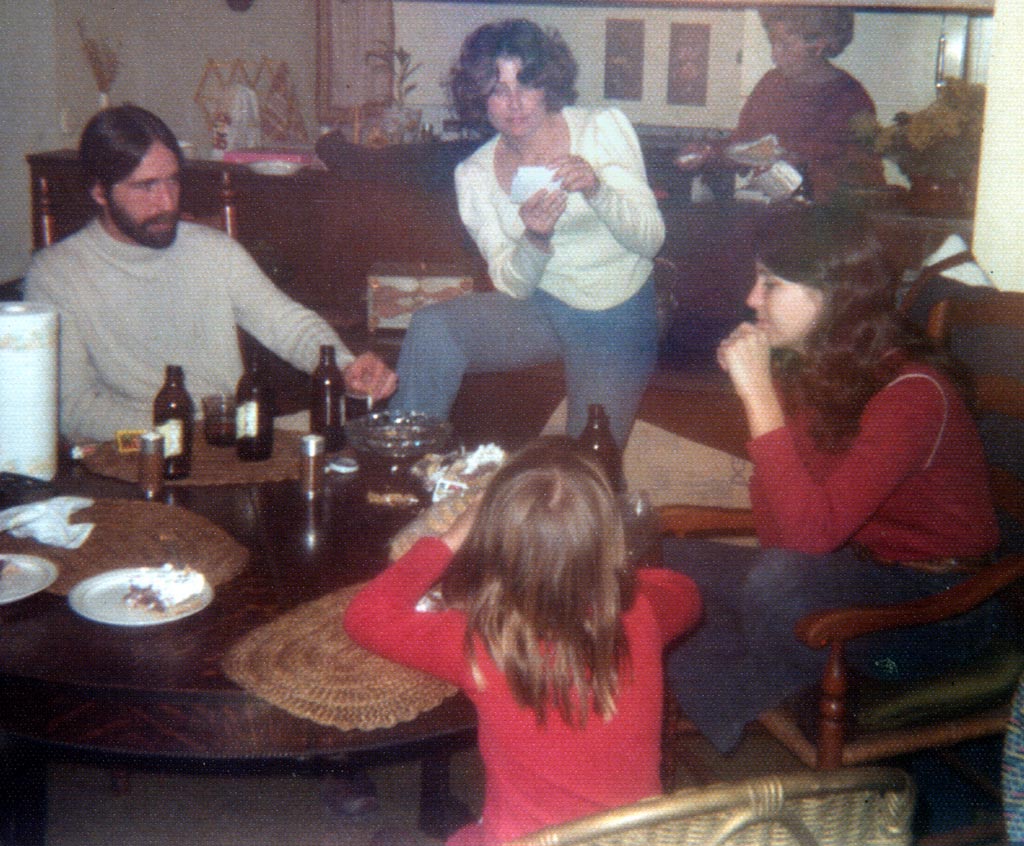

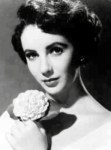

Above is a photo of the famous artist ‘Rosamond’ beholding my painting of Rena at Rosemary’s house. She was yet to pick up a brush in earnest. No doubt this image of Rena inspired Christine to become an artist. In Rosamond’s probate I mention the Templars and Mary Magdalene. I was ignored and made out to be insane -to this very day! Meanwhile, dozens of artists and writers are reaping the dividends! So what if it is not true? What is true? The truth is Rena and I were cosmic lovers who awoke the Pre-Raphaelite. Add to this the truth that I have proven the Templars owned the Shroud of Turin by looking at the Rougemonts, a name from which Rosamond may stem, then I am at least a candidate for an alleged bloodline – that is kin to Elizabeth Rosemond Taylor, another famous Rose of the World!
In 1963 I did a painting of a beautiful albino woman embracing an albino greyhound. I was doing automatic painting at the time, letting my divine intuition bring another world into my sight.
Look at Christine and I. What are we thinking? What is it we are saying and trying to do? Rena looks like our kindred. Her kin came from Sweden. My first girlfriend, Marilyn, keeps mentioning our eyes, especially the eyes of my sisters. Liz was famous for her eyes, who was born with two sets of eyelashes, a genetic mutation.
Below is a study of her features in regards to what constitutes beauty.
Jon Presco
Copyright 2012
Cheryl and, Vanda invite you to join us for this unforgettable odyssey. This journey is a living book, where we experience miracles in the moment and co-create the highest experiences with divine energies. We will activate our highest potential through discovery, soul remembrance, meditations, group experiences, sharing, play, joy and sacred moments of contemplation.
TEMPLAR CODE
You are about to embark upon a remarkable journey. The vision is about recovering the lost codes of the Templars, and Truth & Love Conquer All. Many of our learned concepts are illusions. The Quest is to understand the nature of truth within and without. The sword of truth cuts through the illusions that bind us to a limited reality and sets us free to fly to higher realms of wisdom.
Join us on a sacred pilgrimage as we re-examine ancient lost lore and know facts of the ancient Celtic wisdom school traditions, as well as explore the mysteries of Rosslyn Chapel including hidden treasures, the Templars and the Sinclair family. We will also visit profound megalithic sites older than the Great Pyramid of Egypt. We will touch into the rich folklore and fairy tales contained within ancient Scotland. We will also discuss the life of Prince Henry Sinclair, the young blond sea-going Scot who was born at Rosslyn Chapel, and his possible journey to America 90 years before Columbus.
To the Knights Templar a pilgrimage was called the Alchemist Pilgrimage or Pilgrimage of Initiation – An outward form of an inner mystical journey along the path of learning. The first nine Templars in Jerusalem spent ten years excavating under the Temple Mount and brought what they found to Rosslyn Chapel. There is evidence they found objects of esoteric traditions, sacred documents, maybe the Ark of the Covenant. It is time to re-examine our knowledge of the Templars and the gifts they have left us. Many feel that their spirit has returned now to fulfill their mission of truth, the restoration of Feminine principals and to reclaim through the opening of vaults, wisdom left as a legacy for humanity. No Truth, if understood and remembered, can ever be hidden again.
..” Rosslyn Chapel is an enigmatic arcane library of secrets, sculpted in stone and shrouded in mystery. It is a Chapel to mysticism and spirituality. Art without knowledge is nothing, and in this context the knowledge to which they refer is ” gnosis, spiritual knowledge or mystical insight.” Even the name Roslin translated into Gaelic hints at this ‘Ancient knowledge handed down through the generations’. Rosslyn is a veritable three dimensional teaching board of Gnostic and medieval initiation. Rosslyn Chapel is a superbly carved reliquary for the Grail the allegorical description of the path to enlightenment, which was sacred to the Templars.”
From: Rosslyn the Guardian of the secrets of the Holy Grail, Tim Wallace Murphy & Marilyn Hopkins.
The megalithic sites in Scotland are spectacular. It is remarkable that one thousand years before the earliest mathematician of classical Greece, people in the British Isles not only had a practical knowledge of geometry and were capable of setting out elaborate geometrical designs but also set out eclipses based on the Pythagorean triangles. We see megalithic sites oriented toward equinoxes as and solstices. They were placed near energy vortices that are conducive for the interconnection between terrestrial and cosmic influences, which offer gateways through which contact with spirits and higher awareness can be more easily achieved.
PRESENTERS
Cheryl Yambrach Rose, is an intuitive and visionary Artist. She has accompanied 28 sacred Journeys to reach into the continuum of the sacred site and paint what is held within its grid. Her paintings have graced the covers of magazines, books, CD’s, posters and cards in the United States, Australia and Europe. She has shown at the Rockefeller Collection, the Rosicrucian Egyptian Museum, as well as many other collections throughout the world. She lives and paints in Mt. Shasta, California and is known for creating amazing art. – ” Art through the Eyes of the Soul” . Cheryl will be gifting everyone on the journey with a signed print. For more information on Cheryl, please call 530 926-6738, or see her Website: http://www.cherylrose.com
https://rosamondpress.wordpress.com/2012/03/19/snow-white-and-the-tower-of-eight-beauties/
It would be most unfortunate if anyone suspected me of laying claim to the role of founder of a great historical, cultural, and social enterprise—that is, the creation of what we are calling the Rose of the World. The reality of the situation is altogether different. The Rose of the World can and will arise only as the result of the combined efforts of an enormous number of people. I am convinced that an identical process is taking place not only in Russia but also in many other parts of the globe, the foremost of which appear to be India and North America. The grandiose reality of other worlds is bursting into the human consciousness: at first the consciousness of isolated individuals, then of hundreds of people, and later of millions. Yes, now, at this very minute, people who as yet know nothing of each other, who are sometimes separated by great distances and national borders, and sometimes merely by the walls of a few houses, are experiencing startling breaches in their consciousness and are gazing on transphysical heights and depths. And some are endeavoring—in accord with their own abilities and inner cast—to express or depict their experience, if only approximately, in works of literature, art, or music. I do not know how many, but clearly already more than a few people are standing under that shower of revelation. As for my aim, it is to set forth that revelation exactly as I have been experiencing it—no more.
Therefore, this chapter will not deal with the scientific mode of thought and inquiry, or even with the artistic, but with things whose understanding requires a definite rethinking of the ideas that have reigned supreme in Russia for the past forty years.
I believe that serious investigation by researchers at the forefront of contemporary physiology and psychology into the large mass of apocalyptic literature, the autobiographical testimony of ecclesiastical authors and religious figures who underwent like experiences, and the unbiased study of material scattered throughout works on comparative religion will in time lead to the development of a scientific method on the basis of which it will be possible to lay the foundation for an epistemology of religious and, in particular, metahistorical knowledge. It is realistic to expect the emergence of an educational system geared toward mastering the mechanics of that knowledge, providing individuals, who will have theretofore played a passive role in that process, with techniques to initiate and control it, if only occasionally. But that all belongs to the future, and not the near future at that. The only thing certain for now is that the process varies in relation to both the subject and the object of knowledge.In her prime, Elizabeth Taylor wasn’t just considered the most stunning starlet in Hollywood, but the most beautiful woman in the world.
Her famously fair face helped her seduce seven husbands, launch a celebrated career and charm millions of fans around the world.
But what was it about her beauty, exactly, that made it so special?
Of course, she had those unforgettable violet eyes and cascading mane of dark hair. But scientists say research has helped shed even more light on what made Taylor’s beauty so rare.
“I think she’s one of these lavish beauties,” said Nancy Etcoff, a Harvard psychologist and author of “Survival of the Prettiest: The Science of Beauty. “I think Richard Burton called her a ‘miracle of construction.’”
Taylor’s ‘Hyper-Femininity’ Contributed to Beauty, Scientist Says
The violet eyes, Taylor’s white skin and raven hair may be captivating on their own, but Etcoff said that it was the combination of them that likely boosted her allure.
“A higher contrast tends to make the face look more feminine,” she said.
In studies conducted by Richard Russell, a psychology professor at Gettysburg College, she said, participants found faces with greater contrast between features (like eyes and lips) and skin to be more feminine than faces with less contrast.
Taylor’s signature bold lip color and dark, made-up eyes further contributed to the effect, she said.
“She also had a feature that most people wouldn’t think of as contributing to attractiveness, but really does, which is a small, gracile jaw,” she said. “Which means a jaw that is kind of small and very hyper-feminine.”
In puberty, men’s faces develop brow ridges and square jaws, but women’s features remain less pronounced in those areas, she said.
“If we think that one sign of beauty, and there are many others, is hyperfemininity, then she has that exaggerated lower face with large lips and a small jaw,” Etcoff said. “That’s one aspect of beauty that’s very noticeable in her face.”
Taylor’s Hour-Glass Figure Was Exaggerated
Taylor’s face isn’t the only attribute that science has found to be attractive.
“She combines that beautiful face with a very beautiful body, which is beautiful in a particular way,” said Etcoff. “She’s almost what we would call a super-normal stimulus, which means that her hourglass figure is exaggerated.”
Taylor’s two-time husband Richard Burton may have called the actress’s breasts “apocalyptic” and able to “topple empires,” she said, but they were paired with a tiny, little waist.
Science has shown that the the ideal waist-to-hip ratio is 0.7, she said, but Taylor’s hourglass figure supposedly boasted a 0.6 ratio.
“You think of her as voluptuous, but that combined with a tiny waist made her exaggeratedly feminine and attractive,” she said.
Stephen Link, a psychologist at the University of California San Diego, said his research has shown that there are even more mathematical ratios underlying Taylor’s lauded looks.
In 2009, he and two colleagues, Pamela Pallett, now with Dartmouth College, and Kang Lee of the University of Toronto, tried to uncover the facial proportions in people considered to be most attractive.
“Your ideal feminine face is something that’s been talked about for so long — ‘the face that launched a thousand ships,’” he said. “When you hear that, you conjure up a face, I wanted to measure what it was about that face that made it ideal.”
They asked about 160 students to look at hundreds of faces with different proportions and discovered their “golden ratios”: When the vertical distance between a woman’s eyes and mouth was about 36 percent of the face’s length, and when the horizontal distance between the eyes was about 46 percent of the face’s width, the face was judged to be more attractive.
Link said Taylor was a perfect example.
“She was right there with the proportions of the beautiful face,” he said. “Elizabeth Taylor was a great beauty and she has those proportions that are those of the ideal.”
Of course, non-scientists are quick to point out that beauty is still in the eye of the beholder — and the social context that shapes what they see.
Lois Banner, professor of history and gender studies at the University of Southern California and author of “American Beauty,” said that while Taylor’s natural looks certainly contributed to her fame, her image was also bolstered by smart publicity, heavy studio support and her many love affairs.
Barbara Walters on Elizabeth Taylor Watch Video
Remembering Elizabeth Taylor Watch Video
Elizabeth Taylor on Near-Death Experience Watch Video
“Beauty is a quality, in someone of that great public stature, beauty is something that operates on all kinds of levels. It’s not just the initial meeting the cultural expectations and standards for beauty,” she said.
Historian: Taylor Related to the Beauty Standards of Her Time
Taylor was tapped to be a star early in her career, Banner said, during a time when there were fewer Hollywood stars. That meant more pages in fan magazines, more glamorous roles sent her way and more attention lavished on her by studios and admirers.
Her many lovers also helped create an image of the highly sought-after siren.
“[The public] always likes to see stars marrying exotic men they never dreamed they could marry,” she said. “On one hand she lived an ordinary life, on the other hand she lived an extraordinary life. So there were a lot of fantasy worlds that she was actualizing.”
Even Taylor’s many personal battles, with drugs and alcohol, helped lift her profile by keeping her in the public eye, she said.
“She was a struggling star, and the public loves a struggling star,” she said.
But the 1950s was a “particular time” in the history of beauty, Banner said, and though Taylor related to the standards of her era, it’s difficult to say how she would be perceived if her career peaked now.
“We have different standards of beauty today. We see a lot of things as beautiful today they didn’t see then,” she said. “That doesn’t mean Elizabeth Taylor wouldn’t be considered beautiful today, but I doubt it would reach the extent that it did then.”
 Rosamond Press
Leave a comment