



One question I put to this American Beauty, was;
“What is it like to rise every morning, go to the mirror, and behold – you? What do you do with that?”
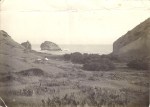
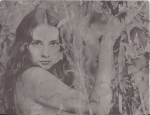
I could not take my eyes off Rena. She was my perfect landscape. I was a well trained landscape artist. I was constantly running my eyes over a beautiful scene, like running my hands over my perfect lover. Rena was perfecct – in every way! There was no flaw. She did not need to wear make-up. When she let me see her made-up, it was a shock to the senses. What famous models were tyring to do, Rena did with ease! Crystal Renn is a Rena type, she made-up to look like Rena who never had a fashion shoot, but, posed for me for fifty days with very dramatic landscapes in the background.
“What are you going to do with – this?”
“I don’t know.”
Rena knew she could cash-in and be with very wealthy men. But, she wanted to see if the Bohemians out West had lessons for her. Her twenty-six year old boyfriend had got her into some form of devil-worship in Nebraska, they playing at wild sex games. She was done with that, being the Vamp. When alas he came to get her and take her back to Nebraska, she said goodbye, then, got under the covers, made a tent, and said;
“Save me!”
“Sanctuary!”
Jon Presco
Copyright 2012
Capturing Beauty
Long lean legs, a teeny tiny waist, perfect skin and glossy hair — these are the flawless features commonly found in fashion magazines. But who looks like this? Nobody, because while models have always been made to look beautiful, never before have they been made to look so skinny, so airbrushed and so impossibly perfect — and some say that can be dangerous.
Julia Bluhm, an 8th grader from Waterville, Maine, has recently become a crusader against airbrushed ads. The 14-year-old traveled to New York City Wednesday to lead a protest, which was set up like a mock photo shoot, on the doorstep of the offices of the Hearst Corporation, which owns Seventeen magazine, one of the biggest teen magazines in the fashion industry.
“We want to show Seventeen that we love our body just for who we are and we don’t need Photoshop to fix us … and we can be pretty without — we can take pictures of ourselves and be pretty,” Bluhm said.
Her campaign started two weeks ago when she taped herself asking her friends about airbrushed photos during lunch in her middle school cafeteria. That led Bluhm to start a petition on Change.org entitled “Seventeen Magazine: Give Girls Images of Real Girls,” asking the magazine to feature one un-airbrushed photo spread a month. It has over 25,000 signatures from all over the world.
“These pictures [in the magazine] look too perfect to be like anyone I know. You look around and most people you see on the streets or at school don’t really look like this,” Bluhm said.
ven before they are teenagers.
“I’ve seen a 9-year-old girl on a feeding tube at treatment centers — and that’s just not one, believe me,” Teefe said. “It’s just getting worse and worse, and why are we doing this to kids? Why are we making children feel self-conscious?”
There are no hard statistics to support a correlation between children suffering from eating disorders as a result of seeing airbrushed ads. But Grefe estimated that about 95 percent of children who see these ads would say the ads made them feel bad about themselves.
“[The ads] didn’t cause their eating disorder. Did it nurture the eating disorder? Did it help it grow and become the chronic illness it can be? For sure,” Grefe said. “I think it is more dangerous for kids to look at some of these magazines today than smoking pot.”
Youth and beauty have graced magazine covers for decades, but what has made today’s images more dangerous is the cutting-edge Photoshopping technology. According to Sara Ziff, a former model and founder of the Model Alliance, in her business, a photo isn’t finished until it’s fixed.
“Pretty much every image in advertising is going to have some Photoshop and that’s not necessarily a terrible thing,” Ziff said. “But there are degrees of Photoshopping. You see people whose bodies have been really reshaped to look significantly younger or significantly thinner and I think that’s really the source of concern.”
“A lot of these images are not real,” she continued. “I think any model would tell you that they do not live up to the image of themselves in the magazines.”
Supermodel Crystal Renn, 25, was so fed up with the digital enhancements of her photos used in a recent ad campaign, that she spoke out against extreme airbrushing out of concern it would lead to eating disorders, like she once faced herself.
 Rosamond Press
Leave a comment