
In memory of Mr. H

Scott Colom has won his race!
As fate would have it, the name, Scott Colom, is now found next to President Harrison, who made some of the biggest land deals in America – and the world! No wonder young folks hate history. Most of them can’t afford a studio apartment – and will never own a home. One motive for not setting Black folk free, is, they would want some FREE LAND! Joaquin Miller’s grandfather may have been offered some FREE LAND, if he survived his battles with the British and their Native American allies.
There is nothing like American History. William Henry Harrison would be bowled over to know a Black Man is the Senator of Mississippi.
I salute every man and woman who wore a uniform, and fought, and died for this Democratic Nation. Many were able to get a home with the GI Bill,. Many got a small plot in a long forgotten cemetery…..outside of town.
John Presco

William Henry Harrison (February 9, 1773 – April 4, 1841) was the ninth president of the United States, serving from March 1841 until his death 31 days later in April. He was the shortest serving president and the first one to die in office. His death triggered a brief constitutional crisis regarding presidential succession which ended when John Tyler, Harrison’s vice president, assumed the office.
Hulings Miller. Sr., laid down his life on the altar of his country while serving as a soldier in the War of 1812 under command of General William Henry Harrison.
Harrison’s political career began in 1798, with an appointment as secretary of the Northwest Territory. In 1799, he was elected as the territory’s non-voting delegate in the U.S. House of Representatives. He became governor of the newly established Indiana Territory in 1801 and, through multiple treaties with American Indian tribes, he acquired millions of acres for the nation. After the War of 1812, he moved to Ohio where, in 1816, he was elected to represent the state’s 1st district in the House. In 1824, he was elected to the U.S. Senate, though his Senate term was cut short by his appointment as minister plenipotentiary to Gran Colombia in 1828.
The British and their Indian allies greatly outnumbered Harrison’s troops, so Harrison constructed a defensive position during the winter along the Maumee River in northwest Ohio. He named it Fort Meigs in honor of Ohio governor Return J. Meigs Jr. He then received reinforcements in 1813, took the offensive, and led the army north to battle. He won victories in the Indiana Territory as well as Ohio and recaptured Detroit before invading Upper Canada (Ontario). His army defeated the British, and Tecumseh was killed, on October 5, 1813, at the Battle of the Thames. It was considered to be one of the great American victories in the war, second only to the Battle of New Orleans, and secured a national reputation for Harrison.[73][7]
9/21/2016
Morris and Mary White Ovington
I made this astounding prophecy four years ago. I realized there was a great need to esteem White People so they would not follow and elect a Dictator and racist like Trump. Alas I tuned in the Game of Thrones that is allegedly inspired by the War of the Rose, but Tolkien is there, but, not the Pre-Raphaelites. These white people are doing ugly things to other white people. Viewers need to wake up and vote against Trump and campaign for Hillary. A co-founder of the NAACP was inspired by Morris and his group of artists. “No group of men and women have done more to support or define the White Culture in the world, then the Pre-Raphaelite Brother and Sisterhood – along with J.R. Tolkien, whose Hobbits will again grace our silver screens. Tolkien was inspired by William Morris’s ‘The House of Wolfing’ a Pre-Raphaelite masterpiece that went hand in hand with Swineburn’s poems about Fair Rosamond, and Rosamund Queen of the Lombards.
Abve is the Rosemont cote of arms depicting a dancing wolf. The Companions of Rougemont employ the wolf in their cote of arms. The Rosamond family may have its roots in Rougemont, a town that employs a castle atop a red mountain in its civic cote of arms. We see this castle Rougemont on the shields of the knights above.
I am a Nazarite. I am of the House of the Red Wolf. I was dead in the wilderness, but, I am replanted. My cry is heard once again. The war with the Confederate Roman Empire – begins!”
https://rosamondpress.com/2016/08/17/morris-and-mary-white-ovington/
12/3/2019
Mary White Ovington and The Ring

When Eric Richardson ragged on Walt Disney, I knew about Mary Ovington being influenced by my Hero, William Morris, the Pre-Raphaelite. Tolkien was very inspired by William Morris, who ragged on Walt the “poor boob”. In 1969 I declared myself a New Pre-Raphaelite, and let my hair grow real long. The Evil Lord of Modor is stomping around Europe today, and no one has a clue how to stop him. I got more than a clue! How about Eric, and the NAACP?
John ‘The Pre-Raphaelite’
Mary Ovington – White Co-Founder of NAACP
Posted onApril 29, 2019by Royal Rosamond Press
Is there a movement in the Democratic Party to move white people to the curb, and let the Woman of Color parade, march by? We have to be on the same team, and may not know what our team looks like. We can do as many restarts as we need. We may end up with a fantastic new look!
John Presco
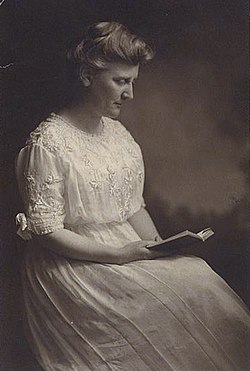

Portrait, c. 1910
Mary White Ovington (April 11, 1865 – July 15, 1951) was an American suffragist, journalist, and co-founder of the National Association for the Advancement of Colored People (NAACP).[1]
Biography
Mary White Ovington was born April 11, 1865 in Brooklyn, New York. Her grandmother attended the Connecticut congregation of Samuel Joseph May. Her parents, members of the Unitarian Church were supporters of women’s rights and had been involved in anti-slavery movement. Educated at Packer Collegiate Institute and Radcliffe College, Ovington became involved in the campaign for civil rights in 1890 after hearing Frederick Douglass speak in a Brooklyn New York City church and a 1903 speech by Booker T. Washington at the Social Reform Club.
In 1895 she helped found the Greenpoint Settlement in Brooklyn. Appointed head of the project the following year, Ovington remained until 1904 when she was appointed fellow of the Greenwich House Committee on Social Investigations. Over the next five years, she studied employment and housing problems in black Manhattan. During her investigations, she met W.E.B. Du Bois and was introduced to the founding members of the Niagara Movement.[2]
Ovington joined the Socialist Party of America in 1905, influenced by the ideas of William Morris where she met A. Philip Randolph, Floyd Dell, Max Eastman and Jack London, who argued racial problems were as much a matter of class as of race. She wrote for journals and newspapers such as The Masses, New York Evening Post, and the New York Call. She also worked with Ray Stannard Baker and influenced the content of his book, Following the Color Line, published in 1908.
On September 3, 1908 she read an article written by Socialist William English Walling, entitled “Race War in the North” in The Independent. Walling described a massive race riot directed at black residents in the hometown of Abraham Lincoln, Springfield, Illinois that led to seven deaths, the destruction of 40 homes and 24 businesses, and 107 indictments against rioters. Walling ended the article by calling for a powerful body of citizens to come to the aid of blacks. Ovington responded to the article by writing Walling and meeting at his apartment in New York City along with social worker Dr. Henry Moskowitz. The group decided to launch a campaign by issuing a call for a national conference on the civil and political rights of African-Americans on the centennial of Lincoln’s birthday, February 12, 1909.[2]
The National Negro Committee held its first meeting in New York on May 31 and June 1, 1909.[2] By May, 1910 the National Negro Committee and attendants, at its second conference, organized a permanent body known as the National Association for the Advancement of Colored People (NAACP). Ovington was appointed as its executive secretary. Early members included Josephine Ruffin, Mary Talbert, Mary Church Terrell, Inez Milholland, Jane Addams, George Henry White, W.E.B. Du Bois, Charles Edward Russell, John Dewey, Charles Darrow, Lincoln Steffens, Ray Stannard Baker, Fanny Garrison Villard, Oswald Garrison Villard, and Ida B. Wells-Barnett.[3] The following year Ovington attended the Universal Races Congress in London. Richetta Randolph Wallace, who had worked with Ovington as a secretary for several years, was hired as the first office staff at NAACP headquarters in 1912.[4]
Ovington remained active in the struggle for women’s suffrage. She was also a pacifist who opposed the United States’s involvement in the First World War. During the war Ovington supported A. Philip Randolph and his magazine The Messenger, which campaigned for black civil rights.[3]

Mary White Ovington’splaque on theNational Volunteer Pathway
After the war, Ovington served the NAACP as board member, executive secretary, and chairman. She inspired other women to join the NAACP, and in so doing, made a significant contribution to the multi-cultural composition of the organization.[5] NAACP fought a long legal battle against segregation and racial discrimination in housing, education, employment, voting, and transportation. They appealed to the Supreme Court to rule that several laws passed by Southern states were unconstitutional and won three important judgments between 1915-1923 concerning voting rights and housing.
In June 1934, Mary White Ovington gave speeches to 14 different colleges. Her goal was to show the youth that the NAACP association was made up of blacks and whites, specifically to show black youth that there were whites who hated race oppression. [3] During her speeches, Ovington would show the geography of all the NAACP location branches and how far the association has come. “They should know the power the race has gained” – Mary White Ovington[6]
The NAACP was criticised by some members of the African American community. Members of the organization were physically attacked by white racists. John R. Shillady, executive secretary of the NAACP, was badly beaten up when he visited Austin, Texas in 1919.
Ovington wrote several books and articles, including a study of black Manhattan, Half a Man (1911); Status of the Negro in the United States (1913); Socialism and the Feminist Movement (1914); an anthology for black children, The Upward Path (1919); biographical sketches of prominent African Americans, Portraits in Color (1927); an autobiography, Reminiscences (1932); and a history of the NAACP, The Walls Came Tumbling Down (1947).
Ovington retired as a board member of the NAACP in 1947, ending 38 years of service with the organization. She died on July 15, 1951. Mary White Ovington I.S.30 Middle School in Brooklyn was named in her honor. She is one of the persons named on The Extra Mile—Points of Light Volunteer Pathway National Memorial in Washington, D.C. In 2009 she was depicted on a United States postage stamp with Mary Church Terrell.[7]
Final years
Mary White Ovington was forced to resign from the NAACP due to poor health. In her eighties, Ovington spent her final years with her sister in Massachusetts and in 1951 died in Newton Highlands, Massachusetts, at the age of 86. Ovington also wrote novels and children’s books, including Hazel, which told the story of a young Boston Black girl spending a winter in Alabama at the turn of the century.[8]
This WordPress.com site is the bee’s knees

The Miller Family
March 14, 2014


The West Point Cemetery is located on the Brownsville-Coburg Road in Lane County about five miles north of Eugene. Here is buried the brother and father of Joaquin Miller ‘The Poet of the Sierras’ who founded a newspaper in Eugene, The Eugene City Democratic Register’.
Since I moved to Springfield, I have been trying to give my family history away, and the history of the Miller Family. Joaquin’s brother, George Melvin Miller, is the founder of the city of Florence that is known for its Arts. Becoming a member of the Emerald Art Center, I soon left after being told this was a “conservative art association”. Turns out the wives of men in the logging industry started this cultural center and were not open to new, or bohemian, ideas. Joaquin was a founder of the Bohemian Club in San Francisco.
The Miller family lived in the Territorial Road that was built between Brownsville and Thurston. No doubt they were known in this small town, having come here often. For this reason, I want to make Brownsville the hometown of the Miller family.
Above are my grandfathers having a family picnic in the redwoods above Miller’s home. They were neighbors and friends of Joaquin who used to carry my infant father on his lap when he went to the city with my grandmother, Melba Broderick.
Jon Presco
http://rosamondpress.wordpress.com/2013/11/23/the-pre-raphaelite-movement-in-america-1/
Since 1969 I worked hard to bring my vision of establishing a New Pre-Raphaelite Movement in America. Joaquin Miller had befriended my grandmother when she was young. He would accompany her on the Fruit Vale trolley holding my infant father in his lap. Joaquin would have dinner with the Pre-Raphaelite Artist, Dante Gabriel Rossetti. His brother, Michael, was the publisher of ‘The Germ’. My grandfather published his poems and stories in his magazine ‘Bright Stories’. Royal Rosamond founded ‘Gem’ publishing. Royal published in Out West magazine as did Joaquin. I suspect his daughters appeared in early magazines as child models. Christine Rosamond included her aunts in her paintings.
Above is a photo of me posing in Christine’s studio. I was going to be her first male portrait. I left my hair grow long after the Pre-Raphaelite Brotherhood.
The discovery that a showing of Pre-Raphaelite Artists came to America while they were alive, is the completion of a dream. I see myself as the literary Michael Rossetti these days. When Miller died, the exclusive Bohemian Club conducted a ritual at the Hights that overlooked my kindred’s farm. Miller made a equestrian statue of our kin, John Fremont, his hero. Fremont was the first Republican candidate for President.
We are kin to Elizabeth Rosemond Taylor whose uncle bought artworks in Europe for his rich American clients. The top painting is a portrait of Fair Rosamund by Rossetti who invited Joaquin to his home for dinner. One can say the Pre-Raphaelite Brother and Sisterhood were the Facebook of their day.
Howard Young married Mabel Rosemond and had a gallery in the Pierre Hotel in New York. He was a good friend of the artist, President Dwight Eisenhower. What we are looking at is an American Artistic Dynasty.
http://rosamondpress.wordpress.com/2013/08/13/the-bohemian-rose-grouping/
Fremont City is seen in the top photo. I am tempted to move there and set up a studio in that Victorian with the triangle windows. There is where you make it! The problem many folks have in Nebraska is, they can’t get over the death of Jesus. They got to buck-up, and look to the future of their towns.
http://rosamondpress.wordpress.com/2013/08/07/no-here-here/
Then there was ‘The Hights’ the Salon Joaquin Miller held in the Oakland Hills above the fruit farm my grandparents owned. Miller used to carry my father on the trolly when Melba went to San Francisco to see Victor’s father, a professional gambler. Miller made a huge statue of John Fremont on a horse overlooking the bay. He called himself a “fruit farmer and poet”. When he died 500 members of the Bohemian Club came to the Hights to perform a special ceremony.
http://rosamondpress.wordpress.com/2013/06/30/boston-art-colony/
http://rosamondpress.wordpress.com/2013/06/30/building-the-city-beautiful/
http://rosamondpress.wordpress.com/2011/08/27/the-birth-of-california-bohemianism/
Ina Coolbrith gave Joaquin Miller his look that he took to England where he read his poems to the Queen. The Pre-Raphaelite Artists took him in. Miller was a friend of my grandmother. The original hippies of the Bay Area were influence by Miller, Ina, London, and Sterling. Miller made a life-size statue of my kin, John Fremont, who looks west from the heights of Oakland. El Capitan looks like Gandalf.
Ina Coolbrith was the first poet laureate of California. She gave Joaquin Miller ‘The Poet of the Sierras’ his Bohemian look. She encouraged Miller to tour England where he fell in with the Pre-Raphaelites who are cited as the progenitors of Boho Fashion. But Ina is Queen Mother of the Oakland Bohemians who had a hand in the Founding of the Bohemian Club. Ina was good friends with Jack London and George Sterling, members of the Bohemian Club. She took the writer Bret Harte under he wing as did Jessie Benton who held a salon in San Francisco. Bret was the editor of the Overland that became ‘Out West’ magazine that my grandfather, Royal Rosamond, contributed to.
Royal was a poet, a writer, and a true Bohemian. His wife, Mary Magdalene Rosamond designed and made her own clothes. She sold her hats for a living, her creations help raising her four beautiful daughters.
Rosemary Rosamond gave birth to the world famous artist, Christine Rosamond Benton, who married the muralist, Garth Benton, a cousin of the famous artist, Thomas Hart Benton, who rendered what can be discribed as ‘Western Boho’.
Christine took up art in 1972 at the age of 25 after seeing my painting of my Muse, Rena Christiansen, a beautiful young woman from Nebraska whose three sisters were professional models.
In 1969 I discovered the Pre-Raphaelites at the Oakland Library the Coolbrith founded. I let my hair grow long because the Pre-Raphaelite were influenced by the Nazarene-Nazarite Artists of Germany. It was my dream to restart the Pre-Raphaelite movement in the city I was born because our famous artists had taken up the gauntlet. The work of Arthur Frank Matthews is found at the Oakland Museum. Matthews work premeditated the Hippie Movement, his women coming alive in the 60s. Arthur was one of my influences in the painting I did of Rena which I plan to redo.
My first girlfriend, Marilyn Godfrey Reed, made her own clothes and sewed with my famous sister and our mother who also made her own clothes. Marilyn emulated the Bohemian lifestyle, he older sister living in Paris. Marilyn dressed the part when I first met her at fifteen. We were Bohemian Lovers, we founding a Bohemian hot spot in West Los Angeles. Marilyn Reed is an excellent seamstrees and pattern maker, I have encouraged Marilyn to begin her Boho Chic line, or work for my line ‘Royal Rosamond Wear’ that I am founding.
Eugene Oregon is a fashion Mecca for Bohemian Chic. I will be posting photographs of women and men dressed in Bobo. Anyone who wants to contribute can post pics on my Facebook, that I will transfer to this blog.
You will find me on Facebook as Greg Presco.
http://en.wikipedia.org/wiki/Joaquin_Miller
While a young boy, the Miller family moved to Oregon and settled in the Willamette Valley, establishing a farm in what would become Lane County. Accounts differ, giving the family’s move to Oregon as early as 1842, but it was probably between 1850 and 1852.
As a young man, he moved to northern California during the California Gold Rush years, and had a variety of adventures, including spending a year living in a Native American village, and being wounded in a battle with Native Americans. A number of his popular works, Life Amongst the Modocs,[4] An Elk Hunt,[5] and The Battle of Castle Crags, draw on these experiences. He was wounded in the cheek and neck with an arrow during this latter battle, recuperating at the Gold Rush-era mining town of Portuguese Flat.
Miller earned an estimated $3,000 working as a Pony Express rider, and used the money to move to Oregon. With the help of his friend, Senator Joseph Lane, he became editor of the Democratic Register in Eugene,[11] a role he held from March 15 to September 20, 1862
Miller had sent a copy of Joaquin, et al. to Bret Harte, who offered advice that he avoid “faults of excess” and encouragingly wrote, “you on your way to become a poet.”[25] The next summer, July 1870, Miller traveled to San Francisco with borrowed money and there befriended Charles Warren Stoddard and Ina Coolbrith. Stoddard was the first to meet him at the dock and, as he recalled, Miller’s first words to him were, “Well, let us go and talk with the poets.”[26]
Miller went to England, where he was celebrated as a frontier oddity. There, in May 1871, Miller published Songs of the Sierras, the book which finalized his nickname as the “Poet of the Sierras”.[27] It was well received by the British press and members of the Pre-Raphaelite Brotherhood, particularly Dante Gabriel Rossetti and William Michael Rossetti.
An historical marker for his birthplace was unveiled October 10, 1915, on U.S. 27 north of Liberty in Union County, Indiana.[47] Joaquin Miller Cabin is located in Washington, DC. The Hights, the Oakland home Miller built at the end of his life, is currently known as the Joaquin Miller House and is part of Joaquin Miller Park. He planted the surrounding trees and he personally built, on the eminence to the north, his own funeral pyre and monuments dedicated to Moses, General John C. Frémont, and the poets Robert Browning and Elizabeth Barrett Browning. The Japanese poet Yone Noguchi began his literary career while living in the cabin adjoining Millers’ during the latter half of the 1890s. The Hights was purchased by the city of Oakland in 1919 and can be found in Joaquin Miller Park.[34] It is now a designated California Historical Landmark. Miller Middle School and Joaquin Miller Elementary School in Burbank, Calif., were also named after him.
http://tbv.stparchive.com/Archive/TBV/TBV11231978P02.php
| Alexander and Sarah Kirk established a small, hand-hauled ferry across the Calapooia River the following year. Travelers on the east side Territorial Road used the ferry during the deep water periods, and the place became known as “Calapooya” or simply “Kirk’s Ferry”. Kirk’s ferry operated until 1853, when a covered bridge was built over the Calapooia – the first built in Linn County with county funds. |
http://www.historicbrownsville.com/content/BR1_history.html
http://www.movie-locations.com/movies/s/Stand_By_Me.html#.UyMzztJOUfQ
It’s back toward Brownsville to find ‘Quidaciolu’s market’, the general store to which Gordie is sent to buy the food they forgot to bring. It’s a now-abandoned building at 91979 Territorial Road, on the northeast corner of Franklin Road, southwest of Junction City, about 10 miles northwest of Eugene.
http://www.movie-locations.com/movies/s/Stand_By_Me.html#.UyMzztJOUfQ
http://en.wikipedia.org/wiki/Oregon_Route_200
| West PointAlso Known As: Willoughby, Lewis, Martin | |||
| Online | Map | Photos | |
| Established: | 1853 | Nearest Town: | Priceboro, Harrisburg, Coburg |
| Est. # Burials: | 100-200 | Location: | T 15S, R 3W, 33 |
| Size in Acres: | .86 | USGS Lat/Lon: | 441310N 1230400W |
| Driving Directions: | From Harrisburg, east on Priceboro Drive. About 6 miles, to Coburg Rd, turn South 2.3 miles, on E, Cemetery |
| Contact Info: | Linn Co. Tax Assessor: Lot 201 WEST POINT CEMETERY ASSOC Deed Ref: 309-18 |
Plaque says West Point Cemetery dedicated 1885 but grave markers go back much further. Earliest burials — three within 15 days in June-July, 1853. Buried here are Hulings S. & George M. Miller, father & brother of poet Joaquin Miller.
The following information is transcribed from the WPA Linn County Cemetery Survey, researched & prepared by Leslie L. Haskin on (undated, ca. 1940):
The West Point Cemetery is situated on Section 33, Township 15 South of range 3 West in Linn County…. The land comprising the cemetery is a part of the original F. G. Vaughn (?) D.L.C. …
The most conspicuous landmark in the vicinity of the cemetery is the West Point Butte about one mile to the south-east. This butte, striking for its long level summit and abruptly cut western extremity gives name both to the cemetery and to all the surrounding region. It marks the county line between Linn and Lane Counties. It is historically interesting as the scene of one of Joaquin Miller’s early adventures….
The first burial of record in this tract is that of Jesse Hasket who died, following the bite of a rattlesnake, on June 5th, 1853; the second that of Geo. L. Greenwood who died June 29, 1853, and the third Vitula Lewis, daughter of John and Martha Lewis who “Was Bornd and Died” Oct. 8, 1856.
The oldest birth date recorded here is that of Enos Martin, (the man who gave the land for this cemetery), who was born in the year 1805. Following this, in order, are- Lynn Snodgrass, 1807, Elizabeth Snodgrass 1909, Reason B. Willoughby 1810, and Hulings Miller, father of Joaquin Miller the poet, in 1812.
http://www.placekeeper.com/Oregon/West_Point_Cemetery-1158549.html
http://www.oregonencyclopedia.org/entry/view/miller_minnie_myrtle_theresa_dyer_1845_1882_/
http://www.findagrave.com/cgi-bin/fg.cgi?page=gr&GRid=45300129
Huling S. MillerMemorialPhotosFlowersEdit father of poet Joaquin Miller Hulings Miller was born in Ohio, whence he removed to Liberty, Indiana. He was a well educated man for his day and engaged in teaching school in Indiana, in which state he married and there four of the older children were born. After living for a time on the Indian Reserve in western Indiana, where he also engaged in teaching, he emigrated to Oregon in 1852, with his family, settling at Coburg in the foothills, where he resided until his death, which occurred in 1884. Unto him and his wife were born five children: John D., who was a dentist and practiced in Philadelphia but lost his health through his service in the Civil war; James, living at Creswell, Oregon; Joaquin, who is far famed as the poet, of the Sierras ; Ella, who became the wife of John Luckey but is deceased; and George Melvin. [excerpt from bio of his son, George Melvin Miller, The Centennial History of Oregon by Gaston Vol 4 p259-60] Family links: Spouse: Margaret B. Witt Miller (1816 – 1905)* Children: Joaquin Miller (1837 – 1913)* Ella Sarah Miller Luckey (1849 – 1871)* George Melvin Miller (1853 – 1933)* |
|---|
http://www.findagrave.com/cgi-bin/fg.cgi?page=gr&GRid=45300118
| George Melvin Miller |
| MemorialPhotosFlowersEdit |
| Learn about upgrading this memorial…Birth:May 16, 1853 Lane County Oregon, USADeath:Mar. 12, 1933 Oregon, USA brother of poet Joaquin Miller GEORGE MELVIN MILLER. To George Melvin Miller more than to any other individual is due the development of Florence, the seaport of Lane county. His labors have directly and indirectly benefited this part of the state and the consensus of public opinion places him with the leading citizens of Eugene. He was born in Lane county, Oregon, May 22, 1857, and is a son of Hulings and Margaret B. (Witt) Miller. His paternal grandfather. Hulings Miller. Sr., laid down his life on the altar of his country while serving as a soldier in the War of 1812 under command of General William Henry Harrison. His son and namesake was born in Ohio, whence he removed to Liberty, Indiana. He was a well educated man for his day and engaged in teaching school in Indiana, in which state he married and there four of the older children were born. After living for a time on the Indian Reserve in western Indiana, where he also engaged in teaching, he emigrated to Oregon in 1852, with his family, settling at Coburg in the foothills, where he resided until his death, which occurred in 1884. Unto him and his wife were born five children: John D., who was a dentist and practiced in Philadelphia but lost his health through his service in the Civil war; James, living at Creswell, Oregon; Joaquin, who is far famed as the poet, of the Sierras ; Ella, who became the wife of John Luckey but is deceased; and George Melvin. The last named attended the public schools and afterward took up the profession of teaching. Desirous of advancing his own education, he later entered Monmouth (Oregon) College and also attended the University of Oregon in the year in which it was opened. He began reading law with Judge Walton and following his admission to the bar practiced at Eugene and at Independence but has given most of his time to real-estate dealings, in which connection he has become very widely known. On the 26th of May, 1887, he purchased the original town site of Florence, becoming owner of ninety acres, for which he paid ten dollars an acre. He had first visited this site in 1883, driving a wagon to a point twenty-five miles from Eugene and then walking the remainder of the distance, carrying his blankets. He was accompanied by D. P. Thompson, S. W. Condon and Professor Lee, who was superintendent of schools of Eugene. At Mapleton they found an Indian, who had a boat and took them down to what is now the site of Florence. At that time there was only a board house there and one white family—about a half dozen inhabitants in all. There was a small store in a shanty conducted by A. J. Moody. On that trip of two days Mr. Miller saw the possibilities for the building of an attractive seaport town there. Mr. Moody had obtained title to his holdings of ninety acres and when this was put on sale after his death nobody bid for it and the sale was continued until the following year. In the meantime a wagon road had been opened between Eugene and Mapleton and settlers began to move in and take up government land. Biggar Herman was attorney for the administrator for the Moody estate and through him Mr. Miller learned that the property could be bought but only through public sale at auction. Mr. Herman also said that the land would not be put up for sale again without a guarantee of at least one bid and Mr. Miller guaranteed the bid. He proved to be the only bidder and secured the title to the property. Later he secured a homestead claim adjoining the site and subsequently purchased a half interest in the Chicago addition and one hundred and fifty acres in another tract. He has since been selling lots and buying acreage, and has dealt extensively in that district. His sound judgment and keen prescience were manifest in his purchase of the land at Florence, for he recognized its possibilities and wisely used the opportunity that came to him. Operating extensively in real estate there through the intervening years, he has derived therefrom a handsome and well earned fortune. He was the pioneer in cutting up the large donation claims into small tracts for higher tillage, beginning in 1887 with the Solomon Zumalt donation claim near Eugene. Mr. Miller spent the greater part of four years, from 1898 to 1902, in southeastern Alaska, following various occupations from practicing law to stampeding for mining claims in close proximity to the disputed boundary line between Alaska and Canada, and naturally, as an American citizen, took a deep interest in the settlement of the question pending between the British and American governments. He happened to be in Skagway on a morning in June, 1901, when the Canadian customs officials raised the British flag over their improvised customs house in that town. Mr. Miller, seeing the flag floating over what he knew to be American soil, promptly cut the halyards and lowering the British colors, carefully folded them and laid them aside. Asked by what authority he did this, he replied, “By the authority of an American citizen,” and added that the British flag could not be raised again in Skagway unless the flag of the United States floated above it. The incident very nearly led to international complications. The government sustained Mr. Miller in his action and the British government repudiated the act of its officials in Skagway. President Roosevelt sent out a body of soldiers and established a post at Haines Mission on the Chilcat peninsula. A commission was appointed and a boundary line established substantially as claimed by Mr. Miller, and Skagway remained in American territory. Mr. Miller was one of the organizers of the Presbyterian church in Florence, and was for a time one of its elders. In 1885 he married Lischen Coggswell, a daughter of John Coggswell, of Eugene. [The Centennial History of Oregon by Gaston Vol 4 p259-60] |
c
Leave a Reply