
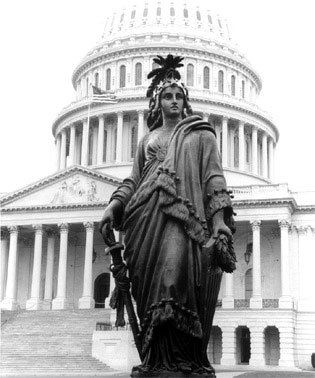
A statue of Columbia standing on the top of the U.S. Capitol Building
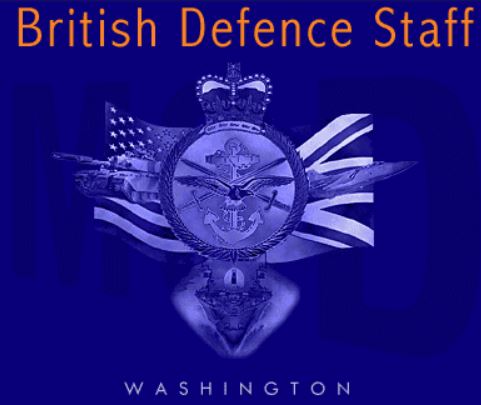
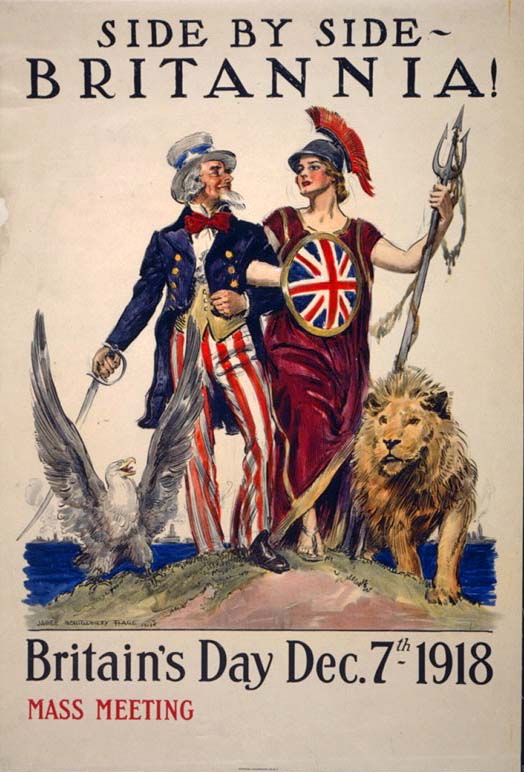
There is a Goddess of America, and her name is Columbia. This is not a witty line portraying a concept. I am not using an analogy to liken the capital to a Divine Mother Figure. I am simply stating facts: There is a Goddess of America, and her name is Columbia.
Where Art Thou?
Is the name of my theological novel in the works, and, my Youtube podcast. Both are copyrighted by a special copyright granted to ministers.
John Presco
President: Royal Rosamond Press
EXTRA! I found the embodiment of my late muse, Rena Easton, standing atop our Capitol building! She blushed red as she heard Robert E. Trump call for a insurrection…..and here they come…..
THE INSURRECTIONISTS!
Yesterday it was reported by a whistle blower, The Trumpire is sabotaging the Post Office. I am seeking a attorney to present my case to the Supreme Court, that Demolition Donald is destroying the District of Columbia, that was named after a Goddess, whose sister is Uncle Sam – and Britannia! This blog has identified Brittania and Columbia as female personifications of the British People who founded colinies in America. I will reveal how Mary ‘Rose of the World’ is the third sister of the Shekinah Trinity.
I just discovered Columbia stands vigiliant atop our Capitol. Did she hear the lies of our former president, who said the elections were rigged, and, his presidency was stolen. How helpless she felt as the Insurrectionist Mob came running to do harm to elected Loyalists.
When the War of 1812 began, Lady Columbia was sometimes joined on posters by a new figure, Uncle Sam; both offered a fierce embodiment of American independence. In the decades before the Civil War, both North and South invoked Columbia. In perhaps her most extraordinary appearance, Columbia showed off her strength as a disciplinarian: One 1860 cartoon depicts her spanking Stephen Douglas for having created a schism in the Democratic Party by proposing that laws about slavery should be left to individual states. “You have been a bad boy, Steve … and now I’ll pay you for it,” Columbia says as she swats Douglas.
By the 1870s, Columbia had become a symbol of Manifest Destiny, guiding the country’s westward expansion, says Michael D. Hattem, author of the 2020 book Past and Prologue: Politics and Memory in the American Revolution. This role prompted the most famous image of Lady Columbia, in John Gast’s 1872 painting American Progress.
One of Lady Columbia’s most poignant roles came in the next decade, as the country greeted swells of immigrants arriving from Europe—and Columbia helped hold the door open. “Columbia welcomes the victims of German persecution to ‘the asylum of the oppressed,’” reads the caption of a political cartoon published in 1881. Her image was used to help rally millions of immigrants toward an American identity—and, Hattem says, to reinforce a new patriotic movement called Columbianism.
As Columbianism swept the nation, in 1893 Lady Columbia gave her name and her likeness to posters for the World’s Columbian Exposition—that year’s world’s fair in Chicago. Yet the fair also helped spell Lady Columbia’s doom: At his keynote address, the historian Frederick Jackson Turner declared to the American Historical Association that the western frontier was now closed.
“Once there was no frontier left, [Lady Columbia] had, to an important degree, outlived her usefulness as a symbol” of westward expansion, Hattem says. At the same time, advocates like John Dewey were democratizing education, displacing a focus on Greek and Latin with a more modern—and therefore more American—focus on science and problem solving. Columbia, with her Greco-Roman vibe, no longer represented the nation’s educational philosophy.
Miss(ing) Columbia: America’s Forgotten Warrior Goddess
Jul 4, 2016
34 notes
His face is very familiar in the United States. He is tall and thin with flowing white hair, a sometimes stern expression, and dressed in the red, white, and blue colors that make up the nation’s flag. He has been a common presence in the country in times of both celebration and war when he has asked many to serve the United States. Addressed warmly with an endearing name, Uncle Sam has been part of American lore since the 19th century and remains to be as much of a symbol of the country as the flag itself. However, Uncle Sam was not the first human personification of the United States of America and it was actually his “sister” who represented the country before she was overshadowed by both the white-haired “Sam” and another commanding lady.

Uncle Sam and his “sister” Miss Columbia
The name “Columbia” has deep roots to the country we now call the United States of America. The first time this name was officially used to refer to this country took place in 1697 when Massachusetts Bay Colony Chief Justice Samuel Sewall wrote a poem suggesting that the newly-forming colonies and the new world be called Columbina in honor of Christopher Columbus. The name changed slightly to Columbia and its use as a term for America first appeared in print in 1738 in Edward Cave’s The Gentleman’s Magazine which continued to use the name until 1746. As years moved onward the name Columbia became representative of the new world colonies and the region was even referred to as such during the coronation of King George III with the words: “Behold, Britannia! in thy favour’d Isle; At distance, thou, Columbia! view thy Prince, For ancestors renowned, for virtues more”.
During the early 18th century the name Columbia became more familiar to colonists while tensions rose and simmered between themselves and England. In the fall of 1775 a slave by the name of Phillis Wheatley penned a poem entitled “His Excellency, George Washington” and it was in this poem that Columbia transformed from geographic terminology to the very human embodiment of the settlers, their spirit, and their new land. While turmoil raged between the colonists and their former homeland Wheatley described with her pen an incredible warrior force:
“Celestial choir! enthron’d in realms of light,
Columbia’s scenes of glorious toils I write.
While freedom’s cause her anxious breast alarms,
She flashes dreadful in refulgent arms.
See mother earth her offspring’s fate bemoan,
And nations gaze at scenes before unknown!
See the bright beams of heaven’s revolving light
Involved in sorrows and the veil of night!
The Goddess comes, she moves divinely fair,
Olive and laurel binds Her golden hair:
Wherever shines this native of the skies,
Unnumber’d charms and recent graces rise.
Muse! Bow propitious while my pen relates
How pour her armies through a thousand gates,
As when Eolus heaven’s fair face deforms,
Enwrapp’d in tempest and a night of storms;
Astonish’d ocean feels the wild uproar,
The refluent surges beat the sounding shore;
Or think as leaves in Autumn’s golden reign,
Such, and so many, moves the warrior’s train.
In bright array they seek the work of war,
Where high unfurl’d the ensign waves in air.
Shall I to Washington their praise recite?
Enough thou know’st them in the fields of fight.
Thee, first in peace and honors—we demand
The grace and glory of thy martial band.
Fam’d for thy valour, for thy virtues more,
Hear every tongue thy guardian aid implore!
One century scarce perform’d its destined round,
When Gallic powers Columbia’s fury found;
And so may you, whoever dares disgrace
The land of freedom’s heaven-defended race!
Fix’d are the eyes of nations on the scales,
For in their hopes Columbia’s arm prevails.
Anon Britannia droops the pensive head,
While round increase the rising hills of dead.
Ah! Cruel blindness to Columbia’s state!
Lament thy thirst of boundless power too late.
Proceed, great chief, with virtue on thy side,
Thy ev’ry action let the Goddess guide.
A crown, a mansion, and a throne that shine,
With gold unfading, WASHINGTON! Be thine.
The poem was sent to General Washington and he praised her talents but what Wheatley created was much more than an excellent piece of writing, she gave America its own goddess.

Poet Phillis Wheatley
The depiction of a nation in the form of a heroine was not a new concept with Britain having their own Britannia, Italy having Italia Turrita, and the French having Marianne. The globe’s newest goddess became well known to the colonists in verse and feeling but in the 19th century as American again began to face war, this time within its own borders, she was given a face.
Political cartoons were where Americans first began to see their goddess, especially in the work of Thomas Nast who regularly included her in his work for Harper’s Weekly, the most widely read publication during the Civil War. Although she never had one fixed set of features she was always depicted as a powerful young woman with long flowing hair, dressed in robes, and wearing some sort of head ornament. In the Nast cartoons Columbia was often pictured wearing a tiara or crown and acting out what many were feeling but would not (or could not) say or do. In one 1860 cartoon Columbia is pictured giving controversial politician Stephan A. Douglas a spanking over her knee while a general image of a founding father watches on telling her “That’s right Columbia lay it onto him, for he richly deserves it, give him the Stripes until he sees Stars” Douglas pleads with Columbia, “Oh! Mama let me off this time and I’ll never do so any more.”

Another Nast cartoon in 1865 shows Columbia standing with an injured African American Union soldier and asking that he be given the right to vote:

One of the most popular depictions of Columbia during the Civil War shows her demanding President Lincoln to give her back her sons:

The popularity of Columbia in political cartoons did not waver after the Civil War and she continued to represent the United States and take a stand in hot button issues of the time. In a 1869 Nast cartoon she is pictured with none other than Uncle Sam while sitting at a dinner table with people from all cultures and walks of life. The cartoon is entitled “Uncle Sam’s Thanksgiving Dinner” and additional text reads: “Come one, Come all, Free and Equal”.

In a later 1871 Nast cartoon Columbia is seen fiercely protecting an injured Chinese man from an angry mob of Irish men who have just burned down a building where he lived.

Although she was a frequent subject of Nast’s the image of Columbia was not used by him alone. As the 20th century drew closer she grew into an American icon and her appearance varied wildly. She was sometimes pictured draped in the nation’s flag or in elaborate gowns of red, white, and blue. Other times she was a school teacher, her hair color varied between dark and blond curls, and her headdress could be a tiara, a crown, a laurel wreath, or later on a soft slouch cap known as a “Liberty cap”. Other times she donned armor and a spear, ever ready to defend the nation. It was common during the early 1900’s to see women dressed up as “Miss Columbia” for parades and events and a 1900 issues of the San Francisco Call featured a story instructing aspiring Miss Columbias on how to dress and behave.

Miss Columbia marching in a parade
The warrior goddess of America again flew into action as the country found itself at war with the onset of World War I. Her image (still never consistent) appeared on posters asking young men to enlist in the war but also asking those remaining on American soil to take action of their own in the form of buying war bonds and growing their own vegetables for food. As she was in the Civil War Columbia became a presence in print, art, and song with “Hail, Columbia!” serving as the unofficial national anthem until the honor was given to the “Star Spangled Banner” in 1931.

Columbia appearing in a poster during World War I wearing a Liberty Cap

Columbia asking for young men to enlist in the army to serve in World War I

Columbia asking those at home to support the war by growing their own food
Columbia survived the first World War, but something had changed. Battered by a horrible conflict Americans began to look at Columbia a little colder and slowly but surely their preference for a symbol of America had been shifting to another robed lady with a crown, the Statue of Liberty which had been unveiled in New York in 1886. While Columbia was a prominent face of World War I, World War II iconography was dominated by Uncle Sam and when the war ended with the United States emerging as a super power, his image became set in stone. By 1950 the image of Columbia the goddess of America was seen as antiquated and she became overshadowed by Lady Liberty and Uncle Sam.

1917 postcard featured Miss Columbia and the Statue of Liberty looming in the background
Although she faded from view as a symbol of the United States the image of Columbia remained in the public eye, but she transformed from goddess to brand name. Her image appeared in advertising for some of the many products that had taken her name years before such as Columbia Bicycles, Columbia Records, and the Columbia Broadcast System named in 1924 and now more commonly known as CBS.

Image of Columbia from a Columbia Records phonograph cylinder package
Once the symbol of the nation, today Columbia is greatly “hidden in plain sight” in names, places, and logos all over the country. Many rivers, companies, prestigious universities, and cities all bear the name Columbia along with the United States capital Washington D.C. which stands for “District of Columbia”. The image of the goddess of America can still be found in statues, buildings, and adorning tombstones and the anthem of “Hail! Columbia!” is still used today as the entrance march for the vice president of the United States.
A statue of Columbia standing on the top of the U.S. Capitol Building
Although greatly faded from more modern memories, chances are you have come across her image more times than you know without realizing it. Can you think of any? Try to remember. No? Perhaps it will come to you later, when you least expect it, like when you are trying to watch a movie.

husheduphistory featuredarticles july4th 4th of july AmericanHistory UncleSam redwhiteandblue Icons ThomasNast phillis wheatley Columbia WashingtonDC unitedstateshistory UnitedStatesofAmerica Goddess CivilWar WorldWar1 worldwar2
 Rosamond Press
Leave a comment