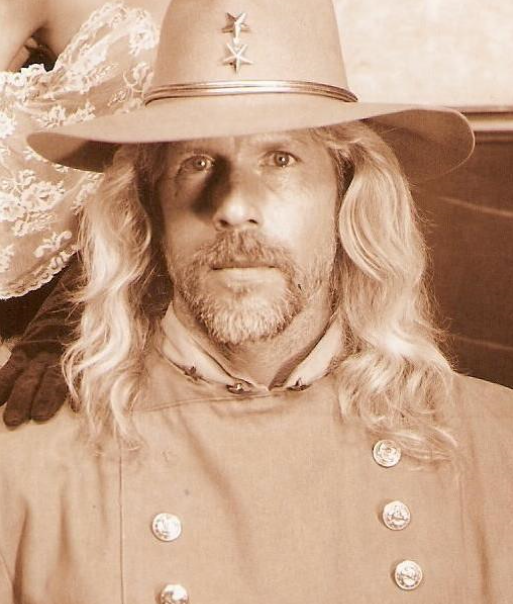
“And he hates him!“
“The Knights Templar Order and its ruling Council demand that this offensive and blasphemous image be removed forthwith,” the statement read.
The organisation noted that its criticism comes despite its previous political support for Trump, particularly during the 2016 and 2024 elections. It added that its backing in 2016 was even cited in reports by The New York Times as contributing to his electoral success.“

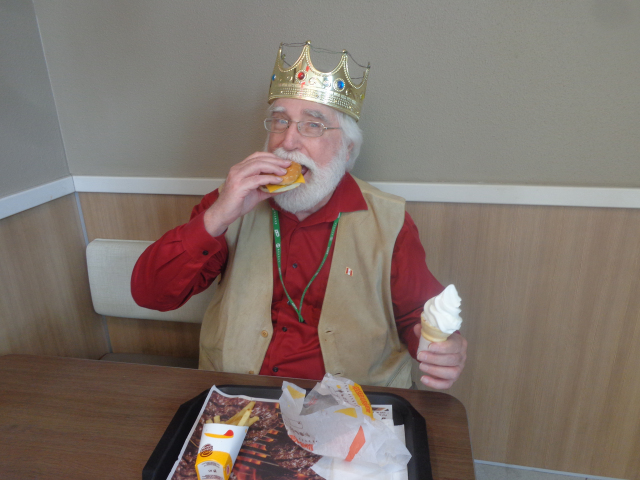
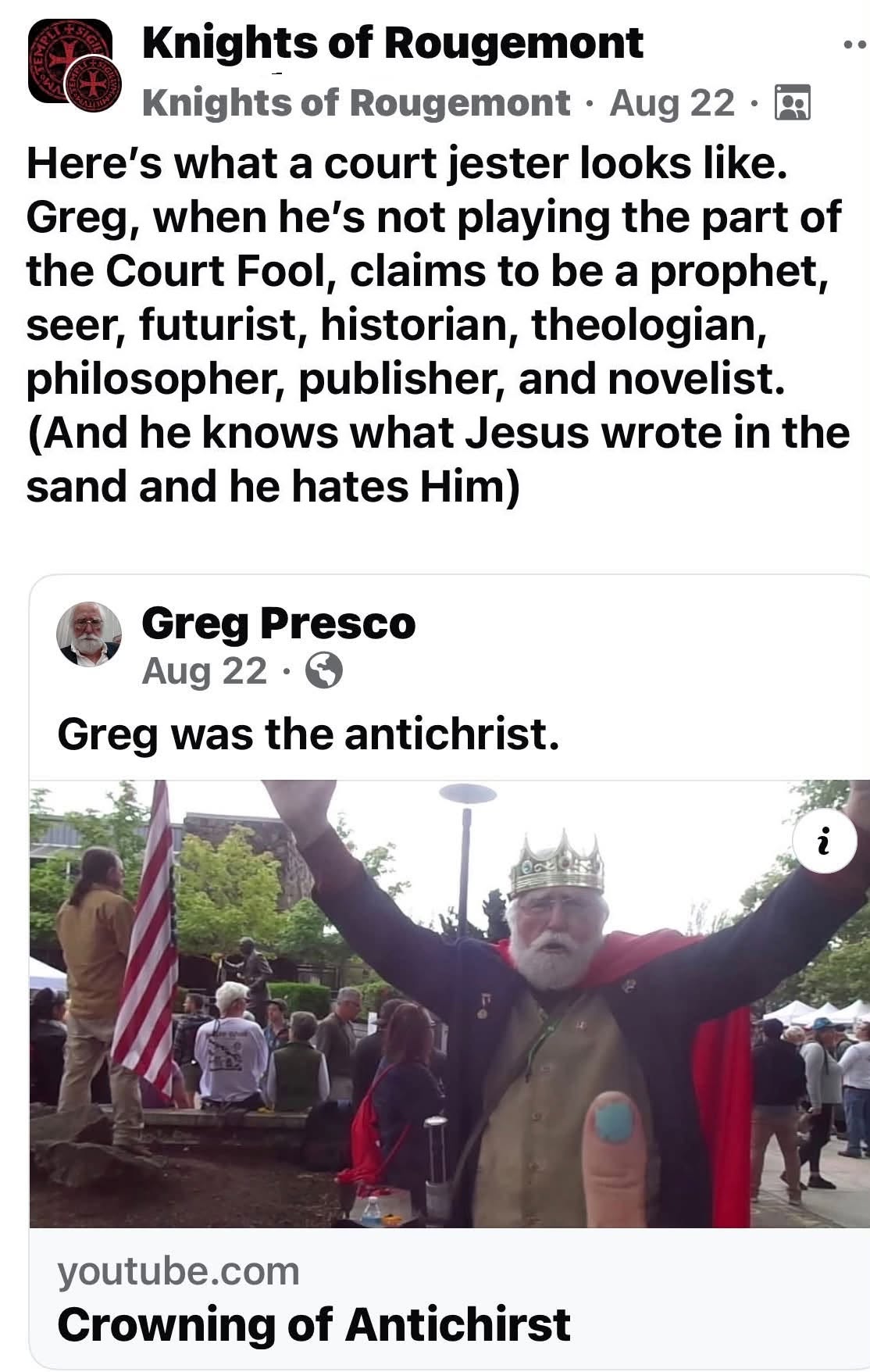
William Rozier made a meme of me that spells doom for all of humanity. Bill has been picking a Fight-Lites with me for – ten years? A month ago, The House of Rougemont, and The Knights of Rougemont – launched a full-scale assault on me and my Newspaper! Who wrote The Echoing Essay? I am depicted as a Fool, who at best ECHOES Bill’s sound claim to my long Rougemont Templars, because….
I HATE JESUS, AND, I AM THE ANTICHRIST! AND, BILL LOVES JESUS. AND WILL KILL FOR JESUS!
What a laugh! Of course the Antichrist hates Jesus, and is a prophet, and alleged Court Jester. Merlin was a magical advisor to King Arthur. I have known for twenty years that Merlin is a candidate for the Antichrist. Here’s my pick.
DARN! I tried to lift a pic of a blonde family with Confederate flag behind them. Here is replacement pic – of Bill Rozier coming to the rescue of White Southern Folks? The AI image appeared right after the Billy Boys did a meme of of me as
SANTA-FOOL
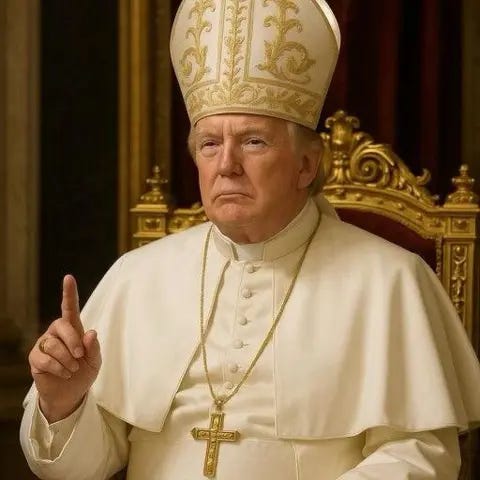
Did Bill’s un-named wife make this meme, where Bill is depicted as Samson? A Knights Templar group wrote President Trump and demanded he apologize for the meme he made of him as Jesus. Did they know this identities our President as
THE ANTICHRIST?
Trump has echoed Jesus – on many occasions! Do you think it is more important to identify Trump as THE ANTICHRIST, rather than me? Trump just attacked Iran again! Did he do so…..to get back in the good graces of……
THE KNIGHT TEMPLARS OF ROUGEMONT?
In the Echoing Essay, I am accused of delusional myth-making. I am a Wanna-be to Rozier, who champions the Confederacy, who lost the Civil War, but…..
THIS IS A LIE?
How many of you know, I got the best Templar Novel – ever? Let me add some music to Rozier’s equestrian entry!
John Presco
President: Royal Rosamond Press

Knights of Rougemont

Ancestors of Albert Pike: Confederate General and 33rd Degree Freemason
Many books have written about Albert Pike. Authors have discussed his early life and education, his travel to the western states, his history as an Oddfellow, Freemason, Knight of the Golden Circle, Ku Klux Klan and as a Native American advocate. They’ve dissected his writings, especially the Morals…
No, Merlin was not a court fool; he served as a royal advisor, prophet, and master magician in Arthurian legend. [1, 2]
Merlin’s Real Role
- Trusted Advisor: In tales like those by Geoffrey of Monmouth and Sir Thomas Malory, Merlin guides kings like Uther Pendragon and Arthur.
- Magician and Prophet: He uses magic to shape kingdoms, protect the realm, and build the Round Table. [1, 2, 3]
Historical Root
The group condemned the president via a statement issued in reaction to the image, and subsequently demanded its immediate removal. The group also called on the US president to issue a public apology to Christians worldwide.
“The Knights Templar Order and its ruling Council demand that this offensive and blasphemous image be removed forthwith,” the statement read.
The organisation noted that its criticism comes despite its previous political support for Trump, particularly during the 2016 and 2024 elections. It added that its backing in 2016 was even cited in reports by The New York Times as contributing to his electoral success.
However, the group said the controversial depiction had crossed a line, leaving it with no option but to openly denounce the president.
“We are deeply offended by this and have no other choice but to condemn it wholeheartedly and ask for a public apology to the Christian brethren who have been deeply upset by this depiction,” the statement added.
The group cited the Bible to support its stance and issued a warning against acts that it deemed derogatory to Christianity.
“We respectfully remind President Trump of the Bible Scripture found in Galatians 6:7: ‘God will not be mocked.’”
Why do you keep befriending a hater of Jesus, and, plastering your masked gun grunts on my pages? Are you spying on me, to make sure I don’t steal your Rougemont name? When did you discover you were related to Thibault de Rougemont. Here are more videos of the 3% Percenters clashing with the the Lesbians of Eugene. That rouge-cap got a bloody none. https://rosamondpre
Alright, Let’s Talk About the Antichrist
Sorry to ruin your fun.
Apr 15, 2026
This week, a not-insignificant contingent of President Trump’s most ardent followers were finally compelled to offer a modicum of lukewarm pushback to what was, for Trump, a completely normal post. Braggadocio, blasphemy, and the misappropriation of both Christian and American imagery for the purposes of self-aggrandizement are regular features of the inaccurately titled Truth Social platform, and Trump’s open derision of genuine faith has long been on public display, so why anyone in the world was surprised by Trump posting an AI-generated depiction of himself as Jesus Christ is baffling to me.
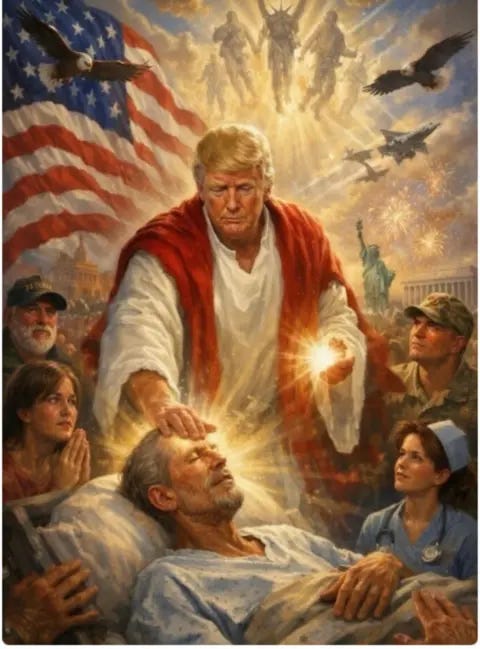
However, the post did manage to cause a bit of a stir, bringing to the surface not only the aforementioned tepid criticism from loyalists but a much more amusing response from the likes of Tucker Carlson, Candace Owens, and other grifters who have made a career out of sensationalist framing. Carlson has now implied, and Owens has outright stated, that Trump might in fact be the Antichrist.
No matter your religious background (or lack thereof), you’ve probably heard that term before. Perhaps you even have a vague sense, absorbed from pop culture via osmosis, that the Antichrist is a prophecied figure from the Bible; a future world leader who will deceive many and do…something. Maybe you’ve heard that someone in the Bible is prophesied to survive a head wound before returning to imperial power, or maybe you’ve just seen posts like these going around:
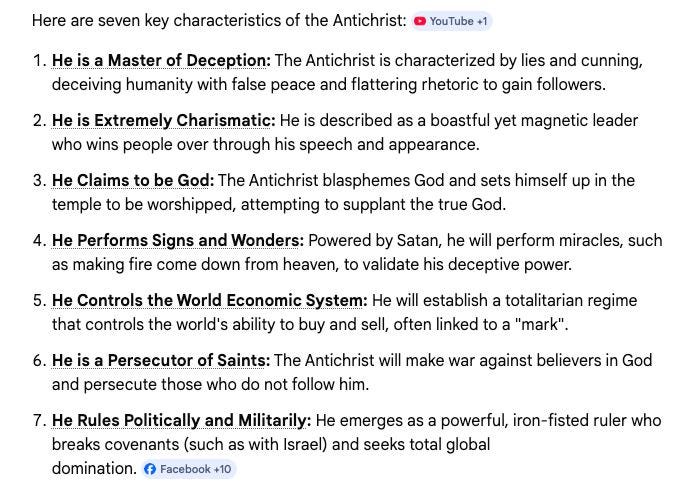
Let me state my thesis right here before we get into the weeds: Donald Trump is anti-Christ and antichrist, but he is not THE Antichrist. We will explore these claims in reverse order, before concluding with a far more accurate prefigurment of Trump from the Bible.
The primary reason I can confidently assure you that Trump is not the Antichrist is the simple fact that “THE” Antichrist is not a Biblical concept.1 Nowhere in the Bible is a future world leader named “The Antichrist” described, predicted, or warned about. The term “antichrist” appears only in the first two epistles of John and functions almost adjectively, primarily to describe a type of person rather than a distinct individual. Furthermore, John explicitly and unambiguously locates these figures (and the “end times” for that matter) not in the distant future but in his present day.
“Children, it is the last hour! As you have heard that antichrist is coming, so now many antichrists have come. From this we know that it is the last hour. They went out from us, but they did not belong to us, for if they had belonged to us they would have remained with us. But by going out they made it plain that none of them belongs to us….22 Who is the liar but the one who denies that Jesus is the Christ? This is the antichrist, the one who denies the Father and the Son.”
Two chapters later, John reinforces both the definition of what constitutes an antichrist and the present arrival of such people:
“And every spirit that does not confess Jesus is not from God. And this is the spirit of the antichrist, of which you have heard that it is coming, and now it is already in the world.”
John’s second epistle makes a brief mention of the (slightly narrowed) definition:
“Many deceivers have gone out into the world, those who do not confess that Jesus Christ has come in the flesh; any such person is the deceiver and the antichrist!”
That’s it. The verses you just read comprehensively exhaust the Bible’s mentions of “antichrist.” And they are not at all ambiguous. John could not be more explicit about what he means by the term or when his readers should expect to encounter such people. So how on earth did this clear category become an apocalyptic boogyman?
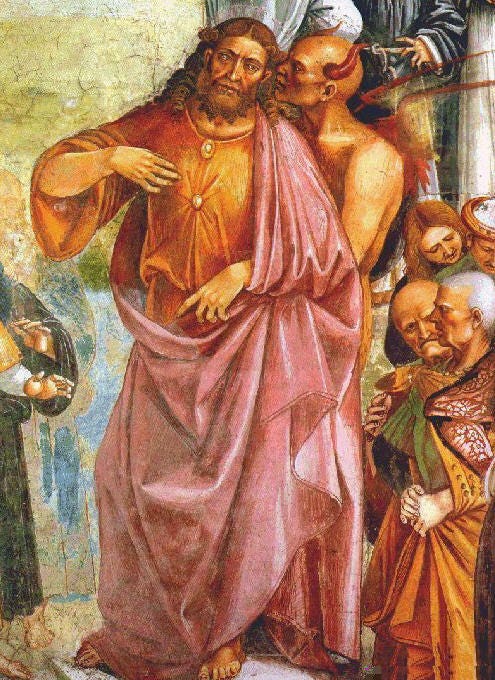
A comprehensive timeline or history of the antichrist’s evolution is beyond the scope of this article. Suffice to say, while vague and inconsistant notions of “the” Antichrist as a possible future figure can be found fairly early in Church history, the version of the concept visible in the “seven characteristics of the Antichrist” post above was popularized by 19th-century dispensationalist theology, and far more so by popular fiction such as the Left Behind novels or The Late Great Planet Earth. These books construct this end-times vision of the Antichrist by combining a diverse swath of Biblical imagery, including enigmatic figures such as the Beast of Revelation (contrary to popular opinion, the term “antichrist” does not appear a single time in the book of Revelation) or the Man of Lawlessness from 2 Thessalonians. These oblique characters are ripped kicking and screaming from their literary contexts, syncretized into a single individual under the title of “THE Antichrist,” and ascribed a myriad of unrelated Biblical imagery similarly wrenched from its natural surroundings before being thrown into a speculative and scattershot timeline of future events cobbled together in a manner of progression that only makes sense so long as every individual piece of the puzzel is only read as part of this creation and never examined in its original context.2
Everything from the Man of Lawlessness, to the Mark of the Beast, to any of the other imagery at play here, has a distinct and discernible meaning in its proper context and offers no indication that all of these images are pointing to the same (or even a single) figure. In many of these cases (the Beast of Revelation being one of them), we in fact know almost exactly what the author was alluding to, none of it having to do with some future supervillain who would rule the world through lies and crypto.3 The Antichrist, as popularly understood, is a product of Tim LaHaye, Jerry B. Jenkins, and Hal Lindsey, not the Bible.
However, even with all of that clarified, Donald Trump does not have to be THE Antichrist to be antichrist. John tells us that he who does not confess Christ is not from God and is of the antichrist’s spirit, and this perfectly describes Donald Trump. To “confess” that Christ is Lord is more than simply to state the words; to “confess” Christ is to publicly align oneself with Christ. The term implies commitment, loyalty, and genuineness, not the lackluster virtue signaling of a man who can’t name a single book of scripture and weilds upside-down Bibles as a photo prop. Donald Trump (and perhaps even more so the Christian leaders who champion him) is the epitome of taking the Lord’s name in vain, stating verbal allegiance while the entirety of his values, actions, and attitudes run absolutely counter to all Christlikeness. In no meaningful sense can Donald Trump be said to “confess” Christ as Lord, and so in this sense, he is most certainly antichrist.
Donald Trump is also a hateful, joyless, warmongering, impatient, cruel, brutal, impetuous, vengeful, corrupt, greedy, and self-serving brute who knows no authority other than his own ego and no morality other than his own impulse. He mocks the faithful, beats down the weak, persecutes the stranger among us, takes from the poor to give to the rich, champions selfishness and self-aggrandizement, lambasts forgiveness, teaches that might makes right, never apologizes, never repents, and can always be counted on to lie with the ease of a man without conscience. In every observable manner imaginable, Donald Trump stands as the absolute antithesis of Christ’s example and moral teachings, and thus, in every meaningful sense, one can say Trump is anti-Christ. But ironically, I actually think Trump was entirely in the right to depict himself as Jesus; the AI-generated image simply chose the likeness of the wrong Jesus. Donald Trump is not the Antichrist; he is Jesus Barabbas.
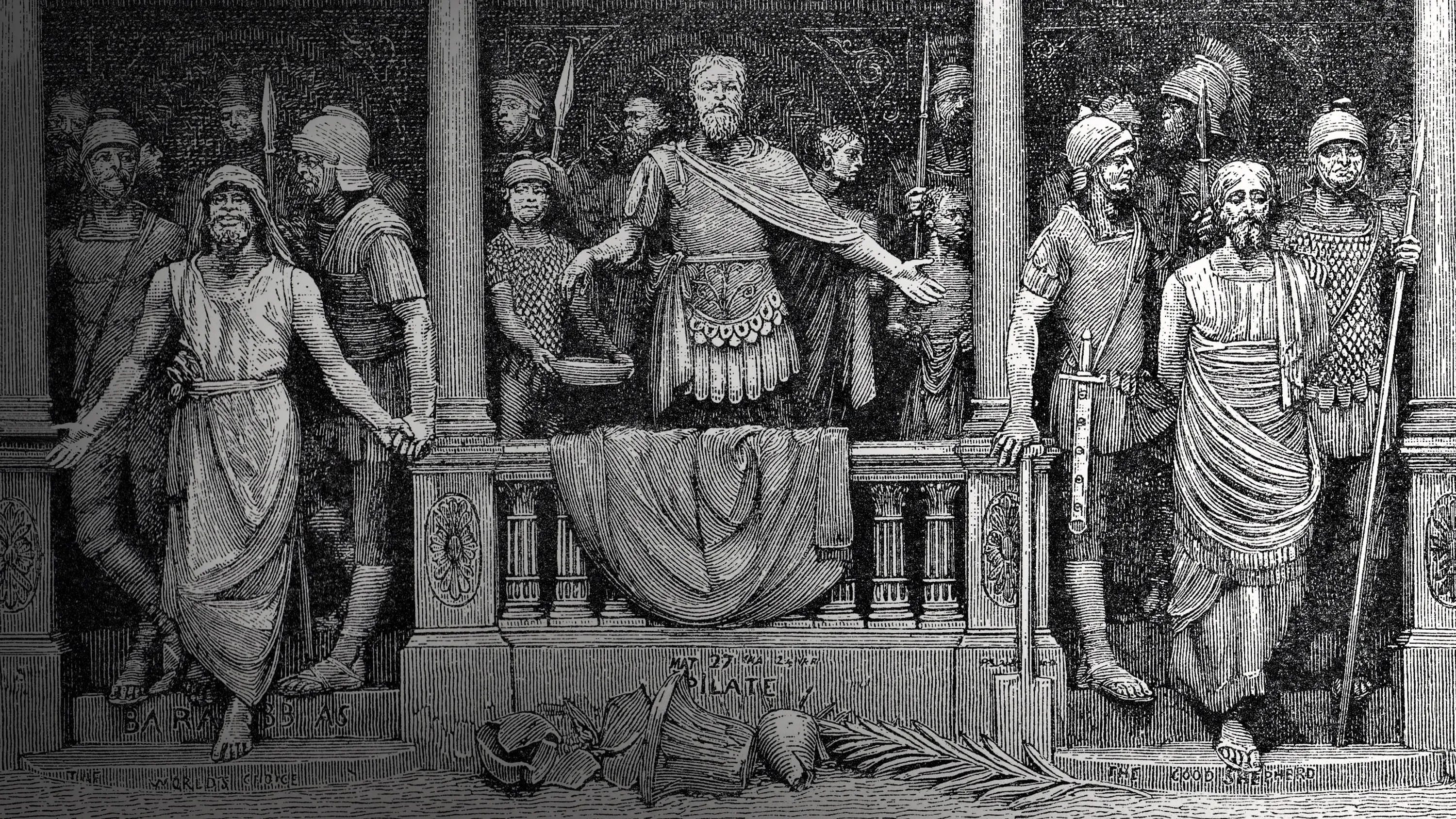
In the liturgy of my tradition, we recount this story on Palm Sunday. Pilate sets a choice before the crowd: would they like him to release Jesus Barabbas4 or Jesus who is called the Christ? Barabbas, described by the evangelists as a notorious bandit or revolutionary,5 gets no backstory or screen time beyond this brief pericope. But despite how little we know of him, in so many ways, Barabbas represented the messianic expectation subverted by Jesus’ ministry; he was a man of action and violence, apparently popular enough amongst the people for them to choose him over Christ. The rhetoric of the narrative is not subtle in the least: the people are asked to choose which Jesus they want, the aggressive revolutionary or the Prince of Peace. Their embrace of the violent option manifests not only in Barabbas’ release, but in the subsequent murder of the rejected Messiah, proving by blood which Jesus they chose. Our liturgy places us in that crowd, chanting for Brabbas’ release, to remind us how easy it is to replace Jesus with an idol of violence and political expedience.
This same choice is placed before American Christians today. Pope Leo XIV’s Palm Sunday homily included desperate pleas for peace, for the nations to lay down their arms, but more virally, it included a condemnation of those who use the name of God to justify their warmongering. The Trump administration took this personally, prompting a series of backdoor conversations between the White House and the Vatican. The tension erupted into public view when on April 12th, President Trump posted one of his signature tirades to Truth Social, lambasting the Pope as weak and woke, and followed this screed with the post depicting himself as Jesus Christ.
Ironically, this may be one of the most Biblical things Trump has ever done, as he poignantly and clearly laid the choice before the American people, showing them the alternative Jesus in all his faux-oil paint glory, the Jesus of political power, in stark contrast to the Christ of the Gospels. There can be no more concise or salient depiction of the “two ways” currently available to American Christians. Do you align with the leader calling for peace and encouraging classical Christian values, or do you choose the man of action, the man of violence, the insurrectionist, the unfettered grandiose bombast of might-makes-right? Who do Americans really want to follow, Jesus Barabbas or Jesus who is called Christ?
The earliest Christian catechism and liturgical guide, known to us as The Didache, opens with the invocation:
“There are two ways, one of life and one of death, and there is a great difference between the two ways.”6
This is the truth obfuscated by sensationalist nonsense about the Antichrist. Trump should not be feared because he’s the fulfillment of an ancient, recondite prophecy about the “end times.” The embrace of Trump should be feared, because choosing Trump’s worldly ways is choosing Barabbas over Christ. Choosing political expedience, violence, and domination of one’s enemies is a rejection of Christ and a ratification of his murder. The cry of the crowd before Pilate, “His blood be on us and on our children!” rings ever truer with each passing day, each needlessly murdered child in the world’s many warzones, each dead American demonized by this administration for their political opposition to its authoritarianism, each cruelly tormented immigrant ripped from their family or shipped to a third-world torture prison. Like the mob before Pilate, people call down judgment upon themselves, because darkness has come into the world and they loved darkness instead of light.
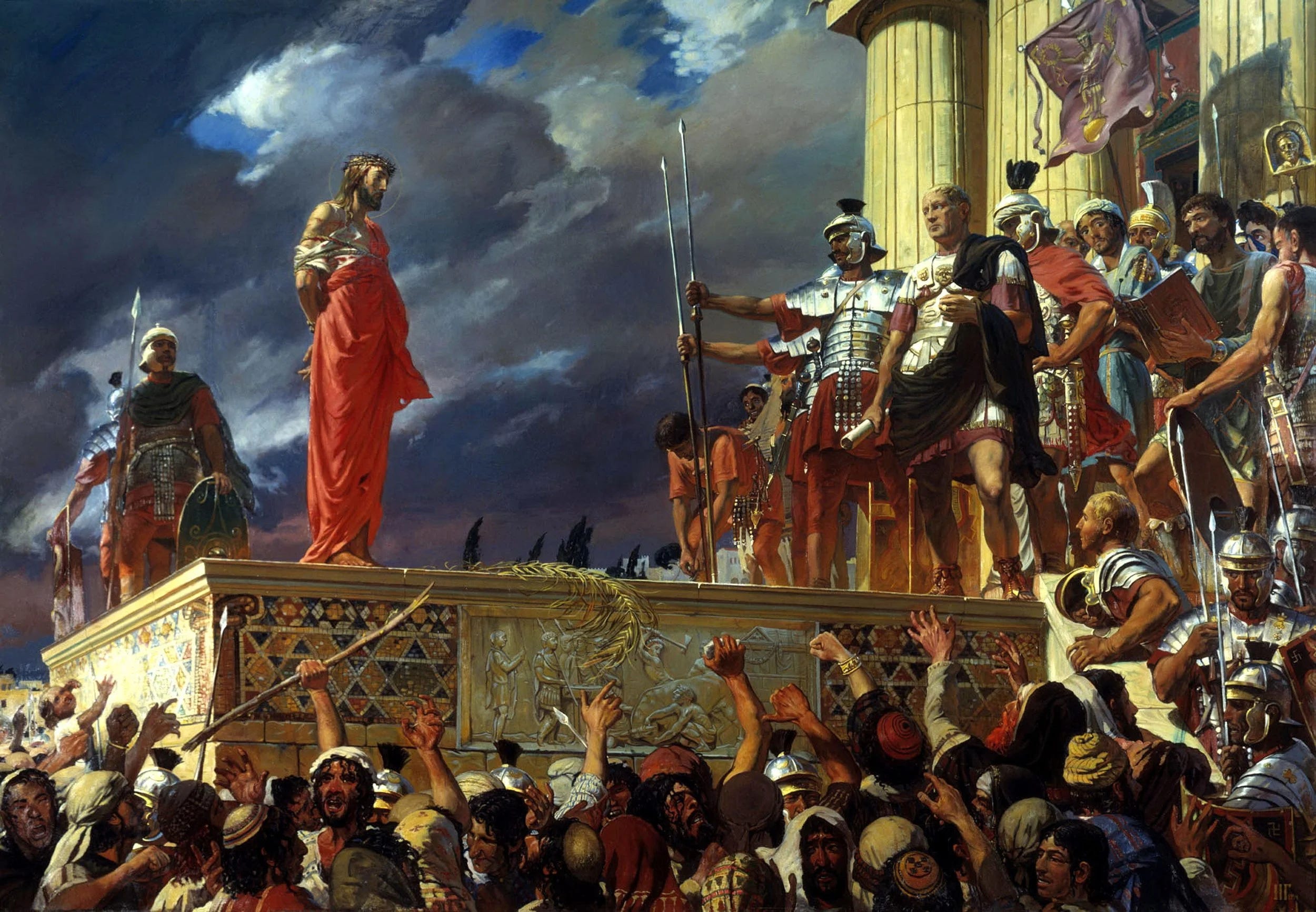
The brilliance of the Palm Sunday liturgy is that it forces the entire congregation to embody the role of calling for Barabbas. On the rare occasion that politics are as morally obvious as they are at present, with a clear cadre of villains in the way you rarely see outside of children’s books or World War II, it can be so easy to assume we who decry such things will always fall into the correct column, always reject the obvious evil, always bravely oppose the mob and call for the true Jesus. I’m sure the Apostle Peter thought of himself as possessing such moral resilience, right up until the moment he denied Christ three times.
We can and should debunk spurious nonsense such as “Trump is the Antichrist.” We can and should oppose the abject evil he and his ilk perpetrate on our and other countries. And we can and should call out the millions who passively or actively enable these horrific actions. But if we allow ourselves to forget our own susceptibility to denying Christ, we risk joining the next mob and watching Pilate wash his hands of our calls for murder. There are indeed two ways set before us, but that binary is not a one-time decision; the choice of life must be made daily, hourly, fervently, humbly, and desperately, working out our salvation by the grace of God with fear and trembling.
No, Merlin was not a court fool; he served as a royal advisor, prophet, and master magician in Arthurian legend. [1, 2]
Merlin’s Real Role
- Trusted Advisor: In tales like those by Geoffrey of Monmouth and Sir Thomas Malory, Merlin guides kings like Uther Pendragon and Arthur.
- Magician and Prophet: He uses magic to shape kingdoms, protect the realm, and build the Round Table. [1, 2, 3]
Historical Root
c
 Rosamond Press
Leave a comment