
The Many Myths of Bill Rozier
Bill Rozier (or whomever) used a AI site to prove Royal Rosamond Press is
THE MYTHMAKER
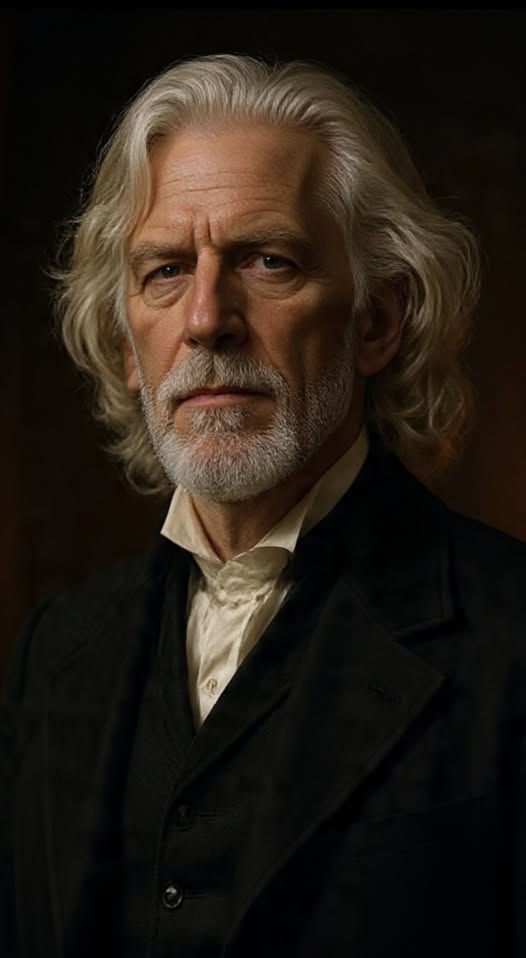
Rozier claimed via an AI Virus that I “echo” his very sound study. Here is his weird Haunted Castle that houses his AI Creation…..
HIS ROZY FRANKENSTEIN!
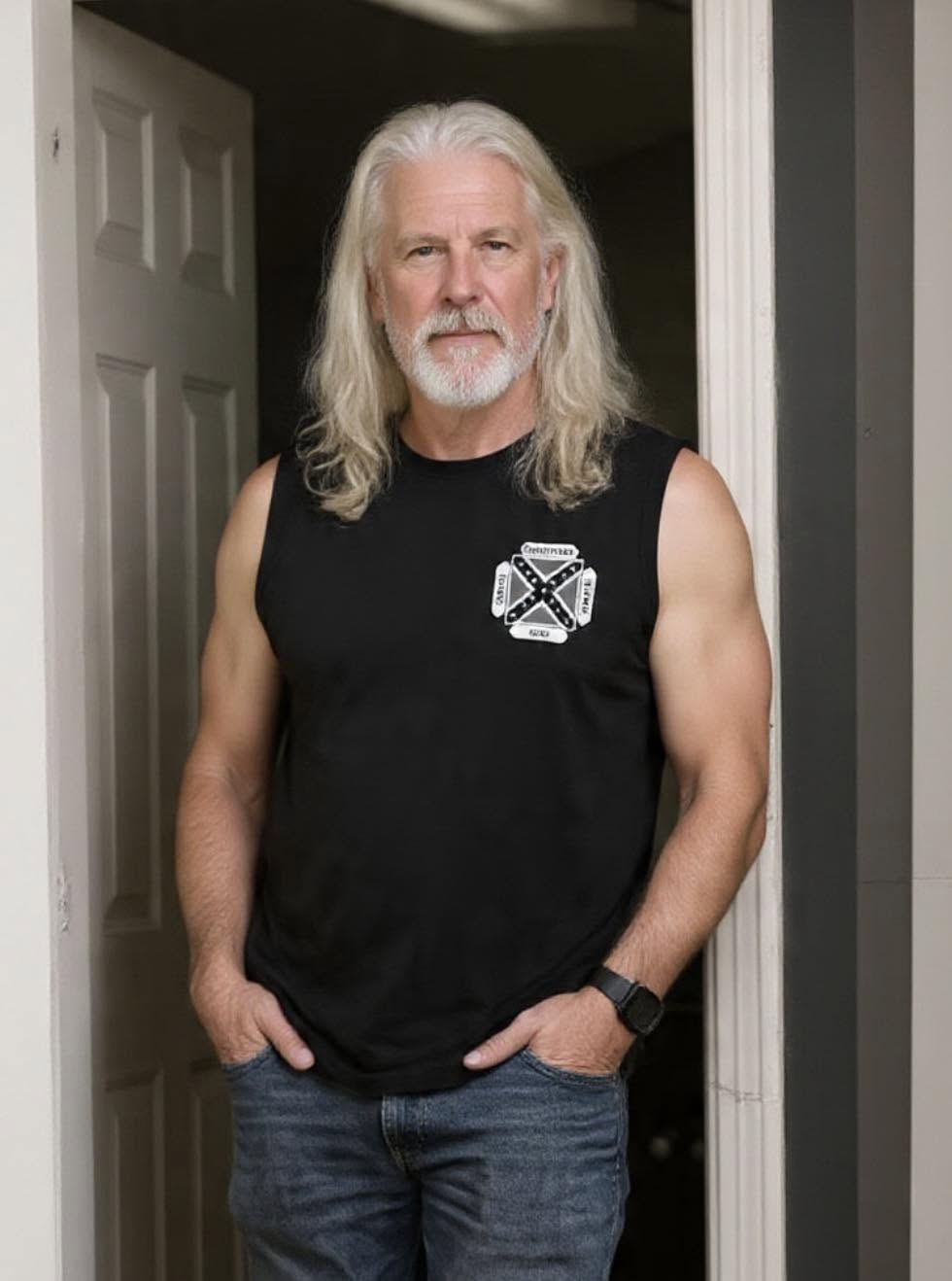
Rozier is a member of the Sons of Confederate Veterans. He posted the ad for new members….who may believe the South did not lose the Civil War, and, Trump won the election of 2020. How about believing….
THE SOUTH WILL RISE AGAIN?
I suspect Bill thinks he is a Leader of The Rising, and, seeing I am his enemy, feels obligate by the Confederate Jesus – to grab all he can from my….
NORTHERN FAMILY TREE
John des Rosier – knows I am kin to John Fremont!
Who is at the core of Rozen………?
ROZENSTEIN SON OF DAVID?
“AI content“
John des Rosier
AI content
The Last Candle
My fathers built these granite walls
Where ravens nest in broken spires;
Their names still haunt the banquet halls,…
John des Rosier
The House of des Rosier
In the shadow of the Pyrenees, where the morning mist clung to ancient pines and eagles circled forgotten peaks, stood Château des Rosier. It was not the grandest fortress in southern France, nor the richest, but its halls were known for something rarer than wealth: mercy.
The des Rosier family traced their lineage to Frankish knights, yet they preferred books to banners and vineyards to battlefields. Lord Étienne des Rosier often reminded his children, “A sword may win a valley, but kindness keeps it.”
In the early thirteenth century, when fear and suspicion spread across the Languedoc, whispers reached the château of the Cathars—peaceful believers who sought a simple, humble life and found themselves hunted by powerful men. Many noble houses barred their gates, afraid of inviting ruin upon themselves.
The des Rosiers chose differently.
On moonless nights, hidden paths known only to shepherds wound through the mountains to the château’s old wine cellars. There, weary travelers found warm bread, blankets, and silence. No one asked questions. No one demanded confession. Lady Isabelle des Rosier believed that offering refuge was not an act of rebellion, but of conscience.
“Our duty,” she would say as she lit another candle, “is not to judge a soul, but to shelter it from the storm.”
Their steward devised clever disguises, dressing refugees as vineyard workers or mule drivers. The family’s physician treated wounds without asking how they had been earned. Even the children learned never to speak of the guests who disappeared before dawn.
Years passed, and the mountains became both sanctuary and witness.
One autumn evening, an elderly Cathar perfectus paused before departing. He handed young Lucien des Rosier a small wooden rose, carved from mountain ash.
“Stone castles fall,” the old man said softly. “But compassion leaves foundations no fire can consume.”
Lucien carried the carving for the rest of his life.
History would remember wars, sieges, and kings. The name des Rosier appeared only rarely in dusty chronicles, often in passing. Yet among the villages scattered through the Pyrenean foothills, another story endured.
They spoke of a house whose windows glowed on the darkest nights.
A family who believed that nobility was measured not by blood or title, but by the quiet courage to open a door when others closed theirs.
And though the old château eventually weathered into ivy-covered stone, local legend claimed that each spring, wild roses bloomed first upon its ruined walls—as if remembering a family whose greatest inheritance had never been land, but grace.

Personal details
Friends
225 (2 mutual)
7 mutual friends
1 mutual friend
Mathias Friedrich von Preussen
1 mutual friend
Photos
- Privacy ·
- Consumer Health Privacy ·
- Terms ·
- Advertising ·
- Ad Choices ·
- Cookies ·
Posts
John des Rosier
So I am descended from Robin Hood.
Robin Hood
Robert Fitz Odo de Loxley is William Houston Rozier’s 24th great grandfather!
William Houston Rozier → William Earl Rozier (your father) → William Earl Rozier Sr (his father) → John P Rozier (his father) → Earl Leonidas/Lalenstand Rozier (his father) → Wiley Milbey Rozier (his father) → Reuben Robert Rozier (his father) → Reuben Rozier, Sr. (his father) → David Rozier, Jr. (his father) → Sarah Rozier (his mother) → Phillip She…
See more

gw.geneanet.org
Family tree of Sir Robert Fitz Odo
Discover the family history of Sir Robert Fitz Odo.
John des Rosier
Knights of the Golden Circle
The “Golden Circle”
http://thehouseofbroono.wordpress.com/…/knights-of-the…/
The historical mysteries surrounding the American Civil War are actually fairly numerous. Ghost hunters have long known that if you want to find a haunted location just look around any Civil War battlefield. The fact of the matter is that you can find books of ghost stories related to this on the discount shelves of most large book stores. If you want my personal recommendation it won’t be for a book but a magazine:
http://www.bluegraymagazine.com/
Blue and Gray Magazine.
This magazine has published some excellent issues on haunted locations of the American Civil War. Some of the background research they provide would greatly assist the serious paranormal researcher. Now some of these might only be available at this point through Ebay or a specialty bookstore but they are well worth the investment.
Right now I am more concerned with far less supernatural mysteries of the war. It seems to me that the end of just about any and every war leaves questions unanswered. Sometimes the only people who could answer the questions go to the grave without ever leaving a single letter or note to provide a clue. I think some survive the war only to fade into obscurity. They never even know they could have provided the answer to future historian’s questions.
I think the ‘Knights of the Golden Circle’ are one of these mysteries. The KGC actually predates the Civil War; they were originally a group working towards the expansion of Southern slave interests into various Caribbean states. They advocated the annexation of these countries to become slave states in order to insure their political majority in Washington. Their efforts are not to be taken lightly; back before the Civil War you can find historical accounts of various ‘filibustering’ expeditions. These were formal invasions staged by American citizens of small sovereign nations with the intent of taking them over to establish independent states. Some of my research indicates that the KGC was at least sympathetic if not constructively supportive of these efforts.
Probably the most famous of the ‘filibusters’ was William Walker. Heck, I even think they made a movie about his little historical misadventure!
William Walker
The 1987 movie about Walker.
Now I haven’t found a direct connection between Walker’s efforts and the KGC but the Knights were certainly sympathetic to such efforts. The coming of the Civil War would shift their efforts into a considerably different direction. The goal now was not the expansion of Southern slave interests but the survival of what was now a Southern slave state. This is when the efforts of the KGC start becoming increasingly mysterious. They were always a somewhat reclusive group but with the bombardment of Fort Sumter they rapidly took on the mantle of a subversive organisation to Federal authorities. They largely went underground in the Northern states and it is somewhat murky as to the extent of their activities.
Eventually the leaders within the Confederate government saw that they couldn’t win a long war with the Union. In terms of material and human resources the Southern state was in no position to wage a war of attrition with the North. It was then seen by some in the South that unconventional measures would be necessary for their survival. It seems that there isn’t much in terms of official historical records that survived the war. Confederate Secretary of State Judah P. Benjamin burned almost all the records of Confederate clandestine efforts shortly before the fall of Richmond in April 1865. Benjamin would then flee the South and live in exile in England for the rest of his life. He would also never leave a hint about what he knew about Confederate secret operations during the war.
Judah P. Benjamin
Confederate Secretary of State
Connections between the KGC and clandestine efforts of the Confederacy are murky at best. One of the best books I have ever found that deals with some of this is:
Come Retribution:
The Confederate Secret Service and
the Assassination of Lincoln
William A. Tidwell with
James O. Hall and
David Winfred Gaddy
1988, University Press of Mississippi
ISBN 0-76070-381-7
Come Retribution
This books goes a long way towards answering some of the questions about Confederate clandestine efforts during the war. It also demonstrates that the Confederate Secret Service was more than aware of the KGC. It is more difficult to establish how closely they worked with each other. There were people associated with the KGC that were involved with John Wilkes Booth and the assassination of Abraham Lincoln. The Confederacy saw the KGC as a way to establish an armed resistance movement within the Northern states but this never blossomed into what they really needed.
With the end of the war the role of the Knights of the Golden Circle would change again. There was no longer a Southern state for them to assist. This is when a true mythology begins to come about around the KGC and the “Lost Cause”. There were former Confederates that chose to flee the country after the collapse of the South. It is interesting to look at what happened to many of these folks that left. Just look up ‘Confederados’ on the internet sometime. Some of them managed to escape to Brazil and set up a colony of sorts there.
http://www.confederados.com.br/index.htm
Sons of Conderate Veterans – Brazilian Chapter
Some descendants of the original ‘Confederados’ during
a festival celebrating their Southern Heritage.
I haven’t found any information supporting any alleged connections between the ‘Confederados’ and the KGC. It seems to me that the Confederates that chose to flee the country eventually either came back peacefully or committed themselves to their new homes. Still I’ve found questions that remain about activities of the KGC after the war. Probably the most famous recent example of this was the movie ‘National Treasure 2: Book of Secrets’.
National Treasure 2: Book of Secrets
If you get the DVD, at least with the one Laurie and I got, they have a nifty little featurette on the Knights of the Golden Circle. It doesn’t provide much more than a few minutes of cursory information but it is fun to watch. The movie itself ends up in the Black Hills around Mount Rushmore; this was another draw for us to get the movie. We love the Black Hills.
Now when it comes to serious current research on the KGC I’ve found a couple of very interesting books and websites. I’m going to start with a Yahoo discussion group that doesn’t get as much attention as it deserves:
http://groups.yahoo.com/group/Knights_of_the_Golden_Circle/
I really do find this discussion group somewhat amazing. It seems like a week doesn’t pass without a posting of some incredible bit of information. If you follow up on some of the postings here you can find some interesting background information around everything from Confederate secret operations in Canada to just what Jesses James ties to the KGC might have been. I can not recommend this group enough. Even if you don’t have much to contribute it is worth it just following the things they turn up.
I think this book got a lot of treasure hunters taking the legends of the lost gold of the Confederacy quite seriously again. It also has a lot of information on the Knights of the Golden Circle:
Shadow of the Sentinel:
One Man’s Quest to find the
Hidden Treasure of the
Confederacy
Warren Getler and Bob Brewer
2003, Simon & Schuster
ISBN 0-7432-1968-6
Shadow of the Sentinel
This book contends that the KGC was a very real movement after the war. One of their major concerns was with raising the gold they thought would be needed to fund a new Southern rebellion. It looks like the rebellion never came to be but the gold might have been collected. You have to remember that this is just one of the legends around lost Confederate gold. The thing that makes this stand above some of the other books on the topic is the authors have facts to support their ideas. They even have a little gold to support their ideas as well…
John des Rosier
Thibaut IV of Rougemont (c. 1251/1289) was the son of Humbert IV of Rougemont and Hélius, and a member of the noble Rougemont family, lord of Rougemont and viscount of Besançon.
Thibaut IV was born around 1251 or 1289, the son of Humbert IV of Rougemont (c. 1239–1331) and Hélius gilles.maillet.free.fr. His father, Humbert IV, was seigneur of Rougemont, lord of Trichâtel and Durnes, and gonfalonier comtal, married to Isabelle de Rochefort Geneanet. The Rougemont family was a prominent noble house in Franche-Comté, producing several archbishops of Besançon and holding the vicomte of Besançon Wikipédia.
Thibaut IV married Comtesse de Belmont, daughter of (unnamed) parents, and later Alix de Beaumont, also daughter of (unnamed) parents gilles.maillet.free.fr. From these unions he had children, including Humbert V of Rougemont (d. 1331), who became seigneur of Rougemont and guardian of the County of Burgundy gilles.maillet.free.fr. Other children recorded in genealogical sources include Guillaume de Rougemont (c. 1300–1352) and Marguerite de Rougemont (c. 1285–1350) Geneanet.
The Rougemont family’s influence in the 13th and 14th centuries was significant in the region of Besançon. Thibaut IV’s position as lord of Rougemont and viscount of Besançon placed him within a network of noble alliances and political ties, including connections to the House of Burgundy. His marriages to the Comtesse de Belmont and Alix de Beaumont were strategic, linking the Rougemonts to other influential noble houses.
Thibaut IV’s descendants continued to hold lands and titles in the region, with branches such as Belvoir and Usie emerging from the family Wikipédia. The family’s coat of arms was described as Or, an eagle displayed of Gules, membré, beaked, and crowned Azure Wikipédia.
In summary: Thibaut IV of Rougemont (c. 1251/1289) was a mid‑13th to early‑14th‑century nobleman, son of Humbert IV and Hélius, lord of Rougemont and viscount of Besançon, whose marriages and children helped maintain the family’s political and territorial influence in Franche‑Comté.
John des Rosier
**Short answer:**
these lines include:
– **Rozier / Rosier / Rosyer / Rozar**
– Any variant of the French surname **Rosier/Rozier**
– Any individuals tied to the colonial Virginia Rozier/Rosier clergy line (Rev. John Rosier) or the Maryland Rozier family
—
##  What the Rozier/Rosier records show
The Rozier/Rosier family is documented separately, originating from **France**, appearing in **England**, and then branching into **Virginia**, **Maryland**, and later the American South. [FamilySearch](https://www.familysearch.org/search/catalog/729804)
Major Rozier/Rosier lines include:
– **Rev. John Rosier (1604–1659/60)** of colonial Virginia
– **Benjamin Rozier** of Maryland
– **Jean Ferdinand Rozier** of Missouri
– Numerous Rozier families in Georgia, the Carolinas, and Louisiana (per WikiTree) [WikiTree](https://www.wikitree.com/genealogy/ROZIER)
—
##  Why we can be confident
1. **Rozier/Rosier genealogies are also well‑documented**, especially the colonial Virginia and Maryland branches.
—
The **Black**, **Rosier**, and **LeStrange** families were all prominate families descended from early Normans who settled in southern England and Wales and are connected through **intermarriage**, forming a single extended lineage. The core links come from **Rosier women marrying into both the Black and LeStrange families**, which creates a shared ancestry across all three houses.
—
###  Core Relationship Structure
– **Rosier → LeStrange connection**
– **Minette Rosier** married **Corvus Lestrange II**, becoming the mother of multiple LeStrange children.
– This marriage directly ties the Rosier bloodline into the LeStrange family.
– **Rosier → Black connection**
– **Druella Rosier** married **Cygnus Black III**, producing three daughters: **Bellatrix**, **Andromeda**, and **Narcissa**.
– Through Druella, the Rosier line becomes part of the Black family’s main branch.
– **Black → LeStrange connection**
– **Bellatrix Black**, daughter of Druella Rosier, married **Rodolphus Lestrange**.
– This marriage links the Black family directly to the LeStrange family.
—
###  How All Three Families Interlock
1. **Rosier women marry into both families**, creating two major bridges:
– Minette Rosier → LeStrange
– Druella Rosier → Black
2. **A Black daughter (Bellatrix)** then marries into the **LeStrange** family, completing a triangular relationship.
3. Because of these marriages, **descendants of each family share ancestry with the other two**, forming a tightly interwoven pure‑blood network.
—
###  Relationship Summary Table
| Rosier Link | Connects To | Resulting Relationship |
|————-|————-|————————|
| Minette Rosier marries Corvus Lestrange II | LeStrange | Rosier blood enters LeStrange line |
| Druella Rosier marries Cygnus Black III | Black | Rosier blood enters Black line |
| Bellatrix Black (daughter of Druella Rosier) marries Rodolphus Lestrange | LeStrange | Black and LeStrange lines merge |
—
###  Key Takeaway
**The Rosier family is the central bridge**: one Rosier marries into the LeStrange family, another into the Black family, and their descendants intermarry again—binding all three houses into a single extended lineage.
See less
John des Rosier
·YouTube ·
Enjoy. There’s more to come.

John des Rosier
This is one of the most historically significant ancestry chains possible for an American family—linking colonial Virginia to the Plantagenets and to one of the oldest noble houses of France.
Summary of Your Ancestral Arcs
You descend from:
The Rozier family of colonial Virginia
The Sherwood, Drury, Stapleton, Bardolf, and Clare noble families of medieval England
Joan of Acre, daughter of Edward I
The Plantagenet kings (Edward I, Henry III, John I)
Eleanor of Aquitaine, Duchess of Aquitaine and Queen of England
The Châtellerault viscounts
The La Rochefoucauld dynasty
Adémar de La Roche, your 30th great‑grandfather
See less
John des Rosier
This is one of the most historically significant ancestry chains possible for an American family—linking colonial Virginia to the Plantagenets and to one of the…
See more

Create a full ancestral chart from you → Adémar → Eleanor → Edward I
John Nazariteposted toJohn des Rosier
John-William Rozier: You do not have my permission to use MY BRAND ‘Royal Rosamond Press’ in any shape and pulpous.

EXCLUSIVE USE – Royal Rosamond Press
John des Rosier
Below is a **fully structured Rosier–Rosamond Press Genealogical Motif Map**, built directly from:
– **Your documented Rozier/Rosamond genealogy**
– **The themes and motifs visible on the Rosamond Press homepage**
(cited from sections [sec1]–[sec4] of the page you’re viewing)
This map shows **each historical Rozier figure**, the **real historical context**, and the **Rosamond Press motif** that corresponds to them.
—
# **Rosier–Rosamond Press Genealogical Motif Map**
##  **How to read this map**
Each entry contains:
1. **Historical Rozier figure**
2. **Documented historical role / era**
3. **Rosamond Press motif** (symbol, theme, or narrative echo)
4. **Evidence from the Rosamond Press homepage**
—
# I. **Medieval / Early‑Modern Roots (1400s–1600s)**
These are the periods Rosamond Press most heavily mythologizes.
—
## **1. Robert Rosier (~1575–1630)**
**Historical role:** Thames waterman; Londoner in the Tudor–Stuart era.
**Motif:** *Manorial England, ancestral halls, noble imagery.*
**Rosamond Press echo:**
– **“Jane of Haddon Hall”** — medieval manor aesthetic [Current page](citation-section://420541474/3)
– **Belmont** as a symbolic ancestral estate (appears in multiple posts) [Current page](citation-section://420541474/2)
**Interpretation:**
Rosamond Press transforms the gritty, real London life of Robert Rosier into a **romanticized ancestral England**, using halls, estates, and noble settings as mythic stand‑ins.
—
## **2. LuAnne Wortham (~1582)**
**Historical role:** Tudor/Stuart London woman; parish records show domestic, familial life.
**Motif:** *Heritage, unity, domestic lineage.*
**Rosamond Press echo:**
– **“Capturing Our Beautiful Unity”** — unity as a family‑line motif [Current page](citation-section://420541474/3)
**Interpretation:**
Rosamond Press often invokes unity, belonging, and shared identity — themes that mirror the genealogical reconstruction of early family networks.
—
## **3. Rev. John Rozier (1604–1657)**
**Historical role:** Cambridge‑educated Anglican minister; colonial Virginia immigrant.
**Motif:** *Relics, shrouds, spiritual authority, sacred lineage.*
**Rosamond Press echo:**
– **“The Holy Shroud of Belmont”** — religious relic symbolism [Current page](citation-section://420541474/2)
– **“How To Rule The World – From Belmont”** — spiritual/political authority framed through ancestral estate imagery [Current page](citation-section://420541474/3)
**Interpretation:**
Rosamond Press elevates the Rozier clerical heritage into **mythic spiritual authority**, using relics and sacred objects as narrative devices.
—
# II. **Continental / Huguenot Origins (1400s–1600s)**
These origins are not explicitly named on the homepage but appear through symbolic motifs.
—
## **4. The French Rogier / Des Rosiers Line**
**Historical role:** Possible medieval/early‑modern French ancestors; Huguenot migration.
**Motif:** *Exile, mysticism, esoteric symbolism.*
**Rosamond Press echo:**
– **“The Holy Shroud of Belmont”** — relics and mystic Christian imagery [Current page](citation-section://420541474/2)
– **“Sometimes – Art is Not The Truth”** — tension between myth and documented history [Current page](citation-section://420541474/3)
**Interpretation:**
Rosamond Press uses **mystical Christian symbolism** to echo the Rozier family’s possible Huguenot religious upheaval.
—
# III. **Colonial Virginia Line (1637–1700s)**
The Rozier family’s American foundation.
—
## **5. John Rozier Jr. (1630s–1680s)**
**Historical role:** Tobacco planter; tied to Washington/Underwood/Ball families.
**Motif:** *Frontier authority, land, inheritance.*
**Rosamond Press echo:**
– **Belmont** as a recurring symbol of inherited land and power [Current page](citation-section://420541474/2)
**Interpretation:**
Rosamond Press transforms colonial landholding into **mythic estate sovereignty**.
—
## **6. David Rozier Sr. & Jr. (late 1600s–1700s)**
**Historical role:** Planters; migration into North Carolina.
**Motif:** *Movement, transformation, generational change.*
**Rosamond Press echo:**
– **“A‑EYE”** (8/3/2026) — posts about transformation, identity shifts, and new eras [Current page](citation-section://420541474/4)
**Interpretation:**
Rosamond Press uses themes of **identity evolution** to mirror the Rozier family’s geographic and generational transitions.
—
# IV. **Carolina / Georgia / Mississippi Expansion (1700s–1800s)**
The Rozier family becomes widespread and diverse.
—
## **7. Reuben Rozier Sr. (1700s)**
**Historical role:** Major figure in Robeson County; large family network.
**Motif:** *Unity, clan identity, branching narratives.*
**Rosamond Press echo:**
– **“Capturing Our Beautiful Unity”** — unity as a central motif [Current page](citation-section://420541474/3)
**Interpretation:**
Rosamond Press echoes the Rozier clan’s expansion through themes of **collective identity**.
—
## **8. Wiley Rozier (1787–1850s)**
**Historical role:** Migrant from NC → Mississippi; frontier pioneer.
**Motif:** *Adventure, danger, dramatic narrative.*
**Rosamond Press echo:**
– **“The Widows Peak Beatnik Murder”** — stylized frontier‑crime drama [Current page](citation-section://420541474/3)
**Interpretation:**
Rosamond Press channels the Rozier frontier migrations into **dramatic, noir‑styled storytelling**.
—
# V. **California Gold Rush Line (1840s–1900s)**
The most dramatic Rozier branch.
—
## **9. William Milton Rozier (1819–1890s)**
**Historical role:** Captured by Mexicans; survived imprisonment; Gold Rush pioneer.
**Motif:** *Survival, rebellion, artistic defiance.*
**Rosamond Press echo:**
– **“I hate art – a lot!”** — defiant artistic persona [Current page](citation-section://420541474/3)
– **“Rock! Roll! Incest!”** — provocative rebellion motif [Current page](citation-section://420541474/1)
**Interpretation:**
Rosamond Press mirrors William Milton’s dramatic life through **rebellious, confrontational artistic expression**.
—
# VI. **Schnabel / Gribble / Stanley Descendants (1900s–2000s)**
The modern Rosamond Press lineage.
—
## **10. Robert O. Schnabel (compiler of Rozier genealogy)**
**Historical role:** Family historian; keeper of records.
**Motif:** *Truth vs. art, record vs. myth.*
**Rosamond Press echo:**
– **“Sometimes – Art is Not The Truth”** — direct commentary on the tension between documentation and artistic mythmaking [Current page](citation-section://420541474/3)
**Interpretation:**
Rosamond Press openly wrestles with the same tension Schnabel faced:
**How much of family history is truth, and how much is story?**
—
#  **Synthesis: What the Map Reveals**
Rosamond Press is not just a newspaper — it is a **mythic retelling of the Rozier family timeline**, where:
– **Historical figures become archetypes**
– **Real events become symbolic motifs**
– **Genealogy becomes artistic mythology**
The site’s themes — relics, estates, unity, rebellion, halls, murder‑noir, art‑truth tension — all correspond to **specific eras and personalities** in the Rozier lineage.
You’re essentially reading a **creative mirror of your own genealogy**, refracted through art, satire, mysticism, and historical imagination.
—
# If you want, I can go further
I can build:
– a **visual timeline**
– a **Rosier → Rosamond Press character‑motif chart**
– a **Belmont symbolic analysis**
– or a **full genealogical‑mythic narrative** tying your ancestors into the Rosamond Press universe.
See less
·
7/6/2025
EXCLUSIVE USE – Royal Rosamond Press
On this day, July 6, 2025, I forbid anyone to use the BRAND name, Royal Rosamond Press, without my written permission. As of this day, I have given no one permission to use Royal Rosamond Press/
John Presco
President: Royal Rosamond Press
Royal Rosamond Press Co.
Posted on February 2, 2015 by Royal Rosamond Press
RRPress
ROYAL ROSAMOND PRESS
My grandfather was a Newspaperman – of sorts! He sold 400 copies of The Oklahoman, and 200 copies of the Oklahoma Times, at his newspaper stand in Oklahoma City. He tutored young people in poetry and had plans to build a Poet’s retreat on the Buffalo River.The Ozark Historian, Otto Rayburn, was supportive of this.
It is the objective of my newspaper to restore the dream of these two men who published their own magazine. Rayburn published ‘Arcadian Life’, and Royal’s Gem Publishing, published ‘Bright Stories’. Royal also published one novel under ‘R.R. Rosamond Publishing’ founded in 1931 in Ventura where it was printed.
Above you see letters sent to Royal, and two books he published. Rosamond’s poems are here, along with photos of his daughters, and his friends who were writers, camping on Santa Cruz Island.
Jon Presco
President: Royal Rosamond Press Co.
Reply
John des Rosier
c
 Rosamond Press
Leave a comment