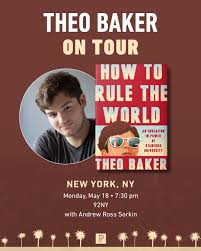
Theo Baker
Theo Baker (born 2005)[1] is an American student journalist at The Stanford Daily, the student-run, independent newspaper of Stanford University. In 2023, he became the youngest recipient of the George Polk Award for his reporting that led to the resignation of Stanford president Marc Tessier-Lavigne. Baker is the son of journalists Peter Baker and Susan Glasser.
Early life and education
Baker is from the Washington, D.C., area[2] and is the son of journalists Peter Baker of The New York Times and Susan Glasser of The New Yorker.[3][4][5] His paternal great-grandparents were Greek immigrants who anglicized their surname from Bakirtzoglous.[6] He attended high school at Phillips Academy in Andover, Massachusetts.[7]
He matriculated at Stanford University in 2022, when he was 17, and joined The Stanford Daily. He graduated in June 2026 with a degree in history.[5]
Reporting
See also: Marc Tessier-Lavigne § Stanford University and research controversy
As a freshman reporter at The Stanford Daily, Baker began publishing stories in November 2022 about accusations that Stanford president Marc Tessier-Lavigne had altered images used in research papers, leading to a formal investigation from the university.[3][2][8] Baker learned about the accusations through the scientific review website PubPeer and brought them to scientific integrity expert Elisabeth Bik.[2] A lawyer representing Tessier-Lavigne sent letters to Baker, describing his reporting as “replete with falsehoods.”[9]
In July 2023, the final university report found that Tessier-Lavigne’s research “fell below customary standards of scientific rigor and process” but did not constitute fraud.[10] Baker subsequently published another story that the investigating panel did not grant some witnesses anonymity, so they were unable to testify because of active non-disclosure agreements.[2] Tessier-Lavigne announced his resignation as Stanford’s president on July 19, 2023, with multiple major news outlets, including The New York Times and The Washington Post, saying it was a direct result of the Stanford Daily stories.[10][11]
In late March 2024, an article by Baker titled “The War at Stanford” was published in The Atlantic.[12][5] The article discussed the response of Stanford University to the 2023 Hamas-led attack on Israel, arguing that the attack was not adequately condemned. Similarly, Baker asserted that pro-Palestine students’ rhetoric led to antisemitism and created a culture of fear for Jews on campus.[12] The article also mentioned an instance where a Stanford student allegedly advocated for violence against President Biden.[13] The student’s naming was denounced by some, such as journalist Glenn Greenwald, as a form of doxxing.[14] The article was criticized by others on the basis of its portrayal of student protestors, alleging a biased narrative ignoring islamophobia and the plight of Palestinians.[15] Jonathan Chait later published a piece in New York Magazine responding to this criticism, suggesting progressive attacks were motivated by viewpoints outside the mainstream and that critics were espousing “illiberal left-wing thought“.[16]
Baker took two terms off in his junior year to write a book about Stanford titled How to Rule the World, published by Penguin Press in 2026.[5]
Awards
In February 2023, The Stanford Daily received one of the 2022 George Polk Awards for its reporting on Tessier-Lavigne, the first time an independent, student-run newspaper has won the award.[17][18] The Polk Awards gave Baker a “Special Award”, making him the youngest ever Polk awardee.[3][18] He has also received a James Madison Freedom of Information Award from the Northern California Chapter of the Society of Professional Journalists.[1]
Personal life
‘How to Rule the World’: Stanford student journalist releases book about school’s ‘hidden’ ecosystem

Wednesday, May 27, 2026
Ad
0:16
0:00
7:39
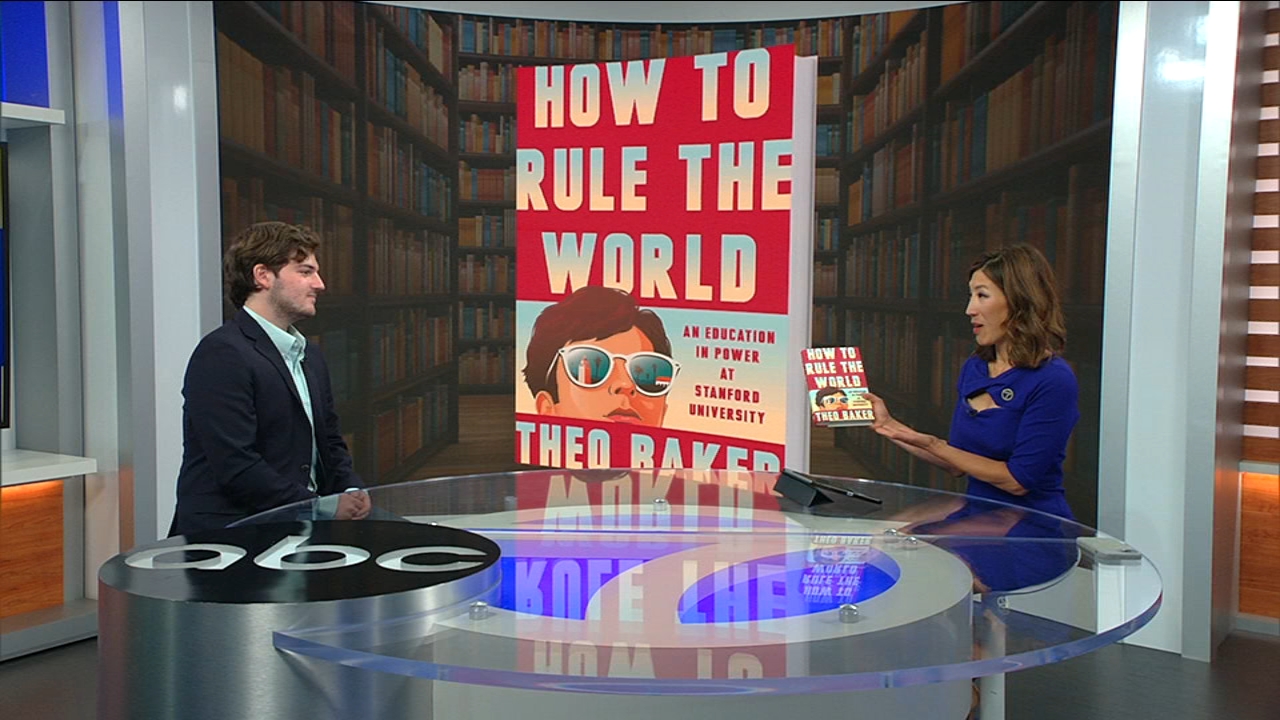
Stanford student journalist Theo Baker discussed his New York Times bestselling debut book with ABC7 News Anchor Kristen Sze.
SAN FRANCISCO (KGO) — In just a few weeks, Stanford University will celebrate the Class of 2026.
Among the graduates will be a senior whose reporting for the student newspaper shook the university at its highest levels.
Theo Baker arrived on campus at 17 eager to study computer science. Instead, by the end of freshman year, he helped force the resignation of Stanford’s president and became the youngest-ever George Polk Award winner.
Now, Baker is out with a New York Times bestselling debut book: “How to Rule the World: An Education in Power at Stanford University.”
ABC7 Eyewitness News first interviewed Baker in his freshman year. He returned to our studios Wednesday to talk about his book.
RELATED: Stanford freshman’s determined reporting leads to investigation, president’s resignation
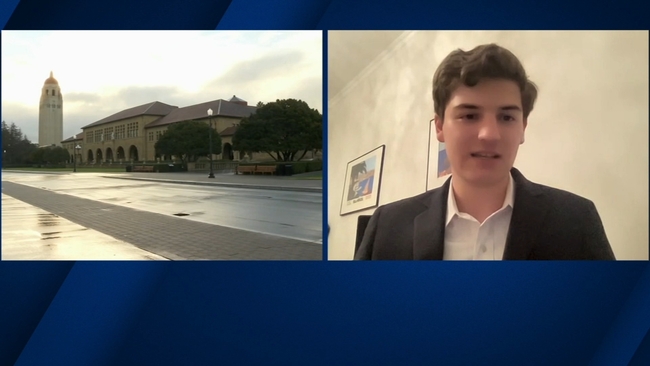
Stanford President Marc Tessier-Lavigne’s departure comes after accusations of possible manipulated research, first reported by freshman Theo Baker.
It is part humorous memoir and part serious expose, documenting what he calls the “Stanford inside Stanford.” It’s a hidden ecosystem where select freshmen are “plucked” by venture capitalists, ushered into mansion parties, and even invited to a secret, uncredited class run by a Silicon Valley CEO, called “How to Rule the World.”
Baker writes: “You exist in this parallel reality… in which you, the teenager, are the product.”
The book traces Stanford’s transformation from quirky and idealistic to a highpressure launchpad for future founders.
Baker describes a campus vocabulary — “highagency,” “NGMI-not gonna make it,” “wantapreneur” — that reflects a culture obsessed with identifying the next billion-dollar idea and who’s going to make it.
Programs like TreeHacks, Stanford’s massive hackathon that Baker was invited to help organize, serve as pipelines into Silicon Valley, where Baker says teenagers are given extraordinary access to unlimited money, yacht parties, mansion dinners and influence.
Baker’s own reporting journey runs through the book. While navigating this world, he joined The Stanford Daily as a tribute to his recently deceased grandfather and began investigating concerns about scientific research tied to then-President Marc Tessier-Lavigne. The university hired a top law firm to push back, but Stanford’s Board of Trustees ultimately voted unanimously to remove the president.
Baker argues the episode mirrors the same pressures students face in a culture where “fake it ’til you make it” can be rewarded.
He still loves Stanford, but he would like to see changes. And he hopes this book will spark conversations that may lead to transparency, accountability and solutions.
 Rosamond Press
Leave a comment