Here is a co-founder of the NAACP. It has come to my attention, Eric Richardson was ousted.
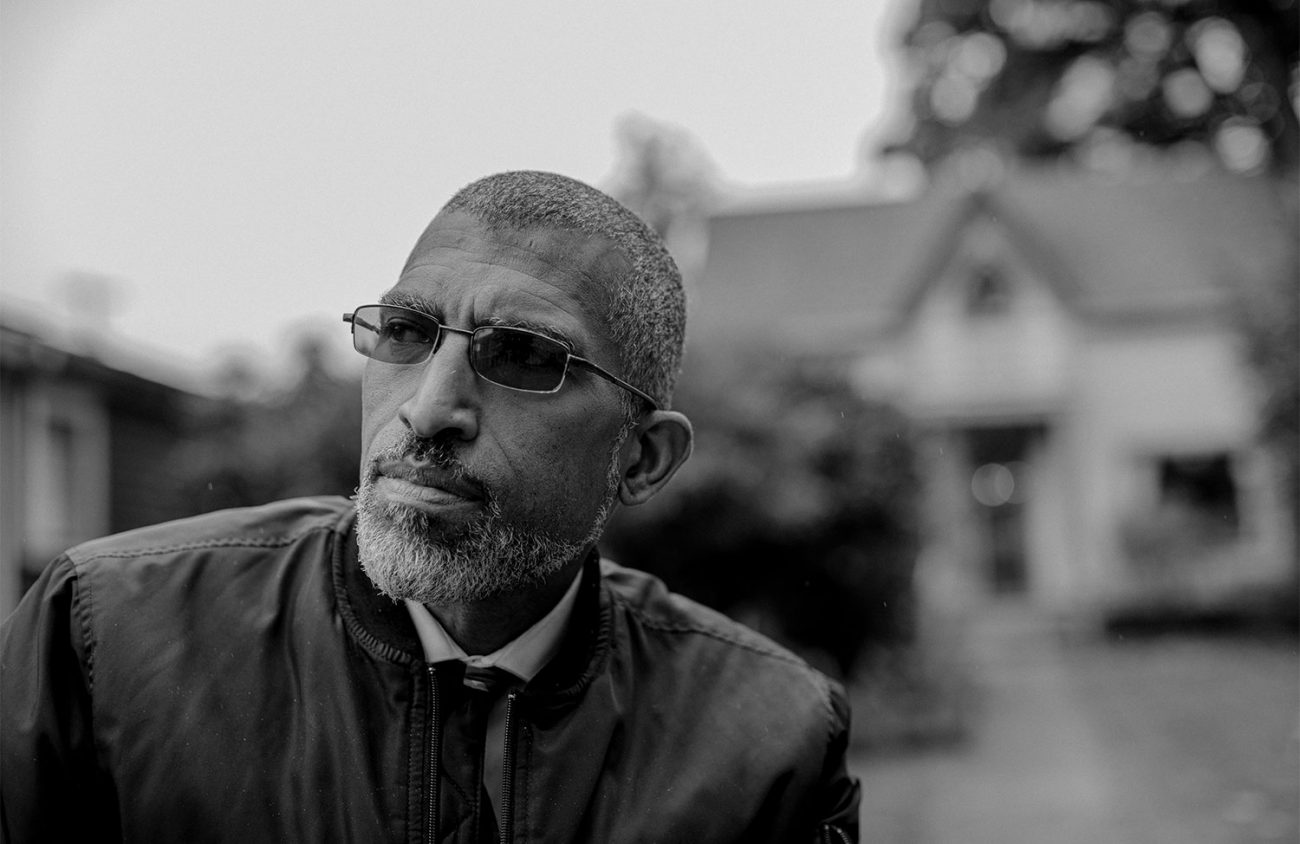
Eric Richardson Abruptly Dismissed from Local NAACP Leadership
Board decides to look for an executive director with different skills
After serving nearly nine years, Eric Richardson’s time in a leadership role at the Eugene Springfield NAACP is over.
Richardson says the decision was disappointing but he’s happy the organization isn’t reliant on just one leader. The local NAACP chapter dismissed Richardson as executive director on Nov. 29. Board Vice President Adam Wendt says the decision was made so the organization can find an executive director who meets current needs.
12/3/2019
Mary White Ovington and The Ring
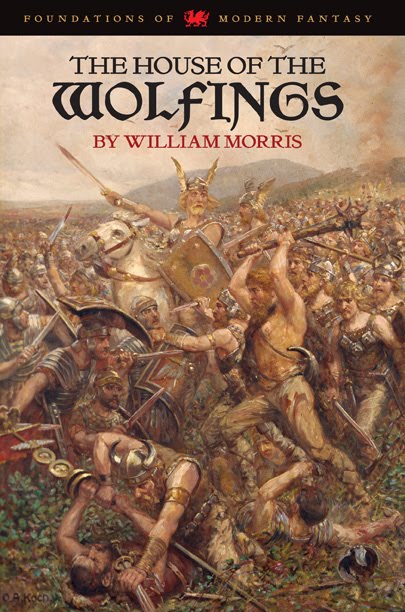
When Eric Richardson ragged on Walt Disney, I knew about Mary Ovington being influenced by my Hero, William Morris, the Pre-Raphaelite. Tolkien was very inspired by William Morris, who ragged on Walt the “poor boob”. In 1969 I declared myself a New Pre-Raphaelite, and let my hair grow real long. The Evil Lord of Modor is stomping around Europe today, and no one has a clue how to stop him. I got more than a clue! How about Eric, and the NAACP?
John ‘The Pre-Raphaelite’
Mary Ovington – White Co-Founder of NAACP
Posted on April 29, 2019 by Royal Rosamond Press
Is there a movement in the Democratic Party to move white people to the curb, and let the Woman of Color parade, march by? We have to be on the same team, and may not know what our team looks like. We can do as many restarts as we need. We may end up with a fantastic new look!
John Presco
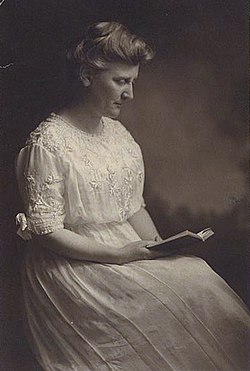

Portrait, c. 1910
Mary White Ovington (April 11, 1865 – July 15, 1951) was an American socialist, suffragist, journalist, and co-founder of the National Association for the Advancement of Colored People (NAACP).[1]
Biography
Mary White Ovington was born April 11, 1865, in Brooklyn. Her grandmother attended the Connecticut congregation of Samuel Joseph May. Her parents, members of the Unitarian Church, were supporters of women’s rights and had been involved in the anti-slavery movement. Educated at Packer Collegiate Institute and Radcliffe College of Harvard University, Ovington became involved in the campaign for civil rights in 1890 after hearing Frederick Douglass speak in a Brooklyn church and a 1903 speech by Booker T. Washington at the Social Reform Club.[citation needed]
In 1894, Ovington met Ida B. Wells, while taking Christmas presents to Ida’s sister’s children. Mary was so appalled by their living conditions that she started working with Wells to force the city to update the tenements.[citation needed] In 1895, she helped found the Greenpoint Settlement in Brooklyn. Appointed head of the project the following year, Ovington remained until 1904, when she was appointed a fellow of the Greenwich House Committee on Social Investigations. Over the next five years, she studied employment and housing problems in black Manhattan. During her investigations, she met W. E. B. Du Bois and was introduced to the founding members of the Niagara Movement.[2]
In 1905, Ovington joined the Socialist Party of America, influenced by the ideas of William Morris. There she met A. Philip Randolph, Floyd Dell, Max Eastman and Jack London, who argued racial problems were as much a matter of class as of race. Ovington wrote for journals and newspapers such as The Masses, New York Evening Post, and the New York Call. She also worked with Ray Stannard Baker and influenced the content of his 1908 book, Following the Color Line.[citation needed]
On September 3, 1908, she read an article written by Socialist William English Walling, entitled “Race War in the North”, in The Independent. Walling described a massive race riot directed at black residents in Springfield, Illinois, the hometown of Abraham Lincoln, that led to seven deaths, the destruction of 40 homes and 24 businesses, and 107 indictments against rioters. Walling ended the article by calling for a powerful body of citizens to come to the aid of blacks. Ovington responded to the article by writing to Walling and meeting at his apartment in New York City, along with social worker Dr. Henry Moskowitz. The group decided to launch a campaign by issuing a call for a national conference on the civil and political rights of African Americans on the centennial of Lincoln’s birthday, February 12, 1909.[2]
The National Negro Committee held its first meeting in New York on May 31 and June 1, 1909.[2] By May 1910, the National Negro Committee and attendants, at its second conference, organized a permanent body known as the National Association for the Advancement of Colored People (NAACP). Ovington was appointed as its executive secretary. Early members included Josephine Ruffin, Mary Talbert, Mary Church Terrell, Inez Milholland, Jane Addams, George Henry White, W. E. B. Du Bois, Charles Edward Russell, John Dewey, Charles Darrow, Lincoln Steffens, Ray Stannard Baker, Fanny Garrison Villard, Oswald Garrison Villard, and Ida B. Wells-Barnett.[3] The following year, Ovington attended the Universal Races Congress in London. Richetta Randolph Wallace, who had worked with Ovington as a secretary for several years, was hired as the first office staff at NAACP headquarters in 1912.[4]
Ovington remained active in the struggle for women’s suffrage. In 1921, she wrote to Alice Paul asking that a black woman be invited to the National Woman’s Party celebration of the passing of the nineteenth amendment.[5] Ovington was also a pacifist who opposed the United States’s involvement in the First World War. During the war Ovington supported A. Philip Randolph and his magazine The Messenger, which campaigned for black civil rights.[3]

plaque on the
National Volunteer Pathway
After the war, Ovington served the NAACP as a board member, executive secretary, and chairman. She inspired other women to join the NAACP, and in so doing, made a significant contribution to the multi-cultural composition of the organization.[6] NAACP fought a long legal battle against segregation and racial discrimination in housing, education, employment, voting, and transportation. They appealed to the Supreme Court to rule that several laws passed by Southern states were unconstitutional and won three important judgments between 1915 and 1923 concerning voting rights and housing.[citation needed]
In June 1934, Ovington gave speeches to 14 different colleges. Her goal was to show the youth that the NAACP association was made up of blacks and whites, specifically to show black youth that there were whites who hated race oppression.[3] During her speeches, Ovington would show the geography of all the NAACP location branches and how far the association has come, saying “They should know the power the race has gained”.[7]
The NAACP was criticized by some members of the African-American community. Members of the organization were physically attacked by white racists. John R. Shillady, executive secretary of the NAACP, was badly beaten up when he visited Austin, Texas, in 1919.[citation needed]
Ovington wrote several books and articles, including a study of black Manhattan, Half a Man (1911); Status of the Negro in the United States (1913); Socialism and the Feminist Movement (1914); an anthology for black children, The Upward Path (1919); biographical sketches of prominent African Americans, Portraits in Color (1927); an autobiography, Reminiscences (1932); and a history of the NAACP, The Walls Came Tumbling Down (1947).[citation needed]
Final years and death
In 1947, Ovington was forced to resign from the NAACP due to poor health, ending 38 years of service with the organization. In her eighties, she spent her final years with her sister in Massachusetts and died on July 15, 1951, in Newton Highlands, at the age of 86. Ovington also wrote novels and children’s books, including Hazel (1913), which told the story of a young Boston Black girl spending a winter in Alabama at the turn of the century.[8]


Legacy
Mary White Ovington Middle School (Intermediate School 30) in Brooklyn was named in her honor. Ovington is one of the persons named on The Extra Mile—Points of Light Volunteer Pathway National Memorial in Washington, D.C. In 2009, she was depicted on a United States postage stamp with Mary Church Terrell.[9]
 Rosamond Press
Leave a comment