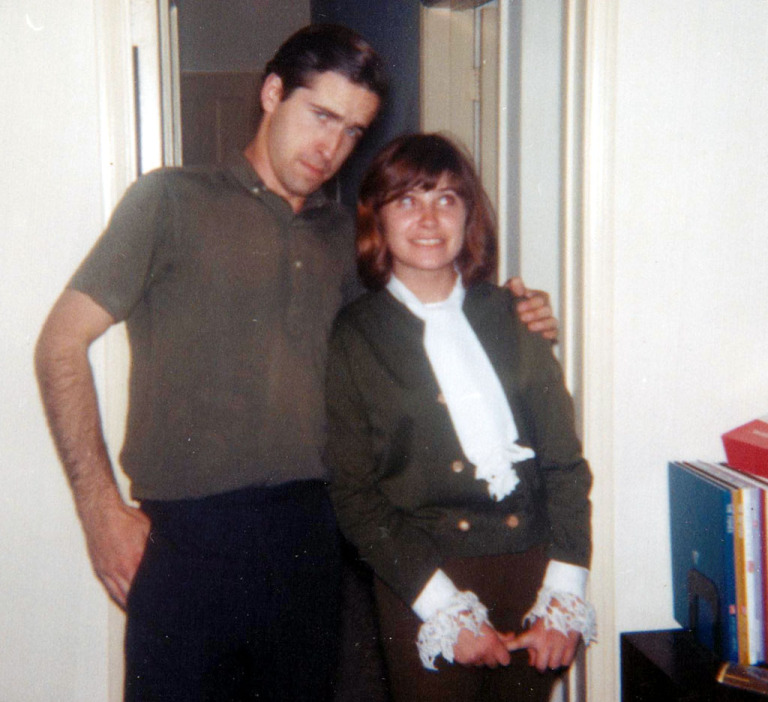
On January 18, 2026 around 4:30 PM. I read the Wikipedia citation for the movie/series One Battle After Another that is besed on Pynchon’s Vineland, that may be based on my ex-wife, Mary Ann Tharaldsen, who descends from Erik The Red. She and her husband adopted a son they name Erik, and an Eskimo boy.
“Returning home with Willa, Bob gives her a letter from Perfidia, where she apologizes and vows to some day reunite with her family. Later, Bob gives Willa his blessing as she departs for a protest in Oakland.
I used to show my profile when the Erik The Red Cigar commerica came on. Everyone hates me because I should have been a million at eighteen. My days of giving if away FOR FREE. I will get an agents, and get The Royal Janitor on Netflix.
I have to confess I might have been influenced by Thomas Pynchon, after I came up with whacky ideas about Lesbian Spies saving NATO. One was a Super Hippies, raised on Mount Shasta in a Christian Hippie Commune.
John Presco
President: Royal Rosamond Press
One Battle After Another is a 2025 American black comedy action thriller film[a] written, co-produced, and directed by Paul Thomas Anderson.[11] It is loosely based on and inspired by the 1990 novel Vineland by Thomas Pynchon.[12] The film stars Leonardo DiCaprio, Sean Penn, Benicio del Toro, Regina Hall, Teyana Taylor, and Chase Infiniti (in her film debut). It follows an ex-revolutionary who is forced back into his former combative lifestyle when he and his daughter are pursued by a corrupt military officer.
Anderson had wanted to adapt Vineland since the early 2000s and, eventually, incorporated his own stories into the narrative while writing the screenplay.[13][14][15] The film was shot in California between January and June 2024 using VistaVision, becoming one of the first films to use this format for principal photography since the 1960s.
One Battle After Another had its premiere at the TCL Chinese Theatre in Los Angeles, California, on September 8, 2025, and was released in the United States by Warner Bros. Pictures on September 26.[16] The film received critical acclaim.[17][18] The most expensive film of Anderson’s career, it became his highest-grossing film, though it underperformed at the box office, grossing $206.3 million on a $130–175 million budget.[2][19] One Battle After Another was nominated for nine awards at the 83rd Golden Globe Awards, receiving the most nominations of any film that year, winning four, including Best Motion Picture – Musical or Comedy.[7][20][21] It also made history at the 32nd Actor Awards by receiving seven nominations (the most for any film in the awards’ history), including Outstanding Performance by a Cast in a Motion Picture, and at least one nomination in all other film categories.[22]
Plot
“Ghetto” Pat Calhoun and Perfidia Beverly Hills are lovers and members of a far-left revolutionary group, the French 75. While breaking out detained immigrants from Otay Mesa Detention Center, Perfidia sexually humiliates the commanding officer, Steven J. Lockjaw, who becomes obsessed with her. When Lockjaw catches Perfidia planting a bomb, he lets her go after she agrees to his demand to later meet him for sex.
After giving birth to a girl named Charlene, Perfidia experiences postpartum depression. Pat tries to persuade her to settle down, but she instead abandons Pat and Charlene to continue her revolutionary activities. She is arrested after murdering a security guard in an armed bank robbery. Lockjaw arranges for her to avoid prison in exchange for names and whereabouts of key French 75 members. Perfidia enters witness protection, while Lockjaw uses the information she provided to hunt down and summarily execute her comrades. French 75 member Howard Sommerville gives Pat and Charlene stolen identities as Bob and Willa Ferguson, while Perfidia flees witness protection for Mexico.
Sixteen years later, living off-the-grid in the sanctuary city of Baktan Cross, California, Bob has become a paranoid stoner. He is protective of Willa, now a free-spirited teenager who resents his substance abuse, and has led her to believe Perfidia was a hero. Through his anti-immigration efforts, Lockjaw has become a colonel and a prominent figure within the U.S. security agencies. When Lockjaw is invited to become a member of the Christmas Adventurers Club, a white supremacist secret society, he seeks to kill Willa to hide his past interracial relationship with Perfidia. He hires bounty hunter Avanti Q to capture Howard, causing a distress signal to go out to the remaining French 75.
Lockjaw sends troops to Baktan Cross, using an immigration and drug operation as cover. French 75 member Deandra rescues Willa before her school dance is raided. At home, Bob is warned by the French 75 about Lockjaw, whose men then raid his house. Escaping through a tunnel, Bob tries to coordinate with the resistance over a payphone, but cannot remember their greeting code. Sergio St. Carlos, Willa’s karate sensei and a community leader, helps him while evacuating immigrants via a hidden passage. While fleeing with Sergio’s students across rooftops, Bob falls and is arrested. Deandra takes Willa to a convent of revolutionary nuns, where she is told the truth about her mother’s betrayal of the cause.
The Christmas Adventurers Club find evidence of Lockjaw’s relationship with Perfidia, and send member Tim Smith to kill him and Willa. Lockjaw locates Willa at the convent, where Deandra is arrested. Holding Willa hostage, he tests their DNA in front of her, confirming she is his daughter. Sergio arranges Bob’s escape and drives him to the convent, throwing him out of the car when police begin to pursue so Bob can get away. Bob steals a car and reaches the convent, unsuccessfully attempting to kill Lockjaw with Sergio’s rifle. Lockjaw hires Avanti to kill Willa, but after refusing over her age, Avanti is told to deliver her to a far-right militia instead. Tim tracks down Lockjaw and shoots him in the face, causing his car to crash and leaving him presumed dead. Bob finds the crash site while searching for Willa.
Avanti brings Willa to the militia, but after a change of heart, frees her and is killed in a shootout with the militia. Willa escapes with Avanti’s car and pistol, only for Tim to begin tailing her with Bob frantically trying to catch up. Willa lures Tim into a crash by exploiting a blind summit. She shoots him dead when he fails to recite the revolutionary countersign. Bob arrives and finds Willa, who demands the countersign at gunpoint, but Bob convinces her to stand down. They tearfully embrace and Bob drives them away, while Lockjaw is revealed to have survived.
Some time later, a severely scarred Lockjaw is seemingly welcomed into the Christmas Adventurers Club, but is fatally gassed and cremated shortly afterward. Returning home with Willa, Bob gives her a letter from Perfidia, where she apologizes and vows to some day reunite with her family. Later, Bob gives Willa his blessing as she departs for a protest in Oakland.
GOP Rep. McCaul says a US invasion of Greenland would mean ‘war with NATO itself’
President Trump’s threats have drawn bipartisan concern in Washington.
January 18, 2026, 7:51 AM
McCaul on Walz, Frey investigations: ‘More of a statement more than anything else’ABC News’ Jonathan Karl interviews U.S. Rep. Michael McCaul, R-Texas, on “This Week.”
Sean Gallup/Getty Images
Republican Rep. Michael McCaul warned on Sunday that any U.S. military intervention to obtain Greenland would put America at odds with its NATO allies — and possibly spell the end of the alliance itself.
“What do you make of what’s going on with the president in Greenland? And now he’s slapped tariffs on eight of our allies in Europe; he’s not ruling out military force to get Greenland. What is going on?” “This Week” co-anchor Jonathan Karl asked McCaul, who serves as chairman emeritus of both the House Foreign Affairs and Homeland Security committees.
While McCaul acknowledged the strategic importance of the autonomous island, which is part of the Kingdom of Denmark, and noted that previous Presidents have considered acquiring the territory, he said the U.S. already has a treaty that allows “full access” to protect Greenland — effectively negating the purpose of any invasion.
Vineland is a 1990[a] postmodern novel by Thomas Pynchon set in California in 1984, the year of President Ronald Reagan‘s reelection.[6] Through flashbacks, its characters, who lived through the 1960s, account for the free spirit of rebellion of that decade, and describe the traits of the “fascistic Nixonian repression” and the war on drugs that clashed with it. The book portrays transformations in U.S. society from the 1960s to the 1980s.[6][7][8]
Plot
The story is set in California in 1984, the year of Ronald Reagan‘s reelection.[6] After a scene in which former hippie Zoyd Wheeler dives through a window, something he is required to do yearly to keep receiving mental disability checks, the novel opens with the resurfacing of federal agent Brock Vond, who, through a platoon of agents, forces Zoyd and his 14-year-old daughter Prairie out of their house. They hide from Brock, and from Hector Zuñiga, a drug-enforcement federal from Zoyd’s past, whom Zoyd suspects is in cahoots with Brock, with old friends of Zoyd’s. Soon, Prairie accompanies her boyfriend Isaiah Two Four to a Mob wedding, where she runs into DL Chastain, a ninjette[b] and former family friend who, recognizing Prairie, explains Brock’s motivation for coming after the Wheeler family.
This hinges heavily on Frenesi Gates, Prairie’s mother, whom she has not seen since she was an infant. In the 1960s, during the height of the hippie era, the fictional College of the Surf (in equally fictional Trasero County, said to be between Orange County and San Diego County in Southern California) seceded from the U.S. and became the People’s Republic of Rock and Roll (PR³), a nation of hippies and dope smokers. Brock intends to bring down PR³, and finds a willing accomplice in Gates. She is a member of 24fps, a militant film collective (another member of which, Ditzah, is telling Prairie the story in the present), that seeks to document the “fascists’” transgressions against freedom and hippie ideals. Gates is uncontrollably attracted to Brock and ends up working as a double agent to bring about the killing of the de facto leader of PR³, Weed Atman (a mathematics professor who accidentally became the subject of a cult of personality).
Gates flees after her betrayal, and she has been living in witness protection with Brock’s help up until the present day. Now she has disappeared. The membership of 24fps, Brock, and Hector are all searching for her, with various motives. The book’s theme of the ubiquity of television (or the Tube) comes to a head when Hector, a Tube addict who has actually not been working with Brock, finds funding to create his pet project of a movie telling the story of the depraved sixties, with Gates as the director, and the pomp and circumstance surrounding this big-money deal to create a net of safety that allows Gates to come out of hiding. 24fps finds her and achieves its goal of allowing Prairie to meet her, at an enormous reunion of Gates’s family, the Traverses and Beckers (including one elder, Jess Traverse, who is a child in Pynchon’s 2006 novel Against the Day). Meanwhile, DL Chastain and Takeshi Fumimota, her partner in “karma adjustment”, are hanging out with Weed Atman and other Thanatoids—people who are in a state that is “like death, but different”—when they hear the news about Brock.
Brock, nearly omnipotent with D.E.A. funds, finds Prairie with a surveillance helicopter, and tries to snatch her up, claiming that he, not Zoyd, is really her father, but while he is hovering above her from a cable, the government abruptly cuts all his funding due to a loss of interest in funding the war on drugs because people have begun playing along willingly with the antidrug ideal, and his partner, Roscoe, flies the helicopter away. Brock immediately tries to take the helicopter back to Vineland by force, but he is ostensibly killed during his attempt, with Pynchon metaphorically describing his journey “across the river” with tow-truck drivers Blood and Vato, whom he calls to help get his “car” unstuck. Meanwhile, the family reunion and the Thanatoid bar celebrate news of Brock’s disappearance, and the book ends with Prairie returning to the spot where Brock tried to abduct her, hoping for him to come back and get her after all.
Critical reception
Vineland polarized critics at the time of its release. Author Tobias Meinel asserted in a 2013 essay that the novel “has led many critics to focus on its shift in style and content and to read it either as ‘Pynchon Lite’ or as a critical commentary on contemporary American culture.”[10] Salman Rushdie wrote a favorable review in The New York Times upon the book’s release, calling it “free-flowing and light and funny and maybe the most readily accessible piece of writing the old Invisible Man ever came up with.” He called it “that rarest of birds” that, “at the end of the Greed Decade”, is “a major political novel about what America has been doing to itself, to its children, all these many years.” Although he praised Pynchon’s light-yet-deadly touch at tackling the nightmares of the present rather than the past, Rushdie acknowledged that the book “either grabs you or it doesn’t.”[11]
British literary critic Frank Kermode was disappointed by the book, feeling that it lacked the “beautiful ontological suspense” of The Crying of Lot 49 or the “extended fictive virtuosity” of Gravity’s Rainbow. He did acknowledge that it was “recognisably from the same workshop” as Pynchon’s previous outings but found it less comprehensible.[12] Brad Leithauser concurred, writing in The New York Review of Books that Vineland was “a loosely packed grab bag of a book” that recalled what was weakest about the author’s canon and failed to extend or improve upon it.[13] In the Chicago Tribune, James McManus posited that while inveterate Pynchon readers likely would unfavorably compare the book to Gravity’s Rainbow, it was a manageable book with strong prose that succeeded as an arch and blackly amusing assault on Republican America.[14]
Film critic Terrence Rafferty admired the novel, and in The New Yorker called it “the oldest story in the world—the original sin and the exile from Paradise”,[15] but author Sean Carswell later contended that aside from Rafferty and Rushdie, initial reviews of Vineland “run the gamut from slightly miffed to outright hostile.”[16] Edward Mendelson‘s review in The New Republic was mostly favorable; he found the plot tangled and tedious but praised Pynchon’s “intellectual and imaginative energy” and called the book “a visionary tale” whose world was “richer and more various than the world of almost any American novel in recent memory.” He also commended its “comic extravagance”, writing, “no other American writer moves so smoothly and swiftly between the extremes of high and low style.”[17]
Mendelson additionally noted that Vineland was more integrated with its emotions and feelings than Pynchon’s previous novels,[17] and Jonathan Rosenbaum wrote in the Chicago Reader that it was the author’s most hopeful work yet.[18] That hopefulness was also mentioned by Rushdie, who believed the book suggested community, individuality, and family as counterweights to the repressive Nixon–Reagan era,[11] but Dan Geddes opined in 2005 in The Satirist that the book’s “happy ending” was surprising, given its overarching warning about a growing police state.[19] Contrarily, Rushdie found that the shocking final scene lent itself to a morally ambiguous ending and felt the novel expertly held a balance between light and dark throughout.[11]
Film adaptation
Main article: One Battle After Another
Pynchon’s novel was said by filmmaker Paul Thomas Anderson to be the loose inspiration for his 2025 film, One Battle After Another. Anderson has spoken many times of his love for, and desire to adapt, Vineland.[20][21][22] In early 2024, he began filming a new project rumored to be based on the novel.[23] The rumors were eventually confirmed to be true.[24] One Battle After Another was released in September 2025.
In an early Q&A after a screening, Anderson mentioned that he struggled to conceptualize a proper adaptation of the book, stating “when you go to adapt it, you have to be much rougher on the book to adapt it. You have to kind of not be gentle.”[25]
There are differences between the book and film adaptation. While the film retains the same characters and character dynamics, their names have been changed and the film is more straightforward than Pynchon’s “avant-garde, post modern” and bizarre “alternate reality” world.[25]
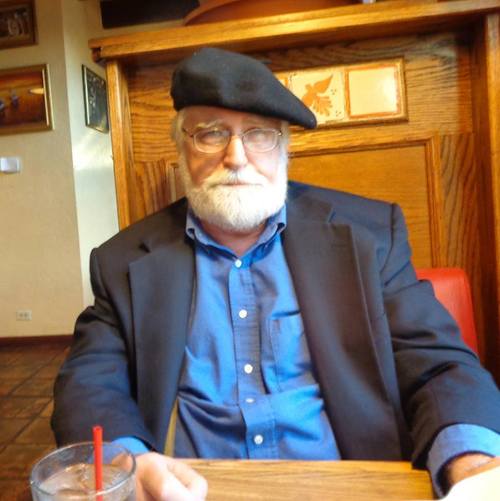
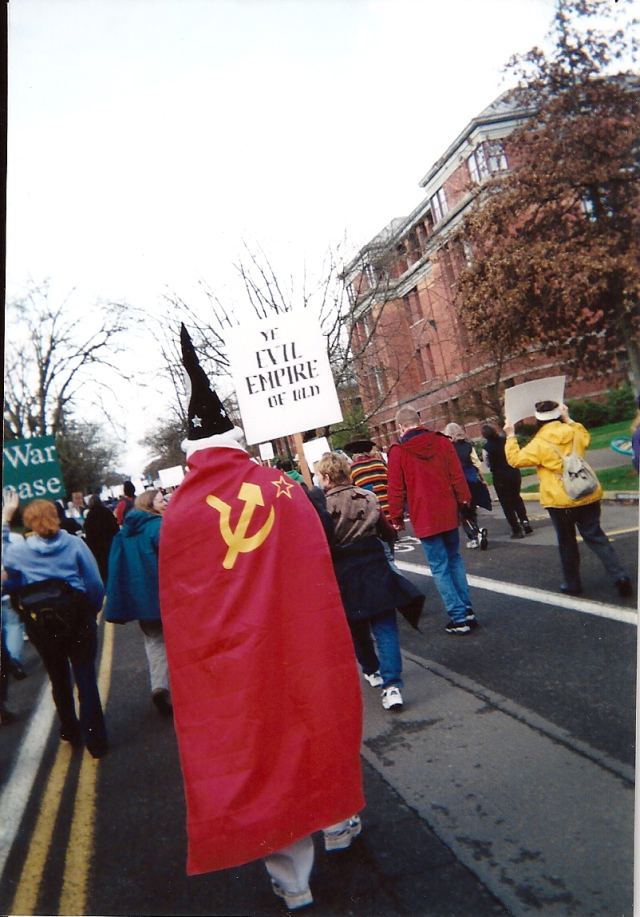
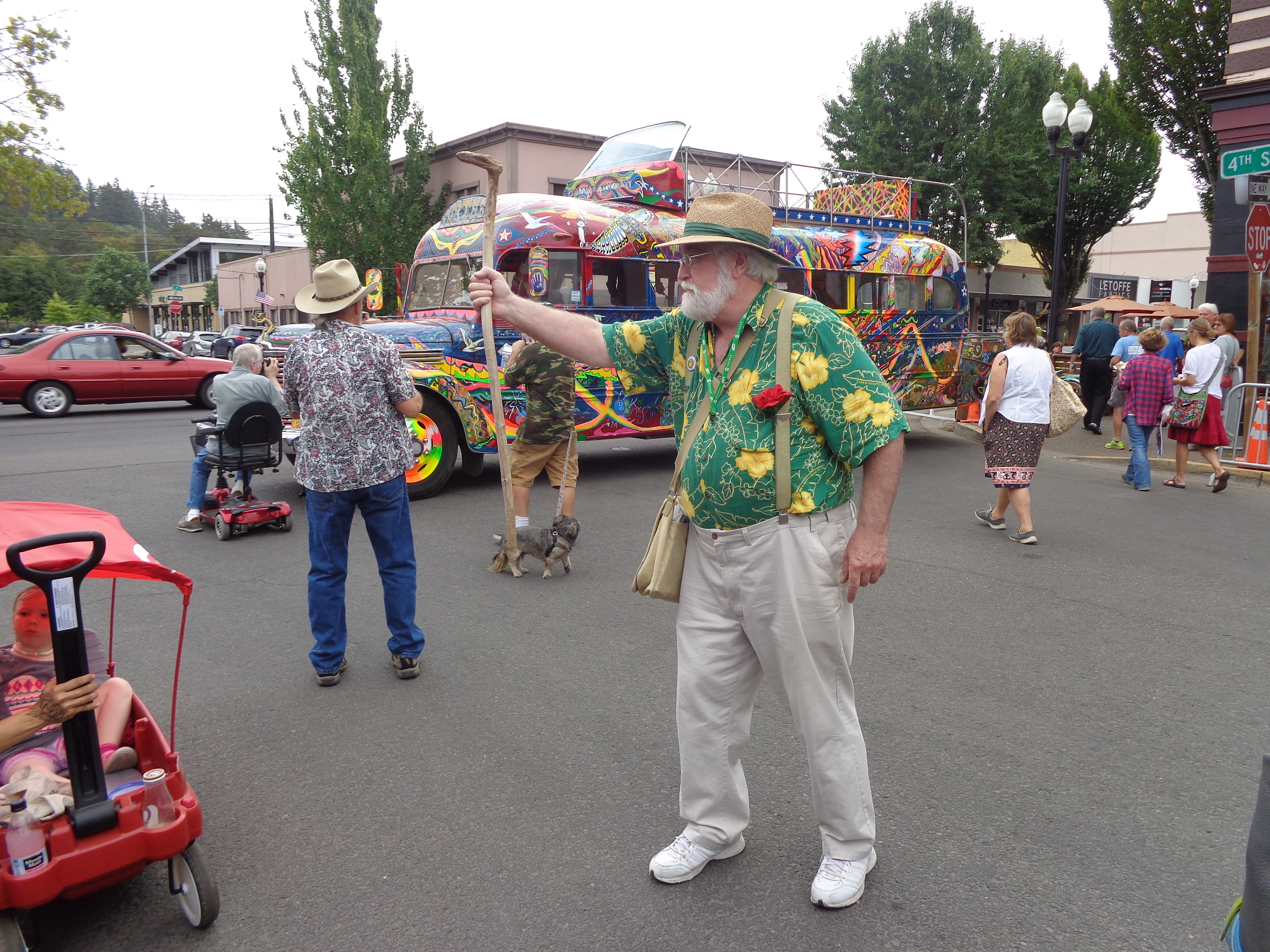
Here is the model for Vineland Oregon.
Zoyd Wheeler

Vineland By Thomas Pynchon 385 pages. Little, Brown & Company. $19.95.
Vineland in actual history is purportedly the America that Leif Ericsson discovered before Columbus. But in Thomas Pynchon’s pyrotechnic new novel – his fourth, but his first since ”Gravity’s Rainbow” was published 17 years ago – Vineland is a very different New World.
It’s a place on the coast of northern California (in the general vicinity of Eureka and Crescent City) to which the veterans of the 1960’s counterculture have retreated to live off the earth and on drugs. In particular, one Zoyd Wheeler dwells there and survives by annually doing ”something publicly crazy” to qualify for his ”mental-disability check.”
On a summer morning in 1984, as Zoyd, wearing ”a party dress in a number of colors that would look good on television,” prepares to leap through the window of the Cucumber Lounge for the attendant news crews, he discovers in the crowd a ”visitor from out of the olden days.” It is ”Zoyd’s longtime pursuer, D.E.A. field agent Hector Zuniga . . . the erratic Federal comet who brought, each visit in to Zoyd’s orbit, new forms of bad luck and baleful influence.”
Though it turns out that Hector is on the run from an institution that studies and treats ”Tubal abuse and other video-related disorders,” he warns Zoyd that Frenesi, Zoyd’s ex-wife, has gone underground after having been dropped from the Federal Witness Protection Program because of Reagan Administration cutbacks. She is being hunted by a Justice Department strike force led by Brock Vond, ”a federal prosecutor, a Washington, D.C., heavy and . . . the expediter of most of Zoyd’s years of long and sooner or later tearful nights down in places like the Lost Nugget.”
If these developments seem hard to follow, never mind. The plot of ”Vineland” is not the sort you get attached to or wrapped up in. Eventually, Mr. Pynchon’s ”story” boils down to a contest between Zoyd the hip and Brock the square, with Frenesi as their medium of communication. Mr. Pynchon’s fans will recognize this archetypal triangle as an afterimage from ”V,” ”The Crying of Lot 49” and even ”Gravity’s Rainbow.”
Instead of telling a coherent story in ”Vineland,” Mr. Pynchon improvises like a jazz musician. At times, his theme is a burlesque of the 1960’s; at times it’s an elaborate intrigue centering on the Sisterhood of Kunoichi Attentives, a California retreat offering ”fantasy marathons for devotees of the Orient”; at times it’s the history of the West Coast labor movement. Altogether, it’s a little as if Upton Sinclair had been captured by ninja warriors and lived to tell the tale to an R. Crumb high on acid.
At times, the novel is quite funny. Zoyd earns extra money doing lawn and tree work for a landscape contractor named the Marquis de Sod. (”Crabgrass won’t be’ave? Haw, haw! No problem! Zhust call – the Marquis de Sod. . . . ‘E’ll wheep your lawn into shepp!”). A death-obsessed commune of so-called Thanatoids are awakened by ”sound chips” playing J. S. Bach’s ”Wachet Auf,” ”one of the best tunes ever to come out of Europe.”
At other times, it can be annoyingly simplistic, especially when guns are likened to phalluses, or when a member of the Zoyd forces sums up the Reagan years: ”It’s the whole Reagan program, isn’t it – dismantle the New Deal, reverse the effects of World War II, restore fascism at home and around the world, flee into the past, can’t you feel it, all the dangerous childish stupidity – ‘I don’t like the way it came out, I want it to be my way.’ If the President can act like that, why not Brock?”
Yet always the reader is fascinated by Mr. Pynchon’s amazing fund of knowledge and the ease with which he applies it to everything from popular culture to social history to technology. And now and then, the depth of his paranoid conspiracy theories – or rather those of his characters – is enough to give you shivers. Revealing the thoughts of one character impoverished by Reaganomic cutbacks, Mr. Pynchon writes: ”We are digits in God’s computer, she not so much thought as hummed to herself to a sort of standard gospel tune, And the only thing we’re good for, to be dead or to be living, is the only thing He sees. What we cry, what we contend for, in our world of toil and blood, it all lies beneath the notice of the hacker we call God.”
What does ”Vineland” add up to? You don’t total Mr. Pynchon’s work glibly any more than you ”enjoy” it in any conventional sense of the word. For all its batty high jinks, his text here is an intentional subversion of orderliness. You’d deconstruct it by pulling its pin and heaving it.
Still, one senses in it faint signs of optimism. This perception is hard to defend, especially given the parable told near the end by the Head Ninjette of the Kunoichi Sisterhood of an earth so resembling hell that hell’s residents finally gave up visiting it. ”Why leave home only to find a second-rate version of what they were trying to escape?”
Yet the apocalyptic horror of ”V” and ”Gravity’s Rainbow” is missing from ”Vineland.” The ominous underworld of ”The Crying of Lot 49” is also lacking. Mr. Pynchon’s paranoia seems to have eased. After all, when Brock Vond tries to claim Zoyd Wheeler’s daughter as his own, she tells him off: ” ‘But you can’t be my father, Mr. Vond,’ she objected. ‘My blood is type A. Yours is Preparation H.’ ”
One may not share Mr. Pynchon’s vision that the earth ought to belong to the shaggy and spontaneous. But good things are happening. There are signs that the cold war is ending; that’s good. The money has run out on Brock Vond and his system of persecution; that’s good too. And in the final paragraph, a ”warm and persistent tongue” is licking Zoyd’s daughter awake. It’s Desmond the dog, ”the spit and image of his grandmother Chloe, roughened by the miles, face full of blue-jay feathers, smiling out of his eyes, wagging his tail, thinking he must be home.”
Is that good too? Well, like so much of the novel, I can’t entirely make sense of it. But unlike so much that happens in Mr. Pynchon’s fiction, at least it doesn’t forebode the end of the world.
c
The Vineland of Pynchon and Sinclair
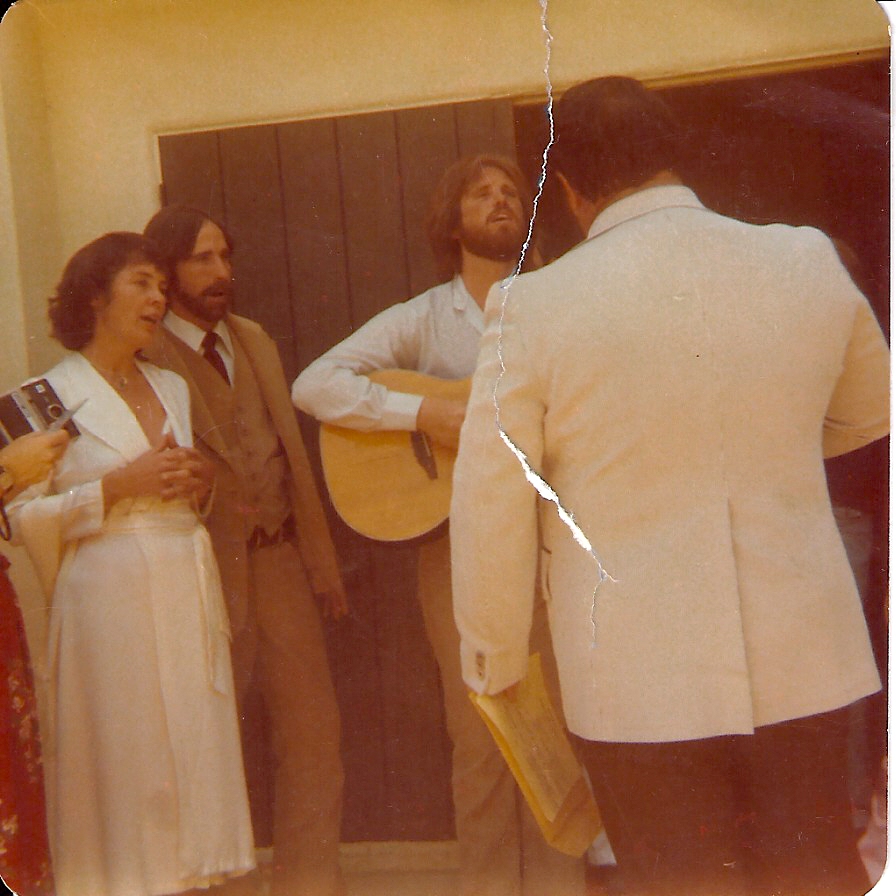


Thomas Pynchon wrote Vineland in 1990. It takes place in Vineland the last stronghold of the last hippies that are doomed with the election of Ronald Reagan who went after the Evil Red Empire of the Rus (red) who were Vikings.
Mythical Vineland is in Northern California, a composit of Sonoma, Mendocino, and the Russian (Rus) river area where I took Rena Christiansen, a beautiful Norse Goddess who became my Muse, and the Muse of the famous artist, Christine Rosamond. The Rosemond cote of arms depicts a dancing wolf that was found on the banners of several famous Sea-Rovers, including Rollo.
My ex-wife, Mary Ann Tharaldson, is kin to Eric the Red who came to America before the Sinclairs, and named it Vineland. Mary Ann and her husband adopted two boys. One was a Inuit Eskimo from Alaska, and the other was a blonde boy they named Erik. They had a daughter they named Britt.
I was living in the woods of Oregon when Reagan was elected. Many of my neighbors were the last of the hippies. Eugene Oregon is Vineland, the Norse Valhalla where the Hip Hobbits come to die. My daughter has singed aboard a Viking ship and gone off drinking with a bunch of boozers, losers, and dudes.
who hate the Vippies of Vineland, and are turning Northern California and Alaska into the Land of the Nascar Rednecks.
Nancy the Prankster suggested I write the history of the Hippies. I began ‘The Gideon Computer’ that is about the Last of the Hippies – in the future – who removes the Guilt-Virus put in the Computer Mundi. Pynchon missed the boat in Gravity’s rainbow, where he FOOLS around with a V2 rocket, the same way the Sinclair clan FOOLS around with the most stupid idea ever born in the brain of man, being, Leonardo Da Vinci went to great lengths to hide a W in the Last Supper that is two Vs entwined, and a upside down M, that stands for Mary Magdalene, two Ms that are four upside down V V V V s – and thus proof Jesus sired a daughter – The Daughter of God! This stupid idea spawned a hudred books and a thousand websites, that slammed – MY counter cutlure on the jagged rocks off the coast of the Island of Orkeny, where nothing has happended – ever! The Sinclair Son of God and his wife – ARE BORING!
I pray Redneck Nascar boozers come ashore, set up a dirt track, and drive their Confederate flag – that contains the Union Jack – in the heart of stupid white folk land!
Two people were removed from Bosch’s ‘The Wedding Freat at Cana’. One was a Pope, and the other a possible descendant of Rollo, or, Wolf Krake.
For two years I have wondered if Pynchon the recluse reads my blog, he googling his name, and reading about his ex-lover, who may have inspired Vineland.
I suspect Thomas is living in a igloo near the North Pole.
I am the last Vippie of Vineland! I own the greatest cultural movement the world has ever known. Screw Pinkham and Ian Sinclair, and that V-shaped rocket at Gnosshead, that will never get off the ground! Every gnostic V-ulture, has their day!
“Got a gnostic rocket in my pocket!”
I gave my grandson, Tyler Hunt, the nickname – Sceaf.
Jon Presco
Copyright 2013
Oakland Johnny and Tommy
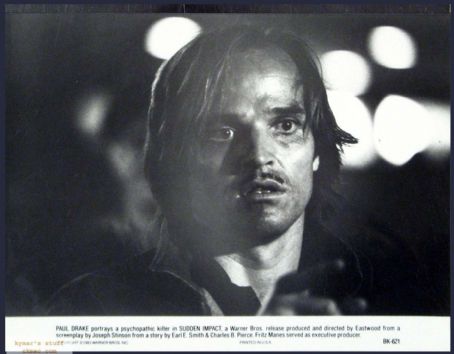
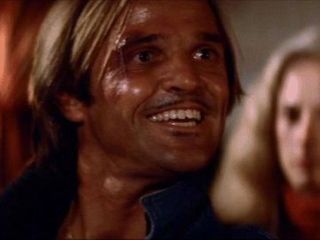
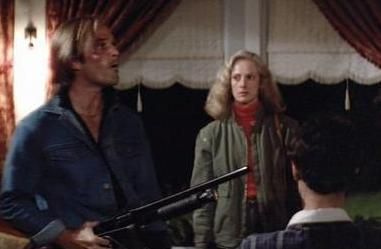
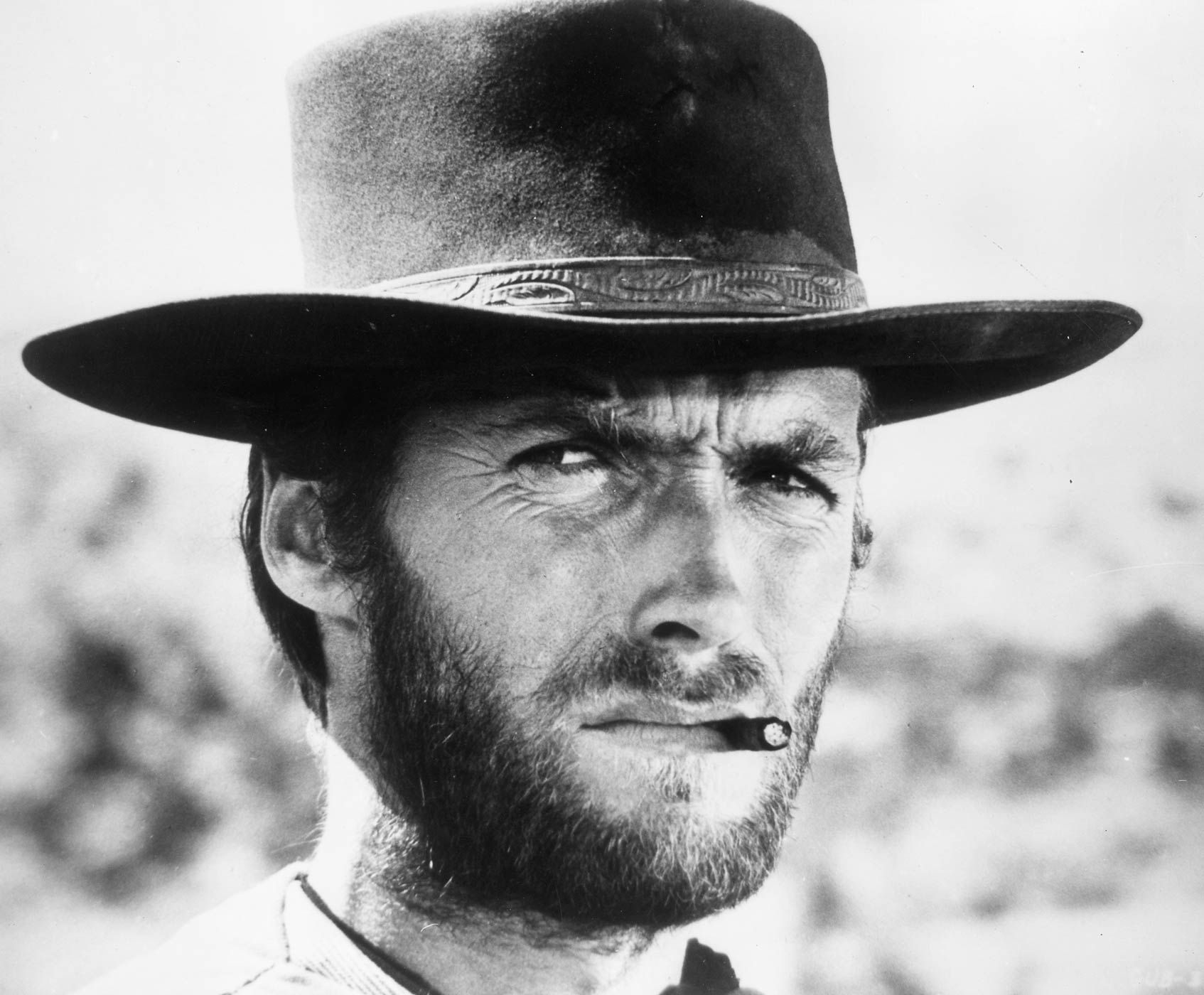
My best friend Paul Drake took up acting and became a famous Bad Guy in Sudden Impact. We used to drink at The Hut where another friend got shot. One dude tried to shoot me, put a gun to the back of my head, but, it wouldn’t fire. I laughed in his face. He got scared.
Clint Eastwood grew up in Oakland. We attended Glenview Elementary. I would like him to direct ‘The Royal Janitor’………….the story of how a timid woman became a bad ass.
Sudden Impact is a MeToo movie, perhaps the first? However, the focus is not right. Kavanaugh has been accused of gang-raping women.
The first time I realized I had a intimacy – and drinking problem – was waking up hung over and finding a cigar box next to my bed where I put phone numbers of women I met in a bar, but, never called them. Getting drunk was my No.1 goal, because, it gave me courage to approach women.
I met one woman in a bar, took her home, and beheld the most beautiful body I ever saw. As soon as she got in my bed, she appeared to pass out – just as I went to touch her. I stopped. I studied her. I called her name. She was Sleeping Beauty. In the morning she asked me if I fucked her. She said she could not tell.
“Of course I didn’t. You passed out!”
“It would have been O.K. if you had!”
“O.K. with you. But, not for me!”
I realized she had a tragic intimacy problem, that brought me closer to the truth I was a victim of incest. Alcohol is used as a TOOL to get RID OF our inhibitions, that Brett may have had, he saying he was a virgin till after college. The FBI needs to get Kavanaugh drunk, and talk about that. Did Mark Judge try to get his best bud LAID, by taking away his inhibitions?
Oakland Johnny
Sudden Impact is a 1983 American action thriller and the fourth film in the Dirty Harry series, directed by Clint Eastwood (making it the only Dirty Harry film to be directed by Eastwood himself), and starring Eastwood and Sondra Locke.[3] The film tells the story of a gang rape victim (Locke) who decides to seek revenge on the rapists ten years after the attack by killing them one by one. Inspector Callahan (Eastwood) famous for his unconventional and often brutal crime-fighting tactics is tasked with tracking down the serial killer. As Callahan investigates the killings, he becomes romantically entangled with the woman, not knowing that she is responsible for the murders.
The film is notable for the catchphrase, “Go ahead, make my day“, which is uttered by Clint Eastwood’s gun-wielding character in the beginning of the film as he stares down an armed robber who is holding a hostage.
Oakland Tommy
Posted on March 4, 2016 by Royal Rosamond Press


I just found out my ex-wife lived on College Avenue – IN OAKLAND – with Thomas Pynchon. They lived in a big apartment building located next to ‘Ye Olde Hut’ where I did a lot of drinking with my friends, including Paul Drake who Mary Ann encouraged to take up acting. Paul claims he based his tough-guy persona on watching me drink, but I believe he is speaking of Richard Swartz who was a bodyguard for Dederich of Synanon. Richard held the world’s record to the fifty yard dash – on his hands!
Mary Ann did illustrations for a rare book about the Symbionese Liberation Army. Her best friend, Joan (who lived right off college) came home for Thanksgiving and found her whole family blown away by the Black Mau Maus. Her father was a CEO of Standard Oil. Patty Hurst was kidnapped from 2803 Benvenue, which is about ten blocks from the Hut. I thought Mary Ann and I were going to be Facebook friends, then she prohibited any more drama. Maybe I will get an Oscar someday – late in my life – when most of my peers are dead, leaving a thousand writers to guess what became of Pynchon? What about Patty? What us olde ones don’t realize, is, that every seven years you get a new generation, thus withholding information from them – is futile!
“Patty who? Pynchon? Doesn’t he own a chain of tiny drive-in coffee huts?”
c
Share this:
Royal Rosamond Press
One response to “Oakland Johnny and Tommy”
Royal Rosamond PressJuly 2, 2019 at 1:22 pmEditReblogged this o
 Rosamond Press
Leave a comment