On this day, September 7, 2025, I declare Oregon a Protected State of the Swan Brethren
I bid Governor Kotek to gather together a team of attorneys, and declare Oregon a Religious Sanctuary for the Swan Brethren and Orange Order, and forbid the religion-based presidency of Donald Trump a Hostile Religion.
The President is collecting moneys to send him to heaven. This makes his office – a religion.
John Presco
Donald Trump Asks For $15 Donations to ‘Get to Heaven’
Published Sep 03, 2025 at 8:58 AM EDTUpdated Sep 05, 2025 at 3:39 PM EDT
Advertisement 0:29
By Theo Burman
Live News Reporter
Newsweek Is A Trust Project MemberFOLLOW
news article
85
President Donald Trump has sent a campaign fundraising email with the subject line “I want to try and get to Heaven”.
The email framed his political survival and legal battles as evidence of divine purpose and asked supporters to contribute $15 during a “24-HOUR TRUMP FUNDRAISING BLITZ.”
Newsweek contacted the White House for more information via email outside of normal working hours.
Why It Matters
President Donald Trump‘s blending of religious language and immediate fundraising appeals linked his personal fate and political aims in a single campaign message, a development that intersected with recent public remarks in which he said he was trying to “get to heaven,” comments that drew national coverage.
What To Know
Trump’s campaign email used the subject line “I want to try and get to Heaven,” presenting the former president’s political victories and his survival of last year’s attempted assassination as evidence of divine intervention and a purpose to “MAKE AMERICA GREAT AGAIN.”
The email presented past campaign events—including Trump’s 2016 victory over Hillary Clinton, his impeachment acquittals, and ongoing legal battles—as part of a spiritual narrative that justified the fundraising appeal.

The solicitation asked supporters to take part in a “24-HOUR TRUMP FUNDRAISING BLITZ” and sought $15 contributions as part of the push.
Trump had recently discussed concerns about his afterlife and said he wanted “to try and get to heaven,” comments he made on the Fox & Friends program.
The New York Times also reported that Trump discussed being “at the bottom of the totem pole” regarding his standing in the afterlife and tied the discussion to his concern about whether his actions would secure him a place in heaven.
Read more
- How Trump officials reacted to abysmal jobs report
- Amy Coney Barrett reacts to “tumult” in Donald Trump’s second term
- Brett Kavanaugh on managing Supreme Court tensions: “Trying to herd cats”
- Gavin Newsom edges out Donald Trump and JD Vance in new poll
What People Are Saying
In the campaign email, President Donald Trump said: “Last year I came millimeters from death when that bullet pierced through my skin. My triumphant return to the White House was never supposed to happen!
“But I believe that God saved me for one reason: TO MAKE AMERICA GREAT AGAIN!
I certainly wasn’t supposed to survive an assassin’s bullet, but by the grace of the almighty God, I did. SO NOW, I have no other choice but to answer the Call to Duty, but I can’t do it alone.”
Earlier in August, Trump told Fox & Friends: “I want to try and get to heaven if possible. I’m hearing I’m not doing well. I’m really at the bottom of the totem pole.”
What Happens Next
The fundraising email instructed supporters to donate within a 24-hour window, indicating the campaign sought an immediate response.
f the Swan Brethren
Posted on March 18, 2017 by Royal Rosamond Press






I am found the order of the Swan Brotherhood in America. William of Orange was a member. It is going to take me five posts to get this information down.
Jon
René of Châlon, as the last descendant of the original princes, left the principality to his first cousin William of Nassau-Dillenburg (better known as “William the Silent”), who was not a descendant of the original Orange family but became the legal heir to the principality of Orange, and all of René’s lands. Thus, the principality which René had inherited from his mother was passed to his father’s brother’s son.
The principality of Orange had already passed, through the female line, from the first dynasty of Orange to the families Les Baux, and then to De Châlon.[4] It now passed to a family which was not descended in blood at all from any of the preceding families.
William added the name of Orange to his own paternal dignities and thus became in 1544 the founder of the House of Orange-Nassau.
The Illustrious Brotherhood of Our Blessed Lady (Illustre Lieve Vrouwe Broederschap) was a religious confraternity founded in 1318 in ‘s-Hertogenbosch to promote the veneration of the Mother of God. The brotherhood was organized around a carved wooden image of the Virgin Mary in St. John’s Cathedral in ‘s-Hertogenbosch.[1] [2] The Brotherhood had two types of members: ordinary members and sworn members, also called ‘swan-brethren’ because they used to donate a swan for the yearly banquet. Sworn members were clerics in principle; in fact they were often chosen among the nobility, the magistrates, etc. As a result, the Brotherhood also functioned as an important social network.
Well-known members[edit]
- Hieronymus Bosch (c. 1450 – 1516), painter.[3][4]
- Nycasius de Clibano (? – 1497), singer and composer
- Jheronimus de Clibano (c. 1459 – 1503), singer and composer
- Jan Heyns (? – 1516), architect
- Frans Crabbe van Espleghem (c. 1480 – 1553), Flemish artist
- Jan van Wintelroy (? – 1576), composer and choirmaster
- Matthaeus Pipelare (c. 1450 – c. 1515), composer and choirmaster
- Frederik van Egmond (c. 1470 – 1539), Count of Buren and lord of IJsselstein
De Illustre Lieve Vrouwe Broederschap is een uit 1318 daterende broederschap in de Nederlandse stad ‘s-Hertogenbosch . The Illustrious Brotherhood of Our Blessed Lady is one dating from 1318 fellowship in the Dutch city of ‘s-Hertogenbosch . Today, the society has become ecumenical consists of eighteen eighteen Catholic and Protestant members who all occupy a leading position in society.,The Brotherhood “is responsible for its ancient tangible and intangible cultural heritage, promotes mutual Christian solidarity and fraternal bond, and thereby always keeps an eye on the developments and problems in modern times.” [1] The society is currently located in the Zwanenbroedershuis in Den Bosch, which is also a museum
From 1384 we find swans on the table of the common meals of the sworn brothers, mostly donated by a member of the nobility.. These donors received since 1488 named Swans Brother. Meanwhile, nobles were also members from inside and outside the city are the ever more prestigious fellowship. A short time later, the gift of a swan disconnected from the title swans brother. Officially were only four people simultaneously Swans Brother since 1520 and they had come from the city. However, this arrangement quickly diluted. Ook Willem van Oranje werd lid. Also, Willem van Oranje joined. Nowadays ‘Swans Brother’ a title which only royals eligible. Among the current members are Princess Beatrix and King Willem-Alexander . They are the only ones currently allowed to use this title.
← The Vanquished Kingdom of God
Bennett Rosamond Grand Master of Orange Order
Posted on April 1, 2012by Royal Rosamond Press
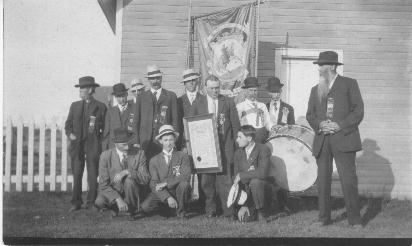
Above is a photograph of Bennett Rosamond the Grand Master of the Orange Order in Canada. Bennett is with members of Lodge 389 in Lanark, or, Almonte. The image on the banner is that of William of Orange who is carried in Orange Parades. That is Bennett on the far right, looking like Gandalf, or, a Levite Prophet.
According to the History of the Rosemond Family by Leland Rosemond, the Rosamond family were members of the Orange Order in Leitrim Ireland, and fled to Canada after a Rosamond son killed a Catholic lad who was invading the Rosamond home with a gang bent on doing my kindred harm.
Bennett may have been a Freemason as well – and an Oddfellow. There is a long history of the Rosamonds belonging to Guilds. They were members of the Swan Brethren.
My grandparents, Royal and Mary Magdalene Rosamond, begat my mother, Rosemary Rosamond, and her sisters, Lilian, Bonnie, and June Rice.
Jon Presco
Almonte’s Oldest Citizen Goes To His Reward
From the Almonte Gazette
A week or two ago we announced the illness of James Rosamond, Sr., little expecting we would so soon be called upon to chronicle the news of his death which took place on Wednesday morning. The old gentleman attended the Orange gathering here on the 12th July and owing to the dampness of the day contracted a cold which was followed by an attack of bronchitis and other troubles and after the wear of so many years his constitution had not the vitality to withstand the attack of the disease and shortly after midnight the end came calmly and peacefully.
Mr. Rosamond was born near Ballinamore, County Leitrim, Ireland on the 14th Feb., 1805. His parents were Bennett and Fanny Rosamond and his father followed the three fold occupation of reed maker and linen weaver and farmer. The subject of this sketch came to Canada in 1827 with his brother. The latter died at Prescott seven or eight years ago. For about two years after coming to Canada, Mr. Rosamond lived at Ogdensburg, New York where he learned the distillery business. In 1830 he removed from New York to Carleton Place. In 1831 he was married to Margaret Wilson of Ramsay, a lady who although of naturally an amiable and retiring disposition, has proved a faithful wife and helpmate for one who has led such an active life as her husband. Some years ago Mrs. Rosamond met with an accident from which she suffered considerably for some time and which prevented her from going out much among her friends but she is still hale and hearty although beyond the allotted three score and ten years. Their marriage has been blessed with seven children, four of whom survive namely Bennett, Mary Ann (Mrs. A. Bell), William (of Cobourg), James and Rosaline (Mrs. De Hurd).
After coming to Carleton Place, Mr. Rosamond was engaged in the distilling business for about three years and then went into the sawmill and gristmill business in partnership with John McEwen. Their mill was the only one in this section of the country at that time. This partnership lasted for four years when it was dissolved and a new one formed with Messrs. R. Bell and Company. The new firm determined to extend their business and had a carding and cloth – dressmaking establishment also the only one in this part of the province. The firm rented the mills in Carleton Place from Mr. Bolton for 16 or 17 years and continued for that time in business in that village, which was then known as “Morphy’s Falls”. In the course of time Mr. Rosamond went into the spinning, weaving and manufacturing of such goods as satinettes, etoffes, etc. These enterprising early manufacturers kept constantly adding to their machinery and increasing their business and towards the close of their lease wanted to buy or rent the water power but the owner Mr. McLaren of Beckwith would do neither. Just then an employee of Mr. Rosamond came to Almonte—at that time called “Waterford”—and succeeded in forming a company known as the Ramsay Woolen Manufacturing Company. Among those who held stock in this company were John Scott and the late John Patterson who about the year 1853 or 1854 one year after the company was formed, went to California but before going, disposed of their shares in the company to Mr. Rosamond. The mill was burned shortly afterwards.
In 1856 Mr. Rosamond moved to Almonte and bought his present residence from Edward Mitcheson. After the mill was burned, a sale was called and the site—the one on which the #2 mill is built—was knocked down to the late Albert Tesky for about 90 pounds. Mr. Tesky afterwards repented of his bargain and sold the water power to Mr. Rosamond who built the #2 mill on it moving his machinery from Carleton Place to Almonte in 1857. The #2 mill was built in 1856 and additions were made to it afterwards by Messrs. Bennett and William Rosamond who put in more machinery and gradually increased its capacity. In 1861, too close applications to business beginning to tell on Mr. Rosamond’s health, he leased the business to his sons Bennett and William and afterwards sold to them. In 1860, Mr. Rosamond and his sons formed a joint stock company with capital of $100,000 to build a large mill which resulted in the erection of #3 mill. When Mr. Rosamond retired from active business he retained an interest in the #1 mill and at the time of his death was still a share holder in it. He was also fro some time in the tanning business his tannery being situated on the site of the present dye room of #1 mill. Although always widely and actively engaged in business, Mr. Rosamond did not forget his obligations as a citizen and was always ready to assume his share of public duties. He was a member of the Carleton Place School Board from 1833 until he removed to Almonte. He has been an active and useful member of the Almonte School Board for about 35 years and occupied a seat there ever since he came to town, with the exception of a year and a half (about the year 1869) when he moved to Vineland, New Jersey for the benefit of his health. He has filled the position of Justice of the Peace for the County of Lanark continuously for over a half century. He was also a life long member of the board of the Ottawa Protestant Hospital. Shortly after Mr. Rosamond took up residence in Almonte, he took an active interest in the union Sunday school which was attended by churches of all denominations. Later on he founded St. Paul’s Sunday school of which he was superintendent for over twenty years. He has always been a devoted member of the Anglican Church and was for many years church warden or lay representative to the Synod for St. Paul’s Church. He was an enthusiastic Orangeman, a strong Conservative in politics and a great admirer of the late Sir John MacDonald. Though Mr. Rosamond attained to a ripe old age he retained to a wonderful degree the use of his mental as well as physical faculties, his mind to the last being clear.
http://roughian.tripod.com/BennettRosamond.html
Bennett Rosamond
Bennett Rosamond was born on May 10, 1833 at Carleton Place, Ontario. At the age of 26 he joined the family business, the Victoria Woolen Mills at Almonte and in 1862 he took over the business from his father. He served on the township council, served as Reeve and was elected mayor of Almonte. He was elected as the federal Conservative member of parliament for the riding of North Lanark in 1892 and sat in the House of Commons until 1904.
Rosamond was a major employer at Almonte and voting days saw his employees turn out en masse to vote for him. As a major benefactor of the town he donated the money to build a hospital in Almonte which was named after him. He died on May 18, 1910 in England while preparing to return to Canada. Rosamond was a member of L.O.L. No. 389, located at Almonte and had served as master of the lodge. He also served as County Master of Lanark for a number of years.
Rosamond Memorial Hospital, Almonte, Ontario c. 1910
The Perth Courier – October 18, 1962
Lanark Orangemen Heard Sir John A. Talk Confederation In District Lodges
Local Lodge One Of Oldest In Ontario East
Sir John A. Macdonald, Canada’s first Prime Minister and “Father of Confederation” first campaigned for Confederation in the Orange lodges of Lanark and Leeds Counties. Confederation was the union of British colonies in North America as a buffer to U.S. expansionism or “manifest destiny”, which saw all North America as one great American country.
Sir John, a resident of Kingston, was an ardent Orangeman who saw the possibility of having one Federal Parliament and separate Provincial Legislatures modelled on the Orange Association, which eight years prior to Confederation had decided on such a constitution for itself.
What the Orangemen had been able to do inspired him to attempt, Sir John gladly admitted, “for the sake of the future of Canada.” Thus, Confederation was born when the Orange Order boasted 1,400 lodges and tens of thousands of members. The year was 1867.
Perth One of Oldest
Perth was there with one of the oldest Orange Lodges in Canada, L.O.L. No. 7, at Drummond Centre. Old records show how politicians stumped up-and-down the rural routes selling ideas in lodgeroom, on the street, over the fence, in parlor and country store. Only five [six] older lodges exist, LOL No. 1 at Brockville, LOL No. 2 at Pine Hill, North Leeds County, LOL No.3 at Foxboro in South Hastings, [LOL No. 4 at Toronto] LOL No. 5 in Peel County and LOL No. 6 at Kingston [the lodge Sir John joined in 1841].
Minutes of these lodges show that Canada’s first Prime Minister or his representative spoke in them all. The first Orange Grand Lodge in North America was founded in Brockville, just 40 miles from Perth, by an immigrant Irishman Ogle R. Gowan, who rose to become Member of Parliament and Colonel of Militia. He was also Grand Master of British America in 1830 – 1846, 1854 – 1855 and 1856.
Although Orange lodges existed in Canada from Wolfe’s conquest of Quebec in 1759, the first Grand Lodge warrant was only granted on April 23, 1832, signed by Field Marshal, Ernest Duke of Cumberland, Grand Master of the Empire. The warrant was brought home to Brockville and given great display about the countryside. The first Grand Secretary of the first Grand Lodge of British America was Alexander Matheson of Protestant Hill, Perth.
Thus almost 140 years after the founding of the Orange Confederacy in 1688, the Orange influence reached into the Perth area. This influence was strongest in the United Empire Loyalist, Army and Navy settlements throughout Canada, the Order having been founded on military lines to protect Protestant interests in troubled Ireland. Perth was a military settlement.
Ruling body for Lanark County Orangemen is the Imperial Grand Council of the World, with Captain Sir George A. Clark, Bart., DL, of Ireland, the Grand Master. Next comes the Grand Lodge of British America with eleven provincial bodies, of which the Grand Lodge of Ontario East is one with 25 county jurisdictions.
The Orange Association of the County of Lanark is part of Ontario East and boasts three districts with 13 primary lodges. The primary lodge is the basic unit of the Orange Order. The lodge in Perth is LOL 115 which meets at the Orange Hall on Gore Street East. Lodge Master is Herbert Campbell and secretary James Kirkham, both of Perth.
cont…..
The Grand Lodge of Ontario East has met nine times in Lanark County since 1830, in Peth 1865, 1933, 1943, in Smiths Falls 1890, 1902, 1911, 1922, 1945, in Carleton Place in 1929. His Honor Judge J.A. Scott of Perth was Grand Master of British America in 1911 – 1914. Reverend Canon J. W. R. Meakin of Almonte, currently is Honorary Grand Chaplain of Ontario East, while Lieutenant Colonel Hon. T. Ashmore Kidd of Kingston, has been Imperial Grand Master of the World, and Grand Master of British America in 1930 – 1933 and 1940 – 1947.
County Master Roy Haveron, of Perth notes a trend to larger lodges in Lanark County which prove more efficient and active. Biggest problem today is lack of publicity and dedicated organizers with the time to devote to the demands of ritual and degree work.
LOL No. 90 of Lombardy won the Duncan Alexander MacLeod trophy for the largest increase in membership – 47 per cent this year. LOL No. 1 Brockville remains the largest lodge in Eastern Ontario with over 150 members. The Orange Order has exerted an influence in Lanark far in excess of its numbers, although its numbers have never been large. It’s a grass roots movement with “few aristocrats” or people with “aristocratic notions” included in its membership. The rural influence has a leveling effect, so it seems.
What do Orangemen do? First, they support the reformed faith. Next comes strong support of British democratic ideals and parliamentary government. The Bill of Rights of 1689 is the Order’s Bible. “Equal rights for all and special privileges for none,” has been the battlecry of the Order for ages. Prime Minister John Diefenbaker used an abbreviated form of this slogan in his 1957 general election campaign.
Orangemen support benevolent causes, including two Orange homes for children. There is an active insurance program and many bands. Perth, Smiths Falls and Carleton Place boast OYB [Orange Young Briton] bands.
District Masters and Officials
District Masters: Kenneth Leacock, Smiths Falls; Wm. Evans, Pakenham; W. H. Shaw, RR 2, Perth; Secretaries, Lyle Jordan, Smiths Falls; W. A. Fulton, Pakenham; Roy Haveron, Perth.
Primary Lodges: [master and secretary], LOL 7 Drummond Centre, Edward Wright, D. A. Devlin; LOL 88 Smiths Falls, Harvey Leacock, Ken Leacock, LOL 92 Innisville, George Gardiner, Gordon James. LOL 115 Perth, Herbert Campbell, James Kirkham. LOL 190 Montague Corners, John Kidd, Elmer Fox. LOL 202 Fallbrook, Cecil Ennis, Russell Fair. LOL 378 Almonte, Glen Ireton, M. Giles. LOL 381 Franktown, Glen Irvine, Milton McCaul. LOL 512 Montague, Russel Burchill, W. Rice. LOL 529 Rusenham, Forbes Evans, E. A. Connery. LOL 749 Wemyss, Carl Larmon, L. J. Patterson. LOL 788 2nd Line of Drummond, O. P. Dowdall, J. B. Hands.
Lanark is bordered by North Leeds with three districts and eleven lodges, Carleton with eight districts and 33 lodges, Lennox and Addington with two districts and 13 lodges, Renfrew with four districts and 21 lodges.
William Henry Boulton
William Henry Boulton was born on April 19, 1812 in York [Toronto], Upper Canada, the son of D’Arcy and Sarah Ann Boulton [nee Robinson, daughter of Sir John Beverley Robinson]. Boulton was born into one of the most prominent families of Upper Canada; his grandather, D’Arcy Boulton Sr. Was chief justice of Upper Canada and his uncles included John Beverley Robinson. Boulton studied to be a lawyer and was called to the bar of Upper Canada at the age of twenty-three.
Boulton was to become one of the social leaders of early Toronto, his estate “The Grange” being the setting for many of the young city’s most prominent social gatherings. As a member of parliament for Toronto from 1844 to 1853, Boulton supported conservatives William Henry Draper and Henry Sherwood. As a member of one of the old established families he was a strong defender of the privileged position of the Anglican Church with regards to the clergy reserves and education.
Aside from provincial politics Boulton was heavily involved with Toronto affairs. He served as an alderman for St Patrick’s Ward from 1838 until 1842 and after a two year absence from municipal politics he again served as alderman for the same ward from 1844 to 1847. During this time he was elected mayor of Toronto for three successive terms, from 1845 – 1847. After his terms as Mayor Boulton continued to sit on council as an alderman in 1852 and 1858, again being elected Mayor of the city in 1858.
During his term as mayor an agreement had been made between the province and the city over the distribution of judicial powers. The Mayor and aldermen had now ceased to act as magistrates and cases were heard by police magistrates. Boulton got into a fierce argument with the chief constable of Toronto, Samuel Sherwood, and resigned as mayor. He then ran again for Mayor in 1859 in the first election that was held by popular vote, but lost to Adam Wilson.
He then retired from politics and lived at the grange. After his death on February 15, 1874, his wife continued to live there and she later married author Goldwin Smith in 1875. Today “The Grange” is owned by the Art Gallery of Ontario. Boulton had served as the Master of Enniskillen L.O.L. 387 in 1858 and was the Deputy Grand Master of Canada in 1854.
https://www.youtube.com/embed/hTUgJ0giGVc?version=3&rel=1&showsearch=0&showinfo=1&iv_load_policy=1&fs=1&hl=en&autohide=2&wmode=transparent
LANARK’S ORANGE LODGE.
It was in the fifties too that the first secret fraternity unfurled its Orange banner in this village. An elevated site was chosen for the Lodge room of the Loyal Orange Lodge, the exact spot being near where Mr. William Spalding’s storehouse now stands. The lodge succeeded in gathering beneath its colors a large and flourishing membership and it looked for a time at least that this was one of Lanark’s permanent institutions. But something happened one night that stopped a lodge career. From Buffam’s tavern to the lodge room the brethren cleaved the air with their discontent. An eye-witness says it was certainly a rough night and obviously he was not referring to the weather. When you hear a brother shout “Paice, bhoys, paice and brotherly love,” while he belabors you with a drum stick it is high time to call a halt and that is exactly what the Orangemen of Lanark did. They held no more meetings, the building fell into disuse and later was removed to its present stand where it serves the public faithfully day after day and is known as Darou’s bakery. The Buffam’s Tavern referred to stood where the residence of Mr. R.F. Robertson is now. At one time this building was occupied by the McLaren family as a store, the scene of many boyhood experiences of the Hon. Peter McLaren, of Perth, whose father was the merchant.
FREEMASONRY ESTABLISHED.
The outstretching hand of Freemasonry laid upon a building in this locality for the meeting place of a lodge and in 1869 on July 15th Evergreen No. 209 A.F. and A.M. was established. The charter members were Chas. Esdale, Robert Pollock, Thomas Watchorn, Alex. G. Dobbie, William Caldwell, David Munro, James Wilson and Chas. E. Field. Chas. E. Field was elected worshipful master, Robert Pollock senior warden and Thomas Watchorn junior warden. Few of these men are now living and the last remnants who had not moved away from Lanark, Mr. W.C. Caldwell and Rev. James Wilson, have been called away during the past year to join above with the great architect of the universe. For a number of years regular communications were held in the Lamont building, the lodge room was in the loft of an outhouse which long ago was converted into a stable and is used for that purpose to this day. The craft moved to more commodious and comfortable quarters in the Young block opposite the Town Hall where the mysteries of the fraternity are handed down from master to apprentice.
Evergreen Lodge has had a career of vicissitude and change, sometimes pitched on the crest of prosperity, sometimes in the trough of adversity. Nevertheless the mother lodge has reared sons of whom she might well feel proud in the Masonic circle and the names of Chas. E. Field and John H. Bothwell stand out like great shining lights amid a multitude of lesser forms. Brother Bothwell enjoyed the distinction of possessing a fund of Masonic lore and learning enjoyed by few men of the craft and during his deputyship of the district had a most enviable reputation for his knowledge of Masonic ritual law. But the times have changed and Evergreen droops and pines from lack of attention. The signs however are hopeful and after a long rest who knows but greater things than have been are in store for the compass and square in Lanark.
While dealing with fraternities we might state that Lanark has had a full share of them. Oddfellows, Foresters, Workmen, Sons of England, Sons of Temperance, Select Knights and others have set up shrines inside our gates and all of them have had their seasons of plenty and years of famine. The Oddfellows after a long period of inertia have taken upon themselves fresh comeliness which has attracted a number of young men with an eye for the beauties of the order. An at home held by the Oddfellows recently was taken as an evidence of the coursing new blood that is beginning to flow. The Workmen and Foresters are in the dolarums with never a sail flapping and the Sons of Scotland — fie upon Lanark — are unworthy the name. In a village whose ancestry was intensely Scotch we find the thistle drooping and the heather dry and shrunken. The Sons of Temperance have seen ups and downs like the rest of societies, and at the present time are almost bereft of that vitality and power that once were theirs
HISTORY OF LANARK VILLAGE
COVERS AN 85 YEAR PERIOD
The Trials, Difficulties, Slow but Steady Progress and
Finally Success of the Hardy Pioneers Written
Especially for the “Courier” — Inter-
esting Sketches.
FIRST SCHOOL-HOUSE AND KIRK — THIS IS LANARK.
Written By Mr. C. M. Forbes.
Published in The Perth Courier, Dec. 15, 1905 through Feb. 9, 1906.
Transcribed for the LCGS website by Charles Dobie.
Eighty five years ago the Village of Lanark came into existence. A band of Scottish emigrants hailing from Glasgow arrived at the eminence overlooking the valley of the Clyde in the month of September, 1820, and viewed for the first time their new Canadian home. These hardy progenitors were mostly weavers and spinners in the old land, who, at a time when the industry in which they were engaged suffered from general depression, were induced under the British Government’s colonization scheme to leave their native heath and seek homes in Canada. This was but a part of the great tide of emigration which, beginning at the termination of the American War of 1812-15, continued unabated for a decade.
It was no trifling impulse that led these people to separate themselves from the ties and associations of Auld Scotia but rather the resolute determination of men and women bound by tradition and national sentiment to the principle of “glorious” independence. To them pioneering was an experiment fraught with trials and experiences to which they were unaccustomed.
https://rosamondpress.wordpress.com/2012/01/14/history-of-the-rosamond-family/
Leland E. Rosemond
March, 1938
Scarsdale, N. Y.
THE NAME ROSEMOND
Some confusion seems to have resulted from the fact that more than
one origin for this name has existed. The oldest, perhaps, is the
Teutonic “Hrosmond”, conspicuous as far back as the 6th century in
the history of the Gepidae and the Lombards of northern Italy. “Mond”
in the Anglo-Saxon signified the protection given by a noble, or
chieftain, to this dependents of every kin, and the name signified
among them strong, or famous, protection. The form “Rosenmund”,
usually reckoned as German, has been interpreted as “rose of the
world,” form the Latin “mundus” for world. In Danish the name appears
as Rozamond; in French, as Rosemonde, in Italian, as Rosmonda, and in
Latin and Spanish, as Rosamunda.
“The Huguenot tradition in the family, confirmed by such sources as
O’Hart’s Irish Pedigrees and Agnew’s French Protestant Exiles,
suggests a French origin also and this has been found in the
name “Rougemont”, still perpetuated by the name of a village in
southeastern France, near Switzerland, and another village in
southwestern Germany. Why this source seems preferable for our origin
will be mentioned again.
Book shows end of PAGE 3 here
“Such a name, transported to other countries and dealt with in other
languages, was certain to be changed and even distorted. Our own
people have at times adopted the form “Roseman”, or “Rosman”,
or “Rossman”, or “Rosmond”, or “Rosmon”. The first three forms are
common in Germany although wholly unconnected with our family. Elders
in the family have held the view that the presence of the “d” is
significant and, since it is the equivalent of the “t”
in “Rougemont,” that seems reasonable. As many as thirty variations
are found, and yet the name in any form is not a common one in this
country if the German forms above are to be disregarded.
“In the Southern states among those identified with our line in
Ireland, the form “Rosamond” prevails as it does in England and
Canada, but the legends of “Fair Rosamond” Clifford which popularized
it there have no significance for us. It is, in one form or another,
the name of towns, but inquiry has developed that our family had
nothing to do with giving them.
“It is not to be thought surprising, therefore, if persons bearing
the name be found whose ancestry traces back along a line quite
different from the Huguenot line.”
THE “ROUGEMONT” ORIGIN
The gracious and intelligent aid of Peter Rosemond of Flushing,
Holland, who lived for some years in Basle, Switzerland, was a large
contribution to the writer’s* investigation of the Huguenot
tradition. His family went from Basle to Holland in 1754. Researches
he made over many years, including 1911 to 1917 in Basle, furnished
him with material which he regarded as identifying us with a James
(or Jacob) Rosemond, born in Basle, January 1st, 1654 (which date is
not far from our traditional date of `about 1655′) who left home and
who did not reappear there even for the reading of
_______
*Fred L. Rosemond
Book shows end of Page 4 here
his father’s will in 1679 nor thereafter. This James (or Jacob, for
these names were once interchangeable) was the son of Hans Ulrich
Rosemond, born 1623, a weaver; who was a son of Hans, a weaver, born
1581; who was a son of Fred Rosemond, born 1552, a weaver, member of
town council and a local captain; who was the son of another Hans
whose date of birth is not known, but he too, was a weaver and became
a citizen of Basle in 1534. His father was Erhart de Rougemont who
bought in 1495 “the house called Rebleuten-Zunft in Basle in the
Freistrasse.’ Peter Rosemond further reported information from the
Records Office in Basle that “before Basle the family resided in
Holland up to 1338, and it is said they descended from the estate
Rosemont, near Belfort, in France, where also the village Rougemont
is found.” A family coat-of-arms was registered in Basle about 1537
when the first Hans became a resident there. A reproduction of this
coat-of-arms in the writer’s possession shows a weaver’s crook
conspicuously, and it will be remembered that in Ireland our people
were linen weavers and farmers, and that Edward, the elder, was a
weaver in this country. Peter Rosemond had seen in print the letters
from Erasmus to Gotschalk Rosemondt. He noticed that a seal used by a
Rosemont in Holland, bearing a jumping fox, was like an emblem he had
noticed in a wall of the house Rebleuten-Zunft in Basle. This seal
dated back to 1430, whereas the coat-of-arms above mentioned dates
from 1534, it seems. Peter Rosemond died September 22, 1930. This is
but a sketch of what he wrote.”
THE HUGUENOT ANCESTRY
One northern line and two southern lines of the family have been
traced back to a “Sergeant” Rosemond, first name unknown, name of
wife unknown, who, according to a tradition confirmed in different
lines of the family, was born and married in Europe, was a drill
sergeant in the Army
Book shows end of Page 5 here
of William III, Prince of Orange, went with that army through Holland
and England to Ireland, and settled in Ireland, in County Leitrim in
the neighborhood of Drumshanbo and Ballinamore. The tradition is that
he was born about 1655 and William’s invasion may be dated 1688. He
is said to have been offered and to have refused the township of Mayo
in Leitrim. While the tradition is silent beyond these matters of
nativity and pedigree, investigations, aided by correspondents in
Europe, identify the family name back to the 14th century, and
indicate that our ancestor was a French Huguenot, born in Basle,
Switzerland of Hans Ulrich Rosemond in 1654, on New Year’s day, who
left home and did not appear when his father’s will was read in 1679,
or thereafter so far as appears.
His name was James, or Jacob, these having once been practically
interchangeable. The name is believed to have originally been
Rougemont, meaning “red mountain”, which is perpetuated by villages
in southeastern France and nearby in Germany. The Basle family took
citizenship there in 1534, and the ancestry there runs back to 1495.
In Holland the name goes back to 1338. Family archives show that one
Gotschalk Rosemond (or Rosemont) was a correspondent of the
celebrated Erasmus (1466-1536), Dutch scholar and theologian, and
that the two studied together about 1483 at Bois le Duc and at
Louvain, Belgium.
“The inference that the `drill sergeant’ was a Huguenot exiled from
France at the time of the revocation of the edict of Nantes may be
correct, but not if James of Basle is accepted as the ancestor ,
because it is evident that his family had long before that been in
Basle. But their being citizens of Basle does not at all contradict
their being
Huguenots. Being one of the army of William III, Prince of Orange, is
an indication of such sympathies. In Ireland, the Rosemonds were, so
far as the writer has heard or read, Protestants and Orangemen. That
fact had much to do, according to tradition, with the emigration of
both Philip, the elder, and Canada Ed. A descendant
Book shows end of Page 6 here
of a brother of Philip, the elder, has told the writer that a lodge
of Orangemen regularly met in the home of the former in Leitrim. The
recognition of the family name in Ireland as a Huguenot name carries
with it the weight of contemporary knowledge and opinion.
“If Rougemont be accepted as the origin of the line from which the
drill sergeant sprung, that location is in harmony with the Huguenot
tradition. There is a Rougemont parish in Department Doubs, and there
is a Rougemont village in Department Haut Rhine (Upper Rhine), near
Belfort, with two destroyed castles. There was a time, it seems, when
this territory was a part of Pfirt, in Austria, as a part of what was
locally known as `the Sundgau’, extending form Basle to Belfort. Maps
show another Rougemont village in southwestern Germany not far away.
The name means `red mountain’ and is accounted for by local mountains
of reddish color; therefore having a purely logical significance and
being distinguishable from other origins of the name. The variations
in the family name in these records illustrate strikingly how readily
Rougemont could become Rosemond, especially in view of the French
pronunciation.
“After this lapse of time the writer* does not expect the origin of
the name to be susceptible of strict proof, but is disposed to accept
the view shared by Peter Rosemond in Holland, that our family
originated in the Rougemont region in southeastern France and were
Huguenots. In one of his last letters, Peter Rosemond wrote that he
was inclining to the belief that the coat-of-arms relates to the
Crusades and that the `weaver’s cross’ is that worn on the shoulder
by some Crusaders.”
“Rougemont village is said to have been at one time embraced in
Neufchatel, which was a principality of William III of Orange, which
suggests a reason why this James (or Jacob)
_______
*Fred L. Rosemond
Book shows end of Page 7 here
should be disposed to attach himself to the forces of William when he
recruited them for his British conquest.
“Some sixty years elapsed after his settling in Ireland before any of
his descendants came to this country. Three sons, Thomas and
Nathaniel, and one whose name is unknown, have been traced here, but
no other children if any. About 1740 Thomas and Nathaniel settled in
Abbeville District, South Carolina, and the name is traceable from
Virginia south and southwest, as far as Texas, and up into Illinois,
then Missouri. The unnamed son, born about 1690, never left Ireland
and is taken to be the ancestor of the northern line to which Fred L.
Rosemond, Leland E. Rosemond, and others of the name in Ohio belong,
with branches of descendants in various northern states.
“This unnamed progenitor had a son James, believed to have been born
about 1730, who married Nancy Cook, never left Ireland, and died
about 1813; said to have had fifteen children, ten of these having
been positively identified namely: James (1759-1836); Philip (1765-
1831); Edward (1770-1850); William (1775-1841); Thomas, born 1785;
Bennett, died 1852; Anne, Mary Margaret, and Fanny. It is likely
there was a John also, who emigrated with his brother James to
Pennsylvania and thence down the Ohio to the neighborhood of
Cincinnati. They spelled the name “Rossman,” and descendants still
live at Franklin, Ohio. Philip and Edward are believed to have come
either together or about the same time. Edward landed August 30th,
1794, form Ireland, according to naturalization papers taken out by
him March, 1820, at St. Clairsville, Belmont County, Ohio.” (A
photostatic copy of these naturalization papers will be found in this
booklet.) (NOTE: a photostatic copy is placed between pages 14 and 15
of the booklet.)
“This was a time of wide unrest in Ireland, and the tradition among
the descendants of Philip is that the was “warned out’ by Roman
Catholics, hastily converted his property into gold coin, and brought
the coin with him secreted in deep holes
Book shows end of Page 8 here
bored in the corner supports of a wooden chest. William did not come
until 1841 and died soon after arriving at Fairview, Guernsey County,
Ohio, which was a Rosemond headquarters for many years with as many
as five families of the name in the village at a time. Bennett,
father of the family at Almonte, Ontario, woolen manufacturers on a
large scale, and of Edward, known as “Canada Ed’, came over once with
some ideas of remaining, but returned to Edentenny, near Drumshanbo,
and died there. Thomas lived and died in Ireland, leaving numerous
descendants, some about Carrigallen, and some in Canada. His location
was known as Aughalague, east of Ballinamore. The available
information as to the other children of this first James is scanty.
For the present purpose, the general relations of the line of this
Edward, the Elder and Philip, the Elder (so called to distinguish
them) are followed.”
Brotherhood of the Swan


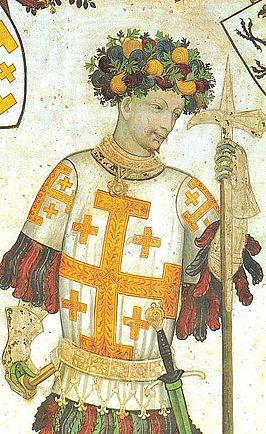


Friday, March 9, 2018, I looked in a box a the Knight Library. I did not find what I was looking for. However, the gentleman at the desk suggested I look on the internet. When I got home – Eureka! My book explodes with knowledge – and images! I have decided not to share all of my findings, and my understanding of Hieronymus Bosch. I looked in a box containing the writing of the late, Damon Knight. I wish he were alive. He failed to identify the figure of what looks like a Pope holding a church. Tonight CNN begins a series on the Pope. I believe the figure in front of the Pope, is my kindred. Note the medallion.
I may have spent ten thousand hours on the internet researching my Rose Line. On Saturday, an old friend said;
“Computers are evil!”
She was attacking me in the name of Trump who she titled “A sensitive genius!” She has turned her life completely over to the President of the United States. I am going to remove her name from this blog. Israel minted a Trump-Cyrus coin. How prophetic.
I would like to thank the people close to me, who have been supportive, but, there aren’t any. Strangers at the libraries………are my friends. Damon and I would have been great friends!
Thank you!
The clue Damon gave me when I read his papers, was Bosch did a painting of John of Patmos. Bosch has John on a hill overlooking Den Bosch. The tower of Saint John’s in in the distance. I was reminded of painting of New Amsterdam and New York. The I saw ‘Our Lady of the Harbor’. Our Lady of Holland, is pointing West. What is that book she is cradling in her arm ‘The Book of Revelations’ by John of Patmos.
My sisters saw a blue angel at the foot of their bed. Hallucinating may run in my family. I suspect the model for John, was a Rosemont. Prophets tell of things to come. We are looking at a great and hidden, Art Dynasty, that once was lost!
Frater (Father) Roesmont comes from 1382 until 1408 for Rolof as brother of Porta Coeli. His brother Ghijsbrecht was since 1382/83 sworn brother of the o.l.v.-brotherhood. On March 16, 1384 he entered the St. John as witnesses at a miracle story. A boy from Dreumel known as Alaert, son of Jacob Mertenssoen, “was covered by datmen hot Alaert siec welc vanden-Cornelisong-wee Sente hemac”, together with his mother told when Aleyt and his neighbors how he was healed of his epilepsy after his mother to o.l.v. van Den Bosch a pilgrimage had promised. An earlier promise of a pilgrimage to Kornelis munster at Aachen had not helped.
While being screened to enter the special collection, a woman overheard me speak of Damon Knight. She told me she had gone to hear him speak. She is a Science Fiction Writer. When two boxes of Knight’s work was wheeled out, and a woman carried one over to the table I sat at, and placed it before me, I realized I had come to the end of my in-finished science fiction novel ‘The Gideon Computer’ that my friend Nancy Hamren bid me to write. She was a good friend of Ken Kesey and suggested I write the history of the hippies because I could recall so much. I wrote about the Last Hippie – in the future. Damon is a co-founder of Futurians and wrote a book about them.

I just found this. A voice told me to take a photograph of the Damon Box, and me next to it in the Knight Library. I can not show the details – yet! There were images of painting with lines intersection hands to geometric shapes. There were several Sacred Geometry researchers in the Priory de Sion group I belonged to that Dan Brown peeked in on. Was Damon aware of them? The box was compiled in 1998.
Damon published his work on Bosch on Eugene Free Net who charge a small annual fee. I lost my essay when I forgot to pay my dues. Dito for Damon? ‘I See You’ is a preview of things to come, along with the I-Phone. I can see Damon struggled to master the WWW. He was getting old. I picked up the gauntlet. I am the Last Futurian standing.
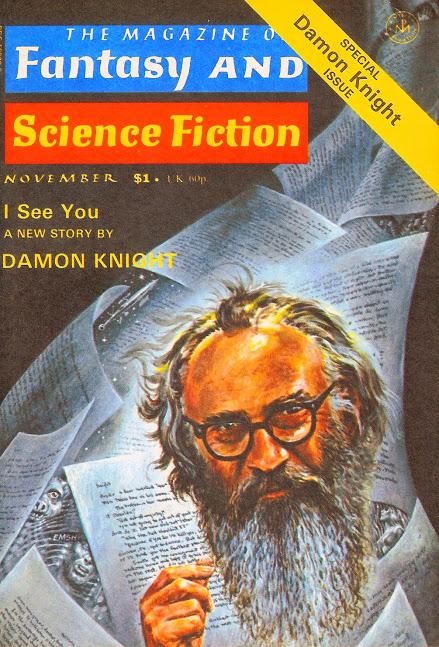

“During the Forties the bulk of the Society wandered through varying communal living arrangements, treated each other to an endless series of newsletters (The Ivory Tower Goetterdaemmerung. The Prime Base Godhelpus) and scatalogical verses, and got through a surprising number of marriages and divorces. This is an irresistible story or set of stories. Yet there is something formless and undecided about the telling. One can only be grateful for Knight’s labor of love (and telephone book and tape recorder), but one also senses struggling motives behind it, even at this date. Is he trying to chronicle a historical episode? To disinter a few old bones of contention? To record something elusive and marvelous? Luckily it is the last that one remembers longest.
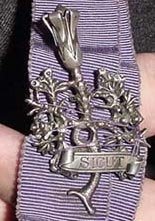
The only Time Viewer we know exists for sure, is our Family Trees, our recorded genealogies. Genesis! My Rosemont-Roover kindred appear in Bosch’s work. They were Swan Brethren. So was Bosch. Thomas Pynchon is in my tree. I invite Damon Knight to come take his seat at this great oaken table, along with all the Futurians. Note the rose and thorns that crowns the home of the Brethren with this word SICUT. Put a Sacred Woman there – with geometry!
The emblem worn by the Swan Brethren depicts a a rose, or lily,
amongst thorns. At the root of the rose is the Latin word SICUT which
is the first word from a line from Song of Songs.
2:2. As the lily among thorns, so is my love among the daughters.
Sicut lilium inter spinas sic amica mea inter filias
They say the Hippies invented the Internet. This is where my Unending Novel – go!
Welcome, my friends! Welcome, my Brothers! And, if that madman in the Oval Office brings the world to an end, we will still meet, here, to search for a better ending.
Ignore the old woman. There is evidence Bosch wore glasses. I love the wallpaper.
Jon Presco
Copyright 2018
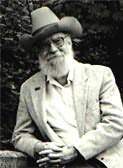
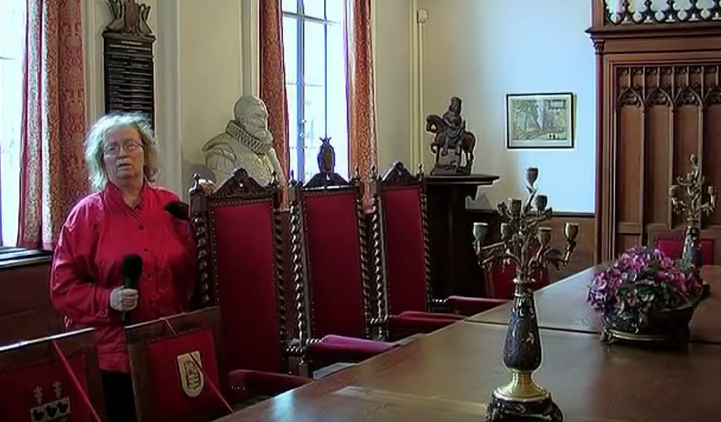
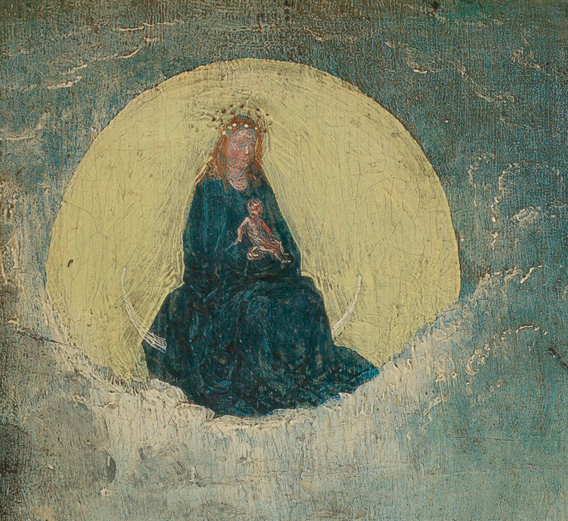

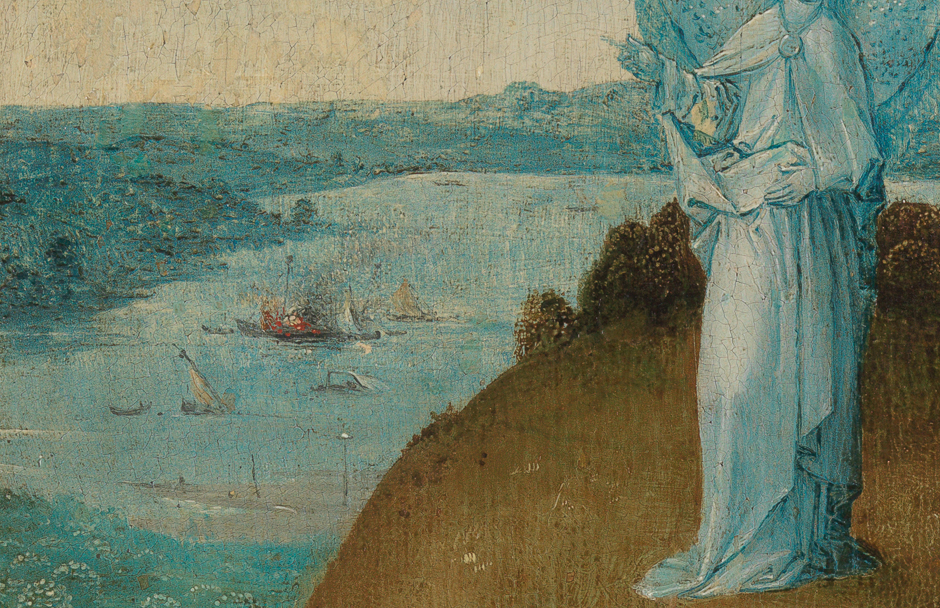


The history of the van Cuyck family goes back to the 11th century. It begins with a man called Herman van Malsen. He married Ida of Boulogne, sister of the great Godfrey of Bouillon, daughter of Eustace II, Count of Boulogne, and (Saint) Ida of Lorraine. The family of Herman van Malsen held land in the Betuwe around Geldermalsen and Meteren. Receiving the Land of Cuijk as a fief from the Emperor, his descendants started to use the surname ‘van Cuyck’.
The van Cuyck family became an important family. They developed a very close relationship with the Dukes of Brabant, whom they represented on several occasions.


http://www.nytimes.com/2002/04/17/arts/damon-knight-79-a-writer-and-editor-of-science-fiction.html
During the Forties the bulk of the Society wandered through varying communal living arrangements, treated each other to an endless series of newsletters (The Ivory Tower Goetterdaemmerung. The Prime Base Godhelpus) and scatalogical verses, and got through a surprising number of marriages and divorces. This is an irresistible story or set of stories. Yet there is something formless and undecided about the telling. One can only be grateful for Knight’s labor of love (and telephone book and tape recorder), but one also senses struggling motives behind it, even at this date. Is he trying to chronicle a historical episode? To disinter a few old bones of contention? To record something elusive and marvelous? Luckily it is the last that one remembers longest.
Damon Knight, a prolific science fiction writer and editor whose wry humor found its biggest audience in ”To Serve Man,” a short story that was adapted into a beloved episode of ”The Twilight Zone,” died on Monday at a hospital in Eugene, Ore., his family said. He was 79 and lived in Eugene.
Mr. Knight was part of the first wave of literary-minded science fiction writers. Born in Baker, Ore., he moved to New York in the early 1940’s and joined a group of budding writers called the Futurians. Their ranks included Isaac Asimov, Donald A. Wollheim and Frederick Pohl, who went on to be some of the most influential writers and editors in the field. Mr. Knight’s memoir of the group, ”The Futurians,” was published in 1977.
| Radbout < 866-> 900 | |||
 | |||
| Otto de Roover ± 900-???? | |||
 Radbout (2) de Roover Radbout (2) de Roover± 930-± 990 | |
van Ghijsbrecht Roesmont
| Daniel Roesmont ± 1360-< 1449 | Dirk Dirck Dierick de Roover ± 1335-1414 | Elisabeth van Erp Keldonck ± 1350-???? | |
 | | ||
| Daniel Roesmont ± 1380-1449 | Adriana de Roover ± 1400-> 1451 | ||
| |||
| Ghijsbrecht Roesmont ± 1440-< 1485 | |||
| x < 1468 Margriet Fykens van Eindhoven ± 1440-???? | |
| Jan Roesmont ± 1468-???? | |


Here is a reenactment of folks in my family tree. Here is the real Game of Thrones.
http://www.wikiwand.com/en/Radbot,_Count_of_Habsburg
http://genforum.genealogy.com/rosemond/messages/3.html
My kindred, Elizabeth Rosemond Taylor is in the Peerage as are those closely related to her. Burke’s Peerage, for the time being, does not pursue the genealogy of Elizabeth Mary Rosemond, Liz’s grandmother, to all the Rosamonds, including my mother Rosemary Rosamond, and my sister, Christine Rosamond Benton, whose marriage to Garth Benton put us in the Preston family tree that has ties to the Stewarts, and thus Kate and William Windsor who gave birth to a baby boy yesterday. This royal child is yet to have been given a name.
What I hear, is that Kate wants her son to be named Arthur, and William wants George. There was an argument between the parents of John the Bpatist as to how their son will be named. Nazarite priests are present. I believe they asked the eight old infant what name he preferred.
I am kin to Baby Cambridge via the Bronkhorst, Montfoort, and Roesmonts, who were Swan Brethren. William Windsor is kin to the House of Kleve and the Swan Legends. Arnold de Rode (red) is kin to us all. I have associated him with the Red Knight, who brings a challenge to the Round Table. Let us summon the Rouge and Swan Knights who will ask the child how he will be called, for the Swan Knight is the guardian of secret names, and a mysterious lineage.
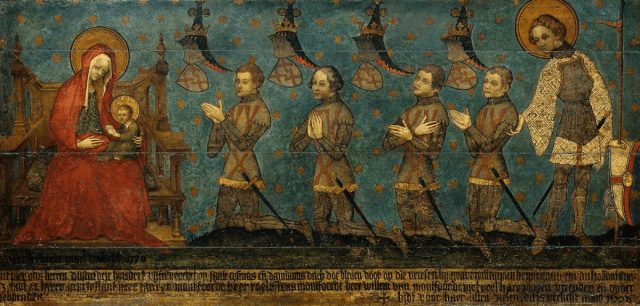
Above is the oldest surviving Dutch painting depicting my Roover kindred as Knights of the Swan. Four generations are ushered in by Saint George to behold Our Sweet Lady and her new born baby. May this child know the protection of the Swan Knight and his Swan Brethren.
The Rosemonts were the Lords of Wolfswinkle house and our cote of arms was a dancing wolf.
Jon
Nazarite Priest
http://www.kloek-genealogie.nl/BronckhorstPar.htm
http://nl.wikipedia.org/wiki/Van_Montfoort
http://nl.wikipedia.org/wiki/Jan_I_van_Montfoort
The Return of de Rode Ridder (Red Knight) to his Lost Castle
The Return of de Rode Ridder (Red Knight) to his Lost Castle
(Images: A Red Knight. The new Horst castle. The old Horst castle.
Red Knight. The Rovers of Montfoort, Knights of the Swan Brethren.)
http://www.graafschap-middeleeuwen.nl/bronckhorst/gijsbert-i-
bronckhorst.html
http://rougeknights.blogspot.com/2007/02/order-of-swan-dukes-of-
brabant-dynasty.html
“Kinderen/Children ;1: Hilla Henricx {Roesmont van Rode} Roesmont
(*/+)M : Rudolph Godsclack Roesmont”
Today, August 7, 2007, I found the castle of the Rosemont/Rode
family. Through the mists of time, the Red Knight has come home.
Arnold graaf van had three sons, Ghijsbert van Rode, and Roelof
(Rover) van Rode, and Hendrick van Rode. There is a Horst castle that
was once called ‘castellum Rode’. This is the Rosemont family. Rode
means “red” Ghijsbert was a ridder, a knight. Here is a real Red
Knight that appear in Arthurian legends. This family has intermarried
for several generations, they passing down the same names.
Ghisburtus van Roesmont was a Dutch nobleman of some importance. His
mother was jonkvrouw Adriana Theodorici ROVER. the daughter of Dirk
Edmondszn ROOVER. The Roover family appears to descend from one of
the Radbot rulers of Holland who was given the name Roover, or Rover
due to conquest of the Netherlands. The Roover family would build
Montfoort castle one of the most prestigious castles in Holland.
These two families were keen on forming a marriage alliance as Arnold
Rover married Heilwigis Arnoldi Danielis ROESMONT. For this reason I
suspect the Roesmont Wolf names came from Roelof the Roover R +
Odilia van Montfoort. Perhaps the Roovers owned Wolfhouse where the
Roesmonts came to live in 1450. Ghisburtus was the master of Saint
Janskerk, and a member of Lieve-Vrouwe-broederschap that met in
Janskerk church. Hieronymus Bosch was a member of the Zwanenbroeders
(swan brothers) and was commissioned by the master of Janskerk to do
a stained-glass window for the church.
I am going to visit my daughter and grandson my family who appear out
of nowhere. I have taken on powerful people, and I have prevailed.
Jon Presco
Copyright 2007
Share this:
From Wikipedia, the free encyclopedia
| Zwanenbroedershuis | |
| Swan Brothers’ House | |
 Swan Brothers’ HouseNorth Brabant Swan Brothers’ HouseNorth Brabant | |
| Location | Hinthamerstraat 94 ‘s-Hertogenbosch, Netherlands |
|---|---|
| Coordinates |  51.688694°N 5.309611°E 51.688694°N 5.309611°E |
| Director | Tom Witlox (administrator) |
| Architect | J.H. Laffertée |
| Website | http://www.zwanenbroedershuis.nl/ |
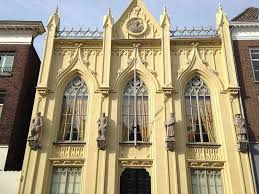
The Swan Brothers’ House in ‘s-Hertogenbosch is a museum and the home of a famous medieval confraternity.
History

In 1318 the Illustre Lieve Vrouwe Broederschap (Brotherhood of the famous Blessed Lady) was founded in ‘s-Hertogenbosch. Its religious works mainly took place in a chapel in St. John’s Cathedral. The first meeting room of the brotherhood was in a tower of the church. In 1379 they made some changes there, to keep out the pigeons.[1] In 1484 the brotherhood moved to Hinthamerstraat. Gijsbertus van der Poorten had left his house De Pauw (The Peacock) to the confraternity.[2]
In 1535–1538 the house was renovated in Renaissance Style after a design by Architect Jan Darkennis. Three centuries later the building required so much repair that it had to be demolished and was replaced by the current building. Some pictures and drawings of the old building survive. It allowed to create a 3D reconstruction of this building.[3] The current museum also holds some fragments.
The current building was built in 1846–1847 in neo-Gothic style. It was a design by J.H. Laffertée. In 1868–1870 the great hall was finished with timber by Lambert Hezenmans. A wrought iron stove also dates from the neo-Gothic construction. In the 1950–1958 the building was renovated. The copper swan on top of the façade dates from this renovation.[4]
In 1962 four limestone statues were placed in the façade. These are by Marius van Beek. From left to right they represent: William the Silent (first brother of the House of Orange), Gerardus van Uden (founder of the confraternity), Gijsbertus van Poorten (Who gave the first house) and Floris van Egmont (important Swan Brother).[5] In 1965 the Swan Brothers’ House became a national monument.
Museum
In the 1930s the Swan Brothers’ House was considered to be a museum. At that time it was open on Fridays, from 11 till 3 o’clock, and visited by on average 125 people a year.[6] The building was officially registered as a museum in 2005. The house meanwhile continues to be used by the brotherhood.
Of course the history of the building and the brotherhood itself is the main story told by the museum. Nevertheless, there are some interesting art object in the museum. These include two altar cabinets that were part of the Mary altar that Adriaen van Wesel commissioned between 1475 and 1477. The cabinets show the image of John of Patmos and the vision of Emperor Augustus.
There are also nine large sixteenth century choir books containing polyphonic music: seven manuscripts and two editions. Three of these rare manuscripts of the confraternity originate from the workshop of the famous music copyist Pierre Alamire.[7] The museum also has many objects with the arms of the members. Not the least of these is the pewter wine pitcher of William the Silent.[6]
Gallery
Butt Music of The Swan Brethren
Butt Music of The Swan Brethren
Butt Music of The Swan Brethren
There is a musical score written on the butt of a naked figure – who might be a member of the Swan Brethen – and my kin. Did Gottschalk Rozemondt, the Master of the Falcon Art College – instruct Bosch – who had to get permission – from a higher-up!
John Presco
A wild Renaissance painting shows music written on a pair of buttocks. And someone’s recorded it.
17 August 2020, 12:12 | Updated: 17 August 2020, 12:20
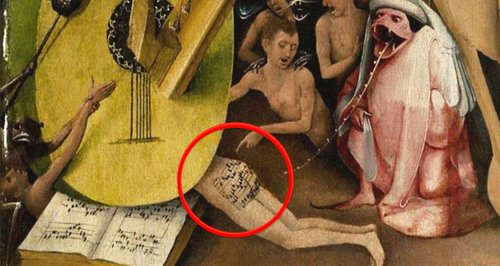
Hieronymus Bosch is famous for his intricate and macabre visions of hell. But have you ever noticed this bizarre ditty painted on a poor sinner’s naked behind in his most famous painting?
Dutch painter Hieronymus Bosch’s Garden of Earthly Delights (c. 1490-1510) is a three-part painting showing the Garden of Eden on the left and a vision of hell on the right.
The central panel is something sort of in between – with some frankly crackers animals added for good measure.
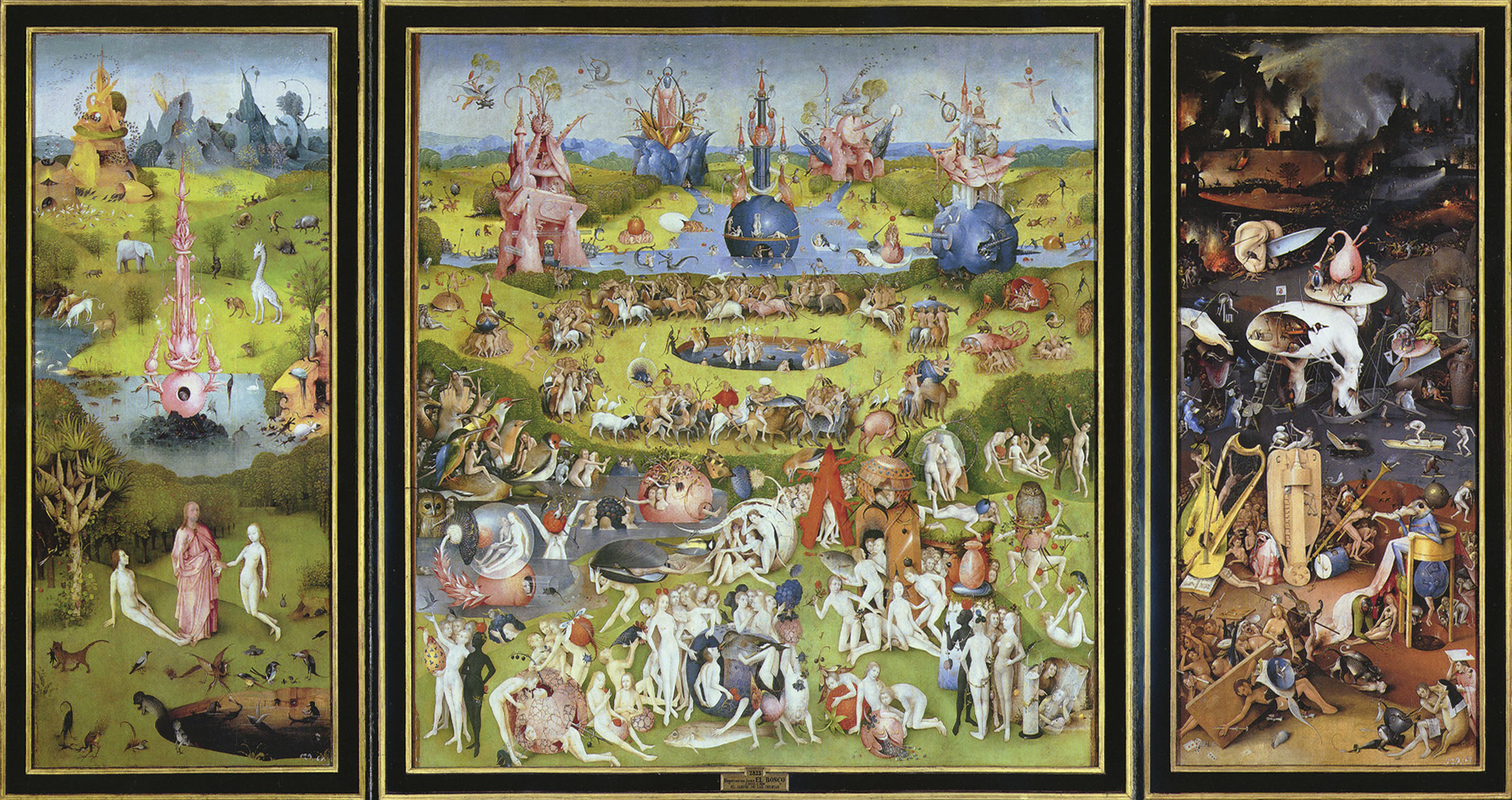
Like these ones:
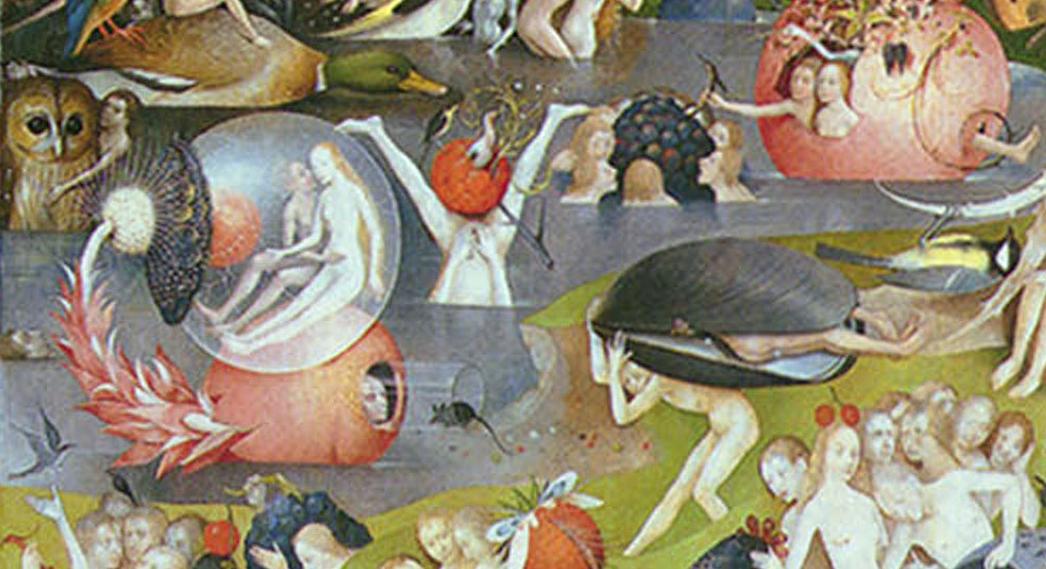
ANYWAY, we’re not here for the giant owls or even the couple having a great time in a mussel shell.
Read more: The ‘Shame Flute’ was used to punish bad musicians in the Middle Ages >
We’re here for MUSIC.
In the vision of hell, there’s a special place reserved for musical instruments (THANKS BOSCH) including a harp, a lute and some sort of woodwind instrument.
There’s also a book of sheet music and a demon whose role, it seems, is to imprint music on sinner’s naked bums with his weird note-shaped tongue.
That’s the best I can do by way of explanation. Here’s a close up:
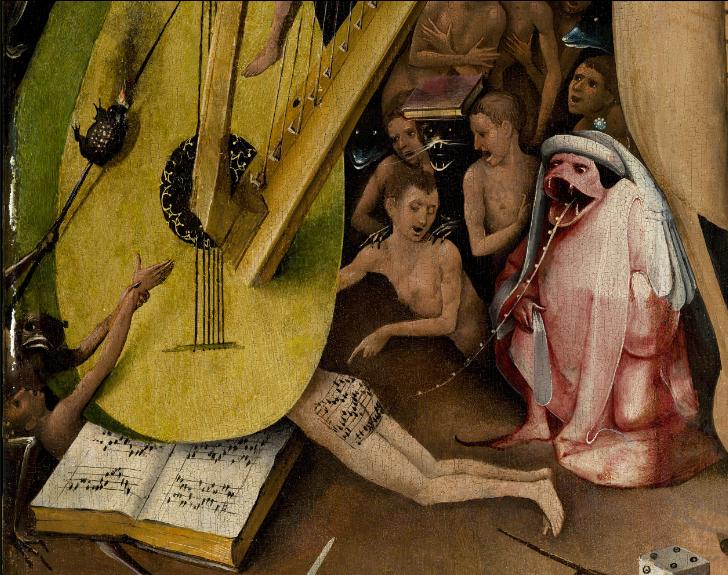
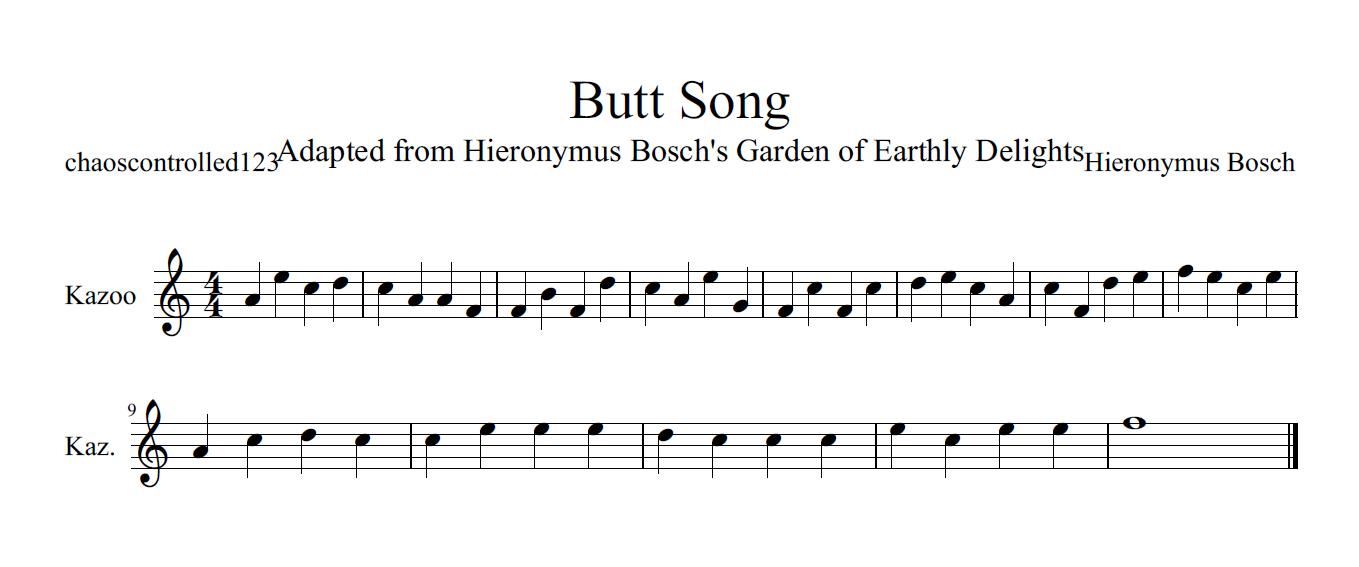
A music student called Amelia transcribed the music using modern notation and posted it on Tumblr and now you can hear the piece of music written on a sinner’s naked bum for yourself.
Here’s the music in modern notation
 Rosamond Press


Leave a comment