“At the moment, Europe is paying most of the military aid to Ukraine,” Lipavsky said. “I think Europe will naturally have its place in the negotiations. However, maybe not in this format, I can’t assess that exactly.”
Putin and Trump have defeated the United States, and are poised to defeat Europe. The Bohemian Brother and Sisterhood has to go viral and create an ideal nation within the Dark Empire of
MUTTRUPPIN (Moot-trup-pin)
Below are the Knights of Rougemont. Bill Rozier formed a Facebook group with this title. I can not tell whose side he is on, being he is very pro-Confederate history. and, perhaps one of the million Christians who love Putin. I wish they would stand up and be counted, Instead, they slink about in the dark.
John Presco ‘Prophet of the New Puritan Church’

Credit: MFA
Czech Republic / WorldPolitics
·6 days ago·3 min read
Czech Foreign Minister Lipavsky Begins Visit To Ukraine
Czech Foreign Minister Jan Lipavsky is beginning a visit to Ukraine today, travelling to Zboriv in the west of the country to pay a symbolic tribute to the Czechoslovak legionnaires, members of the Legions voluntary units that contributed to the establishment of Czechoslovakia.
Lipavsky said that his sixth visit to the country, which has been resisting Russian aggression for three and a half years, concerned Czech-Ukrainian relations and further support for Ukraine.
“My visit is about Czech-Ukrainian relations,” he said. “It is about supporting our companies to have a good share in the reconstruction of Ukraine. It is also a political message that we are of course behind Ukraine and its fight against Russian aggression. This is something where we have a common interest.”
“It is also about our support for Ukraine’s future European integration and NATO membership,” he added.
The Battle of Zboriv took place on 1 and 2 July, 1917, and was the first significant appearance of the Czechoslovak Legions on the Eastern Front during World War I. According to historians, the battle had an important influence on the formation of independent Czechoslovakia. The Czechoslovak troops at Zboriv were victorious over twice as many Austro-Hungarian regiments, which also included Czech soldiers. The battle claimed the lives of more than 350 Czechoslovaks.
“It was the strength of the legions that allowed Czechoslovakia as such to come into being,” said Lipavsky. “The powers of the time recognised that Czechoslovakia could exist as an independent state. This should be a great inspiration for us today.” He added that he sees many parallels with the current events in Ukraine.
On Friday, US President Donald Trump will meet his Russian counterpart Vladimir Putin in Alaska. According to NBC News, the White House is still considering inviting Ukrainian President Volodymyr Zelenskiy as well.
Speaking to journalists, Lipavsky insisted that as Europe is currently paying for most of the military aid to Ukraine, it will naturally have a place in the ongoing peace talks.
“At the moment, Europe is paying most of the military aid to Ukraine,” Lipavsky said. “I think Europe will naturally have its place in the negotiations. However, maybe not in this format, I can’t assess that exactly.”
According to Lipavsky, the United States regularly updates its key European partners. “We cannot say that Europe is completely left out, but there is relatively little information, so let’s not think far ahead,” he said of the upcoming negotiations.
“It must be Ukraine that decides what it is willing to agree to and what it is not willing to agree to,” Lipavsky said. He said he considers the territorial integrity of Ukraine to be an inviolable principle.
In the coming days, Lipavsky will address a conference on respect for international humanitarian law, and he will also meet Ukrainian officials.
Ride of the Night Wolves
Posted on March 8, 2014 by Royal Rosamond Press


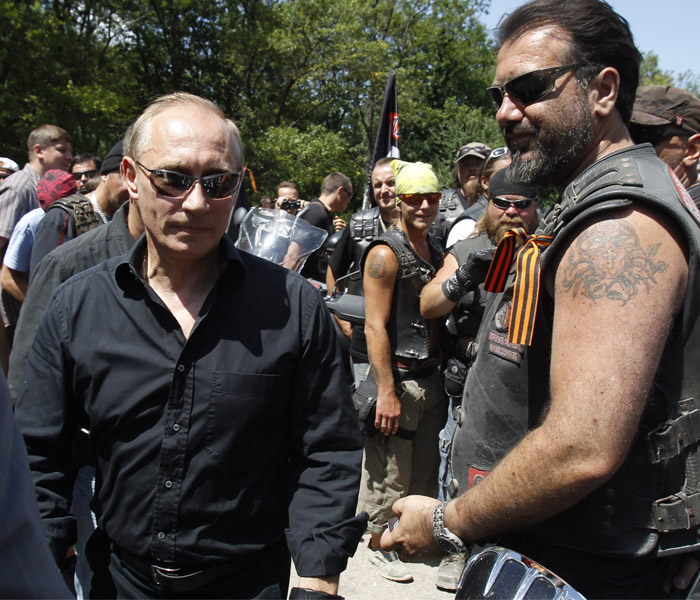
Here comes Putin’s Storm Troopers!
Jon
http://www.carscoops.com/2014/03/who-are-night-wolves-biker-gang-and.html
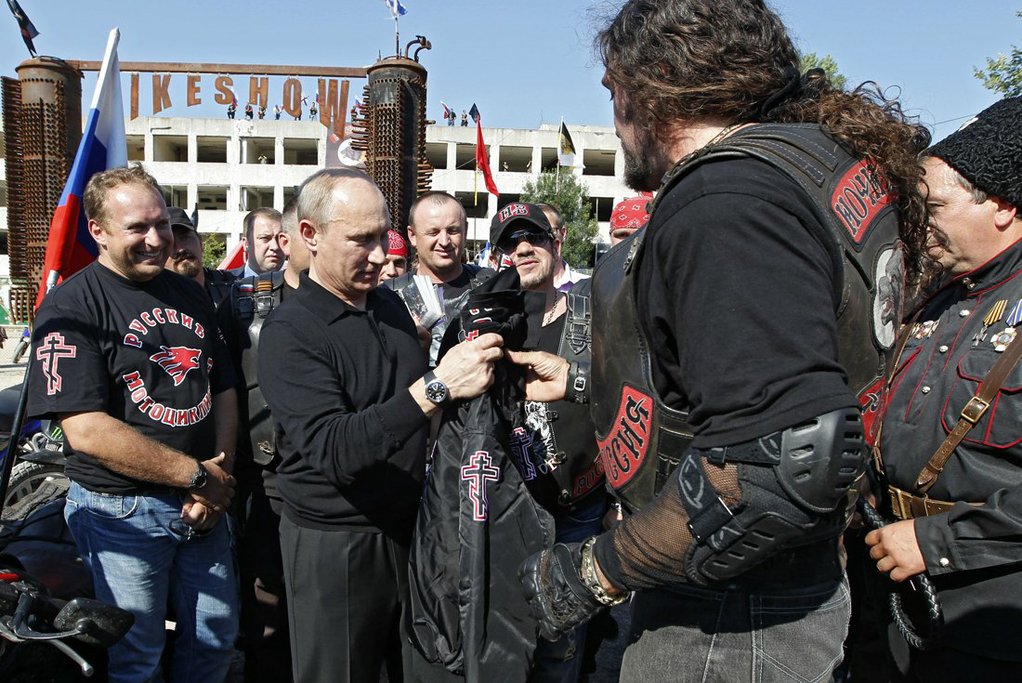
A group of Russian bikers called the Night Wolves that regularly rides with President Vladimir Putin is heading to Ukraine to back pro-Russian protests, its leader said Friday.
Putin has ridden a Harley-Davidson with the bikers and called them his “brothers”. He is said to be close to its long-haired leader, Alexander Zaldostanov, nicknamed “the Surgeon”.
The patriotic group opposes Ukraine’s European integration and the protest movement that has taken power in Kiev. Its website says its members are “ready to die like warriors”.
“Tomorrow people are organising an action called Russian Spring,” Zaldostanov told the RIA Novosti news agency, saying the event would start from the town of Popasnaya in eastern Ukraine.
“The column will start at 8:00 am (0600 GMT) and ride across the whole eastern part of Ukraine,” he said, adding that he himself was going to the Crimean port of Sevastopol, where Russia’s Black Sea fleet is based.
The overwhelmingly Russian-speaking peninsula of Crimea has emerged as a flashpoint in Ukraine after the ousting of president Viktor Yanukovych, with many residents openly hostile to the new authorities in Kiev.
The bikers’ leader said members also planned to deliver “humanitarian aid” to Sevastopol on four-wheeler bikes.
Putin has several times appeared at bike rallies with Zaldostanov, a towering figure who wears studded leather and ties his long hair back in a pony tail.
Last year, Putin personally decorated Zaldostanov with a state honour after the group helped restore a monument symbolic of Soviet war heroism in the southern city of Volgograd.
In 2011, Putin, riding a Harley-Davidson, led a column of the bikers at a rally held on a former Soviet warship in the Russian Black Sea port city of Novorossiisk.
The club has its own Kiev branch, which says its aim is to “spread Russian influence around the world”.
http://www.nightwolves.com.mk/index_mk.htm
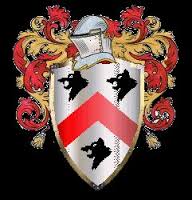
Knights of Rougemont vs. Night Wolves
Posted on March 8, 2014 by Royal Rosamond Press



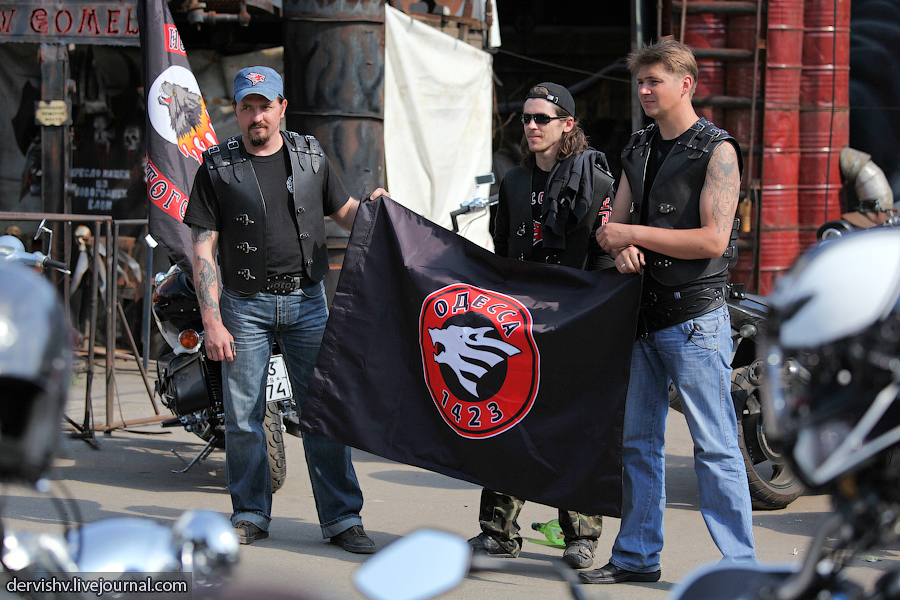
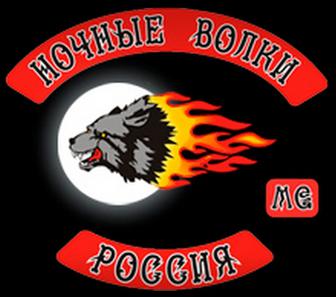
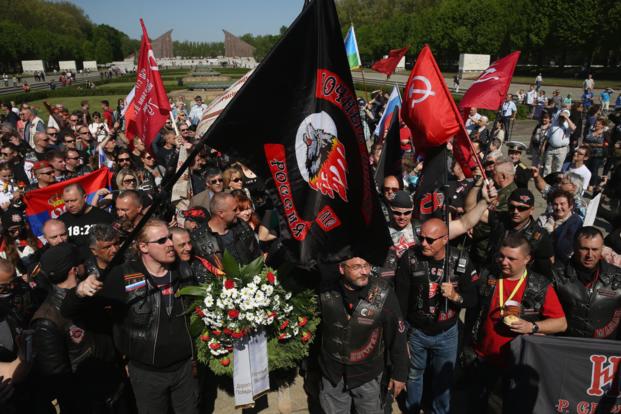
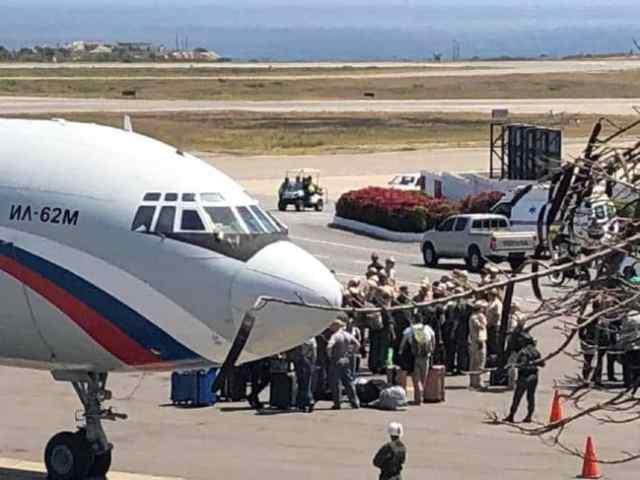
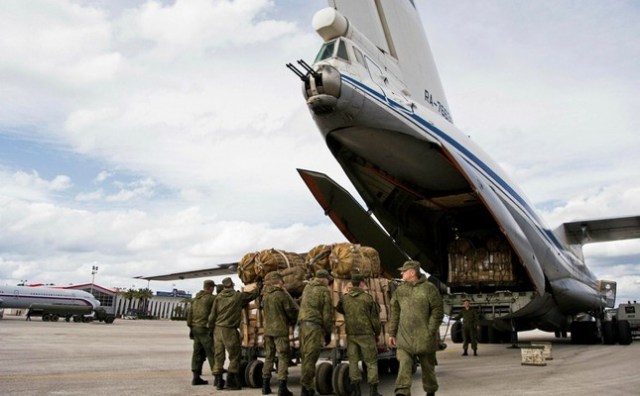
The Night Wolves Have Landed
Posted on May 3, 2019 by Royal Rosamond Press

Art immitates life!
I woke from a dream. The Night Wolves have landed in Venezuela. I have been watching the demonstrators there on motorcycles. This made Putin as his Wolves from hell, salivate. Where is our President?
I have prepared for this battle. I am a Futurian!
Away my wolves! Away!
Seer Jon Rosemondt ‘Duke of the Woods’
Rusaman
Posted on September 12, 2019 by Royal Rosamond Press


Two hours ago, as I awoke, my Angel-Muse gave me the storyline for my first book that is inspired by William Morris and the Pre-Raphaelites. An hour ago I cracked Tolkien’s name code – that literally drops The Ring in my lap! I am The Chosen One!
Above is THE NAME. This will be the name of my first book, and/or my Television series. I am going to send out a proposal to some producers. They will look at this blog as a Never Ending Source. I have communicated with a cousin. We might be put in one of the Bohemian castles with a writing team that I Christen……..The Wolfen Rose Line!
For six months I and others have been under attack by people I believe are associated with The House of Schwarzenberg, who like me, followed their family to tree to the rulers of Bohemia. These people made a site that I was placed in – against my will. These people are convincing members to erase all their links to royalty, saying royalty is not an American thing. American Movie Goers – will be on my side! The royalty that will be broadcast on the silver-screen, will overcome the world!
Eight years ago, I tried to make amends with my family. My late sister, Vicki, and our niece, Drew, were locked into Everquest. I tried to get them locked into our Rose Family Tree and our amazing family history, but, they were escaping from reality. So I came in as Wolferose. Vicki bid Drew to say hello to me, there, which she did. It is the only time we spoke since the funeral of her mother.
In that land, where my DNA go, the grief is unbearable, now that she does not move a limb, an eyelash, nor wiggle a toe, but there is a last breath, a rumor, a whisper under the mistletoe. Then comes a forever kiss, and the last name………….Rusaman!
And I go, to the Land of Forgiveness, for all those I came to know. For love conquers all, and we go which way, the wind blows.
John Presco
Copyright 2019
President: Royal Rosamond Press
Rusman reversed is Namsur
Name contains 6 letters – 33.33% vowels and 66.67% consonants.
Anagrams: Numasr Sruamn Rsuanm Usranm
Misspells: Rusmon Lusman Rrusman Russman Rusmana Rsuman Rusmna Rusamn
The House of Schwarzenberg and I
Posted on March 10, 2019by Royal Rosamond Press
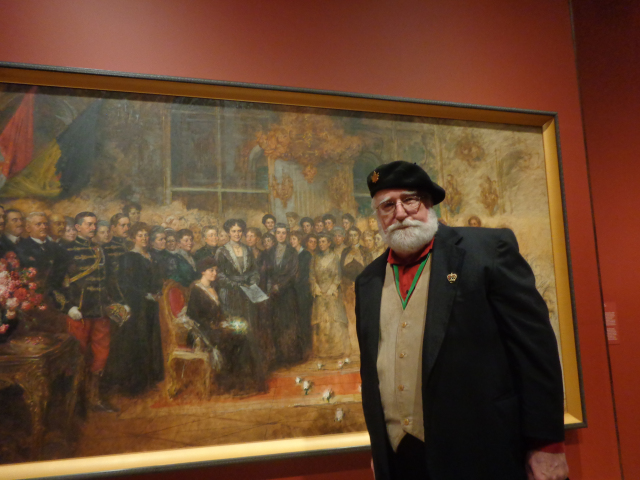
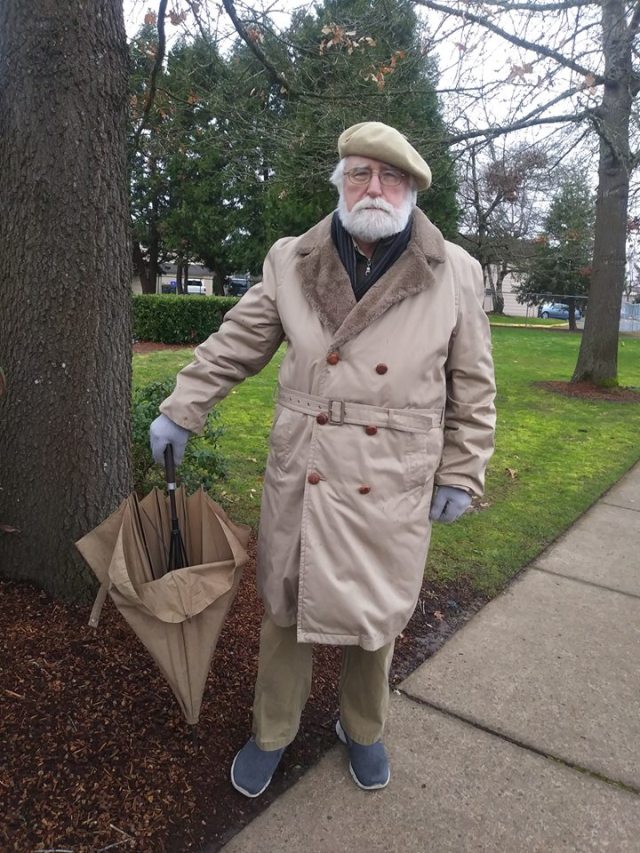

I claim I am a member of the House of Schwarzenberg. The Wilson, Webb, and Rosamond family constitute the British and American Line. The British-American Alliance spent treasure, and shed blood opposing the tyrants who enslaved the Bohemian Czech people. I implore the artwork belonging to the House of Schwarzenberg, be returned.
John Presco

House of Schwarzenberg
From Wikipedia, the free encyclopedia
Jump to navigationJump to search
| Schwarzenberg | |
|---|---|
| Arms of the Princes of Schwarzenberg | |
| Parent house | Seinsheim |
| Country | Holy Roman Empire Old Swiss Confederacy Kingdom of Bohemia Duchy of Styria |
| Founded | 917 Seinsheim (parent house)1421 Acquisition of Schwarzenberg |
| Founder | Erkinger VI of Seinsheim aka Erkinger I of Schwarzenberg |
| Current head | HSH Prince Karl of Schwarzenberg |
| Final ruler | Joseph II, 6th Prince of Schwarzenberg |
| Titles | Prince of Schwarzenberg Duke of Krumlov Landgrave of Klettgau Count of Sulz |
| Style(s) | Serene Highness |
| Motto | NIL NISI RECTUM (NOTHING BUT THE RIGHT) |
| Estate(s) | Princely County of Schwarzenberg Princely Landgraviate of Klettgau County of Gimborn |
| Deposition | 1806: Dissolution of the Holy Roman Empire |
| Cadet branches | Princely Line:Schwarzenberg Primogeniture (Frauenberg)Schwarzenberg Secundogeniture (Orlik)Frisian Line:Barons thoe Schwartzenberg en HohenlansbergPrussian Line: Freiherrn zu Schwartzenberg und Hohenlansberg |
Schwarzenberg is a Czech (Bohemian) and German (Franconian) aristocratic family, and it was one of the most prominent European noble houses. The Schwarzenbergs are members of the Czech nobility and German nobility and achieved the rank of Princes of the Holy Roman Empire. The family belongs to the high nobility and traces its roots to the Lords of Seinsheim during the Middle Ages.[1]
The current head of the family is Karel, the 12th Prince of Schwarzenberg, a Czech politician who served as Minister of Foreign Affairs of the Czech Republic. The family owns properties and lands across Austria, Czech Republic, Germany and Switzerland.
Contents
- 1History
- 2Imperial immediate estates
- 3Notable family members
- 4Property and residences
- 5Ecclesiastical buildings and places
- 6Monuments and memorials
- 7The Family
- 8Titles
- 9Coat of arms
- 10References
- 11External links
History[edit]
Origin[edit]
The family stems from the Lords of Seinsheim, who had established themselves in Franconia during the Middle Ages.[1] A branch of the Seinsheim family (the non-Schwarzenberg portion died out in 1958) was created when Erkinger of Seinsheim acquired the Franconian territory of Schwarzenberg and the castle of Schwarzenberg in Scheinfeld during the early part of the 15th century. He was then granted the title of Freiherr (Baron) of Schwarzenberg in 1429. At that time, the family also possessed some fiefdoms in Bohemia.
Ascent and expansion[edit]
In 1599, the Schwarzenbergs were elevated to Imperial Counts, and the family was later raised to princely status in 1670.[1] In 1623 came the Styrian Dominion of Murau into the Schwarzenberg family due to the marriage of Count Georg Ludwig of Schwarzenberg (1586 – 1646) with Anna Neumann von Wasserleonburg (1535 – 1623). Furthermore, the House of Schwarzenberg acquired extensive land holdings in Bohemia in 1661 through a marriage alliance with the House of Eggenberg. In the 1670s, the Schwarzenbergs established their primary seat in Bohemia and, until 1918, their main residence was in Český Krumlov, Bohemia (now in the Czech Republic).
Schwarzenberg/Sulz family unification[edit]
Due to the absence of a male heir and his only daughter Maria Anna married to Prince Ferdinand of Schwarzenberg, Johann Ludwig II. Count of Sulz proposed a family unification between the Counts of Sulz and Princes of Schwarzenberg at the Imperial Court. His request was granted, which not only transferred all legal and property rights upon his death in 1687 from the Sulz family to the Schwarzenberg family, but assured that the Sulz family continues in the Schwarzenberg family. The visible affirmation of this bond was the merging of the coat of arms.
- Alliance crest on Jinonice castle
- Ferdinand & Maria Anna
- Alliance crest on Schwarzenberg Ducat, which was the own currency issued by the House of Schwarzenberg
Two princely lines[edit]
At the beginning of the 19th century, the House of Schwarzenberg was divided into two princely-titled lines (majorats).[1] This division was already foreseen in the will of Prince Ferdinand (*1652 – †1703). However, the absence of two male heirs until Joseph II. and Karl I. Philipp inhibited the execution. The senior branch,which held not only the Palais Schwarzenberg in Vienna, but also the Dominions of Scheinfeld, Krumlov, Frauenberg and Murau, died out in the male line in 1979 upon the death of Joseph III of Schwarzenberg, who was the 11th Prince of Schwarzenberg. The cadet branch, which was established by Karl Philipp, Prince of Schwarzenberg at Orlík Castle, continues to the present day.
The two branches have now been re-united under the current head of the family, Karl VII of Schwarzenberg, who is the 12th Prince of Schwarzenberg. He is a Czech politician and served as Minister of Foreign Affairs of the Czech Republic.
- The three last Princes of the primogeniture: Adolf (l.), Johann II. (m.) and Josef III. (r.)
- The heir of both lines: Karl VII./I.
- The last Prince of the secundogeniture: Karl VI. (m.)
Present Time[edit]
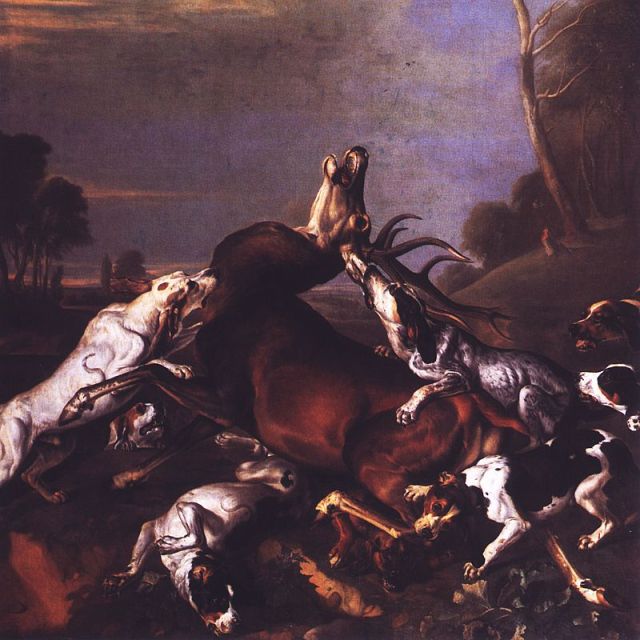
Due to the unification of the family-headship under Karl VII Schwarzenberg, the fidei commissa of both the primogeniture / Hluboka line and the secundogeniture / Orlik line came under the single ownership of the last-mentioned prince. Karl VII created in the 1980s the current structure of the family belongings. The German and Austrian properties from the primogeniture were embeded (with some exceptions) into the Fürstlich Schwarzenberg’sche Familienstiftung (Princely Schwarzenberg Family-Foundation) based in Vaduz. The art collection, which includes the painting The Abduction of Ganymede by Peter Paul Rubens or an important collection of works by Johann Georg de Hamilton, is held in the separate Fürstlich Schwarzenberg’sche Kunststiftung (Princely Schwarzenberg Art-Foundation). The Czech property of the secundogeniture is held privately. The members of the family follow careers in the private or military sector.
- RUBENS: The Abduction of Ganymede (between 1611 and 1612)
- Hunting scene with the Princely family in front of Hluboká Castle in 1865
- HAMILTON: Hirschhetze (1710)
Frisian and Prussian line[edit]
Michael II. Baron zu Schwarzenberg (†1469), oldest son of Erkinger I. (*1362 – †1437), was married twice. First with Gertrud (Bätze) von Cronberg (†1438), from whom the princely line descends. His second marriage was with Ursula (Frankengrüner) Grüner († ca.1484), from whom the Frisian and later the Prussian line originates. The children of Michael’s and Ursula’s alliance were never recognized by their half-siblings, as their first born son was born out of wedlock and the legitimisation only took place with the subsequent wedding.
Johann Onuphrius (*1513–†1584), a great-grandson of Michael II. and Ursula, is considered to be the progenitor of the Frisian Line. His marriage with Maria von Grumbach (†1564) ensured Groot Terhorne Castle until 1879 as the family seat in the Netherlands. The Frisian line was made a member of the Dutch nobility by a Royal decree of King William I. of the Netherlands on August 28, 1814. Henceforth, the Dutch version thoe Schwartzenberg en Hohenlansberg was applied for this branch of the family.
The Prussian Line was established as a cadet branch of the Frisian line with Georg Baron thoe Schwartzenberg en Hohenlansberg (1842-1918), who served as a Rittmeister in the Imperial German Army. He and his descendants were made members of the Prussian nobility by an Imperial decree, issued by Emperor Wilhelm II., and are entitled to carry the German title Freiherr.
Imperial immediate estates[edit]
The Schwarzenberg family held three Imperial Immediate Estates in the Holy Roman Empire.
By coincidence the coat of arms of the Princely Landgraviate of Klettgau and the Earldom of Buchan in Scotland are the same. The Klettgau coat of arms can be found in the left heart shield of the Schwarzenberg coat of arms.
Notable family members[edit]
The House of Schwarzenberg produced many military commanders, politicians, church dignitaries (including a Cardinal), innovators and patrons of the arts.[1] They were related to a number of European aristocratic families, notably the Lobkowicz (Czech: Lobkovicové) family. Some of the most noteworthy members of the Schwarzenberg family are:
| Name | Portrait | Arms | Office(s) | Marriage(s) Issue | Comments |
|---|---|---|---|---|---|
| Erkinger VI of Seinsheim, 1st Baron of Schwarzenberg 1362 – 11 December 1437 | Grand Master of the Hunt at the Court of the Bishopric of Würzburg | I. Anna von Bibra 1348 – 1408 Six childrenII. Barbara von Abensberg 1383 – 2 November 1448 Eleven children | Founder of the Schwarzenberg familyMember of the Imperial CouncilMilitary commander in the Hussite Wars | ||
| Johann, Baron of Schwarzenberg Johann the Strong 25 December 1463 – 21 October 1528 | Judge of the episcopal court at Bamberg | Kunigunde, Countess of Rieneck 28 September 1469 – 18 October 1502 twelve children | Friend of Martin Luther, and author of the Constitutio Criminalis Bambergensis, which was the basis for the Constitutio Criminalis Carolina | ||
| Wilhelm I, Baron of Schwarzenberg 1486 – KIA 1526 | Field marshal | Katharina Wilhelmina von Nesselrode ? – 6 December 1567 two sons | Field marshal of the Holy Roman Empire under Emperor Charles V in: German Peasants’ War Guelders Wars | ||
| Otto Heinrich, Count of Schwarzenberg Known among his contemporaries as inter viros sui temporis illustres illustrissimus 1535 – 11 August 1590 | President of the Aulic Council Hofmarschall of the HRR by his Imp. Maj. decreed Guardian and Governor in Baden | Elisa Margareta von Wolff Metternich ? – 6 February 1624 one son | Guardian and Governor in Baden for Margrave Philip II of BadenPresident of the Aulic Council and Hofmarschall of the HRR under Maximilian II and Rudolf II | ||
| Melchior, Baron of Schwarzenberg ca. 1536 – KIA 29 June 1579 | Military Commander Military Governor | Anne de Merode-Houffalize ca. 1530 – 1580 | Commander of the Dutch States Party military forces in the Siege of Maastricht and Military Governor of Maastricht | ||
| Adolf, Count of Schwarzenberg ca. 1547 – 29 July 1600 | Field marshal | Elisa Margareta von Wolff Metternich ? – 6 February 1624 one son | Field marshal of the Holy Roman Empire and liberator of Győr (German: Raab) | ||
| Adam, Count of Schwarzenberg 1583 – 14 March 1641 | Herrenmeister (Grand Master) Political advisor | Margareta, Freiin von Palant von Larochette und Moestroff ? – 29 September 1615 two sons | Advisor of George William, Elector of Brandenburg, Herrenmeister (Grand Master) of the Order of Saint JohnSon of Adolf, Count of Schwarzenberg | ||
| Georg Ludwig, Count of Schwarzenberg 24 December 1586 – 22 July 1646 | Statesman | I. Anna Neumann von Wasserleonburg 25 November 1536 – 18 December 1623 no issueII. Maria Elisabeth Countess of Sulz 1587 – 12 December 1651 two sons | Austrian statesman during the Thirty Years WarThrough his marriage with Anna Neumann came the Dominion of Murau into the Schwarzenberg family | ||
| Ferdinand, 2nd Prince of Schwarzenberg The Plague King 23 May 1652 – 22 October 1703 | Oberhofmarschall Oberhofmeister | Maria Anna Countess of Sulz ca. 1660 – 18 July 1698 eleven children | Oberhofmarschall and Oberhofmeister, known as the Plague King (Pestkönig) | ||
| Adam Franz, 3rd Prince of Schwarzenberg Duke of Krumlov 25 September 1680 – 11 Juni 1732 | Obersthofmarschall (1711–1722) Oberstallmeister (1722–1732) | Eleonore Princess of Lobkowicz 20 June 1682 – 5 May 1741 two children | First Duke of Krumlov, Count of Sulz and Princely Landgrave of Klettgau in the Schwarzenberg familyInitiator of the Schwarzenberg Navigational CanalKilled accidentally by Emperor Charles VI during a driven shoot | ||
| Joseph I, 4th Prince of Schwarzenberg Duke of Krumlov 15 December 1722 – 17 February 1782 | Obersthofmeister | Maria Theresia Princess von und zu Liechtenstein 28 December 1721 – 19 January 1753 nine children | Obersthofmeister of Empress Maria Theresia, Minister of State, receives the Order of the Golden Fleece at the age of ten | ||
| Joseph II, 6th Prince of Schwarzenberg Duke of Krumlov 27 June 1769 – 19 December 1833 | Ambassador | Pauline Princess of Arenberg-Aarschot 2 September 1774 – burned to death in the night of 1st to the 2nd July 1810 nine children | Ambassador of the Austrian Empire in ParisLast Prince of Schwarzenberg, who possessed the imperial immediacyFounder of the Schwarzenberg Primogeniture | ||
| Karl Philipp Prince of Schwarzenberg 15 April 1771 – 15 October 1820 | Field marshal Ambassador | Maria Anna Countess von Hohenfeld widowed Princess Esterházy 20 May 1768 – 2 April 1848 three sons | Austrian field marshal during the Napoleonic Wars and ambassador in St.Petersburg and Paris, Generalissimo of the Sixth Coalition in the Battle of the Nations at LeipzigFounder of the Schwarzenberg Secundogeniture | ||
| Ernst Prince of Schwarzenberg 29 May 1773 – 14 March 1821 | Bishop | – | Canon of Cologne, Liège, Salzburg, Passau, Esztergom and Bishop of Győr | ||
| Prince Felix of Schwarzenberg The Austrian Bismarck 2 October 1800 – 5 April 1852 | Minister-President Minister of Foreign Affairs Field Marshal Lieutenant | Two children with Jane Digby, Lady Ellenborough | Minister-President of the Austrian Empire between 1848 and 1852 | ||
| Friedrich Prince of Schwarzenberg The Lansquenet 30 September 1800 – 6 March 1870 | Major General Writer | – | Major general of the Austrian Empire, Colonel of the General Staff in the Spanish First Carlist War, officer in the Swiss Sonderbund War and author, known as der Landsknecht (the Lansquenet) | ||
| Karl II Prince of Schwarzenberg The Governor 21 January 1802 – 25 June 1858 | General of the branch (Military) Governor | Josephine Countess Wratislaw of Mitrovic 16 April 1802 – 17 April 1881 one son | General of the branch of the Austrian Empire, Military Governor of Milan and Governor of the Principality of Transylvania (today Romania), known as der Gouverneur (the governor) | ||
| Edmund Prince of Schwarzenberg 18 November 1803 – 17 November 1873 | Field marshal | – | Last Austrian field marshal in the 19th century | ||
| Friedrich Prince of Schwarzenberg 6 April 1809 – 27 March 1885 | Cardinal Archbishop Primas Germaniae Prince of the Church | – | Cardinal and Archbishop of Salzburg, then Archbishop of Prague | ||
| Felix Prince of Schwarzenberg 8 June 1867 – 18 November 1946 | Major general | Anna Princess zu Löwenstein-Wertheim-Rosenberg 28 September 1873 – 27 June 1936 five children | Major general in World War I, one of only two recipients of the Golden Medal of Bravery for Officers by Emperor Charles I. | ||
| Heinrich Prince of Schwarzenberg Duke of Krumlov 29 January 1903 – 18 June 1965 | Public servant | Eleonore Countess zu Stolberg-Stolberg 8 August 1920 – 27 Dezember 1994 one daughter | Austrian public servant and survivor of the Buchenwald concentration camp | ||
| Johannes Prince of Schwarzenberg 31 January 1903 – 26 May 1978 | Public servant | Kathleen Vicomtesse de Spoelberch 19 May 1905 – 26 May 1978 two children | Austrian ambassador in Italy (1947–1955), to the Holy See (1955–1966) and Ambassador to the Court of St James’s (1966–1969), Director and Delegate of the Red Cross and member of the Governing Board | ||
| Karl VI, Prince of Schwarzenberg 5 July 1911 – 9 April 1986 | Officer Regent Author | Antonia Princess zu Fürstenberg 12 January 1905 – 24 December 1988 four children | Czech resistance fighter in World War II, Regent of the Grand Priory of Bohemia of the Order of Malta, historian and author | ||
| Karl, 12th Prince of Schwarzenberg 10 December 1937 | President of the Council of the European Union Minister of Foreign Affairs Vice prime minister Senator | Therese Countess zu Hardegg auf Glatz und im Machlande 17 February 1940two children | Czech politician, former Minister of Foreign Affairs (Czech Republic) and current head of the House of Schwarzenberg |
Property and residences[edit]
Germany[edit]
The Schwarzenberg family holding included the following residences in Germany:
| Name | Image | Location | Map | Comments |
|---|---|---|---|---|
| Schwarzenberg Castle | Scheinfeld, Franconia |  ScheinfeldScheinfeld (Germany) ScheinfeldScheinfeld (Germany) | Ancestral seatHeld to present | |
| Hohenlandsberg Castle | Weigenheim, Franconia | WeigenheimWeigenheim (Germany) | Acquired in 1436.Later main seat of the Schwarzenberg-Hohenlandsberg lineReconstructed in 1511 – 1524Destroyed in 1554 during the Second Margrave War. | |
| Palais Schwarzenberg (Frickenhausen am Main) | Frickenhausen am Main, Lower Franconia | Palais SchwarzenbergPalais Schwarzenberg (Germany) | ||
| Wässerndorf Castle | Wässerndorf in Seinsheim, Lower Franconia | WässerndorfWässerndorf (Germany) | In the 12th centruty, the family (still known as Seinsheim / de Sovensheim) served as the ministerialis in Wässerndorf.From 1263, it served as the main seat of the Seinsheim family.After the line Seinsheim-Westerndorf died out, the castle came in 1550 in full possession of Count Friedrich zu Schwarzenberg, who rebuilt the castle from 1555 onwards.From 1910 onwards, the family ′′′von Pölnitz′′′ lived in the castle.The castle was burned down by American troups on the 5. April 1945. | |
| Seehaus Castle | Markt Nordheim, Middle Franconia | SeehausSeehaus (Germany) | Acquired in 1655. Held until the German land reform in 1947. | |
| Schnodsenbach Castle | Frickenhausen am Main, Middle Franconia | SchnodsenbachSchnodsenbach (Germany) | Held from 1789 – 1816 | |
| Gimborn Castle | Marienheide, North Rhine-Westphalia | MarienheideMarienheide (Germany) | From 1631 on the residence in the imperial immediate Dominion of Gimborn of the Schwarzenberg FamilySold in 1782 to Johann Ludwig, Reichsgraf von Wallmoden-Gimborn | |
| Tiengen Castle | Waldshut-Tiengen, Baden-Württemberg | Waldshut-TiengenWaldshut-Tiengen (Germany) | Acquired in 1687Sold in 1812 | |
| Küssaburg Castle | Küssaberg, Baden-Württemberg | KüssaburgKüssaburg (Germany) | Acquired in 1497 through the Sulz ancestorsDestroyed but kept as a ruin in 1634Sold in 1812 | |
| Jestetten CastleOberes Schloss | Jestetten, Baden-Württemberg | Jestetten CastleJestetten Castle (Germany) | Acquired in 1488 through Count Alwig X. von SulzSecond main residence of the Sulz family after TiengenBecame a part of the Schwarzenberg property through the family-unificationSold together with the entire Principality | |
| Jestetten FortressUnteres SchlossGreuthsches Schlösschen | Jestetten, Baden-Württemberg | Jestetten CastleJestetten Castle (Germany) | Acquired in 1707Sold together with the entire Principality | |
| Willmendingen Castle | Wutöschingen, Baden-Württemberg | Willmendingen CastleWillmendingen Castle (Germany) | Acquired in 1801Sold in 1812 |
Bohemia[edit]

The Schwarzenberg Estate in South Bohemia in 1840
The Schwarzenberg land holdings in Bohemia included the Duchy of Krumlov, the town of Prachatice and Orlík Castle. The family also acquired the property of the House of Rosenberg (Czech: Rožmberkové). On their lands, the Schwarzenbergs created ponds, planted forests and introduced new technologies in agriculture.[1]
Upon the establishment of the Protectorate of Bohemia and Moravia in 1939, the possessions of Prince Adolph of Schwarzenberg were seized by the Nazi authorities. He managed to flee, but his cousin Heinrich, Duke of Krumlov, was arrested and deported. After World War II, the Czechoslovakian government stated, by law No. 143/1947 from August 13, 1947 (Lex Schwarzenberg), that the assets of the Schwarzenberg-Hluboká primogeniture passed to the Land of Bohemia.[1]
The Schwarzenberg family holding included the following residences in Bohemia:
| Name | Image | Location | Map | Comments |
|---|---|---|---|---|
| Krumlov Castle Krumau Castle | Český Krumlov, South Bohemia | Český KrumlovČeský Krumlov (Czech Republic) | Held from 1719 until the expropriation in 1947UNESCO World Heritage SiteOne of the largest castles in the world | |
| Hluboká Castle Frauenberg Castle | Hluboká nad Vltavou, South Bohemia | Hluboká nad VltavouHluboká nad Vltavou (Czech Republic) | Acquired by Johann Adolf I of Schwarzenberg in 1661Held until the expropriation in 1947One of the finest examples of Neo-Tudor architecture in Historicism | |
| Vimperk Castle Winterberg Castle | Vimperk, South Bohemia | VimperkVimperk (Czech Republic) | Acquired in 1698Held until the expropriation in 1947 | |
| Třeboň Castle Wittingau Castle | Třeboň, South Bohemia | TřeboňTřeboň (Czech Republic) | Acquired in 1698Held until the expropriation in 1947 | |
| Protivín Castle | Protivín, South Bohemia | ProtivínProtivín (Czech Republic) | Acquired in 1711Held until the expropriation in 1947 | |
| Kratochvíle Castle Kurzweil Castle | Netolice, South Bohemia | KratochvíleKratochvíle (Czech Republic) | Inherited in 1719 from the Princes of EggenbergHeld until the expropriation in 1947 | |
| Červený Dvůr Castle Rothenhof Castle | Chvalšiny, South Bohemia | ChvalšinyChvalšiny (Czech Republic) | Inherited in 1719 from the Princes of EggenbergHeld until the expropriation in 1947 | |
| Borovany Castle Forbes Castle | Borovany, South Bohemia | BorovanyBorovany (Czech Republic) | Acquired in 1789 in exchange for the Dominion of Vlčice (German: Wildschütz)Held until the expropriation in 1947 | |
| Dříteň Castle Zirnau Castle | Dříteň, South Bohemia | DříteňDříteň (Czech Republic) | Acquired in 1698Held until the expropriation in 1947 | |
| Drslavice Fortress Drislawitz Fortress | Drslavice, South Bohemia | DrslaviceDrslavice (Czech Republic) | Acquired in 1698Held until the expropriation in 1947 | |
| Kestřany Castle Kesterschan Castle | Kestřany, South Bohemia | KestřanyKestřany (Czech Republic) | Acquired in 1700Held until the First Land Reform in 1924 | |
| Old Libějovice Castle | Libějovice, South Bohemia | LibějoviceLibějovice (Czech Republic) | Acquired in 1801Held until the expropriation in 1947 | |
| New Libějovice Castle | Libějovice, South Bohemia | LibějoviceLibějovice (Czech Republic) | Acquired in 1801Rebuilt between 1816 – 1817Held until the expropriation in 1947 | |
| Ohrada Castle Wohrad Castle | Hluboká nad Vltavou, South Bohemia | Hluboká nad VltavouHluboká nad Vltavou (Czech Republic) | Built between 1708 – 1713Held until the expropriation in 1947 | |
| Chýnov | Chýnov, South Bohemian Region | ChýnovChýnov (Czech Republic) | Acquired in 1719Held until the expropriation in 1947 | |
| Postoloprty Postelberg Castle | Postoloprty, North Bohemia | PostoloprtyPostoloprty (Czech Republic) | Acquired in 1692Held until the expropriation in 1947 | |
| Nový Hrad Neuschloß Castle | Jimlín, Ústí nad Labem Region | Nový HradNový Hrad (Czech Republic) | Acquired in 1767Held until the expropriation in 1947 | |
| Lovosice Lobositz Castle | Lovosice, Ústí nad Labem Region | LovosiceLovosice (Czech Republic) | Acquired in 1783Original seat of the Schwarzenberg ArchivesHeld until the expropriation in 1947 | |
| Cítoliby Zittolieb or Zitolib Castle | Cítoliby, North Bohemia | CítolibyCítoliby (Czech Republic) | Acquired on the 6. s 1803Held until the First Land Reform in 1924 | |
| Domoušice Domauschitz Castle | Domoušice, North Bohemia | DomoušiceDomoušice (Czech Republic) | Acquired in 1802Held until the First Land Reform in 1924 | |
| Mšec Kornhauz Castle | Mšec, North Bohemia | MšecMšec (Czech Republic) | Held until the expropriation in 1947 | |
| Orlík Castle Worlik Castle | Orlík nad Vltavou, South Bohemia | Orlík nad VltavouOrlík nad Vltavou (Czech Republic) | Main residence of the Schwarzenberg SecundogenitureRestored in 1992Held to presentPublicly accessible | |
| Čimelice Castle | Čimelice, South Bohemia | ČimeliceČimelice (Czech Republic) | Acquired in 1840 through the marriage of Karl II Schwarzenberg with Josefina Marie Wratislaw of MitrovicSpring and summer residence of the Schwarzenberg SecundogenitureRestored in 1992Held to present | |
| Karlov Castle | Karlov (Smetanova Lhota), South Bohemia | KarlovKarlov (Czech Republic) | Restored in 1992Held to present | |
| Varvažov Castle Warwaschau Castle | Varvažov, South Bohemia | VarvažovVarvažov (Czech Republic) | Acquired in 1847 from the Sovereign Military Order of MaltaRestored in 1992Held to present | |
| Rakovice Castle | Rakovice, South Bohemia | RakoviceRakovice (Czech Republic) | Acquired in 1840 through the marriage of Karl II Schwarzenberg with Josefina Marie Wratislaw of MitrovicRestored in 1992Held to present | |
| Sedlec Castle Sedletz Castle | Sedlec in the town of Kutná Hora, Central Bohemia | SedlecSedlec (Czech Republic) | Acquired in 1819 from the CisterciansRestored in 1992Held to present | |
| Dřevíč Castle Grund Castle | Sýkořice, Central Bohemian Region | Dřevíč CastleDřevíč Castle (Czech Republic) | Built by Joseph Wilhelm Ernst, Prince of Fürstenberg in the first half of the 18th centurySold by Maximilian Egon II, Prince of Fürstenberg to CzechoslovakiaAcquired by Karel Schwarzenberg in 1991Held to present | |
| Hunting lodge Tyrolský dům Tiroler Haus | Květov, South Bohemia | KvětovKvětov (Czech Republic) | Restored in 1992Held to present | |
| Tochovice Castle | Tochovice, South Bohemia | TochoviceTochovice (Czech Republic) | Acquired in 1840 through the marriage of Karl II Schwarzenberg with Josefina Marie Wratislaw of MitrovicRestored in 1992Seat of Ernst Schwarzenberg’s descendantsHeld to present | |
| Zbenice Castle | Zbenice, Central Bohemian Region | ZbeniceZbenice (Czech Republic) | Acquired in 1805 through Karl I. SchwarzenbergHeld until 1948 | |
| Bukovany Castle Schloss Bukowan | Bukovany u Kozárovic, Central Bohemian Region | BukovanyBukovany (Czech Republic) | Acquired in 1816 through Karl I. SchwarzenbergHeld until the First Land Reform in 1925 | |
| Zalužany Castle | Zalužany, South Bohemia | ZalužanyZalužany (Czech Republic) | Held until the First Land Reform in 1924 | |
| Osov Castle | Osov, South Bohemia | OsovOsov (Czech Republic) | Acquired in 1840. Held until the land reform in 1927. | |
| Zvíkov Castle Zwingenberg Castle | Zvíkovské Podhradí, South Bohemia | ZvíkovZvíkov (Czech Republic) | Publicly accessible | |
| Palais Schwarzenberg Schwarzenberský palác | Prague | PraguePrague (Czech Republic) | Acquired in 1719Held until the expropriation in 1947Publicly accessible | |
| Palais Salm Salmovský palác Small Palais Schwarzenberg | Prague | PraguePrague (Czech Republic) | Acquired in 1811Held until the expropriation in 1947 | |
| Palais Deym Deymův palác | Prague | PraguePrague (Czech Republic) | Acquired in 1845Prague seat of the Schwarzenberg SecundogenitureHeld to present |
Austria[edit]
The Schwarzenberg family holdings included the following residences in Austria:
| Name | Image | Location | Map | Comments |
|---|---|---|---|---|
| Palais Schwarzenberg | Schwarzenbergplatz, Landstraße, Vienna | ViennaVienna (Austria) | Acquired in 1716In the James Bond movie The Living Daylights it served as a film setHeld to present | |
| Palais Schwarzenberg | Neuer Markt, Innere Stadt, Vienna | ViennaVienna (Austria) | Acquired in 16881894 demolished | |
| Neuwaldegg Castle Villa Schwarzenberg | Hernals, Vienna | ViennaVienna (Austria) | Acquired in 1801Sold in 1951 | |
| Palais Schwarzenberg | Laxenburg, Lower Austria | LaxenburgLaxenburg (Austria) | Acquired in 1703Architect was Johann Lukas von HildebrandtSold in 1850 | |
| Palais Schwarzenberg | Graz, Styria | GrazGraz (Austria) | Acquired in 1775Sold in 1853/54 | |
| Murau Castle Obermurau Castle | Murau, Styria | MurauMurau (Austria) | Publicly accessible on appointmentHeld to present | |
| Grünfels Castle Old Castle | Murau, Styria | MurauMurau (Austria) | Held to present | |
| Wintergrün Castle | Ramingstein, Salzburg | RamingsteinRamingstein (Austria) | Held to present | |
| Schrattenberg Castle | Scheifling, Styria | SchrattenbergSchrattenberg (Austria) | Acquired by Prince Ferdinand in 1704Main residence of the Schwarzenberg family in the Murtal until its destructionTotal destruction through a fire, which occurred during restoration works, in 1915Held to present | |
| Katsch Castle | Teufenbach-Katsch, Styria | KatschKatsch (Austria) | Acquired in 1697Partial deconstruction in 1838Total destruction in 1858Held to present | |
| Gusterheim Castle | Pöls, Styria | PölsPöls (Austria) | Acquired in 1698 by Prince Ferdinand together with the Dominions Reifenstein and Offenburg.The daughter of Prince Heinrich, Elisabeth von Pezold, Princess of Schwarzenberg, inherited the castle.Held to present by the Pezold family | |
| Ratzenegg Castle | Moosburg, Carinthia | MoosburgMoosburg (Austria) | Seat of the descendents of Prince ErkingerHeld to present | |
| Tschakathurn Castle Schachenthurn Castle Schachenturm Castle | Scheifling, Styria | TschakathurnTschakathurn (Austria) | Acquired in 1740Total destruction through a fire in 1792The daughter of Prince Johann II., Countess Ida Revertera von Salandra, Princess of Schwarzenberg, inherited the castle.Held to present by the Revertera family | |
| Goppelsbach Castle | Stadl-Predlitz, Styria | GoppelsbachGoppelsbach (Austria) | Acquired in 1839Sold in 1938 |
Ecclesiastical buildings and places[edit]
The following religious places are linked to the Schwarzenberg family either as burial or memorial places:
| Name | Image | Location | Map | Comments |
|---|---|---|---|---|
| Astheim Charterhouse | Volkach, Franconia | VolkachVolkach (Germany) | Founded by Erkinger, 1st Baron of Schwarzenberg in 1409First burial site of the Schwarzenberg family | |
| Schwarzenberg Monastery | Scheinfeld, Franconia | Schwarzenberg MonasterySchwarzenberg Monastery (Germany) | Founded in 1702 | |
| St. Vitus CathedralSchwarzenberg Chapel | Prague, Czech Republic | PraguePrague (Czech Republic) | Located in the St. Vitus Cathedral. | |
| Schwarzenberg Crypt (Domanín) | Domanín (Jindřichův Hradec District), Czech Republic | Schwarzenberg Crypt (Domanín)Schwarzenberg Crypt (Domanín) (Czech Republic) | Constructed from 1874 – 1877.Burial site of the Schwarzenberg Primogeniture. | |
| Schwarzenberg Crypt (Orlík nad Vltavou) | Orlík nad Vltavou, Czech Republic | Schwarzenberg Crypt (Orlík nad Vltavou)Schwarzenberg Crypt (Orlík nad Vltavou) (Czech Republic) | Burial site of the Schwarzenberg Secundogeniture.In family possessionActive in use and not open to the public. | |
| Sedlec Ossuary | Kutná Hora, Czech Republic | Sedlec Ossuary in Kutná HoraSedlec Ossuary in Kutná Hora (Czech Republic) | Part of the World Heritage Site Sedlec AbbeyLarge Schwarzenberg Secundogeniture coat of arms made out of human bones. | |
| Zlatá Koruna MonasteryGoldenkorn Monastery | Zlatá Koruna, Czech Republic | Zlatá Koruna MonasteryZlatá Koruna Monastery (Czech Republic) | Founded by King Ottokar II of Bohemia in 1263.The Schwarzenberg family inherited in 1719 the Jus patronatus of the Eggenberg family.In 1785, the family acquired the monastery after its closure due to the Josephinist Reform.It was used as a manufacture until 1909.It was confiscated under the Lex Schwarzenberg in 1948. | |
| Vyšší Brod MonasteryGoldenkorn Monastery | Vyšší Brod, Czech Republic | Vyšší Brod MonasteryVyšší Brod Monastery (Czech Republic) | Founded by Wok I. von Rosenberg in 1259.The Schwarzenberg family inherited in 1719 the Jus patronatus of the Eggenberg family and kept it for more than a century until 1822. | |
| St. Laurentius Church | Weinheim, Germany | St. Laurentius ChurchSt. Laurentius Church (Germany) | Tomb of Rittmeister Friedrich Prinz zu Schwarzenberg. | |
| All Saints’ Church, Wittenberg | Wittenberg, Germany | All Saints’ Church, WittenbergAll Saints’ Church, Wittenberg (Germany) | World Heritage SiteSite where the Ninety-five Theses were likely posted by Martin Luther in 1517.Schwarzenberg coat of arms on the balustrade of the organ to commemorate Johann of Schwarzenberg as one of Luther’s first followers. |
Monuments and memorials[edit]
The following monuments are erected for the Schwarzenberg family and its members:
| Name | Picture | Map | Comment |
|---|---|---|---|
| Schwarzenbergplatz | SchwarzenbergplatzSchwarzenbergplatz (Austria) | Inaugurated in 1867Commemorating the victory of Karl Philipp Schwarzenberg at the Battle of the Nations in 1813 | |
| Monument to the Battle of the Nations | Monument to the Battle of the NationsMonument to the Battle of the Nations (Germany) | Inaugurated in 1913Commemorating the victory (of Karl Philipp Schwarzenberg) at the Battle of the Nations in 1813Length: 80 metres (260 ft) Width: 70 metres (230 ft) Height: 91 metres (299 ft) | |
| Schwarzenberg-Pálffy Monument | Schwarzenberg-Pálffy MonumentSchwarzenberg-Pálffy Monument (Hungary) | Inaugurated in 1998Commemorating the victory at the Battle of Györ of Adolf Schwarzenberg in 1598 | |
| Statue of Cardinal Friedrich Schwarzenberg | PraguePrague (Czech Republic) | Located in the St. Vitus Cathedral in the Prague CastleMemorial to Cardinal Friedrich Schwarzenberg | |
| Schwarzenberg Monument in Meusdorf (Leipzig) | Meusdorf (Leipzig)Meusdorf (Leipzig) (Germany) | Inaugurated in 1838Commemorating the victory of Karl Philipp Schwarzenberg at the Battle of the Nations in 1813Commissioned by Karl Philipp’s wife and his three sons | |
| Schwarzenberg Memorial on the peak of Plattenkogel Mountain | PlattenkogelPlattenkogel (Austria) | Commemorating the presence of Cardinal Friedrich Schwarzenberg | |
| Walhalla MemorialBust of Karl Philipp Schwarzenberg | Second from the right in the lowest row | DonaustaufDonaustauf (Germany) | Inaugurated in 1842Commemorating the victory of Karl Philipp Schwarzenberg at the Battle of the Nations in 1813The original bust was created by Johann Nepomuk Schaller in 1821 |
| Ruhmeshalle (Munich)Bust of Karl Philipp Schwarzenberg | MunichMunich (Germany) | Inaugurated in 1853 | |
| Heldenberg MemorialBust of Karl Philipp Schwarzenberg | Heldenberg MemorialHeldenberg Memorial (Austria) | Inaugurated in 1849One of four Schwarzenberg busts in the Heldenberg Memorial | |
| Heldenberg MemorialBust of Edmund Schwarzenberg | Heldenberg MemorialHeldenberg Memorial (Austria) | Inaugurated in 1849One of four Schwarzenberg busts in the Heldenberg Memorial | |
| Heldenberg MemorialBust of Adolf Schwarzenberg | Heldenberg MemorialHeldenberg Memorial (Austria) | Inaugurated in 1849One of four Schwarzenberg busts in the Heldenberg Memorial | |
| Heldenberg MemorialBust of Felix Schwarzenberg | Heldenberg MemorialHeldenberg Memorial (Austria) | Inaugurated in 1849One of four Schwarzenberg busts in the Heldenberg Memorial | |
| Thorvaldsen MuseumBust of Karl Philipp Schwarzenberg | Thorvaldsen MuseumThorvaldsen Museum (Denmark) | Created by Bertel Thorvaldsen | |
| Capuchin ChurchBust of Schwarzenberg Uhlans Memorial | Capuchin ChurchCapuchin Church (Austria) | The same church is used as the Imperial Crypt of the Habsburg family | |
| Comemorative ObeliskMonument for Prince Karl II. Schwarzenberg | Dealu FrumosDealu Frumos (Romania) | Inaugirated in 1858Commemorating the decision of HSH Military-Governor Karl II. to build a road between the districts Hermannstadt, Leschkirch, Agnetheln and Gross-Schenk. |
The Family[edit]
Heads of the family and title progression[edit]
Dynasty[edit]
The names hereby presented are those of all the direct successors of the Prince John I of Schwarzenberg (1742–1789). They have been respectively divided into the two branches of Krumlov and Orlik, including the contemporary generations. For the genealogy to be easier to consult, the male successors alone are listed, and they are accompanied with noteworthy information where necessary. In bold the names of the members of the eldest part of the family.
- Jan I Nepomuk (1742–1789), 5th Prince of Schwarzenberg, 10th (3rd of his line) Duke of Krumlov
- A1. Josef II Jan (1769–1833), 6th Prince of Schwarzenberg, 11th (4th of his line) Duke of Krumlov (1789–1833), founder of the main branch of the family (that of Frauenberg-Krummau)
- B1. Jan Adolf II (1799–1888), 7th Prince of Schwarzenberg, 12th (5th of his line) Duke of Krumlov (1833–1888)
- C1. Adolf Josef (1832–1914), 8th Prince of Schwarzenberg, 13th (6th of his line) Duke of Krumlov (1888–1914)
- D1. Jan II Nepomuk (1860–1938), 9th Prince of Schwarzenberg, 14th (7th of his line) Duke of Krumlov (1914–1938)
- E1. Adolph Jan (1890–1950), 10th Prince of Schwarzenberg, 15th (8th of his line) Duke of Krumlov (1938–1950)
- E2. Karl (1892–1919)
- E3. Edmund Černov (1897–1932), Called “Black Sheep” as a consequence of the refusal of his surname
- D2. Alois (1863–1937)
- D3. Felix (1867–1946)
- E1. Josef III (1900–1979), 11th Prince of Schwarzenberg (1950–1979), last member of the eldest side of the dynasty
- E2. Heinrich (1903–1965), 16th (9th of his line) Duke of Krumlov (1950–1965) (adopted G1. Karel (VII/I))
- D4. Georg (1867–1952)
- D5. Karel (1871–1902)
- D1. Jan II Nepomuk (1860–1938), 9th Prince of Schwarzenberg, 14th (7th of his line) Duke of Krumlov (1914–1938)
- C2. Cajus (1839–1841)
- C1. Adolf Josef (1832–1914), 8th Prince of Schwarzenberg, 13th (6th of his line) Duke of Krumlov (1888–1914)
- B2. Felix (1800–1852), Prime Minister of the Austrian Empire
- B3. Friedrich (1809–1885), Archbishop of Prague
- B1. Jan Adolf II (1799–1888), 7th Prince of Schwarzenberg, 12th (5th of his line) Duke of Krumlov (1833–1888)
- A2. Karel I Philipp (1771–1820), Prince of Schwarzenberg, founder and chief of the second line of the family (Orlík)
- B1. Friedrich (1800–1870), Who renounced his right of majorat in favour of his brother
- B2. Karel II (1802–1858), Prince of Schwarzenberg
- C1. Karel III (1824–1904), Prince of Schwarzenberg
- D1. Karel IV (1859–1913), Prince of Schwarzenberg
- E1. Karl V (1886–1914), Prince of Schwarzenberg
- F1. Karel VI (1911–1989), Prince of Schwarzenberg
- G1. Karel (VII / I) Schwarzenberg (born 1937), 12th Prince of Schwarzenberg (from 1979), 17th (10th considering his original line) Duke of Krumlov (from 1965), Former Minister of the Foreign Affairs and candidate to the head of state for Czech Republic in 2013. He unified the two lines of the family.
- H1. Jan Nepomuk (born 1967)
- G2. Friedrich (1940–2014)
- H1. Ferdinand (born 1989)
- G1. Karel (VII / I) Schwarzenberg (born 1937), 12th Prince of Schwarzenberg (from 1979), 17th (10th considering his original line) Duke of Krumlov (from 1965), Former Minister of the Foreign Affairs and candidate to the head of state for Czech Republic in 2013. He unified the two lines of the family.
- F2. Franz Friedrich Maria (1913–1992), Who strongly opposed Nazi rule in Bohemia.
- G1. Johann (born 1957)
- H1. Alexander (born 1996)
- G1. Johann (born 1957)
- F1. Karel VI (1911–1989), Prince of Schwarzenberg
- E2. Ernst (1892–1979)
- E3. Josef (1894–1894)
- E4. Jan Nepomuk (1903–1978), Austrian Embassador
- F1. Erkinger (born 1933)
- G1. Jan (born 1963)
- G2. Alexandr (born 1971)
- H1. Karl Philipp (born 2003)
- F1. Erkinger (born 1933)
- E1. Karl V (1886–1914), Prince of Schwarzenberg
- D2. Friedrich (1862–1936)
- D1. Karel IV (1859–1913), Prince of Schwarzenberg
- C1. Karel III (1824–1904), Prince of Schwarzenberg
- B2. Leopold (1803–1873), Austrian Marshal
- A1. Josef II Jan (1769–1833), 6th Prince of Schwarzenberg, 11th (4th of his line) Duke of Krumlov (1789–1833), founder of the main branch of the family (that of Frauenberg-Krummau)
Family tree: secundogeniture[edit]
Schwarzenberg Secundogeniture Orlik Branch | |||||||||||||||||||||||||||||||||||||||||||||||||||||||||||||||||||||||||||||||||||||||||||||||||||||||||||||||||||||||||||||||||||||||||||||
Karl I. Philipp ⚭ Maria Anna Hohenfeld | |||||||||||||||||||||||||||||||||||||||||||||||||||||||||||||||||||||||||||||||||||||||||||||||||||||||||||||||||||||||||||||||||||||||||||||
Friedrich | Karl II ⚭ Josefina Marie Wratislaw | Edmund | |||||||||||||||||||||||||||||||||||||||||||||||||||||||||||||||||||||||||||||||||||||||||||||||||||||||||||||||||||||||||||||||||||||||||||
Karl III ⚭ Wilhelmine Oettingen-Wallerstein | Gabriele | Anna Maria ⚭ Ernst Waldstein | |||||||||||||||||||||||||||||||||||||||||||||||||||||||||||||||||||||||||||||||||||||||||||||||||||||||||||||||||||||||||||||||||||||||||||
| Anna Maria ⚭ Franz Anton Thun-Hohenstein | Gabriele ⚭ Franz Josef Silva-Tarouca | Karl IV ⚭ 1.Marie Theresia Kinsky 2.Ida Hoyos | Ida ⚭ Johann Karl Lazansky – Bukowa | Maria ⚭ Ferdinand Trauttmansdorf | |||||||||||||||||||||||||||||||||||||||||||||||||||||||||||||||||||||||||||||||||||||||||||||||||||||||||||||||||||||||||||||||||||||||||
Karl V ⚭ Eleonore Clam-Gallas | Eleonore ⚭ Johann Friedrich Hartig | Johannes ⚭ Kathleen de Spoelberch | Ernst ⚭ 1. Elisabeth Széchenyi 2. Mathilde Gerber | Joseph | Maria Wilhelmine | ||||||||||||||||||||||||||||||||||||||||||||||||||||||||||||||||||||||||||||||||||||||||||||||||||||||||||||||||||||||||||||||||||||||||
Karl VI ⚭ Antonie Fürstenberg | Heinrich ⚭ Eleonore Stolberg-Stolberg | Franz ⚭ Amálie Lobkowicz | Erkinger ⚭ 1. Elisabeth Constantinides 2. Claudia Brandis | Colienne ⚭ Maximilian Meran | Anna Maria ⚭ Adolf Bucher | ||||||||||||||||||||||||||||||||||||||||||||||||||||||||||||||||||||||||||||||||||||||||||||||||||||||||||||||||||||||||||||||||||||||||
| Marie Eleonore ⚭ Leopold-Bill Bredow | Karl ⚭ Therese Hardegg | Thomas Prinzhorn | Friedrich ⚭ Regula Schlegel | Anna Maria ⚭ Elmar Haxthausen | Ludmila ⚭ 1. Carl Hess 2.James Truman Bidwell jr. | Isabela ⚭ Louis Harnier | Jan ⚭ Regina Hogan | Johannes | Anna Gabriella ⚭ 1.Philipp Waechter 2.Adam P. Dixon | Alexander ⚭ 1.Annabel Dimitriadis 2.Elena Bonanno | Gaia ⚭ Loïc van Cutsem | Ida ⚭ Baudouin de Troostembergh | |||||||||||||||||||||||||||||||||||||||||||||||||||||||||||||||||||||||||||||||||||||||||||||||||||||||||||||||||||||||||||||||||
Johannes ⚭ 1.Diana Orgovanyi-Hanstein 2.Francesca Riario Sforza | Anna Carolina ⚭ Peter Morgan | Karl Philipp Prinzhorn ⚭ Anna Eltz | Marie | Ferdinand | Alexander | Karl Philipp | Anna-Gabriella | Anna Elisabetta | |||||||||||||||||||||||||||||||||||||||||||||||||||||||||||||||||||||||||||||||||||||||||||||||||||||||||||||||||||||||||||||||||||||
Titles[edit]
Titles of the members of the family[edit]
| Styles of Princes(ses) of Schwarzenberg | |
|---|---|
| Reference style | His/Her Serene Highness |
| Spoken style | Your Serene Highness |
The title of the head of the princely family is:
- HSH The Prince of Schwarzenberg, Duke of Krumlov, Count of Sulz, Princely Landgrave of Klettgau
The title of the wife of the head of the family would be:
- HSH The Princess of Schwarzenberg, Duchess of Krumlov, Countess of Sulz, Princely Landgravine of Klettgau
- (German: I.D. die Fürstin zu Schwarzenberg, Herzogin von Krummau, Gräfin von Sulz, gefürstete Landgräfin im Klettgau)
The title of the first born son and heir of the family is:
- HSH The Hereditary Prince of Schwarzenberg, Duke of Krumlov, Count of Sulz, Landgrave of Klettgau
- (German: S.D. der Erbprinz zu Schwarzenberg, Herzog von Krummau, Graf von Sulz, Landgraf im Kledage)
The title of the wife of the first born son and heir of the family would be:
- HSH The Hereditary Princess of Schwarzenberg, Duchess of Krumlov, Countess of Sulz, Landgravine of Klettgau
- (German: I.D. die Erbprinzessin zu Schwarzenberg, Herzogin von Krummau, Gräfin von Sulz, Landgräfin im Klettgau)
The title of all other female members of the family is:
- HSH Princess Name of Schwarzenberg, Countess of Sulz, Landgravine of Klettgau
- (German: I.D. Prinzessin Name zu Schwarzenberg, Gräfin von Sulz, Landgräfin im Klettgau)
The title of all other male members of the family is:
- HSH Prince Name of Schwarzenberg, Count of Sulz, Landgrave of Klettgau
- (German: S.D. Prinz Name zu Schwarzenberg, Graf von Sulz, Landgraf im Klettgau)
Although the family is entitled to use the von und zu, only the zu is applied. Moreover, all members of the family are allowed to use the title Fürst / Fürstin. However, this is not anymore practiced since the late 19th century and the cognates refer to themselves as Prinz / Prinzessin.
Titel Progression[edit]
- Baron of the Holy Roman Empire
Preßburg 10.8.1429 - Imperial Count
Prague 5.6.1599 - Landsmannschaft in Steiermark
6.4.1647 - Bohemian Inkolat
Regensburg 25.4.1654 - Hungarian Indigenat
1659 - Princes of the Holy Roman Empire
Vienna 14.7.1670 - Grand Palatinate
Vienna 20.10.1671 - Members of the Imperial Diet
Vienna 22.8.1671 - Members of the Imperial Diet of Counts in Westphalia
13.4.1674 - Members of the Higher Nobility (Alter Herrenstand) in Lower Austria
Vienna 11.2.1694 - Members of the Imperial Diet of Swabian Princes
30.11.1696 - Endowment of two majorats
20.10.1703 - Rise to Dukes of Krumlov
1719 - Bohemian Duke (of Krumlov)
Prague 25.9.1723 - Bohemian Princes (Fürst) for all family members
Vienna 5.12.1746 - Princes of the Holy Roman Empire (Reichsfürst) for all family members
Vienna 8.12.1746
Coat of arms[edit]
Family coat of arms[edit]
| Coat of arms of the House of Schwarzenberg | |
|---|---|
| Versions | |
| Middle CoA of the Primogeniture / Frauenberg branch with Order of the Golden FleeceMiddle CoA of the Primogeniture / Frauenberg branch with Order of the Golden FleeceGrand CoA of the House of Schwarzenberg (Frauenberg branch)Grand CoA of the House of Schwarzenberg (Orlik branch)Schwarzenberg CoA before the supporters were changed to lionsSchwarzenberg CoA before Schwarzenberg/Sulz unification with Order of the Golden FleeceSchwarzenberg CoA after the inheritance of the Franconian-Hohenlandsberg line (only shortly used, e.g. on the tower of Schwarzenberg Castle)Middle CoA of the Counts and later Princes of Schwarzenberg (Stephansberger line)CoA of the Counts of Schwarzenberg (Franconian-Hohenlandsberg line)CoA of the Frisian and Prussian lineAbove: A gallery of the different CoAs of the Schwarzenberg family and its different lines | |
| Armiger | Members of the House of Schwarzenberg (according to their line) |
| Adopted | 1429 |
| Crest | Multiple |
| Blazon | Eight vertical stripes in silver and blue: (starting with at dexter and ending with at sinister. |
| Supporters | Two golden lions rampant with crossed tails (only princely lines) |
| Compartment | Non or vegetal compartment (branches) |
| Motto | NIL NISI RECTUM |
| Orders | House-member specific |
| Badge | Crow pecking the eyes from a beheaded Turk’s head (only princely lines) |
| Earlier versions | 917 – 1429 Coat of arms of the House of Seinsheim |
| Use | on currency of the Principality of Schwarzenberg; on official buildings; private residences of family members; documents; etc. |
The ancestral arms of the Lords of Seinsheim consisted of six vertical stripes in silver and blue.[3] However, the Schwarzenberg family’s original coat of arms has four silver and four blue vertical stripes. Moreover, it starts with silver on the heraldic right (mirror-inverted perspective).
The family became Freiherren (Barons) of Schwarzenberg in 1429, and a silver tower on a black hill was added to their coat of arms to represent the city Scheinfeld and Schwarzenberg Castle.[3]
In 1599, Adolf von Schwarzenberg became an Imperial Count, and was given by the emperor a quarter with a canting arms showing the head of a Turk being pecked by a raven. This was to commemorate Adolf‘s conquest on 19 March 1598 of the Turkish-held fortress and city Győr. The German name of the Hungarian town is Raab, which means raven.[4][5][6]
In 1670, the Schwarzenbergs were raised to princely status. However, only the marriage of Ferdinand, The 2nd Prince of Schwarzenberg (1652–1703) with Marie Anna Countess of Sulz (1653–1698), the daughter of Johann Ludwig II. Count of Sulz (1626–1687), led to the augmenting of their coat of arms, with quarters added for the domains of Sulz, Brandis (canting arms: a brand) and the Landgraviate of Klettgau.[4][7] Due to the absence of a male heir, Count Rudolf requested at the imperial court that the two families should be consolidated. This was granted, which meant for the Schwarzenberg family not only to assume all titles, rights and duties of the Counts of Sulz, but also to inherit all of Rudolf’s properties.
The last augmentation of the family coat of arms was granted by the Austrian Emperor Franz II. / I. . He rewarded Field Marshal Karl I. Philipp Prince of Schwarzenberg with the right to bear the three-part arms of the Habsburg family with the addition of an upright standing sword. This unique distinction was granted to commemorate the field marshal’s victory in the Battle of the Nations, where he was the Generalissimo of the Sixth Coalition.
The family motto is NIL NISI RECTUM.
Municipal coat of arms[edit]
Traces of the Schwarzenberg coat of arms can be found in various district and municipal coat of arms, which can be linked to the family:
Germany[edit]
- Coat of arms of the Landkreis Neustadt a.d.Aisch-Bad Windsheim
- Coat of arms of the former Landkreis Scheinfeld
- Former coat of arms of the Landkreis Kitzingen
- Municipal coat of arms of Scheinfeld
- Municipal coat of arms of Seinsheim
- Municipal coat of arms of Marktbreit
- Municipal coat of arms of Markt Nordheim
- Municipal coat of arms of Martinsheim
- Municipal coat of arms of Biebelried
- Municipal coat of arms of Willanzheim
- Coat of arms of the district Astheim in Volkach
- Coat of arms of the district Dornheim in Iphofen
- Municipal coat of arms of Weigenheim
- Municipal coat of arms of Klettgau
- Municipal coat of arms of Dietingen
- Coat of arms of the former municipality of Gößlinge
- Municipal coat of arms of Hohentengen am Hochrhein
- Coat of arms of the district of Bergöschingen in Hohentengen am Hochrhein
- Coat of arms of the district of Stetten in Hohentengen am Hochrhein
- Municipal coat of arms of Lauchringen
- Municipal coat of arms of Oberlauchringen
- Municipal coat of arms of Mötzing
- Municipal coat of arms of Schnelldorf
- Municipal coat of arms of Degernau
- Municipal coat of arms of Lottstetten
Czech Republic[edit]
- District coat of arms of Prague Municipal District
- Municipal coat of arms of Orlík nad Vltavou
- Municipal coat of arms of Protivín
- Municipal coat of arms of Tochovice
- Municipal coat of arms of Libějovice
- Municipal coat of arms of Zvíkovské Podhradí
- Municipal coat of arms of Modrava
- Flag of Dobrá Voda u Českých Budějovic
- Flag of Dolní Dvořiště
- Municipal coat of arms of Domanín (Jindřichův Hradec District)
- Municipal coat of arms of Doňov
- Municipal coat of arms of Dynín
- Flag of Frymburk (Český Krumlov District)
- Municipal coat of arms of Chýnov
- Municipal coat of arms of Lenora (Prachatice District)
- Municipal coat of arms of Neplachov
- Municipal coat of arms of Nová Ves (České Budějovice District)
- Municipal coat of arms of Novosedly nad Nežárkou
- Municipal coat of arms of Paseky (Písek District)
- Municipal coat of arms of Mšec
- Municipal coat of arms Kestřany
- Municipal coat of arms Kostelec nad Vltavou
Switzerland[edit]
- Municipal coat of arms of Wasterkingen, Canton of Zürich
- Municipal coat of arms of Rafz, Canton of Zürich
- Municipal coat of arms of Hüntwangen, Canton of Zürich
- Municipal coat of arms of Walterswil, Canton of Bern
 Rosamond Press


.jpg)
.svg)


.svg)


.jpg)


.jpg)

_(04).jpg)

_(25).jpg)


.jpg)


.jpg)

.jpg)

.jpg)
.jpg)


_(9).JPG)


.jpg)


_znak.jpg)
.jpg)


.jpg)


.jpg)


.jpg)


.svg)


.svg)


.png)


.svg)


Leave a comment