I am – totally right on! All my ships are coming into port. This movie goes with ‘Don’t’ Make Waves’ starring Sharron Tate who was a good friend of Bryan MacLean who learned to swim in Liz Taylor’s pool who is kin to Ian Fleming because her son married Alline Getty.
John Presco
The Forbidden Art Movie
Posted on December 27, 2024 by Royal Rosamond Press

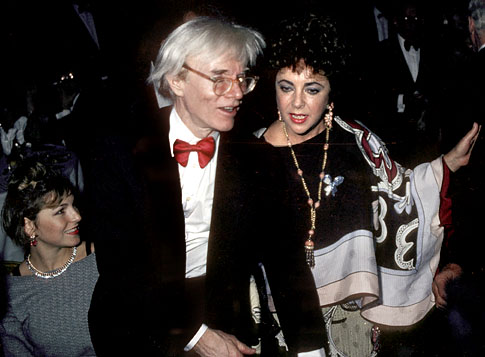
The Forbidden Art Movie
The Forbidden Art Movie
by
John Presco
ALL RIGHTS RESERVED
It is 10:57 P.M. December 26, 2024, and I just discovered Stewart Herbert Young directed the movie The Klansman – and two James Bond movies! Whaaaaaaat?
Earlier, at 5:45, I texted an acquaintance who brought up The Klansman in our conversation. Liz made an obscure movie in 1974 titled The Driver’s Seat directed by Giuseppe Patroni Griffi. Richard was in the Klansman, along with O.J. Simsom. Whaaaaat? Why? What is the back story. I wondered if Liz and Richard just got divorced and were desperate for work. I was toying with the idea that after the Klansman is in the can, the stars fly to Italy to watch Liz complete the last scene in her movie, that has the appearance of an Art Movie, however, the Star Artist is more than a giant pain in the ass. He is driving Griffi insane. He almost quits, and is threatening to hand over direction to Andy.
Then, Lee Marvin, Richard Burton, and O.J. Simson come strolling on the set. Guisiepe has a vision. Some say Michael Barry dosed him – and the entire crew! Then Chalotte Rampling shows up, and, the cameras are loaded with film/
For three days the most dramatic film in history is shot. Everyone is – beyond inspired! The question is…
WHY HAS NO ONE SEEN – THAT FILM?
Im thinking of casting Daneil Craig as Lee Marvin.
JP
EXTRA! We talked about tying O.J’s pending murders – and tying in his gloves in a surrealistic and artistic manner. This idea would be spliced in to the attempted murder of Andy, and others. Consider the Luigi murder. I just found an article about the Bond Gloves. Ian Fleming wanted Burton to star in the first Bond movie. There is a talk about a Retro-Bond. I can put together a team and write the script.
Stewart Terence Herbert Young[1] (20 June 1915 – 7 September 1994) was a British[2][1][3] film director and screenwriter who worked in the United Kingdom, Europe and Hollywood. He is best known for directing three James Bond films: the first two films in the series, Dr. No (1962) and From Russia with Love (1963), and Thunderball (1965). His other films include the Audrey Hepburn thrillers Wait Until Dark (1967) and Bloodline (1979), the historical drama Mayerling (1968), the infamous Korean War epic Inchon (1981), and the Charles Bronson films Cold Sweat (1970), Red Sun (1971), and The Valachi Papers (1972).
Corridor Crew revisited Skyfall in the latest installment of their “VFX Artists React to Bad & Great CGi” series. They specifically delved into a rumor that Craig filmed a sequence donning a pair of gloves, despite the fact that Bond himself isn’t meant to be wearing any because of the weapon he was using. The team looked to the Shanghai sequence for any potential VFX shots hidden amid potential continuity errors. An excerpt of their discussion is below:
Wren: To clarify, what the whole thing is, there is this rumor that went around that Daniel Craig had these gloves that he really liked and he bought them on his day off. He convinced the director that he wanted to wear them in the scene, the director was like, “Yeah, sure, whatever.” They filmed the whole scene and then realized, “Wait…” But you’re using a glove, so therefore by your own logic in the movie he shouldn’t be able to use that gun. But he uses it.
The Second Coming of Suzanne is a 1974 American drama film directed by Michael Barry. It stars Jared Martin as an obsessed San Francisco indie film maker who hires a beautiful woman called Suzanne (played by Sondra Locke) to star as a female Christ in his next film. Paul Sand co-stars as Suzanne’s artist boyfriend. Richard Dreyfuss appears as a member of the crew who becomes concerned at the increasingly weird antics of the rest of the ensemble, which culminate in the crucifixion of Suzanne on a local hill. The film was inspired by the lyrics of Leonard Cohen‘s song “Suzanne”, as heard on the soundtrack. The director’s father Gene Barry is also featured, as a TV presenter, in a somewhat opaque sub-plot. The film music was recorded by Touch.
The Driver’s Seat (also known as Identikit) is a 1974 Italian drama film directed by Giuseppe Patroni Griffi.[1] Based on the 1970 novella The Driver’s Seat by Muriel Spark, it is a psychological drama starring Elizabeth Taylor and Ian Bannen, and featuring Andy Warhol.[2]
Plot
[edit]
Lise, a mentally unbalanced middle-aged woman, travels from her home in Copenhagen to Rome, where she embarks on a fatal search of her own destiny that she had helped to arrange for herself – a premeditated search for someone, anyone, with whom she could form a dangerous liaison.
Lise meets a variety of people during her journey who include Bill, a lecherous British macrobiotics devotee that she meets on the plane to Rome who tries to seduce her; Carlo, a young man whom tries to rape her on the street; an English aristocrat (Andy Warhol) who seems dismayed to make her acquaintance, a kind and elderly woman named Mrs. Helen Fiedke (Mona Washbourne) whom Lise bonds with while shopping at Standa, a large department store; and Pierre, a young man who tries to elude her by any means possible.
. As a writer, he published a first collection of stories in 1955, Ragazzo di Trastevere. Later, he contributed significantly to the body of Italian gay literature with Scende giù per Toledo and La morte della bellezza, both set in Naples.[citation needed]
He died in Rome.[citation needed]
His first listed film writing credit was on the 1952 musical Canzoni di mezzo secolo. Patroni Griffi would later direct Charlotte Rampling, Elizabeth Taylor, Marcello Mastroianni, Laura Antonelli, Florinda Bolkan, Terence Stamp, Fabio Testi.[citation needed]
‘Tis Pity She’s a Whore (Italian: Addio fratello crudele, lit. ’Goodbye Cruel Brother’) is a 1971 film adaptation of John Ford‘s tragedy.[2][1] It is directed by Giuseppe Patroni Griffi, who co-wrote the screenplay, and stars Charlotte Rampling as Annabella, Oliver Tobias as Giovanni, and Fabio Testi as Soranzo.[3] The musical score was composed by Ennio Morricone.[1]
Plot
[edit]
Main article: ‘Tis Pity She’s a Whore § Synopsis
In the city of Mantua, during the Italian Renaissance, Giovanni, the son of a propertied man, is sent to study abroad having never met his sister, Annabella, who is a couple of years younger than him. After ten years of separation, the now beautiful Annabella is reunited with her brother for the first time, as adolescents. The young siblings are immediately attracted and cannot help falling in love with each other. After struggling with their feelings for some time Giovanni and Annabella begin a secret relationship, and she becomes pregnant. Knowing that the world will condemn them, Giovanni leaves his father’s villa, and Annabella accepts the marriage proposal of her suitor, the wealthy noble Soranzo. After Soranzo discovers that he has been the object of a deception, he makes plans for a bloody vengeance.
The Driver’s Seat (AKA Identikit) review – Elizabeth Taylor captivates in bizarre 70s mystery
This article is more than 1 year old
Taylor is both hammy and subtle as a woman on the verge of a breakdown in this preposterous but watchable 1974 drama that features an extraordinary cameo from Andy Warhol

Peter BradshawWed 21 Jun 2023 04.00 EDTShare19
It’s peak 70s Liz Taylor in this arrestingly bizarre movie which is being released in the UK for the first time; it was directed by Italian film-maker Giuseppe Patroni Griffi in 1974, which he co-adapted from the 1970 novella by Muriel Spark and was issued under the title Identikit in Italy. With her big sunglasses and permanently dishevelled jet-black hair, Taylor gives an intense and more-than-slightly alarming performance in a preposterous, slightly dated yet very watchable psycho-existential mystery, a cousin to the era’s paranoid thrillers. It was shot by Vittorio Storaro, who repeatedly directs light sources into the camera so that the figures often move like shadows behind a disconcerting glow, which is part of the film’s distinctive puzzle.
Taylor plays Lise, a single woman of a certain age who is clearly on the verge of a breakdown. Lise lives in Hamburg, where she is seen buying oddly garish, multicoloured clothes in a department store, high-handedly terrorising the sales assistants and announcing that these garments are appropriate for the warm, southern climes to which she says she is heading. We first see Lise drifting through a surreal department filled with naked mannequins; perhaps The Driver’s Seat has been an influence on Peter Strickland.
On the plane and in the city itself, she has deeply strange, fraught encounters with men, most of whom want to have sex with her, such as the creepy businessman and macrobiotic diet enthusiast Bill, played by Ian Bannen – the pan right on the plane to reveal his grinning face is one of the film’s most disquieting moments. There is also garage mechanic Carlo (Guido Mannari), who rescues Lise in Rome after she is dazed and traumatised by witnessing a car bomb assassination attempt in the streets; another deeply dreamlike and unsettling set piece.
Lise befriends a ditsy old lady, Mrs Fiedke (Mona Washbourne), but seems impatiently keen to ditch her. She also has an encounter with a distrait English aristocrat; this is an extraordinary cameo from Andy Warhol (who of course created the iconic silkscreen portrait of Taylor in 1963). But her closest connection seems to be with the sensitive, nervous Pierre (Maxence Mailfort) who was freaked out by her predatory behaviour on the plane and whom she urgently tracks down. Lise needs a man: not to make love to her, but to murder her, a bizarre thanatotic urge underscored by strident flashforward episodes in which police are shown interrogating everyone involved.
Maybe a contemporary audience will not be persuaded by this central conceit, in the way Martin Amis found some female readers unconvinced by his “murderee” trope in London Fields. But Taylor herself sells it with an authentically mad-seeming performance, a sort of quasi-Blanche DuBois turn from a star who was in 1974 perhaps not entirely reconciled to this phase of her career. Her character never really seems to know who she is talking to or why; and Taylor’s portrayal is hammy but somehow very subtle. The scene in which she is queuing at the airport check-in and seems to be zoning out while the man behind the desk asks her questions is really fascinating. Despite the title, and despite the scene in which she boldly escapes a rape attempt, Lise is not in the driver’s seat; someone or something else is guiding her life and fate.
The Driver’s Seat (AKA Identikit) is on digital platforms and Blu-Ray from 26 June.
Thinking Aloud About Film: The Driver’s Seat/ Identikit (Giuseppe Patroni Griffi, 1974)
UncategorizedElizabeth Taylor, Giuseppe Patroni Griffi, Identikit, Muriel Spark, The Driver’s Seat, Thinking Aloud About Film

Based on the 1970 novella by Muriel Spark, with Elizabeth Taylor playing a woman in the middle of a nervous breakdown, constantly deflecting the attention of brutish men who mistake her for a prostitute whilst cruising for a man more ‘her type’ to do something …. darker; a fragmentary film, a big-budget experiment in narration, with a now middle-aged but still astonishingly beautiful Elizabeth Taylor giving one of her greatest and most under-rated performances. In this podcast we discuss Muriel Spark’s The Driver’s Seat, Vittorio Storaro’s cinematography, the appearance of Andy Warhol as a badly-dubbed British aristocrat; Elizabeth Taylor’s career in the late sixties/ early 70s and to what extent its reception has been coloured by sexism (in contrast to say Dirk Bogarde’s) and American cultural imperialism (popular european cinema doesn’t matter). We also mention Bruce La Bruce’s appreciation of the film in an essay that accompanies the BFI blu-ray release and speculate on whether the film has a ‘gay gaze’. An exploratory discussion of a film that deserves much more attention.
The podcast may be listened to here:
The podcast may also be listened to on Spotify here: https://open.spotify.com/show/2zWZ7Egdy6xPCwHPHlOOaT
and on itunes here: https://podcasts.apple.com/gb/podcast/first-impressions-thinking-aloud-about-film/id1548559546
A sign of Taylor’s involvement with editing (and of her power at that period):

A note to Spark:

José Arroyo
The One Eyed Man
Posted on May 24, 2021 by Royal Rosamond Press
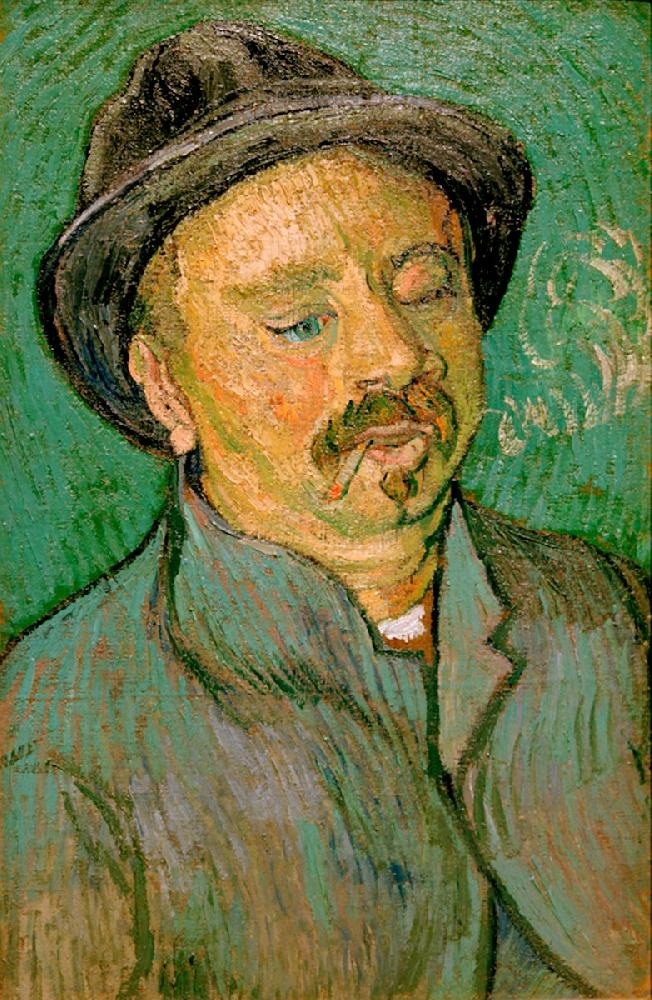
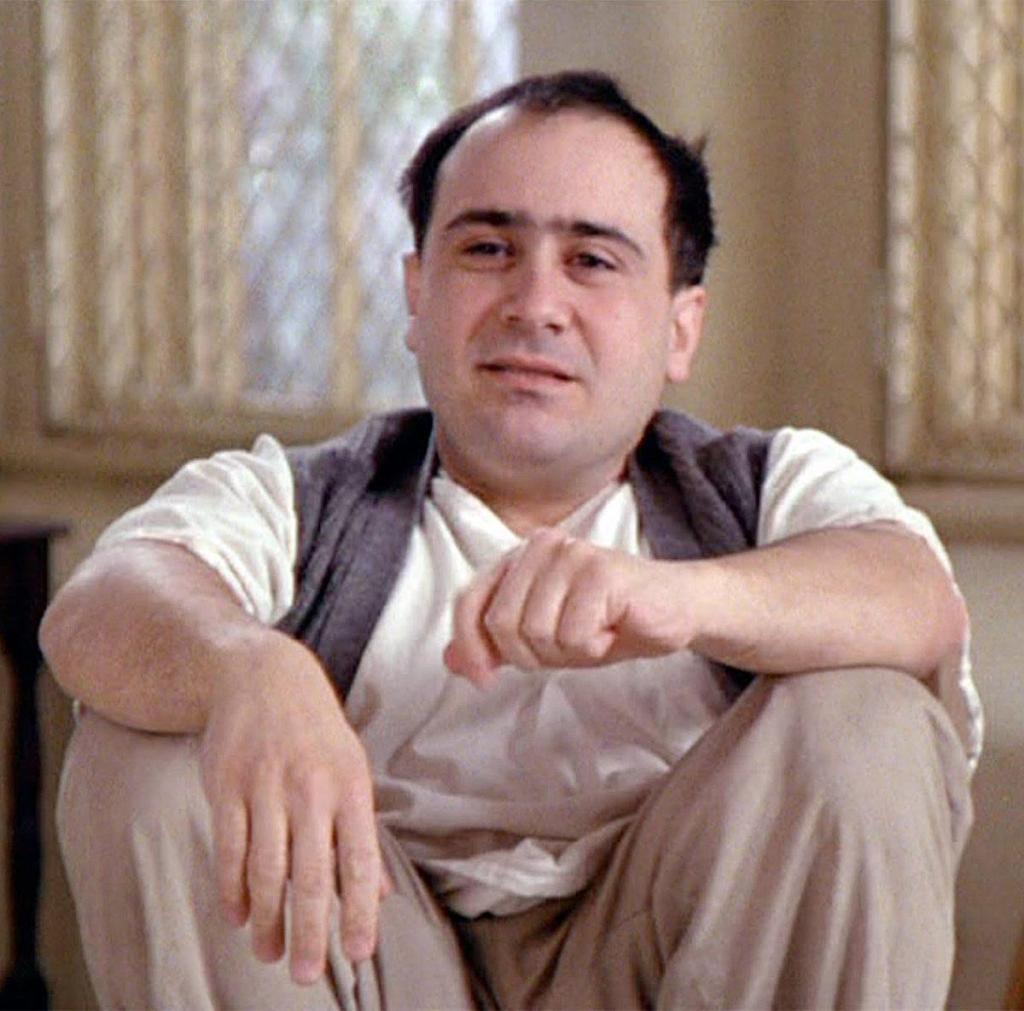
Van Gough – Art Detective
by
John Presco
Copyright 2021
Two days ago, My Man, Spooky Noodles, offered another version of how Van Gogh died. It may not have been a suicide. No sooner do I make Vincent a Private Eye – he is investigating his own death! I went looking for a image of Spooky Noodles, and found him. Most good Black Mask characters, had a side-kick. As I lie in bed, I knew I was going to be making several blogs on suicide. I considered how overpowered I felt as I began to investigate the death of my sister, a world famous artist. There were rich and powerful people lurking in the background. One, refused to shake my hand at Christine’s funeral. Isn’t this how all Philip Marrow novels begin? What is he hiding?
“You can tell a lot about a man by his handshake!”
I thought about Harry and Meghan, and the powerful people they are up against. I turn on my computer and read this story, that speaks of Meghan’s “suicidal thoughts”. These thoughts will be the most studied and written about thoughts in history – after the last thoughts of Vincent! How timely!
How Prince William Challenged Prince Harry’s Narrative Over 3 Days of Royal Bombshells (msn.com)
When I found Van Gogh’s painting of the One Eyed Man, I noticed the cigarette dangling from his mouth, and a puff of smoke. Eureka! How many hard-boiled detectives had cigarettes’ as props. Bingo! Humphry Bogart and Lauren Bacall do a famous scene with smoke. I then google this painting, and – about fell over backwards in my chair! This smoker was on the ward with Vincent. He is a fellow lunatic – that needed to be locked up! I thought about Ken Kesey, working on a ward – then realized no one had connected Ken Kesey to Van Gough! I googled to see if I was correct. There is one connection – that I made – that will put Ken in the category he has long sought. Can you find it? Look at their noses! The famous scene with the cigarettes’ would lead to Murphy being lobotomized, which is suggestive of a suicide. After getting shock treatment, Murphy may have realized he was never going to get out. He looks to take his own life. The Chief has seen this before.
As I lie in my bed debating whether to go down this road, I considered my PTSD. I have been in therapy trying to get in a good place with it, so I can heal physically. My diabetes was out of control, and I just got a bunch of teeth extracted. I already considered that I was employing Vincent as a body-double, my weird, to look at the most difficult things in my life experience. But, I will now use ‘The One Eyed Private Eye’ to do all the dirty work. For now, he has no name. He is The Chief of The Ward. He keeps an eye on everyone, and helps ground them. As to what is – wrong with him – he tells Vincent he suffers from being short and, is addicted to Trench Humor after being in a minor war.
“I had run out of jokes and my men were in despair. I had to get out of there. So I faked an accident. I slipped in the mud and my eye fell on my bayonet. No one bought it. They had to let me go. I am in here for…..cowardice! Can you spare a smoke?”
To be continued
Ginger and The Beard | Rosamond Press

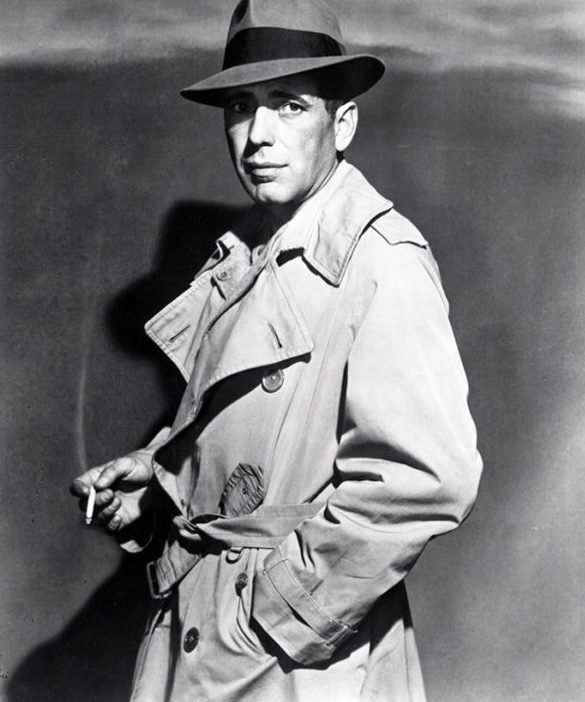
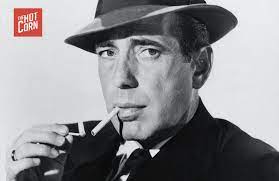
One Flew Over The Cuckoos Nest – I Want My Cigarettes Full Scene – 1080p Full HD – YouTube
After finding the One Eyed Man – everything fell into place!
The Duke of Cambridge made rare public statements on his upbringing, grief over his mother’s death, and most unusually of all—Princess Diana’s “paranoia.”
The future-king’s intervention came as Prince Harry talked again about the British media attacking Meghan Markle and his family’s “total neglect” in response to his pleas for help.
Harry spoke at length about Princess Diana being hounded to her death by the paparazzi and his fears for Meghan Markle’s mental health after she experienced suicidal thoughts in January 2019.
 Rosamond Press
Leave a comment