When I received Drew Benton’s ashes – all hell broke lose! I become aware that David Lynch is evacuated from his home – with oxygen tank! This does not look good. Who saw THE FIRE coming? On the new this morning it is revealed concerned folks asked for a million dollars to put in a flashflood warning – and were denied! I know every parent who lost a loved one are saying – they would have raised the money – if asked! The Mayor started a Fund Us button. I dreamed of the Oakland Fire and sounded an alarm – a week before. I am going to set up a Fund Me. I have not got a dime for all the effort I have put in this blog. More people – will die! They don’t want to be – informed!
“I saw the writing on the wall,” Lynch told People, explaining how his long-time practice of transcendental meditation helped him quit and to stay optimistic. Still, he admitted: “It’s tough living with emphysema. I can hardly walk across a room. It’s like you’re walking around with a plastic bag around your head.”
Consider the Trojan Horse. If only the Trojans had left it where it was – to rot!
I spent an hour trying to find out where David Lynch was – when he died! My worst fear (and David’s) is he was put in his car, that got stuck in the traffic jam on Sunset. Drivers ran for their lives. Their cars were bulldozed off the road to make way for the firetrucks.
Of course this would make a great death scene – in any movie! The rich old man can not walk ten feet without having to hit on a tank of oxygen. So as his frail secretary looks helplessly at her boss, she says;
“I’m not strong enough to carry you!”
“I understand Sabrena. Save yourself. Run Sabrina, Run for your life. Dont look back. Don’t cry for me Sabrina! I have lived a full life!
Sobbing, Sabrina runs fifty yards, and has to look back. She screams to see the Rolls Royce engulfed in flames!
“If only we had a wanning! If only there was a way – TO SEE IT COMING!”
JRP
a sign or warning that something, especially something momentous or calamitous, is likely to happen.
“they believed that wild birds in the house were portents of death”
“David Lynch has been evacuated from his home due to the Los Angeles wildfires. Producer Sabrina Sutherland has confirmed he’s safe and doing okay.”
L.A. fire forced David Lynch to leave his home before his death, report says
Last year, the filmmaker talked about his struggles with emphysema, saying he didn’t leave his home due to concerns about COVID-19 and other infections
David Lynch, diagnosed with emphysema, which he said left him homebound, was reportedly forced to evacuate from his home when the Sunset fire, one of the blazes burning in Los Angeles since last week, erupted on Jan. 8 and triggered mandatory evacuations in Hollywood and the Hollywood hills.
“Because of COVID, it would be very bad for me to get sick, even with a cold. So I would probably be directing from my home,” he continued.
As recently as November, Lynch told People magazine that he had to rely on supplemental oxygen for anything more strenuous than a walk across the room. He wanted to warn other smokers that the same could happen to them.
Lynch told People he started smoking at age 8, and it was a “big important part of my life.” After years of trying to give up cigarettes, he finally managed to quit after receiving his emphysema diagnosis.
“I saw the writing on the wall,” Lynch told People, explaining how his long-time practice of transcendental meditation helped him quit and to stay optimistic. Still, he admitted: “It’s tough living with emphysema. I can hardly walk across a room. It’s like you’re walking around with a plastic bag around your head.”
The Sunset fire erupted in the Hollywood Hills on the evening of Jan. 8, the day after the outbreaks of the deadly and destructive Palisades and Eaton fires on either side of the city.
For embattled Los Angeles, the Sunset fire seemed to be especially terrifying, as it threatened to burn down into Hollywood and forced the evacuation of such iconic locations as the TCL Chinese Theatre, the Hollywood Pantages Theatre, the Dolby Theatre and Ovation Hollywood, the shopping center in the heart of the neighborhood, the Los Angeles Times reported. Fortunately, firefighters were able to make significant progress overnight and keep the fire to 50 acres. Evacuation orders were lifted by the following morning.
In the family members’ announcement of Lynch’s passing, they said, “We would appreciate some privacy at this time. There’s a big hole in the world now that he’s no longer with us. But, as he would say, ‘Keep your eye on the donut and not on the hole.’ It’s a beautiful day with golden sunshine and blue skies all the way.”
That “golden sunshine and blue skies” sounds inspired by an idealized vision of Lynch’s adopted hometown of Los Angeles. In her tribute to Lynch, Manohla Dargis, the film critic for the New York Times, wrote it was sadly “fitting” that the news of Lynch’s death came while “my city was burning.”
“Few filmmakers grasped the complexities of Los Angeles better than Lynch did and fewer still seemed so at home with its distinct, otherworldly mix of beauty and disaster, sunshine and noir,” Dargis said.
While born in Montana, the Idaho-, Washington- and Virginia-reared Lynch was really “birthed” in Los Angeles, where he attended film school and began making movies, starting with the cult classic “Eraserhead,” Dargis said. Although he was never accepted as a mainstream Hollywood filmmaker, he still had “his own sense of Hollywood,” said his New York Times obituary. He was revered by critics and other acclaimed filmmakers, and “the great outsider” received an honorary Academy Award in 2019, as Dargis said.
“Mulholland Drive” (2001) was his “poisonous valentine” to L.A., the New York Times said, telling a surrealist tale about the misadventures of two would-be female stars who become embroiled in murder, mobsters and the dark side of the the Hollywood dream factory.
Nonetheless, Lynch’s affection for his adopted hometown was apparent in his beloved local weather reports, which he released on YouTube. In one report from May 2020, during the COVID-19 lockdown, Lynch faced the camera to let his followers know that “here in L.A.” some morning fog “should burn off pretty soon and we’ll have sunshine and 70 degrees. Have a great day.”
a sign or warning that something, especially something momentous or calamitous, is likely to happen.
“they believed that wild birds in the house were portents of death”
Speaking to Deadline, the source claimed David’s health worsened after he had to relocate from his house due to the Sunset Fire. The Mirror US has approached David’s representatives for comment.
David’s family announced his death on Facebook, writing, “It is with deep regret that we, his family, announce the passing of the man and the artist, David Lynch. We would appreciate some privacy at this time.”
They continued, “There’s a big hole in the world now that he’s no longer with us. But, as he would say, ‘Keep your eye on the donut and not on the hole.’ … It’s a beautiful day with golden sunshine and blue skies all the way.”
Speaking to Deadline, the source claimed David’s health worsened after he had to relocate from his house due to the Sunset Fire. The Mirror US has approached David’s representatives for comment.
David’s family announced his death on Facebook, writing, “It is with deep regret that we, his family, announce the passing of the man and the artist, David Lynch. We would appreciate some privacy at this time.”
They continued, “There’s a big hole in the world now that he’s no longer with us. But, as he would say, ‘Keep your eye on the donut and not on the hole.’ … It’s a beautiful day with golden sunshine and blue skies all the way.”
This morning I found out David is a fellow Bohemian and Lamp Freak Also, folks are making lamps from cremation urns. I have made great lamps and was going to sell them at the Saturday Market.
Below is a quote that David would – love to death! He would be happy – that he surprised me! I was….not aware! I can’t even – spell it!
JRP
“David spoke about his Transcendtal Meditation, but, regrets he did not take the last step into the light like I did, when I became a seeker of Weird Lamps in Goodwill and Saint Vincent De Paul stores. I drove down 99 in my quest in my 1972 Ford pickup.. Alas I found, not one – but two Grails. You can see in this video….I am a happy man!”
Yes, David Lynch lived the life of a bohemian painter in Philadelphia before becoming a filmmaker. He envisioned a bohemian lifestyle as a teenager, and his work is said to be a mix of the unworldly and the bohemian.
Explanation
As a teenager, Lynch imagined a bohemian lifestyle of drinking coffee, smoking cigarettes, and dating.
He lived in a crime-ridden area of Philadelphia with his wife and baby daughter.
His first short films featured scenes of blood, vomiting, and crying babies.
Lynch’s work is often associated with “New American Gothic”, which depicts violent menace and sexual and physical aberrancy.
430 miles from the Bohemian Grove
La dernière panique
The Riddle of Lumen: Lynch’s Lamps
In a gallery exhibition of new work, David Lynch’s functional sculptures evoke the uncanny existence of light and darkness in his art.
I imagine that everyone who came to see David Lynch’s “Big Bongo Night” exhibition at the Pace gallery in New York last autumn was probably already familiar with Lynch’s movies and television. Though he has been making paintings for decades (not to mention sculptures, music, coffee, and daily weather reports), the word “Lynchian” typically applies to films like Eraserhead (1977) and Lost Highway (1997), for which he is far better known. You, too, have come across this article because you are reading a film journal. In this sense, the exhibition did not disappoint. The large-scale paintings featured motifs recognizable from his cinematic worlds: multiplied and sometimes exploded heads, snippets of banal yet unnerving dialogue, dream worlds collapsed into waking ones. Despite the shift in medium to canvas, heavily caked paint, and at least one Band-Aid, these works were familiar and creepy, creepily familiar. Blunt, smudged, and lumpy, all the works appeared deliberately handmade, with the uncanny simplicity of outsider art. I snapped a photo of a tiny clay head, with sunken eyes and delicately poked nostrils, at which a pencil-drawn arrow pointed the words: “what the FUCK?”
Then there were the lamps. Watching a Lynch film teaches you to notice—and fear—the things that don’t fit, because they often come back later. In the gallery, I spent most of my time peering into the paintings, but found myself later unnerved by the lamps. There were eleven in all, and like the paintings, most had been made in 2022 or the past several years. Nine stood in the center of the gallery floor, along two sides of a half-wall. They were arrayed evenly in a row, as if on display in a furniture store. Like many lighting fixtures in Lynch’s films, these spindly ciphers had unusually small, dim heads. One, “Love Light #2,” glowed weakly red from atop a long, hand-chiseled pole. A set of four nearly identical lamps were laid out along one side, their heads made out of different blocks of wood varieties but cut in the same sharp, accordion fold. Each shone in ascending brightness, though never rising above accent wattage. “Red Zig-Zag,” which stood at the fore, featured a long passage up to what resembled a tiny, demonic phone booth.
The works were listed as “sculptures with light components,” but they were undeniably lamps. For one, they had black cables, not altogether drawn tightly, leading back to the half-wall that powered them. They also had switches. These were small, but often centrally and noticeably placed. In “White Table Top Lamp,” the switch protruded like a belly button from the bone-white resin base. The switches indicated that they were furniture. They were functional. If I were bolder I would have tried flicking one off.
David Lynch, Big Bongo Night (installation view), courtesy Pace Gallery.
The lamps posed a riddle: what was their function, here, in this room? Elsewhere in Lynch’s films, interiors are typically dingy and dark, warmed with a vellum shade, like the small red one by Diane’s phone in Mulholland Dr. (2001), or the Tiffany lamp that festoons Isabella Rossellini’s mauve den in Blue Velvet (1986). These are useless, say, for reading. Here, the lamps had the effect of turning the gallery space into a Lynch interior. Though the ambient light from the ceiling was brighter than most of his films, the lamps created a similarly quiet and eerie setting. With the windows additionally covered with heavy gray curtains, it was, as a man recounts of a dream in Mulholland Dr., “not day or night, it’s kind of half night. But it looks just like this. Except for the light.”
Light defines a space, making it knowable and finite. In Lynch’s films, there is another kind of light, one that intrudes on and deranges a space. Violence erupts through this light: bright, blue-white flashes, spotlights, and strobes. These are otherworldly manifestations, like the troupe of Polish prostitutes who inexplicably appear and dance the “Locomotion” before a pulsing glare in Inland Empire (2006). While some lights, like the Big Bongo lamps, have an identifiable electrical source, these lights are unlocatable, annihilating and occasionally sublime. (Tellingly, the fluted floor lamps in Twin Peaks’s mysterious Black Lodge don’t emit any light, nor do they have cables.) They can also suddenly disappear, as when the Palmer house goes dark at the end of Twin Peaks: The Return (2017). The known, illuminated place, comes undone. In darkness, it becomes anywhere.
A unique feature of Lynch’s films is the absence of pathology. There is no psychoanalytic key to resolve the disorder; like these otherworldly lights, there is no source. It’s beside the point to explain the motives of the grinning Mystery Man of Lost Highway or Frank Booth’s “baby” persona in Blue Velvet. Though detectives abound in Lynch’s films, the abundant sadism and cruelty of his worlds are not mysteries to be solved. Instead, they are features of the nightmare itself. The lights, too, are not reflections of interior states in any expressionist sense. In a real sense, they are the Manichean forces whose struggle plays out in otherwise unassuming locations: living rooms, bedrooms, bars, diners, gas stations, roads traversed at night. These are familiar to us, “except for the light.”
The lamps of Big Bongo Night had a function, and that was to turn the gallery into an interior open to sudden, shocking disturbances. This is what followed me in the days and weeks after I’d visited the show. Maybe it was the smile on the half-exploded head of someone labeled “Billy???” in “I Call Out Your Name,” the crossed-out words in “He Went and He Did Do That Thing,” or the ominously titled “Car Accident by my House.” The bad thing might have already happened, or was yet to come—in Lynch’s work, both are usually true. But what was more unnerving, what had me looking over my shoulder after I’d left, was the sensation that these forces were not tidily contained in their frames on the walls. The lamps had put me in the space with them, touched by the same, dark glow.
Over his 50-year career, David Lynch created some of cinema’s most iconic visual spaces, from the psychologically charged Red Room in Twin Peaks to Club Silencio in Mulholland Drive. Following the director’s death this week, aged 78, we take a look at his spatial legacy – celluloid sets that became characters in their own right and the real-world interiors he left behind.
A Thinking Room – Milan
Photography: courtesy of David Lynch and Salone del Mobile
Lynch launched his cinematic installation A Thinking Room at the Rho Fiera during last year’s Salone del Mobile in Milan (16-21 April 2024), teaming up with curator Antonio Monda on the immersive installation. Two identical ‘Thinking Rooms’ embodied his auteurial language and passion for furniture design; each featured a single, oversized throne-like armchair designed by Lynch (himself a passionate furniture designer) and surrounded by heavy blue velvet drapes – a reference to his 1986 hit, Blue Velvet. Overhead, brass tubes reached towards a gilded ceiling, while screens on the outskirts of the space played abstract videos, offering a ‘glimpse’ of the world beyond the room.
The ephemeral Thinking Room was conceived as a space for reflection and pause, away from the bustle of the fair. Lynch drew all the concept sketches for the exhibition design, and his vision was brought to life by the Milanese firm Lombardini22 and set designers from the Piccolo Theater.
Red Room – ‘Twin Peaks’ (1990, 2017)
Courtesy of Sky Atlantic
Arguably, his most iconic set design, the Red Room has inspired and intrigued generations of cinema-goers. Crimson red curtains envelop the space, with a black-and-white chevron patterned floor adding a hypnotic touch, giving the space the eerie feeling of being out of sync with time and reality. Lynch was particularly interested in the psychological impact of colours and motifs: red is a recurrent visual cue to convey a sense of paranoia, dread and fear, with the director using his recurrent red curtains in Twin Peaks, Eraserhead, Blue Velvet and Lost Highway.
Rabbits is a series of eight short horror web films Lynch wrote and directed in 2002 about a trio of humanoid rabbits voiced by Scott Coffey, Laura Elena Harring and Naomi Watts. All of the action and conversation takes place in the living room, which quickly becomes the fourth character as the series progresses.
Poorly lit, with dramatic shadows dancing across its walls and ceiling, Rabbits’ living room has a monochrome palette of dark, muted tones and spartan furniture that seems to embody the drabness and depression of the characters who inhabit the room. The vintage-style midcentury sofa is arranged off-kilter, adding to the psychological tension of the space. At the same time, you can’t see through the room’s singular window, adding to the sense of claustrophobia and anxiety about what lies outside.
Betty’s apartment, ‘Mulholland Drive (2001)’
Credit: MLS
Obscure and impenetrable, Mulholland Drive explores Lynch’s recurrent theme of doubling, among other things, and is an uncanny journey through Los Angeles’s underbelly, exploring its seductive yet frightening nature. The plot follows aspiring actress Betty Elms’ arrival in the city to stay in her aunt’s vacant apartment in Hollywood. Here, she encounters Rita, who appears lost and confused and eventually becomes her love interest.
Betty’s fictional apartment is actually located in the real life, historic Il Borghese Apartments in Hancock Park, near West Hollywood. Designed by architect Charles Gault in 1929, this building is a striking example of Spanish architecture, complete with a leafy courtyard and a fountain. It is also said to have been the former residence of Shirley Temple and a popular party venue for many Hollywood personalities, including Errol Flynn.
Madison House – ‘Lost Highway’ (1997)
Credit: Homes.com / Google
Considered by many Lynch fans to be the thematic ‘sequel’ to Blue Velvet (1986), Lost Highway continues Lynch’s exploration of duality, fluid identities, and the hidden, dark side of mundane life. Protagonists Fred and René Madison (Bill Pullman and Patricia Arquette) live in the angular Hollywood Hills home; their ordinary lives are disrupted when they begin receiving video tapes through their door, and Fred suspects his wife of infidelity.
In real life, the property was owned by Lynch (among three on the same street, including a residence designed by Frank Lloyd Wright’s son, Lloyd Wright). From the outside, the concrete fortress encapsulates Fred’s paranoid state of mind, while the minimalist interior has those signature red curtains and large, empty rooms with furniture floating in negative space. Low ceilings and winding corridors add to the sense of disruption and paranoia.
Henry’s apartment – Eraserhead (1977)
Film still of Eraserhead
Never has an interior embodied a character’s dismal psychological state quite so well as Henry’s apartment in Lynch’s 1977 film Eraserhead. The room is small, sparsely furnished, and dirty: the walls look dingy with peeling wallpaper, the bed is unkempt with dirty bed sheets, and there’s little else beyond the radiator, a small table and a nightstand. Like Rabbits’ living room, the space is shadowy and dimly lit, manifesting Henry’s psychological anxiety as a visual cue for the audience as he unravels.
Silencio Paris
Photography: Le Silencio
David Lynch took cues from his fictional Club Silencio, featured in Mulholland Drive when creating this real-life private members’ club in Paris back in 2011. Everything from the 1950s furniture to the black toilet bowls was conceived by the director in his role as Silencio’s artistic director, and it’s designed to ‘induce and sustain a specific state of alertness and openness to the unknown’.
Since then, the Silencio portfolio has expanded to NYC. And though Lynch was not directly involved in the design of the Manhattan clubhouse, it was done in collaboration with his original Silencio Paris. Consequently, the Manhattan space mirrors the concept of the Parisian club.
Silencio Manhattan Photography: Pauline Shapiro
Crosby Studios founder Harry Nuriev designed the Manhattan outpost’s interiors and they’re every inch the David Lynch fever dream, distilling the director’s visual language through the use of red curtains and LED strips outlining the walls. Stepping into the space feels like you’re stepping into a slippery Lynchian world.
Consider David Lynch, lamp designer. In his Red Black Yellow Table Lamp (2011), a libidinal red pustule glows at the tip of a septic yellow phallus, fixed in place by an assemblage of orthogonal metal rods and plates. Its elegant brutality suggests Gerrit Rietveld-designed laboratory equipment. The lamp provides precisely enough light to be useless. On Planet Lynch, seeing clearly is less important than seeing with feeling.
Even people unversed in design history will notice Lynch’s unusual handling of the lamp’s cord. It seems to represent a restraining leash, as though to keep the phallus from wriggling away. On an overlapping wavelength, it expresses architectural Modernism’s fetish for control. Lynch’s cord — a loose, flaccid material — is disciplined by a series of rectilinear metal standoffs, which opens up a third reading: the cord as umbilical. It both supplies a vital current of electricity and it might be severed, setting free the phallus in question. Vitality, repression, architectural critique. What more can we ask of a lamp cord?
A feeling of decisive precision pervades Lynch’s designs. There is a sense that his lamps have arrived at their forms through a process of calculated reasoning. This impression rubs against the precarity of many of his structural choices — in which ad hoc solutions just short of bubble gum hold things together. See, for instance, Love Light #2 (2022), in which the transition between the joined wooden rod and the lightbulb fixture appears to be a wadded smush of epoxy clay.
Lynch is a quixotic individual. For about nine hundred consecutive days he maintained a YouTube account dedicated to two jaw-droppingly mundane daily video series, produced by the auteur with what appears to be a foggy phone camera. In the first series, he picks “today’s number” out of a jar, announcing it with utter sincerity before finishing his script with the text overlay “WHAT WILL TOMORROW’S NUMBER BE?” These videos are as uninterpretable as the portions of his films that critics alternately describe as “inscrutable,” “self-indulgent” and “savagely uncompromising.” Perhaps predictably, they have their own cult following — with initiates creating highly involved interpretations and representations of the selected numbers. In the second series, Lynch provides the daily weather report, interspersing observations like, “It looks like these clouds are going to remain until late afternoon,” with such ponderings as: “I’m thinking about tree trunks and epoxy.” This banality is its own kind of provocation from a man better known, in his precocious youth, for making the film Blue Velvet, in which a psychotic lunatic in a bolo tie opens a scene with, “Shut up! It’s daddy you shithead!”, before huffing nitrous oxide and spluttering on the ground, rising to his knees, demanding his blackmail victim spread her legs, and plaintively addressing her vagina as “mommy” while proceeding to rape her. Lynch also founded a school of transcendental meditation.
The impulse to associate Lynch’s films with his furniture designs may at first seem specious, but as a director he often replaces narrative logics with choreographed atmospheres in which lamps, curtains, and characters diffuse into mood. These moods can be so engrossing that you simply forget, moment to moment, that you don’t know what is going on — or that such knowledge becomes insignificant in comparison to the overwhelming stimulation of the sensual input. In Inland Empire, long shots of ominously amber-colored lampshades are central to the creeping sense of menace. Some of Lynch’s directorial fixations with objects and interiors might be ascribable to his admiration for another filmmaker, the French comic master Jacques Tati. Tati’s crowning achievement, Playtime, is spun out from nothing more than the disastrous interactions between a protagonist and squeaky International Style chairs, anonymous office building façades, and impatient automatic doors. Modernism is the film’s sole antagonist and plot-driver.
Lynch has a keen sense of how small changes to the familiar can detonate cataclysmically. Throughout Eraserhead, a plant sits on the protagonist’s bedside table without a pot. What is a potted plant without its pot? Ungoverned nature:something which can, if not suppressed, destroy an entire house, an entire city. Nothing more than a ceramic shell insulates cozy domesticity from this whirlpool of anarchy, atavism, and ominous possibility.
David Lynch is a world maker — and what that means, critically, is that he is not above being a lamp maker. A separate question to puzzle over is why any lamp maker would not have designs on the world. A room, after all, shapes the presence of the lamp. And rooms are modeled by the spaces which precede them, the spaces that enmesh them, and the glimpses they offer of what lies beyond. Our perceptions of luminosity and color temperature are connected to the natural light conditions at a given moment, so a skilled lamp designer may need to adjust the sun to better suit the lamp.
In interviews, Lynch has expressed a fondness for the Bauhaus. Like other modernisms, that movement was distinctly utopian — it took as a premise that design might reshape humanity at large. It was also a set of aesthetic preferences: rectilinearity, primary colors, expressive structures, undisguised joinery. All of these can be found in Lynchian works including Tricolor Highrise Lamp (2022). Lynch peels away Modernism’s performative rationalism and relishes its underlying craziness — in which repression descends into fetish. Think of Adolf Loos’s lush, carpeted interiors in relation to his stark raving mad anti-ornamentalist invectives (see his “Ornament is Crime”). Lynch too has utopian inclinations. He says his mission in founding a school of transcendental meditation is to lead humanity into an “ocean of pure, vibrant consciousness.” Out there, in the ocean, the light looks strange.
Artists are taken prisoner by their art. Writers find themselves in isolation. It is these alone times that are dangerous to the Controllers who wear a civic disguise. Jerry began to grasp this, trick. Developers invested in the private prison system. As long as you make money, and that is what drives you – all systems go! Meg’s three minute movies are perfect for controlling Prisoner Communities! Well behaved prisoners are treated to a 3 minute movie. The un-prisoned populate can not stand the idea of the incarcerated watching the whole movie as they lounge about.
“Presco. Movie Time!”
“Do I have to? I hate those movies! Can I just lie in my bunk and use my imagination!”
“Are you looking to get maced? Don’t make me call in the Mace Squad!”
Sometime in the mid-1970s Rubin reinvented himself as a businessman. Friend and fellow Yippie Stew Albert claimed Rubin’s new ambition was giving capitalists a social consciousness. In 1980 he began a new career on Wall Street as stockbroker with the brokerage firm John Muir & Co. “I know that I can be more effective today wearing a suit and tie and working on Wall Street than I can be dancing outside the walls of power,”[1] he said. In the 1980s, he became known for his promotion of business networking, having created Business Networking Salons, Inc., a company that organized parties at the Studio 54 and Palladium nightclubs in Manhattan, where thousands of young professionals and entrepreneurs met and shared ideas. Near the end of his life, Rubin became interested in the science of life extension and was heavily involved in multi-level marketing of health foods and nutritional supplements.[42] His business activities included marketing of a nutritional drink named Wow! that contained bee pollen, ginseng and kelp.[1]
What I suggest, is a team of prisoners be formed to go after Russian Trolls who hacked our election. The Radical Left was not there to protect Democracy, and go on the attack. When I met Bruce Perlowin I was reminded of my science fiction book ‘The Gidion Computer’.
Wanda Harkins was non-judgmental when she allowed ex-con, Bruce Perlowin, to live in her home. Jerry Rubin knocked on Wanda’s door, then want to down in the basement to conduct business and set up a networking philosophy that some are crediting with leading to the Internet. I designed a One World logo for Bruce, who me with my father who considered hiring him in his loan business. Larry Chazen was Vic’s private lender and partner to the Getty family in PlumpJack. Chazen was a partner of Christine in the Crossroads gallery. PlumpJack windery was picketed by Alcohol Justice that was part of the Buck Foundation that works on Longevity, a interest of the late Jerry Rubin, who was one of the Chicago Eight, as was Lee Weiner, who was a good friend of Lee Weiner, who my wife, Mary Ann Tharalden, and visitined when we went back East. Mary Ann was married to Thomas Pynchon, and went to school with him and Richard Farina. Michale Harkins and Peter Shapiro were at our wedding reception on Miles. Between Pinehave and Miles is Lake Temescal where camped the Bohemians who would found Carmel, and who would publish magazines and newspapers that advertised a alternative California lifestyle. This is the never before seen Network that was shown to me.
It’s all coming together in my James Bond revival, and the rebirth of the Radical Left for World Peace as foreseen by the Rose of the World Prophecy.
Sometime in the mid-70s Rubin reinvented himself as a businessman. Friend and fellow Yippie Stew Albert claimed Rubin’s new ambition was giving capitalists a social consciousness. In 1980 he began a new career on Wall Street as stockbroker with the brokerage firm John Muir & Co. “I know that I can be more effective today wearing a suit and tie and working on Wall Street than I can be dancing outside the walls of power,”[1] he said. In the 1980s, he became known for his promotion of business networking, having created Business Networking Salons, Inc., a company that organized parties at the Studio 54 and Palladium nightclubs in Manhattan, where thousands of young professionals and entrepreneurs met and shared ideas. Near the end of his life, Rubin became interested in the science of life extension and was heavily involved in multi-level marketing of health foods and nutritional supplements.[42] His business activities included marketing of a nutritional drink named Wow! that contained bee pollen, ginseng and kelp.[1]
In 1892, Sterling met the dominant literary figure on the west coast, Ambrose Bierce, at Lake Temescal and immediately fell under his spell. Bierce — to whom Sterling referred as “the Master” — guided the young poet in his writing as well as in his reading, pointing to the classics as model and inspiration. Bierce also published Sterling’s first poems in his “Prattle” column in the San Francisco Examiner.
Sterling also met adventure and science fiction writer Jack London, and his first wife Bess at their rented villa on Lake Merritt, and in time they became best of friends. In 1902 Sterling helped the Londons find a home closer to his own in Piedmont, near Oakland. In his letters London addressed Sterling as “Greek” owing to his aquiline nose and classical profile, and signed them as “Wolf.” London was later to depict Sterling as Russ Brissenden in his autobiographical novel Martin Eden (1908) and as Mark Hall in The Valley of the Moon (1913).
The Society of Six was intensely devoted to a self-imposed set of rough-and-tumble attitudes that they found necessary for the maintenance of the visual purity in their works. They sensed that they were not making new art merely for the sake of newness, but with an exhilaration that was born from an overthrowing of subservient visual posturing over various sanctified art modes. Although they were a part of the San Francisco Bay Area modernist art scene in the 1920s, they had an allegiance primarily to themselves, and they were forced to be their own best audience. Influences upon them ranged from nineteenth century Impressionism to European Abstractionism. Although it is fairly easy to trace the more obvious influences, “The Six nonetheless, managed individually to fashion their own painting styles into fresh and ingenuous outdoor paintings which appear generally American and specifically Californian. They were regional painters in the best sense of the word.
“Will Bohemia arise in Oakland,” was the question asked in an article in the Oakland Tribune on April 22, 1917. The reporter told of the formation of an artist’s club of the East Bay with a membership of more than 30 painters, sculptors and art students including Selden Gile, William H. Clapp and William A. Gaw (1891-1973). Many of the things that made the area seem so desirable to “The Six” were mentioned in that review, such as the picturesque waterfront and the sunny rolling hills above the Bay. Oakland was depicted as “…a Bohemia where kindred spirits meet with art and the great adventures that stimulate art to color its atmosphere.”
Before there was Jingletwon, there was Sparkytown. I invented Sparkytown in answer to the secret design of One World that Bruce Perlowin showed me and Micheal Harkins down in his mother’s basement in 1992. Bruce paid $300 dollars a month for what is called a “basement apartment” . It is no such thing. To all the hipsters and tripsters who visited the Harkins Asylum, this was the Padded Cell for Jeffery Harkins, the maddest, and most talented artist of three Harkins Brothers. Consider the Crumm Brothers. How about ‘The Asylum Brotherhood’ a brotherhood that will be compared to the Pre-Raphaelite Brotherhood thanks to my family history, and my beloved Muse who stayed overnight in the same house as the Asylum Brotherhood. Indeed, Rena had a prolonged conversation with Jeffery in the kitchen. This happened just after Rena put on her make-up! It was a one woman showing. Jeffery was ecstatic! He might have been the only human being who saw the real Rena, which might be the reason he was in and out of the nut house after that, he to rendered a prisoner of love.
I will be contacting Jeffery to see if he wants to show his work at a prestigious L.A. gallery. Now that his oldest brother is on the brink of immortality (now that he is dead.) The worth of Jeffery’s painting are going thru the roof. I will get more into Jeffery in my next post.
One evening Bruce invited us down the Cell where before a large blackboard he revealed his plan for One World. He told us he had worked with fellow prisoners in the Fed lock-up, and once they are paroled, they will get top management positions. What Bruce and his Russian wife, Svetlana, wanted to do was smuggle used computers into Russia via submarines. Bruce now did a crude drawing of a submarine base. From this base the computers would travel by what looked like a ski lift over a mountain range into the Soviet Union. At this time, Michael got up, picked up a piece of chalk, and rendered a mountain goat.
“Ha! Ha! Very funny! Always the Jokester!” said Bruce. “At least the education your Pops bought you has been put to some use!” I said.
From the profits made from Black Market computers, Bruce would build many One World universities located all over the world. There would be guards at the gate collecting blood and sperm samples to make sure you own the Right Stuff. Of course there is a I.Q. test. But, what made me cringe was the building of tunnels under the university for service workers so they do not come in contact with the egghead students, and distract and taint them. How about have sex with them?
I shot Michael a look, and he gave me the sign to chill out till we heard it all.
What got to me, was, here is a dude that just got out of prison, where one is sedegrated from the real world, and it is now apparent that Bruce never felt he was a part of Prison World, and as he co-mingle with them, he was secretly looking down his nose at them – way down! And now, he wants to replicate his world view in a Free Society, basically rendering common workers to a underground (basement) existence, where they may never see the light of day! Of course they are free to go looking for other employment. But, Bruce and his Russian Spy wife had big, big plans. They wanted to unite and build a One World Order.
Consider the Nashi Love Camps, where couples are put in tents on barges and bid to fornicate while the barges float down river. Are there black market computers stowed away in these barges?
It became clear to me, Bruce and his Soviet wife, wanted One World approved couples to copulate and produce Super Children whose DNA would be drawn to Mother Russia. Wanda and her kind have had their day! It was then that I did an illustration of Sparkytown that sat just outside the entrance to One World University, as a reminder there is an alternative Bohemian lifestyle, a Gypsey Camp if you will.
Sparkytown is a couple of old fishing shacks with coffee shop and outdoor sitting. I drew an image of Sparky and Spanky (Michael and Jon) sitting under a umbrella watching these automatons lined up to get into OWU. I have to find this prophetic work of art, and scan it, because it predicts the coming of Jingletwon, and the Nashi Sex Camps in Russia.
There is areal possibility Svetlana is the illegitimate daughter of Putin, his ‘Love Child’ There is a resemblance.
What alarmed Michael and I, is that we knew Bruce was incapable of owning an original idea. He was a notorious Borrower. Could it be that Wanda’s guest was importing Soviet ideas into the Asylum, her basement? This is when we conducted a test. We insisted Bruce take some time away from his telephone and the watch the movie ‘The Producers’. At the end of it, we asked;
“Did you see any resemblance to you and the chacters in this movie?” “Huh! What are you talking about?” “How about the closing scene and song ‘Prisoners of Love’. “What – No! You guys are crazy. Excuse me, I hear my phone ringing.”
I met Michael Harkins when we stopped at his father’s house to buy a lid of grass from James Harkins, We then drove to Pasadena and stayed with a friend of Nancy Hamren. The next day we went to a party at the Zorthian Ranch. Michaël was good friends of three generations of the Stackpole family, and took ,e to see the ruins of Peter’s home after the Oakland Fire. I saw many destroyed plates on the garage floor. So much was not saved. I put the artists who lost everything in the LA fires in this group. The battle is not over. Much art will be lost.
John Presco
President: Royal Rosamond Press ‘ A newspaper fpr the Arts’
Diego Rivera, Mexico City,1924. Photo by Edward Weston. Center for Creative Photography, University of Arizona, Weston Collection.
Knowing of his close friend Diego Rivera’s November-December 1930 exhibition at the California Palace of the Legion of Honor and his exciting San Francisco mural commissions, Edward Weston decided come up from Carmel to pay him a surprise visit at his mutual sculptor friend Ralph Stackpole’s Jessop Place studio. Weston also wanted to bask in the concurrent exhibition of his own work at the Vickery, Atkins and Torrey Gallery and socialize with photographer friends Ansel Adams, Dorothea Lange and husband Maynard Dixon, and Imogen Cunningham and husband Roi Partridge and others.
Sydney Morris all but destroyed the estate of Brett Weston, and destroyed the estate of Christine Rosamond Benton. My good friend was good friends of the Stackpole family, and went with ne to Christine’s funeral. I talked to Carrol Williams for an hour on the phone.
John Presco
“According to Williams, she was approached by Morris in the fall of ”95 to discuss the purchase of the archive.
“Sidney told me it had been decided that the entire vault was going to be sold because Erica wanted money instead of prints,” says Williams.
“I was told by Sidney that Brett would have wanted me to have the [archive] and that he was prepared to do battle for me with Erica,” adds Williams. “What I got from Sidney was he didn”t want the liability and responsibility and management headaches of selling the archive individually.”
According to Morris, the estate had given consideration to managing Weston”s archive itself, but decided that such a time-consuming and complicated endeavor was not worth the potential financial risks and uncertainty.
“We had considered trying to manage the estate and running it as a business, but in view of what we had to deal with, in our opinion to run it as a business entity would have been long and arduous and maybe not successful,” says Morris. “Erica”s lawyers and my lawyers felt it would be in the best interests of the estate to dispose of substantially all of the collection.”
Peter Stackpole was the official photographer of my cousin, Elizabeth Rosemond Taylor. Two days after the Oakland fire, Michael Harkins and I stepped over downed power lines so we could peer inside his friend’s garage at the hundreds of glass negatives lying in heaps on the cement floor. Peter took the photograph of Chili Williams. Peter and LIFE magazine employed Liz in the war effort. The bottom pics show Liz and her mother in front of the home of the artist, Augustus John, who is kin to the author, Ian Fleming. Those two pics were taken by Mark Kaufman, another LIFE photographer.
Peter Stackpole (1913 – 1997) was an original staff photographer for Life magazine, who chronicled the building of the Golden Gate Bridge, the invasion of Saipan, the glamour of Hollywood and life beneath the sea.
Mr. Stackpole worked for Life from 1936 to 1960, joining Alfred Eisenstaedt, Margaret Bourke-White and Thomas McAvoy as the magazine’s first staff photographers. His work also appeared in Time, Fortune, U.S. Camera and Vanity Fair.
During his tenure at Life, 26 of Mr. Stackpole’s pictures were on the magazine’s cover, many of them shots of the Hollywood stars of the period. He told interviewers, though, that the stars were not his favorite part of the movie world. ”What I like about Hollywood is the sidelights and the extras, not the celebrities,” he said.
Besides taking a series of pictures showing the construction of the Golden Gate Bridge and the San Francisco-Oakland Bay Bridge, Mr. Stackpole covered World War II in the South Pacific and efforts to bring electricity to rural America.
One of his specialties was chronicling the trends and fads that came out of California, from dance marathons to bathing beauties.
Mr. Stackpole won a George Polk Memorial Award for news photography in 1954 for a ”dramatic and unprecedented picture, taken 100 feet underwater,” of a diver’s attempt to set a new record for aqualung descent.
After leaving Life’s staff, Mr. Stackpole taught photography at the Academy of Arts College in San Francisco. For 15 years, he wrote a column for U.S. Camera called ”35-mm. Techniques.”
A keen student of the mechanical aspects of photography, Mr. Stackpole long maintained a home workshop where he tinkered with camera gear and invented and built equipment for underwater photography.
In 1991, a fire at his home in Oakland, Calif., destroyed most of his negatives. Friends said Mr. Stackpole had less than 20 minutes to save what he could and managed to salvage only the work that established his career, showing the building of San Francisco’s great bridges.
”I’d hate to think a glamorous picture of a movie star was all I’d ever done,” he once told an interviewer. 1
Photographer Peter Stackpole (1913-1997), was the son of artists, Ralph Stackpole and Adele Barnes Stackpole. Educated in the San Francisco Bay area and Paris, Peter Stackpole grew up under the influence of his parent’s friends and peers, Dorthea Lange, Edward Weston and Diego Rivera. Maturing in this supportive artist community, Stackpole began developing his photographic style at a young age.
Stackpole’s appreciation for the hand-held camera and his developing technical expertise found a perfect subject in the construction of the San Francisco-Oakland Bay Bridge. With his Leica Model A, he captured the details of the work itself as well as the drama of the situation. Stackpole showed this work to Willard Van Dyke in 1934 and was soon thereafter included as an honorary member in Group f/64.
However, his photographic vision differed dramatically from the straight approach of the f/64 fine artists; Stackpole identified as a photojournalist preferring a vibrant and candid approach, and situating his subjects within a contextual setting. In 1935, twenty-five of Stackpole’s bridge photographs were exhibited at the San Francisco Museum of Art.
This led to several freelance projects and in 1936, when Henry Luce established his ground-breaking “picture” magazine LIFE, Stackpole was hired as one of the four staff photographers. Stackpole worked for LIFE from its founding until 1961, moving gracefully between photographing the glamorous and young in Hollywood, and the more routine lives of the laboring class, always endeavoring to present his subjects authentically.
Stackpole’s portraiture of Hollywood stars created approachable and endearing characters, and is recognized as a pioneering contribution to “media culture,” solidifying Hollywood icons as a subject of fascination within popular culture. Some of the celebrities he chronicled were Gary Cooper, Alfred Hitchcock, Vivien Leigh, Greer Garson, and Elizabeth Taylor.
Stackpole was LIFE’s chief Hollywood photographer from 1938 until 1951, when he moved east to work in the magazine’s New York office. Over the course of his career, 26 of his images graced the cover of LIFE. Stackpole’s work resulted in several book publications, including The Bridge Builders (1985), and Peter Stackpole, Life in Hollywood 1936-1952 (1991).
In 1987, the Los Angeles County Museum of Art included much of his work in their exhibition The Hollywood Photographers.
It was the Oakland Museum’s double exhibition of Stackpole’s work in Peacetime to wartime and Mr. Stackpole Goes to Hollywood that saved a significant portion of Stackpole’s work from the 1991 fire that devastated Oakland, including the photographer’s home.
In his later years, Stackpole began an autobiography entitled Go Get ‘Em, Tiger, which remained unfinished at the time of his death in 1997. 2
A Blog for fans of the cultural, architectural and design history of Southern California and related published material authored by John Crosse: jocresse979@gmail.com
Sunday, March 12, 2017
Edward Weston, Diego Rivera and Frida Kahlo, December 1930
Diego Rivera, Mexico City,1924. Photo by Edward Weston. Center for Creative Photography, University of Arizona, Weston Collection.
Knowing of his close friend Diego Rivera’s November-December 1930 exhibition at the California Palace of the Legion of Honor and his exciting San Francisco mural commissions, Edward Weston decided come up from Carmel to pay him a surprise visit at his mutual sculptor friend Ralph Stackpole’s Jessop Place studio. Weston also wanted to bask in the concurrent exhibition of his own work at the Vickery, Atkins and Torrey Gallery and socialize with photographer friends Ansel Adams, Dorothea Lange and husband Maynard Dixon, and Imogen Cunningham and husband Roi Partridge and others.
Edward Weston and Johan Hagemeyer, Gump’s, Feb., 9 to Feb. 21, 1925. Courtesy Center for Creative Photography, Edward Weston Collection.
During a six month interlude in San Francisco during his 1923-26 Mexican sojourn, Weston was one of the first to introduce Rivera and friends to the Bay Area. Through his close photogropher friend Johan Hagemeyer Weston excitedly exhibited his early Mexican work, including the above photo of Rivera, at a two-man show at Gump’s Department Store (see above).
Diego Rivera, Frida Kahlo, Timothy Pflueger and Ralph Stackpole, November 10, 1930. Photographer unknown. Courtesy San Franciso Public Library Historical Photograph Collection.
Exhibition Catalogue, Diego Rivera, California Palace of the Legion of Honor, November 15 to December 25, 1930. Introduction by Katherine Field Caldwell. From author’s collection.
Frontispiece portrait of Diego Rivera, Mexico City, ca. 1923-4 by Edward Weston. (Ibid).
Diego and Frida, Ralph Stackpole’s Studio, 27 Jessop Place, San Francisco, December, 1930. Photo by Edward Weston. Center for Creative Photography, University of Arizona, Weston Collection.
Weston fondly wrote of the visit,
“I met Diego! I stood behind a stone block, stepped out as he lumbered downstairs into Ralph [Stackpole]’s courtyard on Jessop Place, – and he took me clear off my feet in an embrace. I photographed Diego again, his new wife – Frieda – too: she is in sharp contrast to Lupe, petite, – a little doll alongside Diego, but a doll in size only, for she is strong and quite beautiful, shows very little of her father’s German blood. Dressed in native costume even to huaraches, she causes much excitement on the streets of San Francisco. People stop in their tracks to look in wonder. We ate at a little Italian restaurant [Coppa’s] where many of the artists gather, recalled old days in Mexico, with promises of meeting soon again in Carmel. Pfleuger – architect – was another contact worthwhile. He sat to me – on the roof of Ralph’s.” (The Daybooks of Edward Weston, Volume II, California, pp. 198-9. For much more on Coppa’s and fellow Mexican muralist Jose Clemente Orozco’s happy times there see my “Orozco in San Francisco, 1917-1919“).
Frida Kahlo, Ralph Stackpole’s Studio, 27 Jessop Place, San Francisco, December, 1930. Photo by Edward Weston. Center for Creative Photography, University of Arizona, Weston Collection.
Diego Rivera, Ralph Stackpole’s Studio, 27 Jessop Place, San Francisco, December, 1930. Photo by Edward Weston. Center for Creative Photography, University of Arizona, Weston Collection.
Lady Hastings, San Francisco, ca. 1930. Photo by Edward Weston from The San Franciscan, April 1931, p. 21.
The wife of Lord Hastings, one of Rivera’s mural assistants, also sat for a portrait while Weston was in town. It was published in the April 1931 issue of The San Franciscan with the caption,
“Lady Hastings who is being widely entertained during her sojourn in San Francisco, while her husband, Lord Hastings, assists Diego Rivera with fresco panels in the Stock Exchange and the California School of Fine Arts.”
Storer House, 8161 Hollywood Blvd., Hollywood, Frank Lloyd Wright, architect, 1924.
Weston made prints of his San Francisco reconnection with Rivera before heading south for the holidays to visit the family. Brett, who had recently established his first independent studio in Frank Lloyd Wright’s Storer House (see above) through the largess of Pauline Schindler, picked up his father in Carmel and drove him back to Los Angeles. (For more detail see my “Brett Weston’s Smokestacks and Pylons“).
“Toward the Big Sur” by Edward Weston, The Carmelite, May 2, 1929. Courtesy Harrison Memorial Library, Carmel.
While in Southern California Weston hooked up with close friends Johan Hagemeyer, Merle Armitage and Ramiel McGehee and visited Pauline at the Storer House. She had herself recently returned from a two year sojourn in Carmel where she edited and published the local progressive weekly newspaper, The Carmelite in which she frequently featured the work of Weston (see above for example). He shared with her his prints of Rivera and other recent work prompting her to recommend he send them off to various suggested publications. (For much more on Pauline’s marketing efforts on behalf of the artists and architects in her wide circle see my “Pauline Gibling Schindler: Vagabond Agent for Modernism“).
Diego Rivera, Ralph Stackpole’s Studio, 27 Jessop Place, San Francisco, December, 1930. Photo by Edward Weston. Center for Creative Photography, University of Arizona, Weston Collection.
Of the Rivera prints she recommended,
“i think also that the Rivera pictures should be used now while the san francisco work is hot. why not send it to “creative art?” or “the international studio?” or whatever publication you consider superlative in that line. or send the glossy to me, and i will send it to where you suggest, with a brief accompanying article. how about sending the rivera beside mop and garbage can (see above) to “the new masses?” please let me know exact details as much as possible of the s. f. paintings of rivera for my articles.” (Pauline Schindler to Edward Weston, February 13, 1931. Center for Creative Photography, Weston Papers).
Pauline would have been dying to meet Rivera knowing full well of his politics from Weston and former Schindler House tenant and Blue Four art dealer Galka Scheyer and the news media. She would meet Rivera through Scheyer and mutual friend Marjorie Eaton on a trip to the Bay Area two weeks later. (Ibid).
Galka Scheyer had been staying with Pauline and Brett and perhaps crossed paths with mutual friend Weston when she visited Rivera in San Francisco to solicit his co-sponsorship for her upcoming Blue Four exhibition at the California Palace of the Legion of Honor in April. (For much more on the Scheyer-Rivera connection see my “Schindler-Scheyer-Eaton-Ain: A Case Study in Adobe”).
(Author’s note: Brett Weston had photographed Mexican muralist amigo Jose Clemente Orozco in the spring of 1930 while he was creating his Prometheus mural at Pomona College. His father photographed him in Carmel during a July visit with his dealer Alma Reed while they were in San Francisco scouting for mural walls and preparing for his upcoming exhibition at the Metropolitan Museum of Art in New York). (For more details on Orozco’s 1930 California visit see my “Brett Weston’s Smokestacks and Pylons,” “Richard Neutra and the California Art Club” and “Orozco in San Francisco, 1917-1919“).
Frieda and Diego Rivera, 1931 by Frieda Kahlo. Courtesy FridaKahlo.org.
(Author’s note 2: In November of 1931 a portrait of Frieda and Diego Rivera painted by “Senora Frieda Rivera” of Mexico City during their 1930-31 stay in San Francisco (see above) was selected for the juried Sixth Annual Exhibition of the San Francisco Society of Women Artists at the Legion of Honor. This was the first public showing of Frida Kahlo’s work). (“Art and Artists,” Oakland Tribune, November 8, 1931, p. 22). (For much more on this see my “Schindler-Scheyer-Eaton-Ain: A Case Study in Adobe“).
Lovell Beach House, Newport Beach, R. M. Schindler, architect, 1926. Photo by Edward Weston, August 2, 1927. Courtesy UC-Santa Barbara Architecture and Design Collections, Schindler Papers.
The material in this and linked posts will be part of a larger project, “The Schindlers and the Westons: An Avant-Garde Friendship” (see above).
Sydney Morris works for, or is a partner of Robert Buck, who put together the Buck Foundation employing his legal expertise. Morris destroys the estate of Brett Weston and Christine Rosamond Benton, two of Carmel’s most creative citizens. Jack London and George Serling founded this famous Bohemian Mecca. Ben Maddow wrote Edward Weston’s biography.
Here is a Buck Baby going after Gavin Newsom thinking they are saving Californians from becoming alcoholics or – whatever! The whole board ignores me – and my late sister.
John Presco
One of modern photography’s greatest pioneers, Edward Weston awakened his viewers to the sensuous qualities of organic forms. In this biography Ben Maddow draws heavily on Weston’s uncut journals and letters and on the reminiscences and written accounts of his closest friends and family to reveal the man behind the opaque formalism of the photographs.
So back to the pun in our title: Gov. Newsom, will your wine interests Trump your ethics? President Trump is under suspicion of violating the emoluments clause of the Constitution. Is the President financially gaining from the Trump Hotel on the Capital Mall by sucking in foreign visitor monies? While California’s constitution does not have an emoluments clause, the same conflicts of interest arise. If the 4 a.m. Bar Bill lands on Governor Newsom’s desk, he could gain financially from signing the bill, through wine sales and through the PlumpJack Squaw Valley Inn. Alcohol Justice must directly ask: Governor-elect Gavin Newsom – could you please completely divest from the wine industry and invest in public health? And please do not support any attempts to further gut alcohol regulations which have been deteriorating for decades in California while the body and injury counts rise.
READ MORE about the ongoing alcohol catastrophe in California.
Members of Gavin Newsom’s wine, restaurant, bar, resort and real estate partnerships since 1991:
Kevin & Bronwyn Brunner, John Burton, Casey and Michelle Cadwell, Bob and Barbara Callan, Frank Caufield, Donna Chazen, Lawrence Chazen, Joe & Victoria Cotchett, Michael & Hilary Decesare, Philip DeLimur, Don Dianda, Gretchen Dianda, Edward Everett, Richard Freemon, James Fuller, Stanlee Gatti, Robert Gerry, Andrew Getty, Ann Getty, Anna Getty, Chris Getty, Gordon Getty, Mark Getty, Peter Getty, Ronald Getty, Tara Getty, William “Billy” Getty, Robert Goldberg, Florianne Gordon, Stu Gordon, Gordon Goletto, David Goodman, Arthur Groza, Richard & Martha Guggenhime, Tony and Anthony Guilfoyle, Shelly Guyer, James & Shea Halligan, Bob & Jill Hamer, Erin Howard, Thomas Huntington, Isolep Enterprises (Paul and Nancy Pelosi family personal investment company), Peter Jacobi, Gaye Jenkins, Jeffrey Kanbar, Chad Kawai, David Lamonde, John Larson, Rob Lavoie, Leavitt/Weaver interior designers, Marc Leland, Maryon Davies Lewis, Anne McCutcheon, Chris McCutcheon, Ross McGowan, Rich McNally, Robert & Carole McNeil, Paul Mohun, Robert Mohun, Jeff Morin, Sara Moughan, Terry Moughan, Brian Mueth, Bob Naify, Marshall Naify, John Nees, Barbara Newsom, Brennan Newsom, Catherine & David Newsom, Gavin Newsom, Patrick Newsom, Tessa Newsom, William Newsom, John O’Hara, Jack Owsley, Pacific Design, Matt Pelosi, Robynne Piggott, James Samuel Powers, Elizabeth Rice, Jeremy Scherer, Paul Scherer, Gary Schnitzer, Steve & Theresa Selover, Steve Siino, Trevor Traina, Chris Vietor, Francesca Vietor, Kenneth Weeman, Nicki West, Justin & Aridne Williams, Kevin Williams, Thomas & Kiyoko Woodhouse
“By September 2000, however, plans were underway for a biography of Decedent, which Petitioner hoped might create interest in her work. The book was published in 2002. Although the book did not spur the hoped-for interest in Decedent’s life and work, efforts continued to market the concept of a screenplay based upon Decedent’s life. Petitioner hoping that this might be brought to fruition, elected to keep the estate open. However, it is the Petitioner’s belief the likelihood of an increased interest in Decedents work is negligible, and the time has come to close the estate.”
“Pierrot later bought the business from the estate, royalties from which go to Rosamond’s daughters, Drew now 11, and Shannon, 28. Pierrot has a determined vision of where she wants the business to go. A poster of Rosamond’s creation “Dunkin the Frog” will be distributed to children in hospitals. T-shirts and tote bags will also be produced featuring the whimsical character, Pierrot says. All manner of upscale merchandising is contemplated using the images from Rosamond’s paintings…bed linins, throw pillows and other elegant household items.”
“As suggested by a review of the court documents and interviews with many of the principals in the court case, the dispute over Weston”s estate has been a grotesque, acrimonious soap opera, replete with insinuations and outright charges of deception, theft, financial manipulation, malfeasance and mismanagement.”
“Many of these pictures have not been in public viewing but rather have been copied from private owners. There are between 180 and 190 pictures at least to enjoy.”
I don”t think of it in terms of money. I do it just for the love and excitement.”
-Brett Weston
It was 40 years ago on New Year”s Day that photographer Edward Weston died at his home on Wildcat Hill in the Carmel Highlands. Despite decades of struggle, during which he never earned more than a few hundred dollars for images that are now regarded as masterworks of 20th century photography, Weston came to be recognized as one of modern photography”s true geniuses.
In the five years since Brett Weston, Edward Weston”s second son, died at the age of 81 at his home on the Kona coast in Hawaii, he too has come to be regarded as a photographic genius in his own right, one whose singular vision and bold abstract landscapes anticipated and paralleled many of the major trends of 20th century art.
Unlike his father, however, Brett Weston achieved substantial wealth during his lifetime. Abetted by the art boom of the late ”70s and ”80s, and the growing recognition of photography as a legitimate art form, many of Weston”s better-known images sold for upwards of $5,000 apiece. In addition, Weston earned hundreds of thousands of dollars from numerous book contracts and the sale of reproductions of his images.
At the time of his passing, Weston left behind an estate valued at well over $2 million and an astonishing archive of some 30,000 photographs, spanning his entire, seven-decade career. Many of these images, all printed by Weston himself, have never been exhibited or reproduced. In order to assure both the value and integrity of his archive, Weston destroyed nearly 7,000 of his negatives-a bold act that defied art-world conventions and that continues to cause much debate and consternation among art historians.
As art historians seek to evaluate Weston”s legacy and influence on 20th-century art and photography, it is Weston”s archive that will form the basis for much of that assessment. In terms of photographic history, the archive is priceless. But in the real world, where everything has a price, the archive and Weston”s legacy have become bones of contention.
For the past year and a half, the county courthouse in Monterey has been the scene of a contentious and oftentimes bitter legal dispute over Brett Weston”s estate and the disposition of his photographic archive-one that could have far-reaching implications for the legacy of Weston”s artistic achievement.
At the center of the dispute is Weston”s long-time agent and friend, Carol Williams, owner and director of the Photography West Gallery in Carmel, and Carmel attorney Sidney Morris, executor for the Weston estate.
The point of contention between Williams and Morris has been the sale of Weston”s entire photographic archive to an Oklahoma banker and art collector named Christian Keesee, as well as the status of ongoing print sales, and a previous publishing contract between Weston and the Photography West Gallery.
At issue is whether the sale to Keesee, which was finalized and approved by the court last summer despite efforts by Williams to overturn the sale, violated Weston”s expressed interests for his archive, and whether the sale will have a negative impact on the value of Weston”s work and its assessment by art historians.
As suggested by a review of the court documents and interviews with many of the principals in the court case, the dispute over Weston”s estate has been a grotesque, acrimonious soap opera, replete with insinuations and outright charges of deception, theft, financial manipulation, malfeasance and mismanagement.
The path to understanding the convoluted and confusing path that led to the sale of Weston”s archive to Keesee, is littered by a host of self-serving half-truths, dissembling and dissimulation by former friends, lovers, acquaintances and art-world associates of Weston that make the parties” motives and the truth difficult to ascertain.
At the center of this legal miasma resides Brett Weston himself, a man who emerges from past interviews and conversations with friends and associates as an enigmatic and incongruous personality, a man whose intentions regarding his archive were never made clear and whose single-minded pursuit of his art often came at the expense of personal and professional relationships.
“I have spoken all my life through the camera. Photographs are the statements and legacy that I have left.”
-Brett Weston
In looking back at Brett Weston”s life and career as an artist, one is struck by the degree to which his art is inextricably linked to his relationships with women. Married and divorced four times, Weston engaged in countless personal relationships with women, many of whom assisted Weston professionally.
From March of 1959 to August of 1992, less than five months before his death, Weston left as many as 10 wills with 16 codicils, with many of the amendations representing changes in executors and beneficiaries.
According to Morris and former estate co-executor and Weston friend Bob Byers, there were 29 versions of estate plans for Weston during his lifetime, “the common theme being gifts to lady friends and family members and to ultimately take care of [Weston”s daughter and sole heir] Erica,” according to Morris.
For Josephus Daniels, a respected Carmel photography dealer who represents some of Weston”s work, there is knowing amusement in the complicated and messy estate Weston left behind.
“Brett was a very complex fellow yet simplistic in other ways,” says Daniels. “Brett”s world was very rigid and internalized and he had very specific ideas about the world of art and his relation to it.
“The whole family was a dysfunctional family, and Brett had difficult times with relationships,” adds Daniels. “I don”t know if Brett ever lost control [of his archive], but I don”t know if he ever had control of it either.”
Over the years, Weston also vacillated over the disposition of his negatives, with earlier wills stipulating the destruction of any remaining negatives and later wills approving the donation of some negatives to educational institutions. Prior to his death, Weston did donate approximately 12 negatives to the Center For Creative Photography in Tucson, Ariz., and gave another dozen to his brother, the noted photographer Cole Weston. In both cases, all the negatives were sufficiently damaged to prevent future printing. What negatives have survived include several hundred images taken in Hawaii during the latter part of Weston”s life. None of these images are believed to have been printed, and according to Morris, these negatives have been donated to the Center as part of the sale to Keesee with instructions that they may never be printed.
In his final codicil just months before his passing, Weston made one significant change in his will that bears significantly on the sale of his archive to Keesee. After writing numerous wills naming the San Francisco Museum of Modern art as the “remainder trust” beneficiary of his archive, Weston switched to the Center, reportedly through the importuning of Diane Nielsen, a photographer and personal friend who works for the Center, and who was named as a beneficiary of 25 prints in Weston”s will.
That change came as a surprise to some Weston associates who say Weston had a longstanding enmity against the Center over its refusal to purchase his works as it had done for other photographers of equal stature, and its insistence that Weston donate images to the Center instead.
Despite all the changes in Weston”s will over the years, the one constant and concern, all parties agree, was to see to it that his daughter Erica would be provided for.
Given the complex and complicated nature of Weston”s personal life and the uncertainties surrounding his wills, it is not too surprising that his archive should have been in similar disarray.
“In the four years the vault was in my possession, I could not deliver a single requested photograph because I didn”t have it or would have had to break up a portfolio,” says Morris, who says the archive, which was “poorly catalogued,” was twice appraised at around $1.2 million, not including the potential value from publishing and reproduction rights.
As Brett Weston”s primary dealer for the last 13 years of his life, Carol Williams seemed an obvious choice to purchase Weston”s archive. Besides earning Weston hundreds of thousands of dollars over the years, Williams helped broaden the appreciation of Weston”s work through her gallery”s publication of three beautifully produced and highly regarded monographs of Weston images. Those books were published prior to Weston”s death as part of a five-book deal, the remainder of which is currently being disputed by Morris on behalf of the Weston estate.
According to Williams, her personal and professional relationship with Weston gave her unique insight into the man and his art, and Williams remains a passionate and devoted believer in Weston and his artistic legacy. It was Williams” dream, and according to Williams, Brett”s desire as well, to see his work remain in Carmel. Williams says she intended, had she purchased the archive, to sell some of the collection in order to finance construction of a photography center or museum that would pay tribute to the entire Weston family, a family indelibly linked to the Carmel area.
According to Williams, she was approached by Morris in the fall of ”95 to discuss the purchase of the archive.
“Sidney told me it had been decided that the entire vault was going to be sold because Erica wanted money instead of prints,” says Williams.
“I was told by Sidney that Brett would have wanted me to have the [archive] and that he was prepared to do battle for me with Erica,” adds Williams. “What I got from Sidney was he didn”t want the liability and responsibility and management headaches of selling the archive individually.”
According to Morris, the estate had given consideration to managing Weston”s archive itself, but decided that such a time-consuming and complicated endeavor was not worth the potential financial risks and uncertainty.
“We had considered trying to manage the estate and running it as a business, but in view of what we had to deal with, in our opinion to run it as a business entity would have been long and arduous and maybe not successful,” says Morris. “Erica”s lawyers and my lawyers felt it would be in the best interests of the estate to dispose of substantially all of the collection.”
Prior to discussions with Williams, Morris approached the Center For Creative Photography as a possible buyer. As a research and educational institution housing more than 60,000 photographs, archives books and documents of such noted photographers as Edward Weston, Ansel Adams and Wynn Bullock, the Center seemed a likely choice.
“As Brett”s executor, I hoped I could find some way to create a photographic legacy with the Center after it seemed unlikely the trust could market its entire collection during Erica”s lifetime,” says Morris.
According to Morris, the Center declined to purchase the archive because of its unwillingness to take on the necessary financial obligations such a purchase would entail in terms of providing for Erica Weston and the estate.
“We did pursue in some detail letting the Center have it, but they didn”t want to be responsible for generating income [for Erica and the estate],” explains Morris.
Although the Center declined to purchase Weston”s archive, they were particularly interested in purchasing what is known as the 50th Anniversary Portfolio, a collection of 125 prints of Weston”s finest work spanning his entire career and assembled by noted photo-historians Beaumont and Nancy Newhall for an exhibit in Santa Fe, NM. in the 1970s.
Morris confirms that the Center did want to buy the 50th Anniversary Portfolio, worth an estimated $300,000, but the price that was offered was below market value and “prejudicial to the interest of the income beneficiary.”
As discussions between Morris and Williams proceeded, and a figure of $1.5 million was proposed for purchase of the estate, Williams says she thought the deal would be completed, pending the approval of the sale by Erica and the Center, which Williams says Morris sought as a “”courtesy”” to the Center. But such approvals, says Morris, were not forthcoming.
The response to the proposed sale to Williams, says Morris, was “strictly negative from Erica, and the Center was concerned about Carol personally and her business practices. They thought there would be a sale to another museum and they weren”t enamored with the idea,” says Morris, who insists that no deal was ever finalized between the estate and Williams.
According to Williams, however, “the Center”s attorney told me they never objected to my offer.” Williams adds that Erica told her that her [Erica”s] objections were based on incomplete information regarding the terms of a possible sale to Williams.
After repeated questioning, Morris conceded that the Center had no legal standing to object to the sale. Furthermore, the derogatory allusion to Williams” “business practices” begs the question why Morris would approach Williams in the first place if her business practices were in doubt, and why Weston himself placed such implicit trust in Williams over the years.
Williams says it was only after she was told by Morris that the Center was going to purchase the archive for a larger sum, only to later find out it was sold to Keesee under terms and conditions she felt Brett would have objected to, did she eventually sue to block the sale in May of ”97.
“I was told by Sidney I had it and in January [1997] he said the vault went to the Center for more money than I offered and that Erica was thrilled,” says Williams. “I thought it all went to the Center but it had to been sold to Keesee.”
Williams” suit was eventually denied by Judge William Curtis citing Williams” lack of standing. Curtis later sanctioned Williams $10,000 after she pursued the suit further.
Because the interpretation and recollection of the events surrounding the sale of Weston”s archive varies from person to person, it is difficult to ascertain what assurances, guarantees and/or promises were made to and by all the parties involved in the eventual sale of Weston”s archive to Keesee.
The most likely explanation may have to do with the financial liabilities and benefits of the archive to the estate, the powerful influence of the Center, which benefited substantially from the sale of the archive to Keesee, and the role of Erica”s attorney and advisor Jim Rust, a St. Louis attorney who ended up brokering the deal between the estate and Keesee.
(Both Erica Weston and Jim Rust, per Erica”s instructions, declined to be interviewed for this story. Terence Pitts, who serves as director for the Center For Creative Photography also declined to be interviewed despite the prominent role the Center played in the disposition of Weston”s archive. According to Pitts, there was nothing controversial about the sale of Weston”s archive.)
The sale to Keesee, with the help of his agent Jon Burris, who now serves as curator of the Brett Weston Archive, was completed in November, 1996 following final negotiations in Oklahoma City.
According to court documents, Keesee purchased the archive for the $1.5 million asking price, but only put $200,000 down, agreeing to pay off the additional $1.3 million balance in interest and principal in five years.
In turn, the estate paid a 10 percent commission to Burris and agreed to take out a $300,000 loan from Keesee”s bank. According to Morris, the deal was structured in such a way as to reduce the estate”s overall tax burden, with the bank loan allowing the estate to pay off some of its debts. By deferring payment in full, says Morris, Keesee was able to keep more cash on hand to help finance planned exhibitions and publications of Weston”s work.
In addition to the archive, Morris sold all reproduction rights to Keesee in an exclusive licensing agreement, giving Keesee the right to reproduce and publish Weston”s work for 25 years in exchange for 7 percent of the gross sales to the estate. It has been suggested by sources that those rights could be worth upwards of an additional $1 million.
One of Keesee”s first moves has been to license 1,500 of Weston”s images to Bill Gates” Corbis Corp. of Bellevue, Wash., for electronic reproduction. Keesee retains final approval for any uses by Corbis, which has a similar agreement with the Ansel Adams Trust. According to Morris, the estate has relinquished all control over how Weston”s images can be used or marketed.
As for the Center, it received the 50th Anniversary Portfolio from the estate, along with a donation from Keesee of somewhere between 1,000 and 2,000 prints not included in the sale, as well as several hundred negatives of Weston”s later Hawaii work. All of the items donated to the Center will provide tax benefits to Keesee and the estate. According to Morris, title to the Portfolio has yet to be transferred from the estate to the Center.
As far as Morris is concerned, the terms of the sale of the Weston archive represents the best outcome for both Weston”s estate, and for the legacy of Weston”s artistic achievement. Any supposed controversy over the sale, says Morris, is strictly in the mind of Williams, and that Brett never explicitly stated how he wanted his archive disposed of.
“I honestly feel the results achieved over the past four years are as good as could have been achieved for this estate,” says Morris. “We”ve done all we can do and I feel good about it. It has not been easy, but it”s my nature to know what I”m doing is right and doing the best job to get the estate closed.
“In my opinion the Center will have the definitive collection of Brett”s work and as far as everyone else is concerned they couldn”t be happier,” says Morris.
As a coda to the events surrounding the legal fight over the sale of Weston”s archive to Keesee, Williams herself was sued this past October by Morris on behalf of the estate over breach of contract for the remaining two books on Weston”s work, and for the return of 600 Weston photographs intended for those publications. She is also being sued for money Morris says is due the estate as a result of ongoing sales of Weston”s work by Williams at the Photography West Gallery.
Williams says she hadn”t gone forward on the other books because Morris told her the estate didn”t want any additional tax liabilities from any additional sales or promotions.
Morris denies Williams assertions, and says only that negotiations between the estate and Williams are ongoing and may be resolved in January.
“My feeling is she breached her contract for the other two books, and the estate issues have nothing to do with her failure to do the last two books,” says Morris.
“I love appreciation and an audience, we all do, but I don”t photograph for anybody but myself. In general mass audiences are tasteless, and I”d rather have an audience of say a thousand people who really love and understand and appreciate my work than 10 million. ”
-Brett Weston
As loathe as Weston may have been for a large, and largely uninformed audience, it appears as though his reputation will be greatly enlarged in the coming years. In the aftermath of the sale of the Weston archive to Keesee, two questions remain-whether this area lost an invaluable local treasure, and how Brett Weston and his tremendous artistic achievement will be assessed by art historians and the public at large.
Despite questions raised by Williams and Weston”s brother Cole over whether Brett would have approved a sale that included several hundred negatives and the licensing of the electronic publishing rights, based on steps taken so far, Keesee and Burris have shown great savvy and seem serious and forthright in their desire to build on Weston”s legacy in a positive way.
To date, Burris has mounted two shows of Weston”s work-one at the International Center of Photography in New York City of 76 images of New York cityscapes, and a 60-print retrospective in Guadalajara, Mexico- and is in the process of lining up exhibitions in galleries and museums in several European countries over the coming years. Negotiations have also begun, says Burris, with three major American publishers and one foreign publisher for a series of six books over the next five years that Burris says that will “totally reinterpret Brett”s career.”
“Our intention is to bring attention to the fact that not a lot of Brett”s work nor a broad enough range has been reproduced or exhibited,” says Burris, who has been an art dealer/curator for the past 25 years. “Looking at his immense archive that parallels the history of photography, it is amazing in scope and amazing from the standpoint of what was not shown and exhibited. We obviously feel there is great potential with the material and in terms of marketing we intend to bring Brett Weston”s name to greater prominence.”
As far as concerns that the sale to Keesee represents the loss of a valuable local treasure, Burris insists Weston”s value and representation goes beyond such parochial concerns.
“Brett was one of the great American landscape artists and it is unfair to relegate him just to the California school,” says Burris. “If you took a handful of the top six American photographers he is certainly one of them. The fact that any one artist could physically create an archive this wide-ranging is amazing in and of itself.
“Anything projected about what Brett may or may not have wanted is not clearly defined,” adds Burris. “I think, as with many artists, one of things that”s been said is there is some implication Brett might not have wanted his work to leave California and the idea of plans for a museum, but in all of our research we can find nothing to indicate this and I don”t think any of that is true. Had he wanted that specifically, he had people around him who could have helped him set that up but he didn”t do that. As with any artist whose work is on this level it belongs to the history of American photography regardless of where it is handled, as long as it is handled properly.”
As far as Williams is concerned, her feelings are decidedly mixed regarding the sale of Weston”s archive and tied deeply to her personal feeling for Brett as an artist and friend.
“I feel as far as Brett”s legacy is concerned the local area lost a tremendous archive, one of the most important artistic archives that exists in the history of photography ever created,” says Williams, “but I don”t think [the sale to Keesee] was the worst thing that could have happened.
“My concerns for Brett”s work is it”s never been organized or assembled. No scholars or public institutions have had an opportunity for study,” adds Williams. “My overwhelming response is sorrow about the irony of it. It seems so sad it was turned into this big commercial investment. Brett was a visual genius and had as sophisticated an eye as perhaps the most sophisticated 20th-century painters and abstractionists. That is his legacy.
“There needs to be a reevaluation of Brett”s artistic contribution, a chronological scholarly study of his work properly dated with comparative studies done to see who was influencing whom. That was the opportunity presented by the archive-scholarly research-and hopefully it won”t be lost.” cw
Before the death of my late friend, Michael Harkins, I asked him if anyone was taking care of the Stackpole family legacy. He said Peter’s daughter was on it. I am not sure if she is doing enough. I am going to include a chapter in my book.
If I find time I am going to do a painting of Ralph, Frieda, and Rivera from the photograph above. They are in a classic pose. Their raised legs create a religious theme often used by the masters. This pyramid pose is perfectly off-center which balances the differences in weight of the two men, and the leaning towards Rivera, that does not exclude Ralph. Someone knows their art. Who took this photo. This is pure San Francisco. This is a real revolution – with amazing results!
Wow! I just noticed Frieda was a friend of Ed Weston who photographed this famous woman artist. Michael was a good friend of Ralph, Peter, and Peter Stackpole Jr. We went to Peter’s destroyed home after the Oakland fire. Much work was destroyed. Michael helped me investigate the death of Christine Rosamond Benton. He was a good friend of the poet Michael McClure, and Jim Morrison. Stone wanted Michael’s story for his movie. He declined.
When Kahlo and Rivera moved to San Francisco in 1930, Kahlo was introduced to American artists such as Edward Weston, Ralph Stackpole, Timothy Pflueger, and Nickolas Muray.[19] The six months spent in San Francisco were a productive period for Kahlo,[20] who further developed the folk art style she had adopted in Cuernavaca.[21] In addition to painting portraits of several new acquaintances,[22] she made Frieda and Diego Rivera (1931), a double portrait based on their wedding photograph,[23] and The Portrait of Luther Burbank (1931), which depicted the eponymous horticulturist as a hybrid between a human and a plant.[24] Although she still publicly presented herself as simply Rivera’s spouse rather than as an artist,[25] she participated for the first time in an exhibition, when Frieda and Diego Rivera was included in the Sixth Annual Exhibition of the San Francisco Society of Women Artists in the Palace of the Legion of Honor.[26][27]
Ralph Stackpole was a friend of George Sterling and stayed with him and the artists and poets that gathered at Lake Temescal in Oakland. Ralph befriended Diego and Freda Rivera the famous muralist and artist. Ralph helped design the Paramount theatre and a giant statue for Golden Gate Exposition, a goddess named Pacifica.
Peter Stackpole was a staff photographer for LIFE magazine and spent much time in Hollywood shooting the stars, among them, Elizabeth Rosemond Taylor. Peter stayed on Errol Flynn’s boat and was privy to his exploits. My grandmother, Mary Magdalene Rosamond, chased Errol from her home at dawn when he and a friend came serenading.
Jon Presco
Ralph Ward Stackpole (May 1, 1885 – December 13, 1973) was an American sculptor, painter, muralist, etcher and art educator, San Francisco’s leading artist during the 1920s and 1930s. Stackpole was involved in the art and causes of social realism, especially during the Great Depression, when he was part of the Federal Art Project for the Works Progress Administration (WPA). Stackpole was responsible for recommending that architect Timothy L. Pflueger bring Mexican muralist Diego Rivera to San Francisco to work on the San Francisco Stock Exchange and its attached office tower in 1930–31.[2] His son Peter Stackpole became a well-known photojournalist.
Throughout the 1930s, Stackpole worked frequently with architect Timothy Pflueger on various commissions. Beginning in 1929 when the two men first met, Stackpole was given responsibility for selecting the artists who worked to execute and augment Pflueger’s basic design scheme for the San Francisco Stock Exchange and its associated Tower, especially the Luncheon Club occupying the top floors of the Tower.[17] Stackpole said later of the experience, “the artists were in from the first. They were called in conference and assumed responsibility and personal pride in the building.”[18] At the Sansome Street tower entrance, Stackpole worked on a scaffolding with a crew of assistants to direct carve heroic figures in stone.[19] After the building was completed, Stackpole was finally successful in winning a commission for Rivera; Pflueger became convinced that Rivera would be the perfect muralist for decorating the staircase wall and ceiling of the Stock Exchange Club. This was a controversial selection considering Rivera’s leftist political beliefs in contradiction to the Stock Exchange’s capitalist foundation.[20] Into the mural, Rivera painted a figure of Stackpole’s son Peter holding a model airplane.
During his stay, Rivera and his wife Frida Kahlo lived and worked at the studio, becoming in the process lifelong friends with Stackpole and Ginette. They met tennis champion Helen Wills Moody, an avid painter-hobbyist, who soon agreed to model for Rivera at the studio.[21] Neighbor Dixon saw the attention, and the American money being given to Rivera, and with etcher Frank Van Sloun organized a short-lived protest against the Communist artist. However, both Dixon and Van Sloun quickly realized that the San Francisco art world “oligarchy” who were obviously smitten with Rivera, including Stackpole’s well-connected patrons, were the same group that they themselves would need to support their own art aspirations.[10]
For much of 1931, Stackpole partnered with other artists to decorate Pflueger’s Paramount Theatre in Oakland; an Art Deco masterpiece. A bas-relief scene of horses, waves and a central winged figure was emplaced over the stage’s proscenium arch, finished in gold-toned metal leaf—the work jointly designed by Stackpole and Robert Boardman Howard.[22] The design worked into Pflueger’s metal grille ceiling grid likely came unattributed from Stackpole’s sketches. Pflueger was an able project leader; Stackpole later described his involvement: “He was the boss alright, as an architect should be … He would call the plays just as a symphony conductor does … There wasn’t a lock, molding, or window that he did not inspect in the drawings and in the actual building with the utmost thoroughness and care.”[23]
Stackpole worked through ten months of 1932 on a monumental pair of sculptures flanking the grand entrance of the Stock Exchange: a male and a female grouping showing the polarity of agriculture and industry, showing in their rounded human shapes the influence of Rivera. Chiseling into 15 short tons (14 t) of Yosemite granite, he wore goggles and a mask. The unveiling ceremony took place in the cold of New Year’s Eve, with Mayor Angelo Rossi joining Stackpole, Pflueger and artisans in smocks.[24]
Stackpole took his son Peter to visit their photographer friend Edward Weston in Carmel in the early 1930s, and the two older men spent the day discussing photography, “the difference between making and taking a photograph, between the intended and the random”.[7] This conversation, and the 1932 exhibit by Group f/64, a collection of innovative photographers such as Weston and Ansel Adams, was later seen as foundational to Peter Stackpole’s conception of photography.[7]
In July 1933, Stackpole completed a model of a design to be incorporated into the San Francisco – Oakland Bay Bridge’s central anchorage on the western side. The anchorage, to be constructed of concrete rising 197 feet (60 m) above the water, was to display over much of its height a bare-chested male figure standing solidly between the two suspension spans. However, Arthur Brown, Jr., Pflueger’s colleague on the Bay Bridge project, did not like the scale of the figure, which belittled the bridge. Engineer Ralph Modjeski agreed, writing “The gigantic figure which is proposed for the centre anchorage is out of place for a structure of this kind and would not harmonize with the end anchorage.”[25] Stackpole’s design was abandoned in favor of a largely flat expanse of poured concrete. In 1933 and 1934, Stackpole took part in the Public Works of Art Project assignment to paint murals for Coit Tower.[26] Many of the murals were executed in styles reminiscent of Rivera, and Stackpole himself was portrayed in five of them;[27] in one he is shown reading a newspaper announcing the destruction of a Rivera mural in New York.
In 1937, Stackpole received a commission to sculpt his interpretation of Colorado River explorer John Wesley Powell, for display in the Main Interior Building of the U.S. Department of Interior. It was to be a companion piece to Heinz Warneke’s portrayal of the Lewis and Clark Expedition. Warneke learned that Stackpole intended a water scene, so he changed his portrayal of Lewis and Clark to be one of them on land. Stackpole and Warneke delivered their stone reliefs in 1940, and the two panels were mounted on either side of the stage of the building’s auditorium.[28]
Noted photographer Peter Stackpole, famous for his photographs of the building of the Bay Bridge in the 1930s and one of the original four staff photographers for Life magazine, has died. He was 83. Mr. Stackpole died Sunday at Novato Community Hospital of congestive heart failure, his son, Tim Stackpole, said Monday. Born in San Francisco on June 15, 1913, the son of artists, Mr. Stackpole grew up in Oakland and took up photography in high school when he traded his model airplanes for a friend’s photography equipment. His father, Ralph Stackpole, sculpted the pylons adorning the front of the Pacific Stock Exchange and “Pacifica,” the 80-foot statue for the 1939 World’s Fair on Treasure Island.
Sponsored Links • Local Singles – Free Pics 1000s of Local Singles Want to Chat! View Pics & Profiles for Free! (true.com) • The Next Internet Boom Stock Investment With 1,000% Potential Gains (www.stockmauthority.com) • Credit Cards For Everyone Rebuild Credit Today With A Second Chance Credit Card! (CardWisdom.com) advertisement | your ad here
After building a darkroom in his mother’s home, Peter Stackpole parlayed his hobby into work for local newspapers. He is best known to Bay Area residents for his powerful images of the construction of the Bay Bridge. On a ferry ride to visit his father’s studio, he got an inspiration from seeing the bridge towers being built, rising out of the water like majestic monoliths. His big break came in 1934, when Time magazine paid him $100 for his shot of then-President Herbert Hoover snoozing at a commencement ceremony at UC-Berkeley’s Greek Theatre – a photograph killed by Oakland Tribune publisher William Knowland. In 1936, Life magazine hired Mr. Stackpole as one of its four original photographers. He worked alongside legendary photographers Alfred Eisenstaedt, Margaret Bourke-White and Thomas McAvoy, launching an illustrious career with Life that lasted 25 years. His work graced 26 covers. He was the last surviving member of that first Life photo staff. In 1991, Mr. Stackpole, who had carefully saved negatives from his assignments covering everything from war to Hollywood, lost all but a handful of his work in the Oakland hills fire that consumed his home. He bundled up 50 wartime images and escaped with them. Mr. Stackpole and his wife, Hebe, lost their Montclair hillside home and everything in it, including a professional darkroom, four enlargers, a dozen cameras, expensive accessories, and negatives and prints from a thousand assignments. A year after the fire, the photographer said the loss gave him perspective and a fresh outlook. “If I had five more minutes and more light to see where the stuff was, I might have saved some of my best work,” he said. “But what’s gone is gone and there ain’t a damned thing anyone can do about it.” Tim Stackpole remembered his father’s creative craftsmanship in building waterproof camera housings in the family basement. “Media was like putty in his hands,” Tim Stackpole said. The elder Stackpole taught his son how to use lathes to shape Plexiglass. “I came away with the feeling that I could make anything.” “He was a wonderful person. A wonderful friend,” said Mr. Stackpole’s nephew Tobias van Rossum Daum, who recalled that his uncle was recently busy in his darkroom reprinting crisp images of Errol Flynn from original 60-year-old negatives. Besides Flynn, Mr. Stackpole photographed Douglas Fairbanks Jr., Alfred Hitchcock, Ingrid Bergman, Orson Welles and Elizabeth Taylor. He became a fixture at Hollywood parties and developed friendships with many film industry luminaries. His photographs showing the celebrities having fun and relaxing at home with their families were among the first to break from the glamorous Hollywood portraits familiar to fans. Mr. Stackpole also taught photography at the Academy of Arts College in San Francisco in the 1960s. He also was something of a celebrity at local photo equipment swap meets. “He’ll be missed in those circles,” van Rossum Daum said. Mr. Stackpole is survived by his son, Tim, and two daughters
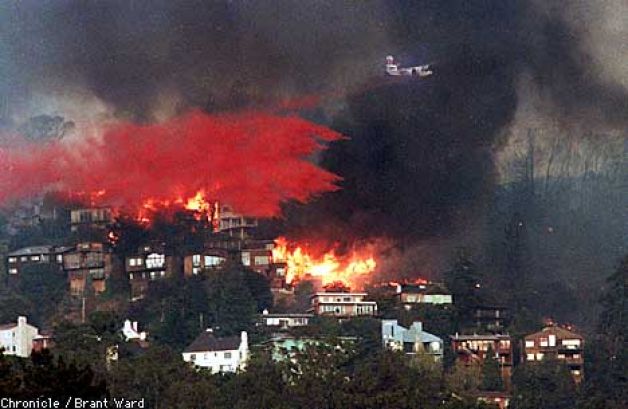
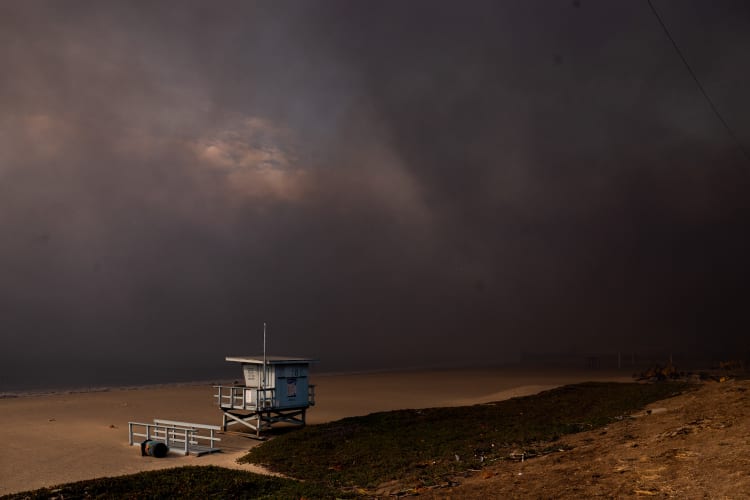


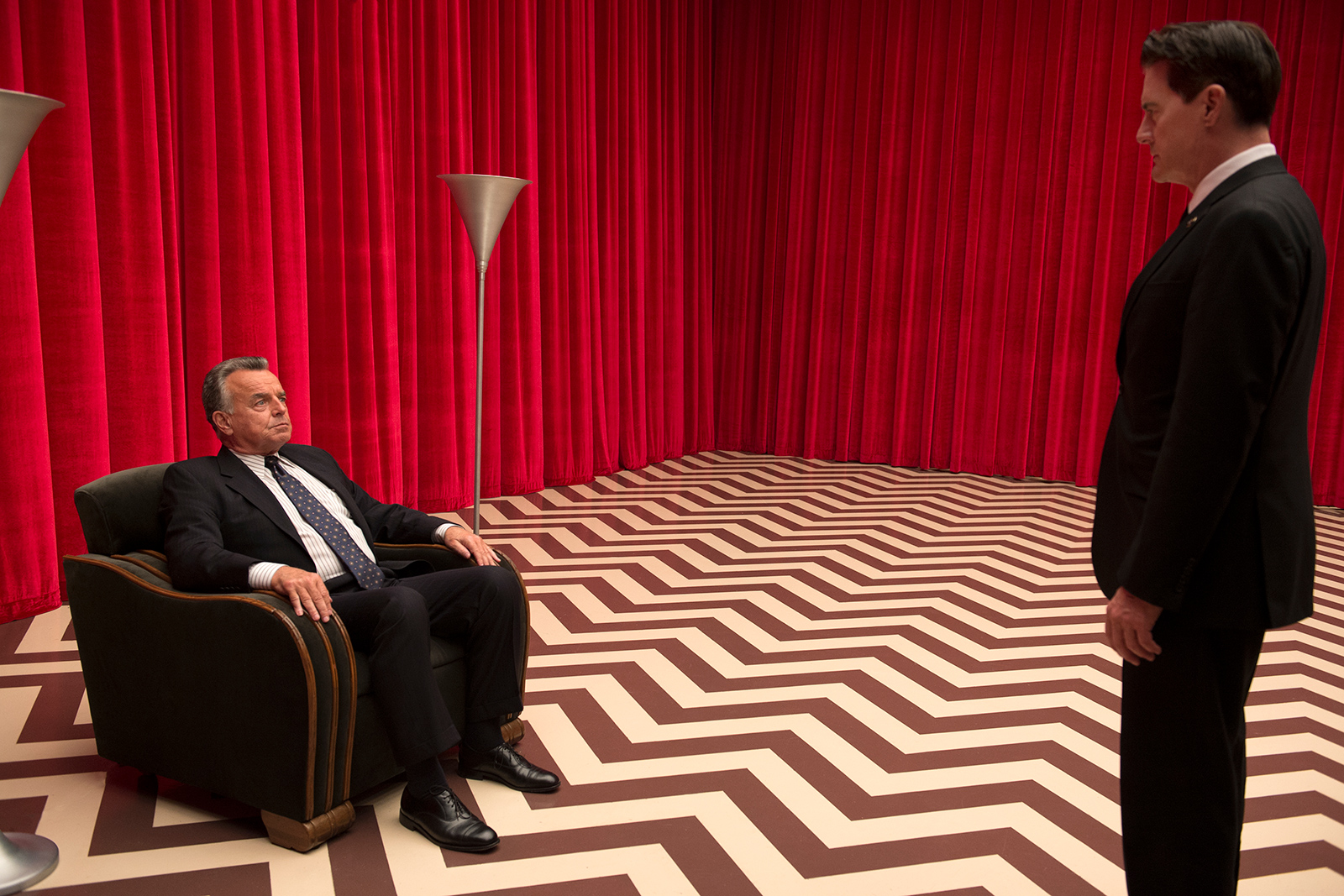


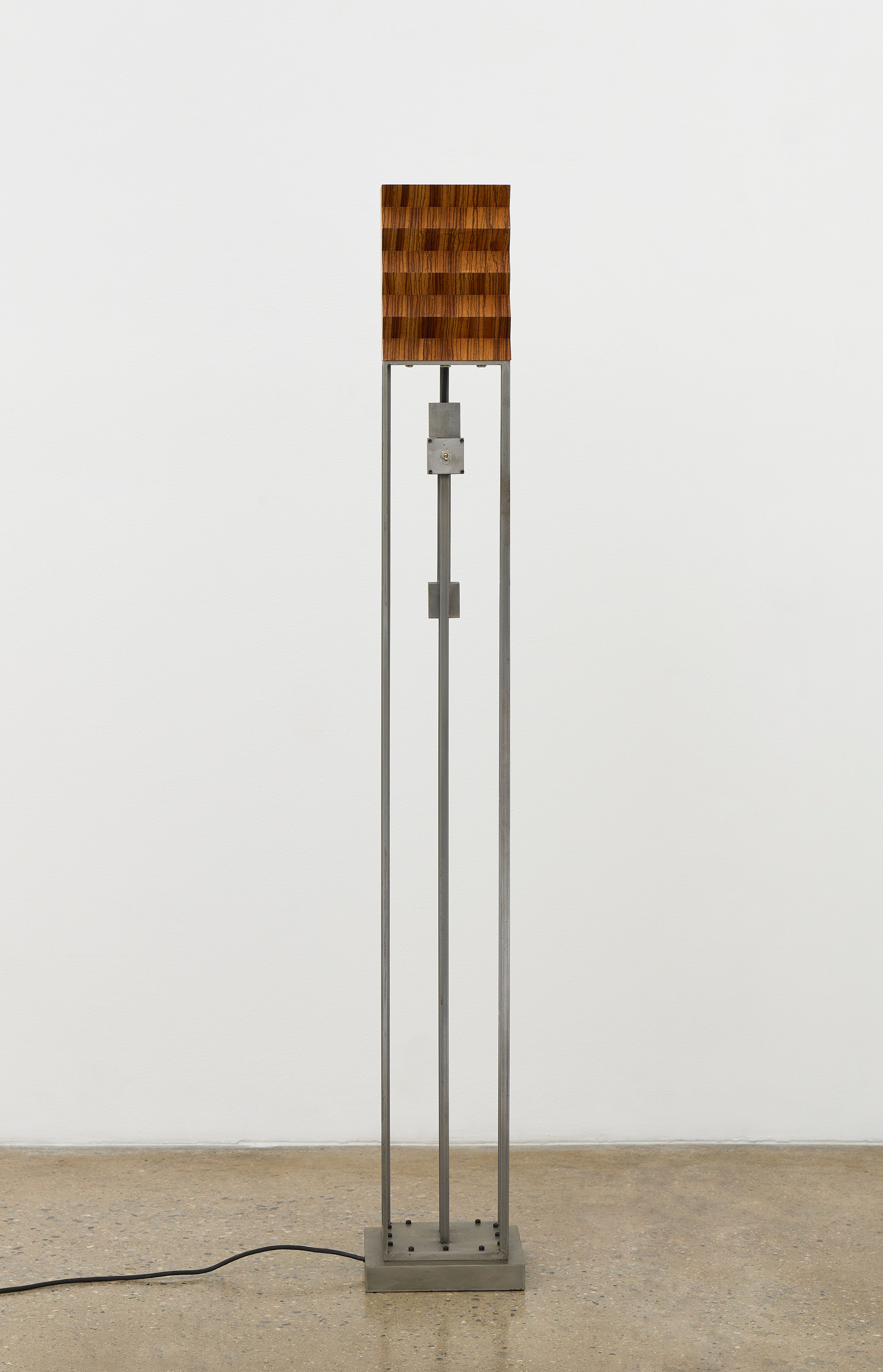
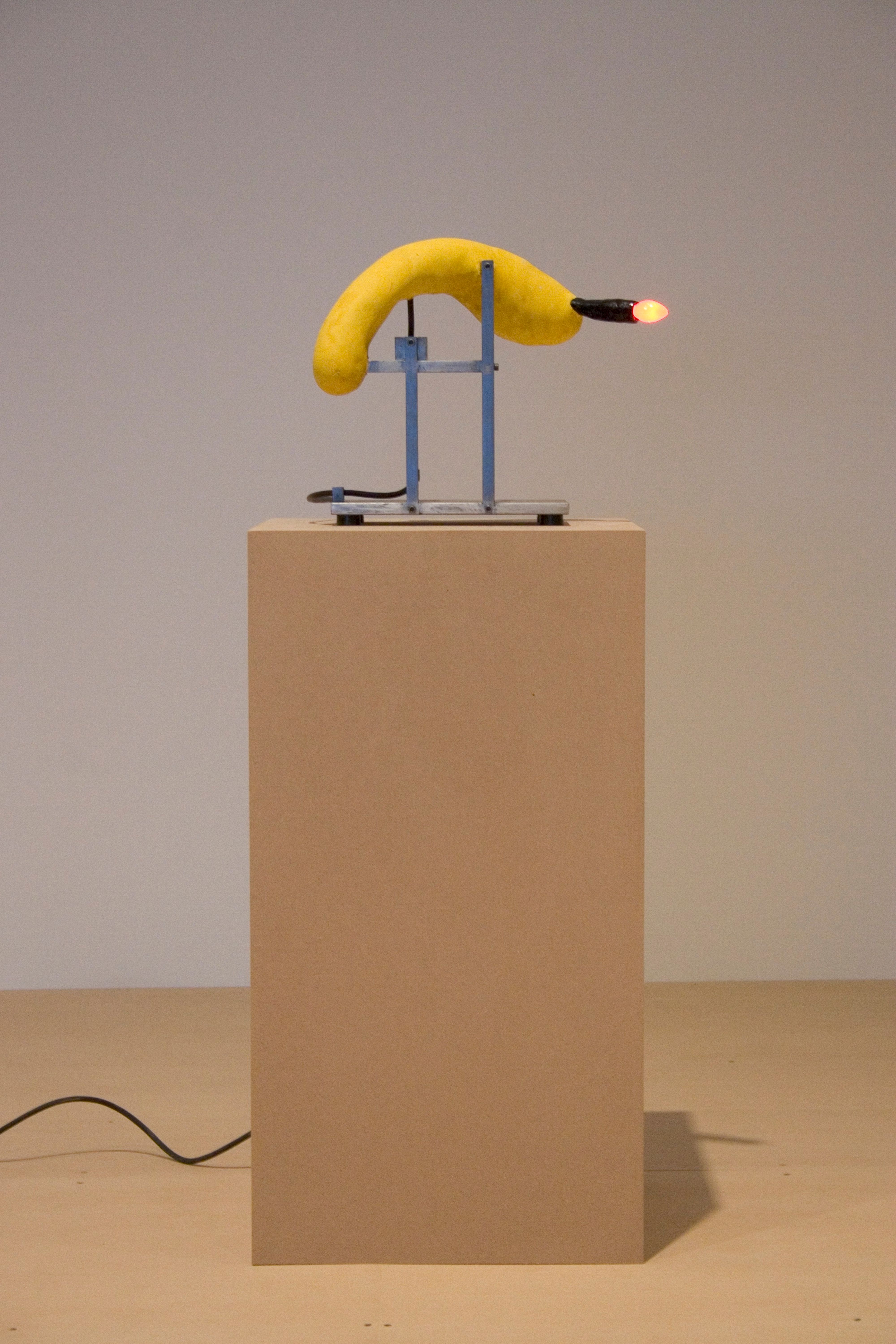
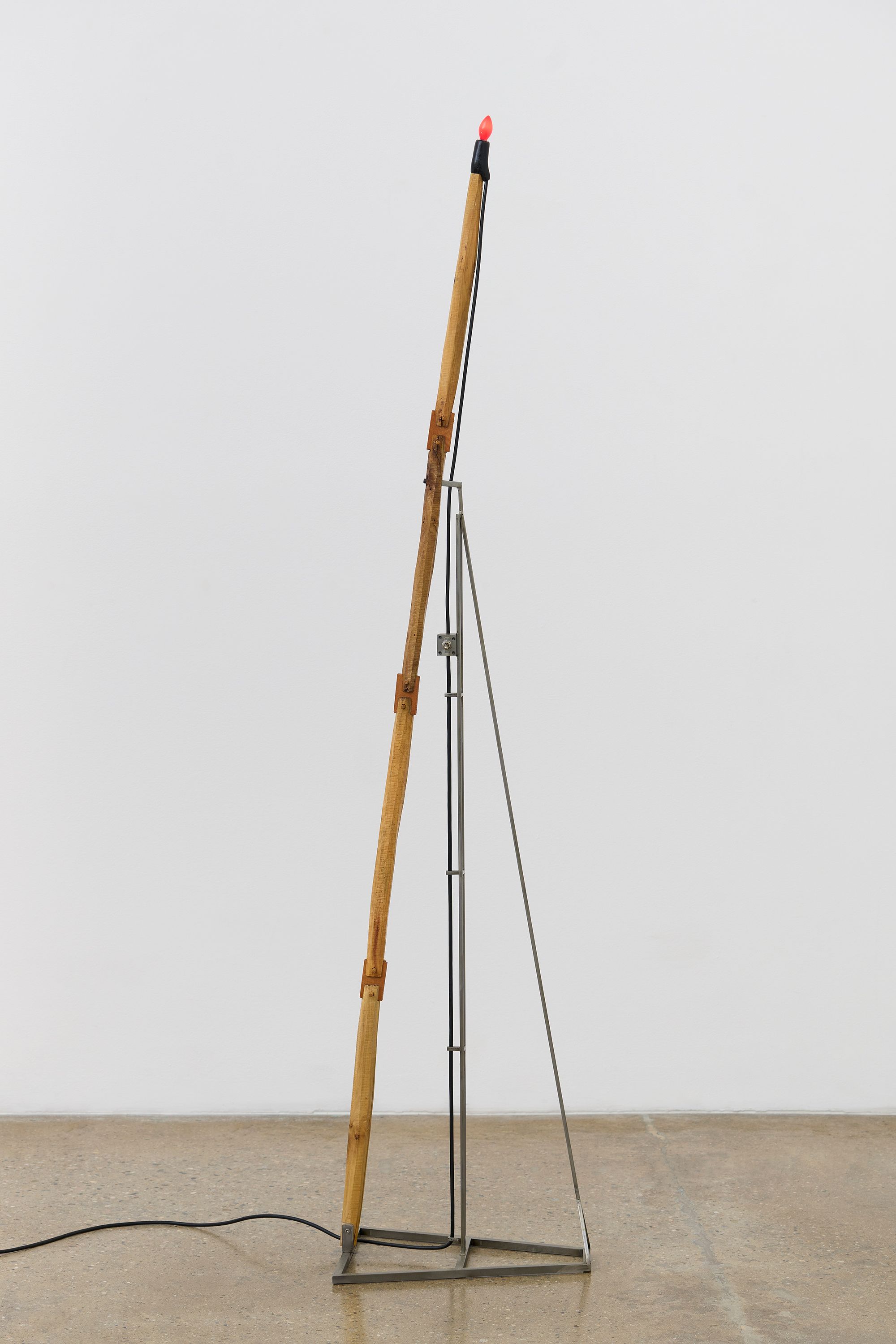
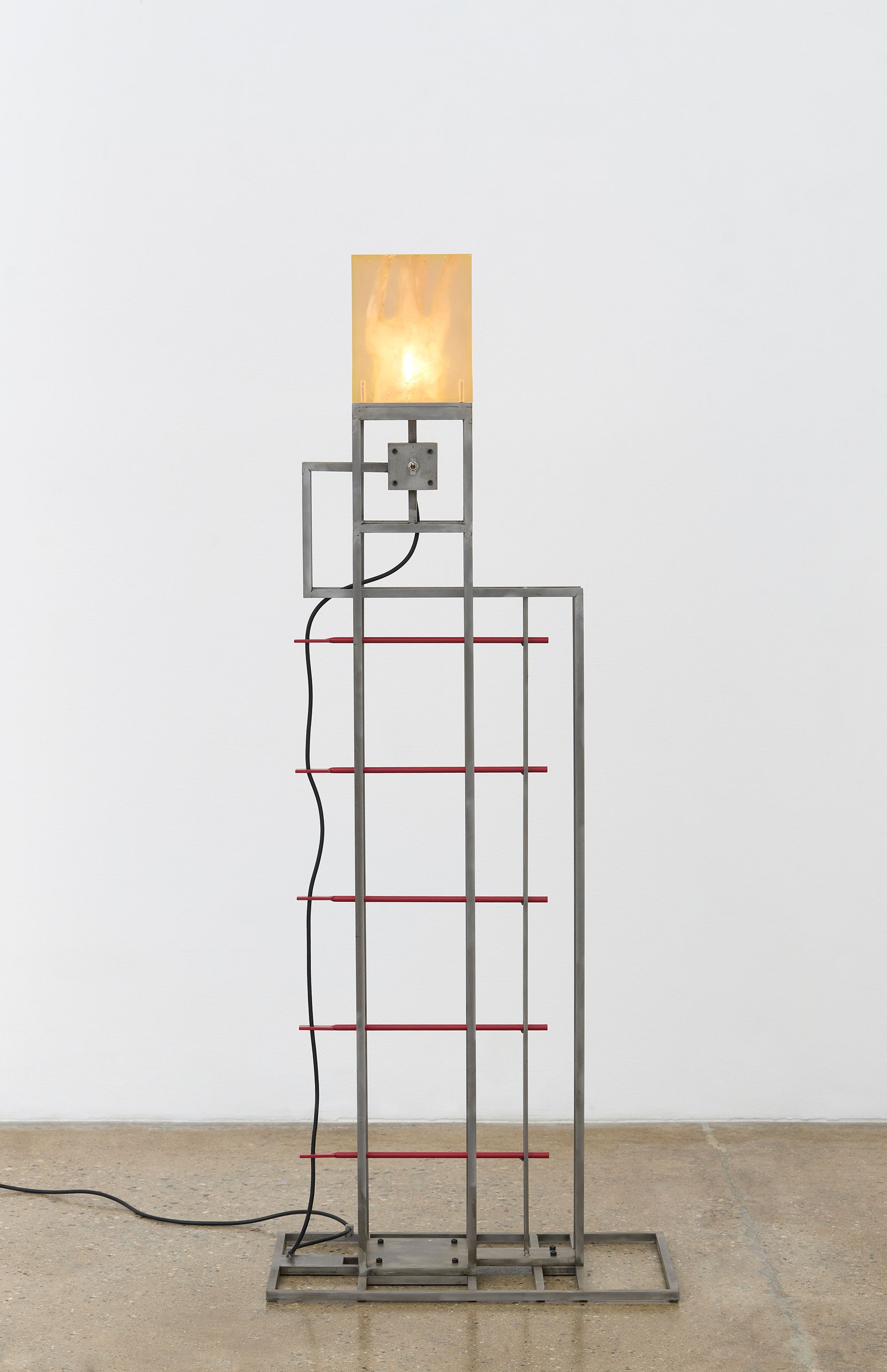
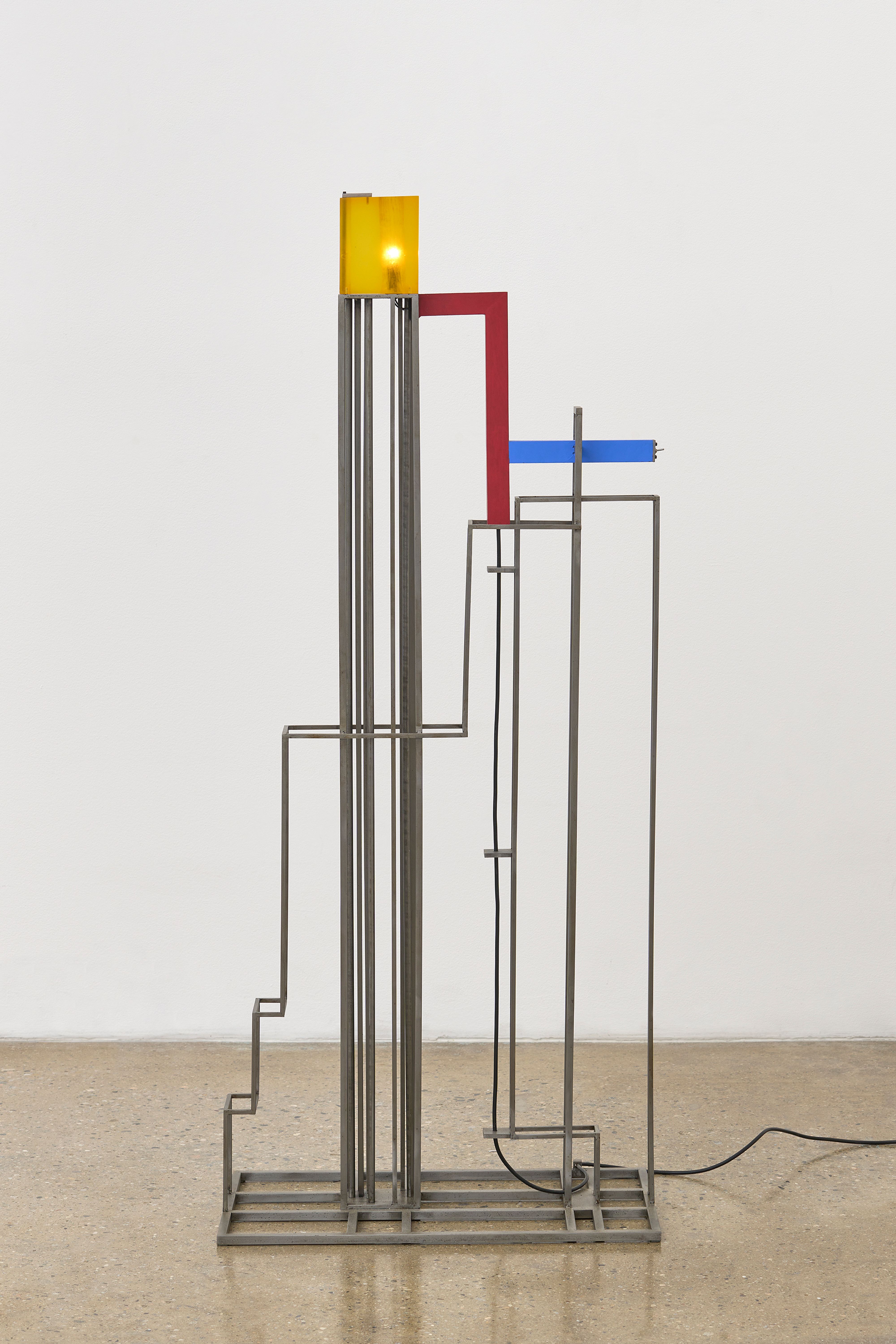

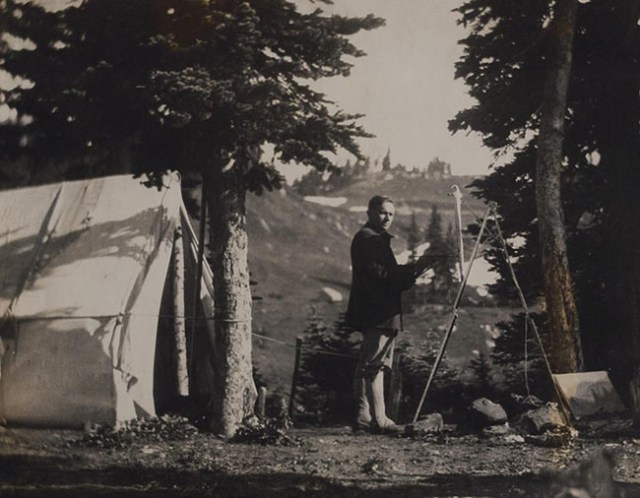


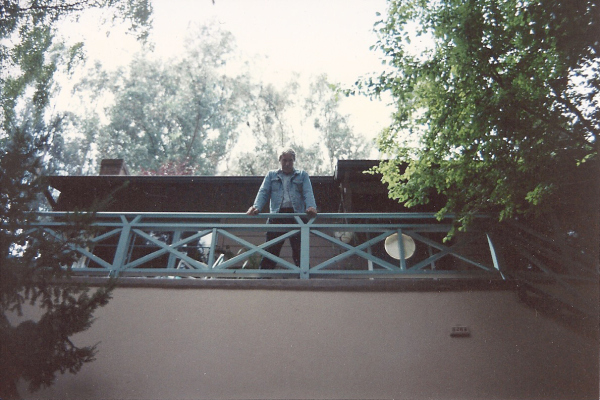




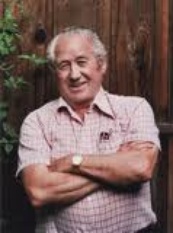


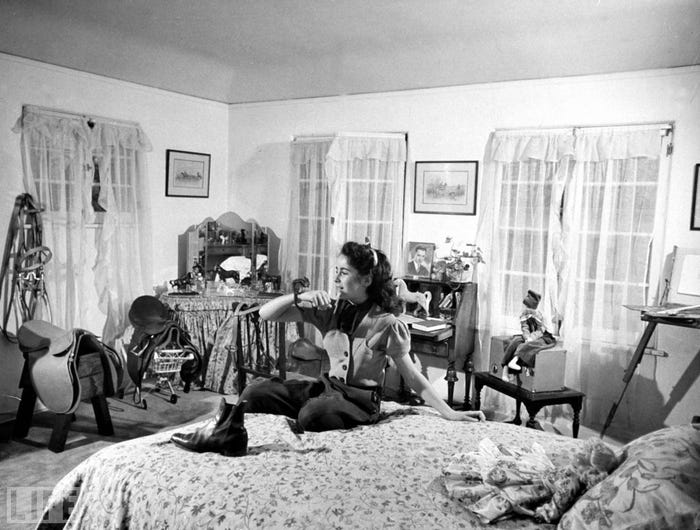
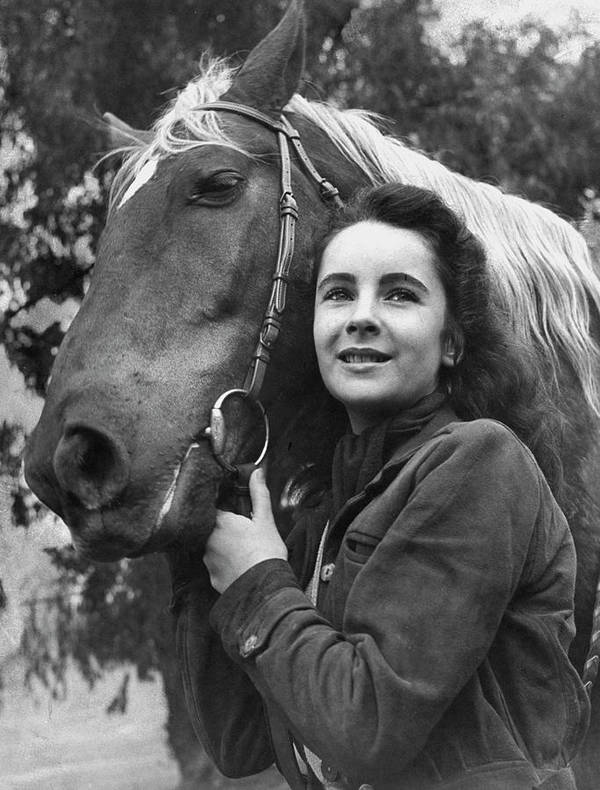
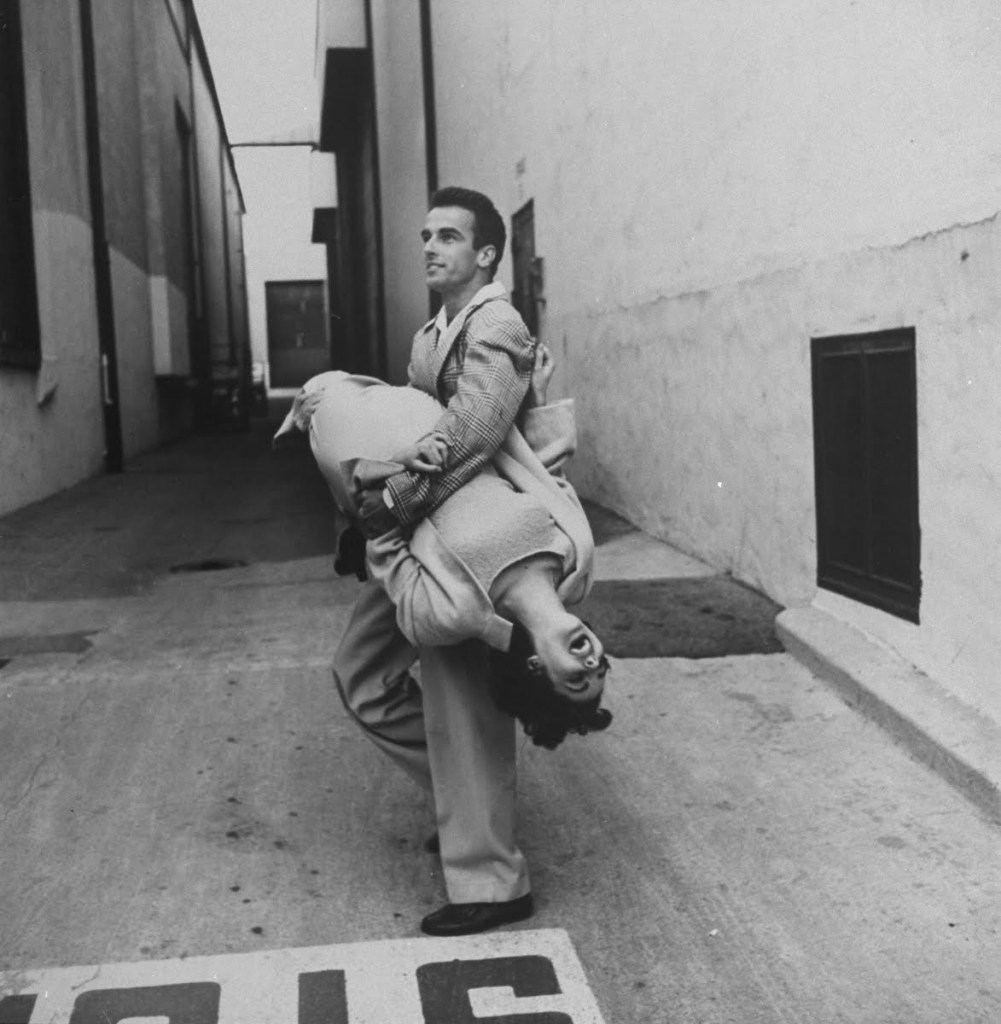
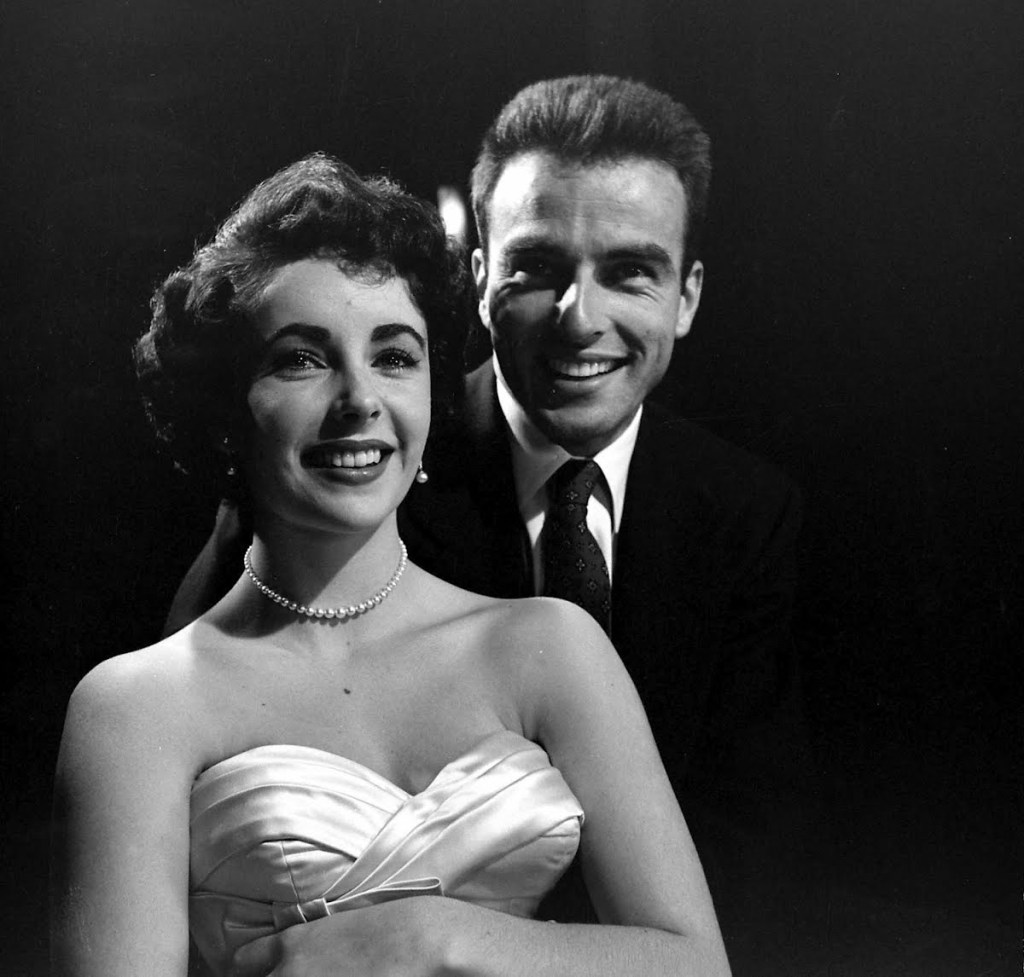


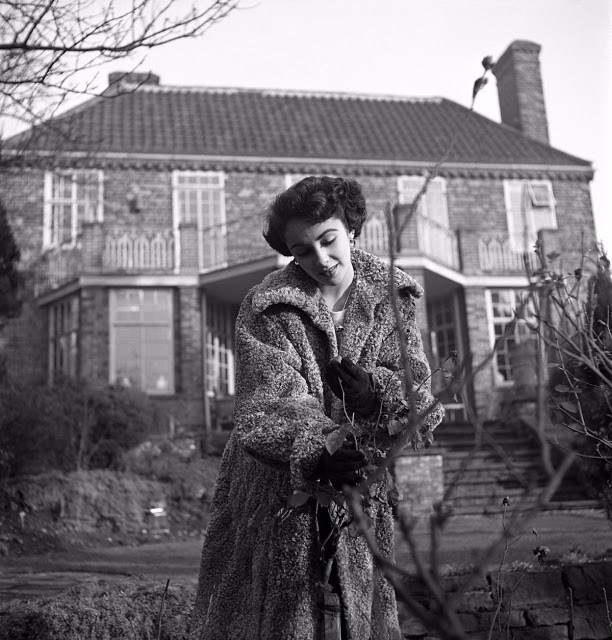


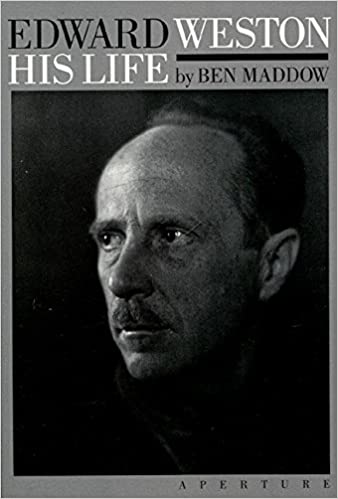


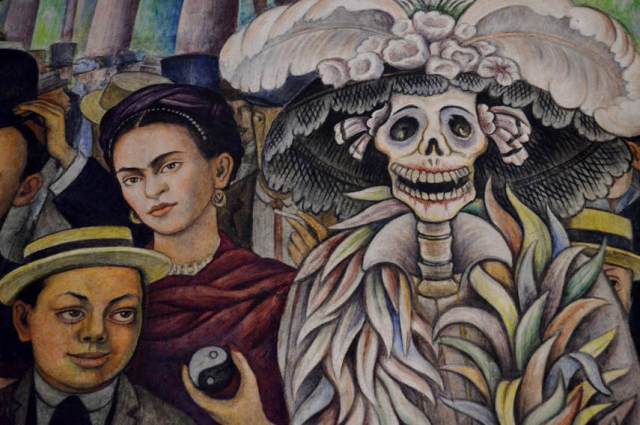

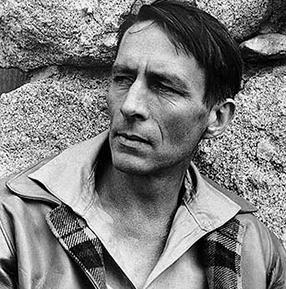




 Rosamond Press
Leave a comment