
On this day, June 26, 2025, I john Presco reborn the Order of Teutonic Knights, and the Brotherhood of the Sword, that will include Sisterhood of the Sword.
Because the President of the United States chooses to be the President of half of this Democracy, then on this day I bind Democrats to the tenants of NATO, of which Democrat Taxpayers have supported since its Founding. Because President Trump failed again to stand proud against Putin the Terrible, We The Investors in World Peace have a right to protect our investment.
What I suggest is, Estonia and NATO build a Universal Military College so American students – driven out by the Trumpire Purge – and complete their degree, get a diploma, and serve in the Estonia Military for two years.
John Presco
Thanks to our membership in NATO and the European Union, the security of Estonia is better secured than ever before. NATO and the EU help ensure the stability of the international position of Estonia and its integration into the democratic space of values. NATO membership ensures credible military deterrence and collective defence for Estonia. Like other NATO allies, Estonia focuses on the development of mobile and sustainable armed forces and increasing participation in international peace operations.
The Livonian Brothers of the Sword (Latin: Fratres militiæ Christi Livoniae; German: Schwertbrüderorden) was a Catholic military order established in 1202 during the Livonian Crusade by Albert, the third bishop of Riga[1][2] (or possibly by Theoderich von Treydend). Pope Innocent III sanctioned the establishment in 1204 for the second time. The membership of the crusading order comprised warrior monks, mostly from northern Germany, who fought Baltic and Finnic pagans in the area of modern-day Estonia, Latvia and Lithuania. Alternative names of the Order include Christ Knights, Swordbrothers, Sword Brethren, Order of the Brothers of the Sword,[2] and The Militia of Christ of Livonia. The seal reads: +MAGISTRI ETFRM (et fratrum) MILICIE CRI (Christi) DE LIVONIA.
The Teutonic Order is a Catholic religious institution founded as a military society c. 1190 in Acre, Kingdom of Jerusalem. The Order of Brothers of the German House of Saint Mary in Jerusalem was formed to aid Christians on their pilgrimages to the Holy Land and to establish hospitals. Its members have commonly been known as the Teutonic Knights, having historically served as a crusading military order for supporting Catholic rule in the Holy Land and the Northern Crusades during the Middle Ages, as well as supplying military protection for Catholics in Eastern Europe.
Purely religious since 1810, the Teutonic Order still confers limited honorary knighthoods.[2] The Bailiwick of Utrecht of the Teutonic Order, a Protestant chivalric order, is descended from the same medieval military order and also continues to award knighthoods and perform charitable work.[3]
The Lutheran Teutonic Knights
Posted on November 26, 2021 by Royal Rosamond Press
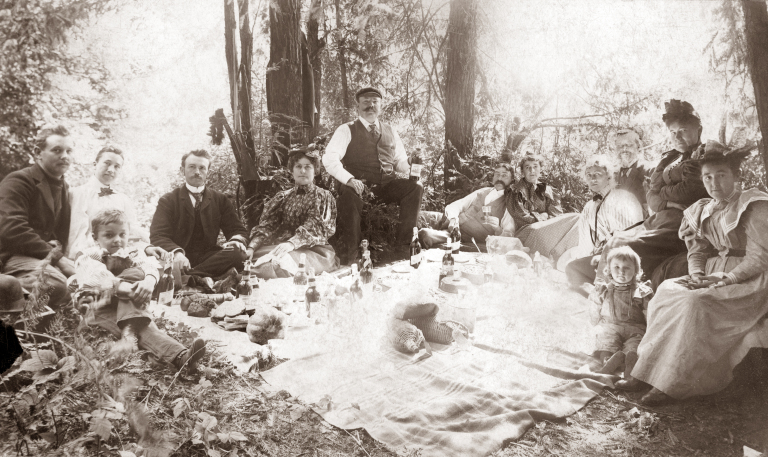
My Stuttmesiter ancestors were members of the Lutheran Church in Berlin, and were Teutonic Knights. I wondered how that could be – until seven minutes ago! On this day I raise the Stuttmeisters from the dead! Are we kin to Albert?
VRR
Albert was the first German noble to support Luther’s ideas[citation needed] and in 1544 founded the University of Königsberg, the Albertina, as a rival to the Roman Catholic Krakow Academy. It was the second Lutheran university in the German states, after the University of Marburg.
Albert, Duke of Prussia – Wikipedia
Will Estonia Save American Democracy?
Posted on February 2, 2023 by Royal Rosamond Press

“TALLINN, Estonia — The United States will deploy additional infantry troops to the Baltic country of Estonia “in the coming weeks” to strengthen defenses on NATO’s eastern flank, Estonian defense officials said Thursday.”.
“Congressional Democrats are betting that a coordinated offense is their best defense against the coming Republican investigative onslaught.
Democrats on Capitol Hill, at the White House, in agencies and in outside political groups are gearing up to do battle with the Republican committee chairs probing all corners of the Biden administration as well as the Biden family’s financial dealings.’
Estonia and the United States are United Members of NATO. They took an oath to come to the defense of each other. Because We The People and our President are engaged in killing and stopping Russian troops that threaten many NATO Nations – We need to ask several….WHAT IF?
- What if the Insurectionists had been successful, and Donald Trump emerged on the steps of our Capital and declared himself President. Would our NATO allies support him – even though he declares he is on the side of Putin?
- What if the Republican Party DOES NOT raise the Debt Ceiling?. Will the President of the United State dismiss, and IGNORE THE VOTES of Republican Election Deniers – and raise the debt cieling with an Executive Order for the sake of our troops – that are in harms way?
- What if the Tea Party Traitors, The Oath Keepers, and other pseudo-religious militias, had taken many elected Democratic leaders HOSTAGE, and paraded them in cages before Emperor Von Trump? Would Estonia send a warship full of Estonian Commandos – to free their rightful allies?
- What if most NATO Nations concluded what I conclude, that the Republican Party has been taken over by neo-Confederate Lunatics Losers who just want – the South to rise again – in the name of Jesus and John Darby? Who in the hell is John Darby?
Many Americans claim the Republican Party – IS FULL OF RACISTS! What do the fifty Nation Members of NATO think about that? They are thinking about it – BIG TIME! The ConGelicals claim the taking down of Confederate statues is a great threat to them – and Jesus! What does Prime Minister Kaja Kallas think about this – as she stares at Putin and Kirills big guns across the border? How real is this compared to Little Boy Gaetz going after the Bidens – and all Democrats? Does she wonder why Republicans can’t see – who the real enemy is?
5. What if Robert E. Lee was born in Germany in 1902, and became Nazi Germany’s greatest general? Would Hitler have won the war?
I am kin to General Lee. We are kin to the Reuss family, and thus…Hochmeister Heinrich Reuß von Plauen….who has a high forehead like I do. My Stuttmeisters grandfathers were allegedly Teutonic Knights. We do not know what their reeal name, is. There is a Stuttmeister province in Estonia. We dealt in furs – that were brought from America?
6. What if Miriam Starfish Christling fell in love with Prime Minister Kaja Kallas, and wanted to pledge fealty to her. You see, she has Praetorian Guard blood in her veins. She was born to serve and protect leaders of nations……Royalty – even Emperors! Does Trump have a dream of being a Roman Emperor? Remember him, the Greatest Traitor We have ever known?
This is what you call a brilliant flanking maneuver. I have captured their Racist Headquarters. Most of the Bible – is fiction! The enemies of the President of United States claims the Bible and God – is on THEIR SIDE! Why am I the only one who challenges their claim, and their claim they are – Great Representatives of the White Race? Who do they go on their side to prove this? The White Confederates – LOST! The White Nazis – LOST! White Trump and his Devotees – LOST! The Estonian Government knows – THEY ARE LOSERS! So does Putin – WHO IS LOSING!
I was one of the first Anti-War Hippies. I was born to be a Prussian General. Today, I am like a Prussian General, who has come to serve my President, Joseph Biden. I might be the Greatest War Propagandist – that ever lived!
“The pen is mighttier than the sword!”
Now….who do the Republicans got? John Darby? Who the hell is he!!
I intend to win World War Three!
How do you like them apples?
6. What if Jesus was a Moabite General who began a revolt in Judea against Rome – AND LOST?
7. What if the real Knight Templars discovered this was the case on the Mount of Olives?
I have a lot of alleged Knight Templar friends on Facebook. Did Jesus believe in Reincarnation?
8. What if Trump and the ConGelicals made a secret alliance with Putin, and they are going after Hunter Biden so they can end the U.S. support of Ukraine and NATO?
Gideon the Nazarite

Reuß von Plauen joined the Teutonic Order at a young age. He was first a brother in a monastery in Germany. Reuß von Plauen arrived in Prussia in the 1420s when he became the Vogt of Dirschau. In 1433 he became the Komtur of Balga and in 1440 the Vogt of Natangia. From 1441, Reuß von Plauen held the position of the Grand Hospitaller and the Komtur of Elbing (Elbląg). As the Grand Master’s nephew, his influence in the Order grew and he advanced quickly. He took control of the Order’s army during the Thirteen Years’ War and became famous for destroying the Polish army in the Battle of Konitz. After the Second Peace of Thorn in 1466, Reuß von Plauen became the Komtur of Preußisch Holland.
Kaja Kallas (Estonian: [ˈkɑjɑ ˈkɑlːɑs]; born 18 June 1977) is an Estonian politician who has been serving as the prime minister of Estonia since 2021. The leader of the Reform Party since 2018, she was a Member of Parliament from 2019 to 2021, and previously between 2011 and 2014. Kallas served as a Member of the European Parliament between 2014 and 2018, representing the Alliance of Liberals and Democrats for Europe. Prior to her election to Parliament, she was an attorney specialising in European and Estonian competition law.
Estonia calls on NATO for stronger defence of its Baltic members
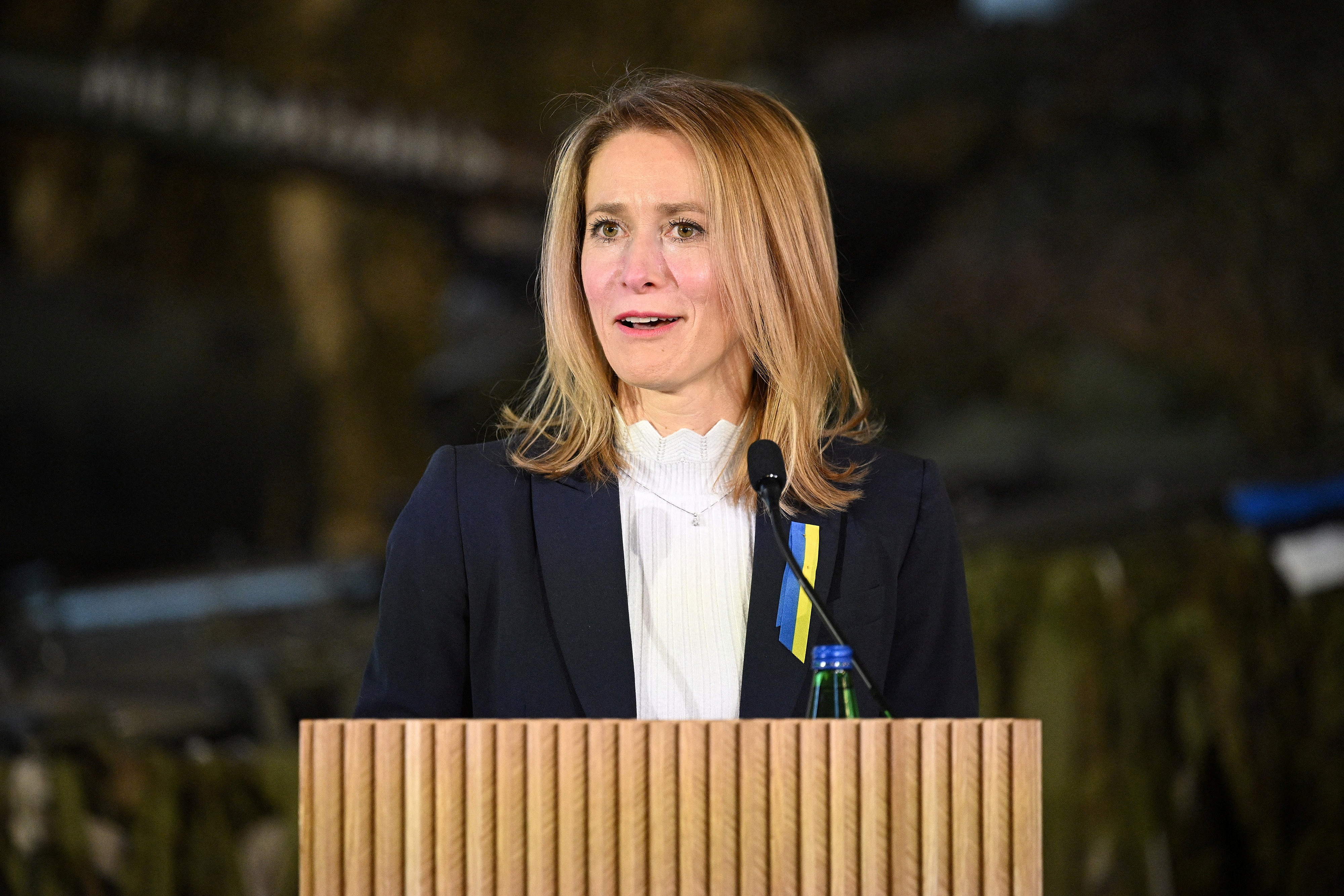
VILNIUS, March 1 (Reuters) – NATO must improve its defences of the Baltic nations, the most vulnerable part of the military alliance, Estonian Prime Minister Kaja Kallas told a news conference on Tuesday.
“This includes, on land, establishing a permanent, increased forward presence. In the air, establishing a credible defence posture. And a sense of urgency in developing NATO’s upgraded defence plan,” Kallas said after meeting with British Prime Minister Boris Johnson and NATO chief Jens Stoltenberg.
The three met at Estonia’s Tapa Military Base as Russia warned Kyiv residents to flee their homes on Tuesday and rained rockets down on Kharkiv. read more
Register for free to Reuters and know the full story
Register now
Kallas pledged her country will “continue to provide significant military, financial and humanitarian aid” to Ukraine.
NATO has established Enhanced Forward Presence battlegroups in each of the Baltic states of Latvia, Estonia and Lithuania in 2017, after Russia annexed the Crimea peninsula from Ukraine.

As part of a new largest aid package to Ukraine, Estonia has decided to hand over all its 155-mm howitzers.
This was reported by the General Staff of the Armed Forces with reference to the message of the Embassy of Estonia in Ukraine.
“We are giving all our 155-mm howitzers to Ukraine. And we want to create a precedent in this way so that other countries will not have any excuses why they cannot provide Ukraine with the necessary weapons to win the war,” emphasized Estonian ambassador to Ukraine Kaimo Kuusk.
Currently, the government of Estonia has approved the largest package of military aid to Ukraine to date, with a total cost of EUR 113 million:
- dozens of 155-mm FH-70 and 122-mm D-30 howitzers
- thousands of 155 mm artillery shells
- hundreds of M2 Karl-Gustaf anti-tank grenade launchers with ammunition
- means of supporting artillery units
Thus, total military aid to Ukraine is more than 1% of Estonia’s GDP.
It is noted that Estonia will continue to provide Ukraine with basic and specialized training for soldiers of the AFU.
The Estonian Embassy in Ukraine also thanked allies who joined the Tallinn Declaration #TallinnPledge and pledged to collectively push for an unprecedented set of grants, including main battle tanks, heavy artillery, air defense equipment, ammunition and infantry fighting vehicles for defense of Ukraine.
BRUSSELS — Ukrainian officials have a long list of requests for their European allies this week: fighter jets and other heavy weaponry to fend off a looming Russian offensive, E.U. membership within a few years, legal mechanisms to hold Russians to account, and a plan to use seized Russian assets for reconstruction.
Baltic Noble Corporations of Courland, Livonia, Estonia, and Oesel (Ösel) were medieval fiefdoms formed by German nobles in the 13th century under vassalage to the Teutonic Knights and Denmark in modern Latvia and Estonia. The territories continued to have semi-autonomous status from 16th to early 20th century under Swedish and Russian rule.
The four knighthoods are united in the Verband der Baltischen Ritterschaften. e.V. ( Association of Baltic Noble Corporations ) [1]
The Teutonic Knights entered the area of what is now Latvia and Estonia in the beginning of the 13th century in order to Christianize the region. After the conquest much of the Order’s land was divided among the German noble families originally from Westphalia and regions along the Rhine river. The towns also saw the development of a German mercantile class. The noble families constituted a minority amongst the local German-speaking population, and overall, the German-speakers constituted a small minority of the total population. During the second half of the 16th century, this area fell under the sovereignty of Poland and Sweden, which at that time dominated the Baltic Sea. While this resulted in the suppression of the Teutonic Order, local self-government remained in the hands of the four aristocratic corporations of Livonia, Estonia, Courland and Oesel.
Nazarite Lamp of Helena
Posted on March 28, 2016 by Royal Rosamond Press


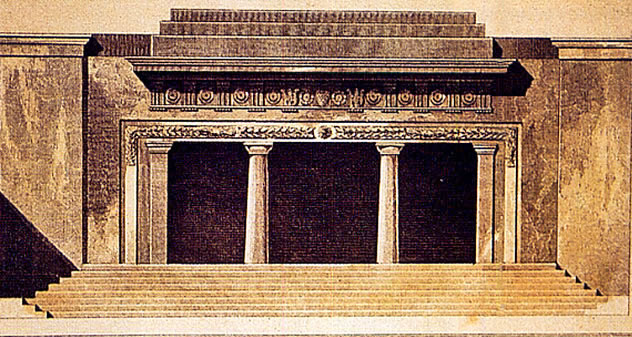
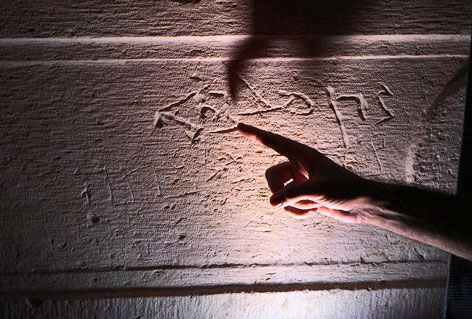
Heinrich Reuss – Grand Master Teutonic Knights
Posted on March 25, 2019 by Royal Rosamond Press
I am kin to Heinrich Reuss.
Jon

Hochmeister Heinrich Reuß von Plauen
Heinrich Reuß von Plauen (died 2 January 1470) was the 32nd Grand Master of the Teutonic Order, serving from 1467 to 1470. He was the nephew of the previous Grand Master, Ludwig von Erlichshausen, and a distant relative to the 27th Grand Master, Heinrich von Plauen. Reuß von Plauen came from the Reuss family from Plauen, Thuringia. Incidentally, the family named every male child Heinrich (Henry). Earlier, the brothers Heinrich Reuss von Plauen the Elder and Heinrich Reuss von Plauen the Younger had served in the Thirteen Years’ War.
Reuß von Plauen joined the Teutonic Order at a young age. He was first a brother in a monastery in Germany. Reuß von Plauen arrived in Prussia in the 1420s when he became the Vogt of Dirschau. In 1433 he became the Komtur of Balga and in 1440 the Vogt of Natangia. From 1441, Reuß von Plauen held the position of the Grand Hospitaller and the Komtur of Elbing (Elbląg). As the Grand Master’s nephew, his influence in the Order grew and he advanced quickly. He took control of the Order’s army during the Thirteen Years’ War and became famous for destroying the Polish army in the Battle of Konitz. After the Second Peace of Thorn in 1466, Reuß von Plauen became the Komtur of Preußisch Holland.

After the 1467 death of his uncle, Grand Master Ludwig von Erlichshausen, Reuß von Plauen assumed control over of the Teutonic Order without having been elected Grand Master. He settled in Mohrungen and waited for further moves of King Casimir IV Jagiellon of Poland, hesitating to call the meeting of the Order’s capitulum to elect him de jure. Pressured by Casimir, he finally called the capitulum in 1469 to Königsberg. This was just a formality as the decision was unanimous and Reuß von Plauen was declared the 32nd Grand Master of the Teutonic Order on 17 October 1469. Reuß von Plauen went to Piotrków Trybunalski to attend the sejm where he paid homage to Casimir IV. On his way back to Prussia he suffered a stroke and became paralyzed which made further travel impossible. Reuß von Plauen died in Mohrungen on 2 January 1470 and was buried in Königsberg Cathedral.


Deutscher Orden – German Order – Teutonic Order – 1190 – 2019
The Chivalric Teutonic Order of St Mary’s Hospital in Jerusalem
International Copyright Held © 2001-2019 – All Rights Reserved

“Helfen – Wehren – Heilen ” Help – Defend – Heal”
House of Reuss

Reuss

Lords of Reuss 1106-1206
Egbert I, (d.1122), Ancestor of the House of Reuss.
Reuss divided 1206:
Lords of Reuss- 1206-1532 ex.
Lords of Reuss-Gera 1206-1425 ex.
Lords of Reuss-Gera 1425-1479 ex.
Lords of Reuss-Lobenstein 1425-1547 ex.
Lords of Reuss-Plauen 1206-1303
Lords of Reuss-Plauen 1303-1569 ex.
Lords of Reuss-Greiz 1303
Reuss-Greiz divided 1564:
Lords of Reuss of Unter-Greiz 1564-1673
Counts of Reuss of Unter-Greiz 1673-1678
Counts of Reuss of Greiz 1678-1778
Princes of Reuss of Senior Line(Greiz) 1778-1927 ex.
Lords of Reuss of Ober-Greiz 1564-1616 ex.
Lords of Reuss- 1564-1647

Princes of Reuss of Senior Line(Greiz)
Reuss-Gera divided 1647:
Lords of Reuss-Gera 1647-1673
Counts of Reuss- 1673-1802 ex.
Lords of Reuss-Schleiz 1647-1673
Counts of Reuss-Schleiz 1673-1692
Lords of Reuss-Lobenstein 1647-1673
Counts of Reuss-Lobenstein 1673–1678
Reuss-Schleiz divided 1692:
Counts of Reuss-Schleiz 1692-1802
Counts of Reuss-Schleiz-Gera 1802-1806
Princes of Reuss-Schleiz-Gera 1806-1848
Princes of Reuss Junior Line 1848-present
Counts of Reuss-Schleiz-Köstriz 1692-1817
Princes of Reuss-Schleiz-Köstriz 1817-present
Princes of Reuss Junior Line
Reuss-Lobenstein divided 1678:
Counts of Reuss-Lobenstein 1673–1790
Princes of Reuss-Lobenstein 1790–1824 ex.
Counts of Reuss-Ebersdorf 1678–1806
Princes of Reuss-Ebersdorf 1806–24
Princes of Reuss-Lobenstein-Ebersdorf 1824–48 ex.

Princes of Reuss-Lobenstein
All of the male members of the House of Reuss are named Heinrich/ Henry plus a number. The first male child born in each century is named Heinrich/Henry I, the second Heinrich/Henry II and so on until the beginning of the new century when the numbering begins anew. This odd regulation was formulated as a Family Law in 1688, but the tradition of the uniformity of name was in practice as early as 1200. It was seen as a way of honouring the Emperor Henry VI who raised Henry the Rich (+1209) to the office of provost of the Cloister in Quedlinburg.
- Heinrich Reuß von Plauen ‘the Elder’,(c.1370–1429), 27th Grand Master of the Teutonic Knights, from 1410-1413.
- Heinrich Reuß von Plauen ‘the Younger’ (d. 1470), 32nd Grand Master of the Teutonic Order, from 1467-70.
- Heinrich XIV, Prince Reuss of Junior Line(Schleiz) reigned 1867-1913 founded the Princely Honour Cross (Fürstlich Reussisches Ehrenkreuz) on May 24, 1869. When his son Fürst Heinrich XXVII was made regent of the Reuss Elder Line in 1902, the Honour Cross was extended to that state as well. Thus, from 1902 to 1913, Heinrich XIV awarded the Honour Cross as Fürst of the Reuss Younger Line while his son awarded it as regent in the name of Heinrich XXIV of the Reuss Elder Line. In 1913, with Heinrich XIV’s death, Heinrich XXVII awarded it for both houses (although in the case of the Reuss Elder Line, still in the name of Heinrich XXIV).

Grand Master of the Teutonic Order

Heinrich XIV, Prince Reuss of Junior Line
Albert, Duke of Prussia
From Wikipedia, the free encyclopediaJump to navigationJump to search“Albert of Prussia” redirects here. For other people, see Albert of Hohenzollern.
| Albert | |
|---|---|
| Grand Master of the Teutonic Knights Duke of Prussia | |
| Albert of Prussia, painting by Lucas Cranach the Elder, dated 1528 | |
| Grand Master of the Teutonic Knights | |
| Reign | 1510 – 1525 |
| Predecessor | Duke Frederick of Saxony |
| Successor | Walter von Cronberg |
| Duke of Prussia | |
| Reign | 10 April 1525 – 20 March 1568 |
| Successor | Albert Frederick of Prussia |
| Born | 17 May 1490[1] Ansbach, Brandenburg-Ansbach, Holy Roman Empire (now Bavaria, Germany) |
| Died | 20 March 1568 (aged 77) Tapiau Castle, Tapiau, Prussia (now Gvardeysk, Russia) |
| Spouse | Dorothea of Denmark Anna Marie of Brunswick-Lüneburg |
| Issue among others… | Anna Sophia Albert Frederick |
| House | House of Hohenzollern |
| Father | Frederick I of Brandenburg-Ansbach |
| Mother | Sophia of Poland |
| Religion | Catholicism (until 1525) Lutheranism (from 1525) |
Albert of Prussia (German: Albrecht von Preussen; 17 May 1490 – 20 March 1568) was a German prince who was the 37th Grand Master of the Teutonic Knights, who after converting to Lutheranism, became the first ruler of the Duchy of Prussia, the secularized state that emerged from the former Monastic State of the Teutonic Knights. Albert was the first European ruler to establish Lutheranism, and thus Protestantism, as the official state religion of his lands. He proved instrumental in the political spread of Protestantism in its early stage, ruling the Prussian lands for nearly six decades (1510–1568).
A member of the Brandenburg-Ansbach branch of the House of Hohenzollern, Albert became Grand Master, where his skill in political administration and leadership ultimately succeeded in reversing the decline of the Teutonic Order. But Albert, who was sympathetic to the demands of Martin Luther, rebelled against the Roman Catholic Church and the Holy Roman Empire by converting the Teutonic state into a Protestant and hereditary realm, the Duchy of Prussia, for which he paid homage to his uncle, Sigismund I, King of Poland. That arrangement was confirmed by the Treaty of Kraków in 1525. Albert pledged a personal oath to the King and in return was invested with the duchy for himself and his heirs.
Albert’s rule in Prussia was fairly prosperous. Although he had some trouble with the peasantry, the confiscation of the lands and treasures of the Catholic Church enabled him to propitiate the nobles and provide for the expenses of the newly established Prussian court. He was active in imperial politics, joining the League of Torgau in 1526, and acted in unison with the Protestants in plotting to overthrow Emperor Charles V after the issue of the Augsburg Interim in May 1548. Albert established schools in every town and founded Königsberg University in 1544.[2] He promoted culture and arts, patronising the works of Erasmus Reinhold and Caspar Hennenberger. During the final years of his rule, Albert was forced to raise taxes instead of further confiscating now-depleted church lands, causing peasant rebellion. The intrigues of the court favourites Johann Funck and Paul Skalić also led to various religious and political disputes. Albert spent his final years virtually deprived of power and died at Tapiau on 20 March 1568. His son, Albert Frederick, succeeded him as Duke of Prussia.
Albert’s dissolution of the Teutonic State caused the founding of the Duchy of Prussia, paving the way for the rise of the House of Hohenzollern.
Dorothea of Denmark (1 August 1504 – 11 April 1547), was a Duchess of Prussia by marriage to Duke Albert, Duke of Prussia. She was the daughter of King Frederick I of Denmark and Anna of Brandenburg.
Contents
Life[edit]
After her father’s accession to the throne in 1523 a marriage was suggested to the English claimant to the throne, Duke Richard of Suffolk, who was supported by King Francis of France, but without success.
In 1525, she received a proposal from the newly made Duke of Prussia. The marriage was arranged by her father’s German chancellor Wolfgang von Utenhof. The wedding was conducted 12 February 1526 and Dorothea arrived with a large entourage in Königsberg in June.
Dorothea had a very good relationship with Albert and this contributed to a good and active contact between Denmark and Prussia which continued during her brother’s reign and until her death. Dorothea and her spouse corresponded with her brother, the king of Denmark, and acted as his political advisors. Dorothea and Albert were present at the coronation of Christian III of Denmark in Copenhagen in 1537; they also acted as foster-parents of her nephew Duke Hans of Denmark in 1536–1542.
The Königsberg Cathedral has a monument of her.
Contents
- 1Early life
- 2Grand Master
- 3Duke in Prussia
- 4Legacy
- 5Spouse and issue
- 6Ancestors
- 7Notes
- 8References
- 9External links
Early life[edit]
Albert was born in Ansbach in Franconia as the third son of Frederick I, Margrave of Brandenburg-Ansbach.[3] His mother was Sophia, daughter of Casimir IV Jagiellon,[3] Grand Duke of Lithuania and King of Poland, and his wife Elisabeth of Austria. He was raised for a career in the Church and spent some time at the court of Hermann IV of Hesse, Elector of Cologne, who appointed him canon of the Cologne Cathedral.[2] Not only was he quite religious; he was also interested in mathematics and science and sometimes is claimed to have contradicted the teachings of the Church in favour of scientific theories. His career was forwarded by the Church, however, and institutions of the Catholic clerics supported his early advancement.
Turning to a more active life, Albert accompanied Emperor Maximilian I to Italy in 1508 and after his return spent some time in the Kingdom of Hungary.[2]
Grand Master[edit]
As Grand Master of the Teutonic Order, painting from 1522
Duke Frederick of Saxony, Grand Master of the Teutonic Order, died in December 1510. Albert was chosen as his successor early in 1511 in the hope that his relationship to his maternal uncle, Sigismund I the Old, Grand Duke of Lithuania and King of Poland, would facilitate a settlement of the disputes over eastern Prussia, which had been held by the order under Polish suzerainty since the Second Peace of Thorn (1466).[2]
The new Grand Master, aware of his duties to the empire and to the papacy, refused to submit to the crown of Poland. As war over the order’s existence appeared inevitable, Albert made strenuous efforts to secure allies and carried on protracted negotiations with Emperor Maximilian I. The ill-feeling, influenced by the ravages of members of the Order in Poland, culminated in a war which began in December 1519 and devastated Prussia. Albert was granted a four-year truce early in 1521.[2]
The dispute was referred to Emperor Charles V and other princes, but as no settlement was reached Albert continued his efforts to obtain help in view of a renewal of the war. For this purpose he visited the Diet of Nuremberg in 1522, where he made the acquaintance of the Reformer Andreas Osiander, by whose influence Albert was won over to Protestantism.[2]
The Grand Master then journeyed to Wittenberg, where he was advised by Martin Luther to abandon the rules of his order, to marry, and to convert Prussia into a hereditary duchy for himself. This proposal, which was understandably appealing to Albert, had already been discussed by some of his relatives; but it was necessary to proceed cautiously, and he assured Pope Adrian VI that he was anxious to reform the order and punish the knights who had adopted Lutheran doctrines. Luther for his part did not stop at the suggestion, but in order to facilitate the change made special efforts to spread his teaching among the Prussians, while Albert’s brother, Margrave George of Brandenburg-Ansbach, laid the scheme before their uncle, Sigismund I the Old of Poland.[2]
Duke in Prussia[edit]
Prussian Homage: Albert and his brothers receive the Duchy of Prussia as a fief from Polish King Sigismund I the Old, 1525. Painting by Matejko, 1882.
After some delay Sigismund assented to the offer, with the provision that Prussia should be treated as a Polish fiefdom; and after this arrangement had been confirmed by a treaty concluded at Kraków, Albert pledged a personal oath to Sigismund I and was invested with the duchy for himself and his heirs on 10 February 1525.[2]
The Estates of the land then met at Königsberg and took the oath of allegiance to the new duke, who used his full powers to promote the doctrines of Luther. This transition did not, however, take place without protest. Summoned before the imperial court of justice, Albert refused to appear and was proscribed, while the order elected a new Grand Master, Walter von Cronberg, who received Prussia as a fief at the imperial Diet of Augsburg. As the German princes were experiencing the tumult of the Reformation, the German Peasants’ War, and the wars against the Ottoman Turks, they did not enforce the ban on the duke, and agitation against him soon died away.[2]
In imperial politics Albert was fairly active. Joining the League of Torgau in 1526, he acted in unison with the Protestants, and was among the princes who banded and plotted together to overthrow Charles V after the issue of the Augsburg Interim in May 1548. For various reasons, however, poverty and personal inclination among others, he did not take a prominent part in the military operations of this period.[2]One Groschen coin, 1534, Iustus ex fide vivit — The Just lives on Faith
The early years of Albert’s rule in Prussia were fairly prosperous. Although he had some trouble with the peasantry, the lands and treasures of the church enabled him to propitiate the nobles and for a time to provide for the expenses of the court. He did something for the furtherance of learning by establishing schools in every town and by freeing serfs who adopted a scholastic life. In 1544, in spite of some opposition, he founded Königsberg University, where he appointed his friend Andreas Osiander to a professorship in 1549.[2] Albert also paid for the printing of the Astronomical “Prutenic Tables” compiled by Erasmus Reinhold and the first maps of Prussia by Caspar Hennenberger.[4]
Osiander’s appointment was the beginning of the troubles which clouded the closing years of Albert’s reign. Osiander’s divergence from Luther’s doctrine of justification by faith involved him in a violent quarrel with Philip Melanchthon, who had adherents in Königsberg, and these theological disputes soon created an uproar in the town. The duke strenuously supported Osiander, and the area of the quarrel soon broadened. There were no longer church lands available with which to conciliate the nobles, the burden of taxation was heavy, and Albert’s rule became unpopular.[2]
After Osiander’s death in 1552, Albert favoured a preacher named Johann Funck, who, with an adventurer named Paul Skalić, exercised great influence over him and obtained considerable wealth at public expense. The state of turmoil caused by these religious and political disputes was increased by the possibility of Albert’s early death and the need, should that happen, to appoint a regent, as his only son, Albert Frederick was still a mere youth. The duke was forced to consent to a condemnation of the teaching of Osiander, and the climax came in 1566 when the Estates appealed to King Sigismund II Augustus of Poland, Albert’s cousin, who sent a commission to Königsberg. Skalić saved his life by flight, but Funck was executed. The question of the regency was settled, and a form of Lutheranism was adopted and declared binding on all teachers and preachers.[2]Portrait of Pavao Skalić, an encyclopedist, Renaissance humanist and adventurer from Croatia, who strongly influenced the Duke in the closing years of his reign
Virtually deprived of power, the duke lived for two more years, and died at Tapiau on 20 March 1568[2] of the plague, along with his wife. Cornelis Floris de Vriendt designed his tomb within Königsberg Cathedral.[5]
Albert was a voluminous letter writer, and corresponded with many of the leading personages of the time.[2]
Legacy[edit]
Tomb of Albert by Cornelis Floris de Vriendt in Königsberg Cathedral“Albertus” with sword from the Silberbibliothek
Albert was the first German noble to support Luther’s ideas[citation needed] and in 1544 founded the University of Königsberg, the Albertina, as a rival to the Roman Catholic Krakow Academy. It was the second Lutheran university in the German states, after the University of Marburg.
A relief of Albert over the Renaissance-era portal of Königsberg Castle‘s southern wing was created by Andreas Hess in 1551 according to plans by Christoph Römer.[6] Another relief by an unknown artist was included in the wall of the Albertina’s original campus. This depiction, which showed the duke with his sword over his shoulder, was the popular “Albertus”, the symbol of the university. The original was moved to Königsberg Public Library to protect it from the elements, while the sculptor Paul Kimritz created a duplicate for the wall.[6] Another version of the “Albertus” by Lothar Sauer was included at the entrance of the Königsberg State and Royal Library.[6]
In 1880 Friedrich Reusch created a sandstone bust of Albert at the Regierungsgebäude, the administrative building for Regierungsbezirk Königsberg. On 19 May 1891 Reusch premiered a famous statue of Albert at Königsberg Castle with the inscription: “Albert of Brandenburg, Last Grand Master, First Duke in Prussia”.[7] Albert Wolff also designed an equestrian statue of Albert located at the new campus of the Albertina. King’s Gate contains a statue of Albert.
Albert was oft-honored in the quarter Maraunenhof in northern Königsberg. Its main street was named Herzog-Albrecht-Allee in 1906. Its town square, König-Ottokar-Platz, was renamed Herzog-Albrecht-Platz in 1934 to match its church, the Herzog-Albrecht-Gedächtniskirche.[8]
Spouse and issue[edit]
Dorothea of Denmark, Duchess of Prussia by Cornelis Floris de Vriendt
Albert married first, to Dorothea (1 August 1504 – 11 April 1547), daughter of King Frederick I of Denmark, in 1526. They had six children:
- Anna Sophia (11 June 1527 – 6 February 1591),[3] married John Albert I, Duke of Mecklenburg-Güstrow.
- Katharina (b. and d. 24 February 1528).
- Frederick Albert (5 December 1529 – 1 January 1530).[3]
- Lucia Dorothea (8 April 1531 – 1 February 1532).
- Lucia (3 February 1537 – May 1539).
- Albert (b. and d. March 1539).
He married secondly to Anna Maria (1532–20 March 1568), daughter of Eric I, Duke of Brunswick-Lüneburg, in 1550. The couple had two children:
- Elisabeth (20 May 1551 – 19 February 1596).
- Albert Frederick (29 April 1553 – 18 August 1618), Duke of Prussia.
 Rosamond Press
.jpg)


.png)


_by_shakko_02.jpg)
Leave a comment