“We ought not to fight them at all unless we determine to fight them forever,”
Thomas Jefferson
Below is painting of Virginia Hambleys great great grandfather leading the French army in the coquest of Algiers.
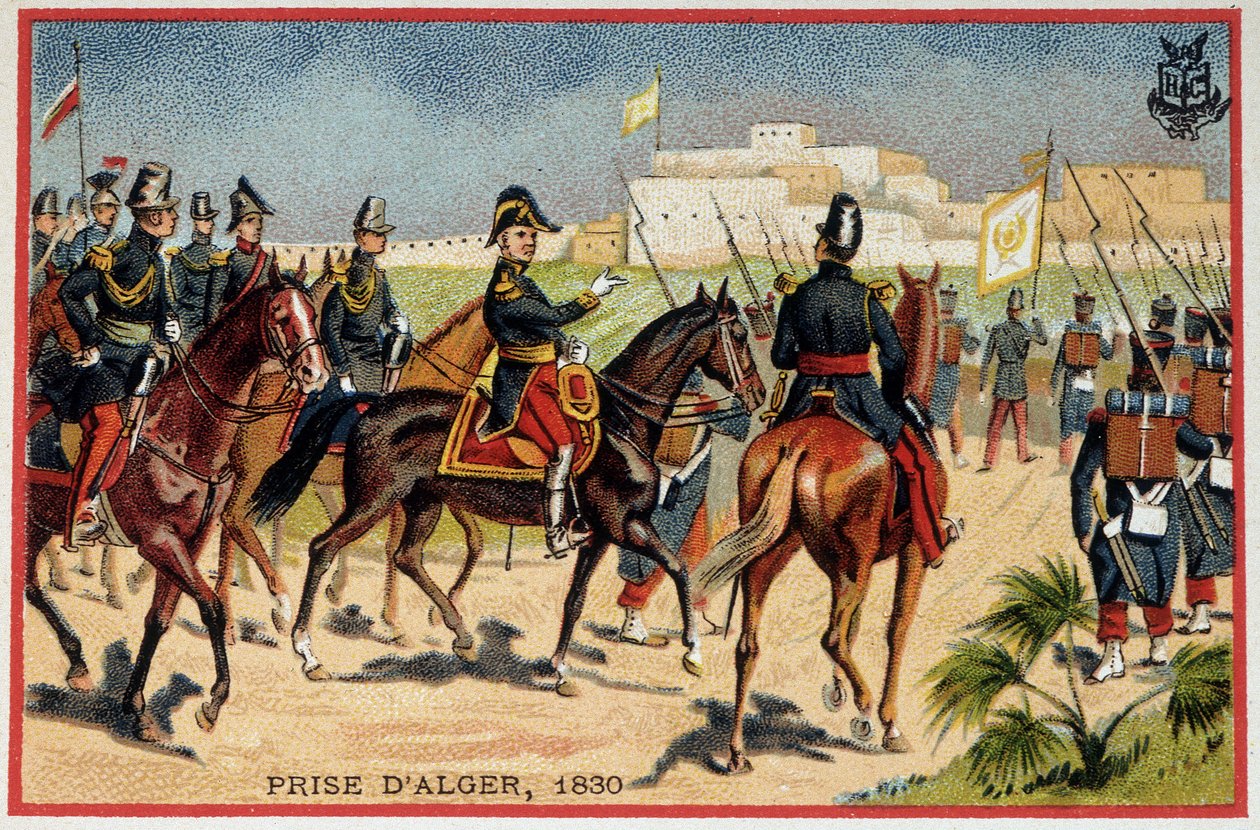
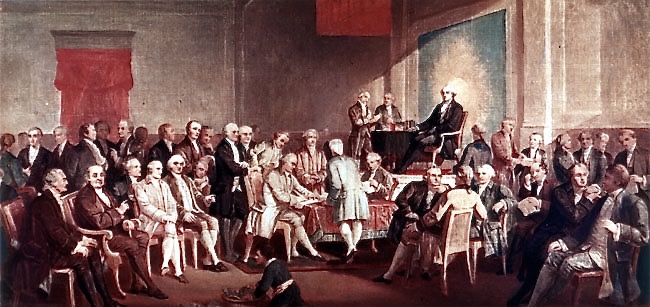
The words above are going in our National Archives, along with
“Go ahead! Make my day!”
Our President is acting like he is the Godfather of New York who took over the White House, with the help of White Evangelicals who are behind him using all the force necessary to fulfill Revelations. Christians want to see the Secular Democrats , defeated, none mor than Netanyahu and the Zionist who are ‘Land Crazy Killers’. Is Trump pretending he is very angry at Israel? Schumer just demanded a report to the Senate, suspecting a cover-up with fictional historian with who is asking for an Impeachments.
BACK FROM BREAK
The news is saying U.S. Intelligence concludes they did not destroy Iran’s nuclear program. Hawkish Senator Graham is concluding we got to try PEACE. How about – going back to Democracy as signer John Witherspoon, declared it, and fire all the Christian Leaders giving Trump bad advice – many who want the – END TIME! There is a real chance Israel – and the United States – may get nuked. For this reason I ask Gid to dine with me, as he dined with Moses and the Elders. We can make peace
FACE TO FACE
Let’s cut out the middlemen….God! Do you know what you are doing?
John Presco
I just got an AD BOMB! I posted a link to the Franciscan Order, that was I destined to be the head of, and I got BOMMBED! Scroll past.
Genealogy for Virginia Hambley
Posted on September 30, 2013 by Royal Rosamond Press


Dottie Witherspoon almost became Christine’s sister-in-law. She may have fathered my child the Seers said I had. They saw two faint leaves on my rose. A year later, my sixteen year old daghter appear in my life for the first time.
When we think of Jewish heroes of the American Revolution, Haym Salomon, the “financier” of the patriot cause or Isaac Franks, aide-de-camp to General George Washington, are the first names that come to mind. Rarely do we hear of South Carolina’s Francis Salvador, the first identified Jew to be elected to public office in the entire British Empire, the first Jew to be elected to an American colonial legislature, the only Jew to serve in a revolutionary colonial congress, and the first Jew to die for the cause of American liberty.
Francis Salvador was born in London in 1747, the fourth generation of Salvadors to live in England. His great grandfather Joseph, a merchant, established himself as a leader of England’s Sephardic community and became the first Jewish director of the East India Company. When George III ascended the British throne, Joseph Salvador arranged an audience for the seven-man delegation that officially congratulated the king on behalf of the Jewish community.
In Exodus 33:20, God tells Moses, “You cannot see my face, for no one can see me and live.” However, earlier, in Exodus 33:11, we read, “Thus the Lord used to speak to Moses face to face, as a man speaks to his friend.” So, did Moses see God, and if so, how did he live? Also, how does this agree with John 1:18, which says, “No one has ever seen God, but the one and only Son”?
In Exodus 24, Moses, Aaron, Nadab, Abihu, and seventy of the elders of Israel did indeed “eat and drink” in the presence of God. They ascended Mount Sinai, saw God, and participated in a meal together. This event is described as a unique experience, where they witnessed a vision of God, yet were not harmed by His presence.
Saving Dottie Witherspoon – Again!
Posted on February 11, 2013 by Royal Rosamond Press
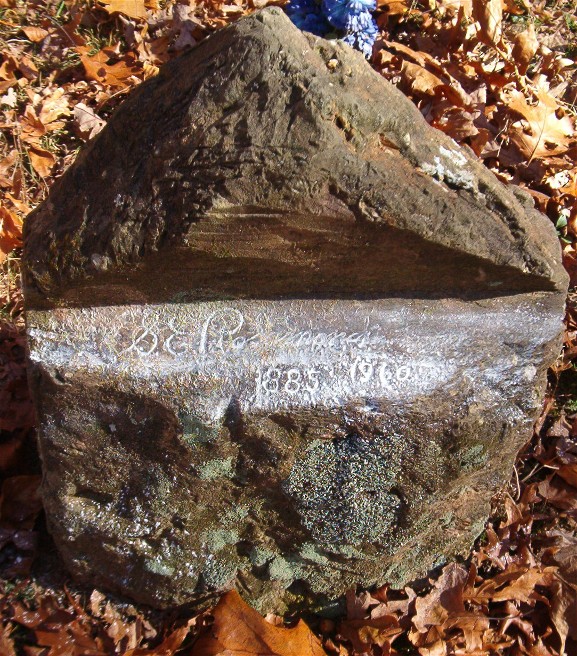

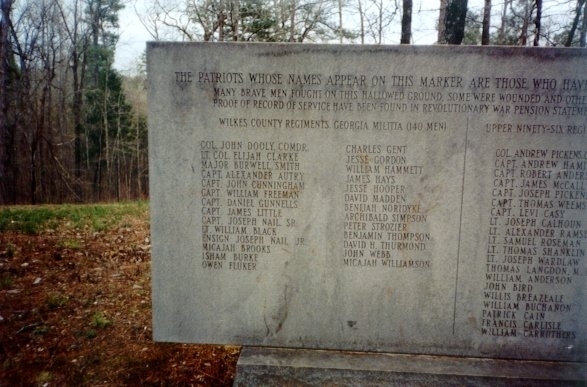
Dottie Witherspoon almost became Christine’s sister-in-law. She may have fathered my child the Seers said I had. They saw two faint leaves on my rose. A year later, my sixteen year old daghter appear in my life for the first time.
The U.S.S. Constitution
Posted on March 29, 2022 by Royal Rosamond Press
My family history is on the side of the President and Vice President of the United States of America.
John Presco
Candidate For Governor of Oregon
Biden appeared to play into Putin’s hands with his unscripted assertion during a big speech in Warsaw, Poland, Saturday that the Russian president “cannot remain in power.”
The words sounded to many people like a call for regime change in Moscow. And, as such, they dovetailed far too well with Putin’s frequent claims that he and his nation are the targets of Western plotting and aggression.
Isaac Hull Captain of the Argus, Constitution, and Enterprise
Posted on March 29, 2015 by Royal Rosamond Press


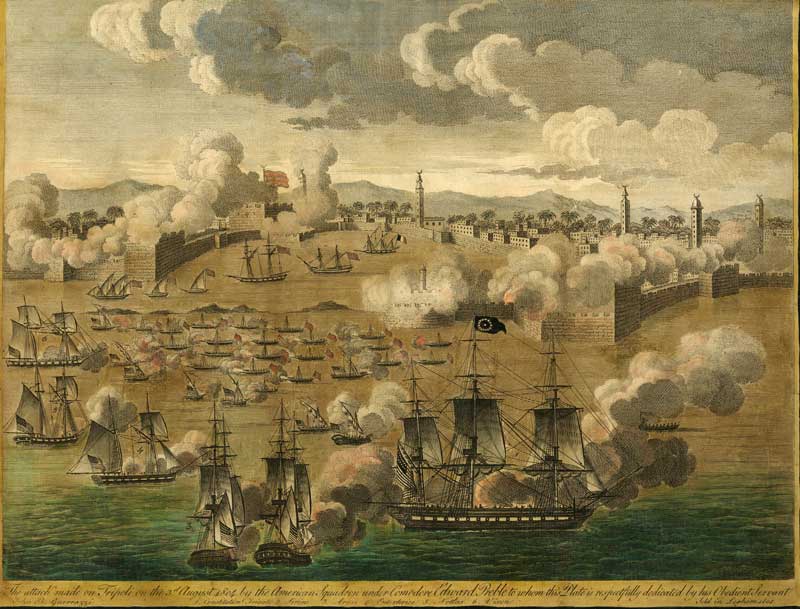

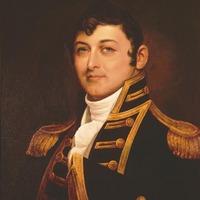
My great grandfather captained three ships that took part in the Barbary Wars after the Treaty of Tripoli was made. Adams said this to President Thomas Jefferson;
“We ought not to fight them at all unless we determine to fight them forever,”
http://en.wikipedia.org/wiki/Treaty_of_Tripoli
Bill Bennett authored a book that claims Captain Isaac Hull battled and dispatched Islamic Terrorists. Bennett, in his new book, “America, the Last Best Hope”, describes it this way:
The Ambassador answered us that it was founded on the Laws of the Prophet, that it was written in their Koran, that all nations who should not have answered their authority were sinners, that it was their right and duty to make war upon them wherever they could be found, and to make slaves of all they could take as prisoners.
Joshua E. London’s description of the meeting in his book:
“The response was unnerving. As Adams and Jefferson later reported to the Continental Congress, the ambassador said the raids were a jihad against infidels. Muslim privateers felt “it was their duty to make war upon them [non-Muslims] wherever they could be found, and to make slaves of all they could as Prisoners, and that every Mussleman [Muslim] who should be slain in Battle was sure to go to Paradise.”
The Americans now had two choices: pay tribute or fight the pirates.”
http://www.floppingaces.net/2006/07/04/americas-first-war-with-islami/
The French conquest of Algeria (French: Conquête de l’Algérie par la France; Arabic: الغزو الفرنسي للجزائر) took place between 1830 and 1903. In 1827, an argument between Hussein Dey, the ruler of the Regency of Algiers, and the French consul escalated into a blockade, following which the July Monarchy of France invaded and quickly seized Algiers in 1830, and seized other coastal communities. Amid internal political strife in France, decisions were repeatedly taken to retain control of the territory, and additional military forces were brought in over the following years to quell resistance in the interior of the country.
Admiral Duperré took command[citation needed] in Toulon of an armada of 635 ships and then headed for Algiers. Following a plan for the invasion of Algeria originally developed by Major Boutin under Napoleon in 1808, General de Bourmont then landed 34,000 soldiers 27 kilometres (17 mi) west of Algiers, at Sidi Ferruch, on 14 June 1830. To face the French, the dey sent 7,000 janissaries, 19,000 troops from the beys of Constantine and Oran, and about 17,000 Kabyles.[28] The French established a strong beachhead and pushed toward Algiers, thanks in part to superior artillery and better organization. On 19 June the French defeated the dey’s army at the battle of Staouéli, and entered Algiers on 5 July after a three-week campaign.[29] The dey accepted capitulation in exchange for his freedom and the offer to retain possession of his personal wealth. Five days later, he went into exile in Naples with his family. The Turkish Janissaries also quit the territory, leaving for Turkey.[30] The dey’s departure ended 313 years of Ottoman rule of the territory.
The Barbary Wars were a series of two wars fought by the United States, Sweden, and the Kingdom of Sicily against the Barbary states (including Tunis, Algiers, and Tripoli) and Morocco of North Africa in the early 19th century. Sweden had been at war with the Tripolitans since 1800 and was joined by the newly independent US.[3][unreliable source?] The First Barbary War extended from 10 May 1801 to 10 June 1805, with the Second Barbary War lasting only three days, ending on 19 June 1815. The Barbary Wars were the first major American wars fought entirely outside the New World, and in the Arab World.[4][5]
After Thomas Jefferson became president of the US in March 1801, he sent a U.S. Navy fleet to the Mediterranean to combat the Barbary pirates. The fleet bombarded numerous fortified cities in present-day Libya, Tunisia, and Algeria, ultimately extracting concessions of safe conduct from the Barbary states and ending the first war.
During the War of 1812, with the encouragement of the United Kingdom,[6] the Barbary corsairs resumed their attacks on American vessels. Following the conclusion of the War of 1812 and America’s peace with Britain, James Madison, Jefferson’s successor, directed military forces against the Barbary states in the Second Barbary War. Lasting only three days, the second conflict ended the need for further tribute from the United States, granted the U.S. full shipping rights in the Mediterranean Sea, and significantly reduced incidents of piracy in the region.[7]
In 1830, General de Bourmont led the French invasion of Algiers, which resulted in the capture of the city and the beginning of French colonial rule in Algeria. The invasion, initiated by King Charles X, was partly motivated by a desire to bolster the monarchy’s popularity and partly a response to the “fly-whisk affair” (a diplomatic incident). The French forces landed at Sidi Ferruch on June 14, 1830, and after initial resistance, the city of Algiers fell on July 5, 1830.
Before the Ottoman Empire ruled Palestine, the region was under the control of the Mamluk Sultanate. The Mamluks gained control after the Crusades and ruled until the Ottomans conquered them in 1516. Prior to the Mamluks, Palestine had been part of various empires and kingdoms, including the Byzantine Empire, the Rashidun Caliphate, the Umayyad Caliphate, and the Abbasid Caliphate.
“Don’t go – unless you intend to go – the whole way! Don’t fight them, unless you intend to fight them forever!”
The Buriel Place of the Lords of Rougemont
Posted on November 30, 2012 by Royal Rosamond Press
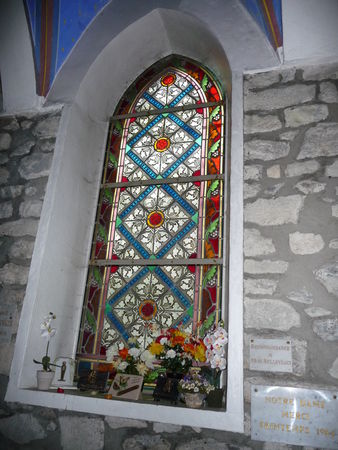
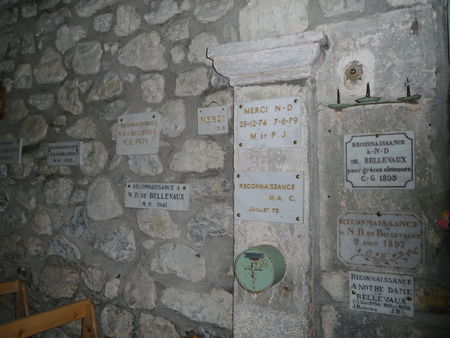

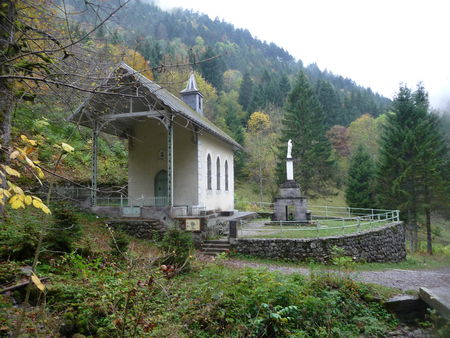
I just found the Abbey Bellevaux where the Lords of Rougemont, and the Bishops of Besançon are buried. The Rougemonts were Knights Templar and owners of the Shroud of Turin as were the Lords of La Roche. Pons La Roche was the founder of Bellevaux where very possibley my Rougemont ancestors are buried. Pons is close kindred of the De Bar and Habsburg family. Why would the Habsburg keep their connection to the Knights Templar and Shroud of Turin a secret? The Habsburgs were ‘defenders of the Catholic faith’.
Gunboat Diplomacy & War Against White Slavery
Posted on November 4, 2014 by Royal Rosamond Press

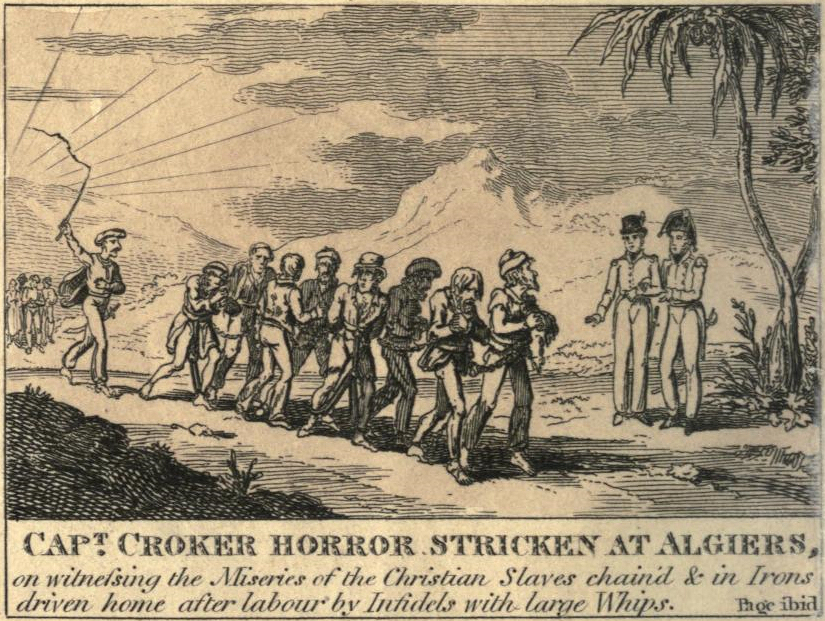




For a week now ‘The Masked Rose of Paris’ has been attacking Turkey and the old Ottoman Empire for seizing Cypress.
“The UN should focus on matters concerning Turkeys occupation of EU member Cyprus since 1974 , and must launch UN wide economic sanctions of Turkey, for its continued British State Sponsored Turkish military occupation of EU member Cyprus since 1974 Expel Britain from the European Union and Dissolve the Rogue Turkish ISIS State. Britain and Turkey are attacking the Euro Currency , via all the Turkish military violations on Greece and Cyprus since 1974.”
Today I took the time to see what she was upset about. As it turns out, fate has taken a seat at this table of high-stakes energy piracy. And, who is in the middle of it, Nobel Oil, and my arch enemy, Lawrence Chazen, a CEO of Noble, and ex-partner of the late sister, Rosamond, who I just introduced to the Rose because I want to do a drawing of her and bring her into the creative family fold.
Our great, great, grandfather, Isaac Hull was the Captain of the U.S. Constitution that was built to battle the Cossaire Pirates of the Barbary Coast who took a million Europeans as their slaves. I have wondered why some Kurds have blue eyes. What became of the children of these women that were used as sex slaves? European slaves must have fathered children.
Muslim men have a problem with adultery. They are so afraid their wives will cheat on them, that they make them their prisoners. Then they kidnap the women of other men and make them their sex-slaves lest they commit adultery. In the Koran one can have sex with your slave.
In the war against the ISISlavers, one must not recognize national borders. We the people of the world must draw a line in the sand that separates them from all the women of the world. It is not a matter of white slaves, or black slaves when it comes to this World War of Liberation that frees womankind first! Let Old Ironsides fire the first volley in this battle!
For Lady Liberty!
“The USS Constitution, a 44-gun U.S. Navy frigate built to fight Barbary pirates off the coast of Tripoli, is launched in Boston Harbor. The vessel performed commendably during the Barbary conflicts, and in 1805 a peace treaty with Tripoli was signed on the Constitution‘s deck.Though Turkey has threatened to block extraction of natural gas offshore Cyprus, the Greek Cypriot government has vowed to move forward with exploration and drilling.”
Turkey mentions “gunboat diplomacy” and threatens war. What if a Turkish gunboat sinks Noble’s drilling platform.
Jon the Nazarite
Yet the bonanza could equally inflame conflict. Turkey has claimed the blocs to the south of Cyprus as far as Egyptian waters. “If poorly managed, Cypriot gas could harden political divisions. Ankara does not recognise the government in Nicosia and has threatened military force if Cyprus allows drilling in the disputed maritime zone,” said Rem Korteweg, an energy expert at the Centre for European Reform.
The US has begun to intervene, pushing the two sides to renew peace talks. The Greek and Turkish Cypriots have signed a document laying out general principles.
http://en.wikipedia.org/wiki/USS_Constitution
http://en.wikipedia.org/wiki/USS_Enterprise_(1799)
Cypriot Foreign Minister Ioannis Kasoulides said that while the two countries were nowhere near an agreement, he was hopeful that progress would be made, and in the meantime, drilling would continue. “Groups like Noble Energy, ENI and Total would not be investing billions in exploration here if they really thought Turkey was going to stop them,” the foreign minister said.
Turkey is opposed to Cyprus exporting oil and gas – saying the energy wealth also belongs to Turkish Cypriots — and been accused of “gunship diplomacy” by the Greek Cypriots. Turkey lays claim to the hydrocarbon blocks to the south of Cyprus and extending to the border of Egyptian waters.
The ongoing issue was resurfaced in international media earlier this month when a Norwegian ship exploring in Cypriot waters was intercepted by a Turkish warship and forced to retreat.
Cypriot officials believe that there may be as much as 60 trillion cubic feet (Tcf) of natural gas in Cypriot waters.
A second axis is the strategic relations cultivated between Greece, Cyprus and Israel, as evidenced by Israeli Foreign Minister Avigdor Lieberman’s upcoming visit to Nicosia next week and Prime Minister Benjamin Netanyahu following in late November.
A third axis concerns the deepening of cooperation with major powers, which involves providing support in various forms. In a letter sent to Cyprus President Nicos Anastasiades on Wednesday, French President Francois Hollande stressed that “the position of France with regard to the right of Cyprus to exploit freely the natural resources within its Exclusive Economic Zone is clear and firm,” adding that “international law, and specifically the Law of the Sea, must be respected by all states including Turkey.”
Finally, there is the energy dimension. Amid Turkey’s provocations in Cyprus’s EEZ – where several Western firms, including US company Noble Energy, are currently operating – Greek Energy Minister Yiannis Maniatis is set to visit the US for talks with his American counterpart Ernest Moniz and Under Secretary for Economic Growth, Energy, and the Environment Catherine Novelli. Maniatis will also meet with representatives of American energy giants and give a speech at the Center for Strategic and International Studies (CSIS), a prominent American think tank based in Washington DC, as well as Columbia University in New York, regarding energy developments in the Eastern Mediterranean. The Greek minister is expected to analyze the role of Greece and Cyprus in boosting Europe’s energy security, which is also a key strategic objective for Washington.
By invoking international law, being on military alert, strengthening strategic alliances with regional players, and harmonizing with the geostrategic interests of the US and EU (as well as the economic interests of large international companies) in the region, Athens and Nicosia are taking cautious and systematic steps during a difficult period hoping to find more substantial backing among their allies and partners.
http://www.ekathimerini.com/4dcgi/_w_articles_wsite3_1_30/10/2014_544165
| Holding Turkey to account for its violation of the United Nations Convention on the Law of the Sea is certainly the first step that Greece and Cyprus must take in response to Turkey’s growing assertiveness in the Eastern Mediterranean over the past few weeks. After Ankara sent the Barbaros, a seismic survey vessel, inside Cyprus’s exclusive economic zone (EEZ), and given its intention to set up a drilling platform within the island’s maritime borders, it makes sense to stress the recognition of Cyprus’s international status and national sovereignty. |
http://en.wikipedia.org/wiki/Turkish_invasion_of_Cyprus
The Barbary pirates, sometimes called Barbary corsairs or Ottoman corsairs, were pirates and privateers who operated from North Africa, based primarily in the ports of Salé, Algiers, Tunis, and Tripoli. This area was known in Europe as the Barbary Coast, a term derived from the name of its Berber inhabitants. Their predation extended throughout the Mediterranean, south along West Africa‘s Atlantic seaboard and even South America,[1] and into the North Atlantic as far north as Iceland, but they primarily operated in the western Mediterranean. In addition to seizing ships, they engaged in Razzias, raids on European coastal towns and villages, mainly in Italy, France, Spain, and Portugal, but also in the British Isles, the Netherlands and as far away as Iceland. The main purpose of their attacks was to capture Christian slaves for the Ottoman slave trade as well as the general Muslim market in North Africa and the Middle East.[2]
While such raids had occurred since soon after the Muslim conquest of the region, the terms Barbary pirates and Barbary corsairs are normally applied to the raiders active from the 16th century onwards, when the frequency and range of the slavers’ attacks increased and Algiers, Tunis and Tripoli came under the sovereignty of the Ottoman Empire, either as directly administered provinces or as autonomous dependencies known as the Barbary States. Similar raids were undertaken from Salé and other ports in Morocco.

Göke (1495) was the flagship of Kemal Reis at the Battle of Zonchio.
Corsairs captured thousands of ships, and long stretches of coast in Spain and Italy were almost completely abandoned by their inhabitants, discouraging settlement until the 19th century. From the 16th to 19th century, corsairs captured an estimated 800,000 to 1.25 million people as slaves.[2] Some corsairs were European outcasts and converts such as John Ward and Zymen Danseker.[3] Hayreddin Barbarossa and Oruç Reis, the Barbarossa brothers, who took control of Algiers on behalf of the Ottomans in the early 16th century, were also famous corsairs. The European pirates brought advanced sailing and shipbuilding techniques to the Barbary Coast around 1600, which enabled the corsairs to extend their activities into the Atlantic Ocean,[3] and the impact of Barbary raids peaked in the early to mid-17th century.
http://en.wikipedia.org/wiki/Order_of_Saint_Stephen
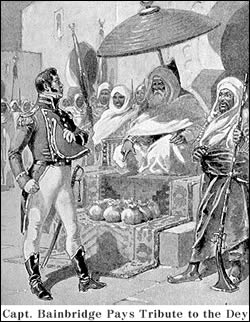
Until the American Declaration of Independence in 1776, British treaties with the North African states protected American ships from the Barbary corsairs. Morocco, which in 1777 was the first independent nation to publicly recognize the United States, became in 1784 the first Barbary power to seize an American vessel after independence. The Barbary threat led directly to the creation of the United States Navy in March 1794. While the United States managed to secure peace treaties, these obliged it to pay tribute for protection from attack. Payments in ransom and tribute to the Barbary states amounted to 20% of United States government annual expenditures in 1800.[21] The First Barbary War in 1801 and the Second Barbary War in 1815 led to more favorable peace terms ending the payment of tribute. However, Algiers broke the 1805 peace treaty after only two years, and subsequently refused to implement the 1815 treaty until compelled to do so by Britain in 1816.
When troubles with the Barbary states heated up in 1802, he went to the Mediterranean as First Lieutenant of the frigate Adams. Hull later commanded the schooner Enterprise and the brig Argus, receiving promotion to the rank of Master Commandant in 1804 and to Captain in 1806. During the next few years, he supervised the construction of gunboats and, in 1809 and 1810, was successively given command of the frigates, Chesapeake, President and Constitution.
Eastwood “American Royalty”
Posted on June 5, 2012 by Royal Rosamond Press

When I read that Clint Eastwood’s ancestors served on my great grandfather’s ship, the USS Constitution, I had forgiveness for my daughter who thinks life is a big popularity contest. She is not alone, so do the Royal Windsors who no longer have any real power. It’s all -show!
Saving Dottie Witherspoon – Again!
Posted on February 11, 2013 by Royal Rosamond Press
Dottie Witherspoon almost became Christine’s sister-in-law. She may have fathered my child the Seers said I had. They saw two faint leaves on my rose. A year later, my sixteen year old daghter appear in my life for the first time.
The U.S.S. Constitution
Posted on March 29, 2022 by Royal Rosamond Press
My family history is on the side of the President and Vice President of the United States of America.
John Presco
Candidate For Governor of Oregon
Biden appeared to play into Putin’s hands with his unscripted assertion during a big speech in Warsaw, Poland, Saturday that the Russian president “cannot remain in power.”
The words sounded to many people like a call for regime change in Moscow. And, as such, they dovetailed far too well with Putin’s frequent claims that he and his nation are the targets of Western plotting and aggression.
Isaac Hull Captain of the Argus, Constitution, and Enterprise
Posted on March 29, 2015 by Royal Rosamond Press
My great grandfather captained three ships that took part in the Barbary Wars after the Treaty of Tripoli was made. Adams said this to President Thomas Jefferson;
“We ought not to fight them at all unless we determine to fight them forever,”
http://en.wikipedia.org/wiki/Treaty_of_Tripoli
Bill Bennett authored a book that claims Captain Isaac Hull battled and dispatched Islamic Terrorists. Bennett, in his new book, “America, the Last Best Hope”, describes it this way:
The Ambassador answered us that it was founded on the Laws of the Prophet, that it was written in their Koran, that all nations who should not have answered their authority were sinners, that it was their right and duty to make war upon them wherever they could be found, and to make slaves of all they could take as prisoners.
Joshua E. London’s description of the meeting in his book:
“The response was unnerving. As Adams and Jefferson later reported to the Continental Congress, the ambassador said the raids were a jihad against infidels. Muslim privateers felt “it was their duty to make war upon them [non-Muslims] wherever they could be found, and to make slaves of all they could as Prisoners, and that every Mussleman [Muslim] who should be slain in Battle was sure to go to Paradise.”
The Americans now had two choices: pay tribute or fight the pirates.”
http://www.floppingaces.net/2006/07/04/americas-first-war-with-islami/
The French conquest of Algeria (French: Conquête de l’Algérie par la France; Arabic: الغزو الفرنسي للجزائر) took place between 1830 and 1903. In 1827, an argument between Hussein Dey, the ruler of the Regency of Algiers, and the French consul escalated into a blockade, following which the July Monarchy of France invaded and quickly seized Algiers in 1830, and seized other coastal communities. Amid internal political strife in France, decisions were repeatedly taken to retain control of the territory, and additional military forces were brought in over the following years to quell resistance in the interior of the country.
Admiral Duperré took command[citation needed] in Toulon of an armada of 635 ships and then headed for Algiers. Following a plan for the invasion of Algeria originally developed by Major Boutin under Napoleon in 1808, General de Bourmont then landed 34,000 soldiers 27 kilometres (17 mi) west of Algiers, at Sidi Ferruch, on 14 June 1830. To face the French, the dey sent 7,000 janissaries, 19,000 troops from the beys of Constantine and Oran, and about 17,000 Kabyles.[28] The French established a strong beachhead and pushed toward Algiers, thanks in part to superior artillery and better organization. On 19 June the French defeated the dey’s army at the battle of Staouéli, and entered Algiers on 5 July after a three-week campaign.[29] The dey accepted capitulation in exchange for his freedom and the offer to retain possession of his personal wealth. Five days later, he went into exile in Naples with his family. The Turkish Janissaries also quit the territory, leaving for Turkey.[30] The dey’s departure ended 313 years of Ottoman rule of the territory.
The Barbary Wars were a series of two wars fought by the United States, Sweden, and the Kingdom of Sicily against the Barbary states (including Tunis, Algiers, and Tripoli) and Morocco of North Africa in the early 19th century. Sweden had been at war with the Tripolitans since 1800 and was joined by the newly independent US.[3][unreliable source?] The First Barbary War extended from 10 May 1801 to 10 June 1805, with the Second Barbary War lasting only three days, ending on 19 June 1815. The Barbary Wars were the first major American wars fought entirely outside the New World, and in the Arab World.[4][5]
After Thomas Jefferson became president of the US in March 1801, he sent a U.S. Navy fleet to the Mediterranean to combat the Barbary pirates. The fleet bombarded numerous fortified cities in present-day Libya, Tunisia, and Algeria, ultimately extracting concessions of safe conduct from the Barbary states and ending the first war.
During the War of 1812, with the encouragement of the United Kingdom,[6] the Barbary corsairs resumed their attacks on American vessels. Following the conclusion of the War of 1812 and America’s peace with Britain, James Madison, Jefferson’s successor, directed military forces against the Barbary states in the Second Barbary War. Lasting only three days, the second conflict ended the need for further tribute from the United States, granted the U.S. full shipping rights in the Mediterranean Sea, and significantly reduced incidents of piracy in the region.[7]
In 1830, General de Bourmont led the French invasion of Algiers, which resulted in the capture of the city and the beginning of French colonial rule in Algeria. The invasion, initiated by King Charles X, was partly motivated by a desire to bolster the monarchy’s popularity and partly a response to the “fly-whisk affair” (a diplomatic incident). The French forces landed at Sidi Ferruch on June 14, 1830, and after initial resistance, the city of Algiers fell on July 5, 1830.
Before the Ottoman Empire ruled Palestine, the region was under the control of the Mamluk Sultanate. The Mamluks gained control after the Crusades and ruled until the Ottomans conquered them in 1516. Prior to the Mamluks, Palestine had been part of various empires and kingdoms, including the Byzantine Empire, the Rashidun Caliphate, the Umayyad Caliphate, and the Abbasid Caliphate.
“Don’t go – unless you intend to go – the whole way! Don’t fight them, unless you intend to fight them forever!”
The Buriel Place of the Lords of Rougemont
Posted on November 30, 2012 by Royal Rosamond Press
I just found the Abbey Bellevaux where the Lords of Rougemont, and the Bishops of Besançon are buried. The Rougemonts were Knights Templar and owners of the Shroud of Turin as were the Lords of La Roche. Pons La Roche was the founder of Bellevaux where very possibley my Rougemont ancestors are buried. Pons is close kindred of the De Bar and Habsburg family. Why would the Habsburg keep their connection to the Knights Templar and Shroud of Turin a secret? The Habsburgs were ‘defenders of the Catholic faith’.
Gunboat Diplomacy & War Against White Slavery
Posted on November 4, 2014 by Royal Rosamond Press
For a week now ‘The Masked Rose of Paris’ has been attacking Turkey and the old Ottoman Empire for seizing Cypress.
“The UN should focus on matters concerning Turkeys occupation of EU member Cyprus since 1974 , and must launch UN wide economic sanctions of Turkey, for its continued British State Sponsored Turkish military occupation of EU member Cyprus since 1974 Expel Britain from the European Union and Dissolve the Rogue Turkish ISIS State. Britain and Turkey are attacking the Euro Currency , via all the Turkish military violations on Greece and Cyprus since 1974.”
Today I took the time to see what she was upset about. As it turns out, fate has taken a seat at this table of high-stakes energy piracy. And, who is in the middle of it, Nobel Oil, and my arch enemy, Lawrence Chazen, a CEO of Noble, and ex-partner of the late sister, Rosamond, who I just introduced to the Rose because I want to do a drawing of her and bring her into the creative family fold.
Our great, great, grandfather, Isaac Hull was the Captain of the U.S. Constitution that was built to battle the Cossaire Pirates of the Barbary Coast who took a million Europeans as their slaves. I have wondered why some Kurds have blue eyes. What became of the children of these women that were used as sex slaves? European slaves must have fathered children.
Muslim men have a problem with adultery. They are so afraid their wives will cheat on them, that they make them their prisoners. Then they kidnap the women of other men and make them their sex-slaves lest they commit adultery. In the Koran one can have sex with your slave.
In the war against the ISISlavers, one must not recognize national borders. We the people of the world must draw a line in the sand that separates them from all the women of the world. It is not a matter of white slaves, or black slaves when it comes to this World War of Liberation that frees womankind first! Let Old Ironsides fire the first volley in this battle!
For Lady Liberty!
“The USS Constitution, a 44-gun U.S. Navy frigate built to fight Barbary pirates off the coast of Tripoli, is launched in Boston Harbor. The vessel performed commendably during the Barbary conflicts, and in 1805 a peace treaty with Tripoli was signed on the Constitution‘s deck.Though Turkey has threatened to block extraction of natural gas offshore Cyprus, the Greek Cypriot government has vowed to move forward with exploration and drilling.”
Turkey mentions “gunboat diplomacy” and threatens war. What if a Turkish gunboat sinks Noble’s drilling platform.
Jon the Nazarite
Yet the bonanza could equally inflame conflict. Turkey has claimed the blocs to the south of Cyprus as far as Egyptian waters. “If poorly managed, Cypriot gas could harden political divisions. Ankara does not recognise the government in Nicosia and has threatened military force if Cyprus allows drilling in the disputed maritime zone,” said Rem Korteweg, an energy expert at the Centre for European Reform.
The US has begun to intervene, pushing the two sides to renew peace talks. The Greek and Turkish Cypriots have signed a document laying out general principles.
http://en.wikipedia.org/wiki/USS_Constitution
http://en.wikipedia.org/wiki/USS_Enterprise_(1799)
Cypriot Foreign Minister Ioannis Kasoulides said that while the two countries were nowhere near an agreement, he was hopeful that progress would be made, and in the meantime, drilling would continue. “Groups like Noble Energy, ENI and Total would not be investing billions in exploration here if they really thought Turkey was going to stop them,” the foreign minister said.
Turkey is opposed to Cyprus exporting oil and gas – saying the energy wealth also belongs to Turkish Cypriots — and been accused of “gunship diplomacy” by the Greek Cypriots. Turkey lays claim to the hydrocarbon blocks to the south of Cyprus and extending to the border of Egyptian waters.
The ongoing issue was resurfaced in international media earlier this month when a Norwegian ship exploring in Cypriot waters was intercepted by a Turkish warship and forced to retreat.
Cypriot officials believe that there may be as much as 60 trillion cubic feet (Tcf) of natural gas in Cypriot waters.
A second axis is the strategic relations cultivated between Greece, Cyprus and Israel, as evidenced by Israeli Foreign Minister Avigdor Lieberman’s upcoming visit to Nicosia next week and Prime Minister Benjamin Netanyahu following in late November.
A third axis concerns the deepening of cooperation with major powers, which involves providing support in various forms. In a letter sent to Cyprus President Nicos Anastasiades on Wednesday, French President Francois Hollande stressed that “the position of France with regard to the right of Cyprus to exploit freely the natural resources within its Exclusive Economic Zone is clear and firm,” adding that “international law, and specifically the Law of the Sea, must be respected by all states including Turkey.”
Finally, there is the energy dimension. Amid Turkey’s provocations in Cyprus’s EEZ – where several Western firms, including US company Noble Energy, are currently operating – Greek Energy Minister Yiannis Maniatis is set to visit the US for talks with his American counterpart Ernest Moniz and Under Secretary for Economic Growth, Energy, and the Environment Catherine Novelli. Maniatis will also meet with representatives of American energy giants and give a speech at the Center for Strategic and International Studies (CSIS), a prominent American think tank based in Washington DC, as well as Columbia University in New York, regarding energy developments in the Eastern Mediterranean. The Greek minister is expected to analyze the role of Greece and Cyprus in boosting Europe’s energy security, which is also a key strategic objective for Washington.
By invoking international law, being on military alert, strengthening strategic alliances with regional players, and harmonizing with the geostrategic interests of the US and EU (as well as the economic interests of large international companies) in the region, Athens and Nicosia are taking cautious and systematic steps during a difficult period hoping to find more substantial backing among their allies and partners.
http://www.ekathimerini.com/4dcgi/_w_articles_wsite3_1_30/10/2014_544165
| Holding Turkey to account for its violation of the United Nations Convention on the Law of the Sea is certainly the first step that Greece and Cyprus must take in response to Turkey’s growing assertiveness in the Eastern Mediterranean over the past few weeks. After Ankara sent the Barbaros, a seismic survey vessel, inside Cyprus’s exclusive economic zone (EEZ), and given its intention to set up a drilling platform within the island’s maritime borders, it makes sense to stress the recognition of Cyprus’s international status and national sovereignty. |
http://en.wikipedia.org/wiki/Turkish_invasion_of_Cyprus
The Barbary pirates, sometimes called Barbary corsairs or Ottoman corsairs, were pirates and privateers who operated from North Africa, based primarily in the ports of Salé, Algiers, Tunis, and Tripoli. This area was known in Europe as the Barbary Coast, a term derived from the name of its Berber inhabitants. Their predation extended throughout the Mediterranean, south along West Africa‘s Atlantic seaboard and even South America,[1] and into the North Atlantic as far north as Iceland, but they primarily operated in the western Mediterranean. In addition to seizing ships, they engaged in Razzias, raids on European coastal towns and villages, mainly in Italy, France, Spain, and Portugal, but also in the British Isles, the Netherlands and as far away as Iceland. The main purpose of their attacks was to capture Christian slaves for the Ottoman slave trade as well as the general Muslim market in North Africa and the Middle East.[2]
While such raids had occurred since soon after the Muslim conquest of the region, the terms Barbary pirates and Barbary corsairs are normally applied to the raiders active from the 16th century onwards, when the frequency and range of the slavers’ attacks increased and Algiers, Tunis and Tripoli came under the sovereignty of the Ottoman Empire, either as directly administered provinces or as autonomous dependencies known as the Barbary States. Similar raids were undertaken from Salé and other ports in Morocco.
Göke (1495) was the flagship of Kemal Reis at the Battle of Zonchio.
Corsairs captured thousands of ships, and long stretches of coast in Spain and Italy were almost completely abandoned by their inhabitants, discouraging settlement until the 19th century. From the 16th to 19th century, corsairs captured an estimated 800,000 to 1.25 million people as slaves.[2] Some corsairs were European outcasts and converts such as John Ward and Zymen Danseker.[3] Hayreddin Barbarossa and Oruç Reis, the Barbarossa brothers, who took control of Algiers on behalf of the Ottomans in the early 16th century, were also famous corsairs. The European pirates brought advanced sailing and shipbuilding techniques to the Barbary Coast around 1600, which enabled the corsairs to extend their activities into the Atlantic Ocean,[3] and the impact of Barbary raids peaked in the early to mid-17th century.
http://en.wikipedia.org/wiki/Order_of_Saint_Stephen
Until the American Declaration of Independence in 1776, British treaties with the North African states protected American ships from the Barbary corsairs. Morocco, which in 1777 was the first independent nation to publicly recognize the United States, became in 1784 the first Barbary power to seize an American vessel after independence. The Barbary threat led directly to the creation of the United States Navy in March 1794. While the United States managed to secure peace treaties, these obliged it to pay tribute for protection from attack. Payments in ransom and tribute to the Barbary states amounted to 20% of United States government annual expenditures in 1800.[21] The First Barbary War in 1801 and the Second Barbary War in 1815 led to more favorable peace terms ending the payment of tribute. However, Algiers broke the 1805 peace treaty after only two years, and subsequently refused to implement the 1815 treaty until compelled to do so by Britain in 1816.
When troubles with the Barbary states heated up in 1802, he went to the Mediterranean as First Lieutenant of the frigate Adams. Hull later commanded the schooner Enterprise and the brig Argus, receiving promotion to the rank of Master Commandant in 1804 and to Captain in 1806. During the next few years, he supervised the construction of gunboats and, in 1809 and 1810, was successively given command of the frigates, Chesapeake, President and Constitution.
 Rosamond Press
_the_flagship_of_Kemal_Reis.jpg)
Leave a comment