I just sent this email to the University of California History Department. (6/12/2025
Dear Sirs; I welcome you to Belmont where UC just purchased Notre Dame De Namur University. My grandfather founded Belmont. William Stuttmeister was one of the first graduates of the the UC College of Dentistry. I am am an armature historian who may have the largest blog in the world, Royal Rosamond Press. I could use your help in solving several historic mysteries.
Sincerely
John Presco
President: Royal Rosamond Press
458 201 1472
1868–1898 The Origins of the University of California and Affiiated Colleges
Creating a UC Dental Department
“We need a college of dentistry on this coast and if we have not a necessary talent among ourselves, we can import it. We owe those who take our places, greater facilities for study and professional breadth than the times have afforded us. The future will demand men educated in all that constitutes the scholar and professional man, and refined in all that makes the gentleman.”
Dr. CC Knowles, June 26, 1870
The same impulse that prompted physicians and pharmacists to organize, standardize, and regulate their professions motivated a group of the city’s leading dentists to call for creation of a professional dental school. S.W. Dennis, M.D., D.D.S., was typical of this group of early organizers. He had graduated from the medical department of the University of Pennsylvania, received an honorary D.D.S. degree from the Indiana Dental College, and began practice in San Francisco after studying with a local dentist. In the midst of general lobbying for a school of dentistry, Dr. Dennis contacted colleagues at Harvard and the University of Pennsylvania to help plan for a dental college in San Francisco.

Wahl Building exterior.


San Sebastian Avenue
by
John Presco
ALL RIGHTS RESERVED
Most citizens of the United States of America will see the image of a float going past the town Hardware store on the 4th. of July when they hear the term ‘Male America great again”. Above is a photo of the Foresters of America float going past the Whal building in Redwood City, where my great grandfather
Click to access mapping_belmonts_story.pdf
I Claim All Belmont Land
Posted on July 25, 2024 by Royal Rosamond Press
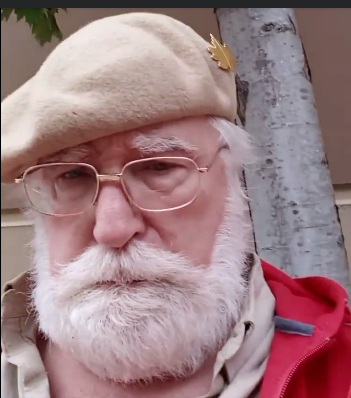
John Gregory Presco
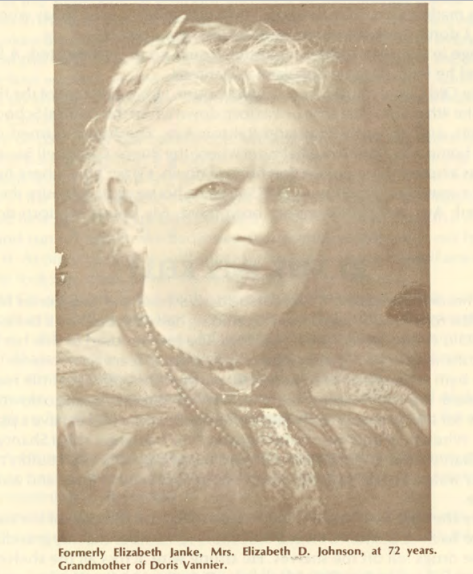
On this day, July24, 2024, I claim all lands mentioned in the document signed by the Mayor of Belmont. On July 21, 2024, I found proof Doris Vannier is my relative, and Elizbeth D. Johnson, is her grandmother, and daughter of Carl Janke. This proof was found in the Gazzette Times, and no one assisted me.
I was not told by members of the Belmont Historic Society, and there were books written about my family – that I am glad to find! This little book contributes to the Literary Legacy of my family. I filed a claim in the Probate of Christine Rosamond Benton, trying to stop the sale of this legacy to outsiders, who wrote a slanderous biography, and insulting movie script. I will go to their Bastille of Eternal Life, as Lazarus! I will overcome……The Intruders!
http://belmonthistoricalsociety.com/sites/default/files/hub.pdf
John Presco
President: Royal Rosamond Press

Elizabeth Doris Janke-Johnson
Posted on July 19, 2024 by Royal Rosamond Press



Dr. Janke & Dr. Stuttmeister
Posted on July 21, 2024 by Royal Rosamond Press
Wahl Building exterior.
San Sebastian Avenue
by
John Presco
ALL RIGHTS RESERVED
What a red letter day! I fuund two newspaper items that join the Janke and Stuttmeister family. William Stuttmeister and William Janke graduated from the University of California School of Dentistry (at the same time?) and Stuttmeister may have met Augustus Janke through her brother. They got married in Ralston Hall, and took the Janke stagecoach to honeymoon in Halfmoon Bay. The two Williams grads, then opened a dental office in the Wahl Building. How ideal! This is a far cry from the newspaper accounts that slime the Janke family, that may have caused them to be dug out of their grave in the middle of the night. Alas I find a article in the Times Gazzette – that tells the truth! They were good and honest people, who ran Belmont Park – AND OWNED A LOT OF LAND! Alas – the motive!
How perfect! You got the hardware store, the drug store, the bar, and upstairs , the dentist office. I can’t use my magnifying glass. Is it possible the family names are on the window?
What could go wrong? How about the war with Germany? I suspect there was anti-German sentiments in the area. There looks like a lot of vandalism at the Union cemetery. I’m going to ask the Governor and the heads of Archeology at UC Berkeley and Stanford should do a complete study – along with Israel! We have to put an end to the hatred. We got another Hitler on our hands who is selling Lost Heritage. I am reminded of John Steinbeck. We now know William Augustus Janke owned Belmont Park and do a records search. Did her leave lot of money to his daughter Augusts who bought eight track of land in Woodcare? Where else? Did William get dug out of his grave at the Oddfellows cemetery in SF?
I should have been encouraged to bring my newspaper to Belmont – and make a new Belmont Soda! Is there a soda fountain in Ryan’s Drug Store – with ice-cream floats? I was denied my American Heritage by hostile members of the Belmont Historical Society!
John Presco
President: Royal Rosamond Press
EXTRA! On July 21, 2024, I found an article in the Redwood Gazzette Times about the court battle over the legacy of Pioneer Carl A. Janke. Finding out his father was dying, William A, Janke CHARTERED a locomotive in San Francisco and sped to Belmont in or get there before Carl died. What is interesting, Elizabeth Johnson is claiming FIVE ACRES near the center of Belmont. She is the mother of Doris Vannier who said Elizabeth told her the Janke grave was dug up in the middle of th night. This is evidence a LAND FIGHT took place! Is the BHS aware of this article – and fight – that I copyright!
John Presco
Copyright 2024
JANKE’S JOURNEY. The Big Belmont Stake in Course of Probate. Twe«l) .r»,r Mllr,’ Itldr .n . 1 mm. live-1 hr Lrgnl Srarrh for • MflsaiKK
Text
Why may this text contain mistakes?
JANKE’S JOURNEY. The Big Belmont Stake in Course of Probate. Twe«l) .r»,r Mllr,’ Itldr .n . 1 mm. live-1 hr Lrgnl Srarrh for • MflsaiKK
On the 13th of Sup ten; her last) Carl Augnst Janke, of Belmont, died of the disuast) Known as diabetes, leaving three surviving children, and considerable projierty. His will has been tiled fur probate in the Super* ior Court at Redwood City, ami for the past three weeks, a protracted legal contest between the heirs has been going on. The litigation is being conducted by Fox & Ross, of Redwood, representing the contestan s, and Kincaid & Fitzpatrick, with Charles F. U Hanlon, an enterprising young advocate uf San Francisco fur the will The costs uf the suit are rapidly roiling up. Extended short hand notes of the testimony are being taken, and medical experts Lum a distance, including the distinguished Dr. Shurtlefl* of the Napa State asylum, are prolonging the issue, to the eminent satisfaction of the legal luminaries engaged in the trial. From the mass of material already extracted from the mouths of willing and unwilling witnesses, and from other information the interesting particulars which follow are extracted.
At the time of the last illness of the deceased, William August Janke, the secund son,who occupied a store in a Belmont building belonging to his father was in San Francisco. Upon receiving the news that his parent just lingered in he shadows of the unknown and the hereafter, he hastened like a dutiful son to his bedside. Chartering a locomotive he reached the bed of the dying not long before death closed around the aged man. A notary was brought from Redw‘»od, and the will was prepared and witnessed some 36 hours before the eyelids of the deceased closed on Earth forever. By the terms of the testament, the picnic grounds and resort known as Belmont park, valued all the way from twenty to thirty thousand dollars, was bequeathed to Charles F. and William A., his two sons to share alike. A sum of 53.500 in in money was left, one third each to his three children, (the two sons aforesaid, and his daughter Elizabeth the wife of a resident of Belmont named Johnson,) all of whom are residents of this county. A store in Belmont owned by the testator, was left to Mrs Johnson, together with a tive acre lot which it is claimed already belonged to her husband. The land on which this siore is, was left to the two sons, and all the personal property to the son William August Janke.
Thu contest is made on the ground of mental incapacity of the Accused, and undue influence. It is sought to be proven, that the disease from which the old man suffered, was so painful and severe that his mmd was affected. Diabetes is said by the books to be an affection of the urinary organa, and is excruciating in the extreme. Irregularity in the making of the will is also endeavored to be shown. The whereabouts of a sum of $50,000, which the dead man had from the sale of real estate in San Francisco, is a matter of great interest and anxiety to counsel. Thus far it has not been found, and if discovered, and the will is sustained as the personal property of the estate, it would add materially to the legacy of the son William August. The events surrounding the drafting of the will, substantially are, as the contestants expect to prove them, that upon the return of William A. by express, ho had an interview with his father in the sick chamber, and that the rest of the family were directed to leave the room. A witness named Schmoll translated the contents of the will to the father and children, the whole conversation being conducted in the German language. ‘ These are the principal points of contention between the lawyers, and as usual in an extended trial over an important stake they are conducting the case with vigor, and occasionally indulging themselves in a little humorous relaxation. The eminent, but juvenile jurist from San Francisco, is conducting his case with much enthusiasm. During the trial he seems to have determined to put a certain question, not only agaiqst the objection of opposing counsel, but his associates as well. Judge Kincaid thereupon retorted on him with the sarcasm—“As Senior counsel in this case your Honor I withdraw that question.” The young man submitted.
Wahl Building exterior (c.1915). The Wahl Building on Main Street was built in 1883 by William Wahl, a native of Germay. The building housed small businesses on the ground floor and professional offices on the second floor. The Wahl Building was torn down in 1928 when Broadway was extended through Main Street.

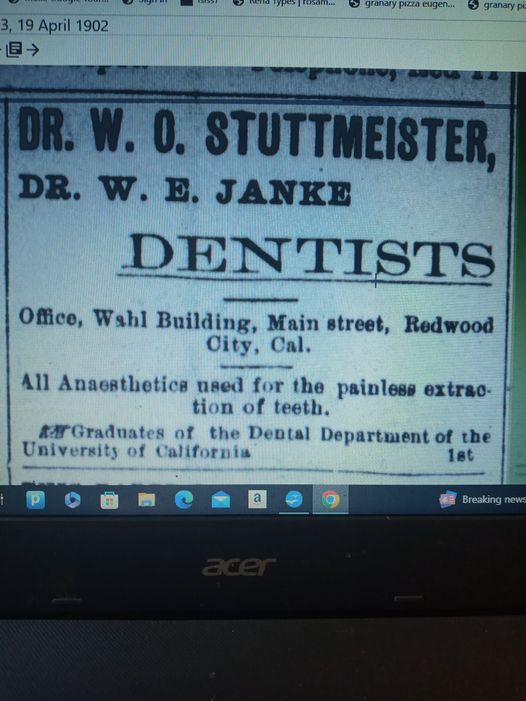

EXTRA! EXTRA!
I just found a Masque Ball with Janke members in it, and a Hull. This is a dream com tru in regrds to my daughter, Heather Hanon, coming into my life when she was sixteen. We has dinner with Nancy Hmren, Hether wanted me to promote her as a singer!
John Presco
Copyright 2024
Freedom On Liberty Street
Posted on September 20, 2017 by Royal Rosamond Press
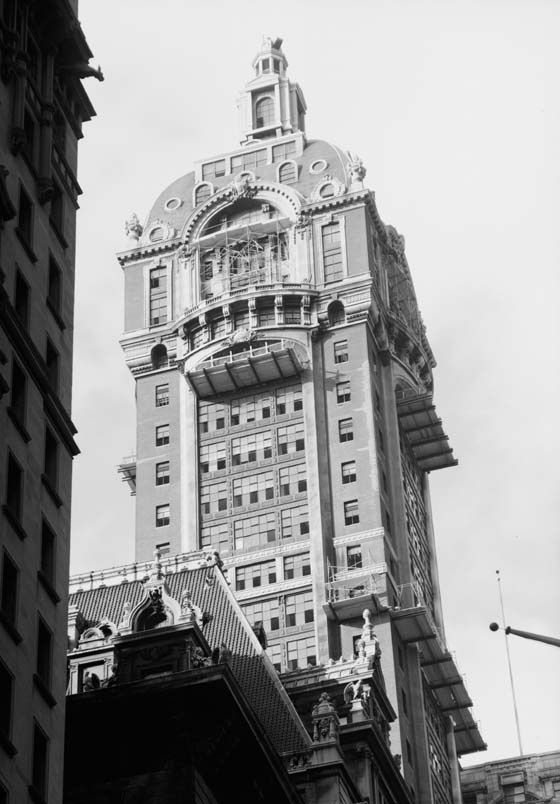
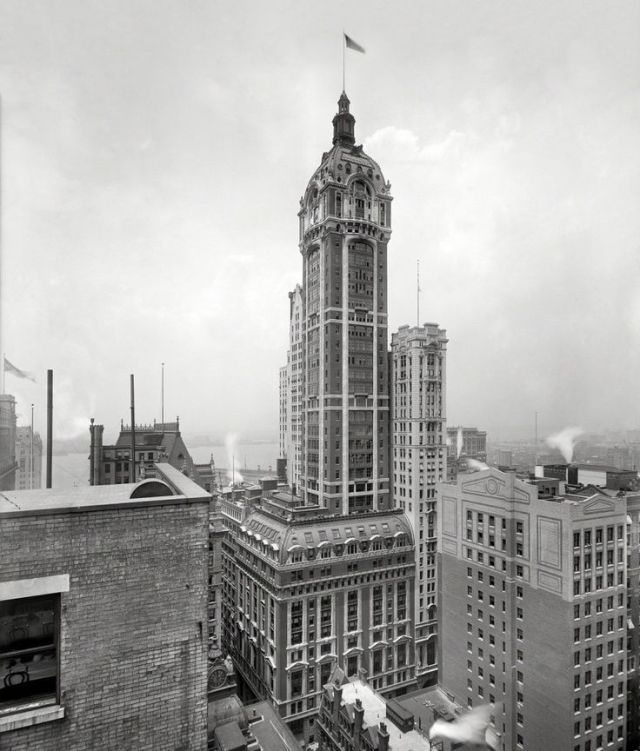
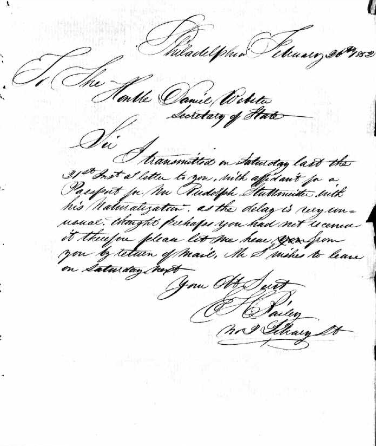
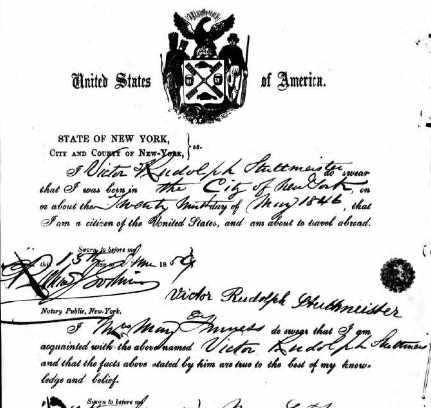
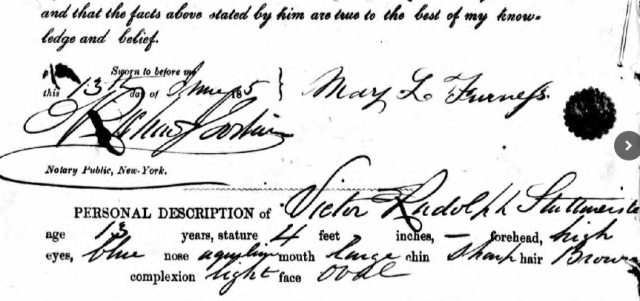
My Stuttmeister ancestors came to New York and lived on Liberty Street where the Trade Towers once stood. I now suspect they were Ministers. They came to Chili, also. Thirteen year old Victor Rudolph Stuttmeister applied for a passport when he was thirteen years of age. He had a high forehead, an aquiline nose, a large mouth, a sharp chin, brown hair, and blue eyes. Rudolph had six children and was a New York City Physician. Phillip, Mary, and Lizzie are born in New York City. Bertha is the first child to be married in California. This family were pioneers in San Francisco, Belmont, and Lagunitas in Marine County where Beryl and Leonard Buck moved after living in Oakland for many years.
Jon Presco
6 1006 __21 Stuttmeister Rudolph 57 M W Physician 12,000 6,000 Germany X X
7 1006 __21 Stuttmeister Matilda 42 F W Keeping House New York X X
8 1006 __21 Stuttmeister Victor 24 M W New York X X
9 1006 __21 Stuttmeister Bertha 10 F W California X X
10 1006 __21 Stuttmeister Willie 8 M W California X X
11 1006 __21 Stuttmeister Alice 3 F W California X
12 1006 __21 Stuttmeister Mary 16 F W New York X
13 1006 __21 Stuttmeister Lizzie 14 F W New York X
14 1006 __21 Stuttmeister Phillip 18 M W New York
Name:Rudolph Stuttmeister Arrival Date:12 Jul 1843 Age:27Gender:M (Male)Port of Arrival: New York Port of Departure: Hamburg, Germany Place of Origin: Deutschland Ship: Stephani
Rudolph or Rudolf (French: Rodolphe, Italian, Portuguese and Spanish: Rodolfo) or Rodolphe is a male first name, and, less commonly, a surname. It is a Germanic name deriving from two stems: Rod or Hrōð, meaning “fame”, and olf meaning “wolf” (see also Hroðulf; cf. Adolf).
1888: From the Daily Alta, an article on the marriage of Dr. William O.
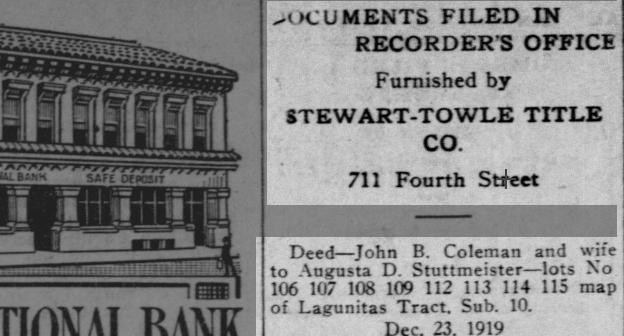
Stuttmeister and Augusta D. Janke.
Daily Alta California, Volume 42, Number 14175, 24 June 1888
STUTTMEISTER-JANKE.
One of the most enjoyable weddings of the past week took place at
Belmont, Wednesday morning last, the contracting parties being Miss
Augusta Janke, daughter of Mr. and Mrs. August Janke of Belmont,
and Dr. Wm. Stuttmeister of San Francisco. The house was
handsomely decorated with a rich profusion of ferns and flowers, and
at the appointed hour was filled with the relatives and intimate friends
of the contracting parties. At 11 o’clock the wedding march was played
and the bridal party entered the parlor. The bride was attended by Miss
Alice Stuttmeister, a sister of the groom, and Miss Minnie Janke, a
sister of the bride, as bridesmaids, and Dr. Muldownado and Wm.
Janke, a cousin of the bride, were groomsmen. The Rev. A. L. Brewer
of San Mateo performed the beautiful and impressive ceremony under
an arch composed of flowers and greens very prettily arranged, after
which the guests pressed forward and offered their congratulations.
The bride was attired in a very pretty and becoming costume of the
crushed strawberry shade, and wore a corsage bouquet of orange
blossoms. She carried a handsome bouquet of white flowers. After the
guests had paid their compliments the bride and groom led the way to
the dining-room, where the wedding dinner was served and the health
of the newly married pair was pledged. The feast over, the guests
joined in the dance, and the hours sped right merrily, interspersed with
music singing and recitations, until the bride and groom took their
departure amid a shower of rice and good wishes. Many beautiful
presents were received. Dr. and Mrs. Stuttmeister left Thursday
morning for Santa Cruz and Monterey, where they will spend the
honeymoon. On their return they will make their home in Belmont.
1911: Dr. Willian O. Stuttmeister was practicing dentistry in Redwood
City, CA. (Reference: University of California, Directory of Graduates,
1864-1910, page 133).
Records from Tombstones in Laurel Hill Cemetery, 1853-1927 – Janke
– Stuttmeister
Mina Maria Janke, daughter of William A, & Cornelia Janke, born
February 2, 1869, died March 1902.
William August Janke, native of Hamburg, Germany, born Dec. 25,
1642, died Nov. 22, 1902, son of Carl August & Dorette Catherine
Janke.
Frederick William R. Stuttmeister, native of Berlin, Germany, born
1612, died January 29, 1877.
Mrs. Matilda Stuttmeister, wife of Frederick W.R. Stuttmeister, born
1829, died March 17, 1875, native of New York.
Victor Rudolph Stuttmeister, son of Frederick W.R. & Matilda
Stuttmeister, born May 29, 1846, died Jan. 19, 1893, native of New
York.

Capturing Beauty
by
John Presco
ALL RIGHTS RESERVED
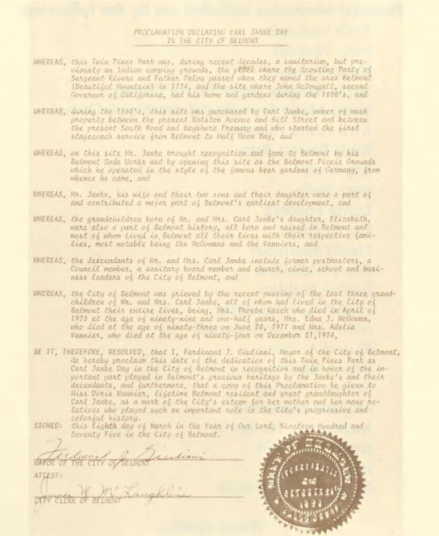
On this day, July 19, 2024….I John Presco lay claim to all land described in this document signed by the Mayor of Belmont on March 8, 1975. This document has the Seal of Belmont City attached. It shows a succession of women down to Doris Vannier, who is dead. I claim this succession for myself, and my daughter. The Mayor decreed
CARL JANKE DAY
It describes the boundaries of the Janke property that he purchased from Governor McDougall. I am composing a letter to Governor Newsom wherein I bid him to investigate all archives and history for one of the First Governors of California. I bid him, and Stanford, where Jenny Newson attended, investigate all these matters, and conduct an archeological dig under the “fabulous Bay tree”. I suspect the Janke grave markers were moved in the middle of the night – but not their remains! Therefore, they were not re-interred in the Union Cemetery – where another dig should take place.
I suspect Carl Janke and a previous Mayor of Belmont dedicated the Janke graves, and chartered another Janke Day. Stanford should conduct a genealogical and DNA record – just in case!
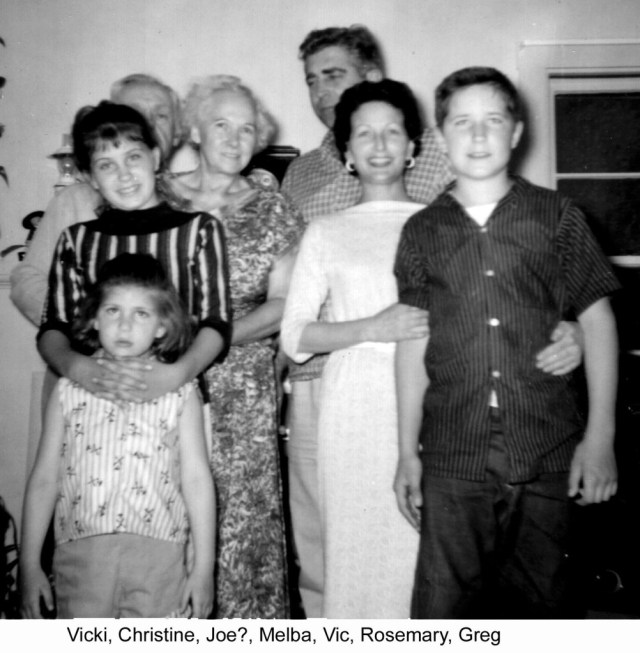
My grandmother Melba looks like the women in the pics. They have thin hair. Now add my grandfather, Royal Rosamond, who was the father-in-law of Victor Presco, then, we own the history of Belmont – and beyond! Royal was the publisher of Gem magazine and author of several books. The Hub – fits in!
William Stuttmeister – A UC Graduate?
Posted on June 22, 2023 by Royal Rosamond Press
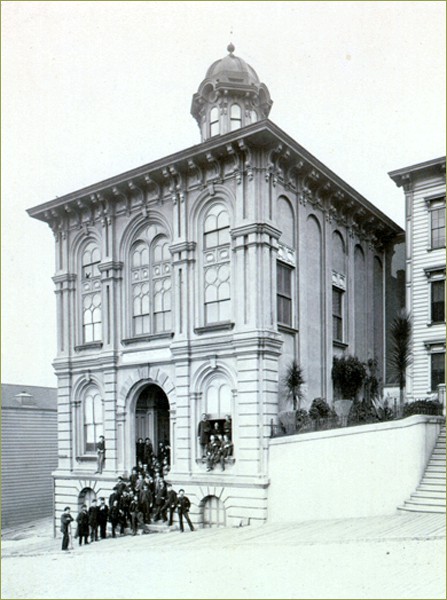
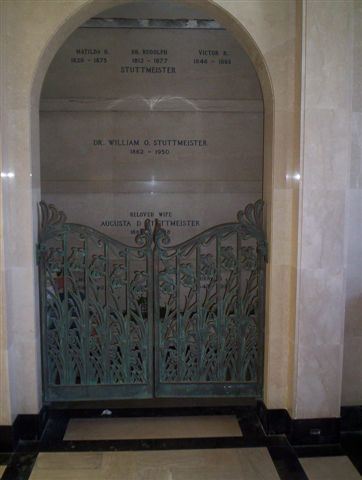
When I first saw the massive doors to the Stuttmeister crypt, I understood that the person responsible for them is into doing things that are substantial. This morning I discovered the Tolmad building that is probably where William Stuttmeister went to Dental College. That building was built to last, but was destroyed in the earthquake fire. Dr. Stuttmeisters had a dental office near SF city hall, that was also destroyed in the fire. Then, his loved ones are dug up and out out the Oddfellow graveyard. I believe he was at the Broderick farm below Joaquin Miller, the moved to Woodacre.
My great grandfather owned the same uphill fight – that is even more substantial – now that I have proven we are kin to the Getty family, who may not have come into their money – in such an honest way! The Stuttmiesters are registered as a San Francisco Pioneer family, and thus they – ground us all! William was married at Ralston Hall. Consider the two arched doors that William entered at the beginning of his life, and at the end.
I was going to add – William is eternally grateful for me being born. In looking at the graves in Redwood, it says there was – another stone? Did the original grave belong to Mutter Heinrich, the mother of Anna? Did Carl and Anna go to visit Mutter, which is the custom of Oddfellows. Was there a agreement with the City of Belmont to inter the founders in Twin Pines Park – forever? Was the new marker bought in 1972, when Mutter’s grave was opened – and Carl and Anna – were dumped in?
I demand a thorough investigation!
Somethings are bigger than us. I understood this when at twelve I flipped a coin (in my mind) whether to be an architect, or an artist. I never counted on being an historian – and now a playwright of operas? William was one the twelve who graduated and were treated to the overture of the ‘Pique Dame’ at Metropolitan Hall. How impressed The Twelve were. They knew they were Argonauts setting sail on a great endeavor, to yank the pain from your mouth, the thorn from the paw of the lion. Consider the movies ‘San Francisco’ and ‘The Phantom of The Opera’. William, is there, in the deep cavern of our souls, bidding us to pick up the gauntlet. Alas…..The Great Example!
We can do it! We can rebuild!
John Presco
Copyright 2023

The University of California, San Francisco (UCSF) is a public land-grant research university in San Francisco, California. It is part of the University of California system and is dedicated entirely to health science and life science. It conducts research and teaching in medical and biological sciences.[8][9][10][11]
UCSF was founded as Toland Medical College in 1864. in 1873, it became affiliated with the University of California as its Medical Department. In the same year, it incorporated the California College of Pharmacy and in 1881 it established a dentistry school. Its facilities were located in both Berkeley and San Francisco.[12]
Instruction in anatomy was transferred in 1898 to the buildings of the AFFILIATED COLLEGES and a year later all instruction in dentistry, except clinical work, was moved to a new dental building on that site. The clinics remained in the Donohoe Building until 1906, when the building was destroyed by earthquake and fire.
All divisions of the College of Dentistry were on the Parnassus Avenue campus by July, 1906, where, at what is now known as the Medical Center, there has been a gradual coordination of the teaching and research of the School ofDentistry, the School of Medicine, the School of Nursing, the School of Pharmacy, and the several campus-wide research centers and institutes.
In September, 1954, the College of Dentistry offered instruction for the first time in its new quarters in the Medical Sciences Building. It occupies four floors in this building, as well as two floors in the adjacent Clinics Building.
By action of the Academic Senate in 1956, the College of Dentistry was changed to the School of Dentistry. There are now approximately 300 dental students, 48 dental hygiene students, and 20 postgraduate and graduate students in the school.–WILLARD C. FLEMING

William Oltman Stuttmeister
Posted on November 13, 2018 by Royal Rosamond Press
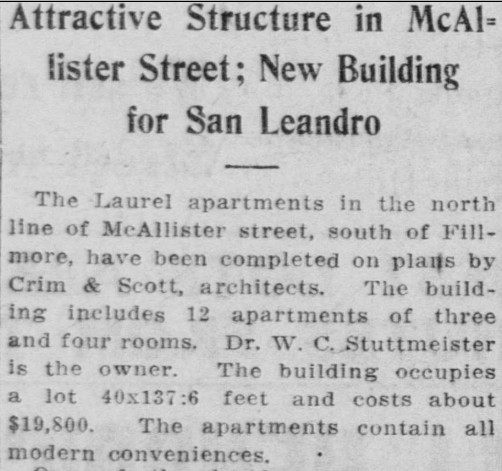


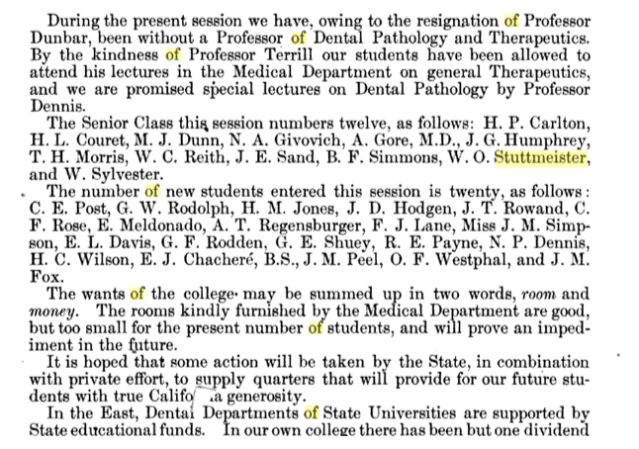
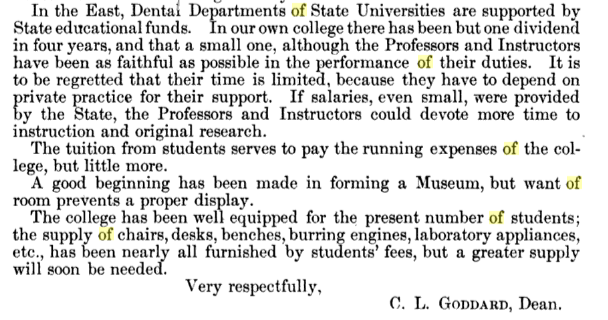
I am considering authoring a biography of my great, great grandfather, William Oltman Stuttmeister. But, I do see a serial, a Black Mask treatment……
Doctor Stuttmeister
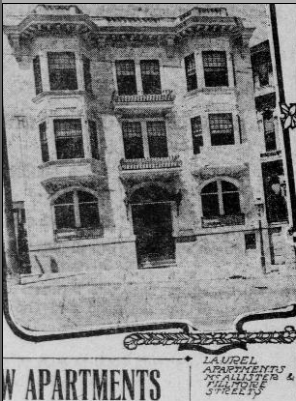
Yesterday I found a image of an appartment building William built on McCallister street in 1910 four years after the earthquake. My great, great, grandfather helped rebuild San Francisco. This morning I found an old photo of the Dental College he attended in San Francisco that became a part of the University of California. That these apartments are named ‘Laurel’ goes with my theory that William built around forty homes in the Laurel District – that could have been named by him. William, who helped build Oakland, is a pioneer in the field of Dentistry, and is labeled such by Redwood City. The Stuttmeisters lived in Fruit Vale, and their kin, the Jankes, founded the City of Belmont. They are listed as Pioneers of San Francisco.
In contrast, is my father’s father, Victor Hugo Presco. He was a gambler in the Barbary Coast made famous in a couple of movies. I can write a Grasshopper and the Ant tale about two men whose grandfather’s immigrated from Germany. One is a Bohemian fair-thee-well, and the other is a ambitious student at the University of California. William is a Humphry Van Wayden type whose seed will give birth to Captain Victor von Wolf Presco, real estate pirate, and father of a famous female artist and hippie spiritualist egghead a.k.a. ‘Blacky’. My father told me he raised his two sons using Wolf Larsen as a model. He made a loan to Jack London’s daughter. Jack worked in Belmont at a boys school doing laundry. It is evident the family mythos is based on real people.
My real father, Victor William Presco, played violin at Oakland High, and William played violin for the Oakland Symphony Orchestra. Did he hear the ‘Pique Dame’ as an honored Alumni?
P.S. What is going on?!! I just googled ‘Pique Dame’. She is the Queen of Spades! Last night I watched ‘Cloud Atlas’. The music at the end of my life – has been found!
John Presco
1868–1898 The Origins of the University of California and Affiiated Colleges
Creating a UC Dental Department
“We need a college of dentistry on this coast and if we have not a necessary talent among ourselves, we can import it. We owe those who take our places, greater facilities for study and professional breadth than the times have afforded us. The future will demand men educated in all that constitutes the scholar and professional man, and refined in all that makes the gentleman.”
Dr. CC Knowles, June 26, 1870
The same impulse that prompted physicians and pharmacists to organize, standardize, and regulate their professions motivated a group of the city’s leading dentists to call for creation of a professional dental school. S.W. Dennis, M.D., D.D.S., was typical of this group of early organizers. He had graduated from the medical department of the University of Pennsylvania, received an honorary D.D.S. degree from the Indiana Dental College, and began practice in San Francisco after studying with a local dentist. In the midst of general lobbying for a school of dentistry, Dr. Dennis contacted colleagues at Harvard and the University of Pennsylvania to help plan for a dental college in San Francisco.
S. W. Dennis, M.D., DDS.In the late nineteenth century, dentistry was regarded as a recently separated area of medical specialization. Many dentists had M.D. degrees in addition to their dental training and most agreed that dental education should be closely linked to the medical curriculum, especially with respect to the teaching of anatomy and pathology. They desired university affiliation and they worked in close conjunction with the faculty of the Medical Department. On May 28, 1881, the medical faculty formally proposed the creation of an affiliated Dental Department to the UC Regents, using the affiliation of the medical and pharmacy departments as precedent. Part of their appeal included their promise of free lecture and clinic space for dental students at the Toland Medical College building.
The Regents responded favorably, and in September of 1881 they established a Dental College to be organized with seven professors, nine instructors and four demonstrators. The eight members of the Dental Class of 1882 took courses of instruction in anatomy, physiology, chemistry and surgery alongside medical students in the Toland Medical College building at the corner of Stockton and Francisco Streets. A dental clinic was also located there and dental students were invited to attend selected bedside teaching clinics given by the medical faculty. While the UC Dental Department was not the only dental school to be organized in San Francisco, its founding in the context of the state university placed it in the forefront of academic schools in the West.
Toland Medical Building was the site of science instruction for the College of Pharmacy (in 1875-1876) and Dentistry (1882-1891) as well as the Medical School (1864-1898)Thus by 1882 the University of California had three affiliated colleges in San Francisco. Faculty salaries were paid by tuition and fees and the individual schools retained control over choice of faculty, but the Toland Medical College building was officially made the property of the university, and graduates of the schools wore university gowns at graduation. From the beginnings of affiliation, reciprocity in course offerings and programs was a feature of the three colleges: medical and dental students took anatomy and physiology side-by side, and all three schools allowed their graduates to expand their careers by matriculating in the other schools, with course credit allowed.
>> Trained Nurses for San Francisco
The University of California, San Francisco (UCSF) is a public land-grant research university in San Francisco, California. It is part of the University of California system and is dedicated entirely to health science and life science. It conducts research and teaching in medical and biological sciences.[8][9][10][11]
UCSF was founded as Toland Medical College in 1864. in 1873, it became affiliated with the University of California as its Medical Department. In the same year, it incorporated the California College of Pharmacy and in 1881 it established a dentistry school. Its facilities were located in both Berkeley and San Francisco.[12] In 1964, the school gained full administrative independence as a campus of the UC system, headed by its own chancellor, and in 1970 it gained its current name. Historically based at Parnassus Heights with satellite facilities throughout the city, UCSF developed a second major campus in the newly redeveloped Mission Bay district in the early 2000s.
The University of California, San Francisco traces its history to Hugh Toland, a South Carolina surgeon who found great success and wealth after moving to San Francisco in 1852.[20] A previous school, the Cooper Medical College of the University of Pacific (founded 1858), entered a period of uncertainty in 1862 when its founder, Elias Samuel Cooper, died.[21] In 1864, Toland founded a new medical school, Toland Medical College, and the faculty of Cooper Medical College chose to suspend operations and join the new school.[21]
The University of California was founded on March 23, 1868, with the enacting of its Organic Act. Section 8 of the Organic Act authorized the Board of Regents to affiliate the University of California with independent self-sustaining professional colleges.[22][23] In 1870, Toland Medical School began to negotiate an affiliation with the new public university.[24] Meanwhile, some faculty of Toland Medical School elected to reopen the Medical Department of the University of the Pacific, which would later become Stanford University School of Medicine.[25] Negotiations between Toland and UC were complicated by Toland’s demand that the medical school continue to bear his name, an issue on which he finally conceded. In March 1873, the trustees of Toland Medical College transferred it to the Regents of the University of California, and it became The Medical Department of the University of California.[24] At the same time, the University of California also negotiated the incorporation of the California College of Pharmacy, the first pharmacy school in the West, established in 1872 by the California Pharmaceutical Society. The Pharmacy College was affiliated in June 1873, and together the Medical College and the Pharmacy College came to be known as the “Affiliated Colleges”. The third college, the College of Dentistry, was established in 1881.
Expansion and growth[edit]
Initially, the three Affiliated Colleges were located at different sites around San Francisco, but near the end of the 19th Century interest in bringing them together grew. To make this possible, San Francisco Mayor Adolph Sutro donated 13 acres in Parnassus Heights at the base of Mount Parnassus (now known as Mount Sutro). The new site, overlooking Golden Gate Park, opened in the fall of 1898, with the construction of the new Affiliated Colleges buildings. The school’s first female student, Lucy Wanzer, graduated in 1876, after having to appeal to the UC Board of Regents to gain admission in 1873.[26][27]
Until 1906, the faculty of the medical school had provided care at the City-County Hospital (named San Francisco General Hospital from 1915–2016 and Zuckerberg San Francisco General Hospital and Trauma Center (SFGH) since 2016), but the medical school still did not have a teaching hospital of its own. Following the 1906 San Francisco earthquake, more than 40,000 people were relocated to a makeshift tent city in Golden Gate Park and were treated by the faculty of the Affiliated Colleges. This brought the Affiliated Colleges, which until then were located on the western outskirts of the city, in contact with significant population numbers. By fueling the Affiliated Colleges’ commitment to civic responsibility and health care, the earthquake increased the momentum towards the eventual construction of their own healthcare facilities.
Within a month after the 1906 earthquake, the faculty of the medical school voted to make room in their building for a teaching hospital by moving the three departments responsible for the first two years of preclinical instruction—anatomy, pathology, and physiology—across San Francisco Bay to the Berkeley campus. As a result, for over 50 years, students pursuing the M.D. degree took their first two years at Berkeley and their last two years at Parnassus Heights. By October 1906, an outpatient clinic was operational on the first floor of the medical building, and by April 1907, the new teaching hospital started to admit inpatients. This created the need to train nursing students, of whom the first was informally admitted in June; in December 1907, the UC Training School for Nurses was formally established, adding a fourth professional school to the Affiliated Colleges.[28]
Around this time, the Affiliated Colleges agreed to submit to the Regents’ governance during the term of President Benjamin Ide Wheeler, as the Board of Regents had come to recognize the problems inherent in the existence of independent entities that shared the UC brand but over which UC had no real control.[29] The last of the Affiliated Colleges to become an integral part of the university was the pharmacy school, in 1934.[29]
Stuttmeister Tomb in Colma
Posted on August 3, 2011 by Royal Rosamond Press
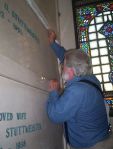
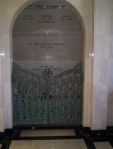
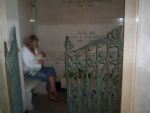
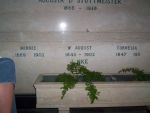


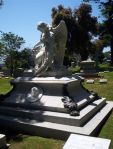


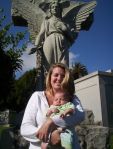
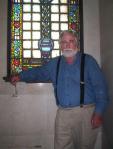
A curator for the Oakland Museum called me yesterday and asked me to e-mail him the photograph of my kinfolk having a picnic in the Oakland Hills. I had just returned from Dot Dotsons in Eugene where Jo framed a enlargement of this historic event in a antique frame I purchased. She did a splendid job!
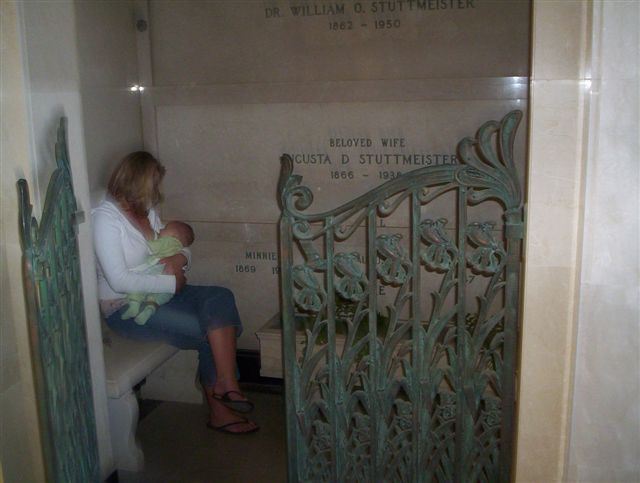
Thanks to the Trust my uncle Vincent Rice left me, I have more funds to investigate and record my lost family history. Being poor I have had to endure hardship in order to visit my newfound daughter and newborn grandson in California. Tyler’s father was not there for his son, so when I went to see him for the first time I made a point to ground him in the history of my father’s people whom I and my cousin had just discovered were in a tomb at Cypress Lawn in Colma.
We three were the first kin to enter this tomb in many years. Tyler took an early lunch when Heather breast-fed her son on a marble bench facing the Tiffany window. Afterwards we went atop a hill and had a picnic next to these beautiful angels. Heather told me Tyler remembers being there. I was amazed when I saw his eyes follow a plane in the sky, and then smile.
My friend, Joy, had given me a special AA coin with the image of an angel on it for my late sister, Christine Rosamond, that I slipped into a crack made by an earthquake.
When we drove through San Francisco on our way home, I told Heather this was her and Tyler’s town now, for the Stuttmeisters are listed as a pioneer family, and made the Blue Book. In some respects, this was a Baptism.
[14 P. 36] This cause comes up on a writ of review issued to the Superior Court in and for the city and county of San Francisco (department 9). From the record presented, it appears that in 1884 John A. Collins presented a claim for services as attorney against the estate of F. W. R. Stuttmeister, deceased, to W. O. Stuttmeister, the administrator of such estate, and such proceedings were afterward had therein that on or about October 10, 1884, such claim was allowed and approved by the Probate Court for three hundred dollars, and ordered to be paid out of the estate in due course of administration.
F. W. R. Stuttmeister
Mutter Heinrich
BIRTH 1781 Germany DEATH1876 (aged 94–95) Belmont, San Mateo County, California, USA BURIALUnion Cemetery Redwood City, San Mateo County, California, USA PLOT211 MEMORIAL ID246026195 · View Source
Carl Augustus Janke
BIRTH Oct 1806 Dresden, Stadtkreis Dresden, Saxony (Sachsen), Germany DEATH31 Oct 1881 (aged 74–75) Belmont, San Mateo County, California, USA BURIALUnion Cemetery Redwood City, San Mateo County, California, USA Show MapMEMORIAL ID186938257 · View Source
SHARE
SAVE TO
TOGGLE DROPDOWN
Carl Augustus Janke was a local merchant in the city of Belmont, California he founded Belmont Park in 1865 which was modeled after a German beer garden. Janke subsequently he founded a local soft drink bottling plant, the first industry for the town of Belmont.
— From the 1937 headstone survey — (apparently there was a different stone)
Carl August Janke, born in Dresden, Germany Oct. 1806,
died Belmont, Calif. Sept. 2, 1881
Dorette Catherine, wife of Carl August Janke,
born in Hamburg, Germany, July 21, 1813,
died in Belmont, California, Feb 16, 1877
Mutter Heinrich (spelled Catherine Hendrickson on the gravestone), mother of Dorette Catherine Janke,
born in Island of Heligoland, Germany, 1781 died
in Belmont, California 1876
Anna Dorette Catherine Heinrich Janke
BIRTH 21 Jul 1813 Hamburg, Germany DEATH16 Feb 1877 (aged 63) Belmont, San Mateo County, California, USA BURIALUnion Cemetery Redwood City, San Mateo County, California, USA Show MapPLOT211 MEMORIAL ID186938297 · View Source
SHARE
SAVE TO
TOGGLE DROPDOWN
— From the 1950 headstone survey — (and the current stone)
JANKE
ANNA D
Died Feb 16, 1877
CARL A.
Died Oct. 31, 1881
CATHERINE HENDRICKSON
— From the 1937 headstone survey — (apparently there was a different stone)
Carl August Janke, born in Dresden, Germany Oct. 1806,
died Belmont, Calif. Sept. 2, 1881
Dorette Catherine, wife of Carl August Janke,
born in Hamburg, Germany, July 21, 1813,
died in Belmont, California, Feb 16, 1877
Mutter Heinrich, mother of Dorette Catherine Janke,
born in Island of Heligoland, Germany, 1781 died
in Belmont, California 1876
Family Members


The Whipple-Hull Family of San Carlos
Posted on July 13, 2024 by Royal Rosamond Press
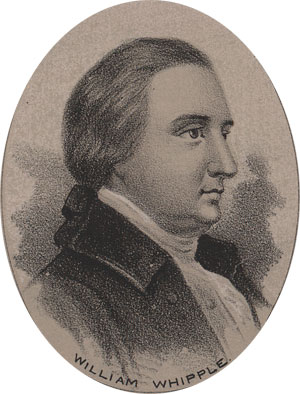
William Whipple
Eureka! I just discovered one of my kin was the Mayor of San Carlos. The father of Asa Hull, was William Whipple Hull, a early pioneer of san Carlos that was named Phelpsville at one time. Sir Isaac Hull was the Captain of the U.S.S. Constitution – that sails through the Golden Gate past Black Point, where my kin Jessie Benton Fremont held a salon that Mark Twain attended.
Offshore of San Carlos, Captain Hull gives a canon salute to William Whipple Hull who is kin to Signer William Whipple! This is the first linage of a Signer I have encountered in the history of California. Let us hear a canon salute to Carl Janke, Founder of Belmont! The name San Carlos should be changed to…
Whippleville!
Happy Fourth of July – my beloved ancestors!
John Presco
President: Royal Rosamond Press
U.S.S. Constitution of NATO
Posted on February 25, 2022 by Royal Rosamond Press
Tomorow I will compose a message to President Biden that will highly suggest the Ukranian People have been take hostage, and will be made to work for a Relgious Empire, liken to the one President Thomas Jefferson declared war with. I will ask him to make the U.S.S. Constitution a vessel of the NATO fleet.
John Presco
Jankeville and Mezeville
Posted on July 13, 2024 by Royal Rosamond Press

San Sebastian Avenue
by
John Presco
ALL RIGHTS RESERVED
After four years of trying to get the City of Belmont, and its exclusive Historic Society, to get my family History – right – and correct the egregious mistreatment of their Founding Family, I am bid by my deceased to raise them, and our history – from the dead……and do what I will!
I havea taken the liberty to rename Belmont, Jankeville, after my great, great, grandfather, Carl Jake, who I suspect was ruined by Leland Stanford who is title a ‘Robber Baron’. Leland and his greedy wife ay be responsible for the demise of Mezeville.
There are so many ways to treat my family history. One way is th author a script for a cable series that will be titled……’JANKEVILLE’
Like any worthy Western, it will begin with the Janke Stage traverse the new road from Belmont to Halfmoon Bay, with newlyweds on board. Willian Stuttmeister, and Augustus Janke were married at Ralston Hall once owned by William Ralston ‘The Man Who Built San Francisco’. When William came to Belmont, he purchased the portable house that Count Leonetti Cipriani had put together with 5,000 screws. This was one of the home Carl Janke brought around the Cape in 1848. This home s described as a “farmhouse” around which Ralston Hall was built.
With the appearance of the Heritage Masterplan, being promoted by a convicted felon on trial for Insurrection, I was found INNOCENT! Family and friends – betrayed me! I found myself…..
STANDING ALONE!
And the whistle blow. It’s high noon. Here come Leland Stanford’s half mile long train bringing 1,500 Odd Fellows to Tanforan, the German Wonderland that Carl built around an ancient oak and bay tree.
Mezesville
Main content start

The discovery of gold at Sutter’s Fort in 1848 ushered in a period of rapid change in California as thousands of immigrants flooded into the state and the non-native population grew from 20,000 to 100,000 in one year.
Mexico ceded California to the United States in 1848 and California became the 31st state in 1850. The arrival of large numbers of settlers put Mexican land titles at risk and members of the Argüello family, holders of the vast Rancho de las Pulgas, were forced to defend their land titles in court. Attorney Simon Mezes successfully defended the claim for the Argüellos and was paid for his services with nearly 7,000 acres, much of what is now Redwood City.
The building boom that resulted from the Gold Rush created a demand for lumber and over two dozen sawmills were established in the Santa Cruz Mountains to supply redwood and Douglas fir. Much of this lumber was transported to Redwood Creek and then shipped by barges on San Francisco Bay.

About a mile southeast of Mezesville was Sweeny Ranch, first owned by Myles Sweeny beginning in the late 1800s. Stanford Redwood City is located within the former ranch lands. Myles Sweeny was an Irish immigrant who made his fortune as a liquor importer and distributor in San Francisco and then became president of Hibernia Bank. The Sweenys lived in San Francisco and maintained the land in Redwood City for growing hay and grazing cattle. After his death, Sweeny’s daughters sold the ranch.
By the end of the century Redwood City had grown into a small town of some 1,600 residents. At the opening of Stanford Redwood City in 2019, the city had grown to nearly 90,000.
Wells Fargo Art & Mural Program
Posted on June 13, 2021 by Royal Rosamond Press
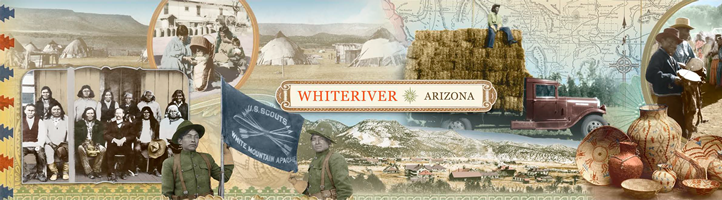
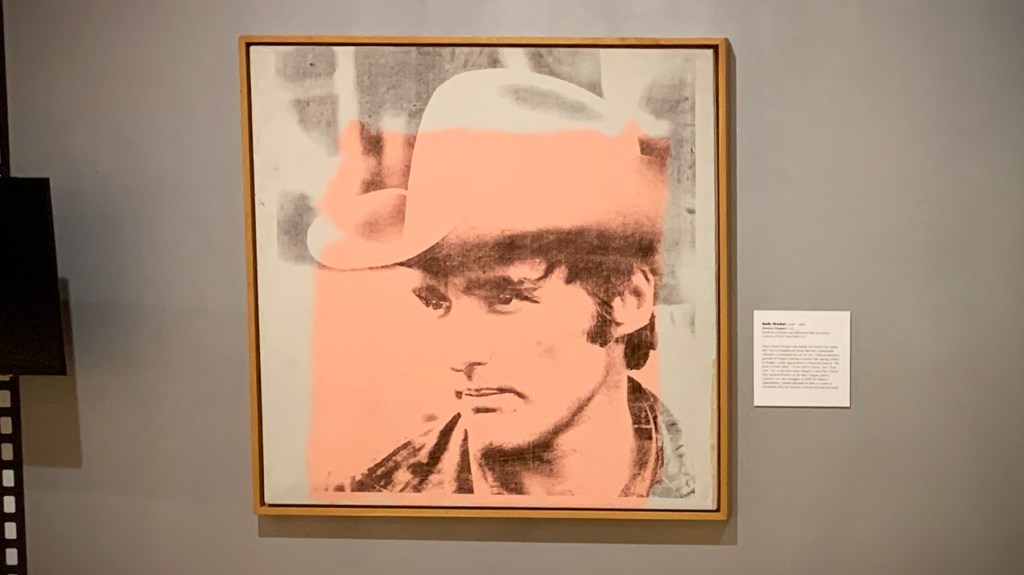
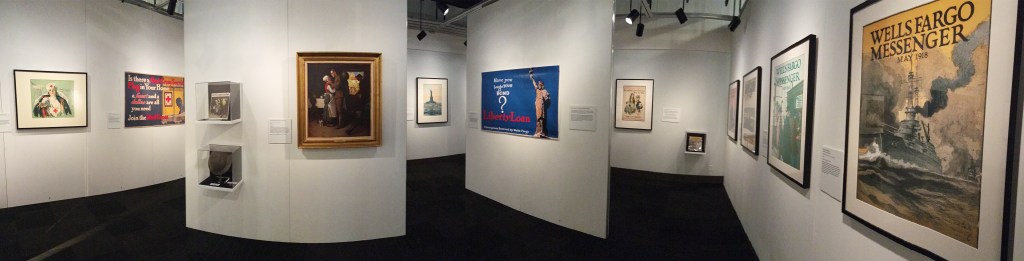
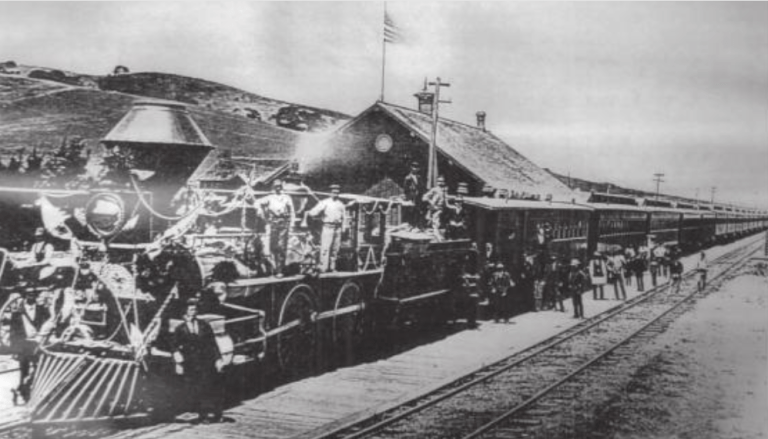
I was looking at the black and white photographs of Oakland’s Produce Market I just posted, and knew I had to do do something to get them persevered in another place then MY very successful Art Magazine, which I need to promote – comparing it to other underground art magazines. I googled Wells Fargo and Art, and struck pay-dirt. They have a program for creating public murals. These market pics need to be put on a wall in Jack London Square. I am going to write MY bank and see if they will back this idea – and others I have. We might be in litigation. There is arbitration. I will see if they want to back my own sober programs, and ideas for small businesses. We can do a mural on Jack London in Belmont with Janke family history, complete with our stagecoach. I have to copyright MY idea, due to thieves and bushwhackers.
I can’t let my enemies negate any of my projects because I own an IVESTIGATIVE NEWSPAPER and thus they want to label and disqualify me as…..’Not a team player’. Enough! Freedom of the Press has to celebrated – not punished! Down with Big Buckism!
John Presco
President: Royal Rosamond Press ‘A Newspaper For The Arts’
Copyright 2021
INSIDE THE STAGECOACH February 14, 2020
‘Sharing the wealth’: Wells Fargo’s art collection
Wells Fargo’s art collection includes about 10,000 pieces — including some by Andy Warhol — and has been shared in more than 100 communities.
When people think of working for a bank, they probably wouldn’t think of managing artwork. But that’s exactly what Piper Hutson does. Hutson is the curator for Wells Fargo’s Corporate Art Resources department in St. Louis. The department is responsible for managing Wells Fargo’s art collection, and its duties range from bringing the art into local communities, to inventorying pieces, to placing art in high-visibility locations for customers and team members.
“If art is involved, it’s usually through us,” Hutson said. “Everything is in-house. We pick the pieces, condition them, map them, frame them, and sometimes write materials that go with them.”
Hutson estimates there are about 10,000 pieces across Wells Fargo. About half of the artwork came when Wachovia, now Wells Fargo, merged in 2007 with A.G. Edwards & Sons, a brokerage firm in St. Louis. In the 1980s, the company hired a curator to inventory and manage the art. During that time, artwork was loaned for public displays, and in 1991, a formal loan program was established.
Community Mural Program – Who We Are – Wells Fargo Wells Fargo Community Murals celebrate the legacy of the communities we serve, highlighting the geography, industry, and cultural diversity that give each community its unique character and sense of place. From small towns to big cities, we have installed custom community murals in over 2,300 Wells Fargo locations nationwide. ‘Sharing the wealth’: Wells Fargo’s art collection (wf.com)Jack London Slept (and Worked) Here (sfgate.com)


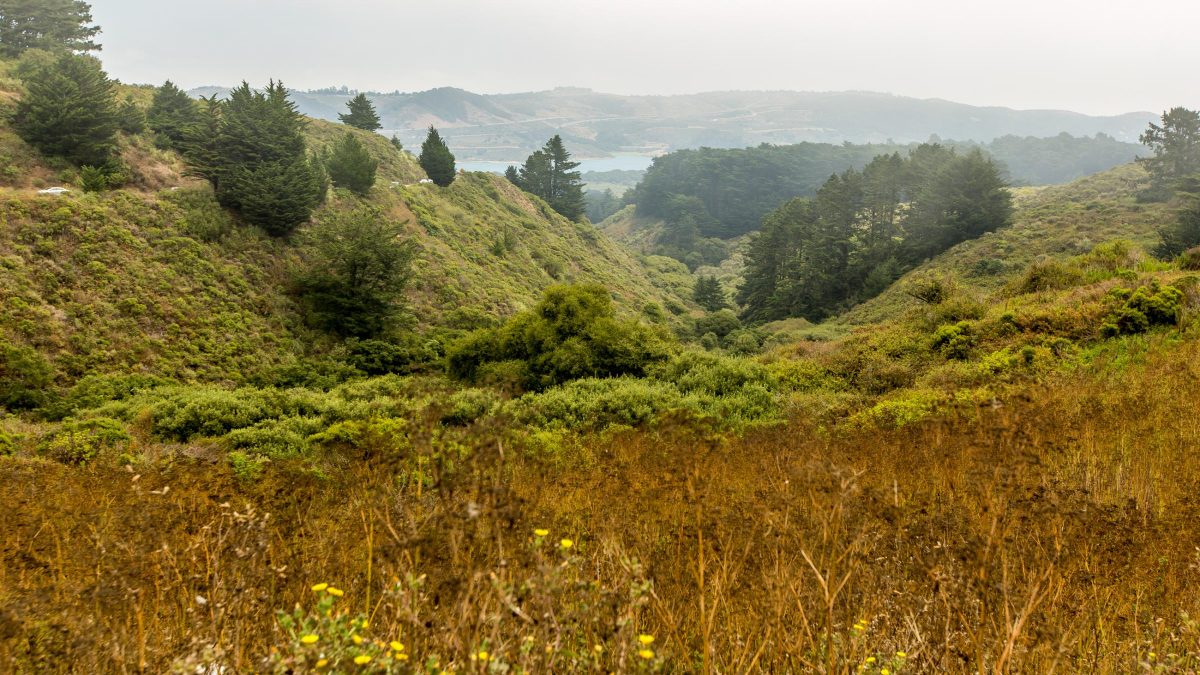
THROUGH THE REDWOODS
The Hull Ranch Near Belmont
Posted on July 23, 2024 by Royal Rosamond Press

Clinton “Clint” Eastw
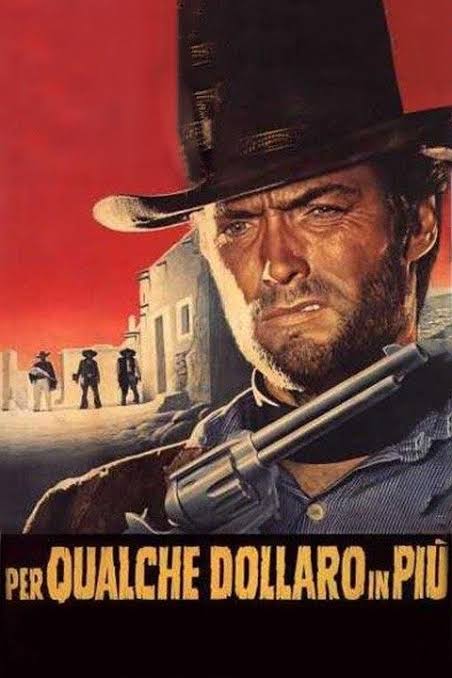


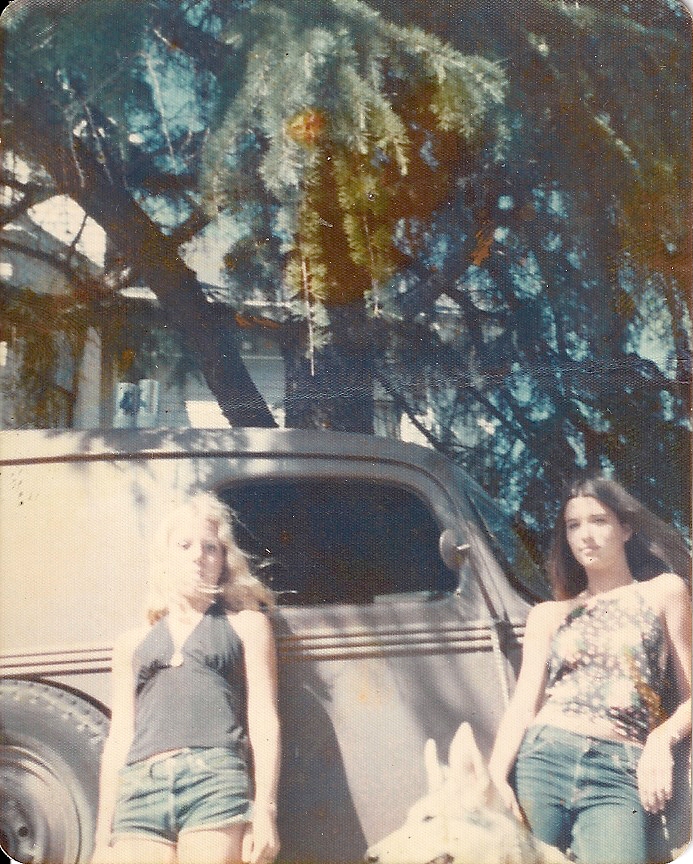
San Sebatian Avenue
ALL RIGHTS RESERVED
Mary F. Hull was at the Masque Ball held at Germania Hall in San Francisco
“Clint’s cousin claims the Eastwoods are “America Royalty” after he proudly declares his kindred served in Tripoli where my kindred, Captain Issac Hull, commanded the USS Enterprise. Did the Eastwood’s hear my great grandfather’s voice, giving them orders as We the United and Free went after our real enemies?”
The Keepers of Belmont History spent three days trying to swallow up my family history, and shit it into their Tiny Stinken Belmont Pile! I didn’t know it was a struggle for their existence.
All four Presco Children – who descend from Cark Janke – went to Glenview Elementary, where Clint Eastwood attended when his parents lived in Oakland. Clint went to Oakland Tech HS. My ex got Paul Drake into acting and he played Mick in sudden Impact. He later said he modeled his bad guy after me, doing my Bad-ass Bit in Bars. But, that was Richard Swartz!
I will show my Janke-Stuttmeister DNA ended up on a farm in Oakland. The Whipple-Hull family ended up with Arguello Land Grant Land, thus the poster – is real! I was a bad-ass German for real. It was I who drank all that beer and caused all that trouble. You leave the Janke Boys out of this – Range War.
I could get any woman I want! My Godfather was Skip Sutter, who led fifty Oakland Cops against the Hell’s Angels, and ended up in the hospital with busted ribs. He was a sergeant, and came to our house with a snub-nose thirty-eight in his back pocket, He filed the trigger off.
I’m the read deal -ya see! Clint was – an actor! I was a Lumper in the Jack London Produe Market when I was eight! Don’t mess with me, if you know what’s good for ya! See!
Johnny Waterfront
‘You can call me Rocco’
“High school failed to capture Eastwood’s interest, even though he exhibited talent in both sports and music. Although approached to join the drama club, Eastwood was not a ‘joiner’ and refused. Later in life Eastwood revealed that during high school he was only interested in girls and cars.
Eastwood lost his family ties to the Bay Area when his father moved for work to Seattle, Washington in 1949. During high school, Eastwood learned to play the piano (friends said he played until his fingers were bleeding), and one of his jobs was as a jazz and ragtime piano player at the Omar Club, an Oakland bar and restaurant in Downtown Oakland that was located at 2086 Broadway, across from the Paramount Theater. 5 Clint Eastwood lived with a friend in order to complete high school at Oakland Tech High, then moved to Seattle after graduation to live with his family. 3
Cry Macho! Please!
Posted on September 12, 2021 by Royal Rosamond Press
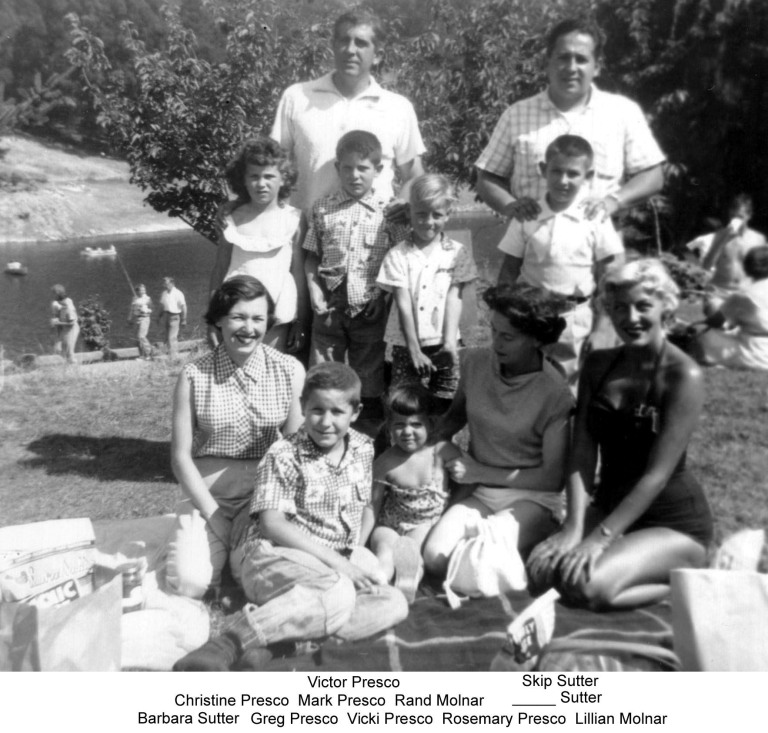
Eastwood “American Royalty”
Posted on June 5, 2012 by Royal Rosamond Press

When I read that Clint Eastwood’s ancestors served on my great grandfather’s ship, the USS Constitution, I had forgiveness for my daughter who thinks life is a big popularity contest. She is not alone, so do the Royal Windsors who no longer have any real power. It’s all -show!
“To add to that, he also has maternal ancestors (James Morgan and Margery Hill) with a likely royal descent, linked to the late Princess of Wales, and Prince William and Prince Harry, the probable next King of England.”
Some sites on the web say the Eastwoods served on the sister ship, the USS Constellation. McGilligan says it was the USS Constitution. Both ships went to Tripoli to protect American shipping from a Islamic leader and fanatic who was holding Americans for ransom.
The USS Constitution is the oldest commisioned Navy vesel. Our President could have sent Old Irondsides to get Bin Laden, given him a broadside – just for show, like that actor and Texas braggart, George Bush, who dressed in costume and stood on the deck of a Navy vessel with a banner over his head that read;
“Mission Accomplished”
“Cut! that’s a wrap! You can go back to your ranch, ‘Smoke-em Out’ George, and play cowboy!”
U.S.S. Constitution of NATO
Posted on February 25, 2022 by Royal Rosamond Press
Tomorow I will compose a message to President Biden that will highly suggest the Ukranian People have been take hostage, and will be made to work for a Relgious Empire, liken to the one President Thomas Jefferson declared war with. I will ask him to make the U.S.S. Constitution a vessel of the NATO fleet.
John Presco
Again I Claim Norte Dame De Namur
Posted on March 1, 2025 by Royal Rosamond Press

I am destined to live in Ralston Hall with my cat, Classy. It’s – in the stars!
John ‘The Nazarite’
I Claim Norte Dame De Namur
Posted on August 5, 2024 by Royal Rosamond Press


Acquiring the Belmont Campus
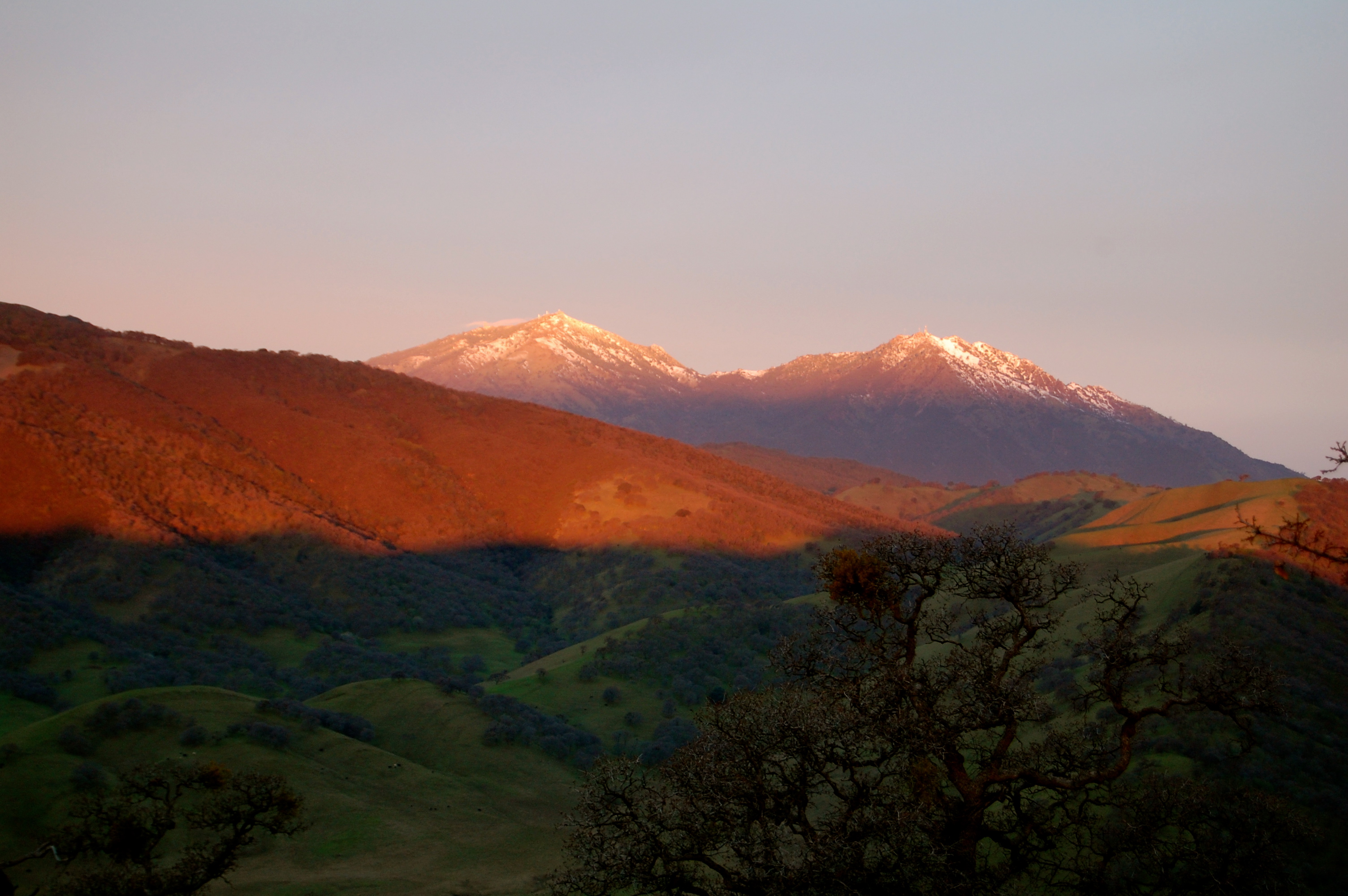
The agreement includes the possible purchase of the main NDNU campus in Belmont, including Ralston Hall, Koret Field, NDNU Theater, and Cunningham Chapel. The property included in the agreement is outlined above with a yellow dashed line. https://belmont.stanford.edu/about
To: Governor Newsom
From: John Presco
I am the great grandson of Carl Janke, the founder of Belmont. I suspect he was a member of the Turnverein Germans who came with John Sutter to California from Saint Louis, and later brought six portable homes around the Cape to Belmont California in 1848. It stands to reason Janke already has buyers for these homes. After much study I conclude the Franciscan Order bought some of these homes and placed them on a large parcel of land they called Belmont, or Canada del Diablo. I have a theory the Monks saw Mount Diablo from a hill above Belmont. The setting sun created what is called, Alpenglow, that turned Diablo a crimson red. Was this a sign to build a Mission here that I suspect Count Leonetti was ordained to support, and is why he came West with a wagon train, and cattle? Cipriani did not dismantle his home in Italy and have it shipped to Belmont. I suspect the house he assembled with 5,000 screws was one of the Janke houses, that was built atop the primetime structure the Monks made that was raised. Building atop the original structure may have sustained land grant rules, Janke’s house is within Ralston Hall this day.
I suspect Cipriani lived in San Francisco after he was appointed Italian Council, and added a structure for his residence when he came to stay in Belmont, that was under his protectorate. He may have left the Mission in charge of a unknown person when he moved to Italy. Carl Janke had to be fully aware of this. How William Ralston came to own this Mission, needs to be investigated. He might have had a religious agreement, that was not respected by William Sharon when he moved in. I can not find an history of contact with Carl Janke and Sharon. Both men had to be aware of the two graves mentioned by Russel Estep who was a founding member of the Belmont Historic Society. I suspect they are the graves of Franciscan Monks that were put in a designated Franciscan cemetery. There is a sculpture of Saint Francis in back of Ralston Hall made by Benny Buffano. I suspect it was paced there after the two tombstones were removed. I suspect there are other Franciscan buried on the hill, who got wooden markers that deteriorated, are a simply engraved rock that were taken as souvenirs.
On this day, I John Presco claim this hill, and all the grounds that were designated to the College of Norte Dame De Namur. One article on the Ralston house says there were four acres. I will go by this area, that I suspect includes much of Twin Pines Park where Carl Janke was buried under a Bay tree, along with his wife, and possibly his mother-on-law. This suggests Janke understood there was an established and ordained graveyards that surrounded a stone mission, that my have been an attraction to Janke’s These Park, which may be the first in California. I suspect Simon Mezes created a fictional Spanish family, the Tanforan family, and took the large track of land the Governor of Mexico gave the the Franciscan Order. I suspect Simon heard the Franciscans had abandoned the Mission when they moved to San Francisco, that is named after Saint Francis.
The confusion began with the Mexican Secularization Act of 1833, officially called the Decree for the Secularization of the Missions of California. The Franciscan Order had to give up vast tracks of land, but were allowed to keep land that may have been sizable. Simon Mezes wins all of a track for the Arguello family – that might have included Franciscan property. I suspect the Franciscans sold Carl Janke a large track of their land to keep it out of the clutches of Simon Mezes who ended up with 7,000 acres. His son is born in Belmont and manages his family property.
“Mexico ceded California to the United States in 1848 and California became the 31st state in 1850. The arrival of large numbers of settlers put Mexican land titles at risk and members of the Argüello family, holders of the vast Rancho de las Pulgas, were forced to defend their land titles in court. Attorney Simon Mezes successfully defended the claim for the Argüellos and was paid for his services with nearly 7,000 acres, much of what is now Redwood City.”
My cousin (who I never met) brought up the removal of the three bodies in the middle of the night, at a Belmont Historic Society meeting in 1992. I have the minutes. She and another person wanted Denny Lawhern to ask the City to pay for a plaque to put on the Bay tree sating their Pioneer Contributions. This was never done. The original marker for the three Jankes, was replaced, I suspect because it was vandalized. I suspect it was a large metal monument – that may have been moved – three times! This marker may have contained a declaration of a land grant. Doris Vanier listed a large area of land owned by her great grandfather in a document founding ‘Carl Janke Day’ that was signed by the Mayor of Belmont – and City Seal – applied.
Because I am being stalked by someone who reads my blog, and who began to overlay his fake family history over mine – saying anyone can make a land claim – I hereby claim all the land mentioned by Mrs. Vannier. In a private letter I will say who this person is, and categorized the ill treatment I received when I posted on the BHS Facebook over three years ago. I suspect a cover-up, and possible conspiracy.
It stands to reason the Franciscan Friar did not want to live in the infamous SF Fog, and built their mission in a fog-free place, where they could climb hill and see the Wondrous Alpenglow. Was a statue of Saint Francis put on this hill Down below they could see the stone mission – with graves around it. Then came Carl Janke with his six homes. I believe my beautful vison has restored – The Truth!
I have written you several times on this matter, and you NEVER responded. You left a great grandson of a California Pioneer un-protected! There are vultures flying overhead – governor! There are DEAD BODIES without tombstones. Your beautiful wife went to Stanford. She needs to lead this study of Belmont History. I put political pressure on your family tree. Member of my Wieneke family became members of the Order of Sant Francis and founded Briarcliff College. I have a spiritual connection to Saint Francis via Meher Baba, an Avatar from India who flew into SF airport. I will make Kamala Harris aware of this after I anoint my cousin Elizabeth Rosemond Taylor the Spiritual Saint of a claim I will make – for all of California, There is such a thing as a Celestial Deed!
Governor, you and Jenny got to go to the Seibel Ranch in Montana and recognize the Christian Foundations of the old ranch building that were torn down. Thomas Siebel came from San Mateo County that has wiped out most of it’s history in order to build expensive housing for High Tech Workers. This is the fate of Belmont – who insults me this very day! They want me to go away – and die! The tenant of Christianity is the promise you can be reborn. My cousin, Elizabeth Rosemond Taylor is reborn every other day to satisfy the whimsy of attention getters. You need to talk to the Governor of Montana about making it real. Jenny needs to make another film about strong pioneer women! Franciscan Friars take a vow of celibacy, and thus are often adopted by heterosexual families whose children enter the Order. If they had offspring, then, it stands to reason the OSF would own most of California and be Dynastic.
You need to put together a panel to study what can be titled Artificial Rich Cowboy Intelligence, where an owner builds high density, high tech cities of no empathy, then movies to his mega-ranch in order to touch Indians, and get in touch with his roots – that are not in The Country! But – let’s pretend! May I suggest you levy a ‘Pretend Tax’. There might not be a God? – is the question by those left behind! Only from ones high saddle, does everything look good? Jesus on horseback, or on zn ass, riding north out of Baja California.
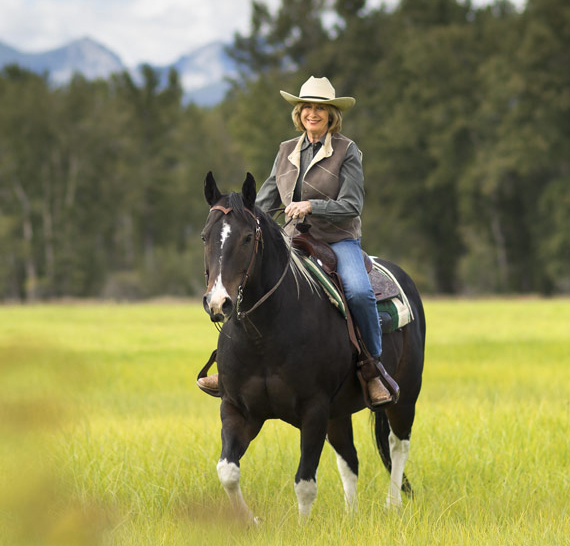
Judy Siebel
Owner & Horse Sales
Siebel angers neighbors for tearing down historic buildings
GRASS RANGE, Mont. — California computer billionaire Thomas M. Siebel has angered some central Montana ranchers by tearing down two historic buildings on the N Bar Ranch he bought last June.
Former owner and manager Tom Elliott, neighboring ranchers and historians are dismayed.
“I think it’s a tragedy, personally. It’s so senseless,” Elliott said.
Siebel, a San Mateo, Calif. software mogul ranked No. 105 in Forbes magazine’s latest list of the world’s richest people, is worth an estimated $4.2 billion.
The two buildings he razed were on the National Register of Historic Places. N Bar Ranch manager Doug Groats said he had no idea the buildings has special status.
“I wasn’t aware that they needed to be protected,” Groats said. “We have all those houses that if we just let them sit there the mice and the rats would take over.”
Darrell Abbott, who lives a few miles west of the N Bar’s headquarters, said Siebel has torn down the cook house, a storage shed made of rock and an old homestead known as the Pike place.
The cookhouse was built in 1885 of square-hewn logs. The rock house, built in the 1930s, housed the electrical generating equipment for the ranch complex. The structures were two of 13 buildings at the ranch headquarters listed in 1991 by the Elliotts on the National Register of Historic Places.
A one-and-a-half story farm house built in 1930 and also listed on the register, was moved off the property.
“We like to be notified if they’re going to move any of the buildings or tear them down,” said Kate Hampton of the Montana Historical Society. “Moved buildings lose their integrity of association.”
But since the buildings are privately owned, the society has no say about what happens to the structures.
Hampton said large cattle operations from the turn of the century are significant to the state’s history. Few of them are left.
Siebel said he intends to be a good neighbor. He plan to run the N Bar as a commercial cattle operation, he said, much like the 70,000-acre Dearborn Ranch he owns near Wolf Creek. According to state officials familiar with the operation, the Dearborn’s land is conservatively managed to maintain adequate grass for cattle and wildlife. Although public hunting isn’t allowed on the ranch, some non-fee hunting by ranch employees and friends is allowed.
“What we’re trying to do is clean it up,” Siebel said of the N Bar. “We want to improve the habitat for the wildlife, improve the riparian habitat. We want to ranch it in a responsible way.”
Siebel said the beauty of the ranch attracted him to the place. He spent time on the McKay ranch near Red Lodge as a youngster and worked on a ranch near Bellevue, Idaho, after graduating from college, he said. “Hopefully (the N Bar) will be a showcase ranch,” Siebel said. “I think it’s just a great resource. We want to improve it so it’s one of the great ranches in the state.”
Saint Junípero Serra Ferrer O.F.M. (/huːˈniːpəroʊ ˈsɛrə/; Spanish: [xuˈnipeɾo ˈsera]; November 24, 1713 – August 28, 1784), popularly known simply as Junipero Serra, was a Spanish Catholic priest and missionary of the Franciscan Order. He is credited with establishing the Franciscan Missions in the Sierra Gorda, a UNESCO World Heritage Site. He founded a mission in Baja California and established eight [8] of the 21 Spanish missions in California from San Diego to San Francisco, in what was then Spanish-occupied Alta California in the Province of Las Californias, New Spain.
Royal officials provided horses for the 20 Franciscan friars to ride up the Camino Real. All accepted the offer, except for Serra and one companion, a friar from Andalusia. Strictly following the rule of his patron saint Francis of Assisi that friars “must not ride on horseback unless compelled by manifest necessity or infirmity,” Serra insisted on walking to Mexico City. He and his fellow friar set out on the Camino Real with no money or guide, carrying only their breviaries. They trusted in Providence and the hospitality of local people along the way
The Mexican Secularization Act of 1833, officially called the Decree for the Secularization of the Missions of California,[1] was an act passed by the Congress of the Union of the First Mexican Republic which secularized the Californian missions. The act nationalized the missions, transferring their ownership from the Franciscan Order of the Catholic Church to the Mexican authorities.
The act was passed twelve years after Mexico won its independence from Spain in 1821. Mexico feared Spain would continue to have influence and power in California because most of the Spanish missions in California remained loyal to the Roman Catholic Church in Spain. As the new Mexican republic matured, calls for the secularization (“disestablishment“) of the missions increased.[2][3]
Once fully implemented, the secularization act took away much of the California Mission land and sold it or gave it away in large grants called ranchos.[2][3] Secularization also emancipated Indigenous peoples of California from the missions and closed the monjeríos,[4] although only a minority of Indigenous peoples were distributed land grants, which left many of them landless to work the ranchos.[5]
Background
[edit]
The Spanish missions in Alta California were a series of 21 religious and military outposts; established by Catholic priests of the Franciscan order between 1769 and 1823[6] for the purpose of spreading Christianity among the local Native Americans. The missions were part of the first major effort by Europeans to colonize the Pacific Coast region, the most northern and western parts of Spain’s North American land claims. The settlers introduced European fruits, vegetables, cattle, horses, ranching and technology into the Alta California region and to the Mission Indians. The El Camino Real (Royal Road) connected missions from Loreto, Mexico to Mission San Francisco Solano, in Sonoma, a length of over 1200 miles. Between 1683 and 1834, Jesuit and Franciscan missionaries established a series of religious outposts from today’s Baja California and Baja California Sur into present-day California.
San Sebastian Avenue
by
John Presco
ALL RIGHTS RESERVED
After four years of trying to get the City of Belmont, and its exclusive Historic Society, to get my family History – right – and correct the egregious mistreatment of their Founding Family, I am bid by my deceased to raise them, and our history – from the dead……and do what I will!
I havea taken the liberty to rename Belmont, Jankeville, after my great, great, grandfather, Carl Jake, who I suspect was ruined by Leland Stanford who is title a ‘Robber Baron’. Leland and his greedy wife ay be responsible for the demise of Mezeville.
There are so many ways to treat my family history. One way is th author a script for a cable series that will be titled……’JANKEVILLE’
Like any worthy Western, it will begin with the Janke Stage traverse the new road from Belmont to Halfmoon Bay, with newlyweds on board. Willian Stuttmeister, and Augustus Janke were married at Ralston Hall once owned by William Ralston ‘The Man Who Built San Francisco’. When William came to Belmont, he purchased the portable house that Count Leonetti Cipriani had put together with 5,000 screws. This was one of the home Carl Janke brought around the Cape in 1848. This home s described as a “farmhouse” around which Ralston Hall was built.
With the appearance of the Heritage Masterplan, being promoted by a convicted felon on trial for Insurrection, I was found INNOCENT! Family and friends – betrayed me! I found myself…..
STANDING ALONE!
And the whistle blow. It’s high noon. Here come Leland Stanford’s half mile long train bringing 1,500 Odd Fellows to Tanforan, the German Wonderland that Carl built around an ancient oak and bay tree.
Mezesville
Main content start
The discovery of gold at Sutter’s Fort in 1848 ushered in a period of rapid change in California as thousands of immigrants flooded into the state and the non-native population grew from 20,000 to 100,000 in one year.
Mexico ceded California to the United States in 1848 and California became the 31st state in 1850. The arrival of large numbers of settlers put Mexican land titles at risk and members of the Argüello family, holders of the vast Rancho de las Pulgas, were forced to defend their land titles in court. Attorney Simon Mezes successfully defended the claim for the Argüellos and was paid for his services with nearly 7,000 acres, much of what is now Redwood City.
The building boom that resulted from the Gold Rush created a demand for lumber and over two dozen sawmills were established in the Santa Cruz Mountains to supply redwood and Douglas fir. Much of this lumber was transported to Redwood Creek and then shipped by barges on San Francisco Bay.
About a mile southeast of Mezesville was Sweeny Ranch, first owned by Myles Sweeny beginning in the late 1800s. Stanford Redwood City is located within the former ranch lands. Myles Sweeny was an Irish immigrant who made his fortune as a liquor importer and distributor in San Francisco and then became president of Hibernia Bank. The Sweenys lived in San Francisco and maintained the land in Redwood City for growing hay and grazing cattle. After his death, Sweeny’s daughters sold the ranch.
By the end of the century Redwood City had grown into a small town of some 1,600 residents. At the opening of Stanford Redwood City in 2019, the city had grown to nearly 90,000.
Norte Dame de Namur
Posted on May 31, 2023 by Royal Rosamond Press
Illustrious Kindred of Virginia Hambley
Posted on January 3, 2013 by Royal Rosamond Press

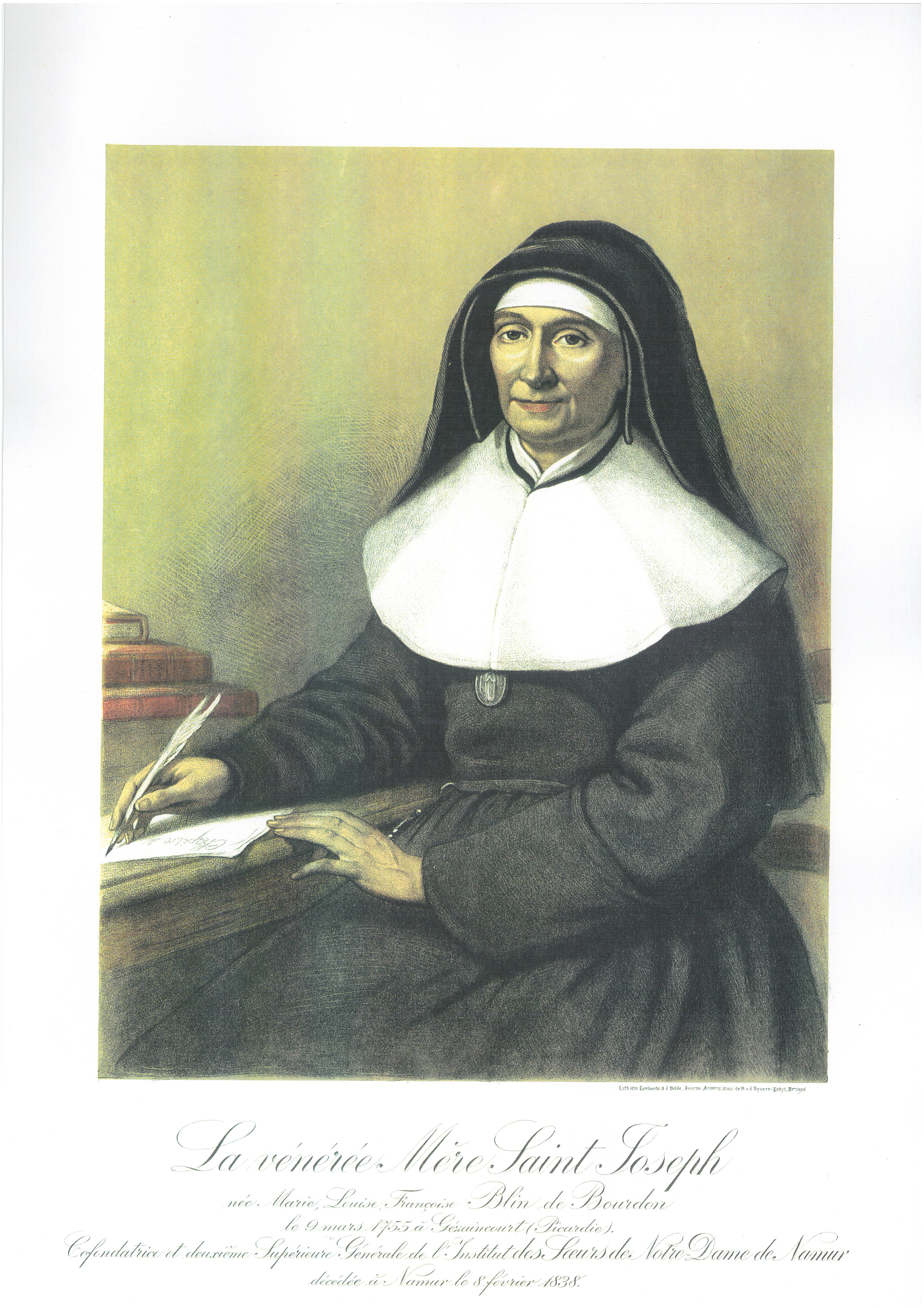
Françoise Blin de Bourdon was a native of Picardy. Her family belonged to the old nobility of France. She was the youngest child of Viscount Pierre Louis Blin de Bourdon and the Baroness Marie Louise Claudine de Fouquesolles.
William Stuttmeister, married Augustus Janke at Ralston Hall where the Sisters of Norte Dame de Namur found a home for their college. To find your bloodline piled in a grave together, invokes a mountain of literature. Indeed – it is the Deed of Many Stories! My dead, will go, where they will go. I own the Sea Beast of de Anjou and Merovee. Dan Brown and his wife, eavesdropped on our Gmail groups? Is that too a legend that took on real life?
The Sage of the Hidden Dragon
The Notre Dame de Namur University campus developed around Ralston Hall Mansion. William Chapman Ralston built Ralston Hall shortly after purchasing the property in 1864.[17] William Ralston was a pivotal figure in the gold and silver bonanzas, which helped Ralston amass wealth. Ralston Hall was built with a steamboat gothic design on the interior, which is rumored to have been influenced by Ralston’s love of boating from a young age.[18] The interior of Ralston Hall is strikingly shaped like the inside of a boat.[18] Ralston Hall was built as an entertainment destination.[18] After William Ralston died, his business partner, William Sharon, came to control the mansion.[18] Sharon was a United States senator representing Nevada from 1875 to 1881.[18] Ralston Hall has been used for a variety of jobs throughout its history; Ralston Hall held one of the largest American weddings when William Sharon’s daughter Flora married Sir Thomas Fermor-Hesketh of England.[18] Notre Dame De Namur was chartered by the State of California in 1868 but was not affiliated with Ralston Hall until 1922.[18] The mansion was a finishing school for young women until 1898.[19] Since 1923 Ralston Hall has been affiliated with Notre Dame de Namur University.[19]
We Are Kin To Issac Hull
Posted on July 5, 2011 by Royal Rosamond Press
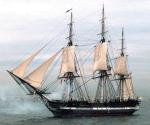
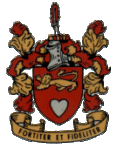
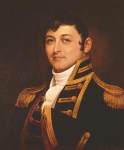

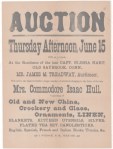
Aunt Lillian told me that in a copy of her father’s book ‘Bound In Clay’ Royal Rosamond claims he descends from Sir Issac Hull, a Captain of the U.S.S. Constitution, the oldest commissioned vessel in the United States Navy. The problem with this claim, Isaac never had children by Ann Hart. However, there is a very good chance we are kin to Isaac because the Harts are kin to Senator, Thomas Hart Benton, a close kin of my niece, Drew Benton. I am finding genealogical questions on the web, that wonder if Isaac was married to Ann Hart. I wondered this myself after reading Isaac took Ann’s sister on a cruise on America’s most famous ship. Isaac also captained the U.S.S. Enterprise.
Yesterday I found a notice for an auction my Hull’s alleged wife who is selling Commodore Hulls belongings. Why? Did she feel jilted after he married another woman in another port? Or, did she found out he had a woman in every port, and was a womanizer who agreed to get engaged to Ann in order to remain a constant visitor to the Hart household, where Ann’s three beautiful sisters lived as well. Perhaps he had borrowed money from Ann’s father. There is a Rose family associated with the Hull ancestry
Jon Presco
The Hart Family
This page presents much of what I know about Stephen Hart and his descendants. Stephen Hart was the progenitor of one the many Hart families in North America. It is though that he arrived in Plymouth on the ship the Lyon in 1632. He and his family moved to Hartford, Connecticut with Thomas Hooker in 1636. A few years later Stephen Hart and others settled the town of Farmington, Connecticut, where Harts have remained until the modern era. Many of Stephen Hart’s descendants left Farmington to settle in other parts of Connecticut, the United States, and Canada. This website focuses on Stephen Hart and all of his descendants.
The ancestry of Silent Rose is still a mystery, but we do know a lot about his descendants. He was born May 19, 1775 (or 1776) in Lebanon, CT and died at the young age of 37 or 38 on Dec. 8, 1813. I have a lot of information about his grandchildren who were the children of his son Asa Hinckley Rose.
San Carlos Bohemians On Druid Hill
Posted on July 16, 2024 by Royal Rosamond Press


Broderick – Stuttmeister – Janke family at Twin Pines Park Belmont California
On this day, I John Presco, Rightful owner of the Habsburg Empire in the New World, as well as the Holdings of the House of Bourbon, do lay clam to the City known as San Carlos that I suspect is a fictitious name, aimed at hiding the natorious swindling by Leland Stanford ‘The Robber Baron’.
I am the great grandson of Carl Janke, and William Stuttmeister, who owned property in Belmont, and elsewhere. I did not receive a warm welcome at the Belmont Historical Society. I wondered why. After much digging, I discovered Carl and Doretha Janke were dug up from their graves in the middle of the night, and put in a grave in Redwood city with Doretha’s mother. Does San Carlos treat their founders this way? It’s hard to tell, because there are so many – stories! For now, I go with Charles 111 because he is kin to Empress Zita who fled to the United States after Hitler put a price on her head. I have claimed the painting of her family after my attempts to return it to Austria – failed! I am kin to the Hull family.
I have given San Carlos a new name that is inspired by the Wonderland the Janke Family created in Twin Pines Park. What is that tree on the City Seal of San Carlos? If it is a Bay Laurel Tree, then it is ordained I own these lands……
TRANFORAN
John G. Presco
President? Of Royal Rosamond
Duke of Tranforan
Posted on May 27, 2023 by Royal Rosamond Press
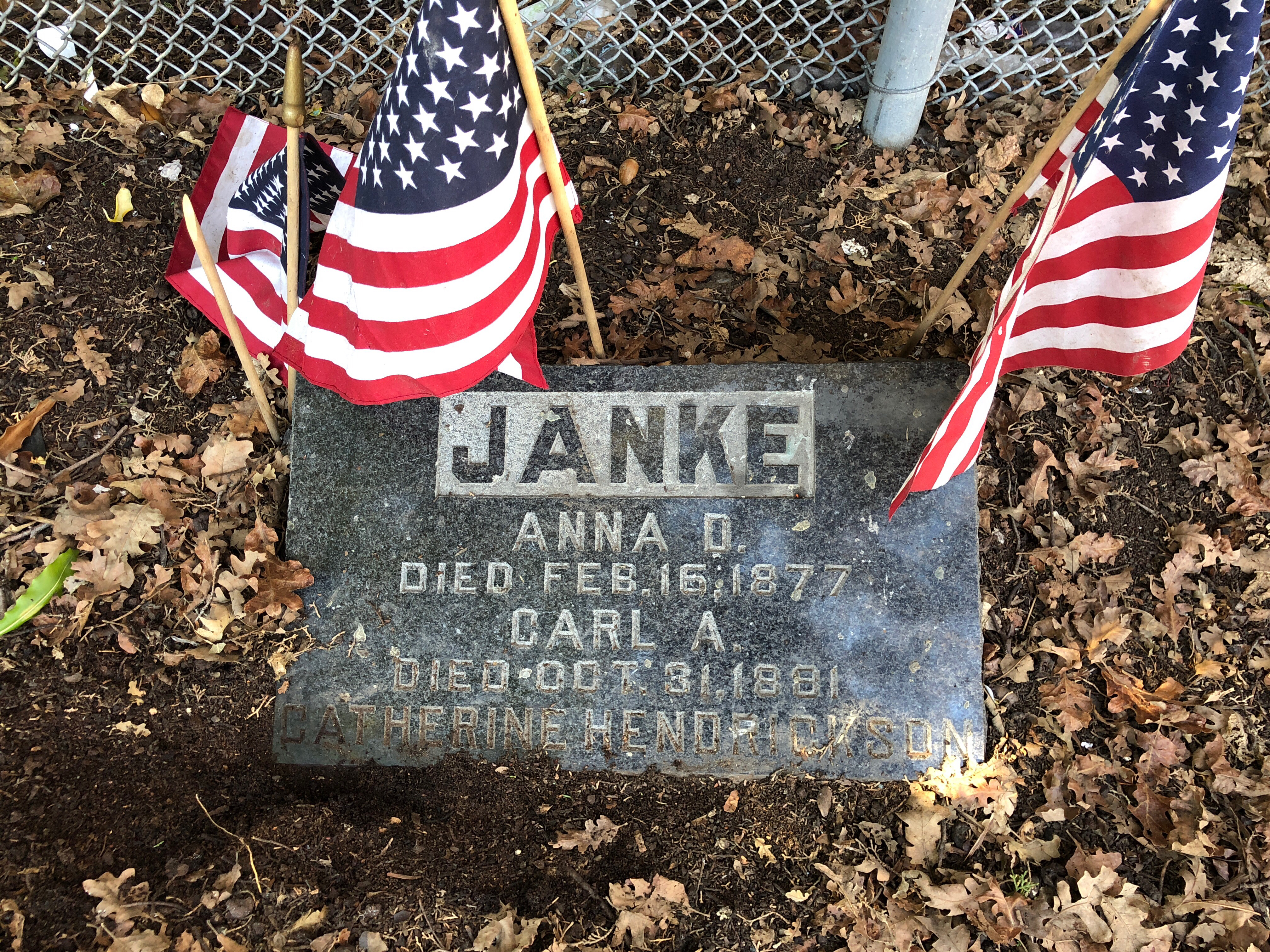
It is 8:33 A.M. May 27, 2023 – and I am still in shock having discovered my grandparents are buried in the same grave! I saw TWO flags put on one gravestone. That was a half hour ago. THEN – I see another flag! There are three of my ancestors buried in the same grave! WHY? Did the caretakers conclude this was a very poor family? William Stuttmeister knew they were Belmont before he died. At great expense to himself, he moved the Jankes to Colma after they were evicted from the Odd Fellow cemetery – at great expense! This was a wealthy pioneer family whose graves keep being defiled! They were moved to the Union cemetery i 1972?
Below is a video I made after I met with LDS Sisters who wanted to meet at the genealogy center to look at these illustrious people who have a magnificent crypt in Berlin. I don’t know if I told them I was considering putting Amanda Gorman in my painting of the two pages saving our electoral votes.
John Presco
“Originally Carl abd Doretha were buried under a huge bay tree there and bodies later moved to the Union Cemetary “during the dark of night” my mother used to tell us.”

Lesser Arms of Bourbon-Parma
Eventually, more explorers began to arrive. The first was Gaspar de Portola, who, as indicated, came in 1769. Historians differ on Portola’s route to San Carlos. Some think his trek from the Pacific Ocean took him to Belmont, while others believe it was San Carlos.

Blog: Bohemians of the Peninsula
The Brittan namesake is one of the most well-known in San Carlos.
 by Dan CalicOctober 21, 2022 3:56 pmUpdated March 25, 2024 1:47 am
- Click to share on X (Opens in new window)
- Click to share on Facebook (Opens in new window)
- Click to print (Opens in new window)
- Click to email a link to a friend (Opens in new window)
Dale Avenue is near where San Carlos Avenue intersects with Alameda de las Pulgas. On this heavily wooded street is a place with historical significance. The address is 125 Dale Avenue. What’s noteworthy about it, you ask?
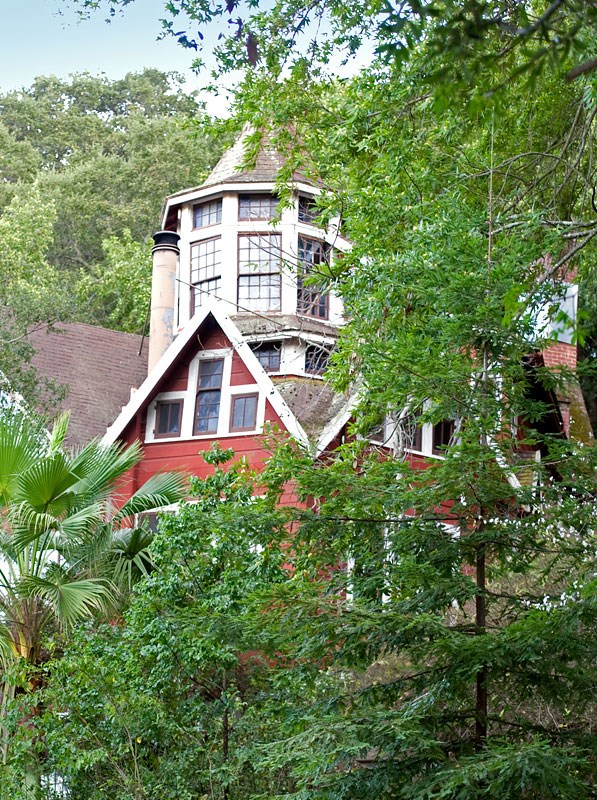
It was built in 1872 by Nathanial Brittan, the son of John Wesley Brittan, a successful hardware store owner and merchant, who made his fortune during the Gold Rush era. The Brittan namesake is one of the most well-known in San Carlos.
The property was part of a sizable 3,000 purchase by John Wesley from Rancho de las Pulgas in San Carlos. He named it Brittan Ranch.
When he died in 1872, his son Nathanial inherited a large portion of the land.
Nathanial made a name for himself when he became the co-founder of San Francisco’s Bohemian Club, which includes a 2,700-acre private location north of San Francisco in Sonoma County known as Bohemian Grove. The organization also has a clubhouse in San Francisco.
Members of this private group are the elite from politics, the arts, business and other realms of society. Past members include several U.S. Presidents, William Randolph Hearst, Joseph Coors, Tennessee Ernie Ford, David Packard, Ronald Regan, Arnold Schwarzenegger, and many more.
Many serious meetings took place there, including one in 1942, which was part of the Manhattan Project that ultimately led to the manufacture of the first atomic bomb.
The Grove also hosted plenty of outright parties, some of which became known for being quite wild.
Brittan, who lived in San Carlos just one-half block away, wanted to establish 125 Dale Avenue as the gathering place and hunting lodge for his fellow club members. He had hoped the lodge would become the club’s main facility.
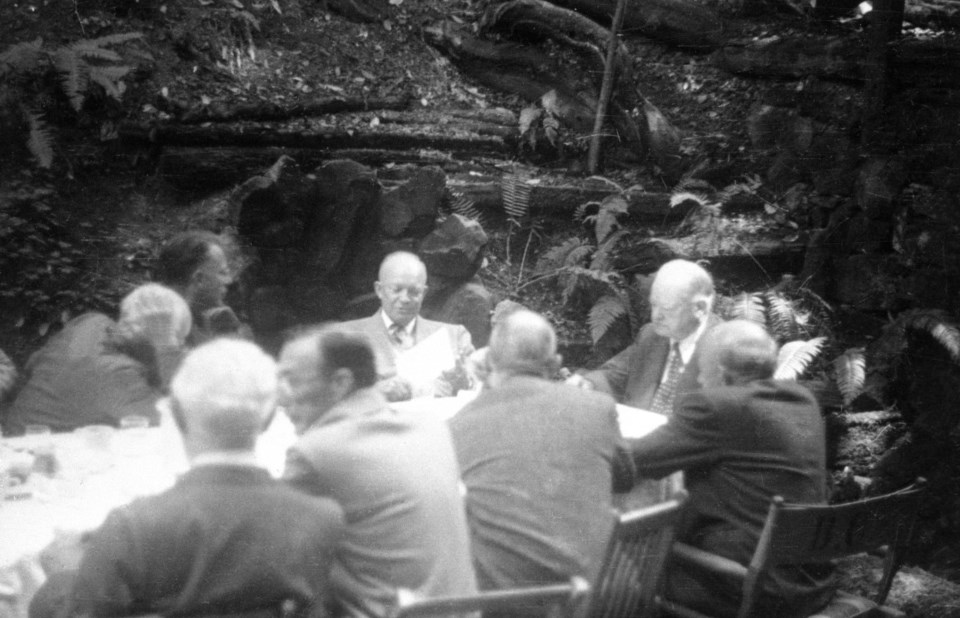
Alas, Sonoma County would become its playground while the urban headquarters became San Francisco for this exclusive society of elites. Annual gatherings continue to take place today.
The house in San Carlos, which is privately owned, was placed on the National Registry of Historic Places in 1994.
Everything else is just history
Some of the photos used in this blog are courtesy of the Local History Room, Redwood City’s best-kept secret. The Local History Collection covers all aspects of Redwood City’s development, from the 1850s to the present day, with particular emphasis on businesses, public schools, civic organizations, city agencies, and early family histories. The Local History Room is not affiliated with the Redwood City Public Library, but it is inside it.
The Nathanial Brittan Party House, also known as Nathaniel Brittan Party House, Brittan Party House, Brittan Lodge, is located at 125 Dale Avenue in San Carlos, California, and was built in 1872.[1] It was listed on the National Register of Historic Places in 1994.[1]
History[edit]
John Wesley Brittan (1812–1872), owner of Brittan & Holbrook, was a successful hardware store merchant during the gold rush in San Francisco.[2][3] John Brittan bought 3,000 acres of the Rancho de las Pulgas, in what is now San Carlos, and it was named “Brittan Ranch”.[2] His son Nathaniel Jones Brittan (1848–1912) inherited approximately one third of his father’s estate, an early settler in San Carlos where he kept his “country house”.[2][4][5]
Nathaniel Brittan co-founded the Bohemian Club of San Francisco in 1872, and by 1892 Brittan was the president of the club.[5] He built the Nathaniel Brittan Party House in order to entertain his friends from the club and to use as a hunting lodge.[2][5][6] The Brittan Manor House (1888), Brittan’s former residence, is located about a half-block away at 40 Pine Avenue.[7]
The Nathaniel Brittan Party House was built in 1872, as a Victorian-style, two-and-a-half story redwood framed structure with an octagonal folly.[8] There is a shiplap exterior siding that appears to go in multiple directions.[5][8] The building has steep gables and an octagonal windowed cupola.[5] It is one of the few remaining examples of nineteenth century Octagon Mode buildings in the San Francisco Bay Area.[8]
See also[edit]
References
1864
It is with Nathaniel that we continue our history.
The San Carlos Station (Southern Pacific Depot)
When the San Francisco-to-San Jose railroad was being laid in 1864, Nathaniel Brittan granted the right-of-way through his property, with the stipulation that a station agent and telegraph office be maintained at all times. Brittan was a friend of Leland Stanford who arranged to lend his University stone masons for the building of the San Carlos (Southern Pacific) Depot in 1888. This is how our now famous landmark, the Southern Pacific Depot, came to be built. It is a rare example of the use of the Richardson Romansque style in California railroad station architecture. It was the first permanent building erected by the San Carlos Land Company to form the nucleus for their speculative town development.
Nathaniel’s Party House
In 1873 Nathaniel Brittan inherited the lands between Pulgas Creek and Brittan Ave. from his father and built his Manor House on Pine in 1881. The home included a bear pit, aviary and fine gardens. Nathaniel also had a huge hunting lodge built on the present Dale Avenue near his elaborate home so as not to disturb Mrs. Brittan when he entertained his cronies. At one time he wished, to build a “Country Jinx” Clubhouse where the Bohemian Club could meet on Druids Hill near the present intersection of Orange and Elizabeth Streets. A cornerstone was laid, but the clubhouse never came about. The original Bohemian Club cornerstone was first laid at the corner of Orange and Elizabeth Sts. and is now at the Bohemian Club Grove, Russian River. Mr. Brittan was one of the founders and a past president of the Bohemian Club, which was formed in 1872. Brittan Ave. in San Carlos is named for this family.
Nathaniel died in 1912. He had three children, Natalie, Belle and Carmelita. There are streets in San Carlos named after these children.
1925
SAN CARLOS San Carlos had its beginnings in the very early days of San Mateo County and was known principally as the home place of the Honorable Timothy G. Phelps who was one of the most important men in the history of San Mateo County. Here also were located the home and brickyard of W. W. Hull, who after closing his kilns, entered the milk business, and this community was also the abiding place of the Britton family who owned thousands of acres of land. The city of San Carlos was laid out in the early ’90s as a railroad project and the Southern Pacific Railroad Company erected the finest depot anywhere on its line between San Francisco and San Jose. This depot is constructed of brown stone with a slate roof, and a big open fireplace in the waiting room gives cheer and comfort throughout the year. The territory as subdivided comprised a large part of the holdings of Mr. Phelps and among the first to settle in the community was Captain N. T. Smith for years an official of the Southern Pacific Railroad Company. Because of the lack of a good water supply, San Carlos did not develop as rapidly as had been expected and outside of the incorporated area only the Phelps, Britton and Hull homes were known to any extent. The Spring Valley Water Company secured a site in the northern end of the community and erected a large pumping station which was for many years under the managership of Captain D. Hayes. About 1911 the town began to show signs of life and shortly thereafter the district school which was located at West Union, about four miles southwest of the town, was moved to San Carlos and with the advent of the school and the erection of a very beautiful two room auditorium building, families began to settle. On May 11, 1925, a petition was presented to the Board of Supervisors of San Mateo County asking for the incorporation of San Carlos as a city of the sixth class. An election was accordingly called for June 22 and on that date 157 voted for incorporation and 26 voted against. On July 6, 1925, the supervisors having received the findings of the election, San Carlos became a municipality. Of the citizens of the community who have labored zealously for its advancement, many could be mentioned. Mr. John E. Cowgill was for years its unofficial mayor. Mr. Cowgill, at present Southern Pacific agent, was put in charge of the Southern Pacific Station in 1906 and from that date until very recently was station agent, Wells Fargo agent, postmaster and correspondent to various newspapers. Mr. Fred Drake has been active in the real estate business of the community and has been one of San Carlos’ most loyal boosters. Asa Hull has also played an important part. To name others would be practically to take the city directory, as all of the residents have been particularly active in promoting the civic welfare of the community.
While the California Gold Rush of 1849 found no gold nearby, disappointed Sierra Nevada prospectors made their way to the region, bringing the first non-Spanish western settlers. The Argüello family retained deed to their ranch through the transfer of governments to the United States, and, in the 1850s, began selling parcels of it through their agent S. M. Mezes.
While the port of Redwood City, to the south, and the town of Belmont, to the north, both grew quickly in the late 19th century, San Carlos’ growth was much slower. Major portions were purchased by the Brittan Family, the Hull Family, the Ralston family and Timothy Guy Phelps.

Timothy Phelps, a wealthy politician, made an early attempt to further develop the San Carlos area. He paid for significant improvements such as sewer lines and street grading, and began to promote lot sales in what he immodestly called “The Town of Phelps”.
Phelps’ sales were largely unsuccessful, and he eventually sold much of his land to Nicholas T. Smith’s San Carlos Land Development Company. Other developers were not overly fond of Phelps’ eponymous efforts, and decided to rename the town. Some maps are existent referring to the area as “Lomitas” (“little hills” in Spanish) but eventually due to historical legend, the name “San Carlos” was chosen. As noted previously, it was believed that Portolá had first seen the San Francisco Bay on November 4 from the San Carlos hills. November 4 is the feast day of St. Charles. As well, the Spanish king at the time was Carlos III, and the first ship to sail into San Francisco bay was the San Carlos.
The newly named region—not yet incorporated—received a boost with the construction of the Peninsula Railroad Corridor in 1863, and the addition, of a station at San Carlos in 1888.
Growth remained slow through the turn of the 20th century, with most residents enjoying the short 35-minute train ride to San Francisco while living in a rural setting. The Hull family operated a dairy located at the modern intersection of Hull and Laurel. Many of the other residents which were not involved in agriculture were wealthy business and professional men who worked with the railroad or in San Francisco.
Despite the efforts of the developers, growth was very slow in this period, and San Carlos ended the 19th century with fewer than one hundred houses and families.
Philip was born into the French royal family (as Philippe, Duke of Anjou) during the reign of his grandfather Louis XIV. He was the second son of Louis, Grand Dauphin, and was third in line to the French throne after his father and his elder brother, Louis, Duke of Burgundy. Philip was not expected to become a monarch, but his great-uncle Charles II of Spain was childless. Philip’s father had a strong claim to the Spanish throne, but since Philip’s father and elder brother were expected to inherit the French throne, Charles named Philip as his heir presumptive in his will. Philip succeeded in 1700 as the first Spanish monarch of the House of Bourbon.
In 1701, the new king married his second cousin Maria Luisa of Savoy, with whom he had four sons. Their two surviving sons were the future Spanish kings Louis I and Ferdinand VI. Maria Luisa died in 1714, and Philip remarried to Elisabeth Farnese. Philip and Elisabeth had seven children, including the future Charles III of Spain; Infanta Mariana Victoria, who became Queen of Portugal; Infante Philip, who became Duke of Parma; and Infanta María Antonia Fernanda, who became Queen of Sardinia.
 Rosamond Press
Leave a comment