
Victoria Rosemond Bond turned off the Academy Awards, and in a daze answered her phone. It was Clive Rougemont calling from Lloyds.
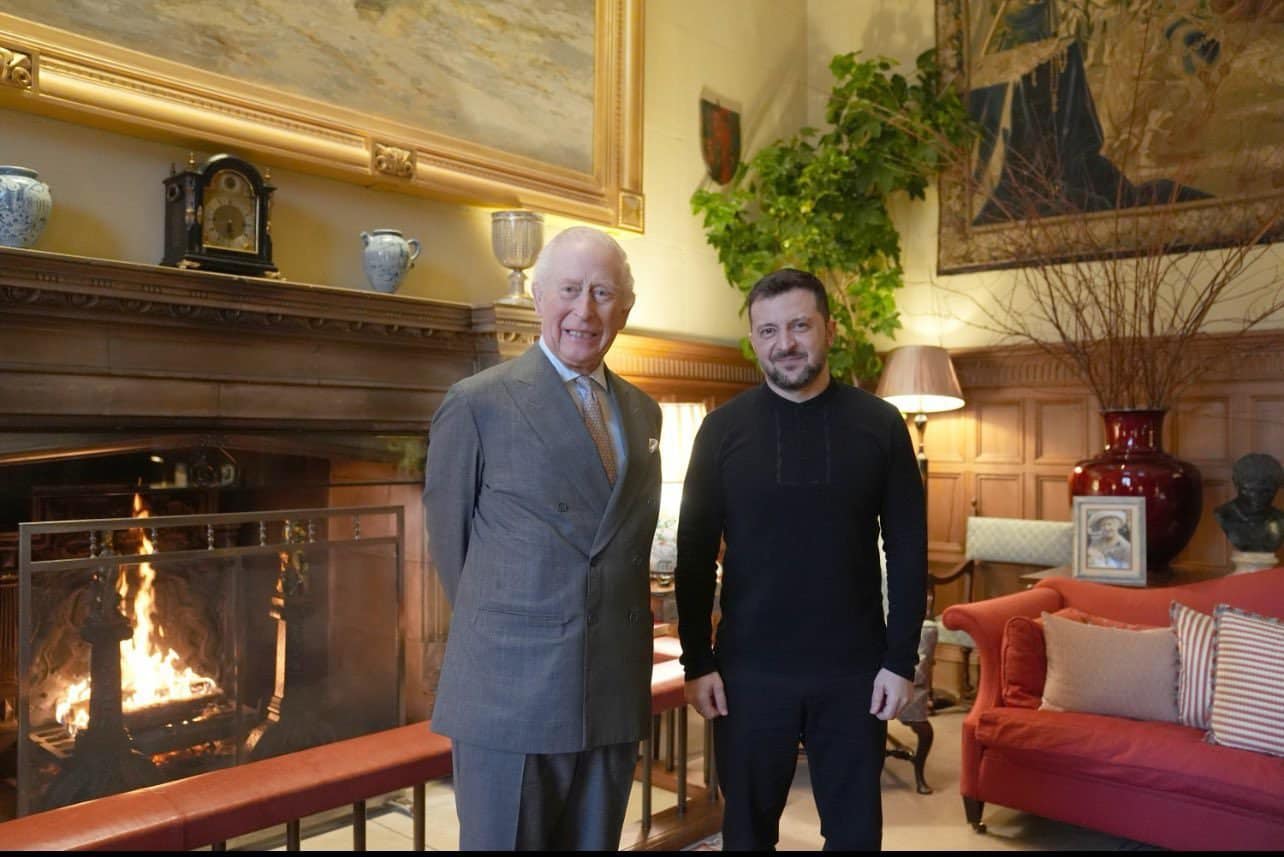
“I think you should found a newspaper in Eugene. Half of America is alinging itself with Zelensky – and the United Kingdom for supporting this hero! How about…..The Royal Guard?”
“The Royal Rosamond Guard!” Victoria added.
“So be it!”
On March 22, 2024, I founded the British Art Department in the old power Station in Eugene that will also house RRG.
John Presco
President: Royal Rosamond Press
Fleet Week On The Willamette →
Joan of Hart
Posted on May 22, 2024 by Royal Rosamond Press
The Royal Janitor
by
John Presco
Copyright 2024
Chapter: Joan of Hart
Victoria Bond could not believe how fast the workman, worked. Most of the workers were from Scotland. They came to America to participate in a soccer match – that never existed. An item in the Register Guard said their families came along to root for the Rose and Sinclair clans. There were pipes and drummers going to and fro in the new Waterfront Park. They were practicing. The practicing went on for a month. By that time – it was done!
After finding John Presco, the pieces of the puzzle began to fall into place. He was pretty shaken up. A month earlier he had a vision in the University of Oregon Library the day before October 7th. He was doing research for his book ‘A Rose Amongst The Woodwoses’ Twenty years earlier he found a book on rulings of the Sanhedrin that revealed Jesus was very close to these rulings. When I (he) found the book, missing, he thought of his old nemesis ‘The Green Swastika’ who had hid a book about Rosamond The Cupbearer from him. He called the Uof O police. They came.
Victoria and The Wizard grilled John extensively about what he said to Mr. Swastika.
“We shared alot of information. But, I kept the core of my book, a secret…..or, did I?”
“What did you let slip?” asked The Wizard?”
“I dare not tell you, then you will know the incredible secret that will stand Christianity – and Judaism – on it;s head!”
“You can tell us!” Victoria said, and put her hand on John’s forearm.
“I believe I told Green I suspect Jesus was an upstanding member of the Sanhedrin!”
Both Victora and John were spray with warm coffee, as The Wizard let go a mouthful!
“For fuck sake! I hope you did not suggest this idea to anyone else!” cried Wizard. And out of his attaché came his dart gun – and hit John Presco with a tranquillizer next to his Adam’s Apple.
…..
The British Art Department never opened its doors to the public. British Billionaires paid for it’s wonderful restoration. Every day, at tea time, a door opened, and out marched a Scotch Guard that carried loaded weapons. just in case…they came! And….they would come! And…Mr. Green will lead them, and point out…..Mr. Presco!

Jon Rosamond
Jon Rosamond is a London-based freelance defense journalist specializing in the naval and maritime security arenas, having previously edited Jane’s Navy International and served as defense correspondent on The News in Portsmouth, England, home of the Royal Navy.
For years, the biggest threat to 007 “was the apocryphal ‘woke police’”, said Adam White in The Independent: a “mob of rainbow-haired bisexuals” determined to turn James Bond into a woman and replace his vodka martini with “vegan wine”.
But now, we know how Bond will really be killed off: through “a slow, sad corporate takeover”. Last week, the Broccoli family yielded creative control over the franchise to Amazon MGM Studios.
‘Hallmark of Britishness’
For Brits, 007 “is not just A.N. Other action hero”, said Janice Turner in The Times: “he’s our soft power, our collective national id” – an alluring mix of “tradition and modernity” and “understated cool”, “salted” with a dash of humour. Now, it’s only a matter of time before Jeff Bezos and his algorithm-led streaming platform turn Bond into a bland, “Americanised” figure.

Updated: March 2, 2025 9:36 PM EST | Originally published: March 2, 2025 8:55 PM EST
For all the biggest moments of the 2025 Oscars, read our full recap here.
In case you are a movie fan who has been living under a rock for the last week, I regret to inform you that the Broccoli family—who have long been the stewards of the James Bond film franchise—recently handed over full creative control to Amazon in exchange for a major paycheck. So the Oscars decided to highlight the Broccolis, following Barbara Broccoli and Michael G. Wilson’s being honored with the Irving G. Thalberg Memorial Award last November, with a tribute to 007. It was…strange.
energy regulation
The company asked to skip permitting rules for 250 diesel generators at a proposed facility in Becker, Minnesota.
March 1, 2025
6 min324

Amazon on Friday lost a fight to escape regulatory oversight for a proposeddata center northwest of Minneapolis, in a skirmish that illustrates how the tech industry’s rush to invest billions in new facilities can clash with local communities and state-level climate goals.
Get concise answers to your questions. Try Ask The Post AI.
The decision against Amazon by Minnesota’s Public Utilities Commission comes in a state that, like many others, is grappling with a recent spike in data center construction, with projects also planned by Meta and Microsoft.
Tech industry competition in artificial intelligence is driving a boom in data center construction that won support from the Biden administration and now the Trump administration. The projects have prompted the resurrection of shuttered power plants and fears of rate hikes and energy shortfalls.
In Minnesota, Amazon sought to avoid a potentially lengthy permitting process for 250 diesel backup generators at a data center proposed in the small city of Becker, where the project had support from labor unions and city officials.
A royal guard or the palace guard, is a group of military bodyguards, soldiers or armed retainers responsible for the protection of a royal family member, such as a king or queen, or prince or princess. They often are an elite unit of the regular armed forces, or are designated as such, and may maintain special rights or privileges.
Institution and tasks
[edit]

Royal guards have historically comprised both purely ceremonial units serving in close proximity to the monarch, as well as regiments from all arms, forming a designated substantial elite and intended for active service as part of the army. An example of the first category would include the Tropas de la Casa Real of the Spanish monarchy prior to 1930, comprising halberderos and a mounted escort. Examples of the second would include the Imperial Guards of the Russian and German Empires prior to 1917–18.[1]
Monarchs frequently modelled their royal guards upon those of fellow rulers. Thus, Napoleon I‘s Garde Imperiale was imitated by his opponent Alexander I of Russia, his Bourbon successor Louis XVIII, and his nephew Napoleon III. The modern Garderegiment Grenadiers en Jagers regiment of the Netherlands and the Escorte Royale of Belgium retain features of uniform and other distinctions that can be traced back to Napoleonic influences.[2]
Fleet Week On The Willamette
Posted on May 23, 2024 by Royal Rosamond Press

Victoria Bond felt serene for the first time in a year. She found time to create another work of art in her studio at The Bristish Art Department. As she chipped away at her block of marble, she looked over at her new friend, John Presco, working on his rendering of the January 6th. storming of his Nation’s Capitol. A small cherry-picker was brought in to assist Mr. Presco in completing his fiteen by twenty foot masterpiece that he planned to present to Presdient Bidn when he wins another twem.
It was Fleet Weeks in New York Harbor.
STOP THE PRESSES!
Sn hour after I wrote the text above, I turned on the news and saw – THIS FLAG! I went into Dream Time when I saw the two green flags at our Capitol. They are like columns. Seven months ago I dreamed I was atop such a tree. Victoria had dreams of Ghost Ships. Russia and British ships can not sail. They may be scrapped!
John Presco
The Priory of The Bohemian Democratic Register
Posted on July 17, 2024 by Royal Rosamond Press
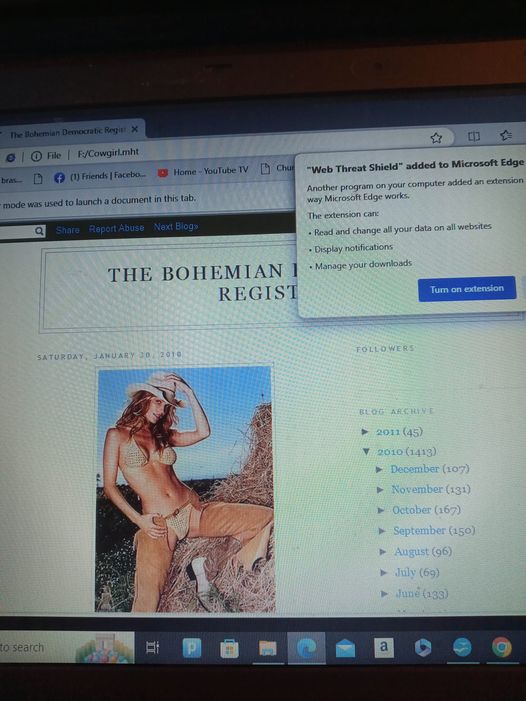
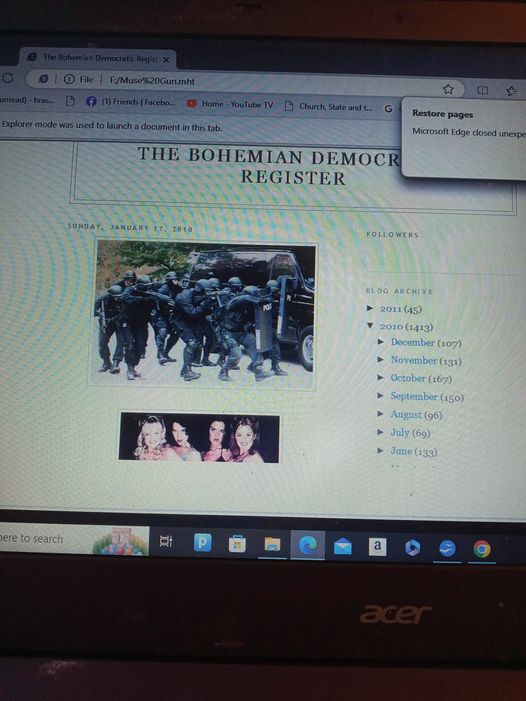

Eureka! I found posts from The Priory on Yahoo-Groups, and images of lost blog
The Bohemian Democratic Register
You know I have much to say about this, but, that will come later.
John Presco
President: Bohemian Democratic Register
Share this:
THE ROSAMOND GENEALOGY
Plus Related Families of the Web Page Owner
INFORMATION FROM BOB ROSAMOND – UNITED KINGDOM

Cousin Barbara Morgan first made contact with Bob Rosamond in the UK, as I did later. Bob is a retired policeman, and his father did quite a bit of work on the Rosamond genealogy in the UK. His family, independently from my family, and the family of Mary Jane Loya in California, have the legend of Sergeant Rosamond. Below is Bob’s story from the perspective of his family.
Return to Home Page
The Known History
of the
Rosamond Family
Pictured below – right is Bob’s grandmother, given name unknown, and her children. In the picture left to right are Albert Rosamond, William Rosamond, Bob’s Grandmother, Maude Rosamond, and Bob’s father Robert Henry Rosamond.Bob’s grandfather was killed in World War I.

The Huguenots was a name given to the Protestants of France from about 1560 to 1629. Protestantism was introduced into France between 1520 and 1523, and many members of the nobility, the intellectual classes, and the middle class accepted its principles. At first the new religious group enjoyed royal protection, notably from Queen Margaret of Navarre and her brother, King Francis I of France. Toward the end of his reign, however, Francis persecuted the Protestants; his successor, Henry II, followed his example. Nevertheless, the French Protestants increased in number. At their first national synod (1559), or council, 15 churches were represented. At the next, held two years later, more than 2000 churches sent representatives.
The rise in the number of French Protestants excited the alarm and hatred of the French Roman Catholics. The religious hatred was intensified by political rivalry between the house of Valois, then in possession of the French throne, and the house of Guise. Catherine de M�dicis, widow of Henry II, who governed in the name of her son, King Charles IX, at times, allied herself with the Huguenots for political reasons, but generally sided against them. The Huguenots were persecuted severely in Charles’s reign, and they in turn made reprisals upon the Roman Catholics. Finally, open civil war broke out. Between 1562 and 1598 eight bitter wars were fought between French Roman Catholics and Protestants.
The Huguenot leaders in the first of the nearly four decades of conflict were Louis I de Bourbon, prince de Cond�, and the French admiral Gaspard de Coligny; subsequently they were led by Henry of Navarre, later Henry IV, king of France.
The principal Roman Catholic leaders were Henri I de Lorraine, 3rd duc de Guise; Catherine de M�dicis; and King Henry III. Each side from time to time called on foreign help. The Huguenots obtained troops from England, Germany, and Switzerland; the Roman Catholics, from Spain. The treaties that concluded the wars usually granted the Huguenots some measure of tolerance, but the government’s subsequent ignoring or outright repudiation of the terms of the treaties led to a renewal of hostilities. The greatest act of treachery of the period took place in 1572. Two years previously, Catherine and Charles IX had signed a treaty with the Huguenots granting them freedom of worship; they had remained on friendly terms with the Huguenots, calling Coligny to court, where he enjoyed great influence. Having lulled the Huguenots into a feeling of security, on August 25, 1572, St. Bartholomew’s Day, the queen mother and the king caused thousands of them to be massacred in Paris and elsewhere in France. Coligny was found and killed by the duc de Guise himself.
The eighth civil war took place during the reign of Henry III, successor to Charles IX. The Huguenots, now led by Henry of Navarre, inflicted (1587) a crushing defeat upon the Roman Catholics at Coutras. Strife among the Catholics themselves, which resulted in the assassinations of the duc de Guise in 1588 and Henry III in 1589, helped the Huguenot cause. With the death of Henry III the house of Valois became extinct, and Henry of Navarre, the first of the Bourbon line, became king of France as Henry IV. To avoid further civil strife, he conciliated the Roman Catholics by converting to Catholicism in 1593. In 1598 Henry IV issued the Edict of Nantes, by which the Huguenots received almost complete religious freedom.
Under Henry IV the Huguenots became a strong power in France. To break this power, which stood in the way of the absolutist type of government that the next two kings of France, Louis XIII and, particularly, Louis XIV, wished to impose on the country, both monarchs instigated new persecutions of the Huguenots, and new civil wars took place. The French statesman Cardinal Richelieu caused the political downfall of the Huguenots with the capture (1628), after a long siege, of their principal stronghold, La Rochelle. Thereafter he sought to conciliate the Protestants. Louis XIV, however, persecuted them mercilessly, and on 18th October, 1685, he revoked the Edict of Nantes. Finding life in France intolerable under the ensuing persecutions and evaporation of religious liberty, hundreds of thousands of Huguenots fled to England, Ireland, Germany, the Netherlands, Switzerland, and the English colonies in North America, including Massachusetts, New York, and South Carolina. The total emigration is believed to have been from 400,000 to 1 million, with about 1 million Protestants remaining in France. Thousands of Protestants settled in the C�vennes mountain region of France and became known as Camisards; the attempt of the government to extirpate them resulted in the Camisard War (1702-05). The enlightened and religiously sceptical spirit of the 18th century, however, was opposed to religious persecution, and during this time the French Protestants gradually regained many of their rights. Although Louis XV issued an edict in 1752 declaring marriages and baptisms by Protestant clergymen null and void, under Louis XVI the edict was recalled. After 1787, Protestant marriages were declared legal, and Protestants were granted other rights as well. Several laws passed later in the 19th century gave full religious freedom to all French sects, including the Protestants. In the 19th and 20th centuries French Protestants, although comparatively few in number, have been influential in French life, playing an important part in education, law, and finance, and in general taking a liberal stand on social reform.
Immediately after the revocation of the Edict of Nantes in 1685, one William Rosamond, a Huguenot, fled from France. He was married to a lady whose maiden name had been Anne d�Orr . (French �of gold�).
There are a number of researchers looking into the family history.The findings of some are as follows:
1. In 1925 William Sam Rosamond did a relatively complete genealogy. His research indicated that we were descended from a Huguenot born in France sometime in the mid to late 1600s. He discovered that his earliest traceable ancestor was a “Sergeant” Rosamond who left France following the Revocation of the Edict of Nantes on 22nd October 1685. He found that Sergeant Rosamond supposedly travelled to Holland where he joined the army of William III, went to England, and from there went with William’s army to Ireland. He fought in the Battle of the Boyne on 1st July 1690 (by the old calendar � 12th July by the new calendar) and then remained in County Leitrim, Ireland. (There is still a family of Rosamonds in County Leitrim.) He had three sons, two of whom went to the American colonies and settled in the mid-Atlantic region. One of the sons� names was either John or Thomas Rosamond. Current researchers have not been able to confirm this connection. It appears probable that the American branch of the family are descended from John “The Highwayman” Rosamond who arrived in Annapolis, Maryland in 1725. He was sentenced to be transported into 14 years servitude for robbery from the Oxford Assizes. This John could be the son of Sergeant William Rosamond, and the mix up in names likely stems from the fact that his father-in-law’s name was Thomas Wilson.
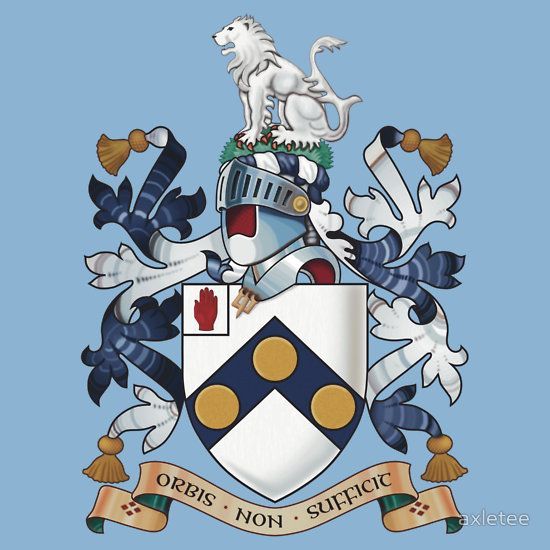
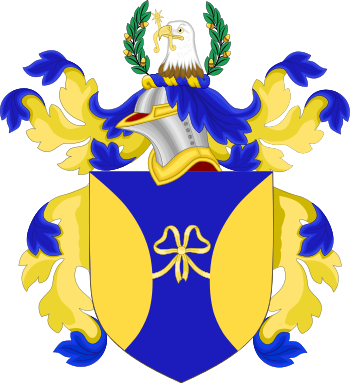
2. Mary Jane Loya of California, whose mother was born in County Leitrim, Ireland, still has cousins living in England, some of whom are also researching the family history. Her family there has the same story of Sergeant Rosamond except that they show his name as James, and say that he took part in the Battle of the Boyne on 1st July 1690. He distinguished himself during the battle and William III, following the battle, knighted him. The family in England, specifically her cousin Jane, has a Coat of Arms for the family name, which is supposed to date back to that date.
3. Tom Rosamond, one of the current researchers in the US, had a Heraldry House in Boston do research on a family crest, and a crest was discovered that originated in Ireland. This crest exactly matches the one that Mary Jane Loya has. 4. My father, Robert Henry Rosamond (1909 � 1987), did a great deal of research into the family history. He told me (how I wish I had paid more attention) that we were descended from the Huguenots and that the he had managed to trace as far back as a William Rosamond, a Huguenot who left France in the late 17th century. He said that one of the sons of William Rosamond had settled in Sandwich and started a silk weaving business that had later been moved to Bethnal Green. He had discovered that one member of the family had been deported from Oxford Assizes for Highway Robbery in the 18th century.
I have looked with considerable interest at all the available data and I have come to the following conclusions with some confidence:
1. Sergeant William Rosamond was married to a woman called Anne d�Orr (1) and had at least two or three sons, possibly more. There was a John, a Nathaniel and at least one other son, probably more, as it is thought that one stayed in Ireland.
2. There is no doubt at all, as it is on public record, that John Rosamond was deported having committed either highway robbery or a robbery of some description (both very serious offences for which the perpetrator was usually hanged) in Oxfordshire. He landed in Annapolis, Maryland in 1725 on a ship called the �Forward�. He was probably very young and had sufficient money to pay his fare to America and was therefore sent for transportation for life indentured for 14 years labour.
3. It is probable that one of the sons, probably Nathaniel, died in the American War of Independence. There is also little doubt that one of the other sons, I am not sure which, finished up in Sandwich which was then a very important port on the South coast of England (one of the Cinque Ports (2) ) where he started a silk weaving business. No doubt silk would have been imported into Sandwich. Eventually the business moved to Bethnal Green (then known as Bednal Green) a small village that was situated about a mile to the East of the City of London boundary wall. As London grew so Bethnal Green was eventually incorporated as a London Borough of which my father was one time Mayor. There is quite a large family of Rosamonds in London, including my eldest son and his family but after I remarried and moved North I lost touch with them.
4. The Eastern side of Bethnal Green became a well-known centre for silk weaving and my family were originally silk weavers. The trade continued until the 2nd World War during which Bethnal Green was virtually destroyed by bombing. There are, however, still some silk weavers� cottages standing in the Cheshire Street area. (“Huguenot Weavers Houses in Spitalfields” East London Papers, Volume 1, Number 1, – April 1958) One of the Bethnal Green Huguenot silk weavers, one George Dor�e, was the most skilled of the silk workers and was responsible for the weaving of the coronation robe for King Edward VII. My old school, Parmiters�, that was situated in Bethnal Green was founded in 1682 by one Thomas Parmiter, a Huguenot silk merchant.
1d’Orr was probably a fairly common French name and literally means ‘of gold’ as in ‘Fleche d’Orr’ – Golden Arrow. Orr in now a common name in Scotland, which has many historical connections with the French through Bonnie Prince Charlie and the highland clearances.
2 Cinque Ports, a confederation of coastal towns in southeast England. They provided the crown with ships and men to patrol the Channel and to convey its armies to the Continent, from the 11th to 16th centuries. The original five (French, cinque) ports were Hastings, Romney, Hythe, Sandwich, and Dover–known collectively as the ‘head’ ports. They were joined by thirty-two other ports, known as ‘limbs’. By the 14th century Winchelsea and Rye were also recognized as head ports. The ports of the confederation received privileges including exemption from taxes, the right to return members to Parliament (retained until the 19th century), and the honour of attending on the monarch at the coronation. Burgesses of the ports were in 1205 granted the title of ‘barons’. A Warden of the Cinque Ports was created in 1268 as an extension of the powers of the Constable of Dover Castle. A royal charter incorporating these privileges was granted in 1278. The Cinque Ports declined with the setting up of a
Bond of Nebraska
Posted on March 5, 2020 by Royal Rosamond Press


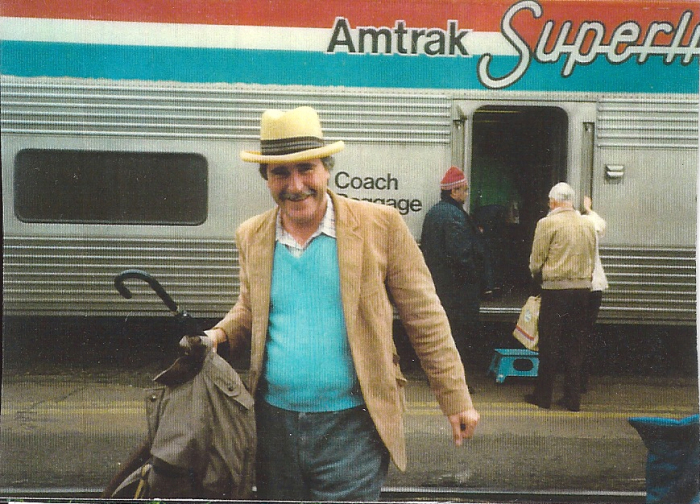


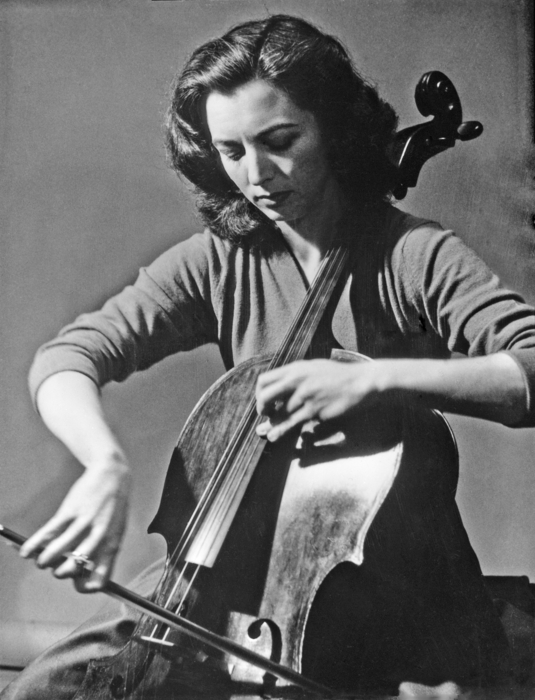


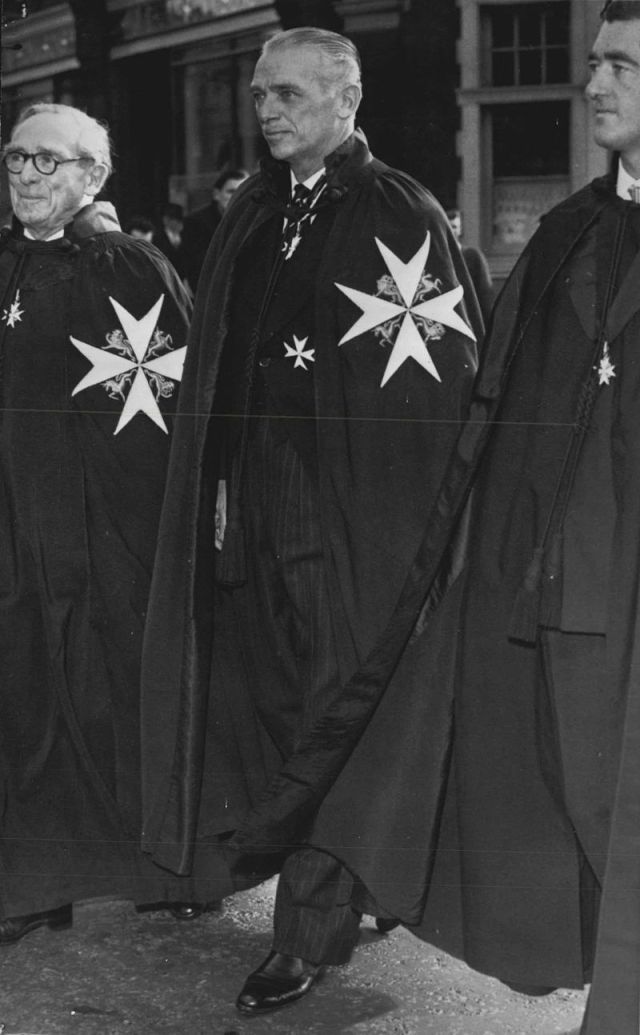
James of Nebraka
A Novel
by
John Presco
Relative of Ian Fleming Creator of James Bond
Copyright 2020
James went downstairs from the observation car, grabbed his bag from the storage compartment, and tapped his decorative cane rapidly as if this would cause the door to open so he could get off what a fellow passenger called;
“The Red Death Ride. That’s what we call it. We know this may be our last Cornhusker game. If we die in the new stadium they can’t fill, like in the good old days, that is a true blessing. We don’t want to die isolated in our beds, or, taken prisoner if a doomed nursing home!”
Mr. Bond let out a long breath as if he held it all the way from Chicago where he landed. He wanted to come back to America. He came to Lincoln in in 1970 to get his late wife’s nephew out of jail. William was a British subject and Bond would be working with the British Embassy to see that the charges are dropped.
“What about my girlfriend. She didn’t know I was holding. She doesn’t do drugs or alcohol. She’s a follower of Meher Baba?”
“Who?” Bond asked, trying not to get perturbed, because he had a nervous breakdown after being splattered with his new wife’s blood.
“I’ll see what I can do. Who are her people?”
“She claims she is the granddaughter of Douglas Fairbanks Jr. She was brought up by her grandmother in Grand Island. Her three sisters were fashion models. One was the mistress of Robert Vesco. There was a ring of beautiful models working the politicians and military attaches. She would not tell me who her mother is.”
When Bond and the British attorney entered the small interview room, he stumbled backwards, and grabbed the arm of the attorney!
“Rose!” James whispered as he blinked his eyes several times as if to get a clearer view of the serious young woman whose gaze was boring a hole into his brain. James collapsed in the oak chair.
Fifty years later, his leg gave out again. A vein had been taken out in order to replace the vein next to his heart that had stopped beating due to his struggle with the coronavirus, that apparently he was immune from.
To be continued….
 Rosamond Press
Leave a comment