
Huck Finn sounds like he is having a Rhetoric discussion with fictional royals, which fits with my belief this art was being practiced at the Court of Henry 8th. and carried on the Elizabeth’s court, where her spies were also actors. The Name Fair Rosamond is now forever with Matk Twain’s legacy – which includes his search for the Real Shakespeare!
JP
EXTRA! Sir Thomas Wilson the alleged nephew of Thomas Wilson wrote something a Shakespeare play was taken from.
Wilson has generally been confused with one or more contemporaries of the same name; a confusion of him with Sir Thomas Wilson (1560?–1629) [q. v.] has led to his being frequently styled a knight.
Is Shakespeare Dead? is a short, semi-autobiographical work by American humorist Mark Twain. It explores the controversy over the authorship of the Shakespearean literary canon via satire, anecdote, and extensive quotation of contemporary authors on the subject.
Summary
In the book, Twain expounds the view that Shakespeare of Stratford was not the author of the canon, and lends tentative support to the Baconian theory. The book opens with a scene from his early adulthood, where he was trained to be a steamboat pilot by an elder who often argued with him over the controversy.
Shakespeare and Elizabeth Taylor
Posted on April 2, 2019 by Royal Rosamond Press

UNITED STATES – MARCH 18: Reagan Family/Burt Reynolds (Photo by The LIFE Picture Collection/Getty Images)


A Rose Among The Woodwoses
by
John Presco
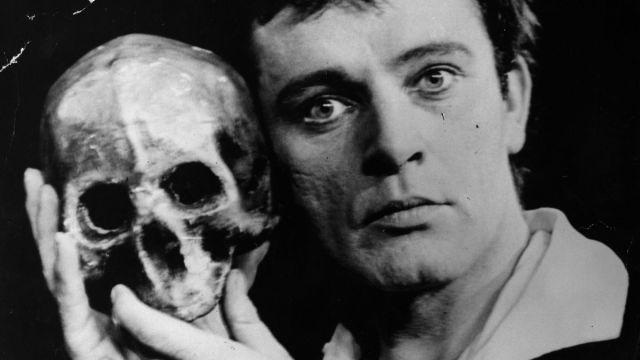
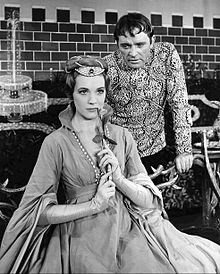
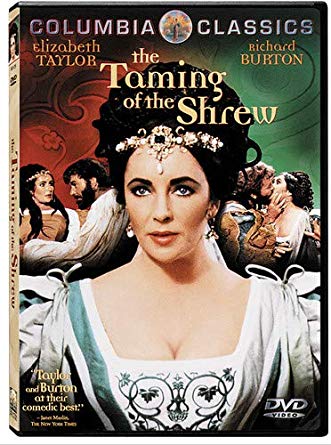
My cousin, Elizabeth Rosemond Taylor, died believing she descended from a bunch of hillbillies, and hicks. What are hicks? If I had not taken a DNA test, this would be the case. It should be of interest to her children, grandchildren, and the children of the Thespians she married, that a mutual great grandfather, Thomas Wilson, acted with the Queen Elizabeth’s Men. Elizabeth Taylor’s Men were known for their egos, too.
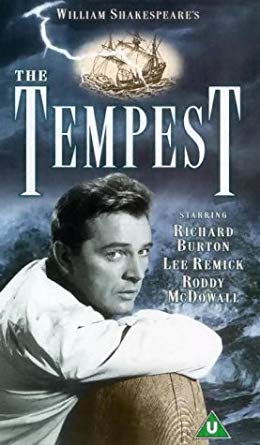
Richard Burton was a famous Shakespearean Actor, and a Wild Man. He married a Wild Rose, twice! The names Taylor and Burton were on the tip of everyone’s tongue in the 60’s. If any two people were born to herald the end of Puritanical America, it was these two Hollywood Stars. Now that my blood test has put much of Hollywood in the Rosamond Family, Tree where the Webb Family be, then Thank God I am a historian who cares to plant Shakespeare’s Family Tree – in Wild America!
In my historic-fiction I have our kindred, Mary Wilson Webb, naming the Mayflower. She was a good friend of the ship builder’s wife, who wanted to name this famous ship ‘Heather’. This made all the men present, cringe. Countless women have suggested this name. There was a heated argument. Feelings were hurt. Mary spoke.
“Heather is a flower that blooms in May. Why not the name, Mayflower? This way everyone gets their way!”
When the ship that Mary and Alexander Webb sailed to the New World, in, was built, Mary’s good advice was sought. Roseflower was launched, and, more history would be made as the Puritan’s sailed West over the horizon. Gone with the tide and the wind.
***
It is time to finish, and publish my book.
http://www.people.vcu.edu/~nsharp/wilsded1.htm
“And therefore the Poets do feign, that Hercules being a man of great wisdom, had all men linked together by the ears in a chain, to draw them and lead them even as he lusted. For his wit was so great, his tongue so eloquent, and his experience such, that no one man was able to withstand his reason, but every one was rather driven to do that which he would, and to will that which he did; agreeing to his advice both in word and work in all that ever they were able.”
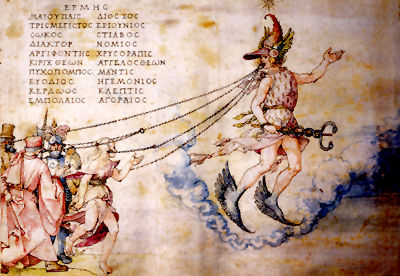
Sarah Wilson Rosamond (Willson) MP
| Gender: | Female |
|---|---|
| Birth: | 1726 County Antrim, Ireland |
| Death: | 1790 (64) Abbeville County, South Carolina, United States |
| Immediate Family: | Daughter of Thomas Wilson and Elizabeth Willson Wife of Pvt. John Roseman Mother of Margaret Weems; James Rosamond; Jean Rosamond; Capt Samuel Rosamond and Sarah F Hodges Sister of Capt Matthew Willson; Samuel Willson; Rebekah Willson; Elizabeth Musgrove; Nathaniel Willson and 2 others |
SIR ALEXANDER WEBB JR., son of SIR ALEXANDER WEBB and MARGARET ARDEN, was born on August 20, 1559 in Stratford, Warwickshire, England, died after 1629 in Boston, Suffolk, Massachusetts and was buried in Boston, Suffolk, Massachusetts. He married MARY WILSON about 1579 in Stratford, Warwickshire, England. Mary was born about 1561 in Stratford, Warwick, England.
Children of SIR ALEXANDER WEBB JR. and MARY WILSON are:
RICHARD WEBB SR.
WILLIAM MICAJAH WEBB
ELIZABETH WEBB
JOHN WEBB, born on Oct 23 1597 in Stratford, Warwick, England; died on April 5, 1660 in Siterly, Hampshire, England.
CHRISTOPHER WEBB SR.
HENRY WEBB
It has been proposed that Elizabeth had a specific political motive behind the formation of the company. Robert Dudley, 1st Earl of Leicester and Edward de Vere, 17th Earl of Oxford were using their companies of players to compete for attention and prestige at each year’s Christmas festivities at Court; Elizabeth and her councilors apparently judged the competition, and the noblemen’s egos, to be getting out of hand. By culling the best players in their troupes to form her own, she slapped down ambitious aristocrats and asserted her own priority.[4]
Richard Burton, CBE (/ˈbɜːrtən/; born Richard Walter Jenkins Jr.; 10 November 1925 – 5 August 1984) was a Welsh actor.[1] Noted for his mellifluous baritone voice,[2][3] Burton established himself as a formidable Shakespearean actor in the 1950s, and he gave a memorable performance of Hamlet in 1964. He was called “the natural successor to Olivier” by critic and dramaturge Kenneth Tynan. An alcoholic,[3] Burton’s failure to live up to those expectations[4] disappointed critics and colleagues and fuelled his legend as a great thespian wastrel.[3][5]
Burton was nominated for an Academy Award seven times, but never won an Oscar. He was a recipient of BAFTAs, Golden Globes, and Tony Awards for Best Actor. In the mid-1960s, Burton ascended into the ranks of the top box office stars.[6] By the late 1960s, Burton was one of the highest-paid actors in the world, receiving fees of $1 million or more plus a share of the gross receipts.[7] Burton remains closely associated in the public consciousness with his second wife, actress Elizabeth Taylor. The couple’s turbulent relationship was rarely out of the news.[8]
Mary Arden was the mother of William Shakespeare. Mary’s date of birth is unknown; she was likely to have been born between the years 1536-8. She was the youngest of eight daughters and lived in a farmhouse that was built in 1514. Mary’s father, Robert Arden, was a member of the Guild of the Holy Cross, an important communal Stratford institution. Upon his death, Robert left Mary a significant amount of land in Wilmcote together with a sum of £6 13s 4d (equivalent to £30,000 in current value).
Probably about a year after her father’s death in late 1556, Mary married John Shakespeare and moved to live with him in a house on Henley Street. She was between 19-21 years old when she got married and left her father’s home. There was no mention of their engagement before Robert’s death, so the marriage was likely her choice. John was an upcoming businessman with a house in Stratford at that time.
Mary and John had eight children together, although three of their children died young. William was the oldest surviving child of John and Mary Shakespeare, who lost two infant daughters before William was born. William’s younger siblings were Gilbert (born in 1566), Joan (1569), Anne (1571), Richard (1574) and Edmund (1580). Ann died at the age of eight, but the others lived into their adulthood.
There is evidence to suggest that Mary would have been a literate woman, as she is mentioned as the executor of her father’s will. She would have benefited from a degree of education when carrying out her duties as the daughter of a farmer. This is all certainly knowledge that could have been used in the raising of a young William Shakespeare.
Later in life, after her husband’s death in 1601, Mary may have lived with William and his family at New Place. However, it is also possible that she may have stayed with her daughter, Joan Hart, in Henley Street.
Mary Shakespeare died in 1608.
Mary Margaret Webb (Wilson), of Bramcote MP 
| Gender: | Female |
|---|---|
| Birth: | 1561 Birmingham, Warwickshire, England |
| Death: | circa 1629 (63-71) Stratford-upon-Avon, Warwickshire, England |
| Immediate Family: | Daughter of Thomas Wilson, MP and Agnes Wilson Wife of Robert Burdett; Sir Christopher Lowther and Sir Alexander Webb, Jr., Kt. Mother of Sir Thomas Burdett, 1st Baronet of Bramcote; Anne Burdett; Richard Webb, of Norwalk; William Micajah Webb, I; Elizabeth Sanford and 3 others; John Webb; Christopher Webb, Sr. and Henry Webb « less Sister of Margaret Wilson; Ann Burdett; Nicholas Wilson and Lucrece Wilson Half sister of Margaret Wormall |
| Added by: | |
| Managed by: | |
| Curated by: |
http://jimwebb.rootsweb.ancestry.com/webb/pafg09.htm#5150
30. Sir Alexander WEBB Jr (Alexander , Henry Alexander , John Alexander , John Alexander , William , John , Geofrey , Henry ) was born on 20 Aug 1559 in Stratford, Warwickshire, England. He died after 1629 in Boston, Suffolk County, Massachusetts and was buried in Boston, Suffolk County, Massachusetts.
Alexander Webb Jr married Mary Wilson and came to America with four sons: Christopher, Richard, John and William. This was the beginning of the WEBB family in America.
Alexander married Mary WILSON about 1579 in Stratford, Warwickshire, England. Mary was born about 1561 in Stratford, Warwick, England.

When most people think of Gone With The Wind, they do not normally associate Elizabeth Taylor with the film. However, she was considered for the role of Bonnie Blue Butler – Rhett and Scarlett’s daughter . Friends, even a talent scout, tried to coax Sara (Elizabeth’s mother) into letting young Elizabeth audition for the role. However Sara refused, and the role went to Cammie King. By the way, Elizabeth loved Vivien. She even once said “Vivien Leigh was my heroine. She was innocence on the verge of decadence, always there to be saved.” Elizabeth would later replaced Vivien in Elephant Walk (1954) after Vivien had a nervous collapse on set (she suffered from bipolar disorder). It is likely that they met, at the premiere of Around The World In Eighty Days in 1957, and in 1960. Elizabeth starred in a film called The V.I.P.S. in 1963 – it was based on the story of Vivien running off with Peter Finch and getting stuck at the airport because of heavy fog.
Thomas Wilson – Shakespeare – Rhetoric
Posted on March 10, 2021 by Royal Rosamond Press
I want there to be a course on rhetoric at the Belmont Naval School of Spying.
I just got off the phone with Spooky Noodles (Casey Farrell) who ran his latest string of pearls by me about a couple who broke a code due to their keen interest in who the real Shakespeare is. I told him I found my candidate in my family tree. Mary married Philip von Habsburg who had made this super college so he could make the whole world Spanish speaking. Queen Elizabeth countered with wanting the whole world to be English speaking. China can not push anything interesting on the world, because they got rid of all their riddle makers, and the I-Ching. Philip launched two armadas against Queen Elizabeth, and Sir Francis Drake helped defeat Philip by capturing gold laden ships from America. Harry Windsor is our Sir Francis Drake.
I wanted to establish a Naval College in Marin but I suspect Robert Buck put a black spot next to my name. I am going to seek funding from a Getty foundation.
John Presco
Thanks Casey – For The White Goddess! | Rosamond Press
Philip II (Spanish: Felipe II; 21 May 1527 – 13 September 1598) was King of Spain[note 1] (1556–1598), King of Portugal (1580–1598, as Philip I, Portuguese: Filipe I), King of Naples and Sicily (both from 1554), and jure uxoris King of England and Ireland (during his marriage to Queen Mary I from 1554 to 1558).[1] He was also Duke of Milan from 1540.[2] From 1555 he was Lord of the Seventeen Provinces of the Netherlands.
The son of Emperor Charles V and Isabella of Portugal, Philip inherited his father’s Spanish Empire, including territories on every continent then known to Europeans. The Philippines were named in his honor by Ruy López de Villalobos. During his reign, the Spanish kingdoms reached the height of their influence and power, sometimes called the Spanish Golden Age.
Philip led a highly debt-leveraged regime, seeing state defaults in 1557, 1560, 1569, 1575, and 1596. This policy was partly the cause of the declaration of independence that created the Dutch Republic in 1581.
Deeply devout, Philip saw himself as the defender of Catholic Europe against the Ottoman Empire and the Protestant Reformation. In 1584 Philip signed the Treaty of Joinville funding the French Catholic League over the following decade in its civil war against the French Calvinists. In 1588 he sent an armada to invade Protestant England, with the strategic aim of overthrowing Elizabeth I and re-establishing Catholicism there, but his fleet was defeated in a skirmish at Gravelines (northern France) and then destroyed by storms as it circled the British Isles to return to Spain. The following year Philip’s naval power was able to recover after the failed invasion of the English Armada into Spain.[3][4]

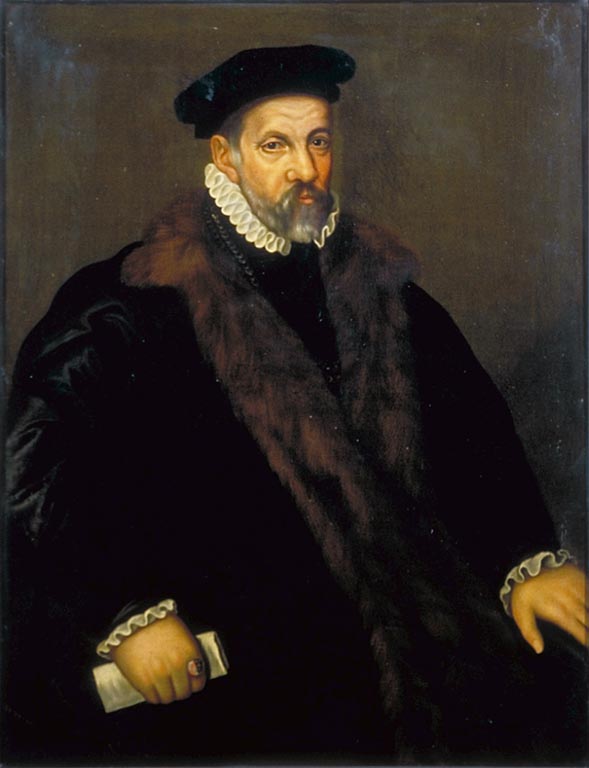

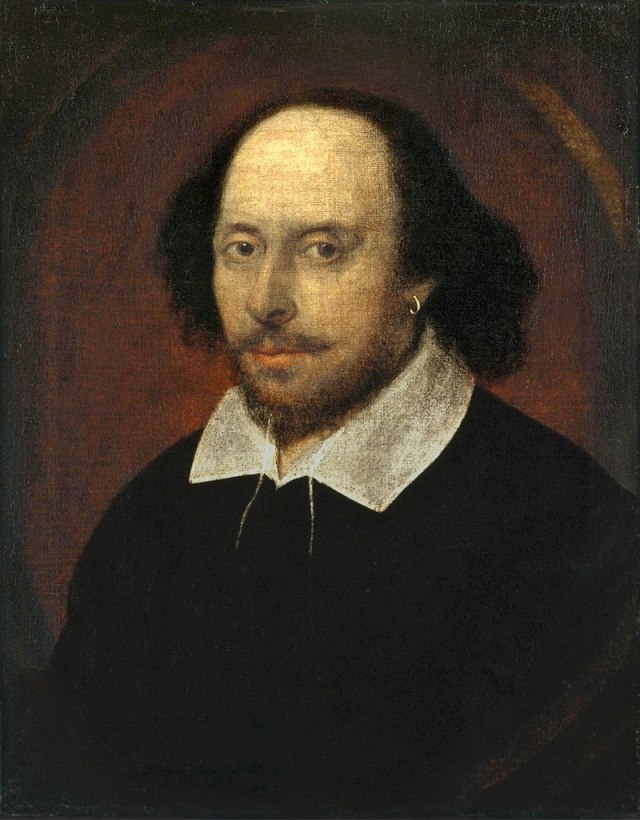
Did Thomas Wilson inspire Shakespeare? I suspect the clergy were steeped in the art of rhetoric that was taught and practiced at court. They might have put on plays as learning tools. Thomas Wilson would be wanting his sons and grandsons to master rhetoric. Rev, John Wilson may have been using rhetoric in his sermons, which put him at loggerheads with the Quakers who were preaching in Plain English. This would explain why the Wilson family was installed at Windsor and Buckingham palace. They represented the English Renaissance, that was the enemy of the Catholic Habsburgs and Mary Queen f Scots who drove the English Renaissance into exile where they came in contact with radical ideas.
The Duchess of Suffolk was close to Thomas Wilson, and the De Vere family who had an acting troupe. It has been suggested De Vere wrote Shakespeare’s plays. But I suspect he was…
View original post 4,856 more words
Dictionary of National Biography, 1885-1900/Wilson, Thomas (1560?-1629)
Add languages
Page
Tools
Appearancehide
Text
- SmallStandardLarge
Width
- StandardWide
< Dictionary of National Biography, 1885-1900
(Redirected from Wilson, Thomas (1560?–1629) (DNB00))
←
Dictionary of National Biography, 1885-1900, Volume 62
Wilson, Thomas (1560?-1629) by Albert Frederick Pollard
→
1904 Errata appended.
WILSON, Sir THOMAS (1560?–1629), keeper of the records and author, born probably about 1560, is described in the admission register of St. John’s College, Cambridge, as ‘Norfolciensis,’ and is said to have been ‘nephew’ of Dr. Thomas Wilson (1525?–1581) [q. v.], Elizabeth’s secretary of state (Cal. State Papers, Ireland, 1603–6, p. xx). No confirmation of this relationship has been traced, and the younger Wilson is not mentioned in the elder’s will. Possibly he was the ‘Thomas Wilson of Willey, Hertfordshire, son and heir of Wilson of the same, gent.,’ who was admitted student of Gray’s Inn on 11 Feb. 1594–5. He was educated apparently at Stamford grammar school, and matriculated from St. John’s College, Cambridge, on 26 Nov. 1575. In 1583 he was elected on Burghley’s nomination to a scholarship on the foundress’s foundation at St. John’s (Burghley in Lansd. MS. 77, f. 20; St. John’s Coll. Register, per Mr. R. F. Scott). He graduated B.A. in 1583 from St. John’s College, but migrated to Trinity Hall, whence he graduated M.A. in 1587. For fifteen years, according to his own account, he studied civil law at Cambridge. In 1594 he procured a letter from Burghley recommending his election as fellow of Trinity Hall. The recommendation was ineffectual, and Wilson betook himself to foreign travel.
In 1596, while sojourning in Italy and Germany, Wilson translated from the Spanish Gorge de Montemayor’s ‘Diana,’ a romance, from which the story of ‘Two Gentlemen of Verona’ was partly drawn (Lee, Shakespeare, p. 53); it was dedicated to Shakespeare’s friend, the Earl of Southampton, ‘then upon the Spanish voiage with my Lord of Essex.’ The original translation does not appear to be extant, but about 1617 Wilson made a copy, extant in British Museum Additional MS. 18638, which he dedicated to Fulke Greville, chancellor of the exchequer, and afterwards Lord Brooke [q. v.]; he remarks that Brooke’s friend Sir Philip Sidney [q. v.] ‘did much affect and imitate’ ‘Diana,’ and possibly Wilson took part in publishing some of Sidney’s works, for on 12 April 1607 he asked Sir Thomas Lake to further his petition for the privilege of printing ‘certain books [by Sidney] wherein myself and my late dear friend Mr. Golding have taken pains’ (Cal. State Papers, Dom., Addenda, 1580–1625, p. 495; cf. art. Golding, Arthur). He is possibly also the Thomas Wilson whose name appears at the foot of the first page of the manuscript ‘Booke on the State of Ireland,’ addressed to Essex by ‘H. C.’ (? Henry Cuffe [q. v.]) in 1599 (Cal. State Papers, Ireland, 1598–9, p. 505); owing to its being a dialogue ‘between Peregryn and Silvyn,’ the names of Edmund Spenser’s two sons, it has been considered the work of the poet himself [cf. art. Spenser, Edmund].
In spite of these indications of a connection with Southampton and Essex, Wilson, fortunately for himself, remained faithful to the Cecils, and during the later years of Elizabeth’s reign he was constantly employed as foreign intelligencer. On 27 Feb. 1600–1 Sir Robert Cecil wrote to him: ‘I like so well many of your letters and discourses to the lord treasurer [Buckhurst] that I wish you not only to continue the same course of writing to him, but also to me’ (Cal. State Papers, Dom. 1598–1601, p. 600). Among these discourses was one begun on 1 March following ‘on the state of England A.D. 1600,’ giving the claims of twelve competitors for the crown, ‘with a description of this country and of Ireland, the conduct of the people, state of the revenue and expenses, and the military and naval forces;’ it is extant in the Record Office (State Papers, Dom., Elizabeth, vol. cclxxx.) In December he was at Florence, and he speaks of being employed on various negotiations with the Duke of Ferrara, the Venetians, and other Italian states (ib. James I, cxxxv. 14; for details of his movements, see his diary in ib. xi. 45). He was obviously a thorough Italian scholar (cf. Addit. MS. 11576, ff. 2 sqq.), and the main object of his residence in Italy during 1601–1602 was to ascertain the nature and extent of the Spanish and papal designs against England (Cal. State Papers, Dom. 1601–3, pp. 127, 234). He returned to England during the winter, and was at Greenwich on 12 June 1603 (Cotton. MS. Calig. E. x. 359; Ellis, Orig. Letters, ii. iii. 201–2), but early in 1604 he was sent to reside as consul in Spain (Cal. State Papers, Dom. James I, cxxxv. 14; Winwood, Mem. ii. 45; Nichols, Progr. James I, i. 475). He was at Bayonne in February 1603–4 (Cotton. MS. Calig. E. xi. 78–9), and remained in Spain until the arrival of the Earl of Nottingham and Sir Charles Cornwallis [q. v.] as ambassadors in 1605.
On his return to England Wilson definitely entered the service of Sir Robert Cecil, who leased to him a house adjoining his own, called ‘Britain’s Burse,’ in Durham Place, Strand (see sketch in State Papers, Dom., Charles I, xxi. 64). He took a considerable part in supervising the building of Salisbury’s house in Durham Place and also at Hatfield, in the neighbourhood of which he received from Lord Salisbury the manor of Hoddesdon. In 1605 he is said to have been returned to parliament for Newton (?Newtown, Isle of Wight); the official return does not mention this by-election, but that Wilson sat in this parliament is probable from the frequent notes of its proceedings with regard to such matters as scutages and the ‘post-nati’ with which he supplied the government. He also kept the minutes of the proceedings of the committee for the union of England and Scotland, and made a collection of the objections likely to be urged against the union in parliament. About 1606, on the surrender of Sir Thomas Lake [q. v.], Salisbury procured for Wilson the post of keeper of the records at Whitehall, with a salary of 30l.; he also obtained the clerkship of imports, worth 40l. a year, but lost it when Suffolk became treasurer in 1614.
Wilson was a zealous and energetic keeper of the records, and made many suggestions with regard to them, which, if they had been adopted, would have saved subsequent students an infinity of trouble. One of these was the creation of an office in which chartularies of dissolved abbeys and monasteries should be transcribed and kept for the use of ‘searchers,’ and to prevent needless litigation for want of access to title-deeds (Cal. State Papers, Dom. 1611–18, p. 508). Another, inspired more by self-interest, was the creation of an office of ‘register of honour,’ to be filled by himself, so as to obviate frequent disputes for precedence among knights and their ladies. He also suggested the publication of a gazette of news ‘as is already done in Germany, France, Italy, and Spain,’ and the grant of a patent to himself for printing it. His main difficulty was with secretaries of state and other officials, who refused to deliver to him public documents to which he considered the state entitled, and with highly placed borrowers who neglected to return the documents they borrowed. Among the latter was Sir Robert Bruce Cotton [q. v.], and in 1615 Wilson protested against Cotton’s appointment as keeper of the exchequer records, complaining that Cotton already injured the keepers of the state papers enough by ‘having such things as he hath coningly scraped together,’ and fearing that many exchequer records would find their way into Cotton’s private collection. Similarly, when Ralph Starkey [q. v.] acquired the papers of Secretary Davison, Wilson procured a warrant for their seizure, and on 14 Aug. 1619 secured a sackful, containing forty-five bundles of manuscripts (Harl. MS. 286, f. 286). He rendered valuable service in arranging and preserving such documents as he did succeed in acquiring (cf. Cal. State Papers, Ireland, 1603–1606, pref. pp. xx, xxii, xxxv, xli; Edwards, Founders of the British Museum, p. 149).
Wilson’s interests were not, however, confined to the state paper office. He was an original subscriber to the Virginia Company (Brown, Genesis, ii. 1054), and kept a keen watch on discoveries in the East Indies, maintaining a correspondence with persons in most quarters of the globe (see Purchas, Pilgrimes, i. 408–13; Cal. State Papers, East Indies, vols. i. and ii. passim). He petitioned for a grant of two thousand acres in Ulster in 1618, and drew up a scheme for the military government of Ireland (Cal. State Papers, Ireland, 1615–25, p. 202; Hist. MSS. Comm. 4th Rep. App. p. 284). He thought he ‘could do better service than in being always buried amongst the state papers;’ his especial ambition was to be made master of requests, an office for which he repeatedly and vainly petitioned the king. He also procured royal letters to the fellows of Trinity Hall and of Gonville and Caius Colleges in favour of his election as master of their respective societies at the next vacancy; but the letters seem never to have been sent, and Wilson remained keeper of the records till his death.
He was, however, knighted at Whitehall on 20 July 1618 (Nichols, Progr. of James I, iii. 487), and in September following was selected for the dishonourable task of worming out of Ralegh sufficient admissions to condemn him. He took up his residence with Ralegh in the Tower on 14 Sept., and was relieved of his charge on 15 Oct. He appears to have entered on his duties with some zest, styling his prisoner the ‘arch-hypocrite’ and ‘arch-impostor,’ and admitting in his reports that he had held out the hope of mercy as a bait; there is, however, no ground for the suggestion thrown out by one of Ralegh’s biographers that the real object of Wilson’s employment was Ralegh’s assassination (Wilson’s reports are among the Domestic State Papers, see Cal. 1611–18, pp. 569–92; some are printed in Spedding’s Bacon, xiii. 425–7). On Ralegh’s death Wilson urged the transference of his manuscripts to the state paper office, and actually seized his ‘mathematical and sea-instruments’ for the navy board, and drew up a catalogue of his books, which he presented to the king.
Wilson was buried at St. Martin’s-in-the-Fields on 17 July 1629, and on the 31st letters of administration were granted to his widow Margaret, possibly sister of the Peter Mewtys or Mewys whom Wilson succeeded in 1605 as member for Newtown. His only child, a daughter, married, about 1614, Ambrose Randolph, younger son of Thomas Randolph (1523–1590) [q. v.], who was joint-keeper of the records with Wilson from 1614.
Besides the works already mentioned, Wilson compiled a ‘Collection of Divers Matters concerning the Marriages of Princes’ Children,’ which he presented on 4 Oct. 1617 to James I; the original is now in British Museum Additional MS. 11576. On 10 Aug. 1616 he sent to Ellesmere a ‘collection of treaties regulating commercial intercourse with the Netherlands’ (Egerton Papers, Camden Soc. p. 476); he drew up a digest of the arrangement of documents in his office (Stowe MS. 548, ff. 2 sqq.), and left unfinished a history of the revenues of the chief powers in Europe (Cal. State Papers, Dom. 1623–5, p. 557). Much of his correspondence is preserved among the foreign state papers in the Record Office, and among the yet uncalendared documents at Hatfield.
Mary Morton Rosemond of Iowa
Posted on July 9, 2018by Royal Rosamond Press

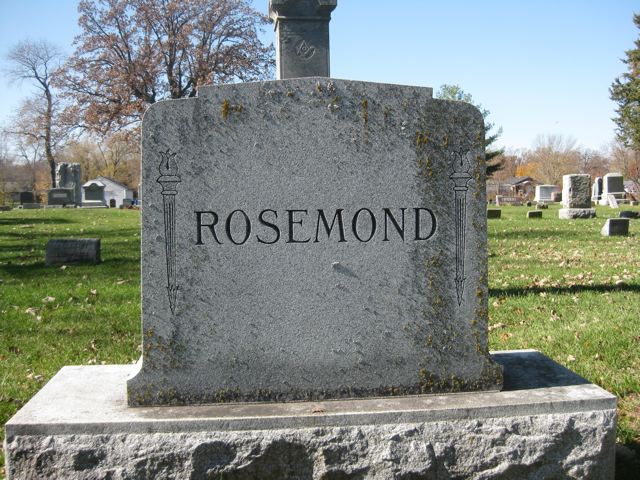
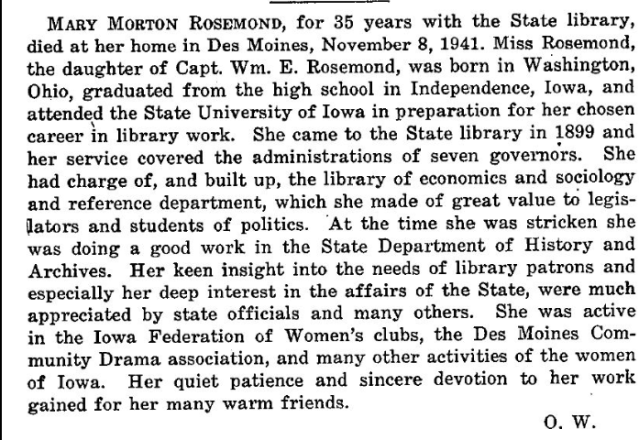


When I read the following this morning, the book, and movie ‘Gone With The Wind’ came to mind.
“The couple had nine children; eight girls and but one son — Martin — who served with Lucas County boys in Company C of the 13th Iowa Infantry and died in service in 1862. When James Roseman died in 1887, there was nobody by the name of Roseman left in the county.”
Thanks to my kin, Charles M. Wright, I was able to find the Western branch of the Rosemond-Rosemond-Rosemond family that descends from James Roseman, Phillip Rosemond, and Moses Morton Rosemond. Add to this branch my grandfather Frank W. Rosamond, and his four daughters, June, Bertha, Rosemary, and Lillian, and the Western Rosamond family, is complete.
I have chosen Mary Morton Rosemond t ground all the Rosy families, because she is a trained Librarian and State Archivist. If she were alive, she would be doing what I and Jimmy Rosamond have been doing for many years. The Rosemond family is mentioned in several history books, none more tragic then the Record of Iowa Soldiers. Why did they let Martin join The War of the Rebellions? He was surrounded by eight beautiful sisters who loved him dearly. He got wound, and was discharged. He came home and died shortly of his wound. What a heartbreak to say goodbye. He was handsome, and, perhaps too effeminate? Did he, and others believe he would come home……….a man. A Rose Man?
There are some profound parallels between the history of The Gone With The Wind, and the Roseman family who were pioneers. They Came from Ireland, and went West. Their name is gone, but their DNA is all over Iowa, including the bloodline to the Wieneke of Iowa. Frank Weseley Rosamond married Mary Magdalene Wieneke, and thus another Mary M. Rosamond. What is in a name? Did Mary Rosemond ever dream one of her kin would become one of the most famous Movie Stars of all time? Then there is my sister’s famous works of art, she know all over the world for her images of beautiful women. Christine Rosamond Benton used her middle name to sign her work, thus giving this name new life. I suspect Mary Morton gathered all her Roses around her, and this monument, with, just the name.
I am kin to Richard Burton who Ian Fleming wanted to play the first James Bond. Liz Taylor is kin to Fleming via Aeilene Getty. The Getty family have founded famous libraries, archives, and museums.
Jon Presco
 Rosamond Press
Leave a comment