
San Sebastian Avenue
by
John Presco
ALL RIGHTS RESERVED
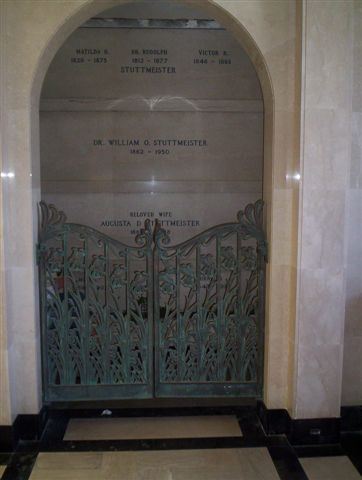
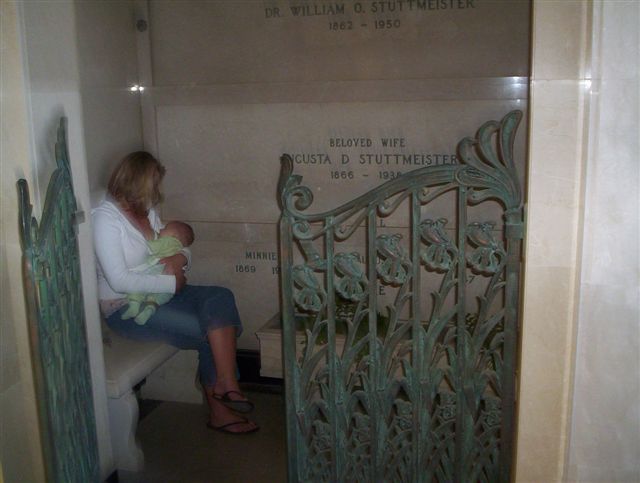
When Denny Lawhern and Cynthia McCarthy saw the photographs of Carl Janke’s descendants in the Stuttmeister-Janke crypt, their hearts sank. Their life was over – as the image of the evil Janke headstone blew up their tiny minds. They could hear the rush of cars on the freeway, and see the terrifying razor-wire. Then there were the demon-weeds. Now comes the image of the majestic Stuttmeister monument in Berlin. Is that a life-size statue of Christus.
“Please! Make it stop!”
Denny and Cynthia bury their faces in their hands because they know what is coming next. And here we come, three generation of Janke who nears our footsteps in the leaves. Then..
“What the fuck is this? Three people in one grave?”
“Oh God -no! Don’t let John find the minutes of the BHS where his kin suggest a plaque be put on the Bay tree where the bodies of the founders of Belmont used to be!”
“We need to get dirt on John! We need to make him dirty. He’s got two books here – and a movie!
“And we will be…..THE VILLAINS! Nooooooooo!”
“Wait! We are saved. In this post John says he is the embodiment of John the Baptist!”
“Hurray! Let” send a copy of this to the Mayor and launch the greatest Gaslighting campaign of all time!”
It’s time to bring in my Big Gun. Elizabeth Rosemond Taylor is in the same family tree, as Carl Janke, and John, Heather, and Tyler Hunt. She died before she could learn We might be kin to Knight Templars – who I proved owned the Shround of Turin. I proved Liz is my cousin. I did not know she starred in Doctor Faustus. How perfect. I’m going to write a script where the actress (herself) travels to Rougemont Switzerland to visit the chapel of her Templar kin.
I did not write this Faustian Tale. You can blame Denny and Cynthia. However, there are Rougemont Knights Templar interred in the walls of the Belleveux. Samples of their DNA need to be taken. But, there is something in…….the walls! There is a sound of footsteps coming this way – in the snow! It’s 1967. Liz is looking for her roots. She is wearing a simplified badge of the Order of the Sister’s of Rougemont that contains a rare jewel, the color of her famous eyes.
Yesterday I sent an email to the BHS inquiring about the two headstone that were removed from in front of Ralston Hall. I got no reply. Then I discover McCarthy is – still there! Why hasn’t the City of Belmont removed her? She has obstructed my creativity, and caused me mch emotional turmoil,. I suspect she has power over elected leaders.
After making Faustus, and visiting Bellevaux, Liz flies to SF and has a limousine take her – to Belmont!
“OMG! He has employed the greatest star of all time…..to get to the truth! we’re – DOOMED!”
“I’m….melting!”
Sisters of Church of LDS took a keen interest in the photographs Denny and Cynthia POOH-POOHED. Like mean-ass players at a poker game, they down-played my beautiful hand. They made me feel like a total loser, un-worthy of their time. In their mind, my family – sucked! They gave me the impression I wasted their time. As my Faustian Tale develops I will use the words Denny employed in his massive genealogical and historic search of his roots, that found just one man of some importance. I will Expertly use Thomas Doggette as the simple man who makes a stupid pact with the Devil that he begs Faust to free him of. He becomes the hapless sideshow in our Demonic Tale. All Tommy wanted, was a good dog that could hunt.
Oh! I almost forgot, Cynthia wrote a history book with photos of my family in it, and suggested I violated her copyright when I put them on this blog. I was in shock! Where did she get permission to invade our family privacy – from the City of Belmont? After four days of heated discussion, Denmy makes his grand entrance and say he like the pics of the Janke family with the Broderick and Stuttmeister family, and, he will put them in The Archives. I wondered what elst was going in the Belmont archive. They had days to go through Royal Rosamond Press – and take what they like! When I read this four days ago – I GOT THE BIG PICTURE!
When I was invited to join and shar, I was an old trunk being opened at an estate sale. The old coot – had finally kicked the bucket? I think Denny was a garage sale junky, and…HE HIT PAYDIRT!
“He worked diligently in a volunteer capacity to collect, catalog, archive, digitize, meticulously organize and display the history of his beloved city, scouring old newspapers and estate sales for source material and artifacts. He uncovered a wealth of information on local history,”
and estate sales for source material and artifacts“

In 1987 Denny was a founding member of the Belmont Historical Society. For 37 years Denny served as the City Historian and for 14 years was President of the Board of Directors. He was Curator of the Belmont History Room at The Manor House, 10 Twin Pines Lane. The society has helped to establish many of the city’s buildings as historical landmarks. He worked diligently in a volunteer capacity to collect, catalog, archive, digitize, meticulously organize and display the history of his beloved city, scouring old newspapers and estate sales for source material and artifacts. He uncovered a wealth of information on local history, became an oft-quoted resource, and spoke frequently to citizen groups, schools, scouting clubs, and senior care facilities around the area, using several 30-minute slide shows that he created.
To put down “roots” in another manner, Denny became the family genealogist and historian, compiling a massive family tree. He did original research around the country, united two branches of his Lawhern tree that had lost each other a few generations ago, and even travelled to Britain to accomplish some research there. He traced his Lawhern line back to an orphan in London who was indentured to a sailing ship as a teenager, eventually putting down “roots” in Virginia before the year 1700.
https://en.wikipedia.org/wiki/Doctor_Faustus_(1967_film)
University of Wittenberg scholar Faustus earns his doctorate, but his insatiable craving for knowledge and power leads Faustus to try his hand at necromancy in an attempt to conjure Mephistopheles out of hell. Signing the pact in his own blood, Faustus bargains his soul to Lucifer in exchange for 24 living years with Mephistopheles as his slave. Mephistopheles proceeds to reveal to Faustus the works and doings of the Devil.

I just found the Abbey Bellevaux where the Lords of Rougemont, and the Bishops of Besançon are buried. The Rougemonts were Knights Templar and owners of the Shroud of Turin as were the Lords of La Roche. Pons La Roche was the founder of Bellevaux where very possibly my Rougemont ancestors are buried. Pons is close kindred of the De Bar and Habsburg family. Why would the Habsburg keep their connection to the Knights Templar and Shroud of Turin a secret? The Habsburgs were ‘defenders of the Catholic faith’.

I sent this
John Ambrose
From:braskewitz@yahoo.com
To:belmontcahistory@aol.com
Wed, Jul 31 at 3:00 PM
I am writing an article about John Sutter and heard you have two tombstones that date back to 1852. Can you tell me the names of the diseased and any history? Any pic would be great.
Thank you!
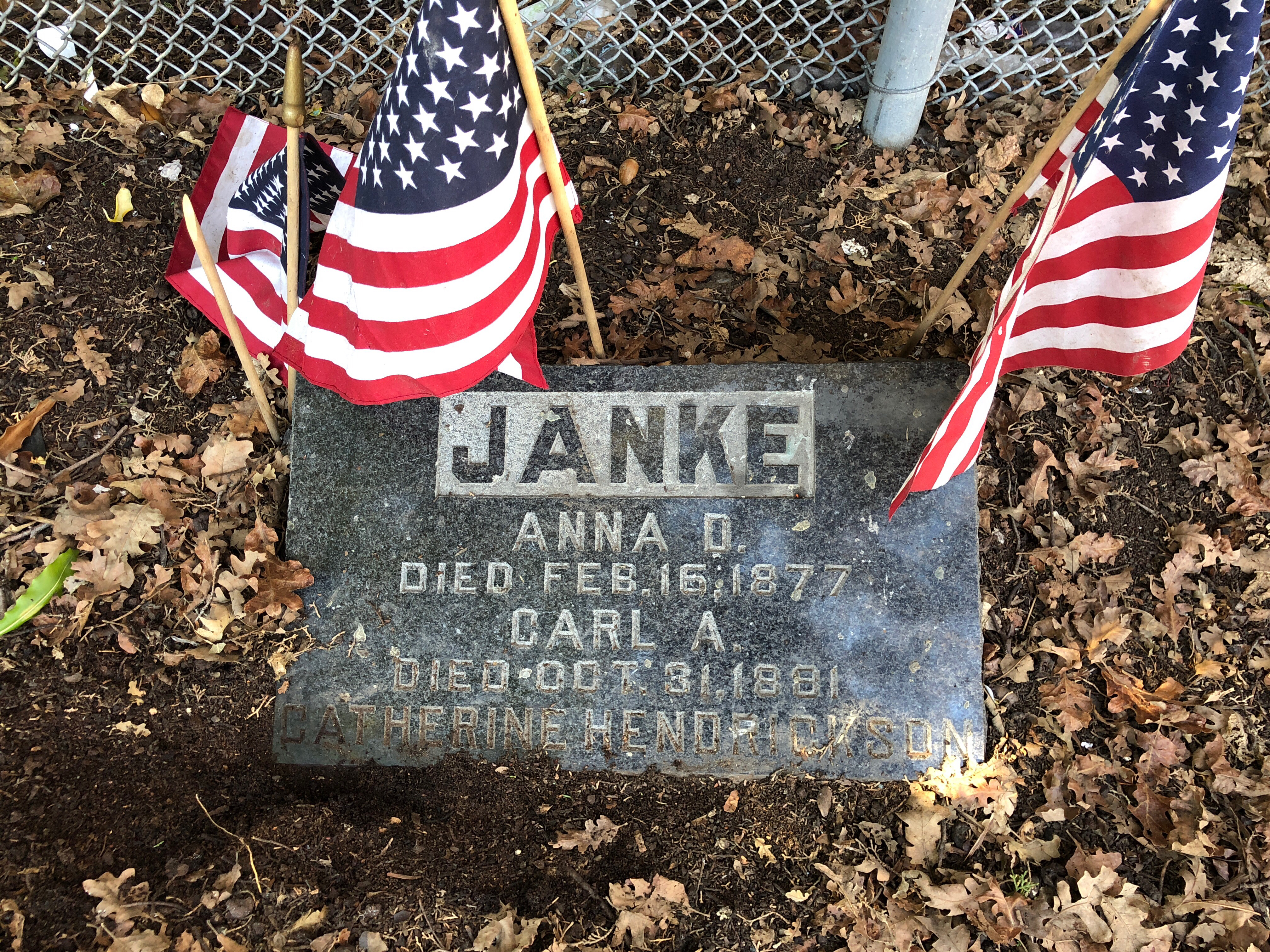
It is 8:33 A.M. May 27, 2023 – and I am still in shock having discovered my grandparents are buried in the same grave! I saw TWO flags put on one gravestone.

https://en.wikipedia.org/wiki/Doctor_Faustus_(1967_film)
University of Wittenberg scholar Faustus earns his doctorate, but his insatiable craving for knowledge and power leads Faustus to try his hand at necromancy in an attempt to conjure Mephistopheles out of hell. Signing the pact in his own blood, Faustus bargains his soul to Lucifer in exchange for 24 living years with Mephistopheles as his slave. Mephistopheles proceeds to reveal to Faustus the works and doings of the Devil.
The Buriel Place of the Lords of Rougemont
Posted on November 30, 2012 by Royal Rosamond Press
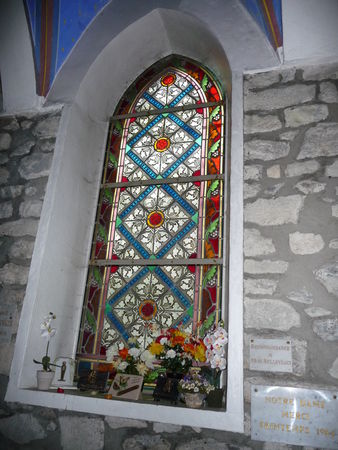
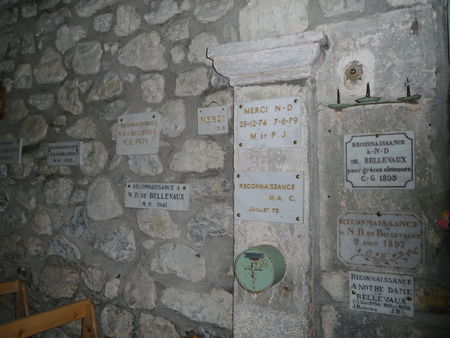
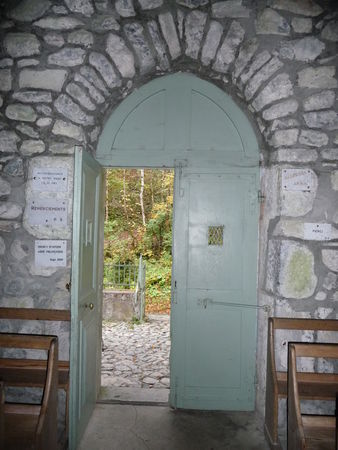

I believe the New Zion will be where the new LDS Temple is going to be built, a mile or more away from where I live. The Mormons built their cosmology on DNA and Family Trees. Deseret lies next to the Louisiana Purchase. I can now SEE all of what I saw in part. I have been called MAD by all who bonded with me. I kept a record of my Fantastic Quest! I can Baptize by the river.
Sisterhood of Rougemont
Posted on July 2, 2023 by Royal Rosamond Press
Shiloh Brings The Shroud
Posted on February 23, 2018 by Royal Rosamond Press
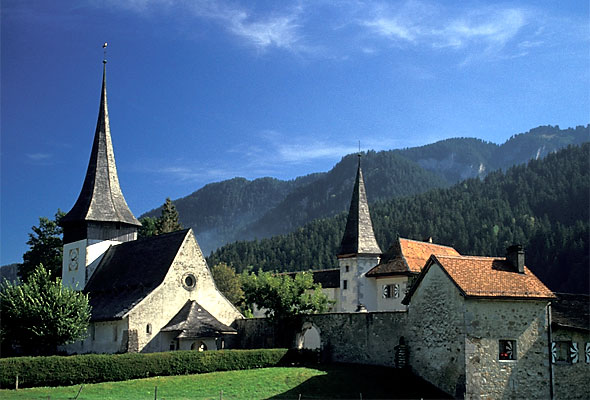
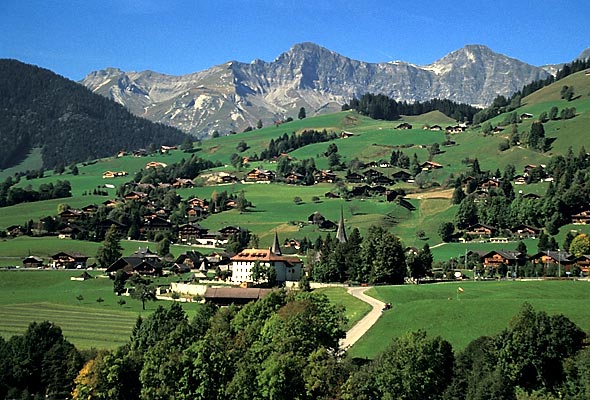

All that came from Martin Luther, is gone! All that came from Peter and Paul – except for the Orders of Saint Francis – is gone! American and European Christianity has failed to take on Putin’s Russian Orthodox Church, his Troll-bots, and his Knight Wolves. Instead, they put Pig-Orcs in the House and Senate so they can take from the poor and give to the rich. They are going to force the old and lame to go back to work. They give the military billions more, and they can not win a land war, or conduct cyber warfare. What are they good for?
Our young students have drawn a line in the sand, and that pussy-grabber does all he can to erase it with the help of the NRA. The NRA – is gone! I own everything they claim they protect. My ancestors are the whitest of the white, and lived in the Swiss Mountains. I am not on the side of the peddlers of fear and cowardice. I don’t take bribes!
I am Shiloh! Shiloh has come with the Shroud – and The Sword! The Student Crusade will sweep the world, and bring us all a New Day. They will win without firing shot. I will show them The Way. I am The Rock!
Jon ‘The Nazarite’
When the Rougemont Knights Templar came home from the Holy Land, they came to Bellevaux ‘Beautiful View’ and built a chapel wherein the walls, they placed their dead. Brave Knight all!

Templar Shroud of Fontenotte
Posted on October 11, 2019 by Royal Rosamond Press

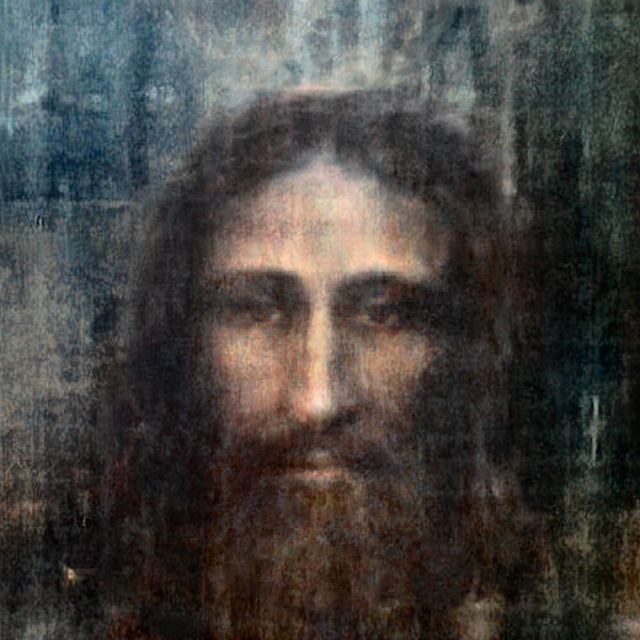
Here are images of Knight Templars who might have seen The Holy Shroud of Turin. I am calling for a New Reformation that will ground its roots at Fontenotte. We need a United Religion designed to stand its ground and take on New World Enemies.
Here is an a post I made in 2006 before I proved the Templars owned the Shroud of Turin. Trameloy/Tramelay is Dramelay.
John Presco
Knights Templar Protect Saint Nick
Posted on December 27, 2021 by Royal Rosamond Press


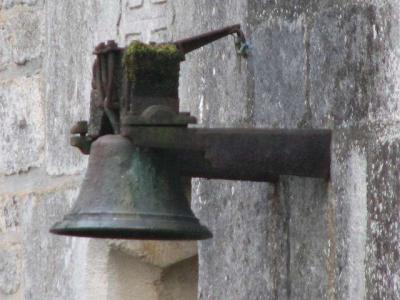


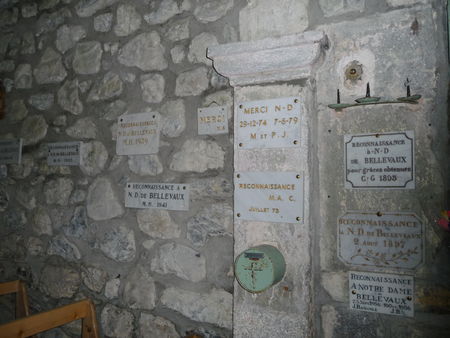
The Catholic Church and Papacy has removed Saint Nicholas from the protection of the Swiss Guard that guards the Pope. The Pope declared the Knights Templar heretics and hunted them down. The Templars of the Rougemont Valley were condemned for attacking Constantinople in the Fourth Crusade. On this day, I John David Presco – forgive the Templars of Rougemont, and anoint them the Protectors of Saint Nicholas and Christmas Day. They will be the Gallant and Noble Protectors of Democracy sustained by We The People!
“Etienne de Rougemont was lord of Pichanges. In December 1265, having
recalled the donations made to the temple by Aimon IV and Guy II, he
gave to the Templars, with the agreement of his elder brother, Jean,
Lord of Rougemont, the right of pasturage on his lands of Pichanges
and Spoy. He died in 1271 and was buried before the altar in the
chapel of Fontenotte and conferring his Templar rank of Preceptor
(priest-templar).”
Bill Rozier has violated my copyright. I have formed a Facebook group to counter his theft.
Peace on Earth – and Good Will to Men!
John David Presco: Republican Candidate for the Office of the Embodiment of King David.
So be it!
https://www.facebook.com/groups/289297763158559
(9) Knights Templlar of Bellevaux | Facebook

King David I of Scotland and the Knights Templar – In Scotland it was customary for a Templar Knight to act as, ‘almoner,’ to the King’s Household.’ Kind David I of Scotland (1084~1153) was believed to have, ‘kept himself surrounded by Templars and made them the guardians of his morals by day and night.’ Cistercian Abbot, Bernard of Clairvaux, who was instrumental in assisting the Knights Templar and who wrote their early Latin Rule, held great personal respect for King David I. Bernard wrote to the King of Scotland in 1136, expressing hope that they, ‘may meet one day, as he had heard so much of the king’s good reputation.’ In writing he stated, ‘I have long since learned to love you, most illustrious king.’ In the stained glass window below of King David I (St. Michael’s Church Linlithgow) a black and white chess board design is visible. This symbol was sacred to the Knights Templar, and symbolises the ‘Beauseant Knights Templar Battle Flag…
Templars Asleep In Abbey Bellevaux
Posted on February 15, 2013 by Royal Rosamond Press
I just found the Abbey Bellevaux where the Lords of Rougemont, and the Bishops of Besançon are buried. The Rougemonts were Knights Templar and owners of the Shroud of Turin as were the Lords of La Roche. Pons La Roche was the founder of Bellevaux where very possibley my Rougemont ancestors are buried. Pons is close kindred of the De Bar and Habsburg family. Why would the Habsburg keep their connection to the Knights Templar and Shroud of Turin a secret? The Habsburgs were ‘defenders of the Catholic faith’.
I am going to make a pilgrimage to this Abbey Bellevaux and own the end of my book. I am looking for backers of my expedition. Who would like to go with?
The Lords of Rougemont and Ferrette also owned Florimont (mountain of flowers) castle where modern day (1785) Knights of Ferrette gathered, and a Raja M built a house dedicated to the troubadours. (1892) Are we looking at the first pseudo-history of the Templars?
Thibaud Rougemont was a co-fpunder of the Priory Marast.
Jon Presco
Copyright 2012
http://fr.wikipedia.org/wiki/Liste_des_seigneurs_de_Rougemont
“This James (or Jacob, for these names were once interchangeable) was the son of Hans Ulrich Rosemond, born 1623, a weaver; who was a son of Hans, a weaver, born 1581; who was a son of Fred Rosemond, born 1552, a weaver, member of town council and a local captain; who was the son of another Hans whose date of birth is not known, but he too, was a weaver and became a citizen of Basle in 1534. His father was Erhart de Rougemont who bought in 1495 ¡°the house called Rebleuten-Zunft in Basle in the Freistrasse”
The Rose Templar Guilds
Posted on November 30, 2011 by Royal Rosamond Press
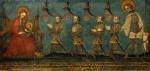
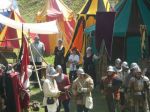
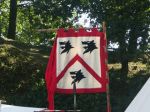
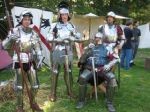
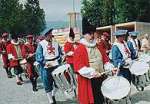
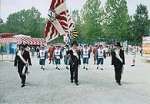
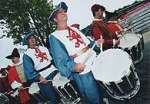
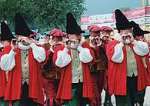
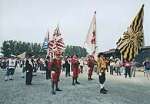


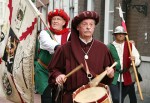


The Rose Templar Guilds delcare war on the Neo-Confederate Redneck Evangelical Trailer-trash who are the decayed Roman Slave Masters risen from the Dead South Red States of Satan!
Jon the Nazarite
Rougemont Templars of Trichatel
Posted on November 30, 2011 by Royal Rosamond Press


Trichatel and Til-Chatel, a Knights Templar place, is one and the same.
Jon Presco
Since this date, the name of the village east written according to the mood of the scribes and the language employed, Latin or French, Tylicastrum, Trichastel, Trichâteau, Trichâtel, Tilchastel, Tréchâteau, and finally Til-Châtel in 1860, afterhaving been called Mount-on-Bast for the revolutionary period.
“The First Preceptor of La Fontenotte
The fifth son of Guy II of Rougemont and Guillemette de Coublant,
Etienne de Rougemont was lord of Pichanges. In December 1265, having
recalled the donations made to the temple by Aimon IV and Guy II, he
gave to the Templars, with the agreement of his elder brother, Jean,
Lord of Rougemont, the right of pasturage on his lands of Pichanges
and Spoy. He died in 1271 and was buried before the altar in the
chapel of Fontenotte and conferring his Templar rank of Preceptor
(priest-templar).
After the death of Etienne, Jean de Til-Chatel had to confirm in 1274
the rights of the Templars over Fontenotte. In 1278 his younger
brother, Guy, who had been curate of Til-Chatel in 1242 then
archdeacon of Le Tonnerois in the church of Langres, succeeded him at
the head of the lordship of Pichanges.
In May, 1274, Jean de Rougemont, Marshal of Burgundy legally
recorded “for the repose of his soul and that of his elder brother,
Etienne de Rougemont, who lies in the cemetery of the said Temple,
and of the souls of his forebears”, granted to Henri de Dole,
Commander of the House of Fontenotte:”
About year 407, the kingdom of Burgundy is created by Gondicaire,
Christian barbarian chief come from in addition to the Rhine which
put an end to the Roman occupation. One does not know what occurs in
the village until year 801. At that time it depended on the bishop of
Langres Betto, which this year there, concedes the church of
Tilicastro and its incomes in Augustins de Saint-Etienne of Dijon.
Since this date, the name of the village east written according to
the mood of the scribes and the language employed, Latin or French,
Tylicastrum, Trichastel, Trichâteau, Trichâtel, Tilchastel,
Tréchâteau, and finally Til-Châtel in 1860, afterhaving been called
Mount-on-Bast for the revolutionary period.
Lords
Concerned with the bishop of LangLMBO, they drew their origin from
Audon I of Til-Châtel, wire of Garnier count de Troyes attested into
918 by its signature in an act of the duke of Burgundy Richard. This
family, which carried like armorial bearings a key out of stake, also
paid homage to the dukes of Burgundy and held a row raised among the
lords of the duchy and county of Burgundy. Its members followed one
another of wire father until the year 1299 dates to which Isabelle of
Rochefort, girl of Left-handed person of Rochefort lord of Puiset in
Beauce, widow of Guy III of Til-Châtel Gonfalonier of the County of
Burgundy, became injury of Til-Châtel. It remaria with Humbert de
Rougemont about 1306 and Maria her Jeanne daughter whom it had had
with Guy III of Til-Châtel with Thiébaud de Rougemont wire of a first
marriage of her new husband. The seigniory passes then in this family
until the end of the 15° century time to which the last of Rougemont,
not having children yielded the seigniory to Antoine de Baissey
resulting from a family of Montsaugeonnais which immediately paid
homage to the bishop of Langres.
In 1618, not having a descent, the last of Baissey left the ground of
Til-Châtel to his/her beautiful uterine brother Erard of Châtelet
which qualified it marquisat and gave it to his/her Antoine son. Put
in decree for payment of its debts it was acquired in 1663 by the
baron of Housset, in his turn put in decree in 1685. It was then
bought by its widow Marie d’ Aguesseau who in 1703 made of it gift
with her niece Catherine d’ Aguesseau married to Charles Marie de
SaulX, count de Tavannes whose descendants had Til-Châtel until the
revolution.
Connect of Trichâteau-Bonney Til-châtel is a village of Franche-Comté, located on the Agrippa way between [[Langres)) and Châlon. It s’ is written according to the periods Tylicastrum, Trichastel, Trichâteau, Trichâtel, Tilchastel, Tréchâteau, Mount-on-Bast and finally Til-Châtel. Erard of Châtelet inherited it in 1618 the family Baissey. It l’ set up in marquisat and gave it to his/her Antoine son of Châtelet. VIII. Erard of Châtelet, knight, marquis de Trichâteau, baron de Bonney, of Tunas, Bulgnéville, lord of Champagne Cirey, the Châtillon-in-Vosges and Lomont. He was gentleman of the room of the king Henri III, adviser d’ state, seneshal and marshal of Lorraine and Barrois and governor of Gray. It served the kings Henri III and Henri IV. He married Lucrece Dorsans and had as children: Henri, marquis of Trichâteau, died before his father, married Claude-Francoise de Pouilly Gabrielle Marie, married the count E Saint-Bonnet d’ Escars Antoine who follows Erard, author of the branch of Clémont, hereafter Francois, died in low age Anne, married of Charles de Gournay Gabrielle, married Charles, count d’ Escars, then Charles de Narbonne and finally Georges de Monchy Paule, married Daniel de Ligneville Francoise, married Richard de Serocourt Nicole, lady of Bouxieres Did Charlotte, lady with Remirmont, marry? of Rougemeont Elisabeth, married Cyprien de Montbenne
TILCHATEL or TIL-CHATEL or TILCHSTEL or TRICHASTEAUX
• Aimon I de TILCHATEL
• Aimon II de TILCHATEL
• Audon de TILCHATEL (? – 1027+)
• Audon III de TILCHATEL (? – 1076+)
• Beatrice de TILCHATEL (? – 1300?) ; (de TILCHSTEL)
• Felicie de TILCHATEL
• Guillaume de TILCHATEL (? – 1152+)
• Guy II de TILCHATEL
• Guy I de TILCHATEL (? – 1189?)
• Isabelle de TILCHATEL (TRICHASTEAUX) (by 1240 – ?) ; Dame de GEMEAUX
• Jean de TILCHATEL (TIL-CHATEL) (by 1215 – 1275) ; Marechal de BOURGOGNE
• Marguerite de TILCHATEL
• Otbert de TILCHATEL
Jean de Rougemont, knight, lord of Russey, Trichâtel and Rougemont partly. In 1367 it went, accompanied by four riders, near duke of Burgundy to be useful in its army; at that time he was only knight-graduate. He married Jeanne of Vienna. It a:
Guy who follows,
Marguerite, woman of Mathey de Rye, knight,
Pernette, married in first wedding with Henry de Rye then with Gauthier de Ruppes.
Guy de Rougemont, knight, lord of Russey, Shirt, Mirebel, Montfort, Trichâtel and Rougemont partly. It is quoted in an act of resumption of the castle and borough of Russey in 1395. It tested on October 5 1420. He had married Jeanne de Montaigu. It a:
Thibaud VI which follows,
Alix, second stone wife of Vergy,
Marguerite, first woman of Guillaume d’ Étrabonne, knight, lord of Étrabonne.
Catherine de Rougemont, rams of Rougemont, Trichâtel and Russey. She married in first Charles wedding of Mello, then in second Jean wedding of Neuchâtel. She wrote her will on September 22 1499 while stipulating to want to be buried with the monastery of Cordeliers with Rougemont.
• Used on the Seal of Etienne de Til-Chatel, lord of Pichanges, Preceptor of La Fontenotte. Representation of a dove, facing backwards and grasping an olive branch within its beak.
Humbert IV of Rougemont, (? – 1331), knight, lord de Rougemont, Durnes and Trichatel, buried in the church of the abbey Notre-Dame de Bellevaux. He had married Agnès de Durnes, (? – 1306), buried in the abbey of Bellevaux. It a:
Thibaud V which follows,
Guillaume who made the second branch,
Jean, rider, lord of Durnes and Trichatel partly.
Thibaud V of Rougemont, knight, lord de Rougemont, of Durnes and Trichatel. Quoted with his father in the act of confederation of the lords of Champagne, Burgundy and Forez in 1314, he married Jeanne. It a:
Guillaume who follows,
Marguerite, (? – 1350), woman of Etienne Oiselet, named in a codicil in 1344,
Mahaut, it married Guillaume lord of Montbis, mentioned in a title of the Saint-Paul abbey of Besancon in 1344.
The castle is mentioned for the first time in 1258 in an act signed by Ulrich II of Ferrette with Blumenberg (Florimont). His/her Louis son will become lord of the place besides. On February 9, 1309, the seigniory – of which the castle – is given in stronghold-oblat to the bishop of Basle Otton de Granson by the count Thibaut, brother of Louis de Ferrette-Florimont. The castle has a vault listed in 1309 (see Alsatia munita, of Bernhard Metz).
Florimont: the residence of 1892, style troubadour of which the tower principaleest flanked of a turret of helicoid staircase.
The seigniory marries the same history that of the county of Ferrette and will become “Austrian” in 1324 following the marriage of Jeanne de Ferrette with Albert II of Habsbourg. Very many noble families rent the places with the Austrians. The zum Stein, for example, carry out work with the castle in 1467. In the following decades, the existence of the vault, dedicated to Georges saint, is confirmed.
The castle, also engaged in Reinach and Fugger, profits from work in 1476-1486. In 1577, a fire causes serious damage with the building which, once repaired, undergoes the insults of the soldiers, in 1635 (Thirty year old war).
Companions of Johanna de Rougemont
Posted on November 30, 2011 by Royal Rosamond Press
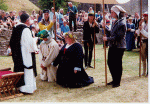

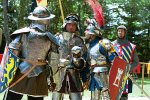
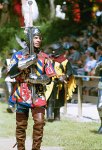
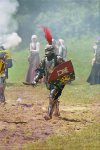

Jeanne/Johanna/John de Rougemont was one of four daughters born to Ulrich de Rougemont. She married Alber von Habsburg, and became the Queen Mother of European Royalty.
Friedrich, Seigneur de Rougemont (Rotenberg)1
M, d. after 1267
Friedrich, Seigneur de Rougemont (Rotenberg)|d. a 1267|p3785.htm#i113674|Ulrich II, Duke of Alsace, Lord Florimont, Graf von Pfirt|d. 1 Feb 1275|p796.htm#i23897|(Miss) de Belvoir|d. b 1256|p3198.htm#i96062|Friedrich I. Graf von Pfirt|d. 25 Jan 1234|p796.htm#i23899|Heilwig v. Urach|d. a 1262|p796.htm#i23900|||||||
Father Ulrich II, Duke of Alsace, Lord Florimont, Graf von Pfirt1 d. 1 Feb 1275
Mother (Miss) de Belvoir1 d. b 1256
Friedrich, Seigneur de Rougemont (Rotenberg) married Gille de Vienne, daughter of Hugues, Sire de Pagny, Comte de Vienne.1 Friedrich, Seigneur de Rougemont (Rotenberg) died after 1267.1
Family Gille de Vienne
Citations
1.[S2] Detlev Schwennicke, Europaische Stammtafeln, New Series, Vol. I/2, Tafel 226.
Gille de Vienne1
http://www.rougemont.be/pages/indexpag.html
Ulrich III
von Pfirt
+ 1324
Ulrich III
von Pfirt
,
Born:
Baptised:
Died: 1324
Buried:
Family:
von Pfirt
Ancestors
[ Patrilineage | Matrilineage | Options ]
1.
Ulrich III
von Pfirt
(
de Bourgogne
) + 1324
Siblings
Spouses
1. 1303
Jeanne
de Bourgogne
(
von Pfirt
) + 1348
Descendants
[ Options ]
a.
Jeanne
de Bourgogne
(
von Pfirt
) + 1348
1.
Johanna
von Pfirt
(Ferrette) (
von Hapsburg
) 1300 – 1351
1a.
Albrecht II (the Wise)
von Hapsburg
(
von Pfirt
) 1298 – 1358
1.1.
Katharina
von Hapsburg
1334 – 1387
1.2.
Rudloph IV
von Hapsburg
1339 – 1365
1.3.
Margarete
von Hapsburg
c. 1346 – 1366
1.4.
Friedrich III
von Hapsburg
1347 – 1362
1.5.
Albrecht III
von Hapsburg
(
von Nuremberg
) 1348 – 1395 …
1.6.
Leopold III
von Hapsburg
(
Visconti
) 1351 – 1386
a
Gille de Vienne||p3785.htm#i113675|Hugues, Sire de Pagny, Comte de Vienne|d. 1270|p1023.htm#i30736||||Hugues I. Sire d’Antigny & Pagny|d. a 1243|p1023.htm#i30740|Beatrix d. Vienne|d. a 1224|p1024.htm#i30741|||||||
Father Hugues, Sire de Pagny, Comte de Vienne1,2 d. 1270
Bernard de Trameloy. Burgundian lord.
It accepted from Louis VII the privilege to hang the title of Large
Maître.(non recognized by the Chapter)
Its small nephew, Amédée de Tramelay, were an archbishop of Besancon
(1193-1219)
The FIT to rebuild the church and the town of Gaza
Captive fact and dies close to Ascalon in 1153 with its Templiers.
During this battle Templiers and Hospitaliers combatant for the
spoils and the honor before the catch of the city
Amedee de Dramelay/Tramelay was an archbishop of Besancon, and the son of Templar Grand Master, Bernard de Tramelay. Fromond de Dramelay married a Rougemont.
1.2.Hugues II de Dramelay; he and his brother were ancestors of the
Sires de Dramelay, Jura
2.Humbert de Dramelay, sn de Neufchatel, etc; m.NN
2.1.Fromond de Dramelay, sn de Neufchatel, etc 1171/1213; m.N de
Rougemont
https://en.wikipedia.org/wiki/Bernard_de_Tremelay
Bernard de Tramelay (died 16 August 1153) was the fourth Grand Master of the Knights Templar.
He was born in the castle of Tramelay near Saint-Claude in the Jura. According to Du Cange, he succeeded a certain Hugues as Master of the Temple, although this Hugues is otherwise unknown. He was elected Grand Master in June 1151, after the abdication of Everard des Barres, who had returned to France following the Second Crusade. King Baldwin III of Jerusalem granted him the ruined city of Gaza, which Bernard rebuilt for the Templars.
In 1153 the Templars participated in the Battle of Ascalon, a fortress at that time controlled by Fatimid Egypt. The Templars constructed a siege tower, which was burned down by the Egyptian soldiers inside Ascalon. The wind caught the flames and part of the walls of Ascalon burned down as well.
According to William of Tyre, knights of the Order rushed through the breach without Baldwin’s knowledge while Bernard prevented other crusaders from following, as he did not want to share the spoils of the city with the king. Bernard and about forty of his Templars were killed by the larger Egyptian garrison. Their bodies were displayed on the ramparts and their heads were sent to the sultan. Other more modern accounts say that William of Tyre’s version may have been distorted, since it may have been based on the defensive accounts given by the army’s commanders as to why they did not follow the Templars into the breach.[1]
In yet another differing account by a Damascene chronicler in the city, the breach of the wall is mentioned as a precursor to the fall of the city; he makes no mention of the incident with the Templars. Regardless of which account is believed, Bernard was killed and beheaded during the fighting. A few days later, Baldwin captured the fortress; shortly thereafter, the Templars elected André de Montbard as their Grand Master.
John Ambrose <braskewitz@yahoo.com>
To:tsj@tsj.org
Wed, Mar 29, 2006 at 1:42 PM
The Sisterhood of Rougemont
Dear Daughter;
Thibaut and Humbert de Rougement were Bishops of Besancon and the ancestors of Guillaume de Vienne who co-founded the Order of Saint-George ‘Brotherhood of Rougemont’ that was taken over by the wrong people during the Reformation. The Rougemonts fled to England and Canada, where as members of the Canadian Parliament, they admitted members into the Loyal Orange Order. Bennett Rosamond was a master of the LOL.
Was there a ‘Sisterhood of Rougemont’? Jacquotte de Rougemont is listed as a member of the Brotherhood and she is the sister of Thibaut who was the Archbishop of Besancon, and the Chief, or, President of the Brotherhood of Rougemont.
of Rougemont Thiébaud archbishop of Besancon 1449
of Rougemont Jacquotte sister of the precedent 1449
of Rougemont Jean-Guillaume knight 1449
Amedee de Dramelay/Tramelay was an archbishop of Besancon, and the son of Templar Grand Master, Bernard de Tramelay. Fromond de Dramelay married a Rougemont.
Many family members of the House of Orange were Knights of the Brotherhood of Rougemont. After the Reformation, and the Huguenots lost the battle of White Mountain, we lost the estates of our Rosy ancestors. The Pope put loyal Catholics in our offices, and gave them our land. The present religious order of Saint George, are usurpers. One can say ‘The True Landlord’ has returned.
Within this house are the rightful White Friars of the Brotherhood of Rougemont, who once were lost, are now found. Let us awaken the sleeping kingdom.
We have endured the thorns for the love of our roses.
Love
Jon Gregory Presco de Rougemont
Grand Master of the Brotherhood of Rougemont
The “lonely mansion” nestled at the foot of the hills was better known as the Doak Mansion, completed in 1921. In 1927 the then-owner, Col. John McGill, offered the mansion to President Calvin Coolidge to serve free of charge as a summer White House; Coolidge declined the offer. Eventually the mansion fell into disrepair, and most of the original 2,000 acres were sold off for agricultural use. In 1955, Noel Sullivan, brother of Mother Agnes of Santa Clara, donated $60,000 to purchase the run-down mansion and the remaining 29 acres. Sullivan died in 1955, leaving a substantial bequest to the Carmelites for construction of the beautiful chapel, designed by architect Paul Ryan.
In the Protevangelium of James we read about a liniage of female prophets giving birth to prophetic sons.
http://www.lib.rochester.edu/camelot/TEAMS/44sr.htm
http://www.webcom.com/gnosis/library/psudomat.htm
Bernard de Trameloy. Burgundian lord.
It accepted from Louis VII the privilege to hang the title of Large
Maître.(non recognized by the Chapter)
Its small nephew, Amédée de Tramelay, were an archbishop of Besancon
(1193-1219)
The FIT to rebuild the church and the town of Gaza
Captive fact and dies close to Ascalon in 1153 with its Templiers.
During this battle Templiers and Hospitaliers combatant for the
spoils and the honor before the catch of the city
Jon Presco
http://www.ocarm.org/eng/scudoeng.htm
http://tinyurl.com/fdas2
http://tinyurl.com/n7soz
de Rougemont Thiébaud archevêque de Besançon 1449
de Rougemont Jacquotte soeur du précédent 1449
de Rougemont Jean-Guillaume chevalier 1449
de Rougemont Pierre 1463
of Rougemont Thiébaud archbishop of Besancon 1449
of Rougemont Jacquotte sister of the precedent 1449
of Rougemont Jean-Guillaume knight 1449
of Rougemont Pierre 1463
de Sacquenay Jean seigneur de Rougemont 1582
Jon Presco
The PEDIGREE of
Thiebaut II de ROUGEMONT
Born: ? Died: aft. 1173
Poss. HM George I’s 18-Great Grandfather. HRH Charles’s 24-Great Grandfather. Louis XVII’s 21-Great Grandfather. HM Baudouin I’s 23-Great Grandfather.
________________________________________
Wife/Partner: Alais
Child: Humbert II de ROUGEMONT
________________________________________
________ ________ _______ _______ _______ ____ ____ ___
/ — Thiebaut I de ROUGEMONT
/
– Thiebaut II de ROUGEMONT
\
\ — Poncette de TRAVES (? – 1156+)
________________________________________
His (poss.) 2-Great Grandchild: Alais de FAUCOGNEY
His (poss.) 5-Great Grandchildren: Marguerite de VIENNE ; Guillaume de VIENNE ; Philippe de VIENNE
Humbert II de ROUGEMONT
Born: ? Died: by 1227
Poss. HM George I’s 17-Great Grandfather. HRH Charles’s 23-Great Grandfather. Louis XVII’s 20-Great Grandfather. HM Juan Carlos’ 23-Great Grandfather.
________________________________________
Wife/Partner: Sibille de BESANCON
Child: Hugues de ROUGEMONT
________________________________________
________ ________ _______ _______ _______ ____ ____ ___
/ — Thiebaut I de ROUGEMONT
/ — Thiebaut II de ROUGEMONT (? – 1173+)
/ \ — Poncette de TRAVES (? – 1156+)
– Humbert II de ROUGEMONT
\
\ — Alais
________________________________________
His (poss.) 2-Great Grandchild: Philippe de VIENNE
His (poss.) 5-Great Grandchildren: Philippe de JONVELLE ; Gilette de VIENNE ; Hugues de VIENNE ; Marguerite de VIENNE
BERNARD OF TRAMELAI (1151)
http://www.euraldic.com/txt_saint-georges_s3.html
http://www.euraldic.com/txt_saint-georges_s3.html
http://www.euraldic.com/txt_saint-georges.html
Order and noble brotherhood into Frank-comté. Philippe the Good,
duke of Burgundy, instituted, the year 1430, the order of Fleece-in
Or. But while limiting to twenty-four only the number of the
admitted knights, it gave birth to a sharp jealousy among all the
gentlemen from the two Burgundies, which, by their birth and their
row, had the right to aspire to the same honor. Guillaume of Vienna,
lord de Saint-Georges, one of the most famous lords of Burgundy,
which, the first, had received the order of Fleece-in Or of the
hands of this prince, wanting to provide a compensation to the
offended clean love of the nobility of the two Burgundies, proposed
with this one, of the approval of Philippe the Good, the institution
of a noble brotherhood, under the patronage of Saint-Georges, whose
decoration, representing the gold effigy of this saint, owner of the
knighthood, would be suspended with a ribbon similar to that of
Fleece-in Or, and of which the evidence of admission would be those
of a life of name and weapons, without known origin. The first
assembly or chapter of this brotherhood took place in the church of
Augustins de SaintGeorges, the year 1430. It elected there for chief
and governor Guillaume of Vienna, his founder. It held then its
chapters in Seurre. One year after the institution of this
brotherhood, Philibert de Molans, Burgundian gentleman, having
finished the construction of a vault close the parish church of
Rougemont, in the intention to lock up relics of Saint-Georges
there, that as of the year 1390 it had brought back theHoly one,
convened all the gentlemen, his/her parents, neighbors and friends,
to attend with the blessing of this vault, and the installation of
the mounting which contained these invaluable relics. Offices were
founded in the honor of Saint-Georges as of this first assembly,
which renouvele constantly since, with the birthday of this saint;
and a few years after, the wars which followed the death of Charles
the Bold one and the meeting of the fine duchy of Burgundy to the
crown of France having put to the first brotherhood of Saint-
Georges, instituted by Guillaume of Vienna, that of Rougemont
continued to remain with a new glare, by taking completely the
character, the statutes and the ceremonial of an order of
knighthood, under the immediate protection of the Maximilien emperor
and all the other sovereigns, under the domination desquelsla frank
(comté was placed. At the time of the conquest of this province,
Louis XIV maintained the order of Saint-Georges in his existence and
his honors, and even condescended to substitute the ribbon of his
kind of the Holy Spirit for that of Fleece-in Or. The evidence of
nobility for the admission in this brotherhood was of sixteen
districts, by going up the paternal side up to nine degrees. It was
also necessary, to be allowed, to have been born or have
possessionné into Frank-comté. The governor or chief was elected
with life by the general assembly of the knights. Since 1589, one
added to the old statutes the oath of living and dying in the
catholic religion, and fidelity with the legitimate sovereign. The
decoration of the order consists of Saint-Georges with horse, boring
its lance a dragon, the gold whole. It is attached to the buttonhole
by a celestial blue moirué ribbon.
de Vienne Henriette femme d’Humbert de Rougemont,
ensuite de Jean de Rye 1449
de Vienne Gérard seigneur de Ruffey
de Vienne Henriette femme d’Humbert de Rougemont,
ensuite de Jean de Rye 1449
de Vienne Gérard seigneur de Ruffey 1499
de Vienne Claude seigneur de Clervent 1525
de Vienne Guillaume baron de Chevreaux 1544
de Vienne Henri baron de Chevreaux
BROTHERHOOD OF SAINT-GEORGE . She was instituted in the county of
Burgundy, l’an 1390 by Philibert de Molan, lord partly of Rougemont.
He was the first head, under the title of barristers president; the
fellow-members take their row according to l’ordre of their
reception in THE BROTHERHOOD without regard to dignities of which
some d’entre them could be covered; they mutually make vSu s’aider
s’ils are made prisoners, and to take care of the interests of the
widows and the orphans, to which effect one names each year of the
police chiefs, during l’assemblée general.
In 1569, one added to the old statutes that the fellow-members would
make oath of living and dying in the catholic religion, and in
l’obéissance and tender due to their legitimate sovereign; and l’on
gave to the barristers president the title of governor.
This company had during a time the name of BROTHERHOOD of Rougemont,
because Philibert de Molan fixed it in this country, in 1431. Its
assemblies were held above in l’église Large Carmelite friars of
Besancon.
The members of this association must show sixteen districts of
nobility; their distinctive mark is SAINT-GEORGES with horse, boring
its lance a dragon , the whole d’or and attached to the buttonhole
of their dress by a moire celestial blue ribbon.
http://tinyurl.com/oqz3t
PRESENTATION of the NOBLE BROTHERHOOD of the knights of Saint-George
in the county of Burgundy
“the NOBLE BROTHERHOOD OF the KNIGHTS OF Saint-George” of Éric Thiou.
14 X 20 cm, 235 pages, 37 €
The brotherhood of Saint-Georges was one of rare voluntary
associations gentlemen of a French province under Ancien Régime. The
study of this brotherhood is made in three times. First of all the
study criticizes testimonys on the brotherhood, then the study of
the political role of the brotherhood through a lawsuit with the
Parliament of Besancon, and the attitude of the knights of George
Saint at the time of the Revolution. Finally the statutes of the
brotherhood and the list of the knights are analyzed under all their
aspects. In conclusion, the instruction of the intendant, the
lawsuit and the analysis are compared to try to characterize the
dichotomy and the conflict between two types of nobility in Franche-
Comté and France at the XVIIIe century. The last part of this work
consists of a dictionary prosopographic of all the knights of Saint-
Georges who lived between 1679 and 1789.
With – Small history of the brotherhood
The noble association of the knights of Saint-Georges was founded in
Rougemont about the year 1300 by the sovereigns of the county of
Burgundy to gather Burgundian gentlemen of former knighthood. Their
badge at that time was a medal representing holy George with horse
embanking a dragon, suspended with a gold chain. This brotherhood
was destroyed at the end of XIVe century by the wars. She was
restored by Philibert of MOLLANS(3), knight comtois who would have
brought back Holy Land of the relics of Saint-Georges. He
consequently thought of offering them to the nobility of the county
of Burgundy. He thus joins together about 1435 or 1440, a certain
number of knights comtois to honour these relics in a vault which he
had with the castle of Rougemont. And it solved to celebrate each
year the festival of a saint, that the nobility regarded as its
owner, because it was knight and that one represented it with horse
armed with a lance. Philibert of MOLLANS was undoubtedly the first
governor of the order elected by the body of the knights.
Consequently, the largest lords of the country hastened to be made
receive in the brotherhood, and were assembled each year in the
vault of Rougemont on April 22, takes care of the George Saint.
Philippe the Good authorized the order to carry the suspended medal
to a red ribbon following the example that of the Golden Fleece. In
1648, the brotherhood settled in Besancon and not in Dole, then
capital county of Burgundy, indeed the brotherhood had already a
political role while being opposed to the Parliament of Pares. A
room in the tower of Montmartin was granted to him by a treaty with
the town of Besancon, as well as the exemption of the housing of
people of war for the knights residing in Besancon. The knights of
Saint-Georges were besides only noble city of Besancon has to profit
from this inappreciable privilege. However, it seems to have met
several times at Vesoul, city which has as Saint-Georges patron
saint. Then on April 25, 1661, the brotherhood is assembled in
Salins and decides that henceforth it will meet in Besancon, with
the convent of the Large Carmelite friars, rested by a fellow-
member: Jean of VIENNA. After the conquest, Louis XIV decided to
tolerate the brotherhood, in spite of his resistance to the invader.
He made it possible even to the knights to carry their medal of
Saint-Georges suspended to a blue moire ribbon like that of the
order of the Holy Spirit, this in order to adapt has lower cost part
of the nobility comtoise, which would provide him executives devoted
for its army. Besides Louis XV & Louis XVI, continued the policy of
the Sun king with regard to the brotherhood, they addressed to the
company portraits the them same ones, in foot, where one could
read: “Given by the king the knights of George Saint of his county
of Burgundy.”. These portraits like that of the prince of COP,
special guard of the brotherhood decorated the superb room with the
Large Carmelite friars of Besancon, unfortunately destroyed at the
time of the Revolution. The plank of the woodworks of the room was
decorated series of the blasonnés ecus of the alive knights, with
their confined inscriptions of their four districts, which one
descended at the time of their death to be carried in ceremony with
the church, then suspended with their row in the nave where one saw
a great number of it which had decorated a long time the vault with
Rougemont. The church which was papered blazons of the knights of
George Saint was also paved of their tombs, “as if they had wanted
to join together in this place emblèmes of human vanity to the
testimony of his nothing”. At the time of the general assembly of
April 25, 1768, new statutes were written, they will be studied here.
Bernard de Trameloy. Burgundian lord.
It accepted from Louis VII the privilege to hang the title of Large
Maître.(non recognized by the Chapter)
Its small nephew, Amédée de Tramelay, were an archbishop of Besancon
(1193-1219)
The FIT to rebuild the church and the town of Gaza
Captive fact and dies close to Ascalon in 1153 with its Templiers.
During this battle Templiers and Hospitaliers combatant for the
spoils and the honor before the catch of the city
History of the castle:
• The dynasty of Dramelay
The first lord de known Dramelay is Amédée de Dramelay, in 1044.
His/her small son, Onfroy, lord of Dramelay about 1090 are in
relation to the priory clunisien of Romainmotier.
Bernard de Dramelay, Large Main of the Temple in 1153, dies in the
head office of Ascalon in Palestine in 1154.
Hugues de Dramelay is constable of the County of Burgundy in 1173;
he is the father of Hughes II, lord of Dramelay of 1189 to 1217.
In 1240, his/her son is driven out castle, for act of war. The
castle becomes then possession of the Count de Chalon
Another branch of the family, resulting from GUI of Dramelay, which
takes part in the war of Péloponèse in 1209, will possèdera ten
castles in Greece and not less than 34 castles in Franche-Comté (for
example Présilly ). One of its descendants, Amédée, Archevèque of
Besancon, will make build the vault that one finds the tower below.
• The time of the Trawl-net
In 1240, the stronghold of Dramelay passes under the possession of
Jean de Chalon. In 1248, it is pledged Rodolphe de Courtenay, to
brother-in-law of Jean de Chalon. Tower (or what it remains about
it), date of this time.
In 1260, Jean de Chalon gives his son ainé Hughes his strongholds
and castles.
Jean II of Trawl-net-Auxerre east lord of Dramelay of 1292 to 1361,
then the site passes to a branch junior, the lords of Châtel-Belin,
and finally with the Trawl-net-Arlay, princes d’ Orange.
• The castle was destroyed by the French troops of Louis XI,
at the time of the war which opposed the Franche-Comté to France,
after the death of Charles the Bold one.
http://www.valouse-ain.fr/affiche.asp?num=74&arbo=2
http://worldroots.com/brigitte/theroff/neufchtl.txt
This will be an account of the Sires de Neufchatel-en-Bourgogne. The
line starts with two
brothers (who were probably sons of Fromond de Dramelay by N de
Montfaucon, Dame de
Neufchatel). The brothers were:
1.Hugues I “le Connetable”, Constable to Ct Gerard of Burgundy
1.1.Guy de Drameley
1.2.Hugues II de Dramelay; he and his brother were ancestors of the
Sires de Dramelay, Jura
2.Humbert de Dramelay, sn de Neufchatel, etc; m.NN
2.1.Fromond de Dramelay, sn de Neufchatel, etc 1171/1213; m.N de
Rougemont
2.1.1.Thiebaut I de Neufchatel, sn de Neufchatel, Vcte de Baume,
Sire de Jonvelle, etc, d.1268
(bur Lieucroissant); m.1st Petronille, Dame de la Ferte-Sous-Vadans;
m.2d 1238 Elizabeth,
Dame de Jonvelle; all kids were by 1st m.
2.1.1.1.Richard de Neufchatel, sn de Clemont, d.1259 (bur
Lieucroissant); m.before 1255
Marguerite von Moempelgard
2.1.1.1.1.Thibaut III, Sire de Neufchatel, sn de Blamont, Vcte de
Baume, etc, d.1304; m.Agnes
de Commercy, Dame de Vers et de Lemuy
2.1.1.1.1.1.Richard, Sire de Neufchatel, d.1306
2.1.1.1.1.2.Thibaut IV, Sire de Neufchatel, sn de Blamont, Vcte de
Baume, etc, d.1336/7; m.ca
1290 Agnes von Geroldseck
2.1.1.1.1.2.1.Thibaut V, Sire de Neufchatel, sn de Blamont, Vcte de
Baume, etc, d.1366 (bur
Lieucroissant); m.1st Montfaucon 1335 Jeanne de Chalon, Dame de
Nancuise (d.ca 1342); m.2d
1342 Catherine de Chalon (d.ca 1359)
2.1.1.1.1.2.1.1.Thibaut VI, Sire de Neufchatel, sn de Blamont, Vcte
de Baume, etc, b.ca 1337,
d.1400/1 (bur Lieucroissant); m.1360 Marguerite de Bourgogne, Dame
de Chemilly, etc (d.ca
1397, bur Lieucroissant); for his descendants see Part 2
Thibaut VII de Neufchatel
Thibaut I de NEUFCHATEL
Born: ? Died: abt. 1268
HRH Charles’s 21-Great Grandfather. Louis XVII’s 18-Great
Grandfather. HM Juan Carlos’ 21-Great Grandfather. HM
Baudouin I’s 20-Great Grandfather. Ksr Wilhelm II’s 19-Great
Grandfather.
________________________________________
Wife/Partner: Petronille de la FERTE-SOUS-VADANS
Child: Richard de NEUFCHATEL de CLEMONT
________________________________________
_______ _______ _______ _______
_______ _______ ____ ____ ___
/ — Fromond de DRAMELAY
/ — Humbert de DRAMELAY
/ \ — (Miss) de MONTFAUCON
/ — Fromond de DRAMELAY (? – 1213?)
/
– Thibaut I de NEUFCHATEL
\
\ — (Miss) de ROUGEMONT
http://freepages.genealogy.rootsweb.com/~jamesdow/s036/f775691.htm
The PEDIGREE of
(Miss) de ROUGEMONT
HRH Charles’s 22-Great Grandmother. Louis XVII’s 19-Great
Grandmother. HM Juan Carlos’ 22-Great Grandmother. HM
Baudouin I’s 21-Great Grandmother.
________________________________________
Husband/Partner: Fromond de DRAMELAY
Child: Thibaut I de NEUFCHATEL
________________________________________
_________ _________ ________ ________
_____ _____ ___
/ — (missing)
/
– (Miss) de ROUGEMONT
\
\ — (missing)
Robert de
Choiseul
Sire de Traves de Scey-sur-
Saone
mentioned 1247 and
1300
Married before
1259
Sibille (Elisabeth,Isabelle) de Rougemont, daughter
of
Thiébaut III de Rougemont, Vicomte de Besancon and
Comtesse
de
Belmont
Died 1290
Hugo, Victor Marie, Vicomte , 1802–85,
The PEDIGREE of
Thiebaut II de ROUGEMONT
Born: ? Died: aft. 1173
Poss. HM George I’s 18-Great Grandfather. HRH Charles’s 24-
Great Grandfather. Louis XVII’s 21-Great Grandfather. HM
Baudouin I’s 23-Great Grandfather.
________________________________________
Wife/Partner: Alais
Child: Humbert II de ROUGEMONT
________________________________________
________ ________ _______ _______
_______ ____ ____ ___
/ — Thiebaut I de ROUGEMONT
/
– Thiebaut II de ROUGEMONT
\
\ — Poncette de TRAVES (? – 1156+)
________________________________________
His (poss.) 2-Great Grandchild: Alais de FAUCOGNEY
His (poss.) 5-Great Grandchildren: Marguerite de
VIENNE ; Guillaume de VIENNE ; Philippe de VIENNE
|——-de ROUGEMONT, “Humbert IV, Sire”
|——de ROUGEMONT, “Thibaud V, Sire”
| |——-de DURNES, Agnès
de ROUGEMONT, Guillaume
|——N., Jeanne
Sexe: Masculin
Décès : 1352
Occupation : Chevalier. Sire du lieu et d’Usies.
Famille de ROUGEMONT – de RAY
|——-de RAY, Aymé
|——de RAY, Gautier
| |——-de PULIGNY, Mahaut
de RAY, Marguerite
| |——-de BLAMONT, “Henry, Cte”
|——de BLAMONT, Cunégonde
Sexe: Féminin
RAY porte, selon Lurion: “De gueules à l’escarboucle fleurdelisée
d’or de huit rais pommetés et fleuretés de même.”
Selon Beaune et d’Arb.: “De gueules, à l’escarboucle d’or, pommetée
et fleuronnée de même.”
de ROUGEMONT, “Humbert V, Sire”
|——-de ROUGEMONT, “Thibaud V, Sire”
|——de ROUGEMONT, Guillaume
| |——-N., Jeanne
de ROUGEMONT, “Humbert V, Sire”
| |——-de RAY, Gautier
|——de RAY, Marguerite
|——-de BLAMONT, Cunégonde
Sexe: Masculin
Décès : 5 avril 1412
Occupation : Chevalier. Sire d’Usies. Fait hommage, le 21 avril 1389
comme …
… tuteur des enfants de Guillaume son fils, à Jean de Châlon.
Teste le 9 décembre 1406.
Famille de ROUGEMONT – de NEUCHÂTEL
|——de NEUCHÂTEL, “Thibaud VI”
de NEUCHÂTEL, Alix
|——de BOURGOGNE, Marguerite
Sexe: Féminin
Décès : 25 septembre 1414
NEUCHÂTEL (Suisse) porte, selon Lurion: “D’or au pal de gueules
chargé de trois chevrons d’argent.”
de ROUGEMONT, Jeanne
|——-de MONTHUREUX, “Jean Ier”
|——de MONTHUREUX, Philippe
| |——-de FAUCOGNEY, Jeanne
de MONTHUREUX, “Jean II, Sire”
|——de MAISIÈRES, Jeanne
Sexe: Masculin
Décès : 1471
Occupation : Conseiller du duc Charles le Téméraire. Acquéreur en
mai 1469 à Sigismond …
… d’Autriche du comté de Ferrette, du Landgraviat d’Alsace et des
4 villes rhénanes de Rheinfelden, Sockingen, Waldshut et
Lauffenburg. Lequel duc commet Jean III à l’assemblée des Etats
deFerrette “pour pourvoir au faict de la justice et police”.
Reçu à Saint-Georges en 1470.
Famille de MONTHUREUX – de ROUGEMONT
|——-de ROUGEMONT, Guillaume
|——de ROUGEMONT, “Humbert V, Sire”
| |——-de RAY, Marguerite
de ROUGEMONT, Jeanne
| |——-de NEUCHÂTEL, “Thibaud VI”
|——de NEUCHÂTEL, Alix
|——-de BOURGOGNE, Marguerite
Sexe: Féminin
ROUGEMONT porte, selon Louis de Buyer: “D’or à l’aigle éployée de
gueules, membrée, becquée et couronnée d’azur”. (idem Lurion, ordre
différent) (idem Cayon)
de MONTHUREUX, Georges
________________________________________
Retour à la page principale
|——-de MONTHUREUX, “Jean II, Sire”
|——de MONTHUREUX, Georges
| |——-de ROUGEMONT, Jeanne
de MONTHUREUX, Claude
| |——-d’ORSANS, Henri
|——d’ORSANS, Simone
|——-de DOMPREL, Jeanne
Sexe: Masculin
Occupation : Chevalier. Sgr. de Monthureux. Bon de Melisey.
Chevalier de Saint-Georges, …
… reçu en 1518.
Famille de MONTHUREUX – de SAINT-MAURIS
|——-de SAINT-MAURIS, “Thiébaud II, Dit Berchenet”
|——de SAINT-MAURIS, Adrien
| |——-de BOIGNE, Henriette
de SAINT-MAURIS, Marguerite
| |——-de GRAMMONT-FALLON, Antoine
|——de GRAMMONT-FALLON, Marie
|——-de VELLEFAUX, “Marguerite, Dame”
Sexe: Féminin
Occupation : (en Montagne). Voir SAINT-MAURIS, page 162.
SAINT-MAURIS-CHATENOIS porte, selon Lurion: “De sable à deux fasces
d’argent.” (idem Cayon) Primitive devise: De la MOR je me RIS.
Adage: Lealté de Saint-Moris.
de MONTHUREUX, Catherine
ROUGEMONT, “Thibaud V, Lord” | ROUGEMONT, Guillaume || N, Jeanne
ROUGEMONT, “Humbert V, Lord”
|| RAY, Gautier | RAY, Marguerite | BLAMONT, Cunégonde
Sex: Masculine
Death: April 5, 1412
Occupation: Knight. Lord d’ Usies. Fact homage, April 21, 1389
like…
… tutor of the children of Guillaume his son, in Jean de Châlon.
Test on December 9, 1406.
MONTHUREUX, “Jean Ier” | MONTHUREUX, Philippe || FAUCOGNEY, Jeanne
MONTHUREUX, “Jean II, Lord”
| MAISIÈRES, Jeanne
Sex: Masculine
Death: 1471
Occupation: To advise of the duke Charles the Bold one. Purchaser in
May 1469 in Sigismond…
… of Austria of the county of Ferrette, Landgraviat of Alsace and
the 4 Rhenish cities of Rheinfelden, Sockingen, Waldshut and
Lauffenburg. Which duke makes Jean III at the assembly of the States
deFerrette “to provide for the faict with justice and police force”.
Receipt with Saint-Georges in 1470.
Family of MONTHUREUX – ROUGEMONT
| ROUGEMONT, Guillaume | ROUGEMONT, “Humbert V, Lord” || RAY,
Marguerite
ROUGEMONT, Jeanne
|| of NEUCHÂTEL, “Thibaud VI” | of NEUCHÂTEL, Alix | of BURGUNDY,
Marguerite
Sex: Female
ROUGEMONT carries, according to Louis de Buyer: “Of gold to the
eagle éployée of mouths, membrée, beakful and crowned azure”. (idem
Lurion, different order) (idem Cayon)
| ROUGEMONT, “Thibaud IV, Lord” | ROUGEMONT, “Humbert IV, Lord”
ROUGEMONT, “Thibaud V, Lord”
|| DURNES, Gerard | DURNES, Agnes | JOUX, Marguerite
Sex: Masculine
Occupation: Knight. Lord de Durne and Trichâtel partly.
Family of ROUGEMONT – N.
N, Jeanne Sex: Female
ROUGEMONT, Guillaume
ROUGEMONT, “Humbert III” | ROUGEMONT, “Thibaud IV, Lord” || N, Elwis
ROUGEMONT, “Humbert IV, Lord” Sex: Masculine
Death: 1331
Occupation: Knight. Lord de Durne, Trichâtel, etc…
ROUGEMONT, “Humbert III” Sex: Masculine
Occupation: Damoiseau. Mentioned in 1230, 1233, 1239.
Family of ROUGEMONT – N.
N, Elwis Sex: Female
ROUGEMONT, “Thibaud IV, Lord” Sex: Masculine
Occupation: Knight. Vte of Besancon.
de Rougemont Thiébaud archevêque de Besançon 1449
de Rougemont Jacquotte soeur du précédent 1449
de Rougemont Jean-Guillaume chevalier 1449
de Rougemont Pierre 1463
Retour à la page principale
de ROUGEMONT, Girot Sexe: Masculin
Famille de ROUGEMONT – de RUFFEY Mariage: 1340
de RUFFEY, Étiennette Sexe: Féminin
de ROUGEMONT, Jean
________________________________________
Retour à la page principale
|——de ROUGEMONT, Girot
de ROUGEMONT, Jean
|——de RUFFEY, Étiennette
Sexe: Masculin
Famille de ROUGEMONT – de VIENNE Mariage: 1370
|——de VIENNE, Hugues
de VIENNE, Jeanne
|——de STE CROIX, Jeanne
Sexe: Féminin
de ROUGEMONT, Guy
“tsj@tsj.org” <tsj@tsj.org> wrote:
Yes, I have studied the Carmelites.
Who is this? Jon Presco?
All the best,
Frank
 Rosamond Press
Leave a comment