San Sebastian Avenue
A Autobiography
by
John Presco
ALL RIGHTS RESERVED
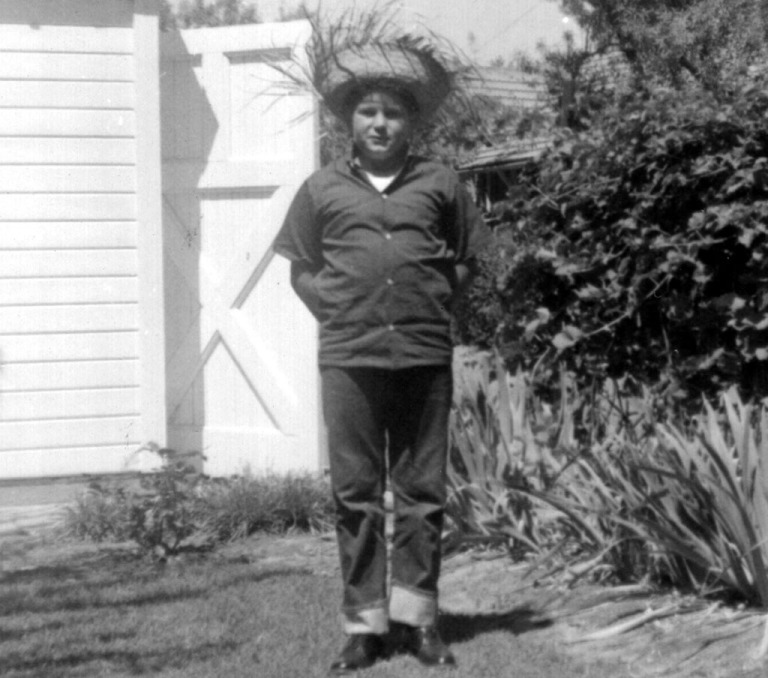
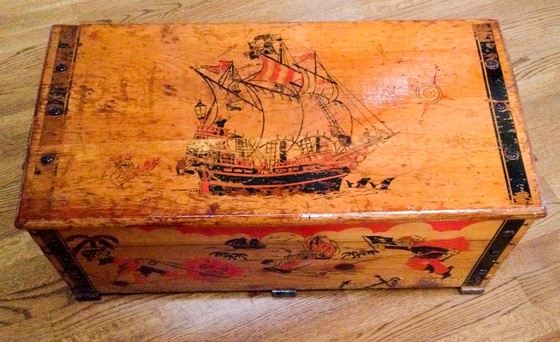
Growing up in Oakland I recall the grandeur of Samuel Merritt was played down because our common soldiers saw this kind of stuff in Europe, and, their sons are Ike’s Boys, too. Our post-war assignment was to admire Micky Mantle, and enjoy the leather baseball mitt our beloved father gave us. I never got one. My brother may have, but I will have to hypnotize myself – and see. I don’t want to see what was inside the big toy chest Grandma Melba gave Mark to take home with him after spending several weeks in Roseville, in the house that Grandpa Joes built for his new bride. You can see the garage Joe built in the photograph of The Butterball my brother had become. Maybe Mark was gone a month. But when Rosemary saw him, she called up Melba, and shrieked.
“Stop feeding my son all that food! He’s as fat as a butterball!”
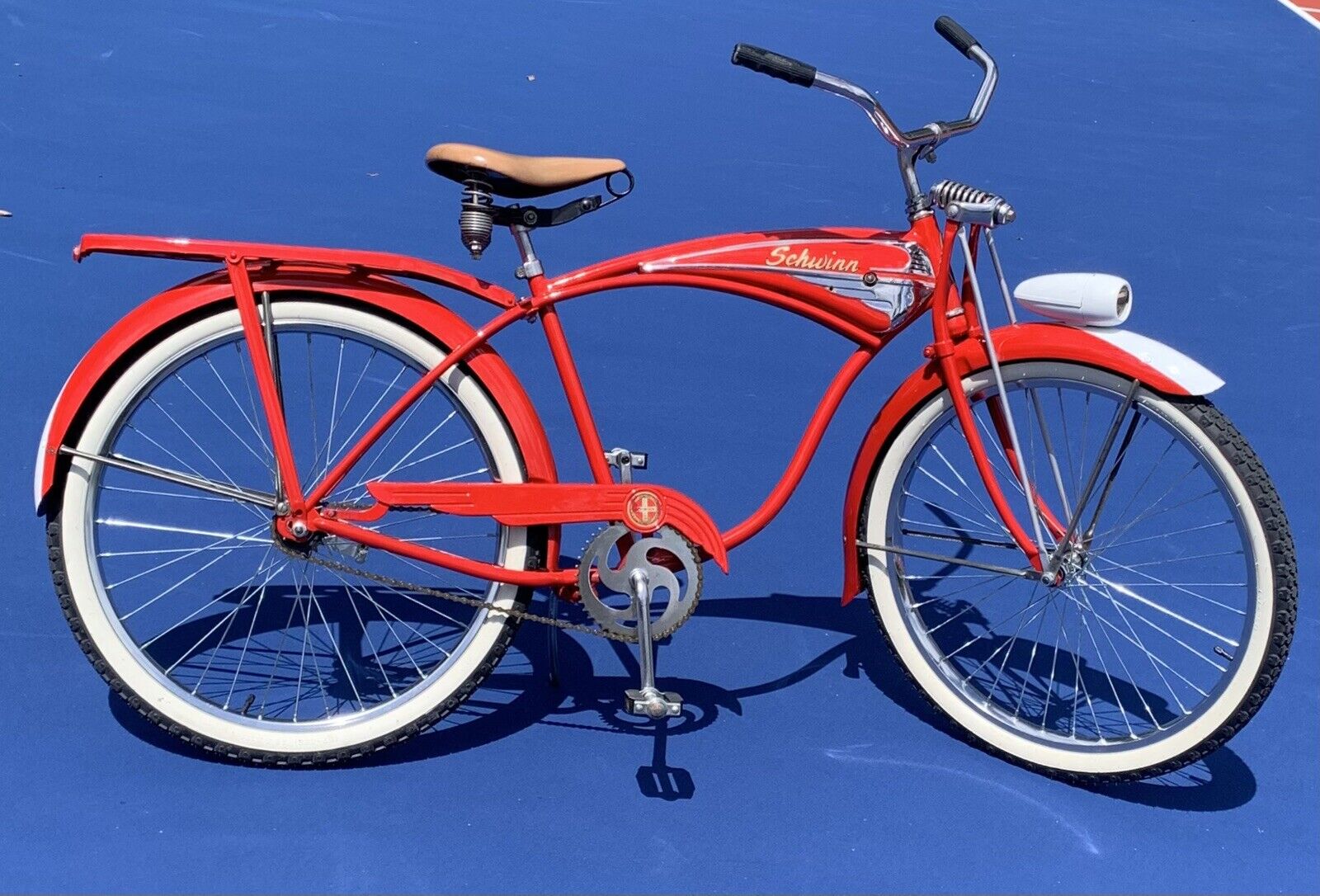
The summer before, Mark and I slept in an army tent pitched on the lawn near the apricot tree Joe planted. It was good to be out of the house on San Sebastian Avenue, and not working for Acme Produce, located in an old Victorian Vic converted into his warehouse. When Vic saw the trunk, he fumed. He wondered how many family secrets his eldest son told his mother. Vic never gave his children toys. Did she ply him with one great toy after another so she would own us? This is when my father gave me something – of real value! He took me out on the front porch, and there it was – a 1956 Schwinn Deluxe Hornet. It was red.
“Push the button!”
I beamed when I heard the beep!
“This is your bonus for being a loyal employee for the last three years!”
I then got the – BIG PICTURE! Mark had told our grandmother we had been working in the Produce Market in Jack London Square – for three years! We were paid a dollar a day, but never saw a penny. I think Vic was concerned I would quit, and runaway from home after seeing Mark enjoy all his toys. Do I see a Micky Mantle glove? Should I go back into therapy? My workplace was on 4th. Street, thirty feet from the railroad track. I would hear the clanking of the sign crossing, and see how close I dare stand, next to the approaching train. This train…..was my first toy!
Vic may have been concerned I would tell the good father at the Corpus Christi church, all the child abuse we had suffered. But, I was afraid I would be found out. I think I murdered a drunk that tried to climb out of Dimond Canyon. I was a great walker, and was walking up Park Boulevard to the hills. It was the New Year. Suddenly, a car turned onto the shoulder, and a man said;
“Turn back. There’s man down in the canyon, and he’s not wearing any pants!”
Having done his civic job, warning the boy of the pervert looking to commit an act of anal rape, He sped away leaving me all alone. I thought I heard a rustling in the bushes and picked up a stone and threw it has hard as I could. I thought I heard a human in pain, and more rustling. I picked up a hand-sized rock – and threw it as hard as I could.
“Ugh!”
I ran! To this day I see his skeletal remains that is wearing a white pirate shirt and black pirate hat. Why do I recall this? Did I ever see……The Man I Murdered…..when I was eleven years old?
“Forget it, John! Go on with your life! It’s just……..
OAKLAND!
John Presco
Warehouse Bar and Grill

CC SA-BY Our Oakland
The Warehouse Bar and Grill was a bar in a Victorian in the Jack London Square neighborhood at 402 Webster St. It had traditionally been a “cop bar”, but 2015 it was purchased, the building renovated and restored, and it was reopened as Seawolf Public House.
In addition to regular bar drinks and a decent selection of beers on tap, the Warehouse was known for its egg dishes at brunch.
The building was constructed about 1885. The walls were decorated with the insignia of various police forces around the Bay Area.
CC SA-BY Our OaklandCC SA-BY Our Oakland
Samuel Merritt (1822–1890)[1] was a physician and the 13th mayor of Oakland, California, from 1867 to 1869.[5] He was a founding Regent of the University of California, 1868-1874. He was also a shipmaster and a very successful businessman; he died at age 68 with a reputation for being the most affluent man in Oakland.[4]
Early years[edit]
Merritt was born in 1822 in Harpswell, Maine, within Casco Bay. As the youngest of five children of Stephen and Joanna (Purington) Merritt, in addition to schooling, he learned some fishing, helped to build ships, and helped in other functions of a mariner. In 1844 he graduated from the Medical School of Maine at Bowdoin College. After practising medicine in Plymouth, Massachusetts, for several years, Dr Merritt decided to join the California gold rush. He borrowed heavily from his brother Isaac, bought a 140-ton brig Reindeer, filled it with general supplies, and embarked on his voyage in 1849 as the navigator.[2][3][6]

According to the Port of San Francisco, the brig Reindeer arrived on 5 May 1850, 153 days from New York, with assorted cargo for Merritt. Because of a fire in San Francisco before his arrival, he sold his consignment quickly for a handsome profit. Moreover, he chartered his brig for $800 a month, carrying passengers and cargo to and from Humboldt Bay, which started his trading business. Meanwhile, he continued through the 1850s his medical practice near the San Francisco berths, with his physician’s office listed for six years at Room No. 7 in the Express Building at the corner of Montgomery and California Streets.[2]: 12–14 In 1852 he bought land in what is now the city of Oakland and moved there in 1863.[7][8]
Later years[edit]
As mayor of the rapidly growing town of Oakland (1867-1869), Merritt knew that it was crucial to establish the West Coast railhead of the Pacific Railroad in Oakland itself to secure its future economic viability. To achieve this goal, he and his contemporaries resolved complicated and long-standing disputes over tideland ownership through legal maneuvering, negotiated with the railroads, and navigated a series of compromise waterfront arrangements in spring 1868.[9] As the compromise took place on April 1, cynics called it an April Fool’s Day trick.[10]: 51 As Oakland was an across-the-bay suburb of San Francisco, the press dubbed it the “future Jersey City of the Pacific Coast.”[11]

In 1867, he donated 155 acres (627,000 m2) of tidal water from the headwaters of Indian Slough to the Bay. As part of his mayoral waterfront compromises in Spring 1868,[9]: 90 he orchestrated (and donated $18,000 toward) a public work dam across the San Antonio Slough estuary at 12th Street, turning the tidal lagoon into a lake at the high-tide level, which became known first as “Merritt’s Lake” and later as Lake Merritt.[12] Lake Merritt is historically significant as the United States’ first official wildlife refuge, designated in 1870 at his urging. It also has been listed as a National Historic Landmark since 1963, and on the National Register of Historic Places since 1966.[13]
As mayor, “he introduced or supported many progressive ideas: the city’s first municipal water supply; its first public health department; and a subscription library that was the forerunner of Oakland’s first public library…” –Beth Bagwell (1982)[10]
In May 1868, Merritt was appointed as a regent by Governor Haight to the founding Board of Regents of the then-nascent University of California.[14] He served as a regent until June 1874.[15] Merritt resigned from the board after a two-month investigation by the California State Assembly‘s public building committee which held him responsible for the young university’s very first corruption scandal. The committee concluded that Merritt had profited financially from selling an inferior building to the university at an exorbitant cost, at $24,000 over its reasonable value.[16] Even though the Board of Regents had enacted a resolution against self-dealing in the construction of campus buildings in June 1872, Merritt in his capacity as chair of the regents’ building committee had awarded the contract for the construction of the original College of Letters building (North Hall) at the Berkeley campus to his preferred contractor, Power and Ough—who then obtained most of the needed lumber and cement from a lumber company in Oakland owned by Merritt.[17]
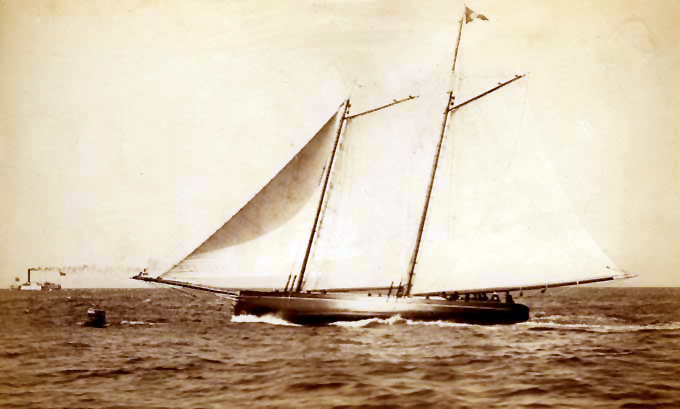
With the sea in his blood, Dr. Merritt launched in 1878 his 72-ton keel schooner yacht, Casco, built under his supervision after a model of his own.[18][19] Four years later, he launched onto his Lake the first sharpie on the Pacific coast.[20] Robert Louis Stevenson, who chartered Merritt’s Casco during the Summer and Fall of 1888, was delighted with the sailing qualities of the schooner yacht in the South Seas.[21] In early August 1890, Merritt paid Sausalito one last visit in his yacht Casco, but he was too weak and had to return to Oakland in a steamer.[22]
Death and legacy[edit]


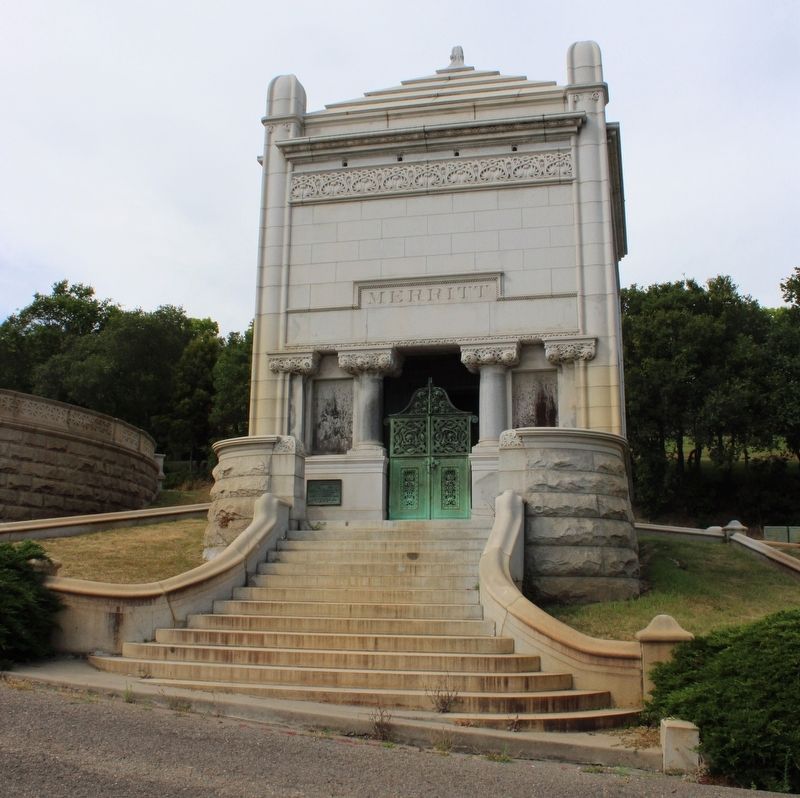
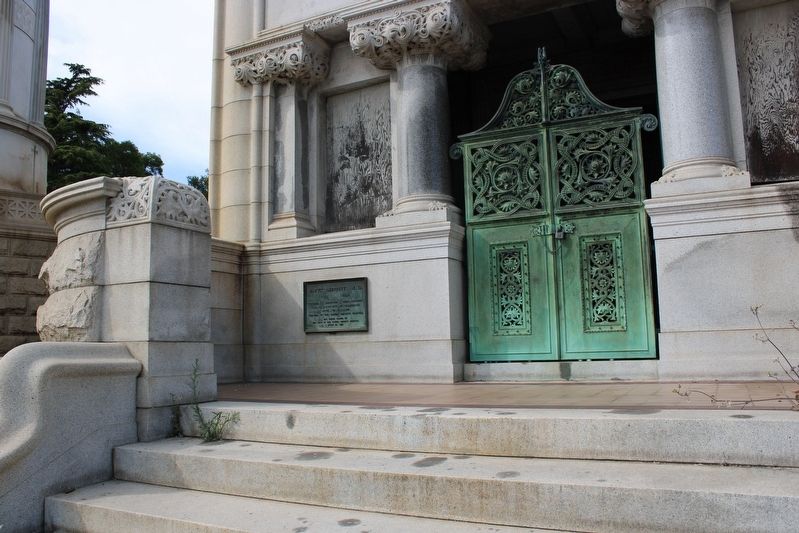
Dr Merritt died in August 1890 at age 68, in his Oakland residence in the block bounded by Madison, Jackson, Fourteenth and Fifteenth streets, with an estate of over $2,000,000 and the reputation of being the most affluent man in Oakland.[4] He was buried in Mountain View Cemetery in Oakland.
His namesake Lake Merritt “stands as the jewel of Oakland, even crowned with lights.”[23]
He left plans for a hospital and nursing school to be built in his name after his death. In 1909, Samuel Merritt University and Merritt Hospital opened.[24]
 Rosamond Press


Leave a comment