The Story of Rosamond
by
Jon Presco
Copyright 2017
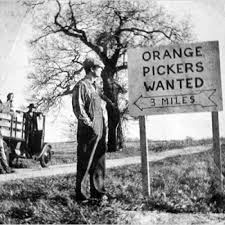
“Pick you own damn oranges! We’re pulling up stakes, and getting the hell out of Carmel, pronto! You got too many water problems! declared Frank Rosamond, head of the Rosamond clan of California, who was not happy about the death of his cousin, Rena-Christina Victoria Roozemonde.
“We got grieving children, here: children who grieve!”

After the funeral, a well-dressed man approached Rosemary and I, took my mother’s hand, and gave his condilences. Now before me, he refused to shake my hand, and instead, gave me a very hard, threatening stare.
“Did you notice the look he gave you” Rosemary asked.
“He is a very wealthy man!” she said, proudly.
My mother was bragging. One of the candidates for this rich man, is Robert B. Buck who is a partner in the law firm that sold my families artistic dynasty to an outsider. I suspect Christine Rosamond Benton, knew too much, and, was turning over on people.
Did you know there is a working oil well under the City of Beverly Hills? Did you know Robert’s ancestor, Frank Buck, owned a water company?
“After drilling for oil and only finding water, they reorganized their business into the Rodeo Land and Water Company to develop a new residential town later known as Beverly Hills, California.”
Consider the movie ‘Chinatown’ and the Beverley Hillbillies which my late mother compared to her father’s novels. I asked who owns ‘When You Close Your Eyes’. I nominate Robert B. Buck who is the Grandnephew of Beryl Hamilton Buck, whose wife wanted to combat alcohol abuse. This is why I stressed the importance that Christine and my autobiographies should be honored above all comers, for we WERE A SUCCESS STORY, until Attorney Sydney Morris – destroyed our Recovery Story.
Buck’s law firm ordered up a book and a movie after the Dead Artist Sale was a bust. Only I knew Rosamond’s artwork would not increase in value and popularity. She was not that kind of ‘Famous Artist’. This is unheard of, books and movies being ordered-up to save the reputation of a powerful law firm, who I believe met with Tom Snyder.
The fight over the Buck Trust is titled ‘The Superbowl’ and reminiscent of ‘Bleak House’. Christine was once the Poor Artist that championed The Poor People, like the Buck Trust was supposed to do. And lest poor alcoholics attach themselves to this Trust that is valued at one billion dollars, there appears to be a legal conspiracy to crush poor folks who suffer.
https://en.wikipedia.org/wiki/Bleak_House


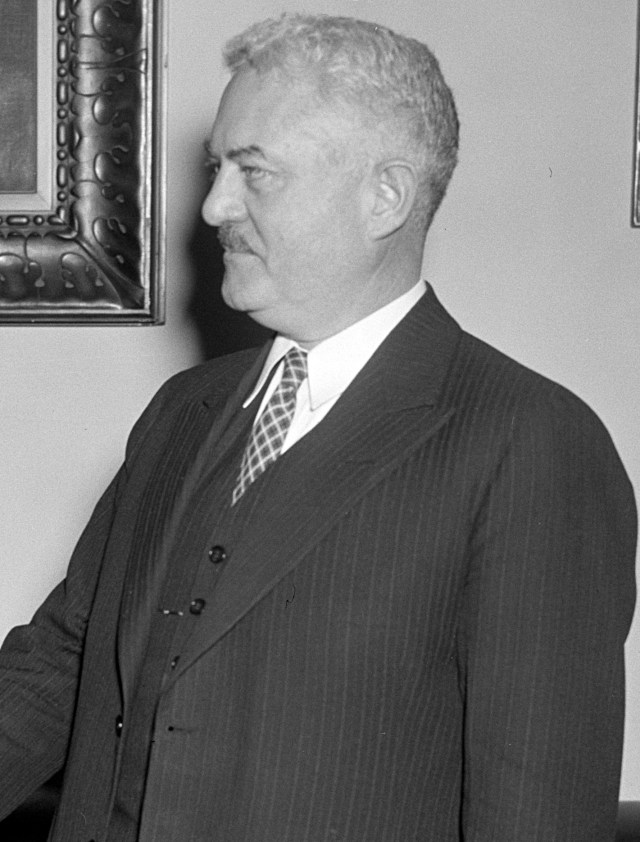
“Mr. Buck is a prominent Mason, a Knight Templar and Odd Fellow, and a member of various clubs, including the Bohemian, of San Francisco; the Pacific-Union of the same city, the San Francisco Gold and Country Club, the Claremont Country Club, of Oakland, California, and the Sutter Club, of Sacramento, California.”
http://freepages.genealogy.rootsweb.ancestry.com/~npmelton/s99_249.htm
According to an article on the Buck Foundation Gerard Rose is still
a partner even though he says he quit because he was elected to
public office. I guess the Insiders still consider Rose a member of
the Million Air club.
Members of the 2006 Board of Trustees
Dale E. Bredesen, MDCEO & Scientific Director,Buck Institute for Age
Research James R. Bronkema Retired CEO, Embarcadero Center
Partners Robert B. BuckManaging Partner, Heisinger, Buck, Morris and
Rose law firm, Principal owner and operator, Del Monte
Aviation Grandnephew of Beryl Hamilton Buck
http://www.buckinstitute.org/Main.aspx?id=721
The Battle of the Bequest
More than $100,000 has gone to encourage the development of high school sports, $800,000 to support the Marin Symphony and more than $6 million to buy and preserve 3,300 acres of vacant land in a county that is already two-thirds open space.
A high school theater group received $165,000; the Marin Education Foundation spent $57,000 in Buck funds one year by handing out $200 to every high school senior graduating in the top 10 percent of the class.
“It’s overreplenishing the affluent,” said San Francisco Foundation lawyer Michael J. Coffino. “The grants in Marin are so bloated as to be almost ludicrous.”
In the past five years, Coffino noted, the San Francisco Foundation has spent more than $6 million to help the 1,500 residents of Marin City, where the county’s poor are clustered. Of the county’s 240,000 residents, 1 to 4 percent have incomes below the poverty level, according to official estimates; 930 families receive Aid to Families With Dependent Children, and 300 individuals receive general assistance.
*”When you look at it in terms of the pressing and desperate needs in the Bay Area, the money is really being wasted,” said Anita P. Arriola, an attorney with Public Advocates, a San Francisco public interest law firm that has entered the case on the side of the San Francisco Foundation.
To change that situation, the foundation has invoked an ancient legal doctrine called cy-pres — from the Norman French cy pres comme possible (as close as possible) — that is used to modify a charitable bequest when circumstances make it impossible or impracticable to use it as the giver intended.
“To the extent she Buck knew what she was giving, that’s her business,” Coffino said. But, he said, “given the astronomical escalation” in the value of the trust, “we have to start asking the question ‘What is wise?’ ” Judge Thompson, however, has made that argument more difficult to advance by barring evidence about needs outside the county.
The case “has to stand — or fall — on its own feet in Marin County,” Thompson said. It “has nothing to do with how the money can be spent elsewhere.”
Those opposed to sharing the wealth argue that Buck was well aware of the bequest’s potential value and that it can be spent fruitfully in Marin, perhaps through a large project such as a major medical research center.
https://en.wikipedia.org/wiki/William_G._Kerckhoff
https://www.buckinstitute.org/
http://www.buckfoundation.org/
http://www.alcoholfacts.org/MarinInstitute.html
http://www.alcoholfacts.org/CSAPWhatYouDidntKnow.html
https://en.wikipedia.org/wiki/Buck_Institute_for_Research_on_Aging
The Buck Foundation Trust was created by Beryl Hamilton Buck after the death in 1953 of her husband, pathologist Leonard W. Buck. Leonard’s father, Frank Buck, was one of the founders of Belridge Oil.[8] When Beryl Buck died in 1975, the bulk of the estate became part of the San Francisco Foundation, about $7.6 million dedicated to “charitable purposes in Marin County” including, “extending help to the problems of aging.” The Belridge Oil stock in the trust was bought in 1979 by Shell Oil for $253 million, increasing the trust’s value substantially.[8][9] Attempts by the San Francisco Foundation to use the cy pres doctrine to spend outside of Marin County resulted in litigation which the SF Foundation lost.[8][10]
As part of a 1986 court settlement, the Marin Community Foundation was established which administers the trust, today valued at approximately $1 billion.[11] The settlement distributes 80% of the trust’s annual earnings to causes specific to Marin County. It divides the remaining 20% among three Marin County organizations:
-
the Buck Institute for Research on Aging,
- the Buck Institute for Education,[12] and
- Alcohol Justice, formerly named The Marin Institute, which deals with alcohol-related problems.
Attorney Mary McEachron was instrumental in the 1986 settlement agreement. In 1985 she helped convene a panel of experts to discuss the creation of a freestanding research institute focused on problems facing the aging population. In its final gathering, the panel challenged the new institute “to become the pre-eminent research institute on aging; establish for itself a national reputation; and contribute significantly to our (nation’s) ability to reduce disability and dependency in later life.”
http://articles.latimes.com/1986-12-21/magazine/tm-3738_1_san-francisco-foundation
http://freepages.genealogy.rootsweb.ancestry.com/~npmelton/sfbbuck.htm
http://caselaw.findlaw.com/ca-court-of-appeal/1462154.html
Burton Green began construction on The Beverly Hills Hotel in 1911. The hotel was finished in 1912. The visitors drawn by the hotel were inclined to purchase land in Beverly Hills, and by 1914 the subdivision had a high enough population to incorporate as an independent city.[13] That same year, the Rodeo Land and Water Company decided to separate its water business from its real estate business. The Beverly Hills Utility Commission was split off from the land company and incorporated in September 1914, buying all of the utilities-related assets from the Rodeo Land and Water Company.[19]
https://en.wikipedia.org/wiki/Beverly_Hills,_California
https://en.wikipedia.org/wiki/William_G._Kerckhoff
Frank Buck was born on a ranch near Vacaville, California on September 23, 1887.[1][2] His grandfather, Leonard W. Buck, was the founder of the Buck Company, a fruit-growing company, who had been elected to the California State Senate in 1895.[2] He attended the public schools.[1] He was a member of the Theta Delta Chi fraternity, and graduated from the University of California at Berkeley in 1908 and from the law department of Harvard University in 1911.[1][2] He was admitted to the bar the same year and commenced practice in San Francisco, California.[1][2]
Business[edit]
He was involved in business ventures including fruit growing, oil refining, and lumber, partly thanks to his inheritance.[1][2]
In 1900, together with Burton E. Green (1868-1965), Charles A. Canfield (1848-1913), Max Whittier (1867–1928), William F. Herrin (1854-1927), Henry E. Huntington (1850-1927), William G. Kerckhoff (1856–1929), W.S. Porter and Frank H. Balch, known as the Amalgated Oil Company, he purchased Rancho Rodeo de las Aguas from Henry Hammel and Andrew H. Denker and renamed it Morocco Junction.[3] After drilling for oil and only finding water, they reorganized their business into the Rodeo Land and Water Company to develop a new residential town later known as Beverly Hills, California.[3]
He became the leader of the newly founded California Grower’s and Shipper’s Protective League, a lobbying organization to protect the rights of fruit and vegetable growers.[2] In 1933, he sold the Buck Company, his grandfather’s company, to the Pacific Fruit Exchange.[2]
Politics[edit]
He served as delegate to the Democratic National Conventions in 1928, 1936, and 1940.[1] In 1933, he was elected as a Democrat to the U.S. House of Representatives.[1] He served in Congress from March 4, 1933 until his death in Washington, D.C. on September 17, 1942.[1] He is credited with naming the Social Security program.[4]
Personal life[edit]
He married Zayda Zabriskie in 1911 and they had four children.[2] After they divorced, he married Eva M. Benson in 1926.[2] He died on September 17, 1942.[2] He was interred in Vacaville-Elmira Cemetery, in Vacaville, California.[1][2] His wife, Eva B. Buck, founded the Frank H. Buck Scholarship, which is awarded each year to 8 to 16 high school seniors, who have to live in his former congressional district.[2]
FRANK HENRY BUCK
Buck, Frank Henry, Fruit Grower, Oil Operator and Capitalist, San Francisco and Vacaville, California, was born in Cortland County, New York, June 8, 1859, the son of Leonard William Buck and Anna Maria (Bellows) Buck. He married Miss Anna Elizabeth Stevenson at Vacaville, California, on April 29, 1886, and to them there have been born two sons, Frank Henry, Jr., and Leonard William Buck. He comes from clean, wholesome stock, English on the paternal side and Irish on the maternal, inheriting from both, characteristics which have aided him achieving his success.
Mr. Buck’s education, so far as actual schooling is concerned, was limited to the public school of Clinton, Iowa, and to the high school of the same place, from which latter he was graduated when he was only fourteen years of age. Two years later, in 1875, he removed with his father to California and with him entered the fruit-growing business, specializing in deciduous fruits. That was the beginning of his career, his operations having expanded with the years to the point where he is interested in several different lines of activity and an important factor in the development and success of a score of substantial corporations.
For the first few years after his arrival in California, Mr. Buck confined himself to fruit growing, making a special study of the business, with the result that he built up a reputation that has redounded alike to the credit of Vacaville, Solano County, the State of California, and himself. He operates his fruit business under the name of the Frank H. Buck Fruit & Shipping Company, and to all who are familiar with his work for the fruit industry, covering a period of more than thirty-five years, his name is synonymous with the growth of this, one of California’s largest and most important branches of commerce. He is President of the company named, and also of the California Fruit Distributors, of Sacramento.
Aside from his fruit business, Mr. Buck has other extensive interests and since 1898 has been one of the leading oil producers of California. He first became interested in oil in 1898 and the following year yielded to the excitement growing out of the discovery of the celebrated Kern County fields of California, investing heavily in oil lands and companies at the outset. With characteristic energy he soon took a leading part in the development of the then new industry and was one of the organizers of the Associated Oil Company, now ranked among the largest and most profitable concerns operating in the California fields. He also was a stockholder and Director in the Chicago Crude Oil Company, the Toltec and the Astec Oil Companies. These companies, with several others, were merged into the Associated Oil Company and he has continued a member of the Board of Directors of the larger concern, being on the Executive Committee.
Mr. Buck is interested in various other oil corporations, including the Amalgamated Oil Company, an allied corporation of the Associated Oil Company; the West Coast Oil Company, the Sterling Oil & Development Company, the Associated Pipe Line, the Transportation Company and the Belridge Oil Company, in all of which he holds office as a Director. The last named company has holdings in the Lost Hills District aggregating thirty-one thousand acres of land in process of development.
Mr. Buck is interested as a stockholder and Director in the Rodeo Land & Water Co., of Los Angeles, which owns 3100 acres of land near Los Angeles. The townsite of Beverly stands on part of this land
Mr. Buck is President of the Booth-Kelly Lumber Company, of Eugene, Oregon, and has heavy timber holdings in that section of the Northwest. He also is a Director of the Bakersfield Iron Works.
Despite the diversity of his interests, Mr. Buck has taken a keen interest in public affairs in his home town and the State at large for more than a quarter of a century. He was Vice President of the California State Board of Horticulture and for twelve years was President of the Board of Town Trustees of Vacaville (Incorporated), in which position he took a prominent part in the government of the town.
Mr. Buck is a prominent Mason, a Knight Templar and Odd Fellow, and a member of various clubs, including the Bohemian, of San Francisco; the Pacific-Union of the same city, the San Francisco Gold and Country Club, the Claremont Country Club, of Oakland, California, and the Sutter Club, of Sacramento, California.
Court of Appeal, Sixth District, California.
ODELLO BROTHERS, etc., et al., Plaintiffs and Appellants, v. COUNTY OF MONTEREY, Defendant and Respondent.
No. H017028.
Decided: April 30, 1998
Heisinger, Buck, Morris & Rose and Gerard A. Rose and James G. Heisinger, Jr., Carmel, for Plaintiffs and Appellants. Douglas C. Holland, County Counsel, and D. Richard Barelli, Deputy County Counsel, for Defendant and Respondent.
Appellants sued the County of Monterey (County) for trespass and inverse condemnation, alleging that County was liable because County intentionally breached a levee and flooded appellants’ property.1 County moved for summary judgment and the trial court granted the motion. The trial court concluded that appellants’ inverse condemnation claim was barred under the emergency exception to the just compensation requirement. The trial court also determined that appellants’ trespass claim was barred because of the immunity afforded County.
On appeal, appellants argue that there are triable issues of fact regarding both the inverse condemnation and trespass claims. We conclude that triable issues exist with respect to the inverse condemnation claim but that there are no triable issues with respect to the trespass cause of action. Accordingly, we will reverse the trial court’s order granting the County’s motion for summary judgment and remand the matter for further proceedings consistent with this opinion.
Facts and Procedural Background
The Odello Coast Ranch (Ranch) is located directly south of the Carmel River. The boundaries of the Ranch extend east and west of State Route 1 (Highway One). Appellants are the owners and lessees of the Ranch; they have grown artichokes on the property since the 1920’s.
Commercial and residential property is located north of the Carmel River. The primary commercial presence is a shopping complex known as “The Crossroads” while the primary residential presence is a Carmel neighborhood known as “Mission Fields.”
The Ranch is protected from the Carmel River by the Odello Levee which borders the river’s south side. Part of the Odello Levee protects the eastern fields of the Ranch. The portion of the Odello Levee west of Highway One protects land appellants lease from the State (the western fields).2 The Mission Fields Levee, which is located on the river’s north side, protects the commercial and residential areas. The protection provided by the Mission Fields Levee is not as great as the protection provided by the Odello Levee because parts of the Odello Levee are higher than the Mission Fields Levee.
In 1985, a County Board of Supervisors Resolution recognized the existence of a flood hazard in the lower Carmel valley and endorsed the concept of a flood control project. In 1989, the Monterey County Flood Control and Water Conservation District developed the Lower Carmel River Flood Control Project. Among other things, the Flood Control Project recommended that portions of the Odello Levee be lowered, that the western portion of the Odello Levee be removed, and suggested creating a “tie-back” levee east of Highway One. With respect to lowering parts of the Odello Levee, the Project embraced the concept of a floodway, creating an area between the Odello Ranch and the Odello Levee for flood conveyance. The Flood Project was never implemented by County. According to one county official, the project was never implemented because the County did not have sufficient resources.3
In January 1995, the Carmel River overflowed its north bank and flooded Mission Fields. Appellants’ property was protected by the Odello Levee and therefore did not suffer serious damage during the January 1995 flooding.
In March 1995, heavy rains again raised the threat of flooding. On March 10, 1995, the County declared a state of emergency and decided, without appellants’ permission or prior warning to appellants, to breach the western portion of the Odello Levee. By breaching the levee, the County hoped to compensate for the fact that parts of the Odello Levee were higher than the Mission Fields Levee, and therefore prevent flooding in the residential and commercial areas.
When the western portion of the Odello Levee was breached, river water was sent rushing onto appellants’ property thereby flooding and creating a lake in appellants’ western field. The flooding resulted in damage and destruction of appellants’ artichoke crop and other property.
At about noon on March 10, 1995, a County official, Ronald Lundquist, informed appellants that County also intended to cut a hole in the part of the Odello Levee located east of Highway One. Appellants responded by moving their transportable equipment from the eastern field to high ground on land owned by them. However, they did not have sufficient time to move any of their packaging inventory, packing machinery or other equipment from the packing shed on the field. Once County crews had bulldozed a gap in the eastern portion of the Odello Levee, water from the Carmel River rushed across the field and created what was, in effect, a second lake. The floodwater diverted onto the eastern field damaged or destroyed appellants’ artichoke crop, a packing shed, and farm worker residences located there.
Appellants filed a claim pursuant to the California Tort Claims Act. That claim was denied. Appellants then filed suit against the County, asserting causes of action for trespass and inverse condemnation.
County moved for summary judgment, arguing that it was immune from liability. In support of its motion, County established that County had declared a state of emergency on March 10, 1995. In response to the motion, appellants claimed that the destruction of the Odello Levee did not occur in the context of a “true emergency.” According to appellants, County’s declaration of an emergency was simply a label used by the County to shield it from responsibility for its prior failure to take steps to protect the residential and commercial areas from flooding. Appellants alleged that County had a deliberate plan to shift the expense of a viable flood control plan to appellants. Appellants allege that after the January 1995 flooding, there was a public outcry over the inadequacy of the flood control north of the Carmel River. According to appellants, County nonetheless took no steps to implement its flood control plan because County had decided to breach the Odello Levee if there was an immediate threat of flooding.
In support of their position, appellants submitted evidence of the 1985 Board of Supervisors Resolution, as well as evidence of the 1989 Flood Control Project, which called for lowering and removing portions of the Odello Levee. Appellants also submitted a February 1995 memorandum from Joe Madruga, the assistant general manager of the Monterey County Water Resources Agency. The memorandum set forth Madruga’s account of the January 1995 flooding, including his statement that during the January 1995 flooding, County officials “requested an assessment of the advisability of breaching the Odello levee to protect the commercial area․” Madruga reported that it was ultimately determined that the January 1995 flooding did not require that the Odello Levee be breached.
Appellants offered a February 1995 memorandum from the Monterey County Office of Emergency Services. The memorandum analyzed the January 1995 flooding. Included in the analysis was the recognition that officials had considered breaching the Odello Levee but had decided against such action because “to be effective, this action would have to be planned ahead of time and employed expeditiously.” The report recommended no action with respect to the Odello Levee, noting that “The permanent lowering of the Odello levees is under investigation by the Public Works Department and the Water Resources Agency.”
In a report regarding a February 27, 1995 meeting of the Board of Directors of the Monterey County Water Resources Agency, it was noted that “For approximately $75,000 the County could lower a levee on the south bank and protect Mission Fields from flooding from a similar [to the January 1995], but not from a much larger, flood․” As part of the discussion, it was recognized that “Action at this time may be considered as emergency action, with fewer permitting constraints to delay the start of work. However, time is quickly running out when we can defend such an emergency condition determination. We still have several necessary approvals to obtain.” Finally, the report noted that “Neither Public Works nor the Agency have a funding source for this work. Thus, it cannot be undertaken if FEMA funding is not available. The criteria for FEMA participation in hazard mitigation work, and the amount of such participation (75% FEMA, 25% County, for example), is not clear cut. The County will not have a determination of FEMA’s participation until a Damage Survey Report is prepared, which may take two weeks.”
After considering the evidence, the trial court granted County’s summary judgment motion. Among other things, the trial court found that a local emergency was declared on March 10, 1995, and that County decided to breach the Odello Levee in response to the emergency to prevent flooding of the commercial and residential areas. The court determined that appellants could not state a cause of action for inverse condemnation because the case fell within the emergency exception to the just compensation requirement. The trial court also concluded that appellants’ trespass claim failed based upon the immunity afforded the County pursuant to Government Code section 8655. Finally, the trial court found that the County’s failure to timely develop its flood control project was not actionable and that there was no evidence that the County deliberately delayed implementing its flood plan. The court also noted that the evidence demonstrated that County’s actions were taken in response to a “35-50 year event” which had a 2 percent chance of occurring.

 Rosamond Press
Leave a reply to Royal Rosamond Press Cancel reply