


God knows we have enough porno material!
Denis de Rougemont was a Father of the European Union and promoter of the United Nations. Otto Von Habsburg was a Father of Pan European Union. He also held the title ‘King of Jerusalem. Denis and the Aga Khan, founded an organization to save the planet. Dedicated people have spent millions of hours trying to achieve world peace, and here come Dumb Donald Buck – with more of his JACK-OFF material!
This is why Melania will not live in the White House – with that pervert – who gets up in the middle of the night, grabs his JACK-OFF material, heads for the bathroom, drops his pants, and starts twittering. Here is a very wealthy white man, who knows nothing about the white race. Melania knows he is in a position to do great things, and be great, but, he is more interested in JACKING-OFF and insulting intelligent people! Otto was the titular ruler of Melania’s country of birth.
https://en.wikipedia.org/wiki/Otto_von_Habsburg
The Great Innovation that Dumb Donald believes he is gifting to the White Race, is, White Folks love Plunder (money) and Pussy! I would suggest he read Rougemont’s expert opinion he put down in his brilliant ‘Love In The Western World’, but, there is not a ROMANTIC BONE in his body. He is a Boner and a Bonehead. ‘Love of Money’ rules DD’s life. It is the Royal Jelly he slaps on his boner before he lets us have it!
I am going to found The Democratic United Nations of America in order to sustain our American Culture during the coming Dumb Jack-off Age. I am going to ask World Leaders to send emissaries to check in on us, make sure we feel safe to hold a contrary opinion, and share it during the coming Jizz-A-Thon!
Jon Presco
President: Royal Rosamond Press
https://en.wikipedia.org/wiki/Prince_Sadruddin_Aga_Khan
http://www.worldevangelicals.org/un/
Environmental protection and advocacy[edit]
In 1977, Prince Sadruddin, together with Denis de Rougemont and a few other friends, established a Geneva-based think-tank, Groupe de Bellerive (named after Bellerive, the municipality where he lived in Geneva), and a non-profit organisation, the Bellerive Foundation. The foundation collaborated with international institutions, British and Scandinavian bilateral aid organizations, and other NGOs such as the World Wide Fund for Nature (WWF).[6] It became a leading grassroots action group promoting environmental protection, natural resource conservation and the safeguarding of life in all its forms.
Initially, Bellerive worked with UNICEF and the United Nations Children’s Fund in the struggle against deforestation. Prince Sadruddin was motivated in part by what he called “ecological refugees”, who were forced to leave regions that could no longer sustain them due to desertification and other environmental changes. The foundation worked with Swiss specialists to develop low-cost, energy-efficient cooking stoves that relied on renewable energy sources such as methane and biogas. It distributed these among needy rural populations, primarily in Africa. Other areas of concern for Bellerive included the proliferation of nuclear weapons, and the protection of threatened species.[6]
Was Denis de Rougemont the Anti-Christ?
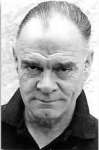

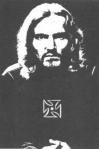


Denis de Rougemont was titled ‘The Prince of European Culture’. He was at the first Bilderberg meeting, and is considered a co-founder of the European Union. Frederich the Great granted the Rougemonts of Neufchatel a title of old nobility when he came to this area in Switzerland.Jon Presco
Rougemont, Denis (de)
8.09.1906, Couvet (Neuchâtel) – 6.12.1985, Geneva
Source Fondation Denis de Rougemont
next article
Denis de Rougemont
Biography
Denis de Rougemont was born on on September 8th, 1906 in Couvet in the Canton from Neuchâtel in Switzerland. His/her father is Pasteur. He continues studies of letters at the University of Neuchâtel between 1925 and 1930. In parallel, it starts its first voyages and remains in particular in Vienna, in Hungary and Souabe.
In 1930, it settles in Paris and becomes, within the Esprit movements and the Order New one of the founders of Personalism, at the sides of Emmanuel Mounier, Arnaud Dandieu, Robert Aron, Henri Daniel-Rops and Alexandre Marc. They were called “the nonconformists of the Thirties”. Rejecting as well Hitler as Stalin, just as nationalism and individualism, they preach the idea of an political organization, economic and social which is with the service of the Person designed like a unit at the same time distinct (the individual) and connected to the Community (the citizen), at the same time free (as an individual) and person in charge (as a citizen).
The Federalism appears the model to them which makes it possible best to link the People without giving up their diversity, and this is why they preach it. On the other hand, they reject the State-Nation centralized like mode of organization of the company.
During the years 1930, Denis de Rougemont develops the topics of Personalism through two works: Policy of the Person (1934), To think with the Hands (1936). In 1935-1936, it remains in Germany like French reader at the University of Francfort-sur-le-Main and brings back from there a very negative testimony on the Nazism, which it delivers in his Newspaper of Germany (1938). In 1939 appears the Love and the Occident which shows the influence D `a certain number of accounts mythical (of which Tristan and Iseult) on the typically Western design of an impassioned love and finally destructor, that the author opposes to the true charity.
In 1940, it is mobilized in the Swiss army and, with other personalities, it founds the League of Gothard which aims at stimulating the spirit of resistance to Hitler. Its positions being considered to be not very compatible with Swiss neutrality, it is sent on mission of conferences to the United States. Installed in New York, it publishes the share of the devil into 1942 who is a reflection on the disorders of the modern world, limed in totalitarianism and the materialism. It binds with many writers or European artists in exile (Saint-Exupéry, André Breton, Max Ernst, Marcel Duchamp, Saint-John Perse, Wystan Auden). After Hiroshima and Nagasaki, it shows, in its Letters on the atomic bomb (1946), that the nuclear weapon places the men in front of a world danger which must encourage them to exceed the idea of national sovereignty.
Returned definitively to Europe in 1947, it takes part, at the sides of the federalists, the efforts to link Europe. On August 26th, 1947, he makes the inaugural speech of the first Congress of the European Union of the Federalists (the federalistic attitude). At the time of the Congress of $the Hague (7 May 10th, 1948), he is at the same time rapporteur of the cultural Commission and writer of the Final declaration (Message to Europeans). During this Congress, the cultural Commission proposes the creation of a Center European of the Culture, tries whose seizes itself Denis de Rougemont who to this end organizes the first European Conference of the Culture (Lausanne, 8 December 12th, 1949). The Center European of the Culture is finally made up in Geneva in 1950 and placed under the direction of Denis de Rougemont.
At the same time, it is mobilized with other intellectuals against Stalinist propaganda conveying the idea of a culture to the service of the class struggle, within the Congress for the Freedom of the Culture of which he becomes President in 1952 (he will occupy this function until 1966).
In charge of the Center European of the Culture, Denis de Rougemont provided the foundations, in December 1950, of an organization gathering the European scientists working on nuclear energy: it will be the CERN. He was at the origin of the first association joining together the very first Institutes of European Studies, which was drawn up in Geneva in 1951 (it existed until 1991), as well as European Association of the Festivals of Music. In the sides of Robert Schuman, it took part in the creation of the European Foundation of the Culture (Geneva, December 16th, 1954) which was transported to Amsterdam in 1957 when it always continues its activities.
He undertakes a deliberation on the cultural features which characterize the Occident compared to other civilizations. It is the topic of its work the Western Adventure of the Man (1957) and the think tank on the “dialog of the cultures” (formulates begun again later by UNESCO) which it organizes as from 1961. This same year, it publishes a work on the history of the European idea entitled Twenty-eight centuries of Europe. In 1963, it founds in Geneva the Institute of European Studies which will be incorporated in the University in 1992.
From the years 1960, its activity will concentrate on two topics: the rise of the areas and the transborder areas which carries out it towards the idea of a federalism being combined to the ideal of “Europe of the Areas”; destruction of the environment which leads it to call in question the finalities of our companies. He sees in the emergence of areas to human size at the same time an alternative to the State-Nation and the chance to reintroduce in our companies the concept of responsibility so essential to safeguarding for the environment. Ecology and areas are in the center of its last two major works: Open letter with Europeans (1970), the Future is our business (1977).
One will also raise permanence of his reflection on the technical development and his consequences, since his work on the atomic bomb going back to 1946 until data processing (article “Information is not to know” in 1981), via civil nuclear energy (the CERN).
Denis de Rougemont dies in Geneva on on December 6th, 1985.
The Foundation Denis de Rougemont
One finds on the site of the Foundation Denis de Rougemont of the many information on the writer, in particular of the reference books, the images and bibliography.
next article
Learn more…
The continent of Europe
The concept of the areas at Denis de Rougemont
Geneva – the contemporary time
European organization for the nuclear research (CERN)
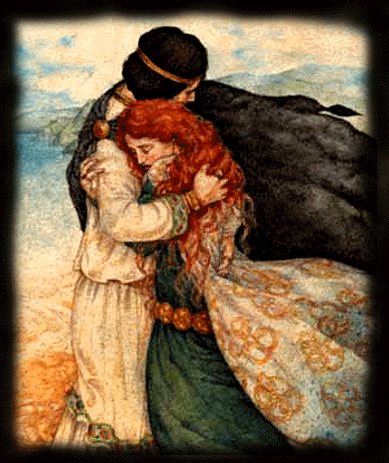
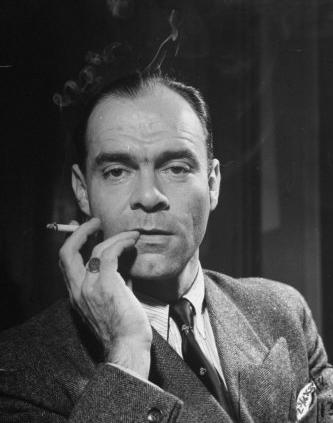 “De Rougemont introduces the “Tristan Myth” in the first book of Love in the Western World, a work that focuses upon the intellectual and cultural development of love and its function as a myth in the West.”
Long ago I read that King Henry de Anjou of England built rooms at Woodstock that were connected by a man-made stream in which the occupants of enjoining rooms floated sticks upon which were written a message. This morning I discovered what is going on. The sticks were of the hazel tree. This is a ritual based upon several stories written by Marie of France that entails the legend of Tristan and Iseult who are at the core of Denis de Rougemont’s ‘Love in the Western World’.
In Marie’s ‘Yonec’ I believe I have found the source of the Sleeping Beauty’ story. Here again is Rena in her tower.
Virginia Hambley may be kin to King Henry. Our love story is remarkable in that Virginia suffers from memory loss due to a tragic accident she had while attending Evergreen College in Washington. She was in a coma for twenty-eight days. When we broke up fifteen years ago, she rode up next to me on her bike and asked why she had not seen me.
“We broke up two weeks ago!” I sadly informed my ex-lover.
“We did?” Virginia replied, puzzled. “Why did we break up? Am I to blame?”
I started to explain the complex twists and turns of our falling out, and, stopped. Virginia did not have a clue as to what I was talking about.
“No. It is all my fault. I am to blame!” I said….gallantly.
“Well good! When are you coming over?”
I never broke up with Virginia again. However, in all my attempts to be in relationship with Virginia, I had to win her heart once more, gain her trust, all over again – on a daily basis! In a sense she is the consummate Un-attainable Love that Rougemont brings to light as the source of our feelings of being in love.
That this royal person, whose kindred are ‘The Heart of France’, proposed to me while down on one knee, is profound, for it is our unforgettable terms of endearment, our loving memories strung together like a string of pearls, that tie the knot the binds us to the one we will die for if we can not get our love, to love us in return. Virginia and I are wounded lovers who may never stop loving one another. At death…..will we part.
Jon Presco
Copyright 2013
The lai begins with a statement that others have sung it previously, and that the author has seen it in written form.[2] The story tells of the love between the knight Tristan and his uncle’s wife Iseult, which, according to Marie, was so pure that it eventually caused their deaths on the same day. Tristan has been exiled from Cornwall by his uncle Mark for his adulterous transgressions, and is forced to return to his homeland in South Wales. After pining away for a year, Tristan hears news that Mark is planning a great feast for Pentecost at Tintagel, and Iseult will be present. On the day the king’s court sets out, Tristan takes to the woods, where he cuts a hazel branch into an appropriate signal and carves his name into it. Marie says Iseult will be on the lookout for such a sign, since Tristan has contacted her in a similar manner in the past. Immediately recognizing the branch as Tristan’s, Iseult asks her party to stop and rest, and goes out in the woods with only her faithful servant Brangaine. The lovers spend their time together, and Iseult tells Tristan how he can win back his uncle’s favor. When it comes time to leave, the lovers weep, and Tristan returns to Wales to wait for his uncle’s word.
Lines 68 through 78 compare Tristan and Iseult’s love to the intertwining of the honeysuckle with the hazel; the two plants grow so entwined that both will die if they are separated. Marie says the original author of the lai was none other than Tristan, an accomplished bard who put his thoughts into a song at Iseult’s request. According to Marie, “Chevrefoil” is the French name for the poem; it is called “Gotelef” (Goatleaf) in English.[3]
Allusions and significance[edit source]
Similar episodes to that recounted in “Chevrefoil” appear in longer Tristan poems; it is feasible that Marie drew her material from a longer source.[4] Though there are several allusions to the greater Tristan and Iseult cycle, such as Tintagel and the character Brangaine, Marie is unique in placing Tristan’s homeland in South Wales, rather than Cornwall or the fictitious Lyonesse. A testament to Marie’s popularity appears in Gerbert’s Continuation to Chrétien de Troyes’s unfinished romance Perceval, the Story of the Grail, which contains an episode in which a disguised Tristan plays the lay of “Chevrefoil” to his unsuspecting lover at a tournament.[5]
“Chevrefoil” is one of Marie’s several lais concerning an adulterous love. It is also one of several which deal with the sexual frustration suffered by a young woman who has been married to an older man.[6] Like other lais, prominence is given to the analysis of the characters’ emotions and to the contrast between the ideals of love and the needs of reality.[7] It has been speculated that Marie arranged her poems as they appear in MS H in order to pair a short, tragic poem with a longer one on the power of love and the importance of fidelity. If this is true, “Chevrefoil” may be paired with “Eliduc,” the final poem in the collection.[8]
One of the most discussed features of the lai is the hazel branch Tristan leaves for Iseult. The poet indicates that Tristan carves his name on the branch; it is unclear if he also leaves a fuller message. In any case Iseult interprets it correctly. Glyn Burgess suggests the branch is merely a signal Tristan has already told Iseult about in an earlier message; the poet indicates that Iseult would be on the lookout for the branch, “for this had all happened before”.[9] Others have read the poem as indicating that Tristan has left a longer message, perhaps lines 77-78, or the entirety of lines 61-78.[10] In such a case the message may have been transcribed in notches on the branch, perhaps in the ogham alphabet, or in a fashion similar to the tally stick.[10]
Like the other Lais, “Chevrefoil” was adapted into other languages. It was translated as “Geitarlauf” in the Old Norse version of Marie’s Lais known as Strengleikar, perhaps written by Brother Robert.[11]
The lord of Caerwent, a rich old man, marries a beautiful young woman. He fears that she will be unfaithful to him, so he imprisons her in a tower and assigns his aged sister to watch over her. As the years go by, she laments her situation and stops taking care of herself, making her beauty fade away. One day, she cries out to God, wishing that she could experience a romantic adventure as she has heard in fairy tales. Suddenly, a dark bird resembling a goshawk appears at her window. The bird transforms into a handsome knight named Muldumarec. Muldumarec declares his love for her and reveals that, while he has loved her from afar, he could only approach her once she had called for him. The woman refuses his advances unless he can prove that he was not sent by the devil to lead her astray. Muldumarec says that he is a Christian, and as proof of such, he assumes the woman’s shape and receives the Eucharist.
When the rich lord is away, the knight arrives by the window, in the same way he first appeared. The woman glows with her newfound love. The other people of the household become suspicious of her renewed beauty and put her under discreet surveillance. When the jealous husband learns of the shapechanging knight, he surrounds the window with iron spikes. The next time the knight arrives, he is mortally wounded. He tells the woman that their unborn child, whom she is to name “Yonec”, will grow up to avenge their deaths. The knight flies away, and the woman hurls herself from the window and follows a trail of blood to a city made of silver. After passing through a succession of rooms, she eventually finds the knight on his deathbed. He gives her a magic ring that will make her husband forget about her infidelity. He also gives her his sword. As the woman flees the city, she hears the bells tolling for her lover’s death.
As prophesied, the lady gives birth to a child, and names him “Yonec”. When the child is grown, the husband, the lady, and Yonec travel to an abbey, where they see a beautiful tomb. They ask the abbot about the tomb, who explains that this is the tomb of Muldumarec. At this time, Yonec’s mother tells him of his true parentage, and gives him his father’s sword. She collapses and dies. Yonec kills his stepfather with the sword, thus avenging his real parents. He buries his mother alongside his father, and Yonec becomes the new lord of Caerwent.
The book was recommended to me by Louise Cowan, and so I purchased it several months ago, only to place it on my bookshelf until now. I should say a few words about the way de Rougemont employs the word “myth.” Myth often has the connotation of falsehood, as opposed to its supposed antonym, fact. But when de Rougemont uses the word myth, he means something different. Myth for him (and others) denotes a cultural milieu, or the story of a civilization. It is that which we collectively assume in our subconscious. He writes, “A myth stands forth as the entirely anonymous expression of collective — or, more exactly, of common — facts” (19). The Tristan Myth, as he calls it, is thus more than a “piece of literature;” it is “typical of the relations between man and woman” in the aristocratic society of the 12th and 13th centuries (19). De Rougemont then argues that the Tristan Myth, which originated in Medieval Europe, remains in our collective, mythic subconsciousness as a perversion of authentic love.
De Rougemont continues by describing the story of Tristan and Iseult. Tristan is an orphan taken under the care of King Mark of Cornwall, and early in his life he defeats the Irish giant Morholt (Iseult’s uncle). While in combat with the giant, Tristan receives a mortal wound from a poisoned barb and is cast adrift to sea with his sword and harp, to die. Landing again in Ireland, Tristan discovers a cure for his wound, which Iseult uses to restore him to health. Years later, King Mark determines to marry Iseult and selects Tristan to quest after her on his behalf. Wounded by a dragon in the process, Iseult again nurses him, this time discovering Tristan killed her uncle. She nearly kills Tristan, but spares him when she learns King Mark desires to make her queen. While on board a ship to Cornwall, both accidentally drink a love potion given by Iseult’s maid Brengain that leads them to “fall into one another’s arms” despite Iseult’s betrothal to King Mark, Tristan’s lord. Despite their passion, Tristan delivers Iseult to King Mark, but Brengain takes her place in the marital bed. Following the initial enchantment of the young lovers, two scenes exemplify their relationship. In the first, King Mark’s nobles attempt to prove Tristan’s adultery by sprinkling flour between he and Iseult’s beds. Tristan leaps across the beds in order to embrace his mistress, but in doing so reopens a leg wound, spilling blood upon the sheets and convicting himself and Iseult. In the second scene, the lovers have fled into the woods, and King Mark happens upon them sleeping. Tristan has placed his drawn sword between them, and King Mark replaces it with his own. After 3 years the love potion loses its effect, and Iseult returns to King Mark, whereupon she and Tristan continue their meetings in the woods. Though Tristan marries another, he longs for Iseult. Once again wounded by a poisoned spear, Tristan calls for Iseult to save his life, but she arrives too late. When she does arrive, she lays beside Tristan and dies.
Ok, if you are still interested in De Rougemont’s thesis, then that’s good. Remember, he’s arguing that the Tristan story represents the perversion of love that has polluted our western myth of love. In the case of Tristan and Iseult, the conflict occurs between loyalty to one’s lord vs loyalty to one’s lady. It is this thrilling contradiction that both Tristan and Iseult enjoy, not because they are really in love with the other but because they are in love with love. Even more, the two lovers essentially seek peril for its own sake, because at the root of their love of love is actually a love of death (42-46).
The influence of Tristan and Iseult upon the western world, therefore, is to equate “passionate love” with “a radical condemnation of marriage” (54). True love, it is now supposed, is “profoundly connected with our liking for war” (55). De Rougemont clearly laments the current myth of love as a lie that needs correction. Although he has not offered a way forward just yet, I am anticipating one near the end of the book. The next section is titled, “The Religious Origins,” and I will be sure to post another summary as soon as I’ve completed it.
Composed by Paul F. Weinhold at 3/27/2007
“Love in the Western World” by Denis de Rougemont
Marnia’s picture
Submitted by Marnia on Fri, 2005-05-20 18:19
Printer-friendly version
I’m half-way through this book, and already brimming over with reactions to it:
I’m finding de Rougemont’s work very useful for focusing my thoughts and the insights I’ve been given. He’s an arrogant “sombitch,”🙂 and never can bring himself to refer to the Cathars and their influence as anything but “heresy.” Still, unlike his peers, he saw the parallels with Tantra and understood that the Cathars (and original troubadours) were not about sensual gratification, but about longing for Union, inflamed by chastity. (More on why their course was a wrong turn in a moment.)
First a slight digression: I believe that the Gnostic Gospels have some useful clues about the true mystery (assuming there is one, which I do). And, actually, the Gospel of Philip does speak of a “pure embrace” and “intercourse” between Jesus and Mary Maggie. [New translation by French scholar, Jean Leloup: “The embrace that incarnates the hidden union does not arise from impulse or desire; it is an act of will,” but it does involve “flesh” and silence. “All who practice the sacred embrace will kindle the Light.” “Union in the bridal chamber protects against temptation,” and allows people to “rise above attraction and repulsion.”]
I find it interesting that Jesus apparently traveled to India. There is a tradition of a saint there who fits his description, I’ve heard. However, I think the initial teachings then deteriorated (just as the primitive part of our brains is designed to insure that they do). 800 years later, tantra burst into flames over there and gained strength over the next 400 years, and de Rougemont believes that Tantra, traveling west through the Sufis (via the Moors) and the Manicheans (via the Cathars by way of Bulgaria), is the source of our western ills relating to seeking death (the anihilation of the self) through passionate romance (which he heartily condemns).
However, he acknowledges that the watered-down version of courtly love we can now track through the remaining literary artifacts, from which all these ills flow, had lost the “chaste” piece, and was therefore corrupt. And now (I’m half way through the book), he’s desperately trying to distinguish the chaste Cathar mystics from the St. Teresas and other “true” Christian mystics who wrote with the same “passionate lingo” as the Cathar-inspired troubadours. It never occurs to him that the missing piece, some aspect of chastity, might hold an important clue.
Interestingly, the distinction he tries to draw is that the “true” (Christian) mysticism leads to “agape” while the heretics burn endlessly with “eros.” (Half a million of them DID burn, in fact, thanks to the Church.)
By way of further distinction,there’s also his theological bunkum about how true Christians accept the Incarnation of God into flesh, which by some weird twist allows them to have happy carnal marriages–even though they don’t in actuality–and “properly” maintains the separation of God and Man. This he contrasts with the “heresy,” which is concerned with denying that spirit ever incarnated in flesh and taught that the Lucifer gang “created” the slop we’re looking at down here and entraps us with lust.
The “heretical” goal (which is noticeably aligned with what I’ve always gotten through my oracles) is transcendence and, as he says, “complete union with God.” This is a BIG “no-no” in his eyes. In his view, good Christians sit around like contented mushrooms in the dark, procreating, and merely “mirroring” (his word) God’s goodness as best they can…but always imperfectly. Why does that attitude inevitably make me feel like growling???
Now, I would agree with him on one important point, and it’s a point that may be very critical to ultimately understanding the true mystery. Tantra and the troubadours DID get hung up on eros (I don’t know about the actual Cathars. However, I have a big bone to pick with THEM for promoting the Jesus bloodline fabrication, which shows a complete misunderstanding of the importance of transcendence vs. physical procreation–which Jesus would NEVER have engaged in…at least if the Gnostic gospels are a true representation of his teaching). Here’s the important point: a focus on eros IS an error…with or without chastity or non-orgasm.
THIS is what I’ve learned through the neuroscience Gary has been parsing. Any activity that sends our dopamine soaring (dopamine is the craving, addictive neurochemical..when at high levels) is a problem. It sets up an addictive cycle of highs and lows, and the yearning for death as the ultimate “buzz” may well be a natural part of that cycle. This is “Rougey’s” (de Rougemont) big beef. He’s right that something unhealthy is going on there. In short, the troubadours were singing about an unhealthy, flaming addiction, which is self-absorbed and narcissistic, and all too often self-destructive.
He contrasts that with the “true” saints’ focus on “agape” and selfless service (which he claims, with some pretty shaky support, the “passionate” Christian mystics ultimately arrived at).
“Agape” equates neurochemically with high levels of a neurochemical called “oxytocin.” Oxytocin is behind our ability to bond, it soothes addictions, counters stress neurochemicals, is an anti-depressant, yet increases sexual receptivity in contrast with sexual hunger (dopamine), and is linked with selfless service, nurturing, adoration, and physical touch. And we can produce it consciously by choosing related behaviors. So, for example, things that raise oxytocin levels are meditation, yoga, therapeutic massage or other selfless touch, caring for another, uplifting music (I would bet this, but haven’t yet heard of a study on music, as I have on the other activities named in this list), pets, and close, trusted companionship. In short, what we think of as heart-opening activities are also oxytocin-producing activities.
This is the focus of my book. Even before I intersected with the science, I have always been led to putting the focus on givnig and mutual nurturing while staying away from the passion roller coaster. For reasons that were not clear to me at first, I have always been “told” not to rely on Tantra lore. Tantra, as it is being pandered in the West is very often all about fanning dopamine hotter. I think Tantra has strayed just as far off The Path in the East. Like Taoism, it degenerated from a mutual practice of enlightenment between the sexes (of which there are still faint echoes in both cases) into an exploitation of one’s lover for one’s own purposes–in China to increase longevity of the harem owner…in India and Tibet to have a spiritual experience and then dump the lover. The true path (that Jesus once taught in India?) was lost.
The ancient Taoist “valley orgasm,” however, is probably a high-oxytocin event. It’s not about passion, but it is about an experience of merging with another ego, and ultimately with all of creation. This is the experience that other lovers have sometimes stumbled upon…e.g., Karezza.
The reason this is so confusing for all of us is that a high dopamine experience (like cocaine or the build-up to orgasm) DOES feel like a transcendental experience. But it’s more likely to create addiction than enlightenment, and it carefully preserves the separateness of the ego, indeed, as Rougey said, in a narcissistic way. Moreover, from a scientific point of view it inevitably sets off a hangover…which we don’t then associate with the high we just had, at least at a subconscious level…so we keep pursuing another high to self-medicate. This is a downward spiral.
In case it wasn’t obvious: when dopamine goes too high, it then drops way down…creating a fierce craving for another high…and an uneasiness about anything or anyone–like one’s lover–onto whom the intervening low has been projected (KEY reason for rapid alienation between lovers). People can find several good articles about this at this site. For example, see “Your Brain on Sex.
So I would agree with Rougey that true spiritual mysticism is oxytocin-based, not dopamine/passion-based. The first leaves one wanting to extend help to the rest of humanity; the second consumes one in an addictive fire.
The problem is that it has been almost impossible for humanity to distinguish between these two trajectories, because in each case, BOTH neurochemicals are always operating…at least at first. For example, as oxytocin rises, so does dopamine to an extent. So it FEELS to us like love and passion go together. In a sense, this is a biological trick to get us to produce many and genetically-varied offspring…it’s the Luciferian plot, if you will.
BUT we can REMAIN oxytocin-based if we keep our arousal at moderate levels and steer always for a stillness and communion with our partner, with a focus on mutual giving and selflessness. That’s when the beneficial mystery can appear. I’m sure there’s more to all of this, but I bet this distinction between agape and eros will turn out to be important. In recent memory, we’ve only been able to to tap agape consistently when celibate (and usually in retreat from the world, with lots of prayer/meditation). Apparently, the real power lies in synergistic agape WITH union

 Rosamond Press
Leave a comment