

If any of my readers can think of a writer that wrote under a Death Sentence, leave a reply. I am composing a letter to the FBI informing them of the Death Threat I received from Jazz Artist, Kenny Reed. How can I not take advantage of this Golden Opportunity to be a Famous Novelist who wrote knowing his words would get him murdered? This will make me a IMMORTAL – especially if I am murdered!
“He died for HIS ART!”
When Marilyn alas called me after being silent for twenty-two days, I asked her if Jerry Vrzak wanted to kill me. My old friend said this, twice;
“I don’t know!”
There was no concern in her voice, no details. When I realized She was the main author of the Mission Statement Threat, I sadly concluded my childhood sweetheart wanted me to feel intimidated, wanted me to feel my life was in danger if I continued writing and publishing anything about the “Mission Statement Friends”. When Mr. Reed alas read my blog, he said;
“Do you know how much damage you have done? You got my wife crying. Do you own a gun? I am going to blow your mind.”
If I am deluded, way off base, not credible, then how can I have done any damage? What we have here is a case of Conspiracy to deny me my Civil Rights. The motive may be, the Reeds wanted my Resume, but not me. How about my copyrights? Did Marilyn tell her husband I left her my Intellectual Property in my Will?
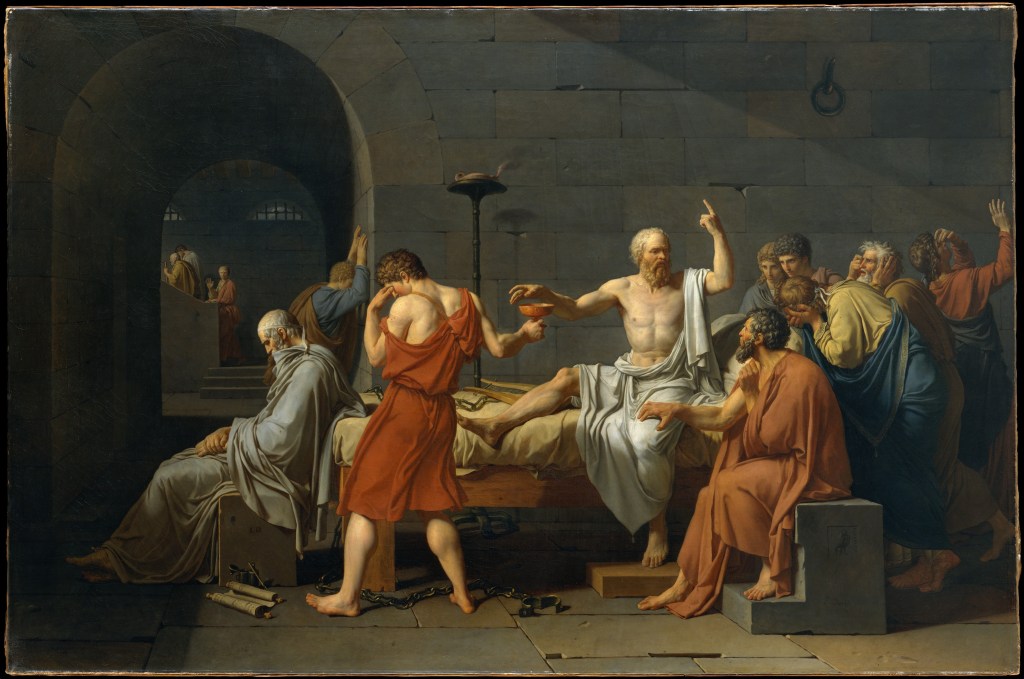
How easy would it be to say one of Alley’s assassins alas caught up with me in William Morris Square while I was on my way to the Forum? Marilyn accuses me of being “selfish” in the Mission Defense Decree. Am I like Caesar, who was a threat to the Vox Populi – and the Senate? Marat and Socrates just had to go – for the sake of the people………..THE MASS MIND!
My late sister, the world famous artist ‘Rosamond’ was under the auspices of Death the last week of her life. The Death Card came up in her reading. You would think this would have made her extra cautious when she went down to the sea at Rocky Point with her daughter, Drew Benton, at her side. This also would have made Christine more afraid to fly, something she was required to do for Circle Galleries who had shows in three cities. She may have been fired for not showing up, which would alarm members of our family who lent her money. Christine’s autobiography was disappeared. Was she ragging on folks who now wanted to promote ‘The Dead Artist Sale’?
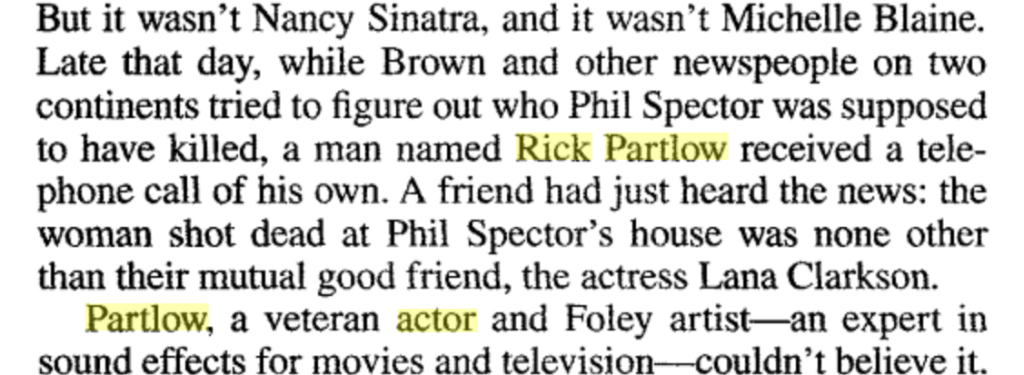
Marilyn made clothing for Christine and her husband, Rick Partlow, whose childhood friend, Lana Clarkson, was murdered by Phil Spector. Rick made real movies. Not so Greg Black, and his producer…….Marilyn Reed? Phil Spector produced records for very famous musicians. Does Reed have a an album on the market?
Below is the Drew Benton’s relative, Senator Thomas Hart Benton dealing with keeping Oregon a slave-free State. Our family history outweighs the Mim’s House. Garth Benton and the Senator, look alike. Here is proof I and my kindred are not self-serving racist demons, who might need to die! How godless am I in Marilyn’s holy mind?
Sometime I feel like a Puff Fish who needs to puff up my history to keep from being swallowed by nobodies who want to be somebody.
The three black Jazz Artists would love to be connected to Thomas Pynchon, but, not through me and my family tree. I am not married to a black woman who is advancing the interests of black folks, like Marilyn is via her black husband, who I believe is wanting to turn the tables on the white man for his maltreatment of the black man.
The dialogue about the death card was written by the ghost writer hired by a non-family member who worked for Christine. My aunt died regretting having talked to this ghost writer, and having said anything negative about her sister, my mother. You can own these words, and many more demonizing accounts of members of my family, for a price! Marilyn knew that the main reason I have this blog, is to trump all their destructive lies. My family lies in ruin, thanks to the strangers who went after us – for the money! Marilyn, and our story, was the ace in the hole. Now, it is the ace of spades.
There is a movie in the works, and a series for HBO titled ‘Before the Wave’. Why would I not wonder if Marilyn went over to The Enemy – for money! This is why I flooded this blog, and other folk’s facebooks with negative blogs about the Reeds, and other Choir Friends – after it was made clear – I was no longer considered a friend!
“Rosemary came in drunk, lost in her story that she was the only seventeen-year-old to turn down Errol Flynn’s advance.”
My aunt also went on a few dates with this famous actor, and spurned his advances. She did become the lover of Errol’s good friend for awhile. He will remain anonymous. For betraying me, after she gave me four hours of a recorded interview, Lillian and I did not speak for seven years. She died my enemy. She never said she was sorry. And, that’s that!
Somehow, this is all about Kenny Reed, and he being slighted. I put it to you……..Who in the fuck is Kenny Reed?
Stalking Laws were first made to protect Famous People. I do not want any more contact from the Mission Statement Friends. If I get any more threats, I will file stalking charges.
Jon Presco
Copyright 2016

https://rosamondpress.com/2013/02/11/an-untidy-death/
Here is Khara Bromily telling Tom Snyder the Death card came up in Rosamond’s Tarot card reading a week before she drowned.
“Was there any indication to Khara in her vision, or the cards themselves, of death or impending doom? Did Christine have any concerns in that regard?”
“My work is about health and forgiveness and self-worth. A death pronouncement can work against all that. But, if you are asking if a Death card came up, then the answer is yes?”
“Hugh Bromily, Khara’s husband and Episcopal priest, conducted the service with taste and dignity. Raphael spoke, along with Karin: two friends from childhood. The rest was, given those involved, what one might expect. Vic was cornering whatever woman he could; Rosemary came in drunk, lost in her story that she was the only seventeen-year-old to turn down Errol Flynn’s advance.”Oh it was just awful.” Lillian recalls. ‘Rosemary was shouting that Shannon was late, ‘and ought to have her butt kicked.’ I don’t know all what she said after that but she had her silver flask with her and it was getting rough.”
The Thomas Pynchon Connection
Thomas Pynchon (1937 – ) is a contemporary Amercian author of the first rank, creator of several marvelously intricate novels. Pynchon also seems to have spent some time listening closely to jazz in the late fifties, and the inclusion of allusions and echoes of that jazz scene provides additional enjoyment for those of us who also know jazz.
Pynchon’s first novel V (1961) includes a minor character named McClintic Sphere. Pynchon introduces him in a remarkable section (page 47 in my Bantam edition) with a whole series of links, allusions, echoes, and satirical reflections of the late 1950’s and Ornette Coleman’s legendary Five Spot appearance in Greenwich Village.
The section starts with several of the New York cast arriving at a Greenwich Village nightclub called the V-Note:
- V for the title of the novel and an elusive woman, object of a novel-long search by one of the characters.
- V as in the Roman Numeral for Five = Five Spot. This famous club featured Thelonious Monk and John Coltrane (1957) in a legendary engagement; it was the nightclub where Ornette Coleman first opened in November 1959 (and where he played a number of times over the following years)
- V-Note. The Note = Half Note. Another Greenwich Village club, and another venue at which Coleman played during the period
McClintic Sphere is playing onstage when the group enters. Sphere is Thelonious Monk’s middle name (Monk was a frequent performer in the village at the time and as noted is closely associated with the Five Spot). McClintic may be an echo of Coleman’s unusual first name. (The only jazz musician with a somewhat similar first name would be Kenny Dorham, whose given first name was McKinley. He performed regularly in New York during that period and may be associated with groups that played the Five Spot).
p. 48 “He blew a hand-carved ivory alto saxophone” Obvious reference to the plastic alto saxophone which Ornette used in the late fifties, evidently because it was cheaper than a metal sax and because it gave him a more flexible sound. “…with a 4 1/2 reed” Also a reference to the 4 1/2 strength reed which Ornette used in Los Angeles (described by Don Cherry in a famous passage in an interview with Joe Goldberg).
The next paragraphs include some nice descriptions of the reactions in the audience, from those who simply left, to those from other groups who were unwilling to reject it, to those few who liked it. This directly echoes the reports in down beat about Coleman’s first appearances at the Five Spot in 1959.
“The group on the stand had no piano: it was bass, drums, McClintic and a boy he had found in the Ozarks who blew a natural horn in F”. This is an echo of the Ornette Coleman Quartet, and the natural horn may be a reference to the unusual pocket trumpet which Don Cherry favored at the time. (Cherry was of course from Los Angeles). “The bass was small and evil-looking and his eyes were yellow with pinpoints in the center”. I have no idea which of Ornette’s bassists this refers to-possibly David Izenzon? The bassist at the time of course was Charles Haden, by no means small and evil looking. The next paragraph is a biting description of some of those in the audience, “mostly those who wrote for Downbeat magazine or the liners of LP records…”. (Reader Clay Thurmond also points out that Sphere’s playing is described here as “something else”–which is the title of Coleman’s first LP on Contemporary Records recorded in 1958).
On the next page (p.49): “Since the soul of Charlie Parker had dissolved away into a hostile March wind nearly a year before…”. This is too early for Ornette, but only by three years. Parker died in March 1955 which would make this early 1956. In 1956 Ornette was still an unemployed, unknown musician in Los Angeles. He did not arrive in New York city until the fall of 1959, and the controversy, the club names and the rest of the allusions belong to that specific period. On the same page: “He plays all the notes Bird missed”, somebody whispered”. Another allusion to the impact of Ornette, who received a lot of attention as the next alto saxophonist after Parker to move the music forward…
(McClintic Sphere reappears elsewhere in the novel, specifically starting around page 326, but there are no direct allusions to Ornette Coleman or other jazz figures).
Incidentally, several other Pynchon works contain references to jazz and its practitioners. There are a number of sections dealing with Charlie Parker in Gravity’s Rainbow (1973) and the short story Entropy (first published in the Kenyon Review) should amuse those enamored of the original Gerry Mulligan Quartet.
In the controversy over slavery in the territories in the late 1840s, Benton took a stand that further alienated many of his constituents. Although he voiced disapproval of the Wilmot Proviso as dangerous to the preservation of the Union, he voted for the organization of the Oregon Territory with a rider prohibiting slavery. His opposition to Calhoun’s Southern Address of January 1849, endorsed by a majority of the members of Congress from the slaveholding states, prompted the Missouri legislature to pass a resolution instructing the state’s senators to “act in conformity” with the proslavery position. Declining to accept these instructions, he took the issue to the people in a vigorous stumping tour of the state in the summer and early fall of 1849. Yet despite his growing hostility to the southern extremists, he supported Lewis Cass, the regular Democratic candidate for the presidency in 1848, over his old friend Van Buren, the standard bearer of the newly created Free Soil party.
Benton opposed the Compromise of 1850 on the grounds that it was “a capitulation to those who threatened secession.” The debates on that question involved him in the most acrimonious personal controversies of his senatorial career, culminating in a confrontation with proslavery Henry S. Foote of Mississippi, who brandished a revolver when he apparently thought that Benton intended violence. When the omnibus bill embodying the compromise was finally divided into separate pieces of legislation, Benton voted for most of the individual bills. The proslavery Missouri Democrats, led by Benton’s senatorial colleague David R. Atchison, were determined to block his bid for a sixth term. In January 1851, a coalition of anti-Benton Democrats and Whigs in the legislature chose a proslavery Whig as his successor.
 Rosamond Press
Leave a comment