

Imagine if a total stranger started acting like they knew you and your family and was inventing lies about you. Would you think this person was insane – and dangerous? Would you take out a restraining order – after calling the cops? Would you purchase a gun?
The author, Julie Lynch, never met any member of my family or interviewed us for her biography of my late sister, yet she assigns sexual dynamics she conjured up to a world-famous artist. Julie gets to do this, because she is writing a book about my family. Well, I am writing a book about my family, too. For doing this, I have been viciously attacked and slandered, my state of mind compared to a lone gunman out to hurt others. I will make a list – for my book! It is not a Hit List. My book will exterminate the Fake Victims.
Let’s start with Joy, and movie-buff, Mark, a married couple who hold degrees in psychology. They met at the University of California where Jackie Jensen played football. Five years ago these educators got religion. They began to change from Liberal Agnostics, to Born Again End Time Zionist Terrorists, thanks to their friend Greg – who I confronted about his glee that Jesus won some seats in the House and Senate – in proxy! I became their boogeyman Tormentor, one of Satan’s Generals, because they needed a Villain in their new Good verses Evil view of the World. This is why I was not invited to their son’s funeral. Mark is a Jew. People from Israel got to say goodbye to Jonny. This is how this family handled 911. They weeded out potential enemies, then moved to Ground Zero to become ‘Supreme Victims’ and receive a Church Certificates of Sanity. I was elected ‘The Insane One’ not fit to be in their company. However, the husband offered to rent my apartment to him for a few hours, several days a week, so he could screw his mistress, whenever they had the urge.
“Where am I supposed to go when you show up out of the blue?” I asked this sane educator of our young.
“Can you sit in your truck?”
When I objected, he said this;
“I thought you hippies believed in free love!”
His head in the clouds, and his dick in a whore. How typical! This dude refused to serve as my second named Trustee, and cost me thousands. How degrading. This guy is a millionaire who wanted the right to my home for a few bucks, because I am a low-life money hungry degenerate, a slum-dweller. I sent him an e-mail back.
“What part of free love don’t your understand? Your offer of money was not part of any hippie love deal I know of.”
Most religions are about inclusive and exclusiveness. Overnight real smart people can be rendered – stupid! When I pointed out to the Harvard graduate he had become stupid, they went after me. These passive-agressives used Jesus like a bludgeon, a pair of holy brass-knuckles. They had had it with being misshapen and un-pretty eggheads. They were now walking with Jesus, the ‘Big Swede’, the all American G.I. Joe with blue eyes and blonde hair. And, here he come, to kick sand in my face!
An hour after I wrote about this family, an agreement was made with Iran. Netanyahu will now launch an attack against America and divide my nation in half some more. This foreigner will conduct a loyalty check with the help of the Doomsday evangelicals. Prepare to hear some truly sickening accusations and dialogue in this Holy Cold War. Many people will be labeled – INSANE! Walls will be built – even higher!
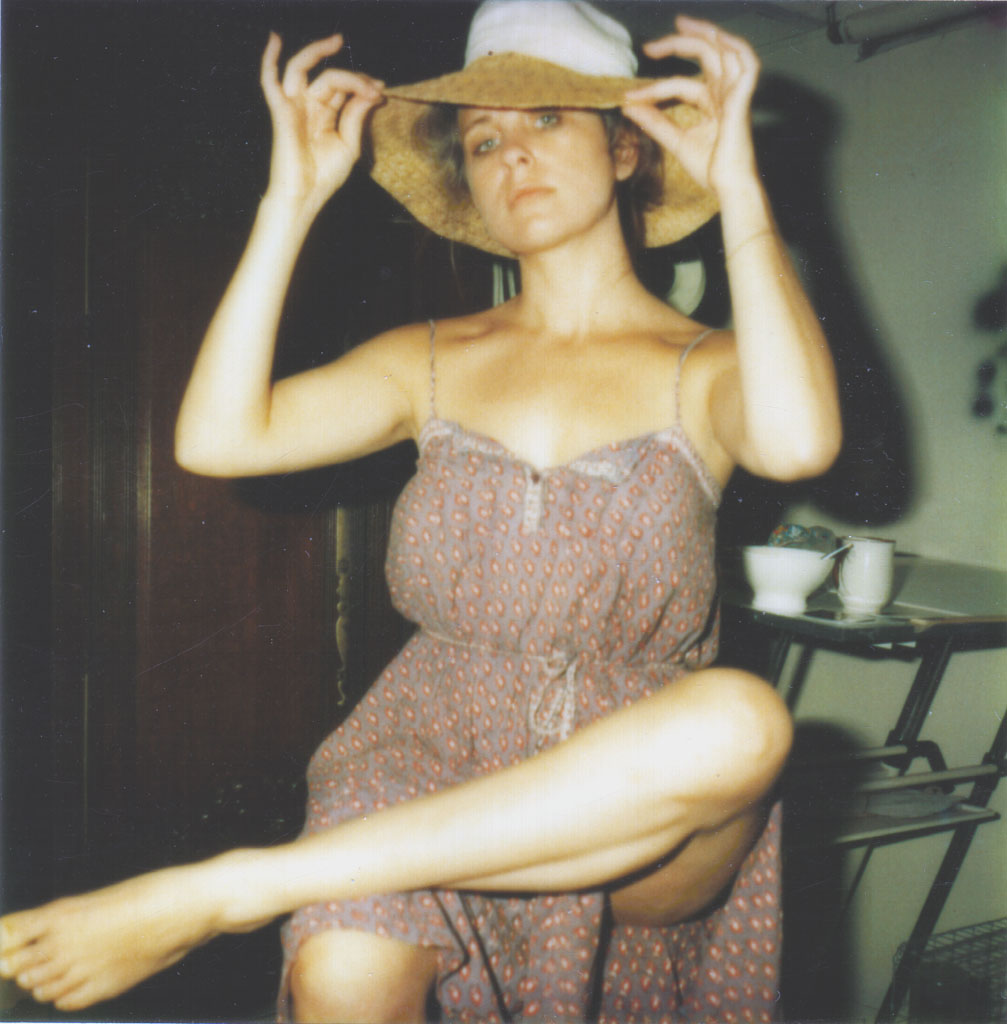
Above are three people who are responsible for creating an Artistic Dynasty based in California. Christine, Rena, and myself. are the Artist, her Teacher, and, our Muse! All three of us struggled with mental illness, which did not disqualify us from belonging to ‘The Beautiful People’ We were, and are being tormented by ugly folks who got close to us, and pretended they had our best interests at heart. They lied! They deceived! They acted in a covert manner in order to get what they wanted from us. Un-gifted people who surround creative people, should sign a contract not to use our mental illness against us. They should be required to pass a test, or – GET LOST!
Here is Julie Lynch claiming Christine and I got our talent from Rosemary, who was NOT in charge of handing out our Gifts. She then makes our mother out to be violent and insane, which she was. So, how could WE get anything that resembles Creativity and Mental Wellbeing from Rosemary?
“If Christine’s parents had embraced her talent, there might be existing works from her childhood, but this was not to be. Fearing that Christine would steal her brother’s spotlight as the family artist, Christine’s mother, Rosemary, forbade Christine to draw at home. The only time she could express herself was at school or in her closet, by flashlight, when everyone else was asleep.”
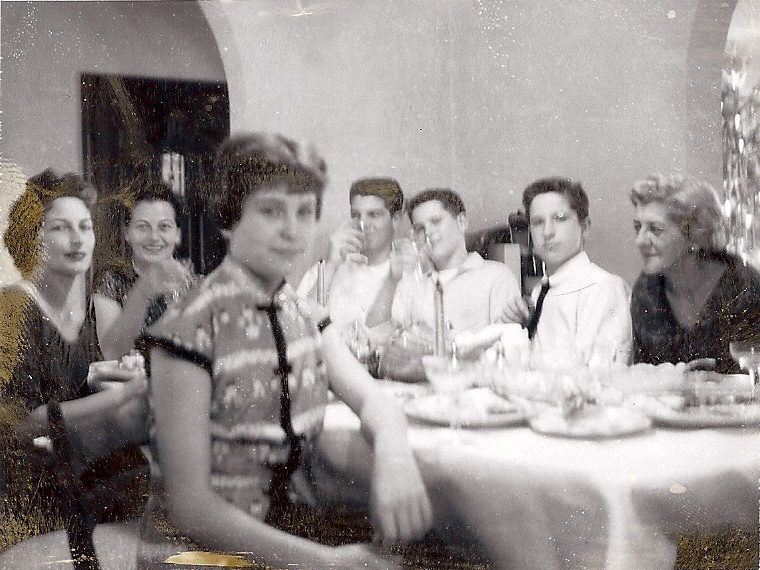
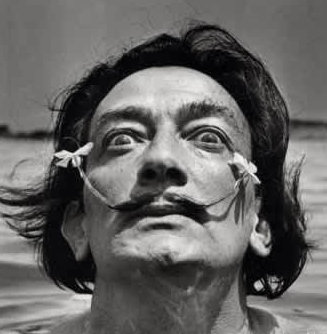
Here is a photograph of Christine and I – the Family Artists – sitting at our uncles table. Jim Bigalow lived in a fine home in the Marina District where rich folks docked their yachts. I think I am fourteen. My favorite artist in Salvador Dali. I am a surrealist. Do you see the Dali pose I am striking? Christine is wearing an oriental jacket she may have made. She will not take up art until she is twenty-four. Everyone at the table knows my sister has mental problems and is acting peculiar. I am her Defender. I am her favorite family member. If you messed with Christine, I got in your face. We loved each other dearly. Every family member knew she emulated me, and followed in my footsteps. We had nothing.
http://www.friendlyneighborhoodguide.com/neighborhoods/5/san-francisco/the-marina-district
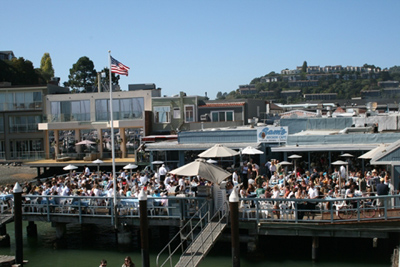
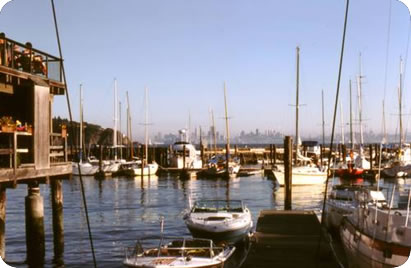
At my uncles table sat the famous artists Margaret and Walter Keane. This couple was friends of Jim and Aunt Bonnie who was born Bertha Rosamond to the writer, Royal Rosamond. Jim owned Sam’s of Tiburon where many well-to-do folks came to dine. They wanted to enjoy the ambience that Robert Jensen captured in his watercolors. Are you getting the Big Picture, here? Bug-eyed monsters came out of slime and have been attacking my family for twenty years! Why didn’t the Christians come to our rescue?
Uncle Jim has shown me a Keane painting on his wall, and asked me what I thought of it. He did not like my answer. Here was Christine’s chance to come out of the closet and announce to her family she is a closeted artist and has secretly rendered masterful works of art.
“Please! I want to meet Walter. I want him to protect me from my mother and brother – my tormentors!”
Julie Lynch is the third ghost writer, my late sister’s, Evil Double, hired. Stacey Pierrot is “desperate” to make the Rosamond Movie come true. It is “the dream” she spoke of outside the Rosamond gallery, while down on one knee, grasping my mother’s hand;
“Don’t let the dream die!”
These outsiders did not suffer the brutal upbringing Christine and I did, yet, they crawled into Christine’s dead skin, and up on her cross so they can walk away with all the cash for being the Supreme Victims. This is the fate of millions of mentally ill people who are tricked into giving their legacies to a charismatic evangelical cult figure. Then, they get the Coo-Aid.
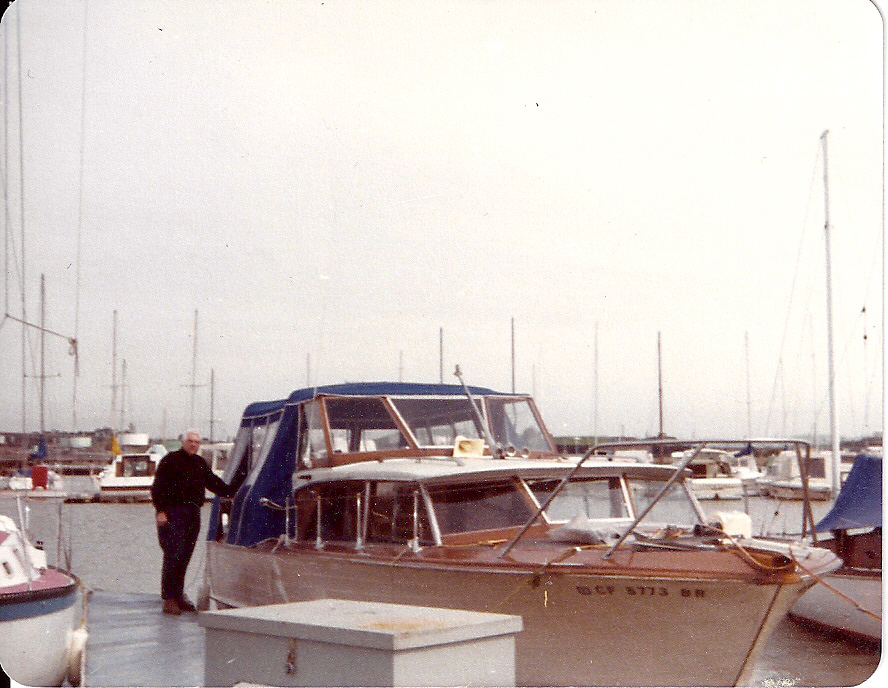
Below is a photo of Victor ‘The Loan Shark ‘by his classic Chris-Craft that he docked in Crockett where his father ‘The Gambler’ lived on a houseboat. I will be contacting the Crockett Museum tomorrow about gifting them our family history.
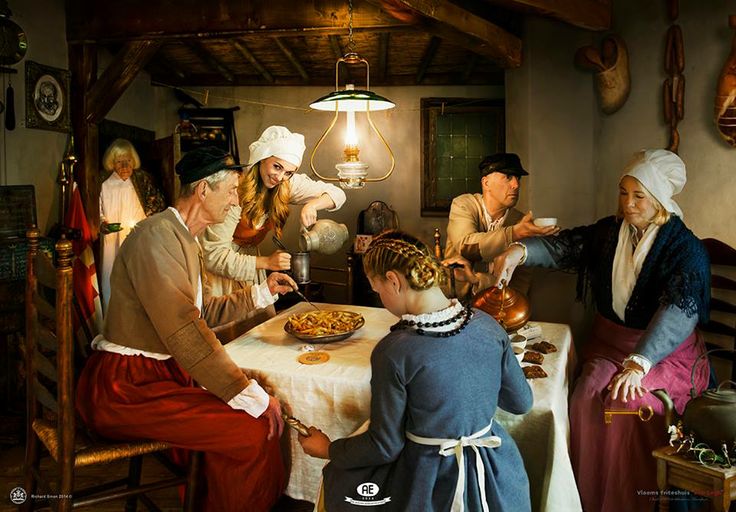
Note the giant Bigalow Christmas tree in the background. Around it were stacked new color T.V.s, golf clubs, water skis – real gifts! They had it all, even an original Keane!Around our tree were socks, shoes and underwear, the things a working mother would buy, who had four children to support – with no help from her husband! Van Gough has nothing on the Prescos. We were rhe real ‘Potato Eaters’. We had an old fryer, and made French Fries around the clock. Crisco topped our shopping list. When we ran out of Crisco – we were fucked! How dare I declare I am Dali’s double!
“Christine! Dinner’s ready! Put down your brush, come out of your closet, and get a steaming-hot baker before it gets cold!”
Jon Presco
Copyright 2015
https://rosamondpress.com/2015/01/07/springfield-to-render-ken-kesey-mural/
https://rosamondpress.com/2012/05/21/sams-anchor-café/
The association between bipolar disorder and creativity first appeared in literature in the 1970s, but the idea of a link between “madness” and “genius” is much older, dating back at least to the time of Aristotle. The Ancient Greeks believed that creativity came from the gods, and in particular the Muses, the mythical personifications of the arts and sciences, and the nine daughters of Zeus, the king of the gods. The idea of a complete work of art emerging without conscious thought or effort was reinforced by the views of the Romantic era.[1][2] It has been proposed that there is a particular link between creativity and bipolar disorder, whereas major depressive disorder appears to be significantly more common among playwrights, novelists, biographers, and artists.[3]
Psychotic individuals are said to display a capacity to see the world in a novel and original way, literally, to see things that others cannot.[4]
Studies[edit]
A study by psychologist J. Philippe Rushton found creativity to correlate with intelligence and psychoticism.[5] Another study found creativity to be greater in schizotypal than in either normal or schizophrenic individuals. While divergent thinking was associated with bilateral activation of the prefrontal cortex, schizotypal individuals were found to have much greater activation of their right prefrontal cortex.[6] This study hypothesizes that such individuals are better at accessing both hemispheres, allowing them to make novel associations at a faster rate. In agreement with this hypothesis, ambidexterity is also associated with schizotypal and schizophrenic individuals. Three recent studies by Mark Batey and Adrian Furnham have demonstrated the relationships between schizotypal[7][8] and hypomanic personality [9] and several different measures of creativity.
Particularly strong links have been identified between creativity and mood disorders, particularly manic-depressive disorder (a.k.a. bipolar disorder) and depressive disorder (a.k.a. unipolar disorder). In Touched with Fire: Manic-Depressive Illness and the Artistic Temperament, Kay Redfield Jamison summarizes studies of mood-disorder rates in writers, poets and artists. She also explores research that identifies mood disorders in such famous writers and artists as Ernest Hemingway (who shot himself after electroconvulsive treatment), Virginia Woolf (who drowned herself when she felt a depressive episode coming on), composer Robert Schumann (who died in a mental institution), and even the famed visual artist Michelangelo.
A study looking at 300,000 persons with schizophrenia, bipolar disorder or unipolar depression, and their relatives, found overrepresentation in creative professions for those with bipolar disorder as well as for undiagnosed siblings of those with schizophrenia or bipolar disorder. There was no overall overrepresentation, but overrepresentation for artistic occupations, among those diagnosed with schizophrenia. There was no association for those with unipolar depression or their relatives. [10]
Another study involving more than one million people, conducted by Swedish researchers at the Karolinska Institute, reported a number of correlations between creative occupations and mental illnesses. Writers had a higher risk of anxiety and bipolar disorders, schizophrenia, unipolar depression, and substance abuse, and were almost twice as likely as the general population to kill themselves. Dancers and photographers were also more likely to have bipolar disorder.[11]
However, as a group, those in the creative professions were no more likely to suffer from psychiatric disorders than other people, although they were more likely to have a close relative with a disorder, including anorexia and, to some extent, autism, the Journal of Psychiatric Research reports.[11]
Research in this area is usually constrained to cross-section data-sets. One of the few exceptions is an economic study of the well-being and creative output of three famous music composers over their entire lifetime.[12] The emotional indicators are obtained from letters written by Wolfgang Amadeus Mozart, Ludwig van Beethoven and Franz Liszt, and the results indicate that negative emotions had a causal impact on the creative production of the artists studied.
According to psychologist Robert Epstein, creativity can be obstructed through stress.[13]
Positive mood[edit]
Mood-creativity research reveals that people are most creative when they are in a positive mood[14][15] and that mental illnesses such as depression or schizophrenia actually decrease creativity.[16][17] People who have worked in the field of arts throughout the history have had problems with poverty, persecution, social alienation, psychological trauma, substance abuse, high stress [18] and other such environmental factors which are associated with developing and perhaps causing mental illness. It is thus likely that when creativity itself is associated with positive moods, happiness, and mental health, pursuing a career in the arts may bring problems with stressful environment and income. Other factors such as the centuries-old stereotype of the suffering of a “mad artist” help to fuel the link by putting expectations on how an artist should act, or possibly making the field more attractive to those with mental illness.
Bipolar disorder[edit]
There is a range of types of bipolar disorder. Individuals with Bipolar I Disorder experience severe episodes of mania and depression with periods of wellness between episodes. The severity of the manic episodes can mean that the person is seriously disabled and unable to express the heightened perceptions and flight of thoughts and ideas in a practical way. Individuals with Bipolar II Disorder experience milder periods of hypomania during which the flight of ideas, faster thought processes and ability to take in more information can be converted to art, poetry or design.[19]
Psychosis[edit]
Many famous historical figures gifted with creative talents may have been affected by bipolar disorder. Ludwig van Beethoven, Virginia Woolf, Ernest Hemingway, Isaac Newton, Judy Garland and Robert Schumann are some people whose lives have been researched to discover signs of mood disorder.[20] In many instances, creativity and psychosis share some common traits, such as a tendency for “thinking outside the box,” flights of ideas, speeding up of thoughts and heightened perception of visual, auditory and somatic stimuli.
Emotions[edit]
Many people with bipolar disorder may feel powerful emotions during both depressive and manic phases, potentially aiding in creativity.[21] Because (hypo)mania decreases social inhibition, performers are often daring and bold. As a consequence, creators commonly exhibit characteristics often associated with mental illness. The frequency and intensity of these symptoms appear to vary according to the magnitude and domain of creative achievement. At the same time, these symptoms are not equivalent to the full-blown psychopathology of a clinical manic episode which, by definition, entails significant impairment.[1]
Posthumous diagnosis[edit]
Some creative people have been posthumously diagnosed as suffering from bipolar or unipolar disorder based on biographies, letters, correspondence, contemporaneous accounts, or other anecdotal material, most notably in Kay Redfield Jamison‘s book Touched with Fire: Manic-Depressive Illness and the Artistic Temperament.[22] Touched With Fire presents the argument that bipolar disorder, and affective disorders more generally,[23] may be found in a disproportionate number of people in creative professions such as actors, artists, comedians, musicians, authors, performers and poets.
Positive correlation[edit]
Several recent clinical studies have also suggested that there is a positive correlation between creativity and bipolar disorder, although the relationship between the two is unclear.[24][25][26] Temperament may be an intervening variable.[25]
Other studies[edit]
A 2005 study at the Stanford University School of Medicine measured creativity by showing children figures of varying complexity and symmetry and asking whether they like or dislike them. The study showed for the first time that a sample of children who either have or are at high risk for bipolar disorder tend to dislike simple or symmetric symbols more. Children with bipolar parents who were not bipolar themselves also scored higher dislike scores.[27]
Modern cultural viewpoints[edit]
The 2012 book Tortured Artists, by the American arts journalist Christopher Zara, shows the universal nature of the tortured artist stereotype and how it applies to all of the creative disciplines, including film, theater, literature, music, and visual art. The artists profiled in the book have made major contributions to their respective mediums (Charles Schulz, Charlie Parker, Lenny Bruce, Michelangelo, Madonna, Andy Warhol, Amy Winehouse, and dozens of others). In each case, the author attempts to make a connection between the art and the artist’s personal suffering.[28]
Notable individuals[edit]
James Joyce had a daughter with schizophrenia and had many schizotypal traits. Albert Einstein had a son with schizophrenia and was also somewhat schizotypal and eccentric.[4] Bertrand Russell had many family members with schizophrenia or psychosis: his aunt, uncle, son and grand-daughter.[4]
Joanne Greenberg‘s novel I Never Promised You a Rose Garden is an autobiographical account of her teenage years in Chestnut Lodge working with Dr. Frieda Fromm-Reichmann. At the time she was diagnosed with schizophrenia, although two psychiatrists who examined Greenberg’s self-description in the book in 1981 concluded that she was not schizophrenic, but had extreme depression and somatization disorder.[29] The narrative constantly puts difference between the protagonist’s mental illness and her artistic ability. Greenberg is adamant that her creative skills flourished in spite of, not because of, her condition.[30]
Lizz Brady is a contemporary artist who has made work about her experiences with borderline personality disorder and is curator of the exhibition Broken Grey Wires that examines the relationship between contemporary art and mental health.[31]

 Rosamond Press
Leave a reply to Royal Rosamond Press Cancel reply