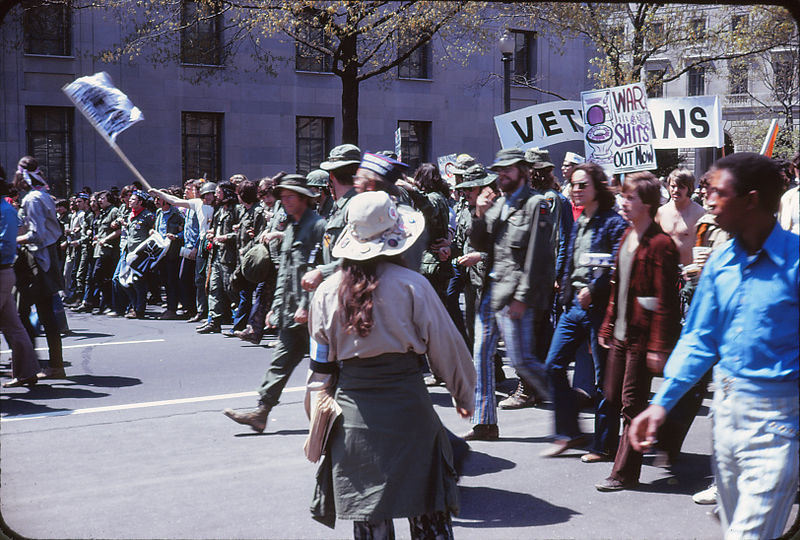
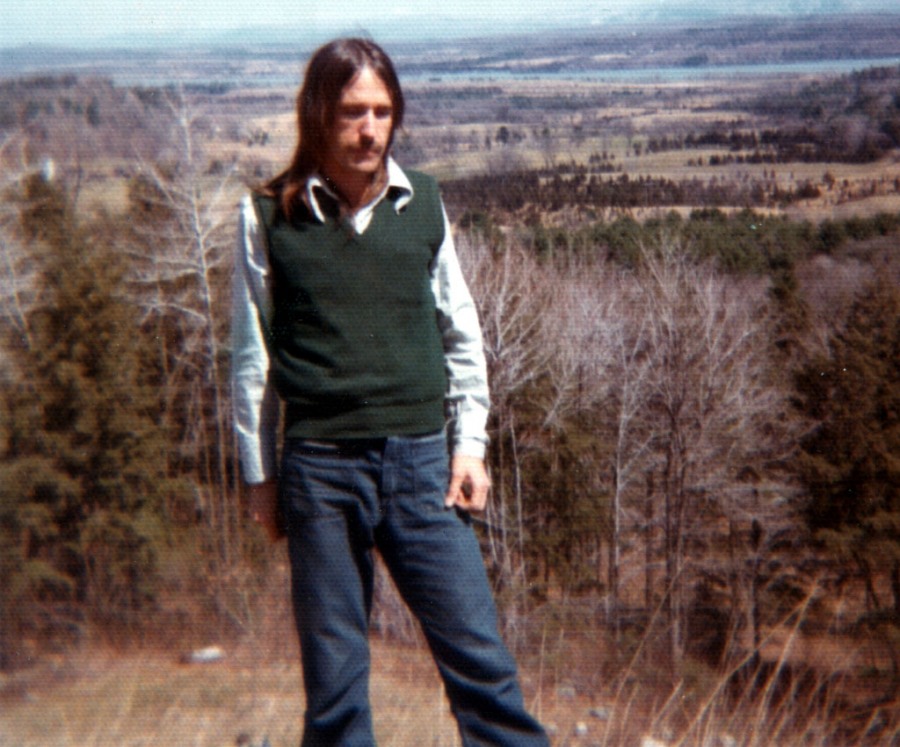
 Above is a photo taken at the march against the war in Vietnam that I took part in. It took around three hours for a million people to walk down Pennsylvania Avenue – twenty abreast. Many Vietnam Vets took part in this protest. There was a Draft.
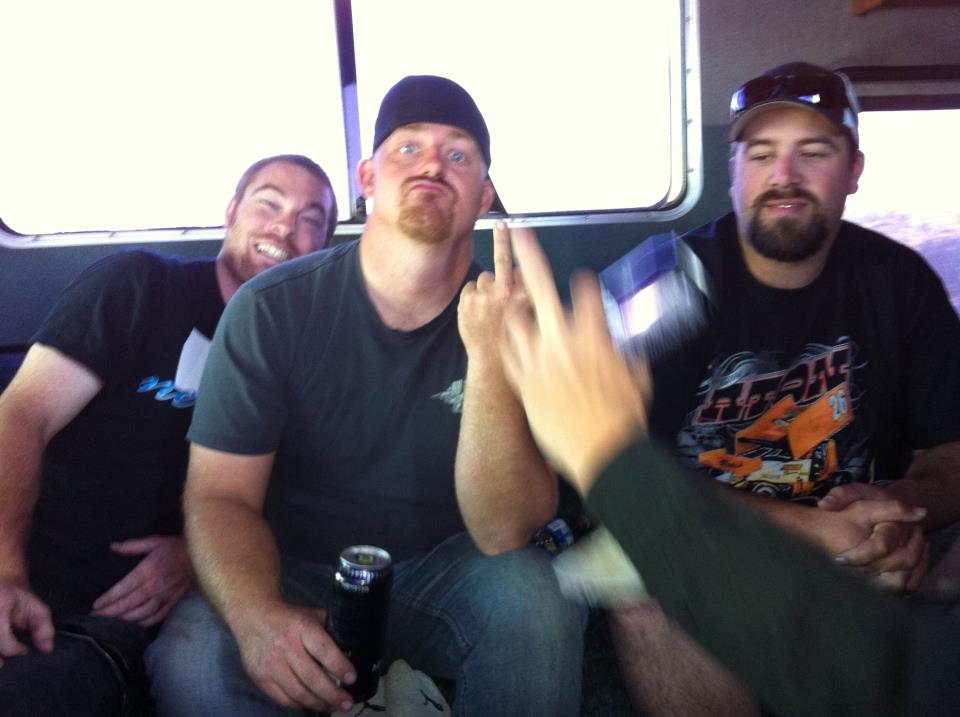
Above is a photo of my Daughter, Heather Hanson, my grandson, Tyler Hunt, and Heather’s lover, Bill Cornwell. When I met Bill in Bullhead City, his father had already cut off my balls, he convincing my daughter that I was less than a man because I did not go to Vietnam like he did, did not bust Hippy balls like he did when he was a cop, and, am a PARASITE because I am on SSI – and not a Tea Party Patriot like he is! The Cornwells got three balls apiece, and half a mind! Hitler loved these kind of guys!
I believe this nameless man wants Tyler to grow up and be a Marine and kick hippy butt. Heather only knew Bill and his father a couple of months before she turned on the values of her father and mother – with glee! I do not know the name of Bill’s father. I saw a photo of him on Facebook, and he looked like a twisted bitter man, full of hate for anti-war protestors who took away his victory.
More then likely Heather was taught about the war in Vietnam is school, but, she was too busy looking in the mirror, she told by her mother she was going to be a Big Star one day – after she gets on American Idol. My ex-daughter is lazy – and stupid! She is well on her way to becoming an alcoholic thanks to the cornwells and aunt Linda – the lush!
My daughter took delight in isolating me in our family and failing to do her duties as my Trustee. Bill did not want my daughter to do anything for me, like he did nothing for his mother confined to a wheelchair and getting SSI. Bill has taken it upon himself to balance the National Budget, after he and his ilk failed to win the war in Vietnam. When they fail, they will blame me, the old hippy war protestor. They will string me and cut off my balls, make me less then they – even depict me as subhuman! This is how stupid Nazi types operate. They don’t care if Tyler sees his grandfather as a leach on society, someone who has to be exterminated.
Jon Presco
P.S. Heather never tried to get on American Idol. Bill never joined the Army. But – he wanted to!
The movement against the involvement of the United States in the Vietnam War began in the U.S. with demonstrations in 1964 and grew in strength in later years. The U.S. became polarized between those who advocated continued involvement in Vietnam, and those who wanted peace.
Many in the peace movement were students, mothers, or anti-establishment hippies, but there was also involvement from many other groups, including educators, clergy, academics, journalists, lawyers, physicians (such as Benjamin Spock), military veterans, and ordinary Americans. Expressions of opposition events ranged from peaceful nonviolent demonstrations to radical displays of violence.
1964
On May 12, twelve young men in New York publicly burned their draft cards to protest the war.[1][2]
August – Prompted by the Gulf of Tonkin incident, Congress passed the Gulf of Tonkin Resolution.
In December 1964, Joan Baez leads six hundred people in an antiwar demonstration in San Francisco.[3]
[edit] 1965
On January 29, organized by professors against the war at the University of Michigan, a protest was attended by 2,500 participants. This model was to be repeated at 35 campuses across the country.
On March 16, Alice Herz, a 82-year-old pacifist, set herself on fire in the first known act of self-immolation to protest the Vietnam War.
On April 17, the Students for a Democratic Society (SDS) and the Student Nonviolent Coordinating Committee (SNCC), a civil rights activist group, led the first of several anti-war marches in Washington, D.C., with about 25,000 protesters.
Draft-card burnings took place at University of California, Berkeley at student demonstrations in May organized by a new anti-war group, the Vietnam Day Committee. Events included a teach-in attended by 30,000, and the burning in effigy of president Lyndon B. Johnson.
A Gallup poll in May showed 48% of U.S. respondents felt the Government was handling the war effectively, 28% felt the situation was being handled badly, and the rest had no opinion.
May – First anti-Vietnam War demonstration in London was staged outside the U.S. embassy.[4]
Protests were held in June on the steps of the Pentagon, and in August, attempts were made by activists at Berkeley to stop the movement of trains carrying troops.
A Gallup poll in late August showed that 24% of Americans view sending troops to Vietnam as a mistake versus 60% who do not.[5]
By mid-October, the anti-war movement had significantly expanded to become a national and even global phenomenon, as anti-war protests drawing 100,000 were held simultaneously in as many as 80 major cities around the US, London, Paris, and Rome.
On October 15, 1965, the first large scale act of civil disobedience in opposition to the Vietnam War occurred when approximately 40 people staged a sit-in at the Ann Arbor, Michigan draft board. They were sentenced to 10 to 15 days in jail.
On November 2, Norman Morrison, a 31-year-old pacifist, set himself on fire below the third-floor window of Secretary of Defense Robert McNamara at the Pentagon, emulating the actions of the Vietnamese monk Thích Quảng Đức.
On November 27, Coretta Scott King, SDS President Carl Oglesby, and Dr. Benjamin Spock, among others, spoke at an anti-war rally of about 30,000 in Washington, D.C., in the largest demonstration to date. Parallel protests occurred elsewhere around the nation.[6] On that same day, President Johnson announced a significant escalation of U.S. involvement in Indochina, from 120,000 to 400,000 troops.
[edit] 1966
In February, a group of about 100 veterans attempted to return their military decorations to the White House in protest of the war, but were turned back.
On March 26, anti-war demonstrations were held around the country and the world, with 20,000 taking part in New York City.
A Gallup poll shows that 59% believe that sending troops to Vietnam was not a mistake. Among the age group of 21–29, 71% believe it was not a mistake compared to 48% of those over 50.[7]
On May 15, another large demonstration, with 10,000 picketers calling for an end to the war, took place outside the White House and the Washington Monument.
June – The Gallup poll respondents supporting the U.S. handling of the war slipped to 41%, 37% expressed disapproval, and the rest had no opinion.
A crowd of 4,000 demonstrated against the U.S. war in London on July 3 and scuffled with police outside the U.S. embassy. 33 protesters were arrested.
Joan Baez and A. J. Muste organized over 3,000 people across the nation in an antiwar tax protest. Participants refused to pay their taxes or did not pay the amount designated for funding the war.[8]
Protests, strikes and sit-ins continued at Berkeley and across other campuses throughout the year. Three army privates, known as the “Fort Hood Three”, refused to deploy in Vietnam, calling the war “illegal and immoral”, and were sentenced to prison terms.
Heavyweight boxing champion Muhammad Ali – formerly known as Cassius Clay – declared himself a conscientious objector and refused to go to war. According to a writer for Sports Illustrated, the governor of Illinois, Otto Kerner, Jr., called Ali “disgusting” and the governor of Maine, John H. Reed, said that Ali “should be held in utter contempt by every patriotic American.”[9] In 1967 Ali was sentenced to 5 years in prison for draft evasion, but his conviction was later overturned on appeal. In addition, he was stripped of his title and banned from professional boxing for more than three years.
In June 1966 American students and others in England meeting at the London School of Economics formed the Stop It Committee. The group was prominent in every major London anti-war demonstration. It remained active until the April 1975 US defeat in Vietnam.
[edit] 1967
Sorry, your browser either has JavaScript disabled or does not have any supported player.
You can download the clip or download a player to play the clip in your browser.
Universal Newsreel about peace marches in April, 1967
Vietnam War protests at the Pentagon, October 1967 January 14 – 20,000–30,000 people staged a “Human Be-In” in Golden Gate Park in San Francisco, near the Haight-Ashbury neighborhood that had become the center of hippie activity.
In February, about 2,500 members of Women Strike for Peace (WSP) marched to the Pentagon. This was a peaceful protest that became rowdier when the demonstrators were denied a meeting with Secretary of Defense Robert McNamara.[10]
February 8 – Christian groups opposed to the war staged a nationwide “Fast for Peace.”
February 23 – The New York Review of Books published “The Responsibility of Intellectuals” by Noam Chomsky as a special supplement.
March 12 – A three page anti-war ad appeared in The New York Times bearing the signatures of 6,766 teachers and professors. The advertisement spanned two and a quarter pages in Section 4, The Week in Review. The advertisement itself cost around $16,500 and was sponsored by the Inter-University Committee for Debate on Foreign Policy.
March 17 – a group of antiwar citizens marched to the Pentagon to protest American involvement in Vietnam.
March 25 – Civil rights leader Martin Luther King led a march of 5,000 against the war in Chicago, Illinois.
April 14 – Civil rights leader Martin Luther King gave a speech in New York City. “America rejected Ho Chi Minh’s revolutionary government seeking self-determination….” (See details here.)
On April 15, 400,000 people organized by the Spring Mobilization Committee to End the War in Vietnam marched from Central Park to the UN building in New York City to protest the war, where they were addressed by critics of the war such as Benjamin Spock, Martin Luther King, James Bevel, Harry Belefonte, and Jan Barry Crumb, a veteran of the war. On the same date 100,000, including Coretta Scott King, marched in San Francisco.
On April 24, Abbie Hoffman led a small group of protesters against both the war and capitalism who interrupted the New York Stock Exchange, causing chaos by throwing fistfuls of both real and fake dollars down from the gallery.
May 2 – British philosopher Bertrand Russell presided over the “Russell Tribunal” in Stockholm, a mock war crimes tribunal, which ruled that the U.S. and its allies had committed war crimes in Vietnam. The proceedings were criticized as being a “show trial.”
On May 30 Jan Crumb and ten like-minded men attended a peace demonstration in Washington, D.C., and on June 1 Vietnam Veterans Against the War was born.
In the summer of 1967, Neil Armstrong and various other NASA officials began a tour of South America to raise awareness for space travel. According to First Man, a biography of Armstrong’s life, during the tour, several college students protested the astronaut, and shouted such phrases as “Murderers get out of Vietnam!” and other anti-Vietnam War messages.
July 30 – Gallup poll reported 52% of Americans disapproved of Johnson’s handling of the war, 41% thought the U.S. made a mistake in sending troops, and over 56% thought the U.S. was losing the war or at an impasse.
On August 28, 1967, U.S. representative Tim Lee Carter (R-KY) stated before congress: “Let us now, while we are yet strong, bring our men home, every man jack of them. The Vietcong fight fiercely and tenaciously because it is their land and we are foreigners intervening in their civil war. If we must fight, let us fight in defense of our homeland and our own hemisphere.”
On September 20, over one thousand members of WSP rallied at the White House. The police used brutal tactics to try to limit it to 100 people (as per the law) or stop the demonstration, and the event tarnished the wholesome and nonviolent reputation of the WSP.[11]
In October 1967, Stop the Draft Week resulted in major clashes at the Oakland, California military induction center, and saw more than a thousand registrants return their draft cards in events across the country. The cards were delivered to the Justice Department on October 20.
In October 1967, 300 students at the University of Wisconsin attempted to prevent Dow Chemical Company, the maker of napalm, from holding a job fair on campus. The police eventually forced the demonstration to end, but Dow was banned from the campus. Three police officers and 65 students were injured in the two-day event.[12]
The next day, October 21, 1967, a large demonstration organized by the National Mobilization Committee to End the War in Vietnam took place at the Lincoln Memorial in Washington, D.C. As many as 100,000 demonstrators attended the event, and at least 30,000 then marched to the Pentagon for another rally and an all night vigil. Some, including Abbie Hoffman, Jerry Rubin, and Allen Ginsberg attempted to “exorcise” and “levitate” the building, while others engaged in civil disobedience on the steps of the Pentagon, interrupted by clashes with soldiers and police. In all, 647 arrests were made. When a plot to airdrop 10,000 flowers on the Pentagon was foiled by undercover agents, some of these flowers ended up being placed in the barrels of MP’s rifles, as seen in some famous photographs.[13] Norman Mailer documented the events surrounding the march on the Pentagon in his novel, Armies of the Night.
In November 1967 a non-binding referendum was voted on in San Francisco, California which posed the question of whether there should be an immediate withdrawal of American troops from Vietnam. 67% of voters voted against the referendum, which was taken by a Johnson administration official as support for the war.[14]
[edit] 1968
On January 15, 1968, over five thousand women rallied in D.C. in the Jeannette Rankin Brigade protest. This was the first all female antiwar protest intended to get Congress to withdrawal troops from Vietnam.[15]
On January 18, 1968, while in the White House for a conference about juvenile delinquency, black singer-entertainer Eartha Kitt yelled at Lady Bird Johnson about the generation of young men dying in the war.[16]
January 30, 1968 – Tet Offensive was launched and resulted in much higher casualties and changed perceptions. The optimistic assessments made prior to the offensive by the administration and the Pentagon came under heavy criticism and ridicule as the “credibility gap” that had opened in 1967 widened into a chasm.[17]
February – Gallup poll showed 35% approved of Johnson’s handling of the war; 50% disapproved; the rest, no opinion. [NYT, 2/14/68] In another poll that month, 23% of Americans defined themselves as “doves” and 61% “hawks.”[18]
March 12 – anti-war candidate Eugene McCarthy received more votes than expected in the New Hampshire primary, leading to more expressions of opposition against the war. McCarthy urged his supporters to exchange the ‘unkempt look’ rapidly becoming fashionable among war opponents for a more clean-cut style to in order not to scare voters. These were known as “Clean Genes.”
March 16 – Robert Kennedy joined the race for the US Presidency as an anti-war candidate. He was shot and killed on June 5, the morning after he won a decisive victory over McCarthy in the Democratic primary in California.
March 17 – Major rally outside the U.S. Embassy in London’s Grosvenor Square turned to a riot with 86 people injured and over 200 arrested. Over 10,000 had rallied peacefully in Trafalgar Square but met a police barricade outside the embassy. A UK Foreign Office report claimed that the rioting had been organized by 100 members of the German SDS who were “acknowledged experts in methods of riot against the police.”
In March, Gallup poll reported that 49% of respondents felt involvement in the war was an error.
April 17 – National media films the anti-war riot that breaks out in Berkeley, California. The over-reaction by the police in Berkeley is shown in Berlin and Paris, sparking reactions in those cities.
On April 26, 1968, a million college and high school students boycotted class to show opposition to the war.[19]
April 27 – an anti-war march in Chicago organized by Rennie Davis and others ended with police beating many of the marchers, a precursor to the police riots later that year at the Democratic Convention.
During the 1968 Democratic National Convention, held August 26 – August 29 in Chicago, anti-war protesters marched and demonstrated throughout the city. Chicago mayor Richard J. Daley brought to bear 23,000 police and National Guardsman upon 10,000 protestors.[20] Tensions between police and protesters quickly escalated, resulting in a “police riot.” Eight leading anti-war activists were indicted by the U.S. Attorney and prosecuted for conspiracy to riot; the convictions of the Chicago Seven were subsequently overturned on appeal.
August – Gallup poll shows 53% said it was a mistake to send troops to Vietnam.[21]
Among the academic or scholarly groups was the Committee of Concerned Asian Scholars, founded in 1968 by graduate students and junior faculty in Asian studies.
[edit] 1969
March polls indicated that 19% of Americans wanted the war to end as soon as possible, 26% wanted South Vietnam to take over responsibility for the war from the U.S., 19% favored the current policy, and 33% wanted total military victory.[18]
In March, students at SUNY Buffalo destroyed a Themis construction site.[22]
On April 6, a spontaneous anti-war rally in Central Park was recorded and later released as Environments 3.
On May 22, the Canadian government announced that immigration officials would not and could not ask about immigration applicants’ military status if they showed up at the border seeking permanent residence in Canada.[23]
On July 31, The New York Times published the results of a Gallup poll showing that 53% of the respondents approved of Nixon’s handling of the war, 30% disapproved, and the balance had no opinion.
On August 15–18, the Woodstock Festival was held at Max Yasgur’s farm in Bethel, New York. Peace was a primary theme in this pivotal popular music event.
On October 15 the Moratorium to End the War in Vietnam demonstrations took place. Millions of Americans took the day off from work and school to participate in local demonstrations against the war. These were the first major demonstrations against the Nixon administration’s handling of the war.
In October, 58% of Gallup respondents said U.S. entry into the war was a mistake.
In November, Sam Melville, Jane Alpert, and several others bombed several corporate offices and military installations (including the Whitehall Army Induction Center) in and around New York City.
On November 15, crowds of up to half a million people participated in an anti-war demonstration in Washington, D.C. and a similar demonstration was held in San Francisco. These protests were organized by the New Mobilization Committee to End the War in Vietnam (New Mobe) and the Student Mobilization Committee to End the War in Vietnam (SMC).
In late December, the And babies poster is published – “easily the most successful poster to vent the outrage that so many felt about the war in Southeast Asia.”[24]
By end of the year, 69% of students identified themselves as doves.[22]
[edit] 1970
Kent State/Cambodia Incursion Protest, Washington, D.C.: A week after the Kent State shootings, on May 4, 100,000 anti-war demonstrators converged on Washington, D.C. to protest the shooting of the students in Ohio and the Nixon administration’s incursion into Cambodia. Even though the demonstration was quickly put together, protesters were still able to bring out thousands to march in the Capital. It was an almost spontaneous response to the events of the previous week. Police ringed the White House with buses to block the demonstrators from getting too close to the executive mansion. Early in the morning before the march, Nixon met with protesters briefly at the Lincoln Memorial but nothing was resolved and the protest went on as planned.
National Student Strike: more than 450 university, college and high school campuses across the country were shut by student strikes and both violent and non-violent protests that involved more than 4 million students, in the only nationwide student strike in U.S. history.
A Gallup poll in May shows that 56% of the public believed that sending troops to Vietnam was a mistake, 61% of those over 50 expressed that belief compared to 49% of those between the ages of 21–29.[25]
On June 13, President Nixon established the President’s Commission on Campus Unrest. The commission was directed to study the dissent, disorder, and violence breaking out on college and university campuses.[26]
In July 1970. the award winning documentary The World of Charlie Company was broadcasted. “It showed GI’s close to mutiny, balking at orders that seemed to them unreasonable. This was something never seen on television before.”[27] The documentary was produced by CBS News.
On August 24, 1970, near 3:40 a.m., a van filled with ammonium nitrate and fuel oil mixture was detonated on the University of Wisconsin-Madison in the Sterling Hall bombing. One researcher was killed and three others were injured.
Vortex I: A Biodegradable Festival of Life: To avert potential violence arising from planned anti-war protests, a government-sponsored rock festival was held near Portland, Oregon from August 28 to September 3, attracting 100,000 participants. The festival, arranged by the People’s Army Jamboree (an ad hoc group) and Oregon governor Tom McCall, was set up when the FBI told the governor that President Nixon’s planned appearance at an American Legion convention in Portland could lead to violence worse than that seen at 1968 Democratic National Convention in Chicago.
The Chicano Moratorium: on August 29, some 25,000 Mexican-Americans participated in the largest anti-war demonstration in Los Angeles. Police attacked the crowd with billyclubs and tear gas; two people were killed. Immediately after the marchers were dispersed, sheriff’s deputies raided a nearby bar, where they shot and killed Rubén Salazar, KMEX news director and Los Angeles Times columnist, with a tear-gas projectile.
[edit] 1971 and after
Protests against the Vietnam War in Washington DC on April 24, 1971 On April 23, 1971, Vietnam veterans threw away over 700 medals on the West Steps of the Capitol building.[28] The next day, antiwar organizers claimed that 500,000 marched, making this the largest demonstration since the November, 1969 march.[29]
Two weeks later, on May 5, 1971, 1146 people were arrested on the Capitol grounds trying to shut down Congress. This brought the total arrested during the 1971 May Day Protests to over 12,000. Abbie Hoffman was arrested on charges of interstate travel to incite a riot and assaulting a police officer.[30]
In August, 1971, the Camden 28 conducted a raid on the Camden, New Jersey draft board offices. The 28 included five or more members of the clergy, as well as a number of local blue-collar workers.
Beginning December 26, 1971, 15 anti-war veterans occupied the Statue of Liberty, flying a US flag upside down from her crown. They left on December 28, following issuance of a Federal Court order.[31] Also on December 28, 80 young veterans clashed with police and were arrested while trying to occupy the Lincoln Memorial in Washington, DC.[32]
On March 29, 1972, 166 people, many of them seminarians, were arrested in Harrisburg, PA for encircling the Federal Courthouse with a chain, to protest the trial of the Harrisburg Seven.[33]
On April 19, 1972, in response to renewed escalation of bombing, students at many colleges and universities around the country broke into campus buildings and threatened strikes.[34] The following weekend, protests were held in New York, San Francisco, Los Angeles, and elsewhere.[35]
On May 13, 1972, protests again spread across the country in response to President Nixon’s decision to mine harbors in North Vietnam[36] and renewed bombing of North Vietnam (Operation Linebacker).
On July 6, 1973, four Sisters of Notre Dame de Namur on a White House Tour stopped and began praying to protest the war. In the next six weeks, such kneel-ins became a popular form of protest and led to over 158 protestors arrests.[37]
[edit] Public opinion
Public support for the war decreased as the war raged on throughout the sixties and beginning part of the 1970s.
William L. Lunch and Peter W. Sperlich collected public opinion data measuring support for the war from 1965–1971. Support for the war was measured by a negative response to the question: “In view of developments since we entered the fighting in Vietnam, do you think the U.S. made a mistake sending troops to fight in Vietnam?”[38] They found the following results.
Month
Percentage who agreed with war
August 1965
52%
March 1966
59%
May 1966
49%
September 1966
48%
November 1966
51%
February 1967
52%
May 1967
50%
July 1967
48%
October 1967
46%
December 1967
48%
February 1968
42%
March 1968
41%
April 1968
40%
August 1968
35%
October 1968
37%
February 1969
39%
October 1969
32%
January 1970
33%
April 1970
34%
May 1970
36%
January 1971
31%
May 1971
28%
After May 1971 Gallup stopped asking this question.
[edit] Reasons for opposition
The reasons behind American opposition to the Vietnam War fell into the following main categories: opposition to the draft; moral, legal, and pragmatic arguments against U.S. intervention; reaction to the media portrayal of the devastation in Southeast Asia.
Vietnam War protesters. Wichita, Kansas, 1967
The Draft, as a system of conscription which threatened lower class registrants and middle class registrants alike, drove much of the protest after 1965. Conscientious objectors did play an active role although their numbers were small. The prevailing sentiment that the draft was unfairly administered inflamed blue-collar American and African-American opposition to the military draft itself.
Opposition to the war arose during a time of unprecedented student activism which followed the free speech movement and the civil rights movement. The military draft mobilized the baby boomers who were most at risk, but grew to include a varied cross-section of Americans. The growing opposition to the Vietnam War was partly attributed to greater access to uncensored information presented by the extensive television coverage on the ground in Vietnam.
Beyond opposition to the Draft, anti-war protesters also made moral arguments against the United States’ involvement in Vietnam. This moral imperative argument against the war was especially popular among American college students. For example, in an article entitled “Two Sources of Antiwar Sentiment in America,” Schuman found that students were more likely than the general public to accuse the United States of having imperialistic goals in Vietnam. Students in Schuman’s study were also more likely to criticize the war as “immoral.”[39] Civilian deaths, which were either downplayed or omitted entirely by the Western media, became a subject of protest when photographic evidence of casualties emerged. An infamous photo of General Nguyễn Ngọc Loan holding a pistol to the head of an alleged terrorist during the Tet Offensive also provoked a public outcry.[40]
Another element of the American opposition to the war was the perception that U.S intervention in Vietnam, which had been argued as acceptable due to the Domino Theory and the threat of Communism, was not legally justifiable. Some Americans believed that the Communist threat was used as a scapegoat to hide imperialistic intentions, while others argued that the American intervention in South Vietnam interfered with the “self-determination” of the country. In other words, the war in Vietnam was a civil war that ought to have determined the fate of the country and, therefore, America was not right to intervene.[40]
Additionally, media coverage of the war in Vietnam shook the faith of citizens at home. That is, new media technologies, like television, brought images of wartime conflict to the kitchen table. To illustrate this claim, Allen Guttman cites Mr. Fran McGee, NBC news figure who stated that the war was all but lost as a “conclusion to be drawn inescapably from the facts.”[40] For the first time in American history the media was privileged to dispense battlefield footage to public. Graphic footage of casualties on the nightly news eliminated any myth of the glory of war. With no clear sign of victory in Vietnam, the media images of American military casualties helped to stimulate the opposition of the war in Americans. In their book Manufacturing Consent, Noam Chomsky and Edward Herman challenge this traditional view of how the media influenced the war, proposing instead that the media censored the more brutal images of the fighting.
On April 14, 1967 in New York City, Civil rights leader Martin Luther King detailed rationales his for opposition U.S. involvement in the Vietnam War. King claimed that America had rejected Ho Chi Minh’s revolutionary government which he said was seeking Vietnamese self-determination. Ho’s government was, said King, “a government that had been established not by China (for whom the Vietnamese have no great love) but by clearly indigenous forces that included some Communists. For the peasants this new government meant real land reform, one of the most important needs in their lives.”
“For nine years following 1945 we denied the people of Vietnam the right of independence. For nine years we vigorously supported the French in their abortive effort to recolonize Vietnam. Before the end of the war we were meeting eighty percent of the French war costs. Even before the French were defeated at Dien Bien Phu, they began to despair of the reckless action, but we did not. We encouraged them with our huge financial and military supplies to continue the war even after they had lost the will. Soon we would be paying almost the full costs of this tragic attempt at recolonization.
“After the French were defeated it looked as if independence and land reform would come again through the Geneva agreements. But instead there came the United States, determined that Ho should not unify the temporarily divided nation, and the peasants watched again as we supported one of the most vicious modern dictators—our chosen man, Premier Diem. The peasants watched and cringed as Diem ruthlessly routed out all opposition, supported their extortionist landlords and refused even to discuss reunification with the north. The peasants watched as all this was presided over by U.S. influence and then by increasing numbers of U.S. troops who came to help quell the insurgency that Diem’s methods had aroused. When Diem was overthrown they may have been happy, but the long line of military dictatorships seemed to offer no real change—especially in terms of their need for land and peace.
“The only change came from America as we increased our troop commitments in support of governments which were singularly corrupt, inept and without popular support. All the while the people read our leaflets and received regular promises of peace and democracy—and land reform. Now they languish under our bombs and consider us—not their fellow Vietnamese—the real enemy. They move sadly and apathetically as we herd them off the land of their fathers into concentration camps where minimal social needs are rarely met. They know they must move or be destroyed by our bombs. So they go—primarily women and children and the aged.
“They watch as we poison their water, as we kill a million acres of their crops. They must weep as the bulldozers roar through their areas preparing to destroy the precious trees. They wander into the hospitals, with at least twenty casualties from American firepower for one ‘Vietcong’-inflicted injury. So far we may have killed a million of them—mostly children. They wander into the towns and see thousands of the children, homeless, without clothes, running in packs on the streets like animals. They see the children, degraded by our soldiers as they beg for food. They see the children selling their sisters to our soldiers, soliciting for their mothers.
US helicopter gunship in October 1968
“What do the peasants think as we ally ourselves with the landlords and as we refuse to put any action into our many words concerning land reform? What do they think as we test our latest weapons on them, just as the Germans tested out new medicine and new tortures in the concentration camps of Europe? Where are the roots of the independent Vietnam we claim to be building? Is it among these voiceless ones?
“We have destroyed their two most cherished institutions: the family and the village. We have destroyed their land and their crops. We have supported the enemies of the peasants of Saigon. We have corrupted their women and children and killed their men. What ‘liberators?’
“Now there is little left to build on — save bitterness. Soon the only solid physical foundations remaining will be found at our military bases and in the concrete of the concentration camps we call fortified hamlets.
“Perhaps the more difficult but no less necessary task is to speak for those who have been designated as our enemies. What of the National Liberation Front — that strangely anonymous group we call VC or Communists? What must they think of us in America when they realize that we permitted the repression and cruelty of Diem which helped to bring them into being as a resistance group in the south? What do they think of our condoning the violence which led to their own taking up of arms? How can they believe in our integrity when now we speak of “aggression from the north” as if there were nothing more essential to the war? How can they trust us when now we charge them with violence after the murderous reign of Diem and charge them with violence while we pour every new weapon of death into their land? Surely we must see that the men we supported pressed them to their violence. Surely we must see that our own computerized plans of destruction simply dwarf their greatest acts…” [41]
[edit] Polarization
“
If America’s soul becomes totally poisoned, part of the autopsy must read “Vietnam.”
”
— Martin Luther King Jr, 1967[42]
The U.S. became polarized over the war. Many supporters of U.S. involvement argued for what was known as the domino theory, a theory that believed if one country fell to communism, then the bordering countries would be sure to fall as well, much like falling dominoes. This theory was largely held due to the fall of eastern Europe to communism and the Soviet sphere of influence following World War II. However, military critics of the war pointed out that the Vietnam War was political and that the military mission lacked any clear idea of how to achieve its objectives. Civilian critics of the war argued that the government of South Vietnam lacked political legitimacy, or that support for the war was completely immoral.
The media also played a substantial role in the polarization of American opinion regarding the Vietnam War. For example, In 1965 a majority of the media attention focused on military tactics with very little discussion about the necessity for a full scale intervention in Southeast Asia.[43] After 1965, the media covered the dissent and domestic controversy that existed within the United States, but excluded the actual view of dissidents and resisters.[43]
The media established a sphere of public discourse surrounding the Hawk versus Dove debate. The Dove was a liberal and a critic of the war. Doves claimed that the war was well–intentioned but a disastrously wrong mistake in an otherwise benign foreign policy. It is important to note the Doves did not question the U.S. intentions in intervening in Vietnam, nor did they question the morality or legality of the U.S. intervention. Rather, they made pragmatic claims that the war was a mistake. Contrarily, the Hawks argued that the war was legitimate and winnable and a part of the benign U.S. foreign policy. The Hawks claimed that the one-sided criticism of the media contributed to the decline of public support for the war and ultimately helped the U.S. lose the war. For example, Allen Guttmann references William F. Buckley’s journal in his article titled, “Protest against the War in Vietnam,” and claims that Buckley repeatedly wrote about his approval for the war and suggested that “The United States has been timid, if not cowardly, in refusing to seek ‘victory’ in Vietnam.”[40] The hawks claimed that the liberal media was responsible for the growing popular disenchantment with the war and blamed the western media for losing the war in Southeast Asia.

 Rosamond Press
Leave a comment