Some Mormons have abused Government Welfare justifying they are on a mission from God. George Romney was mocked for being a Mex – on welfare! I wonder if members of the Mexican colony were sent to live in America in order to get on relief, then send money to Mexico. These were hard time. Not everyone left – even though extreme danger is the excuse. I want to see Geroge Romney’s birth cirtificate!
Mitt’s uncle gave a sermon on Welfare. Mormons have their own welfare system, thus Mitt’s remark about systems already in place for the very poor.
Jon Presco
A quick search on lds.org did not produce many results for the terms ‘public welfare’ or ‘public assistance.” But I did find one talk in which Marion G. Romney, (in 1980) talked about the decision in not the most flattering of terms.
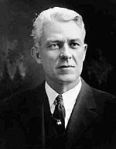
Mitt Romney’s father, George Romney, has been invoked on the campaign trail often.
Newt Gingrich used his release of 12 years’ of tax records as an example to push his rival to release his own tax returns. On Thursday night, Romney mentioned the fact that his father was born in Mexico in response to Gingrich’s allegations that he is “anti-immigrant,” which raises the question: If George Romney was born in Mexico, how could he run for president?
It is clear that naturalized citizens cannot qualify for the office of president, but there is no clarification in the U.S. Constitution pertaining to people born to U.S. citizens in a foreign country, and there is no definition of a “natural-born citizen.” Some experts have challenged the idea that foreign-born children of U.S. citizens are “natural-born” because citizenship is conferred upon them after birth.
A Congressional Research Service report published in November comes closest to answering that question.
“There have been legitimate legal issues raised concerning those born outside of the country to U.S. citizens,” the report states. “The weight of legal and historical authority indicates that the term ‘natural born’ citizen would mean a person who is entitled to U.S. citizenship ‘by birth’ or ‘at birth,’ either by being born ’in’ the United States and under its jurisdiction, even those born to alien parents; by being born abroad to U.S. citizen-parents; or by being born in other situations meeting legal requirements for U.S. citizenship ‘at birth.’”
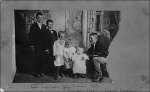
Romney was born to American citizens living in a Mormon church colony in Chihuahua, Mexico.
Even though he wasn’t born in a United States territory or state, George Romney was given citizenship at birth because he was born to American citizens, essentially granting him the status of a natural-born citizen.
“When you’re born outside the United States to [U.S.] citizens, you have citizenship at birth,” explained Peter J. Spiro, a professor of law and an expert on the law of citizenship at Temple University. “You don’t have to do anything to claim your citizenship. You are a citizen from birth.”
Romney was the first presidential candidate born outside the United States, and his decision to run against Nixon in the Republican primary of 1968 raised many questions.
“This is not the kind of issue that was decided by the courts,” Spiro said. “No court has said definitively, but I think there’s some consensus understanding that a person such as George Romney would be eligible to be president.”
The issue came to the limelight again in 2008 with both parties’ candidates. Sen. John McCain was born on a U.S. naval air station in the Panama Canal Zone when his father was posted there, leading some to question whether he would be eligible for the presidency. It turned out to be a non-issue because a law passed in 1937, and applied retroactively, gave citizenship to anyone born in Panama whose mother or father was a U.S. citizen. President Obama was dogged for much longer by the birther movement about where he was born. The president released his birth certificate as proof that he was born in Hawaii.
Citizenship for foreign-born children of U.S. nationals is not an issue that has gained widespread attention. George Romney didn’t make it far enough into the campaign for it to pose a problem, but that’s likely to change, Spiro says.
“Going forward, there are likely to be other cases of other individuals who are born out the United States with citizenship, who achieve political prominence and who are in the ballpark for presidency,” he said. “This issue is not going to go away.”
Several members of Congress — mostly Republicans — have attempted to cement this practice into a bill.
Former Sen. Don Nickles introduced the Natural Born Citizen Act in 2004 to define the term, natural-born citizen, to include people who derived citizenship at birth from a U.S. citizen parent and to children under 18 who were adopted by U.S. citizens.
A new tax law passed in 2010 and taking effect next year is supposed to recoup taxes owed by citizens abroad who have offshore accounts.
The Foreign Account Tax Compliance Act (FATCA) requires U.S. taxpayers with money outside this country to report those assets to the IRS and pay taxes on the earnings. That’s not particularly new.
But it may have some unintended consequences — especially for those who haven’t been disclosing their accounts.
Seems the new law also requires foreign banks and other foreign financial institutions (FFIs) to turn over the records of their U.S. citizen customers.
So under FATCA, the FFIs may alert the IRS about all that money fat cats are trying to hide. (Curious that Congress couldn’t come up with a “T”
At the time, there also seemed to me to be something slightly shameful about going on welfare. It boggled my mind that people would deliberately put themselves in a position in which they knew they would need to take advantage of such resources.
However, as I’ve grown older and grown closer with several Mormon friends who had their babies young and utilized public assistance to do so, my attitude has softened quite a bit. I’m grateful for programs that ensure the security and physical well-being of my friends and their families. I now realize that my former attitude was a product of my own privilege and my own narrow exposure to diverse ways to approach life.
But I still do have some lingering questions about Mormons and the ethics of utilizing public assistance. Is there a situation in which it is not ethical to use it? What would that situation be? And what is the Mormon leadership’s attitude about it?
A quick search on lds.org did not produce many results for the terms ‘public welfare’ or ‘public assistance.” But I did find one talk in which Marion G. Romney, (in 1980) talked about the decision in not the most flattering of terms.
“When circumstances combine to require help, it is Church doctrine that one rely upon his family for assistance. Obviously, no one should become a charge upon the public when his relatives are able to care for him.”
Other references to public assistance in General Conference and Church magazines were even more negative. The term ‘evils of a dole’ (1936) popped up a number of time in my search at lds.org, as well as references to the shame of accepting welfare from the government (1944). Interestingly, while the ‘evils of a dole’ quote comes from a 1930′s document about the establishment of the Church Welfare program, it is still quoted – though pretty rarely – in recent times. 2003 seems to be the latest.
So it appears that in the past, certain Church leaders have not looked too kindly on the idea of going on public assistance. However, the very fact that I could find almost no recent references to the topic indicate to me that perhaps GA perspectives on the matter have changed. Kids are way more expensive now. Health care is ridiculously pricey. I wonder if some GA’s understand the new reality that for many young couples to start their families, some kind of public assistance is an absolute necessity.
As for my other question about when it is or is not ethical to use public assistance, it seems clear to me that it is absolutely fine to use it when unforeseen circumstances arise that put a family in a dire situation. An unexpected pregnancy. A health problem. An unforeseen job loss. Thank goodness public assistance is there for those situations, I say.
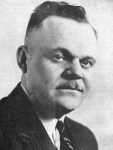
President Marion G. Romney
Second Counselor in the First Presidency
Church Welfare—
03122_000_036
My beloved brothers and sisters, I very much appreciate the opportunity to meet with you this morning. Since the welfare program was inaugurated in the mid-1940s I believe I have attended every such general conference welfare meeting we have held.
The Church welfare program has from its beginning been, in my mind, associated with the second great commandment. You will remember, of course, that when one of the Pharisees asked Jesus “Which is the great commandment in the law?” that he responded, “Thou shalt love the lord thy God with all thy heart, and with all thy soul, and with all thy mind.
“This is the first and great commandment.
“And the second is like unto it, Thou shalt love thy neighbour as thyself.
“On these two commandments hang all the law and the prophets” (Matt. 22:36–40).
As a ward bishop I was involved in the welfare program when it was first announced, and I have been involved in it ever since.
This long participation has taught me that the crowning aspect of a Christlike life is found in serving one’s fellowmen.
In the Church, serving and helping one’s neighbor is not done only through spontaneous kindly deeds to our immediate families and next-door neighbors; it is also accomplished through the Church welfare program, which is based upon modern revelation through prophets of this dispensation. Its principles are eternal. They have been revealed and implemented, to some extent, where and whenever the Lord has established his church upon the earth. We read in the Book of Mormon, for example, that “Alma commanded that the people of the church should impart of their substance, every one according to that which he had; if he have more abundantly he should impart more abundantly; and of him that had but little, but little should be required; and to him that had not should be given.
“And thus they should impart of their substance of their own free will and good desires towards God, and to those priests that stood in need, yea, and to every needy, naked soul.
“And this he said unto them, having been commanded of God; and they did walk uprightly before God, imparting to one another both temporally and spiritually according to their needs and their wants” (Mosiah 18:27–29).
(This was, as you will remember, in America among the Nephites about 147 B.C.)
In October 1936, the Presidency of the Church issued this statement, which continues today as the guiding precept of welfare services:
“Our primary purpose was to set up, in so far as it might be possible, a system under which the curse of idleness would be done away with, the evils of a dole abolished, and independence, industry, thrift and self respect be once more established amongst our people. The aim of the Church is to help the people to help themselves. Work is to be reenthroned as the ruling principle of the lives of our Church membership” (in Conference Report, Oct. 1936, p. 3; see also Welfare Services Handbook, p. 1).
As a people and as a Church, we accept as fundamental truth the proposition that the responsibility for one’s own economic maintenance rests (1) upon himself; (2) upon his family; and (3) upon the Church, if he is a faithful member thereof.
Welfare work divides itself into three main divisions. First is the basic doctrine of being self-sustaining to the full extent of one’s ability. By applying the principles of personal and family preparedness, sometimes referred to as temporal welfare, we are to provide our own needs. So doing puts us in position to share our surplus with others. In his April 1937 conference talk, President J. Reuben Clark outlined the course of independence which should be followed by every member of the Church. He there said:
“What may we as a people and as individuals do for ourselves to prepare to meet this oncoming disaster, which God in his wisdom may not turn aside from us? …
“Let us avoid debt as we would avoid a plague; where we are now in debt let us get out of debt; if not today, then tomorrow.
“Let us straitly and strictly live within our incomes, and save a little.
“Let every head of every household see to it that he has on hand enough food and clothing, and, where possible, fuel also, for at least a year ahead” (in Conference Report, Apr. 1937, p. 26).
When circumstances combine to require help, it is Church doctrine that one rely upon his family for assistance. Obviously, no one should become a charge upon the public when his relatives are able to care for him. Every consideration of kindness, of justice, of fairness, of the common good, and of humanity requires this.
President Stephen L Richards taught a principle which every family in the Church would do well to bear in mind:
“I think,” said he, that “my food would choke me if [I] knew that while I could procure bread my aged father or mother or near kin were on public relief. I believe a decent family pride is a salutary thing with any people and in any nation … , a family pride in wholesome, self-reliant, and enterprising living—a family pride that promotes the utmost solicitude for each member of the family. It wouldn’t hurt my feelings to hear a family boast that through all vicissitudes they had come to each other’s help and had never received public assistance. I have known brothers and sisters to put each other through school by hard, self-sacrificing toil. I cannot imagine any of these permitting their father and mother to come to public relief” (in Conference Report, Oct. 1944, pp. 138–39).
Finally, aid is available from the Church. It has been so in all dispensations. Paul himself was a welfare worker, in a very modern sense of the term. We find him writing in Romans 15:
“But now I go unto Jerusalem to minister unto the saints.
“For it hath pleased them of Macedonia and Achaia to make a certain contribution for the poor saints which are at Jerusalem.
“It hath pleased them verily; and their debtors they are. For if the Gentiles have been made partakers of their spiritual things, their duty is also to minister unto them in carnal things” (Rom. 15:25–27).
The obligation of the Church to help its poor is here placed by Paul on a par with communicating spiritual riches to those who are in darkness. By both means we store up treasures in heaven.
“Charge them,” he says, “that are rich in this world, that they be not highminded, nor trust in uncertain riches, but in the living God, who giveth us richly all things to enjoy;
“That they do good, that they be rich in good works, ready to distribute, willing to communicate;
“Laying up in store for themselves a good foundation against the time to come, that they may lay hold on eternal life” (1 Tim. 6:17–19).
In our day, the Lord has given us this charge:
“If thou lovest me thou shalt serve me and keep all my commandments.
“And behold, thou wilt remember the poor, and consecrate of thy properties for their support that which thou hast to impart unto them, with a covenant and a deed which cannot be broken.
“And inasmuch as ye impart of your substance unto the poor, ye will do it unto me; and they shall be laid before the bishop of my church and his counselors, two of the elders, or high priests, such as he shall appoint or has appointed and set apart for that purpose” (D&C 42:29–31).
The foregoing principles are true when properly applied by members and leaders alike. They bring about the desired end of establishing the Church and building up Zion. It is true, however, that when not properly applied, difficulties follow. Within two-and-a-half years after the original Church welfare plan was put in place by the First Presidency, President J. Reuben Clark made this significant statement in an address in Estes Park, Colorado, 20 June 1939:
The Church has found that the whole problem is essentially a question of spirituality, rather than of finance or economics [in getting Church welfare work accomplished]. Where the spirituality has been high, the Plan has succeeded; where the spirituality is low, the Plan has lagged. The Church has proved there is no substitute for the great commandments: ‘Thou shalt love the Lord thy God with all thy … might, mind, and strength, and thy neighbor as thyself’ [see D&C 59:5–6]” (Church Welfare Plan: A Discussion, General Church Welfare Committee, 1939, pp. 32–33).
While we have made great strides in the program since that day, the principle still applies. Everything we do in welfare services must be measured by its accomplishment in spiritual terms. Givers must give out of a righteous heart and with a willing spirit. Receivers must receive with thankfulness and gladness of heart. The Spirit must confirm a bishop’s evaluation regarding assistance. It must lead a home teacher and a visiting teacher to know how to respond to needs of families to whom they are assigned. With righteous intent, participating in this great work sanctifies the soul and enlarges the mind. As we spiritually mature in fulfilling our welfare responsibilities, whatever they may be, we prepare ourselves to become “partakers of the divine nature” (see 2 Pet. 1:4). May it be our happy lot to be filled with that measure of spirit that we may be sealed with the bond of charity, which, as Moroni said, “is the pure love of Christ, and it endureth forever; and whoso is found possessed of it at the last day, it shall be well with him.
“Wherefore, my beloved brethren, pray unto the Father with all the energy of heart, that ye may be filled with this love, which he hath bestowed upon all who are true followers of his Son, Jesus Christ; that ye may become the sons of God; that when he shall appear we shall be like him, for we shall see him as he is; that we may have this hope; that we may be purified even as he is pure” (Moro. 7:47–48).
It is my prayer that each and every one of us will learn and apply these fundamental principles of welfare services and gain thereby the promised reward, in the name of Jesus Christ, amen.
 Rosamond Press
Leave a comment