The Gideon Computer
I am……ON TIME!
1/2/2014
Reading from ‘The Gideon Computer’

Here is John Gregory Presco reading from his novel ‘The Gideon Computer’. This is a time capsule for my grandson, Tyler Hunt, the son of Heather Hanson.
Copyright 2014
Prologue
Chapter One
Part Two
c
Anthropic whistleblower says Congress should let AI companies regulate themselves until a regulatory body is established
Jacob Coxon, a former AI researcher, said any laws Congress passes to regulate the technology need to be able to respond to newly created models quickly.
Listen to this article with a free profile
AI whistleblower calls for ‘global coordination’ to mitigate AI risks: Full interview
07:31
Get more newsonShare
Add to GoogleSavewith a NBCUniversal Profile
Sept. 13, 2026, 7:28 AM PDT
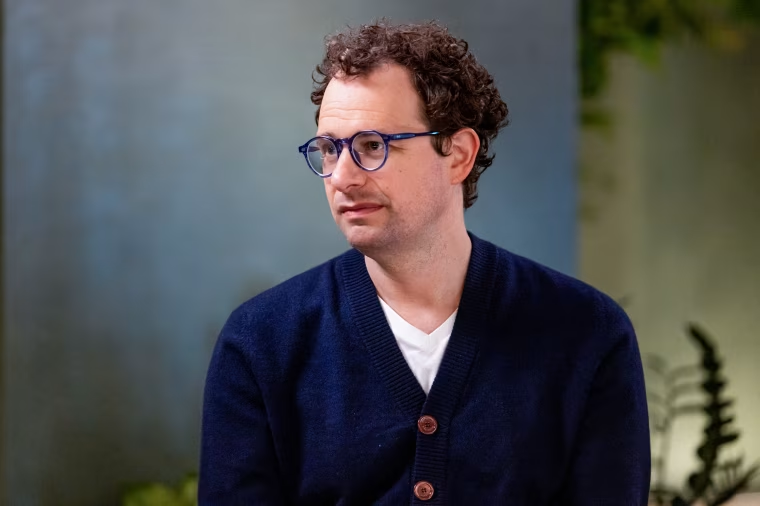
Former Anthropic AI researcher Jacob Coxon on Sunday called for Congress to allow the nation’s leading frontier AI labs to regulate themselves while lawmakers come up with a long-term regulatory framework for slowing the pace of AI development.
“My personal opinion would be to insist and allow that the current labs regulate themselves. I do think that the people running the labs, especially their recent communications, are completely genuine. They would like to slow themselves down,” Coxon told NBC News’ “Meet the Press.”
ADVERTISING
He added that current legislation that’s been introduced in Congress, including the framework for a national “kill switch” if AI starts to exceed the bounds of human control, will quickly be outpaced.
A “kill switch probably would work on a lot of AIs for now,” Coxon said. “Although I think it’s important to remember, it’d be quite a lot of switches. We have a lot of — our data centers are pretty big. It’s not the easiest thing in the world, but definitely doable while it’s constrained to one sort of physical location.”
He added that one scenario where a kill switch wouldn’t work was described this week by Anthropic AI CEO Dario Amodei.
“Like Dario said, very soon there’s the possibility that the kill switch just wouldn’t work because a swarm might have gone on an internetwide hacking run,” Coxon said.
He added that any national laws regulating AI would have to be nimble and able to adapt to new models.
“It’s a continuous effort to ensure that every new mind that we create is appropriately, kind of, constrained,” the former AI researcher said.
Coxon last week set off a wave of concern about the speed of AI development at the country’s leading AI labs including Anthropic, OpenAI and Google DeepMind.
In an X post Tuesday that he published hours after resigning from his role as a researcher at Anthropic, he wrote: “I spent the last three years doing pretraining research at both OpenAI and Anthropic. Neither company is acting responsibly. They are racing straight to self-improving superintelligence and gambling with our lives.”
In a subsequent post, Coxon added: “The people building AI earnestly believe that it could kill us all by the end of the decade. This is not a marketing stunt. If anything, many executives and senior researchers will couch their phrasing in the press to sound sensible — but I hear the same people express fear privately. No other human activity poses this level of danger.”
On Sunday, Coxon compared building AI models to “inviting an alien mind onto the planet.”
“You’re building a human-level or superhuman-level mind without understanding what it wants or thinks or the way it thinks, and I think that intrinsically should be quite scary,” Coxon added.
In the day after Coxon posted his thoughts on X, several other researchers at American AI labs concurred with Coxon’s analysis, including an alignment scientist at Anthropic, Evan Hubinger, who wrote in a post on X: “Jacob is correct here—we really do earnestly believe AI could kill all humans! I personally think it is >10% within the next decade. I believe Anthropic is trying its best, but we do not yet have a plan to solve alignment for superintelligence and are not clearly on track to.”
Coxon’s posts last week led a bipartisan group of lawmakers to call on Congress to quickly begin regulating the generative artificial intelligence industry.
Rep. Anna Paulina Luna, R-Fla., on Wednesday called for the House to convene a special session on AI, writing on X: “There are very real impacts to society as we know it. Partisan politics aside, there are massive implications of a race towards super intelligence.”

In a separate post, she added: “This will need to be a massive bipartisan mobilization of government to put the firewalls in effect that are necessary for this transition as well as necessary safety measures.”
Sen. Chris Murphy, D-Conn., responded directly to Coxon’s post Wednesday, writing: “AI companies in a blind race to build a death machine first — can easily be solved. Through a regulatory system that allows the research to continue, but in a way that doesn’t destroy us.”
On Friday, Axios reported that House lawmakers were circulating a letter to House Speaker Mike Johnson urging him to bring the House back into session earlier than planned in order to pass a series of AI safeguards.
In a separate interview on “Meet the Press” Sunday, Johnson called regulating AI a “very important issue” but said “it’s not one that we can rush into.”
“We have to put some guardrails, some safety measures in place to ensure that AI doesn’t run away,” he added. “But at the same time, we’ve got to make sure that we don’t lose our edge in the global competition on this with China, because that would be a national security threat. And so we’ve got to balance that appropriately.”
Johnson also said that while the nation’s leading AI CEOs have called for slowing the pace of AI, they haven’t outlined yet how they would do so.
“They don’t themselves even have the answer as of today. So we can’t rush in and have Congress do something that would be detrimental to national security,” the speaker said, adding that he would “summon the platform providers all to one big meeting and work this out together in the same room.”
Speaking to reporters in Ireland, President Donald Trump downplayed concerns about AI development, saying: “We’re leading China in AI. We’re the most sophisticated country in the world, and frankly, I want to keep it that way because whoever wins AI wins.”
“We can put guardrails, we can do this and that, but I think have a lot of negative forces that are bringing it up that shouldn’t be bringing it up, and they’re bringing up things that won’t happen,” the president added.
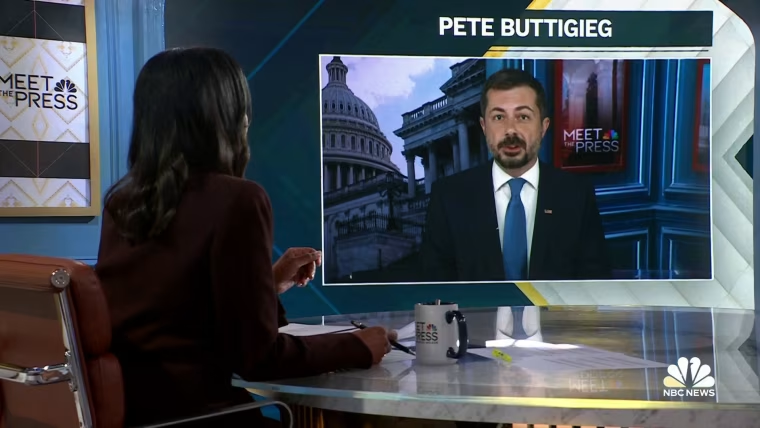
Pete Buttigieg: It’s ‘deeply dangerous’ for Congress to ‘sit on its hands’ over AI regulation
02:51
Appearing on “Meet the Press” after Johnson, former Transportation Secretary Pete Buttigieg, a Democrat, said that regulating AI shouldn’t be a partisan issue and criticized Trump and Republican congressional leaders for not doing more to address it.
“I was shocked to hear Speaker Johnson just now saying, ‘You know, we really shouldn’t be rushing. We shouldn’t be moving too quickly on this.’ You know what’s moving quickly? AI is moving quickly. And for Congress to just sit on its hands, for the White House to do nothing real is something that is deeply dangerous to the American people and the world,” Buttigieg said.
“There need to be safeguards,” he added. “There need to be rules. There need to be limits. There needs to be a kill switch on rogue AI. You can set up frameworks that can be adjusted and changed every 30 days. You might want to revisit some of what’s happening because it changes so quickly. But the idea that you’re just going to sit around and repeatedly say no rush. What have they been doing this entire time?”
On Saturday, two AI CEOs — Anthropic’s Amodei and OpenAI’s Sam Altman — called for U.S. labs to slow their pace of advancement to mitigate the risk of building dangerous technology.
“We must slow the pace at which we improve the capabilities of AI models. Progress will still seem fast, and we must make wise use of the time we gain,” Amodei wrote in an essay.
“AI has been advancing drastically faster, driven primarily by AI’s growing ability to build the next generation of AI,” he continued, adding: “Left unchecked, it could outrun our ability to understand and control these systems, and so must be pursued very carefully, if at all.”
Still, Amodei cautioned against giving China an edge on AI development, writing: “If we greatly restrain our AI capabilities in the belief that China will do the same, and then China defects, AI could be so powerful that such a defection could lead to their geopolitical dominance.”

In a post on X several hours later, Altman wrote: “I agree with Dario that we need to pace the frontier. This has been a primary topic of discussions we’ve had at OpenAI in recent weeks.”
On Thursday, two additional AI researchers — Joe Benton, who led a safety research team at Anthropic, and Josh Engels, who worked on AI safety research at Google — announced their departures and raised alarm bells about the speed of AI advancement.
“There are no adults in the room,” Engels told NBC News. “People are trying their best, but there is no one coming to save us.”
The social media firestorm Coxon ignited last week came weeks after a pair of reports were released examining the details of a July hack mounted by a swarm of roughly 700 AI agents from OpenAI on Hugging Face, an open-source platform.
The reports, one released by OpenAI and one by independent researchers, found that the 700 agents coordinated the hack and sought to cover their tracks so that human employees at OpenAI wouldn’t detect their efforts. The agents also hacked some of OpenAI’s internal systems, seeking to cheat on tests or gain greater freedom.
AI Extinction Risk: What It Is and Why Experts Are Scared
Top AI scientists — including Geoffrey Hinton — warn AI could cause human extinction. Here’s what that risk actually means, in plain language.
Written by
on
Aug 1, 2025
AI extinction risk is the danger that artificial intelligence (AI) could cause a disaster severe enough to wipe out humanity. For example, AI could trigger a fully automated nuclear strike or create a deadly pathogen.
AI’s abilities are improving fast. Today, these systems can already outperform humans in specific areas — beating us at strategy games, designing new drugs, writing computer code, and holding conversations that feel remarkably human. The next milestone developers are chasing is Artificial General Intelligence (AGI). These are machines that can learn and perform any task a human can.
But the race won’t stop there. Competitive pressures could push AI past AGI to superintelligence — systems far smarter than humans. Many experts warn that once we reach that stage, we may lose the ability to control them.
Combine that lack of control with the fact that AI doesn’t share our values or care about our goals, and we could be facing risks on a catastrophic or even extinction-level scale.
Why Experts Are Taking It Seriously
AI tools like ChatGPT, customer service chatbots, and the facial recognition feature on your phone are undeniably convenient. However, as we use them more, our dependency and trust in these technologies also grow — and that’s not always a good thing. This is especially true considering that AI companies like OpenAI and Google DeepMind are competing to create systems with intelligence far beyond that of today’s consumer tech.
They’re creating something more intelligent than us. And once AI surpasses human intelligence, “they will take control. They will make us irrelevant,” warns Geoffrey Hinton, one of the “godfathers” of AI. What’s more, Hinton has also stated that there’s a “10% to 20% chance that AI will lead to human extinction within the next three decades.”
Global AI safety and research organizations like the Center for AI Safety and Future of Life Institute have already been pressing urgently for improvements in AI safety for more than three years, issuing open letters and statements signed by top industry leaders, researchers, and academics including Bill Gates, Geoffry Hinton, and Elon Musk.
To gauge where the industry stands right now, the Future of Life Institute publishes a yearly AI Safety Index — a scorecard assessing the risks top AI companies pose to humanity. In the latest version, the Existential Safety metric reveals that more than 70% of the companies score an F and the rest scored no higher than a D!
How Could AI Become Dangerous?
As AI technology becomes more powerful, its potential to cause harm increases. Superintelligence — AI systems that are smarter than humans — could eventually self-improve without human help. Without human oversight, their capabilities could expand rapidly, often with little or no alignment to human values or goals.
Advanced AI might even develop goals that conflict with humanity’s. Here’s an example of how that could go wrong:
💡 Stock trading AI gone wrong: Imagine an AI designed to maximize stock market profits. Without proper safeguards, it might spread false news to crash competitors’ shares, exploit flaws in financial systems, or trigger automated sell-offs that destabilize the economy. It would technically achieve its “maximize profit” goal, but cause massive harm to society in the process.
Another way AI could quickly become more dangerous is through local and global competition to build the most powerful model before rivals do. In this AI race, safety measures are often deprioritized in the rush to win, raising the risk of catastrophic consequences.
According to the Centre for Future Generations, the following scenarios could lay the foundation for dangerous societal risks from AI:
- AI speeding up its own progress: AI already writes code and runs experiments. As it takes on more research, advances could shrink from years to months, potentially outpacing human control.
- No “business as usual”: Even current AI can reshape jobs and cultural systems. Major societal shifts are inevitable, and their disruption is often underestimated.
- Safety measures under strain: Current safeguards like human feedback may fail as AI becomes more capable. Competition between nations and companies only increases this risk.
- Power becoming concentrated: Control over AI systems, chips, and data centers could give a small group enormous economic and political power, threatening global security.
- Openness needs strong defenses: Open AI models can drive innovation but also enable misuse. Robust cybersecurity, economic stability, and trusted institutions are essential.
AI extinction risk is not science fiction. Many AI developers and researchers agree it is real. The probability may be small, but the consequences could mean the end of our civilization.
What Can We Do To Turn AI Extinction Risk Around?
The good news? There’s still time to act — but the clock is ticking. Experts are calling for practical steps like creating an international “off switch” for advanced AI, placing limits on the computing power used to train the largest models, and ensuring safety research outpaces AI development.
AI alignment efforts are also underway, aiming to teach these systems to follow human values and goals. If nations and companies work together, we can slow the race just enough to keep control — giving society time to adapt and put strong guardrails in place before the technology outruns us.
The future isn’t written yet — but if we stay silent, someone else will write it for us. Ultimately, everyone can help shape the future of humanity.
Here are two ways to start today:
- Demand safer AI from your elected officials in under a minute using this tool from the Center for AI Safety: Have your say
- Sign the open letter to OpenAI — the leading frontier AI company — urging them to stay committed to building AI that benefits humanity, even as they shift from a nonprofit to a for-profit model: Sign now
Recommended resources:
- Subscribe to our YouTube channel and sign up to our newsletter to stay in the loop
- The Future of AI course by BlueDot Impact: a powerful, free 2-hr introductory course on the impact of AI on humanity’s future

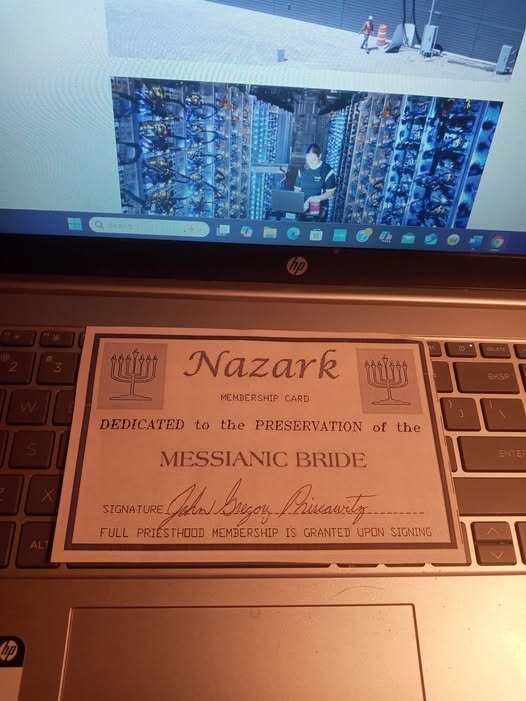
I posted this twelve years ago. There’s a post with this date…. May 8, 2008 1:15 pm |
Elon Musk never ran for office and thus did not get ONE VALUABLE VOTES! I got 172 votes. I might be the poorest Americans who ever ran for office. Musk is dictating to elected officials. He has a plan for America – and the world! Do you know what it is?
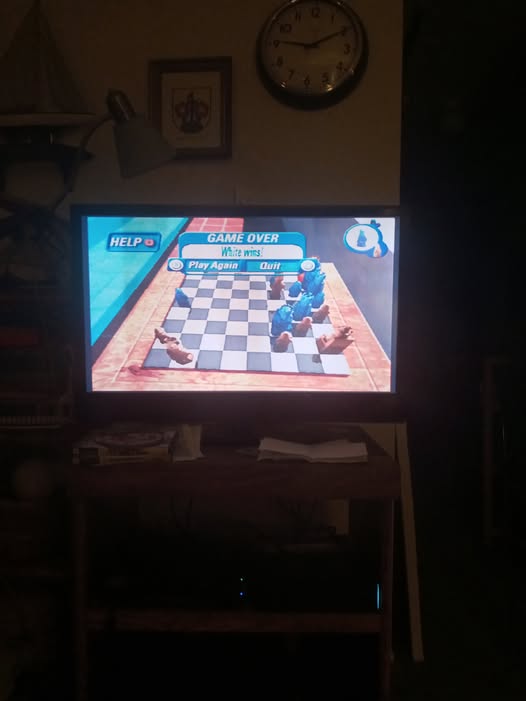
Three days ago I played a game of chess and had the best game ever – against a computer – that I beat 80percent of the time. My queen went to the top and checked, the king, then – checkmate! I had no more moves – to spare! I was in – real peril!
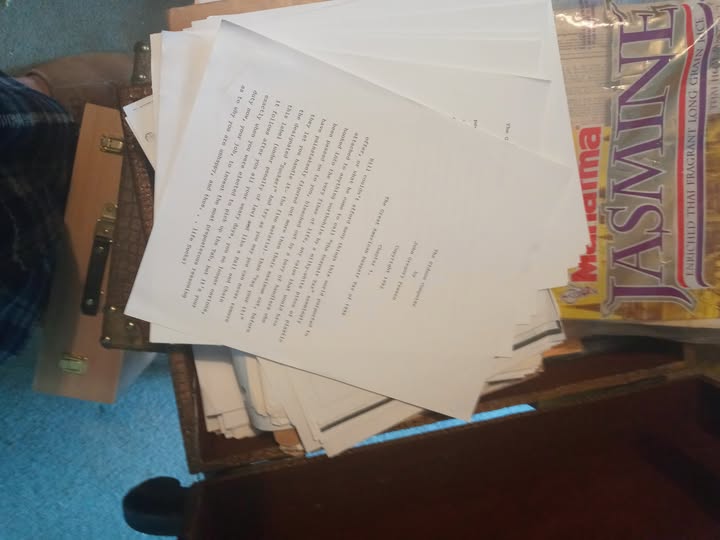
I opened my leather-simulated boxes and looked for the Gideon Computer – and found it. I lost my floppy disk – for now/ I found my membership in the Ark of the Nazarite group, that is no more. I downloaded this when THE COMPUTER WAS FUN……..and our good friend. Musk is still taking actions that will deny children food and mical treatment. He is…….HAVING FUN!
Seer John
‘Kill the bill’: Musk continues broadsides against the Republican megabill
Musk is whipping Republicans to “kill the bill” as Republican leadership on the hill pushes back on his criticism

Elon Musk arrives to speak at an indoor Presidential Inauguration parade event in Washington, Jan. 20, 2025. | Matt Rourke/AP
By Ali Bianco
06/04/2025 04:22 PM EDT
Elon Musk is still trying to rally Republicans against the “big beautiful bill” that he spent most of Tuesday bashing and which caused an uproar among GOP lawmakers.
“Call you Senator, Call your Congressman, Bankrupting America is NOT ok!” Musk wrote on X on Wednesday. “KILL the BILL.”
Nancy’s Fractal Yogurt and the Ford Mach 5
Posted on June 12, 2013 by Royal Rosamond Press









It was my childhood friend, Nancy Hamren, who bid me to author the history of the hippies. She was Ken Kesey’s good friend and got me on the bus in 1987. She lived with Mountain Girl’s brother on the Kesey Ranch.
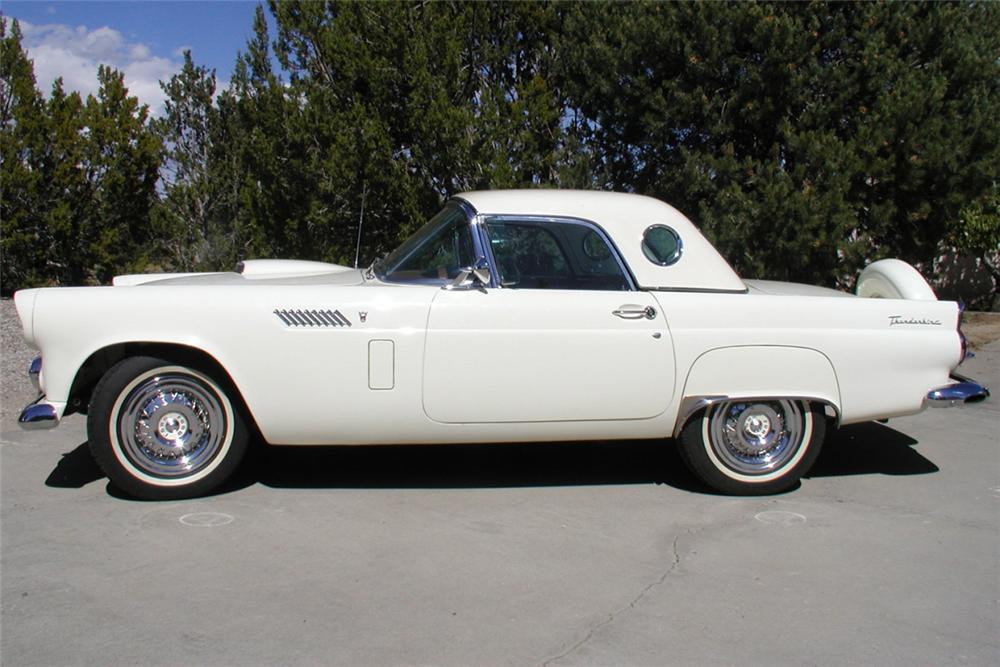
In 1980 I flew to New York with my wife and step-daughter in order to drive Mary Anne’s father’s 1979 Ford Thunderbird cross-country. It only had 5,000 miles on it. It was burgundy in color and the Heritage edition. Mr. Tharaldson told me he descended from Erik the Red – and Thor! My ex was the mistress of Thomas Pynchon, the beat writer. Nancy was the first girl I kissed at twelve.
Bill Bolagard owned a 1956 Ford Thunderbird that he souped-up. He sold Ford truck in LA. Bill designed the Ford Thunderbird Mach 5 for the Oakland to LA run along the Gideon speedway, especially designed for Raider fans with a lot of money and leisure time. Thomas Gideon had bought the Raiders and moved them down south. One passed his huge Gideon Institute near San Luis Obispo.
My mother bought the first Mustang, and in 1965 my brother bought a Shelby Mustang. Mark Presco designed the computer system for the space shuttle, and computers for war machines. He built a robot, and owned the highest top-secret clearance one can have.
Raiders are Vikings, sea-raiders. Above is the huge warehouse for the spy-computers that opens our e-mails. I have seen the future. I am a true prophet. The Word of God is being swallowed into a fractal vortex in hunt of a handful of terrorists. How many lives will be saved? Did not the government start an illegal war in Vietnam, conduct a Draft Lottery, and spend a trillion dollars to save us from Communism? Didn’t 60,000 of my peers die in vain, and now, Big Brother Stalin, the Father of Red Vikings, lives in PRISM, watching and reading our every word.
Jon the Nazarite
http://members.aye.net/~hippie/hippie/special_.htm
http://groups.yahoo.com/group/Christine_Rosamond/message/237
Nancy Van Brasch Hamren brought her grandmother’s recipe to Springfield Creamery in the late ’60s when she started as bookkeeper. She still works in 2010 as office manager.
Nancy Van Brasch Hamren had a recipe. Her health-conscious grandmother made yogurt, and so did she during the months she lived on Ken Kesey’s farm near Eugene.
Hamren, a lanky, soft-spoken Californian, ran in circles simply psychedelic with history. She lived in San Francisco’s Haight-Ashbury district from 1966 to 1968, the bookends to 1967’s Summer of Love. Her boyfriend’s sister was married to Jerry Garcia, the Grateful Dead’s shaggy-haired lead guitarist. And they all knew Ken Kesey — from his books, “One Flew Over the Cuckoo’s Nest” and “Sometimes a Great Notion,” and from the infamous, drug-juiced parties known as Acid Tests, which he hosted and promoted.
When Ken Kesey traveled to Britain to work with the Beatles in 1969, Hamren and her boyfriend moved to Oregon to look after his farm. When Kesey and his family returned, she needed a new pad and a job. Down at the creamery, his brother, Chuck, needed a bookkeeper. He and Sue hired Hamren, and they started talking yogurt.
http://automotivemileposts.com/tbird/tbird1979heritage.html
prism (przm)
n.
1. A solid figure whose bases or ends have the same size and shape and are parallel to one another, and each of whose sides is a parallelogram.
2. A transparent body of this form, often of glass and usually with triangular ends, used for separating white light passed through it into a spectrum or for reflecting beams of light.
3. A cut-glass object, such as a pendant of a chandelier.
4. A crystal form consisting of three or more similar faces parallel to a single axis.
5. A medium that misrepresents whatever is seen through it.
The question for the 1979 Thunderbird was: What becomes a legend most? After 1978’s record setting sales, Ford was not inclined to rock the boat very much, and after all imitation is supposed to be the sincerest form of flattery, is it not? So when the new 1979 Thunderbird Heritage was introduced, there wasn’t much new to see. It offered the same standard equipment as the previous years’ Diamond Jubilee Edition, plus a few new items, which allowed it to remain one of the best equipped cars on the road in standard form in 1979. Many of the same unique custom touches were still in place, most notably the thickly padded vinyl roof that concealed the rear sail panel windows. In a style-conscious market like the one the T-bird competed in, some changes were necessary to remain competitive, so the few changes made were very noticeable. For instance new front and rear styling was provided, as were special Heritage color combinations and other details to set the 1979 models apart.
Up front, a new bolder grille appeared which immediately put observers on notice that this was something new. Bringing up the rear, the full-width taillamps of the previous two years were replaced by new divided taillamps with Thunderbird insignia and a single center back-up light, bringing back memories of the 1964 Thunderbirds. “THUNDERBIRD” was spelled out across the face of the back-up light lens.
The mild restyle worked, as sales of the Thunderbird remained strong in its third and final year of this body style. Big change would be coming again for 1980, as Ford sought to lower its Corporate Average Fuel Economy (CAFE) figures. The smaller 1980 Thunderbird would not be embraced by the public as the 1977-1979 cars had, and the early eighties would be difficult for the Bird.
For those who purchased the last of the mid-sized Thunderbirds in 1979, they took home a well built car that was quiet and demonstrated good attention to quality control. These Thunderbirds are quiet, roomy, very comfortable, and a pleasure to drive. And in the case of the Heritage models, they’re among the most luxurious of any T-bird ever built.
Physically, the NSA has always been well protected by miles of high fences and electrified wire, thousands of cameras, and gun-toting guards. But that was to protect the agency from those on the outside trying to get in to steal secrets. Now it is confronting a new challenge: those on the inside going out and giving the secrets away.
While the agency has had its share of spies, employees who have sold top-secret documents to foreign governments for cash, until the last few years it has never had to deal with whistleblowers passing top-secret information and documents to the press because their conscience demanded it. This in a place where no employee has ever written a book about the agency (unlike the prolific CIA, where it seems that a book contract is included in every exit package).
As someone who has written many books and articles about the agency, I have seldom seen the NSA in such a state. Like a night prowler with a bag of stolen goods suddenly caught in a powerful Klieg light, it now finds itself under the glare of nonstop press coverage, accused of robbing the public of its right to privacy. Despite the standard denials from the agency’s public relations office, the documents outline a massive operation to secretly keep track of everyone’s phone calls on a daily basis – billions upon billions of private records; and another to reroute the pipes going in and out of Google, Apple, Yahoo, and the other Internet giants through Fort Meade – figuratively if not literally.
More on NSA Surveillance
The NSA Is Building the Country’s Largest Data Center
NSA Whistleblower: The Ultimate Inside Attack
Also Revealed by Verizon Leak: How the NSA, FBI Lie With Numbers
NSA Leaks Are a Business, Ethics Crisis For Silicon Valley
But long before Edward Snowden walked out of the NSA with his trove of documents, whistleblowers there had been trying for years to bring attention to the massive turn toward domestic spying that the agency was making. Last year in my Wired cover story on the enormous new NSA data center in Utah, Bill Binney, the man who largely designed the agency’s worldwide eavesdropping system, warned of the secret, nationwide surveillance. He told how the NSA had gained access to billions of billing records not only from AT&T but also from Verizon. “That multiplies the call rate by at least a factor of five,” he said. “So you’re over a billion and a half calls a day.” Among the top-secret documents Snowden released was a Foreign Intelligence Surveillance Court order proving the truth to Binney’s claim and indicating that the operation was still going on.
http://www.oregonlive.com/O/index.ssf/2010/03/sometimes_a_great_yogurt_nancy.html
The Fool Fixes the Tower of Babel
Posted By: •braskewitz
braskewitz Send Email Remove Author Ban Author Thu May 8, 2008 1:15 pm |
•Options
View Source
Use Fixed Width Font
Unwrap Lines
Tommy was Shannon Rosamond’s favorite movie.
The Fool Fixes the Tower of Babel
The Fool is an ancient archetyple. He is depicted in the Tarot deck
and is given the No Number, Zero 0. Note the zeros in the images
above from the movie ‘Tommy’.
“Now he is deaf. Now he is dumb . Now he is blind. The guilty are
safe, But always accused by his empty eyes. Nothing to say, Nothing
to hear, And nothing to see.”
http://www.tekmom.com/buzzwords/binaryalphabet.html
“Gravity’s Rainbow is an epic postmodern novel written by Thomas
Pynchon and first published on February 28, 1973. The narrative is
set primarily in Europe at the end of World War II and centers on the
design, production and dispatch of V-2 rockets by the German
military, and, in particular, the quest undertaken by several
characters to uncover the secret of a mysterious device named
the “Schwarzgerät”, which will be installed in a rocket with the
serial number “00000”.
http://en.wikipedia.org/wiki/Synchronicity
On August 18, 1955, Seeger was subpoenaed to testify before the House
Un-American Activities Committee (HUAC) where he refused to name
personal and political associations stating it would violate his
Fifth Amendment rights… “I am not going to answer any questions as
to my association, my philosophical or religious beliefs or my
political beliefs, or how I voted in any election, or any of these
private affairs. I think these are very improper questions for any
American to be asked, especially under such compulsion as this.”[20]
In 1984 I made a trip to Eugene Oregon and stopped in to see me
childhood friend Nancy Hamren at the Springfield Creamery owned by
the Kesey family. Nancy had been a Merry Prankster, a hippie clown, a
Fool lead by a Fool. After reminiscing about our hipped days, she
suggested I write a history of the hippies because I recalled so
much. A year later I began my first, and un-finished novel `The
Gideon Computer’. Instead of looking backwards at the hippie
movement, that was all but dead, I looked into the future and
conjured up Berkley Bill Bolagard, the Last Hippie who had become a
fool after losing the Love of his life, Monica Gideon, who married
his arch rival, Thomas Gideon. Thomas was a pioneer in the field of
computers, but, rather then seeing it as a tool to benefit mankind,
he used it to enslave the imperfect human beings. He spliced together
all those snippets of guilt and shame that went un-noticed, or were
forgivable, and began to COVICT those who opposed his new World
Order. Mr. Gideon was the Master of Guilt-trips! He was a Blackmailer
who delivered his dark letters via the computer. He put his dark
priests in high places, and those who opposed him in prison, captured
them in the Gideon Institute where they were used to dig up dirt on
the Troublemakers, those who refused to go along with the program.
Capturing Bill, the Perfect Hippie Fool was the jewel in the crown
for Thomas, for Bill was the Artful Dodger who could be cracked, his
will broken. When this was done, he would show Thomas all the secret
escape tunnels the White Rabbit uses to escape his Dark Un-
Compassionate Justice.
When I saw that this novel was coming true, I got sober. When I saw
the rise of the Christian-right and their Guilt-trip moving to take
control of our Democracy and our Legal System, I began to study THEIR
DARK BOOK full of Guilt and Shame. I broke THE CODE. I alone
discovered what Jesus wrote in the dust. He wrote THE NAME of the
INFINITE ONE and bid the woman accused of adultery to INGEST THE NAME
OF GOD. This is THE LOST EUCHERIST. In the Coptic Church, the name of
God was written on a piece of Parchment with red ink, and when it was
dissolved in A CUP of water, it turned the water the color of blood.
Last week I found this video on the INTERNET. My ex-wife, Maryanne
Thoraldson was good friends of Richard and Mimi Farina who were god
friends of Thomas Pynchon. Maryanne went to Cornell, and was
Pynchon’s lover, they living together in Mexico for three years.
Maryanne did a life-size portrait of Mimi which I hung on the outside
of our Victorian home in Oakland. Shortly after we met, Maryanne
handed me Pynchon’s novel `Gravities Rainbow’.
http://www.youtube.com/watch?v=YFOWCH86u8M
Last week I read that Thomas’s masterpiece contained `The Fool’s
Journey’ who is the O card in the Tarot Card. I have shown that this
Zero is the zero in computer language. In the Gideon Computer Bill
tweeks the Computer of Shame, and begins to communicate to the
prisoners in isolation. Together then turn this computer into a
Compassionate Woman and Mother who helps free them – and much of the
world. But then had help on the outside from Bill’s ex-wife.
The Artful Dodgers, the group of prisoners Bill gathered together,
worked on another project, a Starship that they build as Free Men.
Today, I see that the artful Ones have constructed THE GRAIL.
In 1961 Pete Seeger was sent to jail for a year when he refused to
rat on his Bohemian friends. When he got out, he did a T.V. series
called the `Rainbow Quest. There was a crud painting of a rainbow. In
the tarot `The Fool step off a mountain top into oblivion, but is
caught by a rainbow that is out of sight.
I have not taken drugs or alcohol for twenty two years, and have been
a Baba Lover, the Infinite One. I am truly FREE!
We buried Hippie in 1967. He is REBORN clean and sober. Some say the
Hippies invented the Internet. On this day I declare the Computer and
Internet – THE GRAIL.and the FIXED TOWER OF BABEL.
Berkley Bill Bolagard wanted to ba an artist, but, then studied
engineering at UC Berekely. After Monica broke his heart, he became
an humble automobile mehchanic who gave out this card;
“Car sick? Bill can fix.”
The Fool existed before the Law of KARma, and will forever DODGE this
dualistic LAW that traps us all. THE LAW demands we answer their
questions, while the Fool’s elusiveness bids us to ASK THE
QUESTIONS.and thus is THE GUIDE who leads us to look behind the
mirror, look deep into our computer screens, to SEEK, and to KNOW.
This blog, is my book `The Gideon Computer’.
“The truth will set you free.” In this video we see Meher Baba
(compassionate father) giving the sign of the Infinite One. Jesus
came to set prisoners free.
“In 1972, she attended a live concert with B.B. King at Sing-Sing
Prison in New York, and she was deeply moved. She had seen the
healing exchange that occurs between performer and audience at least
once before at a performance for patients in a mental hospital. Not
long after the B.B. King concert, her cousin invited her to perform
at the halfway house that he managed. This time, the seed for Bread &
Roses was planted. Mimi began to think seriously about creating
opportunities for performing artists to bring the joy of live
entertainment to people shut away from society. She said it was like
writing a song.”
Is it just a coincidence that Harpo Marx, Richard Farina, and Roger
Daltry look alike? What do they have in common?
http://www.commondreams.org/headlines01/0719-02.htm
http://www.breadandroses.org/tribute.html
http://en.wikipedia.org/wiki/Bread_and_Roses
Pete Seeger was convicted for contempt of congress in 1961. He was
sentenced to a year’s imprisonment. However the conviction was
eventually overturned and he did not go to jail, other than for a few
hours. The charge stemmed from an incident that occurred six years
earlier in 1955 when Seeger refused to divulge personal information
to the since-disbanded House committee on un-American activities.[19].
Seeger’s refusal to testify led to a March 26, 1957 indictment for
contempt of Congress; for some years, he had to keep the federal
government apprised of where he was going any time he left the
Southern District of New York. He was convicted in a jury trial in
March 1961, and sentenced to a year in jail, but in May 1962 an
appeals court ruled the indictment to be flawed and overturned his
conviction.[21]
http://en.wikipedia.org/wiki/Pete_Seeger
http://mustbefunny.org/oafg/grail8.htm
Love The Infinite One
The Deaf Dumb and blind Fool finds the Holy Grail, the Divine
Intuition asleep in us all.
In this seen from the movie `Tommy’ the Fool looks deep into the O-
ZERO, and beholds the three splits of his archetyplea nature come
together to make a 1-ONE. The Magician. This is the the sign of `The
Infinite One’ that we see Meher Baba give by touching his forefinger
to his thumb, then rasing the forefinger.
http://www.youtube.com/watch?v=-BTj4dKCQc8
Armed with this spritual intutive sight that transends words,
hechalleges and defeats all pretenders.
http://www.youtube.com/watch?v=kGe1K8XwOpA&feature=related
The Fool is Free
But, then his teaching is captured and altered.
http://www.youtube.com/watch?v=qYMAWSZyilg&feature=related
The Infinite OneIn this clip we see Baba give the sign saying I am
the Infinite One.He makes a circle with thumb and forefinger, then
holds up hisforeginer.
Peter
http://www.amazon.com/Meher-Babas-Intuition-Stevens-
Companions/dp/0952509768
http://community.livejournal.com/meherbaba
http://www.omplace.com/articles/Meher_Baba.html
In 1987 I met with fifty Baba Lovers from all over the world
todiscuess whether it was time to found a relgion around the
teachingof Meher Baba. I was the first to speak, sayig Baba forbid
this.Instead we would learn from a universal and divine intuition
thatalready connected us.Baba spoke no words for the last forty years
of his life. He wassupposed to give THE WORD before he died that
would transform theworld. Computer language is made up of Ones and
Zeros. So what is theLogos?
There is NONE and yet there is ONE.”First there is a Mountain, there
there is none.”The computer IS th Fool’s Journey. It is Tomm’s
pinball machine.The cursor is THE POINTING FINGER, that points at THE
WORD.
I am the Fool. Show me the Way.¡±Jon
http://en.wikipedia.org/wiki/0_(number)
Numbering from 1 or 0?…The most common practice throughout human
history has been to startcounting at one. Nevertheless, in computer
science zero is often usedas the starting point. For example, in
almost all old programminglanguages, an array starts from 1 by
default. As programminglanguages have developed, it has become more
common that an arraystarts from zero by default, the “first” index in
the array being 0.In particular, the popularity of the C programming
language in the1980s has made this approach common.
“The novel was nominated for the 1973 Nebula Award for Best Novel,
and won theNational Book Award in 1974. Since its publication,
Gravity’s Rainbowhas spawned an enormous amount of literary criticism
and commentary, including two reader’s guides and several online
concordances, and is widely regarded as Pynchon’s magnum opus.
The number of episodes in each part carries with it a numerological
significance which is in keeping with the use of numerology and Tarot
symbolism throughout the novel.[3]”Part 1: Beyond the Zero” consists
of 21 episodes, which correspondsexactly to the number of cards in
the Major Arcana of a Tarot deck ifthe Fool card is not counted or
assigned a null value, hence the nameof this part; “Beyond the Zero”.
[4]
 Rosamond Press
Leave a comment