Where Art Thou – Right To Vote?
Right-wing Christians are for Right To Life, and, Promote Being Married. Most members of the Prosperity Gospel, vote for Trump. How about people who claim they are Knights Templar?
On this day, September 2, 2026, I John Presco complete the instructions of my angel, by highly suggesting the following transformation of the Church of Later Day Saints.
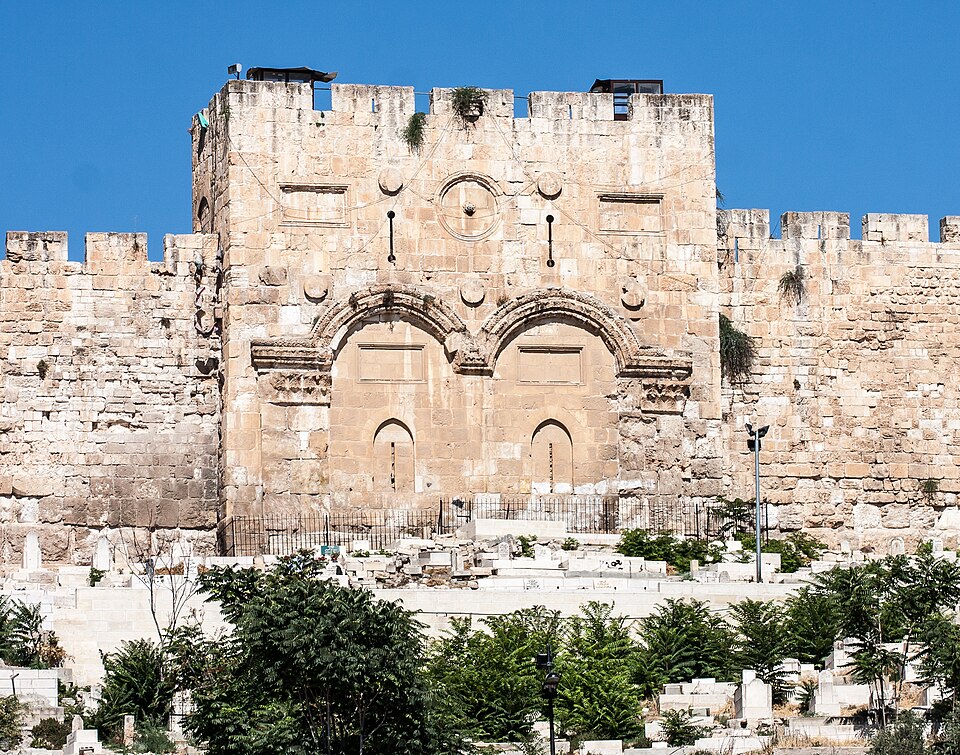
- Unseal the Golden Gate by putting an image of the Eastern Gate at the entrance of every Temple.
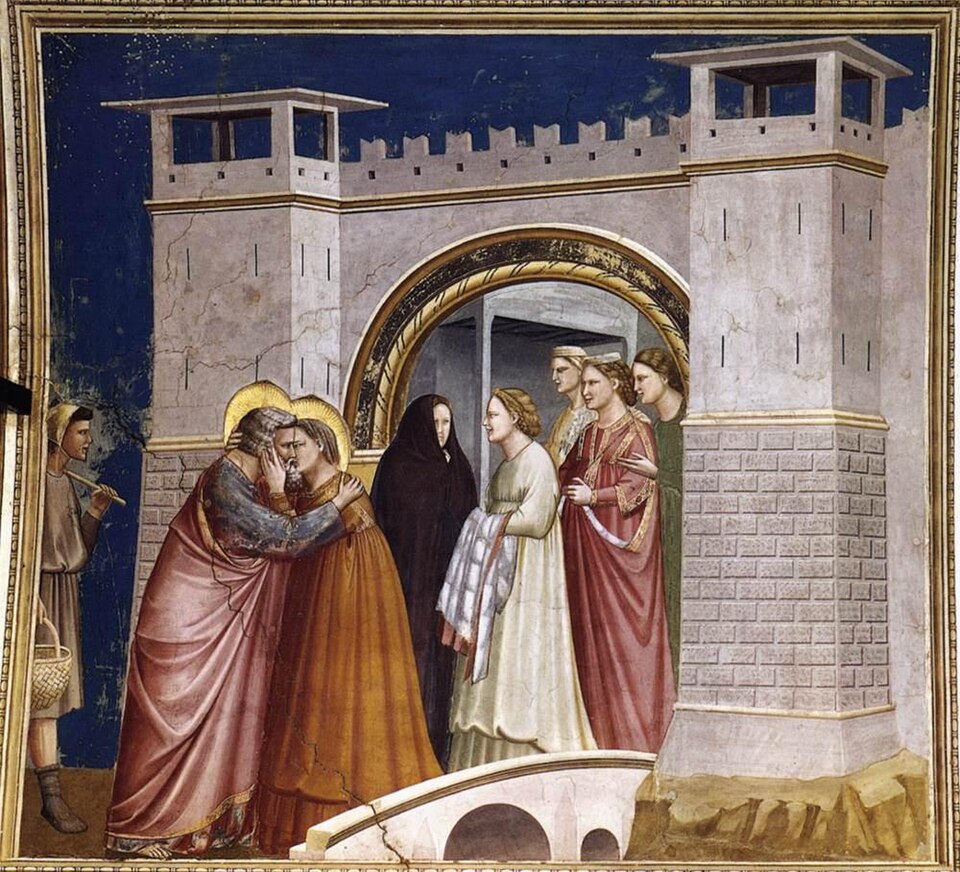
- Render an image of Joachim and Ann and before this gate.
- Adopt the teaching of the Nazarite Women.
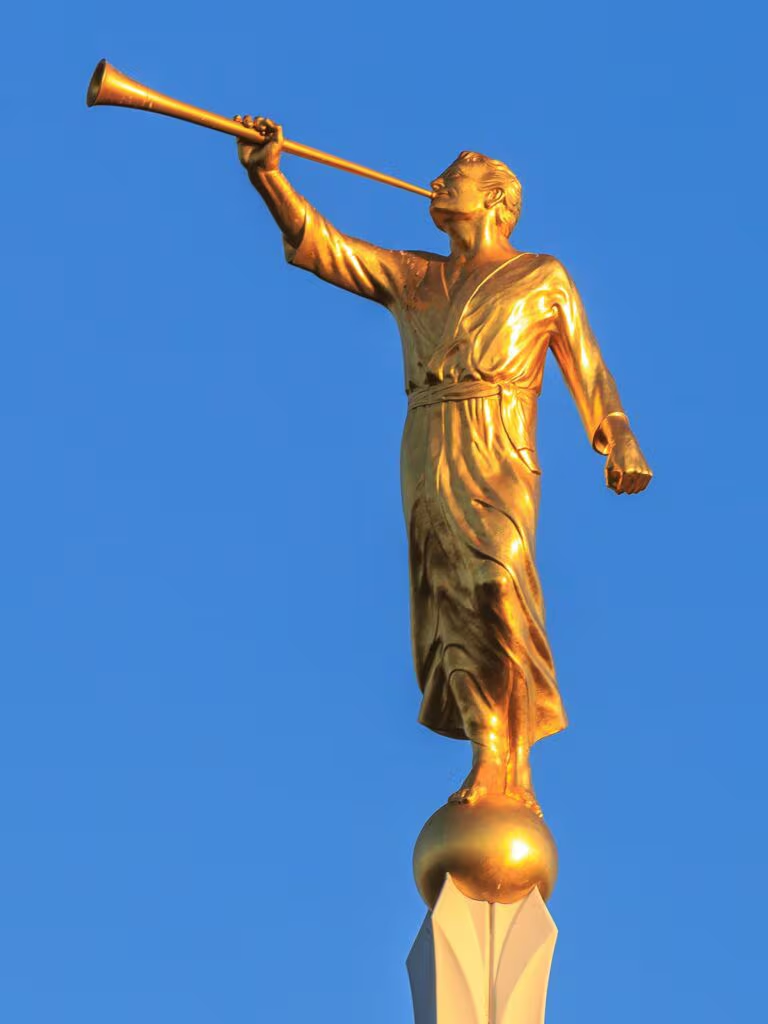
- Put a statue of Columbia ‘Rose of the World’ atop each temple.
- Establish a Religious American Post Office and encourage more votes.
- Everyone who gets baptized will be given a right to vote.
- Everyone who get’s baptized will be connected to Mary’s mother, who could not conceive, like John and Samson’s mother.
- Getting married and voting will go hand in hand. Design two certificates.
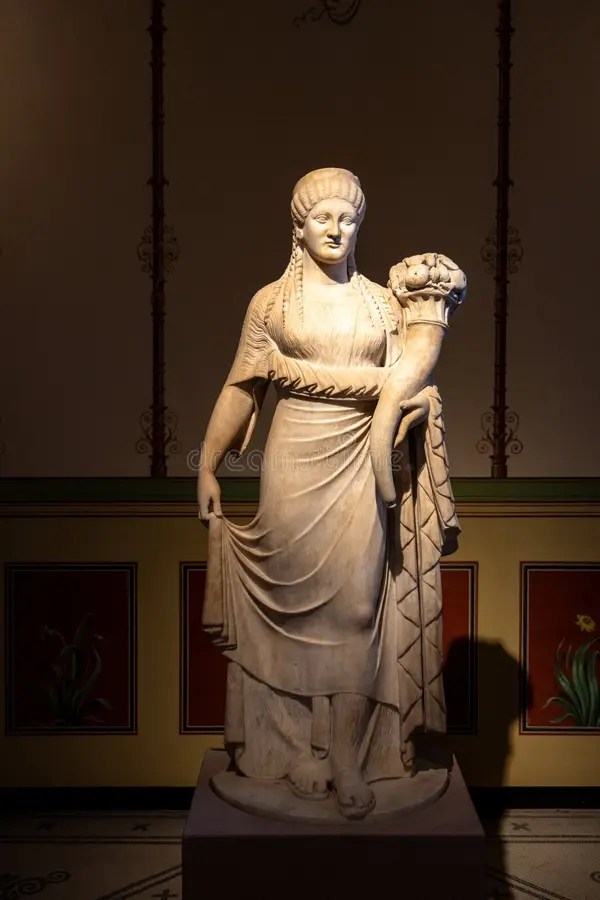
- Give an option for members to see Maroni as Amalthea, who was Job’s daughter. Jesus came to America not to perpetually suffer on the cross, or suffer the woes of Job, but bring prosperity and goodwill to his followers in the New Land of Milk and Honey.
John ‘The Nazarite’
The Septuagint (dated to around the 2nd century BC) version of the Book of Job gives the name of the youngest daughter of Job, Keren-happuch, as Amaltheías Kéras (Ἀμαλθείας Κέρας, ‘horn of Amalthea’), a name the Roman author Pliny the Elder explicitly identifies with the cornucopia.[5] In the 4th century AD, the Christian bishop Gregory of Nyssa writes that the text’s usage of this term should not be taken as reason to believe in the mythical Greek tale of Amalthea, but that it is the text’s way of emphasising the virtuous character and beautiful appearance of Job’s daughter.[6]
“Tradition has it that Saint Ann and Saint Joachim were married for 20 years, but didn’t have any children. They prayed to God for a child and promised that if God granted their wish, they would dedicate this child to God.
According to age old traditions, while Saint Joachim was living with shepherds, an angel came to him and promised, “Your wife will bear a daughter and you will call her Mary. She will be filled with the Holy Spirit from her mother’s womb.” An angel also appeared to Saint Ann at the same time and related the same happy news to her.
Good Saint Ann is the mother of the Blessed Virgin Mary, who became the mother of Jesus and of the whole church. Saint Ann and Saint Joachim lived their lives with great trust in God. After the death of Saint Joachim, Saint Ann was a source of love and strength for her daughter Mary, and her beloved grandson Jesus — our Lord and Savior.
Saint Ann and Saint Joachim’s trust in God gave them the strength and perseverance necessary to be model parents and grandparents. Their lives are an example for all of us.
The feast day of Saint Ann and Saint Joachim is July 26. It has been traditionally held that Saint Ann is the patron saint of pregnant women, mothers, grandmothers, and housewives; and Saint Joachim is the patron saint of fathers and grandfathers.
Closed by the Muslims in 810[citation needed], reopened in 1102 by the Crusaders, it was walled up by Saladin after regaining Jerusalem in 1187. Ottoman Sultan Suleiman the Magnificent rebuilt it together with the city walls, but walled it up in 1541 most likely for purely defensive reasons, and it stayed that way.[18]
Access to the Golden Gate from within the Temple Mount was sealed off by Israeli authorities in 2003 because the group managing the area had ties to Hamas. The gate was kept closed in order to stop construction work there by the Islamic Waqf.[23] Israeli officials believe the work led to the destruction of antiquities from periods of Jewish presence in the area.[24]
In February 2019, the interior of the gate was reopened for Muslim worshippers from the Temple Mount. However, the gate itself still remains sealed.[25]
It is also said that Jesus, riding on a donkey, passed through this gate on Palm Sunday, in fulfillment of the Jewish prophecy concerning the Messiah (Ezekiel 44:1-3). The Synoptic Gospels appear to support this belief by indicating Jesus came down from the direction of the Mount of Olives and immediately arrived at the Temple Mount (Mark 11:1, 11:11). The Gospel of John alternatively suggests the Pharisees were watching the arrival, possibly from the Temple Mount.[1] Those who believe the “Golden Gate” to be a fulfillment of a prophecy in the book of Ezekiel (44:1-3) spiritualize these words (i.e., using Typical, Figurative or Allegorical interpretation).
The Golden Gate is a rectangular stonework structure with two decorated facades. Unlike other gates in al-Aqsa enclave, the eastern façade was not built level with the wall of the enclave, but projects two meters out from the wall.
The Golden Gate has two passages. The two bays are reflected in its plan and main elevations; two doorways are followed by a double passage covered by three pairs of domes. On the ground floor level a vaulted hall is divided by four columns into two aisles, which lead to the Door of Mercy, Bab al-Rahma, and the Door of Repentance, Bab al-Taubah; an upper floor room has the two roof domes as its ceiling.[15]
Originally, the eastern facade of the Golden Gate had two large doorways, separated by a column. Each doorway measures 3.90 metres (12.8 ft) in width, supporting a semicircular arch with a decorated frieze. The doorways in the eastern facade were blocked up in the Ottoman period. It is noticed that some features in the decoration of the Golden Gate bear a close resemblance to the decoration in other non-Muslim buildings that existed in the Levant.
The openings of the Golden Gate lead to a rectangular domed vestibule, measuring 20.37 metres (66.8 ft) in length and 10.50 metres (34.4 ft) in width (interior wall measurements). At that time, the hall consisted of six shallow domes, which have elliptical shape, two of which were changed later. These domes are separated by arches of an elliptical shape springing from two pilasters at the entrances and two central columns. Each dome in the Golden Gate is constructed over a square plan, so special stones are required to form the successive stone circles that form the dome. Architecturally, the spatial treatment of the gate is somewhat interesting; shifting the facade 2 m (6 ft 7 in) out of the wall indicates a clear definition of its location. The most important question concerning this gate is the matter of motive.[1]
Symbolism
According to Jewish tradition, the Shekhinah (שכינה) (Divine Presence) used to appear through the eastern Gate, and will appear again when the Messiah comes (Ezekiel 44:1–3) and a new gate replaces the present one; that might be why Jews used to pray in medieval times for mercy at the former gate at this location,[26] another possible reason being that in the Crusader period, when this habit was first documented, they were not allowed into the city where the Western Wall is located. Hence the name “Gate of Mercy”.
In Christian apocryphal texts, the gate was the scene of the meeting between the parents of Mary, so that the gate became the symbol of the Immaculate Conception of Mary[1] and Joachim and Anne Meeting at the Golden Gate became a standard subject in cycles depicting the Life of the Virgin. Some equate it with the Beautiful Gate mentioned in Acts 3;[27][28] though many others would disagree with that identification.[29][30] It appears the basis for equating the Golden Gate with the Beautiful Gate in Acts “is a result of the confusion between the Latin aurea (golden) with the Greek horaios (beautiful).”[31] However, this is only a supposition; there is no evidence for this, which some scholars are careful to point out. For example, Denys Pringle stated, “however, by a confusion that may have had something to do with the similarity between the Greek ὡραία and the Latin ”aurea”, from the seventh century onwards it was more usually identified in Latin sources as the Golden Gate.”[32]
It is also said that Jesus, riding on a donkey, passed through this gate on Palm Sunday, in fulfillment of the Jewish prophecy concerning the Messiah (Ezekiel 44:1-3). The Synoptic Gospels appear to support this belief by indicating Jesus came down from the direction of the Mount of Olives and immediately arrived at the Temple Mount (Mark 11:1, 11:11). The Gospel of John alternatively suggests the Pharisees were watching the arrival, possibly from the Temple Mount.[1] Those who believe the “Golden Gate” to be a fulfillment of a prophecy in the book of Ezekiel (44:1-3) spiritualize these words (i.e., using Typical, Figurative or Allegorical interpretation).
.jpg)
However, Biblical scholars using the Historical-Grammatical method of interpretation (basically, reading a book for the meaning its author intended) point out that the context of chapters 40-46 do not refer to either a city gate during the time of Jesus nor one today, but rather to a temple gate in which “the glory of the LORD filled the temple (43:5 RSV)” and “will dwell in the midst of the people of Israel for ever (43:7 RSV)”.[33][34] Thus, as Dyer points out, some interpret chapters 40 ff. of Ezekiel as “prophesying about the church in a figurative sense; he did not have a literal temple in mind.” Whereas others see these passages as referring to a “still-future literal temple.”[35]
Since the early times of Muslim rule over the holy region Bayt al-Maqdis, some Muslims, such as ‘Ubadah ibn al-Samit, linked the eastern wall of the enclave with the Last Day. According to Ibn Kathir, this wall is not the wall mentioned in the Quranic verse “so a wall will be put up betwixt them, with a gate therein” [57:13], but it was mentioned by some commentators as an example for the clarification of the meaning of the verse. Since that time, this example probably encouraged Muslims to bury their dead immediately outside the eastern wall of the al-Aqsa enclave. In any case, if the name “al-Rahmah” (Mercy) truly exists since the construction of the gate, this suggests that the gate is part of an overall concept based on the idea related to the place, specifically the Rock, as that of the Last Day. Then it can be argued that Bab al-Rahmah symbolises a gate in paradise or an entry to Mercy.[36] Whatever the construction motive of Bab al-Rahmah might have been, it was built during the early Islamic period, and it is the most significant gate of the enclave.[37]
In Christian culture

Honoring the Jewish tradition (see above) and inspired by apocryphal accounts of the life of the Virgin Mary, medieval Christian artists depicted the relationship of Jesus’s maternal grandparents Joachim and Anne Meeting at the Golden Gate. The couple came to represent the Christian ideal of chastity in conjugal relations within marriage. The pious custom of a bridegroom carrying his bride across the threshold of their marital home may be based in the traditional symbolism of the Golden Gate to the faithful. In medieval art, the doctrine of the Immaculate Conception of the mother of Christ was commonly depicted in images of the Virgin and Child with Saint Anne (in Italian the Metterza), the three generations of grandmother, mother, and son.
The metaphor also features heavily in the personalist phenomenology of Pope John Paul II, his Theology of the Body, a collection of reflections on this theme Crossing the Threshold of Hope were written to encourage the Catholic faithful facing the challenges of materialism and increasing secularism and published on the cusp of the new millennium in 1998. The threshold between the earthly and heavenly realms symbolized by the Golden Gate represents the Mystical Body of the Church, often viewed as the Bride of Christ.
In Christian eschatology, sunrise in the east symbolizes both Christ’s resurrection at dawn on Easter Sunday and the direction of his Second Coming. Sanctuaries for Christian congregational worship at an altar are often arranged with respect to the east. City gates in Christian urban centers often contain religious artifacts intended to guard the city from attacks and to bless travelers. The Ostra Brama in Vilnius, Lithuania contains an icon of Our Lady of the Gate of Dawn, which is venerated by both Catholic and Orthodox inhabitants.
Topography east of the Old City
The Golden Gate is one of the few sealed gates in Jerusalem’s Old City Walls, along with the Huldah Gates, and a small Biblical and Crusader-era postern located several stories above ground on the southern side of the eastern wall.
 Rosamond Press

Leave a comment