Capturing Beauty
William Rozier called me “couzin” on several occasions. I asked him to show me how we are related. I’m still waiting. I will show you how Bill connects himself to Thidbault de Rougemont, Knight Templars, and Royal Folks. Bill is Neo-Confederate. Many of them are interested in doing family trees. This is a coup for Bill. No one reads his trees – but me! He knows this, This is wy he captured the Rougemont name, and planted my flag on….
REBEL HILL…….YEEEEEEHAW!
“I created this group in order to make public Bill Roziers claims he has Grand Masters of the Knight Templars in his family tree – as well as Thidbault de Rougemont.”
I almost posted on my kin, John Fremont, yesterday as I watched black folks march for Voting Rights. Today I found the key to the American Revolution!
About an hour ago, I discovered HENRY ROZIER!
Eureka! I found….The Missing Link! I now know why George Washington began a Revolution against British Royalty. They would not allow his Mississippi Land Company. Henry was a investor. He too wanted forts to be built to drive out the Native Americans. Did he own slaves – also? Did Henry ever consider allowing blacks and Indians – to vote?
” As the Company’s efforts to obtain a land grant paralleled the Imperial Crisis in North America, the Crown never made their requested grant, and by the 1770s the entire effort contributed to Washington’s growing hostility to the British government. “
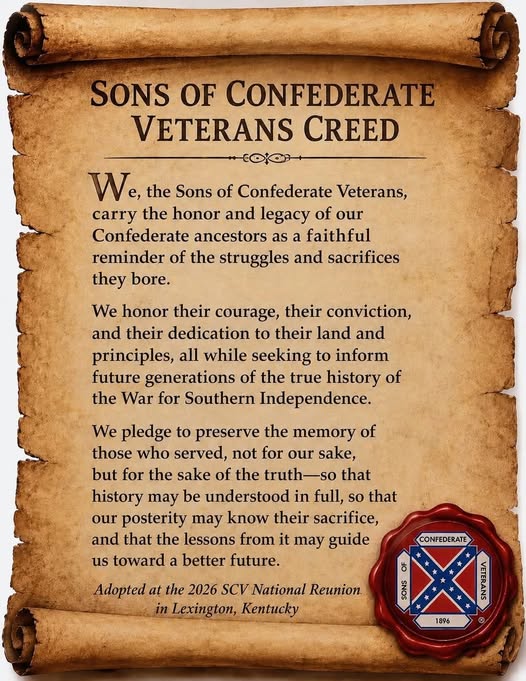
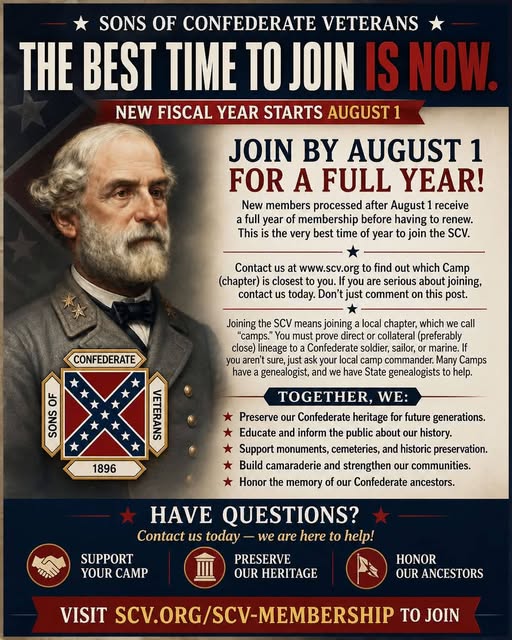
I have asked Bill Rozier to show me the Rozier Patriot in his tree. Now I want to see the Confederate Soldier. Two days ago, Bill put up a ad for the Sons of Confederate Veterans – that his father once belonged to. Why did he quit?
You know what? Who gives a F—–F—-! In comparison to the Artitocratic Roziers, Bill is……
TRAILOR TRASH!
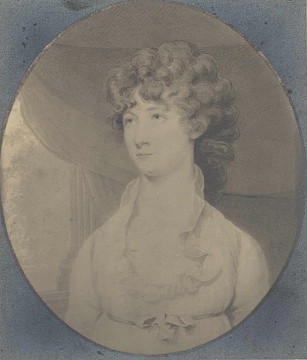
I am now launching a search for the beautiful Eleanor Rozier who was….THE CONSORT OF…….Matthew Tilghman! WTF? I have hit paydirt! I uncovered….REAL ROZIER HISTORY! There is no need to converse with Bill Rozier – who missed Henry Rozier! So busy was he…sniping at me! Henry Rozier, the Lees, and Washington…HATED BRITISH ARTISTOCRACY…that Bill Rozier claims owns their DNA. Does Bill and his ilk want to bring back slavery?
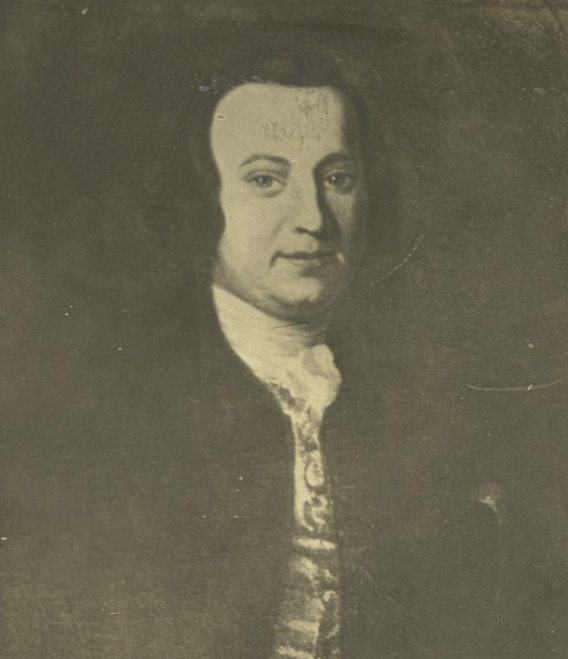
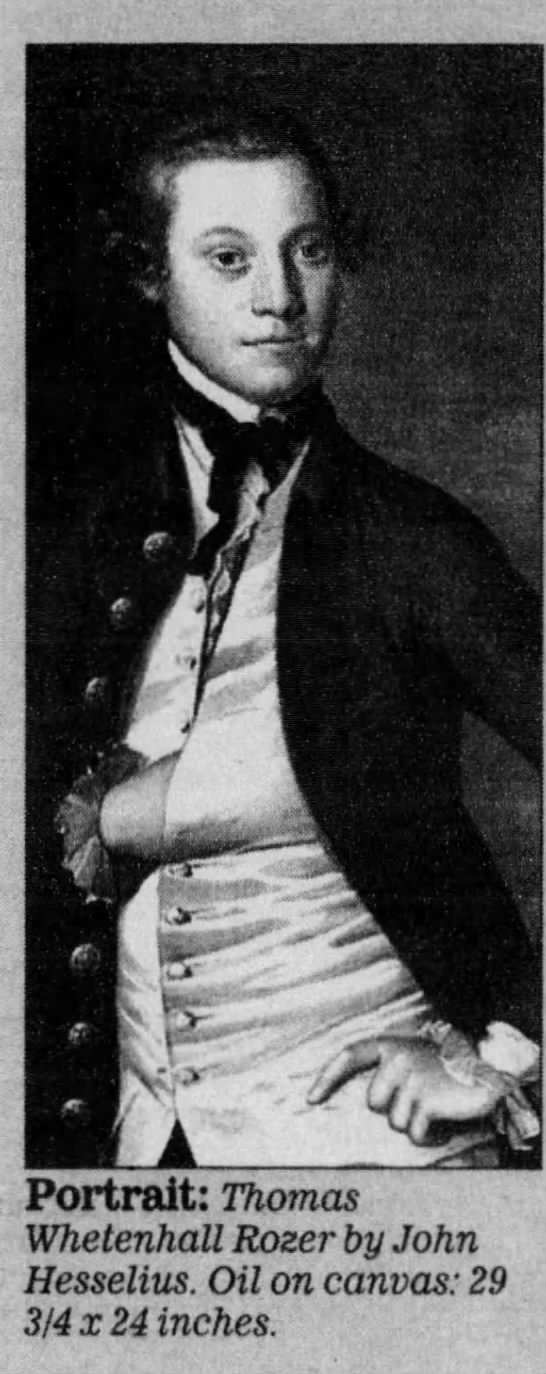
Look Bill! MY ROZIERS got their own portrait artist! Who does your AI?
I laugh in your FACE! I OWN THE ROZIER GENEALOGICAL STUDY!
John Presco
President: Royal Rosamond Press
Matthew Tilghman
Tilghman’s son Lloyd built his own home on Sherwood’s Neck, known as Sherwood Manor.[1] Sherwood Manor was added to the National Register of Historic Places in 1977.[2][3] Both Rich Neck Manor and Sherwood Manor are private property.
The Indian Citizenship Act of 1924 ensured all Native Americans born within the United States citizenship. However, the Act did not automatically enforce the right to vote. While the Fifteenth Amendment declared that a citizen’s right to vote could not be denied on account of race, many states were able to find other reasons to deny Native peoples the vote—residing on a reservation, tribal enrollment, taxation, and incompetency were all used as reasons for denying Native citizens in some states the right to vote. One outcome being that, thousands of Native veterans, including American Indian Code Talkers returning from World War II, found themselves prohibited from participating in basic civil liberties in the nation that they fought to protect.
He was the son of John Bardolf, 3rd Baron Bardolf and Elizabeth Damory, suo jure 2nd Baroness Damory.[1] His maternal grandparents were Sir Roger Damory, Lord Damory and Lady Elizabeth de Clare, a granddaughter of King Edward I.[1] In 1372, Bardolf had livery of his lands from the Crown.[2]
Mississippi Land Company
Washington Library Center for Digital History Digital Encyclopedia Mississippi Land Company
Founded in 1763 to expedite settlement in the Ohio River Valley and along the Mississippi, the Mississippi Land Company was George Washington‘s most ambitious speculation in western land prior to the Revolutionary War. Washington’s investment in the company was part of his larger interest in western lands as a source of wealth for not only himself but for Great Britain and later the United States as well. Although ultimately unsuccessful in receiving a land grant, the company was structured to cover the costs of acquiring and surveying a large tract of land before leasing or selling portions to individual settlers at a profit to the shareholders.
The Mississippi Land Company was to be composed of fifty shareholders and at its creation included nineteen prominent residents of Virginia and Maryland including Washington, his brother John Augustine, and members of the Lee family. While the remaining shares were available to other colonial men of wealth, the company reserved nine shares specifically for investors in London.1 Members of the company argued that their ownership of the land would prevent the encroachment of poor squatters and instead transform the granted land into a profitable agricultural colony of Great Britain.
The company’s existence following the Proclamation of 1763 was also indicative of Washington and other’s outlook on the Native Americans who continued to reside on western lands. Washington viewed Native American habitation in the Mississippi River Valley as an intermediate stage before English colonists populated the North American interior, despite being in the control of various nations from decades to centuries. To Washington, the Proclamation was to “quiet the minds of the Indians & must fall of course in a few years.”2
The company desired a land grant of 2.5 million acres from the King and was to handle joint expenses while each shareholder would own their 50,000 acres individually. In addition to the land itself, Washington and other shareholders sought to hold the grant for at least twelve years tax-free in exchange for settling at least 200 families upon it. The Company drafted their first memorial to the King on September 9, 1763, one month before the Proclamation forbid western settlement. Recognizing the presence of Native Americans in the region, the Company suggested the Crown construct two forts on the Ohio and Mississippi Rivers, making the settlement “much too powerful to be prevented in their progress.”3 Despite their arguments, the company was unsuccessful.
When the Marquis of Rockingham instituted a prime ministry friendlier to colonial interests in 1765, the Company again sought their land grant but was foiled by his dismissal in 1766. With the death of Charles Townshend in 1767, and another shift in ministries in 1768, the company tried again. They submitted a new request in December of 1768, this time shifting the boundaries further north into the Illinois Country and dropping the construction of the suggested forts.4 As the Company’s efforts to obtain a land grant paralleled the Imperial Crisis in North America, the Crown never made their requested grant, and by the 1770s the entire effort contributed to Washington’s growing hostility to the British government.
Patrick Allan Pospisek Purdue University
Notes:
1. “Mississippi Land Company Articles of Agreement, 3 June 1763,” Founders Online, National Archives.
2. “George Washington to William Crawford, 21 September 1767,” The Papers of George Washington: Colonial Series Vol. 8., ed. W.W. Abbot and Dorothy Twohig (Charlottesville, VA: University of Virginia Press, 1993), 28.
3. “Mississippi Land Company’s Memorial to the King, 9 September 1763,” Founders Online, National Archives.
4. “Mississippi Land Company’s Petition to the King, December 1768,” Founders Online, National Archives.
Knights of Rougemont ·Follow
O.A.K. – The Order of American Knights originated in 1863 as a reorganization of the pro-Southern Knights of the Golden Circle. Operating during the American Civil War, this secret society aimed to unite anti-war Democrats, oppose the Lincoln administration, and assist the Confederacy from within Union states.Evolution and ReorganizationInitial Roots: Founded originally in 1854 as the Knights of the Golden Circle by George W. L. Bickley, the group initially sought to create a slaveholding empire spanning the American South, Mexico, and the Caribbean.Civil War Shift: As the war progressed and the original organization faced scrutiny and suppression, Northern and Midwestern sympathizers (known as Copperheads) restructured the underground network.
See less
He was educated in Europe and on returning to America founded the Mississippi Land Company along with Benedict Calvert, William and Robert Brent, the Lees and FitzHughs of Virginia, and the Carrolls of Maryland. The purpose was to develop territory in Indiana, Kentucky and Illinois. He married Eleanor Neale and had four children: Notley, Henry, Edward, and Thomas.
John Hesselius (1728 – April 9, 1778) was an American portrait painter who worked mostly in Virginia and Maryland. He was the son of the Swedish-born portraitist Gustavus Hesselius. He painted the portraits of many wealthy politicians and planters in Colonial Maryland, making him a successful and wealthy individual; at his death in 1778 he left a substantial estate of land and slaves.
·
William X (c. 1099 – 9 April 1137), called “the Saint,” was Duke of Aquitaine, Duke of Gascony, and Count of Poitou, and father of Eleanor of Aquitaine – my 25th great grandfather!
William Houston Rozier → William Earl Rozier (your father) → William Earl Rozier Sr (his father) → John P Rozier (his father) → Earl Leonidas/Lalenstand Rozier (his father) → Wiley Milbey Rozier (his father) → Reuben Robert Rozier (his father) → Reuben Rozier, Sr. (his father) → David Rozier, Jr. (his father) → Sarah Rozier (his mother) → Phillip Sherwood (her father) → Francis Sherwood (his father) → Mary Sherwood (his mother) → Frances Hobert (her mother) → Sir William Drury, MP (her father) → Lady Anne Stapleton Drury (his mother) → Lady Elizabeth Stapleton (her mother) → Sir Miles Stapleton, IV, Lord of Ingham and Bedale (her father) → Cecily Stapleton (his mother) → William Bardolf, 4th Baron Bardolph (her father) → Elizabeth d’Amory, Baroness Bardolf (his mother) → Elizabeth de Clare, 11th Lady of Clare (her mother) → Joan of Acre (her mother) → Edward I “Longshanks”, King of England (her father) → Henry III, King of England (his father) → John I “Lackland”, King of England (his father) → Eleonore of Aquitaine (his mother) → Guillaume X d’Aquitaine, Duc d’Aquitaine (her father)
William Bardolf, 4th Baron Bardolf and 3rd Baron Damory (21 October 1349 – 29 January 1386) of Wormegay, Norfolk, was an extensive landowner in Norfolk, Lincolnshire, Suffolk and Surrey. He was the son of John Bardolf, 3rd Baron Bardolf and Elizabeth Damory, suo jure 2nd Baroness Damory.[1] His maternal grandparents were Sir Roger Damory, Lord Damory and Lady Elizabeth de Clare, a granddaughter of King Edward I.[1] In 1372, Bardolf had livery of his lands from the Crown.[2]
He was summoned to parliament from 20 January 1376 to 3 September 1385, as “William Bardolf of Wormegay”. He served in the French and Irish wars, latterly under John of Gaunt, Duke of Lancaster.
From Wikipedia, the free encyclopedia
| Matthew Tilghman | |
|---|---|
 | |
| Born | February 17, 1718 Queen Anne’s County |
| Died | May 4, 1790 |
| Occupation | Politician |
Matthew Tilghman (February 17, 1718 – May 4, 1790) was an American planter, and Revolutionary leader from Maryland. He served as a delegate to the Continental Congress from 1774 to 1776, where he signed the 1774 Continental Association.
Early life

Tilghman was born on the family plantation, The Hermitage, near Centreville in Queen Anne’s County, Maryland. Tilghman was the grandson of one of the early settlers in Maryland. His grandfather, Richard Tilghman (1626–1675) had been a surgeon in the British navy and established the family plantation at the Hermitage. His father, also named Richard Tilghman (1672–1738), was a planter.
He was educated through private tutoring before moving to Talbot County on the Eastern Shore (of Chesapeake Bay). Tilghman married Anne Lloyd (1723–1794) on April 6, 1741. The couple took up residence on a large plantation in Claiborne, Maryland, known as Rich Neck Manor.
Tilghman’s first public service was as a justice of the peace for Talbot County. In 1751 he was elected to the Maryland House of Delegates. He served there through the remainder of its service to the colony, although in 1760 and 1761 he represented Queen Anne’s County. (Maryland, like several other colonies, permitted a representative to be elected by any district in which he owned property.) He was elected the speaker of the House from 1773 to its end in 1775.
Revolutionary period

In the early days of the American Revolution, Tilghman was in the forefront of the political revolution in Maryland. He was an early member of the colony’s committee of correspondence. For three years (1774–1776) he effectively headed the revolution in Maryland. He was the chairman of the Committee of Safety, president of the revolutionary assembly known as the Annapolis Convention, and the head of the Maryland delegation to the Continental Congress.
While in the Congress, Tilghman debated and supported the Declaration of Independence. He voted for its final approval but was replaced in the Congress by Charles Carroll of Carrollton before a copy was signed. Tilghman had to return home to preside over a longer session of the Annapolis Convention that established a new government for Maryland. Besides being president of the Convention, he headed the committee that drafted the Charter of Rights and Plan of Government that became Maryland’s constitution. When the state government went into effect later in 1776, Tilghman was elected to the state Senate. He served there until 1783, and from 1780 to 1783 he was president of the Senate.
Later life and family
.jpg)
In 1771 Tilghman acquired property near his Rich Neck Manor on Sherwood’s Neck. In 1783 he retired from public life and attended to his properties. Tilghman died at his home Rich Neck Manor on May 4, 1790, and was buried in a family cemetery there.
Matthew and his wife Anna Lloyd Tilghman (1723–1794) had five children: Margaret (1742–1817), Matthew Ward (1743–1753), Richard (1747–1806), Lloyd (1749–1811), and Anna Maria (1755–1843). Margaret married Charles Carroll, Barrister. Richard served as a major in militia of Queen Anne’s County during the Revolutionary War. Anna Maria married her cousin Tench Tilghman on June 9, 1783.
Tilghman’s son Lloyd built his own home on Sherwood’s Neck, known as Sherwood Manor.[1] Sherwood Manor was added to the National Register of Historic Places in 1977.[2][3] Both Rich Neck Manor and Sherwood Manor are private property.
Matthew Tilghman
- ADDITIONAL COMMENTs: There is no conclusive evidence of Benjamin’s relationship to the Rosiers of Virginia, but the date of his first appearance in Maryland corresponds to the period when John Rosier’s children would have been coming of age and the Virginia Roziers had proven ties with Maryland and with the Digges, Brent, and Bennett families of Virginia and Maryland.
- OCCUPATIONAL PROFILE: planter; attorney, admitted to Provincial Court, 1666; factor for William Burton and Samuel Tucker, merchants of Rotterdam, by 1665/66; merchant (traded [2]
 Rosamond Press

Leave a comment