


Savoy of California
My sister died on March 26, 1994. Alas, on 8/13/26, I read a educated opinion that is very pertinent in putting together Real Art History – that exists!
“Wow. We are currently watching Anne of Greene Gables, it reminds me of young Anne!”
Rena Victoria Easton nee’ Christensen was reading Jane Eyre when we met. I just googled Anne of Greene Gables and am blown away – again! Here is a Creative Link the Great Muse made. Rena was a orphan. She was – thrown away! Rosamond – was thrown away! The turht -mis still being thrown away. After thirty-two years Rosamond Fans, and interested members of Facebook…..
ARE STILL GUESSING WHAT THE TRUTH IS
One Rosamond Guesser suggests Christine jumped in the ocean to save a dog. Was it……her dog? Too bad Shamus got a headache, and retreated to the house. He has just completed Air Force Bootcamp, and had to be in good shape!
Yesterday I posted on the obituary of Irene Victoria Easton, again, because the first one – was taken down! Why? There is only one comment. Is someone writing the biography of Christine and my – Muse. I will make a complaint. I have reached the point where I dare post any information, lest….
THE LEACHES SWOOP DOWN FROM THE SKY!
I hereby make the connection between Florence Nesbit, and Rena Easton. In 1972, Rena sent me a photo of her priofile for the large painting I did. When Rosamond saw it, she took up art.
John Presco
Copyright
August 13, 2026
Tracy Cake – Dramatic and mysterious, right? I live about 14 miles north of Rocky Point (pictured) and the surf around here can be very dangerous. A wave can knock you off or into a big rock… bump on the head… frigid water… undertows… yikes.
Nina Marks, The newspaper story was that Christine was trying to get to her dog that was swept out by a wave. It was such a t…
Anne of Green Gables is a 1908 novel by the Canadian author Lucy Maud Montgomery (published as L. M. Montgomery). Written for all ages, it has been considered a classic children’s novel since the mid-20th century. Set in the late 19th century, the novel recounts the adventures of an 11-year-old orphan girl Anne Shirley sent by mistake to two middle-aged siblings, Matthew and Marilla Cuthbert, who had originally intended to adopt a boy to help them on their farm in the fictional town of Avonlea in Prince Edward Island, Canada. The novel recounts how Anne makes her way through life with the Cuthberts, in school, and within the town.
Florence Evelyn Nesbit (December 25, 1884 – January 17, 1967) was an American model, Broadway actress, writer, sculptor, and silent film star. Widely recognized as the world’s first supermodel,[1][2] she is best known for her varied career in New York City.
As a model, Nesbit was frequently photographed for mass circulation newspapers, magazine advertisements, souvenir items and calendars. When she was about 14, she had begun working as a model for various artists in Philadelphia. Nesbit continued after her family moved to New York, posing for artists including James Carroll Beckwith, Frederick S. Church and notably Charles Dana Gibson, who idealized her as a “Gibson Girl“. She began modeling when both fashion photography (as an advertising medium) and the pin-up (as an art genre) were beginning to expand.
Weird (and Wonderful) Secondhand Finds That Just Need To Be Shared ·
Candice Reyes · ·
Christine Rosamond’s artwork and personal connections
Titles are generated by AI from Meta
I picked this up a couple of months ago for $8 at a local resale/charity shop! I just kept looking at it…I think I was stunned for a minute. It’s so simple yet so detailed and dreamy. I love her curiosity and I could almost feel the breeze coming off the water. Anyway, when I came to I snatched it up and took it to the register. I wasn’t familiar with this artist but I’ve done a little research since bringing it home. It almost looks like canvas, and it is heavy like it could be canvas, but I haven’t opened the frame. This was a really good shopping day! 
No photo description available.. No photo description available.. No photo description available.
Shared post
 Meta AI
What people are saying
Christine Rosamond’s artwork sparks personal connections, with many commenters sharing their own stories of discovering her prints, including “Sea Wall”, and cherishing them for years.
·
Christine Rosamond prints were very popular in the ’70s. This one is particularly interesting because she died at the age of 46 when swept out to sea (there’s speculation on how this occurred) on the Carmel-Big Sur coast in California. https://en.wikipedia.org/wiki/Christine_Rosamond
Christine Rosamond prints were very popular in the ’70s. This one is particularly interesting because she died at the age of 4…
See more

EN.WIKIPEDIA.ORG
Christine Rosamond – Wikipedia
Christine Rosamond – Wikipedia
Reply
Share
Edited
·
Nina Marks very interesting article!
Reply
Share
·
·
Nina Marks wow this is the kind of interesting artist story with an unusual plot twist ending that makes for a really good film!
Reply
Share
·
Tracy Cake – Dramatic and mysterious, right? I live about 14 miles north of Rocky Point (pictured) and the surf around here can be very dangerous. A wave can knock you off or into a big rock… bump on the head… frigid water… undertows… yikes.

Reply
Share
·
·
Nina Marks beautiful 🤩 and it looks like the start of a good mystery who done it.. like who was the person she stayed with and did they have something to lose/gain, like was she pushed?! All the questions I want a film to ask!!
Nina Marks beautiful  and it looks like the start of a good mystery who done it.. like who was the person she stayed with and…
See more
Reply
Share
·
Nina Marks Big Sur Coast is the most beautiful place on earth  lucky you .
Reply
Share
·
Nina Marks, The newspaper story was that Christine was trying to get to her dog that was swept out by a wave. It was such a tragedy. The dog ended up swimming back into shore. Now I’m reading so many other accounts….still tragic and such a loss.
Nina Marks, The newspaper story was that Christine was trying to get to her dog that was swept out by a wave. It was such a t…
See more
Reply
Share
Edited
·
Gaely Jablonski Do you have that article? I’m Christine’s brother
Reply
Share
·
Greg Presco I am so sorry for the loss of your sister. I know it’s been quite awhile but I’m sure it’s still palpable. I can’t remember if it was the Herald, the Pinecone, or the Weekly. It was so long ago. After this post came up I googled the info that was being said so I could have clarification. I was very saddened by the drama that occurred after Christine’s tragic death. Wish I could help pinpoint the source of the info I shared.
Greg Presco I am so sorry for the loss of your sister. I know it’s been quite awhile but I’m sure it’s still palpable.
I can…
·
I used to only thrift for the frames. Then, I started taking a hard look at the artwork and discovered some really beautiful pieces were ending up in thrift stores. I’m on a mission to only have “real” art on my walls. Not necessarily expensive, but real paintings. I’m having a great time with it.
I used to only thrift for the frames. Then, I started taking a hard look at the artwork and discovered some really beautiful p…
See more
Reply
Share
·
·
Author
Dorothea Chaffin It’s fun hunting for good art while thrifting. Last year I decided to make an Art Wall above our couch that I can rotate out through the seasons and as I want to. Not a ton of art at once, but a collage of a select few. I have alot of art that I’ve thrifted over the years but I haven’t found a place for some of them. This way I can enjoy what I’ve collected and change it up for fun when I need a little creative outlet. 💕
Dorothea Chaffin It’s fun hunting for good art while thrifting. Last year I decided to make an Art Wall above our couch that I…
See more
Reply
Share
·
Candice Reyes That’s a great idea!
Reply
Share
·
Candice Reyes This is an oil painting I found for $8. I made the “floating frame.”

Reply
Share
·
·
Author
Dorothea Chaffin Oh my goodness this is stunning!!
Reply
Share
·
·
Looks like the same artist I also had to to have it because of how simple it is I paid $7.50

Reply
Share
·
Lois Borgogno yes, that is an artwork of hers called, ‘Windblown’. https://www.artbrokerage.com/…/Windblown-1977-40×30…

ARTBROKERAGE.COM
Windblown, 1977, Oil on Canvas, 40×30, by Christine Rosamond – For Sale on Art Brokerage
Windblown, 1977, Oil on Canvas, 40×30, by Christine Rosamond – For Sale on Art Brokerage
Reply
Share
Edited
·
Lois Borgogno I have this one, it’s a framed poster, I‘ve had it since 1978
Reply
Share
·
Cathy Marie Moll Ravn me too
Reply
Share
·
Lois Borgogno this is a print by the same artist ; one of my favorites. I have this print , my first
Reply
Share
·

EBAY.COM
Vintage 1973 Christine Rosamond ‘Sea Wall” Lithograph HTF | eBay
Vintage 1973 Christine Rosamond ‘Sea Wall” Lithograph HTF | eBay
Reply
Share
·
I have this. My dad had it growing up. It was always so special to me. As a child I thought it was a painting of a woman we knew. It just became a part of the house and felt very personal to me. I was a young adult and visited a restaurant in Canada and saw a copy hanging on the wall. It felt as though I was looking at a family portrait…in public! Hadn’t thought of that in a while and pleased to scroll past this.
I have this. My dad had it growing up. It was always so special to me. As a child I thought it was a painting of a woman we…
See more
Reply
Share
·
Jen Thompson Same here!
Reply
Share
·
I have had this print over 40 years. I love it as well. I was able to save it from the fire and have it cleaned. I love it but find it so different from her other works.
I have had this print over 40 years. I love it as well. I was able to save it from the fire and have it cleaned. I love it but…
See more

Reply
Share
·
Bette Killian I had this one!
Reply
Share
·
OMG my mom had two original Rosamond oil paintings– Summer Mood and Blue Ice– for many years. My parents bought them at an art gallery on Rodeo drive in 1972. My mom passed and we recently discovered that both of them are now missing. It breaks my sister and my hearts. Christine Rosamond was an amazing artist.
OMG my mom had two original Rosamond oil paintings– Summer Mood and Blue Ice– for many years. My parents bought them at an a…
See more
Reply
Share
Edited
·
·
Author
Roben Kennedy I’m so sorry!
Reply
Share
·
It’s called Sea Wall. I own the catalog book of Christine Rosamond works. I put photos from the book’s pages in the comments under the photo of the artwork. (FB won’t let me post them here)
It’s called Sea Wall. I own the catalog book of Christine Rosamond works. I put photos from the book’s pages in the comments u…
See more
Reply
Share
·
I adore this gorgeous picture! Enjoy it!
Reply
Share
·
·
Wow. We are currently watching Anne of Greene Gables, it reminds me of young Anne!
Other posts
7/25/2021
Rosamond and Rosecliff
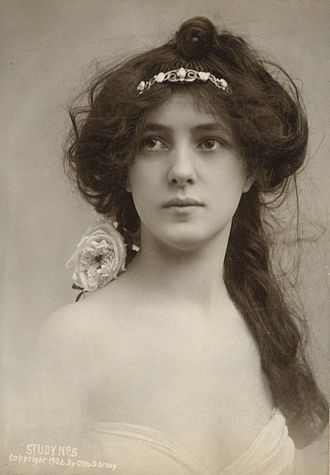
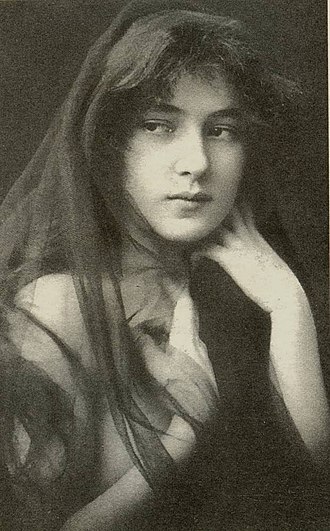
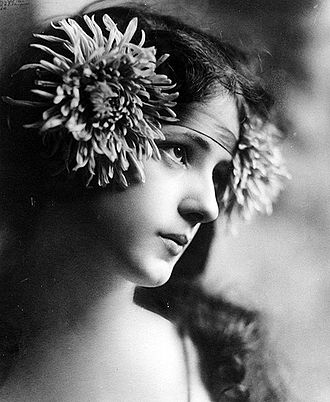
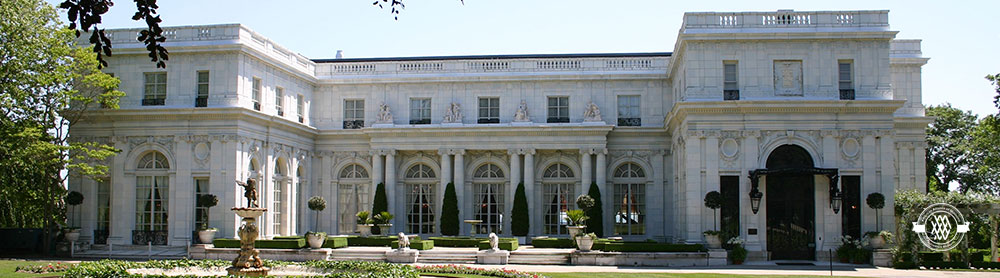
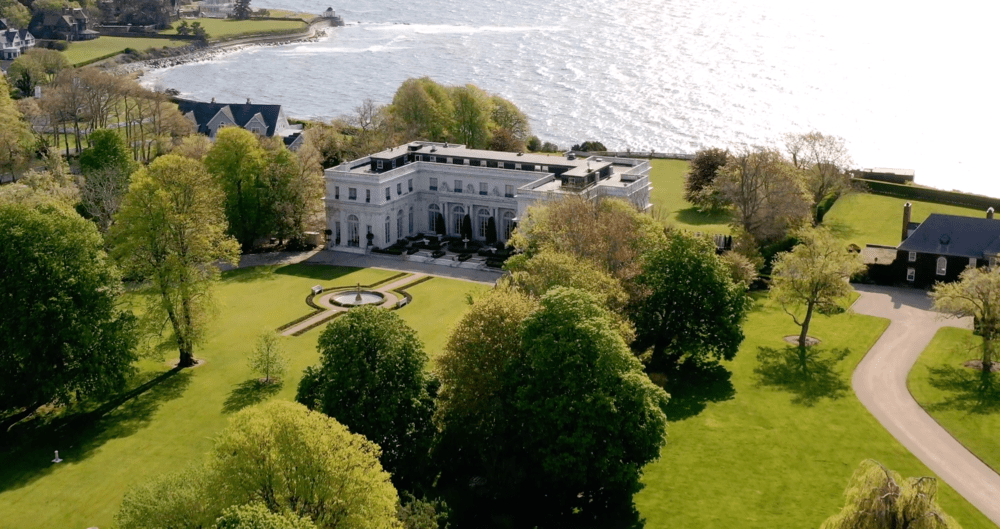


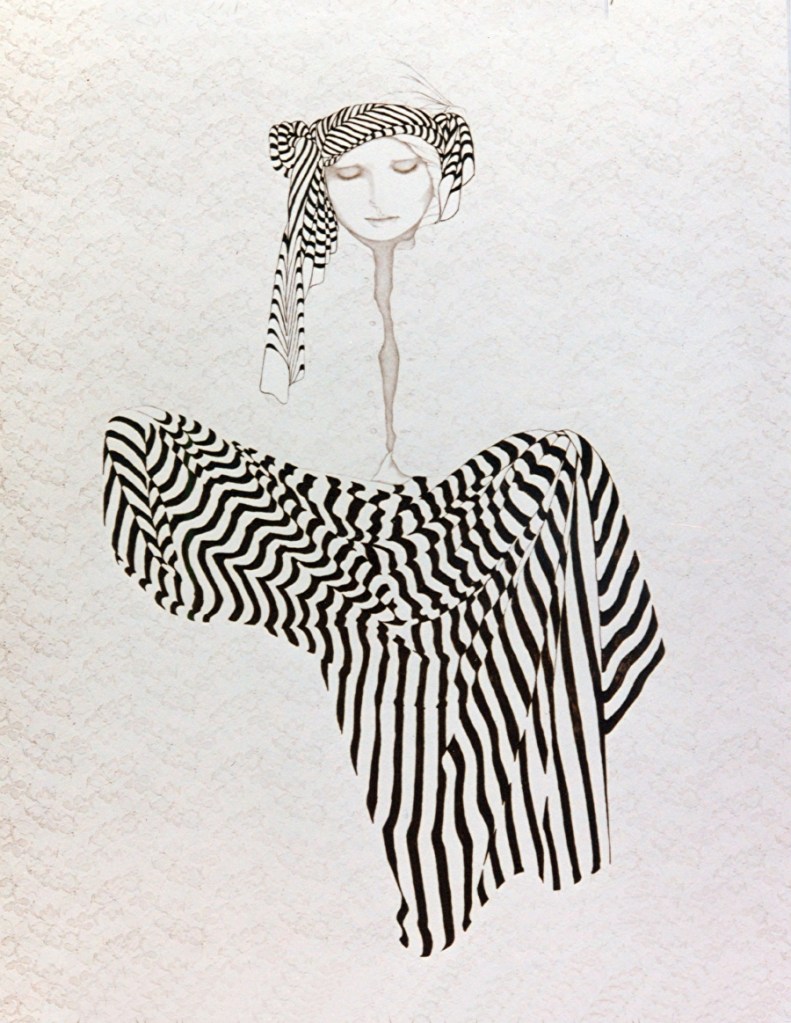
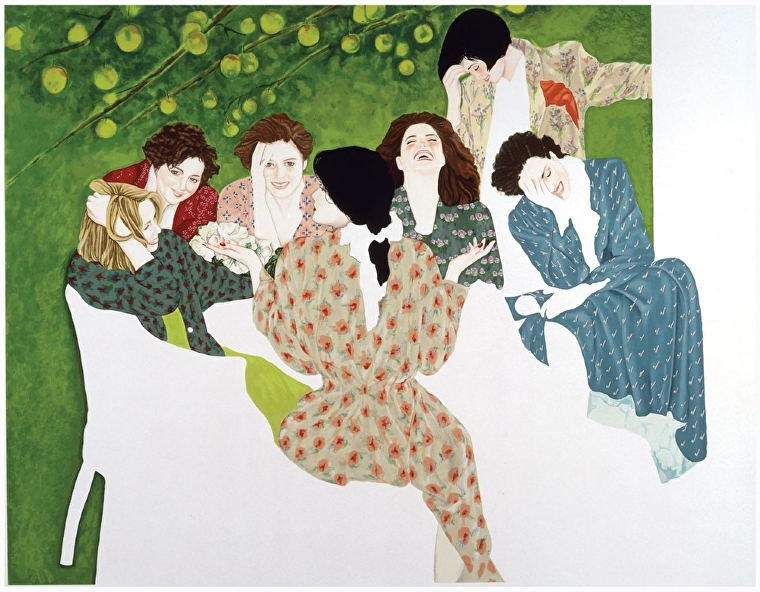
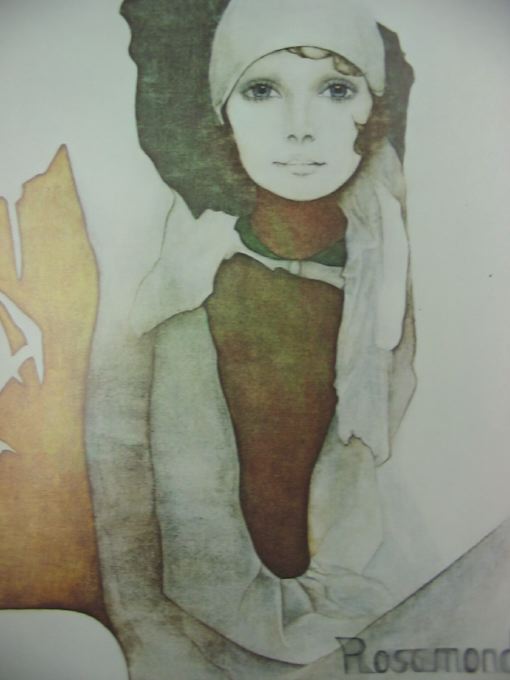
Where is the remainder of Rosamond’s art? I will prove how mishandled Christine’s estate was, and how I should be the True Caretaker of this important Rosy Legacy. I beg Rena Easton to send me old photographs so I can render new works of art. You were Rosamond’s Muse – too! You will be as famous as Evelyn Nesbit who had an affair with Stanford White the architect of Rosecliff, who was murdered by her other lover. These are San Francisco Women whose father was a partner of William Sharon. They helped build this town as did William Ralston of Belmont. Consider…..”Rosebud!”
John ‘Artist-Prophet’
Evelyn Nesbit (born Florence Evelyn Nesbit, December 25, 1884 or 1885 – January 17, 1967) was an American artists’ model, chorus girl, and actress. She is best known for her years as a young woman in New York City, particularly her involvement in a deadly love triangle between railroad scion Harry Kendall Thaw and architect Stanford White, which resulted in White’s murder by Thaw in 1906.
In her day, Nesbit was a famous fashion model, being frequently photographed for mass circulation newspapers, magazine advertisements, souvenir items, and calendars. When in her early teens, she had begun working as an artist’s model in Philadelphia. Nesbit continued after her family moved to New York, posing for legitimate artists including James Carroll Beckwith, Frederick S. Church, and notably Charles Dana Gibson, who idealized her as a “Gibson Girl“. She was an artists’ and fashion model when both fashion photography (as an advertising medium) and the pin-up (as an art genre) were beginning to expand.
Nesbit entered theater, first as a chorus line dancer. She was offered a contract as a featured star, and attracted attention from a variety of wealthy men, including Stanford White, nearly three times her age. In 1905, Nesbit married Harry Thaw, a multi-millionaire with a history of mental instability and abusive behavior. The next year, on June 25, 1906, Thaw shot and killed White at the rooftop theatre of Madison Square Garden.
The press called the resulting court case the “Trial of the Century“, and coverage of these well-known figures was sensational. Nesbit testified that White had befriended her and her mother, but had sexually assaulted her when she was unconscious. [1][2][3] Thaw was said to have killed White in retaliation, based on his own obsession with Nesbit.
Nesbit visited Thaw while he was confined to mental asylums. She toured Europe with a dance troupe, and her son, Russell Thaw, was born there. Later she took the boy with her to Hollywood, where she appeared as an actress in numerous silent films. Russell also acted in some of these. Nesbit wrote two memoirs about her life, published in 1914 and 1934. Her son later became a pilot, working as a test pilot for the Douglas Aircraft Company after World War II.
Contents
- 1Early life
- 2Modeling career
- 3Chorus girl and actress
- 4Relationships
- 5Murder of Stanford White
- 6″Trial of the Century”
- 7Child
- 8Later years
- 9Death
- 10Stage performances
- 11Filmography
- 12Representation in other media
- 13References
- 14Further reading
- 15External links
Early life[edit]
Florence Evelyn Nesbit was born on December 25, 1884, or December 25, 1885, in Natrona, Pennsylvania, a small town near Pittsburgh.[4] In her childhood, she was primarily known as Florence Evelyn. The year of her birth remains unconfirmed, as the local records were later destroyed in a fire and Evelyn said she was unsure of it; some sources have put the year as 1884, some as 1885, and it could have been something else.[5] In later years, Nesbit confirmed that her mother at times added several years to her age as a girl to circumvent child labor laws.[6][7][page needed]
Nesbit was the daughter of Winfield Scott Nesbit and his wife, Evelyn Florence (née McKenzie), and was of Scots-Irish ancestry. Her father was an attorney and her mother was a homemaker. Nesbit later said that she had an especially close relationship with her father, and tried to please him by her accomplishments. Mr. Nesbit encouraged her curiosity and self-confidence. As she loved reading, he chose books for her and set up a small library for her use, consisting of fairy tales, fantasies, and also books regarded typically as of interest to boys only – the “pluck and luck” stories that were popular in that era. When Nesbit showed an interest in music and dance, her father encouraged her to take lessons.[8]
The Nesbit family moved to Pittsburgh around 1893. When Nesbit was about 10, her father died suddenly at age 40, leaving the family penniless. Her family lost their home, and all their possessions were auctioned off to pay outstanding debts. Nesbit’s mother was unable to find work using her dressmaking skills, and the family had to depend on the charity of friends and relatives. The family lived as nomads, sharing a single room in a series of boarding houses. Her mother often sent Nesbit’s younger brother Howard to live with relatives or family friends for periods of time.[8] Nesbit’s mother was eventually given money to rent a house to use as a boardinghouse, in order to have a source of income. She sometimes assigned young Evelyn (aged about 12) to the duty of collecting the rent from boarders. In her 1915 memoir, Nesbit later recalled that, “Mamma was always worried about the rent … it was too hard a thing for her to actually ask for every week, and it never went smoothly.”[9] Nesbit’s mother lacked the temperament or savvy to run a boardinghouse, and the venture failed.[9]
Under continuous financial distress which showed no prospect of improvement, Mrs. Nesbit moved to Philadelphia in 1898. A friend had encouraged her, advising that relocation to Philadelphia could open opportunities for her employment as a seamstress. Evelyn and Howard were sent to an aunt and then transferred for care to a family in Allegany, whose acquaintance their mother had made some years earlier.[10] Mrs. Nesbit indeed gained a job, not as a seamstress, but as a sales clerk at the fabric counter of Wanamaker’s department store. She sent for her children, and both 14-year-old Evelyn and 12-year-old Howard also became Wanamaker employees, working twelve-hour days for six days a week.
It was here that Nesbit had a chance encounter with an artist who was struck by her beauty. She asked Nesbit to pose for a portrait, which her mother agreed to after verifying the artist was a woman. Nesbit sat for five hours and earned one dollar (equivalent to approximately $27.50 in 2016).[11] She was introduced to other artists in the Philadelphia area, and became a favorite model for a group of reputable illustrators, portrait painters, and stained-glass artisans. In later life, Nesbit explained: “When I saw I could earn more money posing as an artist’s model than I could at Wanamaker’s, I gave my mother no peace until she permitted me to pose for a livelihood.”[12]
Modeling career[edit]
Photograph by Rudolf Eickemeyer Jr., 1901
In June 1900, Mrs. Nesbit, leaving her children in the care of others, relocated to New York City to seek work as a seamstress or clothing designer. However, she did not succeed in this competitive world.[13] In November 1900, she finally sent for her children, although she had no work. The family shared a single back room in a building on 22nd Street in Manhattan.[14]
Mrs. Nesbit finally used letters of introduction given by Philadelphia artists, contacting painter James Carroll Beckwith. His primary patron was John Jacob Astor. Beckwith was both a respected painter and instructor of life classes at the Art Students League. He took a protective interest in the young Nesbit, and provided her with letters of introduction to other legitimate artists, such as Frederick S. Church, Herbert Morgan, and Carle J. Blenner.James Carroll Beckwith, Portrait of Evelyn Nesbit, c. 1901
Mrs. Nesbit was forced to take on managing her daughter’s career, proving unable to provide either business acumen or guardianship for her daughter. In a later interview with reporters, Mrs. Nesbit maintained: “I never allowed Evelyn to pose in the altogether“. Two artworks, one by Church and another by Beckwith in 1901, contradict her statement, as they display a skimpily clad or partially nude Evelyn.[15]Nesbit photographed by Otto Sarony, 1902
Nesbit became one of the most in-demand artists’ models in New York. Photographers Otto Sarony and Rudolf Eickemeyer were among those who worked with her. She was featured on the covers of numerous women’s magazines of the period, including Vanity Fair, Harper’s Bazaar, The Delineator, Ladies’ Home Journal, and Cosmopolitan.[16] She also appeared in fashion advertising for a wide variety of products; and she was also showcased on sheet music and souvenir items – beer trays, tobacco cards, pocket mirrors, postcards, and chromolithographs. Nesbit often posed in vignettes, dressed in various costumes. These photo postcards were known as mignon (sweet, lovely), as their pictorials were of a suggestive sensuality in contrast to the graphic, notorious “French postcards” of the day. She also posed for calendars for Prudential Life Insurance, Coca-Cola, and other corporations.[17] Charles Dana Gibson, one of the country’s most renowned artists of the era, used Nesbit as the model for one of his best-known “Gibson Girl” works. Titled Woman: The Eternal Question (c.1903), the portrait features her in profile, with her luxuriant hair forming the shape of a question mark.Nesbit in 1901 (approximately at age 16)Nesbit represents “The Queen of Hearts” on a playing cardWoman: the Eternal Question by Charles Dana Gibson, 1901
The use of photographs of young women in advertising, referred to as the “live model” style, was just beginning to be widely used and began to supplant illustration. Nesbit modeled for Joel Feder, an early pioneer in fashion photography. She found such assignments less strenuous than working as an artist’s model, as posing sessions were shorter. The work was lucrative. With Feder, Nesbit earned $5 for a half-day shoot and $10 for a full day – around $300 per day in 2019 dollars.[18] Eventually, the fees she earned from her modeling career exceeded the combined income which her family had earned at Wanamaker’s department store. But the high cost of living in New York strained their finances.[16]
Chorus girl and actress[edit]
Nesbit became disaffected and bored with the long hours spent in confined environments, maintaining the immobile poses required of a studio model. Her popularity in modeling had attracted the interests of theatrical promoters, some legitimate and some disreputable, who offered her acting opportunities.[19] Nesbit pressed her mother to let her enter the theatre world, and Mrs. Nesbit ultimately agreed to let her daughter try this new way to augment their finances. An interview was arranged for the aspiring performer with John C. Fisher, company manager of the wildly popular play Florodora, then enjoying a long run at the Casino Theatre on Broadway. Mrs. Nesbit’s initial objections were softened by the knowledge that some of the girls in the show had managed to marry millionaires. In July 1901, costumed as a “Spanish maiden”, Nesbit became a member of the show’s chorus line, whose enthusiastic public dubbed them the “Florodora Girls”. Billed as “Florence Evelyn”, the new chorus girl was called “Flossie the Fuss” by the cast, a nickname which displeased her. She changed her theatrical name to Evelyn Nesbit.[20]
After her stint with Florodora ended, Nesbit sought out other roles. She won a part in The Wild Rose, which had just come to Broadway. After an initial interview with Nesbit, the show’s producer, George Lederer, sensed he had discovered a new sensation. He offered her a contract for a year and, more significantly, moved her out of the chorus line and into a position as a featured player – the role of the Gypsy girl “Vashti”. The publicity machine began to roll, possibly fueled by the influence of architect Stanford White, and she was hyped in the gossip columns and theatrical periodicals of the day. On May 4, 1902, The New York Herald showcased Nesbit in a two-page article, enhanced by photographs, promoting her rise as a new theatrical light, and recounting her career from model to chorus line to key cast member. “Her Winsome Face to be Seen Only from 8 to 11pm”, the newspaper title announced to the public. The press coverage invariably touted her physical charms and potent stage presence; acting skills were rarely mentioned.[21]
Relationships[edit]
Stanford White[edit]
Photograph of Stanford White by George Cox, c. 1892
As a chorus girl on Broadway in 1901, at the age of 15 or 16, Nesbit was introduced to White by Edna Goodrich,[22] who was also member of the company of Florodora. White, known as “Stanny” by close friends and relatives, was 46 years old.[1] Despite being married with a son, White had an independent social life. He used intermediaries to disarm the girl. Nesbit was initially struck by White’s imposing size, which she said “was appalling”, and she also said that to her he seemed “terribly old”.
White invited Nesbit and Goodrich to lunch at his multi-floor apartment on West 24th Street above the toy store FAO Schwarz, the entrance of which was next to the store’s back delivery entrance. In her memoir Prodigal Days (1934), Nesbit described being overwhelmed by White’s expensive furnishings and luxurious apartment.[23] He had another male guest about his age, Reginald Ronalds. The luncheon was as extravagant as the setting.[23] Afterward, the party went two flights up to a room decorated in green, where a large, red velvet swing was suspended from the ceiling. Nesbit agreed to sit in it, and White pushed her. The four played spontaneous games involving the swing.[24]
White appeared to be a witty, kind, and generous man. The wealthy socialite was described in newspapers as “masterful”, “intense”, and “burly yet boyish”. He impressed both Nesbit and her mother as an “interesting companion”.[25] White sponsored Nesbit, her mother and brother for better living quarters, moving them into a suite at the Wellington Hotel, which he also furnished.[26] White soon won over Mrs. Nesbit; in addition to providing the apartment, he paid for her son, Howard, to attend the Chester Military Academy near Philadelphia. He also persuaded Mrs. Nesbit to take a trip to visit friends in Pittsburgh, assuring her he would watch over her daughter Evelyn.[27]Nesbit wearing flower wreath headband, by Rudolph Eickemeyer, 1903Nesbit in a decorative setting, published in 1913
While her mother was out of town, Nesbit and White had dinner and champagne at his apartment, capped by a tour ending at the “mirror room”, which was furnished only with a green velvet sofa. After they drank more champagne, Nesbit changed into a yellow satin kimono at White’s request. She later said this was her last memory. When Nesbit awoke, she found herself naked in bed next to an also-naked White and saw blood on the sheets, marking the loss of her virginity. [28] Despite the apparent date rape, Nesbit allowed White to be her regular lover and close companion for some time. As their relationship faded, she discovered that he had had affairs with other young women whose names he recorded in a “little black book“.
John Barrymore[edit]
John Barrymore became entranced with Nesbit’s performance in The White Rose and attended the show at least a dozen times. The two met at a lavish party given by White, who had invited Barrymore, the brother of his friend, stage actress Ethel Barrymore. In 1902, a romance blossomed between Nesbit and Barrymore, a 21-year-old contemporary who was close to her own age. He was witty and fun-loving, and Nesbit became smitten with him. After an evening out, the couple often returned to Barrymore’s apartment, staying until the early-morning hours. Barrymore was casually pursuing a career as illustrator and cartoonist. Although he showed some promise in his chosen field, his salary was small and he behaved irresponsibly with the family money. Nesbit’s mother and White considered him an unsuitable match for Nesbit, and both were greatly displeased when they found out about the relationship.[29]
White worked to separate the couple by arranging for Nesbit’s enrollment at a boarding school in New Jersey, administered by Mathilda DeMille, mother of film director Cecil B. DeMille.[30] In the presence of both Mrs. Nesbit and White, Barrymore had asked Nesbit to marry him, but she turned him down.
Harry Kendall Thaw[edit]
Nesbit, c. 1903Harry Kendall Thaw, married Nesbit in 1905
Aside from her relationship with Barrymore, Nesbit was involved with other men who vied for her attention. Among those were the polo player James Montgomery “Monte” Waterbury and the young magazine publisher Robert J. Collier. Even as she had these relationships, White still remained a potent presence in Nesbit’s life and served as her benefactor.
Nesbit eventually became involved with Harry Kendall Thaw, the son of a Pittsburgh coal and railroad baron. With a history of pronounced mental instability dating to his childhood, Thaw, heir to a $40 million fortune, led a reckless, self-indulgent life.[31] Thaw had attended some 40 performances of The Wild Rose, over nearly a year. Even before he met Nesbit, Thaw had developed a resentment of White, believing that he had blocked Thaw’s acceptance in social circles and was a womanizer who preyed on young women.[32] Thaw may have chosen Nesbit because of her relationship with White.[32]
Through an intermediary, Thaw arranged a meeting with Nesbit, introducing himself as “Mr. Munroe”. Thaw maintained this subterfuge while giving her items and money. One day he confronted Evelyn and said: “I am not Munroe … I am Harry Kendall Thaw, of Pittsburgh!”[33] She did not react with such surprise as he had expected; she was already used to attracting the attention of wealthy men.
Trip to Europe[edit]
In early 1903, while at boarding school, Nesbit underwent emergency surgery. The official diagnosis was acute appendicitis; however, some sources have speculated that she had been pregnant (perhaps by Barrymore) and had an abortion. Evelyn’s grandson, Russell Thaw, has said: “I think she went away to have an abortion.” However, under oath at Thaw’s murder trials, both Barrymore and she denied that she was pregnant or had an abortion.[34]
Thaw became solicitous, ensuring that Nesbit received the best medical care available. He suggested that she should go on a European trip, convincing Nesbit and her mother that this would hasten the young woman’s recovery. Evelyn’s mother accompanied them for propriety. Thaw created a hectic itinerary and rate of travel. Tensions mounted between mother and daughter, and Mrs. Nesbit insisted on returning to the United States. Thaw took Nesbit alone to Paris, leaving Mrs. Nesbit in London.[35] In Paris, Thaw pressed Evelyn to become his wife, but she refused. Aware of Thaw’s obsession with female chastity, she could not accept his marriage proposal without revealing the truth of her relationship with White. Thaw continued to interrogate her, and ultimately Nesbit told him of White’s assault. Thaw accused her mother of being an unfit parent.[36]
Thaw and Evelyn continued their travel through Europe. Thaw led her to sites devoted to the cult of virgin martyrdom. In Domrémy, France, the birthplace of Joan of Arc, Thaw wrote in the visitor’s book: “she would not have been a virgin if Stanford White had been around.”[37] In Austria-Hungary, Thaw took Evelyn to the gothic Katzenstein Castle, where he had the three servants in residence – butler, cook, and maid – kept at one end of the building; while he and Nesbit had isolated quarters at the opposite end.[38] Thaw locked Evelyn in her room, then beat her with a whip and sexually assaulted her over a two-week period. Afterward, he was apologetic and upbeat.[39]
After returning to New York, Nesbit talked to friends about her ordeal. Others shared stories about Thaw and a propensity toward myriad addictive behaviors. Several men told her that Thaw “took morphine” and “he was crazy”.[40]
Marriage[edit]
Although White was still part of her life, Nesbit realized they had no future together. She also knew her relationship with him had already compromised her reputation; if the full extent of their involvement became common knowledge, no respectable man would make her his wife. Nesbit also resented White for failing to tell her about Thaw’s excesses and derangement. As a teenager, Nesbit had spent her formative years thrust into the adult society of artists and theatre people; her development had proceeded without the companionship of contemporaries of her own age. Her mother had remarried, and although she had been an inept guardian before, their estrangement was now complete. Nesbit was desperate to escape the poverty which she and her family had long suffered. [41]“Lyndhurst” (William and Mary C. Thaw mansion), Pittsburgh, Pennsylvania (demolished, c. 1942)
Thaw continued to pursue Nesbit for marriage, promising that following their union he would live the life of a “Benedictine monk”. With a perverted sense of justice, and a show of magnanimous charity, Thaw assured Nesbit he had forgiven her for her relationship with White.[42] Nesbit finally consented to marry Thaw. His mother agreed to the marriage, on the condition that Nesbit give up the theatre and modeling, and refrain from talking about her past life.[43]
 Rosamond Press


.jpg)


.jpg)
Leave a comment