.JPG)
Golgotha
Posted on April 10, 2023 by Royal Rosamond Press


Where Art Thou?
I am compelled to record the mistreatment of other religions by Orthodox Jews.
I discussed with LDS members in my home how I have these ten mouse holes I use in my study, and, they have filled one or two. Here is mousehole No.1
Question: Jesus and his disciples know being raised from the dead is possible, because Lazarus was restored to life, and for a period of time, walked with the Disciples – including Judas?
Question: Did Judas hear Jesus rebuke of Peter, and thus betrayed Jesus in order to fulfill his prophetic mission? Why hang himself?
Question: Why wasn’t Jesus – a nationalist, who as the Son of God, or, God, would want to be alive when Florus robbed the temple.
Question: Did Jesus bid Judas to take the bag of money he collected from Patriotic Followers, to Florus, as a Welfare Offering? Did this PRANKING enrage Florus, who arrested Jesus and his close disciples in order to….
CRUCIFY THEM?
NEW QUESTION: Jesus causes a commotion with the Money Lenders just outside the Temple – that Florus just looted? I’ve always doubted what year Jesus was born. If he is God Incarnated, then, He is a time traveler. God would want to be there to…
DEFEND HIS HOUSE – HIMSELF!
Question: If a high school dropout on SSI can solve major Biblical riddles, then why can’t all those Radical Orthodox Jews – figure it out? My ex-friend suggested the Trumpites are reading this blog. Why not the Harridan. I suspect the Russians are reading this blog, and the Chinese, because my images are distorted in the last week. I had to purchase another Webroot. I believe I crossed the Gogalha Bridge in my past life. I suggested to my LDS brethren, I might get a TV show, I told them about Halpern. Do the Orthodox Jews know I found a historic Patriotic Jesus, and, they are keeping quiet? Why would anyone want to be in my….position?
Question: Did members of the Praetorean Guard help the Jews in the battle for
GOLGATHA BRIDGE?
Were these troops the bodyguard for Queen Berenice ‘The Nazarite’?
I hear…….Bagpipes, and bells!
John
EXTRA!
I just listened to the beginning of this video about resetting God’s clock. I became discouraged when I was not invited to the ground-breaking ceremony for the New Temple I went to, and was sealed when I went to church last Sunday. I put all my visions out of my mind, and heart. I now realize – it wasn;t time! It was….
God’s time! I am….on God’s time!
I am….a Nazarite! I took a vow that consecrated me to God.
John ‘The Nazarite’
Where Art Thou – John and Jesus? – Rosamond Press
At the end of 40 BC, two of the three co-rulers who were the Second Triumvirate, Octavian and Mark Antony, had Praetorian Guards. Octavian installed his praetorians within the pomerium, the religious and legal boundary of Rome; this was the first occasion when troops were permanently garrisoned in Rome proper. In the Orient, Antony commanded three cohorts; in 32 BC, Antony issued coins honouring his Praetorian Guard. According to the historian Orosius,[citation needed] Octavian commanded five cohorts at the Battle of Actium in 31 BC; in the aftermath of Roman civil war, the victorious Octavian then merged his forces with the forces of Antony as symbolic of their political reunification. At this point the force numbered at most 5 400 men organised into nine cohorts.[3] Later, as Augustus, the first Roman emperor (27 BC–AD 14), Octavian retained the Praetorians as his imperial bodyguard.
The Brigham Young University Jerusalem Center for Near Eastern Studies (often simply referred to as the BYU Jerusalem Center or BYU–Jerusalem, and locally known as the Mormon University[2][3][4]), situated on Mount of Olives in East Jerusalem, is a satellite campus of Brigham Young University (BYU), the largest religious university in the United States.[5] Owned by the Church of Jesus Christ of Latter-day Saints (LDS Church), the center provides a curriculum that focuses on the Old and New Testaments, ancient and modern Near Eastern studies, and language (Hebrew and Arabic). Classroom study is built around field trips that cover the Holy Land, and the program is open to qualifying full-time undergraduate students at either BYU, BYU-Idaho, or BYU-Hawaii.[6]
Plans to build a center for students were announced by church president Spencer W. Kimball in 1979. By 1984, the LDS Church had obtained a 49-year lease on the land and had begun construction. The center’s prominent position on the Jerusalem skyline quickly brought it notice by the ultra-Orthodox Jews of Israel. Protests and opposition to the building of the center springing from the Haredi Jews made the issue of building the center a national and even international issue. After several investigative committees of Israel’s Knesset reviewed and debated the issue, Israeli officials decided to allow the center’s construction to continue in 1986. The center opened to students in May 1988 and was dedicated by Howard W. Hunter, of the Quorum of the Twelve Apostles, on May 16, 1989.[7] It did not admit students from 2001 to 2006 due to security issues during the Second Intifada but continued to provide tours for visitors and weekly concerts.[8] During construction, the church hired about 300 workers at one time, with 60% Arab workers, and 40% Jewish workers, and as of 2008 uses a similar level of cooperation.
History
Before the center
The first Latter-day Saint official to enter the city of Jerusalem was apostle Orson Hyde, who came in 1841 and dedicated the land for the gathering of the people of Israel, the creation of a Jewish state, and the building of a temple at some future time. After his visit, the presence of the church in the city was virtually non-existent. By 1971, the city saw enough Latter-day Saint visitors for the church to lease a building in East Jerusalem for church services. BYU’s study abroad program to Jerusalem, which began in 1968, played a key role in the growth of church members visitors to the area. The church’s presence in the area soon grew too large for the leased space to provide adequate space for worship, so it began looking into building a center for students.[9][10] In 1972, David B. Galbraith became the director of BYU’s program in Jerusalem. He remained in this position until 1987 when the church’s First Presidency asked him to organize the BYU Jerusalem Center.[11]
On October 24, 1979, church president Spencer W. Kimball visited Jerusalem to dedicate the Orson Hyde Memorial Gardens, located on the Mount of Olives.[12] The church had donated money to beautify the Jerusalem area, and officials of the Israeli government were present at the occasion. It was at this dedication that Kimball announced the church’s intent to build a center for BYU students in the city. Negotiations between the church and the Israeli government stretched from 1980 to 1984. The land the church wanted for the center, located at the northwestern margin of Mount of Olives, right next to the valley which separates it from Mount Scopus, had been occupied by Israel since the Six-Day War of 1967 and could not be sold under Israeli law. The church decided to obtain a lease on the land instead. Leasing the land also prevented the politically controversial problem of the church owning a piece of Jerusalem land. Israeli officials saw the building of the center on the land as a way of solidifying control over land whose ownership was ambiguous under international law. By August 1984, the church had the land on a 49-year lease, building permits had been obtained, and construction on the building began.[10][12][13][14][15][16]
Construction and controversy

The 1980s saw Latter-day Saints and other Christian groups vying for representation and space in the city.[17][18][19] These groups constantly faced opposition from a strong political minority of Orthodox Jews living in the city. Neither major political party in Israel (the Likud and Labor Parties) could achieve a majority vote in the Knesset without support from the more religious parties. Religious parties used this situation to pass laws in favor of Jewish Orthodoxy in exchange for their support on other issues.[20][21] At the time, the conservative Jews, who made up the “religious right” in Israel, or the Haredim, constituted 27% of the population of Jerusalem, and was decidedly against the building of the BYU Jerusalem Center or any other similar Christian structure. Larger parties faced loss of a majority if they stood opposite on this issue. Many Israeli officials, however, such as the Mayor of Jerusalem at the time, Teddy Kollek, along with others in attendance at the Orson Hyde Memorial Garden dedication, supported the center because of what the church had done for the city. Kollek specifically stated that the “church’s presence in Jerusalem can do a great deal of work in providing the bridge of understanding between the Arab and Jews…because its members look with sympathy and understanding at both sides.”[22] The land on which the center was built was then still considered Arab land by many, and many officials saw that its lease would add an image of religious tolerance to their government and increase Israeli control of the land.[10]
Because of its prominent location in the Jerusalem skyline, construction was quickly noticed, and this sparked a major controversy in Israel and in the Jewish world as a whole beginning in 1985. The Haredim led the opposition, their main concern being that the building would be used not as a school, but as a center for Latter-day Saint proselyting efforts in Jerusalem. The Haredim said there could be a “spiritual holocaust”.[23] They argued that the church had no local presence in the population of the Jerusalem area and no historical connections to the land.[19] The group spread information through letters, newspapers, and television that the church’s missionaries would convert Jews throughout the city.[10] Kol Ha’lr, an Israeil Periodical, said that the church is one of the most dangerous organizations, and that the church has already struck down many Jews.[11][24] Kol Ha’lr also stated that church missionary activities would cause “tremendous opposition”, and that once the center is completed, the church would not be able to be stopped.[11][24] Inter Mountain Jewish News, a publication in Colorado, stated that there was an emotional and bitter controversy surrounding whether Christian Zionism should be helped by Jewish government and municipal authorities, like what was being done with BYU.[11][25]

Warnings in the media led to street protests and demonstrations. Orthodox Jews marched on City Hall and to the construction site in 1986.[24] Some even gathered at the Western Wall in a public prayer of mourning because of the center.[26] They also gathered at the hotel at which the BYU president was staying at one point, carrying signs saying: “Conversion is Murder!” and “Mormons, stop your mission now”.[25][27] Despite the intensity of the Haredi opposition, at no point did the protests become physically violent.[28] In late 1985, the Haredim motioned for a no-confidence vote against the leading Labor Party. Prime Minister Shimon Peres organized a committee of eight, four for the center and four against, to debate the issue and come up with a solution either for or against the center’s presence. Another committee was formed to look into the allegation that the money the church had put into Jerusalem was a bribe to gain Mayor Kolleck’s support for the center[29] (the committee found the church “Not Guilty”). A subcommittee of the Knesset requested that the church issue a formal promise not to proselytize Jews. Some Israelis considered this discriminatory, as no other Christian church had been asked to do this in Jerusalem. Church leaders, however, agreed to comply and sent a formally signed statement soon after.[30] Some Jews in the area were still uneasy and doubted the church’s intent, believing that religious belief among Latter-day Saints would supersede adherence to the law. One protester stated that “converting the sons of Judah, us, is a basic article of their faith. . . . They regard themselves as sons of Joseph and believe there will be no Second Coming for as long as we and they do not fuse.”[10][31]
In addition to the promise not to proselyte, BYU began a public relations campaign to inform the public of their intentions for the center as a school and a gathering place for those already of the faith. Ads were purchased in local newspapers, magazines, and on television, and the center had personnel appear on radio talk shows. Government officials in favor of the center also began to speak out, saying that Jerusalem should deny no one a place to worship, Jew, Muslim, or Christian. The Minister for Economic Planning, Gad Yaakobi said that the debate had “already caused considerable damage to Israel”,[32] and Former Foreign Minister Abba Eban stated that the “free exercise of conscience and dissent in a democratic society” was at stake.[33] The center also received support in the U.S., as former president Gerald Ford spoke for the center, as well the United Jewish Council of Utah, who wrote a letter stating that “For over one hundred years, the Jewish and (Latter-day Saint) communities have coexisted in the Salt Lake Valley in a spirit of true friendship and harmony. It has been our experience that when the leaders of the … Church make a commitment of policy, it is a commitment which can be relied upon. The stated commitment of Brigham Young University not to violate the laws of the state of Israel, or its own commitment regarding proselytizing in the state of Israel through the Jerusalem-based Brigham Young facility, is a commitment which we sincerely believe will be honored.”[34] The U.S. government also became an intermediary as 154 members of Congress issued a letter to the Knesset in support of the BYU Jerusalem Center. In 1986, the Knesset approved the completion of the center.[10]
Opening and dedication
Students moved into the center on May 8, 1987. The school remained unfinished, but the dormitory levels had been completed. Students had formerly been housed at Kibbutz Ramat Rachel.[34] In 1988, before the center’s dedication, a few Jerusalem locals complained that the arrangement of the windows at night looked like a Christian cross. The center purchased blinds and carefully arranged them over the windows so that no such sign would be seen. LDS Church members do not use the symbol of the cross as other Christian denominations do, due to their focus on the resurrection, rather than the death of Christ.[10][19]
The center was dedicated on May 16, 1989, by Howard W. Hunter, the president of the Quorum of the Twelve Apostles.[7] The dedication ceremony was small, as the church decided not to announce it until a month later. The church did not want a large ceremony to cause concern among those in opposition to the center, who may have seen it as a religious gathering. Thomas S. Monson, then a second counselor in the church’s First Presidency, and Boyd K. Packer, another member of its Quorum of the Twelve, were among those in attendance, as well as BYU president Jeffrey R. Holland. Robert C. Taylor, director of the BYU Travel Study program was in attendance and stated in an interview with The Daily Universe that the dedication of the building was centered solely on the educational aspect of the school, as well as for “whatever purposes [the Lord] has in store” in the future. Taylor stated that the church would respect the laws of the land and their commitment not to proselyte.[7]
Center closings
After the onset of the Second Intifada, security for BYU students became increasingly difficult to maintain, and the center closed indefinitely to students in 2000. During the fighting, BYU sources reported that the center’s staff remained on location and managed to maintain good relations on both Israeli and Palestinian sides. As negotiations to stop the fighting continued, one proposed settlement had the center placed within the borders of a proposed Palestinian state (this, however, was not the proposal ultimately agreed upon by the two sides).[13] While closed to students, the center remained open for visitors and concerts.[35]
On June 9, 2006, officials announced their intention to reopen the Jerusalem Center for the Fall 2006 semester. However, escalating violence in the area from the 2006 Israel-Lebanon Conflict frustrated these plans and raised new concerns about students’ safety in the area. School officials deemed the center would remain closed until the conflict was resolved.[36] During this time, some Latter-day Saints in Northern Israel were “voluntarily relocated” into the center, away from border missile strikes.[37] BYU officials announced on October 9, 2006, that the center would be reopening for student academic programs for Winter Semester 2007. The initial program was limited to only 44 students. Currently, over 80 students participate each semester.[38] The center remains open into future academic terms.[39]
Florus further angered the Jewish population of his province by having seventeen talents removed from the treasury of the Temple in Jerusalem, claiming the money was for the Emperor. In response to this action, the city fell into unrest and some of the Jewish population began to openly mock Florus by passing a basket around to collect money as if Florus were poor.[3] Florus reacted to the unrest by sending soldiers into Jerusalem the next day to raid the city and arrest a number of the city leaders. The arrested individuals were whipped and crucified despite many of them being Roman citizens.[4]
After the outbreak of the First Jewish–Roman War, Florus was replaced as procurator by Marcus Antonius Julianus.[5]
See also
Roman Destruction of the Temple of Jerusalem
The Roman Destruction of the Temple of Jerusalem, occurring in 70 CE, was a pivotal event in Jewish history and marked the culmination of a Jewish revolt against Roman rule that began in 66 CE. Following the establishment of Judaea as a Roman province in 6 CE, tensions escalated due to Roman mismanagement and heavy-handed governance, particularly under procurators like Gessius Florus. The situation intensified with the rise of revolutionary groups, notably the Zealots, who resisted Roman domination and led to civil strife within Jewish society.
As the conflict progressed, Jerusalem became a focal point of resistance, but internal divisions among the Zealots weakened their position. In 70 CE, Roman General Titus launched a siege on Jerusalem, which resulted in devastating famine and the eventual breach of the city’s defenses. The temple, a central symbol of Jewish worship and identity, was destroyed in a fire, marking the end of the sacrificial system that had been central to Jewish religious life. Following the fall of the city, widespread slaughter ensued, and the aftermath solidified the Roman victory, leading to the dispersion of many Jewish communities. This event not only altered the religious landscape but also had profound implications for Jewish identity and national aspirations in the centuries to follow.
- Published In: 2022 1 of 3Published In:2022
- Related Topics:Flavius Josephus;Pontius Pilate2 of 3
- Related Articles:Israel’s Management of the Western Wall: Deconstructing Policy.3 of 3
On This Page
Full Article
Full ArticleKey FiguresSummary of EventSignificanceBibliography
More Like This
Related Articles (1)Full ArticleMore Like This(1)
Full Article
DATE September 8, 70 C.E.
LOCALE Jerusalem (now in Israel)
The destruction of the Jewish temple in Jerusalem was the final blow in the famous war that resulted from a combination of Roman political ineptness in Judaea and the upsurge of a radical Jewish nationalism.
Key Figures
- Gessius Florus (fl. first century C.E.), procurator of Judaea, 64-66 C.E.
- Herod Agrippa II (27?-c. 93 C.E.), king of Judaea under the Romans, r. 44-70 C.E.
- Flavius Josephus (c. 37-c. 100 C.E.), Pharisee of the peace party, commander of Jewish forces in Galilee, and historian of the Jewish war
- Vespasian (9-79 C.E.), general and Roman emperor, r. 69-79 C.E.
- John of Gischala (fl. first century C.E.), leader of the Zealot group in Jerusalem
- Titus (39-81 C.E.), son of Vespasian, general in the siege and capture of Jerusalem, Roman emperor, r. 79-81 C.E.
- Simon ben Giora (d. 71 C.E.), Zealot leader in Jerusalem and a rival of John of Gischala
Summary of Event
After Judaea was made a Roman province in 6 C.E., a band of revolutionaries, better known later as Zealots, arose to challenge Roman domination. Roman misunderstanding and misgovernment added fuel to the inflammatory situation, especially between 26 and 66 C.E. Pontius Pilate, procurator of Judaea from 26 to 36, managed to outrage Jewish religious sensibilities on only a few occasions, but a series of poor governors and bad decisions led to the outbreak of actual civil war under emperor Nero.
The procuratorship of Antonius Felix, 52-60, was a turning point. A left-wing section of the Zealots, the sicarii, or dagger men, began a series of political assassinations. Albinus, who was procurator between 62 and 64, managed to restore some order after a previous two-year anarchy in which the old high priest Annas, or Ananus, had played a part. However, the sicarii ran rampant and the anti-Roman party grew while the procurator did little but fatten his pocket. The last Roman ruler, Gessius Florus, was an utterly base man who managed in May, 66, to steal seventeen talents from the treasury of the Temple of Jeruslem. Taunting of him as a rapacious ruler by the Jews led to bloodshed; the Jews retaliated by seizing the temple, bottling up Florus in the fortress Antonia, and subsequently driving him into exile to Caesarea.
When Herod Agrippa II urged submission to Florus, the Zealots answered by seizing Masada, a strong fortress on the west shore of the Dead Sea. Cessation of the traditional sacrifices for the Roman emperor at the suggestion of Eleazar ben Ananus signified open revolt and was, as historian Flavius Josephus remarked, “the true beginning of our war with Rome.”
When the Palace of Herod, which had given sanctuary to the peace party, fell in September, the Roman garrison was slaughtered and a general Jewish oppression of Gentiles arose throughout Palestine. An abortive attempt by Cestius Gallus, the legate of Syria, to put down the revolt made war inevitable. Men were drafted into the defense, and Josephus was given command of the Jewish forces in Galilee. Nero appointed Vespasian as commander of the Roman forces. As John of Gischala, a leading Zealot leader, suspected he might, Josephus defected to the Romans when Galilee was conquered in 67 C.E. by Vespasian.
The years 68-69 C.E. were ones of inactivity on the Roman side. After Vespasian subdued most of Judaea, he settled into a waiting game because of uncertainty following the suicide of Nero on June 9, 68. He could afford to wait because intra-Jewish struggles were ruining the defense of Jerusalem as rival Zealot leaders instituted a reign of terror. After troops in the east acclaimed Vespasian emperor on July 1, 69, the capture of Jerusalem was turned over to his son Titus in the summer of 70 when Vespasian left for Rome. Internal Zealot strife between John of Gischala and Simon ben Giora helped to prepare the enervated Jerusalem for a fall; John even called on Idumaeans for help, and on one occasion in the civil strife, the valuable grain stores had been fired. Eventually a third faction entered the fray.
Two days before the Passover in April, 70, Titus came before the city to begin his attack on the third or outermost wall to the north. It was breached on May 25. A tightened blockade around the entire city soon brought famine; finally, after earlier attempts had failed, the great fortress Antonia fell on July 24. Twelve days later, the last morning and evening sacrifices were made, and all available men were marshaled to the defense of the temple and the upper city.
By August, four ramparts had been built against the great sanctuary of the temple, but its walls withstood the ram. The cloisters were then fired and burnt out on August 12; the gates succumbed on August 15. Later a soldier in the heat of the battle, but against the express orders of Titus, flung a torch into the temple so that a fatal fire ravaged the edifice for two days from August 29 to 30. The temple and its religion of sacrifice were ended forever. Slaughter followed, and when the last section of the city fell on September 8, the city itself was all but completely destroyed.
Significance
Titus celebrated a triumph in Rome marked by the arch at one end of the Roman Forum emblazoned with a sculpture of the captured seven-branched candlestick. The Roman army wiped out remaining pockets of resistance during 71-73 C.E., the heroic defense of Masada fortress being the chief glory of the resistance. The Jewish rebellion was over. A brief, unsuccessful rally in 132-135 at last marked the end of Jewish nationalistic hopes in the ancient world.
Bibliography
Aberbach, Moses, and David Aberbach. The Roman-Jewish Wars and Hebrew Cultural Nationalism. New York: St. Martin’s Press, 2000. This work on Jewish nationalism covers the Roman-Jewish war. Bibliography and index.
Bohrmann, Monette. Flavius Josephus, the Zealots, and Yavne: Towards a Rereading of the War of the Jews. New York: Peter Lang, 1994. An examination of Josephus’s history of the war between the Romans and the Jews. Bibliography.
Hadas-Lebel, Mireille. Flavius Josephus: Eyewitness to Rome’s First Century Conquest of Judea. New York: Macmillan, 1993. A look at the Jewish historian and an analysis of his work.
Josephus, Flavius. The Jewish War. 3 vols. 1927-1928. Reprint. Cambridge, Mass.: Harvard University Press, 1997. In Greek with an English translation by H. St. J. Thackeray. A classic work on the Roman-Jewish war by a participant.
Parente, Fausto, and Joseph Sievers, eds. Josephus and the History of the Greco-Roman Period: Essays in Memory of Morton Smith. A collection of essays on Flavius Josephus presented at the Josephus Colloquium, held in Italy in 1992. Bibliography and indexes.
Price, Jonathan J. Jerusalem Under Siege: The Collapse of the Jewish State, 66-70 c.e. New York: Brill, 1992. An analysis of the Roman-Jewish war, including the destruction of the temple.
The Jubilee Jesus
Posted on September 21, 2011 by Royal Rosamond Press
Jesus means “savior”. In October of 2005 I founded a yahoogroup ‘Joyous Jubilee’. One hundred years before John the Baptist and Jesus were born, the chief priests, Sahadin, did away with the Jubilee that was the backbone of Social Justice for the Jews and foreigner alike. I have come to retore the Jubilee, and sound the horn of Liberty and Truth.
Why and how was I chosen is quite amazing. However, there is no more time for your – and my doubt! We all have run out of time! A Republican Congressman just quit due to the fake impeachments of our President. A woman official for Ukraine, declared the politics of America – are dead – and are killing thousands of Ukrainians. The President of France is trying to convince Germany to put NATO troops in Ukraine, When I died, I was in heaven and watching the atonement of the German people.
We have to go! We have to move! The Holy War Games are over. I am asking all those who see themselves as Knight Templars, and want to be KT, to join me in spirit as I cross….
PAUSE
After aa half hour of research, just now, I FOUND THE ANSWER to what puzzled me. I noticed the map of Jerusalem was depicting this city just before the War of Liberation From Rome. Why doesn’t Joseph Flvius mention it? I believe the building of the Golgotha Bridge was to celebration the Reestablishing of the Jubilee Law, that Jesus saud he would restore. This is a complete overhaul of the Jewish Religion. All THE LOST TRIBES HAVE BEEN FOIUND in the Diasproa, and, the Levite Priesthood has ruled the tribes do not have to RETURN to live in Israel, because, Israel will come to them! John the Levite Baptist was about te world – before Jesus and Paul! This is HIS BRIDGE that led THE WAY HOME for the Pilgims, for the Children of God, who hated Herod’s temple. It had been corrupted! Israel has been corrupted. I bid all this who hate Ntanyahu, and his false preisthood, put the deed to their home and land. Put these Deeds in clay vessels, got to the temple mount, today, and hand them over to the poorest Palastinian family you can find! Do this, unto the meekist, and the most disenfrnachise, and you shall…..INHERIT THE EARTH!
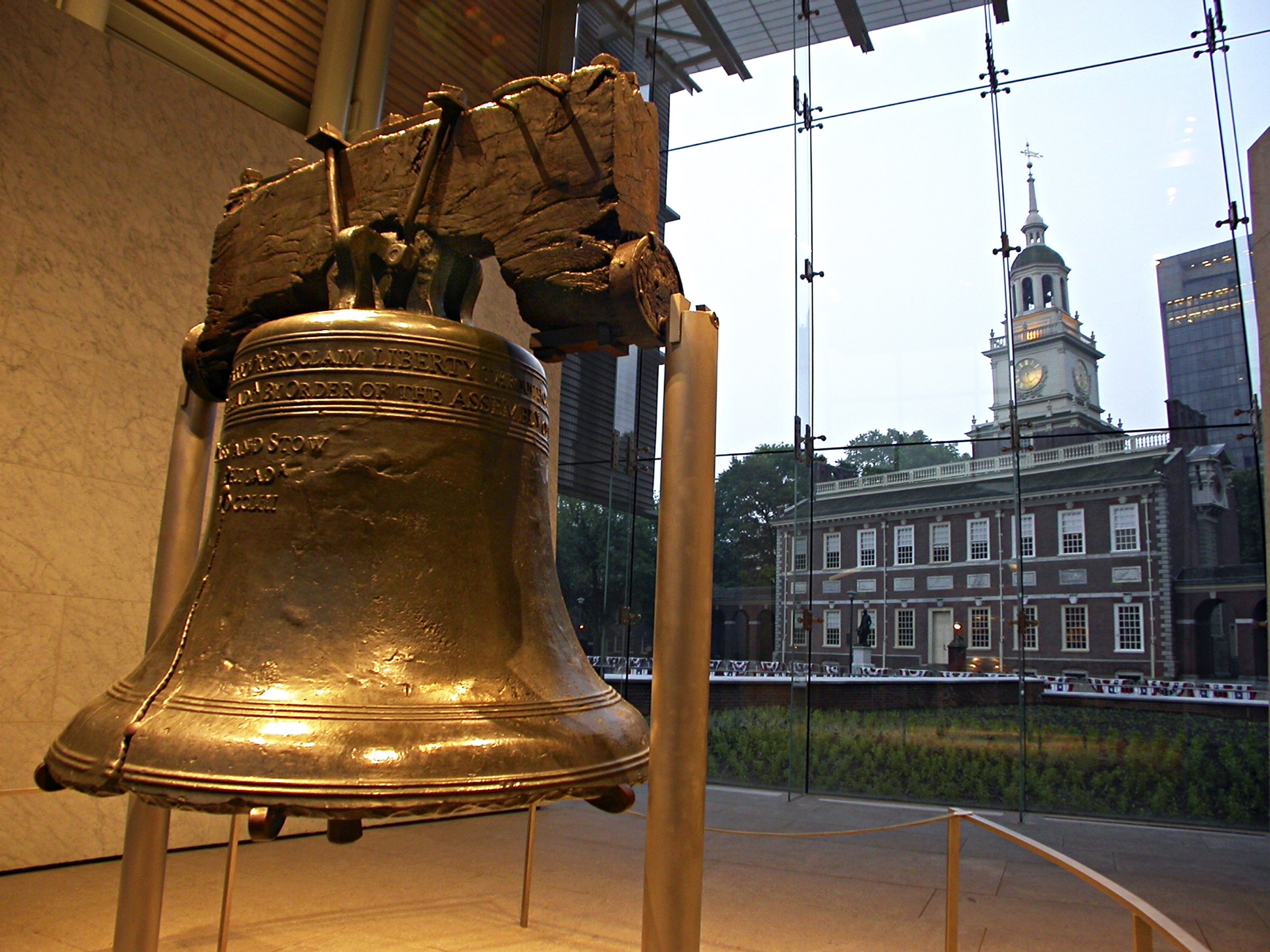
I just found out that his is written on Our Liberty Bell
And you shall hallow the fiftieth year, and proclaim liberty throughout all the land to all its inhabitants; it shall be a jubilee for you.” This verse is also inscribed on the Liberty Bell in Philadelphia.
The bell is inscribed with Leviticus 25:10, “Proclaim liberty throughout all the land unto all the inhabitants thereof.
Amen
John the Nazarite
https://time.com/4464934/ben-carson-liberty-bell-history
Perhaps the least known part of its history, and the most intriguing, is that it was the abolitionists who gave the Liberty Bell its famous name. The bell is inscribed with Leviticus 25:10, “Proclaim liberty throughout all the land unto all the inhabitants thereof.” The verse refers to the Year of Jubilee when slaves were to be set free in accordance with Hebrew tradition. William Lloyd Garrison, abolitionist and publisher of The Liberator, seizing upon the verse’s true context, re-printed a poem, “The Liberty Bell,” in 1844. The poem’s potent line “Ring it, til the slave be free” was a rebuke; that despite its inscription, the bell did not proclaim liberty to all the inhabitants of the land so long as slavery was allowed to persist.
According to Maimonides, there is a commandment to consecrate the jubilee year and to sound the shofar on the tenth day of the month of Tishrei. These are both specified in Leviticus 25:9-10, which states: “Then shall you cause the shofar to sound on the tenth day of the seventh month, on Yom Kippur shall you sound the shofar throughout all your land. And you shall hallow the fiftieth year, and proclaim liberty throughout all the land to all its inhabitants; it shall be a jubilee for you.” This verse is also inscribed on the Liberty Bell in Philadelphia.
Additionally, the Torah mandates that all slaves were set free and that all land should return to its original owners. The Talmud in Rosh Hashanah explains that slaves technically were free from the first of the jubilee year, but did not return to their homes until ten days later when the shofar was sounded (Rosh Hashanah 8a or b, right?). The requirement of returning land to its original owners meant that, in effect, land could not be sold or leased in perpetuity. This had the practical effect of ensuring that land did not concentrate in a small number of hands, and spiritually served as a reminder that nothing on earth truly belongs to human beings. This is made explicit several verses later in Leviticus, when God states “the land is Mine; you are but strangers resident with Me. It is all on loan from God.”
We eagerly await the day when G d will bring our entire nation back to our homeland—including the ten “lost” tribes—and we will again resume observing the Jubilee year, as well as so many other mitzvot which we are incapable of performing until that awaited day.4


Liberate Our Nation’s Post Offices
Posted on December 24, 2017 by Royal Rosamond Press
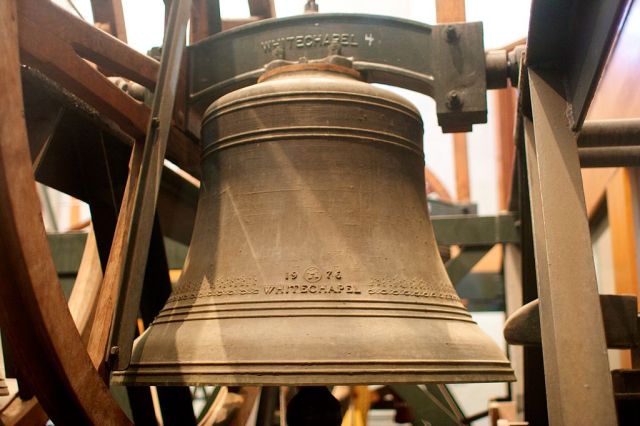


Take back our Post Offices! Evict Von Trump from the Washington Post Office! Our Founding Fathers created a National Post Office so Revolutionaries could continue to send, and receive, sacred literature and newspapers so that they can continue to proclaim Liberty! Here is our Jerusalem where our words of Liberty and Freedom can be cherished – FOREVER and FOREVER!
On this day, I declare a National Jubilee that will give every American Voter a Thousand Dollar Voting Bonus!
Down with the Corporate Boss City-States! Donate the Bonus’s the Fraudsters gave you, and purchase this Beautiful Tower of the Bells – FOR WE THE PEOPLE!
The Constitution’s Postal Clause grants Congress power to “establish Post Offices and Post Roads.” There is a fascinating history behind that provision, which I explore in a new article linked here.
I Claim The BYU Jerusalem University
Posted on November 5, 2023 by Royal Rosamond Press


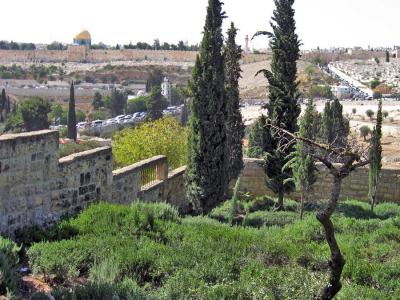
At sunrise, I begin my virtual walk across the bridge that used to span from the Mount of Olives to The Temple Mount. At 3:30 A.M. November 5,2023, I read that the BYU Jerusalem Center was evacuated due to the invasion of Hamas . At sunrise I will begin my King’s Walk across the Golgotha Bridge that was built to Count The Jews as part of a ritual that resulted in King David counting the Jews – and incurring God’s Wrath. God gave David – a choice. He chose to allow the Angel of Death to kill thousands of citizens in Jerusalem. David was ritually scourged – punished by the people for HIS SIN! This ritual was stolen by the founders of Christianity, who also stole the teaching of John the Baptist. This is – MY DISCOVERY! I am the foremost Biblical Scholar in the World. For the reason the Mormon Biblical scholars FAILED to know what I know, I claim the BYU Jerusalem Center. Because I am the greatest Biblical Prophet and Biblical King in the World – I claim all that is the LDS Church!
Jesus did not DIE FOR OUR SINS! Jesus RITUALLY DIED FOR DAVID’S SINS! Jesus wanted all the Jews to be without sin on regards to the census – so they would not die! On this day claim all the churches associated with Saint Francis – everywhere! Consider the battle in our Congress on emergency monies to be – given to the Jews – via our Census Taxation and Election System.
This morning is the first time I saw the architecture of the BYU University. I am – amazed! Here is The Bridge associated with the Order of the Cross and Red Star in the Czech Republic. I claim that order! The Tau Cross – is my cross. It now represents Golgotha – and the Great Crossing! The Truth – can now be restored! Here is the true root of the story of a ancestor of King David, returning to the town he was born in, Bethlehem (there was no Nazareth) to take part in The Golgotha Census. Jesus has dinner on the Mount of Olives – with his relatives – and reads from the Book of Ruth. There was no call by Herod to murder the first born. His son was going to count the first born in a complex manner involving the Laws of Moses – that Saul-Paul did away with – in order to divert money to his church – that was never the church of John and Jesus.
I am – The Truth!
John ‘The Nazarite’
13 October 2023 – SALT LAKE CITY
Featured Stories
BYU Jerusalem Center to Relocate Students and Faculty to Greece
Evacuation of 93 students, faculty and staff comes one week after the conflict in southern Israel began on October 7
| The Brigham Young University Jerusalem Center.Photo courtesy of Timothy L. Taggrt, (c) IRI. All rights reserved. | 1 / 4 |
Download Photos
Downloadable B-roll
The BYU Jerusalem Center announced Friday that it will relocate all students and faculty to Greece where studies will continue.
“The Jerusalem Center Fall 2023 Program is currently relocating to Greece,” center officials said in a security update on October 13. “In addition to the 93 students and faculty, faculty families and service couples will also relocate to Greece.”
The announcement comes in response to ongoing military conflict in the region. Since the attack in southern Israel on Saturday, October 7, the center has issued daily reports about the status of Jerusalem and the safety of students on the center’s campus.
The news of the relocation came one day after the First Presidency of The Church of Jesus Christ issued a statement October 12 about the violence in the Middle East .
“We are devastated by the recent eruption of violence and loss of life in the Middle East,” the First Presidency stated. “Violence of this nature is abhorrent to us and is not in harmony with the gospel of Jesus Christ, which is a gospel of peace. At such times, our hearts ache for all victims of this atrocity.
“As servants of God, we affirm that He calls upon all of us to love our neighbors as ourselves, and we pray for a peaceful resolution of all conflicts.”
The Jerusalem Center, operated by Church-sponsored Brigham Young University, opened in 1989.
https://www.bibletools.org/index.cfm/fuseaction/Topical.show/RTD/cgg/ID/22680/Miphkad.htm
Golgotha
Posted on April 10, 2023 by Royal Rosamond Press
I began The Lion of God in 1990 when I was filled with visions of a past life, and the Holy Spirit. I lived in a estate on the Mount of Olives and looked down on the temple. I saw people coming and going. I smelled the smoke of the scarifies.
Two hour ago (on Easter) I found this article about Golgatha known as Miphkad. I already own a theory that Jesus replicated a walk from the Mount of Olives to the temple, across the Kedron Valley. He was scourged along the way, he doing penitence for the sin of his kin counting the Jews. This sin was passed down to all David’s offspring. I sketched paintings for this ritual on large canvas. I did not know there was a bridge! I am the embodiment of King David, or, am of his linage. I wanted to be in Jerusalem today. I am there in spirit! I am….coming over! My sacrifice – is complete! I have been – redeemed!
I want – bagpipes!
John ‘The Nazarite’
Psalm 311Psalm 31 For the director of music. A psalm of David.1In you, O LORD, I have taken refuge; let me never be put to shame; deliver me in your righteousness.2Turn your ear to me, come quickly to my rescue; be my rock of refuge, a strong fortress to save me.3Since you are my rock and my fortress, for the sake of your name lead and guide me.4Free me from the trap that is set for me, for you are my refuge.5Into your hands I commit my spirit; redeem me, O LORD,
16 David looked up and saw the angel of the Lord in the sky, holding his sword drawn and pointed at Jerusalem. Then David and the elders bowed facedown on the ground. They were wearing rough cloth to show their grief. 17 David said to God, “I am the one who sinned and did wrong. I gave the order for the people to be counted. These people only followed me like sheep. They did nothing wrong. Lord my God, please punish me and my family, but stop the terrible disease that is killing your people.”
What the Bible says about Miphkad
(From Forerunner Commentary)
| Hebrews 13:11-12Where did Jesus Christ’s suffering take place? Not at the Praetorium, for they led him from there (Matthew 27:31). Nor did it occur at the Temple. While scholars debate over the location and even the translation of “Golgotha” (Matthew 27:33; Mark 15:22; John 19:17), the writer of Hebrews provides a solid clue as to where Jesus died:For the bodies of those animals, whose blood is brought into the sanctuary by the high priest for sin, are burned outside the camp. Therefore Jesus also, that He might sanctify the people with His own blood, suffered outside the gate. (Hebrews 13:11-12; emphasis ours.)God instructed the priests to kill the sin offerings at the Tabernacle, but He required them to burn the remains at a place “outside the camp” (Leviticus 4:12, 21), away from God’s presence. This distant altar became known as the miphkad (“the appointed place”) altar. At the time of the crucifixion, this altar stood on a slope of the Mount of Olives, east of the Temple Mount, separated from the Temple by the Brook Kidron. The name of the Temple’s eastern gate was, appropriately, the miphkad gate. When the priest performed a sin offering, he took the body of the sacrificed animal through the miphkad gate, over the bridge that spanned the Kidron Valley, and to the appointed place for burning and disposal.Hebrews 13:11-12 ties this “outside the camp” location with Christ’s crucifixion, being “outside the gate.” Additionally, Jesus was crucified where the centurion with Him could see the veil of the Temple torn in two (Luke 23:45-47), which, because of the Temple walls, was possible from only a few angles and elevations—such as the area near the miphkad altar on the Mount of Olives, outside the “camp” of Jerusalem.The miphkad gate and Kidron bridge had another significant purpose. History records that the gate and bridge were also used on the Day of Atonement (see Alfred Edersheim’s The Temple: Its Ministry and Service). By this eastern route, the “suitable man” led the azazel goat out of the Temple and into the wilderness after the priest had laid on its head all the iniquities, transgressions, and sins of the nation (see Leviticus 16:20-22).The centerpiece of the Day of Atonement ritual involved two goats as a sin offering (Leviticus 16:5). Consider how perfectly Jesus fulfilled the roles of both goats in this ceremony, as only He could. The Levitical high priest used the blood of the first goat to cleanse the sanctuary. The priest laid no sins on this goat; instead, he used its undefiled blood to cleanse and cover the incense altar and the Mercy Seat, which allowed rare access into the Holy of Holies (Leviticus 16:15-16, 18-19). As the fulfillment, Jesus courageously and single-mindedly gave His sinless blood as a cleansing and a covering, providing us access into the heavenly Holy of Holies (Hebrews 9:7, 12-14, 23-25).The azazel goat, the one used for “complete removal,” received the iniquities, transgressions, and sins of the nation on its head, and it bore them, being sent by the high priest and led outside the camp, out of God’s presence, as a representative of all the sins. In awe-inspiring fulfillment, the Father laid the iniquities of us all on Christ’s dignified and undeserving head (Isaiah 53:6). Jesus permitted Himself to be sent by the leaders and led by their agents in true meekness, subsuming His well-being to what the Father desired for all mankind, even cleansing with His words those who led Him, just as the “ready man” was cleansed (Leviticus 16:21, ESV).Jesus became a substitutionary sacrifice, for God “made Him who knew no sin to be sin for us” (II Corinthians 5:21). He became a curse on our behalf (Galatians 3:13) when they nailed Him to the tree. He, and He alone, bore our sins, iniquities, and transgressions (Isaiah 53:11-12; Hebrews 9:28; I Peter 2:24). He remained alive for torturous hours, bearing what belonged to us but permitted to be put on Himself, having been led outside the gate in perfect, divine meekness. |
I Was Born to Render Revelations
Posted on July 31, 2021 by Royal Rosamond Press


Candidate For King David
Posted on December 26, 2021 by Royal Rosamond Press

Because Pope Francis asked for peace thru more dialogue, I John Presco am announcing I am a candidate for the Embodiment of King David. I have said I was a Republican Presidential Candidate, before, but, this time I am going to complete the requirements.
I will be providing much evidence that I am the most likely embodiment of King David. Not like citizen Trump, I know much about the Bible, and, have solved Biblical riddles.
I awoke to snow – and a message from God and the Pope….
“Forgive the Rougemont Knights Templars, and gather them around you!”
In ordinary usage, the Miphkad (Numbering) Altar on the Mount of Olives became known in New Testament times as “Golgotha” and it denoted a place where heads were counted in any numbering or census of Israel. All numberings involving the totality of the Israelite people would have required the place of the counting to be “without the camp” because certain individuals who were permanently or temporarily designated as ritualistically defiled could not come inside the Camp of Israel (Numbers 5: 1-4). This is why it was always necessary to have the official censuses outside the camp area. That way all individuals could be counted whether they were ritualistically defiled or not.
What the Bible says about Miphkad
(From Forerunner Commentary)

The Doomsday Clock Is Ticking
Posted on April 7, 2021 by Royal Rosamond Press

We are minutes away from WAR, that might be prevented. Around noon today I solved the riddle of King David and the ritual of Jesus in the Kedron Valley. To utter it, may light the fuse a catastrophic war with China. My Guardian Angel found the Doomsday Clock.
John ‘The Nazarite Judge After Absalom’
The Taiwan Strait is a “powder keg” that has the potential to trigger a world war, a military analyst said on Tuesday as a panel of experts gathered to discuss U.S. foreign policy from a Taiwanese perspective.
The Warlock of Windsor Castle | Rosamond Press
Taiwan Strait a ‘Powder Keg’ That Could Set Off World War, Military Expert Warns (msn.com)
“Starish was zeroing in on a perceived VOID, when the grandfather clock that Prince Albert order to be made, and shipped from Germany, sounded MIDNIGHT. She was about to pass this carved masterpiece, when from her perficial vision she caught the minute hand moving backwards. It stopped at 7:45, then headed back to stop at 3:00. Then it went backwards, twice, to stop at 5:15. Immediately Miriam conjured up the word COMBINATION, then……LOCK! She deduced she had missed the first number. Opening the glass case, she beheld a coo-coo bird surrounded by alternating moons and suns. There was a small brass key inserted into the body of the bird that allowed her to turn it and point the tail at corresponding ticks on the clock. Starfish ears strained to get a clue from the ratchet sound as she turned the bird in a simple combination lock manner.
“Drats!” Mirriam said, knowing she had twelve hours to kill before 12:00 Noon struck. Then, a large urn caught her eye. It was given to Victoria by the Tzar of Russia. It depicted Catherine the Great opening up Russia to foreigners, and the resettling of the Volga Germans who are said to be in her German Family Tree. This was a part of Catherine’s coup against the Romanovs. Her grand design was to make Russia a part of Germany.
The House of Saxe-Coburg played a huge role. This is why Queen Victoria married Albert after being courted by Romanov Princes. She was afraid of a vast German Empire that would swallow England like a small fish. Albert’s family feared his family would be consumed. Victoria and Albert played a incredible game of intrigue that gave birth to the British and German Empires that established colonies to pay for this Cold War. Miriam and Victoria had a theory that this Cold War was turned into Russian Fairytales so the players moves behind the scenes would remain invisible. There was a new formula.
Starfish was assigning numbers to the people on the vase. She did not own Victoria’s great talent with genealogies, thus, names and dates. She went searching for a pattern, when the clock struck HIGH NOON. Looking up she saw the minute hand go 9:45.
Rising gently, Miriam crept to the clock, opened the glass, and turned the bird’s tail. When it landed on 9:45 there was a click, and a wood panel opened up next to the clock. The first thing Starfish saw was a small stainedglass window with a Tudor Rose. Under it was Victoria’s great desk. Taking three giant steps, Miriam, stopped in her tracks. On the desk was a small portrait of Munshi, Victoria’s personal secretary.
“Oh my God! Miriam whispered as she opened the ledger next to the portrait. Munshi was a disciple of a sect of Indian Mathematicians that some say created a new math. But, Miriams parents believed they descended from Jewish Kabalists and Scribes that counted the numerology of The Creation.
Miram felt faint when she read the name of Ramchundra who was a “naked eye” astronomer.
“Baba! Rabbi!” Starfish said, and bowed her head. Starfish was trying to master this form of astronomy because she and her parents associated it with the Ephod warn by the High Priests. It was sat on a table in the Holy of Holies, with a light inside. The jewels cast colored lights on the wall, that are the “starry objects” that were done away with by a wicked usurper king in his false reformation. The candidate King of the Jews was brought before these stars and put to a test that he had to pass before he was crowned King. But, he was more than a King. He was a Co-Creator…….The King of Heaven!
Setting The Clock of God
Posted on April 4, 2021 by Royal Rosamond Press

Was the Secret Name vital in setting the Clock of God? Spooky Noodles and I did a eighty minute show on this. We pulled the White Rabbit our of the hat. Jesus did not ESTABLISH “the year of our Lord” as he said he would – as far as WE know today. Why? We have Revelations which is all about TIMIMG. Christian teachers say no one can predict when the END TIME is going to occur. What if someone figures it out – and thus gets the final ticks moving? Mr. Noodles sent me this in a e-mail. Very profound. I wish the world heard our conversation. We talked about branding and Coke. The Trump Card is calling for evangelicals to boycott Coke and other companies that are protesting how the Christniks want to COUNT VOTES.
We talked about the Gregorian Calendar and how I was named after this Pope. My brother was named after Marcus Aurelius’, who WORE THE PURPLE. Rosemary scored the second highest I.Q. when she joined the WAVES. She spied on Russian broadcasts. She has given me riddles to solve since I was a boy. I believe she was a spook. Someone has put her photos on the Rosamond genealogy. I believe he was CIA. When I was sixteen I asked Rosemary what she was doing while sunbathing on Glendon.
“I’m teaching myself French so I can convert French electrical terms into English. I can’t believe no one has done this!”
She had gotten a job with a space firm. She was very cryptic with me. I always blew he her mind when I figured stuff out. Passover ends this evening. I was born On October 8, 1946 during a star-shower three days after the Day of Atonement. We are 180 degrees away from that date. I was born to die as God’s Scapegoat. That my mother who born me is demonized, and not given any bragging rights in regards to her famous daughter, is something I can not rectify, unless a attorney takes my case and sue Robert Brevoort Buck for Forty Million Dollars. But, that is a drop in the bucket in regards to the Great Cosmic Event I Am In Charge Of. This is to say no one will give me ANYTHING! My astrologer had to move up the time I was born fifteen minutes – or in theory I was not born! This is theory is being made manifest by my daughter – born on Rosemary’s birthday! I would settle for a LESSER position, but, YOU won’t let me!
I ALONE have figured out why Jesus turned over the money tables. He mixed the coins together on the ground because the Tryian shekel was a way of counting the Jews – the wrong way! There is no – right way! If he ordered all Jews NOT to pay the temple tax, then they would come for him – and kill him.
John
The Temple Institute of Jerusalem – Learn About the Temple Institute
Tyrian shekels, tetradrachms, or tetradrachmas were coins of Tyre, which in the Roman Empire took on an unusual role as the medium of payment for the Temple tax in Jerusalem, and subsequently gained notoriety as a likely mode of payment for Judas Iscariot.
As stated in the Torah,“there will be no plague among them when they are counted!” The half shekel donation is a guard against pestilence and pandemic!
In the latest standard, which was also the one used for the temple tax, the coins bore the likeness of the Phoenician god Melqart or Baal, accepted as the Olympian Herakles by the Greeks and derided as Beelzebub by Jews in the time of the Seleucids, wearing the laurel reflecting his role in the Tyrian games and the ancient Olympic Games.
“Jewish Passover coincides with Roman Easter this year(?) something which was supposed to be calendrically impossible with the Western calendric formulation as arranged by the church fathers, in order to distance one cult from another. Don’t know if the Muslims also have two divergent calendars to date their prominent religious holidays- and/or also a special algorithm to likewise distance their high holy day(s) from either the Jews or Christians. However- Chinese New Year in the USA… their year( ‘our’ year in San Francisco) differs in some tradition by 60-‘something’ years from China. Which is more correct? We we told the Chinatown Chinese kept the tradition uninterrupted from Antiquity. While the custom itself was illegal in China under the turmoil of revolution until just recently.
WHEN IS PASSOVER?
The dates are based on the Hebrew calendar, from the 15th day of the Hebrew month of Nissan (or Nisan) through the 22nd day.
Note: What is often called Passover today has its origins in two ancient observances. Nissan 14 was the Passover as mentioned in the Torah; at this time, an offering to the Lord, the sacrifice of a lamb, was slaughtered during the afternoon and prepared. Nissan 15 (the new day starting at sundown) was the beginning of the seven-day Festival of Unleavened Bread. On this start of Nissan 15, the Passover lamb that had been sacrificed and prepared on Nissan 14 (that same afternoon) was eaten that night (now Nissan 15), along with unleavened bread. Over time, the Festival of Unleavened Bread commonly became known as “Passover” and is usually considered as starting at sundown between Nissan 14 and Nissan 15.
Passover 2021 will be celebrated from March 27 to April 4. The first Seder will be on March 27 after nightfall, and the second Seder will be on March 28 after nightfall.
Born Under a Shower of Stars
Posted on August 11, 2013by Royal Rosamond Press


I was born October 8, 1946 two minutes after the sun set. An amazing star-shower was suddenly visible. The nurses in the maternity ward bid my mother to come to the window and look, but, was too spent having just delivered me.
Rosemary said she had a vision while she was giving birth to me, she telling herself she must not forget it. She forgot.
Rosemary named me after John the Baptist because she believed I was born on the Day of Atonement, Yom Kippur. I was born three days after Yom Kippur.
When my Astrologer began her five hour (recorded) reading of my chart, she began
with these words;
“Jon, I have never seen a chart like yours, never knew it was possible. It
begins where all charts in theory begin, on the exact cusp of Pisces and Aries..
For this reason I had to move up the time of your birth ten minutes, or in
theory, you were not born. As it is now, you barely escaped becoming a veritable
prisoner in this lifetime, that is, all the information you came here to share.”
I believe I was born to die, and when I did, my clock was readjusted so my information could be set free. My astrologer said I am of the great Scorpion Scholars of the Biblical Wilderness who sting themselves in order to induce a near-death experience and behold the Creator, if only for a little while.
 Rosamond Press
Leave a comment