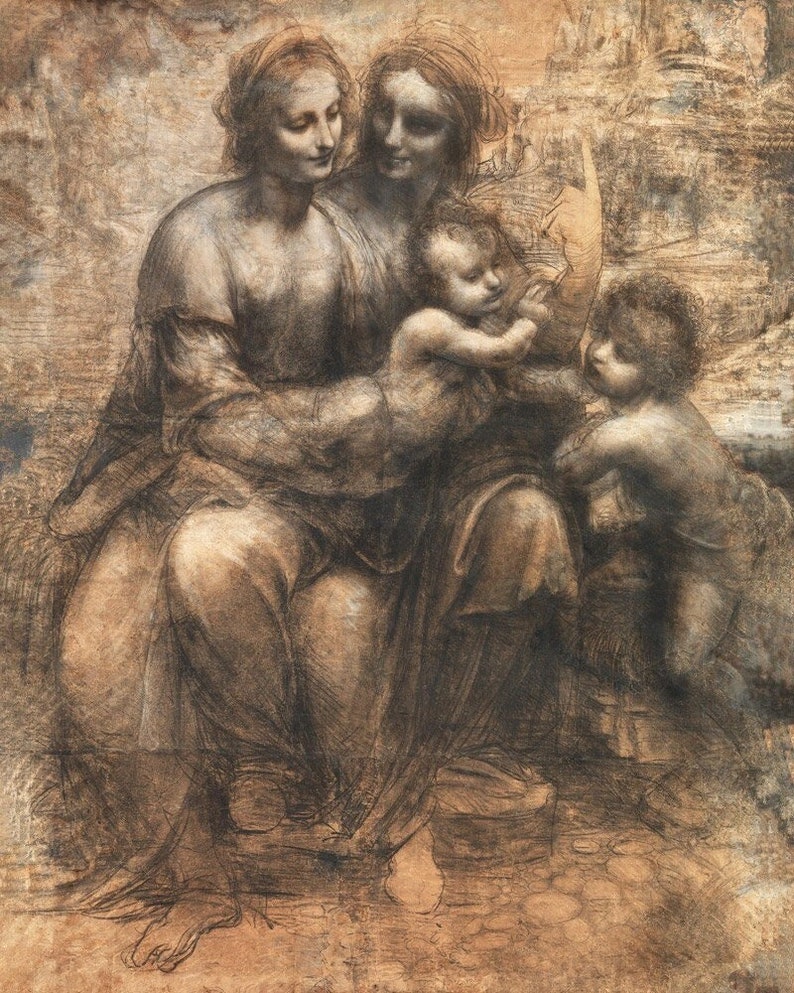
Where Art Thou?
Belle’s mother died when she was ten. Belle lost her virginity and had no mother to confide in. Can I….do them just? Can I…..complete a work of high art?
How many times did Belle study the stilled image of her mother. Did she consult this great face like a crystal ball. There are many answers in Catherine’s face. I can only read her for a little while, and I have to….turn away!
Does she laugh, at the drama we made between us?
The show must go on!
John


Anna is a feminine given name, the Latin form of the Hebrew name Hannah (Hebrew: חַנָּה, romanized: Ḥannāh), meaning “favour” or “grace”. It is the name of Samuel‘s mother in the Hebrew Bible, rendered Ἄννα in Greek,[2] Hannah in English, and Anna in Latin.[3] The Greek form also appears in the New Testament story of Anna the Prophetess.
Rosa Mystica (or Mystical Rose) is a poetic title of Mary. One form of Marian devotion is invoking Virgin Mary’s prayers by calling upon her using a litany of diverse titles, and the title ‘Mystical Rose’ is found in the Litany of Loreto. It is also a Catholic title of Our Lady based on the Marian apparitions reported between 1947 and 1966 by Pierina Gilli at Montichiari and Fontanelle, in Italy.
Origins
The Biblical source of the title is Song of Songs 2:1, often translated, “I am the Rose of Sharon“. Bishop Robert C. Morlino draws a connection to Isaiah 11:1, “But a shoot shall sprout from the stump of Jesse, and from his roots a bud shall blossom.[1] This is also reflected in the German Advent hymn Es ist ein Ros entsprungen, known in English as “”Lo, how a rose e’er blooming”, which makes reference to the Old Testament prophecies of Isaiah which in Christian interpretation foretell the Incarnation of Christ, and to the Tree of Jesse, a traditional symbol of the lineage of Jesus.[2]
She was a devout Jewish woman from the Tribe of Levi, but her daughter, the Blessed Virgin Mary, is often described in some apocryphal traditions as having been dedicated as a virgin in the Temple. [1, 2, 3]
Here are the key details regarding Anne and this tradition:
- The Tradition of Mary’s Consecration: According to the 2nd-century Protoevangelium of James, Anne and her husband, Joachim, were childless and prayed for a child, vowing to dedicate their firstborn to God. When Mary was about three years old, they brought her to the Temple in Jerusalem to serve as a consecrated virgin—a status that carried lifelong obligations similar to a Nazarite vow. [1, 2, 3]
- Anne’s Vow vs. a Nazarite Vow: While Mary’s dedication is sometimes compared to the lifelong Nazarite vow taken by figures like Samuel or Samson, Saint Anne did not take a personal Nazarite vow. Her personal vow was one of thanksgiving, promising to offer her long-awaited child to the Lord’s service. [1, 2, 3, 4]
- Scriptural and Historical Context: Saint Anne (and the details of her vow) is not mentioned in the canonical Bible. The story is drawn from non-canonical writings and apocryphal literature. [1, 2, 3]
Report this ad
7
1 Samuel:11 NASB
And she made a vow and said, “Lord of armies, if You will indeed look on the affliction of Your bond-servant and remember me, and not forget Your bond-servant, but will give Your bond-servant a [d]son, then I will give him to the Lord all the days of his life, and a razor shall never come on his head.”
It is said Hannah vowed a vow to dedicate the child to the Lord though its not stated what kind of vow she took.The following characteristics are more or less similar to that of a Nazarite.
*She made a vow
*She dedicated the child to the Lord
*No razor shall come upon his head
But according to the Mishnah a woman was not allowed to take a vow rendering her son a Nazarite
Mishna
What are the halakhic differences between a man and a woman? A man lets his hair grow and rends his garments when he is a leper, but a woman does not let her hair grow or rend her garments when she is a leper. A man can vow that his minor son shall be a nazirite, obligating the son to remain a nazirite even during his adulthood, but a woman cannot vow that her son shall be a nazirite.
How did Hannah dedicate Samuel?
… she vowed a vow and said, ‘O LORD of hosts, if you will indeed look on the affliction of your servant and remember me and not forget your servant, but will give to your servant a son, then I will give him to the LORD all the days of his life, and no razor shall touch his head.’ (v. 11 ESV)
 Rosamond Press
Leave a comment