
Where Art Thou?
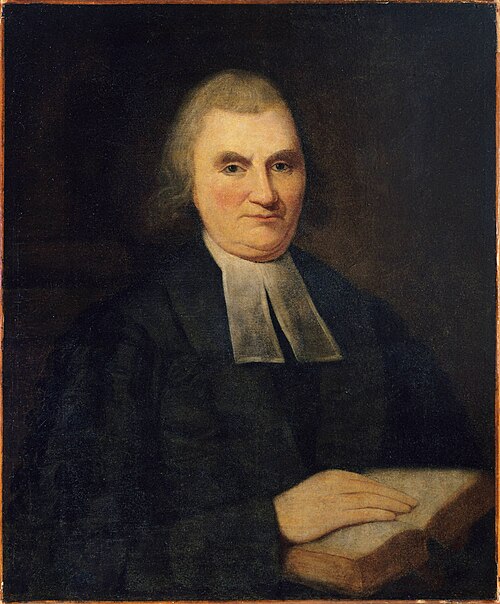
Here is Dottie Witherspoon again! Her ancestor, is Signer John Witherspoon . He is a founder of the Presbyterian Church in America. He and my ancestors owned slaves in South Carolina.
I forgot about the violence the split in this church brought to the Emerald Valley, that Joaquin Miller may have been employed to write about in the The Eugene City Democratic Register. I named one of blogs….
THE BOHEMIAN DEMOCRATIC REGISTER
When Miller went to Columbia College, the Democrats were in those Red States where slavery was rampant. Today, there is a Holy National Insanity Hearing – that goes all the way to the Vatican. Why? Imagine if this guy was considered SANE:
He buys three negro girls in their teens. Locks them in his basement, beats and rapes them. then. sells their babies into slavery. To top it off – he is married – and his wife and her daughters – approve!
John Presco
Joaquin Miller (1837-1913) was the pen name of writer Cincinnatus Hiner Miller, born on September 8, 1837, to Quaker parents. In 1852, the family moved to Oregon, traveling overland on a three thousand mile trip, that took over seven months. They settled near Eugene, Oregon where they established a home and farm. Miller later married the Oregon poet Therese Dyer.
“Miller attended Columbia College in (what was then) Eugene City from 1857 to 1858. He taught school, studied law, and was admitted to the bar in 1861. From 1861 to 1862 Miller rode pony express from Walla Walla to Idaho mines but he soon returned to Eugene City to become a newspaper editor. In his newspaper, The Eugene City Democratic Register, he pleaded for an end to the Civil War. The editorials were suppressed as pro-Southern in sympathy and Miller sold out, moving briefly to Port Orford on Oregon’s southern coast.”
“In 1864 he drove a herd of cattle across the Cascade Mountains to Canyon City where he planted the region’s first orchard and served as Grant County Judge until 1870.”
7/17/2024
The Priory of The Bohemian Democratic Register
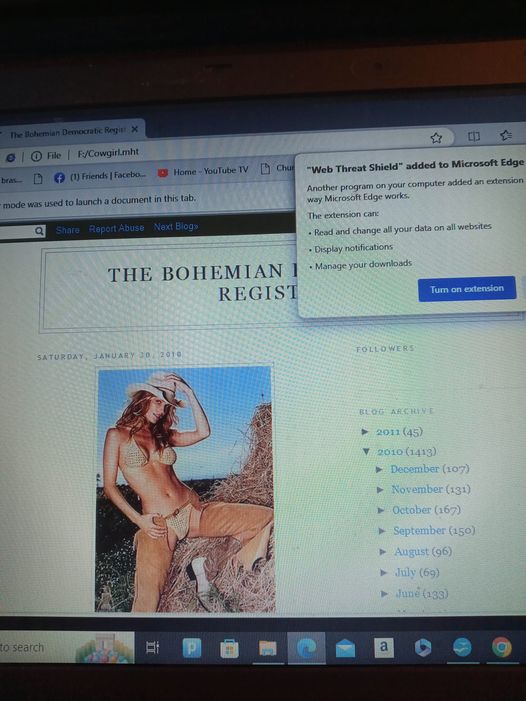
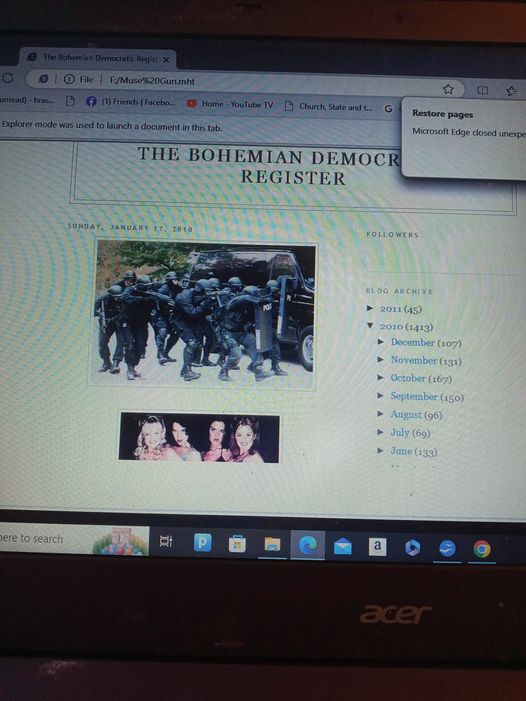

Eureka! I found posts from The Priory on Yahoo-Groups, and images of lost blog
The Bohemian Democratic Register
You know I have much to say about this, but, that will come later.
John Presco
President: Bohemian Democratic Register
Here
Conflict between church denominations lead to the Cumberland Presbyterian Church withdrawing their financial support for the school.[3] The conflict arose, in part, as the debate over slavery raged in the east in what would eventually result in the American Civil War.[1] Parts of the church, based in Kentucky, supported slavery, while others were abolitionists.[1] Slavery supporters attempted to gain control of the school’s board of trustees, and eventually did in 1859, causing president Henderson to resign in 1859.[1]
Founding publisher Alexander was born about 1830 and came to Oregon from Illinois as a pioneer in 1852.[8] Alexander initially worked as a farmer, supplementing his income as a surveyor and local justice of the peace before learning the printing trade working for the town’s earlier pro-Southern newspapers.[8] Although his own venture as a publisher was short and unprofitable, Alexander unwittingly was the scion of a local newspaper dynasty in Oregon, with two of his sons later themselves publishing The Guard (following the tenure of several intermediate owners), while a grandson, George L. Alexander, would one day edit another Oregon paper, the Lebanon Express.[8]
Alexander and his paper vocally supported the old governing class of the former Confederate States of America and were rabid in their opposition to the policies of the Reconstruction era imposed upon the South by the Northern-based Republican Party.[9] Such views were out of step with the majority of Oregonians, however, with the Republicans coming to dominate Oregon politics during the last quarter of the 19th century.[9] Alexander was forced to liquidate his stake in his money-losing newspaper in 1868.[10]
Ownership changes

A short interregnum followed, during which ownership was transferred to J. W. Skaggs. Skaggs continued to push Alexander’s Democratic Party/states’ rights agenda during his short five weeks at the helm.[10] The poor economics of the weekly paper were unchanged, however, and Skaggs immediately moved to unload his newly acquired white elephant. He cut his losses and avoided the stigma of financial failure for himself and the conservative political movement by giving away the paper outright to two men who worked for him as printers, William Thompson and William Victor.[10] According to Thompson’s later recollection, Skaggs sweetened the transfer of ownership by tossing in two bundles of paper and two cords of firewood for the new owners.[10]
The leading partner in the new ownership pair, William Thompson (1846 1934), had come to Oregon from his native Missouri aboard a wagon train during the 1850s and had worked as a printer’s devil for the Democratic Eugene City newspapers the Democratic Register and The Review from the age of 16.[11] His acquisition of The Guard required only that he fulfill a contractual obligation “to run the paper and keep it alive.”[12] This he and Victor managed to do successfully, earning Thompson a healthy $1,200 for his work before his sale of the paper to George J. Buys and A. Eltzroth on December 24, 1869.[12] Thompson would subsequently move to Roseburg, Oregon, and there establish a new newspaper, the Roseburg Plaindealer.[12]
From Wikipedia, the free encyclopedia
Jump to navigation Jump to search
| Type | Private |
|---|---|
| Active | 1856–1860 |
| Affiliation | Cumberland Presbyterian Church |
| Location | Eugene,Oregon,United States |
Columbia College was a college in Eugene in the U.S. state of Oregon. Founded in 1856, the school was part of a system of churches established by the Cumberland Presbyterian Church. The school’s building burned down twice before the school closed in 1860. Today, the neighborhood in Eugene where the school was located is known as College Hill due to the former college.
Contents
History[edit]
After the Cumberland Presbyterian Church split from the Presbyterian Church in 1810, the newer branch sought to found schools to educate ministers for future service in the church.[1] As early as 1851, church leaders in Oregon discussed starting a school in what was then the Oregon Territory.[1] Then at a meeting in Washington County on April 7, 1853, leaders created a committee to make plans for a school.[1] That committee consisted of J. A. Cornwall, D. H. Bellknap, and James Henry Dickey Henderson, who on October 5 of that year presented a report recommending that funds be raised to establish a Presbyterian school in the territory.[1]
The committee recommended raising $20,000 to start the school by selling scholarships at $100 each.[1] They also said the college should be located between what was then Eugene City in the southern Willamette Valley and Lafayette at the northern edge of the valley.[1] By December 1853 the plan was approved and the church began advertising to raise the funds.[1] In 1854, a new committee was formed with Jacob Gillespie and Mr. Snodgrass, among others, to select the location for the new school, with the committee choosing Eugene on October 5, 1854.[1] Gillespie, who was serving in the Oregon Territorial Legislature, then introduced a bill in order to secure a charter for the college on January 11, 1855.[1]
At that point the school was named Pacific College, but was changed by the legislative committee to Columbia College.[1] That committee, consisting of Gillespie, Asa L. Lovejoy, and Delazon Smith, returned the bill to the main assembly after a single day of consideration.[1] A vote to pass the bill on January 17, 1855, was tabled by David Logan, but he then moved for a vote on January 20, and the bill passed, becoming law on January 24.[1] The original charter called for a co-ed school, and was given to the church April 7, 1855.[1] In May 1855, the board of trustees met for the first time and selected Samuel Dillard as the president of the board, and by October had secured 20 acres (8.1 ha) adjacent to Eugene and a 24-foot (7.3 m) by 48-foot (15 m) building to house the school was under construction.[1] By August 1856, Enoch Pratt Henderson (brother of James Henry), a minister was hired to serve as president of the college, which he did from November 3, 1856 until September 19, 1859.[1][2] The school opened on November 3, 1856, but did not start classes until November 17 with 52 students.[1]
The school’s new building burned soon after it opened, on November 20, in what was believed to be arson.[1] Two-days later classes resumed at a rented home while plans were made to re-build.[1] Within two-years enrollment grew to 150 students and a new building was finished.[1][3] Classes were primarily preparatory classes during the existence of the college.[1] The second structure completed in November 1857 was meant to be temporary, and it was, as it burned on February 26, 1858.[1] Columbia tried to rebuild again, this time building a two-story building faced with sandstone.[1] However, the new structure was not finished before the college closed.[1]
Closure and legacy[edit]
Conflict between church denominations lead to the Cumberland Presbyterian Church withdrawing their financial support for the school.[3] The conflict arose, in part, as the debate over slavery raged in the east in what would eventually result in the American Civil War.[1] Parts of the church, based in Kentucky, supported slavery, while others were abolitionists.[1] Slavery supporters attempted to gain control of the school’s board of trustees, and eventually did in 1859, causing president Henderson to resign in 1859.[1] M. I. Ryan then became the principal, who was pro-slavery, and in June 1860 he assaulted Byron J. Pengra before fleeing back east.[4] The school also suffered from internal division over if religion should be taught in the school, as well as plans for another school in the Oregon Territory.[1]
Meanwhile, Henderson sued the school for past wages, which led to the school declaring bankruptcy and closing its doors in 1860.[1][2] The unfinished sandstone building stood until 1867 when it was torn down and some stones were used in the construction of a store on Willamette Street.[1] The College Hill neighborhood in Eugene was named after Columbia College.[2] In 1906, the city dedicated a monument to the school, located at Olive and Nineteenth.[1]
Notable alumni[edit]
James Henry Dickey Henderson (July 23, 1810 – December 13, 1885) was an American farmer and politician from the state of Oregon. A native of Kentucky, he lived in Missouri and Pennsylvania before moving to the Oregon Territory in 1852. He worked as a publisher, pastor, and farmer before entering politics as a Republican, and served one term in the United States House of Representatives representing Oregon.
For other uses, see Cumberland Presbyterian Church (disambiguation).
| Cumberland Presbyterian Church | |
|---|---|
| Classification | Protestant |
| Orientation | New School Presbyterian Scougalism |
| Polity | Presbyterian |
| Associations | World Communion of Reformed Churches, World Council of Churches |
| Region | United States, Hong Kong, Colombia, Guatemala, Mexico, Haiti, Brazil, Spain, Australia, the Philippines, Cambodia, Japan, Macau, South Korea[1] |
| Origin | February 4, 1810 Dickson County, Tennessee |
| Separated from | Presbyterian Church in the United States of America |
| Separations | Cumberland Presbyterian Church in America (separated 1878); just over half of the Cumberland Presbyterian congregations rejoined the PCUSA in 1906 |
| Congregations | 673 (2023)[2] |
| Members | 33 223 active members (2023)[2] |
The Cumberland Presbyterian Church is a Presbyterian denomination spawned by the Second Great Awakening.[3] In 2023, it had 33 223 active members and 646 congregations.[2] The word Cumberland comes from the Cumberland River valley where the church was founded.
History

Formation
See also: Old Side–New Side controversy

The divisions which led to the formation of the Cumberland Presbyterian Church can be traced back to the First Great Awakening. At that time, Presbyterians in North America split between the Old Side (mainly congregations of Scottish and Scotch-Irish extraction) who favored a doctrinally oriented church with a highly educated ministry and a New Side (mainly of English extraction) who put greater emphasis on the experiential techniques championed by the Great Awakening. The formal split between Old Side and New Side lasted only from 1741 to 1758, but the two orientations remained present in the reunified church and would come to the fore again during the Second Great Awakening.
At the beginning of the nineteenth century, Presbyterians on the frontier suffered from a shortage of educated clergy willing to move to the frontier beyond the Appalachian Mountains. At the same time, Methodists and Baptists were sending preachers with little or no formal training into frontier regions and were very successful in organizing Methodist and Baptist congregations. Drawing on New Side precedents, Cumberland Presbytery in Kentucky began ordaining men without the educational background required by the Kentucky Synod. This was bad enough for supporters of the Old Side, but what was even worse was that the presbytery allowed ministers to offer a qualified assent to the Westminster Confession, only requiring them to swear assent to the Confession “so far as they deemed it agreeable to the Word of God”. Old Siders in the Kentucky Synod (which had oversight over Cumberland Presbytery) sought to discipline the presbytery. Presbytery and synod were involved in a protracted dispute which touched upon the nature of ecclesiastical jurisdiction. Ultimately, the synod decided to dissolve Cumberland Presbytery and expel a number of its ministers.
The Cumberland Presbyterian denomination was made up of the expelled members of the Presbyterian Church in the United States of America (PCUSA) and others in the area when the Kentucky Synod dissolved the original Cumberland Presbytery.[3] There is historical evidence in the writings of several of the founders that indicate they did not intend the split to be permanent and certainly did not anticipate a long-standing separate denomination.
On February 4, 1810, near what later became Burns, Tennessee, in the log cabin home of the Rev. Samuel McAdow, he, the Rev. Finis Ewing and the Rev. Samuel King reorganized Cumberland Presbytery. After rapid growth, Cumberland Presbytery became Cumberland Synod in 1813 and the Cumberland Presbyterian denomination in 1829 when the General Assembly of the Cumberland Presbyterian Church was established.
A replica of the Rev. Samuel McAdow’s cabin now stands where the three founded the church, and a sandstone chapel commemorating the event has been erected nearby. These two buildings are two of the main attractions in the surrounding Montgomery Bell State Park. An outgrowth of the Great Revival of 1800, also called the Second Great Awakening, the new denomination arose to minister to the spiritual needs of a pioneer people who turned from the doctrine of predestination as they interpreted it to embrace the so-called “Whosoever Will” gospel of the new church. The Red River Meeting House in Logan County, Kentucky, marks the location of the revival meeting thought by some to have given rise to the first organized Cumberland Presbyterian congregation.
Subsequent history
In 1826, Cumberland Presbyterians established Cumberland College in Princeton, Kentucky, in order to better train their candidates for the ministry. Although very much a frontier institution, under the presidency of Franceway Ranna Cossitt, Cumberland College was one of the first colleges in the United States to accept women as students. Ann Harpending and Melinda Barnett, for example, enrolled in the very first class.[3]
The Cumberland Presbyterian Church in America, a primarily African-American denomination, split from the primarily white Cumberland Presbyterian Church in 1874. Relations between the two groups have for the most part been very cordial, and many of the CPCA ministers have trained at Memphis Theological Seminary. A reunion attempt on the part of both denominations failed to win approval in the late 1980s. The African American church wanted equal representation on all boards and agencies, feeling that otherwise they would be swallowed up by the larger white church. The joint committee drafting the plan of union agreed and made such a stipulation in its reporting to the General Assembly. However, many in the white, rural, southern-based church were not willing to cede that much power and balked at the plan. No other plans for union have been attempted. However, the two denominations share a confession of faith and cooperate in many common ministries.
In 1889, Cumberland Presbyterians were the first body in the Presbyterian or Reformed traditions to ordain a woman as a minister, Louisa Mariah Layman Woosley.[3] A relatively conservative body, Nolin Presbytery, ordained Woosley while a relatively liberal body, Kentucky Synod, opposed her ordination and instructed the presbytery to remove her from the ministerial roll.[3]
Upper Cumberland Presbyterian Church
The Upper Cumberland Presbyterian Church is a small denomination which broke off from the Cumberland Presbyterian church over issues of membership in the National Council of Churches and the use of the Revised Standard Version of the Bible; it has fewer than 1,000 members among twelve congregations in Alabama and Tennessee. The Upper Cumberland Presbyterian Church uses a slightly revised version of the 1883 Confession of Faith of the Cumberland Presbyterian Church (CPC); the main body of the CPC adopted a new Confession Of Faith in 1984. The seeds of the Upper Cumberland Presbyterian Church arose from a group known as the Fellowship of Cumberland Presbyterian Conservatives. Members of this group protested modernizing trends within that denomination, in particular the widespread usage of the Revised Standard Version of the Bible.[4] The Fellowship of Cumberland Presbyterian Conservatives formed a conference and planned a second one in Memphis, Tennessee. When the CP General Assembly declared its actions to be unconstitutional, several leaders of the group left the CPC and formed the new Upper Cumberland Presbyterian Church. The Upper Cumberland part of the name refers to the fact that the denomination was established in Gallatin, Tennessee, on the Upper Cumberland River, the section of the Cumberland River east of Nashville, Tennessee. The King James Version is the official Bible of the denomination.
The Upper Cumberland Presbyterian congregations are mostly rural, country churches. They are located in three geographic areas: East of Nashville, South of Nashville and North Central Alabama. The representatives of the twelve congregations meet twice a year to form a presbytery. This is the highest church court of the denomination. There are no synods or general assemblies as in other Presbyterian bodies. A moderator of presbytery is elected for a six-month term. The denomination’s official publication is called The Bulletin. The denomination does not have a college or seminary. Ministers are usually self-taught men who are then further trained by the Ministerial Training Committee. Some prominent ministers of the denomination have held other careers while serving as pastors.
Reunion
By 1900, the Cumberland Presbyterian Church was the third largest Presbyterian or Reformed body in the United States and was rapidly growing.[3] After making revisions to the Westminster Confession in 1903, the PCUSA (the so-called “Northern” denomination) proposed reunification with the CPC. The General Assembly voted by a significant majority for the union in the 1906 meeting.[3] As a result, a large number of Cumberland congregations re-entered the PCUSA in 1906 and those who remained in the Cumberland Presbyterian Church felt somewhat antagonistic towards the PCUSA for generations afterward. About 1,000 pastors and 90,000 former Cumberland Presbyterian Church members joined the Northern Presbyterian Church, but about 50,000 stayed out and continued on as Cumberland Presbyterian Church.[5]
Recent history
| This section does not cite any sources. Please help improve this section by adding citations to reliable sources. Unsourced material may be challenged and removed. (March 2014) (Learn how and when to remove this message) |
The Presbyterian Church (U.S.A.), the Cumberland Presbyterian Church, and the Cumberland Presbyterian Church in America held concurrent 2006 general assemblies in Birmingham, Alabama in celebration of 300 years of Presbyterianism in North America. The confessional differences between the denominations that resulted in the CPC’s split have largely disappeared. However, new differences have arisen such as the stances on homosexuality and views toward the scriptures. The CPC, for the most part, holds to more conservative beliefs than the Presbyterian Church (U.S.A.), with an orientation toward Arminianism as opposed to the strict Calvinism of other conservative Presbyterian churches in the U.S.
Beliefs and practices
Cumberland Presbyterians were among the first denominations to admit women to their educational institutions and to accept them in leadership roles. They were the first to include women as ordained clergy.[3] Cumberland Presbyterians were also early to ordain African-Americans to the ministry.[3] The 1984 revision of the Cumberland Presbyterian Confession of Faith, reflecting the denomination’s long-standing traditions, was one of the first inclusive confessional documents in the Reformed tradition. This Confession was revised by a broad composite of theologians of both Cumberland Presbyterian Churches.
However, for the most part, the CPC’s constituency and theology resembles that of the United Methodist Church, appealing mainly to long-established families with revivalistic religious tastes and generally conservative cultural dispositions, derived chiefly from the agricultural orientation of most of its historic territory, the Upper South. Although explicit fundamentalism and liberalism are rare in the CPC, neither is entirely absent, and recent trends in the denomination seem to be moving it further towards traditionalism. As the denomination has become more conservative, some of its liberal ministers and members have transferred membership to the Presbyterian Church (USA), thereby intensifying already-present theological and social tendencies in the remaining CPC faithful toward evangelicalism.
Structure
As with any church holding to a Presbyterian polity, individual congregations are represented by elders (who form a session to govern the local church) at presbyteries. Presbyteries, in turn, send delegates to synods. Finally, the entire structure is governed by the General Assembly. The Assembly charges various boards and agencies with the day-to-day operation of the denomination.
Cumberland Presbyterian congregations may be found throughout the U.S. as well as in several foreign countries (Japan, Hong Kong, Colombia, etc.) but are primarily located in the American South and border states, with strong concentrations in Tennessee, Kentucky, Alabama, Missouri, southern Illinois, Arkansas, and Texas.[6] Many of those congregations are located outside major metropolitan areas, in small towns and rural communities. The majority of those churches founded in towns and cities in the 19th century joined in the union with the PCUSA in 1906 after the General Assembly voted to unite with that body. However, so did a fair number of the country churches, who were likely served at the time by pastors with relatively greater theological training, which would have been required by the mainstream Presbyterian tradition for admission to the ministry.
Presbyteries
Cumberland Presbytery, Cumberland Presbyterian Church, 1810–1813
The genesis of the Cumberland Presbyterian Church was the reformed Cumberland Presbytery organized on February 4, 1810. The presbytery was made up of members of the Presbyterian Church and others in the area left abandoned when Kentucky Synod PCUSA dissolved the original Cumberland Presbytery and expelled many of its ministers. The new independent presbytery struggled to be reunited with the larger Presbyterian Church. At the same time, it grew rapidly and divided into three smaller presbyteries in 1813. Cumberland Presbytery was succeeded by Cumberland Synod.
Cumberland Presbytery, Cumberland Presbyterian Church, 1845–1988
King Presbytery of the Cumberland Presbyterian Church met only three times in 1843 and 1844 before being renamed Cumberland Presbytery by Green River Synod in 1844. Located primarily in South-Central and Eastern Kentucky, this Cumberland Presbytery was a member judicatory of Green River Synod from 1844 to 1888 and of Kentucky Synod from 1888 to 1988. This Cumberland Presbytery was one of the best organized and funded of all Cumberland Presbyterian judicatories. After the partial reunion of the Cumberland Presbyterian Church and the Presbyterian Church in the United States of America in 1906, it was the financial stability of Cumberland Presbytery that enabled the Cumberland Presbyterian Denomination to survive. In 1988, as part of the Cumberland Presbyterian Church middle judicatory realignment, this Cumberland Presbytery was dissolved only to be reformed as a much larger presbytery. The last stated clerk was Rev. James W. Knight.
Cumberland Presbytery, Cumberland Presbyterian Church, 1988–present
Primarily located in central and eastern Kentucky with one congregation in Pennsylvania, Cumberland Presbytery forms the traditional heart of the Cumberland Presbyterian Church. This incarnation of the presbytery was formed in the Cumberland Presbyterian middle judicatory realignment of 1988. Cumberland Presbytery is a part of Midwest Synod of the Cumberland Presbyterian Church.
Kentucky Synod, Cumberland Presbyterian Church, 1845–1865
Formed from Green River Synod in 1845 and dissolved back into Green River Synod in 1865. This Kentucky Synod’s history is largely unknown. It was dissolved for repeatedly failing to meet.
Kentucky Synod, Cumberland Presbyterian Church 1888–1988
In 1888, the name of Green River Synod was changed to Kentucky Synod. In 1988, Kentucky Synod merged with North Central Synod to form the Synod of the Midwest. Kentucky Synod was, perhaps, the best funded and organized of all Cumberland Presbyterian synods. Few other judicatories exercised synodic authority to the same degree. The synod maintained a “Center” in Bowling Green, Kentucky, and employed an executive and staff. The last Executive Presbyter was Rev. James W. Knight.
Demographics
The Cumberland Presbyterian Church is present in 23 US states, mainly in the South.[7] Tennessee has far the highest adherents rate 4.64 /1,000 people, about 30,000 members, followed by Kentucky with 10,000 members. Arkansas and Alabama has a large followers of the Cumberland Presbyterian Church represents both 1.23/1,000 adherents rate, with about 6,000 members in 59 churches in Alabama, and 3,600 members in 61 congregations in Arkansas. In the South churches are in Texas, Oklahoma, Louisiana, Mississippi, Georgia, Florida. The denomination is present also in Iowa, Missouri, Illinois, Indiana, Michigan, Maryland, Pennsylvania, New York, Massachusetts, New Jersey, New Mexico, Arizona and California.[8]
The church has Korean language speaking Presbyteries.[9]
Schools and institutions
Prior to the 1906 partial union, the Cumberland Presbyterian Church placed a great deal of emphasis on education and sponsored 22 colleges and universities.[10] All but one united with the Presbyterian Church. The denomination now maintains a single four-year liberal arts college, Bethel University, formerly Bethel College, located in McKenzie, Tennessee.[11] Recently, the denomination has related to this institution through a covenant agreement, forgoing direct ownership and control. The denomination also operates a seminary, Memphis Theological Seminary, in Memphis, Tennessee. The Cumberland Presbyterian Center, also located in Memphis, houses other church boards and agencies.[11] The denomination maintains a Children’s Home in Denton, Texas.[11] The Historical Foundation of the CPC and the CPCA maintains its library and archives at the Cumberland Presbyterian Center in Memphis.[11]
In recent years, the denomination adopted an alternate educational route to ordination of ministers, known as the Program of Alternate Studies. PAS, as it became known, was intended to serve persons embarking on a second vocation but not as an alternate a seminary education. However, a larger and larger percentage of candidates for the ministry are being allowed by their presbyteries to choose this non-seminary route to ordination, prompting a debate over what many in the church regard as a lessening of educational standards. At the present rate, the number of Cumberland Presbyterian clergy ordained without a seminary degree will surpass seminary-trained clergy within a few years.
 Rosamond Press


Leave a comment