
When I become Governor of Oregon I will talk about the Biblical Area that President Trump declared Holy War in. He never read a word in the Bible. I will have guest historians.
John Presco
“A whole civilization will die tonight, never to be brought back again,” if a deal isn’t reached, Trump said in a post Tuesday morning, while keeping open the possibility of an off-ramp, saying that “maybe something revolutionarily wonderful can happen.”
Adiabene, petty kingdom that was a vassal state of the Parthian empire (247 bc–ad 224) in northern Mesopotamia (now Iraq). Its capital was Arba-ilu (Arbela; modern Irbīl). In the 1st century ad its royal family embraced Judaism; the queen mother Helena (d. ad 50), famous for her generosity to the Jews and the Temple, and her sons Monobazus II and Izates II were buried in the Tombs of the Kings at Jerusalem. Adiabene was frequently attacked by the Romans during their campaigns against the Parthians.
Cyrus the Great (c. 600–530 BC), founder of the Achaemenid Persian Empire, is revered in Jewish history for ending the Babylonian Captivity in 539/538 BC. He allowed the Jewish exiles to return to Judah and financed the rebuilding of the Temple in Jerusalem, policies documented in the Hebrew Bible (Ezra 1, Isaiah 45) and on the Cyrus Cylinder.
3/28/2016
Nazarite Lamp of Helena


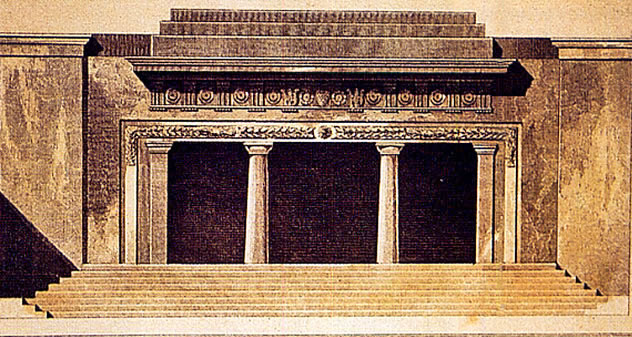
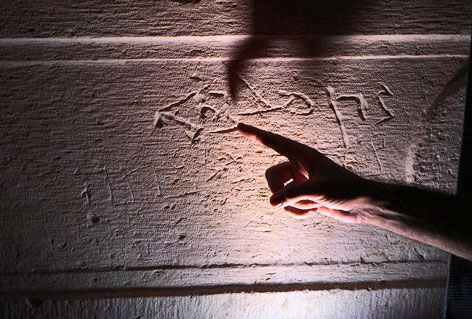
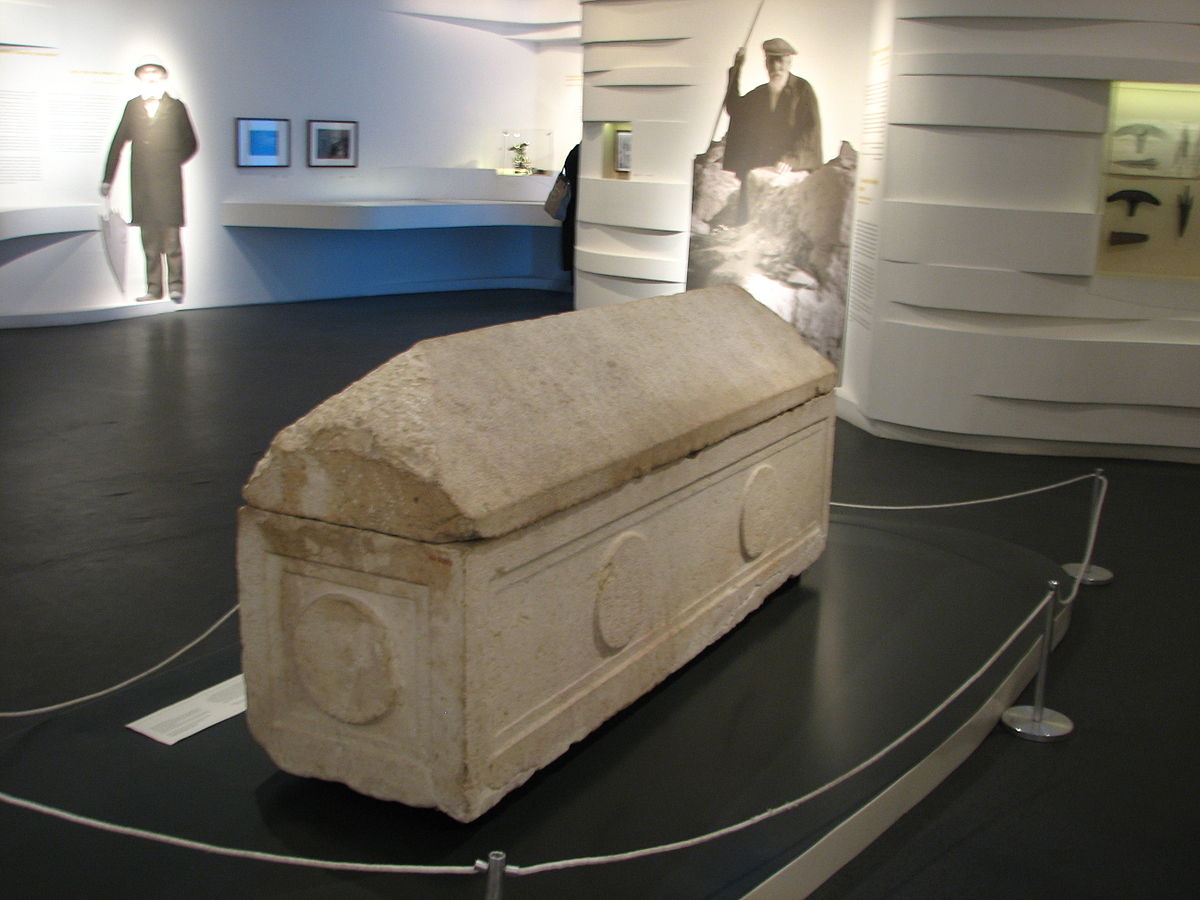


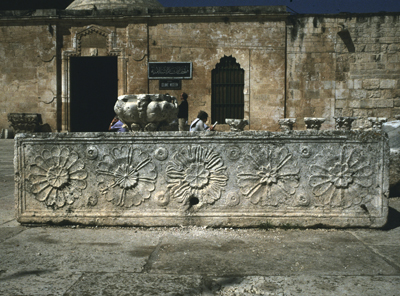


“What interests me in these sarcophagi is their decorations. They all display rosettes, resembling flowers. These motifs are well known from the Temple Mount Excavations, where many such fragments were found.”
The golden lamp that Queen Helena gifted to the temple is being constructed in hope that it will hang at the entrance of the new Temple in Jerusalem. I believe this lamp represents the Shekinah that I have installed on Santa Rosa Island for safe keeping. No one will enter the new temple unless they are cleansed in water by me, or, the one that comes after me.
Jon
‘The Nazarite’


“Simon held the upper city, and the great walls as far as Cedron, and as much of the old wall as bent from Siloam to the east, and which went down to the palace of Monobazus, who was king of the Adiabeni, beyond Euphrates; he also held the fountain, and the Acra, which was no other than the lower city; he also held all that reached to the palace of queen Helena, the mother of Monobazus; but John held the temple, and the parts thereto adjoining, for a great way, as also Ophla, and the valley called “Valley of Cedron;”
Years ago I suggested Nazarite Queen Helena of Abiabene was the Sleeping Beauty Princess, Rosamond. Her sarcophagus lies at rest under the pyramid of the Louvre, the place where Dan Brown’s Fairytale suggests Mary Magdalene, the wife of Jesus is interred. There is not name in the whole internet like that of my grandmother, Mary Magdalene Rosamond, whose granddaughter married a Benton. Jessie Benton and her husband, John Fremont, had Hungarian ex-patriots in their bodyguard, that fought against the Confederated slave masters of the new Roman empire whose false evangelical prophets have taken over Fremont’s party in order to take from the poor, the widow, and the elderly in order to give to the Imperial Billionaires of America.
The Roman swine who pretend to be wolves captured the beuatiful Menorah that Queen Helena gave as a gift to the Jewish people. My story ‘Capturing Beauty’ will bring the Light of God – home! I will overcome the world!
Johanne Wolferose
Judaism in Adiabene survived the death of Izates and Helena. History indicates that the Jewish religion continued to play a part in the kingdom of Adiabene; non-royal Adiabenians converted. “The names of the Adiabenite [sic] Jews Jacob Hadyaba and Zuga (Zuwa) of Hadyab,”33 indicate a non-Hebrew origin and possible conversion to Judaism.
Mindful of the events which in her view were of a positive nature, Helena journeyed with her retinue to Jerusalem and the Great Temple to worship and offer thank-offerings while the throne in Arbela had been safeguarded. Queen Helena offered items of blessing including a special addition to the Kodesh, or Inner Sanctuary of the Great Temple:
The doorway of the Kodesh was 10 cubits wide and 20 cubits high. Over the doorway was a carving of a golden menorah donated by Queen Helena, a convert to Judaism. The morning service could not begin before sunrise. The Temple was surrounded by high walls, and it was not possible to see the rising sun, so priest had to be sent outside to see if it was time for the service to begin. After Queen Helena donated the Menorah, it was no longer necessary to send a priest outside the Temple. As the sun rose in the east it shone against the menorah and the reflected light was cast into the Azarah. The priests then knew that the morning service could begin.18
Kevin Brook cites that the Jewish kings of Adiabene were regularly involved in policy and military affairs. In 61 CE, Monobazus II, the king who Izates meant to succeed him, sent troops to Armenia to try to thwart an invasion of Adiabene. Two years later, he was in attendance at a peace settlement between Parthia and Rome. During the war of Judea against the Roman Empire (66-70 CE), the Adiabenian royal family supported the Judean side.34
According to Paul E. Kahle, there were many Jews in the city of Arbela even after the establishment of bishops and the spread of Christianity in Adiabene.35
Book V, Chapter VI, Section 1 (Entire)
The Vast Slaughters Occurring Within The City
1. Now the warlike men that were in the city, and the multitude of the seditious that were with Simon, were ten thousand, besides the Idumeans. Those ten thousand had fifty commanders, over whom this Simon was supreme. The Idumeans that paid him homage were five thousand, and had eight commanders, among whom those of the greatest fame were Jacob, the son of Sosas, and Simon, the son of Cathlas. John, who had seized upon the temple, had six thousand armed men, under twenty commanders; the zealots also that had come over to him, and left off their opposition, were two thousand four hundred, and had the same commander they had formerly, Eleazar, together with Simon, the son of Arinus. Now, while these factions fought one against another, the people were their prey of both sides, as we have said already; and that part of the people who would not join with them in their wicked practices, were plundered by both factions. Simon held the upper city, and the great walls as far as Cedron, and as much of the old wall as bent from Siloam to the east, and which went down to the palace of Monobazus, who was king of the Adiabeni, beyond Euphrates; he also held the fountain, and the Acra, which was no other than the lower city; he also held all that reached to the palace of queen Helena, the mother of Monobazus; but John held the temple, and the parts thereto adjoining, for a great way, as also Ophla, and the valley called “Valley of Cedron;” and when the parts that were interposed between their possessions were burnt by them, they left a space wherein they might fight with each other; for this internal sedition did not cease, even when the Romans were encamped near their very walls. But although they had grown wiser at the first onset the Romans made upon them, this lasted but for a while; for they returned to their former madness, and separated one from another, and fought it out, and did everything that the besiegers could desire them to do; for they never suffered anything that was worse from the Romans than they made each other suffer ; nor was there any misery endured by the city after these men’s actions that could be esteemed new. But it was most of all unhappy before it was overthrown, while those that took it did it a greater kindness; for I venture to affirm, that the sedition destroyed the city, and the Romans destroyed the sedition, which it was a much harder thing to do that to destroy the walls; so that we may justly ascribe our misfortunes to our own people , and the just vengeance taken on them by the Romans; as to which matter let every one determine by the actions on both sides.
News of the discovery of human bones, and from a Jewish queen moreover, inflamed the Jewish community in Jerusalem. The community petitioned prominent figures in Europe and lobbied the Ottoman authorities. De Saulcy was forced to suspend his excavation, but not before managing to send the sarcophagus and his other findings to France. Since then the queen’s coffin has languished, largely unseen, in the basement of the Louvre in Paris
News of the discovery of human bones, and from a Jewish queen moreover, inflamed the Jewish community in Jerusalem. The community petitioned prominent figures such as Moses Montefiore and the Rothschild family, and lobbied the Ottoman authorities. De Saulcy was forced to suspend his excavation, but not before managing to send the sarcophagus and other findings to France. Since then the queen’s coffin has been in the Louvre in Paris. According to Maoz Lin, the museum displayed it for a while and then put it in storage. It was brought out again in 1982, for an exhibition marking the centenary of de Saulcy’s death, after which it went back into storage.
The main problems were the technical arrangements for transferring the sarcophagus. At the demand of the Jewish community in France, two rabbis came to make sure there were no human bones remaining inside.”
The Israel Museum’s director, James Snyder, and the French ambassador, Bigot, were also involved in the negotiations. Without their intervention, Maoz Lin notes, the royal coffin might never have left Paris. Snyder says that the French ambassador aided in the operation enthusiastically, and both Choukroun and Bigot stress the good will their country displayed in the matter.
“We have been working on this matter for a very long time, and we are very glad that the sarcophagus is back in Israel,” says Bigot. “The president of the Louvre is an old friend of Israel’s and he wanted to grant the request. A lot of details had to be worked out, to make sure that the casket is transferred safely, and more. So we are delighted that its transfer ended successfully.”
On the Tuesday before Sukkot, a few hours after the ceremony in honor of the burial box’s return to Jerusalem, Snyder entered the room where it is on display to the public, as part of the exhibition “Breaking Ground: Pioneers of Biblical Archaeology.”
“I saw a young family there, visiting the exhibition,” he says. “I realized that they did not understand what this object was, so I explained it to them. The return of the sarcophagus to Jerusalem makes me very happy. If the supposition is correct and it is really the sarcophagus of Queen Helena, the idea that we can look at a coffin in which a queen from the first century C.E. was buried – a woman who converted and who contributed a great deal to the people of Jerusalem – is very exciting. It opens a door to a piece of history that you would have no chance of knowing otherwise.”
“Her son [Izates] having gone to war, Helena made a vow that if he should return safe, she would become a Nazirite for the space of seven years. She fulfilled her vow, and at the end of seven years went to Judah. The Hillelites told her that she must observe her vow anew, and she therefore lived as a Nazirite for seven more years. At the end of the second seven years she became ritually impure, and she had to repeat her Naziriteship, thus being a Nazarite for twenty-one years. Judah bar Ilai, however, said she was a Nazirite for fourteen years only.”[8] “Rabbi Judah said: ‘The sukkah [erected for the Feast of Tabernacles] of Queen Helena in Lydda was higher than twenty ells. The rabbis used to go in and out and make no remark about it’.”[9]
What interests me in these sarcophagi is their decorations. They all display rosettes, resembling flowers. These motifs are well known from the Temple Mount Excavations, where many such fragments were found. None of these fragments were large enough to inform us reliably as to the style of Temple Mount decoration. In order to make reconstruction drawings, we had to turn to the funerary monuments and sarcophagi of the Second Temple period which reflected the architecture on the mount itself.
The variation in motifs was amazing. For instance none of the rosettes on the sarcophagi and tomb friezes was the same as the next. The sarcophagus of this Mesopotamian queen with its arrangements of rosettes resembling a frieze is invaluable as an indication of the splendour and beautiful architecture of Herod’s Temple and the buildings of the Temple Mount.
Nearly 3,000 km [2,000 miles] from Judea, east of the Tigris River, lies the ancient land of Adiabene — nowadays more or less Iraqi Kurdistan (upper middle of map). In Helena’s time, during the early first century CE, Adiabene was a client kingdom of the Parthians. According to the Jewish historian, Josephus,** it was also where the remains of Noah’s ark were still visible and could be shown to anyone who was interested in such things.
http://judithweingarten.blogspot.com/2010/10/queen-helena-returns-to-jerusalem.html
Queen Helena lived happily with her husband, Monobaz, in Adiabene. Occasionally, Jewish merchants used to visit Adiabene on business. Through them Helena became acquainted with, and interested in, the Jewish religion. As time went on, she became so deeply attracted by the high moral standard of Judaism that she engaged a teacher for herself to learn all she could about it.
The royal house of Adiabene helped the Jewish state in many ways. Many a time they sent large sums of money to Jerusalem, either to provide for the needs of the Beit Hamikdash or to help the poor. Once, a very serious famine ravished the Jewish land, and soon there was no money left to buy food from other countries. Queen Helena and her son used a large portion of their own state treasury to buy grain in Alexandria and dried fruits in Cyprus, and have all this lifesaving food shipped to Jerusalem.
When Monobaz was criticized by some of his advisers for squandering his money on the poor, both in his own country and in the Jewish state, he replied:
“My ancestors amassed treasures in this world, while I gather treasures for the world to come. My ancestors placed their treasures in chambers, and had to guard them against thieves; my treasures are far from the reach of any greedy hand, and will be safe forever. My ancestors’ treasures did not produce any fruits, but mine continue to bring more and more fruit.”
Such was the piety and charitableness of Queen Helena and her sons.
In the Mishnah we are told of many gifts which Queen Helena and her son gave to the Beit Hamikdash, for which they are remembered for all time. For instance, she had a golden candelabra placed above the entrance to the Beit Hamikdash, which not only had its own light, but early in the morning it reflected the sun’s first rays. Thus, when the priests wanted to know whether it was already time to say the Shema in the morning, they had only to look at Queen Helena’s candelabra.
Another gift of Queen Helena was a tablet of gold, on which she had a certain portion of the Torah inscribed, which was of special interest to women. In addition, King Monobaz and his mother donated golden handles to be attached to all vessels used in the Beit Hamikdash on Yom Kippur.
Once, on a visit to Jerusalem, Queen Helena built a beautiful mausoleum where she and her sons were to be buried after their death. Its door had an ingenious mechanism that opened it once a year at a certain hour and closed itself again, to stay closed for another twelve months. Even now, parts of this beautiful tomb, called the Tombs of the Kings, are still left.
Before her death, Queen Helena traveled to Jerusalem to spend there the last years of her life in prayer and good deeds. According to tradition, she lived as a nezirah (nazirite) for fourteen years, to keep a vow she had made for her son and for herself.
Share this:
One response to “Nazarite Lamp of Helena”
Royal Rosamond PressApril 14, 2017 at 1:52 amEditReblogged this on Rosamond Press and commented:Queen Helena was a Nazarite and her son fought the Roman Slave Holders as God’s Aboltionists. The evangeical who voted for the Trumpire of the Anti-Christ will not step one foot in the new temple – or heaven. They will be cast into the fires of hell!
9/1/2016
Judaic Kingdom of Adiabene
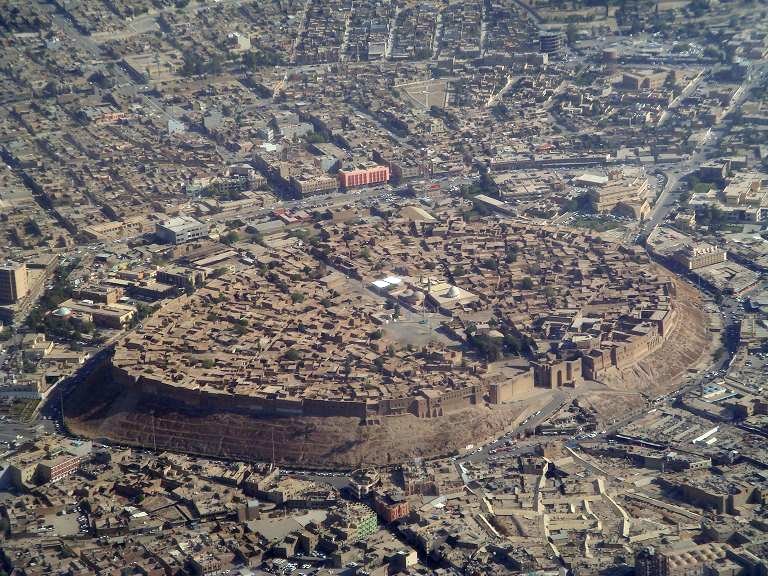
Above is a photo of the powerful and wealthy kingdom of Adiabene that backed the Jews of Jerusalem in every way. Why didn’t Jesus go here to teach, or, Paul, who was looking for more proselytes? Surely foreign prophets from Adiabene went to Jerusalem to preach to aliens, and Jews who had converted to Helenism. There had to be foreign Rabbis.
The Jewish Historian Josephus was a quisling descended from King David, thus, he had a vested interest in putting other royal people in a bad light, such as, having royal siblings marry each other and have children.
Jon Presco
Once part of the Assyrian heartland, Adiabene was annexed by the expanding Persian empire in the 6th century BC. Xenophon’s 10,000 passed through on their way to the Black Sea, and Alexander’s final confrontation with Darius III was at Gaugamela – probably in the territory of Adiabene east of Mosul. It emerged as an independent kingdom when the Parthians overran the former Seleucid lands. Its main city was Arbela (modern Irbil). Its culture was Persian, its religion Zoroastrian – until a curious episode told by JOSEPHUS, concerning the royal family:
King Monobazus fell in love with his sister Helena, and made her pregnant. A dream told him to look after his son, who would have a happy life. Izates became his favourite, although Monobazus had sons by other women. Because they made no secret of their hatred for him, Monobazus sent Izates away, to be brought up by his friend the king ofCHARACENE. Izates was well-looked after, and married the king’s daughter. Monobazus – old by now – died, and Izates returned to become king.
Coincidentally both mother and son had been attracted to Judaism. When Izates came home, having refused to murder all his brothers (he sent them off as hostages instead – some to emperor Claudius in Rome, others to the Parthians) he decided to ignore public opinion and become a fully-fledged Jew – by getting himself circumcized. Helena went to Jerusalem, where she and her son became major benefactors, and Izates sent five of his sons there to be brought up as Jews.
Izates was a sucessful and well-respected king – and earned even more respect when he took in ARDAVAN III, king of Parthia, driven out by a conspiracy, and helped him regain his throne. Ardavan gave him Nisibis as a thankyou. But, although the royal family keenly embraced Judaism, the nobles did not. They tried to dethrone Izates, first by an alliance with the Arabs, and when that failed, with the support of Valaksh I (Vologaeses), now king of Parthia (since AD 51). Izates was saved when VALAKSH I HAD TO LOOK ELSEWHERE to confront an invasion of the Dahae and Sacae. Soon after this IZATES DIED, leaving the kingdom to his brother Monobazus II, who had also become a Jew. It’s doubtful whether Judaism spread much beyond the royal family, however.
When JUDAEA REBELLED AGAINST ROME IN AD 66, the Adiabene royal family suppported the Judaeans: as a result members of the family were captured by Titus and taken as hostages to Rome.
In AD 116 , Adiabene was annexed by the Roman emperor Trajan, as part of his preparation for a full-scale invasion of Parthia, and became the Roman province of Assyria. But only for a couple of years. Trajan’s successsor, Hadrian, released it. It was, along with next-door Atropatene, reluctant to accept the rule of the Sasanians, remaining loyal for some time to its former Parthian overlords. It also became defiantly Christian in later times, retaining its distinctiveness. Despite being overrun in the invasions of emperors Severus (AD 196) and Caracalla (AD 216) it stayed part of the Sasanian empire until the Islamic conquest.
Aiabene, petty kingdom that was a vassal state of the Parthian empire (247 bc–ad 224) in northern Mesopotamia (now Iraq). Its capital was Arba-ilu (Arbela; modern Irbīl). In the 1st century adits royal family embraced Judaism; the queen mother Helena (d. ad 50), famous for her generosity to the Jews and the Temple, and her sons Monobazus II and Izates II were buried in the Tombs of the Kings at Jerusalem. Adiabene was frequently attacked by the Romans during their campaigns against the Parthians.
Izates II (Ἰζάτης), son of Monobaz (Μονόβαζος), or Izates bar Monobaz (also known as Izaates, Persian: ایزد or Hebrew: זוטוס בן מונבז) (ca. 1-55 CE). Izates, or Izas as Josephus Flavius sometimes calls him, was a king of the Parthian client kingdom of King Monobazus I who became a proselyte to Judaism. He was the son of QueenHelena of Adiabene and of Adiabene. Queen Helena was also said to be the wife of King Abgarus of Edessa and thus the queen of Edessa too.[1]Moses of Chorene confirms that this Helena was also the queen of Adiabene when he says:“The chief of King Abgar’s wives, who was named Helena … Helena went away to Jerusalem in the time of Claudius, during the famine which Agabus had predicted. Spending all her treasures she bought an immense amount of grain in Egypt, which she distributed to the poor, to which Josephus bears witness. Her famous mausoleum stands before the gate at Jerusalem to this very day.:[2]
During his youth Izates was sent by his father to the court of King Abinergaos I of Characene in Charax Spasinu. While in Charax Izates became acquainted with aJewish merchant named Ananias, who familiarized him with the tenets of the Jewish religion, in which he became deeply interested. Izates married King Abinergaos’ daughter Symacho who had been converted to Judaism through the efforts of Ananias. His mother had been previously won over to Judaism without his knowledge. On returning home and ascending the throne on the death of his father (c. 31 CE), Izates discovered the conversion of his mother; and he himself intended to adopt Judaism, and even to submit to circumcision. He was, however, dissuaded from this step both by his teacher Ananias and by his mother, but was ultimately persuaded thereto by another Jew, Eleazar.[3][4]
For some time Izates enjoyed peace; and he was so highly respected that he was chosen as arbitrator between the Parthian king Artabanus III and his rebellious nobles (c. 39 CE). But when several of Izates’ relatives openly acknowledged their conversion to Judaism, some of the nobles of Adiabene secretly induced Abia, anArab king, to declare war against him. Izates defeated his enemy, who in despair committed suicide. The nobles then conspired with Vologases, King of Parthia, but the latter was at the last moment prevented from carrying out his plans, and Izates continued to reign undisturbed for a total of twenty-four years.
Izates died around 55 CE. His mother Helena survived him for only a short time. He left twenty-four sons and twenty-four daughters. Izates was succeeded by his older brother Monobaz II, who sent Izates’ remains and those of Queen Helena to Jerusalem for burial.
 Rosamond Press
Leave a comment