Belmont
A History Lesson
by
John Presco
ALL RIGHTS RESERVED
Yesterday I sent Coroner Michelle Schabinger an e-mail, but, got the address wrong. I will try again.
Dear Ms. Schabinger
On this post is a the e-mail I sent you on the 15th, but got the address wrong.
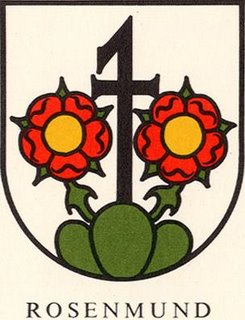
At 3:50 PM. on February 16, I found what I sought for thirty-eight year. I am at the zenith of the Beautiful Mountain . We just made history. In speaking to you on the phone, and in you bidding me to give you my information, I was able to take the last step in owning something that is truly astounding. I connected the Knight Templars to the Shroud of Turin, but had failed to connect the Rougmont name with Rosamond. Jimmy Rosamond did this, but I was not so sure. In looking at the name ROSENMUNND again – there it was! Eureka!
If the bones of the Native American were not found, and if you and your colleagues were not on the scene, I would not have pushed myself past the PTSD I have longed suffered. Looking at your photograph, your strong confident look, gave me strength. I want you to take some credit for this discovery. Put it in your resumé’.
With Gratitude
John Rosenmund Presco
President: Royal Rosanond Press
THE STORY
A construction crew in Belmont has halted work after discovering human remains.
Authorities have ruled out the possibility that the remains found in Twin Pines Park were those of Ylva Hagner, 42, of Palo Alto, who disappeared 29 years ago. But it appears likely they are those of a Native American from long ago.
Hagner disappeared from the software company she worked at in Belmont on Oct. 14, 1996. Her car was found a few days later on Spring Street, just off of El Camino Real, in San Carlos. The FBI was among the agencies that were called when the remains were found.
Now, the city is working with “cultural resource specialists and designated tribal representatives to ensure all next steps are handled appropriately and respectfully,” Belmont city spokeswoman Elizabeth Tsachres said in a statement.
According to the state’s Native American Heritage Commission, if remains are found, the commission must be notified by the county coroner. The commission must then notify whoever it believes to be the most likely descendant.
The descendant must then make recommendations to the property owner.
Tsachres would not confirm whether the city was working with the Native American Heritage Commission, only saying that out of “respect for partners and cultural sensitivity,” the city would not be releasing any further information.
I Am Related To Elizabeth Rosemond Taylor


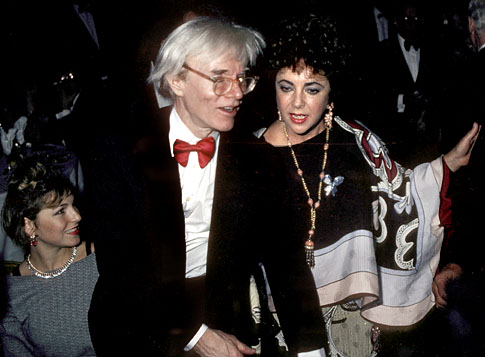
Descendants of Moses Morton Rosemond
Generation No. 1
1. MOSES MORTON11 ROSEMOND (PHILIP10, WILLIAM9, JAMES8, UNKNOWN7, JAMES
“JACOB?”6, HANS ULRICH5, HANS4, FRED3, HANS2, ERHART1 DE ROUGEMONT)1,2,3,4
was born Bet. 1843 – 1845 in Guernsey County, Ohio5,6. He married MARTHA E
LIKES7,8 26 Jul 1868 in Guernsey County, OH9. She was born Abt. 1847 in
Ohio.
More About MOSES ROSEMOND and MARTHA LIKES:
Marriage: 26 Jul 1868, Guernsey County, OH9
Children of MOSES ROSEMOND and MARTHA LIKES are:
2.i.ELIZABETH MARY12 ROSEMOND, b. Jun 1869, Guernsey County,
Ohio; d. 1937, Arkansas City, Cowley County, Kansas.
ii.FRANK ROSEMOND.
Friedrich Rosenmund 

Friedrich Rosenmund was a weaver and guild master, a member of the Basel Grand Council and an advisor of the weavers’ guild and a city captain from 1593-1620 in Basel. Ordered at the St. Leonhard Church in Basel
Immediate Family
Showing 12 of 13 people
- Unknown Rosenmundwife
- Barbara Rosenmundwife
- Lucas Rosenmundson
- Niklaus Rosenmundson
- Maria Brandmüllerdaughter
- Hans Rosenmundson
- Hans Rosenmundfather
- Katharina Rosenmundmother
- Magdalena Rosenmundsister
- Anna Rosenmundstepmother
- Johannes Rosenmundhalf brother
- Hans Rosenmundhalf brother
Rosenmund Reduction
| Hans Rosenmund (b. – 1554) | |
| Birthdate: | estimated between 1487 and 1539 |
| Death: | circa 1554 Basel, Basel-Stadt, Basel City, Switzerland |
| Immediate Family: | Son of Erhart Rougemont, de and Unknown De Rougemont Husband of Anna Rosenmund and Katharina Rosenmund Father of Johannes Rosenmund; Hans Rosenmund; Elisabeth Rosenmund; Friedrich Rosenmund and Magdalena Rosenmund Brother of Peter Rosenmund |
|---|---|
| Managed by: | Private User |
| Last Updated: | July 25, 2020 |
Immediate Family
- Anna Rosenmundwife
- Johannes Rosenmundson
- Hans Rosenmundson
- Elisabeth Rosenmunddaughter
- Katharina Rosenmundwife
- Friedrich Rosenmundson
- Magdalena Rosenmunddaughter
- Erhart Rougemont, defather
- Unknown De Rougemontmother
- Peter Rosenmundbrother
About Hans Rosenmund
Hans Rosenmund was admitted to the Basel civil law on 4 July 1534. In the first marriage with Anna Mercklij they had 2 sons and 1 daughter. Johannes Rosenmund 9 Nov 1539, died in 1539 in Basel, Hans Rosenmund 25 Nov 1543 in Basel, profession plumber, married to Maria born on 25 March 1565 and Elisabeth Rosenmund 5 oct 1550, died in Basel in 1562, she was 12 years old. All children were baptized in Basel. Second marriage with Catharina Leuenberger they had 1 son and 1 daughter. Friedrich Rosenmund 31 Jan 1552 in Basel (our tribe), Magdalena Rosenmund 28 Sep 1553 in Basel and both children were baptized in Basel
Over Hans Rosenmund (Nederlands)
Hans Rosenmund werd op 4 juli 1534 in het Baselse burgerrecht opgenomen.In het eerste huwelijk met Anna Mercklij kregen zij 2 zonen en 1 dochter.Johannes Rosenmund 9 nov 1539, overleden in 1539 te Basel, Hans Rosenmund 25 nov 1543 te Basel, beroep loodgieter, getrouwd met Maria geboren op 25 maart 1565, Elisabeth Rosenmund 5 oct 1550, overleden in 1562 te Basel, zij werd 12 jaar. Alle kinderen zijn gedoopt te Basel. Tweede huwelijk met Catharina Leuenberger kregen zij 1 zoon en 1 dochter. Friedrich Rosenmund 31 jan 1552 te Basel (onze stam). Magdalena Rosenmund 28 sep 1553 te Basel en beide kinderen zijn gedoopt in Basel
Belmont Bones
Yahoo/Sent
- John AmbroseFrom:braskewitz@yahoo.comTo:mschabinger@smc.gov.orgSun, Feb 15 at 6:08 PM
- Dear Ms. Schabinger
- When bones were unearthed in Belmont Creek, they could have belonged to a member of my family, who inhabited this are since 1849. Carl Janke brought six portable houses around the Cape in 1848, and may have tried to place them in what – would be the Capital of California? As an anthropologist, archaeologist, and Feminist Anthropologist, you have struck paydirt! In contacting you – so have I You can question if I am stalking you, and, no, I have never been in Belmont. I have famous family members and books have been written about us. We have been stalkedHere is the crux of my questions I put before you. I did research since we talked. Here is a great site that answers many questions.The Coroner can instigate an exhumation of a decedent – if foul play is suspected – and evidence can be acquired by examining the remains. Most exhumations are instigated by living family members for various reasons. Moving the body to another location is the top reason. They may want their loved one closer to them. If this is desired, then you can expect to spend a lot of money, and go through much red tape – at both ends. Even moving the headstone is an ordeal. After wondering where the bones of my ancestors are, I keep wondering if – they are still in the ground where they were put – around 1880. In the testimony of a relative, she said the City Needed land, and they dug up Carl, his wife, and her mother – in the middle of the night? Why in the middle of the night? Wouldn’t the city want the family involved – at both ends? This suggests the city never got the families permission, Did they get the permission of a coroner?Here is my theory. Did the City rule they did not have the money in their budget, and they voted on the idea – of giving the appearance the bodied were dug up and moved. Are they still – there? Now for the marker in the Union cemetery…….are their bones in the ground – there? The other place the Hanke bones might be, is – under the new freeway built next to the cemetery, These was a new paupers cemetery there, after the Union made it clear thay are not longer a paupers cemetery. A backhoe could have dug a grave there, the remains thrown in, and a wrought iron monument put on top. I read an article that stones in this place were badly damaged. The DRA said there are two headstone for the Jankes. The later one – is quite new! Are you keeping count?Now for the million dollar question, who owned Twin Pines Park? Denny Lawhern was instrumental in establishing a park and the Belmont Historical Society – that is celebrating it centinial. Denny claims he was trying to save this land – from developers. He was not trying to save an established park. So…..how did this area – ESCAPRE DEVELPMONT? Is it possible, I am the rightful owner of Twin Pines Park -and my child and grandchild?When I trued to post in the BHS Facebook, my posts were taken down. I was puzzled why my postS on…..Christine Rosamond Benton, were, erased. Rosamond was the highest paid artist in history. I am working on our story. Here is my post about me discovering the Knight Templars – did own the Shroud of Turin – the most forensic-tested object in human history. You are now – a part of this! Folks with shovels – found me! You are also a part of the fraudulent digs on Oak Island. I exchanged e-mails with……ZENA HALPERN! I had arguments with the Sinclair Clan. I belong to several Mary Magdalene Feminine Divine Groups, who evigted me when I would not stop saying, my grandmother has the nameMARY MAGDALENE ROSAMOND (Rose of the World)Dan Brown and his wife ease dropped on our groups. He got sued for plagiarism. On the post I made early this morning, I call you “Sophia”. You are also…VICTORIA ROSEMOND BONDI am related to Ian Fleming and began my Bod novelTHE ROYAL JANITORStarring two lesbians that got married.Google….Miriam Starfish Christling. For six years I have been searching for a meaningful title to describe what she does in my unfinished book. You gave me the answer What is the answer…..SOPHIA? Do you know the riddle of theROCHEFOUCALD MAP?I am asking your permission to use your name, and Facebook pic. I am the president of Royal Rosamond Press, a registered newspaper in Lane CountChristine Rosamond – WikipediaChristine Rosamond – WikipediaRosamond was born in Vallejo, California to Victor and Rosemary Presco on October 24, 1947.[5] Rosamond was the …
https://rosamondpress.com/2026/02/15/unknown-man-found-hanged/ https://rosamondpress.com/2021/07/27/christines-kindergarten-teacher-said/Can Headstone Be Moved”Can Headstone Be Moved”The illustrations to this article are very good. The good outcome is the happiness of the deceased family. The D…
Sisterhood of Rougemont
Templar Shroud of Fontenotte
Posted on October 11, 2019 by Royal Rosamond Press

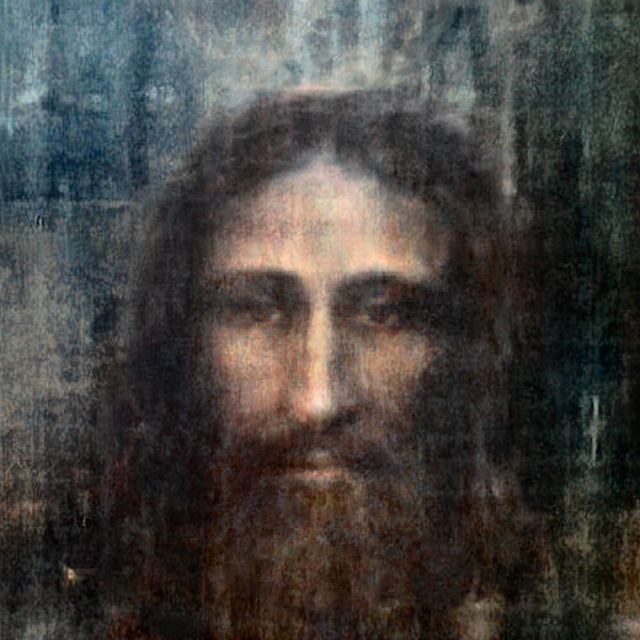
Here are images of Knight Templars who might have seen The Holy Shroud of Turin. I am calling for a New Reformation that will ground its roots at Fontenotte. We need a United Religion designed to stand its ground and take on New World Enemies.
Here is an a post I made in 2006 before I proved the Templars owned the Shroud of Turin. Trameloy/Tramelay is Dramelay.
John Presco
Bernard de Trameloy. Burgundian lord.
It accepted from Louis VII the privilege to hang the title of Large
Maître.(non recognized by the Chapter)
Its small nephew, Amédée de Tramelay, were an archbishop of Besancon
(1193-1219)
The FIT to rebuild the church and the town of Gaza
Captive fact and dies close to Ascalon in 1153 with its Templiers.
During this battle Templiers and Hospitaliers combatant for the
spoils and the honor before the catch of the city
Amedee de Dramelay/Tramelay was an archbishop of Besancon, and the son of Templar Grand Master, Bernard de Tramelay. Fromond de Dramelay married a Rougemont.
1.2.Hugues II de Dramelay; he and his brother were ancestors of the
Sires de Dramelay, Jura
2.Humbert de Dramelay, sn de Neufchatel, etc; m.NN
2.1.Fromond de Dramelay, sn de Neufchatel, etc 1171/1213; m.N de
Rougemont
Bernard de Tramelay (died 16 August 1153) was the fourth Grand Master of the Knights Templar.
He was born in the castle of Tramelay near Saint-Claude in the Jura. According to Du Cange, he succeeded a certain Hugues as Master of the Temple, although this Hugues is otherwise unknown. He was elected Grand Master in June 1151, after the abdication of Everard des Barres, who had returned to France following the Second Crusade. King Baldwin III of Jerusalem granted him the ruined city of Gaza, which Bernard rebuilt for the Templars.
In 1153 the Templars participated in the Battle of Ascalon, a fortress at that time controlled by Fatimid Egypt. The Templars constructed a siege tower, which was burned down by the Egyptian soldiers inside Ascalon. The wind caught the flames and part of the walls of Ascalon burned down as well.
According to William of Tyre, knights of the Order rushed through the breach without Baldwin’s knowledge while Bernard prevented other crusaders from following, as he did not want to share the spoils of the city with the king. Bernard and about forty of his Templars were killed by the larger Egyptian garrison. Their bodies were displayed on the ramparts and their heads were sent to the sultan. Other more modern accounts say that William of Tyre’s version may have been distorted, since it may have been based on the defensive accounts given by the army’s commanders as to why they did not follow the Templars into the breach.[1]
In yet another differing account by a Damascene chronicler in the city, the breach of the wall is mentioned as a precursor to the fall of the city; he makes no mention of the incident with the Templars. Regardless of which account is believed, Bernard was killed and beheaded during the fighting. A few days later, Baldwin captured the fortress; shortly thereafter, the Templars elected André de Montbard as their Grand Master.
John Ambrose <braskewitz@yahoo.com>
To:tsj@tsj.org
Wed, Mar 29, 2006 at 1:42 PM
The Sisterhood of Rougemont
Dear Daughter;
Thibaut and Humbert de Rougement were Bishops of Besancon and the ancestors of Guillaume de Vienne who co-founded the Order of Saint-George ‘Brotherhood of Rougemont’ that was taken over by the wrong people during the Reformation. The Rougemonts fled to England and Canada, where as members of the Canadian Parliament, they admitted members into the Loyal Orange Order. Bennett Rosamond was a master of the LOL.
Was there a ‘Sisterhood of Rougemont’? Jacquotte de Rougemont is listed as a member of the Brotherhood and she is the sister of Thibaut who was the Archbishop of Besancon, and the Chief, or, President of the Brotherhood of Rougemont.
of Rougemont Thiébaud archbishop of Besancon 1449
of Rougemont Jacquotte sister of the precedent 1449
of Rougemont Jean-Guillaume knight 1449
Amedee de Dramelay/Tramelay was an archbishop of Besancon, and the son of Templar Grand Master, Bernard de Tramelay. Fromond de Dramelay married a Rougemont.
Many family members of the House of Orange were Knights of the Brotherhood of Rougemont. After the Reformation, and the Huguenots lost the battle of White Mountain, we lost the estates of our Rosy ancestors. The Pope put loyal Catholics in our offices, and gave them our land. The present religious order of Saint George, are usurpers. One can say ‘The True Landlord’ has returned.
Within this house are the rightful White Friars of the Brotherhood of Rougemont, who once were lost, are now found. Let us awaken the sleeping kingdom.
We have endured the thorns for the love of our roses.
Love
Jon Gregory Presco de Rougemont
Grand Master of the Brotherhood of Rougemont
The “lonely mansion” nestled at the foot of the hills was better known as the Doak Mansion, completed in 1921. In 1927 the then-owner, Col. John McGill, offered the mansion to President Calvin Coolidge to serve free of charge as a summer White House; Coolidge declined the offer. Eventually the mansion fell into disrepair, and most of the original 2,000 acres were sold off for agricultural use. In 1955, Noel Sullivan, brother of Mother Agnes of Santa Clara, donated $60,000 to purchase the run-down mansion and the remaining 29 acres. Sullivan died in 1955, leaving a substantial bequest to the Carmelites for construction of the beautiful chapel, designed by architect Paul Ryan.
In the Protevangelium of James we read about a liniage of female prophets giving birth to prophetic sons.
http://www.lib.rochester.edu/camelot/TEAMS/44sr.htm
http://www.webcom.com/gnosis/library/psudomat.htm
Bernard de Trameloy. Burgundian lord.
It accepted from Louis VII the privilege to hang the title of Large
Maître.(non recognized by the Chapter)
Its small nephew, Amédée de Tramelay, were an archbishop of Besancon
(1193-1219)
The FIT to rebuild the church and the town of Gaza
Captive fact and dies close to Ascalon in 1153 with its Templiers.
During this battle Templiers and Hospitaliers combatant for the
spoils and the honor before the catch of the city
Jon Presco
http://www.ocarm.org/eng/scudoeng.htm
http://tinyurl.com/fdas2
http://tinyurl.com/n7soz
de Rougemont Thiébaud archevêque de Besançon 1449
de Rougemont Jacquotte soeur du précédent 1449
de Rougemont Jean-Guillaume chevalier 1449
de Rougemont Pierre 1463
of Rougemont Thiébaud archbishop of Besancon 1449
of Rougemont Jacquotte sister of the precedent 1449
of Rougemont Jean-Guillaume knight 1449
of Rougemont Pierre 1463
de Sacquenay Jean seigneur de Rougemont 1582
Jon Presco
The PEDIGREE of
Thiebaut II de ROUGEMONT
Born: ? Died: aft. 1173
Poss. HM George I’s 18-Great Grandfather. HRH Charles’s 24-Great Grandfather. Louis XVII’s 21-Great Grandfather. HM Baudouin I’s 23-Great Grandfather.
________________________________________
Wife/Partner: Alais
Child: Humbert II de ROUGEMONT
________________________________________
________ ________ _______ _______ _______ ____ ____ ___
/ — Thiebaut I de ROUGEMONT
/
– Thiebaut II de ROUGEMONT
\
\ — Poncette de TRAVES (? – 1156+)
________________________________________
His (poss.) 2-Great Grandchild: Alais de FAUCOGNEY
His (poss.) 5-Great Grandchildren: Marguerite de VIENNE ; Guillaume de VIENNE ; Philippe de VIENNE
Humbert II de ROUGEMONT
Born: ? Died: by 1227
Poss. HM George I’s 17-Great Grandfather. HRH Charles’s 23-Great Grandfather. Louis XVII’s 20-Great Grandfather. HM Juan Carlos’ 23-Great Grandfather.
________________________________________
Wife/Partner: Sibille de BESANCON
Child: Hugues de ROUGEMONT
________________________________________
________ ________ _______ _______ _______ ____ ____ ___
/ — Thiebaut I de ROUGEMONT
/ — Thiebaut II de ROUGEMONT (? – 1173+)
/ \ — Poncette de TRAVES (? – 1156+)
– Humbert II de ROUGEMONT
\
\ — Alais
________________________________________
His (poss.) 2-Great Grandchild: Philippe de VIENNE
His (poss.) 5-Great Grandchildren: Philippe de JONVELLE ; Gilette de VIENNE ; Hugues de VIENNE ; Marguerite de VIENNE
BERNARD OF TRAMELAI (1151)
http://www.euraldic.com/txt_saint-georges_s3.html
http://www.euraldic.com/txt_saint-georges_s3.html
http://www.euraldic.com/txt_saint-georges.html
Order and noble brotherhood into Frank-comté. Philippe the Good,
duke of Burgundy, instituted, the year 1430, the order of Fleece-in
Or. But while limiting to twenty-four only the number of the
admitted knights, it gave birth to a sharp jealousy among all the
gentlemen from the two Burgundies, which, by their birth and their
row, had the right to aspire to the same honor. Guillaume of Vienna,
lord de Saint-Georges, one of the most famous lords of Burgundy,
which, the first, had received the order of Fleece-in Or of the
hands of this prince, wanting to provide a compensation to the
offended clean love of the nobility of the two Burgundies, proposed
with this one, of the approval of Philippe the Good, the institution
of a noble brotherhood, under the patronage of Saint-Georges, whose
decoration, representing the gold effigy of this saint, owner of the
knighthood, would be suspended with a ribbon similar to that of
Fleece-in Or, and of which the evidence of admission would be those
of a life of name and weapons, without known origin. The first
assembly or chapter of this brotherhood took place in the church of
Augustins de SaintGeorges, the year 1430. It elected there for chief
and governor Guillaume of Vienna, his founder. It held then its
chapters in Seurre. One year after the institution of this
brotherhood, Philibert de Molans, Burgundian gentleman, having
finished the construction of a vault close the parish church of
Rougemont, in the intention to lock up relics of Saint-Georges
there, that as of the year 1390 it had brought back theHoly one,
convened all the gentlemen, his/her parents, neighbors and friends,
to attend with the blessing of this vault, and the installation of
the mounting which contained these invaluable relics. Offices were
founded in the honor of Saint-Georges as of this first assembly,
which renouvele constantly since, with the birthday of this saint;
and a few years after, the wars which followed the death of Charles
the Bold one and the meeting of the fine duchy of Burgundy to the
crown of France having put to the first brotherhood of Saint-
Georges, instituted by Guillaume of Vienna, that of Rougemont
continued to remain with a new glare, by taking completely the
character, the statutes and the ceremonial of an order of
knighthood, under the immediate protection of the Maximilien emperor
and all the other sovereigns, under the domination desquelsla frank
(comté was placed. At the time of the conquest of this province,
Louis XIV maintained the order of Saint-Georges in his existence and
his honors, and even condescended to substitute the ribbon of his
kind of the Holy Spirit for that of Fleece-in Or. The evidence of
nobility for the admission in this brotherhood was of sixteen
districts, by going up the paternal side up to nine degrees. It was
also necessary, to be allowed, to have been born or have
possessionné into Frank-comté. The governor or chief was elected
with life by the general assembly of the knights. Since 1589, one
added to the old statutes the oath of living and dying in the
catholic religion, and fidelity with the legitimate sovereign. The
decoration of the order consists of Saint-Georges with horse, boring
its lance a dragon, the gold whole. It is attached to the buttonhole
by a celestial blue moirué ribbon.
de Vienne Henriette femme d’Humbert de Rougemont,
ensuite de Jean de Rye 1449
de Vienne Gérard seigneur de Ruffey
de Vienne Henriette femme d’Humbert de Rougemont,
ensuite de Jean de Rye 1449
de Vienne Gérard seigneur de Ruffey 1499
de Vienne Claude seigneur de Clervent 1525
de Vienne Guillaume baron de Chevreaux 1544
de Vienne Henri baron de Chevreaux
BROTHERHOOD OF SAINT-GEORGE . She was instituted in the county of
Burgundy, l’an 1390 by Philibert de Molan, lord partly of Rougemont.
He was the first head, under the title of barristers president; the
fellow-members take their row according to l’ordre of their
reception in THE BROTHERHOOD without regard to dignities of which
some d’entre them could be covered; they mutually make vSu s’aider
s’ils are made prisoners, and to take care of the interests of the
widows and the orphans, to which effect one names each year of the
police chiefs, during l’assemblée general.
In 1569, one added to the old statutes that the fellow-members would
make oath of living and dying in the catholic religion, and in
l’obéissance and tender due to their legitimate sovereign; and l’on
gave to the barristers president the title of governor.
This company had during a time the name of BROTHERHOOD of Rougemont,
because Philibert de Molan fixed it in this country, in 1431. Its
assemblies were held above in l’église Large Carmelite friars of
Besancon.
The members of this association must show sixteen districts of
nobility; their distinctive mark is SAINT-GEORGES with horse, boring
its lance a dragon , the whole d’or and attached to the buttonhole
of their dress by a moire celestial blue ribbon.
http://tinyurl.com/oqz3t
PRESENTATION of the NOBLE BROTHERHOOD of the knights of Saint-George
in the county of Burgundy
“the NOBLE BROTHERHOOD OF the KNIGHTS OF Saint-George” of Éric Thiou.
14 X 20 cm, 235 pages, 37 €
The brotherhood of Saint-Georges was one of rare voluntary
associations gentlemen of a French province under Ancien Régime. The
study of this brotherhood is made in three times. First of all the
study criticizes testimonys on the brotherhood, then the study of
the political role of the brotherhood through a lawsuit with the
Parliament of Besancon, and the attitude of the knights of George
Saint at the time of the Revolution. Finally the statutes of the
brotherhood and the list of the knights are analyzed under all their
aspects. In conclusion, the instruction of the intendant, the
lawsuit and the analysis are compared to try to characterize the
dichotomy and the conflict between two types of nobility in Franche-
Comté and France at the XVIIIe century. The last part of this work
consists of a dictionary prosopographic of all the knights of Saint-
Georges who lived between 1679 and 1789.
With – Small history of the brotherhood
The noble association of the knights of Saint-Georges was founded in
Rougemont about the year 1300 by the sovereigns of the county of
Burgundy to gather Burgundian gentlemen of former knighthood. Their
badge at that time was a medal representing holy George with horse
embanking a dragon, suspended with a gold chain. This brotherhood
was destroyed at the end of XIVe century by the wars. She was
restored by Philibert of MOLLANS(3), knight comtois who would have
brought back Holy Land of the relics of Saint-Georges. He
consequently thought of offering them to the nobility of the county
of Burgundy. He thus joins together about 1435 or 1440, a certain
number of knights comtois to honour these relics in a vault which he
had with the castle of Rougemont. And it solved to celebrate each
year the festival of a saint, that the nobility regarded as its
owner, because it was knight and that one represented it with horse
armed with a lance. Philibert of MOLLANS was undoubtedly the first
governor of the order elected by the body of the knights.
Consequently, the largest lords of the country hastened to be made
receive in the brotherhood, and were assembled each year in the
vault of Rougemont on April 22, takes care of the George Saint.
Philippe the Good authorized the order to carry the suspended medal
to a red ribbon following the example that of the Golden Fleece. In
1648, the brotherhood settled in Besancon and not in Dole, then
capital county of Burgundy, indeed the brotherhood had already a
political role while being opposed to the Parliament of Pares. A
room in the tower of Montmartin was granted to him by a treaty with
the town of Besancon, as well as the exemption of the housing of
people of war for the knights residing in Besancon. The knights of
Saint-Georges were besides only noble city of Besancon has to profit
from this inappreciable privilege. However, it seems to have met
several times at Vesoul, city which has as Saint-Georges patron
saint. Then on April 25, 1661, the brotherhood is assembled in
Salins and decides that henceforth it will meet in Besancon, with
the convent of the Large Carmelite friars, rested by a fellow-
member: Jean of VIENNA. After the conquest, Louis XIV decided to
tolerate the brotherhood, in spite of his resistance to the invader.
He made it possible even to the knights to carry their medal of
Saint-Georges suspended to a blue moire ribbon like that of the
order of the Holy Spirit, this in order to adapt has lower cost part
of the nobility comtoise, which would provide him executives devoted
for its army. Besides Louis XV & Louis XVI, continued the policy of
the Sun king with regard to the brotherhood, they addressed to the
company portraits the them same ones, in foot, where one could
read: “Given by the king the knights of George Saint of his county
of Burgundy.”. These portraits like that of the prince of COP,
special guard of the brotherhood decorated the superb room with the
Large Carmelite friars of Besancon, unfortunately destroyed at the
time of the Revolution. The plank of the woodworks of the room was
decorated series of the blasonnés ecus of the alive knights, with
their confined inscriptions of their four districts, which one
descended at the time of their death to be carried in ceremony with
the church, then suspended with their row in the nave where one saw
a great number of it which had decorated a long time the vault with
Rougemont. The church which was papered blazons of the knights of
George Saint was also paved of their tombs, “as if they had wanted
to join together in this place emblèmes of human vanity to the
testimony of his nothing”. At the time of the general assembly of
April 25, 1768, new statutes were written, they will be studied here.
Bernard de Trameloy. Burgundian lord.
It accepted from Louis VII the privilege to hang the title of Large
Maître.(non recognized by the Chapter)
Its small nephew, Amédée de Tramelay, were an archbishop of Besancon
(1193-1219)
The FIT to rebuild the church and the town of Gaza
Captive fact and dies close to Ascalon in 1153 with its Templiers.
During this battle Templiers and Hospitaliers combatant for the
spoils and the honor before the catch of the city
History of the castle:
• The dynasty of Dramelay
The first lord de known Dramelay is Amédée de Dramelay, in 1044.
His/her small son, Onfroy, lord of Dramelay about 1090 are in
relation to the priory clunisien of Romainmotier.
Bernard de Dramelay, Large Main of the Temple in 1153, dies in the
head office of Ascalon in Palestine in 1154.
Hugues de Dramelay is constable of the County of Burgundy in 1173;
he is the father of Hughes II, lord of Dramelay of 1189 to 1217.
In 1240, his/her son is driven out castle, for act of war. The
castle becomes then possession of the Count de Chalon
Another branch of the family, resulting from GUI of Dramelay, which
takes part in the war of Péloponèse in 1209, will possèdera ten
castles in Greece and not less than 34 castles in Franche-Comté (for
example Présilly ). One of its descendants, Amédée, Archevèque of
Besancon, will make build the vault that one finds the tower below.
• The time of the Trawl-net
In 1240, the stronghold of Dramelay passes under the possession of
Jean de Chalon. In 1248, it is pledged Rodolphe de Courtenay, to
brother-in-law of Jean de Chalon. Tower (or what it remains about
it), date of this time.
In 1260, Jean de Chalon gives his son ainé Hughes his strongholds
and castles.
Jean II of Trawl-net-Auxerre east lord of Dramelay of 1292 to 1361,
then the site passes to a branch junior, the lords of Châtel-Belin,
and finally with the Trawl-net-Arlay, princes d’ Orange.
• The castle was destroyed by the French troops of Louis XI,
at the time of the war which opposed the Franche-Comté to France,
after the death of Charles the Bold one.
http://www.valouse-ain.fr/affiche.asp?num=74&arbo=2
http://worldroots.com/brigitte/theroff/neufchtl.txt
This will be an account of the Sires de Neufchatel-en-Bourgogne. The
line starts with two
brothers (who were probably sons of Fromond de Dramelay by N de
Montfaucon, Dame de
Neufchatel). The brothers were:
1.Hugues I “le Connetable”, Constable to Ct Gerard of Burgundy
1.1.Guy de Drameley
1.2.Hugues II de Dramelay; he and his brother were ancestors of the
Sires de Dramelay, Jura
2.Humbert de Dramelay, sn de Neufchatel, etc; m.NN
2.1.Fromond de Dramelay, sn de Neufchatel, etc 1171/1213; m.N de
Rougemont
2.1.1.Thiebaut I de Neufchatel, sn de Neufchatel, Vcte de Baume,
Sire de Jonvelle, etc, d.1268
(bur Lieucroissant); m.1st Petronille, Dame de la Ferte-Sous-Vadans;
m.2d 1238 Elizabeth,
Dame de Jonvelle; all kids were by 1st m.
2.1.1.1.Richard de Neufchatel, sn de Clemont, d.1259 (bur
Lieucroissant); m.before 1255
Marguerite von Moempelgard
2.1.1.1.1.Thibaut III, Sire de Neufchatel, sn de Blamont, Vcte de
Baume, etc, d.1304; m.Agnes
de Commercy, Dame de Vers et de Lemuy
2.1.1.1.1.1.Richard, Sire de Neufchatel, d.1306
2.1.1.1.1.2.Thibaut IV, Sire de Neufchatel, sn de Blamont, Vcte de
Baume, etc, d.1336/7; m.ca
1290 Agnes von Geroldseck
2.1.1.1.1.2.1.Thibaut V, Sire de Neufchatel, sn de Blamont, Vcte de
Baume, etc, d.1366 (bur
Lieucroissant); m.1st Montfaucon 1335 Jeanne de Chalon, Dame de
Nancuise (d.ca 1342); m.2d
1342 Catherine de Chalon (d.ca 1359)
2.1.1.1.1.2.1.1.Thibaut VI, Sire de Neufchatel, sn de Blamont, Vcte
de Baume, etc, b.ca 1337,
d.1400/1 (bur Lieucroissant); m.1360 Marguerite de Bourgogne, Dame
de Chemilly, etc (d.ca
1397, bur Lieucroissant); for his descendants see Part 2
Thibaut VII de Neufchatel
Thibaut I de NEUFCHATEL
Born: ? Died: abt. 1268
HRH Charles’s 21-Great Grandfather. Louis XVII’s 18-Great
Grandfather. HM Juan Carlos’ 21-Great Grandfather. HM
Baudouin I’s 20-Great Grandfather. Ksr Wilhelm II’s 19-Great
Grandfather.
________________________________________
Wife/Partner: Petronille de la FERTE-SOUS-VADANS
Child: Richard de NEUFCHATEL de CLEMONT
________________________________________
_______ _______ _______ _______
_______ _______ ____ ____ ___
/ — Fromond de DRAMELAY
/ — Humbert de DRAMELAY
/ \ — (Miss) de MONTFAUCON
/ — Fromond de DRAMELAY (? – 1213?)
/
– Thibaut I de NEUFCHATEL
\
\ — (Miss) de ROUGEMONT
http://freepages.genealogy.rootsweb.com/~jamesdow/s036/f775691.htm
The PEDIGREE of
(Miss) de ROUGEMONT
HRH Charles’s 22-Great Grandmother. Louis XVII’s 19-Great
Grandmother. HM Juan Carlos’ 22-Great Grandmother. HM
Baudouin I’s 21-Great Grandmother.
________________________________________
Husband/Partner: Fromond de DRAMELAY
Child: Thibaut I de NEUFCHATEL
________________________________________
_________ _________ ________ ________
_____ _____ ___
/ — (missing)
/
– (Miss) de ROUGEMONT
\
\ — (missing)
Robert de
Choiseul
Sire de Traves de Scey-sur-
Saone
mentioned 1247 and
1300
Married before
1259
Sibille (Elisabeth,Isabelle) de Rougemont, daughter
of
Thiébaut III de Rougemont, Vicomte de Besancon and
Comtesse
de
Belmont
Died 1290
Hugo, Victor Marie, Vicomte , 1802–85,
The PEDIGREE of
Thiebaut II de ROUGEMONT
Born: ? Died: aft. 1173
Poss. HM George I’s 18-Great Grandfather. HRH Charles’s 24-
Great Grandfather. Louis XVII’s 21-Great Grandfather. HM
Baudouin I’s 23-Great Grandfather.
________________________________________
Wife/Partner: Alais
Child: Humbert II de ROUGEMONT
________________________________________
________ ________ _______ _______
_______ ____ ____ ___
/ — Thiebaut I de ROUGEMONT
/
– Thiebaut II de ROUGEMONT
\
\ — Poncette de TRAVES (? – 1156+)
________________________________________
His (poss.) 2-Great Grandchild: Alais de FAUCOGNEY
His (poss.) 5-Great Grandchildren: Marguerite de
VIENNE ; Guillaume de VIENNE ; Philippe de VIENNE
|——-de ROUGEMONT, “Humbert IV, Sire”
|——de ROUGEMONT, “Thibaud V, Sire”
| |——-de DURNES, Agnès
de ROUGEMONT, Guillaume
|——N., Jeanne
Sexe: Masculin
Décès : 1352
Occupation : Chevalier. Sire du lieu et d’Usies.
Famille de ROUGEMONT – de RAY
|——-de RAY, Aymé
|——de RAY, Gautier
| |——-de PULIGNY, Mahaut
de RAY, Marguerite
| |——-de BLAMONT, “Henry, Cte”
|——de BLAMONT, Cunégonde
Sexe: Féminin
RAY porte, selon Lurion: “De gueules à l’escarboucle fleurdelisée
d’or de huit rais pommetés et fleuretés de même.”
Selon Beaune et d’Arb.: “De gueules, à l’escarboucle d’or, pommetée
et fleuronnée de même.”
de ROUGEMONT, “Humbert V, Sire”
|——-de ROUGEMONT, “Thibaud V, Sire”
|——de ROUGEMONT, Guillaume
| |——-N., Jeanne
de ROUGEMONT, “Humbert V, Sire”
| |——-de RAY, Gautier
|——de RAY, Marguerite
|——-de BLAMONT, Cunégonde
Sexe: Masculin
Décès : 5 avril 1412
Occupation : Chevalier. Sire d’Usies. Fait hommage, le 21 avril 1389
comme …
… tuteur des enfants de Guillaume son fils, à Jean de Châlon.
Teste le 9 décembre 1406.
Famille de ROUGEMONT – de NEUCHÂTEL
|——de NEUCHÂTEL, “Thibaud VI”
de NEUCHÂTEL, Alix
|——de BOURGOGNE, Marguerite
Sexe: Féminin
Décès : 25 septembre 1414
NEUCHÂTEL (Suisse) porte, selon Lurion: “D’or au pal de gueules
chargé de trois chevrons d’argent.”
de ROUGEMONT, Jeanne
|——-de MONTHUREUX, “Jean Ier”
|——de MONTHUREUX, Philippe
| |——-de FAUCOGNEY, Jeanne
de MONTHUREUX, “Jean II, Sire”
|——de MAISIÈRES, Jeanne
Sexe: Masculin
Décès : 1471
Occupation : Conseiller du duc Charles le Téméraire. Acquéreur en
mai 1469 à Sigismond …
… d’Autriche du comté de Ferrette, du Landgraviat d’Alsace et des
4 villes rhénanes de Rheinfelden, Sockingen, Waldshut et
Lauffenburg. Lequel duc commet Jean III à l’assemblée des Etats
deFerrette “pour pourvoir au faict de la justice et police”.
Reçu à Saint-Georges en 1470.
Famille de MONTHUREUX – de ROUGEMONT
|——-de ROUGEMONT, Guillaume
|——de ROUGEMONT, “Humbert V, Sire”
| |——-de RAY, Marguerite
de ROUGEMONT, Jeanne
| |——-de NEUCHÂTEL, “Thibaud VI”
|——de NEUCHÂTEL, Alix
|——-de BOURGOGNE, Marguerite
Sexe: Féminin
ROUGEMONT porte, selon Louis de Buyer: “D’or à l’aigle éployée de
gueules, membrée, becquée et couronnée d’azur”. (idem Lurion, ordre
différent) (idem Cayon)
de MONTHUREUX, Georges
________________________________________
Retour à la page principale
|——-de MONTHUREUX, “Jean II, Sire”
|——de MONTHUREUX, Georges
| |——-de ROUGEMONT, Jeanne
de MONTHUREUX, Claude
| |——-d’ORSANS, Henri
|——d’ORSANS, Simone
|——-de DOMPREL, Jeanne
Sexe: Masculin
Occupation : Chevalier. Sgr. de Monthureux. Bon de Melisey.
Chevalier de Saint-Georges, …
… reçu en 1518.
Famille de MONTHUREUX – de SAINT-MAURIS
|——-de SAINT-MAURIS, “Thiébaud II, Dit Berchenet”
|——de SAINT-MAURIS, Adrien
| |——-de BOIGNE, Henriette
de SAINT-MAURIS, Marguerite
| |——-de GRAMMONT-FALLON, Antoine
|——de GRAMMONT-FALLON, Marie
|——-de VELLEFAUX, “Marguerite, Dame”
Sexe: Féminin
Occupation : (en Montagne). Voir SAINT-MAURIS, page 162.
SAINT-MAURIS-CHATENOIS porte, selon Lurion: “De sable à deux fasces
d’argent.” (idem Cayon) Primitive devise: De la MOR je me RIS.
Adage: Lealté de Saint-Moris.
de MONTHUREUX, Catherine
ROUGEMONT, “Thibaud V, Lord” | ROUGEMONT, Guillaume || N, Jeanne
ROUGEMONT, “Humbert V, Lord”
|| RAY, Gautier | RAY, Marguerite | BLAMONT, Cunégonde
Sex: Masculine
Death: April 5, 1412
Occupation: Knight. Lord d’ Usies. Fact homage, April 21, 1389
like…
… tutor of the children of Guillaume his son, in Jean de Châlon.
Test on December 9, 1406.
MONTHUREUX, “Jean Ier” | MONTHUREUX, Philippe || FAUCOGNEY, Jeanne
MONTHUREUX, “Jean II, Lord”
| MAISIÈRES, Jeanne
Sex: Masculine
Death: 1471
Occupation: To advise of the duke Charles the Bold one. Purchaser in
May 1469 in Sigismond…
… of Austria of the county of Ferrette, Landgraviat of Alsace and
the 4 Rhenish cities of Rheinfelden, Sockingen, Waldshut and
Lauffenburg. Which duke makes Jean III at the assembly of the States
deFerrette “to provide for the faict with justice and police force”.
Receipt with Saint-Georges in 1470.
Family of MONTHUREUX – ROUGEMONT
| ROUGEMONT, Guillaume | ROUGEMONT, “Humbert V, Lord” || RAY,
Marguerite
ROUGEMONT, Jeanne
|| of NEUCHÂTEL, “Thibaud VI” | of NEUCHÂTEL, Alix | of BURGUNDY,
Marguerite
Sex: Female
ROUGEMONT carries, according to Louis de Buyer: “Of gold to the
eagle éployée of mouths, membrée, beakful and crowned azure”. (idem
Lurion, different order) (idem Cayon)
| ROUGEMONT, “Thibaud IV, Lord” | ROUGEMONT, “Humbert IV, Lord”
ROUGEMONT, “Thibaud V, Lord”
|| DURNES, Gerard | DURNES, Agnes | JOUX, Marguerite
Sex: Masculine
Occupation: Knight. Lord de Durne and Trichâtel partly.
Family of ROUGEMONT – N.
N, Jeanne Sex: Female
ROUGEMONT, Guillaume
ROUGEMONT, “Humbert III” | ROUGEMONT, “Thibaud IV, Lord” || N, Elwis
ROUGEMONT, “Humbert IV, Lord” Sex: Masculine
Death: 1331
Occupation: Knight. Lord de Durne, Trichâtel, etc…
ROUGEMONT, “Humbert III” Sex: Masculine
Occupation: Damoiseau. Mentioned in 1230, 1233, 1239.
Family of ROUGEMONT – N.
N, Elwis Sex: Female
ROUGEMONT, “Thibaud IV, Lord” Sex: Masculine
Occupation: Knight. Vte of Besancon.
de Rougemont Thiébaud archevêque de Besançon 1449
de Rougemont Jacquotte soeur du précédent 1449
de Rougemont Jean-Guillaume chevalier 1449
de Rougemont Pierre 1463
Retour à la page principale
de ROUGEMONT, Girot Sexe: Masculin
Famille de ROUGEMONT – de RUFFEY Mariage: 1340
de RUFFEY, Étiennette Sexe: Féminin
de ROUGEMONT, Jean
________________________________________
Retour à la page principale
|——de ROUGEMONT, Girot
de ROUGEMONT, Jean
|——de RUFFEY, Étiennette
Sexe: Masculin
Famille de ROUGEMONT – de VIENNE Mariage: 1370
|——de VIENNE, Hugues
de VIENNE, Jeanne
|——de STE CROIX, Jeanne
Sexe: Féminin
de ROUGEMONT, Guy
“tsj@tsj.org” <tsj@tsj.org> wrote:
Yes, I have studied the Carmelites.
Who is this? Jon Presco?
All the best,
Frank
Share this:
Royal Rosamond Press
Leave a comment
Write a comment…

Comment
This site uses Akismet to reduce spam. Learn how your comment data is processed.
Capturing Beauty
by Jon Presco
Copyright 2004
The Rougemont name is linked with several Knight Templars who once
owned the Shroud of Turin, and the first King and Queens of the
Kingdom of Jerusalem known as the Otremer. Stephanie de Milly was the
daughter of Philip de Milly, a Knights Templar. The de Milly family
were the Lords of Boissy who were kin to the Broase family who gave
poperty to the Templars. Thibaut de Rougemont was a Lord of Boissy.
The name Charnay is presently associated with the new Order of Saint
George de Rougemont. Geoffry de Charnay, Knight Templar, was recieved
into the Order by Amaury de la Roche, a friend of Saint Louis.
Geoffry wrote the difinitive book on Chivalry. The Holy Shroud was
the property of the Count ‘of the Rock’ (Castle de la Roche) a “high
templar place”. Philippe de la Roche, married, Jeanne de Rougemont,
their son, Guy de la Rochefoucauld married Jean Mortimer. The son of
Jeanne de Rougemont, Jean le Boutillier (Knight) de Senlis, married
Marguerite de Milly. The Senlis name is intersting as Rollo married
Poppa whose father was Hubert Count of Senlis. Rollo was a good
friend of William of Aquataine, who married Rollo’s daughter. William
was a renouned troubador, and the grandfather of Eleanor of Aquataine
who went on Crusade with two hundred Noble Ladies dressed on costume
armour, she the Queen of the Amazons. This is key, as King Henry is
said to have married Rosamond Clifford who can trace her ancestry
directly to Rollo, Rosamond naming her son after Rollo’s son, William
Longsword. For this reason I am now entertaining a theory that the
King of England was trying to secure the Kingdom of Burgundy that had
been sub-divided by many rulers. Henry designed the ‘Lions Rampant’,
the three lions representing Aquataine, Toulouse, and Rollo; but, is
the lion of Rollo representative of Burgundy, that was allied to
England at the time Joan of Arc fought against the English invasion,
she taken captive by the Duke of Burgundy and handed over for trial?
The Rose Lords of Wolf House

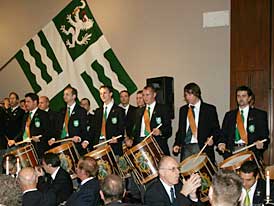


When my grandson, Tyler Hunt, were doing a painting together, Patrice Hanson, looked on with disgust. This goes back to our conversation at the ruins of Jack London’s Wolf House where I told my wife to be my families creative legacy was falling into the hands of outsiders the same way London’s legacy came to be owned by hostile outsiders. I told Patrice I am authoring a biography, and my rivals are inventing lies in their biogrphy of my famous sister, Rosamond. All of a sudden, Patrice says;
“Are you saying our daughter got all her talent from you?”
I got angry, for this woman, who had two sons by two fathers, did not allow me to be a father for sixteen years, and did her damnedest to have Heather believe she got all her gufts from her utterly un-gifted mother, who never was an artist, poet, or, writer. Patrice and her family are the people the Seer saw that come into my being and take – via my newborn daughter who Patrice put in the arms of famous parasite convicted of impersonating Bob Weir – twice!
Patrice had taken a lot of LSD and owns visions of he being the angelic earth-goddess mother who brings angels to earth via the birth-process. Children are her creations, examples of her divine work. The fathers of these children do not matter because they are earth-bound brutes, like her alcoholic father who caused her schizophrenic mother to jump off a cliff and killer herself. Patrice’s sister and brother have no children due to the extreme abuse in their home.
In Chicago, Patrice fell in love with a Black Panther, and had a son by him. This son named his son after Malcome X. Malcome is my grandson’s half-cousin. This panther died in a fire. He was close with Angela Davis who spread the message that back people should arm themselves, and overthrow white tyranny.
Patrice, and thus Heather, was not impressed with my genealogical study, because my tree is full of white people. However both were extremely interested in the world famous artist, Rosamond, and her success, because heather was destined to be famous one day, and give her mother a million dollars so alas she could live the life-style she deserves. As for me living thru my only child in a vicarious manner, and being inspired to paint and write by my child, this was frowned upon. However, Tom Snyder, the rival biographer, is more then welcome to paint a beautiful portrait of the Madonna and Child – minus the shit-seed of the junk-filled hell-fathers!
When I received my first (typed) letter from my newfound sixteen year old daughter, I took it to my friend, Ed Corbin, who mastered in Literature at Harvard, and was an editor at Double Day. Seconds after reading The Good News, Ed said;
“Your daughter did not write this letter.”
Ed employed his high education to explain the examples of third party removed. I was in shock when I reread MY letter, that was not really mine. This narcissistic piece of shit could not allow her Star Child to fully by my child – too! There was THEIR HIDDEN AGENDA to be fulfilled that I am not privy to. I will always be THE OUTSIDER. However, Divine Mother and Child have got to get in BOTH books, and get all the wealth the Rosamond Gallery holds for them, because, it is THEIR DESTINY to own this wealth – minus the gross jack-off earth father who is guided by his sick penis, only!
Having read Grimm’s I saw my daughter’s mother as a evil green witch lurking in the dark, stirring her enmeshed pot of lost identities. Only Witch Patrice gets to be a whole person, the complete package. Only Patrice is worthy to CONTROL ALL THE INFORMATION. Here is the real RIVAL AUTHOR! When Belle Burch pulled the same witchy transference on me, and when Witch Valkyrie threatened to destroy me, and see that I am harmed if I fight back, I had to consider the two of them were in it together. CONSPIRACY!
That Belle and Alley empowered themselves via LOST THROWAWAY CHILDREN, is also out of a Fairytale. Consider Peter Pan – and Dickens. These homeless people who need SLEEP, do not want to grow up. They did not want to obey their parents or clean their rooms. They just wanted to TAKE what belongs to others, and, have others TAKE care of them – because we all OWE THEM. They DESERVE what we got. WE don’t deserve what we got. THEY WILL HURT US!
For the last several days, reporters all over the world are openly discussing how Muslims in Europe are feeling DISINFRANCHISED, and thus will become RADICALIZED, get a weapon, and MURDER UNARMED PEOPLE. These parasitical cowards do not want to go up against ARMED PEOPLE. Why is that? They want to stop average people from enjoying what they have, what they worked for. They want people to be afraid and think of the TERRORISTS all the time, and what they don’t have. These are not Robin Hoods. These are dangerous people whose prophet and god does not make them happy, like the prophet and god of those who HAVE!
* * *
Both my father and my childhood friend, Bill, emulated the author Jack London, whose writing appeared in the same periodicals as my grandfather, Royal Rosamond. The rival authors did not know this. They did not know ANYTHING, yet, they elected themselves THE MORE DESERVED! My brother allowed the takers to come and take from the Creative Family Pile because he thinks very little of Artists and Poets. His main concern is ‘The Parasites of the World’. Almost everyone is a parasite, but Mark.
After Wolf House burned down, Jack and his wife struggled the keep ‘Beauty Ranch’ going. After Jack was dead, Charmain fought off the parasites who wanted to take Jack’s work that was in DEFAULT, and liquidate it. I had read plaques of this struggle. I was dismayed as I sat with Patrice and beheld the ruins of Wolf House and London’s Dream. I told Patrice how after Christine’s funeral, Stacey Pierrot got down on one knee in front of the Rosamond Gallery, took my mother’s hand, and said;
“Don’t let the Dream die!”
“It was not her Dream!” I told my fiancé, who looked distracted. I could not read what was going on her mind. I pressed her as we ate our packed lunch at a picnic table. This is when she accused me of excluding her CONTRIBUTIONS! I proposed to this mother of my daughter, who I wanted to own my name and not the name of a Infamous Imposter. I wanted them both to be in MY FAMILY TREE. What I didn’t understand, was, I was dealing with a out of control Narcissist, that had to have it all, and, I had come between her and her NARCISSTIC SUPPLY. In two months Patrice would disappear our child – with the help of all members of her family, who could care less about MY FAMILY TREE.
What I had done wrong was MAKE IT REAL. I WOKE Patrice from her fantastic dream story that she wove around Heather. She saw that I owned all THE REAL POWER, and thus needed the rival author fully in her camp. This is why she tried to convince me in a e-mail that two books would be better. Do you see it? This DEMON typed a letter to me and had my daughter apply her name. Peirrot petitioned the Probate Court for an Estate Seal so she could apply it to unsigned Rosamond lithographs, and give them the same worth as the signed work. This is right out of Big Eyes, that exposes the narcissistic personality disorder of Walter Keane.
http://echorecovery.blogspot.com/2013/08/tactics-narcissistic-personality-disorder-mother.html
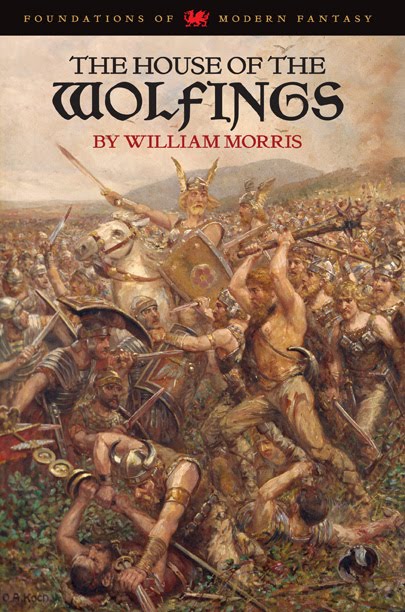
The Rosemondts owned Wolf House in Brambant, and were part of a restoration of Frankish rule in theat area, which suggests they might be descended from Merovingians. One author connects them to the Knight Templars and the Holy Grail in a speculative manner. J.R. Tolkein was inspired by the book Wolfen written by the Pre-Raphaelite William Morris. In 1969 I emulated the Pre-Raphaelite style and philosophy that in turn inspired my late sister, Christine Rosamond Benton. We were the New Pre-Raphaelite Brother and Sister, as well as Brother and Sister in Alcoholics Anonymous, where we shared out stories. I told Patrice no outsider can tell OUR SOBER STORY. I told this mother that I wrote the executor and told him he can not sell our Program to others so they can realized a prophet. Patrice could not see herself, and our daughter, as an INSIDER, because they had come for THE FREE FOR ALL!
In Snyder’s book he repeats the secret of Rosamond’s success. Rosamond cut out images of models in fashion magazines, and projected them on a canvas – without the permission of the model. When I discovered this projector Christine asked me for help – because she did not feel like a real artist. I will ask Lara Roozemond for permission to use her photos, and if she will model for me. She might do this for free in order to enrich her portfolio.
As a real artist, and as a man, father, and grandfather, I have formed complex bonds with real beautiful women. Christine did not. I am no longer going to let vain and selfish women near me and my work. I don’t need the heartbreak, and, the dark image they give me.
Jon Presco
Copyright 2014

http://www.aa.org.au/members/anonymity.php
http://www.historieroermond.nl/afkomstiguitroermond/Afkomstig%20uit%20Roermond.pdf
“Traditionally, AA members have always taken care to preserve their anonymity at the “public” level: press, radio, television, and films.
In the early days of AA, when more stigma was attached to the term “alcoholic” than is the case today, this reluctance to be identified – and publicised – was easy to understand.
As the Fellowship of AA grew, the positive values of anonymity soon became apparent.
First, we know from experience that many problem drinkers might hesitate to turn to AA for help if they thought their problem might be discussed publicly, even inadvertently, by others. People who are new to AA should be able to seek help with complete assurance that their identities will not be disclosed to anyone outside the Fellowship.
Then, too, we believe that the concept of personal anonymity has a spiritual significance for us – that it discourages the drives for personal recognition, power, prestige, or profit that have caused difficulties in some societies. Much of our relative effectiveness in working with alcoholics might be impaired if we sought or accepted public recognition.
While each member of AA is free to make his or her own interpretations of AA tradition, no individual is ever recognised as a spokesperson for the Fellowship locally, nationally, or internationally. Each member speaks only for himself or herself.”
Charmian and Jack’s dream of parenthood never materialized. Charmian became pregnant twice. One child whom they named Joy survived only a few hours and the other child was lost due to a miscarriage.
After Jack’s death in 1916, Charmian committed herself to saving Beauty Ranch and promoting Jack’s legacy. She sold his writings and worked with the movie industry to convert Jack’s books into films. She travelled frequently to Europe to work with agents, publishers and translators. She became a well-known personality in her own right and never remarried.
Charmian died January 14, 1955 at the age of 83 and her ashes joined those of her beloved Jack under the rock on a little knoll in Jack London State Park. After her death, Irving Shepard, her heir, facilitated Charmian’s wishes to donate her House of Happy Walls and 39 acres to the State of California. Her wishes were fulfilled in October of 1960 when Jack London State Park was officially opened to the public.
The Wolf House
“Jack and his second wife Charmian’s dream home was planned even before their marriage. Actual work on it began April 1911. Albert Farr of San Francisco was the architect who transferred Jack’s ideas into blueprints. For earthquake protection, the building was put on a huge floating slab large enough to support a forty-story building. Redwood trees, fully clothed in their own bark, deep chocolate-maroon volcanic rocks, blue slate, boulders and cement were chosen for primary building materials. The roof was of Spanish tile and came from the N. Clark and Sons Pottery, built on the old Davenport place in Alameda. Large redwood trees, with the bark still intact, formed the carriage entrance, the pergolas, and porches. The rafters were of rough-hewn, natural logs. Tree trunks in the gables and balconies were interlaced with fruit twigs for a beautiful effect.”
“Wolf House was not a castle in any sense of the term, though Jack and others referred to it as that. It was big, unpretentious, open, natural, and inviting, just like its builder. It was designed as a busy author’s workshop, and as a home big enough for the many needs of the Londons, and for the entertainment of their friends.
The Wolfswinkelse Water Mill was a watermill on the Dommel. The watermill is located in the municipality of Sint-Oedenrode Breugel Nijnselbetween and. This mill Shop mill may have ever known.
“Erhart de Rougemont who bought in 1495 “the house called Rebleuten-Zunft in Basle in the Freistrasse.’
Peter Rosemond had seen in print the letters from Erasmus to Gotschalk Rosemondt. He noticed that a seal used by a Rosemont in Holland, bearing a jumping fox, was like an emblem he had noticed in a wall of the house Rebleuten-Zunft in Basle. This seal
dated back to 1430,
This James (or Jacob, for these names were once interchangeable) was the son of Hans Ulrich
Rosemond, born 1623, a weaver; who was a son of Hans, a weaver, born
1581; who was a son of Fred Rosemond, born 1552, a weaver, member of
town council and a local captain; who was the son of another Hans
whose date of birth is not known, but he too, was a weaver and became
a citizen of Basle in 1534. His father was Erhart de Rougemont who
bought in 1495 “the house called Rebleuten-Zunft in Basle in the
Freistrasse.’ Peter Rosemond further reported information from the
Records Office in Basle that “before Basle the family resided in
Holland up to 1338, and it is said they descended from the estate
Rosemont, near Belfort, in France, where also the village Rougemont
is found.” A family coat-of-arms was registered in Basle about 1537
when the first Hans became a resident there. A reproduction of this
coat-of-arms in the writer’s possession shows a weaver’s crook
conspicuously, and it will be remembered that in Ireland our people
were linen weavers and farmers, and that Edward, the elder, was a
weaver in this country. Peter Rosemond had seen in print the letters
from Erasmus to Gotschalk Rosemondt. He noticed that a seal used by a
Rosemont in Holland, bearing a jumping fox, was like an emblem he had
noticed in a wall of the house Rebleuten-Zunft in Basle. This seal
dated back to 1430, whereas the coat-of-arms above mentioned dates
from 1534, it seems. Peter Rosemond died September 22, 1930. This is
but a sketch of what he wrote.”
In the name means Wolfswinkel Shop an angle. The element can be in multiple ways, however, Wolf explained. Many think it first to the animal name, but it can also save on a field curvature . That seems like a meaningful declaration because such terrain shape in the environment explicitly to designate falls (namely a strikingly high steep banks along the Dommel, half a kilometre to the North).
[Edit] History
[Edit] Glory Wolfswinkel until 1604
The mill was around 1200 by Duke Henry I of Brabant donated to the Priory of Postel. Later it became a little glory, consisting of a omgrachte hofstede (the Water hoof), a farm and water mill. This area was by the Ducal couple Johanna van Brabant and Wenceslas I of Luxembourg in 1381 in leen issued to the nobleman Edmund d’Aquis. There would then also a padlock are built. The oldest known occupant, after which her son would Agnes van Wolfswinkel Colen of Dijnter has inherited the property, after which the owners were Emont of Geerke and Dijnter. In 1450 the glory was in possession of the family of Rosemont, and afterwards the families Coensborgh and Molenpas. The lock was already gone. In the 15th and 16th century followed by the families mentioned families, The Huyoel, Of Broekhoven, Bogaers Cocq and Thielemans.
[Edit] From 1604 to 1795
The mill was In 1604 , los of the estate, as a separate fief sold to Coenraedt Jan Adriaens. In 1628 the mill was in the possession of Jhr. Jeger 1650 a oil mill with the original corn mill had built. We Around 1720 was the mill in the possession of Lord Lambert, count of Berlo, and after his death the mill was sold to Johan Carel de Jeger, who was Lord of Eckart .
During the French period, at the end of the 18th century, the mill was burned by the English and German troops, in order in this way, the English army, that was contracted on the Nistelrooise Heide, to warn of the approaching French. The remnants were then sold in 1795 to Widow of schalkwijk, which the mill Raon 50 metres upstream left a rebuild.
[Edit] From 1795 to the present
After the rebuilding the mill has known many owners. She was under during the 19th century more used as the volmolen by Geldropse and the Tilburg textile manufacturers. Although the mill was still in operation in 1878 , she hit soon afterwards in decline. In 1928 the Dommel and fell the lock in the water mill was sold to waterboard De Dommel. After 1945 the watermill was demolished, despite efforts to preserve it.
Nowadays rest on this picturesque place only the Mill House. In addition, reminds the Water farm to the former glory. Furthermore, reminds a small monumentje to the water mill, as well as the path that leads there, which still bears the name Watermolen Street . The cycle path network along The Peel performs there.
Gerlach de Roovere, Knight, Lord of Waalwijk, Drunen, Vlijmen, “Honsoirde” (Onsenoort) Rixtel, Someren, Lierop and Wets. According to a manuscript of the genealogy of 1266 is Gerlach Arnold Son de Roovere (genus of Red) married Oda, daughter of Jan van Megen. One of their many children was Willem de Roovere.
The Brabantse noble genera that the 3 are all descendants of the mill irons, counts of Red. These old genera are named after the name of villages, Hamlets, neighbourhoods or estates under the old Taxandrie such as Asdonck, Stackenburgh, Van der van Vlierden, van Lierop, of Vladeracken, of, of, of Hove, Hersel, Breugel of Wette, Rinckveld, van Lieshout, of IJllingen, of veenhuizen, van den, van Wolfswinkel, Bolck of Broekhoven. But also Straeten, Kuysten, van Loon, of Orthen, van Mierlo, at Heerenhoven, of the fields, van den Heuvel and to d Boirschot ´ Erp.
When one wants to demonstrate that it has the right to a particular good or right, we need evidence. If they are missing, one can resort to falsifying or fabricating evidence itself that. Forgery is, however, not something today or yesterday. Certainly in times, which by war or fire more often than now, as in the middle ages pieces were lost, grabbed one to this medium.
We see, therefore, that ordinary people, noble families but also monasteries and abbeys not schroomden for den day to come up with the finest “evidence” of own fabrications. Such a collection of false or falsified documents can put a contemporary historian on the wrong leg and that is done repeatedly. The medieval family Stakenborch is an eloquent example. Purpose of the following is not to write a history of this interesting and for Lierop, Asten and Someren extremely important family, but to an old misunderstanding about to eliminate her.
Historical is of the family of Stakenborch the following known with certainty. Circa 1350 was Willem van Someren Stakenborch substantial man in inter alia, Asten and Lierop. He and his family owned, as owner or tenant, as many real estate throughout Brabant, including the good Vladeracken or Vlerken under Someren. William was also lessee of important goods of the Priory of Postel, namely the Windmill in Someren and water mill of Strip donk under Lierop. A mill was a huge source of income and Willem van Stakenborch and his brothers Henry I, Jan and Mathijs also to great success and brought it great prestige. Henry was even prior or prosiver (head) of the godshuis in Postel. Because this monastery with financial problems faced, borrowed it from the Stakenborch family of considerable sums of money. Postel gave them tithes and goods as collateral. For any goods it went, evidenced by a document from 1401. It says that Henry II of Stakenborch, son of William, inherited from his father all the rights on the goods pledged by the Priory of Postel to William, namely four farms in Someren, the tithes and the Windmill van Someren and goods Moorsel, Dot donk and Lierop.
In addition, did Henry I of Stakenborch, prior of Postel, some donations to the monastery. However, when he died in or before 1359 there arose a conflict. The only remaining brother, Willem, apparently, found that he was disadvantaged by Hendriks donations. Recalling also the large debts which Postel had to the family. There was, however, a referee and enabled 1359 legden Willem van Stakenborch on 10 January and the Priory of Postel in their dispute. Mathijs van Asten ceased In 1364 of Boescot, also of William of Stakenborch, for its part, intensify the process nephews against the then prior of Postel.
The descendants of the Brothers Of Stakenborch however showed sit at. Because according to them had not repaid the loan Postel and they therefore still entitled to the pledged goods, flared again in 1426 the fight in all vehemence. Jan van Stakenborch meeting and threatened to strip the possessions of the monastery in Postel even fire. The Duke of Brabant issued an arrest warrant against him and Jan had to leave the country. Thirty years later, in 1456, it came to a process, when John’s heir, weather of a claim made on all Mathijs Bois shot, Someren, tithing, the Windmill to van Someren in Someren and the mill law and four hooves to Someren Lierop. He did this on the basis of old usage rights, arising from the pecuniary obligations (debts) which Postel had towards the family. Mathijs claimed goods and rights that were around 1350 by the Priory of pledged to his ancestor William of Postel Stakenborch.
The Priory had been clean enough of Postel. Around 1360 the had acknowledged that all goods and rights of Stakenborchs still in Someren Postel were, but one nutrok and Lierop this fact again in doubt! The monks therefore decided to manufacture a number of effective evidence. A cumbersome procedure, but not directly on the basis of real instruments would always weather can lead to evidentiary again in doubt pull of the ownership rights of Priory Postel. Therefore the monks arrived in 1456 up with three instruments from 1243, 1266 and false 1311. These were to prove that the early Stakenborchs Of all their rights on tithes, a mill and four farms in Someren and the mill law in Lierop Postel to the monastery had donated and that they therefore had no rights more on. In the three forged charters is a very sex to emerge of the aforementioned brothers William, Henry trooped, Jan and Mathijs. Apparently it was the family of Stakenborch, formerly leaseholders of the monastery, in the fifteenth century the Premonstratensians grown above the head, such that even the clergy saw no other way out than Postel more counterfeiting. In the pedigree of the family of Stakenborch we come in the forged charters as forefathers souped-up Gerlach and Willem de Rover often against. It is quite possible that the fact of them descended but the false Stakenborchs Of instruments should not serve as proof. Also, Gerlach and Willem instruments in the “Lord of Stakenborch in Someren” and that is in the real pieces never the case.
The Stakenborchs Of their pretensions towards Postel gave after 1456 on but the story is not yet out. A smart descendant has the counterfeits of Postel in the seventeenth century once used and even supplemented with still a forgery. In 1656 namely claimed French of Bois shot of noble descent. He wanted to prove this by pointing to his descent from the chivalrous Of the noble Stakenborchs and the robbers. But he had not enough to the false Postelse charters. That is why a Charter, which was produced from 1308, on the one hand, the relationship between Of Bois shot and Of the Lords of Stakenborch and of Stakenborchs to Asten and Lierop and escharen were promoted. Names of actual gentlemen of Asten (and Lierop?), members of the family of Cuijk, were incorporated in the pedigree. All this was, of course, completely false, but like Postel in 1456, reached the forger also this time the desired result: his claims to nobility was recognized.
Later chroniclers made the matter still further complicated by the pedigree to fill in fanciful. Result, interesting but volsterkt unhistorical pedigrees. So Stakenborchs on the basis of the counterfeits were Of considerable leaseholders in Someren, Lierop and upgraded from Asten to gentlemen of Asten and Lierop, which they never been. Coppens and Schutjes know even to report that Henry of Stakenborch, before if Postel “Norbertijner the white habit” provisor, the Lordships Lierop, Stakenborch, Someren, Asten and escharen sold to the Duke of Brabant. It has therefore thought that his municipality weapon, the three mill Lierop irons, to the identical coat of arms of this family. The Priory would have this weapon also postel inherited from Henry of Stakenborch, which was around 1350 prior Postel. Whom the weapon is now the question of whom took over to the chicken and the egg. The most obvious, however, that it is and that it is both the oldest Postelse weapon by Lierop if by Stakenborchs is inherited.
NUTS
Source: “Lierop ‘n image of a village”
1. the following is almost entirely based on the diplomatic considerations of H.P.H. in the instruments at the Camps Camps on ONB, ONB, nr 199 d.d. p. 277; No. 305 pp. 917-920 dated; No. 863 dated 1052-1055 pp.
2. a. j. stakenburg Teychiné, “The Brabantse genus stakenburg in the XIVe – XVIIIth century”, Yearbook of the Centraal Bureau voor Genealogie 15 (1961) 118-146, m.n. 120-121 (= idem, the family stakenburg (Rotterdam1961). See for his further studies on this family the footnotes 4 and 7
3. Henry amused in 1401 these goods in turn to his sister Margriet (the archives of Th.L.Welvaarts, Zomeren Postel’s Abbey (Helmond/Turnhout 1892) 65-66)
4. Notarized deed dated 1364 July 20 (RANB, old inv.nr.Aanwinsten 1885/27bis/g, temporarily: dossier Church Asten deed g), mentioned in Camps, ONB p. 1054; Teychiné stakenburg facsmile: A.J., the oldest generations der family stakenburg (Rotterdam 1980) 15.
5. In the beginning of the 17th century one manufactured a false deed in Postel, yet supposedly from the year 1357, which a defence work recorded against the so-called claims of Willem van Lierop and Stakenborch on the mills of Someren (Someren 9bis Abbey-archive Postel, charters; see Camps, ONB, p. 1054 and n. 1)
6. J.A. Coppens, New description of the Diocese of ‘s-Hertogenbosch in response to the Meijerijsch in his book of a. Kath Pleading van Gils, (4 din; “s-Hertogenbosch 1840-1844) III. 1 302-303: Schutjes, history of the Diocese of ‘s-Hertogenbosch l.h.c., (5din; St. Michiels-Gestel 1870-1876) III, 144; IV, 669; A.F.O. Sasse van Ysselt, of “the glory Asten”, Taxandria 22 (1915) 3-9, 65-73, 121-129.
7. Unfortunately is also the serious researcher of the family of Teychiné, Stakenborch, A.J. stakenburg in this trap cases. This is the case in his study from 1961, “The Brabantse genus stakenburg”, pp. 118-122, in which he mainly based on a manuscript of the nineteenth-century Archivist of Postel, Th.L.Welvaarts, “the family of Stakenborch 1343-1626 to the archives of the Abbey of Postel” still vooert “Willem de Rovere in 1980 he Stakenborch, Lord of Asten and escharen (and Lierop?)”, which therefore never existed, as ancestor of the genus (see Teychiné, “the oldest generations stakenburg”, 5; and idem “The Brabantse genus stakenburg” complements the genealogy, the Brabant Lion 31 (1982) 85-86
8. see e.g. f. Prince, the onze-Lieve-Vrouwe-Norbertine Postel Abbey der to (Antwerp 1935) 46-47.
 Rosamond Press
Leave a comment