“. At the same time, China eyes nations in Africa. Brexit, was the Beginning of the End. The Trumpites modeled their INSURECTION on Brexit.“
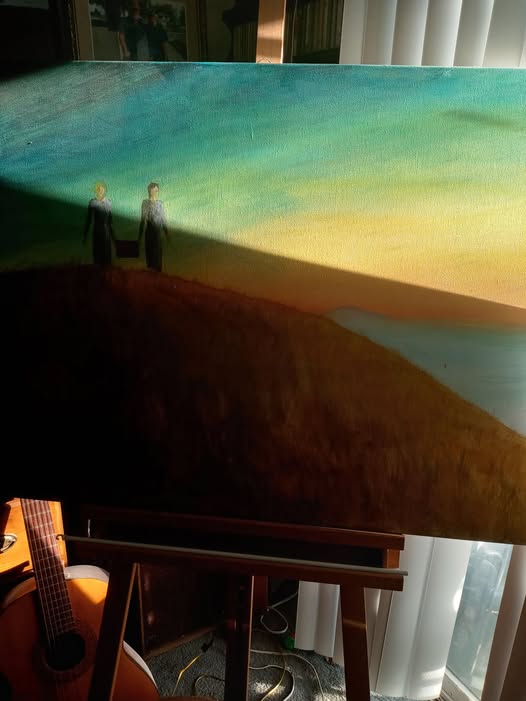
The islands were historically possessions of Denmark, then became possessions of Great Britain from 1807 to 1890
On May 7, 2021, I founded a NATO Sanctuary. Everyone is guessing as to what is going on. I have suggested I am a Futurian. You have to look at the dates on my posts.
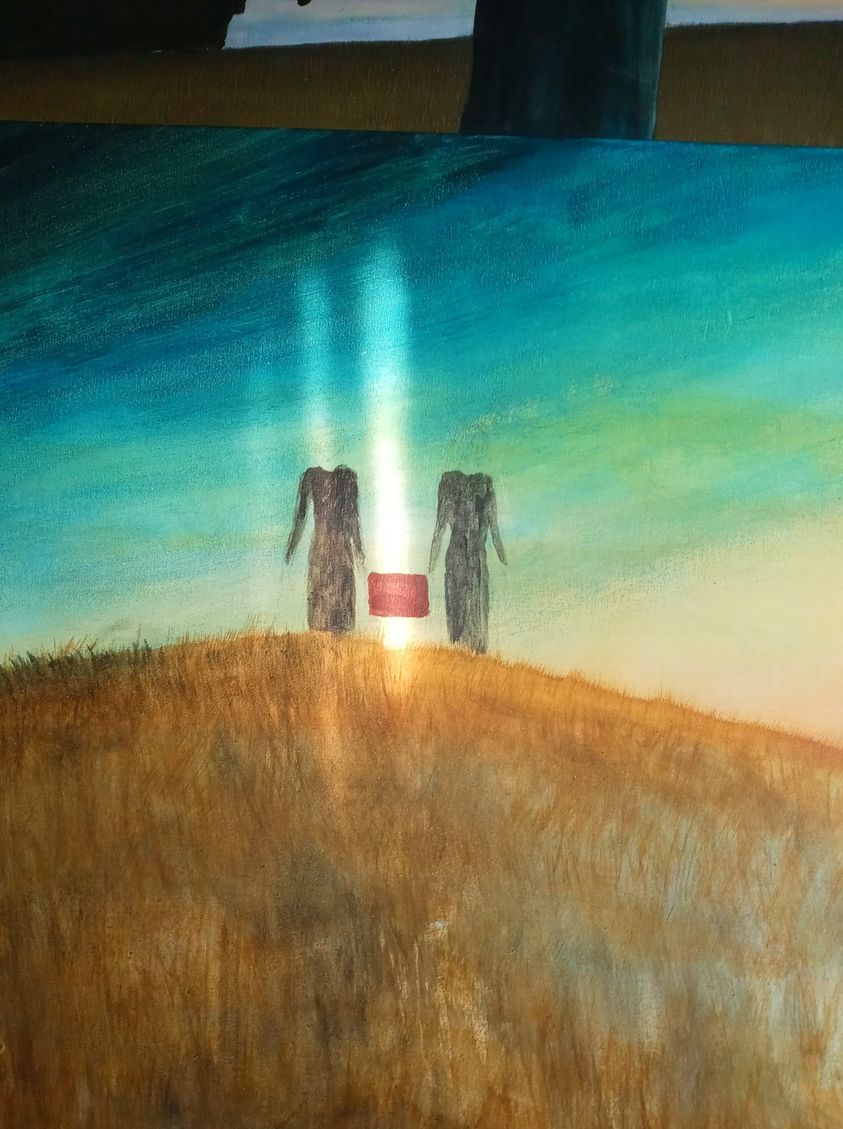
Above is a photo I took on 1/23/26 around three. Below is a phot I took four years ago. These are Pages rescuing on of the boxes that carried our electoral college votes……to safety. I hereby declare that safe place is on Heligoland Island. This is what God told me to do.
Ginni Thomas is a member of secret Christian group. I believe Jack Smith knows the name of it. Trump is surrounded by alleged evangelical prophets. There can only be one good motive for altering secular history with lies, being, false prophets think THEY OWN that secular knowledge, as well as……RELIGIOUS KNOWLEGE! They do not own – any of my knowledge! I have…..lapped them! I have lapped everyone. I believe I founded a Kingdom of Truth when I died. What choice did The Liars offer me, then, and what truths do they deny….
NOW?
John Presco ‘The Nazarite’
EXTRA! It is 6:22 PM on 1/21/26
In rereading this post. I conclude the Republican Christian Party devised a secret plan with Putin to…..
CONQUOR EUROPE!
What went wrong? The Ukraine did not fall, and Trump did not get elected. THE PLOTTERS have taken us back to
THE POINT OF THEIR FAILURE!
Sound the alarm!
John The Patriot
“The people of Heligoland are hoping the European Union bases Frontex on their Small Rock, that can be the Gibraltar of the New Union and Kingdom. Illegal Immigration has toppled Britain and the United States, and made these once powerful nations vulnerable to TREACEROUS crack-pots and religious cult leaders, who pretend to protect us from the foreign enemy within – when they are THE ENEMY WITHIN! These are NOT PATRIOTS.”
The islands were historically possessions of Denmark, then became possessions of Great Britain from 1807 to 1890. Since 1890, they have been part of Germany, although after World War II they along with the rest of Schleswig-Holstein were administered by the United Kingdom as part of the British occupation zone in Germany. British control of Heligoland lasted until 1952, when it was turned over to the control of West Germany.
date. When did Putin invade Ukraine?
Putin attacked a year later.
John Presco ‘Seer Jon’
https://en.wikipedia.org/wiki/Russian_invasion_of_Ukraine
The European Union Kingdom of Heligoland
Posted on May 7, 2021 by Royal Rosamond Press


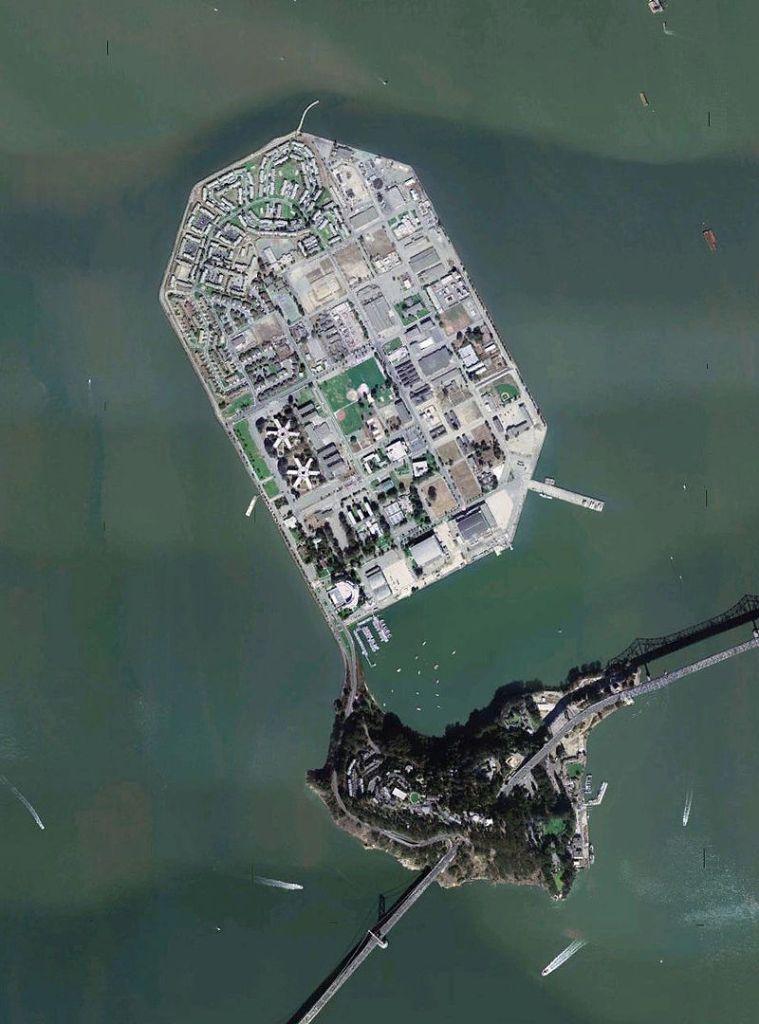
On this day, I found the European Union Kingdom of Helgoland. Elizabeth was once the Queen of the European Union. There were other nations that belonged to the EU that had royals who employed democratic nations in their title. China is celebrating the Death of the European Union, and is mocking Australia as being the symbol of the end of the British Commonwealth. At the same time, China eyes nations in Africa. Brexit, was the Beginning of the End. The Trumpites modeled their INSURECTION on Brexit.
I declare the Duke and Duchess of Sussex, the titular King and Queen of the Island of Heligoland, and seek the backing of the German Government to make this Kingdom their new Hands Across the Water, in order to Unify Germany and Britain, so they can take on their mutual enemies that are making plans to do them harm. Let us found a bond with the State of California so it will represent the European Union of the West, looking East to where our common adversary threatens our common supremacy of….The Seas of Liberty! Let San Francisco Bay and Hawaii be the Common Port of a New United Nations Fleet. Let us erect a International Sister of Liberty on Treasure Island that will look forever out the Golden Gate. Let the Kingdom of Heligoland be a Kingdom of Refuge for all the royals of the world, and all journalists.
The people of Heligoland are hoping the European Union bases Frontex on their Small Rock, that can be the Gibraltar of the New Union and Kingdom. Illegal Immigration has toppled Britain and the United States, and made these once powerful nations vulnerable to TREACEROUS crack-pots and religious cult leaders, who pretend to protect us from the foreign enemy within – when they are THE ENEMY WITHIN! These are NOT PATRIOTS.
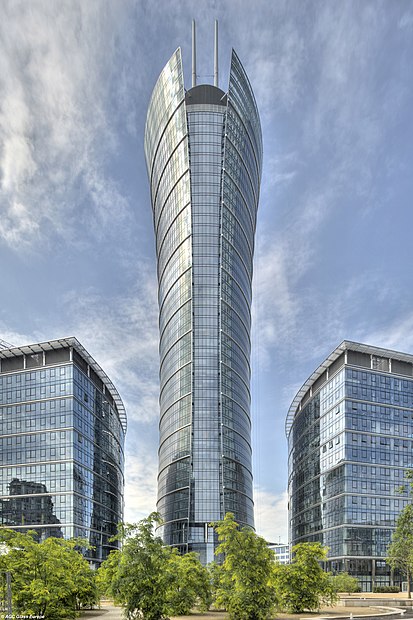
I suggest the building of Two Towers of Liberty, one on Heligoland, and the other on Treasure Island. After 911, the United States did not respond correctly. We tried to gain back our power and lost prestige by launching a a war in Afghanistan – that alas we pull out of. President Biden has bid his Vice President, Kamala Harris, to solve the illegal immigration across our border. The Trumpites spent billions on Their Wall of Fear, that was the biggest Billboard Campaign of Fear erected – since the Great Wall of China. Trump”s Wall is the greatest failure in American History. He failed to get reelected, and his cult followers FAIL see how they lost. They are sore losers, just like the Confederacy, who seceded from the Union – AND FAILED!
I challenge China to come up with THEIR SOLUTION to illegal immigration, or shut up! Their threats ARE VILE, and intellectually dishonest. We can do better. Let our Vice President meet with members of the European Union in order to form a better way, a sane approach to what the People of the World have long engaged in. Consider Exodus!
John Presco ‘Nazarite Judge’ President ‘Belmont Soda Works’
The Queen Came To Me In A Dream | Rosamond Press
California Fusileers (militarymuseum.org)
European Border and Coast Guard Agency – Wikipedia
German Federal Coast Guard – Wikipedia
European Border and Coast Guard Agency (Frontex) | European Union (europa.eu)
Treasure Island, San Francisco – Wikipedia
Share this:
I just found a letters I wrote to Mr. White, the President of Namur College. Scroll down.
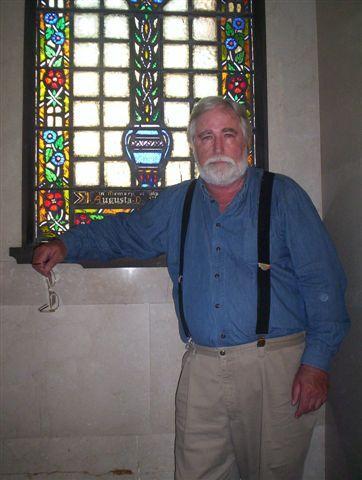

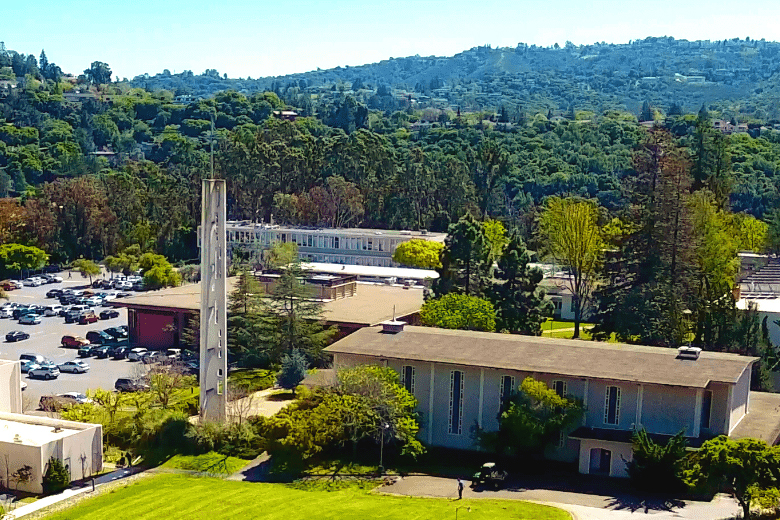
Dear Mr. White; My name is John Presco and I am the great, great grandson of Carl Janke, who brought six portable houses around the Cape in 1849. It appears that one of these portable houses is inside Ralston Hall – that was built around the small houses that Count Cipriani allegedly had shipped from Italy. I doubt this is true. I would conduct a study by archeological historians who can test the wood – that may not be cut from foreign trees? How about the screws that put this house together?
Three days before Memorial Day I discovered Carl Janke, his wife, and his mother-in-law were dug up from their graves in the middle of the night, and put in the same hole in Redwood City. This was done in 1972. I wonder if this religious activity is recorded in the archives of ND? The sacred ground reserved for the Jankes was located in Twin Pines Park that is next to ND – that might have purchased some of the original land owned by Carl. Can you check? You have a team of scholars and researchers at your disposal. Do you teach local history, or, is your main field – psychology? If so, then an analysis of City Planner’s is called for, being, Stanford purchased ND and is going to make big changes. Can we rest assured new planners – won’t do something crazy? There are rules and laws for exhuming the dead – and reburying them. Would you like to be thrown in a grave with your mother-in-law?
(What would Freud say about this – recurring nightmare?)
Let me begin my proposal this way….I want your assistance in returning my great grandparents to their original burying grounds, and installing me as a professor and theologian in residence. My kindred, Dominica Wieneke founded Briarcliff College. Other family members became a priest and nuns in the Oder of Saint Francis. My alleged ancestor, Godeschalk Rosemondt, was the Master of Louvain and the Falcon Art College in Holland. He was Pope Adrien executor, and found the Pope’s College for poor boys. My kin commissioned the artist Hieronymus Bosch, whose art should be taught at NM, as well as Artificial Intelligence in the World of Art, a course I will design. I would like to found a school of spies and augurs, in Ralston Hall where my great grandfather, William Stuttmeister, got married to Augustus Janke, the daughters of Carl, I am kin to John Fremont, the first to emancipate slaves. I became a Nazarite in 1987, and am steeped in Biblical knowledge. I alone figured out what Jesus wrote in the dust. I can teach a course in religion – that will change Christianity as we know it.
I am seventy six years of age, and do not feel safe where I am. I believe you should follow religious traditions, and have me be The Monk in Residence until it is time for me to go to a just reward. My blog, Royal Rosamond Press may be the largest blog in the world, and should be archived. Today is Father’s Day. Any books that come out of this Journey to The Past will be donated to an Art Program for poor children. I taught my late sister how to paint and she became the famous artist ‘Rosamond’. She is a great granddaughter of Carl Janke, and married into the Benton family.. We are kin to John Fremont who emancipated slaves. Carl built two Turnverien Halls and may be a Fourty-Eighter. Our history has much to do with the celebration of Juneteenth. This was not the first time members of the Janke family were dug out of their graves. Four of them were removed from the Oddfellows graveyard in SF. Member of the LDS church offered to help me research the Janke family. I went to their event.. I believe my Civil Liberties are being violated considering the classes you offer to minorities, where discovering their past – is vital! Freedom of religion involves – our dead! Jesus, and other Jews, raised people from the dead. I declared my self Nazarite in 1987.
Last night I researched getting a Getty Grant. There is a residency program attached to the Getty Villa. My late brother-in-law did the murals here. He and Christina Rosamond Benton were friends of Ann and Gordon Getty and did a mural in their home. Consider all the great murals in churches. I believe I am the exception. I was forced to drop out of high school. A watercolor I did toured the world in a Red Cross show. I believe I am a National Treasure and will say so in my message to Gavin Newsom who has been close the the Getty family his whole life.
I ran for Governor of Oregon last year and and am a Republican Candidate for President. For years I have ordered the Evangelical Politicians who subscribe to the false teaching of John Darby and Tim LaHaye – to get out of my families party! I figured out why Jesus said;
“I’ve come for the sinner – and not the righteous!”
The author Damon Knight did a study of Bosch and found to figures in The Wedding Feast at Cana – that were removed – and replaced with a dancing dog. I believe those men are Pope Adrien and Godeschalk Rosemondt. The other figures are members of the Swan Brethren. Everyone and everything is pointing to the foundation of the Brotherhood of the Swan at Notre Dame de Namur.
Sincereley
John Presco
President: Royal Rosamond ArtHeligoland (/ˈhɛlɪɡoʊlænd/; German: Helgoland, pronounced [ˈhɛlɡoˌlant] ⓘ; Heligolandic Frisian: deät Lun, lit. ’the Land’, Mooring Frisian: Hålilönj, Danish: Helgoland) is a small archipelago in the North Sea,[2] administratively part of the German state of Schleswig-Holstein. The islands are located in the Heligoland Bight (part of the German Bight) in the southeastern corner of the North Sea and are the only German islands not in the vicinity of the mainland: they lie approximately 69 kilometres (37+1⁄2 nautical miles) by sea from Cuxhaven at the mouth of the River Elbe.
The islands were historically possessions of Denmark, then became possessions of Great Britain from 1807 to 1890. Since 1890, they have been part of Germany, although after World War II they along with the rest of Schleswig-Holstein were administered by the United Kingdom as part of the British occupation zone in Germany. British control of Heligoland lasted until 1952, when it was turned over to the control of West Germany.
Heligoland had a population of 1,127 at the end of 2016. In addition to German, the local population, who are ethnic Frisians, speak the Heligolandic dialect of the North Frisian language called Halunder. The islands are known for being the place where, in 1841, August Heinrich Hoffmann von Fallersleben wrote the lyrics to the “Deutschlandlied“, which became the national anthem of Germany.
Name
The island had no distinct name before the 19th century. It was often referred to by variants of the High German Heiligland (‘holy land’) and once even as the island of the Holy Virgin Ursula. Theodor Siebs summarised the critical discussion of the name in the 19th century in 1909 with the thesis that, based on the Frisian self-designation of the Heligolanders as Halunder, the island name meant ‘high land’ (similar to Hallig).[3] In the following discussion by Jürgen Spanuth, Wolfgang Laur again proposed the original name of Heiligland.[4] The variant Helgoland, which has appeared since the 16th century, is said to have been created by scholars who Latinized a North Frisian form Helgeland, using it to refer to a legendary hero, Helgi.[5][6] The discussion is complicated by a disagreement as to which of the listed names really refers to the island of Helgoland, and by a desire for the island still to be seen as holy today.[7]
Geography

Heligoland is located 46 kilometres (29 mi) off the German coastline and consists of two islands: the populated triangular one-square-kilometre (250-acre) main island (Hauptinsel) to the west, and the Düne (‘dune’, Heligolandic: de Halem) to the east. Heligoland generally refers to the former island. Düne is somewhat smaller at 0.7 km2 (170 acres), lower, and surrounded by sand beaches. It is not permanently inhabited, but is today the location of Heligoland’s airfield.
The main island is commonly divided into the Unterland (‘Lower Land’, Heligolandic: deät Deelerlun) at sea level (to the right on the photograph, where the harbour is located), the Oberland (‘Upper Land’, Heligolandic: deät Boperlun) consisting of the plateau visible in the photographs, and the Mittelland (‘Middle Land’) between them on one side of the island. The Mittelland came into being in 1947 as a result of explosions detonated by the British Royal Navy (the so-called “Big Bang”; see below).
The main island also features small beaches in the north and the south and drops to the sea 50 metres (160 ft) high in the north, west and southwest. In the latter, the ground continues to drop underwater to a depth of 56 metres (184 ft) below sea level. Heligoland’s most famous landmark is the Lange Anna (‘Long Anna’ or ‘Tall Anna’), a free-standing rock column (or stack), 47 metres (154 ft) high, found northwest of the island proper.
The two islands were connected until 1720 when the natural connection was destroyed by a storm flood. The highest point is on the main island, reaching 61 metres (200 ft) above sea level.
Although culturally and geographically closer to North Frisia in the German district of Nordfriesland, the two islands are part of the district of Pinneberg in the state of Schleswig-Holstein. The main island has a good harbour and is frequented mostly by sailing yachts.

Panoramic view over Heligoland from the highest point
History


The German Bight and the area around the island are known to have been inhabited since prehistoric times. Flint tools have been recovered from the bottom of the sea surrounding Heligoland. On the Oberland, prehistoric burial mounds were visible until the late 19th century, and excavations showed skeletons and artefacts. Moreover, prehistoric copper plates have been found under water near the island; those plates were almost certainly made on the Oberland.[8]
In 697, Radbod, the last Frisian king, retreated to the then-single island after his defeat by the Franks – or so it is written in the Life of Willebrord by Alcuin. By 1231, the island was listed as the property of the Danish king Valdemar II. Archaeological findings from the 12th to 14th centuries suggest that copper ore was processed on the island.[9][page needed]
There is a general understanding that the name “Heligoland” means “Holy Land” (compare modern Dutch and German heilig, “holy”).[10] In the course of the centuries several alternative theories have been proposed to explain the name, from a Danish king Heligo to a Frisian word, hallig, meaning “salt marsh island”. The 1911 Encyclopædia Britannica suggests Hallaglun, or Halligland, i.e. “land of banks, which cover and uncover”.[11]
Traditional economic activities included fishing, hunting birds and seals, wrecking and – very important for many overseas powers – piloting overseas ships into the harbours of Hanseatic League cities such as Bremen and Hamburg. In some periods Heligoland was an excellent base point for huge herring catches. Until 1714 ownership switched several times between Denmark–Norway and the Duchy of Schleswig, with one period of control by Hamburg. In August 1714, it was conquered by Denmark–Norway, and it remained Danish until 1807.[12]
19th century

On 11 September 1807, during the Napoleonic Wars, HMS Carrier brought to the Admiralty the despatches from Admiral Thomas Macnamara Russell announcing Heligoland’s capitulation to the British.[13] Heligoland became a centre of resistance and intrigue against Napoleon. Denmark then ceded Heligoland to George III of the United Kingdom by the Treaty of Kiel (14 January 1814). Thousands of Germans came to Britain and joined the King’s German Legion via Heligoland.
The British annexation of Heligoland was ratified by the Treaty of Paris signed on 30 May 1814, as part of a number of territorial reallocations following the abdication of Napoleon as Emperor of the French.
The prime reason at the time for Britain’s retention of a small and seemingly worthless acquisition was to restrict any future French naval aggression against the Scandinavian or German states.[14] In the event, no effort was made during the period of British administration to make use of the islands for military purposes, partly for financial reasons but principally because the Royal Navy considered Heligoland to be too exposed as a forward base.[15]
In 1826, Heligoland became a seaside spa and soon turned into a popular tourist resort for the European upper class. The island attracted artists and writers, especially from Germany and Austria who apparently enjoyed the comparatively liberal atmosphere, including Heinrich Heine and August Heinrich Hoffmann von Fallersleben. More vitally it was a refuge for revolutionaries of the 1830s and the 1848 German revolution.

As related in The Leisure Hour, it was “a land where there are no bankers, no lawyers, and no crime; where all gratuities are strictly forbidden, the landladies are all honest and the boatmen take no tips”,[16] while The English Illustrated Magazine provided a description in the most glowing terms: “No one should go there who cannot be content with the charms of brilliant light, of ever-changing atmospheric effects, of a land free from the countless discomforts of a large and busy population, and of an air that tastes like draughts of life itself.”[17]
Britain ceded the islands to Germany in 1890 in the Heligoland–Zanzibar Treaty. The newly unified Germany was concerned about a foreign power controlling land from which it could command the western entrance to the militarily-important Kiel Canal, then under construction along with other naval installations in the area and thus traded for it. A “grandfathering“/optant approach prevented the inhabitants of the islands from forfeiting advantages because of this imposed change of status.
Heligoland has an important place in the history of the study of ornithology, and especially the understanding of bird migration. The book Heligoland, an Ornithological Observatory by Heinrich Gätke, published in German in 1890 and in English in 1895, described an astonishing array of migrant birds on the island and was a major influence on future studies of bird migration.[18]
In 1892, the Biological Station of Helgoland was founded by phycologist Paul Kuckuck, a student of Johannes Reinke (leading marine phycologist).[19]
20th century
Under the German Empire, the islands became a major naval base, and during the First World War the civilian population was evacuated to the mainland. The island was fortified with concrete gun emplacements along its cliffs similar to the Rock of Gibraltar. Island defences included 364 mounted guns including 142 42-centimetre (17 in) disappearing guns overlooking shipping channels defended with ten rows of naval mines.[20] The first naval engagement of the war, the Battle of Heligoland Bight, was fought nearby in the first month of the war. The islanders returned in 1918, but during the Nazi era the naval base was reactivated.
Werner Heisenberg (1901–1976) first formulated the equation underlying his theory of quantum mechanics while on Heligoland in the 1920s. While a student of Arnold Sommerfeld at Munich, Heisenberg first met the Danish physicist Niels Bohr in 1922 at the Bohr Festival, Göttingen.[21] He and Bohr went for long hikes in the mountains and discussed the failure of existing theories to account for the new experimental results on the quantum structure of matter. Following these discussions, Heisenberg plunged into several months of intensive theoretical research but met with continual frustration. Finally, suffering from a severe attack of hay fever that his aspirin and cocaine treatment was failing to alleviate,[22] he retreated to the treeless (and pollenless) island of Heligoland in the summer of 1925. There he conceived the basis of the quantum theory.
In 1937, construction began on a major reclamation project (Project Hummerschere) intended to expand existing naval facilities and restore the island to its pre-1629 dimensions, restoring large areas which had been eroded by the sea. The project was largely abandoned after the start of World War II and was never completed.
World War II
The area was the setting of the aerial Battle of the Heligoland Bight in 1939, a result of Royal Air Force bombing raids on Kriegsmarine warships in the area. The waters surrounding the island were frequently mined by Allied aircraft.
Heligoland also had a military function as a sea fortress in the Second World War. Completed and ready for use were the submarine bunker North Sea III, coastal artillery, an air-raid shelter system with extensive bunker tunnels, and an airfield used by air force – Jagdstaffel Helgoland (April to October 1943).[23] Forced labour of, among others, citizens of the Soviet Union was used in the construction of these military installations.[24]
On 3 December 1939, Heligoland was directly bombed by the Allies for the first time. The attack, by twenty four Wellington bombers of 38, 115, and 149 squadrons of the Royal Air Force, failed to destroy the German warships at anchor.[25]
In three days in 1940, the Royal Navy lost three submarines near Heligoland: HMS Undine on 6 January, Seahorse on 7 January and Starfish on 9 January.[26]
Early in the war, the island was generally unaffected by bombing raids. Through the development of the Luftwaffe, the island had largely lost its strategic importance. The Jagdstaffel Helgoland, temporarily used for defence against Allied bombing raids, was equipped with a rare variant of the Messerschmitt Bf 109 fighter originally designed for use on aircraft carriers.
Not long before the war ended in 1945, Georg Braun and Erich Friedrichs succeeded in forming a resistance group on the island. Shortly before they were to execute their plans, however, they were betrayed by two members of the group. About twenty men were arrested on 18 April 1945; fourteen of them were transported to Cuxhaven. After a short trial, five resisters were executed by firing squad at Cuxhaven-Sahlenburg on 21 April 1945 by the German authorities.[27]
To honour them, in April 2010 the Helgoland Museum installed six stumbling blocks on the roads of Heligoland. Their names are Erich P. J. Friedrichs, Georg E. Braun, Karl Fnouka, Kurt A. Pester, Martin O. Wachtel, and Heinrich Prüß.
With two waves of bombing raids on 18 and 19 April 1945, 1,000 Allied aircraft dropped about 7,000 bombs on the islands. The populace took shelter in air raid shelters. The German military suffered heavy casualties during the raids.[28] The bomb attacks rendered the island unsafe, and it was totally evacuated.
| Date/Target | Result |
|---|---|
| 3 December 1939 | 38, 115, and 149 squadrons of the Royal Air Force failed to destroy the German warships at anchor.[29] |
| 11 March – 24 August 1944 | No. 466 Squadron RAAF laid mines.[30] |
| 18 April 1944 | No. 466 Squadron RAAF conducted bombing operations.[30] |
| 29 August 1944 | Mission 584: 11 B-17 Flying Fortresses and 34 B-24 Liberators bomb Heligoland Island; 3 B-24s are damaged. Escort is provided by 169 P-38 Lightnings and P-51 Mustangs; 7 P-51s are damaged.[31] |
| 3 September 1944 | Operation Aphrodite B-17 63954 attempt on U-boat pens[32] failed when US Navy controller flew aircraft into Düne Island by mistake. |
| 11 September 1944 | Operation Aphrodite B-17 30180 attempt on U-boat pens[32] hit by enemy flak and crashed into sea. |
| 29–30 September 1944 | 15 Lancasters conducted minelaying in the Kattegat and off Heligoland. No aircraft lost.[33] |
| 5–6 October 1944 | 10 Halifaxes conducted minelaying off Heligoland. No aircraft lost.[33] |
| 15 October 1944 | Operation Aphrodite B-17 30039 *Liberty Belle* and B-17 37743 attempt on U-boat pens[34] destroyed many of the buildings of the Unterland. |
| 26–27 October 1944 | 10 Lancasters of No 1 Group conducted minelaying off Heligoland. 1 Lancaster minelayer lost.[33] and the islands were evacuated the following night. |
| 22–23 November 1944 | 17 Lancasters conducted minelaying off Heligoland and in the mouth of the River Elbe without loss.[33] |
| 23 November 1944 | 4 Mosquitoes conducted Ranger patrols in the Heligoland area. No aircraft lost.[33] |
| 31 December 1944 | On Eighth Air Force Mission 772, 1 B-17 bombed Heligoland island.[35] |
| 4–5 February 1945 | 15 Lancasters and 12 Halifaxes minelaying off Heligoland and in the River Elbe. No minelaying aircraft lost.[33] |
| 16–17 March 1945 | 12 Halifaxes and 12 Lancasters minelaying in the Kattegat and off Heligoland. No aircraft lost.[36] |
| 18 April 1945 | 969 aircraft (617 Lancasters, 332 Halifaxes, 20 Mosquitoes) bombed the Naval base, airfield, and village into crater-pitted moonscapes. 3 Halifaxes were lost. The islands were evacuated the following day.[37] |
| 19 April 1945 | 36 Lancasters of 9 and 617 Squadrons attacked coastal battery positions with Tallboy bombs for no losses.[37] |
Explosion

Aerial view of the naval base, taken from the south-west c. 1918…

…and a similar view in 2012, showing a large crater at the south end of the island
From 1945 to 1952 the uninhabited islands fell within the British Occupation zone. On 18 April 1947, the Royal Navy simultaneously detonated 6,700 metric tons of explosives (“Operation Big Bang” or “British Bang”), successfully destroying the island’s principal military installations (namely, the submarine pens, the coastal batteries at the north and south ends of the island and 14 km or 8+1⁄2 mi of main storage tunnels) while leaving the town, already damaged by Allied bombing during the Second World War, “looking little worse” (according to an observer quoted in The Guardian newspaper).[38] The destruction of the submarine pens resulted in the creation of the Mittelland crater. The British later used the island, from which the population had been evacuated, as a bombing range. The explosion was one of the biggest single non-nuclear detonations in history.[39][40]

Return of sovereignty to Germany
On 20 December 1950, two students from Heidelberg—René Leudesdorff and Georg von Hatzfeld, accompanied by journalists—spent two days and a night on the island, planting in various combinations the flags of West Germany, the European Movement International and Heligoland. They returned with others on 27 December and on 29 December were joined by Heidelberg history professor and publicist Hubertus zu Löwenstein.[41] The occupation was ended by British authorities, with cooperation of West German police, on 3 January 1951. The event started a movement to restore the islands to Germany, which gained the support of the West German parliament. On 1 March 1952, Heligoland was placed under West German control and the former inhabitants were allowed to return.[42] The first of March is an official holiday on the island. The government of West Germany cleared a significant quantity of unexploded ordnance and rebuilt the houses before allowing its citizens to resettle there.
21st century

Heligoland, like the small exclave Büsingen am Hochrhein, is now a holiday resort and enjoys a tax-exempt status, being part of Germany and the EU but excluded from the EU VAT area and customs union.[43][44] Consequently, much of the economy is founded on sales of cigarettes, alcoholic beverages, and perfume to tourists who visit the islands. The ornithological heritage of Heligoland has also been re-established, with the Heligoland Bird Observatory, now managed by the Ornithologische Arbeitsgemeinschaft Helgoland e.V. (“Ornithological Society of Heligoland”) which was founded in 1991. This observatory gives its name to the Heligoland trap, a bird trapping structure used for bird ringing. A search and rescue (SAR) base of the DGzRS, the Deutsche Gesellschaft zur Rettung Schiffbrüchiger (German Maritime Search and Rescue Service), is located on Heligoland.
Energy supply
Before the island was connected to the mainland network by a submarine cable in 2009, electricity on Heligoland was generated by a local diesel plant.
c
 Rosamond Press
Leave a comment