
San Sebastkian Avebue
It is 2: 00 PM on November 18, 2025. I have been watching the Epstein drama play before me. The House just passed a call to release the Epstein files. The Senate may pass this bill within hours.
A month ago I told my nephew it appears our mother sexually molested his father when he was quite young. My father told me Rosemary encouraged him to molest Christine, when she was a toddler. My mother came on to me – all the time! She did so the last time I saw her. On her deathbed she mistook my newphew for Mark Presco, who had been missing for four yeats – or more! I encuraged my nephew to file a police report.
“Good idea!” he said
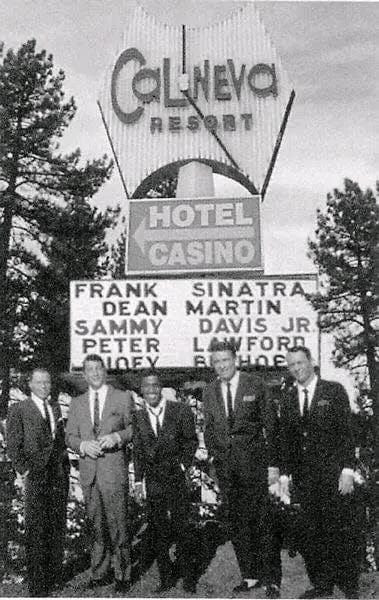
A week ago I found the top [hoto on Facebook. Roseary partied at the Beverely Hills Hotel with them. She said this;
“That crown was even too wild for me!”
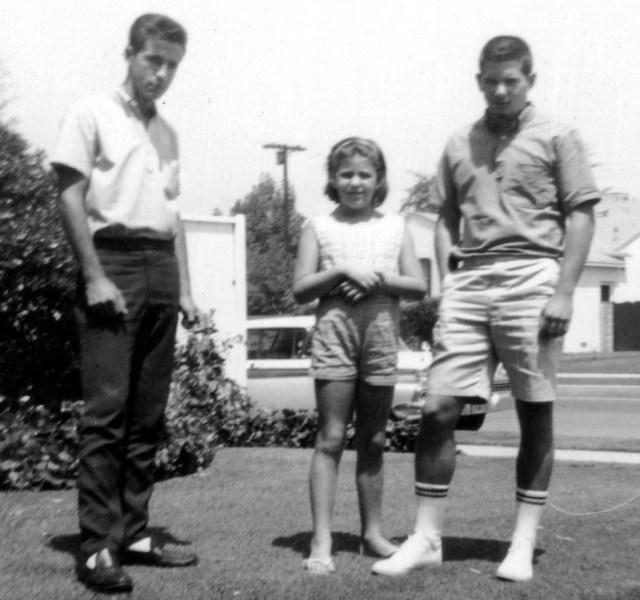
We did not see our mother, except in the morning. She would sign our school stuff, and off to work. We ate the the steak in the BH doggie bag. We were always hunger, Why? Christine figured out she had allot of money – and clothes. When I saw the Cal-Nevada billboard, I recalled the time Rosemary brought Remmer over, with his wife. I had posted a photo of Rosemary’s two sons and her youngest daughter, Vicki Presco. This is what the Remmer’s saw that evening on San Sebastian. I wondered if we were being examined. Was Rosemary going to get us in a porn movie, I wondered. Was he going to hire us to work in one of his gambling rooms. How about working at Cal-Nevada? I am suffering from PTSD. I can barely get to my computer Then there is the murder of Koshoggi. I started this post five days ago. I was going to tell – THE WHOLE TRUTH! I was going to include these truths in my letter to Pope Leo.
John Presco
“I know who killed Kennedy.”
“Who? we asked
“I can’t say.”
Rosemary told us a year earlier she was making porn movies for Big Bones Remmer, and was a hooker, sleeping with powerful men. Our mother was spending allot of time at the Beverly Hills Hotel, and we always found a doggy bag with a partially eaten stake. The hotel name was on the bag. We went for days without seeing Rosemary. She would later tell me the people she had orgies with were too racy – even for her. My mother was oversexed – most of her life! She was a real Bond Woman. I keep reading all these newspaper articles that treats James Bond like he is a real person. Why not employ James to solve the mystery of…..
A month ago
Subscribe
I Told Drew It’s My Birthday

Capturing Beauty
ALL RIGHTS RESERVED
On October 6, 2024, I called Drew and left her message, informing her it’s my birthday. After finding her messages, I now wonder if I could have saved her – if I had found them when she sent them? Let me tell what a Gift and a Miracle this communication, is, and always will be.
When I read Damien Bosley’s message I sent him my phone number on his Messenger. He never did call me – to this day! I called Detective Holstrom, and she did not call me back, till five days later. Because Drew and I had not communicated in many years, I wondered if we ever formed a bond, and if not, then I will just lurk in the background. When Holstrom told me I was the only family member who responded, I had her repeat that astounding truth. WHAT IS THERE PROBLEM? What manner of Identity Crisis are these morons entertaining? Don’t they know anything about human history. Even the most demonic leaders have taken a time out to bury – THE DEAD! Holstrom was -disgusted!
Every member of my family is dead, except Rand Molnar who treats me like a subhuman, and wont talk to me. What’s his problem,. Does he care that Drew is dead? Does he know? How about my daughter, Heather Hanson?
As things stand to day, alas I have someone to talk to. I highly suggest who ever has Drew Benton’s phone, pay the bill, and keep it safe. When Detective Holstrom asked me why I want The Police Report, I considered several reasons why she wanted to know. Offocer Holstrom this is for you.
TO: DETECTIVE HOLSTROM OCTOBER 8, 2024
CO: BULLHEAD POLICE DEPARTMENT
Above is a photo of the family gathering in Ojai California. On the far left is Rosemary Presco, the most psychopathic criminal you may ever known. She made Porn Movies fir Big Bones Remmer and was his high class hooker that worked out of the Beverly Hills Hotel. She fel to LA after she was busted. She lft her four children in the care of a crazy old hag. There was an article in the Oakland Tribune saying the authorities were considering putting us in orphanage. But, that’s what Rosemary wanted because she seduced my best friend who was a gifted artist and writer. She deserved the beautiful bond Bill Arnold and I had, because she married the Wrong Man who could not help her with her identify crisis. I didn’t get it. They had good mothers, while I had the Momster From Hell. Vicent Rice called her Mighty Mo. These teamster in New York fave me the moniker….
THE CALIFORNIA KID
At seventeen I was a real tough guy. No one could outwork me. I ended up in the Big Apple after I stopped Might Mo from tearingn more hair out of Drew’s mother’s head. I shoved her in the close and slammed the door, because she started to come nafter me. Isaid this to my Mom’
“If you come out – I will kill you!”
Mo beat up my fifteen year old girlfriend. She had her by the hair and was slapping her face.
“No one tells me how to raise my son!”
I was in NY for eight months. I returned three days before the last family reunion Mo’s children were invited to. because my kin knew something was wrong. Bob Kelley and Mary Rosamond knew. Why the Art World does not know this story, is because a Judge gave permission to ghost Writers to author my Self-Help book I was working on after I got sober in 1987. My natalborthday is April 7th.
The big mystery The Outsiders SOLD to Rosamond Fans, was, who is in the backseat of the car in Christine Rosamond Benton’s painting ‘The Crossing’. Its……Bill Arnold who drove on the the railroad tracks in the Volvo that was in Mighty Mo’s name, and got crushed by a train. That is not Christine at the wheel. It is……….ROSSSSSSSSSENARY! Rosemary DROVE Bill to suicide!
And now you know! Can you guess who this guy is? How would you like Remmer to come in your home and -examine you? Did he want you to work for the mob as a young Porn Star. Bill died twenty minutes past my eighteenth birthday I never celebrate – until today! I celebrate it with my late niece
DREW BENTON
Who may have not taken her life…if she knew the truth!
Enough for now. My PTSD is making my confession, painful! Everything you have read was heard by my therapist in the last three years. Barbara said…
“I don’t know how you survived!”
John Presco
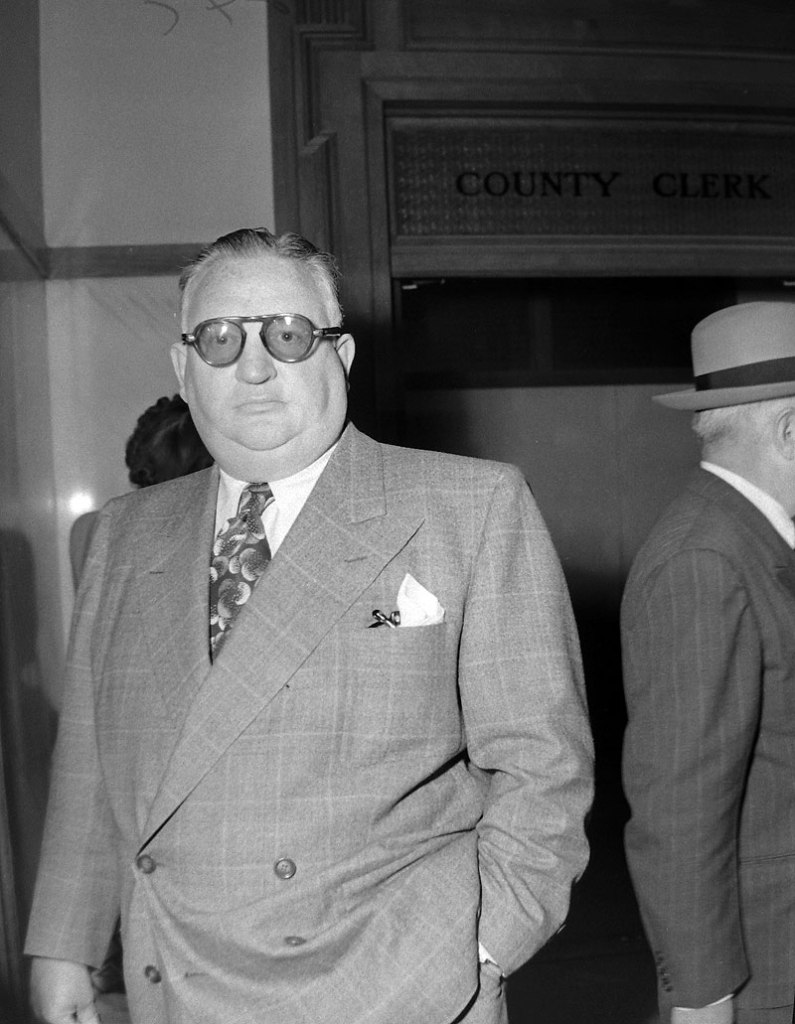
Big Bones Remmer
The Rose Crossing
Posted on September 7, 2012 by Royal Rosamond Press

Stacey Pierrot hired another ghost writer who tells such a incredible lie that it could be considered a fairytale, but for the fact it is devoid of any magic. She says Christine’s kindergarten teacher gave a testimony about how talented this five year old was. How old would this teacher be? Did she write a letter, or make a recording. If a letter existed, why was it not scanned and put in this liar’s biography? If she was thirty in 1952, she would be 90 today. How was she found? What school did she teach in? What city? Why are liars like this allowed around creative people?
Christine told me she rendered the image above in order to deal with Bill’s death. How did she deal with the Liars that surrounded her?
Jon


25 Cent Pay Radio
Posted on July 19, 2012 by Royal Rosamond Press



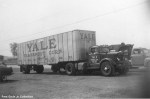

I lived in the Saint George Hotel on 13th. Street New York City, two doors down from Broadway. Everything was painted a Juvy Green, a color Bill Arnold coined after his stay in Juvenile Hall for stealing a car and leading the Oakland Cops on a wild chase up Trestle Glen Blvd. There were shots fired. Bill jumped out of car and knocked a cop to the ground with the door, and got away. A fink turned him in.
There was a marble fireplace that was blocked off. Above it was an old mirror that was losing its reflection, there dark cancerous blotches all over it that were like black holes sucking reality out of the room. This mirror had seen alot. But what was truly haunting was the old pay radio by the bed made out of pressed board painted the same Juvy Green. No one wanted to steal this thing, this robber of the airwaves that anticipated the internet, cable, and Ipod. I rarely had a quarter to play it I living on $8.89 cent day. This room cost $6.00 dollars a night. I ate two meals, one at the buffet two blocks away that cost $1.25, and the other at a cafe on 5th. street and Broadway where I had a breakfast for $1.25. I bought a pack of cigarettes for .25 cents. That left me with $.14 cents which went for a candy bar and cup of coffee when I took my 20 minute lunch break at work around 3:40 A.M. Sometimes I would grab a $.15 cent hotdog at Nehis at the subway station with the 4 cents I saved up.
In 1963 I worked in Hell’s Kitchen at Yale Transport located on the Hudson River at 40th. street and 12th avenue from 12 AM to 8 AM. I was seventeen years and three months old. Manpower Inc. gave me two tokens to get to work and back. They sent a forty year old black man with me who was castrated down south for talking to a white woman. If he was a with a white guy, his chances of being jumped by a Westend gang, was not as likely. We were always ready for a fight. We played it cool. We worked together unloading trucks in the middle of winter. I had no money for winter clothes. My foreman was once a heavyweight boxer with a flat nose. Walking in the snow through the wharehouses, was other worldly.
Sometimes I would put a quarter in the radio, and fall asleep about 11 A.M. to a half hour of music. I was so tired I would not wake till around 10 P.M. I bought books around the corner for a nickle. I read Jewish survival autobiographies. My Christ Complex got started here.
If my mother had lent me a $100 dollars, I could have gotten this room for $90 dollars a month which would have given me extra quarters to hear music. I was paying $150 a month. If Rosmeary had shown me some mercy, I could have had $2 more dollars a day which would have allowed me to take the subway out to Far Rockaway on my day off which I could not afford to take. I worked seven days a week.
The day my mother said she could not help me, and I was on my own, I mixed the flour in a cup and made myself a unleavened pancake. It was my Passover. I would never take my mother’s victimhood serious again. She deserved everything she got.
Today, the Saint George Hotel, Yale transport, and the pay radio, is gone. However, in my novel ‘The Gideon Computer’ that I began in 1986, I move that radio to an old hotel room in downtown Oakland, turn it into a computer, and put this message on it;
“Talk tome Pilgrim”
The year is 2000.
I lived in New York for nine months. Today, a millionaire can not afford the lifestyle I enjoyed. I was a real New Yorker, even though my co-workers called me ‘The California Kid’. When tough westend stevedores give you a moniker, you are a Made Man. The idea I could get a job anyhwere in the world, was awesome! I had my passport.
The California Kid sounds like a prize fighter. In 1968 I returned to the Saint George Hotle and took on Max The Mafia. We played a game of chess as he held a gun to my friend Keith’s head. I lost the chess game, but won the life of my best friend. I could have run. But, I am a Fighter from Hells Kitchen.
Jon Presco
Copyright 2012
http://www.youtube.com/watch?v=AdKjEHfHINQ
Jon Presco
Hell’s Kitchen, Manhattan
View from between 47th and 48th streets on Ninth Avenue looking northeast toward Time Warner Center and Hearst TowerHell’s Kitchen, also known as Clinton and Midtown West, is a neighborhood of Manhattan in New York City between 34th Street and 59th Street, from 8th Avenue to the Hudson River.[1]
Rosemary – Who Killed Kennedy?
Posted on October 23, 2021 by Royal Rosamond Press
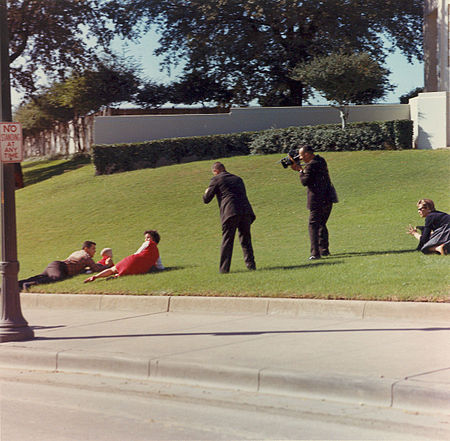

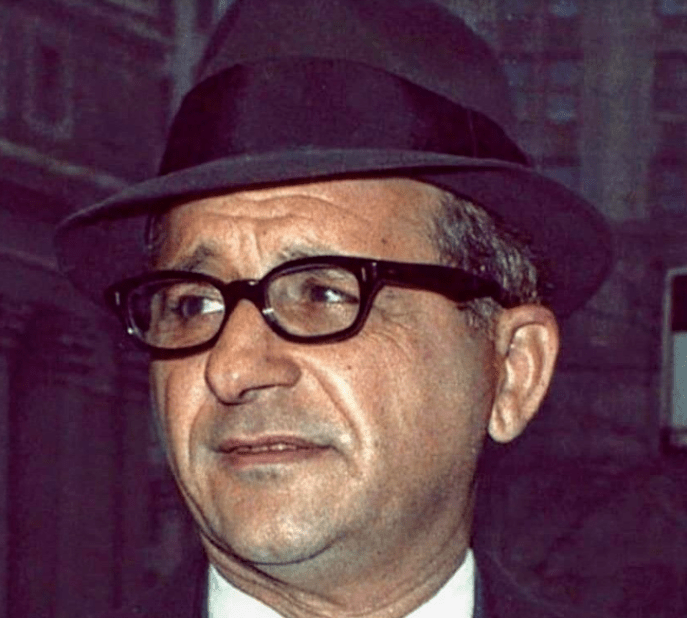
Rosemary
by
John Presco
Copyright 2021
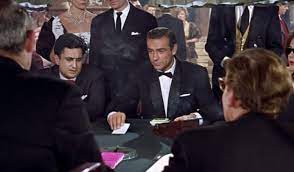
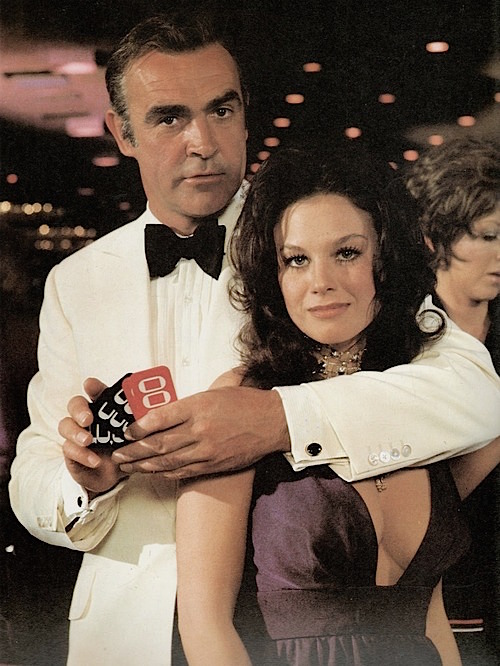
When James Bond entered the Key Club on San Pablo Blvd. he instinctively looked for the high rollers table, where the real money is being wagered. But, business first. Heading for the bar he beheld Rosemary for the first time. It was hard to believe she was the mother of four children. She was a knockout! She had the body of a twenty year old.
“Rosemary?” Bond ventured.
When she turned, James was taken back by how beautiful and sophisticated this mother was. He could see why she got the attention of powerful players who were recruiting her into their circle. She had come into the Key Club after work. She was an executive secretary at Rucker, a plant in Emeryville that made hydraulics for NASA. Rosemary helped put men in space. She was vital to the Space Race and all the propaganda that went with. The Soviet Union was the competition. As luck would have it, Sam Giancana was in town visiting Big Bones Remmer who had just become the manager of the Cal Nevada Lodge. Remmer had several clubs in San Francisco, and there was a plan to get this famous Sin City to legalize gambling again. The Barbary Coast had become famous. Gamblers had come from all over the world. There were dance halls and bordellos’.
Rosemary was shocked when Sam started telling her he did some work for the CIA. He was bragging about it – openly! After Sam asked Rosemary for a date, she called her old friend from Naval Intelligence who had tried to employ his ex-lover in some clandestine operations. Having four mouths to feed after her and Victor got divorced, she was asking if there would be pay for her work. Within hours, she is being told not to go to the CIA.
“I know someone in British Intelligence. We worked on a project together.”
“And you are……?”
“Bond…..James Bond!”
___________________
In 1963, while watching T.V. with her four children, Rosemary Presco made an announement.
“I know who killed Kennedy.”
“Who? we asked
“I can’t say.”
Rosemary told us a year earlier she was making porn movies for Big Bones Remmer, and was a hooker, sleeping with powerful men. Our mother was spending allot of time at the Beverly Hills Hotel, and we always found a doggy bag with a partially eaten stake. The hotel name was on the bag. We went for days without seeing Rosemary. She would later tell me the people she had orgies with were too racy – even for her. My mother was oversexed – most of her life! She was a real Bond Woman. I keep reading all these newspaper articles that treats James Bond like he is a real person. Why not employ James to solve the mystery of…..
WHO KILLED JOHN (JACK) KENNEDY?
Rosemary Rosamond was fated to be involved in The Kennedy Assassination’s, being her mother and father camped with members of the Black Mask, including Dashiell Hammet. The Kennedy Murder has generated more words, more mounds of paper, and more ‘Pulp Fiction’ than any crime case. I mix fiction with fact, and, the theory the movie The Rock, suggests Bond came to the Bay Area – on business! Is it possible that the Nine Muses exist, and, they are on the case?
Sam Giancana – JFK Ties, Mistresses, and the Outfit – American Mafia History
The Rock’s Wild James Bond Theory Possibly Proven True on Reddit (cbr.com)
Assassination of John F. Kennedy – Wikipedia
Cal Neva Lodge & Casino – Wikipedia
I Am Heir To Bay Area Gangsterism
Posted on October 22, 2021 by Royal Rosamond Press
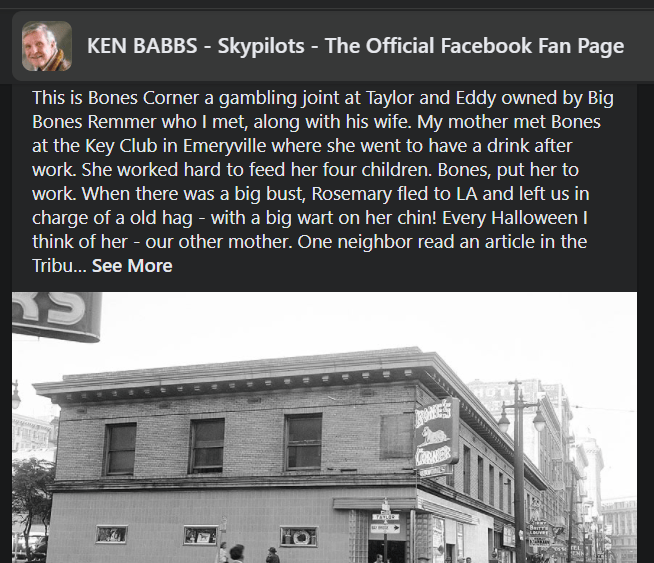
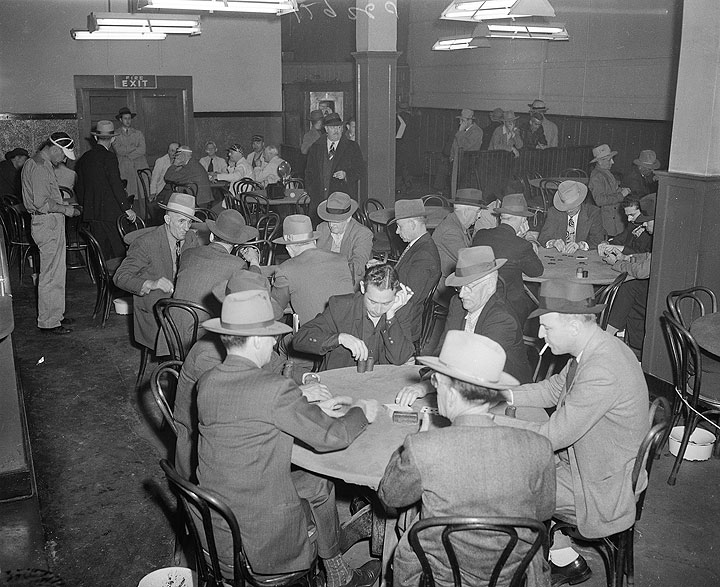
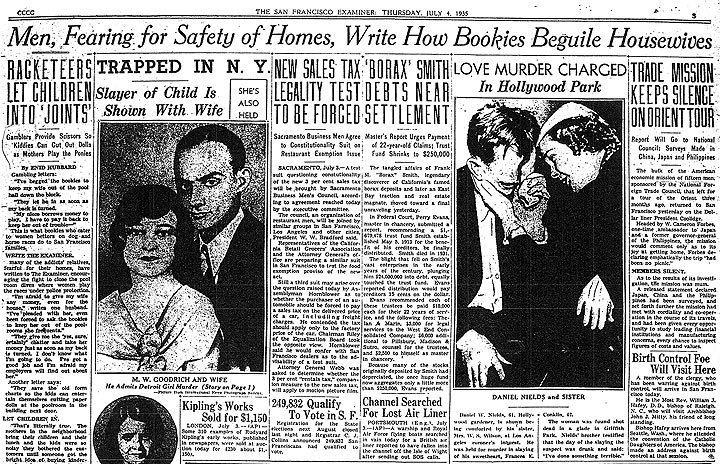
“Racketeers let children into joints!”
I posted this on my Remembering San Francisco Facebook The press covered the affect Bay Area gambling had on families – even children! For this alone the Presco family is famous. Now add my grandfather the gambler, and the founding hippies involvement with the Hell’s Angels, then I might be Heir to Outlawism. I met the major manufacturers of LSD. I believe I know how the Mafia got a LSD lab and started selling on the East Coast. Ken Babbs just published ‘Cronies’. Pot is now legal in Oregon and is a billion dollar industry, as is legal gambling in Nevada – and elsewhere! I don’t see any interest in politics from the Kesey Krowd, whose Springfield Son partied with the Hell’s Angels in La Honda. The KK is leaving it all up to Jerry Russ – and whomever – to carry the Hippie Political Branch. As to who is carrying the Hippie Spiritual Torch now that Allan Ginsberg’s tiny finger symbols have become silent – who gives a rat’s ass. Feeling omnipotent and all powerful is the name of the American Game!
John
Amazon.com: Customer reviews: Lanza’s Mob: The Mafia and San Francisco
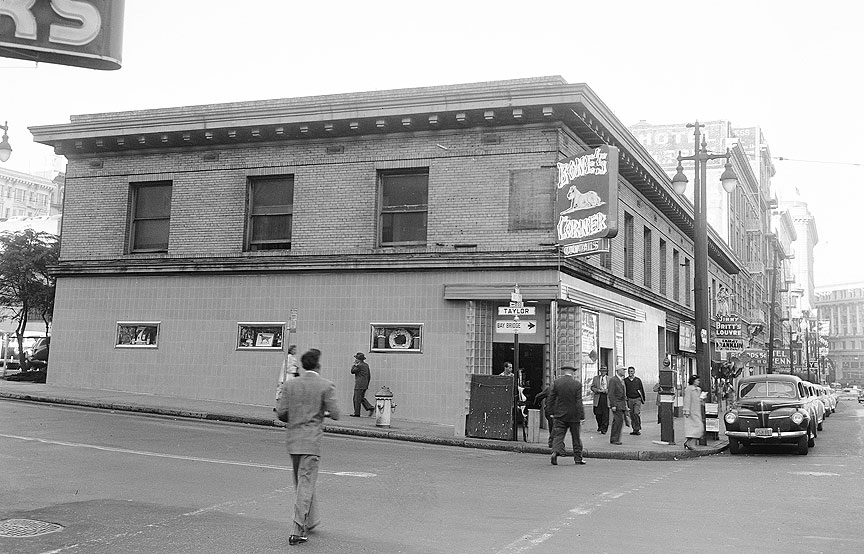
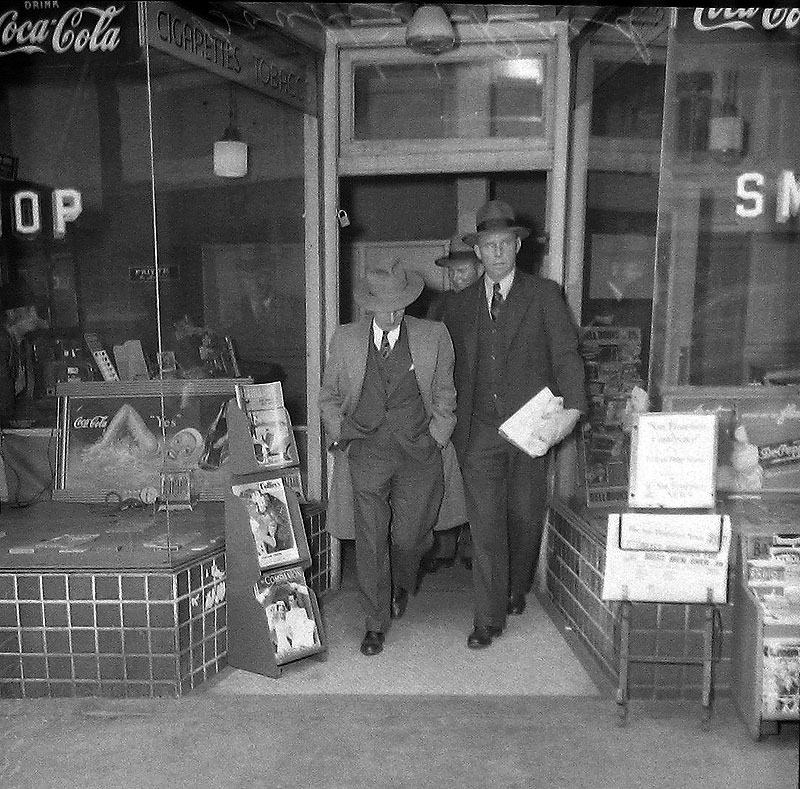
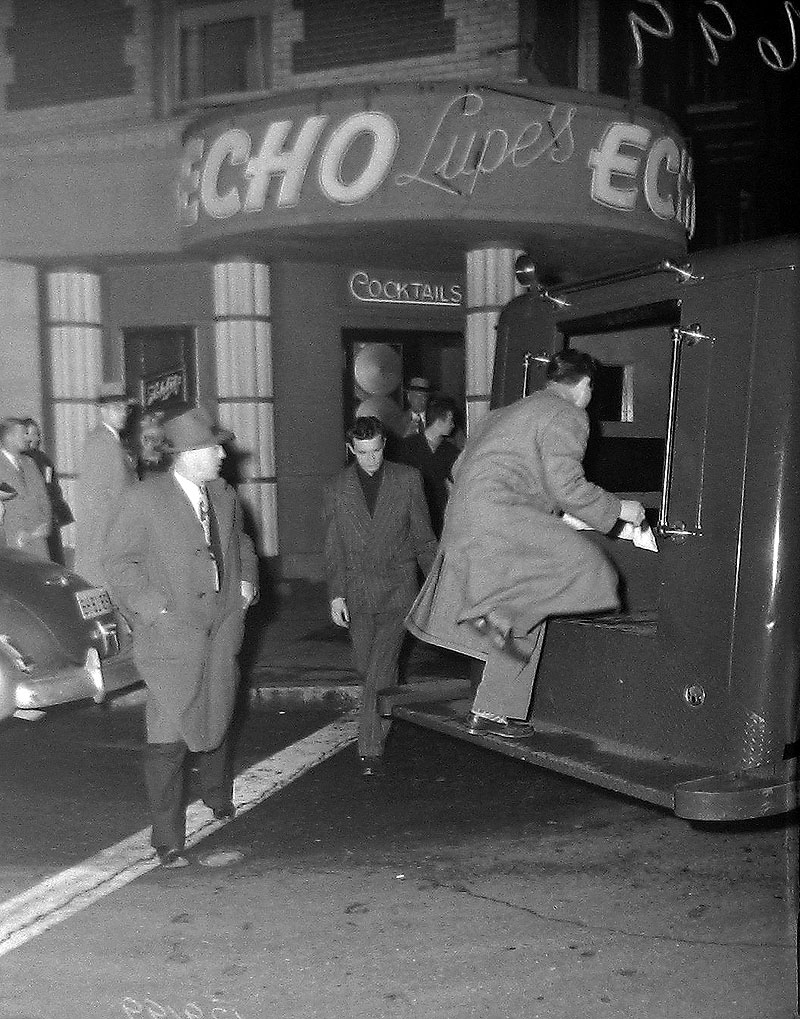
This is Bones Corner a gambling joint at Taylor and Eddy owned by Big Bones Remmer who I met, along with his wife. My mother met Bones at the Key Club in Emeryville where she went to have a drink after work. She worked hard to feed her four children. Bones, put her to work. When there was a big bust, Rosemary fled to LA and left us in charge of a old hag – with a big wart on her chin! Every Halloween I think of her – our other mother. One neighbor read an article in the Tribune. A judge was considering putting the four Presco children in an orphanage. Then, Rosemary came and got us. Packed into her little Ford Anglia, we headed to La La Land. We were treated to the King Breakfast….in King City.


Share this:
Royal Rosamond Press
Opening Scene ‘Daughter Dead’
Posted on October 26, 2016
by Royal Rosamond Press
H
You heard about that big mob bust late last week on the East Coast? Well, NBC went to local crime author and retired policeman Kevin J. Mullen to find out why we haven’t had any real, juicy mob activity out here. Mullen says that Al Capone sent emissaries out to San Francisco in 1931 to case the joint, but decided it was “too tough” a town to crack. That may just be a proud cop talking, but Mullen says it’s an easier town to police, given its size and geography, and the transcontinental railroad terminated in Oakland, after all.
NBC and Mullen neglect to mention that the mafia’s historic stronghold out here was Emeryville, where they set up shop with a figurehead mayor, a chief of police, and their very own little harbor, ultimately headed up by mob boss Elmer “Big Bones” Remmer, who worked for Lucky Luciano. Remmer controlled a number of after-hours joints, gambling parlors (the Oaks Card Club in Emeryville is a latter day remnant, grandfathered in under city law since it’s been there since the 1890s), brothels, and loan-sharking operations around Oakland, Emeryville, and S.F. Remmer’s S.F. headquarters was the Menlo Club, and at least one source credits Jerry Brown’s dad, “San Francisco Attorney Edmund Pat Brown [with helping to] incorporate Bone’s La Costa Nosta operation.” So maybe it’s just that the mob was better connected and operated in relative quiet out in crazy S.F.? In Emeryville, a reported hangout back in the mid-twentieth century was The Town House Bar, so named in part because it’s where the “mayor” sat and drank all day while Remmer had free reign.
The Alameda County D.A.’s office prosecuted a bunch of cases against noted mob figures in the 40s and 50s. Also, reportedly, Jack Ruby (Lee Harvey Oswald’s assassin) once worked in the Menlo Club in S.F. for a gambler named Eugene Shriber, an employee of Remmer’s. (And this blogger guy claims to be the son of one of Remmer’s prostitutes.)
So what’s that again about the mafia never being in San Francisco?
Vicki was adopted by Kay Coakley whose father was the District Attorney of Oakland. Frank Coakley allegedly looked the other way when the Mafia moved into the Bay Area. Did he know Rosemary was a one woman crime spree? We called her Ma Barker. We were her boys. She loved the title.
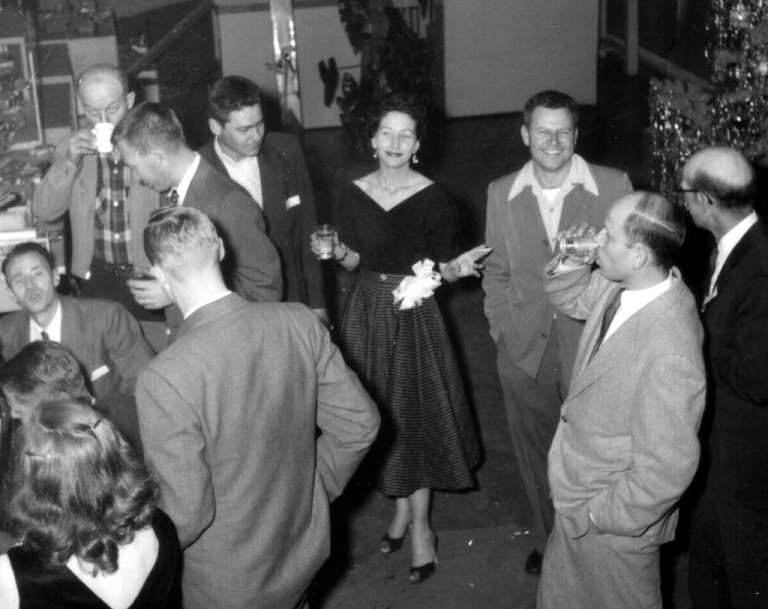
Above are photos of Rosemary at the Rucker Company office party. Rucker had a plant in emeryville, and helped put men on the moon. Rosemary forever sought the limelight, and was not willing to share it with any of her children – especially her to gifted, artistic children! She attacked, or threatened the life of our lovers. She owned the momopoly on sinning in our house. We were fobidden to be sinners and competer with he in her area of expertise.
After a hard day at the office, Rosemary would stop in at the Key Club in
Emeryville and have herself a drink. It was here she met that nice elderly
Italian couple who were members of a Mafia Family who had long ago founded the
city of Emeryville and made it a wide-open town, it famous for its Cat Houses
and Gambling Joints. Though several crack-downs had taken place, there were two
Card Rooms in Emeryville and the Key Club was once of them.
San Francisco County’s resident Lucky Luciano’s La Costa Nosta crime boss was a man called Elmer “Big Bones” Remmer of Emeryville. Bones Remmer controlled all the after-hours joints, brothels, gambling houses, extortion, loan-sharking, bookies and Murder, Inc. in Emeryville, Oakland and San Francisco. Along with witting politicians, cops, and various shady lawyers and bagmen, Big Bone’s mob operations remained unmolested by local law enforcement agencies in Alameda and San Francisco County.
In San Francisco, Bones was the proprietor of a gambling and bookie joint called the Menlo Club. [9] San Francisco Attorney Edmund Pat Brown, former D.A. of San Francisco County, former California Governor and father of former governor and Oakland Mayor Jerry Brown, helped incorporate Bone’s La Costa Nosta operation.
Big Bones also ran the notorious Cal-Nevada Lodge in Lake Tahoe with Frank Sinatra, and in association with the legendary New York Mobster Sam Giancana. [10] Big Bones had close ties to infamous criminal figures like “Baby Face” Nelson and “Pretty Boy” Floyd, both of whom reportedly stayed in the cottages below the Lodge when they “needed to get away.” [11]Bones was also a friend of Jack (Rubinstein) Ruby, the infamous assassin of Lee Harvey Oswald, the patsy in the Assassination of President John F. Kennedy.
During Jack Ruby’s six year stay in California, he was employed by a gambler named Eugene Shriber, who worked under Big Bones. Shriber came to California from the Chicago mob in 1933 and managed a San Francisco card room for Bones and employed Ruby and Eva Rubenstein, Jack’s sister, as dealers. [12]
Fed up with crime, corruption and Murder, Inc. in Alameda County during the 1940-50’s, the California State Attorney General had to come to Oakland to try to shut down the mob’s operations. The Attorney General’s office indicted and proceeded to prosecute some of Oakland’s mob figures. Under D.A. Coakley, the La Costa Nosta just didn’t exist in the county. Just imagine of all people that could have showed up in Oakland to defend the mob, it was the who’s who of Mafia Boss Meyer Lansky’s crime syndicate, another infamous underworld character by the name of Murray Chotiner. The noted Author Dan Moldea reported that Murray Chotiner, and his brother Jack, handled 249 cases of mob figures arrested or indicted between 1949 and 1952. [13]
Chotiner was also the campaign manager of Richard Milhouse Nixon and Former Alameda County D.A. Earl Warren. [14] Warren also attended UC-Berkeley graduating in 1912. He then also attended Boalt Hall School of Law School graduating in 1914. Earl Warren was Alameda County District Attorney from 1926 to 1938, Attorney General of California from 1939 to 1943, and Governor from 1943 to 1953. In September 1953, Earl Warren was appointed Chief Justice of the United States Supreme Court by President Eisenhower. Murray Chotiner was the political public relations man for Earl Warren during his gubernatorial campaign in California.
Murray Chotiner had been associated with Nixon since 1946. When Nixon became the Vice Presidential nominee of the Republican Party in 1952, Murray Chotiner served as his campaign manager. In 1966, Murray Chotiner was called before Senator John McClellan’s committee investigating organized crime. Congressional investigator Robert F. Kennedy questioned Chotiner about his client, New Jersey mobster and Philadelphia crime syndicate leader Marco “Small Man” Reginelli, and demanded a list of Murray Chotiner’s other mob clients. [15]
My great Uncle was a gangster who was a notorious gambler. His name was Czar Elmer Bones Remmer who operated card rooms in San Francisco and unincorporated areas of Alameda and Contra Costa Counties. While he managed the Cal-Nevada Lounge at Lake Tahoe in the 1940’s, the Nevada state commission warned him to “put square dice and new decks on the table.” In the mid-1950s, Remmer attempted to open a card club at the La Rue Restaurant on the first floor of the Ritz Hotel in Emeryville, but was thwarted by the city council. He was subsequently sent to prison for income tax evasion. After serving his sentence, Remmer sold used cars for his brother William, who was co-owner of a lot in Oakland. When Bones died in 1963, the underworld mourned the loss of the “big daddy of Northern California gambling.” People wondered why I have been a gangster since day one. It is in my blood. I used to have such a bad temper my mom would take me into the garage and give me a hammer to beat out my aggression. I would help her do art. She must of known from the very start that I had a sickness. Now that I look back at it, it was a giftness. My mom used to do some amazing art yet my parents ruined my heart. All of their fusing and fighting enabled me to learned the words nigger, whore, money grubbing, lying, and cheating, all because my parents weren’t acting like adults and were misbehaving. They are the ones who need the counseling. My dad was a square and my mom was never there or at least that’s what I was taught. It is unfortunate they created my box.
Here
“You died because you were carrying all these sins that did not belong to you. You were in much pain. You had to let that guilt go.”
Jon Presco
Copyright 2013
https://rosamondpress.wordpress.com/2012/06/07/elmer-big-bones-remmer/
Elmer ‘Big Bones’ Remmer
Posted on June 7, 2012 by Royal Rosamond Press
I met Elmer ‘Big Bones’ Remmer when I was fifteen. He and his wife (or girlfriend) looked like Mr. and Mrs. Santa Claus, they both having white hair. They walked into our home on San Sebastian Avenue, our benefactor wanting to meet the children of their employee. Rosemary ( a made woman?) was working for Rucker hydraulics in Emmeryville and met Remmer in the Oaks or Menlo Club located in mob-owned town. She started editing porno movies for Remmer, then starred in them. Many nights Rosemary did not get home till after her four children were asleep. We would find a doggy bag from a restaurant in the fridge. Vicki sees her three older siblings as her real parents.
Remmer was bigger then I thought. He is named along with Mickey Cohen and Frank Sinatra. He ran the Cal-Neva Lodge and took his case to the highest court in regards to his card rooms in Emmeryville and San Francisco. It looks like Remmer was trying to make gambling legal in all of California which would put the Mob out of business in Nevada. However, Remmer was the Mob.
There was a brawl and arrest in LA involving the actress, Vicki Raaf. Here, Hollywod make-believe, meets real reality!
Jon Presco
Copyright 2012
In December 1950, local cops swept up a rat king of drunken gamblers after an early morning brawl inside the Encore, resulting in the feds calling a pair of long-sought men to appear before the Kefauver Senate Crime Investigating Committee. Invited to Washington were Elmer “Bones” Remmer (San Francisco) and Thomas J. Whalen (East Saint Louis). With them in the Encore, and booked on charges of intoxication were Edmund M. Scribner (Bakersfield tavern keeper) and redheaded Miss Vici Raaf, actress.
Whalen was also charged with robbery and carrying a concealed weapon after a search turned up a .25-caliber automatic hidden in the padding of his car, and $4600 cash. The cops arrested the quartet after Andy McIntyre, proprietor, called for help with some brawling football fans. Whalen was passed out on the floor when deputy sheriffs and Highway Patrolmen arrived, Miss Raaf, Whalen’s housemate above the Sunset Strip, bending over him.
Remmer, who Miss Raaf identified as the operator of the Cal-Neva Lodge — which he was supposed to have sold under duress in 1948 — cursed at and threatened officers and reporters. Sheriffs interrogated the men about the recent Samuel Rummel gang slaying in Laurel Canyon, and told them all to stay out of Los Angeles.
The Text Content on Page 7 of Oakland Tribune , January 30, 1952 is:
Remmer Defense Tries To Trip Tax Agent By VICTOR STIER Tribune StaM Writer CARSON CITY Nev JanL 30 defense in the Bones Remmer income tax evasion casi battered again today at wary government witness Ray A Weaver special agent of the In ternal Revenue Bureau who headed the gation of the gambler’s tax Spurgeon Avakian Oakland tax defense spent a frustrating day yesterday in his tion of Weaver and finally pealed to Federal Judge Roger T Foley to instruct the witness to answer my questions The judge only scowled and courtly I don’t make Wholesale rulings More than once Weaver turned own questions back at him Avakian tried to trap Weaver into admitting that he had used improper accounting methods in his summary of the assets and liabilities of Menlo Club Remmer’s San Francisco Poker Palace He asked if he had omitted a liability to Gene Schreiber from whom Remmer purchased the Menlo Club Weaver said he didn’t put the liability in his would have reduced Remmer’s net it was mer’s personal liability and not the club’s He I did not consider it the Menlo Club a true partnership This was an out of the blue blow to the defense which has contended the Menlo and othe Remmer ventures were partnerships
All along the gov has tried to that these associations were phoney and set up only to en able Remmer to evade his taxes Again Avakian returned to subject and Weaver said the ne worth of the Menlo Club was Remmer’s net worth That is Remmer’s individual worth anc not the He you can’t avoid it At this Defense Atty John Golden moved the remark be stricken but was denied by Judge Prisoners Put Bones CARSON CITY Nev Jan 30 trial of Elmer F Remmer now ending its second month hasn’t only inconvenienced at- jurors and its principals has also caused a minor de- pression at the Washoe County jail in Reno The complex tax evasion case has dragged through eight weeks of testimony in the court of eral Judge Roger T Foley It has been delayed several times by holidays and severe storms
Today Remmer learned by letter that his case had another effect Friend the note said It looks like your trial and the weather will keep the rest of us Federals in jail all winter A couple of us have been here longer than three months now and no chance of getting into court in sight It’s rough So we are tap city Elmer and I mean but good Knowing you as I do from years ago I don’t hesitate to write and ask you you can see your way clear to put something on the sheriff’s books for this other chap and myself A small touch will keep us in cigarets razor blades and miscellaneous The note came from Harold Sylvada who identified trie other chap as Harry M Taylor
Remmer said today he had never heard of either felt sorry for them and sent them some money He wouldn’t say how much Both have been awaiting trial for Dyer Act charges since early November Man’s Body Found in Bay The body of a man tentatively identified as Andrew George Carthy 40 was recovered from the Bay today mile east of the Golden Gate Bridge Identification was made by police through papers which gave the address of Mrs A G Carthy 2460 Green Street Mrs McCarthy told police her son Andrew disappeared from her home four weeks ago and that she had not seen him since
McCarthy was married at one time to Dorothy Spreckels grand- daughter of sugar magnate Claus Spreckels Police said he recently had worked as an orderly at Laguna Honda home but disappeared from there January 4 after working only two weeks A check on other papers in the dead man’s pockets disclosed he had been eating at a merchant club at 9 Mission Street San Francisco and living in an Embarcadero hotel The manager of the club said he was last seen there January 4 also The body had been in the water about 10 days according to corner’s deputies and there were no marks of violence A notebook indicated the dead man had been treated at sity of California Hospital Foley Golden then I assign the ruling is error In another exchange Avakian asked he had testified on direct examination that determine the amount oJ cash Mr Remmer had in safer and safe deposit And Weaver said Xes because Mr Hemmer re fused to give us any tion whatsoever Avakian then drew out that this refusal came in a Reno attorney’s office one day in 1948 He shake Weaver’s sertion that Remmer had been present when his attorney at the time John P Thatcher of Reno refused to let him discuss the the government Weaver bulky bler was there and added I even remember that he was wearing cowboy boots Later on another matter to which Prosecutor Walter M lampbell Jr had objected cain asserted he would like to Remmer’s returns that are charged here as fraudulent were not even discussed with the ons in the case
Judge Foley however sustained the ion Weaver did say that Remmer’s employees and were co-operative at all times and hadn’t shown of 1945 Menl Club lOU’s as accounts receiv able Weaver Be cause the Menlo Club didn’t sell anything The defense did score in bnl aspect of the cross-examination In direct examination said the government had no been able to ascertain the amount of Remmer had a the beginning or the indictment period 1944 through 1946 On cross-examination he ad nutted that this information would necessary to adequately determine the taxpayer’s ne worth When objected to Avakian asking Weaver it he submitted his report on the Remmer investigation to Dell the defense attorney asked Judge Foley three times 36 heard on this your The judge I’ve told you three time no Avakian did gain more dence that Remmer a oan of on September 27 1946 from a friend of his the late Robert L Weaver he Jeffres introduced Through into prompt to comply with any of he government’s requests asked Weaver why he dence a photostatic copy of res bank account showing a withdrawal on that date
This is important to Remmer it subtracts that amount rom his net worth for that ear The loan was first brought to light when the defense a prosecution witness a month ago At that time Campbell tried to shake the witness Harold drell but failed Maundrell in- the loan had been made Redden on Stand Again Airs Protection Plot Oakland Tribune Wednesday 1952 E if 7 Thomas C of 127 Santa Clara Avenue Alameda who has pleaded guilty to a grand indictment charging of a bribe and book making cross examina tidn today by counsel Wayne on trial -in Superior Court on the same charges Redden who has Wayne of accepting payments from Joseph May to provide police protection for activities in Alameda in is awaiting sentence on the charge Wayne indicted in with the same is standing trial on the defense position that payments that came him through den from May were in ment of a loan he made to May and that he had no ion whatever with bookmaking activities ADMITS CONTACT Redden testified on direct ex- amination before a jury in Judge Charles Wade Snook’s Court erday that he had approached Wayne on behalf of May to see if police protection could be ar- Redden declared Wayne told im he had fixed things up with Alameda Police so that day could operate in that city on that all bets be taken y telephone that there be no operating in bars lat the bookmaking offices ut of the public view and there no syndicate f that May paid around protection money during the time May operated from September 25 to December 2 on Webster Street and during the time May operated at -2256 Pacific Avenue ALLEGED PAYOFF All the police of it to Ridden was a case or two of whiskey and a slot machine he said was split between himself and Wayne Chief Atty Richard H Chamberlain and Dep Dist Atty Raymond E Mellana ex- to complete the prosecution case late today Defense Andrew J Eyman expects to consume another three days with defense witnesses Prospects are case will go to the jury next Tuesday
Remmer v. Municipal Court [90 Cal.App.2d 854]
Remmer v. Municipal Court, 90 Cal.App.2d 854
v. No. 13926.
First Dist., Div. Two.
Mar. 29, 1949.]
ELMER REMMER, Appellant, v. THE MUNICIPAL COURT OF THE CITY AND COUNTY OF SAN FRANCISCO et al., Respondents.
MENLO SOCIAL CLUB, INC. (a Corporation), Appellant, v. EDMUND GERALD BROWN, as District Attorney, etc., et al., Respondents.
COUNSEL
John R. Golden for Appellants.
Edmund G. Brown, District Attorney, in pro. per., and Norman Elkington, Assistant District Attorney, for Respondents.
OPINION
GOODELL, J.
In Remmer v. The Municipal Court et al., the petitioner sought a writ to prohibit the trials of appellant and others who had been arrested in raids of the Menlo Social Club for keeping and maintaining a place where draw poker and draw low ball poker were carried on and conducted in violation of section 288 of the Police Code of San Francisco. In Menlo Social Club, Inc. v. Brown, as District Attorney, et al., an injunction was sought to prevent further raids and arrests on similar charges. The court denied both the writ of prohibition and the injunction, and these two appeals were taken, and are presented on one record.
Appellants challenge the constitutionality of section 288 on the grounds (1) that it is a duplication of state law, hence in conflict therewith; (2) that the portions thereof which are not conflicting are so inseparable from those which are, that the whole section must fall, and (3) that the legislation is unreasonable.
The first two grounds may be discussed together.
Section 330 of the Penal Code reads as follows: “Every person who deals, plays, or carries on, opens, or causes to be opened, or who conducts, either as owner or employee, whether for hire or not, any game of faro, monte, roulette, lansquenet, rouge-et-noir, rondo, tan, fan-tan, stud- horse poker, seven-and-a-half, twenty-one, hokey-pokey, or any banking or percentage game played with cards, dice, or any device, for money, [90 Cal.App.2d 856] checks, credit, or other representative of value, and every person who plays or bets at or against any of said prohibited games, is guilty of a misdemeanor …”
Section 331 provides that every person who knowingly permits any of the games mentioned in section 330 (and 330a, not here involved) to be played, conducted, or dealt in any house owned or rented by such person, in whole or in part, is punishable as provided in those sections.
Section 11 of article XI of the Constitution provides that “Any county, city, town, or township may make and enforce within its limits all such local, police, sanitary, and other regulations as are not in conflict with general laws.”
In 1903, the city and county of San Francisco enacted an ordinance, now section 288 of its Police Code, reading as follows: “It shall be unlawful for any person to keep or maintain, or visit, or to contribute to the support of any house or place where gambling is carried on or conducted, or to knowingly let or underlet, or transfer the possession of, any house or premises for use by any person for said purpose.”
[1] Draw, and draw low ball, poker, when played for money, are gambling games (People v. Philbin, 50 Cal.App. 2d Supp. 859, 864 [123 P.2d 159]; Lavick v. Nitzberg, 83 Cal.App.2d 381 [188 P.2d 758]). Keeping and maintaining a place where those games were played gave rise to the raids.
[2] The first contention of appellants is that section 288, Police Code, is in conflict with state law. Section 288 uses comprehensive language. Unlike section 330, Penal Code, it does not enumerate certain games, but deals with gambling–all gambling. If the section were applied to any of the 12 or more games prohibited by section 330, Penal Code, it would be to that extent in direct conflict with sections 330 and 331. In re Sic, 73 Cal. 142 [14 P. 405]; Ex parte Hong Shen, 98 Cal. 681 [33 P. 799]; In re Hoffman, 155 Cal. 114 [99 P. 517, 132 Am.St.Rep. 75]; In re Iverson, 199 Cal. 582 [250 P. 681]; In re Simmons, 199 Cal. 590 [250 P. 684]; Stanislaus etc. Association v. County of Stanislaus, 8 Cal.2d 378 [65 P.2d 1305]; In re Portnoy, 21 Cal.2d 237 [131 P.2d 1].
Respondents concede this, but they couple their concession with the claim that as to games not prohibited by state law there is no conflict and the ordinance remains valid and operative.
The court in the Portnoy case, supra, said: “The control of gambling activities is a matter concerning which local governments possess power to enact and enforce local regulations not [90 Cal.App.2d 857] in conflict with general laws, for the purpose of supplementing those laws. (Const., art. XI, ? 11; In re Murphy, 128 Cal. 29 [60 P. 465]; cf. Mann v. Scott, 180 Cal. 550, 556 [182 P. 281]; In re Hoffman, 155 Cal. 114 [99 P. 517, 132 Am.St.Rep. 75.)”
Neither draw, nor draw low ball, poker, is prohibited by state law, hence respondents contend that section 288, Police Code, when invoked against places where those gambling games are played as it was here, is not in conflict with sections 330 or 331, Penal Code, or any other state law. We are satisfied that this position is supported by the authorities.
The early case (1887) of In re Sic, 73 Cal. 142, supra, involved an ordinance of the city of Stockton, comprising seven sections, dealing with opium smoking. Section 3 was held to be a duplication of state law, therefore in conflict therewith and unconstitutional. The court, however, was careful to say: “It will be observed that we only hold that there is a conflict where the ordinance and the general law punish precisely the same acts. We do not wish to be understood as holding that the sections of the ordinance which make criminal other acts not punishable under the general law are void because the legislature has seen fit to legislate upon the same subject.” (Emphasis added.)
In the Iverson case, 199 Cal. 582, 586, supra, the court drove home the severability point by citing In re Sic, and repeating the last sentence just quoted.
Another case directly in point is In re Murphy, (1900), 128 Cal. 29 [60 P. 465]. There an ordinance of the city of Vallejo made it illegal to play “any game played with cards, dice or any device for money.” The claim was made, as it is here, that the ordinance was void because in conflict with section 330, Penal Code. In denying a writ of habeas corpus the court said: “It may be that the ordinance includes all that is denounced in the statute, and it may also be that it includes much more. The defendant was convicted for playing the game of ‘keno’ … ‘Keno’ is not mentioned in the code… Since it was competent for the city, by ordinance, to prohibit all games not denounced by the statute, lack of jurisdiction is not made to appear … The ordinance describes the games prohibited with sufficient definiteness. It condemns all games of chance played for money. From this comprehensive description we must exclude those condemned by the statute … This method of defining offenses is not to [90 Cal.App.2d 858] be recommended as a model, but we cannot hold that it renders the ordinance void.” (Emphasis added.)
Substitute “draw poker” and “draw low ball poker” for “keno” and you have this case. Appellants, indeed, concede that the language of the Vallejo ordinance is “in legal effect exactly like Section 288 …”
[3] Appellants claim that the Murphy case and the Portnoy case, supra, are irreconcilable one with the other. As we have just seen, the Vallejo ordinance and the San Francisco ordinance are in legal effect exactly alike. The same parallel cannot be drawn between the San Francisco ordinance (in this case), which is simple, and the Riverside County ordinance (in the Portnoy case), which was complicated. People v. Commons, 64 Cal.App.2d Supp. 925 [148 P.2d 724], involved a Los Angeles ordinance prohibiting concealed weapons. It was contended that the ordinance duplicated the state law and was therefore conflicting. The Portnoy case was there relied on by the defendant, just as it is here, on the claim that the Los Angeles ordinance was inseverable. The court at page 935 said with respect to the Portnoy case: “But the ordinance there in question was, as the court suggests, complicated and the disentanglement of valid from invalid provisions was difficult. Here we see no such difficulty.” The court then goes on to say that it is necessary simply to exclude from the operation of the ordinance such of its provisions as are covered by the state law. “This,” says the court, “seems to us no more difficult than the exclusions necessary to be made from the ordinances upheld in the cases above cited.” This reference is addressed to the Murphy, Hoffman, Iverson and Simmons cases, supra, which are cited at page 934 of 64 Cal.App.2d in support of the following statement: “The fact that the ordinance is so framed that its entire prohibition, including both the valid and the invalid parts thereof, is stated by the same words, does not necessarily show that the valid part is inseparable from the invalid …” The Commons case contains an excellent discussion of this whole subject and we are in complete agreement with Judge Shaw’s treatment therein of these questions of severability and adopt it as our own.
It is difficult for appellants to sustain their contention that the Portnoy case has weakened the authority of In re Murphy, or is inconsistent with it, in view of the fact that the former cites the latter as a live precedent. In re Murphy has been followed also in the Hoffman, Iverson and Commons cases, supra, and in Ex parte John, 17 Cal.App. 58, 64 [118 P. 722], [90 Cal.App.2d 859] and Witt v. Klimm, 97 Cal.App. 131, 134 [274 P. 1039], and it seems never to have been criticized. Because it is parallel with the present case we are bound to follow it.
[4] In the Sic case, 73 Cal. 142, supra, the possibility of double jeopardy arising from prosecutions under both state law and ordinance appears as one of the reasons for the conflict rule. That could not happen here, since there could be no prosecution under section 331, Penal Code, for keeping or maintaining a place where draw poker is played, as “draw” is not prohibited by section 330 (see Monterey Club v. Superior Court, 48 Cal.App.2d 131 [119 P.2d 349]).
Nor could there be any such conflict between section 288, Police Code, and section 318, Penal Code, since the former prohibits keeping and maintaining a gambling house while the latter prohibits prevailing upon another to enter one. Under 318 it is not sufficient merely to prove invitation, but “prevailing” must be proved (In re Chase, 119 Cal.App. 432, 434 [6 P.2d 577]; People v. Chase, 117 Cal.App. Supp. 775, 779 [1 P.2d 60]). The acts denounced by the two sections are entirely different.
These considerations furnish further reasons why no inseverability problem is presented.
[5] Lastly, appellants contend that the legislation is unreasonable and oppressive. They concede that a municipality may properly regulate gambling, but argue that it is unreasonable to prohibit (by legislation against the maintenance of gambling houses) games which the state itself has not seen fit to prohibit, such, for instance, as draw poker.
In Ex parte Tuttle, 91 Cal. 589 [27 P. 933], the Supreme Court definitely held that gambling in the various modes may be either suppressed and prohibited or merely regulated, and that “a wide discretion is committed to the law-making body.” That case contains strong language respecting the state’s policy on the subject of gambling in general. Several later cases have spoken on the same subject. In People v. Haughey, 48 Cal.App.2d 506, 511 [120 P.2d 121], this court said “The policy of the state toward commercial gambling is clear and unequivocal. A mere superficial reference to the Penal Code reveals that commercial gambling in all of its phases has been uniformly condemned for many years.” To the same effect is People v. Sullivan, 60 Cal.App.2d 539, 542 [141 P.2d 230], where numerous cases are cited.
This general policy of the state finds expression in section [90 Cal.App.2d 860] 318, Penal Code, just discussed. Section 330 makes it unlawful to play 12 or more specified games and section 331 makes it unlawful for anyone to permit such specified games to be played in any house owned or rented by him. Section 318, on the other hand, makes it unlawful to prevail “upon any person to visit any room, building, or other places kept for the purpose of gambling …” It is “an indirect, partial, protection of the public” against all gambling whether outlawed by section 330, or not. (People v. Philbin, 50 Cal.App.2d Supp. 859, 864 [123 P.2d 159].)
In Ex parte McClain, 134 Cal. 110 [66 P. 69, 86 Am.St.Rep. 243, 54 L.R.A. 779], an ordinance was attacked as is section 288 on the ground that it was unreasonable. At page 111 the court said: “It may be concluded … that in a reasonable exercise of its police powers a municipality may pass any ordinance in furtherance of the avowed general policy of the national and state government. In this regard our cities and counties draw their power, not from legislative permission, but from the direct grant of the constitution itself, which, by section 11 of article XI, empowers them to make and enforce within their limits all such local, police, sanitary, and other regulations as are not in conflict with general laws.”
Section 288, Police Code, falls squarely within the doctrine of the McClain case. Its provisions against keeping or maintaining a place where gambling is carried on are directly in furtherance of the avowed general policy of the state. By section 318, Penal Code, the Legislature puts this policy into action by prohibiting any person to prevail upon another to enter a place where gambling of any kind is carried on; by section 288 the municipality gives expression to the same state policy by prohibiting the keeping or maintenance of such a place.
The case of In re Hall, 50 Cal.App. 786 [195 P. 975], relied on by appellants, is readily distinguishable since there exists no such public policy with respect to dancing–the subject of the Pasadena ordinance held invalid in that case. Gambling and dancing are, of course, altogether different.
The orders are affirmed.
Nourse, P. J., and Dooling, J., concurred.
http://www.sunpopblue.com/Frisco-Tales/freddie-francisco.html
In December 1950, local cops swept up a rat king of drunken gamblers after an early morning brawl inside the Encore, resulting in the feds calling a pair of long-sought men to appear before the Kefauver Senate Crime Investigating Committee. Invited to Washington were Elmer “Bones” Remmer (San Francisco) and Thomas J. Whalen (East Saint Louis). With them in the Encore, and booked on charges of intoxication were Edmund M. Scribner (Bakersfield tavern keeper) and redheaded Miss Vici Raaf, actress.
Whalen was also charged with robbery and carrying a concealed weapon after a search turned up a .25-caliber automatic hidden in the padding of his car, and $4600 cash. The cops arrested the quartet after Andy McIntyre, proprietor, called for help with some brawling football fans. Whalen was passed out on the floor when deputy sheriffs and Highway Patrolmen arrived, Miss Raaf, Whalen’s housemate above the Sunset Strip, bending over him.
Remmer, who Miss Raaf identified as the operator of the Cal-Neva Lodge — which he was supposed to have sold under duress in 1948 — cursed at and threatened officers and reporters. Sheriffs interrogated the men about the recent Samuel Rummel gang slaying in Laurel Canyon, and told them all to stay out of Los Angeles.
In May 1961, piano man Bobby Troup (aka Mr. Julie London), the regular headliner, was jumped in the parking lot, and punched so hard he lost three teeth. His assailant, coffee salesman Stan Massey, 35, was apparently incensed because the performer spoke with a woman in Massey’s party. Gary Shugart, parking lot attendant, said Massey called Troup out of his car, then started swinging while the other man was off guard. Massey countered that Troup pushed him first, and that he thought the clock (?!) in Troup’s hand could be used as a weapon. Massey was convicted of assault and fined $140. Troup sought $68,305 in civil damages, but if he prevailed, that didn’t make the papers. Troup played a mean “Tenderly,” too.
December 30, 1964 was a Wednesday night. Quiet. George E. Davidson, 50-year-old west side accountant, met his draftsman friend Jose G. Beltran, 29, at the Encore. A shoving match ensued over who was going to pay the bill, Davidson fell, struck his head, and died a few days later. Beltran was picked up at home in Monrovia and charged with murder, after which the sad story vanishes from the press.
But it wasn’t all fisticuffs. If you swung by the place on September 19, 1961, a dinner meeting of the Los Angeles Junior Advertising Club would include discussion on the theme “Entertainment in Advertising,” and far as we know, not one junior exec was left bloody.
Before we leave the Encore, please note that a couple doors north is another handsome neon sign in the exact same shades of green and yellow, advertising Talk of the Town Coiffeur. We suspect that George Mann, who loved stylish signage, snapped the Encore in the manner he did to include both signs in his composition.
photo: George Mann (detail)
Down the road at Melrose we find The Bantam Cock, which was the second Restaurant Row establishment of Shelton “Mac” McHenry, whose influential Tail o’ the Cock we’ll discuss at length when we near Wilshire Boulevard.
Gunsmoke (TV series)
Fay
– Kitty Cornered (1964) … Fay (as Vici Raaf)
1960-1964 Rawhide (TV series)
Doll / Hostess / Lil / …
– Incident of the Swindler (1964) … Saloon hostess (uncredited)
– The Boss’s Daughters (1962) … Hostess (as Vici Raaf)
– Incident of the Big Blowout (1961) … Doll (as Vici Raaf)
– Incident of the Challenge (1960) … Lil (as Vici Raaf)
The next year, Sherman deeded the Cal-Neva to Norman Biltz, known as the “Duke of Nevada,” reportedly for real estate commissions owed. In 1930, Biltz married Esther Auchincloss Nash, granddaughter of the founder of Standard Oil and aunt of Jacqueline Kennedy, beginning one of the most historically interesting familial connections to Stateline Point.
In 1937 the Cal-Neva Lodge burned to the ground and was rebuilt by Biltz in 31 days, using 500 workers, in its present Lodge configuration (absent the Frank Sinatra wing and the hotel tower). However, it claims to be the oldest continuously operating casino in America.
A second primitive gaming facility also was opened in 1927 adjacent to the Cal-Neva, by Truckee’s Larry McElvy. Five years later, in 1932, the La-Vada Lodge was built on the site. It later was called the Cal-Vada, then Bal Tabain. It also was reportedly a house of ill repute in its heyday. It has since been restored as a modern day brew pub and restaurant.
Some very colorful people enjoyed the Cal-Neva Lodge. Chicago gansters befriended Biltz and took an active interest in his casino. Underworld figures Jim McKay and Bill Graham reportedly ran the Cal-Neva for a time during the 1930s, but soon were convicted of mail fraud. Its operation was then taken over by Elmer “Bones” Remmer, who had close ties to “Baby Face” Nelson and “Pretty Boy” Floyd, both of whom reportedly stayed in the cottages below the Lodge when they “needed to get away.” Stories were told of the gangsters taking a quick stroll across the painted state line in what is now the “Indian Room” when the local law enforcement personnel showed up at the casino. The Lodge kept that slightly shady underworld reputation up through the ownership of Frank Sinatra in the early 1960s.
One of Freddie’s bad habits is to ridicule entertainers, nightclub and restaurant owners who are not receptive to his suggestions and whims.
I neglected to tell you that Freddie enjoyed a trip to Hawaii just a year ago, traveling first class with reservations at the expensive which existed for many years in chartered clubs. I understand he has decided to pick on a man called Elmer “Bones” Remmer, proprietor of the Menlo Club. This club had been in operation for many, many years. Remmer, its operator, is a man without a police record. I’ve been informed that Remmer is a politician of sorts.
Freddie Francisco decided to write some nasty remarks about Remmer which was responsible for Remmer getting involved in some kind of trouble. This resulted in the Menlo Club being shuttered. This should really provoke laughter. A columnist with a bad criminal record picking on a man with a clean record. Why did Freddie select Remmer for the lambasting?
Well S. F. readers of the Examiner’s columnist Freddie Francisco. there is your honest, hardfighting American citizen, the man who almost concluded a deal in an attempt to ruin me.
Freddie’s vacation from Mexico City is over. He returned to your fair city a week ago. Unquestionably, San Francisco enjoyed a breath of fresh air during Freddie’s absence. Now Freddie returns to work Monday, January 24th, to pick up his “big stick” and line his coffers.
Before Freddie begins to wield that “big stick” again, which has harmed so many innocent people, investigation from within his own newspaper should start immediately. Mr. Hearst and his Editors can possibly plead innocent to their ignorance on Mr. Francisco’s behalf, but if they continue to remain aloof after this evidence is brought to the surface, then they too are guilty of suppressing the truth and slan- dering their readers with lies about the Hearst papers being an “Amer-ican Paper for American People.”
YOU HAVE JUST READ ONE OF THE MOST REVEALING AND APPARENTLY FANTASTIC STORIES IN THE HISTORY OF AMERICAN JOURNALISM.
Goodnight, Freddie. And about those people who live in glass houses . . . . . . . ! CRASH!
Moving shoreline
Oakland’s 19 mile shoreline underwent continual change after the Gold Rush, as marsh and tidelands was reclaimed for development. The natural shoreline now lies buried under dredged bay sediments and landfill. Here, by the Emeryville border, the West Oakland marsh once extended as far inland as San Pablo Avenue. The first reclamation projects in the area occurred in the late 19th century, when the marsh was filled for train tracks, factories, and houses. The elevated freeways Mark the site of the old marshland shore.
Emeryville
Marshy land, garbage dumps, and raw sewage flowing into the bay made this part of Oakland a backwater district for many years early residence included a community of Scandinavian seafarers. The city of Emeryville, North of here, was incorporated in the 1890s. For much of its history, Emeryville flourished as a blue-collar town of steel mills, factories, and canneries. It was also known as a “City of Vice” rife with racetracks, laundry shops, speakeasies, and brothels. Build factories in legal card clubs still exist, the city is now known for upscale lofts and high-tech firms.
The Town of Emeryville was incorporated December 2, 1896. It was named after Joseph Stickney Emery who came during the Gold Rush and acquired large tracts of land in what became known as “Emery’s”. In 1884, Emery was president of a narrow-gauge railroad called the California and Nevada Railroad. The railroad originally intended to extend from Oakland, through Emery’s (at the time, just an unincorporated settlement along the bayshore) and then east across the Sierra Nevada Mountains to the gold mining town of Bodie, California. From Bodie the railroad would extend east through Nevada to a connection with the Denver & Rio Grande Railroad. Despite its grandiose intentions, the railroad only built from Oakland to Orinda and its right-of-way was sold to the Santa Fe Railway.[5] The Santa Fe then constructed a rail yard and passenger depot below San Pablo between 41st Street and Yerba Buena Avenue. Although located in Emeryville, the depot, which opened in 1902, was called “Oakland”.
The Key System, a local transit company, acquired the general offices of the California and Nevada as well as their nascent pier into San Francisco Bay, which was quickly transformed into a long pier reaching nearly to Yerba Buena Island. The Key System established its main rail yard adjacent to the yard of the Santa Fe in a large tract west of San Pablo Avenue in the vicinity of Yerba Buena Avenue (so named because the island was visible in line with the thoroughfare). The Key System’s main power plant, used to energize its streetcars and commuter trains, was constructed adjacent to the city limits with Oakland. The immense smokestack was a local landmark for decades, surviving right through the Loma Prieta earthquake of 1989. It was demolished for safety reasons shortly thereafter. The old Key System mainline to the pier, and later, to the Bay Bridge, ran in a subway below Beach Street and the Southern Pacific mainline near the power plant. That subway survives and is today used as a private entrance to the main sewage treatment plant of East Bay Municipal Utility District (EBMUD, the water utility serving Oakland and many surrounding cities). The rail yards and shops of the Key System and Santa Fe were acquired by Santa Fe’s real estate development arm, later known as the Catellus Development Corporation, and this firm proceeded with the development which is today, a sprawling shopping center and multiunit residential district.
In the late 19th century, a large park was built around the shellmound. The park included two dance pavilions, one of which stood atop the shellmound. A trotting park (the Oakland Trotting Park) was built nearby at the junction of the Berkeley Branch line with the mainline of the Southern Pacific. On February 22, 1920 the first dog race track to employ an imitation rabbit opened in Emeryville.
Emeryville used to be as well known for its gambling houses and bordellos as it was for its booming industrial sector; then Alameda County district attorney, later California governor and then Chief Justice of the United States Earl Warren once famously called it “the rottenest city on the Pacific Coast”.[6] During the Depression, Emeryville was jammed with speakeasies, racetracks and brothels and became known as a somewhat lawless center for entertainment.[7] The popular local restaurant The Townhouse is one such trace, a location that once was a speakeasy during Prohibition. Today, this tradition is carried on to a degree by the Oaks Room Card Club, a legal gambling establishment on San Pablo Avenue.
Emeryville was the site of Oaks Park, the home turf of the Pacific Coast League’s Oakland Oaks. The ballpark was located on the block bounded by San Pablo, 45th Street and Park Street (the fourth side was Watts Street). The site is now partly an empty, fenced-off lot, and overlapped by Pixar Studios. Pixar’s main gate (on Park Street) lies directly on the old segment of Watts Street. The stadium did not front directly on San Pablo where a strip of various small commercial buildings stood, now replaced by a single one-story commercial building with several chain businesses.
Bones Remmer and the Menlo Club
Some of the most intriguing
California chips are the crest and
seals such as those from the SS
Tango and SS Rex gambling ships
and the Menlo Club “ER” chips.
The Tango and Rex chips have a
fascinating story behind them,
which has been well-documented.
However less has been known
about the Menlo Club chips until
now.
The Eastman and Jung-Pfaender
catalogs of California chips along
with The Gaming Table list the
Menlo Club as being in Menlo
Park, California but with no exact
address or dates of operation.
Apparently the location of the
Menlo Club has been an educated
over the years at flea markets and
garage sales in the San Francisco
Bay Area, and the name sounds as
if it could have been located in the
town of Menlo Park, California.
But no documentation exists that a
card room called the Menlo Club
ever existed in Menlo Park.
However, a notorious card
room called the Menlo Club
operated during the 1940s in San
Francisco, just 30 miles north of
Menlo Park. And that card room
was owned by Elmer Remmer,
which would explain the “ER”
initials on the Menlo Club crest
and seal chips.
Remmer, better known as
“Bones” Remmer, was an alleged
organized crime figure and did
constant battle with law enforce-
ment in San Francisco during his
long career as the city’s gambling
czar. Edmund G. Brown, Sr. battled
Remmer in the courts for most of
his 8 years as district attorney of
San Francisco. The publicity
Brown received fighting gambling
in San Francisco helped him go on
to become California attorney
general and then governor. His son,
Edmund G. Brown, Jr., also served
as governor of California, ran for
U.S. President and is currently the
mayor of Oakland.
 Rosamond Press
Leave a comment