The Resurrection of Dorothy Rosamond
by
John Presco
ALL RIGHTS RESERVED
After posting my last post, I asked why Boston was so RADICAL? It is a given they should be a Land of Rebels, that will bite the hand that feeds it – protects it – a hand that wants to tax these people to pay for this protection. I suspect it has to do with the Puritan break from the Church of England, and the founding of Harvard in the New World, that became the sounding board for other Radical Religions. And, here they come from Albion, the Prophet and the Prophetess. Witches and Warlocks all, paid by the Bohemian Hanovers to undermine the power of their church, our church….born…..under White Mountain!
Elizabeth Rosemond and I descend from James Rosamond, who married Dorothy Hodges, who was taken by Indians when she was a teenager. Was she under eighteen? Was she raped?
On November 17, 2025, Senator Elizabeth Warren demanded Harvard sever all ties with Larry Summers. We are witness to the great moral crisis and debate this Democracy has ever known. Thus, it may be the most profound Moral Showdown in the last thousand years. New Religions spring up in such times. Great books, come off the press. A Spring of States, the blooming of a better Democracy?
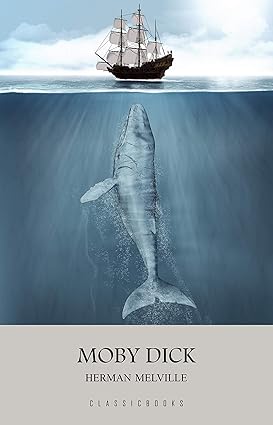
“She – blows!”
“My name is Ishmael.”
CHAPTER 1
Loomings
Call me Ishmael. Some years ago- never mind how long precisely- having little or no money in my purse, and nothing particular to interest me on shore, I thought I would sail about a little and see the watery part of the world. It is a way I have of driving off the spleen and regulating the circulation. Whenever I find myself growing grim about the mouth; whenever it is a damp, drizzly November in my soul; whenever I find myself involuntarily pausing before coffin warehouses, and bringing up the rear of every funeral I meet; and especially whenever my hypos get such an upper hand of me, that it requires a strong moral principle to prevent me from deliberately stepping into the street, and methodically knocking people’s hats off- then, I account it high time to get to sea as soon as I can. This is my substitute for pistol and ball. With a philosophical flourish Cato throws himself upon his sword; I quietly take to the ship. There is nothing surprising in this. If they but knew it, almost all men in their degree, some time or other, cherish very nearly the same feelings towards the ocean with me.”

Sen. Elizabeth Warren speaks to reporters in Washington, DC, on September 4, 2025. Daniel Heuer/Bloomberg/Getty Images
Sen. Elizabeth Warren said Harvard University should sever ties with Larry Summers, the school’s former president and one of its most prominent faculty members — putting new pressure on the elite university to hold Summers accountable for his close friendship with convicted sex offender Jeffrey Epstein.
New details of Summers’ relationship with Epstein emerged last week when a House committee released emails showing years of personal correspondence between the two men, including Summers making sexist comments and seeking Epstein’s romantic advice.
Warren, a former Harvard Law School professor and now the Democratic senior senator from Massachusetts, said in response to a CNN inquiry that she believes Summers “cannot be trusted” with students given his past relationship with Epstein.
“For decades, Larry Summers has demonstrated his attraction to serving the wealthy and well-connected, but his willingness to cozy up to a convicted sex offender demonstrates monumentally bad judgment,” Warren told CNN. “If he had so little ability to distance himself from Jeffrey Epstein even after all that was publicly known about Epstein’s sex offenses involving underage girls, then Summers cannot be trusted to advise our nation’s politicians, policymakers, and institutions — or teach a generation of students at Harvard or anywhere else.”
CNN has reached out to Summers and Harvard for comment. Summers has previously said he regrets his past association with Epstein.

Larry Summers attends a conference in Sun Valley, Idaho, on July 9, 2025. David Paul Morris/Bloomberg/Getty Images
Summers served as Bill Clinton’s Treasury secretary and Barack Obama’s director of the National Economic Council and has been one of the country’s most influential economic voices for decades. Warren, an economic populist, has clashed with Summers over financial regulations in the past.
But her new call on policymakers and institutions to shun Summers represents an even sharper critique of his character.
Jeffrey Epstein boasted of spurious celebrity connections, documents show
This article is more than 1 year old
Court document released Wednesday confirmed some celebrity connections but also showed late sex offender’s flimsy braggadocio
Victoria Bekiempis in New YorkThu 4 Jan 2024 14.37 ESTShare
While Jeffrey Epstein counted many rich and powerful men among his associates –including Bill Clinton and Prince Andrew – a court document released on Wednesday suggests the late financier so craved proximity to celebrity that he made spurious boasts about relationships with Hollywood A-listers.
Johanna Sjoberg, an accuser of the late sex offender and financier, claimed in a deposition that he liked to talk about knowing movie stars, such as Leonardo DiCaprio and Cate Blanchett, and that these statements appeared to come across as flimsy braggadocio.
Epstein court files damage Prince Andrew’s hopes of restoring reputationRead more
A lawyer asked Sjoberg: “I saw one press report that said you had met Cate Blanchett or Leonardo DiCaprio?”
“I did not meet them, no,” she replied. “When I spoke about them, it was when I was massaging him [Epstein], and he would get off – he would be on the phone a lot at that time, and one time he said: ‘Oh, that was Leonardo,’ or, ‘That was Cate Blanchett, or Bruce Willis.’ That kind of thing.”
“So name-dropping?” the lawyer pressed.
The family lived in London during Taylor’s childhood.[1]:11–19 Their social circle included artists such as Augustus John and Laura Knight, and politicians such as Colonel Victor Cazalet.[1]:11–19 Cazalet was Taylor’s unofficial godfather, and an important influence in her early life.[1]:11–19 She was enrolled in Byron House, a Montessori school in Highgate, and was raised according to the teachings of Christian Science, the religion of her mother and Cazalet.[1]:3,11–19,20–23
In early 1939, the Taylors decided to return to the United States due to fear of impending war in Europe.[1]:22–26 United States ambassador Joseph P. Kennedy contacted her father, urging him to return to the US with his family.[6] Sara and the children left first in April 1939 aboard the ocean liner SS Manhattan, and moved in with Taylor’s maternal grandfather in Pasadena, California.[1]:22–28[7] Francis stayed behind to close the London gallery, and joined them in December.[1]:22–28 In early 1940, he opened a new gallery in Los Angeles. After briefly living in Pacific Palisades with the Chapman family, the Taylor family settled in Beverly Hills, where the two children were enrolled in Hawthorne School.[1]:27–34
In October 2007, Taylor won a legal battle, over a Vincent van Gogh painting in her possession, when the US Supreme Court refused to reconsider a legal suit filed by four persons claiming that the artwork belongs to one of their Jewish ancestors, regardless of any statute of limitations.

A painting of ‘gallant highwayman’ Claude Duval by William Powell Frith | Photo credit: Manchester Art Gallery / Bridgeman Images
Capturing Beauty
When I helped fill out the death cirtificate of Drew Tyler Benton, who added the name Rosamond on her driver’s liscence, that was mispelled Rosmond, I was fully aware of the different spelling of
ROSAMOND ROSEMOND
Consider
ELIZABETH ROSEMOND TAYKOR
We share the same grandfather.
JRP
In 1724, . . . John ROSAMOND and his friend William Ray were arrested in Abingdon, Berkshire, England for stealing a hat, periwig, 30 pounds British sterling, five pairs of shoes, and a brown gelding. They were held in the gaol in Reading, Berkshire, after their trial where they were sentenced to be exiled to the colonies for 14 years hard labor.
One of the sons’ names was either John or Thomas Rosamond. Current researchers have not been able to confirm this connection. It appears probable that the American branch of the family are descended from John “The Highwayman” Rosamond who arrived in Annapolis, Maryland in 1725. He was sentenced to be transported into 14 years servitude for robbery from the Oxford Assizes. This John could be the son of Sergeant William Rosamond, and the mix up in names likely stems from the fact that his father-in-law’s name was Thomas Wilson.
“Smartass” tourguides[17][18] and the Harvard College undergraduate newspaper[19] commonly assert that John Harvard does not merit the honorific founder, because the Colony’s vote had come two years prior to Harvard’s bequest. But as detailed in a 1934 letter by the secretary of the Harvard Corporation, the founding of Harvard College was not the act of one but the work of many; John Harvard is therefore considered not the founder, but rather a founder,[20][21] of the school—though the timeliness and generosity of his contribution have made him the most honored of these:
John Roseman and Sarah Wilson
Posted on April 3, 2019 by Royal Rosamond Press

A Rose Among The Woodwose
by
John Presco
Chapter Three
John ‘The Highwayman’
When Sarah Wilson was told about John Rosamond, she heard he was a very bad man. But, he is a very good man, too, some say. Could he be both? For sure he was the best cobbler in the Colonies, and she had need for a special shoe for her special foot. This foot got Sarah in a lot of trouble. Indeed, she was cast out of Church because of it.
“Don’t go see him, Sarah. He’s trouble. He’s a robber. He’s killed men. They say he killed his lover, a black slave who was half Cherokee.”
“I hear he is very handsome, and a man of means due to his profession!”
“He was a slave! He was thrown in Reading Gaol for stealing the shoes of a Baroness. She went barefoot for a week! He put on her husbands wig and rode away laughing!”
Sarah launched herself off the walk, and her sister noticed her awkward gate as she headed for the shop with a markee of a rose and shoe, a woman’s shoe. John looked up as Sarah threw open the door to his shop. He could see her chest swell as she took in a deep breath.
“Not another one!” John whispered to himself. They just had to judge for themselves. They had to look into his eyes for The Stain………….’Woman Killer’!
Sarah gasped as she took in John’s pale blue eyes, that were the color of her father’s eyes, and thus they were – her eyes! She heard the word “Brother” She had beautiful brothers, but these brothers ripped the buttons off her dress after they dragged her into the courtyard.
John lowered his eyes, and tried to see Sarah’s shoes. He was embarrassed, even ashamed, because his heart had skipped a beat. And there – it missed again! In that second, there were feelings he thought he would never own again.
“Come, sit here in this chair. You are hiding something.”
“How do you know?”
“Because your dress is tailored too low. The hem is getting worn on the ground!”
“I have a club foot.”
“Lift your dress, and let me see.”
As Sarah lifted her dress, her stomach deeply flinched. When he gently took her foot in his hand, she ached with an ancient longing. Watching his eyes take in her, flaw, all she wanted in this Green Earth was to lay atop him, and hold his face in the candlelight, and take him in til morning.
“Were you born with this foot?”
“No. I was a breached birth. The midwife called for a Doctor who had special tools and skills. He got hold of my foot with one, and pulled. He wept, and cursed his invention. He did not sleep for three days until he fashioned a better one.”
“You must be in great pain. I can help you. When I was in Reading Gaol I made shoes for fellow prisoners. Most of them were deformed in some manner. Especially in their feet.”
“I am not a prisoner!” Sarah said defiantly. And John knew, she was guilty of something. Had she stood trial, like he had? Many convicted men were sent to the colonies as indentured slaves. Was she one of the rare women that were sailed to the New World – in chains?
“This foot is my bane. It ruined my life”
“How so?” John inquired. He knew he was about to hear another Confession. There was something about kneeling down before a woman, something, holy. All women want a chance, for a better life. Very few men can accept this, because redemption – is their’s!
“Physician, heal thyself!” Spoke Sarah in a tone never heard in this quiet shop. John’s heart was fluttering – and wouldn stop!
“I was fourteen. My Reverned was a Puritan. At his Bible study, I put forth a theory. I wondered aloud if Jesus was a cripple. There is a history of children with club feet in the line of King David. Is this, hereditary? I also suggested that Mark-John had a club foot that Peter noticed after the Resurection, as he walking behind Jesus.”
John looked up into Sarah’s eyes, and got her silent permission to finish unlacing her shoe. Pulling it off, he began to gently rub her foot after tugging off her socking. Sarah felt John’s hand rubbing blood back into her veins.
“The Reverand’s face turned a deep red. He was filled with fury! “How dare you suggest our Lord was – flawed! Take her out into the courtyard, and bring a bench!”. “I have welts on my back that will not go away.”
When John lowered his head and rest it upon her Shame, she wanted to reach for him and run her fingers through his hair.
“Did you kill her?”
Sarah could not believe she asked this question. When will she learn to keep her mouth shut? It was now evident they were going to be lovers. Did she spoil – her chance? She watched John’s caged soul pace back and forth, looking for an exit. She could not believe she took hold of his long hair.
“Yes.”
“Why?”
“She was a runaway slave. The bloodhounds had caught up with us. She did not want to go back to her master. There were welts on her back. She asked me take her home – to freedom.”
From back of the shop came the sound of John’s apprentice hammering tacks in the new shoe of the Governor of Virginia. Sarah could not oppress her, weeping. She reached across the chasm, and ran her fingers throught John’s hair, and he let go his pent up tears.
John clasped Sarah’s hand in his hands, and spoke.
“I am a very lonely man. Marry me Sarah.”
Sarah, let go of her grip, as she struggled to catch her breath again. The wild animal in her thought about making a break for the woods! “My God, we have not even courted.” Where did that come from? She thought of her two cousins who were captured by Indians. When they were seen again, they had tattoos on their face, and babes in their arms – they loved dearly! They were welcomed back. In this young nation, things happened – just like that! You had to be prepared to act – and fast!
“I will be your wife, so I can tell you why I took such a beating. I don’t want you to marry a heretic that you will abandon once you know the truth.”
“Tell me! Tell me the truth about yourself, that I should know.” John spoke with joy and tears in his eyes.
“I told the congregation that it is my belief that after Mark-John left Paul, he sailed to America with the Phoenicians! He, prepared – our way!”
John looked at his young fiancé, who was about eighteen. And, already she was a religious fanatic. English jails were full of men with wild visions. As a captive audience, John had listened to some very crazy ideas, then, he was sent to America against his will. The Colonies were full of half-crazed prophets. Some of them were completely naked, and, only had their long beards to keep them warm. When they died of exposure, a forest of wild animals – had a feast day!
John raised Sarah’s foot, and kissed her. He kissed, all of her, all that was cast out, all that was lost, and, forsaken.
“He is coming. He will find us, waiting, here!”
“Peter turned and saw the disciple whom Jesus loved following them; he was the one who had reclined next to Jesus at the supper and had said ‘Lord, who is it that is going to betray you?’ When Peter saw him, he said to Jesus ‘Lord, what about him?’ Jesus said to him, ‘If it is my will that he remain until I come, what is that to you? Follow me!” (John 21:20-22).
*****
Last night I had the most intense dream I have had in years. I was in bed with a beautiful black woman. Her whole family and friends wanted to meet me, a white man. I h ad a black girlfriend when I lived in Sacramento. One of her friends had made a chart. White men were bid to sign it and admit they were racist. I had admitted this before, and happily signed. But, then my ancestors appeared – in me.
“We not only owned slaves, we killed men, women an children. We killed as many Indians as we could find. We drove the Cherokee out of the 98th. District of South Casrolina. We were cold blooded murderers.”
I was crying in my dream. I told my lover and her people I can see Native American Blood in all of them. I started naming the tribes.
“Am I right? Did I get you right! Can I see your ancestors?’”
I believe this dream was brought to me after I told a woman about my DNA test. She was thinking about having a test. But, she looked, blue. She told me her grandfather had dark skin, and would not give her any names, or, tell anyone about his roots.
I want to thank Jimmy Rosamond for his wonderful research, and the researchers that have gone before us. Well done!
My Dear Americans, We have to grow up! We are a mixed-race nation and will be so – forever! Do not lament the loss of your blue-eyed sons and daughters: for we are all a Rose among the Wild Woodwose. We are a Christian Nation born of Wilderness Prophets. We were among the Lions in the arenas of Rome. What is all this to you? You are bid to follow him? Then – follow! We have a long way to go! Do not kill the thing you love.
Yet each man kills the thing he loves
By each let this be heard,
Some do it with a bitter look,
Some with a flattering word,
The coward does it with a kiss,
The brave man with a sword!
Some kill their love when they are young,
And some when they are old;
Some strangle with the hands of Lust,
Some with the hands of Gold:
The kindest use a knife, because
The dead so soon grow cold.
Some love too little, some too long,
Some sell, and others buy;
Some do the deed with many tears,
And some without a sigh:
For each man kills the thing he loves,
Yet each man does not die.

Sarah Wilson Rosamond (Willson) MP
| Gender: | Female |
|---|---|
| Birth: | 1726 County Antrim, Ireland |
| Death: | 1790 (64) Abbeville County, South Carolina, United States |
| Immediate Family: | Daughter of Thomas Wilson and Elizabeth Willson Wife of Pvt. John Roseman Mother of Margaret Weems; James Rosamond; Jean Rosamond; Capt Samuel Rosamond and Sarah F Hodges Sister of Capt Matthew Willson; Samuel Willson; Rebekah Willson; Elizabeth Musgrove; Nathaniel Willson and 2 others |
| Added by: | Jimmy Dale Rosamond on March 21, 2009 |
Now Paul and his company set sail from Paphos, and came to Perga in Pamphylia. And John left them and returned to Jerusalem; but they passed on from Perga and came to Antioch of Pisidia.[Acts 13:13–14]
And Barnabas wanted to take with them John called Mark. But Paul thought best not to take with them one who had withdrawn from them in Pamphylia, and had not gone with them to the work. And there arose a sharp contention, so that they separated from each other; Barnabas took Mark with him and sailed away to Cyprus, but Paul chose Silas and departed, being commended by the brethren to the grace of the Lord.[Acts 15:37–40]
(1) Source: Jimmy Rosamond <jdrosamond@comcast.net>.
(2) Jon Presco <http://rougeknights.blogspot.com/2008/10/highwayman-is-free-images-hi gwayman.html>:
In 1724, . . . John ROSAMOND and his friend William Ray were arrested in Abingdon, Berkshire, England for stealing a hat, periwig, 30 pounds British sterling, five pairs of shoes, and a brown gelding. They were held in the gaol in Reading, Berkshire, after their trial where they were sentenced to be exiled to the colonies for 14 years hard labor. By March 1725, they were transported to Newgate Prison and held there until they boarded the convict ship “Forward” owned by Jonathan Forward, and captained by Daniel Russell. The ship set sail on 28 September 1725 from London via the Thames River. The ship arrived [and] disembarked at Annapolis, Maryland on 8 December 1725. We don’t know who bought his indenture, but he is recorded as being in CPT Beall’s militia of Prince George Co, Maryland between 1734-1737. By 1747-1765 we find John ROSAMOND living in Augusta Co, Virginia and listed as a master shoemaker, owned land, paid tithes, served in the militia, etc.
(3) Coldham, Peter Wilson, Bonded Passengers to America, 9 Volumes in 3, Baltimore, MD: Genealogical Publishing Co., 1983, Vol. 6, Oxford Circuit, 1663-1775: Berkshire, Gloucestershire, Herefordshire, Monmouthshire, Oxfordshire, Shropshire, Staffordshire, and Worcestershire, p. 9:
Berkshire
Ray, William. S Lent R 14 yrs Summer 1725 for highway robbery LC from Forward at Annapolis, Md, December 1725. . . .
Rosamond, John. S Lent R 14 yrs Summer 1725 for highway robbery LC from Forward at Annapolis, Md, December 1725.
ABBREVIATIONS USED
LC – Landing Certificate issued at the colonial port of entry, followed by the date of issue.
R – Reprieved on condition of transportation to the American colonies. In the case of those reprieved for 14 years or of life transportation, this is noted where it appears in the records; otherwise the term imposed was normally seven years.
S – Sentenced to be transported to the American colonies for a period of seven years unless otherwise stated, followed by the date of the Sessions at which the trial took place.
(4) Christianson, Scott, With Liberty for Some: 500 Years of Imprisonment in America, Boston, MA: Northeastern University Press, 1998, pp. 23-24:
In 1717 Parliament passed an act empowering courts to sentence offenders directly to transportation. Persons convicted of clergyable felonies or petty larceny could now be sent to American plantations for seven years instead of being whipped or burnt on the hand. This meant that a large portion of England’s offenders were eligible to be shipped abroad and sold as servants for seven-year terms. Felons convicted of capital crimes could, with royal consent, be commuted to a term of fourteen years’ transportation or, in some cases, life. Anyone who returned before her or his term expired or who helped a convict to escape was liable to be hanged.
Jonathan Forward, a young London merchant with extensive contacts in Maryland, obtained a lucrative subsidy of three pounds for every Newgate felon and five pounds for every convict taken from the provinces. In exchange, he agreed to ship any and all criminals sentenced to transportation, and to pay all costs, including gaol fees, for their conveyance. Forward was experienced in the African slave trade and had recently shipped two vessels with 171 convicts to Maryland. Operating out of his Cheapside house on Fenchurch Street, London, he collaborated with Jonathan Wild, who helped to provide “felons” for shipment abroad.
On April 26, 1718, 29 malefactors at the Old Bailey were ordered to be transported. Four months later the Historical Register reported that 106 convicts “that were ordered for transportation, were taken out of Newgate and put on board a lighter at Blackwall Stairs, from whence they were carried through the Bridge to Long Reach, and there shipped on board the Eagle galley, Captain Staples commander, bound for Virginia and Maryland. (The Eagle was a well-known slave ship that had sailed for the Royal African Company for more than a decade, so the transport of prisoners to America was nothing new for her.)
Forward retained his monopoly for over twenty years until April 1739, when Andrew Reid was added to the payroll. Although Forward continued to transport felons from provincial gaols until the late 1740s, Reid assumed main control of the convict trade.
(5) Bailyn, Bernard, Voyagers to the West: A Passage in the Peopling of America on the Eve of the Revolution, New York, NY: Vintage Books, 1988, pp. 262-263:
For thoughtful Americans concerned with the character of American society, the banishment of convicts to America was an abomination, and for those with an eye for macabre humor it was ludicrous. The most famous comment on the problem was [Benjamin] Franklin’s proposal-published after a crime wave, perpetrated in Virginia, Maryland and Pennsylvania chiefly by convict servants, was luridly reported in the press-that the colonies should be authorized to “transport” their rattlesnakes to Britain in exchange for “the human serpents sent us by the mother country.”
(6) Jimmy Rosamond <jdrosamond@comcast.net>:
Researchers [have] assumed that John relocated to Virginia where he married Sarah Wilson. . . . John and Sarah relocated their family to the Abbeville District of South Carolina no later than 1765.
The first instance of John being in Virginia is from Chalkley’s Chronicles showing him in Augusta County in 1747. Then in 1765, there is a record in Chalkley’s that says the property he and Sarah owned was sold to them by a man who didn’t own the property himself. This apparently caused a problem, because the final record in Chalkley’s shows them selling the land to someone else with the court’s permission. The next record of him is a land grant dated 1767 in Abbeville District, SC. That dates their move to SC between 1765 and 1767.
John was a master shoemaker in Augusta County, VA in the 1750s. This is documented in Chalkleys.
(7) Caution: Based on a will which Jimmy Rosamond <jdrosamond@comcast.net> has found for a John ROSEMAN in Prince George’s County, MD, proved in 1789, John “The Highwayman” ROSAMOND may have lived out his life and died in Prince George’s County, MD. If this proves to be true, the John ROSAMOND who lived in Augusta County, VA is probably not the same person as John “The Highwayman” ROSAMOND.
(8) John ROSAMON, John ROSAMOND, John ROSEMAN, John ROSEMAND, John ROSEMOND, John ROSMAN and John ROSMOND are mentioned in Chalkley, Lyman, The Chronicles of the Scotch-Irish Settlement in Virginia: 1745 to 1800 [Reprint, Originally Published, 1912], Baltimore, MD: Genealogical Publishing Co., 1980 <http://www.rootsweb.ancestry.com/~chalkley/>. The compiler assumes that all of these Johns were the same person, namely, John ROSAMOND. Set forth below are all of these references from Chalkley, with the capitalization of John’s surname added by the compiler:
Volume I, p. 39:
AUGUST 24, 1749.
John ROSEMOND added to tithables.
Volume I, p. 120:
APRIL 15, 1765.
James Bell, provisions. Wm. Bell, provisions. Wm. McCutcheon, provisions and horse impressed. John ROSEMOND, provisions. Andrew Cowan, enlisting men to garrison Fort Lewis. Walter Trimble, provisions. Thos. Alexander, provisions. John Francis, provisions. James Kirk, provisions. Rob. Armstrong, provisions. Wm. Christian, self et als., ranging. Loftus Pullen, provisions. Rob. Christian, provisions. Danl. O’Freild, provisions. Thos. Poage, provisions. Charles Kilpatrick, provisions. George Moffett, for Wm. Mann et als. Benj. Estill, horse impressed. Andrew Hamilton, provisions. Wm. McClenachan, provisions. Wm. McKarney, self et als., ranging.
Volume II, pp. 414-415:
1750-Sam’l Akerlin, gone to Pennsylvania; Gabriel Akerlin, gone to Pennsylvania; Jeremiah Bates, can’t find; John Boaman, can’t find; Edward Boil, gone to Carolina; Jno. Bolin, not found; Wm. Crisp, to Carolina; Edw’d Cochran, runaway; Pierce Castlan, lives in Lunenburg; Philip Linch, runaway; Robt. Crumbe, twice charged; Nath’l Cherry, not found; John Droen, not found; John Doson. to Carolina; James Dailey, runaway; Rob’t Fryer, not found; James Gordon, no effects; Rob’t Gamble, not found; Chas. Gilham. not found; David Galloway, twice charged; Naftalin Gregory, not found; Wm. Hardgrove, to Carolina; Elias Hamilton, not found; Joseph Hendon, not found; Wm. Hall, twice charged; Wm. Hambleton, not found; Benj. Hardin, twice charged; Wm. Henry, to Carolina; Wm. Inglish, Constable; Melchisedick Johnston, not found; Martin Kelley, no effects; Wm. Terrey, Constable; Ro. Teat, gone to Carolina; Benj. Thompson, not found; Bryan White, runaway; Alex. Walker, Constable; Thos. Wilson, twice charged; Ben. Young, not in this County; Rob’t Lockndge, Constable; Jno. McFarland, Constable; Jno. McClenachan, Constable; Henry Leonard, not found; John Lawler, to Carolina; Geo. Maison, not found; Henry Miller, not found; Jno. McCurry, Jr., not found; Joseph McCurry, runaway; James Murphy, runaway; Neal McNeal, twice charged; Hugh McBride, runaway; James McAffee, twice charged; Arch’d McCleerie, not found; Hugh Maires, not found; Wm. McLehanny, not found; Jno. McHunis, not found; Jas. McCrenneld, not found; Abraham Mires, not found; Rob’t Mains, not found; Jno. Mills, dead, and no effects; Jacob Martin, twice charged; poor John Hance, not found; Jno. Potts, twice charged; James Ryan, not found; Jno. Ramsey, twice charged; James Robeson, twice charged; Sam’l Stalnaker, lives at Holston River; Jno. Scott, thrice charged; Jno. Shields, lives at Rockfish; Jno. Stevenson, twice charged; James Scot, twice charged; Jno. Stanley, not found; Jno. Vance, lives in Lunenburg; Elias Wallraven, not found; Nath’l Wilsher, not found; Wm. Walker, twice charged; John Walker, gone to Carolina; John Warnock, twice charged; James Gay, Constable; James Mais, Constable; David Miller, Constable; Jno. ROSMOND, Constable.
Volume II, p. 463:
1760: Processioned in Capt. Moore’s Company by John Stephson, Nathaniel Evins: For Nathaniel Evins, for Wm. McCreerey, for Thos. Willson, for John Stevenson, for John McClung, for Wm. McClung, for Alex. Moore, for Adam Reed, for Wm. Hays, for Wm. Paris, for Thomas Bard, for John Cunningham, for Mathew Huston, for John Mountgumery, for Wm. Moore, for Wm. Lockridge, for Thomas Boyd, for John Boyd, for Thomas Hill, for Robert Ware (Wire), for Wm. Hays, for Wm. Beard, for Wm. Wardlaw, for Andrew Steel, for James Steel, for Joseph Kennedy, for John Lowry, for Samuel Huston, for James Eakins, for John Hanly, for John Logan, for Alex. Logan, for Alex. McNutt, for James McNutt, for John ROSMAN, for Andrew Dunkin, for John Wardlaw, for Wm. McCanless, for James Cowdan, for John Moore.
Volume III, p. 15:
28th October, 1749. James McNutt’s appraisement by James Trimble, Joseph Coulton, John ROSEMAN. Notes of Philip Chittam, Jas. Davis and Arthur Miliken.
Volume III, p. 26:
21st September, 1750. John Greer’s vendue. Sold to John Lockhart. John ROSEMAN, Sarah Lynn, John Teat, John Mitchell, Christopher Kelly, George Breckinridge, Thos. Scott, James Lynn, Thos. Teat, Francis Beaty, John Mitchell.
Volume III, pp. 29-30:
23d May, 1751. James McNutt’s orphans. Settlement by Thos. Beard, administrator. Paid Mr. Burden for 185 acres bought by my wife (Thos. Beard’s?) now, but before marriage. 17__ to Mr. Burden quit rents on 85 acres for 10 years. 1747 to Mr. Downs for quit rents. 1744 to Mr. Burden for quit rents, 300 acres. December 20th, 1748, paid David Hays rents debt due before marriage. Paid Wm. Nutt debt. 8th May, 1749, paid Wm. Hunter for work. 4th February, 1747, paid John Huston, debt. 9th December, 1748, paid John ROSEMAN. debt. 10th May, 1748, paid Saml. Wilson, for bringing some linen from Penna. Paid to Widow Sheals, a debt. Paid to Robt. Alexander, for schooling James and Robert McNutt. Paid to James Dobbins, for schooling Alex. McNutt. Paid one new Bible, for Alex. McNutt. Paid one new Testament, for James McNutt. Paid one new spelling book, for the children.
Volume III, p. 54:
20th September, 1758. Vendue of John Snodgrass’ estate, by Agnes Patton-To David Edmund, Wm. Parris, Robt. McRandolph, John Wardlaw, Wm. Adair, Peter Angel. Paid to John Mountgomery, Edmond Tarr, James Henry, Jno. ROSAMOND, Patrick Hays, James McCown, Andrew Steel.
Volume III, p. 306:
Page 456.-19th August, 1752. Joseph Kennedy to John ROSEMAN, 380 acres, 20 poles. Moffett’s Creek. Teste: Wm. Wilson, James Walker, Fr. Beatey.
Volume III, p. 311:
10th February, 1753. Same [Borden, etc.] to Thomas Beard, 605 acres of 92100; Moffett’s Creek of James; corner John ROSEMAN. Delivered: Saml. Buchanan, 21st June, 1758.
Volume III, p. 335:
24th _____, 1755. Daniel McBride puts himself apprentice and servant to John ROSEMAN. cordwainer or shoemaker, for 2 years. Teste: Ro. Armstrong (mark) and James Goodly.
Volume III, p. 344:
15th June, 1754. George Henderson to John ROSEMAN, £60. Bill sale conveys all horses and cows, sheep and hogs, all movable goods and chattels. Teste: Wm. Wardlaw, Robert Henry. Acknowledged, 17th November, 1756.
Volume III, p. 359:
18th March, 1760. Thomas Beard and Margaret to William Beard, £100, 605 A., 1 R., 28 P., in Borden’s tract, on side Moffet’s Creek; corner Jno. ROSEMAN’s land. Delivered: Wm. Beard, August 12, 1791.
Volume III, p. 383:
5th February, 1762. George Henderson to Hugh Wardlaw, £60, 284 acres in Bordin’s tract, on Moffett’s Creek; cor. John ROSEMAN; cor. Wm. Wardlaw, James Wardlaw’s line. Teste: Henry Long.
Volume III, p. 433:
14th October, 1765. Same [Borden’s executors] to Robert Gay, 100 acres, part of 92,100, oak on Moffet’s opposite John ROSEMAND’s old survey, opposite George Henderson’s land, post in the Barrens. Delivered to Robert and Archibald Rhea, devisees, 17th January, 1803.
2d October. 1765. George Patterson, eldest son and heir of John Patterson, to John ROSEMAN, £30, 380 acres on Moffet’s Creek. David Mitchell.
Volume III, p. 436:
October, 1765. John ROSEMAN and Gabriel Jones to George Patterson, £150. Bond conditioned, whereas John Patterson, late of Augusta, deceased, father of George Patterson, was seised of 380 acres which he sold to Joseph Kenedy, but never made title, and Joseph sold to John Koseman for £45.10, and either mistake or design the said Kennedy conveyed to John ROSEMAN, 19th August, 1752. though the title was in Patterson and devolved upon the above named Geo. Patterson as eldest son of John, and George has conveyed to John ROSEMAN; if John and Gabriel keep said George safe of law suits, troubles, &c., then to be void.
10th October, 1765. John ROSEMAN and Sarah to Robert Gay, £120, 380 acres, 20 p., on Moffet’s Creek. Teste: Francis Railey. Delivered: Robt. Rhea, one of the devisees, 17th January, 1803.
[Note by compiler: Chalkley is not without its problems, as Daphne Gentry of the Publications and Educational Division of the Library of Virginia has pointed out. (See http://www.lva.lib.va.us/whatwehave/local/va5_chalkleys.htm.) Not all documents are included. There are not only errors of omission, but errors of transcription have also been documented. This simply means that the careful researcher should send for a copy of the original document, as with any secondary source, and should not assume that because it doesn’t appear in Chalkley it does not exist.]
(9) Brown, Katherine L., New Providence Church, 1746-1996, A History, Raphine, VA: New Providence Presbyterian Church, 1996, p. 42 (transcript provided to the compiler by Jimmy Rosamond <jdrosamond@comcast.net>):
In the absence of session records for the first sixty years of the life of New Providence Church, this signed call and the first subscription list are highly significant documents. The 1753 call is not divided by congregation, but the separate lists for New Providence and Timber Ridge for 1754 and 1755 can be compared with the names on the call. There were a total of forty-six names on the New Providence salary list, thirty-four in 1754, all of whom renewed their support the next year, and twelve additional names in 1755. The pledging founders of New Providence Church are William and Thomas Berry, Samuel Buchanan, James Coulter, Robert Culton, James Eaken, Walter Eaken, John Edmiston, William Edmiston, Robert Gamble, John Handly, George Henderson, Thomas Hill, John Houston, Matthew Houston, Samuel Houston, Joseph Kennedy, John Logan, James Lusk, Edward McColgan, McCroskey, Samuel McCutchan, Alexander Miller, John Montgomery, Alexander Moore, James Moore, Patrick Porter, Robert Reagh, William Reagh, James Robinson, Matthew Robinson, John ROSEMAN, Widow Smith, William Smith, Andrew Steele, John Stewart, James Trimble, Alexander Walker, James Walker, John Walker, William Wardlaw, Robert Weir, and Ann Wilson. In addition, there were nine names on the call that did not pledge, but who were closely associated with New Providence. They were Charles Berry, Samuel Dunlap, James Edmiston, Samuel Hay(s), McCrosky, William Reagh, William Robinson, Samuel Steel and John Wardlaw. [Capitalization of John ROSEMAN’s surname supplied by the compiler.]
Most of those pledging contributed fifteen shillings up to one pound, but there were a few pledges larger than that. Andrew Steele, who traveled to New Castle Presbytery to present the call, pledged two pounds, three shillings and four pence.
(10) Morton, Oren Frederic, A history of Rockbridge County, Virginia, Staunton, VA: The McClure Co., Inc., 1920, pp. 34-35:
THIS INDENTURE made the twenty fourth Day of _____ in the year of Our Lord Christ one thousand seven hundred and fifty five WITNESSETH that Daniel McBride of the County of Augusta in the Colony of Virginia hath Put himself apprenting Servant and by these presents Doth Voluntarily Put himself and of his own free will & accord put himself apprenting servant to John Roseman Cordwainer or shoemaker of this sd County of Augusta in the Colony aforesd to Learn his art and Trade or Mystery after the manner of an apprenting servant to sarve him or his assigns from the Day of the Date hereof for & During the full Term and Time of two full years next ensuing, During all what time the sd apprentice his Said Master faithfully shall Serve his secret Keys his Lawfull Commands very _____ gladly obey he shall Do no Damage to his said Master nor see it Done by others with out Letting or giving notice thereof to his said Master he shall not wast his said Master’s goods nor lend them unlawfully to others he shall not Commit fornication nor Contract Matrimony within the sd Term at Cards or Dice or any other unlawfull games he Shall not play whereby his said Master may be Damaged with his own goods or the goods of others During the sd Term without the License of his sd Master he Shall Nither Buy nor Sell he Shall not absent himself Day nor Night from his sd Master’s Service without his Leave nor haunt ale houses still houses Taverns or play Houses but in all things Behave himself as a faithful apprentice Savant ought to Do During the sd Term & Time and the sd Daniel McBride doth hereby Covenant and Declare himself Now to be of the age of Nineteen years a single Person & no Covenanted Indented or Contracted Servant or apprentice to any persons or persons whatsoever and the sd Master Shall use the utmost of his Indeavors to Teach or Cause to be Taught & Instructed the sd prentice in the Trade and Mystery he now professes Occupieth or followeth and procure and provide for him the sd apprentice sufficient meat Drink apparel washing and Lodging fitting for an apprentice During the sd Term and at the End & Expiration thereof the sd master shall pay unto the sd prentice the sum of Ten pounds Current Money of Virginia or the value thereof in goods or Chattels and for the true performance of all & every this sd Covenant & agreement Either of the said Parties binded them selves to the other firmly by these presents IN WITNESS whereof they have hereunto Interchangeably set their hands and affixed their seales the Day and Year first above written.
[Note by compiler: Rockbridge County, VA was formed from Augusta and Botetourt Counties, VA in 1778.]
============
1. In 1925 William Sam Rosamond did a relatively complete genealogy. His research indicated that we were descended from a Huguenot born in France sometime in the mid to late 1600s. He discovered that his earliest traceable ancestor was a “Sergeant” Rosamond who left France following the Revocation of the Edict of Nantes on 22nd October 1685. He found that Sergeant Rosamond supposedly travelled to Holland where he joined the army of William III, went to England, and from there went with William’s army to Ireland. He fought in the Battle of the Boyne on 1st July 1690 (by the old calendar – 12th July by the new calendar) and then remained in County Leitrim, Ireland. (There is still a family of Rosamonds in County Leitrim.) He had three sons, two of whom went to the American colonies and settled in the mid-Atlantic region. One of the sons’ names was either John or Thomas Rosamond. Current researchers have not been able to confirm this connection. It appears probable that the American branch of the family are descended from John “The Highwayman” Rosamond who arrived in Annapolis, Maryland in 1725. He was sentenced to be transported into 14 years servitude for robbery from the Oxford Assizes. This John could be the son of Sergeant William Rosamond, and the mix up in names likely stems from the fact that his father-in-law’s name was Thomas Wilson.
John Harvard and Shakespeare
Posted on April 2, 2019 by Royal Rosamond Press

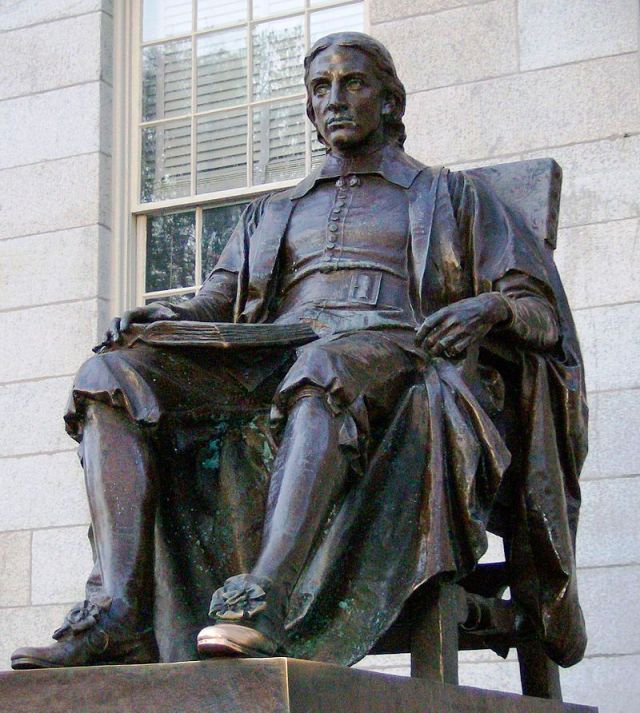

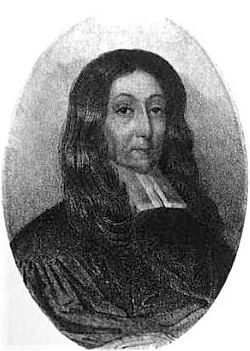
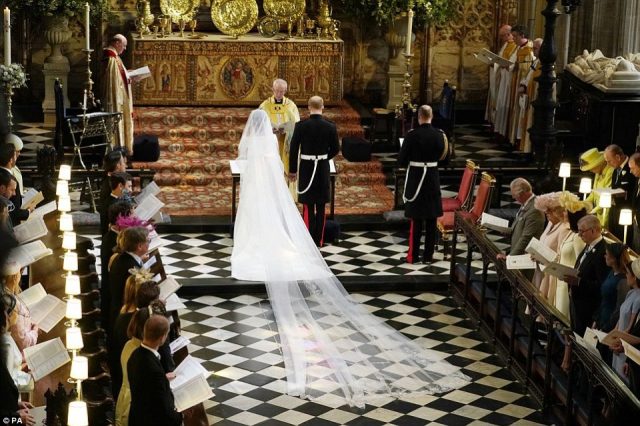
For the last thirty years I have been giving myself a College Education. If I show anger towards people I know, and those who have gotten to know me, it is they think I am mad to study all by myself. Thanks to the DNA TEST I took at Ancestry.com, I have not been – that alone! I have been – compelled, driven by unseen forces I could not elude! I did not knowwwwwwww, better!
Richard Burton and Liz Burton suffered from the disease of alcoholism, thus, it is wondered how much more stellar their careers would have been if they did not drink. A bad biography about my famous sister, the artist ‘Rosamond’, wonders the same. There is no wonderment about me, because in many people’s mind, I never had a career! Yet, I own thirty-one years of sobriety on April 7th.
There is a very good chance John Harvard knew my great, great, great, great, grandfather, Reverend John Wilson. Both men wondered if the wonderful things they had done, would be remembered by their offspring – years from now. I have been given such concerns, but, I think the buck stops here. I carry on!
Some of you have heard me rant about ‘My Dumb Daughter’ which might become a play, or, an epic poem. I know many people can relate. ‘The Taming of the Un-Shrewd’?
I will explore the claim, that it wassssss – Reverend John Wilson who founded Harvard. He certainly had the pedigree! His son graduated from Harvard in 1642. John Harvard was born in Stratford-On-Avon, and may have known the Webb family, which is the only family line one can trace in order to be kin to William ‘The Bard’ for his three daughters, died. And, thus is comes down to me to carry on any and all family feuds? Of course! That makes sense, as to why I am tooooo clever to be in the good company of – anyone!
So, I study…………alone! There will be no crappy folding chairs put out on the lawn for my happy relatives who can’t wait to see what is coming to me. I have already got what I deserve!
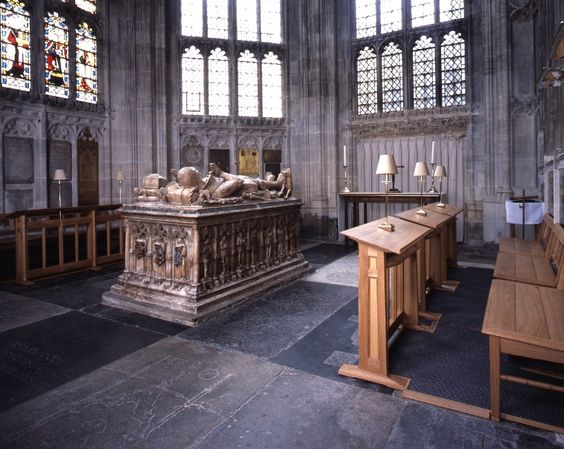
I just heard that Harry and Markle are going to have a child in a few days. I feel this is my Graduation Day: for when they married in Saint George’s Cathedral, they took their vows not but ten feet away from where the bones of Reverend William Wilson, lie, under the cold granite, under a brass plaque, just he, and his wife, a great, great, grandmother to me.
So, it was God who kept calling to me, when it was my ambition to be a Drunken Scallywag, blinded on the squiggly road taken by the infamous, to ne’er land. I was a better and more loved Smartass when I had a bartender tending to all my ambitions.
“Come on, Mr. Presco! Let me pour you another drink! Stop putting on airs! All you did was pass a bloody DNA test – with flying colors!”
John Presco
“Smartass” tourguides[17][18] and the Harvard College undergraduate newspaper[19] commonly assert that John Harvard does not merit the honorific founder, because the Colony’s vote had come two years prior to Harvard’s bequest. But as detailed in a 1934 letter by the secretary of the Harvard Corporation, the founding of Harvard College was not the act of one but the work of many; John Harvard is therefore considered not the founder, but rather a founder,[20][21] of the school—though the timeliness and generosity of his contribution have made him the most honored of these:

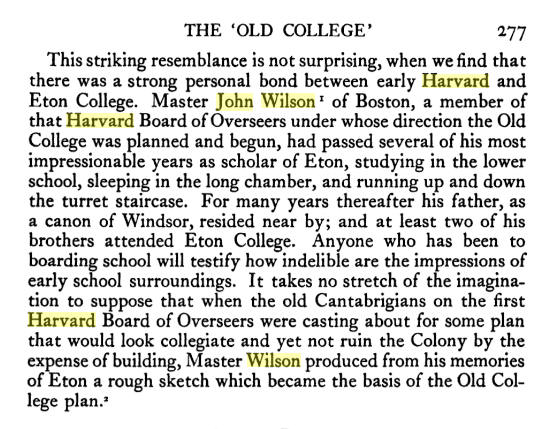
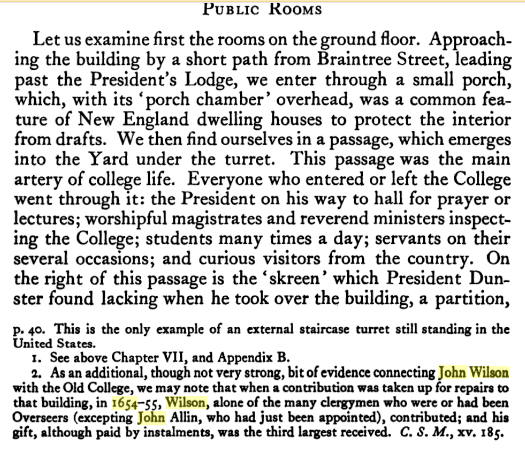

Rev. John Wilson was born in London, England, Sept. 1621, and came with his father to New England in 1630. He graduated from Harvard College in 1642, and was ordained and settled with Mr. Mather at Dorchester. In 1651 he removed to Medfield, Mass., where he became a famous preacher, and remained there until his death in 1691. He died at Medfield, Mass., Aug. 23, 1691. She died at Braintree, Mass., Aug. 20,1725.
John Harvard (clergyman)
From Wikipedia, the free encyclopedia
Jump to navigationJump to search
This article is about the founder of Harvard College. For John Harvard, the statue in Harvard Yard, see John Harvard (statue). For other uses, see John Harvard (disambiguation).
| John Harvard | |
|---|---|
| John Harvard statue, Harvard Yard | |
| Born | (1607-11-26)26 November 1607Southwark, Surrey, England |
| Died | 14 September 1638(1638-09-14) (aged 30)Charlestown, Massachusetts Bay Colony |
| Cause of death | Tuberculosis |
| Alma mater | Emmanuel College, Cambridge |
| Occupation | Pastor |
| Known for | A founder of Harvard College |
| Spouse(s) | Ann Sadler |
| Children | None |
| Signature | |
John Harvard (1607–1638) was an English minister in America, “a godly gentleman and a lover of learning”[1] whose deathbed[2] bequest to the “schoale or Colledge” founded two years earlier by the Massachusetts Bay Colony was so gratefully received that it was consequently ordered “that the Colledge agreed upon formerly to bee built at Cambridg shalbee called Harvard Colledge.”[3] The institution considers him the most honored of its founders – those whose efforts and contributions in its early days “ensure[d] its permanence,” and a statue in his honor is a prominent feature of Harvard Yard.
Contents
- 1Life
- 2Founder of Harvard College
- 3Memorials and tributes
- 4References
- 5Further reading
- 6External links
Life[edit]
Early life[edit]
Harvard was born and raised in Southwark, Surrey, England, (now part of London), the fourth of nine children of Robert Harvard (1562–1625), a butcher and tavern owner, and his wife Katherine Rogers (1584–1635), a native of Stratford-upon-Avon whose father, Thomas Rogers (1540–1611), was an associate of Shakespeare’s father (both served on the borough corporation’s council). Harvard was baptised in the parish church of St Saviour’s (now Southwark Cathedral)[4] and attended St Saviour’s Grammar School, where his father was a member of the governing body and a warden of the Parish Church.
In 1625, bubonic plague reduced the immediate family to only John, his brother Thomas, and their mother. Katherine was soon remarried—firstly in 1626 to John Elletson (1580–1626), who died within a few months, then (1627) to Richard Yearwood (1580–1632). She died in 1635, Thomas in 1637.
Left with some property, Harvard’s mother was able to send him to Emmanuel College, Cambridge,[5] where he earned his B.A. in 1632[6] and M.A. in 1635, and was subsequently ordained a dissenting minister.[7]
Marriage and career[edit]
In 1636, Harvard married Ann Sadler (1614–55) of Ringmer, sister of his college classmate John Sadler, at St Michael the Archangel Church, in the parish of South Malling, Lewes, East Sussex.[citation needed]
In the spring or summer of 1637, the couple emigrated to New England, where Harvard became a freeman of Massachusetts and,[5] settling in Charlestown, a teaching elder of the First Church there[8] and an assistant preacher.[7] In 1638, a tract of land was deeded[clarification needed] to him there, and he was appointed that same year to a committee “to consider of some things tending toward a body of laws.”[5][clarification needed]
He built his house on Country Road (later Market Street and now Main Street), next to Gravel Lane, a site that is now Harvard Mall. Harvard’s orchard extended up the hill behind his house.[9]
Death[edit]
On 14 September 1638, Harvard died of tuberculosis and was buried at Charlestown’s Phipps Street Burying Ground.
In 1828, Harvard University alumni erected a granite monument to his memory there,[5][10] his original stone having disappeared during the American Revolution.[8]
Founder of Harvard College


Tablets outside Harvard Yard’s Johnston Gate. The tablet on the left quotes from a longer history which continues, “And as we were thinking and consulting how to effect this great work, it pleased God to stir up the heart of one Mr. Harvard (a godly gentleman and a lover of learning, there living among us) to give the one-half of his estate (it being in all about 1700 £) toward the erecting of a college, and all his library. After him, another gave 300 £; others after them cast in more; and the public hand of the state added the rest.” [11]

Emmanuel College window (1884) depicting John Harvard on left

Tablets, Emmanuel College chapel
Two years before Harvard’s death the Great and General Court of the Massachusetts Bay Colony—desiring to “advance learning and perpetuate it to posterity: dreading to leave an illiterate ministry to the churches, when our present ministers shall lie in the dust”—appropriated £400 toward a “schoale or colledge”[3] at what was then called Newtowne.[11] In an oral will spoken to his wife[12] the childless Harvard, who had inherited considerable sums from his father, mother, and brother,[13] bequeathed to the school £780—half of his monetary estate—with the remainder to his wife;[4] perhaps more importantly[14] he also gave his scholar’s library comprising some 329 titles (totaling 400 volumes, some titles being multivolume works).[15]:192 In gratitude, it was subsequently ordered “that the Colledge agreed upon formerly to bee built at Cambridg shalbee called Harvard Colledge.” [3] (Even before Harvard’s death, Newtowne had been renamed[3] Cambridge, after the English university attended by many early colonists, including Harvard himself.)[16]
Founding “myth”[edit]
“Smartass” tourguides[17][18] and the Harvard College undergraduate newspaper[19] commonly assert that John Harvard does not merit the honorific founder, because the Colony’s vote had come two years prior to Harvard’s bequest. But as detailed in a 1934 letter by the secretary of the Harvard Corporation, the founding of Harvard College was not the act of one but the work of many; John Harvard is therefore considered not the founder, but rather a founder,[20][21] of the school—though the timeliness and generosity of his contribution have made him the most honored of these:
.mw-parser-output .templatequote{overflow:hidden;margin:1em 0;padding:0 40px}.mw-parser-output .templatequote .templatequotecite{line-height:1.5em;text-align:left;padding-left:1.6em;margin-top:0}
The quibble over the question whether John Harvard was entitled to be called the Founder of Harvard College seems to me one of the least profitable. The destruction of myths is a legitimate sport, but its only justification is the establishment of truth in place of error.
If the founding of a university must be dated to a split second of time, then the founding of Harvard should perhaps be fixed by the fall of the president’s gavel in announcing the passage of the vote of October 28, 1636. But if the founding is to be regarded as a process rather than as a single event [then John Harvard, by virtue of his bequest “at the very threshold of the College’s existence and going further than any other contribution made up to that time to ensure its permanence”] is clearly entitled to be considered a founder. The General Court … acknowledged the fact by bestowing his name on the College. This was almost two years before the first President took office and four years before the first students were graduated.
These are all familiar facts and it is well that they should be understood by the sons of Harvard. There is no myth to be destroyed.[22]
Memorials and tributes[edit]
A statue in Harvard’s honor—not, however, a likeness of him, there being nothing to indicate what he had looked like[7]—is a prominent feature of Harvard Yard (see John Harvard statue) and was featured on a 1986 stamp, part of the United States Postal Service’s Great Americans series.[23] A figure representing him also appears in a stained-glass window in the chapel of Emmanuel College, University of Cambridge.[7][5]
The John Harvard Library in Southwark, London, is named in Harvard’s honor, as is the Harvard Bridge that connects Boston to Cambridge.[24] There is a memorial window in his honor in Southwark Cathedral.[25]
Rev William Wilson
| Birth | 1542Windsor, Windsor and Maidenhead Royal Borough, Berkshire, England |
|---|---|
| Death | 15 May 1615 (aged 72–73)England |
| Burial | St. George’s ChapelWindsor, Windsor and Maidenhead Royal Borough, Berkshire, England |
| Plot | St. George, Windsor Castle |
| Memorial ID | 70589734 · View Source |
Share
Save to Suggest Edits
Reverend William Wilson born 1542 Doctorate of Divinity and graduate of Merton College, Oxford BA in 1564, MA in 1570, BD in 1576, DD 1607. Rector of Islip, Oxfordshire, 1578; rector of Cliffe, co. Kent 1579, rector of Caxton, co. Kent, 1593, prebendary of St. Paul’s London 1595-1615, and of Rochester Cathedral 1591-1614. About 1580 he became chaplair to Edmund Grindll, Archbishop of Canterbury, and in 1583 became the canon of Windsor, holding his position for thirty two years until his death Mary 15, 1615 at age 73, he was buried in the chapel of St.George, Windsor Castle, where a monumental brass to his memory states that he was “beloved of all in his Life, and much lamented in his Death.” (Alumni Oxoniensis, vol. iv, p. 1657; Ashmole’s ‘History and Antiquities of Berkshire’ p. 305; register, ante, vol. xxxviii, pp 306-308, and vol. lii, p. 144). He married first about 1575, Isabel, daughter of John Woodhall, Esq., of Walden, co Essex, by Elizabeth his wife, sister of Rev. Edmund Grindall, the celebrated Puritan Archbishop of Canterbury, described by Lord Bacon as ‘the gravest and greatest prelate of the land.” (Register, ante, vol. xxxviii,pp.301-308). He married second, Anne, sister of Rev. Erasmus Webb, canon of Windsor, who died in 1612, without issue.(Register, ante, vol. lii,pp 143-4). He was a prebend of St. Paul’s of Rochester and of Windsor, and rector of Cliffe. Notes from the Antiquities of Berkshire, by Elias Ashmole, Esq (Reading, 1736) give the inscriptions found by that famous antiquary in the Chapel of St. George, Windsor Castle, relating to this family. On the North side lied a grave stone, on which, in Brass Plates, is the figure of a Man, and this Inscription “To me to live is Christ, and to dye is Gain.” Phillip I.21. Here underneath lied interr’d the Body of William Wilson, Doctour of Divinitie, and Prebendarie of this Church by the space of 32 years. He had issue by Isabell Woodhall Wilson six sons and six daughters. He dy’d the 15th of May, in the year of our Lord 1615, of his age of 73. ‘Who thinke of Death in lyfe, can never dye, but mount through Faith, from Earth to heavenly pleasure, weep then no more, though her his body lye, his Doul’s possest of never ending Treasure.” On another small brass plate on the same grave stone, is the following inscription. ‘Neere unto this place lyes buried William Willson, the third son, who after along trial of grievous sickness, did comfortably yield up his spirit in the yeare of our Lord 1610, of his age of 23. On a brass plate, on a grave stone northward of the last is this inscription, ‘William Wilson, late of Wellsbourne, in the County of Lincolne, Gent, departed this Lyfe, within the castle of Windosre, in the yeare of our Lord 1587, the 27 day of August, and lyeth buried in this place.’ p. 309. Arms of Will’m Wilson of Welborne, per Norroy flower, 1586. ‘Per pale argen and azure three lion’s gambs barways, erased and counterchanged. Crest:-a lion’s head erased argent guttee de sang. Harleian Coll., No. 1550, Fol. 192, British Museum: Richard Mundy’s copy of the Visitation of Lincolnshire, 1564 and 1592.
A COPY OF VERSES Made by that Reverend Man of God Mr. John Wilson, Pastor to the first Church in Boston; On the sudden Death of MR. Joseph Brisco, Who was translated from Earth to Heaven Jan. 1. 1657.
Not by a Fiery Chariot as Elisha was,
But by the Water which was the outward cause:
And now at last unto Christ his Saviour dear,
Though he hath left his dear Relations here.
Anagram.
- Joseph Briscoe
- Job cries hopes.
THere is no Job but cries to God and hopes,
And God answer in Christ; to cries he opes,
Out of the deeps to him I cry’d and hop’d,
And unto me his gracious ear is op’d:
Doubt not of this ye that my death bewail;
What if it did to strangers me assail:
What if I was so soon in Waters drown’d,
And when I cry’d to men, no help I found:
There was a God in Heaven that heard my cry,
And lookt upon me with a gracious eye:
He that did pity Joseph in his grief,
Sent from above unto my soul relief:
He sent his Angels who did it conveigh
Into his Bosom, where poor Lazarus lay:
Let none presume to censure my estate,
As Job his Friends did stumble at his Fate.
All things on Earth do fall alike to all,
To good Disciples, which on God that call;
To those that do Blaspheme his Holy Name,
And unto those that reverence the same:
He that from nature drew me unto Grace,
And look’d upon me with a Fathers face:
When in my blood upheld me to the last,
And now I do of joyes eternal tast.
Remember how Job’s precious children Dy’d,
As also what the Prophet did betide:*
What was the end of good Josiah’s life,
And how it fared with Ezekiels Wife:
Remember what a Death it was that Christ
(Suffered for me) the Darling of the highest;
His Death of Deaths hath quite remov’d the sting,
No matter how or where the Lord doth bring
Us to our end, in Christ who live and die
And sure to live with Christ eternally.
Daily religion news, straight to your inbox. Subscribe today.
Email AddressFirst NameLast Name
Many see themselves as good Christians who love their country. But somewhere along the way, they began to think being a good American and being a Christian were one and the same.
“Their whole life has been the intermingling of their American civil religion and their Christian religion,” said Campbell, pastor of Desert Springs Bible Church and a self-described missionary to Christian nationalists.
To help his fellow Christians make a clearer distinction between their faith and their identity as Americans, Campbell founded a group called Disarming Leviathan and spent the last year reading Christian nationalist books and attending events like Turning Point USA’s monthly Freedom Night in America, held at a Phoenix megachurch.
He also signed up to teach a “biblical citizenship class” run by Patriot Academy, founded by Rick Green, a former Texas state legislator turned Christian “Constitution coach.” The class mixes details about America’s founding and the Constitution with Bible verses and conservative politics.
John Wilson and Gun Control
Posted on May 27, 2022 by Royal Rosamond Press
The actions my great grandfather took to control a heresy may have led to the First and Second Amendment.
John
Antinomian Controversy – Wikipedia
Wilson and Webb | Rosamond Press
Within a week of Hutchinson’s sentencing, some of her supporters were called into court and were disfranchised but not banished. The constables were then sent from door to door throughout the colony’s towns to disarm those who signed the Wheelwright petition.[68] Within ten days, these individuals were ordered to deliver “all such guns, pistols, swords, powder, shot, & match as they shall be owners of, or have in their custody, upon paine of ten pound[s] for every default”.[68] A great number recanted and “acknowledged their error” in signing the petition when they were faced with the confiscation of their firearms. Those who refused to recant suffered hardships and, in many cases, decided to leave the colony.[69] In Roxbury, Philip Sherman, Henry Bull, and Thomas Wilson were excommunicated from the church, and all three left the colony.[70]
Beacon Street Diary blog
Puritans and gun control
January 28, 2013
[]The debate on gun control that is now taking place in America makes me wonder about the laws the Puritan founders of Massachusetts enacted regarding guns and gun safety. Were restrictions on weapons really looser in the earliest days?
The Puritans were fully aware of the challenging environment in which they lived, so they embraced not only the right but also the necessity of bearing arms. The legislature voted on May 29, 1644, that “all inhabitants” (even including sailors) “are to have armes in their houses alwayes ready fixt for service.”
But it turns out they were so serious about public safety they passed serious gun control legislation. These measures included:
No shooting guns for the fun of it after the night watch was in place:
Further, it is ordered, that if any pson shall shoote of any peece after the watch is sett, hee shall forfeiet 40s, or if the Court shall iudge him vnable, then to be whipped; the second fault to be punished by the Court as an offence of an higher nature. (April 12, 1631) [Massachusetts Records, I, 85]
No loaded weapons allowed openly in populated areas:
It is ordered, that the capt & officers shall take especiall care to search all peeces that are brought into the ffeild for being charged, & that noe person whatsoeuer shall att any time charge any peece of service with bulletts or shott, other then for defence of their howses, or att comaund from the capt, vpon such penallty as the Court shall thinke meete to inflict. (July 3, 1632) [I, 98]
Weapon size and capacity to be regulated:
no pecces shalbe alowed for serviceable, in our trained bands, but such as are ether full musket boare, or basterd musket at the least, & that none should be under three foote 9 inches, nor any above foure foote 3 inches in length… (October 1, 1645) [II, 134-135]
When publicly procured guns were resold to citizens, an account to be submitted to the Auditor General:
Itt is ordered by this Courte, that ye surveyor gennerall shall hereby have power to sell all the countryes armes vnto any persons inhabiting within this collony, & to give an accompt of all such armes sould by him vnto the auditor gennerall. (October 18, 1645) [III, 52]
Heavier arms unavailable to citizens for any reason whatsoever:
[No] selling or alienating any of the ordinance, or the great artilliry, or any the appurtenances thereof, vpon any pretence whatsoeuer, without speciall order of the Generall Court. (May 22, 1650) [IV-1, 5]
No sale of gunpowder to anyone outside Massachusetts:
It is ordred, that whosoever shall transport any powdr out of ye iurisdiction without leave & licence first obtained from some two of our honored magistrates, shall forfeit for every such ofience wich shalbe so transporting;.. [II, 136]
And the Bay Colony Puritan government confiscated arms when circumstances seemed to require, as in the Wheelwright – Hutchinson scare in 1637. (November 21, 1637 – I, 212).
Yes, you could own a gun in Puritan Massachusetts, for hunting and defense. But restrictions applied, and penalties were heavy. Makes sense to me.
-David M. Powers
John Presco – Presidential Candidate | Rosamond Press
A Song of Deliverane by John Wilson
Posted on December 6, 2019 by Royal Rosamond Press

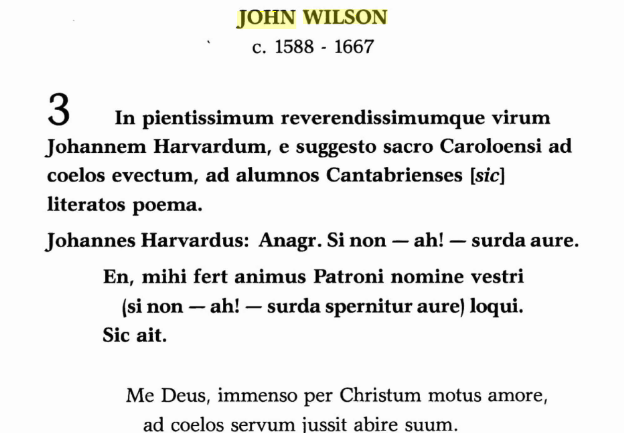
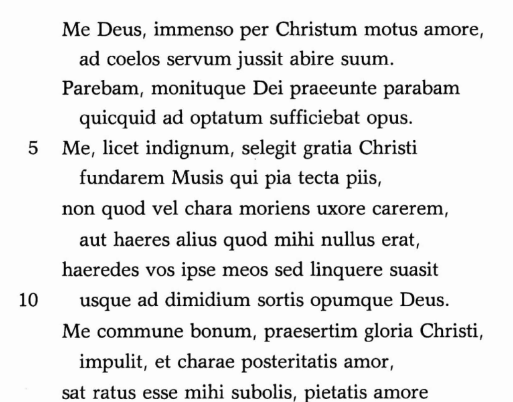

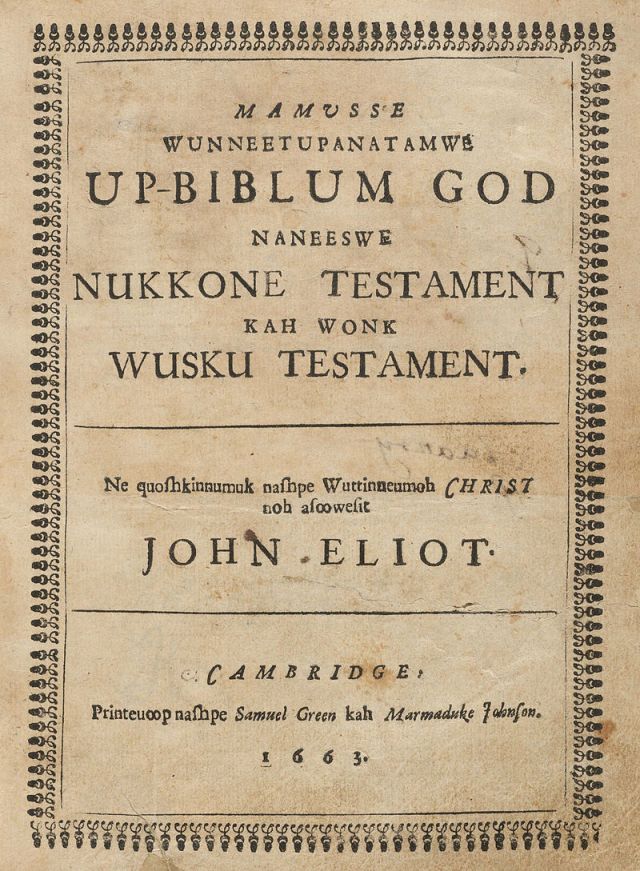
Here are some poems and books written in America by my great grandfather, Reverend John Wilson. Moses made me aware John was a Missionary in a strange land full of non-white people. He was a compatriot of John Eliot.
John ‘The Nazarite’
https://en.wikipedia.org/wiki/John_Wilson_(Puritan_minister)
A song of deliverance for the lasting remembrance of Gods wonderful works never to be forgotten. Containing in it the wonderful defeat of the Spanish-Armado, anno, 1588. the woful plague, anno, 1603. soon upon the entrance of King James of famous memory, unto the Crown of England. : With the discovery of the Povvder Plot, anno, 1605. and the downfall of Black Fryers, when an hellish crew of papists met to hear Drury a popish priest, anno 1623. Also the grievous plague anno, 1625. with poems both Latin and English, and the verses of that learned Theodore Beza.
Wilson, John, 1588-1667.
Table of contents | Add to bookbag | How to cite
<< Previous section Next section >>
Christian Reader.
COnsidering how excedingly pretious the remem|brance of this heavenly man of God is (whose Poems these are) unto all that knew him, yea, and the thoughts of that sacred ashes locked up within his Tomb, the thoughts of whom is enough to cause Fountains to run over, and to trickle down mine Eyes, and the Eyes of all tender hearts that loved him, this emboldneth me to present unto you this heavenly Song. Endited by him, or rather the holy Spirit of God unto him many years agoe, hoping they will find acceptanec with you, os he had a fluent strain in Poetry, so how ex|cellent was the matter contained in the same, being full of Direction, Correction, and Consolation, suiting much unto spiritual Edification. What Volums hath he penned for the help of others in their several changes of condition, which if they were all compiled together, would questionless make a large Folio. How was his heart full of good matter? He was another sweet sing|er of Israel, whoss heavenly Verses passed like to the handkerchief carryed from Paul to help and uphold dis|consolate ones, and to heal their wracked Souls, by the effectual prisence of Gods holy Spirit. Seeing those are not so visible unto the World, he pleased to peruse these, redivived by this present Impression, wherein we may obs•rve what were Gods former mercyes towards his People in great Brittain, his wonderful mercy to King, Peers, and People, and unto our Fathers; when the Spanish Popish Plot was dashed in pieces, and the half Moon of their Navy, (whose horns stood seven Page [unnumbered] mile asunder) was shattred into Confusion. Gods Judgements also in the two dreadful plagues (which are mentioned in this Book) and Gods healing hand. The discovery also, and defeating the hellish Powder Plot. The woful downfall at Black Friers, where Drury with many of his Attendants breathed their last breath. What sayth Asaph, Psal. 78.2, 3, 4, 5, 6, 7. I will open my mouth in a Parable, I will utter dark sayings of old, which we have heard, and known, and our Fathers have told us, we will not hide them from their Children, which should be born, who should arise, and declare them unto their Chil|dren, that they might set their hope in God, and not forget the works of God: but keep his Commandments: And what can be 〈◊〉 suitable to read over, then what is here presented. Considering (as h•retofore) the Devil with his Instruments have contrived to swallow up that famous Kingdome, and the Church of Christ in it, so now, are not all the Devils of Hell, with such whom they employ, busying themselves to batter down the walls of Zion, and to make breaches at the gates thereof, that so they might exe|cute the utmost Butcheries that can be invented, thereby to over|throw the Kingdome of Christ here on Earth in every place? but that God who hath been the refuge of his People hitherto, that over|threw the Egyptians at the red Sea, that destroyed Sisera with his Army, he can save his People now in all places. Only let us thankefully remember Gods former mercyes shewed to his people in both Eng|lands, really and unfeignedly repent of whatsoever we have provo|ked him with; Call and cry earnestly to him, and trust in the only Rock of Jesus Christ, who is our hope and Salvation for ever. Take in good part what is here presented to you from the Son of him who is 〈◊〉, so pretious a Father, who heartily wisheth your welfare, and the peace of all Gods Israel.
Yours to serve in Christ Jesus John Wilson.
John Eliot (missionary)
From Wikipedia, the free encyclopedia
Jump to navigationJump to search
For other people with the same name, see John Eliot.
John Eliot (c. 1604 – 21 May 1690) was a Puritan missionary to the American Indians who some called “the apostle to the Indians”[1][2][3] and the founder of Roxbury Latin School in the Massachusetts Bay Colony in 1645.

Cuckoos Farm, Little Baddow, Eliot’s home around 1629
John Eliot was born in Widford, Hertfordshire, England and lived at Nazeing as a boy. He attended Jesus College, Cambridge.[4] After college, he became assistant to Thomas Hooker at a private school in Little Baddow, Essex.[5] After Hooker was forced to flee to Holland, Eliot emigrated to Boston, Massachusetts, arranging passage as chaplain on the ship Lyon and arriving on November 3, 1631. Eliot became minister and “teaching elder” at the First Church in Roxbury.[3]
From 1637 to 1638 Eliot participated in both the civil and church trials of Anne Hutchinson during the Antinomian Controversy. Eliot disapproved of Hutchinson’s views and actions, and was one of the two ministers representing Roxbury in the proceedings which led to her excommunication and exile.[6] In 1645, Eliot founded the Roxbury Latin School. He and fellow ministers Thomas Weld (also of Roxbury), Thomas Mayhew of Martha’s Vineyard, and Richard Mather of Dorchester, are credited with editing the Bay Psalm Book, the first book published in the British North American colonies (1640). From 1649 to 1674, Samuel Danforth assisted Eliot in his Roxbury ministry.[1]
Cambridge, The Focal Point Of Puritan Life (Part Four)
Catch up on part one of this post here!
By Henry Hallam Saunderson
Read April 22, 1947
Dealing With Dissenters
While the Puritan leaders were carrying forward their highly significant enterprises, they had to deal with forces which endangered the very existence of their Colony, in which increasing thousands of people were investing themselves, their lives, and all that they possessed in the world. Sometimes modern critics of the Puritan leaders say that they fled from England to obtain religious freedom and then denied to others what they sought for themselves. This is a serious misinterpretation of their adventure in colonization. I repeat: their attitude was not that of fugitives from oppression but that of the creators of a new manner of life.
They had the outline of a new political state, and they wanted to see if it would work. They wagered everything on that project. They wanted to create an enlightened community, under the leadership of an educated ministry, and governed by godly men. They wanted a community which aimed at promoting the welfare of the entire population; a community in which there should be no poverty and no illiteracy.
Every Puritan church in the colony was a community church. It had the power to write its own creed and covenant. Let us bear in mind that these Puritans never created a central creed-making power, nor any autocracy which could dictate to the churches in any phase of their life. In order that the town governments and the colonial government might be in the hands of godly men, they bestowed the rights of Freemen only on the worthy members of their churches. This was fair and right in an administration which carried the responsibilities of so great an investment. They had a right to carry through their experiment; to see if a community so conceived, so organized and so administered “could long endure.”
Probably the severest criticisms of early Puritanism here are based on the erroneous idea that there could have been toleration of various individuals and groups whose religious opinions differed sharply from the SAUNDERSON: THE FOCAL POINT OF PURITAN LIFE 71 faith of the Puritan leaders. But those who make these severe criticisms fail to realize that individuals and groups of people came into the territory of the colony and endeavored to overturn the government by the political application of erratic religious ideas. The Puritan authorities were not suppressing religious opinions as such, but were defending the stability of their government against those who would destroy it.
An example of this is found in the case of Roger Williams. He asserted far-sighted principles of religious liberty. But he began, very soon after his arrival here, to proclaim the idea that the Charter of the Colony was entirely illegal; that King Charles had no rightful power to grant the Charter; that the Colony had no legal claim to the territory which it occupied. And this idea he projected into every corner of the Colony.
It is said by modern critics of the Puritans that for his ideas of religious liberty Roger Williams was driven forth alone into the wilderness infested with savages. Not at all. The Colonial authorities saw that he was endangering the existence of the Colony, and they provided him with passage on a ship which was about to sail for England. He chose to flee in the night, for he had no desire to be deported. He went southward and founded what is now the State of Rhode Island. He had as yet no charter. That was obtained only in later years.
The Case Of Anne Hutchinson
In the midst of the turmoil over the troublesome views of Roger Williams, King Charles proceeded to take action aiming to destroy the Colony. The alarming news reached Boston, and the government had to face the situation. Imagine the meeting of the General Court of Magistrates and Deputies, when they sat at a long table on which was lying a copy of a document by which the King had given to eleven of his courtiers the power to ruin them and all the other people of the Colony. The decisions of that day are poignant. Fortifications were built on Castle Island in Boston Harbor and at Dorchester and Charlestown. The little army of the Colony was recruited and actively trained. A council was formed to manage “any war that might befall.”
Facing the danger of war with the Mother country, was it a time for broad toleration of a trouble-maker within the Colony? If they must fill their powder barrels, should they let one person play with fire in the powder magazine? By a strange coincidence the same ship which brought the copy of the ominous document from England, threatening the very life of the Colony, also brought a woman of great ability, Mrs. Anne Hutchinson. She came in 1634 and had here a picturesque career of four years. At no time was the Colony in graver danger of destruction than when she was at the height of her power. Even while Boston Harbor was being fortified against the royal warships, there was a threat of an invasion by the Indians with the possibility of a general massacre. When the situation was most acute, there was division, even in the military forces of the Colony, over the religious ideas of Anne Hutchinson; and though she was well aware of the danger, she pushed her campaign for the political application of her religious views.
The whole movement, of which she was the leader, is sometimes called the “antinomian controversy.” The word “antinomian” means “against the (moral) law.” Anne Hutchinson’s views can be stated briefly, and they are a vital part of our story. At the time of Christ, the Pharisees had a very elaborate system of ritual which aimed at the complete regulation of men’s lives. Christ denounced the Pharisees saying, “They bind heavy burdens and grievous to be borne and lay them on men’s shoulders.” This whole system of regulation and repression was called “The Law.”
After the death of Christ there was sharp disagreement among his apostles as to the place of “The Law” in the Christian life. Some of them said that if men would become Christian they must first conform to the Jewish “Law.” Paul had been brought up strictly as a Pharisee, but had cast aside this burdensome “Law.” He wrote, “Now the righteousness of God, without the law, is manifested”; and “Therefore we conclude that a man is justified by faith without the deeds of the law,” and “The righteousness of the law is fulfilled in us who walk not after the flesh but after the Spirit,” and “The Spirit itself beareth witness with our spirit, that we are the children of God.”
Biblical scholars of the Puritan times had great skill in translating the Bible from Hebrew and Greek into English — that is, in translating it word for word. But they halted over the interpretation of it. Anne Hutchinson held that these passages which spoke of the law referred to the moral law. She did not know that Paul was setting aside the ritual law of the Pharisees. And there were many scholars who made the same serious blunder.
Anne Hutchinson, in England, had been greatly influenced by the preaching of John Cotton. When he migrated to Massachusetts, she decided to follow with her family. She joined the Church in Boston of which John Winthrop was the chief member, John Wilson the pastor, and John Cotton newly installed as teacher. But she soon gathered a considerable congregation, on days other than Sunday, for the teaching of her views. The Puritan leaders saw that, whatever the Apostle Paul might have written, the moral law was not set aside. Throughout the whole Colony there was discussion of the views of Anne Hutchinson.
Soon she criticized the Puritan ministers as “under a covenant of works.” She declared that John Cotton was “under a covenant of grace” and that so were her followers and herself. She launched a vigorous movement to displace John Wilson as pastor of the Boston Church. She sought to rouse the members of other churches against their ministers. She denounced the government of the Colony.
Such a state of affairs would be distressing at any time; but when it developed while an Indian massacre was dreaded, it was ominous in the extreme. The majority of the Boston soldiers declared themselves to be under a “covenant of grace” and refused to march against the savages under a leader who, they declared, was under a “covenant of works.” There was the spectacle of a divided army with the enemy almost at the gates.
The majority of the authorities of the government wanted to check Anne Hutchinson. But they took quick action to transport the guns, powder, and other munitions away from Boston lest the faction dominated by Mrs. Hutchinson seize them. They themselves went from Boston lest they be seized and held helpless. The General Court held its sessions in Newtowne.
Meantime a brilliant young man, Sir Harry Vane, had come from England. In a wave of enthusiasm the Freemen of the Colony had elected him Governor. He lived in Boston and was won over to Mrs. Hutchinson’s religious views . His accession to her ranks gave this woman confidence that she could gain political mastery of the Colony.
The General Court sought to check her influence by pointing out the grave danger in which the Colony was placed and commanding that Mrs. Hutchinson and her followers cease their subversive works. But they replied by drawing up a document condemning the General Court. The time of year was at hand for the annual assembly of the body of Freemen of the Colony and the election of the Governor, Deputy-Governor and Assistants. The meeting was here in Newtowne. I have spoken of a great oak on Cambridge Common which was a geographical center for such meetings. The Boston faction hoped to get quick action adopting their document condemning the General Court and also to re-elect Sir Harry Vane as Governor.
A great crowd assembled, and Sir Harry Vane himself sought to set aside the regular order of business and get action favoring the Boston faction. Other men demanded that the meeting follow the usual order of business. A great tumult broke out, and men came to blows. The venerable pastor of the Boston Church, John Wilson, climbed that great oak tree, to be seen and heard by all, and made a vigorous speech appealing to men to proceed in legal fashion and to unite in defense of the Commonwealth. His counsel prevailed; the young Governor was swept from office, and the same, sober, dependable statesman, John Winthrop, was triumphantly returned to office as Governor. The Colony showed a united front against the savages and the situation was saved. Sir Harry Vane soon returned to England. In the course of time he became Minister for Naval Affairs under Oliver Cromwell. After the Restoration of the Stuart Kings he was beheaded.
But to return to Anne Hutchinson: the General Court saw clearly that the Colony must defend its existence. Mrs. Hutchinson was urged to moderate her propaganda. She refused, even when she was endangering the very life of the Colony. She was tried and sentenced to banishment.
It is said by modern critics of the Puritans that “The saintly woman, Anne Hutchinson, was driven out to be destroyed by the savages,” that “Though her only offense was her religious faith, the bigoted Puritans sent her to her death.”
But let us look at the facts. In the address to her by the General Court is this clear statement: “Your conscience you may keep to yourself; but if in this cause you shall countenance and encourage those that transgress the law, you must be called in question for it; and that is not for your conscience but for your practice.” Here is not a violation of freedom of conscience but a restriction on political action endangering the existence of the Commonwealth.
Whither was Anne Hutchinson banished? First to a very comfortable home in Roxbury, that of Joseph Welde, brother of the minister of the Roxbury Church, and a member of the General Court. Here she lived for months in quiet and comfort. She was allowed to receive visits from her friends. But she continued her dangerous propaganda. Many statements, however, made at this time contradicted some of her earlier statements. When these falsehoods were pointed out to her she claimed that she had had new revelations from the Holy Spirit.
The scandal of all this was so serious that she was excommunicated by the Boston Church. And the authorities decreed that she must go farther than Roxbury. Where did she go next? To her own farm in Braintree. There she could pause and consider her future course. She was free to go northward to the present site of the City of Portsmouth, New Hampshire, and to share the fortunes of her brother-in-law, John Wheelwright. Or she was free to go southward and to associate herself with the followers of Roger Williams. She freely chose the latter course. After some years marked by further strife, she voluntarily left that colony and built a home on the western end of Long Island. There she perished in an Indian uprising. The Puritans of Massachusetts had not the slightest responsibility for her tragic end.
What About The Baptists?
Critics of the Puritans ask why the Baptists were not tolerated in this Colony. They ask, What difference does it make what amount of water is used in baptism? The custom which grew out of the Protestant Reformation was for parents to bring their infants for baptism because it was believed that regeneration took place in the rite. This was the custom among the Puritans. The Baptists, however, held strenuously that baptism was Christian only if the persons baptized were of sufficiently mature years to choose for themselves, and in baptism declared their personal faith.
As a religious teaching, the Puritans could tolerate this. But the Baptists drove hard for the political application of their definition of the name Christian. They asserted that the Puritans had not been baptized; that consequently they were not Christians; and that, further, as only Christians had a legal right to vote in the affairs of Massachusetts, the Puritans were outlawed. The Baptists claimed that only they, the Baptists, could exercise political power.
Thus we see that these militant Baptists were not asking to be tolerated in the Puritan community; they were seeking to dispossess the people who had come here in the Great Migration and had created the Commonwealth. Since any Puritan’s ownership of his land and his house upon it rested on the legality of the Puritan government, the militant Baptist propaganda would have made them vagrants and intruders. Of course this absurd propaganda had to be checked. Again we have a situation when this government had to defend itself in order to live at all.
One other phase of Baptist practice was to go into Puritan churches and to interrupt the service of instruction and worship, especially when the service included the baptism of infants.
I have spoken of the scholarly man who was the first President of Harvard College, Henry Dunster, whose term of office was from 1640 to 1654. His departure was a strange event. In his biblical studies he came slowly and reluctantly to the conviction that the Baptist doctrine was the truth. He not only announced openly his newly acquired faith but interrupted a service in the Cambridge Church when infants were brought for baptism. There was great consternation among the clergy of the Colony. Could Harvard College train Puritan ministers under such a man? Dunster was examined. He apologized for disturbing a service, but he asserted vigorously his Baptist convictions. His days of usefulness at Harvard were ended. The authorities removed him.
The Witchcraft Craze
Many people speak and write about the episode of the execution of witches in Salem as if Puritans had invented the whole idea. The matter can be disposed of briefly. A tidal wave of hysteria over witchcraft swept over Europe and barely touched these shores. It is estimated that three thousand persons were put to death in Scotland and tens of thousands in other countries. Here the Puritans took one look at this action and revolted against it. Fewer than a score of “witches” were put to death. The Puritan emphasis on the dignity of human personality was incompatible with it. The hysteria checked itself quickly. Samuel Sewall, one of the judges at the witchcraft trials, stood in the broad aisle of his church and, before God and man, asked pardon for condemning anyone as a witch.
It is often said that the Puritans showed themselves harsh and bigoted in their treatment of those peace-loving, gentle people, the Quakers. But anyone who says this shows that he does not know that in those days the Quakers were militant in their determination to shatter other forms of faith and were fanatical in their methods. In the Puritan churches in Massachusetts Quaker women would do shameless things, including yelling and running up and down the aisles and making worship impossible. They called this “testifying before the Lord.” Their attitude toward the government differed little from anarchy. The Puritans used restraints against the Quakers not on the ground of religion but on that of preserving the life of the Colony.
Incidentally, let us recall the traditional phrase “The Puritan Blue Laws” long enough to say that such laws never existed here. They were invented by an English visitor who had a distorted sense of humor.
I began this paper with the statement that Puritanism was a progressive movement. This review of the history of the movement is offered in justification of that statement. In conclusion, I want to sum up briefly five important achievements of Puritan life here, all of them related to the life of our own community, Cambridge.
These five achievements are:
1st. Political democracy as expressed in their town meetings and their central colonial government.
2nd. Spiritual self-reliance as expressed in their self-governing churches and in their religious life, which emphasized to the utmost the right of private judgment.
3rd. Popular education as expressed in their great invention of the public school, and the principle that the education of the children should be at the cost of the community, because it was for the welfare of all.
4th. An educated ministry as expressed in their creation of a college for the training of their own young men to fill their pulpits, and the application of the principle that their preachers should appeal to the intelligence of their congregations. Their college was also to train men for a variety of forms of public service.
5th. Their publishing enterprise which aimed at using, for the intellectual and spiritual welfare of the entire population, the great invention of the printing-press.
These five movements were expressions of one central faith, a faith in the powers of human personality; a faith that, in human personality, there are intellectual and spiritual capacities which are best developed by being used. “We learn to do by doing” is a principle of modern education which was anticipated by our Puritan forefathers centuries ago.
The Puritan emphasis on education has been accepted so fully that we can scarcely imagine the time when it was a novelty. But Governor Berkeley of Virginia was contrasting his State with Massachusetts when, in 1670, he wrote this concerning Virginia:
“I thank God there are no free schools nor printing, and I hope we shall not have them these hundred years; for learning has brought disobedience and heresy and sects into the world, and printing has divulged them, and libels against the best government. God keep us from both.”
The vitality of Puritan principles continues. They are the principles of a life which perpetuates itself while generations of men come and go. That life has a creative power which does not cease. In all my life this idea of a continuing life in successive centuries has never been more deeply impressed upon my mind than at the time of the Harvard Tercentenary, when we closed the meeting of the Alumni Association with the singing of “Fair Harvard.” That immortal song recalls our Puritan founders and speaks of Harvard College as the
“First flower of their wilderness, star of their night,
Calm rising through change and through storm.”
That first star represents one faculty of scholarly men. Harvard has become a great constellation, many faculties being grouped in it. We have seen its rising. No man can foresee for it any setting or any waning. It represents a light which is eternal, the light of truth. The Harvard shield bears with proud devotion the word VERITAS. Puritan beginnings here were indeed simple, but their consequences are large. And our community, bearing the great name of Cambridge, has an undimmed glory, for eyes that can see.
This article can be found in the Proceedings of the Cambridge Historical Society Volume 32, from the years 1946-1948.
John Wilson – Has Risen!
Posted on December 10, 2019 by Royal Rosamond Press
Several researchers say my 9th. grandfather is buried in a vault under King’s Chapel in Boston, but, his remains and coffin have not been found. There is a hidden room, that contains his massive folio of writing. He wrote many poems in Latin. Rena Easton was supposed to come to Boston in 1970. She is destined to find Wilson’s bones with me, and commit to memory my kin’s work. My twice named unborn granddaughter, is destined to own the Wilson legacy. She too will own an amazing memory. Lara Roozemond is my kindred. She is coming to believe in her destiny, and moves into the Realm of the Rose in the Water of Eternal Life!
The insane and deluded Evangelical President is meeting with a Russian Warlock today in order to decide the fate of America found by the Wilsons. Trump has the Attorney General on the leash of The Devil, and has ordered him to destroy the FBI and the Department of Justice. The Southern Baptist Hersey is the bodyguard of a Lying Lunatic – who is Impeached! Of course Trump and Melania want to find the Fountain of Youth. The First Lady is one-hundred a eighty-six years old!
John Wilson Rosamond
Copyright 2019
John Wilson and Judgement Day
Posted on September 27, 2018by Royal Rosamond Press

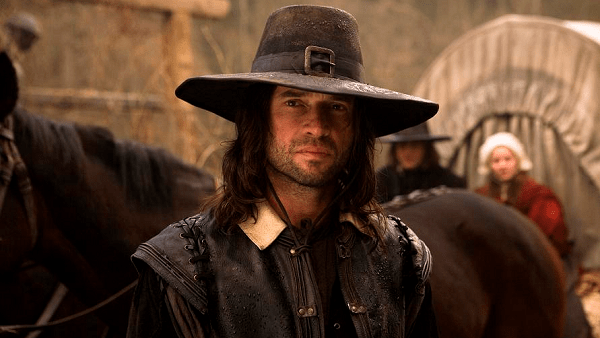

Today is John Wilson’s Day. He is a great grandfather of mine. He was the head of the First Church of Boston, and a Puritan leader of the Massachusetts Bay Colony. He judged two women. One was excommunicated, the other, hanged.
The question I put forth, is, was the Spirit of Jesus at these trials? Was his spirit, invoked? This is the late 1600s. Jesus has not yet bid The Boston Patriots to rebel against the Church of England, and Their King, which the ministers of The King’s Church – ruled an Act of Treason!
Did Jesus found our Democracy in 1776? Most of the evangelicals who lay hands of the President of the United States, claim God-Jesus did just that. Why then didn’t King Jesus bid our Founding Fathers to give women The Right To Vote? It appears women had a voice in the first churches established in The Colonies – by my kindred. Does this give me a Divine Parotitic Voice? Or, do I have to subscribe to The Rapture? Are these questions ones that Brett Kavanaugh should be considering, verses what other woman is going to step out of the dark and accuse him of getting a teenage child drunk and raping her with the help of his best friend – who will not be testifying today!
John Presco ‘Nazarite Judge’
“On the eve of an extraordinary hearing of the Senate Judiciary Committee at which both Judge Kavanaugh and Christine Blasey Ford, a California professor who has accused him of assaulting her when they were both teenagers, will testify, Mr. Trump said that “some very evil” Democrats had plotted to destroy Judge Kavanaugh’s reputation. And he lamented what he called “a very dangerous period in our country” in which men are presumed guilty.”

While Wilson had little to say during Hutchinson’s civil trial, he delivered the final pronouncement at her church trial.

Wilson exhorted Mary Dyer to repent, but it was her goal to hang as a martyr.
In the 1650s Quaker missionaries began filtering into the Massachusetts Bay Colony, mostly from Rhode Island, creating alarm among the colony’s magistrates and ministers, including Wilson.[9] In 1870, M’Clure wrote that Wilson “blended an intense love of truth with as intense a hatred of error”, referring to the Quakers’ marked diversion from Puritan orthodoxy
Return of the Scarlet Letter
Posted on August 7, 2018by Royal Rosamond Press
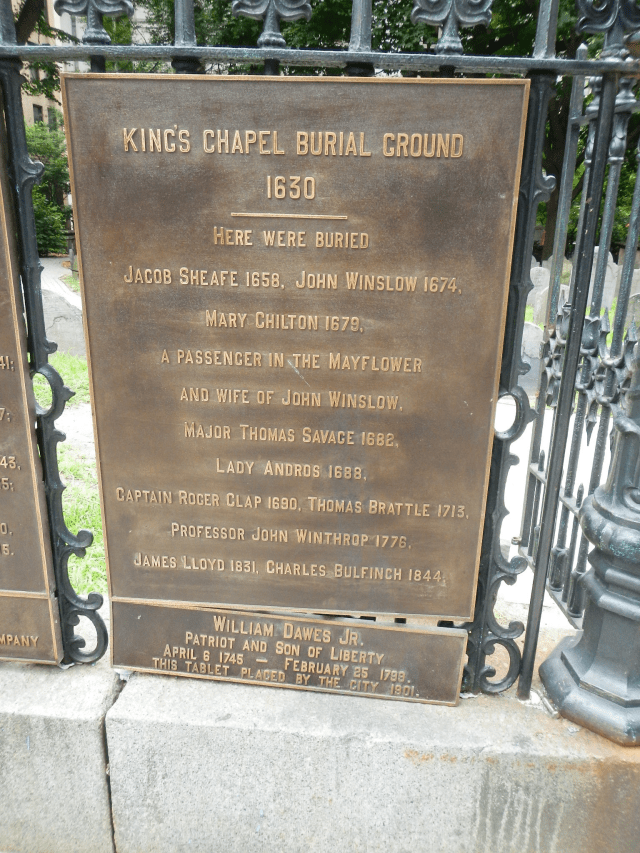

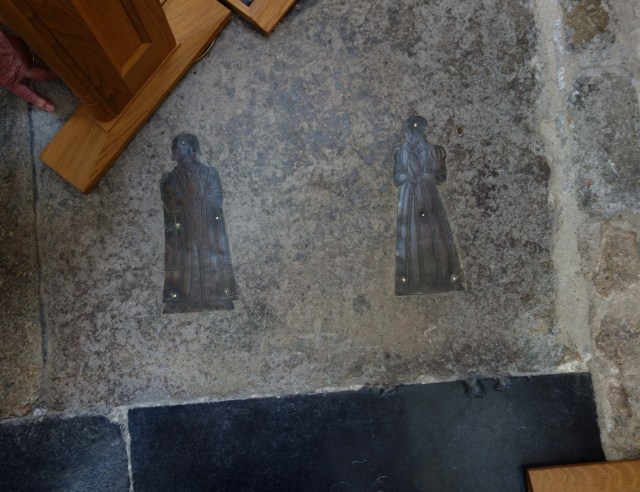


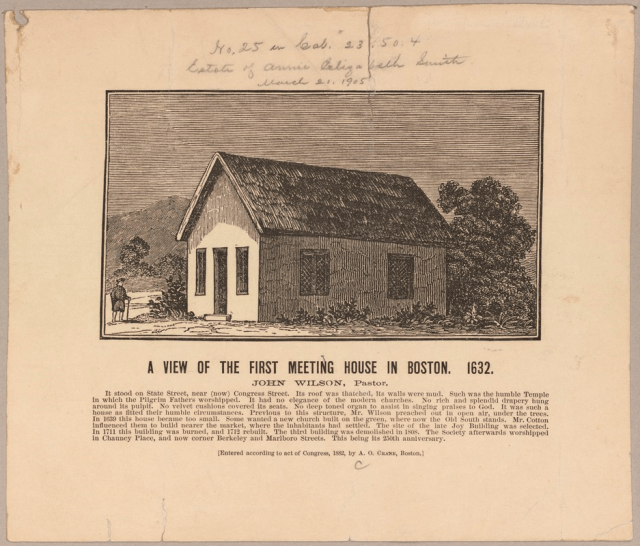


My kindred, John Wilson, is buried in The King’s Chapel, along with Elizabeth Pain who is associated with Hester Prynne the subject of Hawthorne’s The Scarlet Letter.
Christine Wandel lived on Hancock Street located on Beacon Hill. I lived on Anderson Street a few blocks away. I took the Mafia to court at the top of Hancock, and won. I loved in with Dottie Witherspoon on Cambridge. She descends from Signer, John Witherspoon. We were both looking for a new religion. We were destined for the Church. I should have never left Boston. I have features like John Wilson. I am kin to real Boston Bluebloods.
I am going to author a Television Script titled ‘The Return of the Scarlet Letter’. The series will span time. The spirit of John and Elizabeth will come into the beings of many. John was the minister of the first church in Boston and brought the word of God to the Native Americans, and is in Hawthorne’s book. Beacon Hill was a Hobbit like place.
John Presco
Copyright 2018
Wilson and Webb
Posted on March 5, 2019 by Royal Rosamond Press
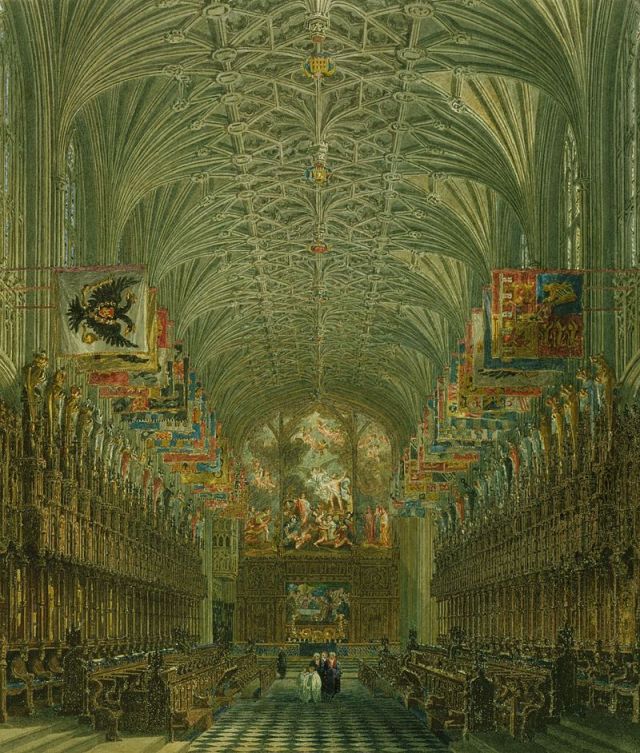
My kindred, William Wilson, and his brother-in-law, Erasmus Webb may have known William Shakespeare – intimately! Anne (Webb) Wilson lived at Windsor Castle. Her brother, Erasmus, was the Archdeacon of Buckingham Palace. Are we looking at the authors of Shakespeare’s plays? Why has this family lineage been buried, and all but forgotten? These are extremely educated men, whose wives would be at court. They would know all the intrigues, and, hear confessions. They would know the merry wives of Windsor. People would bring them all the gossip that is the bane of the church, aimed at bringing other down as they vie for royal favors.
This bloodline flows from Bohemia and has seeded several major religions. This is the ‘Hidden Seed’. The Webb family came to America. In the chart below we see that Sir Alexander Webb married Mary Wilson, the daughter of Thomas Wilson MP, the grandfather (or Great Uncle?) of Reverend John Wilson of the Massachusetts Bay Colony, that the Webb family played a large role in. Shakespeare’s line, died out, and thus, this is his American Seed.
Statesman, Thomas Wilson MP, was a stellar scholar and author who could have prepared the way for the writing of Shakespeare. Why not put Alexander Webb is the race? Surely the Webb-Wilson family saw themselves as the family-power behind the Church and Throne, and in need of new forum.
“Wilson belongs to the second rank of Elizabethan statesmen. An able linguist, he had numerous acquaintances among Spanish and Flemish officials in the Netherlands, and, in a wider context, his range of friends included Leicester, Burghley, Hatton, Davison, Sir Francis Knollys, Paulet, Walsingham, William of Orange, Jewel, Parker, Parkhurst, Gresham, Ludovico Guiccardini and Arias Montano.”
http://webb.skinnerwebb.com/gpage1.html
https://www.geni.com/people/Thomas-Wilson-MP/6000000010886211061?through=6000000006520219276
John Presco
Copyright 2019
https://www.geni.com/people/Ann-Wilson/6000000007926596788?through=6000000003938684818

Erasmus Webb B.D. (d. 24 March 1614) was a Canon of Windsor, England from 1590 to 1614[1]
Career
He was educated at Gloucester Hall, Oxford where he graduated BA in 1568, MA in 1572 and BD in 1585.
He was appointed:
- Vicar of St Clears, Carmarthen 1577
- Rector of Ham, Wiltshire 1582
- Rector of Bletchingdon, Oxfordshire 1583
- Archdeacon of Buckingham 1589
- Rector of West Ilsley, Berkshire 1601–1613
He was appointed to the ninth stall in St George’s Chapel, Windsor Castle in 1590, a position he held until 1614.
He was buried in the chapel. His inscription read:
“Hic jacet Erasmus Webb, Sacrae Theologiae Baccalaureus, cujus Regiae Capallae quondam Canonicus, qui obit 24 die Martii, Anno Domini 1613. Aetatis suae 63”[2]
| The Early Webb Families | |
 |
| Sir John Alexander Webb | |

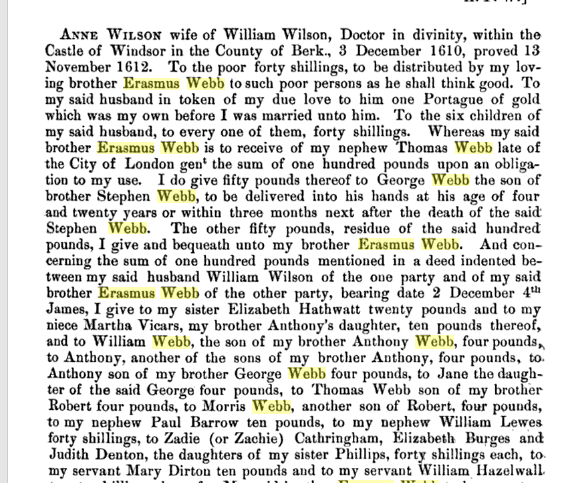

William Shakespeare and his wife Anne had three children. The eldest, Susanna, was baptised on 26 May 1583. They also had twins, Judith and Hamnet, baptised on 2 February 1585.
Shakespeare had four grandchildren who all died without heirs, so there are no direct descendants of his line today.
Susanna married John Hall in 1607, and had one child, Elizabeth, in 1608. Elizabeth was married twice, to Thomas Nash in 1626, and to John Barnard in 1649. She had no children by either husband.
Hamnet died at the age of 11 and was buried in Stratford-upon-Avon on 11 August 1596. The cause of his death is unknown.
Judith married Thomas Quiney in 1616, and the couple had three sons: Shakespeare Quiney, who died in infancy, and Richard and Thomas, who both died in 1639 within a month of each other. Neither of them married or had children before they died.
It is possible to claim a relationship to Shakespeare through his sister, Joan. There are many descendants of Joan and William Hart alive today, in both the male and female lines.
https://wikivisually.com/wiki/Archdeacon_of_Buckingham
https://www.geni.com/people/Erasmus-Webb-Archdeacon-of-Buckingham/6000000012211473651
https://en.wikipedia.org/wiki/Dean_and_Canons_of_Windsor
https://en.wikipedia.org/wiki/The_Merry_Wives_of_Windsor
https://en.wikipedia.org/wiki/Archdeacon_of_Buckingham
https://www.geni.com/people/Ann-Wilson/6000000007926596788
https://en.wikipedia.org/wiki/Guy_Elsmore

Sir Henry Alexander Webb, I MP 
| Gender: | Male |
|---|---|
| Birth: | May 11, 1510 Stratford-upon-Avon, Warwickshire, England |
| Death: | circa 1544 (29-37) Stratford-upon-Avon, Warwickshire, England |
| Immediate Family: | Son of Sir John Alexander Webb, Jr. and Margaret Webb Husband of Grace Webb Father of Humphrey Webb; Sir Alexander Webb, I; Agnes O’Dell / Hill / Arden; Henry Webb, Jr.; Ann Wilson and 9 others; Mary Arden Webb; Geoffry Webb; Erasmus Webb, Archdeacon of Buckingham; Stephen Webb; Elizabeth Hathwatt; Anthony Webb; George Webb; Robert Webb and Phillipa Webb « less Brother of William Webb; Mary Agnes Arden; Abigail Shakespeare and Agnes Webb |
| Added by: | Paula Denice Webb on February 19, 2007 |
| Managed by: | Jason Peter Herbert and 63 others  |
| Curated by: | Jenna, Volunteer Curator |
0
Matches

Confirmed Matches
1-5 of 29
About
- English (default)
 English (default)
Date of birth has also been erroneously reported to be December 24, 1534.
Date of death has also been erroneously reported to be 1573.
NOTA BIEN: It has been alleged that this Sir Henry was a baronet, but the Baronetage of England was not formed until May 22, 1611.
It was said that Sir Henry Alexander Webb (1510-1544) established the family for all future time, since to him “for valiant deeds of his father”, Sir John Alexander Webb, of Oldstock, “who was an officer under Kings Henry VII and VIII”, the present generally accepted emblem, or coat of arms, was granted. This heraldic ensigna of rank in the New Nobility, that of the thegus, owe their origin in personal service to the prince then reigning. The New Nobility was accordingly one of office due to meritorious service. The device of hereditary coat of armour, a growth of the twelfth century, did much to define and mark out the noble class throughout Europe. When once acquired by grant of the Sovereign, it went on from generation to generation. They who possessed the right of coat of armour formed the class of nobility or gentry.
Sir Henry Alexander Webb married Grace Arden, sister of Robert Arden. Mary Webb (Shakespeare’s grandmother) married Robert Arden, brother of Grace.
from: http://freepages.genealogy.rootsweb.com/~sharonkforehand/page%208Smith%20Webb%20Griffith.htm
Sir Henry Alexander Webb
Though commonly thought to have been the 4th Baronet of Odstock, that distinction would have fallen to his brother William. Presumably the title would come to him if William died without male issue, and I haven’t yet found a reference to wife or child for William. I also haven’t found any reliable reference to Sir Henry as a Peer of the Realm, which means he was most likely not a Baronet.
Undoubtedly named after Henry VIII–due to the close family association with the royal family–Henry Alexander Webb was born on May 11, 1510. Henry married Grace Arden, daughter of Thomas Arden, of Aston Cantlow parish of Warwick county. The continued close association of the Webb family and royalty are documented in a letter sent by the Queen, Katherine Parr, requesting that grants and privileges due Henry Alexander Webb be fulfilled as promised. Sir Henry and wife Grace had three children: First-born Alexander, Agnes and Robert. Little is known of Agnes and Robert.
‘Sir Henry Alexander permanently secured nobility for the family when, on June 17, 1577, he was granted a coat of arms.’ Although I have found this statement all over the internet, it is doubtful and a bit dubious. Firstly, I would point out that the grant of arms listed is for 1577, Henry would have been 67 if he had lived that long (notice the date of death…). Secondly, and more importantly, Sir John was not only Henry’s father but was also the 3rd Baronet of Odstock. This means that the family was already considered Noble. And third, Henry was known to wear his Arms at tournament and on the field of battle. Hard to do if they are not granted to you until after your death. In this common misconception even the heralds at the UK College of Arms were unable to help clear up the debacle. The Arms appear on numerous ‘rolls of Arms’ from the time and always list the bearer as Sir Henry Alexander Webb.
The Heraldric blazon or description of these arms is “Gules a cross between 4 falcons Or” and the crest is “Gules demi eagle rising upon a Ducal coronet”
Some sources say ‘eaglets’ instead of ‘falcons’. According to the United Kingdom College of Arms heralds eaglets adorn Sir John’s arms, Henry’s father. The falcons were a mark of personal distinction between the two men.
A copy of the letter which Katherine Parr sent her council (Cabinet Members) asking them to grant her beloved friend, Sir Henry Webb, the lands and estates that had been mentioned for him, is still in existence.
These lands had been confiscated by the King at the suppression of the monasteries and were located in Dorsetshire, England.
Sir Henry Alexander Webb was usher to the Privy Council of Katherine Parr, Queen Regent of Britian in the 16th century, 6th Queen of Henry VIII of England; to whose influence the future sovereigns Edward VI, Mary I and Elizabeth I owed a great deal.
Among the few exsisting documents connected with the regency of Katherine Parr was one while Henry VIII was conducting the seige of Boulogne in 1544 AD. There is in the Crotonain Collections, a letter to her council, headed: “Katherine, Queen Regent, K.P.; In favor of her trusty and well beloved servant, Henry Alexander Webb, gentlemen, usher of her Privy Chamber”. The letter is in regard to some grants and privileges to Henry Alexander Webb, but which had not been fulfilled and it concludes, “we most heartly desire and pray you to be favorable to him at this our earnest request. Given under my Hand and Signet at my Lord, the King’s Majesty’s Honor of Hampton court, the 23rd of July and the 36th year of his Highness most noble Reign”.
Sir Henry Alexander Webb was an usher to Catherine Parr, Queen of England.
links
- http://www.stirnet.com/genie/data/british/zwrk/webb03.php#link1 (membership required to view without interruption)
http://jimwebb.rootsweb.ancestry.com/webb/pafg07.htm#9473
11. Sir Henry Alexander WEBB (John Alexander , John Alexander , William , John , Geofrey , Henry ) was born on 11 May 1510 in Stratford, Warwickshire, England. He died about 1544 in England.
It was said that Sir Henry Alexander Webb (1510-1544) established the family for all future time, since to him the coat of arms, was granted. This heraldic ensigna of rank in the New Nobility, that of the thegus, owe their origin in personal service to the prince then reigning. The New Nobility was accordingly one of office due to meritorious service. The device of hereditary coat of armour, a growth of the twelfth century, did much to define and mark out the noble class throughout Europe. When once acquired by grant of the Sovereign, it went on from generation to generation. They who possessed the right of coat of armour formed the class of nobility or gentry. Sir Henry Alexander Webb married Grace Arden, sister of Robert Arden. Mary Webb (Shakespeare's grandmother) married Robert Arden, brother of Grace.
Henry married Grace ARDEN, daughter of Thomas ARDEN, about 1533 in Stratford, Warwickshire, England. Grace was born about 1512 in Wilnecote, Warwickshire, England. She died on 3 Dec 1539 in Windsor, Hertsfordshire, England.
They had the following children:
   + 	14 	M 	i 	Sir Alexander WEBB Sr
   + 	15 	F 	ii 	Agnes WEBB
     	16 	M 	iii 	Henry WEBB was born on 15 May 1537 in Stratford, Warwickshire, England.
Immediate Family
Showing 12 of 22 people Showing 22 people
- Grace Webb 1512 12/3/1539Grace Webbwife
- Humphrey Webb 1530Humphrey Webbson
- Sir Alexander Webb, I 12/24/1534 1573Sir Alexander Webb, Ison
- Agnes O’Dell / Hill / Arden 1536 December 1580Agnes O’Dell / Hill / Ardendaughter
- Henry Webb, Jr. 5/15/1537Henry Webb, Jr.son
- Ann Wilson 1550 11/13/1612Ann Wilsondaughter
- Mary Arden Webb 1538Mary Arden Webbdaughter
- Geoffry WebbGeoffry Webbson
- Erasmus Webb, Archdeacon of Buckingham 1614Erasmus Webb, Archdeacon of Buck…son
- Stephen WebbStephen Webbson
- Elizabeth HathwattElizabeth Hathwattdaughter
- Anthony WebbAnthony Webbson
Alexander Webb, Jr. was born 20 Aug 1559 at Stratford, Warwickshire, England. He died in Boston, Massachusetts. (n.b. This seems unlikely if he did got to Connecticut.)
Parents: Alexander Webb, Sr. and Margaret Arden.
Marriage 1: Mary Wilson (daughter of Thomas Wilson) abt. 1589 in Stratford, Warwickshire, England.
Children of Mary Wilson and Alexander Webb:
1. Richard (1580-1656) m. 1: Grace Wilson. m. 2: Elizabeth Gregory.
2. William Micajah “The Merchant of Virginia” (1582-?)
3. Elizabeth (1585-1635) m. John Sanford, Sr.
4. John (1597-1660)
5. Christopher (1599-1671) m. Humility Wheaton.
6. Henry “The Merchant of Boston” (1601-1671) m. 1: Hannah Scott. m. 2: Docibel Smith.
BIO:
Alexander & Mary (Wilson) Webb had six children;
Richard Webb b. 5 May 1580, William Micajah b. 9 Sep 1582, Elizabeth Webb b, 3 Sep 1585, John Webb b. 23 Oct 1597, Christopher b.15 Apr 1599, Henry Webb b. Oct 1602
Some gnealogist and family historians think that Alexander and His sons came to America in the early seventheen century. Richard, the elder son setteled in connecticut early in the seventh century, and is lickly the progenerator of the northern line of Webb family.
Alexander Jr. came to america, and so did four of his sons. This was the beginning of the great WEBB family in the United States.
In 1626, the first Webb immigrants came to America. The move was likely to be motivated by sons in the family since the parents, Alexander Webb Jr. and wife Mary Wilson, would have been in their 60s at the time of immigration. There is disagreement in historical records over whether Alexander and Mary stayed in England or emigrated to the United States. The move involved an extended family–sons and daughters of Alexander Webb and Mary Wilson in their 40s and grandkids in their teens. Members of the immigrant family included sons William, Christopher, Henry, and Richard, and daughter Elizabeth. Another son, John, remained in England, possibly to look after the affairs of the remains of the family land holdings in England. This son John came to America in 1636 and historical records indicate he came as a member of the military, which would indicate that he came as part of the British military sent to ensure compliance of the colonies to British rule. As we will see, this could have been a very interesting situation, since other members of the family became an integral part of the Revolutionary War effort.
sources
- Webb Family History with Name Origin and Lineage Lines. by Heraldry, P.O.Box 365, Carpinteria, California 93013. JAN 1975. {G30}.
- Tim and Rachel Janzen’s Ancestors. http://www.timjanzen.com/family/groups/gp580.html#head2.
- Descendants of Sir Henry WEBB. http://jimwebb.rootsweb.com/webb/pafg09.htm#5150.
links
http://jimwebb.rootsweb.ancestry.com/webb/pafg09.htm#5150
30. Sir Alexander WEBB Jr (Alexander , Henry Alexander , John Alexander , John Alexander , William , John , Geofrey , Henry ) was born on 20 Aug 1559 in Stratford, Warwickshire, England. He died after 1629 in Boston, Suffolk County, Massachusetts and was buried in Boston, Suffolk County, America with four sons: Christopher, Richard, John and William. This was the beginning of the WEBB family in America.
Alexander married Mary WILSON about 1579 in Stratford, Warwickshire, England. Mary was born about 1561 in Stratford, Warwick, England.
They had the following children:
   + 	52 	M 	i 	Richard WEBB Sr
   + 	53 	M 	ii 	William Micajah WEBB
   + 	54 	F 	iii 	Elizabeth WEBB
     	55 	M 	iv 	John WEBB was born on 23 Oct 1597 in Stratford, Warwick, England. He died on 5 Apr 1660 in Siterly, Hampshire, England.
   John was one of four brothers who came to America in 1629 with their father, Alexander Webb Jr.
   + 	56 	M 	v 	Christopher WEBB Sr
   + 	57 	M 	vi 	Henry WEBB
William Wilson Gentleman
Born about in Penrith, Cumberland, England, United Kingdom
Son of [father unknown] and [mother unknown]
[sibling(s) unknown]
Husband of Isabell (Unknown) Wilson — married [date unknown] [location unknown]
Descendants 
Father of William Wilson Sr, Alexander Wilson and Mary (Wilson) Briscowe
Died in Windsor Castle, Berkshire, England
Biography
“He was “of Wellsbourne, Lincolnshire, gentleman, who was buried in Saint George’s Chapel, Windsor Castle, where he presumably was some sort of official, although there is no record of more than his burial there.”
“William Wilson, gent., born about 1515, who removed from Penrith and settled at Welbourn, co. Lincoln. He acquired considerable estate, and on March 24, 1586, had confirmation of the following coat of arms, and grant of a crest, by William Flower, Norroy king of arms: Arms, per pale argent and azure three lion’s gambs erased fessways in pale counterchanged; crest, a lion’s head argent guttee de sang. He died at Windsor Castle, co. Berks (where his son William was prebendary), Aug. 27, 1587, and was buried in the chapel of St. George, Windsor Castle, where a monument was erected to his memory. (Burke’s ‘General Armory,’ p. 1120; Ashmole’s ‘History and Antiquities of Berkshire,’ p. 309; Register, ante, vol. xxxviii, pp. 306-307 and vol lii, p. 144; and Herleian MS. 1507, vol. 20.) The name of his wife has not been learned.”
“Of Welbourn, Lincolnshire. He held some position of sufficient importance that he was termed ‘gentleman’ and was buried in St. George’s Chapel, Windsor.
“In Harleian MS. 1507, I found the following on lead 20 (in pencil): A confirmacon of ye Armes & Guifte of ye Crest of Wm Wilson of Welborne in ye County of Lincoln, son of William Wilson of ye Town of Perith (Penrith?) in ye County of Cumberland, to all his Issue & offspring for ever under yehand & seale of Wm fflower also Clarenc’ King of Armes dated ye 24 of March 1586 ye 19th of Queen elizabeth. Now, 1594, borne by _____ Wilson of ye prebends of Windsor sonn of ye Aforesd Wm Wilson of Wilborne. Against this was a tricking of the Arms and Crest in pencil: ___Per pale ar and az, three lions gambs erased, feeways, in pale, counterchanged. ____ Crest: A lion’s head ar guttee d sang. In the same MS. (leaf 180, in pencil) I found a copy of a grant or confirmation of the arms of Woodhall and Brindall (Grindall) quartered.
“Wilson’s father has been called ‘a man of deep erudition, a scholar and a courtier . . . we must suppose him to have been a persona grata in the eyes of Queen Elizabeth.’
“The father of the Rev. William Wilson of Windsor (and grandfather of our John Wilson of Boston) was, as we have found, a William Wilson of Wellsbourne, in Lincolnshire, who died in Windsor Castle and was buried there in 1587. In Harleian MS. 1507, I found the following on lead 20 (in pencil): A confirmacon of ye Armes & guifte of ye Crest of Wm Wilson of Welborne in ye County of Lincoln, son of William Wilson of ye Town of Perith (Penrith?) in ye County of Cumberland, to all his Issue & offspring for ever under ye hand & scale of Wm fflower als Clarenc’ King of Armes dated ye 24 of March 1586 ye 19th of Queen Elizabeth. Now, 1594, borne by ____ Wilson of ye prebends of Windsor sonn of ye Aforesd Wim Wilson of Wilborne. Against this was a tricking of the Arms and Crest in pencil: ___Per pale ar and az, three lions gambs, erased, fessways, in pale, counterchanged. ___ Crest: A lion’s head ar guttee de sang. In the same Ms. (leaf 180, in pencil) I found a copy of a grant or confirmation of the arms of Woodhall and Brindall (Grindall) quartered.
“There was once a brass plate on a gravestone to his memory near the north corner of the church. It is now long gone but Ashmole made a record of it: ‘William Wilson, late of Wellsbourne in the County of Lincolne, Gent. departed this lyfe, within the Castle of Windsor, in the Yeare of our Lord 1587, the 27th Day of August, and lyeth buried in this Place.’ [1][2]
Sources
- ↑ Threlfall, John. The Ancestry of Reverend Henry Whitfield (1590-1657) and His Wife Dorothy Sheafe (159?-1669) of Guilford, Connecticut (Madison, Wisconsin, 1989)
- ↑ The antiquities of Berkshire. By Elias Ashmole, … v.3. Ashmole, Elias, 1617-1692, page 164.
He attended Merton College in Oxford, England where he obtained the following degrees: B.A. 1564, M.A. 1570, B.D. 1576, D.D. 1607.
Prebendary of Saint Paul’s and Rochester Cathedrals, and held the rectory at Cliffe, Kent. In 1584, he became a Canon of Windsor in place of Dr. William Wickham who was promoted to the see of Lincoln, being about that time made chaplain to Edmund Grindall, the Archbishop of Canterbury, who was his wife’s uncle.
Will
He made his will on 23 Aug 1613; it was proved on 27 May 1615. It said, “Will of William Wilson, Canon of Saint George’s Chapel, Windsor Castle … to be buried in the chapel near the place where the body of my dear father lies. If I die at Rochester or Cliff, in the county of Kent, then to be buried in cathedral church of Rochester, near the bodies of wives Isabel and Anne. To my cousin Collins, prebendary at Rochester … to the Fellows and Scholars of Martin College, Oxford … my three sons Edmond, John and Thomas Wilson, daughter Isabel Guibs and daughter Margaret Rawson … my goddaughter Margaret Somers which my son Somers had by my daughter Elizabeth, his late wife … to my god-son William Sheafe, at the age of twenty one years … son Edmond, a fellow of King’s College, Cambridge, eldest son of me, the said William … to son John the lease of the Rectory and Parsonage of Caxton in the county of Cambridge, which I have taken in my name … to Thomas Wilson my third son … son Edmond to be executor and Mr. Erasmus Webb, my brother in law, being one of the Canons of St. George’s Chapel, and my brother, Mr. Thomas Woodward, being steward of the town of New Windsor, to be overseers. Witnesses: Thomas Woodwarde, Joh. Woodwarde, Robert Lowe & Thomas Holl.”
Death and Burial
He died on 15 May 1615 at Windsor, Berkshire, England. He is buried at St. George’s Chapel at Windsor Castle, next to his father. His tomb states: “To me to live is Christ, and to dye is Gain. Philip. I.21. Here underneath lies interr’d the Body of William Wilson, Doctour of Divinitie, and Prebendarie of this Church by the Space of 32 Years. He had issue by Isabell his Wife six Sons and six Daughteres. He dy’d the 15th of May, in the Year of our Lord 1615, of his Age the 73, beloved of all in his Lyfe, much lamented in his Death.” [1]
Sources
- ↑ Threlfall, John. The Ancestry of Reverend Henry Whitfield (1590-1657) and His Wife Dorothy Sheafe (159?-1669) of Guilford, Connecticut (Madison, Wisconsin, 1989)

Thomas Wilson, MP  MP
MP
| Gender: | Male |
|---|---|
| Birth: | 1523 England |
| Death: | June 16, 1581 (58) St Katherine’s Hospital, London, England |
| Place of Burial: | London, England |
| Immediate Family: | Son of Sir Thomas Wilson, of Strubby and Lady Anne Wilson Husband of Elizabeth Wilson; Agnes Wilson and Jane Empson Father of Margaret Wormall; Margaret Wilson; Mary Margaret Webb, of Bramcote; Ann Burdett; Nicholas Wilson and 1 other; and Lucrece Wilson « less Brother of William Cumberworth Wilson; Thomas Wilson; William Wilson; Mary Wilson; Roger Wilson and 3 others; Robert Wilson; Godfrey Wilson and Humphrey Wilson « less Half brother of William Wilson |
| Added by: | Richard Burnett on May 13, 2008 |
| Managed by: | W. Thomas Stack and 20 others |
| Curated by: | Margaret (C) |
0
Matches
Confirmed Matches
0 confirmed matches
About
- English (default) English (default)
- Thomas Wilson (rhetorician) From Wikipedia, the free encyclopedia
Family and Education b. 1523, 1st s. of Thomas Wilson of Strubby, Lincs. by Anne, da. and h. of Roger Cumberworth of Cumberworth, Lincs. educ. Eton 1537-41; King’s Camb. 13 Aug. 1542, fellow 14 Aug. 1545-7, BA 1546 or 1547, MA 1549; Ferrara Univ. DCL 1559. m. (1) c.1560, Agnes (d. June 1574), da. of John Wynter, of Lydney, Glos., wid. of William Brooke, 1s. 2da. all by 1565; (2) by 1576, Jane (d.1577), da. of Richard Empson, of London, wid. of John Pinchon of Writtle, Essex.2
Offices Held
Master of St. Katharine’s hosp. London 1561-d.; adv., ct. of arches 1561; master of requests 1561; j.p.q. Mdx. from c.1564, Essex from c.1577; ambassador to Portugal 1567, to the Netherlands 1574-5, 1576-7; principal sec. and PC 12 Nov. 1577; dean of Durham 1579.3
Biography Wilson’s ancestors left Yorkshire about the middle of the fifteenth century, settling in Strubby, Lincolnshire. His father made a fortunate marriage, acquired ex-monastic lands and became a friend of Charles Brandon, Duke of Suffolk. Save for the attachment he developed for his master, Nicholas Udall, little record remains of Wilson’s career at Eton, where he was a King’s scholar. At Cambridge he was taught by such scholars as Cheke, Ascham, Thomas Smith and Haddon: his political and religious preferences at the university can be seen in his associations with the Dudleys, Greys, Brandons and the theologian Martin Bucer. He became tutor to the two sons of his father’s friend the Duke of Suffolk, and was devoted to the latter’s wife Katherine. Both the young Brandons and Martin Bucer died in 1551, and thenceforward Wilson spent less time at Cambridge. During the summer of 1552 he had ‘a quiet time of vacation with Sir Edward Dymoke’ at Scrivelsby, and, by the following January, he had himself settled in Lincolnshire, at Washingborough.4
In view of the opinions expressed in his Rule of Reason, and Art of Rhetorique (written during his visit to Dymoke), Wilson’s eclipse during Mary’s reign was predictable. He joined Cheke in Padua in the spring of 1555, where he studied Greek, and, from the funeral oration he delivered for Edward Courtenay, Earl of Devon, in St. Anthony’s basilica on 18 Sept. 1556, it seems possible that he may have become the young nobleman’s tutor. In the following year he appeared in Rome as a solicitor in the famous Chetwode divorce case, when, in an attempt to obtain a favourable decision for his client, he intrigued against Cardinal Pole. The Pope—Paul IV—at first proved a willing listener. However, in March 1558 Mary ordered Wilson to return to England and appear before the Privy Council, and soon afterwards still, or again, in Rome he was thrown into the papal prison on a charge of heresy. There he suffered torture, escaping only when the mob broke open the prison upon Paul IV’s death in August 1559. Wilson took refuge in Ferrara, where in November the university made him a doctor of civil law.5
Upon his return to England in 1560 the impoverished scholar received the mastership of St. Katharine’s hospital, London, soon being accused of wasting the revenues, destroying the buildings, and selling the fair and the choir. However, the support of Sir Robert Dudley and Sir William Cecil soon brought him further preferment, as a master of requests. Besides the usual cases he frequently dealt with those concerning conspiracy, commercial disputes and diplomacy. He was prominent in the Hales (1564), Creaghe (1565), Cockyn (1575), and Guaras cases, and after the northern rebellion of 1569 he interrogated supporters of Mary Stuart and conducted many of the examinations in connexion with the Ridolfi plot. Frequently employed on missions abroad, his name occurs in connexion with foreign embassies in 1561, 1562 and 1563, but his first important journey was to Portugal in 1567, where he sought redress for damage done to a ship belonging to his brothers-in-law William and George Wynter, made a lengthy Latin oration before the young king Sebastian and was thenceforward frequently employed in negotiations on commercial matters between England and Portugal. By the end of the 1570s he had established himself as an expert in Portuguese affairs, and emerged as the champion of the pretender, Don Antonio, after the latter had fled from the armies of Philip II. As well as leading a mission to Mary Stuart at Sheffield castle, where he interrogated her upon her part in the Ridolfi plot, Wilson served on two separate occasions in the Netherlands. On the first, in late 1574 and early 1575, he negotiated with the Spanish governor on commercial matters and the expulsion of the English Catholics. By the time he went back in 1576 the situation in the Netherlands was chaotic. Mutinous Spanish troops had pillaged Antwerp, while the States, casting in their lot with the Prince of Orange, forced the new Spanish governor, Don John of Austria, to withdraw the Spanish soldiers. Wilson’s original idea was to arrange a modus vivendi between the protagonists. Gradually, however, he came to fear French intervention and to distrust the intentions of Don John, so that, by the time of his departure in June 1577, he had emerged a partisan of Orange.6
Wilson’s appointment as principal secretary soon followed his return to England. Although, like others in the Walsingham-Leicester faction of the Council, he deplored the Queen’s policy of procrastination over her marriage, and identified England’s cause with that of protestantism abroad, he remained subordinate to his colleague Sir Francis Walsingham, and his influence was minimal. He remained a supporter of Orange, of Condé, and of Henry of Navarre. As part of his duties as secretary, he became the first keeper of the state papers.
It was, presumably, court influence that procured Wilson his seat for the Cornish borough of Mitchell in 1563. There is no record of his activities in the first session of that Parliament, but on 31 Oct. 1566, he sat on a conference with the Lords to consider the most important current issues, namely the succession and the Queen’s marriage. On 3 Dec. he sat on a committee about the export of sheep. In the next two Parliaments he represented Lincoln, where his friend Robert Monson was recorder. In 1571 he spoke against vagabonds (13 Apr.) and against usury (19 Apr.). On 21 Apr. he took part in a conference with the Lords where it was decided to afford precedence to public over private bills ‘as the season of the year waxed very hot, and dangerous for sickness’. He was named to committees on the river Lea (26 May) and barristers fees (28 May). In 1572 the main topic was Mary Stuart, whose execution Wilson urged:
No man condemneth the Queen’s opinion, nor thinketh her otherwise than wise; yet [he doubts] whether she so fully seeth her own peril. We ought importunately to cry for justice, justice. The case of a king indeed is great, but if they do ill and be wicked, they must be dealt withal. The Scottish Queen shall be heard, and any man besides that will offer to speak for her. It is marvelled at by foreign princes that, her offences being so great and horrible, the Queen’s Majesty suffereth her to live. A king, coming hither into England, is no king here. The judges’ opinion is that Mary Stuart, called Queen of Scots, is a traitor. The law sayeth that dignity defends not him which liveth unhonestly. The Queen took exception to the Commons giving a first reading, 21 May 1572, to a bill on religion, and a delegation, including Wilson, waited upon her. He reported back to the Commons on 23 May:
She had but advised, not debarred us to use any other way, and for the protestants, they should find that, as she hath found them true, so will she be their defence. In the 1572 session Wilson was appointed to committees concerning Mary Stuart and the Duke of Norfolk, and other, particularly legal, matters. In 1576 he again played a mediating part, this time in the Arthur Hall affair, and he was of the committee that examined Peter Wentworth after the latter had made his famous speech on the liberties of the House. On the other hand his independence, even as a Privy Councillor, can be seen in 1581, when he spoke for Paul Wentworth’s proposal for a public fast. ‘Both Mr Secretaries’, Wilson and Walsingham, were ordered by the House on 3 Mar. 1581 to confer with the bishops on religion. Throughout the 1572 Parliament, Wilson, as master of requests, was frequently employed fetching and carrying bills and messages to and from the Lords, and on such tasks as drafting bills, examining witnesses and administering oaths. As Privy Councillor he was appointed to several committees including those on the subsidy (25 Jan. 1581), seditious practices (1 Feb.), encumbrances (4 Feb.), the examination of Arthur Hall (6 Feb.), defence (25 Feb.), Dover harbour (6 Mar.) and the Queen’s safety (14 Mar.). Wilson died after the end of what proved to be the last session of the 1572 Parliament, but before it was finally dissolved.7
Wilson’s literary works, like those of More, Crowley and Starkey before him, were concerned with classical studies, and with problems of morality and the commonwealth. At Cambridge in 1551 he contributed Latin verse to Haddon’s and Cheke’s De Obitu doctissimi et sanctissimi theologi doctoris Martini Buceri. A few months later, after the death of his young pupils, he wrote and edited Epistola de vita et obitu fratrum Suffolciencium Henrici et Caroli Brandon. The Rule of Reason, written in 1551 and dedicated to Edward VI, uses medieval logic to support the doctrines of Geneva, and this was followed by the dedication in Haddon’s Exhortatio ad Literas to John Dudley, the eldest son of Northumberland, to whom, in 1553, Wilson dedicated his own Art of Rhetorique. Like the Rule of Reason this dealt with the teachings of the earlier scholars, supplemented by digressions on political, social, religious and moral questions. Similar questions concerned Wilson when he wrote his Discourse upon Usury in 1569. Though in close contact with the New Learning, and well informed on current economic problems, Wilson was unable to escape from the limitations of medieval moral precepts. He was especially critical of enclosures and usury, from both of which he feared harm for the commonwealth. In 1570 Wilson translated the Three Orations of Demosthenes, to serve as a warning against a new Philip of Macedon, Philip II of Spain.
Apart from his mastership of St. Katharine’s hospital, Wilson had several sources of income: his employment as master of requests and secretary brought him £100 p.a. as well as perquisites; he received a life annuity of £100 from the Queen in 1571; and on 28 Jan. 1579 he was appointed lay dean of Durham at £266 with £400 p.a. more from the properties attached to the office. He was installed by proxy and had letters of dispensation for non-residence. With one exception the Durham prebendaries acquiesced in Wilson’s appointment. A year before his death he accepted the parsonage of Mansfield, Nottinghamshire. He had of course a substantial income from his Lincolnshire lands, concerning which he remained in close touch with his brothers Humphrey and William who lived in that county, and Godfrey, who was a wealthy London merchant and member of the Drapers’ Company. Humphrey, in his will, committed his son Thomas, later a prominent political figure, to his brother’s care; but in the event, Humphrey outlived Wilson, who made his own will in May 1581, the day before he died. He had suffered from bouts of sickness—it seems from a kidney complaint—since his return from the Netherlands in 1577, and the Tower Hill water did not provide the cure he hoped for. He was buried ‘without charge or pomp’ at St. Katharine’s hospital, although he had recently been living on his estate, Pymmes, at Edmonton, which he had purchased in 1579 for £340. His son Nicholas, heir and executor, returned to his father’s Lincolnshire estates, and his two daughters each received 500 marks.8
Wilson belongs to the second rank of Elizabethan statesmen. An able linguist, he had numerous acquaintances among Spanish and Flemish officials in the Netherlands, and, in a wider context, his range of friends included Leicester, Burghley, Hatton, Davison, Sir Francis Knollys, Paulet, Walsingham, William of Orange, Jewel, Parker, Parkhurst, Gresham, Ludovico Guiccardini and Arias Montano.9
Ref Volumes: 1558-1603 Author: P. W. Hasler Notes
This biography is based upon a paper by Albert J. Schmidt, Coe College, Cedar Rapids, Iowa, U.S.A.
1. Did not serve for the full duration of the Parliament 2. King’s Coll. Camb. protocullum bk. 1, p. 104; Harl. 1550, ff. 85-6; Guildhall mss 4546; Vis. Glos. (Harl. Soc. xxi) 278; Vis. Essex (Harl. Soc. xiii), 470; Lincs. Historian, ii(4), pp. 14-24; DNB. 3. C. Jamison, Hosp. St. Katharine, 69 et passim; CPR, 1560-3, p. 102; 1563-6, p. 187; Lansd. 22. f. 52; I. S. Leadam, Sel. Cases Ct. of Requests (Selden Soc. 1898), p. xxi.; Cott. Nero B. 1, f. 125; APC, x. 85; C66/1188/82. 4. Harl. 1550, ff. 85-6; PRO, Lincs. muster rolls, 1539, Calcewath E36/21, f. 52; PRO town depositions C24, 30; T. Wilson, Epistola (London 1551); T. Wilson, Art of Rhetorique, ed. Muir. 5. C. H. Garrett, Marian Exiles, 339 et passim; CSP Dom. 1547-80, p. 100; CSP Rome, ii. no. 602; Art of Rhetorique. 6. Strype, Annals, i(2), pp. 285-6; E. Nuys, Le Droit Romain, Le Droit Des Gens, et Le College des Docteurs en Droit Civil (Bruxelles, 1910), p. 144; HMC Hatfield, i. 250, 508, 520; APC, vii. 205; x. 210; CSP Ire. 1509-73, p. 255; CSP Scot. 1571-4, nos. 352, 353; 1574-81, nos. 140 seq.; CSP Span. 1568-79, passim; 1580-5, passim; Murdin, State Pprs. ii. passim; CSP For. 1579-80, passim. 7. D’Ewes, 126-7, 157, 206, 219, 220, 222, 241, 249, 251, 252, 255, 282, 288, 290, 291, 292, 293, 294, 301, 302, 306, 309; CJ, i. 94, 98, 99, 101, 109, 110, 112, 122, 124, 130, 136; Cott. Titus F. i. ff. 152, 163; Neale, Parlts. i. 259, 303-4, 379; Trinity, Dublin, Thos. Cromwell’s jnl. f. 42. 8. I. Temple, Petyt 538, ff. 39, 147, 152v; C66/1076/29, 1189/38; C54 close rolls, passim; C142/233/41; C54/1052; Dean and Chapter of Durham treasurer’s bk. 1579-80, no. 2; 1580-1, no. 3; reg. 3, ff. 2, 3; Dean and Chapter Acts, 1578-83, ff. 29, 46; Estate House, Old Charlton, Kent, Wilson’s household inventory 1581; Lincoln Wills, 2, f. 262; Wards 7/23/112; Harl. 6992, f. 120; Fleet of Fines, CP25(2) 172, 21 Eliz. Trin.; PCC 32 Tirwhite. 9. CSP For. 1577-8, no. 820(4); CSP Dom. 1575. p. 105; Corresp. de Philippe II (Bruxelles 1848-79), iii. 214; Wilson’s household inventory.
Thomas Wilson (1524–1581) was an English diplomat, judge, and privy councillor in the government of Elizabeth I. He is now remembered for his Logique (1551) and The Arte of Rhetorique (1553), an influential text. They have been called “the first complete works on logic and rhetoric in English.
http://en.wikipedia.org/wiki/Thomas_Wilson_%28rhetorician%29
______________
Thomas Wilson was very much a man of his time. Born to a prosperous but undistinguished family of the Lincolnshire gentry in 1523 or 1524, he went to Eton, then to King’s College, Cambridge, taking his M. A. in 1549. At Cambridge he studied Greek with Sir John Cheke, leading “Grecian” of the time, and developed lifelong friendships with several men who would later become prominent courtiers and humanists, notably Thomas Smith (later to write De Republica Anglorum) and Roger Ascham (who later wrote The Scholemaster).
In the 1550’s Wilson accepted an appointment as tutor to the sons of Katherine, Duchess of Suffolk, member of the important Willoughby family of Wilson’s native Lincolnshire. Her deceased husband was Charles Brandon, the intimate friend of Henry VIII. While in her service Wilson formed enduring connections with influential men in the Protestant circles at court, particularly Sir Edward Dymock and William Cecil, a member of the privy council who later, as Lord Burleigh, would become the most powerful of Elizabeth’s courtiers. In 1551 Wilson published the first book on logic ever written in English (The Rule of Reason), and in 1553 he brought out The Art of Rhetoric, dedicating it to John Dudley, Earl of Warwick, heir to the staunchly Protestant Duke of Northumberland, who effectively ruled England during the sad last years of the dying boy-king Edward VI.
With the accession of the Catholic Mary, Wilson left England for Italy. There he spent the next five years studying civil law and engaging in enough Protestant intrigue to be imprisoned (and possibly tortured) by the inquisition, though in August of 1559 he was able to escape during an anti-Dominican riot after the death of Pope Paul IV. He took refuge in Ferrara, where he received a doctorate in law in November, 1559.
In 1560, with Elizabeth on the throne and the Earl of Leicester (brother of Wilson’s late patron, John Dudley) in ascendancy at court, Wilson returned to London. He was soon appointed to remunerative and responsible positions in the government. In 1561 he became the master of St. Katherine’s Hospital in the Tower of London, and later that year he was appointed to the much more responsible position as a master (i.e., a judge) in the Court of Requests, one of the new Tudor equity courts that relied heavily on civil law procedures.
Throughout the 1560’s and 1570’s, Wilson served in various diplomatic capacities, primarily in Spain and Portugal, then later in the Spanish Netherlands. He came to be the crown’s recognized authority on Portuguese affairs. During this time, he also finished the first English translation of Demosthenes (The Three Orations of Demosthenes, Chief Orator Among the Grecians, in Favor of the Olynthians . . . With Those His Four Orations . . . Against King Philip of Macedonie, London, 1570), which he had begun while he was residing with Cheke in Padua during 1556. He also completed two significant treatises on politics, both of them intended for the ears of the Dudley circle and the privy council. “A Discourse touching the Kingdom’s Perils with their Remedies” was never printed, but his Discourse Upon Usury was published in 1572, though completed several years earlier.
During the early 1570’s he was entrusted with the important but unpleasant task of prosecuting traitors. He spent much of 1571 living in the Tower, preparing the case against the Duke of Norfolk, including racking two of the duke’s servants. He examined a number of those implicated in the Ridolfi plot in 1572, and he was among those sent to examine Mary, Queen of Scots, about her role in the conspiracy. He sat in several Parliaments during the 1560’s and 1570’s, and in 1577 he succeeded his friend Sir Thomas Smith as the queen’s secretary. Though overshadowed by the queen’s other secretary, the redoubtable Walsingham, Wilson remained an active participant on the Privy Council for the rest of his life. Though a client of Leicester and generally a supporter of aggressively Protestant causes (such as active intervention in the Low Countries during the revolution against the Spanish Hapsburgs), he tempered that allegiance with a conciliatory attitude toward Burleigh’s more pacific and conservative policies. Appointed a lay dean of Durham Cathedral in 1579, he died at St. Katherine’s Hospital on 20 May, 1581, and was buried in St. Katherine’s Church.
Nicholas Sharp
Richmond, Virginia, USA
6 November, 1997
http://www.people.vcu.edu/~nsharp/wilsbio1.htm
- Reference: FamilySearch Family Tree – SmartCopy: Nov 9 2017, 19:07:16 UTC
Immediate Family
Showing 12 of 31 people Showing 31 people
 Jane Empson c. 1510 11/14/1587Jane Empsonwife
 Agnes Wilson 1528 1570Agnes Wilsonwife
- Margaret Wilson 1550Margaret Wilsondaughter
- Mary Margaret Webb, of Bramcote 1561 c. 1629Mary Margaret Webb, of Bramcotedaughter
 Ann Burdett c. 1570 1602Ann Burdettdaughter
- Nicholas Wilson 7/8/1604Nicholas Wilsonson
- Lucrece WilsonLucrece Wilsonson
- Elizabeth Wilson 1529Elizabeth Wilsonwife
 Margaret Wormall October 1560Margaret Wormalldaughter
 Sir Thomas Wilson, of Strubby c. 1470 April 1532Sir Thomas Wilson, of Strubbyfather
 Lady Anne Wilson 1478 c. 1570Lady Anne Wilsonmother
- William Cumberworth Wilson 1492 8/27/1587William Cumberworth Wilson
- William Hart (actor)>From Wikipedia, the free encyclopediaWilliam Hart was a Jacobean Actor who was the nephew of William
Shakespeare.He was born in Warwickshire in 1600 and died probably in London in
1639. He was the son of hatter William Hart and Shakespeare’s sister
Joan.
 Rosamond Press


Leave a comment