“Donald Taylor threw a knife at the dog, injuring him. When Boand yelled at him to leave the dog alone, Reuben Taylor shot her in the chest, killing her. The men subsequently shot the remaining victims.”


by Edmund J. Rooney and Phillip J. O’Connor
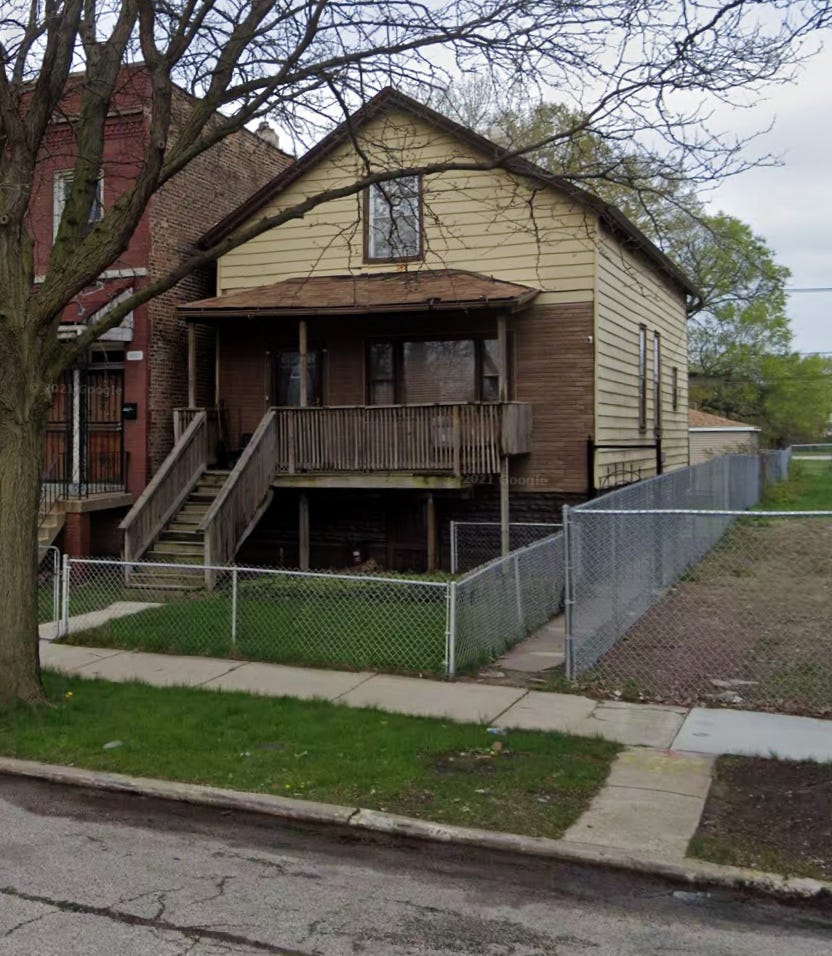
Hippie House
The President of the United States ended his threat to bring in armed military warriors into Chicago, and has swung his New Army of Th e Confederacy around, and is head to Memphis Tennessee. The Red States hunger for a victory after the surrender of Robert E. Lee.
There are 400,000 churches in America. Some terrorist-killers have attacked churches. Today is Sunday. How many ministers will be depicting Christians as innocent victims who did nothing to provoke lunatic leftists – who Trump blames for the violence.
In 1972, four black veterans drove around a upscale neighborhood, and randomly chose a home and knocked on the door. They agreed they would slaughter all the occupants. My friend Joan came to visit her parents, and found them dead!
I created Cyber-Hippie House to be a safe place where people can study why the U.S. Government spent $10,000,000 billion dollars to destroy us. And, more taxpayer money is on the way – even though most of us our dead! The De Mau Mau were not hippies.
John Presco
“The black terrorist gang linked to nine recent Chicago-area murders planned to begin systematically killing white policemen, a high police authority told The Daily News Monday,” starts the News coverage.
On Tuesday, Mr. Trump appeared to already be backtracking on plans to send the guard to Chicago, saying he would be announcing he’d be sending troops to another city “very shortly.” He appeared to make that announcement on the Fox News morning show Friday.
“I’ll be the first to say it now, we’re going to Memphis,” the president said. “I would have preferred going to Chicago.”
Mr. Trump then said he had spoken to a man he refused to name but said is the president of Union Pacific railroad, who told him he should send the National Guard to Memphis instead. The president said this man told him when he visited Memphis he was not allowed to even walk a single block and instead had to be driven in armored vehicles because the city is so unsafe.

Retired insurance executive Paul Corbett, his wife Marion, her adult daughter from a previous marriage, and Mrs. Corbett’s sister were “riddled” with bullets in the pantry of their 14-room mansion on a secluded, wooded 30-acre estate.

“It is a tale straight from the annals of the Sharon Tate massacre,” read one Daily News story.
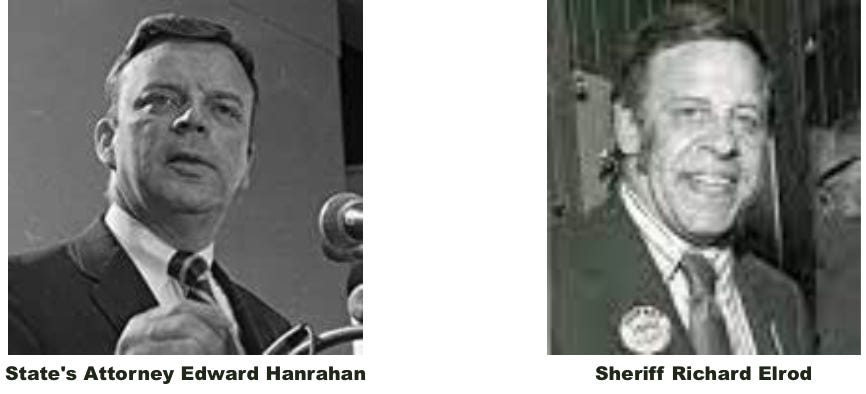
At an unusual joint Sunday press conference with Cook County Sheriff Richard Elrod and State’s Attorney Edward Hanrahan, “The organization was described as a band of ‘aimless revolutionaries who hit usually after they get high on pot’ by officials from some of the seven police agencies that worked together on the case.
“The killings were even more vicious because of the random method in which the victims were chosen,” said Elrod, who supervised the investigation. “It appears as if they were roaming the countryside looking for someone to kill.”
Black Mau Mau’s Killed Our Friend’s Family


Joan Corbett was a good friend of my ex-wife and myself. She suffered from severe alcoholism due to her PTSD she acquired after coming home for Thanksgiving, and finding her family slaughtered. These latest shooters have targeted people of color. The Mau Mau Murders should be be labeled a ‘Hate Crime’.
Joan was at my wedding. Mary Ann allegedly was the wife of Thomas Pynchon, whose novel ‘Inherent Vice’ swirled around the Manson murders. It is clear I have been doing battle to the Real Bad Guys. I survived a hit by a Mafia associate.
I am going to contact Quentin Tarantino and see if he wants to co-author a story on the Mau Mau Murders.
John Presco
Copyright 2019
CHICAGO, Oct. 15 — Eight members of a group called‐“De Mau Mau” gang, which was formed by dishonorably discharged black veterans of Vietnam, were charged today with nine murders, including the mass slayings of two white families.
The police said that the murders, which date to last spring, appeared to have been racially motivated and were linked by ballistic tests.
Six of the eight accused men, wearing Army fatigue jackets, were arraigned early today. The suspects, described by Cook County Sheriff Richard J. Elrod as “the gang leaders and the triggermen,” were held without bail in Cook County jail. Two other suspects were being sought.
Several of the suspects were expelled last spring from Malcolm X University, a city university on Chicago’s West Side where one official described them as “bitter and full of hatred.”
“We are hopeful we can solve a number of other terrible killings in the area,” Mr. Elrod said.
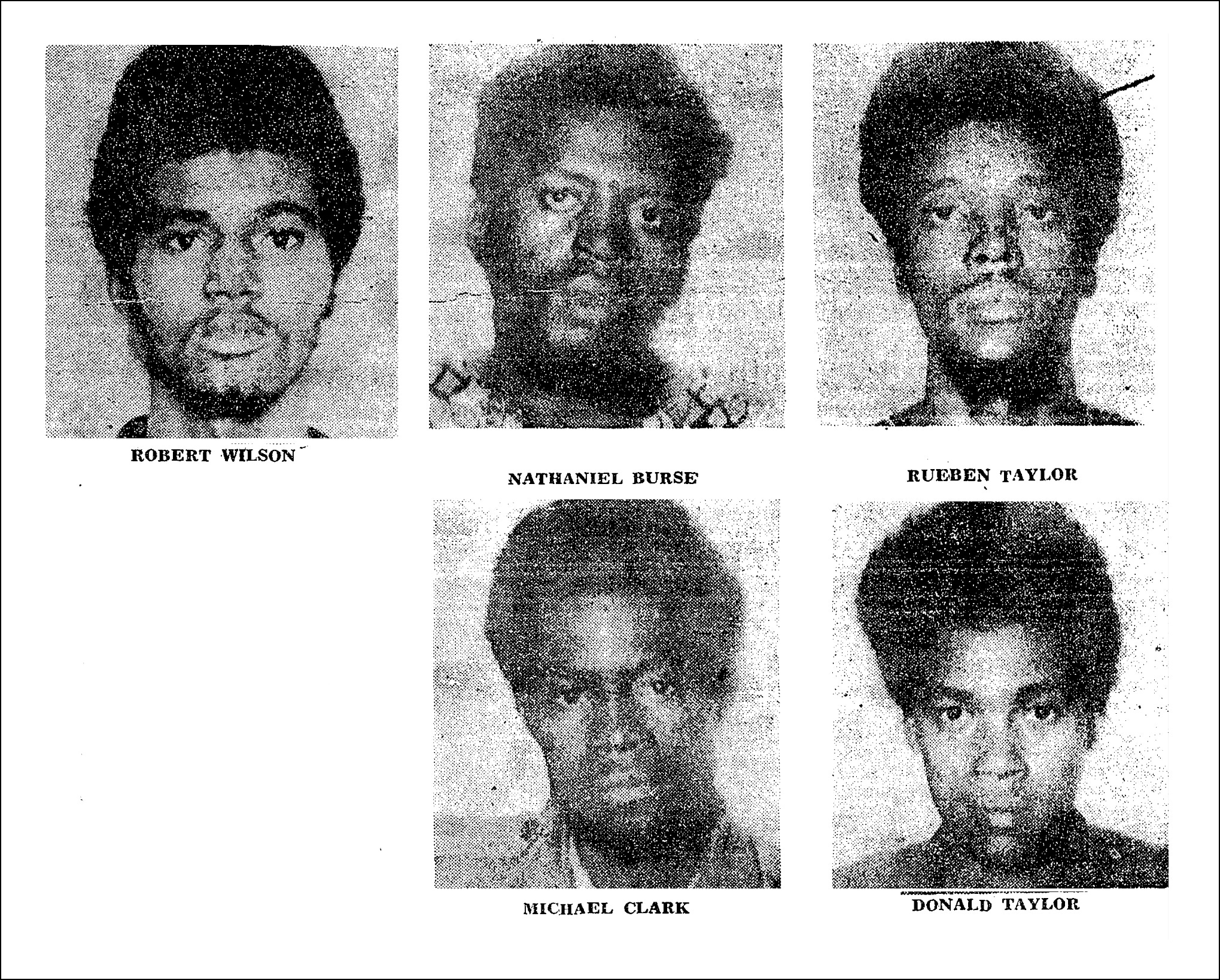
He identified the six arrested men as Reuben Taylor, 22 years old; Donald Taylor, 21; Michael Clark, 21; Nathaniel Burse, 23; Edward Moran Jr., 23, and Robert Wilson, 18, all of Chicago.
The six were charged with the slayings of Paul Corbett, a retired insurance executive, and his wife, stepdaughter, and sister‐in‐law in their Barrington Hills home near Chicago; three members of the Stephen Hawtree family in Monee, Ill.; Army Specialist 5 William Richter, in Highland Park, Ill., and Michael Gerchenson, a Southern Illinois University student whose body was found near West Frankfort, Ill. All the victims were white.
Dr. Charles G. Hurst Jr., president of Malcolm X, said that members of the gang were expelled from the school last spring after they had beaten up students and intimidated teachers.
‘It Was Pure Terror’
“It was pure terror,” Dr. Hurst said. “Members of the Mau Mau would intimidate and beat up students and teachers. They were just frustrated, bitter young men.”
In the spring members of the group were expelled from the college. The ritual hand clasp of the gang was barred from the campus.
Dr. Hurst said that the group had formed in Vietnam and that the men got together when they returned with dishonorable discharges to the United States. He said that he had no idea how many members were in the gang.
“There never seemed any motivation in their violence. They were desperate men venting their frustration within the school. They had no way of living, no way to make money, no saleable skills,” Dr. Hurst said.
‘Disqualified From Society’
“The men had been disqualified from society,” he said. “They were into drugs. The Mau Mau was just bitter men left to wander aimlessly.
“It was never a political group. I don’t think it had to do with color or race. It was just plain hatred.”
At a news conference earlier, Sheriff Elrod told newsmen that four members of the gang had been previously arrested and charged with possession of marijuana.
“We had a good tip these linen might be involved in some of the unsolved crimes in the state,” he said. “After questioning, one lead led to another and we were able to charge four more members of the gang. We expect more arrests.” The sheriff added:
“We have the ringleaders and the triggermen now. We are hopeful we can solve a number of other killings in the area.”
Two of the men arrested were karate experts, the police said. The two had been arrested earlier by task force policemen after they attacked an undercover decoy in the subway, the police said.
“There’s not much I can say,” Dr. Hurst said. “I don’t know if these men are guilty. But it is all so tragic.”
Share this:
Royal Rosamond Press
50 years later: How the De Mau Mau murders changed Barrington Hills
Posted August 04, 2022 5:00 am
Fritz Gohl remembers growing up in Barrington Hills during the 1950s and 1960s when nobody locked their doors. That changed on Aug. 5, 1972, after residents of the affluent Northwest suburb awoke to the news that four of their neighbors had been murdered in their home in what appeared to be a robbery gone wrong.
The tragedy, which unfolded 50 years ago Thursday, claimed the lives of 67-year-old Paul Corbett, a retired insurance executive; his 58-year-old wife, Marion, a pianist and composer; her daughter Barbara Boand, 22; and Marion’s sister Dorothy Derry, 60.
One police officer described the killings as “wholesale slaughter.”
Coming 10 years before the Tylenol murders based in the suburbs and more than two decades before the Brown’s Chicken massacre in Palatine — seven were killed in each of those cases — the shooting deaths of four people inside a Barrington Hills estate dispelled the notion that the suburbs were somehow immune to the staggering violence that affects other communities.
In the aftermath, families bought guns and guard dogs, said Gohl, a Barrington Township trustee who previously served 16 years as a Barrington Hills village trustee.
“People were quite concerned,” Gohl said. “Was this random, or was something else involved?”
Random evil
In a 1972 report, Time magazine compared the slayings to the 1969 Tate-LaBianca murders committed by the Manson Family and quoted then-Cook County Sheriff Richard Elrod positing that racial hatred “could have been one of the primary motives” for the murders. While the victims were chosen at random, published reports focused on the fact that the victims were white and the assailants were Black.
It all began when four strangers showed up at the Corbett house on Aug. 4, 1972, asking for directions.
Donald Taylor, his brother Reuben Taylor, Michael Clark and Nathaniel Burse were 20-something Vietnam War veterans identified as members of De Mau Mau, a loosely organized militant group whose members were implicated in slayings in Highland Park, Monee and southern Illinois. Authorities said the crimes were racially motivated.
The men drove from Chicago on the Northwest Tollway in search of victims and ended up at the Corbett home. Donald Taylor knocked on the door and pointed a .25 caliber pistol in the face of Marion Corbett, according to a 2016 Illinois Prisoner Review Board report from attorneys seeking parole for Reuben Taylor.
The home invaders forced the victims into the pantry at gunpoint, ripped out the telephone cord and demanded money and jewelry, according to the report. After the men ordered the victims to lie face down on the floor, one of the family dogs began barking.
Donald Taylor threw a knife at the dog, injuring him. When Boand yelled at him to leave the dog alone, Reuben Taylor shot her in the chest, killing her. The men subsequently shot the remaining victims.
The bodies were discovered later that evening by Boand’s brother, Anthony, when he arrived to return a borrowed car.
The Taylor brothers and Clark were convicted of the murders in 1974 and sentenced to more than 100-year terms. Burse was killed in the Lake County jail, where he was being held on another matter.
Donald Taylor died in prison in 1991, according to the Illinois Department of Corrections.
On the website of the Uptown People’s Law Center in Chicago, former intern Arielle Tolman described working on Reuben Taylor’s 2017 appeal before the Prisoner Review Board. She characterized De Mau Mau as a group formed by Black Marines who served in Vietnam in response to the racism they experienced. According to Tolman, the Chicago branch was a loosely organized group established to “foster Black consciousness.”
In the wake of such racially charged Chicago events as the riots after the 1968 assassination of Dr. Martin Luther King Jr. and the 1969 murder of Black Panther co-chairman Fred Hampton, the Barrington Hills murders fostered “a full-blown racial panic,” she wrote. That perception was fueled by elected officials characterizing De Mau Mau members as coldblooded killers.
Ultimately, Reuben Taylor was paroled on April 27, 2018. Clark was paroled on July 3, 2019. Information on their post-parole lives was not available from the Illinois Department of Corrections.
No community is immune
Cases like the Barrington Hills murders fall outside the norm, said criminologist David Olson, a Loyola University professor of criminal justice and co-director of its Center for Criminal Justice Research.
The typical homicide takes place in a large, urban area, and the victims and perpetrators have some kind of relationship, meaning they are known to each other. For that reason, homicides in suburban and rural areas, where the victims and perpetrators aren’t known to each other, achieve a level of notoriety, Olson said.
“It strikes fear in people’s minds that criminals go looking for victims, and that’s not necessarily the case,” Olson said, adding that the randomness makes people fearful.
Tougher sentences and increased resources for law enforcement result from such crimes, said Olson, who studies how crime affects policy.
“At the community level, it can result in concerns about outsiders, people who don’t look like they belong,” he said, leading residents to purchase security systems and firearms. In the individual, it can create trauma that “has a profound effect on people and can last generations,” Olson said.
It creates a feeling that “even if you lock your doors, you’re still not safe,” he said.
Olson, who lives in Arlington Heights, looks at it this way: “Is Chicago dangerous? Not all parts of it. Is Arlington Heights safe? Is Schaumburg safe? Yes. Are there certain parts that are less safe? Yes,” he said, “But again, it’s not random. It’s people who know each other who are victimizing each other.”
No community, said DePaul University Professor Geneva Brown, is immune to violence. And the randomness of the Barrington Hills murders doesn’t mitigate its horror.
“It doesn’t minimize the pain and the actual violence that was meted on the family. It was a horrible crime,” said Brown, who posits that poverty, alienation, anger and disillusionment may have factored into the assailants’ motives.
“I can’t explain why the crime happened, only the potential societal motivations that may have been an aspect of it,” she said. “We have to brace ourselves for the social conditions that created the randomness of violence, whether it’s in Barrington or on the South Side of Chicago.”
The challenge is to prevent this kind of tragedy from happening in any community, Brown said. That means addressing “the underlying conditions that created the alienation, psychological trauma and disassociation to mete violence out for your own economic gain, or for the warped idea that you can take what doesn’t belong to you simply because you don’t have anything.”
Regardless of motive, Barrington Hills Police Chief Joseph Colditz, who joined the department in 1998, said the murders serve as a reminder that no community is immune from violent crime.
“These things can happen anywhere,” he said. “It’s important to stay vigilant in terms of security and safety.”

March 24, 2017
A Black Vietnam Vet from Chicago, an Embattled State’s Attorney, and the Panic Over the “De Mau Mau Murders” of 1972
byAri Tolman, former UPLC Legal Intern
Introductory Note: On March 23, 2017, I represented Reuben Taylor before Illinois’ Prisoner Review Board (our version of a parole board). After lengthy discussion, the Board voted 6-8 to deny Mr. Taylor parole.
Emblematic of the feeling of several members of the Board was a statement made by Mr. Johnson explaining his vote. He stated that he had interviewed Mr. Taylor several times, and liked him a lot. There was no question in his mind that Mr. Taylor was ready to be released from prison, and if the Board were to release him, Mr. Johnson would even welcome him into his home. However, Mr. Johnson explained that he was nonetheless going to vote against granting Mr. Taylor parole, because he could not get past the crime he committed.
In the following paragraphs, former UPLC intern Arielle Tolman describes her work on Mr. Taylor’s case and the larger implications of the case. I believe it also helps explain Mr. Johnson’s seemingly inexplicable rationale for voting “No.”- Alan Mills, Executive Director of the Uptown People’s Law Center
—————————————————————————————————-
Reuben Taylor is 66 years old and has spent the last 43 years of his life behind bars. Each time he is up for parole, the Parole Board expresses concern over one mysterious aspect of Mr. Taylor’s case: his membership in a group of Black Vietnam veterans called “De Mau Mau.” My task was to dig into the available documents, locate witnesses, and develop evidence we can provide to the Prisoner Review Board of the true nature of the De Mau Mau.
I’ve conducted interviews with Black Vietnam veterans in Chicago, with former members of the Illinois Black Panther Party’s De Mau Mau Defense Committee, and with historians who have studied the time period. Mr. Taylor’s life can tell us about the history of racism in America, the violent crackdown on the Black Power movement in the early 1970s, and the potential for a prisoner’s personal transformation—despite being incarcerated in a brutal system designed only for retribution and incapacitation. Mr. Taylor gave permission to share his story to raise awareness about his case and the other “C-Number” prisoners still languishing in cages after decades and decades.
When I had the chance to meet Mr. Taylor in person at Dixon Correctional Center, he looked older than I imagined, but was just as courteous, peaceful, generous and respectful as his petition for parole described him. As he recounted his life story, and I began to comb through all the news articles about De Mau Mau and his case, Mr. Taylor’s release from prison became even more important to me.
Early Life: Racism in Mississippi, Chicago, & Vietnam
Reuben Taylor was born June 5, 1950 in Jackson, Mississippi. At the time, his parents were students at Jackson State University. His mother would go on to become a schoolteacher in Chicago Public Schools, and his father, a supervisor at the post office. Mr. Taylor reflected that he took for granted that he would go to college one day; in his youth, he had little understanding of how unusually successful his family, which included doctors and lawyers, was in a place and time where many Black families in the South subsisted on meager sharecropping income. Mr. Taylor’s parents instilled in him a drive to push for more in life.
Mr. Taylor’s family grew bigger as his parents had three more children. In the hope that they could escape the crippling racism of the deep South, they found a home in the North Lawndale neighborhood of Chicago. Mr. Taylor excelled in school as a young child. He avoided all involvement with gangs, and became a Boy Scout and a proud member of the school’s color guard. However, his success put him in conflict with his surroundings to an extent that even his parents did not totally understand. Carrying his books home from Marshall High School, he became a target of neighborhood gang members. Mr. Taylor was hospitalized after a brick was thrown at his head as he attempted to fend off an armed robbery by the Vice Lords, the gang that controlled his neighborhood at the time. In another incident, he was almost killed when members of the Gypsy Cobras tried to throw him over the expressway overpass. He began to feel emotionally hurt and angry, and that there was nowhere he could turn for help. Nevertheless, Mr. Taylor consciously chose not to turn to violence, and resisted joining a gang for “protection”.
Concerned for his and his brothers’ safety in the neighborhood, Mr. Taylor’s parents sent him and his brothers back to Mississippi to stay with relatives for a number of summers. There, however, Mr. Taylor saw the horrors of the Ku Klux Klan and overt racial segregation firsthand. These experiences—of gangs at home in Chicago and overt racism in the South—made him feel that there was no getting away from violence wherever he went.
When Dr. Martin Luther King died in 1968, his neighborhood went up in flames—destruction which remains evident today in the hundreds of vacant lots throughout Lawndale. He became resigned, concluding there was a good chance he was going to die young: either on the streets of Chicago, or in combat in Vietnam. The war at that point was in full conflict, with the draft scooping up more and more teenagers from poor communities, where residents did not have access to college deferments, or cooperative doctors who would provide a medical exemption.
In 1969, Mr. Taylor enlisted in the Marines. He did so as part of a family tradition: his father and uncles had served in WWII. However, it turned out that the Marines did not provide a refuge from racism. Mr. Taylor discovered that military bases in Vietnam were extremely racist. Confederate Flags proliferated. It was a hostile environment, and there were racial groups formed for self-protection. One of those groups was formed by Black Marines in Vietnam, who took the name “De Mau Mau.”
Mr. Taylor’s experience with the racism that pervaded the military came to a head one day in the chow line. A white fellow Marine was serving roast beef, but only gave Mr. Taylor fat. When Mr. Taylor asked for meat, reaching over to grab it, the server whipped around and slammed a carving knife into Mr. Taylor’s hand. It severed his right middle finger and Mr. Taylor was rushed to the hospital. His finger was reattached, and he went through weeks of physical therapy.
While Mr. Taylor was in his hospital bed in May of 1970, reports of the Jackson State massacre/a> came on his television. Police and National Guardsmen—Mr. Taylor’s military colleagues—fired more than 150 rounds of live ammunition into a group of student protestors at the predominantly Black college. This was the college his parents had attended, where friends and relatives were students, and where his uncle was president of the university. Mr. Taylor began to question why he was in the service fighting for his country when that same military was slaughtering Black Americans back home.
Mr. Taylor felt directionless. He enrolled at Malcolm X Community College and started to study inhalation therapy. Although he had not joined De Mau Mau in Vietnam, he did in Chicago. The Chicago branch of the De Mau Mau was a loose confederation of about 10-15 Black veterans. The group in Chicago, as in Vietnam, functioned as a fraternity, a way for these men to look out for one another, to foster Black consciousness, and to build a sense of African-American history. The group’s name borrowed from both the anti-colonial Kenyan Mau Mau rebellion as well as from the Vietnam word “di mau,” meaning to go, or leave.
While at Malcolm X, Mr. Taylor was still suffering from PTSD from Vietnam. Battling his residual trauma and faced with a poor employment outlook, Mr. Taylor began to lose interest in his studies. He became more frustrated and bitter about the structural racism he continued to face in America.
On August 5, 1972, Mr. Taylor made a terrible choice that would destroy the lives of four innocent people. With his brother, Don Taylor and two of their friends, Mr. Taylor drove to the affluent Chicago suburb of Barrington Hills. They randomly selected a house to rob, motivated in part by ideologies that white wealth in America was illegitimate, built on centuries of exploitation of Black people. Mr. Taylor earnestly contends that his only intention that night was to steal property; nevertheless, the events spiraled out of control.
When the men knocked on the door, a woman answered and they pointed a gun in her face. They put her and three of the other adult members of the family in the pantry while they began to collect money, watches, and jewelry from the home. At one point, a dog started barking. Mr. Taylor’s brother Donald threw a knife at it, at which point one of the women, Ms. Boand, jumped up and started yelling at them. Mr. Taylor shot her in the chest. Shortly after, Donald and his friends executed the other three members of the family. Mr. Taylor and his co-defendants were arrested in October of that year and ultimately found guilty of the armed robbery and murder of the family. Mr. Taylor was sentenced to 150 years in prison.
The De Mau Mau Murders—Myth vs. Reality
The facts of Mr. Taylor’s case are nothing short of horrific. But other events in Chicago conspired to turn a horrific murder into a full-blown racial panic. On December 4, 1969, the co-chair of the Illinois Black Panther Party, Fred Hampton, was assassinated by the Chicago Police with the cooperation of the State’s Attorney and the FBI. In November, 1972, the Court of Appeals vacated the convictions of the “Chicago 7”—charged with inciting the riots at the 1968 Democratic Convention in Chicago. In 1977, the civil rights case brought by Fred Hampton’s family was dismissed by the District Court in Chicago. This entire period was characterized by massive political and racial upheavals.
Against this background, Mr. Taylor’s case received national news attention. His crime—the armed robbery and murder of a single family—was reframed not as a robbery-gone-wrong but instead as one of a national Black uprising featuring racially- and politically-motivated random killings. In particular, in newspapers at the time, much was made of Mr. Taylor’s and his co-defendants’ membership in De Mau Mau.
Media accounts of the depth of the group’s membership and the nature of the group differed dramatically depending on the source. At the time of Mr. Taylor’s trial, the Defense Department called the De Mau Mau a “small, informally organized group” of Black Marines, mostly in Vietnam. Military authorities in Saigon said that “no trace had been found of any black servicemen participating in any race hate organizations.”
Veterans themselves viewed the De Mau Mau, as a “party or organization;” a “non-violent group which was formed to combat white racism in the military service, particularly in Vietnam.”
In contrast, Chicago Sheriff Richard J. Elrod claimed there was “mounting evidence of a nationwide network of De Mau Mau organizations.” The Cook County State’s Attorney, Edward Hanrahan, characterized the De Mau Mau as a collection of “wanton, coldblooded, racist killers” and as a “black terrorist group.” The law enforcement portrait of De Mau Maus has survived over the years among white supremacist groups, who cite the De Mau Mau murders as “evidence” of racially-motivated Black violence against white people.
The Southside Chicago branch of the NAACP reacted to the Sheriff’s and State’s Attorney’s assertions that murderous Black Americans were “roaming the countryside looking for someone to kill whites at random,” and press coverage of the same ilk, with outrage, arguing that such statements were “totally criminal and irresponsible.” Similarly, at a news conference, the Illinois Black Panther Party defense minister, Bobby Rush, criticized the handling of Mr. Taylor’s case by the “racist mass media” and “lawless law enforcement” who he argued “attempted to convict the members of the Mau Mau even before the ink was dry on [their] charge sheets.”
The Black Panther Party established the De Mau Mau Defense Fund in order to ensure that Mr. Taylor and his co-defendants got a fair trial in light of the vitriolic press coverage of their alleged crimes, and to raise awareness about the racism that Black servicemen faced upon their return from Vietnam. Reverend Jesse Jackson, the president of Operation PUSH, also accused the press and law enforcement of “playing politics with the lives of black people.”
Given these prominent statements by public officials and press accounts of De Mau Mau, despite the significant pushback from Chicago’s Black community leaders, members of the Prisoner Review Board in Mr. Taylor’s case continue to feel confusion and suspicion over Mr. Taylor’s association with the De Mau Maus.
Mr. Taylor’s Prison Record
Mr. Taylor has now been incarcerated for almost 45 years. He is 66 years old. He has repeatedly acknowledged the horrific nature of his crime, and accepted responsibility and his punishment for his involvement. Mr. Taylor deeply regrets having caused senseless destruction and pain to the family. He has worked over the years to develop emotional intelligence and to understand how he ended up committing such a horrible act. Although he does not expect forgiveness from the family, he is genuinely sorry for the pain that he caused. In an unsent letter to the victims’ family, Mr. Taylor wrote: “I emphatically assert that mere words cannot adequately express the heart-felt remorse I feel now, and have felt for many years, at being the instrument of destruction that took the lives of [others].”
Over the four and a half decades of his incarceration, Mr. Taylor has become deeply introspective and a model prisoner. He’s earned a Bachelor’s of Science degrees while in prison, and became a certified optician in 2011. Mr. Taylor has worked in the optical industries in various capacities at Dixon for over 28 years. He’s become fluent in computer programming languages C++, Java, and Python. He taught himself to play tenor saxophone while incarcerated and he now plays in the prison’s jazz and Latin bands. Mr. Taylor practices yoga and meditation to relieve stress. On his behalf, former correctional officers have written to the Parole Board with praise for what a dependable and conscientious worker he is and how supportive they are of his release, as have other community members, former prisoners, and his family. He has arranged ample vocational and housing support in Chicago should he be released.
Black Veterans, White Panic
With Alan Mills and UPLC’s Prisoner Rights Coordinator, Brian Nelson, I pursued a multi-pronged strategy: interviews with Mr. Taylor and other Black Vietnam veterans from Chicago who participated in and/or had knowledge of the De Mau Mau group, as well as former members of the Illinois Black Panther Party’s De Mau Mau Defense Fund committee; reviewed published works and interviewed historians who have studied De Mau Mau. I also submitted FOIA requests to obtain any records on De Mau Mau collected by the FBI, Chicago Police Department, Cook County Sheriff, and Cook County State’s Attorney Office.
This work is ongoing, as it may take over four years to obtain federal government records, but what I’ve found so far has been clear: De Mau Mau was not a terrorist or violent organization. Statements made by the former State’s Attorney Hanrahan and Sheriff Elrod alleging that Mr. Taylor was part of any kind of nationwide terrorist network were politically motivated and untrue. His case garnered widespread press coverage because Mr. Taylor and his co-defendants’ crimes appeared to confirm pre-existing fears that Black veterans were especially prone to violence, and helped to authorize the violent law enforcement crackdown on the Black Power movement.
My interviews with veterans and historians provide support that De Mau Mau was one of several groups established in Vietnam by African-American soldiers to oppose the racism they encountered within the military. Historian Richard Moser, the author of the book, The New Winter Soldiers, found that De Mau Mau, like other groups, was a localized, informal organization that provided mutual support and self-help for Black soldiers. The Black soldiers who joined De Mau Mau were influenced by the Civil Rights Movement, and by the language and politics of the Black Power and Black Pride movements. As such, De Mau Mau was rooted in a shared culture more than it was by any explicit ideology. The decentralized nature of these organizations was typical of many dissident organizations inside the military at the time. This decentralization and informality was a response to the limits on democratic expression imposed by military law and command structures, and provided dissident leaders and members with protection against retaliation.
According to oral history testimony regarding the Marine Corps in the early 1970s, De Mau Mau was formed in part to educate Black people about the laws of the Marine Corps. In Vietnam, De Mau Mau members functioned as informal law librarians for their fellow soldiers. Occasionally, the members were also involved in political protest if a Black soldier faced disciplinary action and there was justifiable doubt about his guilt.
Charlotte Cahill who obtained her PhD in History from Northwestern University several years ago, found in her dissertation research that by 1968, racial tensions in the U.S. military eclipsed government officials’ initial hope that the service of Black troops in the Vietnam War would provide a pathway for racial integration and opportunity. Black G.I.s experienced extensive institutional and individual racism in the military: they were promoted infrequently, often served in especially dangerous roles, and were treated more harshly in military courts. When they returned home, many Black veterans found that their military service had done little to improve their civilian lives: they experienced police brutality and a lack of economic opportunity stateside, problems made worse by persistent stereotypes about Vietnam veterans.
As Black veterans increasingly expressed their dissatisfaction with the inequality even for those who had served their country in the military, some Americans worried that they would respond to injustices with violence. This fear was encouraged by sensational national and local media coverage of Black veterans that conflated discussions of civil rights and Black radicalism with the common stereotype that all Vietnam veterans were unusually inclined to violence.
Press coverage of Mr. Taylor’s case brought together these particular concerns about Black veterans with broader societal concerns about the rise of Black radicalism, and combat-hardened, violent Vietnam veterans who were unable to readjust to civilian life. The fact that the majority of Black Vietnam veterans were peaceful and productive members of American society did little to halt the national panic over the alleged De Mau Mau gang in Chicago.
Cook County Sheriff Richard J. Elrod and State’s Attorney Edward Hanrahan made statements about De Mau Mau that exaggerated the threat it posed to the nation. Importantly, at the same time that Mr. Hanrahan was prosecuting Mr. Taylor’s case in 1972, he was also running for re-election and standing trial for his office’s role in the murder of Fred Hampton. Therefore, because it fit neatly within the larger narrative that Black radicalism was a threat to white Americans, Mr. Hanrahan was in a position to personally and politically benefit from widespread panic over De Mau Mau, and this panic could help legitimize his office’s controversial actions.
Looking Ahead
Although Hanrahan ultimately lost his re-election campaignjust a month after Mr. Taylor’s arrest, the impact of his statements on De Mau Mau continue to be felt. The widespread public coverage of the De Mau Mau myth has created a cloud that continues to hang over the Prisoner Review Board, obscuring its ability to fully comprehend the circumstances of Mr. Taylor’s crime, and to see how remarkable his rehabilitation has been despite the overwhelmingly punitive nature of our penal system.
Working on Mr. Taylor’s case, and the De Mau Mau “mystery” in particular, has led me deep into databases and archives and history books. But revisiting 1972—a tumultuous period in American history where an innocent family lost their lives and Mr. Taylor was imprisoned—has not once felt like anything less than the most-timely and important task. My research has been tremendously eye-opening and it’s been humbling to get to speak to Mr. Taylor. I hope the Parole Board will witness his inner strength and wisdom to overcome the racism he’s faced, his crime, and his lengthy imprisonment to make the most of his life inside. My wish is that Mr. Taylor’s next appearance before the Prisoner Review Board will be his last.
The Nation: De Mau Mau
3 minute read
TIME
October 30, 1972 12:00 AM EST
The scenes evoked grisly memories of the Manson killings. In August, Retired Insurance Broker Paul Corbett, his wife and sister-in-law were found dead, each shot in the back of the head with a .25-cal. gun, in the pantry of Corbett’s $100,000 home in the fashionable Chicago suburb of Barrington Hills. A fourth victim, Corbett’s stepdaughter, was dead in the blood-spattered kitchen, shot in the chest with a .30-cal. weapon. A month later Machine Designer Stephen Hawtree, his wife and teen-age son were executed in a similar fashion in the basement of their rural home in Monee, Ill. In both instances there was no apparent motive for the slaughter.
Ballistics tests not only linked the two crimes but added two more. Police determined that the same weapons used in the Corbett and Hawtree killings were involved in the murders of Michael Gerchenson, 19, a sophomore at Southern Illinois University who was found shot to death in May on a stretch of highway near West Frankfort, Ill., and Specialist Five William Richter, 23, who was fatally shot in September while sleeping in a pickup truck parked next to an expressway in suburban Chicago.
Fearing that the murders were the work of a Manson-style gang, some residents of Barrington Hills were even said to have started carrying shotguns to cocktail parties. Last week the gang theory gained some credence. Chicago police announced that they had arrested nine black youths who are members of a little-known terrorist group that calls itself “De Mau Mau.”
Cook County Sheriff Richard Elrod described De Mau Mau as a group of disgruntled Viet Nam veterans. Racial hatred, he said, “could have been one of the primary motives” for the slayings. “I can see no other apparent motivation.” Chicago newspapers were quick to play up the case. Chicago Today, for instance, ran headlines declaring MURDER GANG 3,000 STRONG and DE MAU MAU TAKING OVER FOR THE PANTHERS. Sources close to the black-militant movement, however, called such charges preposterous, saying that De Mau Mau was a loosely organized group with less than 50 members.
They shared an elaborate greeting, a rapid meeting of hands, fists and elbows and a whispered chant in the ear, and a common suffering—a lack of jobs and opportunity. Barry Wright, president of the Concerned Veterans from Viet Nam, had met with some of those charged and says that they were bitter because “they couldn’t get decent jobs. The way the whole society had turned an about-face just turned them cold. Some people can deal with it and keep on scufflin’ every day. But some people it hurts, it affects them.” At the Concerned Veterans headquarters in Chicago, one unemployed black veteran said that he could understand the frustration of the accused: “You go to a job interview, and they ask what experience you have. What you going to do—tell ’em you’re a trained killer?” None of which, of course, is any rationale for murder.
At their arraignment last week, the suspects appeared with arms extended in the Black Power salute. But one of them muttered disconsolately to deputies: “I just don’t care. I hope I get the chair. I just want to get it over with.”
THIS CRAZY DAY IN 1972: De Mau Mau
October 16-22, 1972
Oct 23, 2022
To access all website contents, click HERE.

Why do we run this separate item peeking into newspapers from 1972? Because 1972 is part of the ancient times when everybody read a paper. Everybody, everybody, everybody. Even kids. So Steve Bertolucci, the 10-year-old hero of the novel serialized at this Substack, read the paper too—sometimes just to have something to do. These are some of the stories he read. Follow THIS CRAZY DAY on Twitter: @RoselandChi1972.

October 15-16, 1972: De Mau Mau Day 1
The brutal August mass murders of the Corbett family in northwest Barrington Hills become the De Mau Mau murders, starting October 15. This is the most colossal event in Chicago history almost none of our readers have ever heard of.

You’ll notice that Day 1 of De Mau Mau, despite the size of the headlines, is restrained and almost boring. It would quickly become blanket, sensational coverage that would draw immediate criticism. Analysis by the Chicago Journalism Review will come in December. We’ll cover it as it happens.
Because the De Mau Mau case was so massive in the moment, and because it will flare up this week and then mostly drop from view, today’s post will be mainly devoted to De Mau Mau coverage, with light items in between.
First, a recap:
Chicago was stunned in early August by the brutal murders of the Corbett family in luxurious Barrington Hills.
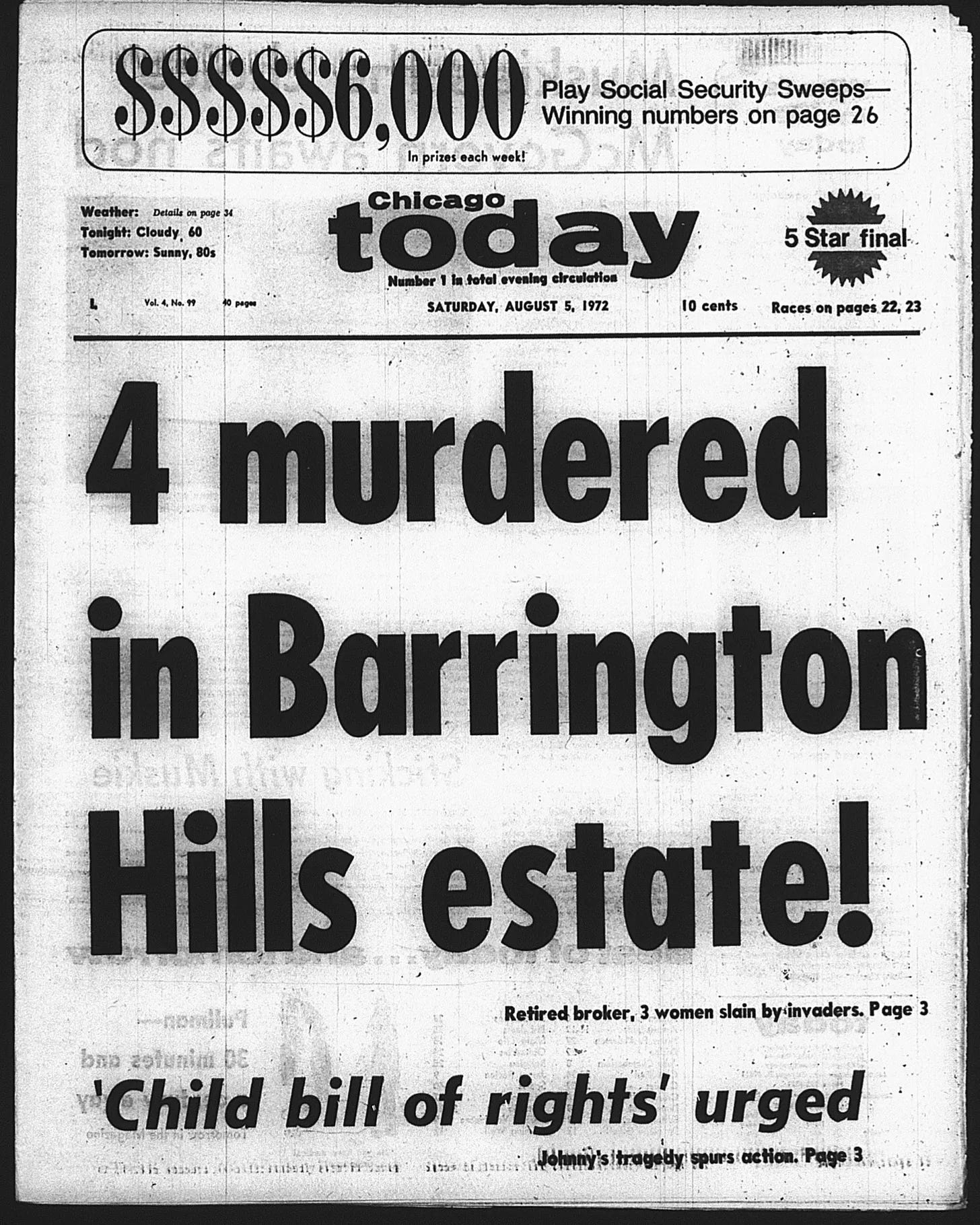
But after the initial shock of headlines starting August 5, the trail appeared to go cold as investigators in several agencies worked together on the case.
Retired insurance executive Paul Corbett, his wife Marion, her adult daughter from a previous marriage, and Mrs. Corbett’s sister were “riddled” with bullets in the pantry of their 14-room mansion on a secluded, wooded 30-acre estate.
“It is a tale straight from the annals of the Sharon Tate massacre,” read one Daily News story.
“It was the worst mass murder in the Chicago area since eight student nurses were slain on the city’s South Side in 1967 by Richard F. Speck,” noted the Tribune.
The initial coverage came Saturday, August 5, with follow-ups exploring the various initial theories and Barrington Hills itself on August 6. We learned that Mrs. Corbett’s sister, Mrs. Dorothy Derry, was invited to dinner with friends elsewhere that night, but didn’t like driving back home in the dark, so she declined and went to the Corbett’s instead.

Mrs. Corbett’s son walked into the murder scene when he arrived at the home later that evening. First, he noticed his aunt’s blue Mercury Montego parked in front. The driver’s side door was slightly ajar, so the interior light was on. The keys were later discovered under some nearby bushes.

Inside, Mrs. Corbett’s son said the pantry was “flowing with blood.”
The stories on August 7 noted that nothing was taken except $100 from Corbett’s wallet, even though there was jewelry and the garage held six expensive cars. Mainly, police wondered why nobody pulled a burglar alarm. There were several panic buttons around the house, including one right in the pantry.
On August 8, we read that when a landscaper talked to Paul Corbett on the phone that evening, Corbett must have been speaking with a gun to his head. A giant Daily News headline on August 9 claimed a break was near, but then…nothing. Even some guns retrieved from a nearby creek in mid August—seen thrown into the water by two men around the time of the murders—turned out to be a different caliber than the weapons used to kill the Corbetts.
Then on August 15 it looked like the police had two witnesses who could ID the murderers…but the next day they turned out to be a couple of drunk guys who got caught breaking into a garage and hoped to get a plea deal in exchange for fingering the Barrington killers.
Soon came another mass family slaying.

On Sept. 3, gunmen broke into the rural Monee home of the Hawtree’s late that night. They herded Stephen and Judy Hawtree along with son Thomas into the basement, and shot them all.

The thieves took nothing, it was reported at the time, and there was nothing really to take from the Hawtree’s modest split-level home.
“Stephen and Judy Hawtree never locked their doors,” was the striking lede in the Daily News.

Finally, on Sunday morning October 15, came the first De Mau Mau headlines in the Sun-Times and Tribune—for some reason, the afternoon Chicago Today didn’t cover this in its Sunday edition, and the Daily News and Defender don’t do a Sunday edition.
October 15


Chicago Sun-Times
by Art Petacque and Hugh Hough
“Sheriff Richard J. Elrod and State’s Atty. Edward V. Hanrahan announced Saturday night that seven young men were being held for questioning in connection with ‘several recent murders.’
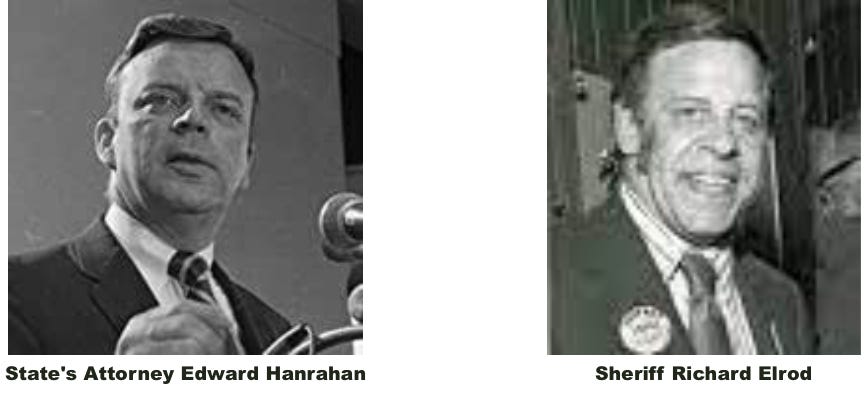
“The joint statement by Elrod and Hanrahan said the specific murder cases would not be officially listed until criminal charges are placed against the suspects.
“But the Sun-Times learned that the young men were being held as suspects in connection with 10 murders, including mass killings in Barrington Hills and Monee that claimed a total of seven lives.”
The murders involved, per the Sun-Times, are the Corbetts and Hawtrees, and three more:
—Kathleen Fiene, the 16-year-old Brighton Park girl shot near her home on June 23;

—Michael Gerchenson, the Southern Illinois University student from Highland Park, shot six times and found on May 3 near I-57 about 30 miles from campus;
—Army Specialist William Richter, shot while he slept in his pick-up truck on the shoulder of the Edens Expressway on Sept. 2.
“Names of the suspects, all young black men, were not disclosed immediately. Several reportedly are Vietnam war veterans.” More suspects are being sought.
The Sun-Times “learned that a palm print taken from the soldier’s truck is among the clues in the case….Although Elrod and Hanrahan remained close-mouthed on the details, the Sun-Times independently pieced together the following backgrounds on the case.”
Over two months, write Petacque and Hough, Sheriff’s investigators found that bullets recovered from the bodies of the Corbett family match the ones that killed Michael Gercherson and Kathleen Fiene, according to ballistics tests. Bullets from the body of Army Specialist William Richter matched those that killed the Hawtrees in Monee.
Subscribe for FREE to get new posts straight to your emailbox. The news from 1972 isn’t always this bad.Subscribe
October 16, 1972
Chicago Today: Goldblatt’s reupholstery ad
This is a small ad, but it caught my eye because I’m truly beginning to appreciate that Goldblatt’s does everything. Just everything. We’ll have to take a deeper dive into Goldblatt’s and its founders next year.

October 16, 1972
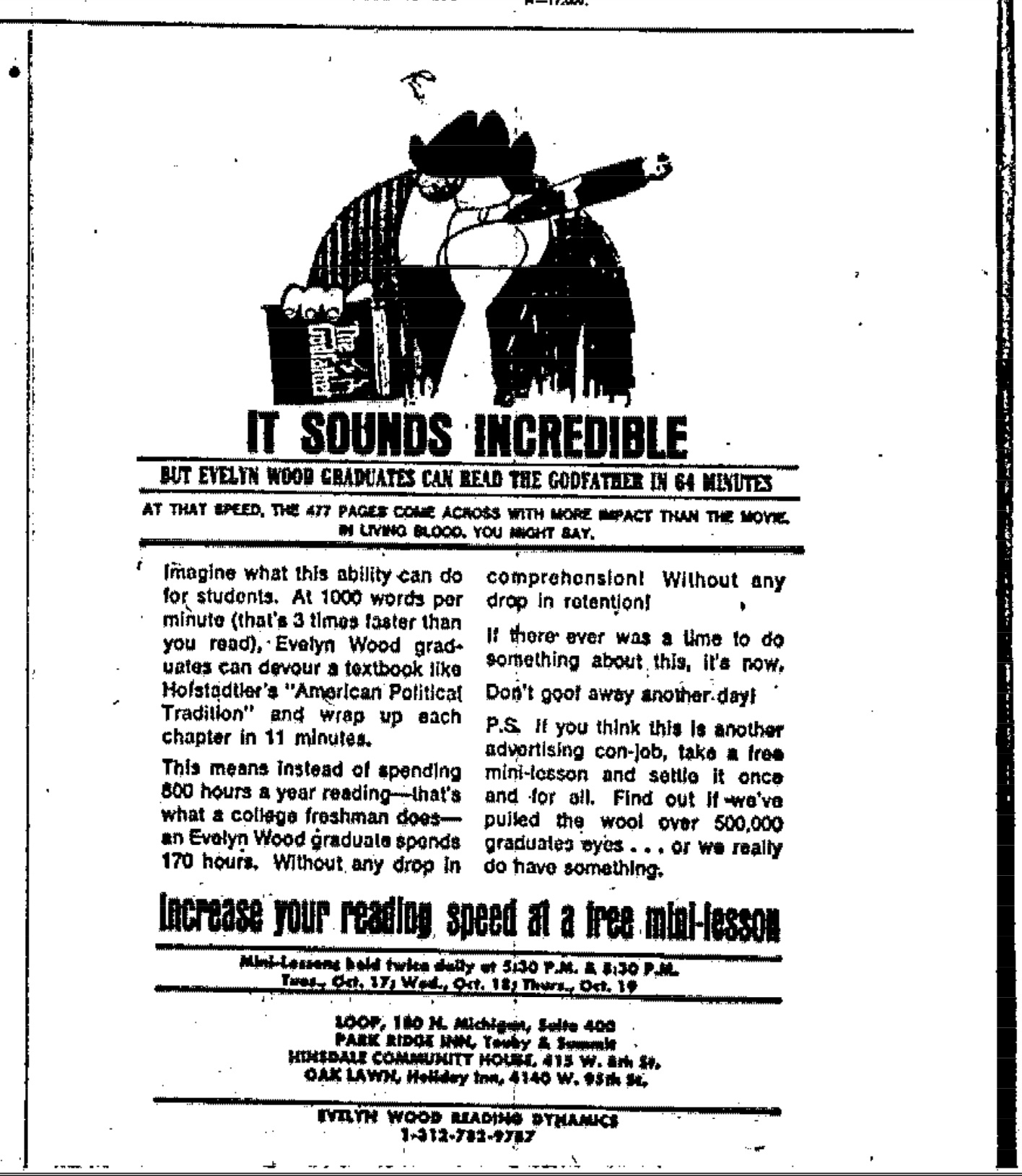
Chicago Today: Evelyn Wood ad co-opts “The Godfather”
In the early ‘70s, Evelyn Wood speed reading ads were as inescapable as Empire Carpets would soon become for the rest of the 20th century. Someone can correct me, but I would say Evelyn Wood was going strong for most of the decade, when people suddenly became very concerned apparently about how fast they read?
October 16, 1972
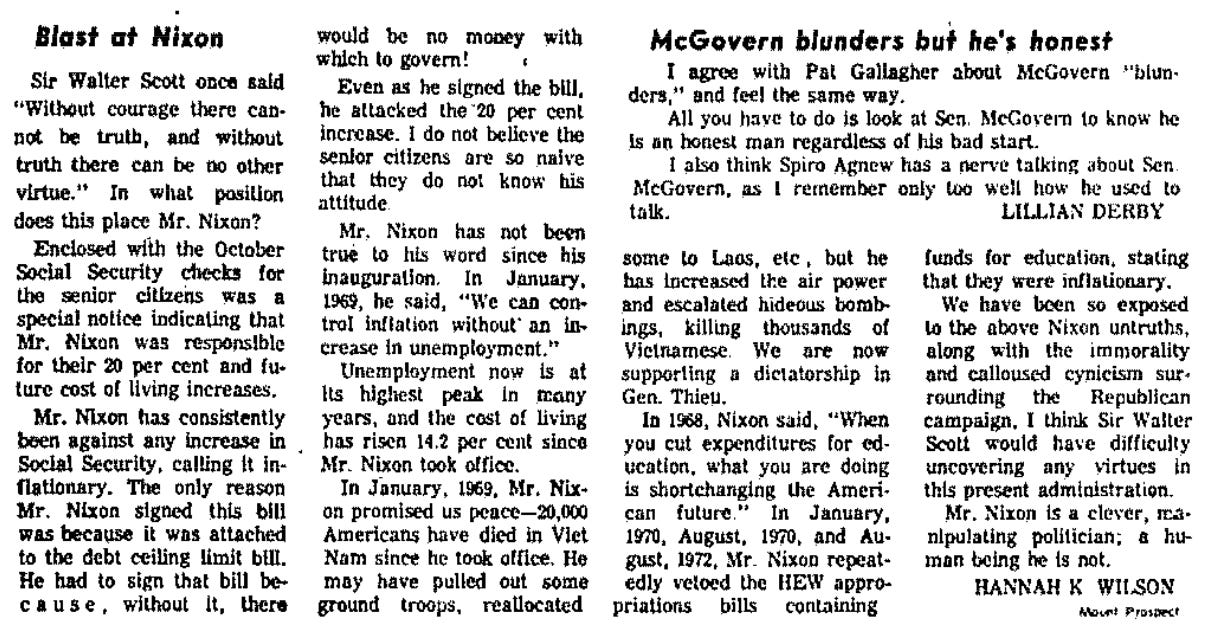
Chicago Today: Letters re Nixon and McGovern
Election Day is getting close.

The Candidates


October 16, 1972: De Mau Mau Day 2
Chicago Today

by Barbara Reynolds and Michael Hirsley
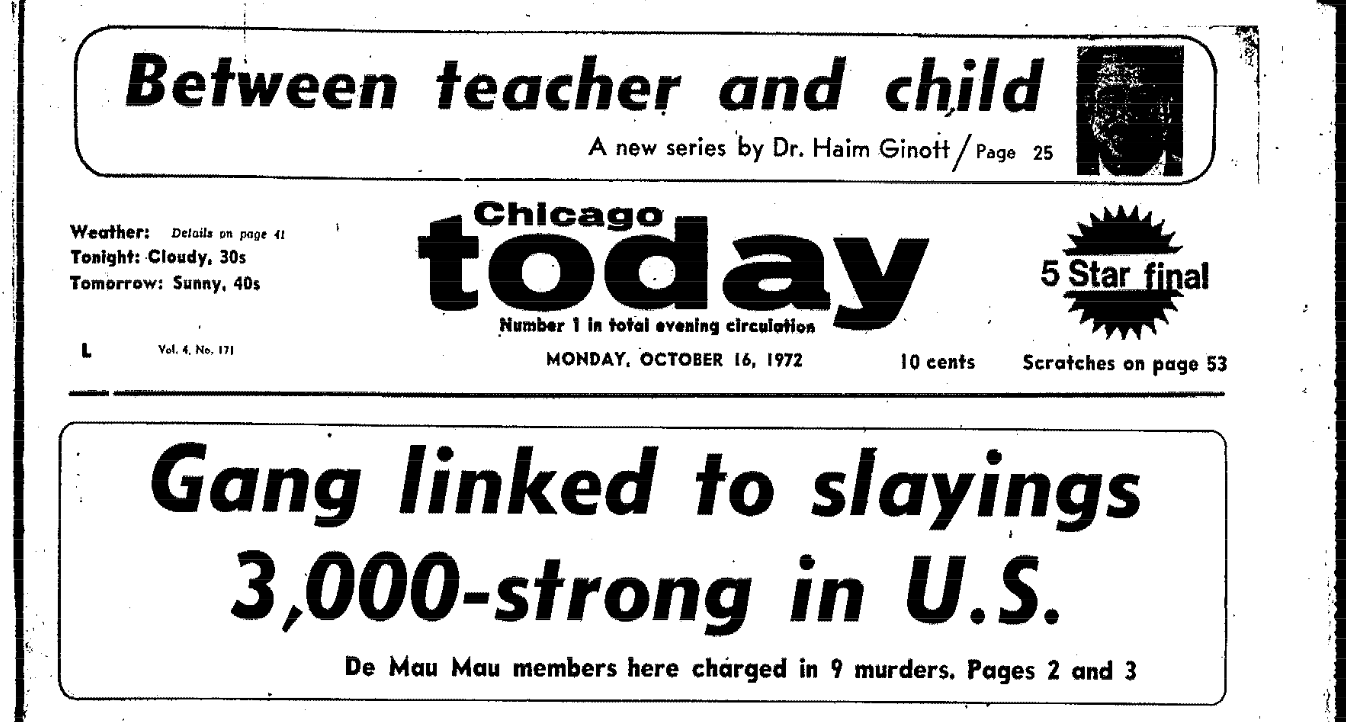
“A black organization, with a core of Viet Nam veterans trained to kill in combat and embittered by less than honorable discharges and no jobs at home, has been linked to at least nine murders in Illinois since May,” begins Chicago Today’s coverage on De Mau Mau Day 2.
“The organization is De Mau Mau. Police investigators here said the group has a nationwide membership of 3,000.”
Eight South Side men—two still fugitives—are charged with the murders of the Corbett family, Hawtree family, SIU student Michael Gerchenson and Army Specialist Willian Richter.
At an unusual joint Sunday press conference with Cook County Sheriff Richard Elrod and State’s Attorney Edward Hanrahan, “The organization was described as a band of ‘aimless revolutionaries who hit usually after they get high on pot’ by officials from some of the seven police agencies that worked together on the case.
“The killings were even more vicious because of the random method in which the victims were chosen,” said Elrod, who supervised the investigation. “It appears as if they were roaming the countryside looking for someone to kill.”

Police matched the “.30 caliber carbine shells” used in the Corbett murders with the gun that killed SIU student Gerchenson. Then they matched the .25 caliber gun that killed Army Specialist William Richter with a gun used in the Hawtree murders.
“The big break, however, came when police arrested a South Side youth and questioned him about a .25 caliber pistol he was carrying. As they discussed ballistics and the case they were building, the youth became their informant.”
The informant led the police to a car which they stopped last Thursday night. “Marijuana was found in the car, giving police a charge on which to hold the occupants. The .30 caliber clip was also found giving them a lead to further questioning.”
These “.30 caliber carbine bullets” are called “rare” and “manufactured in Britain and issued in Viet Nam to New Zealand and Australian troops”.
The six suspects in custody “all told police they were students at either Malcom X or Kennedy King Colleges.” They are:
- Donald Taylor, 7200 S. Parnell Ave.

- Taylor’s brother, Reuben (Ben) , 9719 S. Prairie Ave.

- Michael Clark, 7629 S. Normal Av.
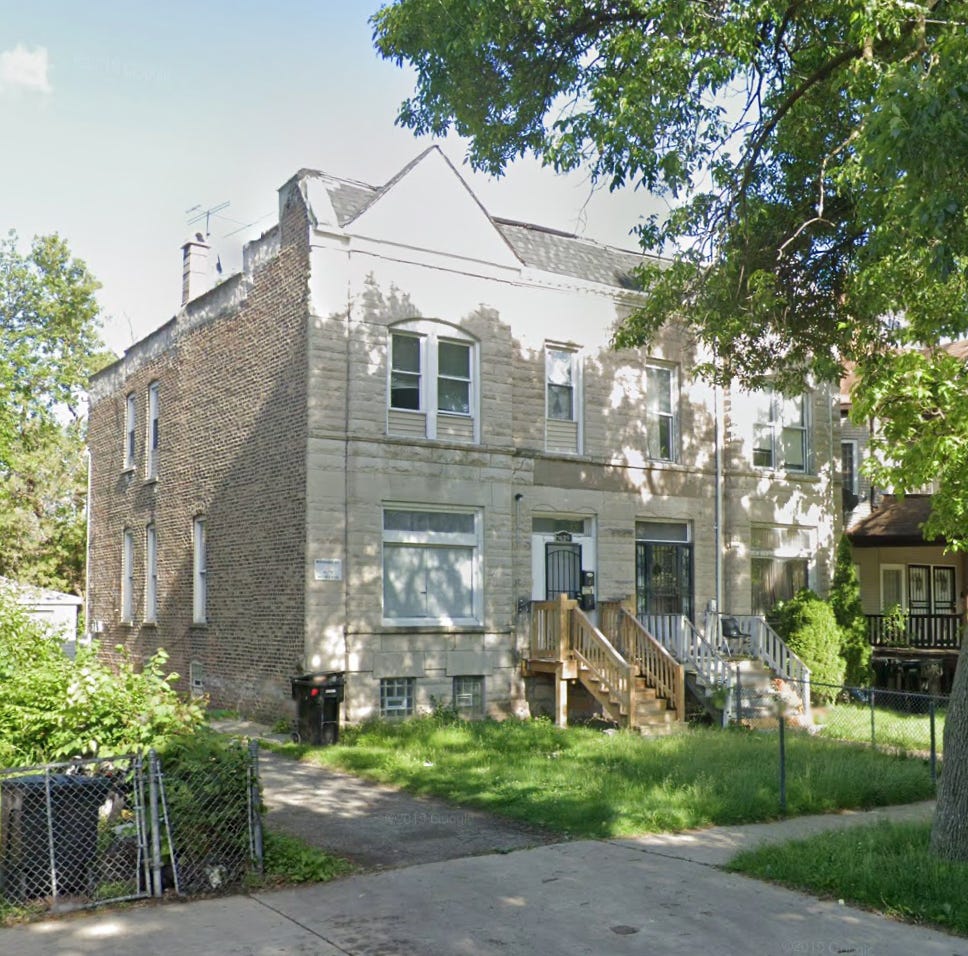
- Nathaniel Burse, 50 W. 71st St.

Edward Moran Jr., 8049 S. Paxton

Robert Wilson, 3651 S. Federal.

“Dr. Charles G. Hurst Jr., president of Malcom X, said Reuben Taylor was enrolled for classes last spring, Clark was enrolled in 1971, and Moran never officially enrolled but ‘hung around’ the college at 1900 W. Van Buren St.”
Hurst called the De Mau Mau men “a small irresponsible group within the larger veterans’ group at the school,” describing them as “an uncontrollable force of very bitter men”. Per Chicago Today, Hurst “estimated De Mau Mau strength at the school at 10 to 15 members before they were moved out this year” due to inadequate grades.

by Ronald G. Bergquist
Today’s Bergquist writes that “eight Chicago blacks charged with the murder of nine whites had banded into a murder-at-random group called De Mau Mau, according to police,” numbering 3,000 nationally and about 50 locally.
The name comes from the “Mau Mau movement in Kenya….the result of decades-old resentment by Kenya’s blacks over white settlers from Britain, who began the development of the area at the turn of the century.”
The “Mau Mau rebellion” began in the early 1950s and lasted about ten years, an “uprising by Kikuyu tribesmen directed at the British and other Europeans who owned and farmed land….Those who belonged to the Mau Mau—a Kikuyu word that means secret society— had to vow fearful, bestial and obscene oaths of loyalty to drive the whites from Kenya.”

by Jeff Lyon
“Revenge was the last thing on James Hawtree’s mind as he sat in the small rural home near Monee where terrorists slew his parents and younger brother 43 days ago,” writes Jeff Lyon.

“He spoke calmly last night about the arrest of six blacks, purportedly members of a violently anti white society…. ‘Of course I feel relief that they have been caught, altho I won’t know if they are guilty for sure until a jury hands down a verdict,’ said Hawtree, 24…. ‘But if they are guilty, I am not vengeful. I think anyone who does something like this would hardly be in an extremely healthy state of mind. Yes, they should pay a penalty but no amount of punishment can bring back my family.’
“‘Perhaps something good can come of this, if some people give a second thought to doing something constructive about the conditions that bring about tragedies like this. These men are veterans who cannot find a job. I know personally how hard a job is to get right now. I can’t find one and I have a collage degree. So where do you turn? Some might turn to a gun, terrible as it is.’”

Hawtree went on:
“Violence as an answer to black frustration is no answer. It only hurts the people who need help. I am quite sure that whites will now treat black groups with more distrust than ever.’”
Families of the suspects were both bewildered, and resigned.
“I just don’t believe it,” said the mother of Robert Wilson, Mrs. Ernestene Wilson. “My son has no hatred of whites. I’ve always told him you don’t dislike a person because he’s not black. A soul brother can be of any color.”
The mother of Edward Moran Jr. expressed similar sentiments. Mrs. Moran said her son was “a normal boy, a good boy. I don’t see how this could be.”
But when Jeff Lyon asked if Vietnam might have changed Edward Moran, someone who identified himself as an uncle picked up the phone and said, “Change him? Of course it did. You try being up in the front lines, man, it’ll blow your mind.”
Chicago Sun-Times


Sun-Times columnist Tom Fitzpatrick meets with Reuben Taylor Sr., father of two suspects—Reuben Jr., 22, and Donald, 21.
“He bit his lower lip. Then he raised his head upright and swallowed hard.
“‘All right,’ the elder Taylor said. ‘Take a seat, I’ll answer your questions.’”
“The father stared ahead now at the wall where a dime-store reproduction made of cardboard depicted a father and son heading down a country road in a horse-drawn cart.”
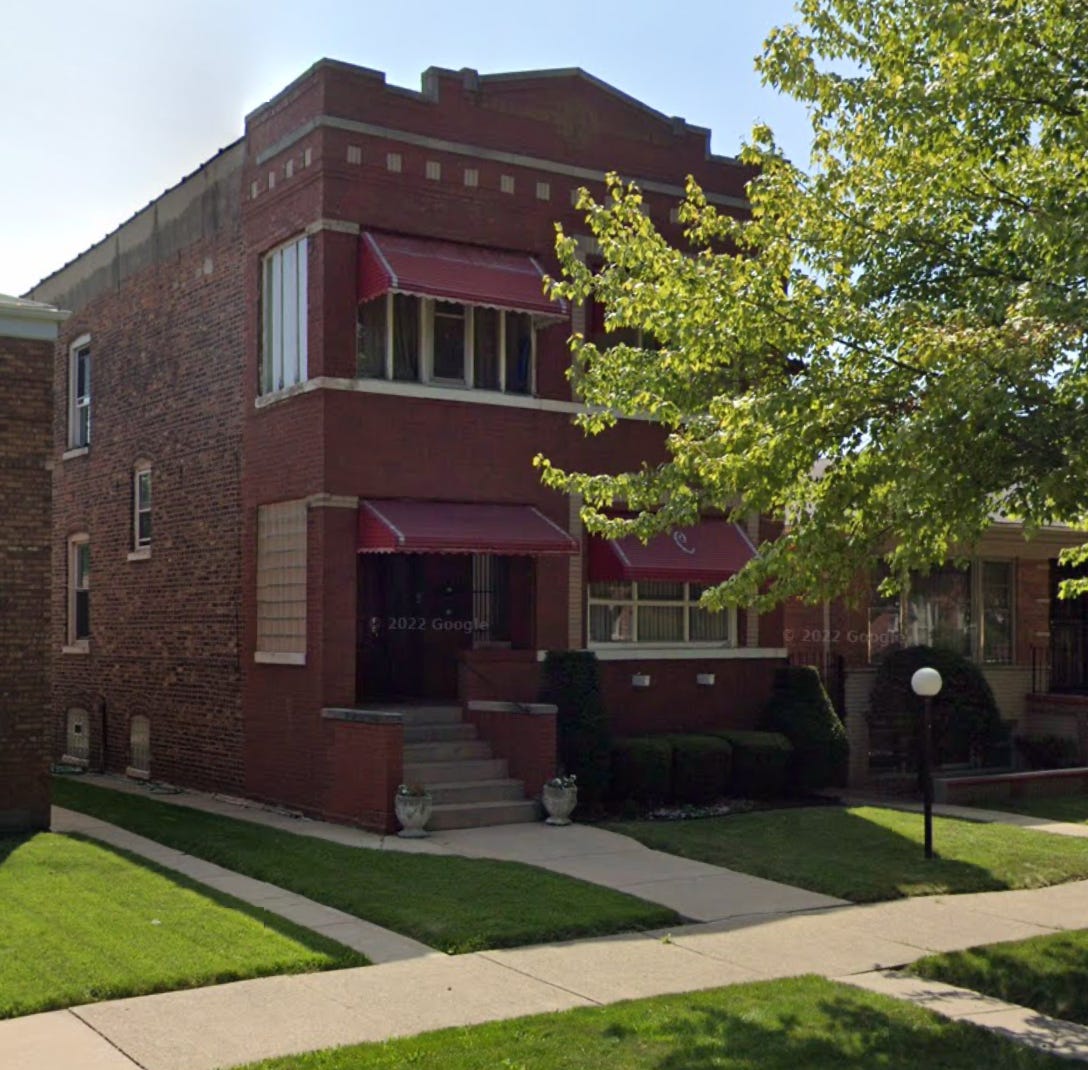
Reuben and Stella Taylor had just gotten home from church.
“‘Mau Mau?’ he said slowly. ‘I’ve heard something like that. But I never thought they belonged to it. Guns? Well, if they had them they wouldn’t show them to me anyway.’”
Reuben Jr. had served in the Marines for two years, Fitz learns. He got a hand injury after an initial eight weeks in Vietnam, says Mrs. Taylor, and was sent to Japan.
Fitz asks if anything happened to make Reuben Jr. bitter. Mr. Taylor nods.
“Reuben had bad experiences. The racial thing. The age-old question of prejudice. It’s just the Marine Corps. That’s enough, alone.”
The Taylors moved to Chicago from Fayette, Mississippi in 1954, where Mr. Taylor immediately went to work for the post office. Mrs. Taylor says both sons were good boys as kids, working as patrol boys and hall monitors at school.
As for Donald, who didn’t live with the family anymore:
“I was the boy’s father but he grew up in Chicago and it’s a bad city. It’s pressure just to be here.”
Chicago Today: editorial cartoon

Chicago Daily News
by Edmund J. Rooney and Phillip J. O’Connor
“The black terrorist gang linked to nine recent Chicago-area murders planned to begin systematically killing white policemen, a high police authority told The Daily News Monday,” starts the News coverage.
“The killing of Chicago and suburban policemen had been set to begin on Friday the 13th—last Friday—but was put off after police began making arrests, a top investigator said.”
The front page stories are flanked by a line of mug shots of five suspects:

“The gang is called De Mau Mau and its members include a number of Vietnam War veterans…Investigators said the gang was started by black servicemen in both Vietnam and Germany in 1970 with the ‘fragging’ (killing or maiming) of white officers.
“A former member of the gang told investigators that ‘you have to kill a whitey (a white person) to get into the gang.’”
That informant says there are 300-400 De Mau Mau members in Chicago, and 3,000-4,000 nationwide.
“However, another source close to the De Mau Mau gang told The Daily News that there were only a total of 50 gang members across the nation and that they were in only three cities—Chicago, Gary and Detroit.”
Per the Daily News, 16-year-old Kathleen Fiene was killed by the same .25 caliber gun that was used in the Corbett slayings, but the gun had been loaned to other people in the meantime.

no byline
Civil rights lawyers criticized the police process with the De Mau Mau suspects, who were held for up to 48 hours before being charged at a 2 a.m. Sunday bond hearing “in a locked courtroom from which both the public and press were barred.”
“This is an extremely dangerous practice that approaches a police state,” said William J. McNally, director of the Lawyer’s Committee for Civil Rights Under Law. “If they held these men for 48 hours, they might next hold you or me for 72 hours or longer.”

Dr. Charles G. Hurst, president of Malcom X College, held a press conference Monday with Barry Wright, head of the Concerned Veterans from Vietnam.
Hurst said Cook County Sheriff Richard Elrod and State’s Attorney Edward Hanrahan held their news conference on Sunday “calculated to get maximum news coverage,” calling it “political chicanery”.

“Hurst added that Elrod and Hanrahan had ‘whetted the public’s appetite by saying Vietnam veterans and Malcom X College at the same time.” About 900 veterans attend Malcom X, Hurst said, and “over 99 percent of them are pursuing serious academic programs, attempting to prepare themselves for productive lives.”
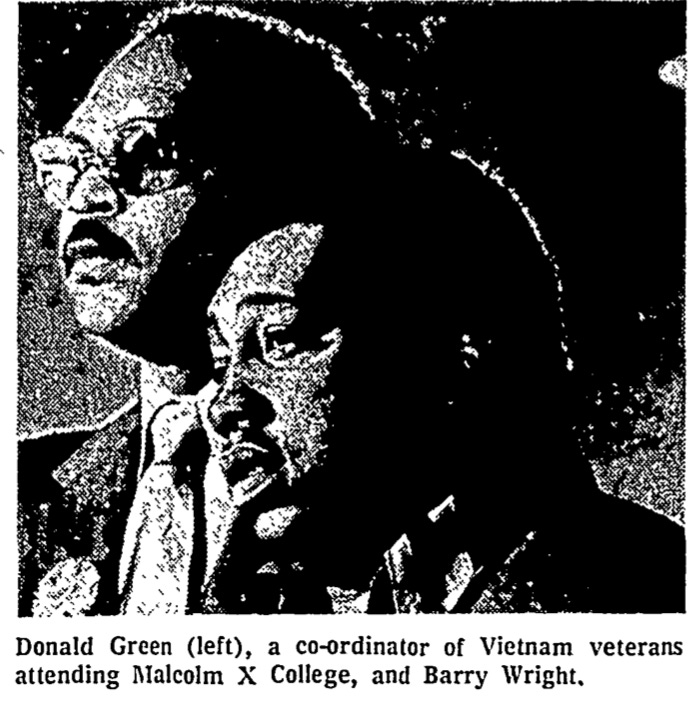
Wright said the case against the suspects “is trumped up b.s.” and “a political trick by Elrod and Hanrahan.”
Chicago Daily Defender


no byline
“Describing the plight of a small group of ex-Vietnam soldiers who call themselves ‘De Mau Mau,’ some of whom enrolled in Malcom X College, Dr. Charles G. Hurst, the college president, said yesterday ‘they were just frustrated, bitter young men.’”
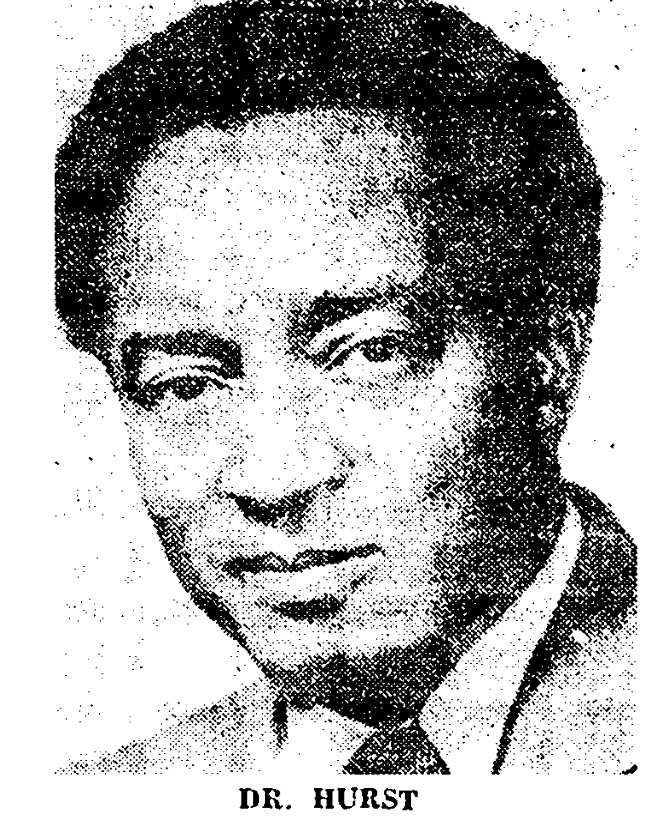
“The president of the westside city college said, ‘It was pure terror. Members of the Mau Mau would intimidate and beat up students and teachers.’
The Defender reports that the Mau Mau students were “expelled” from Malcom X and their ritual handshake was “barred from campus.”
“There never seemed any motivation in their violence,” said Hurst. “They were desperate men venting their frustration within the school. They had no way of living, no way to make money, no saleable skills. The men had been disqualified from society. They were into drugs. The Mau Mau was just bitter men left to wander aimlessly.”
Hurst says he doesn’t know if the suspects are guilty, but he doesn’t believe the killings were racially motivated. “It was just plain hatred.”

no byline
This article reads like an editorial, but it’s on a regular news page and not identified as such.
Barry Wright, here identified as head of “Veterans from Vietnam” but elsewhere called head of “Concerned Vietnam Veterans” or “Concerned Veterans From Vietnam,” appeared on WGN’s “Issues Unlimited” in February and warned that returning Black Vietnam veterans could become “ghetto guerrillas…equipped to retaliate against a racist society.”
Wright said “society is provoking a growing element within the black community to use their military skills against those who deny them their rightful place in American society.”
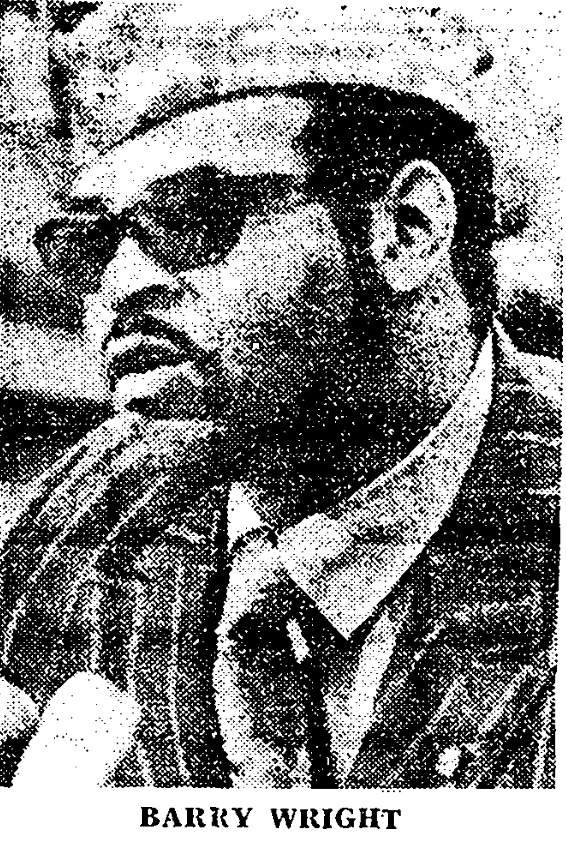
“Apparently Wright’s warning was ignored. Six men, most of them Vietnam veterans, are being held in connection with more than 10 slayings. These men, at least the veterans, might well be described as ‘ghetto guerrillas.’”
“The African Mau Mau movement, headed by former premiere Jomo Kenyatta, was designed to rid the country of white colonialists who hoarded the riches of the land in the name of England.
“It was the Mau Mau movement which convinced the English to flee the land and declare its people independent.”
“In a statement to the world press shortly following Kenya’s independence, Kenyatta described the Mau Mau movement as a ‘necessary evil…The terror imposed upon my people by the whites could not have been dealt with through negotiations. It had to be met with the same intensity and bloodshed so as to thoroughly convince the English of our undying determination to become free people.”
But the “ghetto guerrilla,” according to Barry Wright, doesn’t seek freedom, just “to survive from day to day.”Subscribe
October 17, 1972
Chicago Today: Bijou obscenity charge
1972 is a confusing time for pornography. The daily movie ads include several theaters showing clearly X-rated movies, yet every once in a while, a theater gets charged with obscenity just out of the blue.
Pornographic films are clearly not illegal—recall the Rockne Theater, an Austin neighborhood theater that began showing X-rated films in late 1971 because nobody was coming to see family fare, which drew neighborhood picketers but no legal charges. Mike Royko hilariously covered the Rockne’s predicament on December 9 and December 15 in 1971, and Gene Siskel followed up on January 6, 1972.

October 17, 1972
Chicago Today: WLS full page ad
In 1972, FM radio is slowly coming into its own, and music is moving from AM to FM. On both dials, rock stations are multiplying like Tribbles on Star Trek. So is the competition among them, hence also the advertising.

October 17, 1972
Chicago Today: Sears Tower construction

Don’t miss Mike Royko 50 Years Ago Today

October 17, 1972: De Mau Mau Day 3
Chicago Daily Defender

by James M. Stephens
“Malcolm X College president Dr. Charles G. Hurst and Barry Wright, head of the Concerned Veterans From Vietnam yesterday assailed police investigation of the murders of nine whites allegedly by a band of blacks calling themselves ‘De Mau Mau.’ The two men charged that State’s Attorney Edward V. Hanrahan and Cook County Sheriff Richard Elrod are creating ‘sensationalism to spur their political careers.”
Hurst and Wright, at a press conference at the Sheraton-Chicago hotel, also denied the press and police reports that the arrested De Mau Mau suspects were operating at Malcom X College.
Note, to allay confusion: This is despite the fact that four of the suspects were students at Malcom X, and Hurst has already told the Defender and other papers that the group caused trouble on campus.
“Wright, who is the founder and president of a group of 7,000 Vietnam veterans, did not discount the theory that war veterans could be involved in the murders, but he scoffed at reports that the arrested men were involved in the slaying.”
“‘The charges,’ he angrily asserted, ‘are just a lot of trumped-up b— s—- that Hanrahan and Elrod have put on this group.’” Wright had heard of De Mau Mau, but “said he had no knowledge of black veterans killing whites as a way to solve their problems of being unemployed and unable to support a family.”
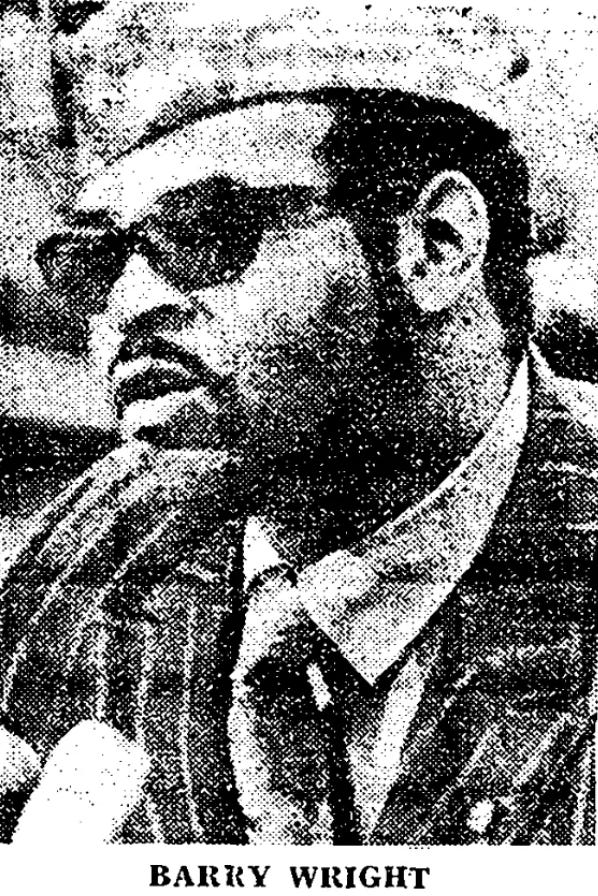
“The CVV head repeated his prediction made some time ago that returning Vietnam veterans may be provoked by a racist society into retaliation by ‘using their military skills against those who deny them their rightful place in American society. I have been telling you this for three years. Now we’re all shocked by this…I think that it will get a lot worse. I don’t think it will subside.’”
Chicago Sun-Times

by Art Petacque and Paul Galloway
“Police Monday concentrated on the South Side in their manhunt for two members of the black De Mau Mau gang, which, authorities say, carried out the murders of nine whites,” the Sun-Times opens its De Mau Mau Day 3 coverage on the front page.
“They were identified as Darrell Patry, 20, and Garland Jackson, 22, both of 3617 S. Federal,” a building part of the CHA’s now demolished Stateway Gardens.
The Sun-Times “has learned” that Patry is wanted for the killing of SIU student Michael Gerchenson, and Jackson for shooting Army Specialist William Richter as he slept in his truck on the shoulder of the Edens Expressway.
“The Sun-Times learned that the palm print and fingerprints found in the Corbett home were those of Michael Clark,” one of the suspects arrested over the weekend.
In addition, physical evidence includes “a palm print matching that of another suspect…was found on the Richter vehicle, a television set taken from the Hawtree home…was found in the apartment of one of the suspects and a clip containing a rare type of .30-caliber carbine ammunition identical to that used to kill Barbara Boand, one of the Barrington Hills victims, and Gerchenson.”
The article also covers the Hurst-Wright Monday press conference, repeating Malcom X President Dr. Charles G. Hurst’s charge that the Elrod-Hanrahan joint press conference on Sunday to announce the charges was deliberately sensational. Hurst said Hanrahan was “trying to stir up a white backlash that will ensure his re-election.”

At Hurst’s press conference, per the Sun-Times, the Malcom X president confirmed four of the six arrested suspects were Malcom X students, but said none of them “had records of violence against other students” and that the Mau Mau group was a ‘small, loose-knit outfit.” Hurst “flatly denied the gang was ‘operating at Malcom X.’”
“Investigators told the Sun-Times they are skeptical of the suspects’ claims about the size of De Mau Mau, named after the East African terorrist society, in the Chicago area and across the country.” Here, the previous claim is put at 300 Chicago De Mau Mau members, 2,000 nationally, but investigators now call the numbers “exaggerated” and “braggadocio…They also dismissed the claim that the gang’s initiation requirement was to kill a white.”
Note, to allay confusion: Many of the papers reported those basic points yesterday, also attributed to “investigators.” There’s no explanation for why the “investigators” backtracked. As mentioned earlier, Hurst has already been quoted in the Defender among other papers describing the De Mau Maus as a small group that caused trouble at Malcolm X College.
Also, the Sun-Times now reports Hanrahan said at his Sunday press conference “that there was no evidence that the Chicago Mau Mau was national in scope,” and that “investigators” now say claims that the gang planned a campaign of assassinating Chicago policemen was unsubstantiated and probably false.”

by Michael Miner
The Sun-Times’ Michael Miner talks to Black veteran Jimmie Williams, an Illinois State Employment Service job counselor, who says De Mau Mau is a veteran’s group with thousands of members on military bases worldwide, but it’s not a terrorist group.
“These guys in Chicago are hurting De Mau Maus and making it hard on the guys on the bases,” Williams tells Miner.
“The purpose of the organization was to get fair treatment and equal opportunity for blacks, Williams said. ‘Many blacks are harassed and feel they are singled out for the worst kinds of duty.’”
Williams thought the group only operated in the military, but Miner writes that “a different picture was suggested” by members of Barry Wright’s group, Concerned Veterans from Vietnam: “They indicated that when black veterans meet, there can be very strong, bitter talk, some of it from veterans who still associated themselves with De Mau Mau.”
At the Wright-Hurst press conference, Wright said he had warned for three years about potential violence.
“Wright said servicemen in Vietnam have drummed into them the attitude that if something gets in the way, ‘shoot it, run over it with a tank, blow it up, use as many men as necessary. Get it done. You don’t expect them to come back after this training and just let it go. They aren’t going to starve.”
Chicago Tribune

by David Young and Jeannye Thornton
Beside covering the Hurst-Wright press conference, the Tribune also talk to Malcom X students.
“Most Malcom X students interviewed said they first heard of the [De Mau Mau] organization when they read newspaper accounts of the arrests.
“‘I first heard about the Mau Mau in a history class, and I haven’t heard of them again until this weekend,’ said George Foreman.”
As for the special handshake attributed to De Mau Mau members, other students say it’s just a popular greeting among many students, though one student agrees it began with Vietnam veterans.
Chicago Daily News

by Lu Palmer and Betty Washington
The Daily News De Mau Mau coverage moves off the front page to page 9, with a story by two of the paper’s Black reporters.
“Police estimates of the strength, sophistication and capabilities of De Mau Mau are ‘grossly exaggerated,’ a source close to De Mau Mau told The Daily News.
“‘This is a very loosely organized group with a few members in Chicago, Gary and Detroit,’ the source said. ‘By generous estimate there couldn’t possibly be 50 of them altogether. Any talk of 3,000 members nationwide is preposterous.’”
And, the source added, there are no more than 15 De Mau Mau members in Chicago.
This source, who’s “extremely knowledgeable about street gangs and militant groups,” also talked to one of the arrested suspects.
“He told me at the time that De Mau Mau was barely making it because membership was so small. There has never been any inter-city meetings, just informal contact between a few men in Gary, Detroit and Chicago.”
Like Barry Wright, this source thinks the arrests are political, and that all charges will be dropped.
Students at Malcom X College, per this article, think “‘Deranged whites not brothers’ are guilty of the nine slayings”. The students “share one opinion. ‘Xxxxxxx don’t commit those kind of crimes. Those are hunky crimes.’”
The students deny there’s any De Mau Mau group on campus, as does Malcolm X President Charles G. Hurst.

by Edmund J. Rooney and Phillip J. O’Connor
Police found a handwritten “secret membership list” of 150 names of the De Mau Mau group, an investigator told The Daily News, at one of the suspect’s apartments.
“The list, highly prized by investigators, is the first document police have been able to find” on De Mau Mau, which doesn’t use printed literature and doesn’t have a headquarters.
Today’s De Mau Mau Editorials
Chicago Today

“The arrest of six suspects in a series of murders here is both reassuring and frightening…But the size of the nationwide murder-at-random ring believed behind them—an estimated 3,000 blacks who call themselves De Mau Mau—gives every citizen something grim to think about….
“As Sheriff Richard J. Elrod said, it appeared that the suspects were simply ‘roaming the countryside looking for someone to kill.’….No one is safe from madmen who kill whimsically, their only cause a warped hatred of society….
“If the gangs activities are as widespread as supposed, police across the country have an awesome job ahead….Right now the main object is to get these terrorists into custody, before they kill more of us.”
Chicago Daily News

“The complete picture as outlined by law enforcement officials is chilling. It suggests a well-organized gang of young blacks choosing white victims at random and killing them for no comprehensible reason beyond race hatred. The gang is called De Mau Mau, and while only six alleged members are under arrest, wide membership is reported in Chicago and nationwide. Reports that the organization’s purpose is to ‘kill whitey’ and that the next targets were white policemen have been strongly denied.
….But the comfort is pretty cold…The problem is hate, and what can be done to alleviate it….We have only one suggestion and it is far from new; perhaps it has a bit more pertinence in this time of shocking news: Neither blacks nor whites can cope with this problem alone. The need is for earnest people and thoughtful leaders on both sides to come together, now more than ever, to seek understanding and common method and purpose.”

October 18, 1972
Chicago Today: 1973 Beetle full page ad
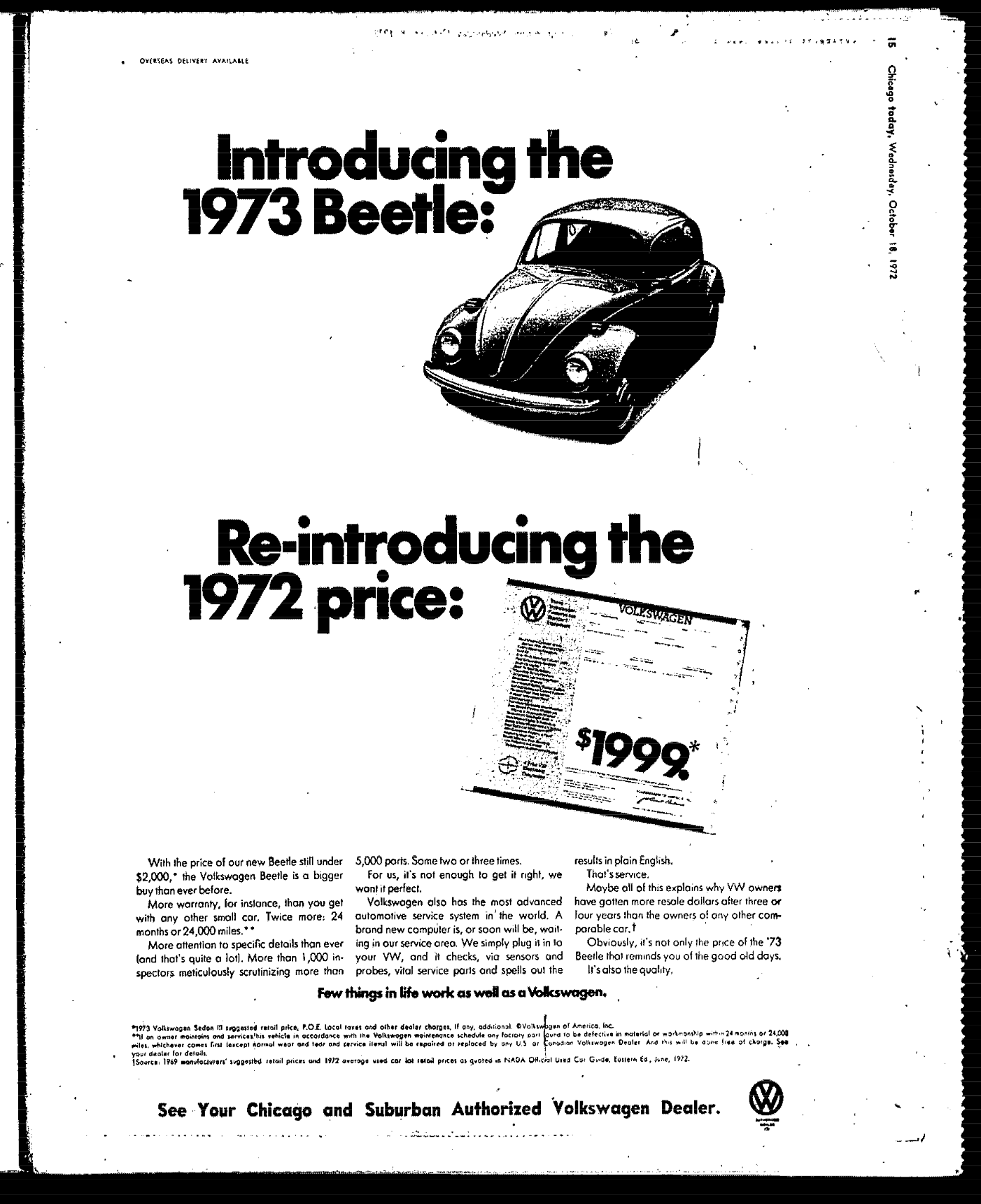
October 18, 1972
Chicago Today: Football odds
As always, good luck in your 1972 office pool. Younger Readers: There was no fantasy football yet.

October 18, 1972
Chicago Daily Defender: Ber-Tals ad
What do you know! There’s Ber-Tals again. See last week for a full run-down on Ber-Tals with its only 1972 display ad in the Daily News.

October 18, 1972
Chicago Today: Evelyn Wood competitor
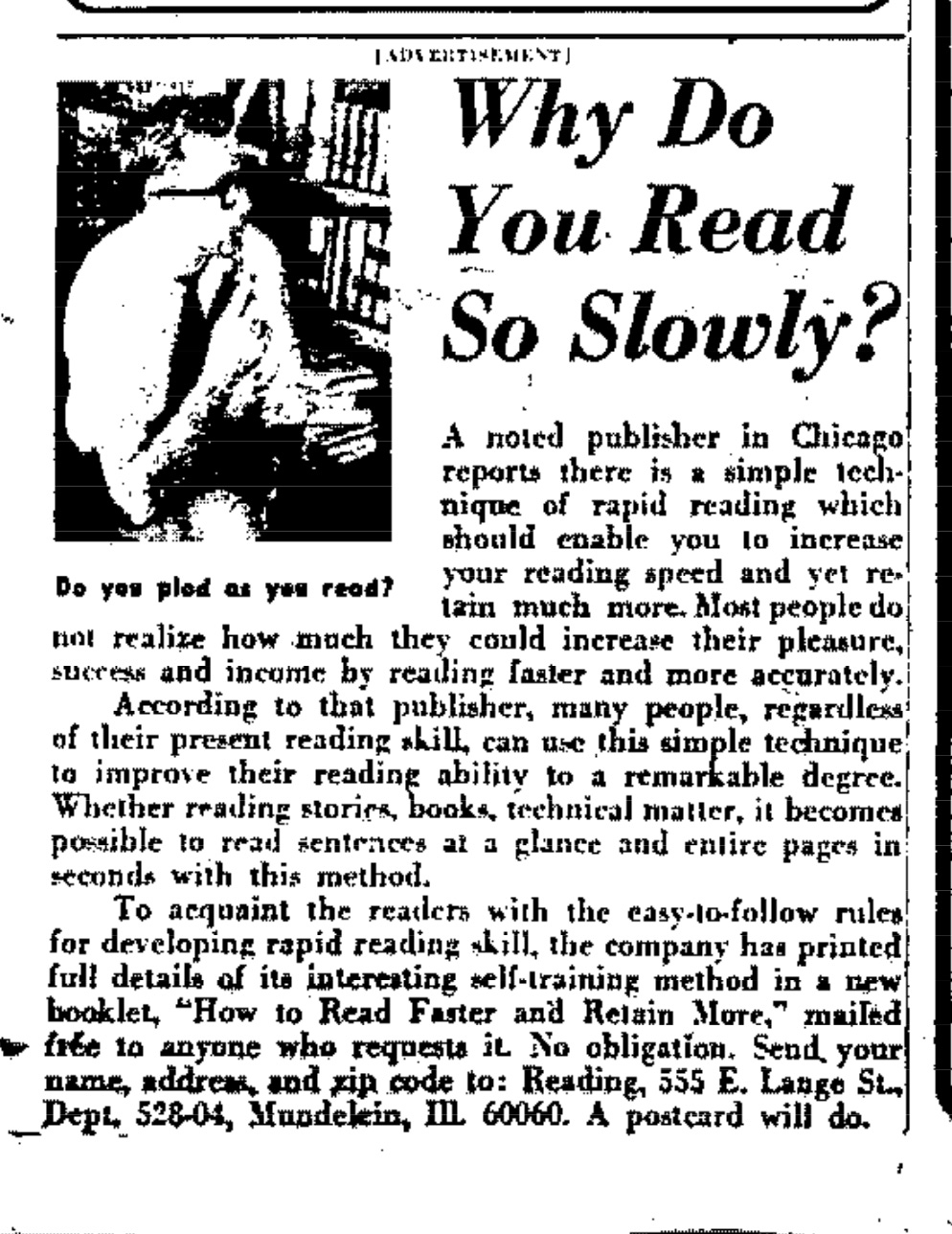
October 18, 1972
Chicago Today: Find the ball contest
If only the Chicago Today microfilm had better resolution, so readers here had a better chance of spotting where the football should be.

October 18, 1972
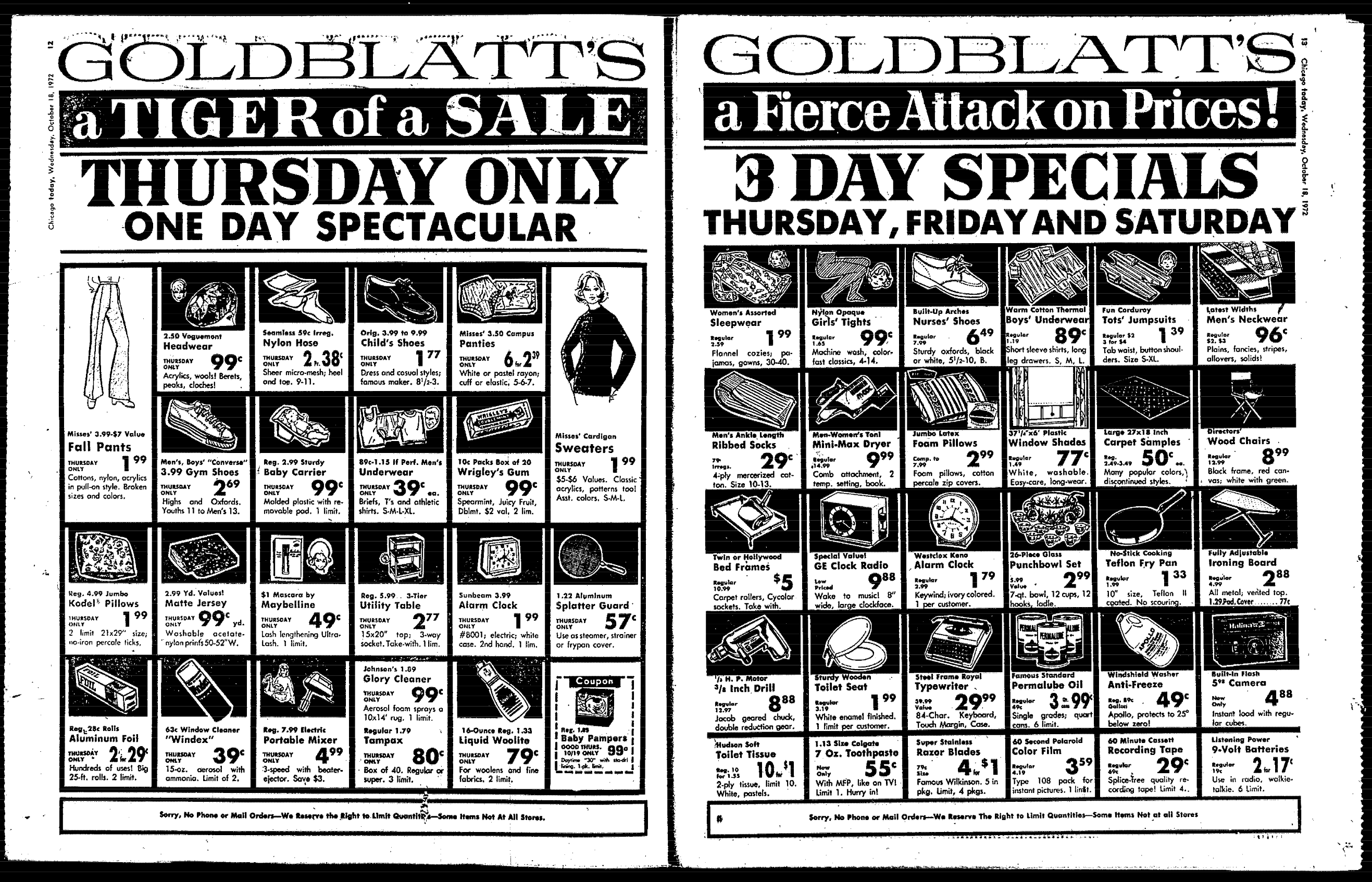
Chicago Today: Goldblatt’s full page ads in a single issue
Goldblatt’s is truly a major force to be reckoned with.



October 18, 1972: De Mau Mau Day 4
Chicago Daily Defender

“Garland Jackson and Darrell Patry, the two fugitives sought in the mass killings of 10 whites, both turned themselves in yesterday, not more than a half hour apart to law enforcement officials, the Daily Defender learned,” reads this article with no byline.
Jackson is wanted for the killing of SIU student Michael Gerchenson, and Patry for killing Army Specialist William Richter as he slept in his truck on the shoulder of the Edens Expressway.
Jackson planned to turn himself into U.S. Rep. Ralph Metcalfe, but since Metcalfe was in Washington, he turned himself in to Criminal Court Judge Earl Strayhorn. “Judge Strayhorn accompanied Jackson into Police Headquarters…one half hour later, Patry, accompanied by three friends, turned himself in to police.”
“The Daily Defender received reports earlier in the day that Barry Wright, executive director of the Concerned Veterans of Vietnam, had convinced Jackson to turn himself in. Jackson, according to sources close to Wright, was fearful of reprisals by both Chicago police and Cook County Sheriff’s deputies….The Civil Rights Division of the FBI had also been contacted to assure Jackson’s civil rights and personal safety.”


“The case against eight black men accused of carrying out a string of senseless murders has been so badly handled that it is virtually impossible for them to ever get fair trials in the Chicago area, legal experts and relatives of the accused charged Tuesday,” writes the Defender’s Robert McClory.

Kermit Coleman of the ACLU and Ald. William Cousins, both attorneys, “were among those ‘citing massive publicity seeking improprieties’ on the part of the Cook County Sheriff, State’s Attorney personnel, the courts and several Chicago daily newspapers in the case.”

The “improprieties” include holding the suspects for 48 hours before arraignment; the fact that none of them have a lawyer after six days in custody; statements from Sheriff Richard Elrod that the suspects were part of a nationwide Black terrorist organization; and officials disclosing evidence to newspapers before indictments.
Sun-Times and Tribune

“A 23-year-old disabled city technician, honored by the city on Tuesday, is far more typical of returning black veterans than the De Mau Mau murder suspects, Mayor Daley said,” writes the Sun-Times’ Harry Golden.
Mayor Daley presented David R. Wells with a city “certificate of merit.” Wells is a Vietnam vet who lost his lower left leg in combat.
“Wells, of 5939 S. Lafayette, won two Purple Hearts and other decorations as a Marine lance corporal. He later went to Chicago Technical Institute to learn drafting under GI Bill benefits.”
After looking for work for two years, Wells landed a job as an engineering technician with the city’s Public Works department through the Mayor’s Jobs for Vietnam Veterans office, “established in 1968 after a Sun-Times article on the plight of returning servicemen.” Per the Sun-Times, the office has placed 4,000 veterans in jobs.

“We’re all proud of you for overcoming things that sometimes cause people to lose all desire to move ahead,” Mayor Daley told David Wells, “and we want to thank you for your services on behalf of our country.”
Wells told Mayor Daley he plans to continue in school and become a civil engineer.

Then Mayor Daley talked with reporters, who asked him about the De Mau Mau murders.
“This young David Wells is typical, in my opinion, of the black veteran who has returned. He represents the majority,” said Mayor Daley.
Somebody asked about the allegation that the De Mau Mau group had planned to systematically kill policemen, which investigators have since denied, Golden noted.
The Tribune: “‘Sure, none of us enjoys reading of plots to kill anyone,’ Daley said. Then came the Daleyism:
“‘To kill is a negative approach.’”
The Sun-Times: Golden includes that a “a reporter” asked Mayor Daley, “Didn’t you once say, ‘Shoot to kill’.”
“He referred to Daley’s statement, after the April, 1968 riots set off by the assassination of Dr. Martin Luther King, that police should shoot to kill arsonists and shoot to detain looters….
“‘That isn’t true,’ Daley said. ‘They [the suspects, if guilty] are killing people with no reason. A person with a Molotov cocktail and throwing it into a building is a killer. That is an entirely different situation.’”
Chicago Tribune

Vernon Jarrett often quotes common Black Chicagoans talking to each other on the topics of the day in public spaces, and today it’s a “snack counter” in Lake Meadows.
“Do you think they did it—all those murders—or is it one of those political scare tricks?” one man asks his friend.
“It don’t make no difference whether it was them or not. We’ve got people today that will kill you—kill anybody, white, black, old or young, anybody—just like it’s nothing.”
“You’re right, brother. I’m a retired railroad man and I’ve been in every big city in this country over the past 50 years, and I have never seen so many young folks with their minds messed up as I have for the past 10 years.”
“And for the first time in my life I’m afraid to walk to the drugstore at night,” the first man finishes the dialogue.
“These old-timers were stating a truth that has been ignored for the last decade,” writes Jarrett. “And maybe now that a shocking brand of De Mau Mau terror may have resulted in the murder of innocent whites, the entire nation will understand the daily fears that innocent blacks have suffered for more than a decade.
“There is clearly a new, self-destructive, world-hating breed of black youths currently being processed in the ghetto laboratories of America’s big cities. This is probably the first modern generation of black Americans with such a high proportion off youths who have just about completely written off life.”
Most Black people know this, writes Jarrett, and they know that murders like the ones attributed to “De Mau Mau” are “a common phenomenon” in Black neighborhoods.
“The only difference is that the victims are usually black.”
You can send these youths to jail, have them “chant ‘I am somebody’ and shout ‘black is beautiful’ all day long,” writes Jarrett, but the situation needs much more serious interventions.
“And to double the tragedy, there probably are millions of people at all levels who view this new breed of twisted souls only as gangs of degenerate blacks who nurse intense hatred for whites, and nothing else.”
Chicago Today: editorial
In addition to reporting on the surrender of the two fugitive suspects, and discovery of a second coded list of alleged De Mau Mau members, Chicago Today runs another editorial today:

“It is easy to forecast, and to understand, the general public reaction to disclosures about De Mau Mau. It will be horror, anger, and a demand for strong action to wipe out the threat. For many white Americans, this is a nightmare come true: A militant black organization, more fanatic and more indiscriminately violent than the Black Panthers, whose members—Viet Nam veterans trained in the use of weapons—seem bent on using their training to kill whites. Just about any whites.”
But, writes Today, the reality of “secret organizations” is usually “smaller and less frightening.” Although just the reality of six men murdering nine people “in random butcheries whose only motivation seems to be race hatred” is, Today admits, already “fearful enough.”
Still, while there’s no excuse for violence or murder, Today writes of the widespread bitterness among Black veterans returning to find no jobs after serving in “a despised war” and wonders what’s to be done about it.
“Certainly the law must be enforced; killers must be caught and punished, whatever their motives are. But does this seem to you a satisfactory answer to the hatred and despair of De Mau Mau? Does it seem that way to our government?”
Chicago Daily News

The car of murdered SIU student Michael Gerchenson was used to drive to Barrington Hills, resulting in the murder of the Corbett family in August, “investigators told The Daily News Wednesday.”
The car was also driven around the country, and possibly used in the murder of an Oklahoma state cop. The story also mentions that two golf balls were found in the car from an Oklahoma City driving range “where a shopkeeper and two members of his family were slain in July.”
“Gerchenson apparently was killed to get his auto, investigators said. An informant told police that several De Mau Mau members had attended a meeting in Carbondale, Ill. and decided to abduct Gerchenson so they could steal his auto.”
The suspects are now appearing in courtrooms for preliminary hearings, and a Cook Country grand jury is about to begin hearing witnesses.
October 19, 1972
Chicago Today

October 19, 1972
Chicago Today: restaurant ads


October 19, 1972
Chicago Today: Full page McGovern ad
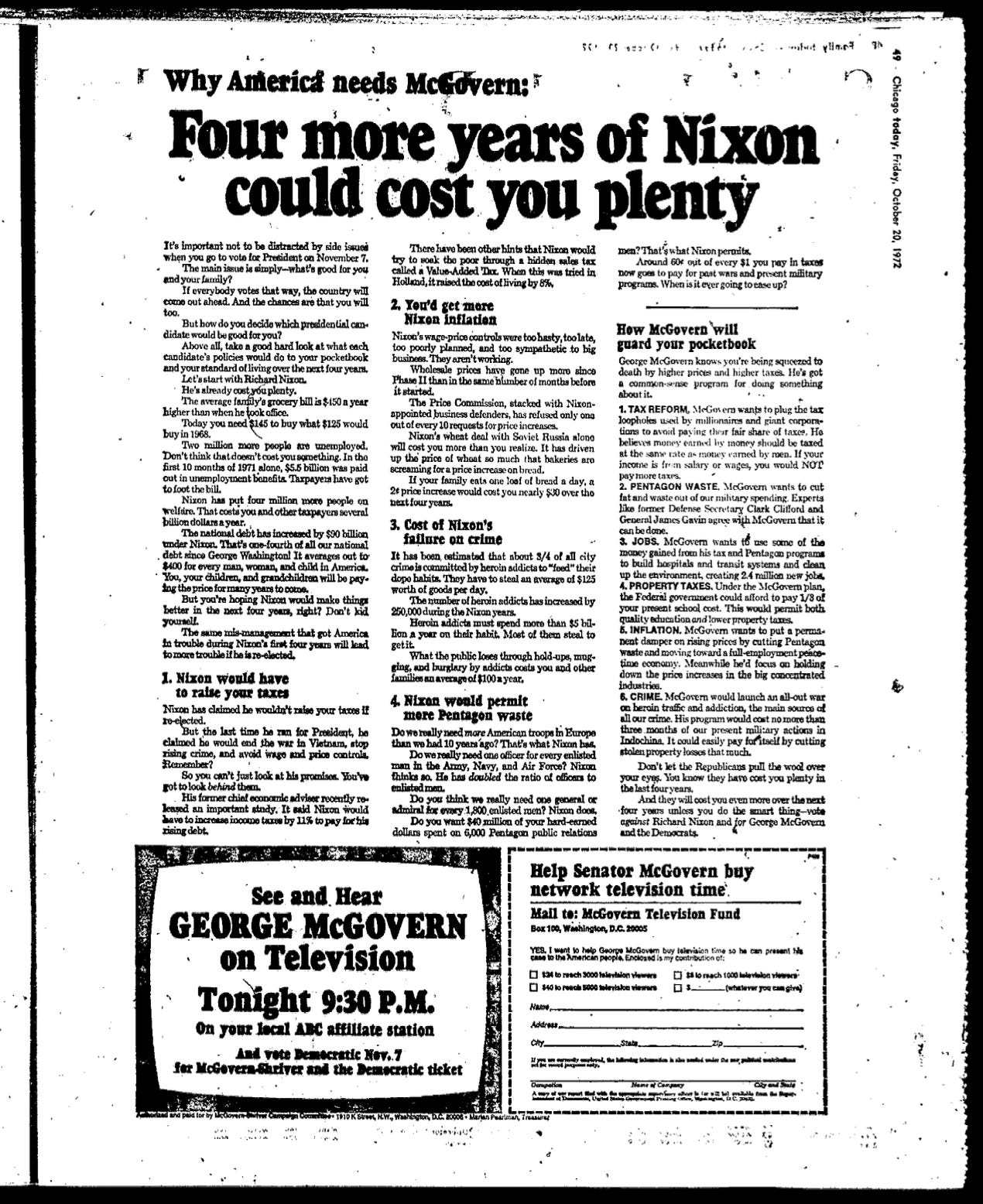
October 19, 1972
Chicago Today: Letters


October 19, 1972
Chicago Sun-Times
October 19, 1972
Chicago Sun-Times

October 19, 1972
Chicago Today: QB Lunch


October 19, 1972: De Mau Mau Day 5
Chicago Daily Defender
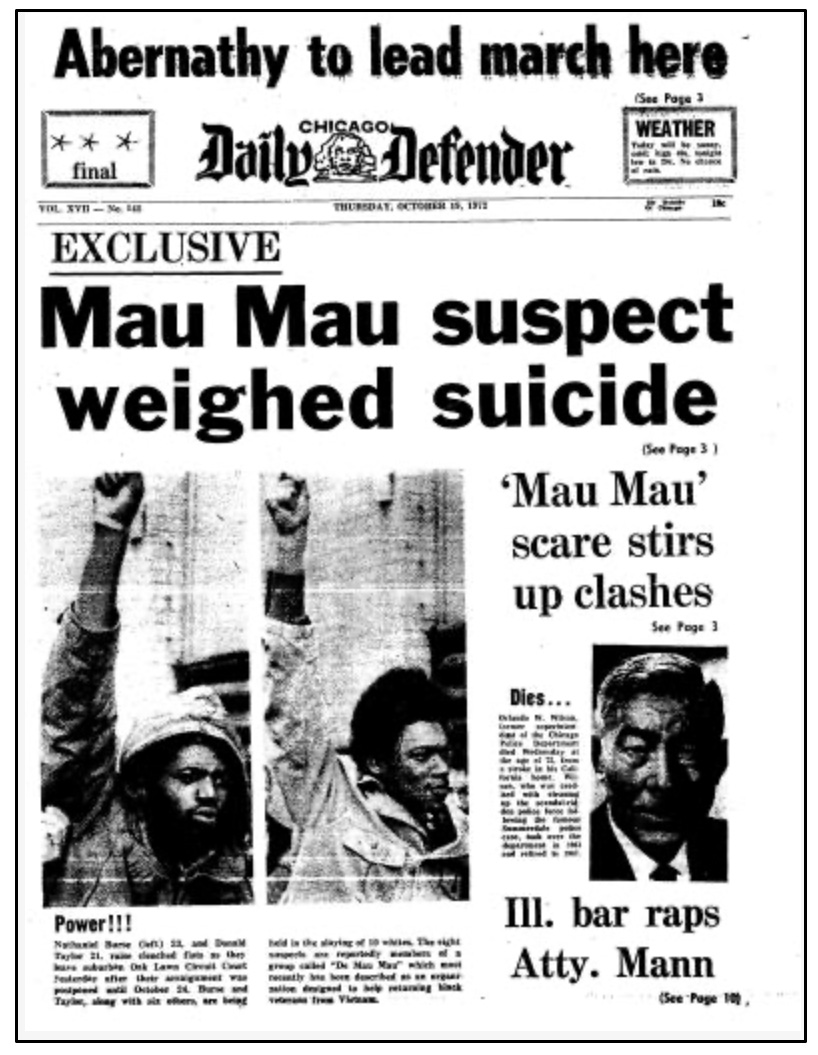
The Defender’s front page pictures De Mau Mau suspects Nathaniel Burse, left, and Donald Taylor, right, “as they leave suburban Oak Lawn Circuit Court yesterday after their arraignment was postponed until October 24.”

This unbylined article reports that suspect Garland Jackson would have committed suicide if not for his mother, according to a friend.
“Efforts were made Tuesday to assure both Jackson and Darrell Patry, 20, that neither police nor sheriff’s deputies would harm them.” Barry Wright, head of Concerned Citizens from Vietnam, and U.S. Rep. Ralph Metcalfe are also overseeing “safeguards for at least one fugitive, Jackson.”
Chicago Daily News: letters


by Edmund J. Rooney and Phillip J. O’Connor
The De Mau Mau informant’s inside story of the Corbett family killings was “obtained by The Daily News from police sources, who said the informant identified four men who have been charged with the murders” but wouldn’t disclose the informer’s identity.
According to the informant, the Corbetts were being held in the mansion’s pantry when Mrs. Corbett’s daughter, Barbara Boand, 22, “bolted from the pantry” to help the family dog “after one of the men stabbed the pet.”
“She was then cut down with a .30-caliber carbine rifle by another of the men who had forced their way into the Corbett home, the informant said.
“The man who stabbed the dog had been helping his partner hold the four members of the Corbett family in the pantry while the other two men began to loot upstairs bedrooms….While the looting continued upstairs, the knife-wielding man became rattled by the loud and continuous barking of the Corbett’s female dachshund, the informant said. In a move to silence the dog, the knife-wielder seized the pet and slashed it.
“Miss Boand, who had been standing calmly with the other three slaying victims, became very upset over the stabbing and ran to accost the man who had stabbed the dog….When the shot that killed Miss Boand rang out, the two invaders who were upstairs hurried to the pantry”.
The other three family members were still held in the pantry by the man with the rifle.
“The killers forced the Corbetts and Mrs. Derry to kneel in the pantry…Then each one was systematically shot once in the back of the head with a .25-caliber pistol, the informant added.”
“Police found the wounded dachshund…and hadn’t been ablate determine how the dog had been injured. A second dachshund, a male, also was found in the Corbett home, but was ‘just lying there like it was ready to die,’ the first officers at the murder. scene said. However, the male had not been injured.”
Subscribe
October 20, 1972
Chicago Sun-Times: Duster full page ad

October 20, 1972
Chicago Sun-Times: More Goldblatt’s!
There is no end of Goldblatt’s. In fact, the store’s advertising is so widespread in all the papers, it’s the one thing all Chicagoans seem to have in common.

And Goldblatt’s hasn’t missed the move to the suburbs.


October 20, 1972: De Mau Mau Day 6
Chicago Sun-Times

by Art Petacque
Donald Taylor, 21, has been identified “by one or more fellow gang members now in custody as the executioner” of Paul Corbett, his wife Marion, and her sister Mrs. Dorothy Derry, “the Sun-Times learned Thursday,” writes Art Petacque.
And if the suspect confessions are true, the Corbett murders occurred exactly as a main theory envisaged—after Mrs. Corbett’s daughter Barbara Boand, 22, intervened when the gunmen attacked the family’s pet dachshund with a knife.
“Miss Boand was quoted as asking, ‘What are you doing to that dog?’ and as she made her way toward the animal she was shot.
“There reportedly was an interval of several minutes between the killing of Miss Boand and the execution of the others, during which the house was ransacked for valuables.”
“Michael Clark, 21, of 7629 S. Normal, was identified by one or more informants as the killer” of Barbara Boand.
Chicago Tribune: letter
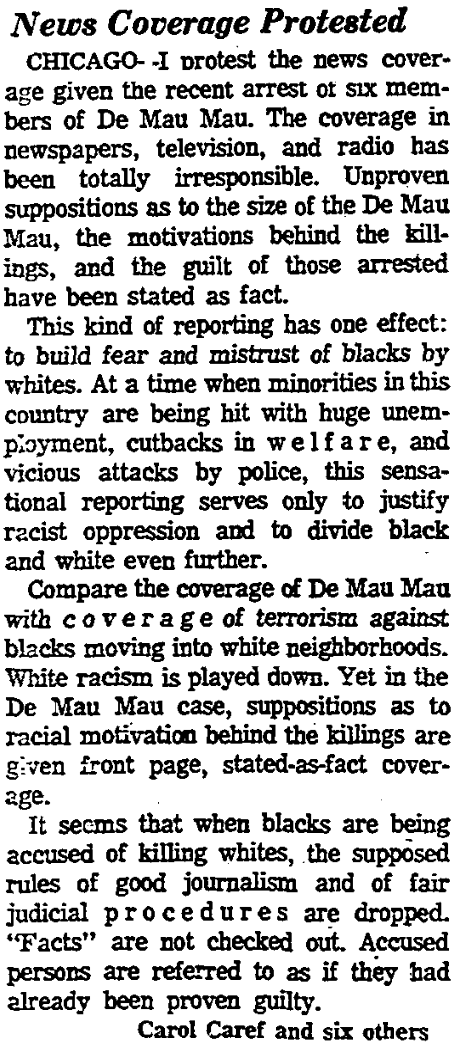
Chicago Today

no byline
“De Mau Mau assassins may have used a black fraternity’s spring carnival as a cover to plan the murder of Southern Illinois University student Michael Gerchenson,” writes Today.
Investigators say the De Mau Mau members had traveled to Carbondale for the Kappa Alpha Psi “Kappa Karnival,” a festival attracting 7,000 people and stretching over several city bars “as part of round-the-clock partying”.
More information from informants, and ballistics tests, led to the arrest of another suspect, Kenneth Stevens, of 7236 S. Yates, charged with killing Gerchenson.

Chicago Daily News

by Edmund J. Rooney and John Gallagher
“The fingerprints of accused slayer Michael Clark, 21, were found in the Barrington Hills home of Paul Corbett, where four persons were slain Aug. 4, The Daily News was told Friday,” write the News’ Rooney and Gallagher.
The guns still haven’t been recovered, though ballistics tests from the bullets recovered from the bodies and murder scenes have linked the crimes. Police are looking for the .30 caliber pistol used to kill Barbara Boand in Barrington Hills and SIU student Michael Gerchenson near Carbondale, and two .25 caliber pistols—one used to kill three of the Corbett and 16-year-old Kathleen Fiene as she walked to her home in Brighton Park, the other used to kill the Hawtree family in Monee and Army Specialist William Richter as he slept in his truck on the shoulder of the Edens Expressway.
by Lu Palmer
“The Rev. Jesse Jackson charged Friday that the white news media already has ‘convicted’ 10 suspects who have been identified as members of the De Mau Mau,” writes Lu Palmer.
The press coverage so far “is designed to destroy people,” Jackson said at an emergency press conference for Black journalists at PUSH headquarters. “It is the most vicious and corrupt in the history of the world.”

PUSH executive Vice President Thomas Todd accused police of leaking De Mau Mau evidence, and predicted the charges would be dropped after the upcoming Nov. 7 election.
A meeting was called for Friday night at PUSH headquarters to discuss police handling and press coverage of the De Mau Mau case.
October 21, 1972
Chicago Today: Movie play, “Lady Sings the Blues”

October 21, 1972
Chicago Today: Sunday promo

October 21, 1972
Chicago Today: Roseland Theater obscenity charge
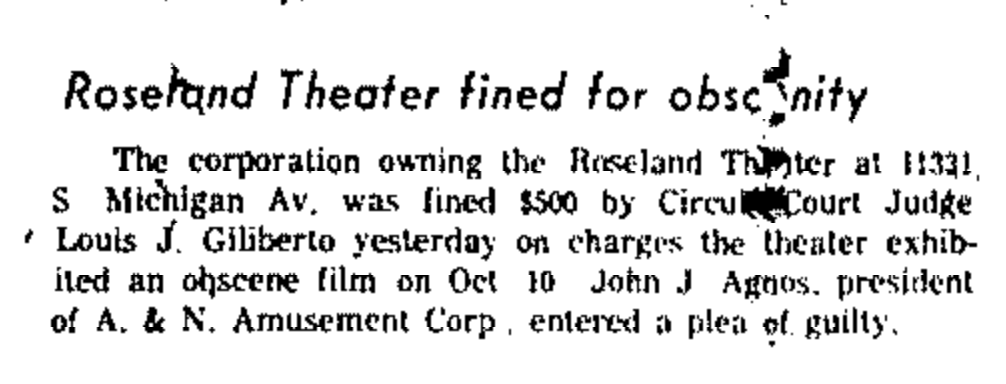

October 21, 1972: De Mau Mau Day 7
Chicago Daily Defender

by Tony Griggs
Twelve relatives of De Mau Mau suspects came to the weekly Operation PUSH meeting to ask for help after receiving threats.
Meeting in a small chapel, “Mr. Jackson and several clerics from PUSH’s Ministers Division vowed to assist the families and their friends through the ordeal.”

Two mothers, Mrs. Ernestene Wilson and Mrs. Edward Moran, “reported receiving threatening letters and verbal threats. Mrs. Moran showed a crudely written letter to the ministers which she said she received through the mail as a consequence off newspapers citing her address.”
“Prior to the meeting, Mr. Jackson conducted a news briefing with the Daily Defender in which he described what he called ‘white journalism’ in the reporting of the ‘De Mau Mau’ case. He accused the white newspapers of creating ‘a black monster’ designed to make the ‘De Mau Mau’ a symbol representing all black people.”

Russ Meek, president of Search For Truth, Inc., “issued a caustic statement” on “the alleged ‘De Mau Mau’ killings,” per this unbylined article.
“‘It is time for the black community…to look at the grim realities of the situation facing us black folk right now….The. question of whether or not ‘De Mau Mau’ is authentic or not, organized or not, is not the question. The issue confronting black people is whether or not they recognize the threat to our lives and limbs that the jingoistic, rabble-rousing, KKK, lynch headlines and fabricated stories and statements by the metropolitan press, Negro educators, and so called veterans leaders and the scurrilous and denigrating news commentaries have posed, in this calculated attempt to create a white community ‘passe comitatus vigilante group.’”
Russ Meek is at odds with Malcom X President Charles G. Hurst, and probably meant Hurst when he mentioned “Negro educators,” though Hurst immediately walked back his initial statements that four suspects who were Malcolm X students were part of a group of De Mau Mau members who caused trouble on campus.

“What this portends is that every black—male or female—can be stopped and frisked (Gov. Ogilvie’s Law) and then be interrogated, intimidated, held for suspicion or beaten and/or shot by a ‘good white citizen,’ including the cops, of course, who feels that his or her personal security is threatened by a black ‘De Mau Mau’….every black who acts suspicious (either by acting black or looking black) is a suspected ‘Mau Mau’ and thereby subject to being victim of all of the above mentioned genocidal activities.”
Chicago Sun-Times

Taping Ch. 7’s “Black on Black” which airs Sundays at 11 a.m., Black leaders attacked the police handling of the De Mau Mau case and the press coverage. This Sun-Times article doesn’t mention it, but the show is hosted by the Tribune’s Vernon Jarrett—another odd example of how the 1972 papers hate to mention rivals in any way.
Barry Wright, head of Concerned Veterans of Vietnam, pointed out that during the Charles Manson murder case, “no attempt was made to connect every ‘murder in the land with the long-haired hippie movement,’ a reference to published reports that De Mau Mau’s members have claimed 3,000 members across the nation”.

Wright thinks the size of De Mau Mau was “concocted” by State’s Attorney Edward Hanrahan and Cook County Sheriff Richard Elrod. Two officials who work with veterans said they never heard of De Mau Mau, and “earlier,” Rev. Jesse Jackson accused the press of “white journalism”:
“Yellow journalism is the sensational, while white journalism is the kind used to justify slavery extermination of Jews, invasion of Vietnam…(It’s) the propaganda wing of the white community.’”
Chicago Daily News

by Lu Palmer
About 1,500 people attended a meeting at PUSH headquarters on the De Mau Mau case. “The ‘white media has been accused of insulting the black community’ by its coverage” said Frederick Wall, publisher of the Chicago Courier, declaring:
“We are not going to take that insult without challenging the responsibility of the white press.”
The audience “roared approval of a proposed ‘financial withdrawal’ from the four white Chicago metropolitan daily newspapers and a possible class action suit against the papers ‘for defiling a whole community of people just because they are black.’”
The meeting approved a position paper stating “Never before have we been closer to an all-out race war and all due to the white press’ total disregard for its responsibility and to all of its readership.”
The position paper accused the press of convicting suspects and added, “The white mass media has been guilty of sensationalism so overt as to condemn all black people through innuendo and extremely poor news reporting.”
Per Palmer’s report, “blacks newsmen concluded that their investigation shows there is no nationwide terrorist organization as ‘De Mau Mau’ and that there was no ballistics connection between the bullets recovered from the victims’ bodies and the guns seized at the time the 10 men were arrested.”
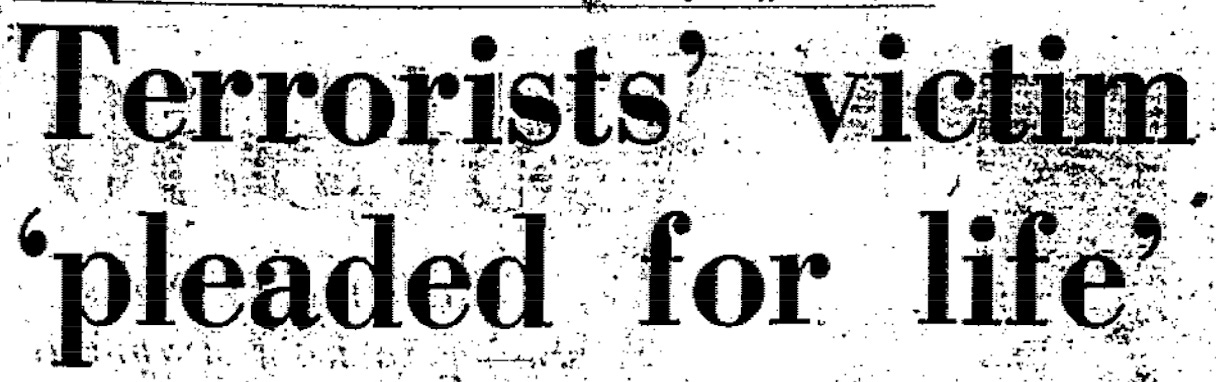
by Edmund J. Rooney and Phillip J. O’Connor
The De Mau Mau informant working with police told authorities that he and four other group members abducted SIU student and Highland Park resident Michael Gerchenson as he parked his car near his dormitory at about 1 a.m. on May 3, after dropping off a friend just a block away.
“The informant, who said he witnessed the murder while seated in an auto just a few few away, told authorities:
“He begged for his life. He offered them his car and whatever money he had. He asked them to just put him out alongside the road and tie him to a tree.
“But they (the killers) wouldn’t go for that. They stopped the car, took him to the back of the car and shot him down alongside the road.”


“Nothing since the fatal Black Panther raid in 1969 has stirred the black community in Chicago as much as the current controversy over the De Mau Mau,” writes Lu Palmer.
Palmer sums up the initial information in the first days of press coverage: Nine whites murdered by young Black men who officials say belong to a group called De Mau Mau, a terrorist group with about 3,000 members across the country that “picks white victims at random and murders them.”
Just like 1969, many Black people are skeptical of the official version, he writes. First, Cook County State’s Attorney Edward Hanrahan is again involved, and he has no credibility with Chicago’s Black community. He’s currently on trial accused of tampering with evidence for his office’s 1969 Panther raid that killed Panthers Mark Clark and Fred Hampton.
As for Cook County Sheriff Richard Elrod, Blacks “see the whole thing as an insidious law-and-order ploy to gain for Hanrahan added votes from frightened whites in his bid for re-election Nov. 7.”
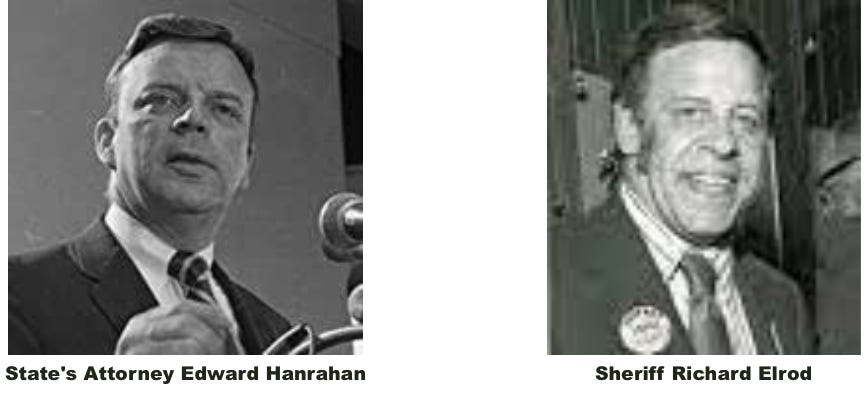
Palmer writes that all his information, “which includes interviews with De Mau Maus from Chicago and Boston, indicates that this is not an organization at all….De Mau Mau is a bond off blackness among a group who found themselves fighting in Vietnam for somebody else’s freedom when they had none of their own.”
“At no point is there any evidence of a terrorist motive in the De Mau Mau,” Palmer writes. “Even the U.S. Military. Command in Saigon couldn’t identify the organization.”
So, “whites will find this difficult to understand,” but “blacks feel they are more threatened by the De Mau Mau case than whites are.”
“The 10 murder suspects were publicly lynched by the Chicago press in such a way as to add to the polarization of blacks and whites and increase the fears whites have of blacks….Many blacks now fear that all young black men will be viewed by white policemen and white citizens alike as De Mau Maus….
“In the black community, this is called ‘a rip-off.’ It is also called a set-up for genocide.”
Chicago Daily News editorial

“Race prejudice, like any prejudice, violates common sense,” writes the Daily News editorial board. “Ours is a community of sensible people, and now is the time to demonstrate that sense.”
The Corbett, Hawtree and other murders, and the arrests of ten young black men, “have generated fears of some vaguely defined but widespread and malevolent conspiracy among young blacks to kill white people at random. No proof—not even any substantial evidence—has been found of such a conspiracy.”
Instead, “American blacks and American whites are overwhelmingly decent, responsible people, who, working together, have built the greatest nation on earth….The only thing that can destroy us is to fall apart into mutually glowering, mutually fearful cliques, hating each other because we have lost sight.\ of our shared membership in a single human race.”
“So as a matter of human decency and as a matter of plain common sense, let’s cool it.”
October 22, 1972
Chicago Today:


October 22, 1972
Chicago Sun-Times: Circulation ad

October 22, 1972
Chicago Today: Thorpe Furs runs an ad for Ogilvie
October 22, 1972
Chicago Today: McMillan and Wife
Clearly people watched “McMillan and Wife,” but it was no “Columbo.”

October 22, 1972
Chicago Sun-Times: Morrie Mages ad

October 22, 1972: De Mau Mau Day 8
Chicago Tribune

by Luci Horton
During the weekly Operation PUSH meeting on Saturday, Rev. Jesse Jackson “accused law enforcement and the press of ‘playing politics with the lives of black people’ and creating an atmosphere of fear.
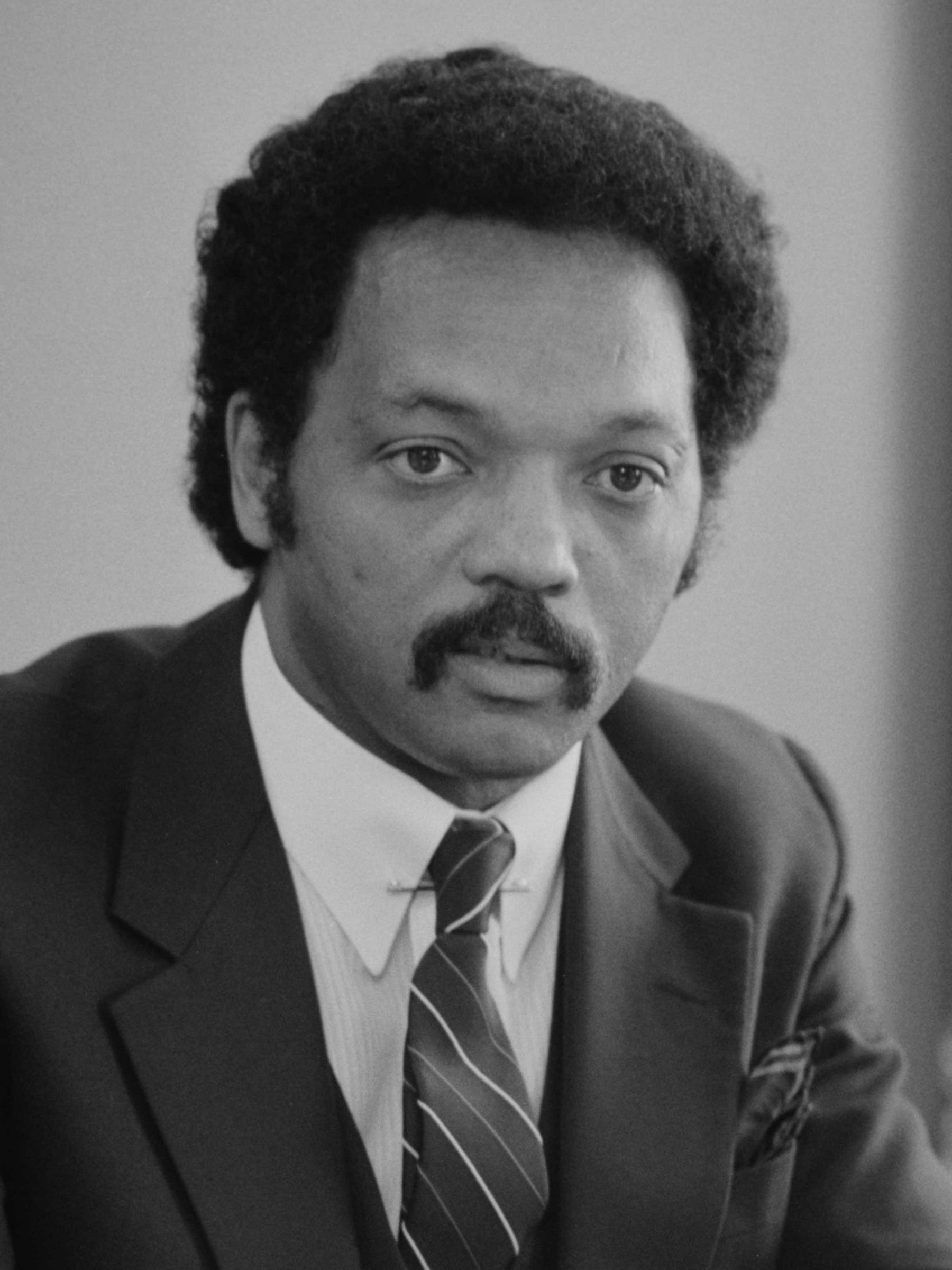
“‘Operation PUSH has never taken the position that members of De Mau Mau are innocent or guilty, but we have taken the position that they are people,’ the Rev. Mr. Jackson said. ‘And, unless the individual rights of the Constitution have been suspended, they are entitled to a jury of their peers, the right to legal counsel, and the presumption of innocence until guilt is proven.
“‘The white media is, in fact, the propaganda sheet of the white community,’ he said. ‘White journalism is the kind of journalism which the white press used to justify slavery, the kind the Germans used to justify the extermination of Jews, and to suggest that Dr. [Martin Luther] King was guilty of treason.’”
Chicago Sun-Times: editorial

The De Mau Mau murders have “touched off greatly exaggerated fears in white and black communities alike,” writes the Sun-Times. “Statements of arresting officials gave the impression of a widespread plot to kill whites at random existed. Blacks worry that such information might arouse white retaliation. A calm appraisal of the facts should allay the fears of both sides.”
Even though Sheriff Richard Elrod “speculated that it was primarily racial animosity that caused the murders,” there’s no evidence yet to support that—and the question should be answered in court.
Misinformation can create community trepidation, writes the Sun-Times, and the name “De Mau Mau” is a good example. “The name was assumed to be inspired by the Mau Mau terrorist movement in Kenya…This gave the impression the veterans’ black-consciousness organization was associated with violence.”
In fact, the name can be a play on words, deriving from a Vietnamese term “that means to leave a place quickly, according to government language experts and Vietnam veterans”.
“the best protection this community can have against crime and racial tension is fair and evenhanded administration off justice….Let such a calm procedure take its course.”

Did you dig spending time in 1972? If you came to THIS CRAZY DAY IN 1972 from social media, you may not know it’s part of the novel being serialized here, one chapter per month: “Roseland, Chicago: 1972” —FREE. It’s the story of Steve Bertolucci, 10-year-old Roselander in 1972, and what becomes of him. Check it out here.
c
 Rosamond Press
Leave a comment