The Moonshiner Murders
Posted on March 22, 2017 by Royal Rosamond Press
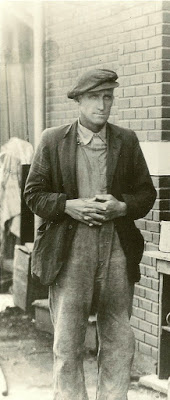
Back To Bradleyville
by
John Presco
ALL RIGHTS RESERVED
Yesterday I was looking at the wonderfully inventive Rosamond names, and saw that some of my relatives lived in Bradleyville Missouri, Noniamus Nathaniel Rosamond is my grandfather. I can not find out what his first name means, and how he came by it. Is it an invented name? Consider these other Rosamond names. They are similar to the ones Al Capp applied to his Hillbilly Folk of the Ozarks. Bradleyville appears to be in the Ozark Mountain range. These people have been compared to Hobbits. My relative, Senator Thomas Hart Benton encouraged these Missourians to move to the Oregon Territory, and had his son-in-law blaze the Oregon Trail. John Fremont was the first Presidential Candidate for the Abolitionist Republican Party.
Jeff Bezos owns the Copyright to some of Tolkien’s Folklore, and the Folklore created by Ian Flaming who is in the Rosamond Family Tree. The Trumpites have declared war on the State of Oregon. VP Vance finds permission he got from writing a book about his Hillbilly People. I want to see his genealogy and his DNA test.
Noniamus Nathaniel Rosamond: Gwen Rosamond Forrester one of our cousins who also descends from Benjamin F. Rosamond and Susannah Hill, provided the follwing info.
Earlier this year my husband Mark and I with three of my sisters, Sarah Jo, Evelyn and Gail drove to Newton County, Arkansas to meet Vernon Rosamond and his family. Virl Rosamond drove up from Dardanelle, AR., Shirley Rosamond and sister Rose Cotner of Oklahoma drove over to Vernon’s house to meet with us too. We all had the most enjoyable day. That afternoon they took us around the countryside and showed us the location where Nonimus’ home place was where he was killed and the Rosamond Cemetery where he is buried and the Tarleton Cemetery.
Shirley stated that Nonimus was living in Chicago, Illinois in 1878 when he married Rosalia “Rosie” Augustus Bennett. They later moved to Bradleyville, Taney County, Missouri where in Nov 1892 Nonimus homesteaded 120 acres. It was located near Swan Creek near Forsyth, Missouri. On March 12, 1894, Nonimus and Rosie sold this 120 acres to Joe Fletcher for $145.00. All Nonimus’ children were born in Missouri, except Shirley didn’t know about the first two, Zora and Sarah Frances.
It is believed that Nonimus and his family moved to Newton County, Arkansas in 1899 – 1900. They first settled on Highway 16 toward Ben Hur from Pelsor. Samuel, son of N.N., and his wife Delia both were barely 15 years old when they got married. The built a little cabin in a hollow in the woods near Nonimus’ home. It became known as the Sam Rosamond Hollow. Virl contracted to cut timber in Sam’s hollow. Samuel later moved to Lurton and built a log house there, I believe Virl said this is the cabin Nonimus lived in when he was murdered. (I’ve got to get my tapes out again and listen to them).
The story your grandmother told about the murder of Nonimus is basically the same story that Virl told us, except he didn’t mention Yates trying to burn the house. Virl stated that Flora, who was 11 years old at the time of the murders, was living with her father and grandmother Mrs.
Overtruf. They lived about a mile over the hill from Nonimus. There was a trail that went from their place to the Rosamonds. Mrs. Overtruf and Flora had went over to spend the night with the Rosamonds the night before the murders. Flora was raised by her father until she married Fred Rosamond (Nonimus’ son).
Virl said he was about one year old when his mothers, Flora, father died.
Vernon and Virl said they remember seeing the bullet holes in the door and staircase (two hit the staircase). A Prince Albert Tobacco cans was flattened out and nailed over the holes in the door. This is such a sad thing that happened to this family. So sad!

Edward Madison Rosamond Sr.
Birth30 Oct 1891
Bradleyville, Taney County, Missouri, USADeath9 Nov 1985 (aged 94)
Broken Arrow, Wagoner County, Oklahoma, USABurial
Lurton, Newton County, Arkansas, USAMemorial ID37446726 · View Source
Sponsor this memorial with an exclusive premium layout and no ads.Sponsor this page
Funeral Services for Edward Madison Rosamond, Sr. were held Thursday, November 7, 1985, at the New Home Freewill Baptist Church in Coweta with Rev. Harry Withers officiating. Graveside services were held Friday, November 8 at 2 p.m. at the Tarlton Cemetery, Lurton, Arkansas.
Born October 30, 1891, at Bradleyville, Missouri, he died November 5, 1985, at the Broken Arrow Medical Center at the age of 94.
He married Dullie M. Woodward, October 4, 1914, and they moved to Bixby, Oklahoma in 1943 and then to Broken Arrow in 1945. He and his wife owned and operated the Rosamond Grocery and Station for about 25 years before closing in 1968. He was a carpenter and had been a forest ranger and had helped start and build the C. C. Camps and clear the right-of-way for the rural electric lines.
He was a member of the New Home Freewill Baptist Church since 1952 and served as a deacon. He was preceded in death by his wife, Dullie, in January, 1985; two daughters, Gladys in 1928 and Edna Flanagan in May, 1962.
Survivors include four daughters; Floye Carnes of Leach, Oklahoma, Wynona Mohr of Broken Arrow, Rose Cotner of Mounds and Shirley Rosamond of Broken, Arrow; and three sons, Vernon Rosamond, Lurton, Arkansas, Edward M. Rosamond, Jr., of Broken Arrow and Norman Rosamond of Wagoner.
Services were under the direction of Hayhurst Marlin Funeral Home of Broken Arrow.
Obituary provided by Charlotte Stevens Schneider
Family Members
Parents
Spouse
Siblings
- Mary A E Rosamond1883–1900
- Samuel Erastus Rosamond1885–1960
- Fredrick Adison “Fred” Rosamond1891–1975
Children
- Vernon Ephriam Rosamond Sr1916–2002
- Beulah Loufloye “Floye” Rosamond Carnes1919–1996
- Edna Alene Rosamond Flanagan1922–1982
- Gladys May Rosamond1925–1929
- Wynona Maxine Rosamond Mohr1927–1997
- Edward Madison Rosamond Jr1935–2009
- Shirley Ann Rosamond1939–2004
Flowers • 3
From Wikipedia, the free encyclopedia
| Bradleyville, Missouri | |
|---|---|
| Unincorporated community | |
 Bradleyville, MissouriLocation of Bradleyville, MissouriShow map of MissouriShow map of the United StatesShow all Bradleyville, MissouriLocation of Bradleyville, MissouriShow map of MissouriShow map of the United StatesShow all | |
Coordinates:  36°47′01″N 92°54′30″W[1] 36°47′01″N 92°54′30″W[1] | |
| Country | United States |
| State | Missouri |
| County | Taney |
| Reincorporated | October 20, 2002[2] |
| Disincorporated | October 17, 2009[2] |
| Elevation[1] | 853 ft (260 m) |
| Population | |
| • Total | 80 |
| Time zone | UTC-6 (Central (CST)) |
| • Summer (DST) | UTC-5 (CDT) |
| ZIP code | 65614 |
| Area code | 417 |
| GNIS feature ID | 0748992[1] |
Bradleyville is an unincorporated community in northeastern Taney County, Missouri, United States.[1] It is located at the intersection of Route 76 and Route 125 above the west bank of Beaver Creek.[3] Bradleyville is part of the Branson, Missouri Micropolitan Statistical Area.
History
A post office called Bradleyville has been in operation since 1861.[4] The community has the name of the local Bradley family.[5] The community was listed on the Census Bureau as incorporated from 1920 to 1970.[6] Bradleyville reincorporated in 2002.[2] The village disincorporated in 2009.[2]
Demographics
Ravola of Thunder Mountian
Notes for Rosalie Augusta Bennett:
Information on the children of Noniamus Rosamond and Rosalie Bennett came from the Bible of Rosalie Bennett. Copies made by Rose Cotner: All birth dates and the early death dates were also provided by Rose. Rose is the daughter of Edward Madison Rosamond and Dullie Woodard Rosamond.
Rose Cotner
17130 South 89th West Ave
Mounds, OK 74047
918-827-6535
Rose gave me alot of information, both times that I talked to her. She told me that her father was never able to talk about his father’s murder, he always became very upset. She also stated that she had went to the Jasper Court house and made copies of newspaper clippings about Yates Standridge inditment for the murder 1st degree on NN Rosamond & Martha Overturf, & assult with intent to kill inditment for Rosalie Rosamond. Filed July 1908 circuit county court records of Newton County, Arkansas. Witness: Flora Overturf, Elizabeth Stacey, Mrs. NN Rosamond, Dr. George Yates, Dr, TT Fowley and Dr. J.E. Blackwood. She told me Uncle Frank went to Shawnee Oklahoma to work in the oil fields, her familly also went to Oklahoma. Sam and Fred stayed in Arkansas. She told me that James had died thought maybe in a train accident, but could of been her husbands Uncle Jim who died in a train accident.
Children of Noniamus Rosamond and Rosalie Bennett are:
i. Zora Bernice Rosamond, born July 22, 1879; died September 21, 1879.
ii. Sarah Frances Rosamond, born February 18, 1881; died September 09, 1881.
iii. Mary Alice Elizabeth Rosamond, born January 29, 1883 in Bradleyville, Taney County, Missouri; died January 16, 1900.
iv. Samuel Erastus Rosamond, born April 16, 1885 in Bradleyville, Taney County, Missouri; died June 1960 in Newton County, Arkansas; married Jean
v. James Nathaniel Rosamond, born March 13, 1888 in Bradleyville, Taney County, Missouri; died July 09, 1915.
vi. Louie Franklin Rosamond, born March 18, 1890 in Bradleyville, Taney County, Missouri; died February 1970 in Pottawatomie, OK; married Lilly
vii. Edward Madison Rosamond, born October 30, 1891 in Bradleyville, Taney County, Missouri; died November 1985 in Tulsa, OK; married Myrtle Dulcinia (Dullie) Woodard; born 1897 in Newton County, Arkansas; died 1985 in Broken Arrow, Oklahoma.
58 viii. Frederick Addison Rosamond, born October 30, 1891 in Bradleyville, Taney County, Missouri; died June 04, 1975 in Newton County, Arkansas; married Flora Edith Overturf 1912 in Newton County, Arkansas.
Posted on January 11, 2013 by Royal Rosamond Press


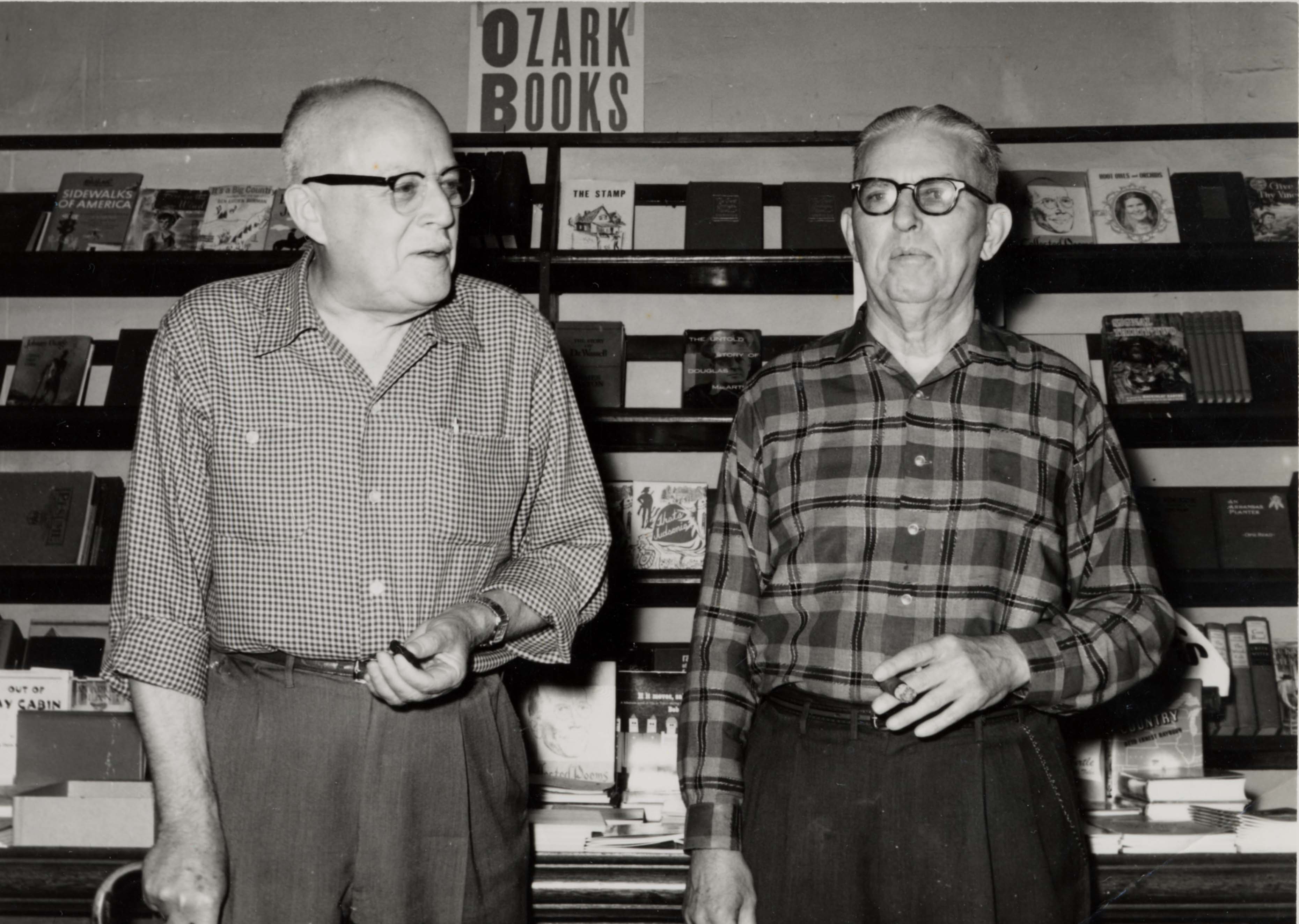

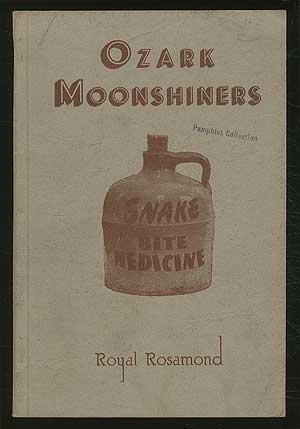
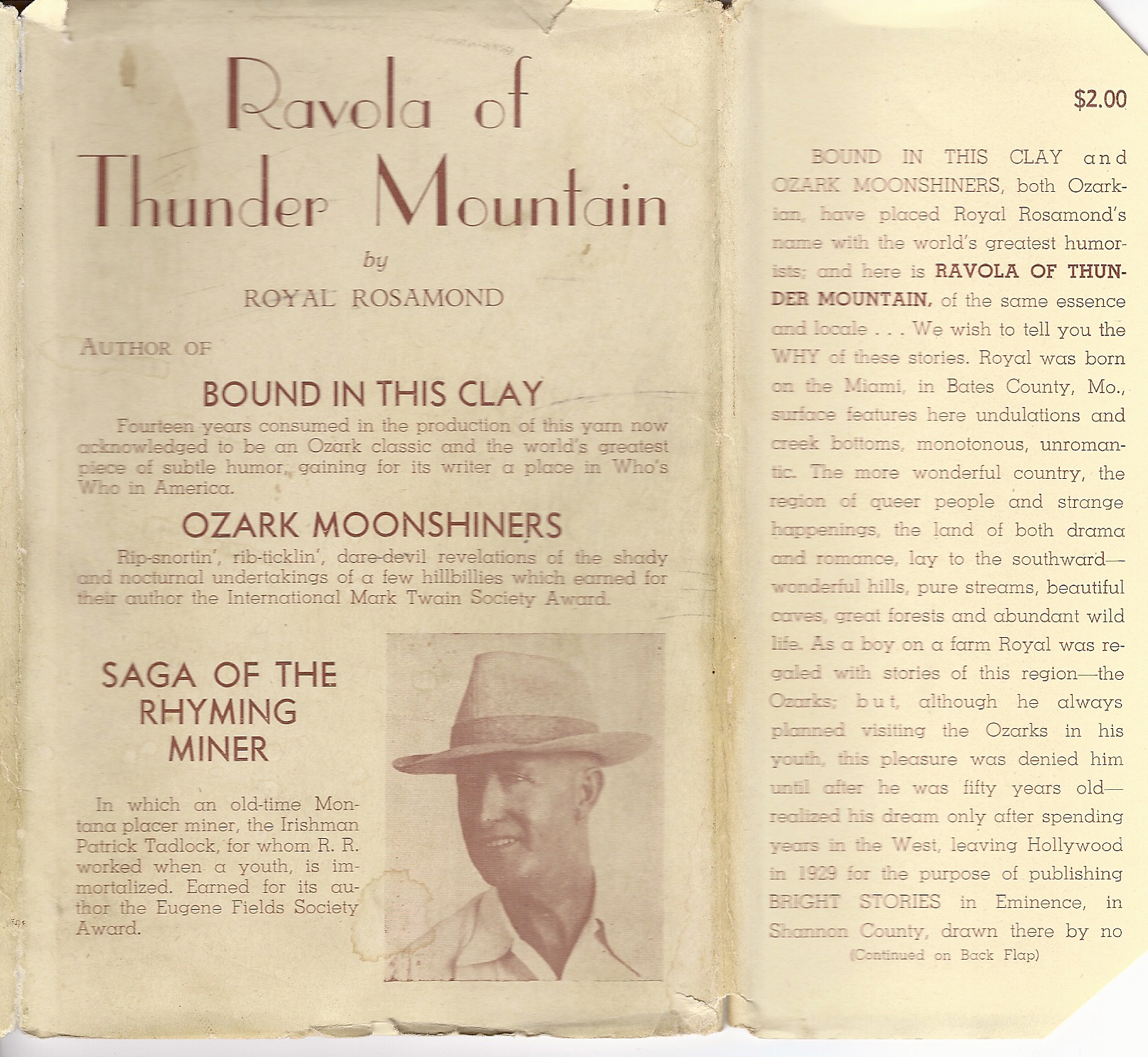
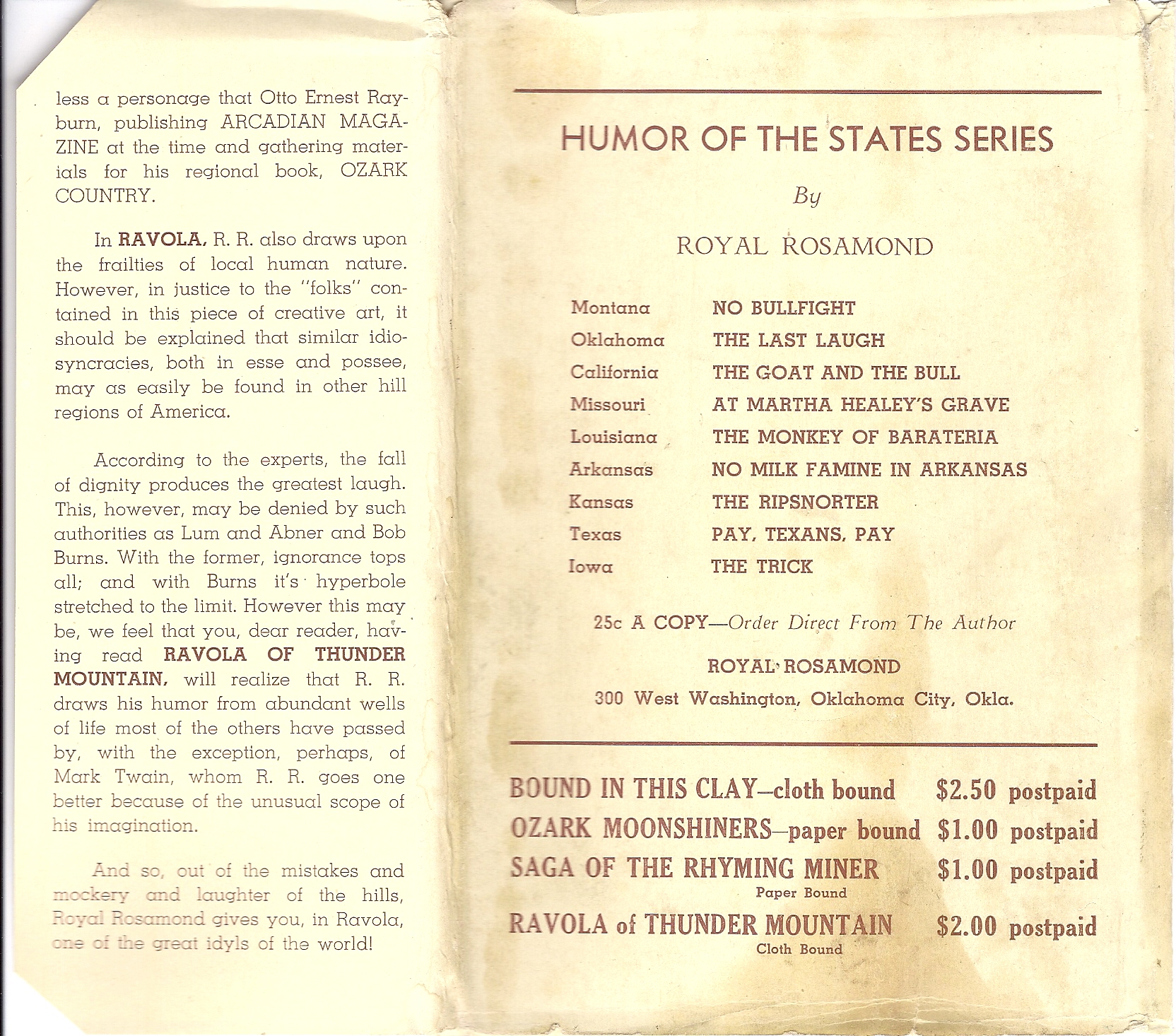
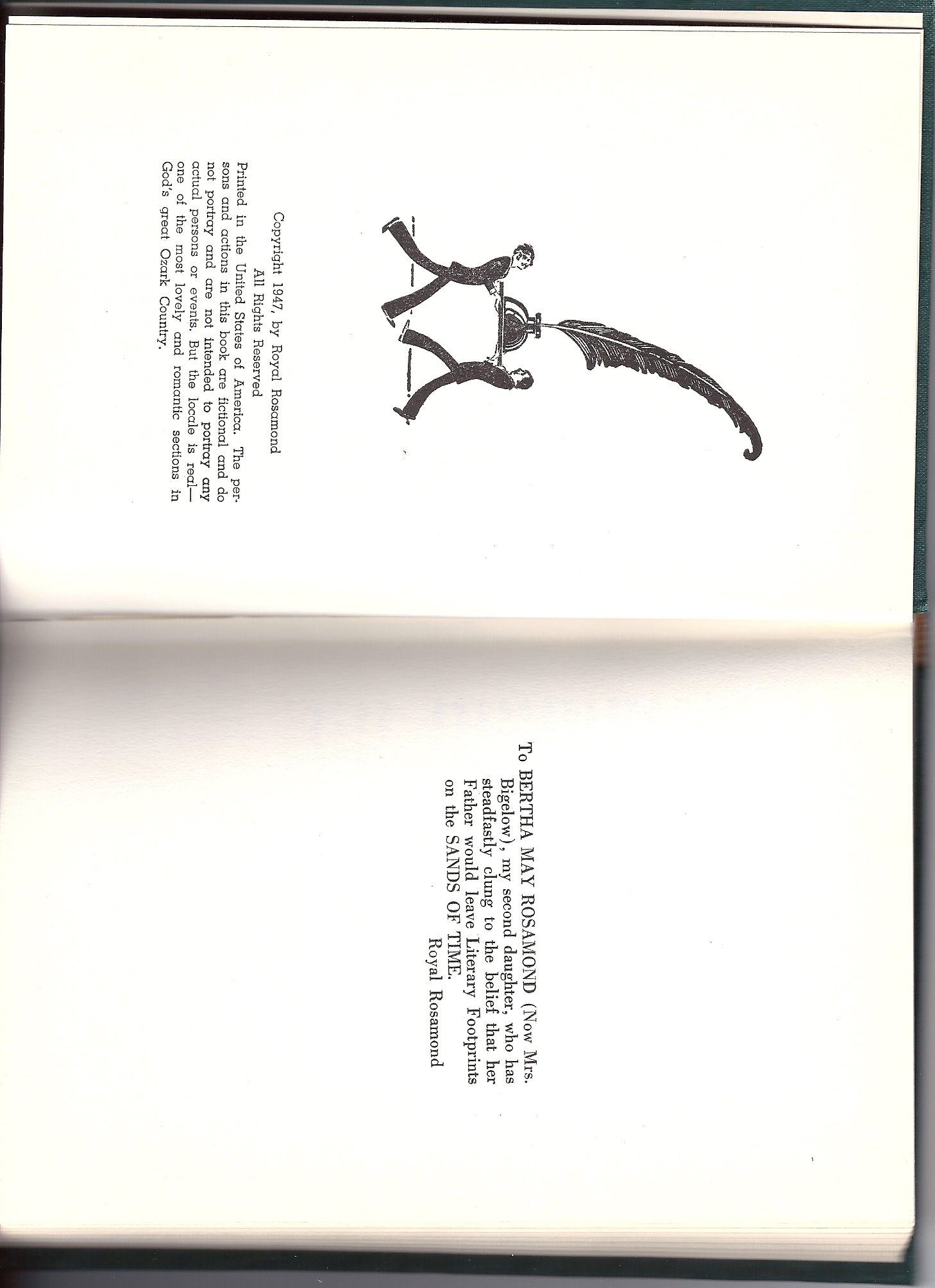
On the inside of Royal Rosamond’s novel ‘Ravola of Thunder Mountain’ we find a dedication to my aunt Bonnie:
“To Bertha May Rosamond (now Mr’s Bigalow), my second daughter, who has steadfastly clung to the belief that her Father would leave Literary Footprints in the SANDS OF TIME.”
Royal Rosamond”
In the last two days I have had bright conversations with two Keepers of History, who happen to be women, not unlike Mary Celestia Parler, who worked with Otto Rayburn and Vance Randolph to collect and preserve the vanishing history of the People of Missouri and the Ozarks. Peggy Buhr and I talked about the DMZ that was created in Missouri over the slavery debate that resulted in wholesale murder and the removal of all the folks in certain regions – along with their historic records that were taken to Kansas – and never returned. This history is lost forever. The Rosamond and Rose families may have been the first people who came to repopulate the DMZ. The historian, Albert Castile, compares Order 11 to the Japanese Interment camps during WW2. We concluded our nation is becoming polarized, again, over the same issues. Will America’s bitterness that led us into the Civil War, ever go away? Will the No Man’s Land forever leave blood stains in the Sands of Time?
Consider our President’s statement about clutching our guns and Bibles – while hunkered down in Whispering Cave under Thunder Mountain – waiting for the world to come to an end? What about America? These folks surely don’t want to see our young Democracy come to an end – after such a short life!
When I became an artist and gave my uncle and aunt a painting I had done, they were happy for it, got it framed, and hung it over their mantle. When I showed June Rice my poetry, it was like she had been kicked in the stomach – and seen a ghost. I had never seen her father’s poetry that were published in magazines, cause they were kept safely locked in Rosemary’s cedar chest lest one of her children behold them, and become a “rake and ramblin boy” like her father – who I never lay eyes on! But, someone was channeling my poetry while I was in a trance at the back ot the class. Rosey’s four daughters started saying he has Royal’s smokey-blue eyes!”
June had one of Royal’s failed books dedicated to her. Royal Rosamond was a self-publisher – and ahead of his time! Today, he would be a blogger.
When I brought my second girlfriend over to meet my kinfolk, June zeroed in on the truth Melinda Frank was not wearing any shoes, just like her father’s Hillbilly folks in those wretched Ozark stories he told – in bad english! In 1964, June threw me and my lover out of her home! I was Royal come home to roost, he estranged from his wife and four daughters for many years! June was elected to go to Oklahoma City and put Rosey to rest, just where, no one knew. As a genealogist I found his unmarked grave and got my aunt Lillian to buy a marker and we put two roses on No Man’s Land.
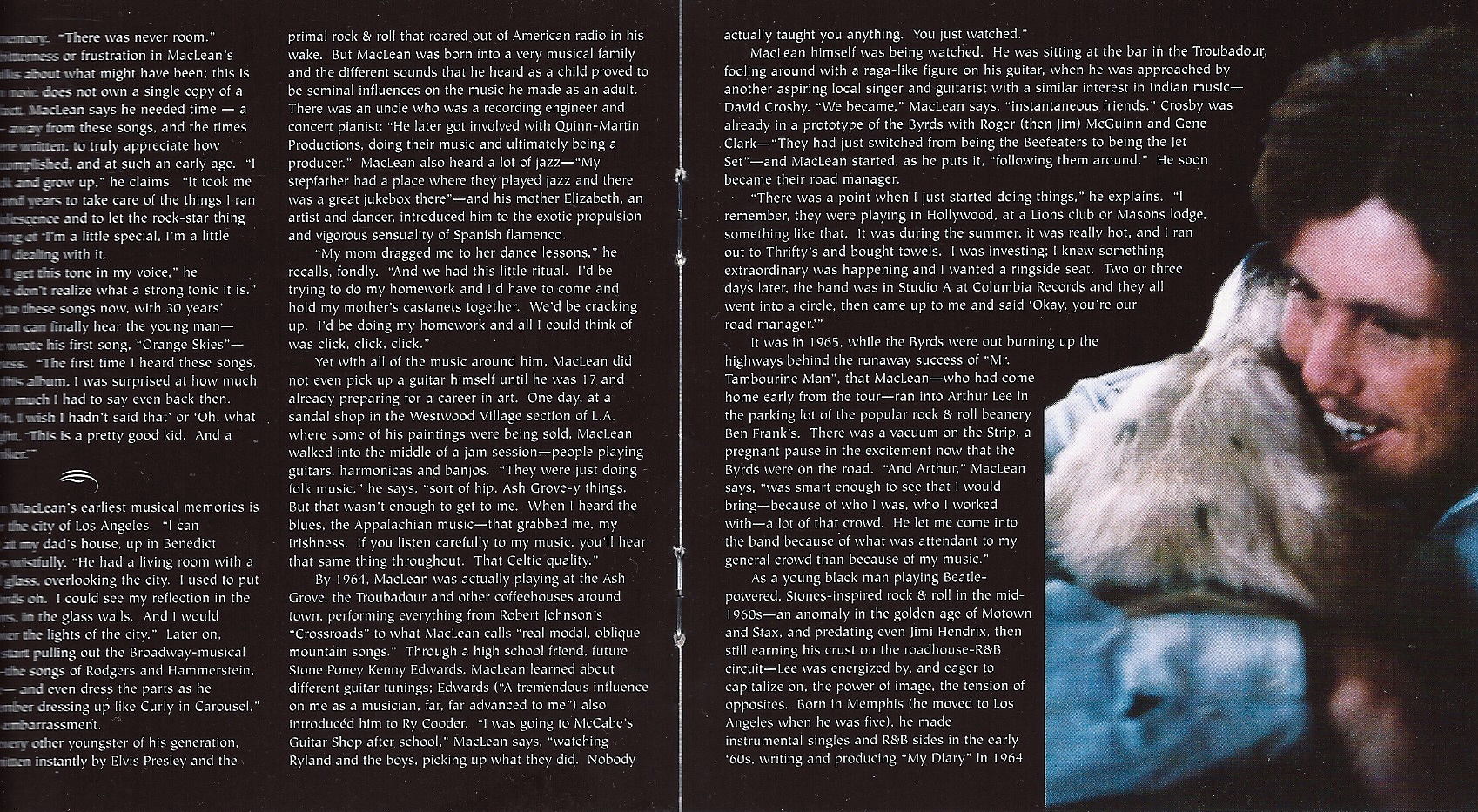
Mary Parler married Vance Randolph pictured above with Rayburn. I own letters exchanged between Rosamond and Rayburn. Mary captured folk music and singers, the foremost being, Emma Dunsenbury who sang ‘Ramblin Boy’. I would become a Ramblin Boy, as would my friend, Bryan MacLean of Love. Bryan was in love with Royal’s granddaughter, Christine Rosamond Benton. In 1964, Bryan was playing his guitar and singing what he called “oblique mountain music” Bryan and I became the first hippies who were very much like the Celtic Moonshiners who did not like the Fed on their trail, trying to put and end to our Ramblin Ways.
Elizabeth Elson of the Miami Museum agreed that we should have started to capture our beautiful American History – much sooner! But, who is reading this history? Folks today think they own this history by picking up anther gun at the gun show, rather then a book at the library. I told Peggy and Elizabeth, as a Historian, theologian, and Grail Scholar “Our history has just begun, and, our nation will reborn itself many times!”
In Thunder Mountain, there is a chapter titled ‘A Few Came Out Alive’. There are men carrying many guns in a show-down. Bryan was invited to a gathering at the Polanski house the nght Charlie Manson’s crazed killers showed up. Luckily he found better things to do. How many millions of guns has the Manson crew put in our hands – after seeing Charlie’s photo?
It may be a matter of finding some brave soul who is willing to go into Whispering Cave and talk those dangerous men into giving up their guns, and their Bible. But, then you got to take away their guitar and fiddle, and put a gag on Grandma who is singing a traditional family ballad she got from God-knows-where!
It’s high time we all take a good look at our real history so we can know exactly what, and who, our guns are protecting. We stand on common ground. We are all alike. We all have something at stake. Let’s take an inventory of what that SOMETHING is.
God bless America!
Jon Presco
Copyright 2013
“Poetry on Leaves
The spring sun was warm now, brightening as with happiness in the
open fields, the broad land resembling a crazy quilt because of the
wooded patches everywhere. Already the wild grapes were in bloom,
and if the sun continued smiling there would be, in every Hillman’s
cellar, many, many jars of grape juice for making jelly, and wine
for those who knew the trick of making it. Those pink-white blossoms
on the pale yellow bushes hard against warm hillside rocks were
huckleberries in bloom. The wild grapes and the huckleberries once
ripe, tangier here in Shannon County, Missouri, than most any other
place in the Ozarks.
I walked on, for I had yet a long way to go before nightfall. Now it
was but a mite after mid-day. After leaving the train at Winona, I
could have perhaps caught a ride to Eminence had I stayed with the
wagon road instead of footing it up the spur-track leading northward
to cross Jack’s Fork at the Hodge place where I left to journey up
Possum Trot toward Little Wonder Schoolhouse and Tucked Away Church
House, above which in the ride to the north, I lived – the place
where I was born and which I called home, where my parents had
settled in their youth and planned some day to die. The way was
long, the trail lonesome and ofttimes steep. As wild a region as
ever grew outdoors. No matter. I wanted to stretch my legs and let
the April breeze take the orders of a Saint Louis foundry away from
me.
I went home on a visit once a year – had already worked five years
up there, long enough to forget how to talk (or write) hillbilly
talk, it seemed like. Still, I didn’t mind being called a hillbilly.
Life in the Ozarks had a tang. I liked everything about them, from
the blooming of the redbud and dogwood in springtime to pumpkin pies
and possum and coon hunting and listening to fox hounds in the fall.
I was born and bred here. This wilderness was in my blood. I felt as
much a part of it as does a back log to a fireplace. I was twenty
six years old now, and when I become fifty, I intend to retire, and
go sit on pappy’s rocker there on the front porch and rock and smoke
and think until I die.
Here on the side of Grapevine Mountain, high above the glistening of
Jack’s Fork below, for days and weeks and years back into the dim
past she had lived in splendid isolation, the silence, save for the
passing Hillman on the road below her cabin, as vast as the greenery
of the heaving land-billows rising higher and ever higher toward the
summit of the far ridge leaning against the blue heaven on the west,
below which was the great spring from which the stream Jack’s Fork
nursed and found perpetual substance. A skinny, faded creature in
her late forties, seemingly as antiquated as the furniture in the
two small rooms in her rustic cabin, yet she possessed the amazing
gift of cheerfulness. Even though her income was very meager, yet
she contrived to spread a spirit of near-opulence and comforting
friendliness about herself which was as convincing as was Mr.
Russell’s plush appearing abundance. In summer she mothered her
pansy beds, naming the little faces, as she called them, after the
little girls she taught in winter, the boys unslighted by living as
vegetables in her garden, the more refractory being a gooseberry
busy or wild plum tree.”
“From first sight, even the site of the new cottage had enchanted
her, dug as it was into the southeast side of a grassy hill in the
midst of Boffin lands, populated with Boffin sheep. There was a
little copse below it, just to the side, and a spring-fed well, all
of which reminded her of her childhood home. The place had come down
to Odovacar through his mother’s side, a Boffin. He had used it as
asort of base, when he and his friends had gone out hunting.
Theywould stock the little hole with gear and rations. Then, with
their bows, and a pony for their gear, they would make forays west
ornorth, towards the Downs or up to the Moors, or, closer still,
intoBindbale Wood. But that was years ago, when the game had not
yetmoved so far off. When Rosamunda had viewed it more carefully,
she saw the hole was inconsiderable disrepair. Also, it was a bit
too small. She had new rooms dug, so that there was a parlour and a
kitchen, a bedroom for each (and one to spare), along with extra
chambers further back fo rstore. When it was finished, it suited
Rosamunda very well. Especially, she loved the light. Situated
facing south-east, the light poured through the windows in the
mornings, her favourite time of the day. And, when she stood
outside, she could see the land stretching east and south far into
the distance. Illuminated by the late afternoonsun, the prospect was
especially fine. From the top of the little knoll that made the
cottage’s roof, she could see far to the northand west, where sheep
dotted the rolling hills. The sky at nighttook her breath away. And,
all day, the birds sang, the wind blew,and the Water, which ran
nearby, just to the west, mostly narrow andquick as it came down out
of Long Cleeve and Needlehole, could justbe heard when the wind
dropped and everything was still. She loved its peace and quiet, so
tucked away and so private. Yet,it was just an hour’s walk over the
hills to Bag End or to Hobbiton. Overhill, to the east, was even
closer. Every fine day Rosamunda walked the hills, seldom seeing
another living creature other than sheep, or, very rarely, a doe or
faun. She did not walk south to Hobbiton, however, except on errands
orfor an appointed visit. She had not forgotten
her “understanding”with Bilbo. And Bilbo did not forget her, either.
Regularly, he sent her gifts of wine or ham or fruit in season, as
tokens of his neighbourly regard. She appreciated the way he could
show marks ofparticular notice, without making her feel the burden
of obligation.”
http://www.sullivansfarms.net/friendsofmiami/
http://home.earthlink.net/~bcmuseum/
Mary Celestia Parler Research Materials
Mary Celestia Parler (1904-1981) taught folklore and other courses in the Department of English at the University of Arkansas from 1948 to 1975. During her career she collected and managed the folk song collection and also gathered a vast quantity of non-song materials on Ozark lives, riddles, proverbs, beliefs, and superstitions that were compiled into twenty-one volumes held in Special Collections. Her students contributed more than thirty linear feet of reports on many topics of Ozark culture All these materials were donated by Miss Parler to the University Libraries beginning in 1965, where they have been managed and preserved ever since. She was a founder of the Arkansas Folklore Society in 1950 and served on its board with the poet John Gould Fletcher, collectors Vance Randolph and Otto Ernest Rayburn, and performers Booth Campbell and Doney Hammontree. Mary Celestia Parler married Vance Randolph in 1962.
http://libinfo.uark.edu/SpecialCollections/research/guides/Folklore/Parler.asp
http://libinfo.uark.edu/SpecialCollections/findingaids/parler.html
Emma Dusenbury, one of the foremost singers of Anglo-American folk songs, is represented in the University Libraries by copies of recordings made in the 1930s by collectors who visited her on her farm near Mena. User copies of these recordings are held in the Performing Art and Media Department.
http://www.encyclopediaofarkansas.net/encyclopedia/entry-detail.aspx?entryID=1634
During the late 1920s and early 1930s, guided by F. M. Goodhue, a teacher at a nearby radical labor school, Commonwealth College, Dusenbury was recorded by some of the best-known folksong collectors in the region and nation. John Lomax, Vance Randolph (whose Ozark Folksongs lists November 1928 as the date of his first collecting from her), and Sidney Robertson all visited, as did poet John Gould Fletcher and Little Rock (Pulaski County) composer and symphony director Laurence Powell. All were greatly impressed; Lomax wrote in his autobiography that she sang continuously for two days and recorded more traditional Anglo-American ballads than any other singer.
Uploaded on Jan 25, 2011
This song is a shortened version of a song called “The Rambling Boy” collected in 1930, from Emma L. Dusenbury, Mena, Arkansas, by Vance Randolph.
According to the Association of Religion Data Archives County Membership Report (2000), Shannon County is a part of the Bible Belt with evangelical Protestantism being the majority religion. The most predominant denominations among residents in Shannon County who adhere to a religion are Southern Baptists (56.22%), Methodists (12.03%), and Christian Churches & Churches of Christ (10.84%).
John ‘The Highwayman’ Rosamond and the Delta Clodhoppers
Name: John ROSAMOND “The Highwayman” – Surname: Rosamond · Given
Name: John · Suffix: “The Highwayman”
“Many a young maid lost her baubles to my trade”
(Images: Jim Kweskin Jug Band album cover. Painting by Thomas Hart
Benton. The Highwaymen. Benton paintings)
http://en.wikipedia.org/wiki/The_Highwaymen_(country_supergroup)
“In 1724, my ancestor John ROSAMOND and his friend William Ray were
arrested in Abingdon, Berkshire, England for stealing a hat, periwig,
30 pounds British sterling, five pairs of shoes, and a brown gelding.
They were held in the gaol in Reading, Berkshire, after their trial
where they were sentenced to be exiled to the colonies for 14 years
hard labor. By March 1725, they were transported to Newgate Prison
and held there until they boarded the convict ship “Forward” owned by
Jonathan Forward, and captained by Daniel Russell. The ship set sail
on 28 September 1725 from London via the Thames River. The ship
arrived disbarked at Annapolis, Maryland on 8 December 1725. We don’t
know who bought his indenture, but he is recorded as being in CPT
Beall’s militia of Prince George Co, Maryland between 1734-1737. By
1747-1765 we find John ROSAMOND living in Augusta Co, Virginia and
listed as a master shoemaker, owned land, paid tithes, served in the
militia, etc. His wife Sarah Wilson, a daughter of Thomas and
Elizabeth Wilson, arrived with her mother, brothers:”
Eminence is located in the center of the Ozark National Scenic Riverways, Missouri’s largest national park and the nation’s first protected river system. Popular activities in the Eminence area include canoeing, hunting, fishing, and horseback riding.
Eminence maintains a small town feel, but in the summer becomes a resort city with several locally owned restaurants, motels, bed & breakfasts, including America’s largest trail riding establishment.[citation needed]
Notable People from Eminence
Thomas Dale Akers, former four-time Shuttle astronaut
Riverside Motel Cabins
Eminence, Missouri
Riverside Motel and Cabins and Beulah’s Country Home in Eminice MO wants you to enjoy your stay in the beautiful Missouri Ozark Mountains… and come back year after year. Riverside Motel and Cabins plus Stewart’s Landing, our operational old western town, and horse stalls are located in the heart of the Ozark National Scenic Riverways.
http://www.eminencemo.com/springscaveshistoricsites.html
Local folklore tells the legend
Centuries ago the Osage Indians discovered the pristine beauty that lies beneath Thunder Mountain. Local folklore tells of a legendary Indian wedding ceremony held in the cave in the early 1800s.
Today this magnificent natural wonderland is called Bridal Cave. In keeping with the tradition of the Native American legend, the Cave can be reserved for a romantic wedding chapel. Over 2128 couples from around the world have exchanged vows in the stalactite adorned Bridal Chapel.
Chapel available by Reservation
http://www.bridalcave.com/legend.htm
The Legend of the
Bridal Cave
Centuries before the paleface found his way into the Ozark Mountains, this vicinity was inhabited by the Osage Indians. Within the Osage tribe many smaller tribes were formed. The following incident is a legend which brought romance and tragedy to this section of the Ozarks and gave the names to many places as they are known today.
Conwee, son of Chief Neongo of the Big Hills (a tribe of the Osage group, which lived on the north shore of what is now known as Ha Ha Tonka State Park), fell in love with Wasena, daughter of Elkhorn, Chief of the Little Hills, who lived on the north side of the Osage River near the junction of the Niangua, and greatly desired that she become his wife. Neither Wasena nor her father looked with favor on his intentions, Conwee however was not to be discouraged. He left his camp at Ha Ha Tonka one dark night with a number of his braves, crossed the Osage River near the junction of the Niangua and kidnapped Wasena and her companion, Irona. Hastily, recrossing the Osage River, Conwee started back to Ha Ha Tonka. As dawn approached and threatened to reveal them to their pursuers, they decided to stop at the cave, now known as Bridal Cave, and conceal their captives. After a short time in the cave, Wasena eluded her captors and ran swiftly toward a high cliff that towers two hundred feet above the Niangua River. When Conwee had her almost within his grasp. she reached the edge of the cliff and without even a backward glance sprang over the the brink into the valley below, choosing death rather than life with one she did not love. From that day forward this cliff has been known as “Lover’s Leap”.
http://www.angelfire.com/mo3/jonathansharp/ozarkcaves.html
http://libinfo.uark.edu/specialcollections/research/guides/folklore/folkperiodicals.asp
https://www.youtube.com/watch?v=hmkME3Hu62Uht
Noniamus Nathaniel Rosamond, born July 1853 in Lowndes County, Mississippi; died January 01, 1908 in Newton County, Arkansas. He was the son of 232. Samuel Rosamond and 233. Frances C. Morrison. He married 117. Rosalie Augusta Bennett October 08, 1878 in Chicago, Illinois.
117. Rosalie Augusta Bennett, born 1853; died 1925 in Newton County, Arkansas. She was the daughter of 234. E.T. Bennett.
Notes for Noniamus Nathaniel Rosamond:
Gwen Rosamond Forrester one of our cousins who also descends from
Benjamin F. Rosamond and Susannah Hill, provided the follwing info.
Earlier this year my husband Mark and I with three of my sisters, Sarah
Jo, Evelyn and Gail drove to Newton County, Arkansas to meet Vernon
Rosamond and his family. Virl Rosamond drove up from Dardanelle, AR.,
Shirley Rosamond and sister Rose Cotner of Oklahoma drove over to
Vernon’s house to meet with us too. We all had the most enjoyable day.
That afternoon they took us around the countryside and showed us the
location where Nonimus’ home place was where he was killed and the
Rosamond Cemetery where he is buried and the Tarleton Cemetery.
Shirley stated that Nonimus was living in Chicago, Illinois in 1878 when
he married Rosalia “Rosie” Augustus Bennett. They later moved to
Bradleyville, Taney County, Missouri where in Nov 1892 Nonimus
homesteaded 120 acres. It was located near Swan Creek near Forsyth,
Missouri. On March 12, 1894, Nonimus and Rosie sold this 120 acres to
Joe Fletcher for $145.00. All Nonimus’ children were born in
Missouri, except Shirley didn’t know about the first two, Zora and Sarah
Frances.
It is believed that Nonimus and his family moved to Newton County,
Arkansas in 1899 – 1900. They first settled on Highway 16 toward Ben
Hur from Pelsor. Samuel, son of N.N., and his wife Delia both were
barely 15 years old when they got married. The built a little cabin in
a hollow in the woods near Nonimus’ home. It became known as the Sam
Rosamond Hollow. Virl contracted to cut timber in Sam’s hollow.
Samuel later moved to Lurton and built a log house there, I believe Virl
said this is the cabin Nonimus lived in when he was murdered. (I’ve got
to get my tapes out again and listen to them).
The story your grandmother told about the murder of Nonimus is basically
the same story that Virl told us, except he didn’t mention Yates trying
to burn the house. Virl stated that Flora, who was 11 years old at the
time of the murders, was living with her father and grandmother Mrs.
Overtruf. They lived about a mile over the hill from Nonimus. There
was a trail that went from their place to the Rosamonds. Mrs. Overtruf
and Flora had went over to spend the night with the Rosamonds the night
before the murders. Flora was raised by her father until she married
Fred Rosamond (Nonimus’ son).
Virl said he was about one year old when his mothers, Flora, father
died.
Vernon and Virl said they remember seeing the bullet holes in the door
and staircase (two hit the staircase). A Prince Albert Tobacco cans was
flattened out and nailed over the holes in the door.
This is such a sad thing that happened to this family. So sad!
In the fall of 1986, Sherri and I went to Grandma and Grandpa Nichols house to visit. Sherri had a family tree project for school that she needed to do. She was in first grade, so really it was a project for the parents to do.
In getting the information on the grandparents from Grandma Nichols, when we got to Noniamus Nathaniel Rosamond she told me he was murder. Then started telling me the story. I grabbed some more paper to write it down exactly as she told it. When I started getting confused with all the Grandpa’s and Grandma’s I stopped her to ask questions. This is the story she told.
Yates Standridge, he was a wildcat whiskey maker, had a still out in the woods. The law had caught him 2 to 3 times. Late in the evening, there were no cars at that time, the law was on horseback, the county seat jail was 27 miles and they couldn’t make it back before dark. They stayed with a family their name was Hamm (George Hamm). The law asks if they could stay all night in Lurton.
Sometime during the night, Yates got up and climbed out the window, went home in his nightclothes. The next morning he sent his wife Divinah to get his clothes and told her if she didn’t bring them back he would kill her. She knew that he would because he was a mean man. Divinah went to the Rosamond Home, she asks for a place to stay. They told her she could stay at their house. When his wife didn’t come back with his clothes the next morning he sent an old lady (Old Lady Savage) to see where his wife was. Old Lady Savage went to Mr. Ham’s house and went all through the house looking for Yates wife. When she couldn’t find her there she stopped at Grandpa and Grandma Rosamond’s house and ask if Yates wife Divinah was there. Old Lady Savage asks her to come out and talk to her. Old lady Savage asks Divinah to home with her but she wouldn’t.
Old Lady savage went back and told Yates that Grandpa and Grandma Rosamond had his wife handcuffed and chained to the floor.
The next morning was New Years Morning 1908. Yates came to Grandpa and Grandma Rosamond’s and hid behind the smokehouse until the kids went to school. Grandpa and Grandma Rosamond had bought the house from Grandma Overturf, she hadn’t moved out yet, was still staying with them. Mom didn’t go to school that morning. She was staying with her Grandma. Mom went to the spring for a bucket of water. Yates followed her to the spring and ask her who all was at the house. He then told her not to follow him back or he would kill her. There was a rail fence that ran from the spring to the back of the house. . When Yates got out of her sight she climbed over the fence and went to the house.
Grandpa Rosamond had owed and ran a sawmill in Lurton. That morning he was sick and didn’t go to work. Yates hollowerd Hello, Grandpa thinking it was someone to see about some lumber opened the door and stepped one foot outside. Yates shot him through the leg it cut the main artery. Mom went in the back door at the same time Grandpa Rosamond was shot. He turned and shut the door and said, “He’s killed me” and fell to the floor and bled to death. The women folks were trying to see who it was. Yates could see them through some cracks in the door. When he started shooting, Divinah took her baby and hid behind a bed. He shot one shot and killed Grandma Overturf, then he shot two more shots and hit Grandma Rosamond at the elbow leaving just a little piece of skin on both sides holding her arm on. He tried busting down the door, but couldn’t, he want in but they wouldn’t let him in. So he tried to set fire to the back of the house, but it wouldn’t burn. Then he tried to set fire to the roof, it was covered with shingles that were real dry and they wouldn’t burn. So he went back and tried busting down the door again, he did bust down the door and went in. Grandpa was lying there with his eyes open, they hadn’t had time to close them yet. Yates drawled up his gun to shot him again. Grandma Rosamond grabbed the gun. He jerked her up and down on her knees out into the yard. He told someone if she would of held on a minute longer she would of taken it away from him. So he left, the law caught up with in and he was sent to prison for possibly 20 years.
Question I ask Grandma at the time.
Why were the Rosamond’s and Grandma Overturf living together? Figuring out that Flora was only 12 years old at that time did not think her and Fred were married yet.
Martha Overturf had sold the house to the Rosamond; she had not found a place to live yet. Flora was staying with her Grandma until her Grandma found a new house.
Things I have found with my Rosamond Family research.
A story about the murder written in a book by CL Boyd. This was a book written on the Standridge Family. I talked to CL Boyd on the phone asking about the story. He stated it was most likely folklore, had no facts proving the story. The story goes as follows:
There has been much publicity given to Yates Standridge as an escape artist and all of his trouble with the law for various offences. How much time was actually spent in jail is not known. Various county records seem to indicate that some of his earlier problems were entirely his fault. Some say that Yates was as good as neighbor as you could ask for, but just didn’t put up with any foolishness.
NN Rosamond was a Justice of the Peace, when the law was after Yates for one of his charges. Some of the law took Yates wife and children to the Rosamond house, either for safekeeping or to draw Yates out of hiding. Yates found out where they were and went after them. When Mr. Rosamond wouldn’t let him have his wife and children, Yates started shooting through the door and killed Mr. Rosamond and wounded his wife. After this incident, one of Mr. Rosamond’s sons was passing by a field where General Standridge was plowing. He thought that General was Yates and shot him through the shoulder. Yates assured General that it would not happen again, but General carried a pistol for the rest of his life. I understand that Mr. Rosamond son left the country shortly after this.
Yates was a prisoner and was part of the convict labor that helped build the waterworks dam at Russellville. One day, one of the guards went to sleep and Yates was starting to sneak up on him, when another guard stopped him. He yelled, “What do you think you are doing?” Yates just grinned and said “if that so in so is going to sleep on the job, I’m going to trade jobs with him and hold his gun while he sleeps.” Yates did escape from there later and walked to Prices Grove, where he had a man the he knew, to take a chisel and cut off the ball and chain the he dragged from Russellville.
I have been told that NN Rosamond’s wife was Yates mother in law from a previous marriage to Mr. Dixon. After Yates shot her and Mr. Rosamond, word was received at Marshall, that Yates had been in Searcy County, so the sheriff started gathering a posse to try and arrest Yates. One old timer, who was asked to join the posse, wanted to know what Yates had done this time. Upon being told that Yates had shot his mother in law, the old timer replied “Aw hell, any feller ought to be able to shoot his ole mammy in law without the law giving him a hard time over it. I ain’t going.”
Arewine Yates Standridge died August 8, 1940 in Sallisaw, Oklahoma, killed in ambush by George Ellis. On January 1, 1908 Yates shot through a door and killed NN Rosamond and also Martha T. Overturf, wife of FM Overturf (parents of Rachel Overturf Taylor in Newton Co. Arkansas). He was in Jackson County Arkansas prison on the 1910 census for this killing.
Searching for the facts, I did find a lot of mistakes. In almost every story that I have found on the Rosamond – Overturf murder, it states that Martha T. Overturf was Flora’s Mother. Flora’s mother was M.Viola Slape; Flora’s father was Eli Overturf. I have found their marriage in Newton County, Arkansas. I also researched further and found Martha T. Overturf and found her surname was Blessing. I also found her husband Francis M. Overturf, they were married in Franklin County, Il., Francis M. and Martha T are buried in the Sexton Cemetery, FM Overturf grave must be unmarked, it is not listed but Uncle Virl told me he is also buried there. I found 2 children born in Franklin County Il, and a birth date for Rachel listed in the story above. I was not able to find a birth date for Eli.
Trying to prove that Rosalie Augusta Bennett was married prior to NN Rosamond. I was completely unable to find any facts on Rosalie beyond her father’s name E.T. Bennett (provided by Jimmy Dale Rosamond.) Rose Cotner supplied me with a marriage date & Location for NN Rosamond and Rosalie Bennett. It was a family story that Rosalie worked as a maid in a hotel in Chicago at the time of the Great Chicago fire 1871. I was able to verify the marriage of Rosalie A Bennett and Nonimus N. Rosamond in the Chicago, Illinois marriage records 1850 to 1900. Rose told me that Rosalie was born in Indiana.
(Dixon) being the surname in question. Divinah father was Rev. John Dixon. He was living in Newton County Arkansas at the time of the murders. Yates Standridge was born in 1881; Rosalie had her 2nd child in 1881 with NN Rosamond. NN Rosamond and Rosalie had been married 3 years prior to his birth. By the time Yates was old enough to marry, they had all of their children. I don’t believe that Rosalie was ever married to Mr. Dixon.
Notes for Rosalie Augusta Bennett:
Information on the children of Noniamus Rosamond and Rosalie Bennett came from the Bible of Rosalie Bennett. Copies made by Rose Cotner: All birth dates and the early death dates were also provided by Rose. Rose is the daughter of Edward Madison Rosamond and Dullie Woodard Rosamond.
Rose Cotner
17130 South 89th West Ave
Mounds, OK 74047
918-827-6535
Rose gave me alot of information, both times that I talked to her. She told me that her father was never able to talk about his father’s murder, he always became very upset. She also stated that she had went to the Jasper Court house and made copies of newspaper clippings about Yates Standridge inditment for the murder 1st degree on NN Rosamond & Martha Overturf, & assult with intent to kill inditment for Rosalie Rosamond. Filed July 1908 circuit county court records of Newton County, Arkansas. Witness: Flora Overturf, Elizabeth Stacey, Mrs. NN Rosamond, Dr. George Yates, Dr, TT Fowley and Dr. J.E. Blackwood. She told me Uncle Frank went to Shawnee Oklahoma to work in the oil fields, her familly also went to Oklahoma. Sam and Fred stayed in Arkansas. She told me that James had died thought maybe in a train accident, but could of been her husbands Uncle Jim who died in a train accident.
Children of Noniamus Rosamond and Rosalie Bennett are:
i. Zora Bernice Rosamond, born July 22, 1879; died September 21, 1879.
ii. Sarah Frances Rosamond, born February 18, 1881; died September 09, 1881.
iii. Mary Alice Elizabeth Rosamond, born January 29, 1883 in Bradleyville, Taney County, Missouri; died January 16, 1900.
iv. Samuel Erastus Rosamond, born April 16, 1885 in Bradleyville, Taney County, Missouri; died June 1960 in Newton County, Arkansas; married Jean
v. James Nathaniel Rosamond, born March 13, 1888 in Bradleyville, Taney County, Missouri; died July 09, 1915.
vi. Louie Franklin Rosamond, born March 18, 1890 in Bradleyville, Taney County, Missouri; died February 1970 in Pottawatomie, OK; married Lilly
vii. Edward Madison Rosamond, born October 30, 1891 in Bradleyville, Taney County, Missouri; died November 1985 in Tulsa, OK; married Myrtle Dulcinia (Dullie) Woodard; born 1897 in Newton County, Arkansas; died 1985 in Broken Arrow, Oklahoma.
58 viii. Frederick Addison Rosamond, born October 30, 1891 in Bradleyville, Taney County, Missouri; died June 04, 1975 in Newton County, Arkansas; married Flora Edith Overturf 1912 in Newton County, Arkansas.
Born of Two Roses
Posted on January 10, 2013 by Royal Rosamond Press


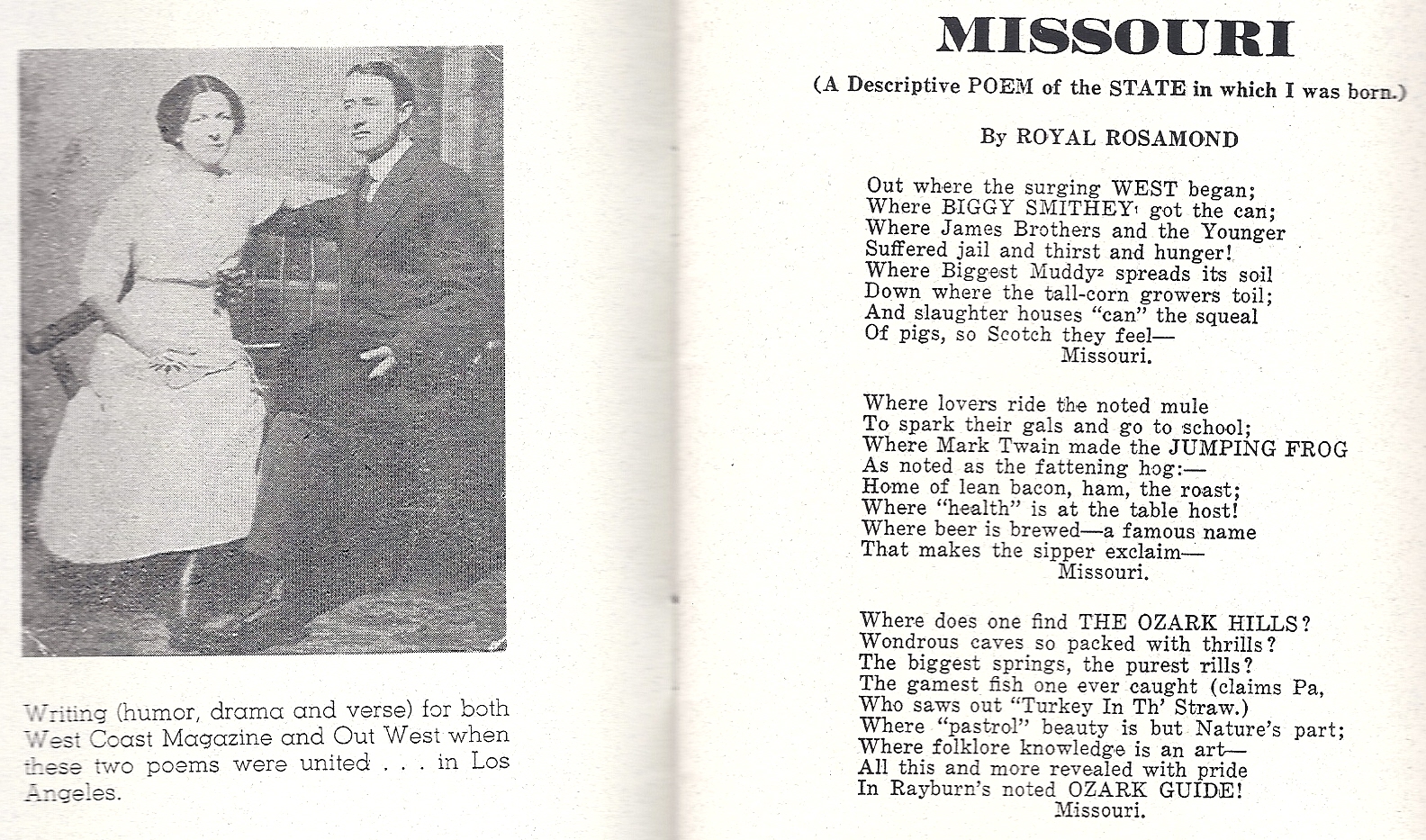

Yesterday I believe found my Rose kindred. I had recently located Royal Rosamond’s little book ‘At Matha Healey’s Grave’ that I published in 1998 under Royal Rosamond Press Co. I had got a copy of this book from a library, and took it to a printer. I gifted the University of Oregon with a copy of just twenty books. I was too poor to afford more. I intended this copy for my freind Edwin Corbin, but, realized I had no copy for myself, and kept it.
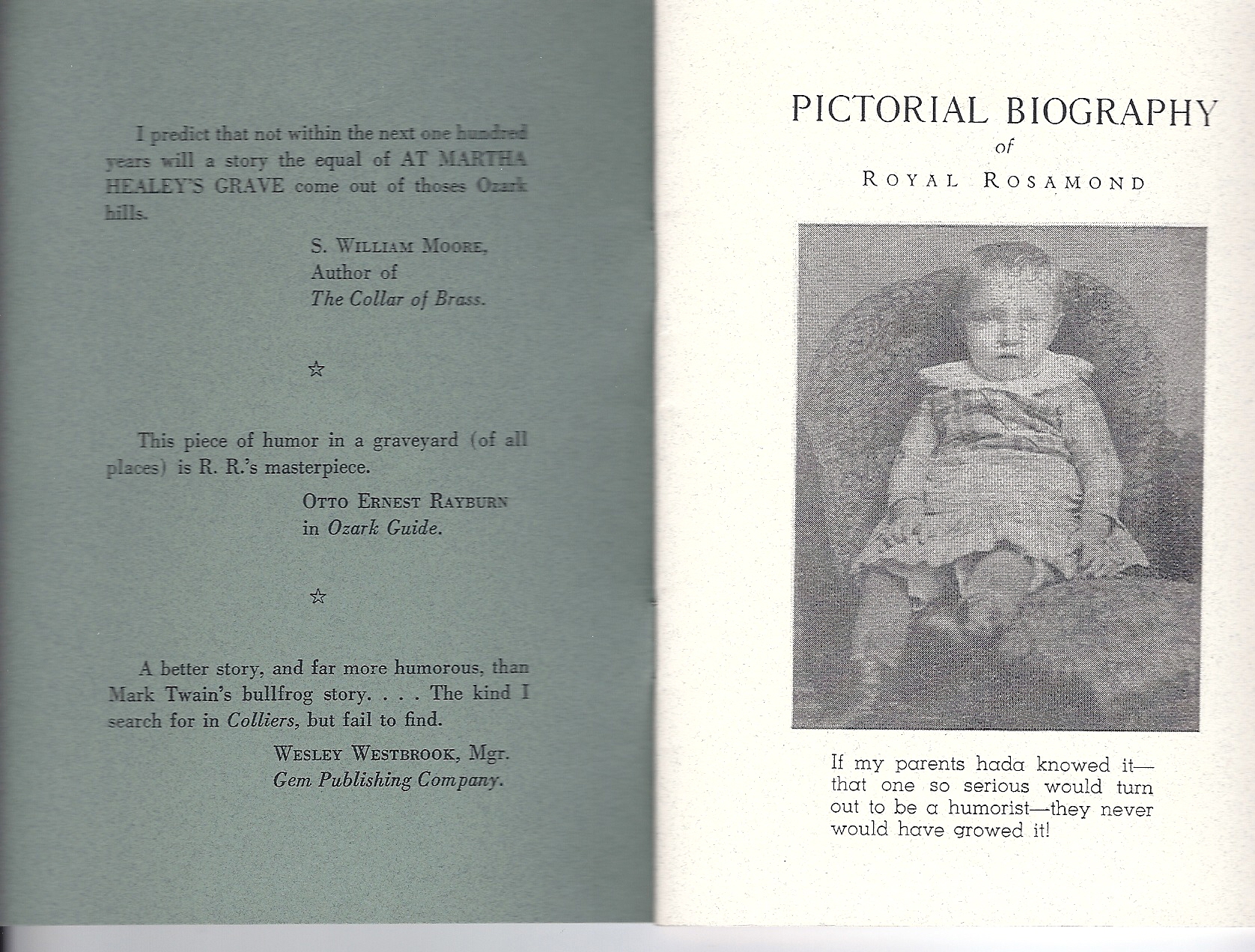
On the first page we have a ‘Pictorial Biography’ of my mother’s father, born Frank Wesely Rosamond. Royal is a pen name. Royal appears to be about one and half years of age. He and my grandson, Tyler Hunt, look like brothers. The caption reads’
“If my parents hada knowed it – that one so serious would turn out to be a humorist – they never would have growed it.”
This book of nine pages is part of Royal’s ‘Humor Of The States Series’. I think the reason Frank is looking glum, is, his folks put him in a dress!
On the inside back of the cover we find a ‘Thumbnail Biography Of Royal Rosamond’ that reads;
“John Rose, R.R.’s grandfather, a saw-mill man, settled with his daughter, Ida Lousisiana Rose, in Butler Missouri, right after the Civil War. Later, Mr. Rose bought a farm four miles west of Butler, on the Miami.
Mr’s Rosamond, a widow, migrated to Butler from Mississippi, with her four sons and a daughter. Her youngest son, William Thomas, met and fell in love with Ida. Married, they were provided with a cabin on a corner of the John Rose farm, where Royal, on December 18th. 11881, was born.”
Royal does not give the name of his grandmother, the widow of William Thomas, whose surname was Rosamond, but she is Frances Morrison. As for the name Ida Lousiana Rose, my Rosamond kindred might hold a record for odd names befitting backwoods folk, such as Fanny Lou Rosamond. But, when you ask what is in a name, you discover the name Fanny means “from France”. Does Lou stand for Louisiana?
We even have a Homer Rosamond which might make the Rosamond family the quintessential American Family, especially when my kindred were named after Francis Marion ‘The Swamp Fox’ who parents were Huguenots, as was the progenitor of the Rosamond family who may have come from Rougemont Switzerland, a city that was once a part of France. Frank Wesely Rosamond was named after Francis, and descends from James Rosamond, who allegedly fought alongside Samuel Rosamond, who served as a Captain in the Revolutionary War under Marion. Charles Rose, the ancestor of John Rose, also fought the British in the War of Independence. John E. Rose and his wife Eiiza, are buried in Butler. His ancestor, William Hemry Rose married Hanna Gowens, a famous family from Cornwall.
The link to John E. Rose is not proven. I am going to contact the Butler Historic Society. I just tlaked to Peggy Buhr at the Bates County Museum and she told me about Order 11. Frances Rosamond came to Butler after this order.
When I talked to Elizabeth at the Miami Museum she set me straight about the city of Butler. The Meyer family historyis beautiful, a real gem.
In his history of the Rosamond family family (1938) Leland Rosemond mentions, and then dismisses Fair Rosamond as being key to our family and our name. However, with my resent discovery about the true Rose Lineage, the Holy Grail has come to America. Rosamond had a graal cup entwined in vines on her tomb. She is the sleeping beauty that will soon awaken and behold her Family Tree that spring from my late sister, Christine Rosamond Benton.
Ed Corbin’s mother is kin to Francis Cavenaugh a Plymouth Brethren from which the evangelicals hail.
Here is the Rose Association
http://www.rosefamilyassociation.com/
Jon Presco
http://www.sullivansfarms.net/friendsofmiami/
John Erwin Rose (1829 – 1911)
Born in USA on 1829 to William Henry Rose and Hanna Gowens. John Erwin married Zerilda Jane Carr. John Erwin married Eliza Jane Barker and had 7 children. He passed away on 1911 in Butler, Missouri, USA.
http://records.ancestry.com/John_Erwin_Rose_records.ashx?pid=131437880
http://www.findagrave.com/cgi-bin/fg.cgi?page=gr&GRid=98757064
http://familytreemaker.genealogy.com/users/a/l/l/Deanna-Allen-Maryland/GENE5-0002.html
Fanny \f(an)-ny\ as a girl’s name is pronounced FAN-ee. It is of Latin origin, and the meaning of Fanny is “from France”. Pet name; variant of Frances. Cookbook author Fannie Farmer; author Fannie Flagg; actress Fanny Ardant.
Fanny has 9 variant forms: Fan, Fanceen, Fania, Fannee, Fanney, Fanni, Fannia, Fannie and Fantine.
Leland E. Rosemond
March, 1938
Scarsdale, N. Y.
THE NAME ROSEMOND
Some confusion seems to have resulted from the fact that more than
one origin for this name has existed. The oldest, perhaps, is the
Teutonic “Hrosmond”, conspicuous as far back as the 6th century in
the history of the Gepidae and the Lombards of northern Italy. “Mond”
in the Anglo-Saxon signified the protection given by a noble, or
chieftain, to this dependents of every kin, and the name signified
among them strong, or famous, protection. The form “Rosenmund”,
usually reckoned as German, has been interpreted as “rose of the
world,” form the Latin “mundus” for world. In Danish the name appears
as Rozamond; in French, as Rosemonde, in Italian, as Rosmonda, and in
Latin and Spanish, as Rosamunda.
“The Huguenot tradition in the family, confirmed by such sources as
O’Hart’s Irish Pedigrees and Agnew’s French Protestant Exiles,
suggests a French origin also and this has been found in the
name “Rougemont”, still perpetuated by the name of a village in
southeastern France, near Switzerland, and another village in
southwestern Germany. Why this source seems preferable for our origin
will be mentioned again.
Book shows end of PAGE 3 here
“Such a name, transported to other countries and dealt with in other
languages, was certain to be changed and even distorted. Our own
people have at times adopted the form “Roseman”, or “Rosman”,
or “Rossman”, or “Rosmond”, or “Rosmon”. The first three forms are
common in Germany although wholly unconnected with our family. Elders
in the family have held the view that the presence of the “d” is
significant and, since it is the equivalent of the “t”
in “Rougemont,” that seems reasonable. As many as thirty variations
are found, and yet the name in any form is not a common one in this
country if the German forms above are to be disregarded.
“In the Southern states among those identified with our line in
Ireland, the form “Rosamond” prevails as it does in England and
Canada, but the legends of “Fair Rosamond” Clifford which popularized
it there have no significance for us. It is, in one form or another,
the name of towns, but inquiry has developed that our family had
nothing to do with giving them.
Eliza Jane Barker Rose
Birth:
Jul. 7, 1836
Greene County
Indiana, USA
Death:
Jan. 22, 1911
Butler County
Missouri, USA
Family links:
Parents:
Obediah Tilman Barker (1815 – 1849)
Sarah Cochran Barker (1815 – 1890)
Spouse:
John Ervin Rose (1829 – 1911)*
Burial:
Black River Cemetery
Poplar Bluff
Butler County
Missouri, USA
Created by: Gregory Laughlin
Record added: Oct 12, 2012
Find A Grave Memorial# 98757064
http://www.findagrave.com/cgi-bin/fg.cgi?page=gr&GRid=98757425
http://bz.llano.net/gowen/electronic_newsletter/el199806.htm
http://home.earthlink.net/~bcmuseum/
General Order № 11.
Headquarters District of the Border,
Kansas City, August 25, 1863.
1. All persons living in Jackson, Cass, and Bates counties, Missouri, and in that part of Vernon included in this district, except those living within one mile of the limits of Independence, Hickman’s Mills, Pleasant Hill, and Harrisonville, and except those in that part of Kaw Township, Jackson County, north of Brush Creek and west of Big Blue, are hereby ordered to remove from their present places of residence within fifteen days from the date hereof.
http://en.wikipedia.org/wiki/General_Order_No._11_(1863)
William Henry Rose (b. 1794, d. 13 Sep 1839)
William Henry Rose (son of Charles Rose and Hutchinson)74, 75, 75 was born 1794 in Fayette, Kentucky, USA75, 75, and died 13 Sep 1839 in Gallatin, Kentucky, USA75, 75. He married Hannah Gowens on 16 Feb 1814 in Harrison, Kentucky, USA75, daughter of Charles Gowens and Elizabeth.
More About William Henry Rose and Hannah Gowens:
Marriage: 16 Feb 1814, Harrison, Kentucky, USA.75
Children of William Henry Rose and Hannah Gowens are:
i. +Emily J Rose, b. 1831, Gallatin, KY76.
Charles Rose (b. 1756, d. 14 Apr 1838)
Charles Rose71 was born 1756 in King George, Virginia, USA71, and died 14 Apr 1838 in Gallatin, Kentucky, USA71. He married Hutchinson.
Children of Charles Rose and Hutchinson are:
i. +William Henry Rose, b. 1794, Fayette, Kentucky, USA71, 71, d. 13 Sep 1839, Gallatin, Kentucky, USA71, 71.
Hannah Gowens (b. 1800)
Hannah Gowens (daughter of Charles Gowens and Elizabeth)35 was born 1800 in Harrison, Kentucky, USA36, died in Greene, Indiana, USA36. She married William Henry Rose on 16 Feb 1814 in Harrison, Kentucky, USA36, son of Charles Rose andCharles Gowens (b. 1763, d. 1869)
Charles Gowens34 was born 1763 in Henry, Kentucky, USA34, and died 1869 in Gallatin, Kentucky
http://familytreemaker.genealogy.com/users/f/r/a/Paul-A-Franklin/WEBSITE-0001/UHP-0736.html
Charles Gowens, a Revolutionary War soldier from Virginia saw much of the panorama of America unfold during his lifetime. He died at the age of 106, according to the research of Anna Brooks Dobbin Gowens, a family researcher. She wrote in a letter May 1, 1952 from Del Rio, Texas, “Charles Gowens became an expert marksman during the war and retained this proficiency throughout his lifetime. At the age of 102, in an exhibition, he brought down a squirrel from the top of a tall tree with his old muzzle-loader.”
http://bz.llano.net/gowen/dud/manuscript/Gowenms144.htm
GOWEN RESEARCH FOUNDATION ELECTRONIC NEWSLETTER
Volume 1, No. 6 June 30, 1998
Cornwall Was Ancestral Home
Of Many Foundation Members
Cornwall, on the southwest extremity of England, was home to
a concentration of Gawin-Gowen-Goyen-Goyne families prior
to emigration to the New World. Although the family is
generally considered Scotch because the surname has Celtic
derivation, the Cornish language, though no longer in usage,
was also Celtic.
From the Tamar River to Land’s End, the Cornish parish regis-
ters record the christenings, the marriages and the deaths of
family members from the early 1500s to the present. These
ledgers, some remaining after four centuries, plus data in the
Public Records office in Truro reveal much of the family and are
genealogical treasure troves to those with Cornish ancestors.
Descendants of Charles Rose
Generation No. 3
7. JAMES3 ROSE (JAMES2, CHARLES1)121 was born September 05, 1819 in Harrison Co., Kentucky122, and died Unknown. He married ELIZABETH OUTTEN123 1843 in Fayette Co., Kentucky124. She was born Abt. 1822 in Maryland124, and died Unknown.
Children of JAMES ROSE and ELIZABETH OUTTEN are:
i. MATTHIAS4 ROSE125, b. Abt. 1844, Fayette Co., Kentucky126; d. Unknown.
ii. WILLIAM ROSE127, b. Abt. 1846, Fayette Co., Kentucky128; d. Unknown.
iii. LEVI ROSE129, b. Abt. 1848, Fayette Co., Kentucky130; d. Unknown.
iv. MARGARET ROSE131, b. Abt. 1850, Fayette Co., Kentucky132; d. Unknown.
v. WYATT ROSE133, b. Abt. 1852, Fayette Co., Kentucky134; d. Unknown.
8. WILLIAM3 ROSE (JAMES2, CHARLES1)135 was born Abt. 1825 in Harrison Co., Kentucky136, and died Unknown. He married CATHERINE UNKNOWN137. She was born Abt. 1825 in Kentucky138, and died Unknown.
Children of WILLIAM ROSE and CATHERINE UNKNOWN are:
i. WILLIAM4 ROSE139, b. Abt. 1845, Kentucky140; d. Unknown.
ii. HENRY ROSE141, b. Abt. 1848, Kentucky142; d. Unknown.
9. WILLIAM HENRY3 ROSE (WILLIAM HENRY2, CHARLES1)143 was born 1815 in Kentucky144, and died Unknown. He married MARY JANE CONRAD145 May 15, 1840 in Mason Co., KY.146. She was born 1815 in Kentucky146, and died Unknown.
Children of WILLIAM ROSE and MARY CONRAD are:
i. NANCY E.4 ROSE147, b. Abt. 1843, Gallatin Co., KY.148; d. Unknown.
ii. WILLIAM HENRY ROSE149, b. July 19, 1844, Gallatin Co., KY.150; d. June 21, 1930, Center Twp., Shoals, Martin Co., Indiana150.
More About WILLIAM HENRY ROSE:
Burial: Unknown, Wagner Chapel, Martin Co., IN.150
iii. MINTRAVILLE ROSE151, b. Abt. 1845, Gallatin Co., KY.152; d. Unknown.
iv. FRANCIS M. ROSE153, b. Abt. 1848, Gallatin Co., KY.154; d. Unknown.
10. GEORGE WASHINGTON3 ROSE (WILLIAM HENRY2, CHARLES1)155 was born 1823 in Kentucky156, and died Unknown. He married SARAH SWANGO157 November 04, 1847 in Gallatin Co., KY.158. She was born Abt. 1822 in Gallatin Co., KY.158, and died Unknown.
Child of GEORGE ROSE and SARAH SWANGO is:
i. WILLIAM S.4 ROSE159, b. Abt. 1848, Gallatin Co., KY.160; d. Unknown.
11. THOMAS JEFFERSON3 ROSE (WILLIAM HENRY2, CHARLES1)161 was born 1826 in Kentucky162, and died October 14, 1908 in Marco, IN.162. He married (1) ELIZABETH CARR163 May 15, 1846 in Gallatin Co., KY.164. She was born Abt. 1834 in Gallatin Co., KY.164, and died Unknown. He married (2) EMILY HANNAH165 1860 in Indiana166. She died Unknown.
Notes for THOMAS JEFFERSON ROSE:
In the year 1857 he moved to Indiana ,his wife died one year later.And in 1860 he was married again,to Emily Hannah.
H united with the M.E.Church at Simpson Chapel under Rev. Elrod; and lived a christian life up to the time o his death. The funeral services were held at the Simpson Chapel by Rev.E.H.Wood and the remains were interred in Simpson Chapel Cemetery.He died at the hom e of his son Thomas J.Rose.
Source:
The Bloomfield News,Bloomfield,Greene Co.,IN.,Friday Nov.20,1908,Volume XXXIII Number 1,PG.4,Column 1.
More About THOMAS JEFFERSON ROSE:
Burial: Unknown, Simpson Chapel, Greene Co., IN.166
Cause of Death: Apoplexy166
Children of THOMAS ROSE and ELIZABETH CARR are:
i. A.G.4 ROSE167, d. Unknown.
ii. H.B. ROSE167, d. Unknown.
iii. ANNA ROSE167, d. Unknown; m. ? GREY167; d. Unknown.
Children of THOMAS ROSE and EMILY HANNAH are:
iv. WILLIAM H.4 ROSE167, d. Unknown.
v. GEORGE M. ROSE167, d. Unknown.
vi. MARY E. ROSE167, d. Unknown.
vii. LOUISA H. ROSE167, d. Unknown.
viii. JOHN M. ROSE167, d. Unknown.
ix. THOMAS J. ROSE167, d. Unknown.
x. EMILY ROSE167, d. Unknown; m. ? STULTZ167; d. Unknown.
12. JOHN ERVIN3 ROSE (WILLIAM HENRY2, CHARLES1)167 was born March 1829 in Gallatin Co., KY.168, and died June 17, 1911 in Popular Bluff, MO.168. He married (1) ZERRILDA JANE CARR169 April 01, 1849 in Gallatin Co., KY.170. She died Unknown. He married (2) ELIZA JANE BARKER171 September 11, 1856 in Greene Co., IN.172, daughter of OBEDIAH BARKER and SARAH COCHRANE. She was born July 1837 in Scotland, IN.172, and died January 22, 1912 in Popular Bluff, MO.172.
Notes for JOHN ERVIN ROSE:
Records of the U.S.Census show birth at March 1830.
Children of JOHN ROSE and ZERRILDA CARR are:
i. MARY HANNA4 ROSE173, b. 1850, Gallatin Co., KY.174; d. Unknown.
ii. JOSEPH ROSE175, b. 1852, Gallatin Co., KY.176; d. Unknown.
iii. SARAH CATHERINE ROSE177, b. 1884178; d. Unknown; m. JESSE DRAKE179; d. Unknown.
Children of JOHN ROSE and ELIZA BARKER are:
13.
iv. ZERRILDA4 ROSE, b. 1857, Greene Co., IN.; d. Unknown.
v. AMANDA E. ROSE179, b. 1859, Greene Co., IN.180; d. Unknown, Popular Bluff, MO.180; m. JOSEPH A. LAUGHLIN181, March 17, 1876182; d. Unknown.
14.
vi. SARAH MEHEADABLE ROSE, b. August 16, 1864, Greene Co., IN.; d. Unknown.
vii. HOWARD GRANVILLE ROSE183, b. February 26, 1866, Greene Co., IN.184; d. March 06, 1936, Popular Bluff, MO.184; m. MARTHA F. WRIGHT185, November 23, 1890186; d. Unknown.
viii. MARGARET ELLEN ROSE187, b. August 14, 1868, Greene Co., IN.188; d. January 30, 1955188.
ix. JULIA ROSE189, b. 1871, Greene Co., IN.190; d. Unknown; m. PETE ARKADO191; d. Unknown.
More About JULIA ROSE:
Medical Information: Julia committed suicide by ingesting hydrochloric acid.192
x. MILLIE CAROLINE ROSE193, b. November 09, 1873, Greene Co., IN.194; d. April 16, 1947, Scotland, IN.194; m. MILTON G. HAMILTON195, September 30, 1899196; d. Unknown.
Notes for MILLIE CAROLINE ROSE:
She was generally known as Aunt Carrie.
15.
xi. OBEDIAH DARR ROSE, b. October 13, 1876, On the farm in Taylor Twp., Greene Co., Indiana; d. October 11, 1963, Linton, Indiana.
xii. JAMES ROSE197, b. 1879, Greene Co., IN.198; d. Unknown.
Notes for JAMES ROSE:
James was 9 yrs old in 1880 census, Family Bible has James 5 yrs. old. Believe he died at age 5 yrs.
http://archiver.rootsweb.ancestry.com/th/read/GOWEN/2000-04/0955762323
http://www.rosefamilyassociation.com/Rose%20Family%20DNA%20Project.html
http://freepages.genealogy.rootsweb.ancestry.com/~gowenrf/nl199001.htm
GOWEN RESEARCH FOUNDATION NEWSLETTER
Volume 1, No. 5 January 1990
Cornish Research Team
Into 16th Century Records
Cornwall, on the southwest extremity of England, was home to a concentration of Gawin Gowen Goyen Goyne families prior to emigration to the New World. Although the family is generally considered Scotch because the surname has Celtic derivation, the Cornish language, though no longer in usage, was also Celtic.
From the Tamar River to Land’s End, the Cornish parish registers record the christenings, the marriages and the deaths of family members from the early 1500s to the present. These ledgers, some remaining after four centuries, plus data in the Public Records office in Truro reveal much of the family and are genealogical treasure troves to those with Cornish ancestors.
Charles Gowens was born in 1763 in Henry [Halifax] County, according to his Revolutionary War pension application, No. S31,072 which was published in “Abstracts of Pension Papers Pertaining to Soldier of the Revolutionary War, War of 1812 and Indian Wars, Gallatin County, Kentucky:”
“Charles Gowans, Va. S31,072, Bounty Land Warrant No. 26106-160-55
On October 22, 1833 in Gallatin County, Kentucky, the said pensioner at the age of 70 years appeared in open court and stated that on September 1, 1779 in Henry County, Virginia he had first volunteered to serve in the capacity of a private soldier for a tour of six months duration in the company under the command of Capt. Jonathan Hanley and Lt. Edward Tatum.
He stated that they had first marched to the state of South Carolina and that there they were attached to the regiment under the command of Col. Monroe and they then marched to 96 near Charleston and they then marched to guard the prisoners from 96 to Williamsburg and there and then the said pensioner was honorably discharged.
Then again in the month of May 1781 the said pensioner again volunteered to serve in the capacity of a private soldier for a tour of 3 months duration to serve in the company under the command of Capt. Shelton and they then rendezvoused at Russell Creek Meeting House in Henry County, Virginia and they then marched up the Dan River and they were also often at the Hollow on the river. The
http://freepages.genealogy.rootsweb.ancestry.com/~gowenrf/nl199007.htm
John W Rose in the 1940 Census
Age 21, born abt 1919
Birthplace Missouri
Gender Male
Race White
Home in 1940 Poplar Bluff,
Butler, Missouri
Household Members Age
Head John W Rose 21
Wife Florence A Rose
20
http://genforum.genealogy.com/rosamond/messages/9.html
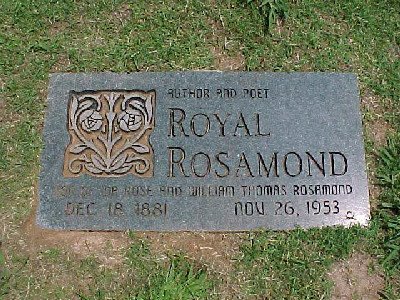
Interment Record for ROYAL ROSAMOND
Name: ROSAMOND, ROYAL
Born: 12/18/1881
Died or Buried: 11/26/1953
Buried: Sunny Lane Sec. 13
Section: lot S13-RN-7
City: Del City
County/State: Oklahoma, OK
Notes: Son of Ida & William
Address • 100 E Fort Scott St
• Butler, MO 64730-2212
Phone (660) 679-4777
Hours: Open May-October, Mondays through Saturdays (closed Sundays), 10 am until 4 pm
Address: Elks Drive
Phone: 660-679-0134
Our Email: bcmuseum@earthlink.net
Subject: Re: [ROSAMOND] William Thomas Rosamond
Date: Sun, 17 Jan 2010 16:51:20 EST
Michele,
So good to hear from you. And such a pleasure to know that we may
have Rosamond relatives in the UK.
Our Rosamond ancestor arrived in the “colonies” in 1737 on board the
ship St. Andrew Galley from Rotterdam. The ship landed in Philadelphia, in
what is now the state of Pennsylvania, on the east coast of the US. Johann
Jacob Rosemann is listed as a passenger, and signed an oath of allegiance
to King George II.
Do you know if your family was originally from the Palatine area of
France? Our ancestors fled to Holland after the Edict of Nantes was revoked
in 1685, and from there to the American colonies. It would be wonderful if
we had common ancestors!
Jackie Utley
Subject: Re: [ROSAMOND] William Thomas Rosamond
Date: Tue, 19 Jan 2010 09:54:08 EST
Hello
It is very hard to tell where in france our relatives came from, although
we can be fairly certain that they came with the Hugenots and settled in
Spitalfields, East London, not far from where the family was living up to 5
years ago. It would be lovely to think that we were related and had cousins
so far away.
All the best
Michele
William Thomas Rosamond in the 1940 Census
Age 10/12, born abt 1939
Birthplace Mississippi
Gender Male
Race White
Home in 1940 Poplar Creek,
Montgomery, Mississippi
Household Members Age
Head Homer Rosamond
35
Wife Fannie Lou Rosamond
30
Son William Thomas
Homer Rosamond in the 1940 Census
Age 35, born abt 1905
Birthplace Mississippi
Gender Male
Race White
Home in 1940 Poplar Creek,
Montgomery, Mississippi
Household Members Age
Head Homer Rosamond 35
Wife Fannie Lou Rosamond
30
Son William Thomas Rosamond
10/12
View Actual Record Or find other results in the 1940 census for Homer Rosamond
Fannie Lou Rosamond in the 1940 Census
Age 30, born abt 1910
Birthplace Mississippi
Gender Female
Race White
Home in 1940 Poplar Creek,
Montgomery, Mississippi
Household Members Age
Head Homer Rosamond
35
Wife Fannie Lou Rosamond 30
Son William Thomas Rosamond
Children of Samuel Rosamond and Frances Morrison are:
i. Benjamin F. Rosamond, born Abt. 1844 in Mississippi.
ii. John J. Rosamond, born Abt. 1846 in Mississippi.
iii. Frances J. Rosamond, born Abt. 1852 in Mississippi.
iv. Nonimus Nathaniel Rosamond, born Jul 1854 in Lowndes County, Mississippi; died 01 Jan 1908 in Lurton, Newton County, Arkansas; married Rosalie A. Bennett Abt. 1875 in Chicago, Illinois.
http://familytreemaker.genealogy.com/users/f/l/u/Cindy-Fluri/GENE13-0005.html
SAMUEL ROSAMOND and FRANCES MORRISON are:
17.
i. NONIAMUS NATHANIEL6 ROSAMOND, b. July 1853, Lowndes County, Mississippi; d. January 01, 1908, Newton County, Arkansas.
ii. BENJAMIN F ROSAMOND.
iii. W. THOMAS ROSAMOND.
iv. JOHN I. ROSAMOND.
Ancestors of Rosemary Rosamond
Generation No. 1
1. Rosemary Rosamond, born 26 Sep 1922 in California. She was the daughter of 2. Frank Wesley “Royal” Rosamond and 3. Mary Magdalene Weineke.
Generation No. 2
2. Frank Wesley “Royal” Rosamond1,2, born 18 Dec 1881 in Missouri3; died Abt. 26 Nov 1953 in Prob Oklahoma. He was the son of 4. William Thomas Rosamond and 5. Ida Rose. He married 3. Mary Magdalene Weineke Abt. 1911 in California4.
3. Mary Magdalene Weineke, born Abt. 1882 in Iowa.
Notes for Frank Wesley “Royal” Rosamond:
From: Jon Presco <braskewitz yahoo.com>
Subject: Rosamond
Newsgroups: gmane.culture.templar.rosemont
Date: 2004-05-31 12:28:27 GMT
My grandfather, Royal Rosamond, authored several books, numerous short stories, and countless poems that were published in ‘Out West’ ‘Liberty Magazine’, and several Romance magazines. He was good friends of Dashiel Hammet according to my mother Rosemary, and my Aunt Lillian recalls falling asleep to the sound of her father, and the author Earl Stanley Gradner, typing away in their home in Ventura California, they honing up on their literary skills. Dashiel and Earl were members of the ‘Black Mask’ a society of mystery writers.
Royal was born in a log cabin on the Missouri River, the only known child of William Rosamond and Ida Louisiana Rose. He met my grandmother, Mary Magdalene Wienke while working in Brakey’s Cash Bizaar in Ojai, and would later own the first general store in Ventura. A short biography of Royal is found in my link to my newspaper ‘Royal Rosamond Press’.
Royal was a good friend of Otto Rayburn, the Ozark historian, they meeting when Royal returned to the Ozarks to become a Regional writer. Royal published in Rayburn’s ‘Arcadian Magazine’ “A Journal
of the Well-flavored Earth” printed in Eminence Missouri. Royal would later found ‘Gem Publishing’ in Oklahoma City, and publish his books ‘Bound in Clay’ and ‘Ravola of Thunder Mountain’.
I have corespondence between Royal and Otto. I wonder if he met the Regional artist, Thomas Hart Benton, who was also good friends of Otto Rayburn, there photographs of both men in Volume 1. of
Rayburn’s ‘Enchanted Ozarks’ an archives of Ozark Folk Life found at the University of Arkansas.
Interment Record for ROYAL ROSAMOND
Name: ROSAMOND, ROYAL
Born: 12/18/1881
Died or Buried: 11/26/1953
Buried: Sunny Lane Sec. 13
Section: lot S13-RN-7
City: Del City
County/State: Oklahoma, OK
Notes: Son of Ida & William
http://userdb.rootsweb.com/cemeteries/cgi-bin/cemetery.cgi?id=798161&database=Cemetery%20Records&return_to=http://userdb.rootsweb.com/cemeteries/&submitter_id=
More About Frank Wesley “Royal” Rosamond:
Burial: 26 Nov 1953, Sunny Lane Sec. 13, lot S13-RN-7, Del City, Oklahoma
More About Frank Rosamond and Mary Weineke:
Marriage: Abt. 1911, California4
Children of Frank Rosamond and Mary Weineke are:
i. June E Rosamond, born Abt. 1914 in California.
ii. Bertha M Rosamond, born Abt. 1916 in California.
1 iii. Rosemary Rosamond, born 26 Sep 1922 in California.
iv. Lillian J Rosamond, born Abt. 1924 in California.
Generation No. 3
4. William Thomas Rosamond5,6,7,8,9, born 1860 in Mississippi10. He was the son of 8. Samuel Rosamond and 9. Frances C. Morrison. He married 5. Ida Rose 16 Feb 1881 in Bates County, Missouri11.
5. Ida Rose, born in Louisiana; died Abt. 1890.
More About William Thomas Rosamond:
Name 2: William Thomas Rosamond12,13
Date born 2: Abt. 1860, Mississippi
Residence: 1900, Duke, Greer, Oklahoma14
More About William Rosamond and Ida Rose:
Marriage: 16 Feb 1881, Bates County, Missouri15
Child of William Rosamond and Ida Rose is:
2 i. Frank Wesley “Royal” Rosamond, born 18 Dec 1881 in Missouri; died Abt. 26 Nov 1953 in Prob Oklahoma; married Mary Magdalene Weineke Abt. 1911 in California.
Generation No. 4
8. Samuel Rosamond16, born 1815 in Abbeville District, SC. He was the son of 16. Benjamin Rosamond and 17. Susannah Hill. He married 9. Frances C. Morrison.
9. Frances C. Morrison17, born Abt. 1822 in South Carolina.
More About Samuel Rosamond:
Occupation: Farmer
Children of Samuel Rosamond and Frances Morrison are:
i. Benjamin F. Rosamond, born Abt. 1844 in Mississippi.
ii. John J. Rosamond, born Abt. 1846 in Mississippi.
iii. Frances J. Rosamond, born Abt. 1852 in Mississippi.
iv. Nonimus Nathaniel Rosamond, born Jul 1854 in Lowndes County, Mississippi; died 01 Jan 1908 in Lurton, Newton County, Arkansas; married Rosalie A. Bennett Abt. 1875 in Chicago, Illinois.
More About Nonimus Rosamond and Rosalie Bennett:
Marriage: Abt. 1875, Chicago, Illinois
4 v. William Thomas Rosamond, born 1860 in Mississippi; married (1) Ida Rose 16 Feb 1881 in Bates County, Missouri; married (2) Mildred A. ? Abt. 1898.
vi. Laura Rosamond, born Abt. 1862.
Generation No. 5
16. Benjamin Rosamond18, born Abt. 1790 in South Carolina19; died Bet. 1850 – 1860 in Attala County, Mississippi. He was the son of 32. James Rosamond and 33. Lettice Tillman. He married 17. Susannah Hill.
17. Susannah Hill, died 20 Oct 1828 in Abbeville County, South Carolina20. She was the daughter of 34. John Hill Sr. and 35. Susannah ?.
Notes for Benjamin Rosamond:
Benjamin Rosamond, R255, M. Born in 1790 in South Carolina. Was on the census for Attala County, Mississippi in 1850. Benjamin died in Attala County, Mississippi bef 16 May 1859, he was 69.
In “Greenwood County Sketches” Benjamin, Susannah and son Thomas are mentioned as members of the Walnut Grove Baptist Church located near Ware Shoals in 1834. Before 1850, Benjamin had remarried to Jane Rogers Mays.
A number of records from the Walnut Grove Baptist Church were published in a series of newspaper articles in the “Greenwood Index-Journal” in the early 1940s. The text of these articles, written by Harry L. Watson, are contained in Volume 2 of “Greenwood Historical Society Scrapbooks”. These were later reprinted in a book titled “Our Old Roads” by Margaret Watson, daughter of the author. Benjamin and his family are mentioned several times in these records as detailed below. Each article was numbered based on date of publicatiion, not the date of the church record.
http://genforum.genealogy.com/rosamond/messages/9.html
NANCY NARCISSUS5 ROSAMOND (BENJAMIN4, JAMES3, JOHN ‘THE HIGHWAYMAN’2, SERGEANT WILLIAM (JAMES ??)1) was born October 20, 1828 in Abbeville County, SC, and died June 17, 1921 in Chester, Choctaw County, Mississippi. She married WILLIAM WRIGHT BOWIE 1844, son of HEZEKIAH BOWIE and LUCINDA SIMMS. He was born October 03, 1822 in South Carolina, and died February 02, 1910 in Chester, Choctaw County, Mississippi.
Children of NANCY ROSAMOND and WILLIAM BOWIE are:
i. SARAH J.6 BOWIE.
ii. LUCINA H. BOWIE.
iii. JANE BOWIE.
iv. HEZAKIAH MARION BOWIE.
v. JOSEPHINE J. (IDELLA?) BOWIE.
vi. ZABIAH NARCISSUS BOWIE.
vii. WILLIAM D. BOWIE.
viii. JOHN W. BOWIE.
http://files.usgwarchives.net/ky/whitley/military/r200001.txt
Submitted by Mary Lou Hudson
*************************************************************
USGENWEB ARCHIVES NOTICE: These electronic pages may NOT be
reproduced in any format for profit, or for presentation by
any other organization or persons. Persons or organizations
who wish to use this material must obtain the written consent
of the contributor, or legal representative and contact the
listed USGenWeb archivist with proof of the consent. The
submitter has given permission to the USGenWeb Archives to
store the file permanently for free access.
*************************************************************
William and Elizabeth Rose — Pension No. W 8554
In Whitley Co., KY 19 Nov 1833, William Rose, resident of Whitley Co., KY
on the waters of Cain Creek on the main road leading to Barbourville from
Jacksboro, TN and about 22 miles from Barbourville, KY, age 76, made
declaration that he entered service in the Revolutionary War as a volunteer
in Granville, NC where he resided at that time. He began in the spring of
1790 for a term of 8 months, under Capt. Bartlet Scearcey, Lt Simms and
rendezvoused at Hillsboro, then received the appointment and commission of
Ensign. They marched to Salisbury, then down the Peedee River, then on the
road to join Gen. Gates. They were joined by Gen. John Butler. He states
that when about 7 miles from Camden, they heard of the defeat of Gen. Gates
at that place and retreated back to Hillsboro, then marched in the direction
of Wilmington and stationed at Col. Robert Burton’s near a small village.
They remained there until sometime in November when he was permitted to
return to his family. On 1 Dec 1780, he had a small son born to his wife
whom they named William. The son now lives within 5 miles of this deponent.
Soon after the birth of his son, he again volunteered under Stephen Merit,
and Capt. Joseph Langston. This deponent again was Ensign. He was
constantly engaged in scouting the country, disarming the Tories and
marching against them when they collected in numbers. He was at Hillsboro
when he heard of Tarlton’s defeat at Cow Pens and then by a “Naration,”
which was the old soldier name for calling the soldiers, they were all
called to join him and receive protection. A great many did join him. At
that time Gen. Butler and the militia under him were in the lower end of
Granville Co. He was with them. After this Cornwallis marched to Guilford,
as he understood. The company to which he belonged was never with the army
of Gen. Greene, but were often within a few days march of him. Later they
were ordered to join Washington at Yorktown. Before they got there,
Cornwallis had surrendered and he resigned his commission of Ensign and
returned to his family. He stated that he served nearly 18 months.
He stated that he was born in Granville, NC on Tar River in 1757 and that
he was living in Granville Co. when he was called into service. Since the
Revolutionary War, he moved to Pendleton Co., SC., then to Powell’s Valley,
then to Whitley Co., then to Knox Co. where he lived more than 15 years.
William Crowley, Edward Bennett, Thomas Adkins, an old soldier himself, Rev.
Wm. Siler, John Powell and Ann Powell made certifications of their
acquaintance with Wm. Rose and to their belief in his statements.
William Rose of Whitley Co., KY, who was an ensign in the company
commanded by Capt. Learcoy of the regiment, commanded by Col. Burton in the
NC line for 1 year and 4 months was inscribed on the roll of the KY agency
to commence 4 Mar 1831. Certificate of the pension was issued 6 Dec 1833.
In Whitley Co., KY 18 Aug 1836 before Wm. Siler, J.P. Elizabeth Rose
resident of Clear Fork, age 76, appeared in court and made declaration that
she is the widow of Wm. Rose, who was an ensign in the militia during the
Revolutionary War and that she was married to Wm. Rose on 12 Mar 1774 and
that her husband died 12 Feb 1835. They had 4 children other than William,
who was born during the Revolutionary War. She mentioned Hutson and
Christina and stated that William was born 1 Dec after Gates Defeat and that
she was married to Wm. Rose in Granville Co. NC by Robert Dickins. They had
10 children, the oldest of whom is at this date age 60 and the youngest is
between 37 and 40 years of age.
John Powell made deposition at the home of Ephraim Rose in Whitley Co.,
KY that he was well acquainted with the above named Elizabeth Rose and her
husband, Wm. Rose for 45 years.
Ann Powell made deposition at the home of Ephraim Rose in Whitley Co., KY
that she is the daughter of William and Elizabeth Rose and that she is about
57 or 58 years of age and knows the statement above made to be true.
Elizabeth Rose, widow of Wm. Rose was inscribed on the roll of the KY
agency to commence 12 Feb 1835. Certificate of the pension was issued 19
Oct 1836 and sent to O.S. Ballinger, Barbourville, KY.
(Transcribed record on file at Library of Michigan – Whitley County,
Kentucky Extracts of Revolutionary War Pension Applications, 457 .W6, W56,
1989 Genealogy – Page 17 & 18)
On September 10, 1854 Hannah Gowens Rose received a deed to 127.5 acres of land on Craig’s Creek “for $1 and the love and affection of my daughter” from her father, according to Gallatin County Deed Book 0, page 139. Hannah Gowens Rose was remarried later in 1854 in Greene County, Indiana to John Harshfield.
According to the research of Eddy Alderson, 10 children were born to William Henry Rose and Hannah Gowens Rose, including:
William Henry Rose, Jr. born about 1815
James Rose born about 1816
Mary Rose born about 1818
Nancy Rose born about 1820
George W. Rose born about 1823
Thomas Jefferson Rose born in 1827
John Ervin Rose born in 1829
Emily J. Rose born in 1831
Eliza A. Rose born in 1834
Amanda Rose born in 1838
William Henry Rose, Jr, son of William Henry Rose and Hannah Gowens Rose, was born about 1815. He was married about 1842, wife’s name Mary B.
He was enumerated as the head of Household 256-256 in the 1850 census of Gallatin County, page 166:
“Rose, Wm. H. 35, born in KY, laborer
Mary B. 35, born in KY
Nancy 7, born in KY
Montrecilla 5, born in KY, male
Wm. A. 3, born in KY
Frances M. 1, born in KY, male”
Mary Rose, daughter of William Henry Rose and Hannah Gowens Rose, was born about 1818. She was married about 1837 to Jacob Jackson.
Nancy Rose, daughter of William Henry Rose and Hannah Gowens Rose, was born about 1820. She was married about 1838 to Hugh W. Jackson.
George W. Rose, son of William Henry Rose and Hannah Gowens Rose, was born 1823 in Gallatin County. He was married about 1846 to Sally Swango.
Thomas Jefferson Rose, son of William Henry Rose and Hannah Gowens Rose, was born about 1827 in Gallatin County. He was married about 1849, wife’s name Elizabeth R.
He was enumerated there in the 1850 census as the head of Household 257-257:
“Rose, Thomas J. 23, born in KY, laborer
Elizabeth R. 18, born in KY”
John Ervin Rose, son of William Henry Rose and Hannah Gowens Rose, was born in 1829. He was married in Gallatin County April 1, 1849 to Zerilda Jane Carr. Their marriage bond was signed by Edward B. Carr.
They were enumerated in the 1850 census of Gallatin County in an adjoining location with his mother. They were recorded as:
“Rose, John E. 21, born in KY, farmer, $400 real
estate, illiterate
Zerilda 22, born in KY, illiterate
Mary H. 3/12, born in KY”
He was remarried September 11, 1856 to Eliza Jane Barker in Greene County, Indiana.
According to the research of Ed Alderson, two children were born to John Ervin Rose and Zerilda Jane Carr Rose:
Mary Hannah Rose born about January 1850
Joseph Rose born about 1853
Children born to John Ervin Rose and Eliza Jane Barker Rose include:
Zerrilda Rose born in 1857
Amanda E. Rose born in 1859
Sarah M. Rose born August 16, 1864
Howard G. Rose born February 26, 1866
Margaret Rose born in 1868
Julia Rose born in 1871
Obadiah Rose born October 13, 1876
James Rose born in 1879
Mary Hannah Rose, daughter of John Ervin Rose and Zerilda Jane Carr Rose, was born about January 1850. She appeared at the age of five months in the 1850 census of her father’s household in Gallatin County.
Obadiah Rose, son of John Ervin Rose and Eliza Jane Barker Rose, was born October 13, 1876 in Green County, Indiana, according to Ed Alderson. He was married September 30, 1899 to Dora Sanders in Knox County Indiana. Among children born to them was Edson Rose who was married July 12, 1922 in Greene County, Indiana to Bertha Madeline Moore. Their daughter, Mary Emmaline Rose was married to Herbert Bruce Alderson October 23, 1948 in Greene County, according to their son, Eddy Alderson.
John A. Gowens, son of Charles Gowens and Elizabeth “Betsy” Blair Gowens, was born about 1800, probably in Claiborne County. “John Goens” was married September 22, 1827 to Dorothy Furnace, according to “Gallatin County, Kentucky Marriages, 1714-1835.” Her name may have been Dority Furnish, according to Greg A. Bennatt. They were married in Orange County, Virginia, according to Rosa Evelyn Ray Cordell.
Share this:
Related
William Rose and PennMarch 16, 2019
Victoria Rosamond BondSeptember 23, 2018With 1 comment
The Rose StoryMarch 30, 2017

About Royal Rosamond Press
I am an artist, a writer, and a theologian.
View all posts by Royal Rosamond Press →
This entry was posted in Uncategorized. Bookmark the permalink. Edit
1 Response to Born of Two Roses
Royal Rosamond Press says:March 31, 2016 at 8:25 pm (Edit)Reblogged this on rosamondpress and commented:https://rosamondpress.com/2013/01/09/team-rollo-and-rose-selavy/embed/#?secret=BcWikcSQyo#?secret=NaEO1LQcGZ
The Moonshiner Murders
Posted on March 22, 2017 by Royal Rosamond Press
Above is a picture of Yates Standridge. He was one bad man. He killed Sam Rosamond’s father, and blew his wife’s arm off with a shotgun. Look at the size of his hands. You don’t want them lethal weapons clamped on your neck like an old greasy vice in a machine shop. He killed a man in jail. He escaped from jail. The Rosamond boys tried to bushwhack him, but shot the wrong man. Some fled to the oil fields of Oklahoma. Did they eventually…..get their man?
http://3sistershistory.blogspot.com/2015/12/divena-mae-dixon-and-yates-standridge.html
It was extremely dangerous to go after this man they called ‘The Wolf’, and you did not want him on your trail. If you saw him coming, you slunk away, hid in any shadow that would have you. He was no joke, no Hee-Haw Clown in some Jesus-Freak Carney Show. He was the real deal, the reason Vernon Rosamond preached to the good citizenry, while Velma played the organ. You better believe there is a Devil.
“To capture him, C. L. Boyd said they took Divena and the children to Justice of the Peace Rosemond’s home.”
In a way, we kind of look alike. We might be distant kin via the Hodge family. For sure he has my kinfolk’s blood on his hand, and I have claimed to be the Rosamond Family Go’el Redeemer. I have been wrongfully accused of being a stalker. But, I come from humble stock. We eat what we catch. This was not a country for old men. Anton Chigurth is a fictional character who Yates would have dispatched, chopped him up and sold him as hog food. The Blue Tick hounds would be gnawing on his bones while Sheriff Rosamond made his rounds, tipping his hat to those he know, and glaring at those he don’t.
“Old Lady Savage went back and told Yates that Grandpa and Grandma Rosamond had his wife handcuffed and chained to the floor.”
Vernon ran that store and gas station you see in the photo below. There had to be an on-going card game in the back of one of these establishments…..to go with the distilled moonshine!
Then, there is your good ol Coonhound. Who’s the got time to raise beef? Ya eats your squirrel, drinks ya moonshine, and if the sheriff gets in your business, shoot him dead.
If Yates walked in to a card room, there was a pool, to see who the last man was who shit his pants. When they put uniforms on these good ol boys, they went over there and kicked German butt. It was a long camp-out and coon hunt. They were given the best rifles ever made. They could do wonders with antiques – as it was!
Yate’s father got in his son’s way. How, we aren’t told. His pappy shat and peed his britches, as ‘The Wolf’ made him do a little dance. This ain’t The Beverley Hillbillies! But, somethings were made up.
“In 1906, Yates was indicted for assault with intent to kill John Halley. Two witnesses were Marion Savage and W. G. Ketcherside. There were other witnesses. I do not have all the names. This was filed in the State of Arkansas, circuit court 10th July, 1906. Between 1906 and 1908, there were other assault charges and gambling charges for Yates Standridge. I have also read of a story of how Yates was sitting in the front yard of his father’s house shooting at his father. (His father was dead by 1902, C. L. Boyd said this was just a made up tale and untrue).
One thing is for certain, the local law enforcement officers were scared to death of Yates Standridge. They described him as the “human” wolf, a mean, vicious man. By 1906, he is wanted for “highway robbery” in Lee Township which I think is in Pope County, AR. The article below was published in the local Russellville, AR Courier paper. Sheriff Hatley and deputy Craig arrest Yates and take him to the Russellville Jail.
The article states that Yates had taken his wife and children to the home of John Dixon. By this time I think John Dixon had moved from Richland and lived closer to Mt. Judea, Arkansas, near his sons who had married the daughters of his wife. Hatley and Craig hid and watched the house for Yates. The first day they watched they came up empty handed but on the second day about 10 in the morning he approached the house. They rushed to arrest him and he quickly moved inside the house and fired. He grazed Sheriff Hatley’s shoulder. John Craig removed a board from the house and got a bead on Yates and they arrested him.
He helped build a Dam near Russellville as part of this sentence. They called it the Water Works Dam. I am not sure where it is. One day, the guard went to sleep and Yates almost got away. I guess Yates served out this sentence but trouble was always in his path. I am not sure what the charge Yates Standridge was wanted for in 1908. It could have been illegal distilling. It could have been battery. It could have been for robbing someone. Whatever he was wanted for Yates did not relish going back to jail.
By 1908, Yates and Divena had Nancy Jane, Lola May, and Robert Standridge. Yates had a “big bad” reputation and the law officers were very frightened at what he might do. To capture him, C. L. Boyd said they took Divena and the children to Justice of the Peace Rosemond’s home. They chained her to a bed and made her scream so he would come out of his hiding place in the woods. He came out and shot though the door and killed N. N. Rosemond. That bloody day, Yates killed Rosemond and Martha Overturf and shot the arm off of Rosemond’s wife. The Rosemond’s descendants account of that day I will add here:


The only man Yates Standridge failed to kill when he set his mind to it, was himself. Too tough to die. He had to have scared himself………..half to death!
Nonimus Rosamond was Royal’s uncle.
Jon Presco
Published by Rosamond Press
Copyright 2017
| William Thomas Rosamond | |
| Birthdate: | circa 1860 |
| Birthplace: | Mississippi |
| Death: | (Date and location unknown) |
| Immediate Family: | Son of Samuel Rosamond and Frances C. Morrison Husband of Mildred A. Rosamond and Ida Rose Father of <private> Rosamond; <private> Rosamond and Frank Wesley “Royal” Rosamond Brother of Laura Rosamond; Benjamin F. Rosamond; John J. Rosamond; Nonimus Nathaniel Rosamond and Frances J. Rosamond |
|---|---|
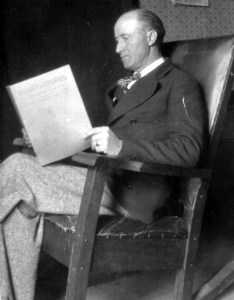

This story is from the Rosamond Press and tells of Yates Standridge from his murdered victims ascestors!
Yates Standridge, he was a wildcat whiskey maker, had a still out in the woods. The law had caught him 2 to 3 times. Late in the evening, there were no cars at that time, the law was on horseback, the county seat jail was 27 miles and they couldn’t make it back before dark. They stayed with a family their name was Hamm (George Hamm). The law asks if they could stay all night in Lurton.
Sometime during the night, Yates got up and climbed out the window, went home in his nightclothes. The next morning he sent his wife Divina to get his clothes and told her if she didn’t bring them back he would kill her. She knew that he would because he was a mean man. Divina went to the Rosamond Home, she asks for a place to stay. They told her she could stay at their house. When his wife didn’t come back with his clothes the next morning he sent an old lady (Old Lady Savage) to see where his wife was. Old Lady Savage went to Mr. Hamm’s house and went all through the house looking for Yates’ wife. When she couldn’t find her there she stopped at Grandpa and Grandma Rosamond’s house and ask if Yates’ wife Divina was there. Old Lady Savage asks her to come out and talk to her. Old lady Savage asks Divina to home with her but she wouldn’t.
Old Lady Savage went back and told Yates that Grandpa and Grandma Rosamond had his wife handcuffed and chained to the floor.
The next morning was New Years Morning 1908. Yates came to Grandpa and Grandma Rosamond’s and hid behind the smokehouse until the kids went to school. Grandpa and Grandma Rosamond had bought the house from Grandma Overturf, she hadn’t moved out yet, was still staying with them. Mom didn’t go to school that morning. She was staying with her Grandma. Mom went to the spring for a bucket of water. Yates followed her to the spring and ask her who all was at the house. He then told her not to follow him back or he would kill her. There was a rail fence that ran from the spring to the back of the house. When Yates got out of her sight she climbed over the fence and went to the house.
Grandpa Rosamond had owned and ran a sawmill in Lurton. That morning he was sick and didn’t go to work. Yates hollowerd Hello, Grandpa thinking it was someone to see about some lumber opened the door and stepped one foot outside. Yates shot him through the leg it cut the main artery. Mom went in the back door at the same time Grandpa Rosamond was shot. He turned and shut the door and said, “He’s killed me” and fell to the floor and bled to death.
The women folks were trying to see who it was. Yates could see them through some cracks in the door. When he started shooting, Divina took her baby and hid behind a bed. He shot one shot and killed Grandma Overturf, then he shot two more shots and hit Grandma Rosamond at the elbow leaving just a little piece of skin on both sides holding her arm on. He tried busting down the door, but couldn’t, he wanted in but they wouldn’t let him in. So he tried to set fire to the back of the house, but it wouldn’t burn. Then he tried to set fire to the roof, it was covered with shingles that were real dry and they wouldn’t burn. So he went back and tried busting down the door again, he did bust down the door and went in. Grandpa was lying there with his eyes open, they hadn’t had time to close them yet. Yates drawled up his gun to shot him again. Grandma Rosamond grabbed the gun. He jerked her up and down on her knees out into the yard. He told someone if she would of held on a minute longer she would of taken it away from him. So he left, the law caught up with him and he was sent to prison for possibly 20 years.
I asked Grandma why were the Rosamond’s and Grandma Overturf living together? Figuring out that Flora was only 12 years old at that time, I did not think she and Fred were married yet…Martha Overturf had sold the house to the Rosamonds, she had not found a place to live yet. Flora was staying with her Grandma until her Grandma found a new house.
Arewine Yates Standridge died August 8, 1938 in Sallisaw, Oklahoma, killed in ambush by George Ellis. On January 1, 1908 Yates shot through a door and killed N N Rosamond and also Martha T. Overturf, wife of F M Overturf (parents of Rachel Overturf Taylor in Newton Co. Arkansas). He was in Jackson County Arkansas prison on the 1910 census for this killing. Searching for the facts, I did find a lot of mistakes. In almost every story that I have found on the Rosamond – Overturf murders, it states that Martha T. Overturf was Flora’s Mother. Flora’s mother was M. Viola Slape; Flora’s father was Eli Overturf.
I have found their marriage in Newton County, Arkansas. They are both buried in the Sexton Cemetery in Tarlton, Eli is right next to Viola, but the stone is crumbled. Uncle Roy and Uncle Alvin Rosamond both told me that M. Viola had died in a fire. Eli remarried Annabell Cox (name of Flora’s Step mother provided by Virl Rosamond). Flora was 2 years old when her mother died. Uncle Alvin said that his mother did not get along with her step mother that is why she was staying with Grandma Overturf. I researched further and found Martha T. Overturf and found her maiden name was Blessing. I also found her husband Francis M. Overturf, they were married in Franklin County, Il., Francis M. and Martha T. are buried in the Sexton Cemetery, F M Overturf’s grave must be unmarked, it is not listed but Uncle Virl told me he is also buried there. I found 2 children born in Franklin County Il., and a birth date for Rachel listed in the story above. I was not able to find a birth date for Eli.
Trying to prove that Rosalie Augusta Bennett was married prior to N N Rosamond. I was completely unable to find any facts on Rosalie beyond her father’s name E. T. Bennett (provided by Jimmy Dale Rosamond.) Rose Cotner supplied me with a marriage date and location for N N Rosamond and Rosalie Bennett. It was a family story that Rosalie worked as a maid in a hotel in Chicago at the time of the Great Chicago fire 1871. I was able to verify the marriage of Rosalie A. Bennett and Nonimus N. Rosamond in the Chicago, Illinois marriage records 1850 to 1900. Rose told me that Rosalie was born in Indiana. The amount of Bennetts is Indiana is tremendous. I was not able to find a link. It is really hard when you don’t have any actual names. (E. T. Bennett)
Dixon being the surname in question…Divina’s father was Rev. John Dixon. Yates Standridge was born in 1881; Rosalie had her 2nd child in 1881 with N N Rosamond. N N Rosamond and Rosalie had been married 3 years prior to his birth. By the time Yates was old enough to marry, they had all of their children. With these facts and searching several states for marriages for Rosalie Bennett. I was only able to locate the one marriage. This part of the story was just that, a story.
Court records on Yates Strandridge:
In 1906, Yates was indicted for assault with intent to kill John Halley. Two witnesses were Marion Savage and W G Ketcherside. There were other witnesses. I do not have all the names. Filed the state of Arkansas, circuit court 10th July, 1906.
Between 1906 and 1908, there were other assault charges and gambling charges for Yates Standridge. I have also been told a story of how Yates was setting in the front yard of his father’s house shooting at his father. When someone asked what he was doing he said he was going kill him. (C. L. Boyd said this is untrue. His father died in 1902!) As for the Rosamond son shooting General Standridge, I have also been told it was Yates that shot General Standridge in his field. If it was one of the Rosamond boys that shot at Yates, I have not been able to confirm that. Uncle Frank went to Oklahoma to work in the oil fields, Uncle Ed and family soon followed him. Uncle Jim died in 1915, in a train wreck while working for the railroad. Grandpa Fred and Uncle Sam stayed in Newton County all of their lives. I don’t know of any of them that left the country.
Three indictments were filed July 1908 term of the Circuit Court, Newton County, Arkansas. Murder 1st degree with malice, forethought, premeditation and deliberation of N N Rosamond – Murder 1st degree with malice, forethought, premeditation and deliberation of Martha T. Overturf – Assault with intent to kill of Rosalie Rosamond. Witnesses in all three were Flora Overturf, Elizabeth Stacey, Mrs. N N Rosamond, Dr. George Yates, Dr. T T Fowley and Dr. J. E. Blackwood…
note from Colleen Haynes Rongey:
Witness W. Ketcherside was my Grandma Woodard’s brother, Will Ketcherside. Dr. James Blackwood’s grandsons, Leon and Harold Blackwood lived around Harrison, AR…they may have heard the story in the early days. I heard Uncle Will talk about the Rosamond murder when I was a child but do not remember details…
This is from Ina Rosamond’s Grandaughter, Cindy Fluri
Here is the same story by C. L. Boyd
YATES STANDRIDGE, AN ESCAPE ARTIST
There has been much publicity given to Yates Standridge as an escape artist and all of his trouble with the law for various offences. How much time was actually spent in jail is not known. Various county records seem to indicate that some of his earlier problems were entirely his fault. Many people tell that Yates was as good as neighbor as you could ask for, but just did not put up with any foolishness.
- N. Rosmond was a Justice of the Peace, when the law was after Yates on one of his charges. Some of the law took Yates’ wife and children to the Rosmond’s house, either for safekeeping or to draw Yates out of hiding. Yates found out where they were and went to get them. When Mr. Rosmond wouldn’t let him have his wife and children, Yates started shooting through the door and killed Mr. Rosmond and wounded his wife.
After this incident, one of Mr. Rosmond’s sons was passing by a field where General Standridge was plowing. He thought that General was Yates and shot him through the shoulder. Yates assured General that it would not happen again, but General carried a pistol for the rest of his life. I understand that Mr. Rosmond son left the country shortly after this.
Yates was a prisoner and was part of the convict labor that helped build the waterworks dam at Russellville. One day, one of the guards went to sleep and Yates was starting to sneak up on him, when another guard stopped him. He yelled, “What do you think you are doing?” Yates just grinned and said “If that pecker-wood is going to sleep on the job, I’m going to trade jobs with him and hold his gun while he sleeps.” Yates did escape from there later and walked to Price Grove, where he had a man the he knew, to take a chisel and cut off the ball and chain the he dragged from Russellville.
Yates was indicted for murder in July of 1908. He received a term of 52 years for these crimes. In 1910, he is in Jackson County, AR housed in the penitentiary. Today, we do not know if Divena went to the Rosemond house for refuge or if they took her and the children there to draw Yates out of hiding. Also, this time he was housed in the Newton County Jail at Jasper, AR. He tried to commit suicide there after he was give the sentence, but he was found and saved. He tried to slit his own throat.
Another paragraph on the next column says Yates failed in his attempt to take his life. This was in October of 1908.
Who knows why Yates and his niece Ida Johnson were ambushed and killed. I can not find any niece named Ida Johnson. I am sure there is more to the story than we will ever know. By 1940, Yates second wife, Annie, has remarried to Tilmon Sisco. Yates two children by Annie often used the surname Sisco. Annie and Tilmon end up in California where they are both buried.
http://harrisondaily.com/vernon-rosamond/article_c7009a3f-1ee5-543f-9310-f7dfa6c9e75b.html
On this page of the 1900 census, we can see the neighbors–Alex Standridge (this is the son Little Alex’s daughter had by her step brother. He used the name Standridge) and his wife Dora, then Robert Standridge and his wife Minnie, then Bert Dixon (John’s son Divena’s half brother), Martin Branch (Little Alex’s sister’s son), John H. Dixon (Divena’s father) with his wife Susanna Virgina Hardester Martin Dixon, Melinda Standridge (Howard Standridge’s wife, Granny’s Dad, he has moved back home and they are seperated. Granny said he came home from jail and someone was living with her and he went to his Dad’s), next is Little Alex and Sarah Jane Yates Taylor Cavin Standridge, then Yates and Divena and Nancy Jane, then a Daniel Greenhaw who married Little Alex’s daughter, Lucy Standridge, and lastly James White who is married to Mary Standridge, the daughter of Mill Alex. It was quite a neighborhood I am sure–all related by marriage or blood. Most of these folks did one thing to make money. They manufactured moonshine whiskey and they were good at making it. That is what Granny’s Dad did all of his working life. I know James White was arrested for making illegal whiskey and I am sure many of these others were too. So, Yates and his cousin, who is also his brother-in-law, Howard Standridge likely made shine together. Howard was a first cousin to Little Alex but he was married to Malinda Cavin, who was Yates half sister.
Divena Mae Dixon And Yates Standridge
Vena Mae with two of her Grandsons
Robert Lee (older) and Melvin
Divena Mae Dixon was born in Fulton County, AR in July of 1881. She was the daughter of John Harvey Dixon and Sarah Elizabeth Carroll. John Dixon had been married twice before he married Lizzy Carroll. He did not come to Arkansas until the 1870s. He lived in Bradley County, TN before moving to Fulton County. He and his first wife had several children. His first wife’s name was Dulcinia London. After she died, John married Nancy Jane Gowens. She either died on their way to Arkansas or shortly after they arrived in Fulton County. Lizzie Carroll’s first husband was Isam Bradley Hodges. He died in 1879 and shortly after widower John Dixon married Lizzie Carroll Hodges. They had two children: Charles Dixon and Divena Mae Dixon. Charles was born in 1880 and on July 8, 1881, Divena was born. For some reason the marriage of John and Lizzie failed. She had grown children as did he. Sometimes marriages like this just don’t work out. The children sometimes don’t like each other. Whatever the reason, the couple dissolved their marriage. Lizzie moved in with one of her sons. She died in 1909.
In the 1890s, John Dixon moved to Newton County, AR. He settled on Richland Creek near Little Alex Standridge. He married again to Susanna Virginia Hardister. She was previously married to John Martin. John died in 1888. Two of John Dixon’s sons married daughters of Susanna Martin. I have not checked to see if John and Susanna married and then the two Dixon boys married the Martin girls or if it was the other way around, but, by 1900, John Dixon and Susanna are living near Little Alex Standridge on Richland Creek, Newton County, AR.
Little Alex was married three times. I think his first wife was a Meek. I know his second wife was Eliza Jones Standridge. She had been married to Alex’s nephew who died during the Civil War. Little Alex had only daughers by his first wife, Eliza Ann Meek. She died in 1865 and then Little Alex married his second wife, Eliza Jones Standridge. She had three children and he had five girls I think it was (I am not looking at the record now). Eliza and Little Alex had two more girls. Eliza’s son and little Alex’s daughter from his first marriage had a son out of wed lock. The story in the mountains was that Little Alex ran him off or he may have murdered him as that son of Eliza’s is never heard from again. In 1877, Little Alex married for the third time to Sarah Jane Yates Taylor Cavin. Sarah Jane had two sons by her first husband, Hezekiah Allen Taylor. He was killed during the Civil War. Her second husband was Joseph Harrison Cavin. They had three daughters and a son. One of these girls was Malinda Cavin. Mindy married Howard Standridge (Granny Renfroe’s father). So the story goes on (it could be a book), in 1877, Harrison Cavin is dead and Eliza Jones is dead and Little Alex Standridge married Sarah Jane Yates Taylor Cavin! Little Alex had several children by the two women he married—all girls. But in 1881, Little Alex and Sarah have a child, a son! I know Little Alex was thrilled to finally have a son. They named him after Sarah’s father Alewine Yates; thus, his name was Alewine Yates Standridge. He was born in October of 1881. By this time, Little Alex is 55 years old and Sarah Jane is almost 40! I believe that Yates Standridge was likely spoiled. His parents were both old and he was Little Alex Standridge’s only son.
Little Alex was named for his grandfather, Alexander Standridge. There were three boys named for this Grandfather by his sons. Mill Alex Standridge was called Mill Alex because he had a water mill on Falling Water Creek. Big Alex was called this because of his height. Little Alex was not very tall and he was called Little Alex Standridge. Little Alex live near the head waters of Richland Creek, very near where Richland Cemetery is today.
By about 1895, John Dixon and his family are living on Richland Creek. His daughter Divena Mae Dixon meets the handsome Yates Standridge. They are married December 29, 1896. Yates and Divena are only 16 years old. I found another record that says they married on the same date in 1897! Regardless of the date, they have a child, a daughter, Nancy Jane Standridge, born October 26, 1897. Divena and Yates are on the 1900 census living near Little Alex Standridge and John Dixon!On this page of the 1900 census, we can see the neighbors–Alex Standridge (this is the son Little Alex’s daughter had by her step brother. He used the name Standridge) and his wife Dora, then Robert Standridge and his wife Minnie, then Bert Dixon (John’s son Divena’s half brother), Martin Branch (Little Alex’s sister’s son), John H. Dixon (Divena’s father) with his wife Susanna Virgina Hardester Martin Dixon, Melinda Standridge (Howard Standridge’s wife, Granny’s Dad, he has moved back home and they are seperated. Granny said he came home from jail and someone was living with her and he went to his Dad’s), next is Little Alex and Sarah Jane Yates Taylor Cavin Standridge, then Yates and Divena and Nancy Jane, then a Daniel Greenhaw who married Little Alex’s daughter, Lucy Standridge, and lastly James White who is married to Mary Standridge, the daughter of Mill Alex. It was quite a neighborhood I am sure–all related by marriage or blood. Most of these folks did one thing to make money. They manufactured moonshine whiskey and they were good at making it. That is what Granny’s Dad did all of his working life. I know James White was arrested for making illegal whiskey and I am sure many of these others were too. So, Yates and his cousin, who is also his brother-in-law, Howard Standridge likely made shine together. Howard was a first cousin to Little Alex but he was married to Malinda Cavin, who was Yates half sister.
Tragedy struck this family in 1902, as Little Alex died and was laid to rest in Richland Cemetery near his home. He would have been about 73 years old. His son Yates was 21. Without his father to keep him reined in, Yates became involved in more crime that just illegal distilling.
In 1906, Yates was indited for assault with intent to kill John Halley. Two witnesses were Marion Savage and W. G. Ketcherside. There were other witnesses. I do not have all the names. This was filed in the State of Arkansas, circuit court 10th July, 1906. Between 1906 and 1908, there were other assault charges and gambling charges for Yates Standridge. I have also read of a story of how Yates was sitting in the front yard of his father’s house shooting at his father. (His father was dead by 1902, C. L. Boyd said this was just a made up tale and untrue).
One thing is for certain, the local law enforcement officers were scared to death of Yates Standridge. They described him as the “human” wolf, a mean, vicious man. By 1906, he is wanted for “highway robbery” in Lee Township which I think is in Pope County, AR. The article below was published in the local Russellville, AR Courier paper. Sheriff Hatley and deputy Craig arrest Yates and take him to the Russellville Jail.
The article states that Yates had taken his wife and children to the home of John Dixon. By this time I think John Dixon had moved from Richland and lived closer to Mt. Judea, Arkansas, near his sons who had married the daughters of his wife. Hatley and Craig hid and watched the house for Yates. The first day they watched they came up empty handed but on the second day about 10 in the morning he approached the house. They rushed to arrest him and he quickly moved inside the house and fired. He glazed Sheriff Hatley’s shoulder. John Craig removed a board from the house and got a bead on Yates and they arrested him. He helped build a Dam near Russellville as part of this sentence. They called it the Water Works Dam. I am not sure where it is. One day, the guard went to sleep and Yates almost got away. I guess Yates served out this sentence but trouble was always in his path.I am not sure what the charge Yates Standridge was wanted for in 1908. It could have been illegal distilling. It could have been battery. It could have been for robbing someone. Whatever he was wanted for Yates did not relish going back to jail. By 1908, Yates and Divena had Nancy Jane, Lola May, and Robert Standridge. Yates had a “big bad” reputation and the law officers were very frightened at what he might do. To capture him, C. L. Boyd said they took Divena and the children to Justice of the Peace Rosemond’s home. They chained her to a bed and made her scream so he would come out of his hiding place in the woods. He came out and shot though the door and killed N. N. Rosemond. That bloody day, Yates killed Rosemond and Martha Overturf and shot the arm off of Rosemond’s wife. The Rosemond’s descendants account of that day I will add here:
By the time the census taker came around in 1910, Yates is housed in Jackson County AR. Pine Bluff. He says he has been married 6 years which is not right. He and Divena have been married over 10 years. He states he is 29 years old, born in Arkansas. By 1910, Yates has only served 2 years of the 52 year sentence. He has a life behind bars to look forward too!
What happened to Divena? I had often wondered and did not know until Divena’s Great Great Grandson contacted me. His name is Jason and he lives in Little Rock, AR. He got his Grandfather Robert Lee Jones to do the DNA test so they could try to figure out who they were? Robert Jones was the son of another Robert Jones. The elder Robert’s mother said that his father was Walter Jones. Jason and Uncle Walter Renfroe where extremely high on the DNA match? He matched with others of the Standridge family–100s of them!
Here is Divena Standridge in 1910. She is living with her only full brother in Fulton County, AR. Her father John Dixon is dead by 1910. He probably died of heart failure from all this stressful situation.
From this census, we get a pretty true picture of Divena’s age and the age of her children. Nancy Jane is 11. Lola May is 7 and Robert Standridge is 4 years old. But I also found on the following page a listing for Divena living alone. She is a neighbor to a young man named, Walter Jones, and he is only 17.
Divena is in a pretty hopeless situation. She is the wife of a notorious murderer. He is known all over Arkansas. She married when she was only 15 or 16 and I am sure has no skills to earn and living for her fmaily. Her brother Charles has a large family of his own. Divena needs a man! And I think the one she found was the young orphan boy Walter Thomas Jones. Both his parents are dead. Divena is 10 years older than Walter, but I speculate that she started a relationship with him. I do not think they married. They have one daughter together. She is born in 1914 and she names her Vera Marie Jones. Divena still has half brothers in Newton County, AR. I believe that she gave Nancy Jane to her brother William London Dixon. Nancy Jane and Divena are never associated together again! Nancy Jane married a neighbor boy living near William London Dixon. William and his wife have no children of their own and were probably happy to have Nancy Jane Standridge live with them.. By 1914 Nancy Jane Standridge and her husband Joseph Taylor Robinson have their first child, Emma Faye, born on October 2, 1914. Nancy Jane was born October 26 1897. She was almost 17. The Robinson’s have 9 children. They live near Yandell, AR, in Oklahoma, and Nancy Jane lived in California with one of her daughter when she passed away in 1983. As far as I know after 1910, she never was in contact with her mother again.
To find a new husband Divena really needed to be younger. She shaved 10 years off her age and had her younger two Standridge children use the name Jones. I think Divena and Walter Jones lived together in Howell County, MO. Vera Marie said she was born in Howell County, MO. in July of 1914. Divena also made her older two children and little younger. Why I do not know, but from the records found we can see she did. Divena and Walter Jones did not stay together long. He married a Fulton County woman in 1916, Johnnie Pickren. He is in Barry County, MO in 1920 and then they move on to OK by 1930. He and Johnnie have several children and are buried in OK.
Somehow someway, Divena ends up in Little Rock, AR. That is pretty close to Pine Bluff. I can not find her in 1920. No telling what name she is using! But by 1930, she is in Little Rock and she is still 10 years younger and from that time forward she is Vena Mae and not Divena. Her Standridge children with her are using the name Jones. Jason thinks they did not know who they really were. They thought Walter Jones deserted the family. Vena married 3 or 4 more times. Why? Trying to survive. She carved out an existence in Little Rock and lived a long life. She took her secret to her grave. Her death certificate says her maiden name was Dixon and she was born in Fulton County, AR. Her Great Great Grandchildren would never have known who they were if Jason had not gotten his Grandfather to give that spit to Ancestry!
Yates Standridge above and Divena below after she started a new life in Little Rock.
Robert Lee Jones (Standridge) with Serena Bessie Center
1927–on their first wedding anniversary
Why would Divena want to hide who she was? By 1916, Yates had escaped again!
Divena may have had contact with Yates during his time in prison. He escaped in 1912, 1916 twice, and again in 1918. He probably would not have been happy to know the Divena had a child by Walter Jones but who knows this child could even belong to Yates as he was out of prison several times by escaping. One time he lived near Jonesboro, AR for a year under the assumed name of Charles Smith. Jonesboro is fairly close to Fulton county, AR
The article above tells of Yates killing a fellow inmate with a shovel while at Tucker Prison. This article gives dates of more escapes. In 1917 his 52 year sentence was reduced to 15 years, but 6 months later he escaped again! He was recaptured in 1918 in Oklahoma City. The article says he emptied his revolver at the posse in a gun battle before he surrendered. His last escape came December 26, 1920. He sawed a hole through the floor under his cot in the Tucker stockade. Standridge and 11 convicts made a break for freedom. Two of the men were recaptured through quick action of the guards, but Standridge and 9 others made their getaway successful. It turned bitterly cold during the next day, December 27. Two days later Standridge dragged himself back to the farm. Both his feet were frozen. After that he made himself into a model prisoner! He devoted his time to winning over the approval of the warden and he was successful. He was paroled in March of 1922. He had two sponsors from Newton County. I do not know who they were. After a year supervision he was free with no hold by the State of Arkansas. Divena was successfully in hiding from him I believe. He probably made contact with Nancy Jane Standridge Robinson on his release as she lived in Newton County. Since Divena did not contact her again (at least we do not so and Nancy Jane is not mentioned in Divena’s obituary.) Nancy Jane could not tell her father where her mother was. She did not know. Jason thought that his Great Grandfather, Robert Lee Jones, had no idea his real surname was Standridge. Robert Lee said at one time his mother and the children lived in Fort Smith, AR. He had a paper route and delivered papers. Robert said he had to turn all the money over to his mother for use of the family. Divena Dixon Standridge is erased from being by 1914 and a new woman is created. Her name is Vena May Jones. She is born in the same month as Divena but she is a decade younger. Lola May and Robert Lee are also a little younger. They were really very small children when Yates first left them in 1908. They probably could not remember him at all. Nancy Jane was older and could remember. Divena cut off all ties with her. She is not even mentioned in Vena’s obituary. Vena Jones married William Humphrey before 1924. In 1924, Robert Lee Jones wants to get married. He is living in Fort Smith, Ar. Vena sends a telegram giving permission for him to marry Bessie Center. The 1930 census lists Vena in Little Rock. Mr. Humphrey has died. She is living with another family and has her daughter Marie Jones with her. It looks like she is using the first name Barbara. They are living on Rock Street. In 1935, Vena married Abe Chenault and the 1940 census finds them in Saline County. Abe died in September of 1944.We know that Vena married at least one more time because at her death her last name was Hawthorne. Jason said his Grandfather Jones never knew who his father’s father was and he felt that the elder Robert Jones did not know of his heritage either. Robert Jones was very bitter toward his mother, Vena. Little did he know what all she did to protect him.
How did we discover who Robert Jones was? First, we used the DNA matches to check all the names that we knew Divena was related to. All matched. She matched Dixon’s, Carrolls and the other surnames that were Divena’s ancestors. Her death certificate said she was born in Fulton County, AR. The 1910 census there, lists Divena Standridge with her brother Charles. She has her 3 children with her and they are using the last name Standridge. Next, we checked on close Standridge matches with Robert Jones Jr. There were 100s of matches to the Standridge family. The closest ones came from the family of Martin and Katherine Standridge, Little Alex’s parents. When we looked at the four grandparents of Robert Lee Jones Standridge SR, the DNA of Robert Jr. matched on all four sides–extermely high. He matches Little Alex Standridge, Sarah Jane Yates (he matched two of her sisters), he matched Lizzy Carroll’s family, and John Dixon’s family. We started and worked each line. Match, match, match, match!! We concluded that Vena Jones was Divena Dixon Standridge. I feel very sure we are correct.
After Yates was paroled in 1922, he may have looked for Divena, but soon he found a new lady. March 11, 1924, he married Annie May Kuykendall. Annie May was born in 1906–several years younger than Yates’ oldest daughter. Annie and he had a son and a daughter.. Yates had more run ins with the law. He and his nephew, Alonzo Standridge took a barrel of whiskey to Harrison, AR to sell. They hid the keg in the woods. When they went to retrieve it. Red Campbell had stolen the whiskey, either Lonzo or Yates shot and killed Campbell. Yates said Lonzo shot him and who knows but his parole was revoked. Below, is a newspaper account of the incident. Green Forest Tribune
Friday April 7 1922
Yates Standridge is Badly Wounded
Harrison, Ark., April 3 – Yates Standridge, notorious convict,
paroled by the Arkansas Penitentiary Commission March 1, is seriously
wounded, and Harry (Red) Campbell, aged 25, is dead as a result of a gun
battle which occurred in a field near Cooked Creek, one mile east of this
place about 7 o’clock last night. The fight is supposed to have started
over a 10-gallon keg of whiskey found near the scene.
Alonzo Standridge, nephew of the wounded convict and who was seen
with him late yesterday afternoon, has disappeared. Yates said this
morning he feared his nephew had been wounded. He denies shooting
Campbell, however, declaring that he did not have a gun.
Campbell was shot five times through the body, two of the bullets
taking effect near the heart, probably causing instant death. The body
was found about 10 o’clock last night, lying in a pool of blood. Near
the body was the keg of whiskey.
Standridge was shot in two places, once through the abdomen and once
through the arm. He is at the home of his niece, Mrs. O. T. Hoover,
here. Attending physicians say he has a chance to recover.
“Red” Campbell shot and killed Frank Suskey on the streets of
Harrison in 1914. He was tried, but acquitted on a plea of self-defense.
He is a son of O. W. Campbell, local coal dealer.
Few details of the shooting can be obtained, and only the
apprehension of Alonzo and his statements will clear the mystery
surrounding the affair, it is said. Members of Campbell’s family
identified Yates as one of the two men who called for Harry late
yesterday afternoon. The three left the house together. This was the last
time Campbell was seen alive, it is said. Residents here believer that
the two Standridges came here form Newton county Saturday afternoon bring
the keg whiskey. They “cached” it in the field, and later an argument
probably ensued over the possession of the liquor, after Campbell had
accompanied them to the hiding place.
Yates Standridge Is In Oklahoma
Is Said to Have Left After Two Weeks Stay in Newton County
Jasper, Ark., Aug 22–Yates Standridge, who recently escaped from
the state convict farm, where he was serving what practically amounts to
a life sentence for murder, declared that he never will return to the
penitentiary, according to residents of the sparsley settled hills of
Newton county, where Standridge makes his home.
These hill people say Standridge recently spent two weeks in that
section and left, saying that he was going to Oklahoma. There is no way
of verifying the truth of this.
These people, who know Standridge intimately, and some whom
sympathize with him, say there is no doubt that the fugitive means what
he says and that the man who goes in pursuit of him will take his life in
his hands. Standridge has the reputation of being a crack shot, he knows
every foot of the Newton county hills and those who talked with him while
he was home declare he is in a desperate mood, ready to kill on sight
anyone whom he suspects has designs of recapturing him.
Those who are familiar with the situation are not disposed to
criticize the Newton county officers for not attempting to capture
Standridge. They say it would require a large posse and many days to run
down the fugitive, for he knows a hundred hiding places in the hills.
Also he has many friends in the country where he lived before he was sent
to the penitentiary. Many of them honestly believe that Standridge
received too severe a sentence and that he has been ill-treated at the
penitentiary. They would not hesitate to help him.
“If those people in charge of the penitentiary haven’t sense enough
to keep Standridge after they get him, I don’t know why I should go out
and get killed trying to get him back for them again, ” is the way one
officer sizes up the situation.
The Mountain Wave, Aug 25, 1916 p. 2, c. 4
The story told in the Mountains was that Alonzo hightailed it home after the shooting. I really don’t know if Yates parole was revoked or if the matter was just dismissed.
By 1930, Yates and Annie Kuykendall Standridge are listed on this census in Sequoyah County, OK.
Trouble continued to plague Yates Standridge. He was shot and killed along with Ida Johnson in Oklahoma in 1938.
MURDER CHARGED IN DOUBLE KILLING SALLISAW, Okla., Aug. 11, 1938)—County Attorney Ed Armstrong today filed two charges of murder against George Ellis, 50, in connection with- the slaying Monday of Yates Standridge, 67, and his neice, Mrs. Ida Johnson, 29. Armstrong said Ellis, a fullblood Cherokee Indian, would be arraigned sometime today. Standridge, an ex-convict, and Mrs. Johnson were shot from ambush as they returned home in a wagon from Sallisaw. They were buried yesterday at Hartman, Ark. Aug. 11, 1938 Indian Journal August 25, 1938 OKLAHOMA CITY, Aug. 23— Governor Marland directed Attorney General Mac Q, Williamson today to assist in the prosecution of four men facing charges growing out of the Sequoyah county ambush slaying of Yates Standridge, 67, and his niece, Mrs. Ida Johnson, 29. Williamson said his assistant, Owen J. Watts, would leave for Sallisaw tomorrow to confer with County Attorney Ed Armstrong, Standridge and Mrs. Johnson were shot down as they rode in a wagon on the Marble City road near Sallisaw August 8. Texas Bandit Pair Charged In Dallas.
Who knows why Yates and his niece Ida Johnson were ambushed and killed. I can not find any niece named Ida Johnson. I am sure there is more to the story than we will ever know. By 1940, Yates second wife, Annie, has remarried to Tilmon Sisco. Yates two children by Annie often used the surname Sisco. Annie and Tilmon end up in California where they are both buried.
After 1938, Vena could have told her children who she was, but she had held on to the secret so long she did not reveal the truth to them is what Jason thinks. She carried her secret to the grave. Her obituary say she is 71 instead of her true age of 81. It does not mention Nancy Jane Standridge Robinson.
Royal Rosamond Press Co.
Posted on February 2, 2015 by Royal Rosamond Press

ROYAL ROSAMOND PRESS
My grandfather was a Newspaperman – of sorts! He sold 400 copies of The Oklahoman, and 200 copies of the Oklahoma Times, at his newspaper stand in Oklahoma City. He tutored young people in poetry and had plans to build a Poet’s retreat on the Buffalo River.The Ozark Historian, Otto Rayburn, was supportive of this.
It is the objective of my newspaper to restore the dream of these two men who published their own magazine. Rayburn published ‘Arcadian Life’, and Royal’s Gem Publishing, published ‘Bright Stories’. Royal also published one novel under ‘R.R. Rosamond Publishing’ founded in 1931 in Ventura where it was printed.
Above you see letters sent to Royal, and two books he published. Rosamond’s poems are here, along with photos of his daughters, and his friends who were writers, camping on Santa Cruz Island.
Jon Presco
President: Royal Rosamond Press Co.
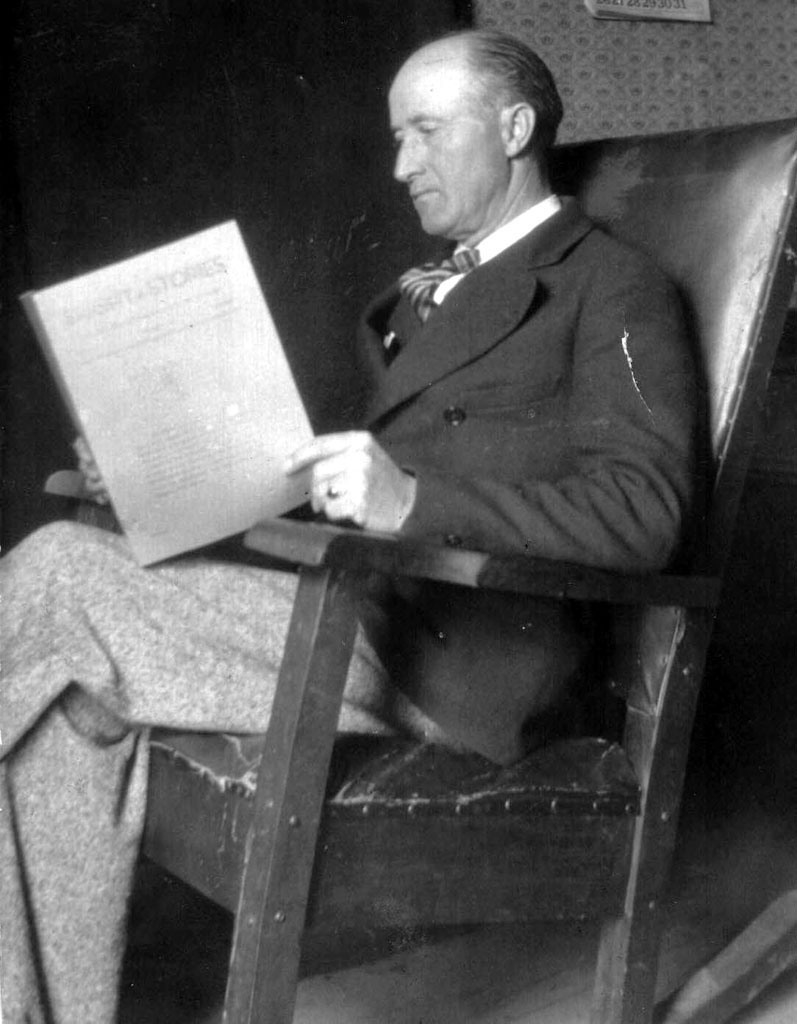
Ravola of Thunder Mountian
Posted on January 11, 2013 by Royal Rosamond Press
Jessie Benton Lyman – Spacewoman
Posted on March 22, 2021 by Royal Rosamond Press
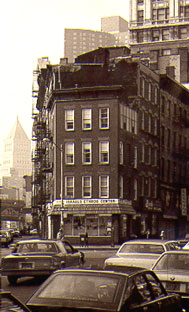
From the vantage point of Mary Ann Tharaldsen at our wedding reception held at my brother’s house, the world was beginning to look like her oyster. Bryan McClean played at our wedding, but did now show up at my brother’s house. Mary Ann is a peer of Jessie Benton who would become my kin when Christine married Garth Benton. I had a fantasy of marrying the widow, Mimi Farina – when I met her in 1966. Peter Shapiro played at our wedding reception in Oakland, and played at two of the Acid Tests. I just read a great article on Owsley, which made me ask what I am doing here, putting people together who pioneered another dimension which had ten thousand built-in philosophies in it. What if Ludwig Wittgenstein had -dropped? Now our military is suggesting aliens are real?
That makes three family newspapers. Jessie Benton had a salon in San Francisco, and backed Bret Harte and Mark Twain. Jim Kweskin played with the Farinas. We are back in 1970.
John
Avatar (newspaper) – Wikipedia
The U.S. has evidence of UFOs breaking the sound barrier without a sonic boom and making maneuvers impossible with known technology, the former Director of National Intelligence has revealed.
The revelations increased excitement about a forthcoming report detailing what the U.S. government has observed.
John Ratcliffe, who served as Donald Trump’s Director of National Intelligence, said that many of the incidents still have no easy explanation.
US has evidence of UFOs breaking sound barrier without a sonic boom (msn.com)
Kurt Vonnegut Jr., novelist, counterculture icon and Cornellian, dies at 84 | Cornell Chronicle
The Lyman and Manson Family | Rosamond Press
Snow Down On Fort Hill
Posted on March 19, 2012 by Royal Rosamond Press
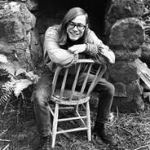


The man who was stalking me, got to the tower as I did.
“What are you doing here?” he asked.
“What are you doing here? I asked.
“I’m guarding this place? he answered.
“Are you packing a gun?
“Yes!” he answered.
We now had an ecorteric conversation on freedom of speech, and the idea of folks carrying guns to protect their point of view. There is no doubt what-so-ever that I was talking to Paul Williams, an armed guard for Mel Lyman and his wife, Jessie Benton, who are found in my family tree, after Christine married Garth Benton.
Paul would later flee for his life from the Lyman Family, he convinced they were a dangerous cult who would kill anyone who threatened them.
Jessie Benton’s Tree of Stars
Posted on January 15, 2014 by Royal Rosamond Press


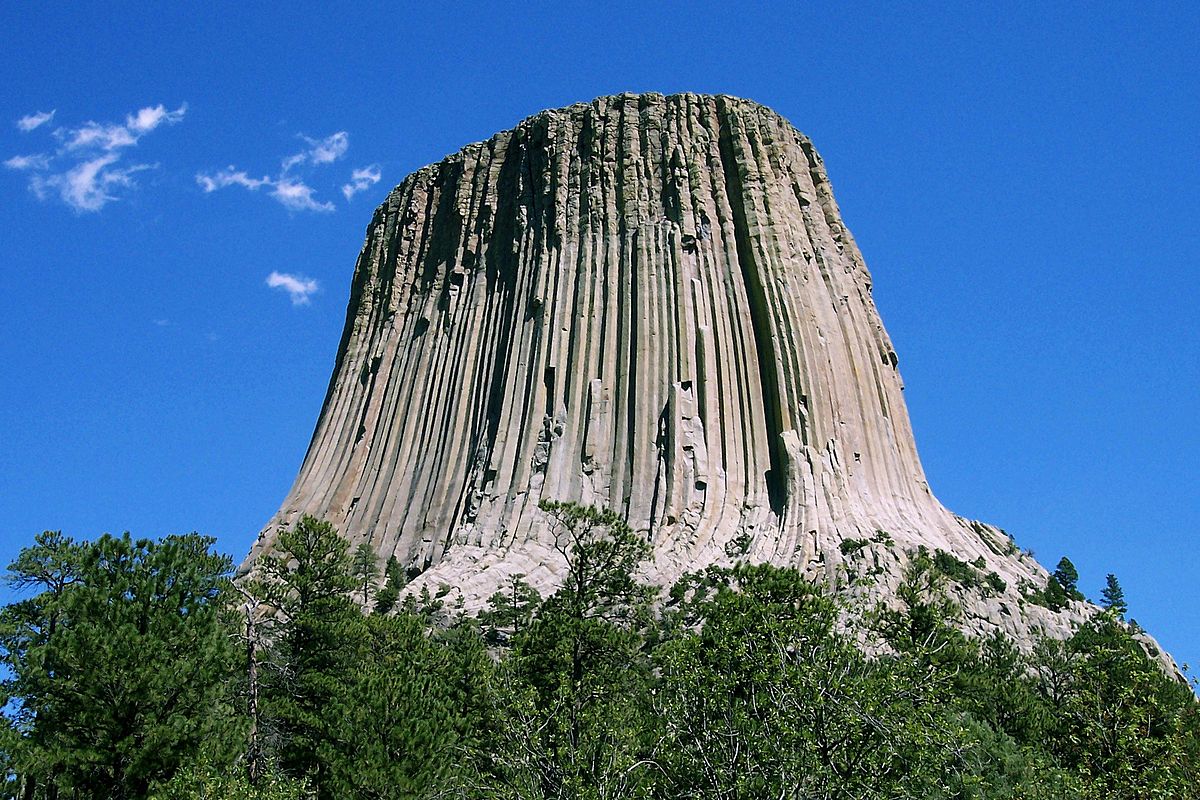

Jessie Benton Lyman’s genealogy is the most outstanding family tree in America. It is a Patriotic Tree full of stars. The great mother ship that lands atop the Devil’s Tower in Wyoming looks like a Christmas Tree. Turn the American flag into a cone shaped tree, and her are the red and white rays coming down from heaven.
In the first biography of Christine Rosamond Benton, Garth Benton does most of the talking. Only once does he talk about the love he owned for Christine. There is no mention of a Family Muse, for this book was the Final Divorce that was in its final stages when my beloved sister was swept out to sea – along with all the magic. It is for this love our lost magic that I cling to Ms. Christensen and herald her return, the Winged Muse raining down bright ribbons of inspiration upon us all. Alas, she noticed my string of bright lights was growing dim. And on Christmas Day, she sent me the gift – of her!
Jon Presco
The Boston Herald American, p.14, March 26, 1978
By Gary Moore, Special to the Herald American
Spaceship interview given via Ouija board
Darkness had fallen on North Hollywood. You could no longer even see the smog.
About the people I would be meeting I knew only hearsay: Two years ago a Boston writer told me they had smashed the window of his car. Seven years ago Rolling Stone magazine had gone to great lengths to say they were violent, almost fascistic. But now they had dropped out of sight – evaporated.
Suddenly the house was awash in the glare of headlights. There were voices outside. Would they arrive in a battered Volkswagen – a symptom of whatever defeat had sent them into hiding? I stepped out the door to be greeted by a gleaming, grey limousine.
Two young men were waiting for me in the car. We spoke good-naturedly, as if clandestine rendezvous were the most normal thing in the world. White curtains covered all the limousine windows.
“To keep out prying eyes,” he said, smiling.
Finally I had met the Mel Lyman Commune.
“This is our traveling sound system,” said Jim Kweskin, one of my guides and a professional musician, “. . . one of the main things we do is play music.”
He plugged a cassette into the tape deck and three successive songs throbbed and flowed through the speakers.
“Listen for the harp,” said Kweskin in his soft, sometimes almost whispered, voice. “That’s Mel.”
The harp (harmonica) welled up like a baby crying. It was almost like a human voice.
The car stopped and the door swung open. We were surrounded by quiet – the shadows of huge old trees and a spot-lighted, manicured lawn. A house-high cage containing white doves was bathed in an orange spotlight. A wall of shrubbery blocked out any indication of our whereabouts.
A mansion loomed before us.
In the living room there were red velvet chairs and long-stemmed roses in a vase. A violin hung on the wall. Logs were crackling and popping in the fireplace.
Wearing a white dress that emphasized her tan, Jessie Benton entered and firmly shook my hand. As we all sat down, I asked the group for a history of the Lyman community. When had it begun?
“It started long before this earth was made,” said a blonde woman. “We are a race,” she said.
“A race – like a race of people . . . We’ve always been together. We’re gathered here on earth. And we were somehow – in one way or another – drawn to the same place at the same time. That was in Boston – years and years ago.”
Exactly how many years ago?
“Nineteen sixty-six,” said Jessie Benton solidly from her chair by the wall. She is the daughter of artist Thomas Hart Benton.
Someone remarked that the spreading of Mel Lyman’s communities to different cities was “protective.” When I inquired why there was any need to protect, a mild flurry of cryptic discussion took place among my hosts, then it dissolved quickly into what looked like agreement as they began to nod their heads. A young man said, “Y’know, maybe Melvin can talk to him.”
This was the supreme honor. In came a young woman with long brown hair, held back from her face by a gold headband. Her blue dress was a gossamer and a star was at her throat.
She knelt on the carpet before a rainbow colored ouija board which rested on a white pedestal. The ouija board was to be my hotline to Mel Lyman, and the gossamer-gowned lady in blue was to be my interpreter.
Jessie Benton leaned over beside me, “These answers you should probably write down.”
The gossamer-gowned medium opened her eyes.
“Melvin is here.”
I lost little time in utilizing the opportunity, and asked why, after writing six or seven years ago that he would change the world and found hundreds of communities, Mel Lyman had now chosen to go into hiding. Did he now prefer anonymity?
Said the medium: “I have found – that I can actually – have a greater – effect – on this planet from – an anominous (that is the way she said it) position.”
Remembering accusations that Lyman had used racist rhetoric in some of his writings, I asked if his privileged “race” cut across worldly ethnic lines.
The fireplace gave out with a huge, indignant pop, and the lady in blue said, “Of course.”
As long as delicate issues had been broached, I asked next about the violence. The Rolling Stone article had cited numerous instances of assault and battery by Lyman’s followers on people who disagreed with them. Mel Lyman himself had once written, “I am going to burn down the world.”
Said the steady-eyed lady in blue: “I have never advocated violence. It has never been used as – a mechanism.”
It turned out that the very reason why Mel Lyman was not addressing me in person was that his physical presence had been detained somewhere else . . . in a space ship.
I rode back from the Lyman sanctuary in that noiseless limousine, listening to a tape of Jim Kweskin’s personal friend, Maria Muldaur, singing about Jesus.
The fun side of folk music was explored by the Jim Kweskin Jug Band. During the five years that they were together, the group successfully transformed the sounds of pre-World War II rural music into a springboard for their good-humored performances.
A communal-like musical ensemble, the Kweskin Jug Band was formed by Jim Kweskin, who had been inspired by a folk group, the Hoppers, featuring washtub bass player John “Fritz” Richmond. As a student at Boston University, Kweskin would often attend the Hoppers’ performances at Cafe Yana in Harvard Square, learning much about guitar fingerpicking by watching the band’s fingers. After Richmond was drafted into the U.S. Army, serving time in Korea and Europe, Kweskin began to frequent other folk clubs in Cambridge and Boston. Before long, he was playing guitar well enough to perform English and Appalachian ballads in folk coffeehouses.
Although Kweskin temporarily left for California, he returned to Cambridge, along with his wife Marilyn and dog Agatha, and resumed his musical career. A split-bill booking with blues enthusiast Geoff Muldaur at the Community Church in Boston on February 3, 1963, proved a turning point. In addition to peforming their own sets, Kweskin and Muldaur played several songs together. When Kweskin was invited by Maynard Solomon of Vanguard records to record with a band, he immediately remembered playing with Muldaur. Together with Fritz Richmond, and banjo and harmonica player Mel Lyman, Kweskin assembled the original Kweskin Jug Band. The group was a smash from the onset and were quickly signed to a record contract by Vanguard.
During a two week stint at the Bottom Line in New York, Maria D’Amato, fiddler and vocalist for the New York-based Even Dozen Jug Band, attended a show, became enamored of Muldaur and accepted an invitation to move to Cambridge and join the Kweskin Jug Band. D’Amato and Muldaur were soon married.
Shortly after the Kweskin Jug Band performed on the nationally-aired Steve Allen Show, on March 4, 1964, Lyman left the band and was replaced by banjo wiz Bill Keith, who had just left a gig with Bill Monroe’s Bluegrass Boys.
The Kweskin Jug Band continued to bring their unique style of folk music to a national audience, appearing on The Roger Miller Show and The Al Hirt Show. Although Kweskin planned to move to California, the group left Vanguard and signed with Reprise, and virtuosic fiddler Richard Greene was added to the band. Just when it looked as though the Kweskin Jug Band was going to become commercially successful, Kweskin, who had moved into Lyman’s commune in Fort Hill, a run down section of Boston, shaved off his trademark mustache and announced that he was breaking up the group.
c
 Rosamond Press

Leave a comment