State Department – Betrayed!
Posted on October 17, 2019 by Royal Rosamond Press
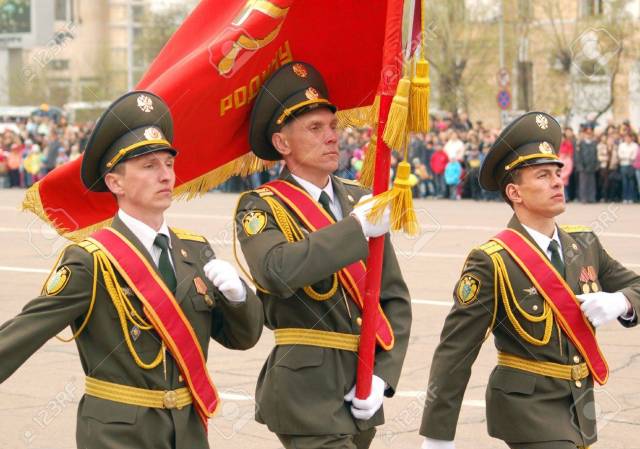

For five years I followed a vision of Rena Easton going over to a right-wing Christian militia. I was called a “lunatic”. Today I am a ‘Prophet’. I even began my own Bond novel to delivers God’s WARNING!
Here
Hail Britannia
Posted on August 9, 2013 by Royal Rosamond Press




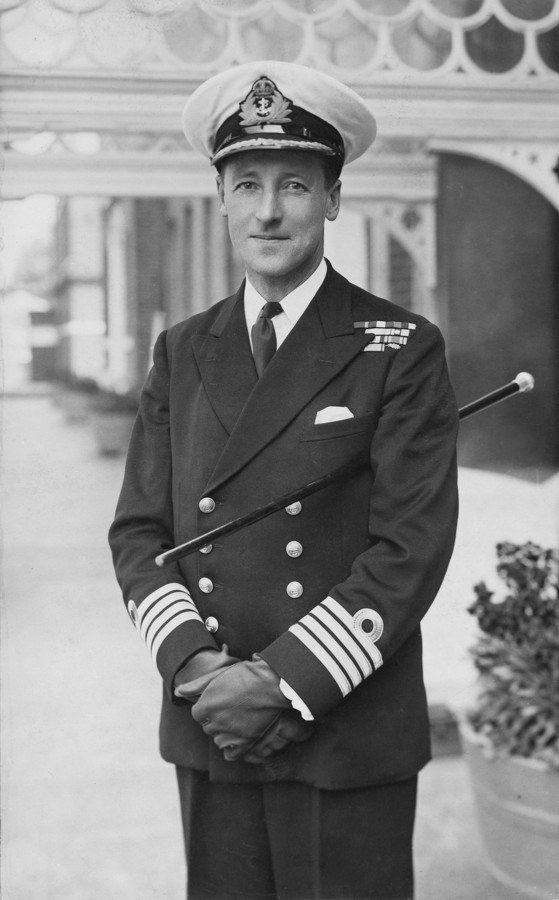
There is some indication I am being examined in cyber-space. Buster Howe has Ian Easton’s old job, which appears to employ American citizens in the defense of the British Empire. Sir Easton captained the aircraft carrier in photo above. Rena has not come forth. Is she being employed by the Queen in some manner – who is surrounded by beautiful women ready to defend Her Majesty and Britannia. Rena must own dual citizenship. I believe Easton helped design the cote of arms seen above.
I have an e-mail from Rena’s schoolmate admonishing me for turning Rena into a goddess. Imagine if there was no Art. What would cyber-space look like. I have found my beloved Muse. They call her Britannia. Got you – beautiful! How many pedestals have you stood on?
Jon Presco
The British Defence Staff – US is led by the Defence Attaché and has responsibility for military and civilian MOD personnel located both within the Embassy and in 34 states across the USA.
Early portraits of the goddess depict Britannia as a beautiful young woman, wearing the helmet of a centurion, and wrapped in a white garment with her right breast exposed. She is usually shown seated on a rock, holding a spear, and with a spiked shield propped beside her. Sometimes she holds a standard and leans on the shield. On another range of coinage, she is seated on a globe above waves: Britain at the edge of the (known) world.
Britannia is an ancient term for Roman Britain and also a female personification of the island. The name is Latin, and derives from the Greek form Prettanike or Brettaniai, which originally designated a collection of islands with individual names, including Albion or Great Britain; however, by the 1st century BC Britannia came to be used for Great Britain specifically. In AD 43 the Roman Empire began its conquest of the island, establishing a province they called Britannia, which came to encompass the parts of the island south of Caledonia (roughly Scotland). The native Celtic inhabitants of the province are known as the Britons. In the 2nd century, Roman Britannia came to be personified as a goddess, armed with a trident and shield and wearing a Corinthian helmet.
As Defence Attaché at the British Embassy in Washington, Major General Buster Howes OBE is focused on operations and contingency planning, defence intelligence, cyber and space, service personnel, defence education and doctrine.
The RCDS Mission is:
“To prepare senior officers and officials of the United Kingdom and other countries and future leaders from the private and public sectors for high responsibilities in their respective organisations, by developing their analytical powers, knowledge of defence and international security, and strategic vision”.[2]
RCDS forms a part of the Defence Academy of the United Kingdom. In fulfilment of its mission, the college runs one course a year, from September to July.[3] Each course is attended by a maximum of 90 full-time members, around one-third from UK and two-thirds from overseas.[3] Attendees are military officers of Colonel/Brigadier or equivalent rank but also include civil servants, diplomats, police officers and representatives from the private sector.[3] All have been selected to attend the course on the strength of their potential to progress to a high position within their profession.[3]
The course composition has been progressively widened to include members from over 40 different countries.[3]
Since 2001, course members have to option to study in a joint programme that leads to a MA in International Security and Strategy from the King’s College London.[3][4]
Navy officials briefed a group of British Naval officers on key U.S. Navy technological programs and the potential for new science and technology collaboration during a tour here Feb. 13.
U.K. Royal Navy Commodore Alex Burton led the delegation of British officers who toured Naval Surface Warfare Center Dahlgren Division (NSWCDD) laboratories and test sites for overviews on programs ranging from directed energy weapons and the Littoral Combat Ship Gun Mission Module to the Electromagnetic Railgun and the Potomac River Test Range.
“Tightening budgets and technology advancements drive us to seek more collaborative opportunities with our international partners,” said NSWCDD Chief Technology Officer June Drake. “Through the years, our close working relationship with the U.K., fostered by our U.K. Personnel Exchange Program officers, has been key to continued discussions as we seek to define future technical collaborative efforts.”
In 1922 a cabinet committee under Winston Churchill, then Secretary of State for the Colonies, recommended the formation of the College.[1] The college was founded in 1927 as the Imperial Defence College and was located at 9 Buckingham Gate until 1939.[1] Its objective at that time was the defence of the Empire.[1] In 1946, following the end of World War II, the college reopened at Seaford House, Belgrave Square and members of the United States forces started attending courses.[1] It was renamed the Royal College of Defence Studies in 1970 and in 2007 the Queen and Prince Philip visited the college.[1]
The British Defence Staff – US, which was previously known as British Defence Staff (Washington),[1] is the home of the Ministry of Defence (United Kingdom) in the United States of America and its purpose is to serve the interests of Her Majesty’s Government in the USA. The British Defence Staff – US is led by the Defence Attaché and has responsibility for military and civilian MOD personnel located both within the Embassy and in 34 states across the USA.
http://en.wikipedia.org/wiki/HMS_Triumph_(R16)
British Defence Staff – US alongside the Foreign and Commonwealth Office and other Government Departments collectively serve the interests of Her Majesty’s Government in the USA.
The British Defence Staff in the United States is led by the Defence Attaché Major-General Francis Hedley Robertson “Buster” Howes, CB, OBE. The Defence Attaché is the British Ambassador’s senior adviser on defence issues, and as Head of the British Defence Staff in the United States has responsibility over 385 military and civilian MOD personnel located both within the Embassy and in 34 states across the USA. The Defence Attaché is drawn rotationally from each of the three Services.
As Defence Attaché at the British Embassy in Washington, Major General Buster Howes OBE is focused on operations and contingency planning, defence intelligence, cyber and space, service personnel, defence education and doctrine.
Buster was educated at Christ’s Hospital and York and London Universities and was commissioned into the Royal Marines in 1982. He initially served as a troop commander in 42 Commando RM, deploying for the first time on operations in Northern Ireland. After training a recruit troop, he qualified as a Mountain Leader and was then posted to Recce Troop, 45 Commando RM. Following a stint as AdC to Major General Training of Reserve and Special Forces RM, he was appointed to the 2nd Division, USMC, as a Regimental Operations Officer (for the First Gulf War). He subsequently commanded Charlie Company, 40 Commando RM; Commando Training Wing at CTCRM; 42 Commando RM (for the Second Gulf War); and 3 Commando Brigade.
Buster has worked in personnel policy in the Fleet HQ as well as having been a planner in the Rapid Reaction Force Operations Staff of UNPROFOR in Bosnia and a strategist in the Naval Staff Directorate in MOD. He has attended the Naval Staff College, the Higher Command and Staff Course, the Royal College of Defence Studies, and the Pinnacle Course. Additionally, he has served as a Divisional Director for ICSC(L) at the JSCSC and as COS to Commander Amphibious Forces (CAF). He was Chief Joint Co-ordination and Effects in HQ ISAD X in Kabul, followed by a post as Director Naval Staff, in 2007. He served as Head of Overseas Operations in MOD before being appointed Commandant General Royal Marines/CAF in February 2010. For 15 months up to 1 August, Buster Howes commanded Operation ATLANTA, the EU Counter Piracy Mission in the Indian Ocean.
Captain of Deal Castle, President of the Royal Marines Mountaineering Club, and Vice President of the RNRM Children’s Charity, Buster has three daughters and his interests range from teaching them table manners and repairing the things they break, to mountaineering, gardening, art and ideas. He recently gave up water skiing.
British Embassy
Washington
British Defence Staff
USA
Defence Attaché, USA
A Defence Attaché is a member of the armed forces who serves in an embassy as a representative of their country’s defence establishment abroad. The Defence Attaché is responsible for bilateral military and defence relations.
BDS-US Command Group
WASHINGTON — In what is believed to be the first time since the 1940s, the entire British defense staff will be here March 25 to discuss long-range strategy and the impact of budget cuts with their U.S. counterparts, according to U.S. and British sources.
The meeting is reminiscent of the Combined Chiefs of Staff, when British and American military leaders joined forces during World War II. Both nations are undergoing significant budgetary reductions and will continue to rely on each other in future years for support. Understanding what capabilities will survive and won’t is essential to long-term strategic planning.
Easton joined the Royal Navy in 1931 and qualified as a pilot at the start of World War II in which he saw active service on aircraft carriers.[1] On 4 January 1941, flying a Fairey Fulmar of 803 Squadron from HMS Formidable during a raid on Dakar he force landed, with his aircrewman Naval Airman James Burkey and was taken prisoner and held by the Vichy French at a camp near Timbuktu until released in November 1942.[2] He was appointed Assistant Director of the Tactical and Weapons Policy Division at the Admiralty in 1960 and was seconded to the Royal Australian Navy as Captain of HMAS Watson in 1962.[1] He went on to be Naval Assistant to the Naval Member of the Templer Committee on Rationalisation of Air Power in 1965, Director of Naval Tactical and Weapons Policy Division at the Admiralty in 1966 and Captain of the aircraft carrier HMS Triumph in 1968.[1] After that he was made Assistant Chief of Naval Staff (Policy) in 1969, Flag Officer for the Admiralty Interview Board in 1971 and Head of British Defence Staff and Senior Defence Attaché in Washington D. C. in 1973.[1] He last posting was as Commandant of the Royal College of Defence Studies in 1976: he commissioned armourial bearings for the College which were which were presented during a visit by the Queen in November 1977.[3] He retired in 1978.[1]
http://en.wikipedia.org/wiki/HMS_Triumph_(R16)
The Commandant of the Royal College of Defence Studies was a UK senior serving military officer between 1972 and 2001. The post rotated through the three branches of the armed forces in turn. In 1971 the old Imperial Defence College became the Royal College of Defence Studies. In 1991, the post was downgraded to three-star, and then in 2001, it was opened up to competition through public advertisement. Subsequent incumbents have as yet all been senior retired military officers.
http://en.wikipedia.org/wiki/Distinguished_Service_Cross_(United_Kingdom)
British America’s Cup Challenge (United Kingdom)[edit]
From the Royal Thames Yacht Club, White Crusader was designed by Ian Howlett and was a traditional 12 metre design evolved from the DeSavery Lionhart ’83 boat of the previous Americas Cup event. However, White Crusader II was a radical design and designed by David Hollam. This second boat was used as a trial horse against White Crusader, but the team eventually decided to use the more conventional designed boat. Tank testing was carried out at Southampton University and HMS Haslar. The deadline for acceptance of challenges was 1 April 1986 and Admiral Sir Ian Easton wrote his own personal cheque for $16,000 as an entry fee deposit. Harold Cudmore acted as skipper-tactician and starting helmsman who then handed over the helm to Chris Law for the remainder of each races. Both boats were originally named simply Crusader One and Two but the “White” part of their names were added when millionaire Graham Walker (Of White Horse whiskey fame) gave heavy sponsorship to the British challengers at the last minute before the event started so the “White” was added to their names.
http://en.wikipedia.org/wiki/1987_Louis_Vuitton_Cup
The first writer to use a form of the name was the Greek explorer and geographer Pytheas in the 4th century BC. Pytheas referred to Prettanike or Brettaniai, a group of islands off the coast of North-Western Europe. In the 1st century BC Diodorus Siculus referred to Pretannia,[1] a rendering of the indigenous name for the Pretani people whom the Greeks believed to inhabit the British Isles.[2][3] Following the Greek usage, the Romans referred to the Insulae Britannicae in the plural, consisting of Albion (Great Britain), Hibernia (Ireland), Thule (possibly Iceland) and many smaller islands. Over time, Albion specifically came to be known as Britannia, and the name for the group was subsequently dropped.[1] That island was first invaded by Julius Caesar in 55 BC, and the Roman conquest of the island began in AD 43, leading to the establishment of the Roman province known as Britannia. The Romans never successfully conquered the whole island, building Hadrian’s Wall as a boundary with Caledonia, which covered roughly the territory of modern Scotland, although in fact the whole of the boundary marked by Hadrian’s Wall lies within modern-day Northern England. A southern part of what is now Scotland was occupied by the Romans for about 20 years in the mid-2nd century AD, keeping in place the Picts to the north of the Antonine Wall. People living in the Roman province of Britannia were called Britanni, or Britons. Ireland, inhabited by the Scoti, was never invaded and was called Hibernia. Thule, an island “six days’ sail north of Britain, and […] near the frozen sea”, possibly Iceland, was also never invaded by the Romans.
An As coin from the reign of Antoninus Pius struck in 154 AD showing Britannia on the reverse
The Emperor Claudius paid a visit while Britain was being conquered and was honoured with the agnomen Britannicus as if he were the conqueror; a frieze discovered at Aphrodisias in 1980 shows a bare breasted and helmeted female warrior labelled BRITANNIA, writhing in agony under the heel of the emperor.[4] She appeared on coins issued under Hadrian, as a more regal-looking female figure.[5] Britannia was soon personified as a goddess, looking fairly similar to the goddess Minerva. Early portraits of the goddess depict Britannia as a beautiful young woman, wearing the helmet of a centurion, and wrapped in a white garment with her right breast exposed. She is usually shown seated on a rock, holding a spear, and with a spiked shield propped beside her. Sometimes she holds a standard and leans on the shield. On another range of coinage, she is seated on a globe above waves: Britain at the edge of the (known) world. Similar coin types were also issued under Antoninus Pius.
British Defence Staff
USA
Location:
USA
Part of:
Ministry of Defence
The Ministry of Defence (MOD) protects the security, independence and interests of our country at home and abroad.
We work with our allies and partners whenever possible. Our aim is to ensure that the armed forces have the training, equipment and support necessary for their work.
The MOD works with the United States on joint overseas operations and contingency planning, bilateral defence co-operation, interoperability and engages on defence trade.
Our team in the United States assists this work and communicates the broader transatlantic defence relationship, elevates the UK’s interests and reputation and provides high-quality advice and reporting to the UK on all aspects of defence business.
Responsibilities
The MOD is responsible for: defending the UK and its overseas territories, providing strategic intelligence, providing nuclear deterrence, supporting civil emergency organisations in times of crisis, defending our interests by projecting power strategically and through expeditionary interventions, providing a defence contribution to UK influence and providing security for stabilisation.
The British Defence Staff in the United States comprises some 750 military and civilian MOD personnel based in over 30 states across the US. Their mission is to protect and advance the UK and its interests by reinforcing the transatlantic defence and security relationship.
Priorities
Preserving global peace & security — The UK and the US co-operate to address the world’s most pressing security challenges.
Supporting trade and investment — Driving forward industry, the UK works with the US on facilitating defence trade and investment.
Co-operating in science, innovation, energy and higher education — The UK and the US collaborate in science and innovation; including advanced defence technologies.
Departments at post
Ministry of Defence civil servants
Royal Navy personnel
British Army personnel
Royal Air Force personnel
Joint Forces Command
Follow us
Connect with British Defence Staff in the USA on Blog
Our people
Major General Buster Howes OBE
Defence Attaché, USA
Will Jessett CBE
Minister Defence Materiel, USA
Contact us
British Defence Staff
British Embassy Washington
3100 Massachusetts Avenue NW
Washington DC 20008
USA
EmailBDSUS-COMMUNICATIONS@mod.uk
Enquiries +1 202 588 6500
http://www.sail-world.com/USA/index.cfm?SEID=2&Nid=80793&SRCID=0&ntid=20&tickeruid=0&tickerCID=0
http://www.sail-world.com/USA/index.cfm?SEID=2&Nid=80793&SRCID=0&ntid=20&tickeruid=0&tickerCID=0
http://www.louisvuitton-cup.com/fr_CA/relive-excitement-page
Easton,
[Sir] Ian
Younger son of Walter Easton, and Janet Elizabeth White-Rickard, of West Mersea, Essex.
Married 1st (08.05.1943, Chelsea district, London) Shirley Townend White, WRNS (26.09.1922 – 12.2002) (marriage dissolved) [she remarried (1962) Lt. Merrick Edsell Maslen, RN (1923-1994)], elder daughter of Mr & Mrs Keith Townend White, of Wimbledon Common; one son, one daughter.
Married 2nd ((09?).1962, Kensington district, London) Margarethe Elizabeth Martinette Van Duyn de Sparwoude (marriage dissolved) [she was earlier (1945) married to Ian A. McKenzie Williamson]; one daughter.
Married 3rd (09.1987, Isle of Wight) Irene Victoria Christensen; one son, one daughter.
Spy Island Authors
Posted on June 26, 2021 by Royal Rosamond Press


On this day I found ‘Spy Island Authors’ . We are a school for authors of Spy Novels, and New Cold War Thrillers. The spirit of my grandfather, Royal Rosamond, will wage a historic battle against those who have done his family wrong, and intend to erase Democracy from the face of the earth. The American family will be just a memory unless the spirit of these men, arise.
The family of Elizabeth Rosemond Taylor came back to America in 1939. Liz and her brother, Howard, were British subjects who had contact with Victor Cazalet who may have been an operative for The New World Order. Victor has a vision of uniting the the two most powerful navies in the world. Royal Rosamond in camping on the Anacapa Islands with Dashiell Hammet, and other Black Mask authors. I doubt Liz and Royal ever met. This Rose Star knew very little about her roots when she died. If she had met my grandfather, then she would wonder aloud if they were kin. They had…..those eyes!
I invite my students, my trainees, to walk in the footsteps of the anonymous Continental Op who boards the sloop The Southern Cross to sail to Saint Croix Island with his peers for a much needed vacation. However, business is discussed. Members of the Bohemian Club are aware of this gathering. When Christopher Wilding married Aileen Getty, we became kin to Ian Fleming. James Bond is sailing aboard The Southern Cross.
My aunt Lillian told me she saw her father and Erle Stanley Gardener typing in the living room. she claimed Royal taught Earle how to write. There is a HBO series titled ‘Perry Mason’. Royal was fifty-six when Liz got off the boat in New York. She was born in 1932. My mother, Rosemary, was born in 1928. My grandfather was publishing in Out West magazine in 1918, where the Taylor family was heading to find their fortune.
Here is my idea for a series ‘James Bond In La La Land that I wrote after I began ‘The Royal Janitor’. Shades of ‘Once Upon A Time In Hollywood’.
My friend Bryan MacLean was invited to dinner at Sharon Tate’s the night of the murders. I believe he was a friend of McQueen.
James Bond In La La Land? | Rosamond Press
“James met Steve McQueen at a red light on Mulholland Drive at 10:30 P.M. Steve was driving a Shelby Mustang, and Bond a Ford Torino Cobra. The actor, famous for his driving skills, revved his engine, and James gave the nod. When the light turned green, the race was on. Jame’s knew he was disobeying his therapists orders. After McQueen edged Bond out, they stopped in a A&W, where they chatted. Steve invited James to dinner at Sharon Tates’s house. 007 said he would consider it after he checked his calendar. In truth his doctor insisted he stay away from the fast LA crowd.”
Steve McQueen had every intention of attending Tate’s get-together that evening but, thanks to a persistent female companion, did not. The actor later learned that Manson wanted him dead as part of a prepared hit list of celebrity killings.
I am going to author a Straight Bond book.
John Presco
President: Royal Rosamond Press
Author of: The Royal Janitor
Copyright 2021


Ian Fleming – Talitha Getty – Elizabeth Rosemond Taylor | Rosamond Press
Matthew Rhys, John Lithgow and Tatiana Maslany to Star in ‘Perry Mason’ (hbo.com)
The Fleming Collection and Bond St. Gallery | Rosamond Press
The Continental Op is a fictional character created by Dashiell Hammett. He is a private investigator employed as an operative of the Continental Detective Agency’s San Francisco office. The stories are all told in the first person and his name is never given.
The Philosopher Detective | Rosamond Press


Elizabeth Rosemond Taylor was born in London, England, on February 27, 1932, to American parents Francis and Sara Taylor. Her father was a successful art dealer who had his own gallery in London. Her mother was an actress who had been successful before marriage under the stage name Sara Sothern. Taylor has an older brother, Howard, who was born two years earlier. In 1939 the family moved to Los Angeles, California, where Taylor was encouraged and coached by her mother to seek work in the motion picture industry. Taylor was signed by Universal in 1941 for $200 a week.
Read more: https://www.notablebiographies.com/St-Tr/Taylor-Elizabeth.html#ixzz6yuTy1BWK
Black Mask Authors
Posted on July 28, 2013 by Royal Rosamond Press


This extremely rare photo of the first west coast Black Mask get-together on January 11, 1936 captures possibly the only meeting of several of these authors.
Pictured in the back row, from left to right, are Raymond J. Moffatt, Raymond Chandler, Herbert Stinson, Dwight Babcock, Eric Taylor and Dashiell Hammett. In the front row, again from left to right, are Arthur Barnes (?), John K. Butler, W. T. Ballard, Horace McCoy and Norbert Davis.
Rosemary told me her father, Royal Rosamond, used to sail to the Channel Islands and camp with his friend, Dashiell Hammett who is seen standing on the right in the photo above.
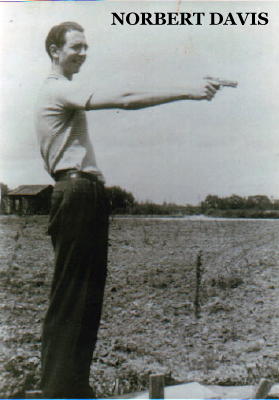
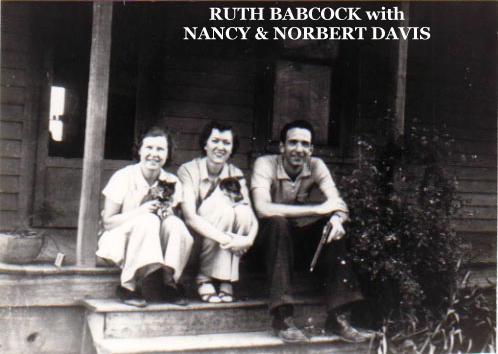
Aunt Lillian told me she would fall asleep listening to Royal and Erle Stanley Gardner on the typewriter in the living room. Royal was Gardner’s teacher and a member of the Black Mask. I believe I can almost recoginize Black Mask authors under the tree on Santa Cruz Island sitting under a tree with my grandmother, Mary Magdalene Rosamond, who does not look very happy as she embraces a black dog. Who is that woman? Is she a writer? She looks a bit crazed, as does the guy holding a gun. Is Mary hearing some far-out and weird ideas around the campfire?
When I was fifteen Rosemary showed me about six magazines wherein her father’s stories appeared. There were several mysteries. I am going to send the camping photo to some experts. That looks like Raymond Chandler in front of the tent. Is he the guy packing heat?
Hammett wrote the Maltese Falcon that begins with a story about the Knight Templars. Was this a tale passed around the campfire on Santa Cruz Island?
Jon Presco
Copyright 2013
Arhtur K. Barnes and John K. Butler
Posted on August 1, 2018 by Royal Rosamond Press
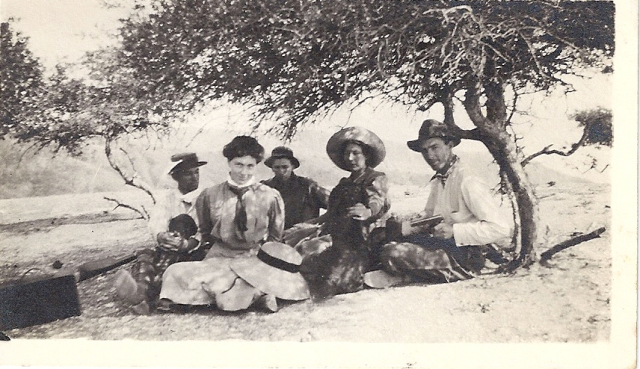
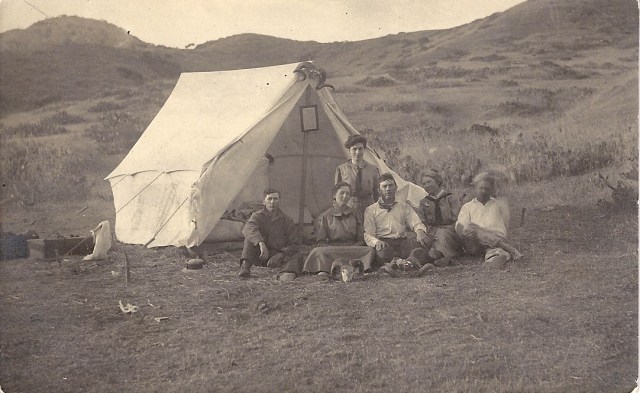
I am almost certain Arthur K. Barnes and John K. Butler are in these two photographs with my grandmother. I will tie Barnes and Butler to C.S. Lewis, Tolkien, and Ian Flemming. Add Dashiell Hammet to the mix. He would go camping on Anacapa Island with my grandfather, Royal Rosamond.
Elizabeth Rosemond Taylor is my only Muse. Liz, Christine, and I, are the only family members I want to be associated with. I am going to found a California Cultural Reserve in order to survive The Moron of Dark Tower and his Neo-Confederate Thunder Turds.
John Presco
http://www.thrillingdetective.com/trivia/john_k_butler.html
John K. Butler
(1908–64)
 Author JOHN K. BUTLER is best-known, at least in our little neck of the woods, for the numerous stories he pounded out for such pulps as Black Mask, Detective Fiction Weekly, Double Detective and especially Dime Detective.
His best known series character, of course, was Steve Midnight, the trouble-prone hack for the Red Owl Cab Company of Los Angeles, who appeared in nine stories in Dime Detective, but he was also responsible for the adventures of police detective Rex Lonergan and undercover cop Tricky Enright. but his forté seemed to be tough, competent sleuths with unlikely professions, such as Midnight, or hard-boiled phone company inspector Rod Case. Butler even penned at least one story about Sandy Taylor of the Harbor Police.
Butler was also one of the most prolific writers of B-pictures, eventually cranking out over fifty screenplays, mostly for Republic Pictures, more than half of them westerns, and many of them featuring Roy Rogers. Okay, so they were mostly B-flicks, but among his screen credits are such classic — and occasionally alternative classics — as Ambush at Cimarron Pass, Drums Along the River, My Pal Trigger, The Vampire’s Ghost and– get this — Post Office Investigator, about a hard-boiled, um, post office inspector. A nitrate print of it survives in the UCLA Film and Television Archives but is not listed for preservation.
In the fifties, Butler moved on to television, again favouring westerns, although he also wrote for shows like The New Adventures of Charlie Chan, The Adventures of Dr. Fu Manchu and 77 Sunset Strip.
Butler was also a bit of a wingnut, dressing up in cowboy drag and galloping through Griffith Park on his horse Prince. You might even say he died in the saddle — he broke his back during a ride in 1964.
SHORT STORIES

- “Murder Alley” (April 1, 1935, Dime Detective; Rex Lonergan)
- “The Corpse Parade” (June 1, 1935, Dime Detective; Rex Lonergan)
- “Fog Over Frisco” (July 1, 1935, Dime Detective; Rex Lonergan)
- “The Stairway to Hell” (November 1, 1935, Dime Detective; Rex Lonergan)
- “‘G’ Heat” (November 1935, Black Mask)
- “Guns for a Lady” (March 1936, Black Mask)
- “Seven Years Dead” (January 1936, Dime Detective; Tricky Enright)
- “Dark Return” (May 1936, Black Mask; Mark Dana)
- “Blood on the Buddha” (May 1936, Dime Detective; Rex Lonergan)
- “Parole for the Dead” (August 1936, Dime Detective; Rex Lonergan)
- “You Can’t Bribe Bullets” (August 1936, Black Mask)
- “The Mad Dogs of Frisco” (October 1936, Dime Detective; Rex Lonergan)
- “No Rest for Soldiers” (October 1936, Black Mask)
- “The Lady in the Grave” (October 31, 1936, Detective Fiction Weekly)
- “Federal Bullets” (November 1936, The Feds)
- “Celluloid Doom” (December 1936, Ten Detective Aces)
- “The Mirror Maze” (February 1937, Ten Detective Aces)
- “The Walking Dead” (February 1937, Dime Detective; Rex Lonergan)
- “Reunion on River Street” (March 6, 1937, Argosy)
- “The Blood Barrier” (March 1937, Ten Detective Aces)
- “Death on the Hook” (March 1937, Headquarters Detective; Sandy Taylor)
- “Gallows Ghost” (April 1937, Dime Detective; Tricky Enright)
- “I Killed a Guy” (April 1937, Black Mask)
- “The Parole Pawn” (May 1937, Ten Detective Aces)
- “A Coffin for Two” (July 1937, Dime Detective; Rex Lonergan)
- “Death in the Dust” (September 4, 1937, Detective Fiction Weekly)
- “A Ticket to Tokyo” (September 18, 1937, Detective Fiction Weekly)
- “A Street in Singapore” (September 25, 1937, Argosy)
- “The Secret of the Wax Lady” (September 1937, ; Tricky Enright)Dime Detective
- “Sierra Gold” (November 20, 1937, Argosy)
- “Death Rides the Wires” (November 20, 1937, Detective Fiction Weekly)
- “The Pied Piper of Frisco” (November 1937, Dime Detective Magazine; Rex Lonergan)
- “Legend of Boulder Gap (1937)
- “The Black Widow” (January 1938, Double Detective)
- “Defender of the Doomed” (May 7, 1938, Detective Fiction Weekly)
- “Why Shoot a Corpse?” (May 1938, Dime Detective; Tricky Enright)
- “Over the Wall” (August 1938, Double Detective)
- “Hard to Kill” (November 1938, Double Detective)
- “Big Mike’s Christmas Carol” (December 24, 1938, Detective Fiction Weekly)
- “The Last Hideout” (January 1939, Double Detective)
- “County Cleanup” (February 1939, Dime Detective; Tricky Enright)
- “Murder in Mexico” (April 1939, Double Detective)
- “The Headless Man in Hangar 3” (July 1939, Double Detective)
- “The Man from San Quentin” (August 1939, Double Detective)
- “The Man Who Liked Ice” (October 1939, Double Detective)
- “Country Cop” (November 4, 1939, Detective Fiction Weekly)
- “The Policeman Writes a Ticket” (December 1939, Double Detective)
- “The Doctor Buries His Dead” (December 1939, ; Stan Denhart, M.D.)
- “I Died Last April” (January 1940, Double Detective)
- “The Lady and the Snakes” (March 1940, Double Detective)
- “The Autumn Kill” (May 25 1940, Detective Fiction Weekly)
- “The Dead Ride Free” (May 1940, Dime Detective; Steve Midnight)
- “The Man from Alcatraz” (July 1940, Dime Detective; Steve Midnight)
- “Cop from Yesterday” (September 28, 1940, Detective Fiction Weekly)
- “Hacker’s Holiday” (October 1940, Dime Detective; Steve Midnight)
- “Brass Knuckles” (October 19, 1940, Detective Fiction Weekly)
- “The Saint in Silver” (January 1941, Dime Detective; also The Hardboiled Dicks; Steve Midnight)
- “Don’t Make It Murder” (February 1941, Black Mask)
- “The Killer was a Gentleman” (March 1941, Dime Detective; Steve Midnight)
- “We Sell Murder” (Summer 1941, Exciting Murder)
- “Dead Man’s Alibi” “July 1941, Dime Detective; Steve Midnight)
- “Death Has My Number” (August 1941, Black Mask; Rod Case)
- “Blitz Kill” (September 1941, G-Men Detective)
- “The Hearse from Red Owl” (September 1941, Dime Detective; Steve Midnight)
- “Murder for Nickels” (December 1941, Black Mask; Rod Case)
- “Death and Taxis” (January 1942, Dime Detective; Steve Midnight)
- “Cops Have Nine Lives” (February 1942, Street & Smith’s Detective Story Magazine)
- “Funeral — C.O.D.” (February 1942, Detective Tales)
- “The Mark of the Monterey Kid” (February 1942, Western Tales)
- “The Corpse That Couldn’t Keep Cool” (March 1942, Dime Detective; Steve Midnight)
- “Never Work at Night” (March 1942, Black Mask; Rod Case)
- “Death Goes Dancing” (May 1942, Street & Smith’s Detective Story Magazine)
- “The Pen is Not for Punks” (Fall 1942, The Masked Detective)
- “Dead Letter” (September 1942, Black Mask; Rod Case)
- “The Last Man to Hang” (October 1942, Detective Tales)
- “Legend of Boulder Gap” (February 1950, Max Brand’s Western Magazine)
- “The Man Who Knew Cochise” (December 1952, Western Story Magazine)
- “So-Long, Tombstone!” (June 1953, Western Story Magazine)
- “A Man with a Gun” (June 1955, Best Western)
COLLECTIONS
- At the Stroke of Midnight (1998; Steve Midnight) ..Buy this book
- The Complete Cases of Steve Midnight (2016; Steve Midnight).. Buy the book
RELATED LINKS
John K. Butler captured on film, along with a few of his partners in crime!
Respectfully submitted by Kevin Burton Smith.
interplanetary Huntress
the gerry carlyle stories
of arthur k barnes

When you read a great and famous author, delight comes without surprise. But when an obscure writer gives us a book which turns out to be a lot better than expected, the pleasure is laced with the extra tang of astonishment. This is what we get from the tales of roving Gerry “Catch ’em alive” Carlyle, the huntress in the misleadingly titled collection Interplanetary Hunter. Her vocation is to capture exotic alien creatures for the London Interplanetary Zoo, and this theme allows many attractive branchings.
Gerry herself is a likeable, headstrong character, living on her nerves, very capable, yet vulnerable to the threat of what she cannot afford – namely, defeat.
…This day was to be one of many surprises for Tommy Strike and perhaps the greatest shock of all came when he stood beside the sloping runway leading into the brightly lighted belly of the ship. For, awaiting him there, one hand outstretched and a cool little smile on her lips, stood the most beautiful girl he had ever seen.

“Mr Strike,” said Barrows, “this is Miss Gerry Carlyle.”
The trader stared, thunderstruck. In those days of advanced plastic surgery, feminine beauty wasn’t rare but even Strike’s unpracticed eye knew that here was the real thing. No synthetic blonde baby-doll here but a natural beauty untouched by the surgeon’s knife – spun-gold hair, intelligence lighting dark eyes, a hint of passion and temper in the curve of the mouth and arch of nostrils…
But Miss Carlyle’s voice was an ice-water jet to remind the trader of earthside manners.
“You don’t seem enthusiastic over meeting your temporary employer, Mr Strike…”

Stid: Old-fashioned stereotype here, eh? Wilful female eventually tamed by male who knows best…
Zendexor: I’d say, as a matter of fact, that the relationship between hero and heroine is particularly well handled. In action-adventure you don’t want anything too subtle, but let me summarize the writer’s achievement in this regard, by saying that we end up by accepting both Tommy Strike and Gerry Carlyle as real people. The man is quietly competent and content to allow the woman the starring role. The woman lives on her nerves, under great pressure to succeed in a man’s world.
Stid: A “man’s world” – in the interplanetary age? There you have it.
Zendexor: You mean, it’s stereotypical because it’s out of date? Don’t see why the one implies the other. Even if it did – every period of history generates its own rich crop of stereotypes, and isn’t it a relief to take a holiday from ours, once in a while? But this is a digression. Actually, stereotypophobes have nothing to fear from this book. As the two main characters grow to love and respect each other, the reader can share their mutual regard, as well as appreciating with zest the mutual double-crossing of the subsidiary characters, Van Zorn and Quade.

Harlei: It’s fiction, Stid, in case you hadn’t noticed. Pulp-era fiction. Explain to him what historical context means, Zendexor.
Zendexor: Yes, well, the stories are old-fashioned, no doubt about that. Arthur K Barnes wrote them in the late 1930s and early 1940s. But they still have the power to entertain us with the unexpected originality of their ideas, the fresh vigour of their old-fashioned characters, and above all the inventiveness of their portrayal of alien creatures.
Cross the colour and thought-provoking variety of Weinbaum‘s interplanetary adventures with the frontier wonderment of Campbell’s Penton and Blake saga, and you might get some idea of what awaits you with Barnes’ series.

Though I hasten to add that Barnes writes much, much better than Campbell. Only in the realm of ideas, of pure concepts, may Campbell equal him; but I hesitate even to say this. And it is Barnes who is by far the better at world-building.
…She sniffed noting what all newcomers to Venus learn. Although the view is a drab almost colorless one, an incredible multiplicity of odors assails the nostrils – sweet, sharp, musklike, pungent, spicy, with many unfamiliar olfactory sensations to boot.
Strike explained. On Earth flowering plants are fertilized by the passage of insects from one bloom to another, they develop petals of vivid colors to attract bees and butterflies and other insects. But on Venus, where perpetual mist renders impotent any appeal to sight, plants have adapted themselves to appeal to the sense of smell, therefore give off all sorts of enticing odors…
Such passages help promise the reader, that the story will rest upon logical foundations. So, when the heroine faces a mighty challenge, the reader is reassured that the author won’t cheat – that it won’t all be fixed by some lazy trick.
The challenge, in the Venus story, is provided by the ‘Murris’.

…Gerry Carlyle’s temper flared.
“What is the mystery about this Murri, anyhow? Everywhere I go, on Venus, back on Earth among members of my own profession, if the word Murri is mentioned everyone scowls and tries to change the subject. Why?”
No one answered. The Carlyle party shifted uneasily, their boots making shucking sounds. Presently Strike offered, “The fact is, you’ll never take back a Murri alive. But you wouldn’t believe me if I told you the reason, Miss Carlyle. I – ”
“Why not? What’s the matter with them? Is their presence fatal to a human in some way?”
“Oh, no.”
“Are they so rare or shy they can’t be found?”
“No, I think I can find you some before you take off.”
“Then are they so delicate they can’t stand the trip? If so, I can tell you we’ve done everything to make hold number three an exact duplicate of living conditions here.”
“No, it isn’t that either,” the trader sighed.
“Then what is it?” she cried. “Why all the evasions and secretive looks?…”
I certainly didn’t guess the mystery. This author, in my view, really does deliver the goods. The stories – all of them – are unpredictable yet always manage to make their own kind of sense. We’re taken to several varied worlds: Venus, Amalthea, Triton, a comet, Saturn and Titan. Each time we’re given a starkly different kind of native life, with biological inventiveness to match that of Stanley G Weinbaum.
Harlei: Just a moment, Zendexor – you’ve said some good things about the book but I want you to praise it some more, in a different way. I’m a bit worried that some prospective readers might get the wrong impression from what you’ve said so far. I can imagine some of them thinking: well, maybe the stories are colourful and inventive, but still, they’re likely to be a bit repetitive, if each and every one of them is mainly concerned with the heroine capturing some difficult beast… I mean to say, if that’s the only structure the stories have – more stuff to come, apparently
Zendexor: I get the point. But – no need to worry: Gerry’s plans run into plenty of other problems. It’s not just about catching beasts! There are alien intelligences too. Not that she is out to ensnare intelligent species, of course, but, unsuspecting, she meets some nonetheless, on Titan and on Almussen’s Comet. Also, the plot can hinge upon hostile action by her human enemies, for she has plenty of trouble from her own species, and these crises mingle with the simultaneous dangers from alien beasts and environments. Think of what happens on Triton and on Jupiter Five.
Stid: So, you’re giving it all the thumbs-up.
Zendexor: Look, such tales have the virtues and limitations of frontier adventures. They won’t give you what you get from Burroughs, Hamilton, Brackett, or from Clark Ashton Smith in The Immortals of Mercury and Vulthoom, namely the thrill of wandering among the ancient mysteries of exotic civilizations. Nevertheless if you follow Gerry and her “Ark” you will get the thrill of discovery, like in Smith’s other interplanetary masterpiece, The Immeasurable Horror. Although one must admit that Barnes is not a match for Smith stylistically, he’s still good enough, and his achievement will be appreciated by old-style OSS fans.
To sum up, this book is much, much better than it looks. And the Emshwiller illustrations are a delightful bonus. I have given only the Venus ones on this page; there are many more from the other worlds visited in the stories.
Arthur K Barnes, Interplanetary Hunter (1956).
See the Amalthea page for the visit to that moon, including a reference to the fearsome Cacus.
See the Triton page for the adventure set on that moon.
Extracts: Grounded on Titan – Shape-shifters on Almussen’s Comet.
http://en.wikipedia.org/wiki/Raymond_Chandler
Chandler had an immense stylistic influence on American popular literature, and is considered by many to be a founder, along with Dashiell Hammett, James M. Cain and other Black Mask writers, of the hard-boiled school of detective fiction. His protagonist, Philip Marlowe, along with Hammett’s Sam Spade, is considered by some to be synonymous with “private detective,” both having been played on screen by Humphrey Bogart, whom many considered to be the quintessential Marlowe.
Black Mask was a pulp magazine launched in 1920 by journalist H. L. Mencken and drama critic George Jean Nathan as one of a number of money-making publishing ventures to support the prestigious literary magazine The Smart Set, which Mencken edited, and which operated at a loss. Under their editorial hand, the magazine was not exclusively a publisher of crime fiction, offering, according to the magazine, “the best stories available of adventure, the best mystery and detective stories, the best romances, the best love stories, and the best stories of the occult.” The magazine’s first editor was Florence Osborne (credited as F. M. Osborne).[1]
Contents
[hide]
1 Editorial control
2 Contributing authors
3 Decline and revival
4 In popular culture
5 Anthologies
6 References
7 External links
Editorial control[edit]
After eight issues, Mencken and Nathan considered their initial $500 investment to have been sufficiently profitable, and they sold the magazine to its publishers, Eltinge Warner and Eugene Crow for $12,500. The magazine was then edited by George W. Sutton (1922–24), followed by Philip C. Cody.[2] In 1926, Joseph Shaw took over the editorship.
Contributing authors[edit]
Early Black Mask contributors of note included J. S. Fletcher, Vincent Starrett, and Herman Petersen.[3] Shaw, following up on a promising lead from one of the early issues, promptly turned the magazine into an outlet for the growing school of naturalistic crime writers led by Carroll John Daly. Daly’s private detective Race Williams was a rough and ready character with a sharp tongue, and established the model for many later acerbic private eyes.
Black Mask later published the profoundly influential Dashiell Hammett, creator of Sam Spade and The Continental Op, and other hardboiled writers who came in his wake, such as Raymond Chandler, Erle Stanley Gardner, Paul Cain, Frederick Nebel, Frederick C. Davis, Raoul F. Whitfield,[3] Theodore Tinsley, W.T. Ballard, Dwight V. Babcock, and Roger Torrey.[4] Author George Harmon Coxe created “Casey, Crime Photographer”, for the magazine, which became a media franchise with novels, films, radio, comic book tie-ins, television, and legitimate theatre.[5] Black Mask’s covers were usually painted by artists Fred Craft or J. W. Schlaikjer,[6] while Shaw gave the artist Arthur Rodman Bowker a monopoly over all Black Mask interior illustrations.[7] Although primarily known for male contributors, Black Mask also published a number of women crime writers, including Marjory Stoneman Douglas, Katherine Brocklebank, Sally Dixon Wright, Florence M. Pettee, Marion O’Hearn, Kay Krausse, Frances Beck, Tiah Devitt and Dorothy Dunn. [8] The magazine was hugely successful, and many of the writers, such as Hugh B. Cave, who appeared in its pages went onto greater commercial and critical success.
Although crime fiction made up most of the magazine’s content, Black Mask also published some Western and general adventure fiction.[1]
Decline and revival[edit]
Black Mask reached a sales peak in the early 1930s, but then interest began to wane under increasing pressure from radio, the cinema, and rival pulp magazines. In 1936, refusing to cut writers’ already meager pay, Shaw resigned, and many of the high-profile authors abandoned the magazine with him. Shaw’s successor Fanny Ellsworth, (1936–40) managed to attract new writers to Black Mask, including Cornell Woolrich, Frank Gruber, Max Brand and Steve Fisher. [9] However, from the 1940s on, Black Mask was in decline, despite the efforts of new editor Kenneth S. White (1940–48). The magazine in this period carried the work of John D. MacDonald.[1] Henry Steeger then edited Black Mask anonymously until it eventually ceased publication in 1951. [2]
In 1985, the magazine was revived as The New Black Mask, and featured noted crime writers James Ellroy, Michael Collins, Sara Paretsky and Bill Pronzini, as well as Chandler and Hammett reprints. Edward D. Hoch praised the revived Black Mask, stating in the book Encyclopedia Mysteriosa that “it came close to reviving the excitement and storytelling pleasure of the great old pulp magazines”. Due to a legal dispute over the rights to Black Mask name, the magazine ceased publication in 1987. It was revived as a short-lived magazine titled A Matter of Crime.[10]
Original copies of the Black Mask are highly valued among pulp magazine collectors. Issues with Chandler and Hammett stories are especially rare and command high prices.[1]
In popular culture[edit]
Black Mask magazine was the specific pulp fiction magazine that inspired the 1994 Quentin Tarantino film Pulp Fiction. Originally, the title of the film was Black Mask, before being changed.
An issue of Black Mask magazine features as a (planted) clue in the 1927 murder mystery novel Unnatural Death by Dorothy L. Sayers.
An episode of the 1990s television series Millennium mentions a ‘literary journal’ known as the ‘Dark Mask’ which featured detective fiction, an obvious parody of the Black Mask.
Anthologies[edit]
The Hard-Boiled Omnibus: Early Stories from Black Mask edited by Joseph T. Shaw, (1946).
The Hard-Boiled Detective: Stories from Black Mask magazine, 1920-1951 edited by Herbert Ruhm, (1977).
The Black Mask Boys: masters in the hard-boiled school of detective fiction edited by William F. Nolan, (1985).
Includes a short history of the magazine.
The Black Lizard Big Book of Black Mask Stories edited by Otto Penzler, (2007).
This extremely rare photo of the first west coast Black Mask get-together on January 11, 1936 captures possibly the only meeting of several of these authors.
Pictured in the back row, from left to right, are Raymond J. Moffatt, Raymond Chandler, Herbert Stinson, Dwight Babcock, Eric Taylor and Dashiell Hammett. In the front row, again from left to right, are Arthur Barnes (?), John K. Butler, W. T. Ballard, Horace McCoy and Norbert Davis.
Cleve F. Adams (6 stories)
Dwight V. Babcock (21 stories)
W. T. Ballard (43 stories)
Max Brand (9 stories)
Katherine Brocklebank (7 stories)
John K. Butler (11 stories)
Paul Cain (17 stories)
Hugh B. Cave (9 stories)
D.L. Champion (30 stories)
Raymond Chandler (11 stories)
Merle Constiner (12 stories)
George Harmon Coxe (27 stories)
John Carroll Daly (60 stories)
Norbert Davis (13 stories)
Ramon DeColta (24 stories)
Lester Dent (2 stories)
Bruno Fischer (5 stories)
Steve Fisher (9 stories)
Erle Stanley Gardner (103 stories)
William Campbell Gault (7 stories)
Frank Gruber (14 stories)
Brett Haliday (2 stories)
Dashiell Hammett (49 stories)
Baynard H. Kendrick (14 stories)
Louis L’Amour (1 story)
John Lawrence (14 stories)
John D. MacDonald (6 stories)
Horace McCoy (17 stories)
Robert Martin (8 stories)
Frederick Nebel (67 stories)
Robert Reeves (10 stories)
Stewart Sterling (12 stories)
Herbert Stinson (27 stories)
Eric Taylor (7 stories)
Roger Torrey (50 stories)
Donald Wandrei (6 stories)
Raoul Whitfield (66 stories)
Cornell Woolrich (24 stories)
 Rosamond Press
Leave a comment