The fifth son of Guy II of Rougemont and Guillemette de Coublant, Etienne de Rougemont was lord of Pichanges. In December 1265, having recalled the donations made to the temple by Aimon IV and Guy II, he gave to the Templars, with the agreement of his elder brother, Jean, Lord of Rougemont, the right of pasturage on his lands of Pichanges and Spoy. He died in 1271 and was buried before the altar in the chapel of Fontenotte and conferring his Templar rank of Preceptor (priest-templar).
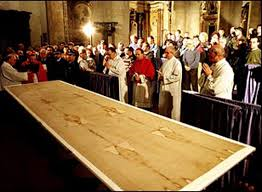
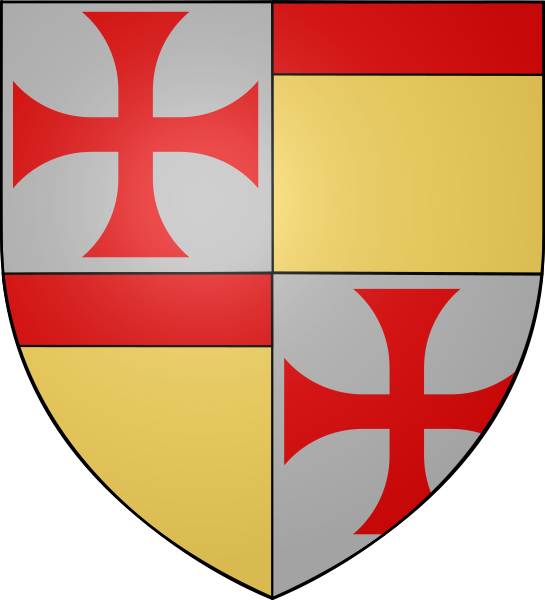
Rougemont Family Templars Worshipped at Fontenotte and owned the Shroud of Turin.
Look what I found!
1088. Jean de Tilchâtel Seigneur de Coublant
An hour ago (8/13/25] I found the missing link – with key – that the Knight Templars of Rougemont are related to other Templars, including the Grand Master, Bernard de Dramelay!
Loyal Americans are calling for the resignation of the Secretary of Defence for raising high the Skull and Crossbones of False Preacher, Doug Wilson! Hesgeth took an oath to DEFEND all the American People, even those who did not vote – because they were not eighteen! We’re talking about children.
When the President meets with our No.1 enemy in Alaska, President Zelensky ill not be there, nor will his grievous compliant Putin is MURDERING CHILDREN as they sleep. Is Putin murdering American children – as they sleep? If he was, Pete Hesgeth would be ordered to – ATTACK RUSSIA!
On this day, I order all those prentend Knight Templars on Facebook – to back the Ukrianians – OR STOP EMPLOYING my Families Cross to promote Facsist Christian Nationalism. This is it!
THE REAL DEAL!
It took me over twenty years to get back to my discovery, and look at the name Guillemette de Coublant. BINGO!
How stupid can Hesgth be to grasp the first brass ring that come his way? And he thinks he owns it all!
Hugh de Rougemont is the missing Grand Master. This is my discovery that makes all my work worthwhile. I am not a parasite on society. I will never be isolated again.
Jon Presco
Copyright 2017
Bernard de Tramelay (died 16 August 1153) was the fourth Grand Master of the Knights Templar.
He was born in the castle of Tramelay near Saint-Claude in the Jura. According to Du Cange, he succeeded a certain Hugues as Master of the Temple, although this Hugues is otherwise unknown. He was elected Grand Master in June 1151, after the abdication of Everard des Barres, who had returned to France following the Second Crusade. King Baldwin III of Jerusalem granted him the ruined city of Gaza, which Bernard rebuilt for the Templars.
In 1153 the Templars participated in the Battle of Ascalon, a fortress at that time controlled by Egypt. The Templars constructed a siege tower, which was burned down by the Egyptian soldiers inside Ascalon. The wind caught the flames and part of the walls of Ascalon burned down as well.
According to William of Tyre, knights of the Order rushed through the breach without Baldwin’s knowledge while Bernard prevented other crusaders from following, as he did not want to share the spoils of the city with the king. Bernard and about forty of his Templars were killed by the larger Egyptian garrison. Their bodies were displayed on the ramparts and their heads were sent to the sultan. Other more modern accounts say that William of Tyre’s version may have been distorted, since it may have been based on the defensive accounts given by the army’s commanders as to why they did not follow the Templars into the breach.[1]
In yet another differing account by a Damascene chronicler in the city, the breach of the wall is mentioned as a precursor to the fall of the city; he makes no mention of the incident with the Templars.
Regardless of which account is believed, Bernard was killed and beheaded during the fighting.
A few days later, Baldwin captured the fortress; shortly thereafter, the Templars elected André de Montbard as their Grand Master.
The families of Dramelay/Tramelay, De La Roche, and Rougemont are joined together by many marriages. They are linked with the Shroud of Turin and the Knights Templar. In the family tree above we can more clearly see how they are the premiere Templar family. It is highly likely Denis de Rougemont descends from this family.
"Fromond de Dramelay, sn de Neufchatel, etc, fl 1171/1213; m. N de Rougemont"
"Dunod de Charnage traced the Shroud to archbishop Amedée de Tramelay. Babinet's interpretation is that, fearing to retain it, Amedée turned it over to the Templars, an order independent and secret, created for the protection of the holy places."
"In 1265, de Molay was received into the Order at Beaune by Humbert de Pairaud, Visitor of France and England, and by French Master Amaury de la Roche.
Geoffroi of Charny, preceptor of commanderies of the Templar Order in NormandyThis article is about the Templar who was burned at the stake in 1314 along with Jacques de Molay in 1314
Geoffroi was accepted into the Order of Knights Templar (at the age of "sixteen, seventeen or thereabouts") by brother Amaury de la Roche, the preceptor of France in Étamps of the diocese of Sens.
Present at the ceremony were brother Jean le Franceys, preceptor of Pédenac.Templar commandery For his nephew who died in 1356, see Geoffroi de Charny. Geoffrey de Charney, or Geoffroy de Charnay, was Preceptor of Normandy for the Knights Templar.De Charney's nephew was Geoffroi de Charny, whose widow first put the Shroud of Turin on display later in the 14th century.
"Babinet seems to urge a Templar acquisition, not as early as 1139, but later, in 1205, via Othon de la Roche, Duke of Athens, who sent the relic to Besançon's Archbishop Amedée de Tramelay (1192-1219). This latter was related to Bernard de Tramelay, fourth Templar Master (1152-53)The head of a man adored by the Templars, so similar to the Mandylion/Shroud of Christ, was stolen from Constantinople by the Crusaders and then disappeared from Athens. Othon, duke of Athens, never returned it but in the château de Ray at Rigney, near Besançon, is a small wooden chest whose dimensions would be right for the Shroud folded in 96 layers . Bergeret (CIELT Rome Symposium 1993) thought it was the chest used to transport the Shroud from Athens to France. Babinet has earlier agreed with French scholar Jean Longnon (Journ. des savants, Jan-Mar 1973, 61-80) that Othon was never wed to Isabel/Elisabeth de Ray, but rather to Isabel/Elisabeth de Chappes. This would indicate that his title, seigneur de Ray, was paternally and not maritally inherited. It also signals that Jeanne de Vergy, second wife of Geoffrey I de Charny, was not descendent of Othon de la Roche, Duke of Athens and onetime possessor of the Shroud."
"Dunod de Charnage traced the Shroud to archbishop Amedée de Tramelay. Babinet's interpretation is that, fearing to retain it, Amedée turned it over to the Templars, an order independent and secret, created for the protection of the holy places. The possession by the Templars is the only explanation plausible and coherent for the 150 years from 1205 to 1355. Oddly and unnecessarily, Babinet exonerates the Templars of heresy. Also included in this publication is an article by Dorothy Crispino 'The Shroud at Besançon' which very authoritatively weighs in the balance (and finds wanting), theories that the Shroud may have been at Besançon before its emergence in Lirey in the mid-1950s. Brother Geoffroy de ChanayIt had been born about 1251.About 1269, it was received in the order with approximately 17 or 18 years.Geoffroy de Chanay: Frater Gaudfridus de Charnaio alias Charneio. Templier receipt in Etampes, by Amaury of the Rock in the presence of Jean brother Franceys, tutor of Paris.
Fromond de Dramelay; m.N de Montfaucon, Dame de Neufchatel; They probably were parents of two brothers: A1. Hugues I "le Connetable", Constable to Ct Gerard of Burgundy B1. Guy de Drameley B2. Hugues II de Dramelay; he and his brother were ancestors of the Sires de Dramelay, Jura A2. Humbert de Dramelay, sn de Neufchatel, etc; m.NN B1. Fromond de Dramelay, sn de Neufchatel, etc, fl 1171/1213; m. N de Rougemont C1. Thiebaut I de Neufchatel, sn de Neufchatel, Vcte de Baume, Sire de Jonvelle, etc, +1268, bur Lieucroissant; 1m: Petronille, Dame de la Ferte-Sous-Vadans; 2m: 1238 Elizabeth, Dame de Jonvelle; all kids were by 1m.
D1. Richard de Neufchatel, sn de Clemont, +1259, bur Lieucroissant; m.before 1255 Marguerite de Montfaucon
G2. Eudes de la Roche, sn de Chatillon, test 1353, bur St-Hippolyte; m.Jeanne de Frolois, Dame de Marigny H1. Marguerite, Dame de Marigny, +1378; 1m: Guillaume de Thoire (+1345); 2m: Jacques de Vienne, sn de Longvy (+1372) G3. Androin, Cardinal, Abbot of Cluny, +of the plague at Viterbo 1369 G4. Achillande; m.Vauthier de Vienne, sn de Mirebel (+1344) F2. Etiennette, Dame de Soye, +ca 1305; m.before 1299 Aime de Ray E2. Etiennette, Abbess of St.Jean, Autun, +1278 E3. Bonne, Abbess of St.Jean, Autun, +1294 D2. Jacques de la Roche, Bp of Autun D3. Hue de la Roche, a canon in Autun 1286 D4. Nicole de la Roche, Abbess of Baume-les-Dames 1268/71 D5. Marguerite de la Roche; m.Richard de Gleres-Montjoie B3. Amedee de Dramelay, Archbishop of Besancon, +1220
Lords: They go down from the sovereign Counts of Burgundy.
Bernard de Dramelay: (1134) figure at the court of Renaud III of Bourgogne.Il goes to the crusade préchée by Saint-Bernard in 1147, fights with the head office of Ascalon, and obtains the distinguished title of Large Maitre of the Temple of Midsummer's Day of Jerusalem. Hugues de Dramelay: (1175) He is constable of the county of Burgundy.
Amédée de Dramelay becomes Archevêque of Besancon at the end of the XII eme century. Put to the test by its political options, it was locked up with the Castle of Montbeliard a few months in 1199. Returned to freedom, it goes back on its seat, but the count Etienne of Burgundy often devastated his fields. Wearied troubles which its canons caused him, it left for the crusade in 1218 and died out of Holy Land in 1220. In him the family of the Lords de Dramelay died out. Etienne of Burgundy, owner of Baronnie d' Orgelet, joins together Baronnie de Dramelay with his fields. The descendants of Guillaume de Dramelay, nephew of Bernard, do not preserve any right on this ground.
de DRAMELAY, Fromont II Sexe: Masculin Naissance : vers 1145 Décès : vers 1213 Occupation : seigneurParents: Père: de DRAMELAY, Humbert Famille: Conjoint: de ROUGEMONT, N Sexe: Féminin Naissance : vers 1170 Parents: Père: de ROUGEMONT, Thibaut Mère: N, Alaïs Enfant(s): de NEUFCHATEL, Thibault Ier
de NEUFCHATEL, Thibault Ier Sexe: Masculin Naissance : vers 1195 Décès : 1268 Inhumation : 1268 à Geney,25250,Doubs,Franche- Comté,FRANCE Occupation : vicomteParents: Père: de DRAMELAY, Fromont II Mère: de ROUGEMONT, N Famille: Mariage: 1238 Conjoint: de JONVELLE, Élisabeth Sexe: Féminin Naissance : vers 1215 Décès : après 1268 Famille: Conjoint: de DAMPIERRE, Pétronille (Perrette) Enfant(s): de NEUFCHATEL, Thibault II de NEUFCHATEL,
Richard de NEUFCHATEL, Eudes Sexe: Masculin Naissance : vers 1220 Décès : vers 1280 Occupation : doyen
Bernard de Tramelay (died August 16, 1153) was the fourth Grand Master of the Knights Templar.
He was born in the castle of Tramelay near Saint-Claude in the Jura. According to Du Cange, he succeeded a certain Hugues as Master of the Temple, although this Hugues is otherwise unknown. He was elected Grand Master in June of 1151, after the abdication of Everard des Barres, who had returned to France following the Second Crusade. King Baldwin III of Jerusalem granted him the ruined city of Gaza, which Bernard rebuilt for the Templars. In 1153 the Templars participated in the Battle of Ascalon, a fortress at that time controlled by Egypt. The Templars constructed a siege tower, which was burned down by the Egyptian soldiers inside Ascalon. The wind caught the flames and part of the walls of Ascalon burned down as well.
According to William of Tyre, knights of the Order rushed through the breach without Baldwin's knowledge while Bernard prevented other crusaders from following, as he did not want to share the spoils of the city with the king. Bernard and about forty of his Templars were killed by the larger Egyptian garrison. Their bodies were displayed on the ramparts and their heads were sent to the sultan.
In a differing account by a Damascene chronicler in the city, the breach of the wall is mentioned as a pre-cursor to the fall of the city; he makes no mention of the incident with the Templars. Regardless of which account is believed, Bernard was killed during the fighting.
A few days later, Baldwin captured the fortress; shortly thereafter, the Templars elected André de Montbard as their Grand Master.
There are two theories that relate to the Templars having been involved with the Shroud, one, which would support the authenticity of the Shroud and another, which would refute it. In 1204 the Crusaders sacked the city of Constantinople. Among them were the Knights Templar, whom some scholars contend took the Burial shroud of Jesus from the city.
To support this theory, author Ian Wilson who wrote the book "The Shroud of Turin: Burial Cloth Of Jesus?" makes the claim that the head that the Templars were accused of worshipping was none other than that of Jesus. His belief is that the Shroud when folded depicted the head of Christ and was referred to as the "Mandylion." There is a painted panel at Templecombe in England that shows a bearded head like that, which is depicted on the Mandylion.
In their two books, "The Hiram Key" and "The Second Messiah," authors Christopher Knight and Robert Lomas paint a contrasting picture to the Mandylion theory. The authors theorize that the image on the Shroud of Turin is in fact that of the last Grand Master of the order, Jacques de Molay, who was tortured some months before his execution in 1307. The image on the shroud certainly does fit the description of De Molay as depicted in medieval wood cuts, a long nose, hair shoulder length and parted in the center, a full beard that forked at its base, not to mention the six-foot frame. De Molay was said to be quite tall.
However, many have criticized the theory on the basis that the Templar rule of order forbade the Templars from growing their hair long. What critics of the theory overlook is that during DeMolay's seven years in prison it is highly unlikely that he would have been afforded such luxuries as good grooming.
Knight and Lomas claim that the shroud figured in the Templars rituals of figurative resurrection and that DeMolay's tortured body was wrapped in a shroud, which the Templars kept after his death. Lomas and Knight further believe that lactic acid and blood from DeMolay's tortured body mixed with frankincense (used to whiten the cloth) etching his image into the shroud.
The PEDIGREE of Humbert de DRAMELAY Seigneur de NEUFCHATEL
Poss. HM George I's 18-Great Grandfather. HRH Charles's 23- Great Grandfather. Louis XVII's 20-Great Grandfather. HM Juan Carlos' 23-Great Grandfather.
Wife/Partner: (missing) Children:
Fromond de DRAMELAY ; Alix de DRAMELAY
-- Fromond de DRAMELAY
- Humbert de DRAMELAY
-- (Miss) de MONTFAUCON
His 3-Great Grandchildren:
Thibaut IV de NEUFCHATEL-BLAMONT ; Jean de TILCHATEL (TIL-CHATEL)
The PEDIGREE ofFromond de DRAMELAY
Born: ? Died: abt. 1213 Poss. HM George I's 18-Great Uncle. HRH Charles's 22-Great Grandfather. Louis XVII's 19-Great Grandfather. HM Juan Carlos' 22-Great Grandfather. Wife/Partner: (Miss) de ROUGEMONT Child: Thibaut I de NEUFCHATEL
/ -- Fromond de DRAMELAY / -- Humbert de DRAMELAY / \ -- (Miss) de MONTFAUCON - Fromond de DRAMELAY
Bernard de Dramelay-Tramelay Posted on August 12, 2017 by Royal Rosamond Press
Here is the major link between the Rougemonts and Knights Templar.
Jon Presco
Jon Presco <braskewitz <at> yahoo.com> Subject: The Knight Templar Family of Dramelay, De La Roche, and Rougemont Newsgroups: gmane.culture.templar.rosemont Date: Saturday 18th November 2006 18:28:15 UTC (over 10 years ago)
The Knight Templar Family of Dramelay, De La Roche, and Rougemont
(Images: Knight Templar chapel at Dramelay/Tramelay)
http://tinyurl.com/y3yjyf
The families of Dramelay/Tramelay, De La Roche, and Rougemont are joined together by many marriages. They are linked with the Shroud of Turin and the Knights Templar. In the family tree above we can more clearly see how they are the premiere Templar family. It is highly likely Denis de Rougemont descends from this family.
http://rougeknights.blogspot.com
"Fromond de Dramelay, sn de Neufchatel, etc, fl 1171/1213; m. N de Rougemont"
"Dunod de Charnage traced the Shroud to archbishop Amedée de Tramelay. Babinet's interpretation is that, fearing to retain it, Amedée turned it over to the Templars, an order independent and secret, created for the protection of the holy places."
"In 1265, de Molay was received into the Order at Beaune by Humbert de Pairaud, Visitor of France and England, and by French Master Amaury de la Roche.
Geoffroi of Charny, preceptor of commanderies of the Templar Order in NormandyThis article is about the Templar who was burned at the stake in 1314 along with Jacques de Molay in 1314
Geoffroi was accepted into the Order of Knights Templar (at the age of "sixteen, seventeen or thereabouts") by brother Amaury de la Roche, the preceptor of France in Étamps of the diocese of Sens.
Present at the ceremony were brother Jean le Franceys, preceptor of Pédenac.Templar commandery For his nephew who died in 1356, see Geoffroi de Charny. Geoffrey de Charney, or Geoffroy de Charnay, was Preceptor of Normandy for the Knights Templar.De Charney's nephew was Geoffroi de Charny, whose widow first put the Shroud of Turin on display later in the 14th century.
"Babinet seems to urge a Templar acquisition, not as early as 1139, but later, in 1205, via Othon de la Roche, Duke of Athens, who sent the relic to Besançon's Archbishop Amedée de Tramelay (1192-1219). This latter was related to Bernard de Tramelay, fourth Templar Master (1152-53)The head of a man adored by the Templars, so similar to the Mandylion/Shroud of Christ, was stolen from Constantinople by the Crusaders and then disappeared from Athens. Othon, duke of Athens, never returned it but in the château de Ray at Rigney, near Besançon, is a small wooden chest whose dimensions would be right for the Shroud folded in 96 layers . Bergeret (CIELT Rome Symposium 1993) thought it was the chest used to transport the Shroud from Athens to France. Babinet has earlier agreed with French scholar Jean Longnon (Journ. des savants, Jan-Mar 1973, 61-80) that Othon was never wed to Isabel/Elisabeth de Ray, but rather to Isabel/Elisabeth de Chappes. This would indicate that his title, seigneur de Ray, was paternally and not maritally inherited. It also signals that Jeanne de Vergy, second wife of Geoffrey I de Charny, was not descendent of Othon de la Roche, Duke of Athens and onetime possessor of the Shroud."
"Dunod de Charnage traced the Shroud to archbishop Amedée de Tramelay. Babinet's interpretation is that, fearing to retain it, Amedée turned it over to the Templars, an order independent and secret, created for the protection of the holy places. The possession by the Templars is the only explanation plausible and coherent for the 150 years from 1205 to 1355. Oddly and unnecessarily, Babinet exonerates the Templars of heresy. Also included in this publication is an article by Dorothy Crispino 'The Shroud at Besançon' which very authoritatively weighs in the balance (and finds wanting), theories that the Shroud may have been at Besançon before its emergence in Lirey in the mid-1950s. Brother Geoffroy de ChanayIt had been born about 1251.About 1269, it was received in the order with approximately 17 or 18 years.Geoffroy de Chanay: Frater Gaudfridus de Charnaio alias Charneio. Templier receipt in Etampes, by Amaury of the Rock in the presence of Jean brother Franceys, tutor of Paris.
Fromond de Dramelay; m.N de Montfaucon, Dame de Neufchatel; They probably were parents of two brothers: A1. Hugues I "le Connetable", Constable to Ct Gerard of Burgundy B1. Guy de Drameley B2. Hugues II de Dramelay; he and his brother were ancestors of the Sires de Dramelay, Jura A2. Humbert de Dramelay, sn de Neufchatel, etc; m.NN B1. Fromond de Dramelay, sn de Neufchatel, etc, fl 1171/1213; m. N de Rougemont C1. Thiebaut I de Neufchatel, sn de Neufchatel, Vcte de Baume, Sire de Jonvelle, etc, +1268, bur Lieucroissant; 1m: Petronille, Dame de la Ferte-Sous-Vadans; 2m: 1238 Elizabeth, Dame de Jonvelle; all kids were by 1m.
D1. Richard de Neufchatel, sn de Clemont, +1259, bur Lieucroissant; m.before 1255 Marguerite de Montfaucon
G2. Eudes de la Roche, sn de Chatillon, test 1353, bur St-Hippolyte; m.Jeanne de Frolois, Dame de Marigny H1. Marguerite, Dame de Marigny, +1378; 1m: Guillaume de Thoire (+1345); 2m: Jacques de Vienne, sn de Longvy (+1372) G3. Androin, Cardinal, Abbot of Cluny, +of the plague at Viterbo 1369 G4. Achillande; m.Vauthier de Vienne, sn de Mirebel (+1344) F2. Etiennette, Dame de Soye, +ca 1305; m.before 1299 Aime de Ray E2. Etiennette, Abbess of St.Jean, Autun, +1278 E3. Bonne, Abbess of St.Jean, Autun, +1294 D2. Jacques de la Roche, Bp of Autun D3. Hue de la Roche, a canon in Autun 1286 D4. Nicole de la Roche, Abbess of Baume-les-Dames 1268/71 D5. Marguerite de la Roche; m.Richard de Gleres-Montjoie B3. Amedee de Dramelay, Archbishop of Besancon, +1220
Lords: They go down from the sovereign Counts of Burgundy.
Bernard de Dramelay: (1134) figure at the court of Renaud III of Bourgogne.Il goes to the crusade préchée by Saint-Bernard in 1147, fights with the head office of Ascalon, and obtains the distinguished title of Large Maitre of the Temple of Midsummer's Day of Jerusalem. Hugues de Dramelay: (1175) He is constable of the county of Burgundy.
Amédée de Dramelay becomes Archevêque of Besancon at the end of the XII eme century. Put to the test by its political options, it was locked up with the Castle of Montbeliard a few months in 1199. Returned to freedom, it goes back on its seat, but the count Etienne of Burgundy often devastated his fields. Wearied troubles which its canons caused him, it left for the crusade in 1218 and died out of Holy Land in 1220. In him the family of the Lords de Dramelay died out. Etienne of Burgundy, owner of Baronnie d' Orgelet, joins together Baronnie de Dramelay with his fields. The descendants of Guillaume de Dramelay, nephew of Bernard, do not preserve any right on this ground.
http://servimedia.ifrance.com/jura43.html
de DRAMELAY, Fromont II Sexe: Masculin Naissance : vers 1145 Décès : vers 1213 Occupation : seigneurParents: Père: de DRAMELAY, Humbert Famille: Conjoint: de ROUGEMONT, N Sexe: Féminin Naissance : vers 1170 Parents: Père: de ROUGEMONT, Thibaut Mère: N, Alaïs Enfant(s): de NEUFCHATEL, Thibault Ier
de NEUFCHATEL, Thibault Ier Sexe: Masculin Naissance : vers 1195 Décès : 1268 Inhumation : 1268 à Geney,25250,Doubs,Franche- Comté,FRANCE Occupation : vicomteParents: Père: de DRAMELAY, Fromont II Mère: de ROUGEMONT, N Famille: Mariage: 1238 Conjoint: de JONVELLE, Élisabeth Sexe: Féminin Naissance : vers 1215 Décès : après 1268 Famille: Conjoint: de DAMPIERRE, Pétronille (Perrette) Enfant(s): de NEUFCHATEL, Thibault II de NEUFCHATEL,
Richard de NEUFCHATEL, Eudes Sexe: Masculin Naissance : vers 1220 Décès : vers 1280 Occupation : doyen
Bernard de Tramelay (died August 16, 1153) was the fourth Grand Master of the Knights Templar.
He was born in the castle of Tramelay near Saint-Claude in the Jura. According to Du Cange, he succeeded a certain Hugues as Master of the Temple, although this Hugues is otherwise unknown. He was elected Grand Master in June of 1151, after the abdication of Everard des Barres, who had returned to France following the Second Crusade. King Baldwin III of Jerusalem granted him the ruined city of Gaza, which Bernard rebuilt for the Templars. In 1153 the Templars participated in the Battle of Ascalon, a fortress at that time controlled by Egypt. The Templars constructed a siege tower, which was burned down by the Egyptian soldiers inside Ascalon. The wind caught the flames and part of the walls of Ascalon burned down as well.
According to William of Tyre, knights of the Order rushed through the breach without Baldwin's knowledge while Bernard prevented other crusaders from following, as he did not want to share the spoils of the city with the king. Bernard and about forty of his Templars were killed by the larger Egyptian garrison. Their bodies were displayed on the ramparts and their heads were sent to the sultan.
In a differing account by a Damascene chronicler in the city, the breach of the wall is mentioned as a pre-cursor to the fall of the city; he makes no mention of the incident with the Templars. Regardless of which account is believed, Bernard was killed during the fighting.
A few days later, Baldwin captured the fortress; shortly thereafter, the Templars elected André de Montbard as their Grand Master.
http://www.answers.com/topic/bernard-de-tremelay
There are two theories that relate to the Templars having been involved with the Shroud, one, which would support the authenticity of the Shroud and another, which would refute it. In 1204 the Crusaders sacked the city of Constantinople. Among them were the Knights Templar, whom some scholars contend took the Burial shroud of Jesus from the city.
To support this theory, author Ian Wilson who wrote the book "The Shroud of Turin: Burial Cloth Of Jesus?" makes the claim that the head that the Templars were accused of worshipping was none other than that of Jesus. His belief is that the Shroud when folded depicted the head of Christ and was referred to as the "Mandylion." There is a painted panel at Templecombe in England that shows a bearded head like that, which is depicted on the Mandylion.
In their two books, "The Hiram Key" and "The Second Messiah," authors Christopher Knight and Robert Lomas paint a contrasting picture to the Mandylion theory. The authors theorize that the image on the Shroud of Turin is in fact that of the last Grand Master of the order, Jacques de Molay, who was tortured some months before his execution in 1307. The image on the shroud certainly does fit the description of De Molay as depicted in medieval wood cuts, a long nose, hair shoulder length and parted in the center, a full beard that forked at its base, not to mention the six-foot frame. De Molay was said to be quite tall.
However, many have criticized the theory on the basis that the Templar rule of order forbade the Templars from growing their hair long. What critics of the theory overlook is that during DeMolay's seven years in prison it is highly unlikely that he would have been afforded such luxuries as good grooming.
Knight and Lomas claim that the shroud figured in the Templars rituals of figurative resurrection and that DeMolay's tortured body was wrapped in a shroud, which the Templars kept after his death. Lomas and Knight further believe that lactic acid and blood from DeMolay's tortured body mixed with frankincense (used to whiten the cloth) etching his image into the shroud.
The PEDIGREE of Humbert de DRAMELAY Seigneur de NEUFCHATEL
Poss. HM George I's 18-Great Grandfather. HRH Charles's 23- Great Grandfather. Louis XVII's 20-Great Grandfather. HM Juan Carlos' 23-Great Grandfather.
Wife/Partner: (missing) Children:
Fromond de DRAMELAY ; Alix de DRAMELAY
-- Fromond de DRAMELAY
- Humbert de DRAMELAY
-- (Miss) de MONTFAUCON
His 3-Great Grandchildren:
Thibaut IV de NEUFCHATEL-BLAMONT ; Jean de TILCHATEL (TIL-CHATEL)
The PEDIGREE ofFromond de DRAMELAY
Born: ? Died: abt. 1213 Poss. HM George I's 18-Great Uncle. HRH Charles's 22-Great Grandfather. Louis XVII's 19-Great Grandfather. HM Juan Carlos' 22-Great Grandfather. Wife/Partner: (Miss) de ROUGEMONT Child: Thibaut I de NEUFCHATEL
/ -- Fromond de DRAMELAY / -- Humbert de DRAMELAY / \ -- (Miss) de MONTFAUCON - Fromond de DRAMELAY
http://tinyurl.com/y6mbww The Knight’s Tower of Tramelay Posted on August 11, 2017 by Royal Rosamond Press
The Five Towers
by
Jon Presco
Copyright 2017
Rena awoke from her nap realizing she had been daydreaming for way too long. Her late husband had buzzed her home in Montana with his Fairy Fulmer. Rena ran out into the field of golden grass so she could hear what Ian was shouting to her with the cockpit rolled back.
“He’s coming! Prepare yourself!”
“Who’s coming?” Rena shouted back.
“That old fellow with the Ford pickup! He’s about three miles down the road. Go put on your armor.”
“Oh my God! Greg is coming here. I best call deputy sherrif, Sam! Who’s that with you?”
“Bernard de Tramelay, Grand Master of the Knights Templar. It’s time to save the world again with chivalry, poetry, and a good fairytale. It’s the only way. The bombastic boastful one has clogged all the channels of human communication from his Tower of Babel.”
Rena ran inside and was surprised to find a suit of armor by her bed. When she put it on and looked in the mirror, she was eighteen years of age again. Rena gasped! She had forgotten how stunningly beautiful she was. She could hear Greg’s word spoken so long ago;
“It is shocking how beautiful you are. All my senses are besieged by your utter beauty. Why. Why are you this beautiful? What is the purpose?”
Now she got it. With her staggering low self-esteem, all she could see was her imperfctions. This is why she refused to write in longhand. She read, or heard, experts could tell what kind of person you truly were, inside. Due to her abuse, there was a horror show going on, a freak show, a cruel theatre.
“Britomart!” Rena utters, and, she is seeing herself in a kind and just mirror. “I was born to inspire men to a great cause!”
Britomart, a female knight, the embodiment and champion of Chastity. She is young and beautiful, and falls in love with Artegal upon first seeing his face in her father’s magic mirror. Though there is no interaction between them, she travels to find him again, dressed as a knight and accompanied by her nurse, Glauce. Britomart carries an enchanted spear that allows her to defeat every knight she encounters, until she loses to a knight who turns out to be her beloved Artegal.
The Roesmont/Rosemont family owned Melon Woflswinckle, a watermill. My kindred were named Roelof, Rudolph. Rodolphus, meaning “famous wolf’.
Rip Van Winkle” is set in the years before and after the American Revolutionary War. In a pleasant village, at the foot of New York’s Catskill Mountains, lives kindly Rip Van Winkle, a Dutch villager. Van Winkle enjoys solitary activities in the wilderness or hanging out at the inn with his friends. He is loved by all in town—especially the children to whom he tells stories or for whom he repairs toys. However, he tends to shirk hard work, to his nagging wife’s dismay, which has caused his home and farm to fall into disarray.
One autumn day, to escape his wife’s nagging, Van Winkle wanders into the mountains with his dog, Wolf. Hearing his name called out, Van Winkle sees a man wearing antiquated Dutch clothing; he is carrying a keg up the mountain and requires help. Together, the men and Wolf proceed to a hollow in which Rip discovers the source of thunderous noises: a group of ornately dressed, silent, bearded men who are playing nine-pins.
Van Winkle does not ask who they are or how they know his name. Instead, he begins to drink some of their Hollands and soon falls asleep.
When he awakens, Van Winkle discovers shocking changes: his musket is rotting and rusty, his beard is a foot long, and his dog is nowhere to be found. He returns to his village, where he recognizes no one.
Van Winkle returns just after an election, and people are asking how he voted. Never having cast a ballot in his life, Van Winkle proclaims himself a faithful subject of King George III‘s, unaware that the American Revolution has taken place, and nearly gets himself into trouble with the townspeople until one elderly woman recognizes him as the long lost Rip Van Winkle.
https://www.youtube.com/watch?v=2KbhdbaAZj8
Return of the House of Wolfings Posted on August 4, 2013by Royal Rosamond Press
The Roesmont/Rosemont family owned Melon Woflswinckle, a watermill. My kindred were named Roelof, Rudolph. Rodolphus, meaning “famous wolf’.
When I asked Christine why she was staring so hard at Rena when they met, she said;
“She reminded me of a vampire, one of those women who play vampires in the movies.”
Rena had played at being a vampire with her boyfriend. She gave me an incredible kiss in order to capture my soul. Was she just playing? Was I playing? We were wild Danish wolves on our mountain. Together, we had overcome the world.
When I called Rean in Nebraska she was out in a field of grass surrounded by a thousand crows that took flight at sunset. She said;
“If you were here right now, I would give you such a kiss.”
“I love you more afar, then near.”
Rena had been thinking of me when I called. She had summoned me from afar. We were now closer then when we were near. Our souls were……one. Wherever she go, there go I. Wherever I go….. mon beauté des bois go with me. Wolves mate for life. Do not pick our roses.
I am going to render the Rosemont cote of arms that shows a dancing wolf, and the words ‘Duke of the Woods’.
I have immortalized my family. Above are photos of the EE Zunft Rebleuten Guild of Basel whose emblem is a dancing wolf. Fremasonry has its roots in the guilds. Notice the cote of arms behind glass in top photo. William Morris said the sons of the House of Wolfen are best suited to tell the tale of their battle with the slave masters of Rome.
Jon Rosamond Wolferose
“Erhart de Rougemont who bought in 1495 “the house called Rebleuten-Zunft in Basle in the Freistrasse.’ Peter Rosemond had seen in print the letters from Erasmus to Gotschalk Rosemondt. He noticed that a seal used by a Rosemont in Holland, bearing a jumping fox, was like an emblem he had noticed in a wall of the house Rebleuten-Zunft in Basle. This seal dated back to 1430, This James (or Jacob, for these names were once interchangeable) was the son of Hans Ulrich Rosemond, born 1623, a weaver; who was a son of Hans, a weaver, born 1581; who was a son of Fred Rosemond, born 1552, a weaver, member of town council and a local captain; who was the son of another Hans whose date of birth is not known, but he too, was a weaver and became a citizen of Basle in 1534. His father was Erhart de Rougemont who bought in 1495 “the house called Rebleuten-Zunft in Basle in the Freistrasse.’ Peter Rosemond further reported information from the Records Office in Basle that “before Basle the family resided in Holland up to 1338, and it is said they descended from the estate Rosemont, near Belfort, in France, where also the village Rougemont is found.” A family coat-of-arms was registered in Basle about 1537 when the first Hans became a resident there. A reproduction of this coat-of-arms in the writer’s possession shows a weaver’s crook conspicuously, and it will be remembered that in Ireland our people were linen weavers and farmers, and that Edward, the elder, was a weaver in this country. Peter Rosemond had seen in print the letters from Erasmus to Gotschalk Rosemondt. He noticed that a seal used by a Rosemont in Holland, bearing a jumping fox, was like an emblem he had noticed in a wall of the house Rebleuten-Zunft in Basle. This seal dated back to 1430, whereas the coat-of-arms above mentioned dates from 1534, it seems. Peter Rosemond died September 22, 1930. This is but a sketch of what he wrote.”
The Wolfswinkelse Water Mill was a watermill on the Dommel. The water mill is located in the municipality of Sint-Oedenrode between Banda and Nijnsel. This mill may have ever known as Wallace .
Content [hide]1 Etymologie 2 History 2.1 Glory Wolfswinkel to 1604 2.2 from 1604 to 1795 2.3 from 1795 to the present
3 nearby water mills
Etymologie[Edit]
In the name Wallace means a corner Shop . The element can be in multiple ways, however, Wolf explained. Many think the first time to the animal name, but it can also save on a field curvature . That seems like a meaningful statement because such terrain form around emphatically pointing to falls (that is, a strikingly high steep Ridge along the Dommel, half a kilometre to the North).
History[Edit]
Glory Wolfswinkel to 1604[Edit]
The mill was about 1200 by Duke Henry I of Brabant donated to the Priory of Postel. Later it became a little glory, consisting of a omgrachte hofstede (the Water Horse), a farm and water mill. This area was by the Ducal couple of Joanna, Duchess of Brabant and Wenceslas I of Luxembourg in 1381 in loan issued to the nobleman Edmund d’Aquis. There would then also a clasp. The oldest known occupant would Agnes van Wolfswinkel, after which her son Cameron has inherited the property of Dijnter, after which the owners were Dijnter and Emont of Geerke. In 1450 was the glory in possession of the family of Rosemont, and then the families Coensborgh and Molenpas. The lock was already gone. In the 15th and 16th centuries are listed followed by the families Huyoel families, Baja, Daly, Valentine and Thielemans.
From 1604 to 1795[Edit]
The mill was In 1604 , separate from the estate, sold as a separate fief to Coenraedt Jan A. In 1628 was the mill property of Jhr. the Jada who in 1650 a oil mill at the original corn mill. About 1720 the mill was in the possession of Lord Lambert, count of Val, and after his death the mill was sold to Johan Carel de Jada, who was Lord of Eckart .
In the French period, at the end of the 18th century, the mill was burned by the English and German troops in order in this way, the English army, that was pulled together on the Nistelrooise Heide, to warn of the approaching French. The remains were then sold to Widow in 1795 Raon van schalkwijk, which the mill 50 metres upstream re-constructed.
From 1795 to the present[Edit]
After the rebuilding has known many mill owners. She was used during the 19th century as the volmolen Geldorp and by the Tilburg textile manufacturers. Although the mill was still in operation in 1878 , touched them soon thereafter in decline. In 1928 , the lock in the Dommel and the water mill was sold to the Dommel water board. The watermill was demolished after 1945 , despite attempts at preservation.
Now rest on this scenic spot only the Mill House. In addition, reminds the Water farm to former glory. Furthermore, reminds a small monument to the water mill, as well as leading the way out there, which still carries the name watermolenstraat . The cycle route along the Peel performs there.
Gijsbert ROESMONT. After dying the ships nobleman hendrik Heym in 1427 took he are place on the ship chair. He was church master of Saint Janskerk, member of Lieve-Vrouwe-broederschap and died in 1449 306. Nobleman Arnold the ROOVER Dirkszn., knight, embark 1349 and 1355. he had married with Catharina Berthout said of Berlaer, for the of Lodewijk, lord of Helmond and Keerbergen, and of Johanna van Dinther. After dying her he have been still remarried with Maria van Leyenberg Gerardsdr. The Roover were member of the Lieve-Vrouwe- broederschap and exchanged it temporary with eternal in 1384 307. Nobleman Dirck the Roover Janszn., lord of the Nemerlaer.
http://en.wikipedia.org/wiki/Dinther
Rusty Mont (Rosemont, Roosemont), b. ± 1250, Bron Wissenburg , zoon van “missing link” (de Rougemont) Roesmont (Rosemont) en de familie Roesmont (Roosmont Rosemont) /Rosemont) /Rosemont) /Rosemont) /Rosemont) /Rosemont) /Rosemont) /Rosemont) /Rosemont) /Rosemont) /Rosemont) /Rosemont) /Rosemont) /Rosemont) /Rosemont) /Rosemont) /Rosemont) /Rosemont) /Rosemont) /Rosemont) /Rosemont) /Rosemont) /Rosemont) /Rosemont) /(informatie) ± 1250, Source Wissenburg , son of “missing link” (de Rougemont) Rusty Mont (Rosemont) and the family Rusty Mont (Rose Montrose) / Rosemont) / Rosemont) / Rosemont) / Rosemont) / Rosemont) / Rosemont) / Rosemont) / Rosemont) / Rosemont) / Rosemont) / Rosemont) / Rosemont) / Rosemont) / Rosemont) / Rosemont) / Rosemont) / Rosemont) / Rosemont) / Rosemont) / Rosemont) / Rosemont) / Rosemont) / Rosemont) / (information ) Chronologisch de meest waarschijnlijke verklaring voor de volgende akte (aannemelijker dan dat Godschalck de vader van de betreffende zonen was): (15-3-1315, regesten ‘s-Hertogenbosch, Godshuizen) Mar cilius de Colonia zoon van wijlen Arnoldus gen. Chronologically, the most likely explanation for the following instrument (likely than Godschalck the father of the sons was on): (15-3-1315, résumés’ s-Hertogenbosch, Hospices) Colonia Mar Cilius the son of the late Arnold gene. van Keulen van Den Bosch (de Colonia de Buscho Ducis) heeft verkocht aan Godescalcus Rosemont twee hoeven lands in Udenhout. Cologne from Den Bosch (the Colonia de Buscho Ducis) has sold to Godescalcus Rosemont two horseshoes land in Udenhout. Deze hoeven waren door hem uitgewonnen van Rodolfus, broeder van Godescalcus wegens schulden. This need had been conquered by him Rodolfus, brother of Godescalcus for debt. Godescalcus heeft vervolgens een van deze hoeven overgedragen aan de procurator van de tafel van de H. Godescalcus subsequently one of these have been transferred to the procurator of the table of the H. Geest van Den Bosch. Spirit of Den Bosch. Een nog t e houden loting zal beslissen, welke van de twee hoeven de tafel krijgt toebedeeld. A draw will still keep decide which of the two having the table gets assigned.
Idem (10-9-1315) Godescalcus gen. Idem (10-9-1315) Godescalcus gene. Rosemont en de procurator van de tafel van de H. Rosemont and the procurator of the table of the H. Geest van Den Bosch hebben onder elkaar twee hoeven in Udenhout verdeeld. Spirit of Den Bosch have divided into Udenhout. Among themselves two Godescalcus ontvangt de hoeve gebruikt door Ghenekinus met diens huis erop gelegen in een broek; dit broek tot aan de waterloop, en 2 bunder uit 4 bunder moer aldaar aan de zijde van Rutsvoirt. Godescalcus receives the farm used by Ghenekinus with his house it situated in a trousers, this pants to the stream, and 2 of 4 bunder bunder nut there by the side of Rutsvoirt. De tafel ontvangt de hoeve gebruikt door Johannes van Winterven; de rest van het broek aan de zijde van Ghiersberghe en 2 bunder uit de 4 bunder moer aan de zijde van erfgoed van Woltherus van Haren. The table receives the farm used by Johannes van Erven Wins and the rest of the pants to the side of Ghiersberghe bunder and 2 from the 4 bunder nut on the side of heritage Woltherus of Haren. Er worden bepalingen gemaakt over een recht van w eg; het gemeenschappelijk onderhoud van een dijk gelegen in het broek; het gemeenschappelijk gebruik van de waterloop en het onderhoud van een brug daarover door Godescalcus en de verdeling van de op deze hoeven rustende cijnzen. There are provisions made for a right of w eg, the common maintenance of a dike located in the pants, the common use of the watercourse and maintenance of a bridge about by Godescalcus and distribution to fulfill this need cijnzen. (bron: http://www.wissenburg.info) (Source: http://www.wissenburg.info) Gehuwd voor 1275 met: Married before 1275 to: XX , Bron Wissenburg XX Source Wissenburg 1) Godscalck Roesmont (Rosemont) , Bron Coolen-online (BE) 1) Godscalck Rusty Mont (Rosemont) , Source Coolen-online (BE) Gehuwd voor 1300 met: Married before 1300 to:
Rudolph Godschalck Rusty Mont (Rosemont), d. ± 1379, Bron Coolen-online (BE) , Bron Wissenburg , zoon van Godscalck Roesmont (Rosemont) en XX met: ± 1379, Source Coolen-online (BE) , Source Wissenburg , son of Rusty Godscalck Mont (Rosemont) and XX with: Mechteld , Bron Coolen-online (BE) , Bron Wissenburg Mechteld, Source Coolen-online (BE) , Source Wissenburg 1) Godschalck Roelofs Roesmont (Rosemont) , ovl. 1) Godschalck Roelofs Rusty Mont (Rosemont) , d. voor 12 feb 1411, Bron Coolen-online (BE) on Feb 12, 1411, Source Coolen-online (BE) Diverse malen (ook via kinderen) vermeld in het Bosch Protocol (Stichting Adriaen Snoermanfonds). Several times (also by children) listed in the Bosch Protocol (Foundation Adriaen Snoermanfonds). Ook vermeld in cijnsboeken 1380 en 1340 en stoot- en spechtboek (Kleine Meierij), onder meer als zoon en erfgenaam van Roelof en neef van Luitgaard. Also mentioned levy records in 1380 and 1340 and impact and woodpecker book (Small Meierij), including the son and heir and nephew Roelof van Luit Gaard. (bron: http://www.wissenburg.info) (Source: http://www.wissenburg.info) Gehuwd ± 1370 met: Married ± 1370 to: Mechteld Posteel , ovl. Mechteld Posteel, d. tussen 1383 en 1405, Bron Coolen-online (BE) , Bron Wissenburg between 1383 and 1405, Source Coolen-online (BE) , Source Wissenburg 2) Hadewich Rodolphus Roesmont (Rosemont) , Bron Coolen-online (BE) , Bron Wissenburg met: 2) Hadewich Rodolphus Rusty Mont (Rosemont) , Source Coolen-online (BE) , Source Wissenburg with: Daniel Willems Vander Hautert , ovl. Daniel Willems Vander Hautert, d. voor 1419, Bron Coolen-online (BE) for 1419, Source Coolen-online (BE)
Roelof is a name given to female children and its meaning is ‘famous wolf’. Roelof is a Dutch name of Germanic origin and a variant of the name Rudolph. The name is bestowed on male children.
Swinburne’s choice of the “rose of the world” as one of his first subjects for verse suggests that he associated his conception of Rosamond with courtly love allegory, specifically the Roman de la Rose, in which the rose is the eternal symbol of the beloved and of the perfect beauty that is fearfully transient but simultaneously immortal.3 As in Swinburne’s later lyrics “Before the Mirror” and “The Year of the Rose,” Rosamond’s central symbol is the rose, and, like them, this play recapitulates the major preoccupations of courtly love poetry: the apotheosis of beauty; love as the necessary consequence of beauty fear of mutability; and a final insistence on the immortality of both love and beauty, which can be attained, paradoxically, only through death.
The House of the Wolfings
From Wikipedia, the free encyclopedia
Jump to: navigation, search
The House of the Wolfings
Title page of 1889 First Edition, London Author(s) William Morris Country United Kingdom Language English Genre(s) Fantasy novel Publisher Reeves and Turner Publication date 1889 Media type Print (Hardback) Pages 199 pp ISBN NA Followed by The Roots of the Mountains A Tale of the House of the Wolfings and All the Kindreds of the Mark is a fantasy novel by William Morris, perhaps the first modern fantasy writer to unite an imaginary world with the element of the supernatural, and thus the precursor of much of present-day fantasy literature.[1] It was first published in hardcover by Reeves and Turner in 1889.[2] Its importance in the history of fantasy literature was recognized by its republication by the Newcastle Publishing Company as the sixteenth volume of the celebrated Newcastle Forgotten Fantasy Library in April, 1978. This book also influenced J. R. R. Tolkien’s popular The Lord of the Rings. In a December 31, 1960 letter published in The Letters of J. R. R. Tolkien, (p. 303), Tolkien wrote: ‘The Dead Marshes and the approaches to the Morannon owe something to Northern France after the Battle of the Somme. They owe more to William Morris and his Huns and Romans, as in The House of the Wolfings or The Roots of the Mountains.” Among the numerous parallels with The Lord of the Rings, Morris has Old English-style placenames such as Mirkwood (p. 2), germanic personal names such as Thiodolf (p. 8), and dwarves as skilled smiths (“How the Dwarf-wrought Hauberk was Brought away from the Hall of the Daylings”, p. 97). This work and its successor, The Roots of the Mountains, were to some degree historical novels, with little or no magic. Morris would go on to develop the new genre established in this work in such later fantasies as Child Christopher and Goldilind the Fair, The Wood Beyond the World, The Well at the World’s End, and The Water of the Wondrous Isles.[3]
Contents [hide] 1 Plot summary 2 Copyright 3 References 4 External links Plot summary[edit] The House of the Wolfings is Morris’ romantically reconstructed portrait of the lives of the Germanic Gothic tribes, written in an archaic style and incorporating a large amount of poetry. It combines his own idealistic views with what was actually known at the time of his subjects’ folkways and language. He portrays them as simple and hardworking, galvanized into heroic action to defend their families and liberty by the attacks of imperial Rome. Morris’ Goths inhabit an area called the Mark on a river in the forest of Mirkwood, divided according into the Upper-mark, the Mid-mark and the Nether-mark. They worship their gods Odin and Tyr by sacrificing horses and rely on seers who foretell the future and serve as psychic news-gatherers. The men of the Mark choose two War Dukes to lead them against their enemies, one each from the House of the Wolfings and the House of the Laxings. The Wolfing war leader is Thiodolf, a man of mysterious and perhaps divine antecedents whose ability to lead is threatened by his possession of a magnificent dwarf-made mail-shirt which, unknown to him, is cursed. He is supported by his lover the Wood Sun and their daughter the Hall Sun, who are related to the gods. Copyright[edit] The copyright for this story has expired in the United States, and thus now resides in the public domain there. The text is available via Project Gutenberg.
The book is the story of how the Wolfings fight, and eventually destroy, the invading Roman legions. But here Morris faced a problem: while he could try to reconstruct the society of these early people, their history is almost unknown, and what is known is known largely from the Roman side. Rather than attempt to force the story into a known historical context (in which case it would have had to be the story of the destruction of the legions of Varus in AD 9 by Arminius, leader of the Cherusci) Morris preferred to preserve his freedom of invention. His solution was brilliantly simple: the story is one told by the descendants of the Wolfings many years later, and as with the Saga of the Volsungs, events have become garbled with retelling. The people are consistently referred to as Goths, but this seems to have become a generic term, since the Teutones who invaded Italy in 109 BC have also become ‘Goths’, so that the actual identity of the tribe is left vague. The hero, Thiodolf, remembers killing three Hunnish kings in battle, yet the story is clearly set long before the arrival of the Huns in Western Europe, at a time when the Romans were only beginning to
Of Geirbald and Viglund the tale tells that they rode the woodland paths as speedily as they might. They had not gone far, and were winding through a path amidst of a thicket mingled of the hornbeam and holly, betwixt the openings of which the bracken grew exceeding tall, when Viglund, who was very fine-eared, deemed that he heard a horse coming to meet them: so they lay as close as they might, and drew back their horses behind a great holly-bush lest it should be some one or more of the foes who had fled into the wood when the Romans were scattered in that first fight. But as the sound drew nearer, and it was clearly the footsteps of a great horse, they deemed it would be some messenger from Thiodolf, as indeed it turned out: for as the new-comer fared on, somewhat unwarily, they saw a bright helm after the fashion of the Goths amidst of the trees, and then presently they knew by his attire that he was of the Bearings, and so at last they knew him to be Asbiorn of the said House, a doughty man; so they came forth to meet him and he drew rein when he saw armed men, but presently beholding their faces he knew them and laughed on them, and said:
“Hail fellows! what tidings are toward?”
“These,” said Viglund, “that thou art well met, since now shalt thou turn back and bring us to Thiodolf as speedily as may be.”
But Asbiorn laughed and said: “Nay rather turn about with me; or why are ye so grim of countenance?”
“Our errand is no light one,” said Geirbald, “but thou, why art thou so merry?”
“I have seen the Romans fall,” said he, “and belike shall soon see more of that game: for I am on an errand to Otter from Thiodolf: the War-duke, when he had questioned some of those whom we took on the Day of the Ridge, began to have a deeming that the Romans had beguiled us, and will fall on the Mark by the way of the south-east heaths: so now is he hastening to fetch a compass and follow that road either to overtake them or prevent them; and he biddeth Otter tarry not, but ride hard along the water to meet them if he may, or ever they have set their hands to the dwellings of my House. And belike when I have done mine errand to Otter I shall ride with him to look on these burners and slayers once more; therefore am I merry. Now for your tidings, fellows.”
Said Geirbald: “Our tidings are that both our errands are prevented, and come to nought: for Otter hath not tarried, but hath ridden with all his folk toward the stead of thine House. So shalt thou indeed see these burners and slayers if thou ridest hard; since we have tidings that the Romans will by now be in Mid-mark. And as for our errand, it is to bid Thiodolf do even as he hath done. Hereby may we see how good a pair of War-dukes we have gotten, since each thinketh of the same wisdom. Now take we counsel together as to what we shall do; whether we shall go back to Otter with thee, or thou go back to Thiodolf with us; or else each go the road ordained for us.”
Said Asbiorn: “To Otter will I ride as I was bidden, that I may look on the burning of our roof, and avenge me of the Romans afterwards; and I bid you, fellows, ride with me, since fewer men there are with Otter, and he must be the first to bide the brunt of battle.”
“Nay,” said Geirbald, “as for me ye must even lose a man’s aid; for to Thiodolf was I sent, and to Thiodolf will I go: and bethink thee if this be not best, since Thiodolf hath but a deeming of the ways of the Romans and we wot surely of them. Our coming shall make him the speedier, and the less like to turn back if any alien band shall follow after him. What sayest thou, Viglund?”
Said Viglund: “Even as thou, Geirbald: but for myself I deem I may well turn back with Asbiorn. For I would serve the House in battle as soon as may be; and maybe we shall slaughter these kites of the cities, so that Thiodolf shall have no work to do when he cometh.”
Said Asbiorn; “Geirbald, knowest thou right well the ways through the wood and on the other side thereof, to the place where Thiodolf abideth? for ye see that night is at hand.”
“Nay, not over well,” said Geirbald.
Said Asbiorn: “Then I rede thee take Viglund with thee; for he knoweth them yard by yard, and where they be hard and where they be soft. Moreover it were best indeed that ye meet Thiodolf betimes; for I deem not but that he wendeth leisurely, though always warily, because he deemeth not that Otter will ride before to-morrow morning. Hearken, Viglund! Thiodolf will rest to-night on the other side of the water, nigh to where the hills break off into the sheer cliffs that are called the Kites’ Nest, and the water runneth under them, coming from the east: and before him lieth the easy ground of the eastern heaths where he is minded to wend to-morrow betimes in the morning: and if ye do your best ye shall be there before he is upon the road, and sure it is that your tidings shall hasten him.”
“Thou sayest sooth,” saith Geirbald, “tarry we no longer; here sunder our ways; farewell!”
“Farewell,” said he, “and thou, Viglund, take this word in parting, that belike thou shalt yet see the Romans, and strike a stroke, and maybe be smitten. For indeed they be most mighty warriors.”




 Rosamond Press

Leave a comment