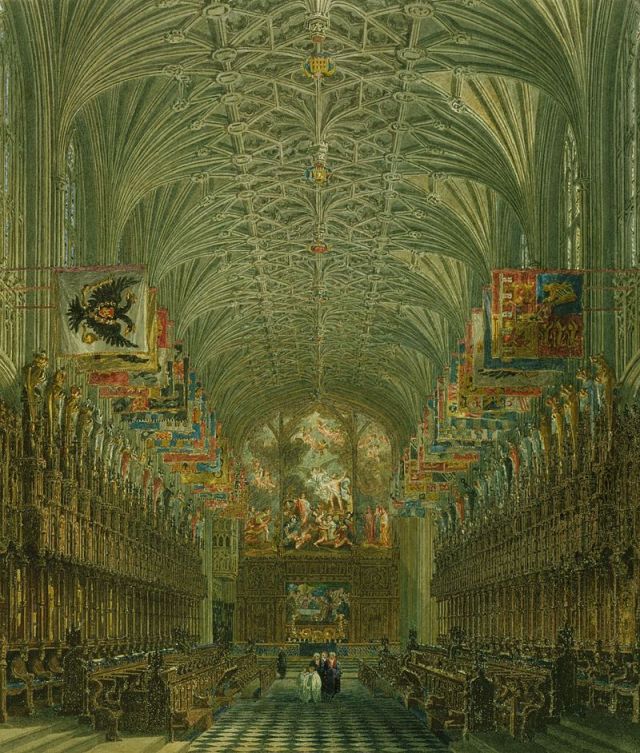
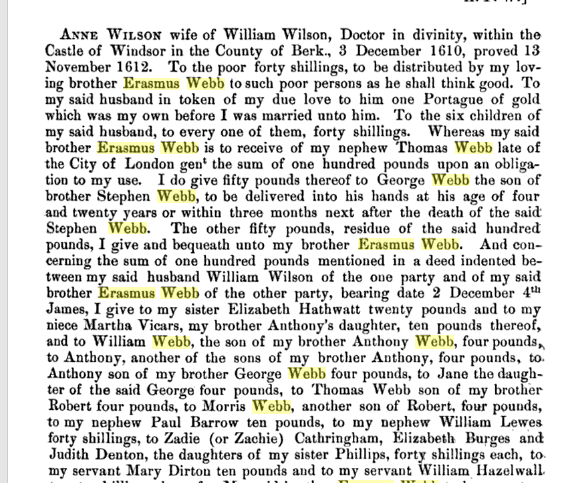
“Edmond to be executor and Mr. Erasmus Webb, my brother in law, being one of the Canons of St. George’s Chapel, “
Elizabeth Rosamond Burton is kin to Ian Fleming. Both Burton and Taylor are in the Shakespeare Family Tree, and, the J.Paul Getty Family Tree. I will now tend to the letter I am authoring to sue the owners of Fleming’s Legacy for not adding fuel to the flames that cast light on the first Elizabethan Stage, where Actors where often..
THE QUEENS SPIES!
John Ptesco
President: Royal Rosamond Press
Will
He made his will on 23 Aug 1613; it was proved on 27 May 1615. It said:[1]“Will of William Wilson, Canon of Saint George’s Chapel, Windsor Castle … to be buried in the chapel near the place where the body of my dear father lies. If I die at Rochester or Cliff, in the county of Kent, then to be buried in cathedral church of Rochester, near the bodies of wives Isabel and Anne. To my cousin Collins, prebendary at Rochester … to the Fellows and Scholars of Martin College, Oxford … my three sons Edmond, John and Thomas Wilson, daughter Isabel Guibs and daughter Margaret Rawson … my goddaughter Margaret Somers which my son Somers had by my daughter Elizabeth, his late wife … to my god-son William Sheafe, at the age of twenty one years … son Edmond, a fellow of King’s College, Cambridge, eldest son of me, the said William … to son John the lease of the Rectory and Parsonage of Caxton in the county of Cambridge, which I have taken in my name … to Thomas Wilson my third son … son Edmond to be executor and Mr. Erasmus Webb, my brother in law, being one of the Canons of St. George’s Chapel, and my brother, Mr. Thomas Woodward, being steward of the town of New Windsor, to be overseers. Witnesses: Thomas Woodwarde, Joh. Woodwarde, Robert Lowe & Thomas Holl.”
Death and Burial
He died on 15 May 1615 at Windsor, Berkshire, England. He is buried at St. George’s Chapel at Windsor Castle, next to his father. His tomb states: “To me to live is Christ, and to dye is Gain. Philip. I.21. Here underneath lies interr’d the Body of William Wilson, Doctour of Divinitie, and Prebendarie of this Church by the Space of 32 Years. He had issue by Isabell his Wife six Sons and six Daughteres. He dy’d the 15th of May, in the Year of our Lord 1615, of his Age the 73, beloved of all in his Lyfe, much lamented in his Death.” [2][3]
William Wilson DD (abt.1542-1615) | WikiTree FREE Family Tree
Gavin! Make Liz A State Shrine!
Posted on July 28, 2022 by Royal Rosamond Press
Here we go again! my cousin is being used as BAIT, as chum, to tantalize paying folks, this time to see a new Broadway play. Liz would APPROVE of OUR HISTORY I have put together – along with my politics. I found a link to the Webb family – and Shakespeare – that some fiend is tampering with. Because there are so many Thespians in the Rosemond tree, even if some of our kin are make-believe, then – that works – too!
John Presco
Newling said that casting is underway for actors to portray Gielgud, Burton and Taylor, who at the time was regarded as the biggest movie star in the world.
Thorne recalled Mendes calling him with the idea. “And when Sam Mendes asks you to dance with him, you dance,” said the writer, who is also known for series such as This is England, The Fades and National Treasure.
As luck would have it, this writer interviewed Burton in 1981. He recalled that it was Taylor who gave him the “passion and vitality” to continue with the 1964 Hamlet when he began struggling with Gielgud’s direction. Shakespeare’s 400th birthday arrived that year, and the anniversary saw many productions of Shakespeare’s plays all over the world.
While reluctant to disclose too much detail about The Motive and the Cue at this early stage, Thorne did acknowledge that because of the Burton-Taylor element, the play might also examine the nature of fame “a little bit.”
‘The Motive And The Cue”: Sam Mendes & Jack Thorne Play On Taylor, Burton, Gielgud – Deadline
Sam Mendes And Jack Thorne Team For Hot New Play On Making Of Legendary Richard Burton And John Gielgud Broadway Production Of ‘Hamlet’
Baz Bamigboye
Columnist/International Editor At Large@BazBam
More Stories By Baz
- Sam Mendes And Jack Thorne Team For Hot New Play On Making Of Legendary Richard Burton And John Gielgud Broadway Production Of ‘Hamlet’
- Cynthia Erivo Wows BBC Proms Crowd In Last Show Before Rehearsals For ‘Wicked’ Musical Movies
- David Harewood “Blown Away” By Passion Of Young, Diverse Filmmakers Who Persuaded Him To Star In A Short Film
July 27, 2022 7:00am

EXCLUSIVE: Oscar-winning director Sam Mendes (1917) has linked up with acclaimed His Dark Materials writer Jack Thorne on a new project for the stage that will explore how legendary acting figures Richard Burton and John Gielgud put Hamlet on Broadway in 1964, with a little help from Elizabeth Taylor.
The result of two years of writing and workshops is a Thorne-penned drama called The Motive and the Cue, which Mendes will direct on the UK National Theatre’s Lyttelton stage in spring 2023. With such heavyweights attached, it already has the weight and feel of a landmark production.
The high-profile show is a joint production between the National Theatre and Neal Street Productions, the All3Media-owned indie founded nearly 20 years ago by Mendes with TV and film producer Pippa Harris and Caro Newling, who runs its theater division. The Motive and the Cue follows on from successful NT and Neal Street Productions collaboration The Lehman Trilogy, also directed by Mendes, which won top accolades at the Tony Awards this year.
RELATED STORY
A Lion And A Witch And Sam Mendes: Two Shows Lined Up To Replace Andrew Lloyd Webber’s Troubled ‘Cinderella’ In London’s West End

The NT and Newling confirmed news of the production following approaches from Deadline.
Rehearsals for The Motive and the Cue will begin in late January or early February and tickets will go on sale before the end of the year via the NT website, we hear.
Newling said that casting is underway for actors to portray Gielgud, Burton and Taylor, who at the time was regarded as the biggest movie star in the world.
Set design is by Es Devlin, costumes by Katrina Lindsay and lighting design by Jon Clark. The trio all worked on The Lehman Trilogy. Sound design is by Paul Arditti, and Benjamin Kwasi Burrell has signed on as composer.
Lockdown discovery

Thorne told Deadline the project began during lockdown when Mendes discovered two out-of-print books (Richard Sterne’s John Gielgud Directs Richard Burton in Hamlet and William Redfield’s Letters From an Actor) that chronicled a famously stripped and dressed-down version of Shakespeare’s Hamlet, which Gielgud directed at the Lunt-Fontanne Theater in New York in April 1964. It starred Burton as the tragic Danish prince and its launch came just a month after Burton and Taylor tied the knot the first time around.
In Letters from an Actor, Redfield, who’d been cast in the play as Guildenstern, recounted in a series of letters to friends, full of wicked asides, details of the pre-New York run in Toronto and the 137 performances of Hamlet at the Lunt-Fontanne.

Thorne recalled Mendes calling him with the idea. “And when Sam Mendes asks you to dance with him, you dance,” said the writer, who is also known for series such as This is England, The Fades and National Treasure.
Gielgud, who was to win an Oscar for his supporting performance in the comedy Arthur in 1982, was a creature of the classical stage; steeped in Shakespeare, he played his own version of the lonely Dane in 1930 and often returned to the role. Burton was to remark that the first time he saw Hamlet was when Gielgud repeated his performance in the 1940s and he later essayed the role in a 1953 production at the Old Vic.
“Gielgud played Lear at 26,” Thorne marveled. “He was a man that knew Shakespeare inside and out and who felt it was his great destiny to be the greatest Shakespearean actor of his generation.”
Thorne said The Motive and the Cue, whose title is taken from a passage in an act-two soliloquy from Hamlet, “examines the beauty of these two ages of the theatre meeting each other and what that felt like,” adding: “Burton was as strong as he ever was. Seeing the two of them finding Hamlet together when they are working from two different places just felt incredibly fascinating.”

As luck would have it, this writer interviewed Burton in 1981. He recalled that it was Taylor who gave him the “passion and vitality” to continue with the 1964 Hamlet when he began struggling with Gielgud’s direction. Shakespeare’s 400th birthday arrived that year, and the anniversary saw many productions of Shakespeare’s plays all over the world.
While reluctant to disclose too much detail about The Motive and the Cue at this early stage, Thorne did acknowledge that because of the Burton-Taylor element, the play might also examine the nature of fame “a little bit.”
With the help of friends in New York, Neal Street’s Newling was able to trace Adam Redfield, son of Letters From an Author writer William Redfield, and found John Gielgud Directs Richard Burton in Hamlet author Sterne, who has “a phenomenal knowledge and archive,” and was “a mine of information.” Neal Street secured underlying rights to both works.
Meanwhile, Mendes continues to work on his latest film Empire of Light, which Searchlight Pictures will release in theaters December 9. It’s likely to show up at least one of the forthcoming fall film festivals and has a cast including Olivia Colman, Michael Ward, Colin Firth, Toby Jones, Tanya Moodie, Crystal Clarke and Tom Brooke.
Wilson and Webb
Posted on March 5, 2019 by Royal Rosamond Press
My kindred, William Wilson, and his brother-in-law, Erasmus Webb may have known William Shakespeare – intimately! Anne (Webb) Wilson lived at Windsor Castle. Her brother, Erasmus, was the Archdeacon of Buckingham Palace. Are we looking at the authors of Shakespeare’s plays? Why has this family lineage been buried, and all but forgotten? These are extremely educated men, whose wives would be at court. They would know all the intrigues, and, hear confessions. They would know the merry wives of Windsor. People would bring them all the gossip that is the bane of the church, aimed at bringing other down as they vie for royal favors.
This bloodline flows from Bohemia and has seeded several major religions. This is the ‘Hidden Seed’. The Webb family came to America. In the chart below we see that Sir Alexander Webb married Mary Wilson, the daughter of Thomas Wilson MP, the grandfather (or Great Uncle?) of Reverend John Wilson of the Massachusetts Bay Colony, that the Webb family played a large role in. Shakespeare’s line, died out, and thus, this is his American Seed.
Statesman, Thomas Wilson MP, was a stellar scholar and author who could have prepared the way for the writing of Shakespeare. Why not put Alexander Webb is the race? Surely the Webb-Wilson family saw themselves as the family-power behind the Church and Throne, and in need of new forum.
“Wilson belongs to the second rank of Elizabethan statesmen. An able linguist, he had numerous acquaintances among Spanish and Flemish officials in the Netherlands, and, in a wider context, his range of friends included Leicester, Burghley, Hatton, Davison, Sir Francis Knollys, Paulet, Walsingham, William of Orange, Jewel, Parker, Parkhurst, Gresham, Ludovico Guiccardini and Arias Montano.”
http://webb.skinnerwebb.com/gpage1.html
John Presco
Copyright 2019

Erasmus Webb B.D. (d. 24 March 1614) was a Canon of Windsor, England from 1590 to 1614[1]
Career
He was educated at Gloucester Hall, Oxford where he graduated BA in 1568, MA in 1572 and BD in 1585.
He was appointed:
- Vicar of St Clears, Carmarthen 1577
- Rector of Ham, Wiltshire 1582
- Rector of Bletchingdon, Oxfordshire 1583
- Archdeacon of Buckingham 1589
- Rector of West Ilsley, Berkshire 1601–1613
He was appointed to the ninth stall in St George’s Chapel, Windsor Castle in 1590, a position he held until 1614.
He was buried in the chapel. His inscription read:
“Hic jacet Erasmus Webb, Sacrae Theologiae Baccalaureus, cujus Regiae Capallae quondam Canonicus, qui obit 24 die Martii, Anno Domini 1613. Aetatis suae 63”[2]
| The Early Webb Families | |

| Sir John Alexander Webb | |


William Shakespeare and his wife Anne had three children. The eldest, Susanna, was baptised on 26 May 1583. They also had twins, Judith and Hamnet, baptised on 2 February 1585.
Shakespeare had four grandchildren who all died without heirs, so there are no direct descendants of his line today.
Susanna married John Hall in 1607, and had one child, Elizabeth, in 1608. Elizabeth was married twice, to Thomas Nash in 1626, and to John Barnard in 1649. She had no children by either husband.
Hamnet died at the age of 11 and was buried in Stratford-upon-Avon on 11 August 1596. The cause of his death is unknown.
Judith married Thomas Quiney in 1616, and the couple had three sons: Shakespeare Quiney, who died in infancy, and Richard and Thomas, who both died in 1639 within a month of each other. Neither of them married or had children before they died.
It is possible to claim a relationship to Shakespeare through his sister, Joan. There are many descendants of Joan and William Hart alive today, in both the male and female lines.

Sir Henry Alexander Webb, I MP 

0
Matches

Confirmed Matches
1-5 of 29
About
- English (default)
 English (default)
Date of birth has also been erroneously reported to be December 24, 1534.
Date of death has also been erroneously reported to be 1573.
NOTA BIEN: It has been alleged that this Sir Henry was a baronet, but the Baronetage of England was not formed until May 22, 1611.
It was said that Sir Henry Alexander Webb (1510-1544) established the family for all future time, since to him “for valiant deeds of his father”, Sir John Alexander Webb, of Oldstock, “who was an officer under Kings Henry VII and VIII”, the present generally accepted emblem, or coat of arms, was granted. This heraldic ensigna of rank in the New Nobility, that of the thegus, owe their origin in personal service to the prince then reigning. The New Nobility was accordingly one of office due to meritorious service. The device of hereditary coat of armour, a growth of the twelfth century, did much to define and mark out the noble class throughout Europe. When once acquired by grant of the Sovereign, it went on from generation to generation. They who possessed the right of coat of armour formed the class of nobility or gentry.
Sir Henry Alexander Webb married Grace Arden, sister of Robert Arden. Mary Webb (Shakespeare’s grandmother) married Robert Arden, brother of Grace.
from: http://freepages.genealogy.rootsweb.com/~sharonkforehand/page%208Smith%20Webb%20Griffith.htm
Sir Henry Alexander Webb
Though commonly thought to have been the 4th Baronet of Odstock, that distinction would have fallen to his brother William. Presumably the title would come to him if William died without male issue, and I haven’t yet found a reference to wife or child for William. I also haven’t found any reliable reference to Sir Henry as a Peer of the Realm, which means he was most likely not a Baronet.
Undoubtedly named after Henry VIII–due to the close family association with the royal family–Henry Alexander Webb was born on May 11, 1510. Henry married Grace Arden, daughter of Thomas Arden, of Aston Cantlow parish of Warwick county. The continued close association of the Webb family and royalty are documented in a letter sent by the Queen, Katherine Parr, requesting that grants and privileges due Henry Alexander Webb be fulfilled as promised. Sir Henry and wife Grace had three children: First-born Alexander, Agnes and Robert. Little is known of Agnes and Robert.
‘Sir Henry Alexander permanently secured nobility for the family when, on June 17, 1577, he was granted a coat of arms.’ Although I have found this statement all over the internet, it is doubtful and a bit dubious. Firstly, I would point out that the grant of arms listed is for 1577, Henry would have been 67 if he had lived that long (notice the date of death…). Secondly, and more importantly, Sir John was not only Henry’s father but was also the 3rd Baronet of Odstock. This means that the family was already considered Noble. And third, Henry was known to wear his Arms at tournament and on the field of battle. Hard to do if they are not granted to you until after your death. In this common misconception even the heralds at the UK College of Arms were unable to help clear up the debacle. The Arms appear on numerous ‘rolls of Arms’ from the time and always list the bearer as Sir Henry Alexander Webb.
The Heraldric blazon or description of these arms is “Gules a cross between 4 falcons Or” and the crest is “Gules demi eagle rising upon a Ducal coronet”
Some sources say ‘eaglets’ instead of ‘falcons’. According to the United Kingdom College of Arms heralds eaglets adorn Sir John’s arms, Henry’s father. The falcons were a mark of personal distinction between the two men.
A copy of the letter which Katherine Parr sent her council (Cabinet Members) asking them to grant her beloved friend, Sir Henry Webb, the lands and estates that had been mentioned for him, is still in existence.
These lands had been confiscated by the King at the suppression of the monasteries and were located in Dorsetshire, England.
Sir Henry Alexander Webb was usher to the Privy Council of Katherine Parr, Queen Regent of Britian in the 16th century, 6th Queen of Henry VIII of England; to whose influence the future sovereigns Edward VI, Mary I and Elizabeth I owed a great deal.
Among the few exsisting documents connected with the regency of Katherine Parr was one while Henry VIII was conducting the seige of Boulogne in 1544 AD. There is in the Crotonain Collections, a letter to her council, headed: “Katherine, Queen Regent, K.P.; In favor of her trusty and well beloved servant, Henry Alexander Webb, gentlemen, usher of her Privy Chamber”. The letter is in regard to some grants and privileges to Henry Alexander Webb, but which had not been fulfilled and it concludes, “we most heartly desire and pray you to be favorable to him at this our earnest request. Given under my Hand and Signet at my Lord, the King’s Majesty’s Honor of Hampton court, the 23rd of July and the 36th year of his Highness most noble Reign”.
Sir Henry Alexander Webb was an usher to Catherine Parr, Queen of England.
links
- http://www.stirnet.com/genie/data/british/zwrk/webb03.php#link1 (membership required to view without interruption)
http://jimwebb.rootsweb.ancestry.com/webb/pafg07.htm#9473
11. Sir Henry Alexander WEBB (John Alexander , John Alexander , William , John , Geofrey , Henry ) was born on 11 May 1510 in Stratford, Warwickshire, England. He died about 1544 in England.
It was said that Sir Henry Alexander Webb (1510-1544) established the family for all future time, since to him the coat of arms, was granted. This heraldic ensigna of rank in the New Nobility, that of the thegus, owe their origin in personal service to the prince then reigning. The New Nobility was accordingly one of office due to meritorious service. The device of hereditary coat of armour, a growth of the twelfth century, did much to define and mark out the noble class throughout Europe. When once acquired by grant of the Sovereign, it went on from generation to generation. They who possessed the right of coat of armour formed the class of nobility or gentry. Sir Henry Alexander Webb married Grace Arden, sister of Robert Arden. Mary Webb (Shakespeare's grandmother) married Robert Arden, brother of Grace.
Henry married Grace ARDEN, daughter of Thomas ARDEN, about 1533 in Stratford, Warwickshire, England. Grace was born about 1512 in Wilnecote, Warwickshire, England. She died on 3 Dec 1539 in Windsor, Hertsfordshire, England.
They had the following children:
   + 	14 	M 	i 	Sir Alexander WEBB Sr
   + 	15 	F 	ii 	Agnes WEBB
     	16 	M 	iii 	Henry WEBB was born on 15 May 1537 in Stratford, Warwickshire, England.
Immediate Family
Showing 12 of 22 people Showing 22 people
- Grace Webb 1512 12/3/1539Grace Webbwife
- Humphrey Webb 1530Humphrey Webbson
- Sir Alexander Webb, I 12/24/1534 1573Sir Alexander Webb, Ison
- Agnes O’Dell / Hill / Arden 1536 December 1580Agnes O’Dell / Hill / Ardendaughter
- Henry Webb, Jr. 5/15/1537Henry Webb, Jr.son
- Ann Wilson 1550 11/13/1612Ann Wilsondaughter
- Mary Arden Webb 1538Mary Arden Webbdaughter
- Geoffry WebbGeoffry Webbson
- Erasmus Webb, Archdeacon of Buckingham 1614Erasmus Webb, Archdeacon of Buck…son
- Stephen WebbStephen Webbson
- Elizabeth HathwattElizabeth Hathwattdaughter
- Anthony WebbAnthony Webbson
Alexander Webb, Jr. was born 20 Aug 1559 at Stratford, Warwickshire, England. He died in Boston, Massachusetts. (n.b. This seems unlikely if he did got to Connecticut.)
Parents: Alexander Webb, Sr. and Margaret Arden.
Marriage 1: Mary Wilson (daughter of Thomas Wilson) abt. 1589 in Stratford, Warwickshire, England.
Children of Mary Wilson and Alexander Webb:
1. Richard (1580-1656) m. 1: Grace Wilson. m. 2: Elizabeth Gregory.
2. William Micajah “The Merchant of Virginia” (1582-?)
3. Elizabeth (1585-1635) m. John Sanford, Sr.
4. John (1597-1660)
5. Christopher (1599-1671) m. Humility Wheaton.
6. Henry “The Merchant of Boston” (1601-1671) m. 1: Hannah Scott. m. 2: Docibel Smith.
BIO:
Alexander & Mary (Wilson) Webb had six children;
Richard Webb b. 5 May 1580, William Micajah b. 9 Sep 1582, Elizabeth Webb b, 3 Sep 1585, John Webb b. 23 Oct 1597, Christopher b.15 Apr 1599, Henry Webb b. Oct 1602
Some gnealogist and family historians think that Alexander and His sons came to America in the early seventheen century. Richard, the elder son setteled in connecticut early in the seventh century, and is lickly the progenerator of the northern line of Webb family.
Alexander Jr. came to america, and so did four of his sons. This was the beginning of the great WEBB family in the United States.
In 1626, the first Webb immigrants came to America. The move was likely to be motivated by sons in the family since the parents, Alexander Webb Jr. and wife Mary Wilson, would have been in their 60s at the time of immigration. There is disagreement in historical records over whether Alexander and Mary stayed in England or emigrated to the United States. The move involved an extended family–sons and daughters of Alexander Webb and Mary Wilson in their 40s and grandkids in their teens. Members of the immigrant family included sons William, Christopher, Henry, and Richard, and daughter Elizabeth. Another son, John, remained in England, possibly to look after the affairs of the remains of the family land holdings in England. This son John came to America in 1636 and historical records indicate he came as a member of the military, which would indicate that he came as part of the British military sent to ensure compliance of the colonies to British rule. As we will see, this could have been a very interesting situation, since other members of the family became an integral part of the Revolutionary War effort.
sources
- Webb Family History with Name Origin and Lineage Lines. by Heraldry, P.O.Box 365, Carpinteria, California 93013. JAN 1975. {G30}.
- Tim and Rachel Janzen’s Ancestors. http://www.timjanzen.com/family/groups/gp580.html#head2.
- Descendants of Sir Henry WEBB. http://jimwebb.rootsweb.com/webb/pafg09.htm#5150.
links
http://jimwebb.rootsweb.ancestry.com/webb/pafg09.htm#5150
30. Sir Alexander WEBB Jr (Alexander , Henry Alexander , John Alexander , John Alexander , William , John , Geofrey , Henry ) was born on 20 Aug 1559 in Stratford, Warwickshire, England. He died after 1629 in Boston, Suffolk County, Massachusetts and was buried in Boston, Suffolk County, America with four sons: Christopher, Richard, John and William. This was the beginning of the WEBB family in America.
Alexander married Mary WILSON about 1579 in Stratford, Warwickshire, England. Mary was born about 1561 in Stratford, Warwick, England.
They had the following children:
   + 	52 	M 	i 	Richard WEBB Sr
   + 	53 	M 	ii 	William Micajah WEBB
   + 	54 	F 	iii 	Elizabeth WEBB
     	55 	M 	iv 	John WEBB was born on 23 Oct 1597 in Stratford, Warwick, England. He died on 5 Apr 1660 in Siterly, Hampshire, England.
   John was one of four brothers who came to America in 1629 with their father, Alexander Webb Jr.
   + 	56 	M 	v 	Christopher WEBB Sr
   + 	57 	M 	vi 	Henry WEBB
William Wilson Gentleman
Born about in Penrith, Cumberland, England, United Kingdom
Son of [father unknown] and [mother unknown]
[sibling(s) unknown]
Husband of Isabell (Unknown) Wilson — married [date unknown] [location unknown]
Descendants 
Father of William Wilson Sr, Alexander Wilson and Mary (Wilson) Briscowe
Died in Windsor Castle, Berkshire, England
Biography
“He was “of Wellsbourne, Lincolnshire, gentleman, who was buried in Saint George’s Chapel, Windsor Castle, where he presumably was some sort of official, although there is no record of more than his burial there.”
“William Wilson, gent., born about 1515, who removed from Penrith and settled at Welbourn, co. Lincoln. He acquired considerable estate, and on March 24, 1586, had confirmation of the following coat of arms, and grant of a crest, by William Flower, Norroy king of arms: Arms, per pale argent and azure three lion’s gambs erased fessways in pale counterchanged; crest, a lion’s head argent guttee de sang. He died at Windsor Castle, co. Berks (where his son William was prebendary), Aug. 27, 1587, and was buried in the chapel of St. George, Windsor Castle, where a monument was erected to his memory. (Burke’s ‘General Armory,’ p. 1120; Ashmole’s ‘History and Antiquities of Berkshire,’ p. 309; Register, ante, vol. xxxviii, pp. 306-307 and vol lii, p. 144; and Herleian MS. 1507, vol. 20.) The name of his wife has not been learned.”
“Of Welbourn, Lincolnshire. He held some position of sufficient importance that he was termed ‘gentleman’ and was buried in St. George’s Chapel, Windsor.
“In Harleian MS. 1507, I found the following on lead 20 (in pencil): A confirmacon of ye Armes & Guifte of ye Crest of Wm Wilson of Welborne in ye County of Lincoln, son of William Wilson of ye Town of Perith (Penrith?) in ye County of Cumberland, to all his Issue & offspring for ever under yehand & seale of Wm fflower also Clarenc’ King of Armes dated ye 24 of March 1586 ye 19th of Queen elizabeth. Now, 1594, borne by _____ Wilson of ye prebends of Windsor sonn of ye Aforesd Wm Wilson of Wilborne. Against this was a tricking of the Arms and Crest in pencil: ___Per pale ar and az, three lions gambs erased, feeways, in pale, counterchanged. ____ Crest: A lion’s head ar guttee d sang. In the same MS. (leaf 180, in pencil) I found a copy of a grant or confirmation of the arms of Woodhall and Brindall (Grindall) quartered.
“Wilson’s father has been called ‘a man of deep erudition, a scholar and a courtier . . . we must suppose him to have been a persona grata in the eyes of Queen Elizabeth.’
“The father of the Rev. William Wilson of Windsor (and grandfather of our John Wilson of Boston) was, as we have found, a William Wilson of Wellsbourne, in Lincolnshire, who died in Windsor Castle and was buried there in 1587. In Harleian MS. 1507, I found the following on lead 20 (in pencil): A confirmacon of ye Armes & guifte of ye Crest of Wm Wilson of Welborne in ye County of Lincoln, son of William Wilson of ye Town of Perith (Penrith?) in ye County of Cumberland, to all his Issue & offspring for ever under ye hand & scale of Wm fflower als Clarenc’ King of Armes dated ye 24 of March 1586 ye 19th of Queen Elizabeth. Now, 1594, borne by ____ Wilson of ye prebends of Windsor sonn of ye Aforesd Wim Wilson of Wilborne. Against this was a tricking of the Arms and Crest in pencil: ___Per pale ar and az, three lions gambs, erased, fessways, in pale, counterchanged. ___ Crest: A lion’s head ar guttee de sang. In the same Ms. (leaf 180, in pencil) I found a copy of a grant or confirmation of the arms of Woodhall and Brindall (Grindall) quartered.
“There was once a brass plate on a gravestone to his memory near the north corner of the church. It is now long gone but Ashmole made a record of it: ‘William Wilson, late of Wellsbourne in the County of Lincolne, Gent. departed this lyfe, within the Castle of Windsor, in the Yeare of our Lord 1587, the 27th Day of August, and lyeth buried in this Place.’ [1][2]
Sources
- ↑ Threlfall, John. The Ancestry of Reverend Henry Whitfield (1590-1657) and His Wife Dorothy Sheafe (159?-1669) of Guilford, Connecticut (Madison, Wisconsin, 1989)
- ↑ The antiquities of Berkshire. By Elias Ashmole, … v.3. Ashmole, Elias, 1617-1692, page 164.
He attended Merton College in Oxford, England where he obtained the following degrees: B.A. 1564, M.A. 1570, B.D. 1576, D.D. 1607.
Prebendary of Saint Paul’s and Rochester Cathedrals, and held the rectory at Cliffe, Kent. In 1584, he became a Canon of Windsor in place of Dr. William Wickham who was promoted to the see of Lincoln, being about that time made chaplain to Edmund Grindall, the Archbishop of Canterbury, who was his wife’s uncle.
Will
He made his will on 23 Aug 1613; it was proved on 27 May 1615. It said, “Will of William Wilson, Canon of Saint George’s Chapel, Windsor Castle … to be buried in the chapel near the place where the body of my dear father lies. If I die at Rochester or Cliff, in the county of Kent, then to be buried in cathedral church of Rochester, near the bodies of wives Isabel and Anne. To my cousin Collins, prebendary at Rochester … to the Fellows and Scholars of Martin College, Oxford … my three sons Edmond, John and Thomas Wilson, daughter Isabel Guibs and daughter Margaret Rawson … my goddaughter Margaret Somers which my son Somers had by my daughter Elizabeth, his late wife … to my god-son William Sheafe, at the age of twenty one years … son Edmond, a fellow of King’s College, Cambridge, eldest son of me, the said William … to son John the lease of the Rectory and Parsonage of Caxton in the county of Cambridge, which I have taken in my name … to Thomas Wilson my third son … son Edmond to be executor and Mr. Erasmus Webb, my brother in law, being one of the Canons of St. George’s Chapel, and my brother, Mr. Thomas Woodward, being steward of the town of New Windsor, to be overseers. Witnesses: Thomas Woodwarde, Joh. Woodwarde, Robert Lowe & Thomas Holl.”
Death and Burial
He died on 15 May 1615 at Windsor, Berkshire, England. He is buried at St. George’s Chapel at Windsor Castle, next to his father. His tomb states: “To me to live is Christ, and to dye is Gain. Philip. I.21. Here underneath lies interr’d the Body of William Wilson, Doctour of Divinitie, and Prebendarie of this Church by the Space of 32 Years. He had issue by Isabell his Wife six Sons and six Daughteres. He dy’d the 15th of May, in the Year of our Lord 1615, of his Age the 73, beloved of all in his Lyfe, much lamented in his Death.” [1]
Sources
- ↑ Threlfall, John. The Ancestry of Reverend Henry Whitfield (1590-1657) and His Wife Dorothy Sheafe (159?-1669) of Guilford, Connecticut (Madison, Wisconsin, 1989)

Thomas Wilson, MP  MP
MP
0
Matches
Confirmed Matches
0 confirmed matches
About
- English (default) English (default)
- Thomas Wilson (rhetorician) From Wikipedia, the free encyclopedia
Family and Education b. 1523, 1st s. of Thomas Wilson of Strubby, Lincs. by Anne, da. and h. of Roger Cumberworth of Cumberworth, Lincs. educ. Eton 1537-41; King’s Camb. 13 Aug. 1542, fellow 14 Aug. 1545-7, BA 1546 or 1547, MA 1549; Ferrara Univ. DCL 1559. m. (1) c.1560, Agnes (d. June 1574), da. of John Wynter, of Lydney, Glos., wid. of William Brooke, 1s. 2da. all by 1565; (2) by 1576, Jane (d.1577), da. of Richard Empson, of London, wid. of John Pinchon of Writtle, Essex.2
Offices Held
Master of St. Katharine’s hosp. London 1561-d.; adv., ct. of arches 1561; master of requests 1561; j.p.q. Mdx. from c.1564, Essex from c.1577; ambassador to Portugal 1567, to the Netherlands 1574-5, 1576-7; principal sec. and PC 12 Nov. 1577; dean of Durham 1579.3
Biography Wilson’s ancestors left Yorkshire about the middle of the fifteenth century, settling in Strubby, Lincolnshire. His father made a fortunate marriage, acquired ex-monastic lands and became a friend of Charles Brandon, Duke of Suffolk. Save for the attachment he developed for his master, Nicholas Udall, little record remains of Wilson’s career at Eton, where he was a King’s scholar. At Cambridge he was taught by such scholars as Cheke, Ascham, Thomas Smith and Haddon: his political and religious preferences at the university can be seen in his associations with the Dudleys, Greys, Brandons and the theologian Martin Bucer. He became tutor to the two sons of his father’s friend the Duke of Suffolk, and was devoted to the latter’s wife Katherine. Both the young Brandons and Martin Bucer died in 1551, and thenceforward Wilson spent less time at Cambridge. During the summer of 1552 he had ‘a quiet time of vacation with Sir Edward Dymoke’ at Scrivelsby, and, by the following January, he had himself settled in Lincolnshire, at Washingborough.4
In view of the opinions expressed in his Rule of Reason, and Art of Rhetorique (written during his visit to Dymoke), Wilson’s eclipse during Mary’s reign was predictable. He joined Cheke in Padua in the spring of 1555, where he studied Greek, and, from the funeral oration he delivered for Edward Courtenay, Earl of Devon, in St. Anthony’s basilica on 18 Sept. 1556, it seems possible that he may have become the young nobleman’s tutor. In the following year he appeared in Rome as a solicitor in the famous Chetwode divorce case, when, in an attempt to obtain a favourable decision for his client, he intrigued against Cardinal Pole. The Pope—Paul IV—at first proved a willing listener. However, in March 1558 Mary ordered Wilson to return to England and appear before the Privy Council, and soon afterwards still, or again, in Rome he was thrown into the papal prison on a charge of heresy. There he suffered torture, escaping only when the mob broke open the prison upon Paul IV’s death in August 1559. Wilson took refuge in Ferrara, where in November the university made him a doctor of civil law.5
Upon his return to England in 1560 the impoverished scholar received the mastership of St. Katharine’s hospital, London, soon being accused of wasting the revenues, destroying the buildings, and selling the fair and the choir. However, the support of Sir Robert Dudley and Sir William Cecil soon brought him further preferment, as a master of requests. Besides the usual cases he frequently dealt with those concerning conspiracy, commercial disputes and diplomacy. He was prominent in the Hales (1564), Creaghe (1565), Cockyn (1575), and Guaras cases, and after the northern rebellion of 1569 he interrogated supporters of Mary Stuart and conducted many of the examinations in connexion with the Ridolfi plot. Frequently employed on missions abroad, his name occurs in connexion with foreign embassies in 1561, 1562 and 1563, but his first important journey was to Portugal in 1567, where he sought redress for damage done to a ship belonging to his brothers-in-law William and George Wynter, made a lengthy Latin oration before the young king Sebastian and was thenceforward frequently employed in negotiations on commercial matters between England and Portugal. By the end of the 1570s he had established himself as an expert in Portuguese affairs, and emerged as the champion of the pretender, Don Antonio, after the latter had fled from the armies of Philip II. As well as leading a mission to Mary Stuart at Sheffield castle, where he interrogated her upon her part in the Ridolfi plot, Wilson served on two separate occasions in the Netherlands. On the first, in late 1574 and early 1575, he negotiated with the Spanish governor on commercial matters and the expulsion of the English Catholics. By the time he went back in 1576 the situation in the Netherlands was chaotic. Mutinous Spanish troops had pillaged Antwerp, while the States, casting in their lot with the Prince of Orange, forced the new Spanish governor, Don John of Austria, to withdraw the Spanish soldiers. Wilson’s original idea was to arrange a modus vivendi between the protagonists. Gradually, however, he came to fear French intervention and to distrust the intentions of Don John, so that, by the time of his departure in June 1577, he had emerged a partisan of Orange.6
Wilson’s appointment as principal secretary soon followed his return to England. Although, like others in the Walsingham-Leicester faction of the Council, he deplored the Queen’s policy of procrastination over her marriage, and identified England’s cause with that of protestantism abroad, he remained subordinate to his colleague Sir Francis Walsingham, and his influence was minimal. He remained a supporter of Orange, of Condé, and of Henry of Navarre. As part of his duties as secretary, he became the first keeper of the state papers.
It was, presumably, court influence that procured Wilson his seat for the Cornish borough of Mitchell in 1563. There is no record of his activities in the first session of that Parliament, but on 31 Oct. 1566, he sat on a conference with the Lords to consider the most important current issues, namely the succession and the Queen’s marriage. On 3 Dec. he sat on a committee about the export of sheep. In the next two Parliaments he represented Lincoln, where his friend Robert Monson was recorder. In 1571 he spoke against vagabonds (13 Apr.) and against usury (19 Apr.). On 21 Apr. he took part in a conference with the Lords where it was decided to afford precedence to public over private bills ‘as the season of the year waxed very hot, and dangerous for sickness’. He was named to committees on the river Lea (26 May) and barristers fees (28 May). In 1572 the main topic was Mary Stuart, whose execution Wilson urged:
No man condemneth the Queen’s opinion, nor thinketh her otherwise than wise; yet [he doubts] whether she so fully seeth her own peril. We ought importunately to cry for justice, justice. The case of a king indeed is great, but if they do ill and be wicked, they must be dealt withal. The Scottish Queen shall be heard, and any man besides that will offer to speak for her. It is marvelled at by foreign princes that, her offences being so great and horrible, the Queen’s Majesty suffereth her to live. A king, coming hither into England, is no king here. The judges’ opinion is that Mary Stuart, called Queen of Scots, is a traitor. The law sayeth that dignity defends not him which liveth unhonestly. The Queen took exception to the Commons giving a first reading, 21 May 1572, to a bill on religion, and a delegation, including Wilson, waited upon her. He reported back to the Commons on 23 May:
She had but advised, not debarred us to use any other way, and for the protestants, they should find that, as she hath found them true, so will she be their defence. In the 1572 session Wilson was appointed to committees concerning Mary Stuart and the Duke of Norfolk, and other, particularly legal, matters. In 1576 he again played a mediating part, this time in the Arthur Hall affair, and he was of the committee that examined Peter Wentworth after the latter had made his famous speech on the liberties of the House. On the other hand his independence, even as a Privy Councillor, can be seen in 1581, when he spoke for Paul Wentworth’s proposal for a public fast. ‘Both Mr Secretaries’, Wilson and Walsingham, were ordered by the House on 3 Mar. 1581 to confer with the bishops on religion. Throughout the 1572 Parliament, Wilson, as master of requests, was frequently employed fetching and carrying bills and messages to and from the Lords, and on such tasks as drafting bills, examining witnesses and administering oaths. As Privy Councillor he was appointed to several committees including those on the subsidy (25 Jan. 1581), seditious practices (1 Feb.), encumbrances (4 Feb.), the examination of Arthur Hall (6 Feb.), defence (25 Feb.), Dover harbour (6 Mar.) and the Queen’s safety (14 Mar.). Wilson died after the end of what proved to be the last session of the 1572 Parliament, but before it was finally dissolved.7
Wilson’s literary works, like those of More, Crowley and Starkey before him, were concerned with classical studies, and with problems of morality and the commonwealth. At Cambridge in 1551 he contributed Latin verse to Haddon’s and Cheke’s De Obitu doctissimi et sanctissimi theologi doctoris Martini Buceri. A few months later, after the death of his young pupils, he wrote and edited Epistola de vita et obitu fratrum Suffolciencium Henrici et Caroli Brandon. The Rule of Reason, written in 1551 and dedicated to Edward VI, uses medieval logic to support the doctrines of Geneva, and this was followed by the dedication in Haddon’s Exhortatio ad Literas to John Dudley, the eldest son of Northumberland, to whom, in 1553, Wilson dedicated his own Art of Rhetorique. Like the Rule of Reason this dealt with the teachings of the earlier scholars, supplemented by digressions on political, social, religious and moral questions. Similar questions concerned Wilson when he wrote his Discourse upon Usury in 1569. Though in close contact with the New Learning, and well informed on current economic problems, Wilson was unable to escape from the limitations of medieval moral precepts. He was especially critical of enclosures and usury, from both of which he feared harm for the commonwealth. In 1570 Wilson translated the Three Orations of Demosthenes, to serve as a warning against a new Philip of Macedon, Philip II of Spain.
Apart from his mastership of St. Katharine’s hospital, Wilson had several sources of income: his employment as master of requests and secretary brought him £100 p.a. as well as perquisites; he received a life annuity of £100 from the Queen in 1571; and on 28 Jan. 1579 he was appointed lay dean of Durham at £266 with £400 p.a. more from the properties attached to the office. He was installed by proxy and had letters of dispensation for non-residence. With one exception the Durham prebendaries acquiesced in Wilson’s appointment. A year before his death he accepted the parsonage of Mansfield, Nottinghamshire. He had of course a substantial income from his Lincolnshire lands, concerning which he remained in close touch with his brothers Humphrey and William who lived in that county, and Godfrey, who was a wealthy London merchant and member of the Drapers’ Company. Humphrey, in his will, committed his son Thomas, later a prominent political figure, to his brother’s care; but in the event, Humphrey outlived Wilson, who made his own will in May 1581, the day before he died. He had suffered from bouts of sickness—it seems from a kidney complaint—since his return from the Netherlands in 1577, and the Tower Hill water did not provide the cure he hoped for. He was buried ‘without charge or pomp’ at St. Katharine’s hospital, although he had recently been living on his estate, Pymmes, at Edmonton, which he had purchased in 1579 for £340. His son Nicholas, heir and executor, returned to his father’s Lincolnshire estates, and his two daughters each received 500 marks.8
Wilson belongs to the second rank of Elizabethan statesmen. An able linguist, he had numerous acquaintances among Spanish and Flemish officials in the Netherlands, and, in a wider context, his range of friends included Leicester, Burghley, Hatton, Davison, Sir Francis Knollys, Paulet, Walsingham, William of Orange, Jewel, Parker, Parkhurst, Gresham, Ludovico Guiccardini and Arias Montano.9
Ref Volumes: 1558-1603 Author: P. W. Hasler Notes
This biography is based upon a paper by Albert J. Schmidt, Coe College, Cedar Rapids, Iowa, U.S.A.
1. Did not serve for the full duration of the Parliament 2. King’s Coll. Camb. protocullum bk. 1, p. 104; Harl. 1550, ff. 85-6; Guildhall mss 4546; Vis. Glos. (Harl. Soc. xxi) 278; Vis. Essex (Harl. Soc. xiii), 470; Lincs. Historian, ii(4), pp. 14-24; DNB. 3. C. Jamison, Hosp. St. Katharine, 69 et passim; CPR, 1560-3, p. 102; 1563-6, p. 187; Lansd. 22. f. 52; I. S. Leadam, Sel. Cases Ct. of Requests (Selden Soc. 1898), p. xxi.; Cott. Nero B. 1, f. 125; APC, x. 85; C66/1188/82. 4. Harl. 1550, ff. 85-6; PRO, Lincs. muster rolls, 1539, Calcewath E36/21, f. 52; PRO town depositions C24, 30; T. Wilson, Epistola (London 1551); T. Wilson, Art of Rhetorique, ed. Muir. 5. C. H. Garrett, Marian Exiles, 339 et passim; CSP Dom. 1547-80, p. 100; CSP Rome, ii. no. 602; Art of Rhetorique. 6. Strype, Annals, i(2), pp. 285-6; E. Nuys, Le Droit Romain, Le Droit Des Gens, et Le College des Docteurs en Droit Civil (Bruxelles, 1910), p. 144; HMC Hatfield, i. 250, 508, 520; APC, vii. 205; x. 210; CSP Ire. 1509-73, p. 255; CSP Scot. 1571-4, nos. 352, 353; 1574-81, nos. 140 seq.; CSP Span. 1568-79, passim; 1580-5, passim; Murdin, State Pprs. ii. passim; CSP For. 1579-80, passim. 7. D’Ewes, 126-7, 157, 206, 219, 220, 222, 241, 249, 251, 252, 255, 282, 288, 290, 291, 292, 293, 294, 301, 302, 306, 309; CJ, i. 94, 98, 99, 101, 109, 110, 112, 122, 124, 130, 136; Cott. Titus F. i. ff. 152, 163; Neale, Parlts. i. 259, 303-4, 379; Trinity, Dublin, Thos. Cromwell’s jnl. f. 42. 8. I. Temple, Petyt 538, ff. 39, 147, 152v; C66/1076/29, 1189/38; C54 close rolls, passim; C142/233/41; C54/1052; Dean and Chapter of Durham treasurer’s bk. 1579-80, no. 2; 1580-1, no. 3; reg. 3, ff. 2, 3; Dean and Chapter Acts, 1578-83, ff. 29, 46; Estate House, Old Charlton, Kent, Wilson’s household inventory 1581; Lincoln Wills, 2, f. 262; Wards 7/23/112; Harl. 6992, f. 120; Fleet of Fines, CP25(2) 172, 21 Eliz. Trin.; PCC 32 Tirwhite. 9. CSP For. 1577-8, no. 820(4); CSP Dom. 1575. p. 105; Corresp. de Philippe II (Bruxelles 1848-79), iii. 214; Wilson’s household inventory.
Thomas Wilson (1524–1581) was an English diplomat, judge, and privy councillor in the government of Elizabeth I. He is now remembered for his Logique (1551) and The Arte of Rhetorique (1553), an influential text. They have been called “the first complete works on logic and rhetoric in English.
http://en.wikipedia.org/wiki/Thomas_Wilson_%28rhetorician%29
______________
Thomas Wilson was very much a man of his time. Born to a prosperous but undistinguished family of the Lincolnshire gentry in 1523 or 1524, he went to Eton, then to King’s College, Cambridge, taking his M. A. in 1549. At Cambridge he studied Greek with Sir John Cheke, leading “Grecian” of the time, and developed lifelong friendships with several men who would later become prominent courtiers and humanists, notably Thomas Smith (later to write De Republica Anglorum) and Roger Ascham (who later wrote The Scholemaster).
In the 1550’s Wilson accepted an appointment as tutor to the sons of Katherine, Duchess of Suffolk, member of the important Willoughby family of Wilson’s native Lincolnshire. Her deceased husband was Charles Brandon, the intimate friend of Henry VIII. While in her service Wilson formed enduring connections with influential men in the Protestant circles at court, particularly Sir Edward Dymock and William Cecil, a member of the privy council who later, as Lord Burleigh, would become the most powerful of Elizabeth’s courtiers. In 1551 Wilson published the first book on logic ever written in English (The Rule of Reason), and in 1553 he brought out The Art of Rhetoric, dedicating it to John Dudley, Earl of Warwick, heir to the staunchly Protestant Duke of Northumberland, who effectively ruled England during the sad last years of the dying boy-king Edward VI.
With the accession of the Catholic Mary, Wilson left England for Italy. There he spent the next five years studying civil law and engaging in enough Protestant intrigue to be imprisoned (and possibly tortured) by the inquisition, though in August of 1559 he was able to escape during an anti-Dominican riot after the death of Pope Paul IV. He took refuge in Ferrara, where he received a doctorate in law in November, 1559.
In 1560, with Elizabeth on the throne and the Earl of Leicester (brother of Wilson’s late patron, John Dudley) in ascendancy at court, Wilson returned to London. He was soon appointed to remunerative and responsible positions in the government. In 1561 he became the master of St. Katherine’s Hospital in the Tower of London, and later that year he was appointed to the much more responsible position as a master (i.e., a judge) in the Court of Requests, one of the new Tudor equity courts that relied heavily on civil law procedures.
Throughout the 1560’s and 1570’s, Wilson served in various diplomatic capacities, primarily in Spain and Portugal, then later in the Spanish Netherlands. He came to be the crown’s recognized authority on Portuguese affairs. During this time, he also finished the first English translation of Demosthenes (The Three Orations of Demosthenes, Chief Orator Among the Grecians, in Favor of the Olynthians . . . With Those His Four Orations . . . Against King Philip of Macedonie, London, 1570), which he had begun while he was residing with Cheke in Padua during 1556. He also completed two significant treatises on politics, both of them intended for the ears of the Dudley circle and the privy council. “A Discourse touching the Kingdom’s Perils with their Remedies” was never printed, but his Discourse Upon Usury was published in 1572, though completed several years earlier.
During the early 1570’s he was entrusted with the important but unpleasant task of prosecuting traitors. He spent much of 1571 living in the Tower, preparing the case against the Duke of Norfolk, including racking two of the duke’s servants. He examined a number of those implicated in the Ridolfi plot in 1572, and he was among those sent to examine Mary, Queen of Scots, about her role in the conspiracy. He sat in several Parliaments during the 1560’s and 1570’s, and in 1577 he succeeded his friend Sir Thomas Smith as the queen’s secretary. Though overshadowed by the queen’s other secretary, the redoubtable Walsingham, Wilson remained an active participant on the Privy Council for the rest of his life. Though a client of Leicester and generally a supporter of aggressively Protestant causes (such as active intervention in the Low Countries during the revolution against the Spanish Hapsburgs), he tempered that allegiance with a conciliatory attitude toward Burleigh’s more pacific and conservative policies. Appointed a lay dean of Durham Cathedral in 1579, he died at St. Katherine’s Hospital on 20 May, 1581, and was buried in St. Katherine’s Church.
Nicholas Sharp
Richmond, Virginia, USA
6 November, 1997
http://www.people.vcu.edu/~nsharp/wilsbio1.htm
- Reference: FamilySearch Family Tree – SmartCopy: Nov 9 2017, 19:07:16 UTC
Immediate Family
Showing 12 of 31 people Showing 31 people
 Jane Empson c. 1510 11/14/1587Jane Empsonwife
 Agnes Wilson 1528 1570Agnes Wilsonwife
- Margaret Wilson 1550Margaret Wilsondaughter
- Mary Margaret Webb, of Bramcote 1561 c. 1629Mary Margaret Webb, of Bramcotedaughter
 Ann Burdett c. 1570 1602Ann Burdettdaughter
- Nicholas Wilson 7/8/1604Nicholas Wilsonson
- Lucrece WilsonLucrece Wilsonson
- Elizabeth Wilson 1529Elizabeth Wilsonwife
 Margaret Wormall October 1560Margaret Wormalldaughter
 Sir Thomas Wilson, of Strubby c. 1470 April 1532Sir Thomas Wilson, of Strubbyfather
 Lady Anne Wilson 1478 c. 1570Lady Anne Wilsonmother
- William Cumberworth Wilson 1492 8/27/1587William Cumberworth Wilson
- William Hart (actor)>From Wikipedia, the free encyclopediaWilliam Hart was a Jacobean Actor who was the nephew of William
Shakespeare.He was born in Warwickshire in 1600 and died probably in London in
1639. He was the son of hatter William Hart and Shakespeare’s sister
Joan.He started as a child actor and eventually joined the famous troupe
“The King’s Men” – his famous uncle’s troupe – in the 1630s. He never
married although he is thought to have had a by-blow child, Charles
Hart, who also became an actor.[edit] SonnetsIt has been suggested that William Hart, who is mentioned in
Shakespeare’s will, was “the sole begetter, Mr W H”, to whom the
sonnets are dedicated. Since the sonnets are constantly urging the
begetter to marry and have children and even refers to him bearing the
looks of his mother; and, on the death of Shakespeare’s own son,
William Hart became Shakespeare’s male heir, it is tantalising to
think that the W.H. mystery is solved.The only problem is that when the sonnets were published, Hart was
only nine years old. It is possible that the 1600 birth year is wrong
or that Shakespeare may have written the sonnets in anticipation of
Hart’s coming of age, and may have had to sell the sonnets to raise
money quickly.http://en.wikipedia.org/wiki/William_Hart(actor) - https://www.geni.com/people/Thomas-Wilson-MP/6000000010886211061?through=6000000006520219276 https://www.geni.com/people/John-Hart/6000000011756645448?through=6000000002899091388
Account
Lady Ada Antoinette Erasmus
1430-1480
1430
Birth • 0 Sources
about 1430
England, United Kingdom
1480
Age 51
Death • 0 Sources
about 1480
England, United Kingdom
Family Members
SPOUSES AND CHILDREN

1425-1492
Marriage: 1445
Canongate, Midlothian, Scotland
Lady Ada Antoinette Erasmus
1430-1480
Children (5)

William Wilson
1435-1500
1446-1500
Sir Thomas Wilson
1450-1470
1450-1492
Thomas Wilson
1451-
PARENTS AND SIBLINGS

Erkinger Eramus Von Schwarzenberg
1362-1437
Marriage:

Princess Barbara Von Abensberg Abensberg
1398-1448
Children (9)
Johann ” The Elder”, Baron Of Schwarzenberg
1424-1460
Magdalene von Seinsheim
1426-
Erkinger von Seinsheim
1427-1503
Friedrich von Seinsheim
1428-
Ulrich von Seinsheim
1429-1465
Kunigunde von Schwarzenberg
1430-1469
Lady Ada Antoinette Erasmus
1430-1480
Sigmund I Freiherr von Schwarzenberg und Hohenlandsberg
1430-1502
Boris Johnson Riddles Shakespeare
Posted on February 7, 2022 by Royal Rosamond Press
At 2:32 A.M. on February 7, 2022 I discovered Britain’s PM is a Shakespeare buff. Johnson is writing a biography about Shakespeare, and wrote one about Churchill. The Bard. If I become Governor, I will have him at my mansion where I hope my Shakespeare Society will meet.
American troops have landed in Poland. Is the British Defense Staff Washington preparing two nations for war?
John Presco
From ambushes to cakes and ale, Shakespeare always has the last word
The Bard understood folly and intrigue. With Boris Johnson comparing himself to Othello, he’s also the best way for us to read the present
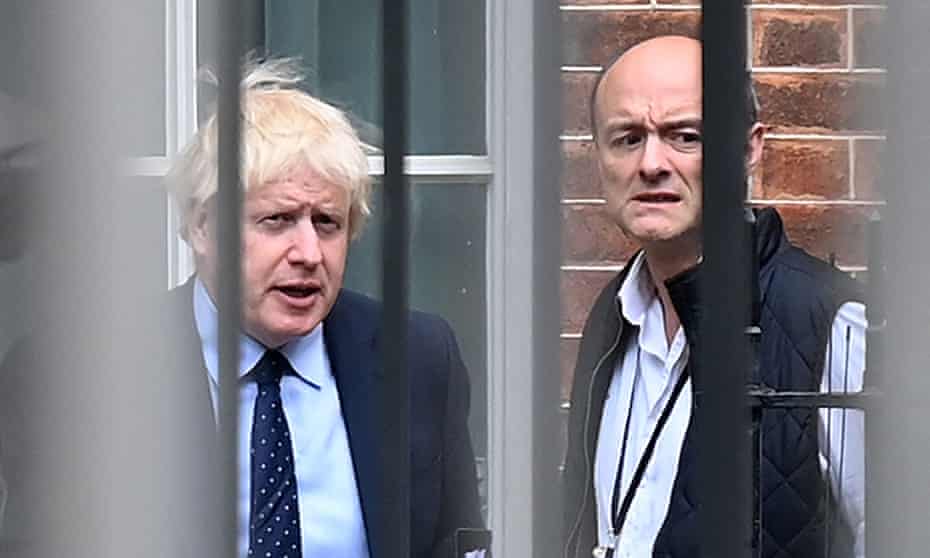
Emma Smith
Boris Johnson’s book, Shakespeare: The Riddle of Genius, is now so late it’s embarrassing to mention it. But in the meantime, Shakespeare himself seems to have taken up residence as Whitehall’s writer-in-chief.
As so often in times of political upheaval, it’s to Shakespeare’s grasp of motive and policy, and human quirks and struggles, that we turn. Johnson’s current travails, like arguments around the English civil war, the battle for women’s suffrage, and Bush’s response to 9/11, are revealingly reframed by Shakespearean parallels. The PM has recently compared himself to Othello, nominating Dominic Cummings as his Iago. It’s an allusion that cannot turn out well – even in a Lulu Lytle bedchamber. Cummings himself has suggested Johnson is a shambolic Prospero, avoiding his political duties including chairing the Cobra committee, sequestering himself instead with his books. Perhaps Prospero was, indeed, exiled to his magical island after 54 letters of no confidence in his dukedom.
Elsewhere, it’s Macbeth that provides the script for a misogynistic story in which the leader’s strong-minded wife pulls the strings. Carrie has some work to do on her ambition, though: Shakespeare’s heroine at least has the king and national domination in her sights, rather than some overweening spads and international pet rescue. As No 10 empties, Johnson, a man who seems more at home in the convivial oblivion of sociability – the world of comedy, as well as of parties – wears the aspect of isolation and abandonment. He is a Macbeth holed up in his castle, a Coriolanus deserted by his allies. A politician who likened himself to Brutus during his own long leadership campaign has, like Caesar’s assassin, now seen fortune’s wheel spin away from him.
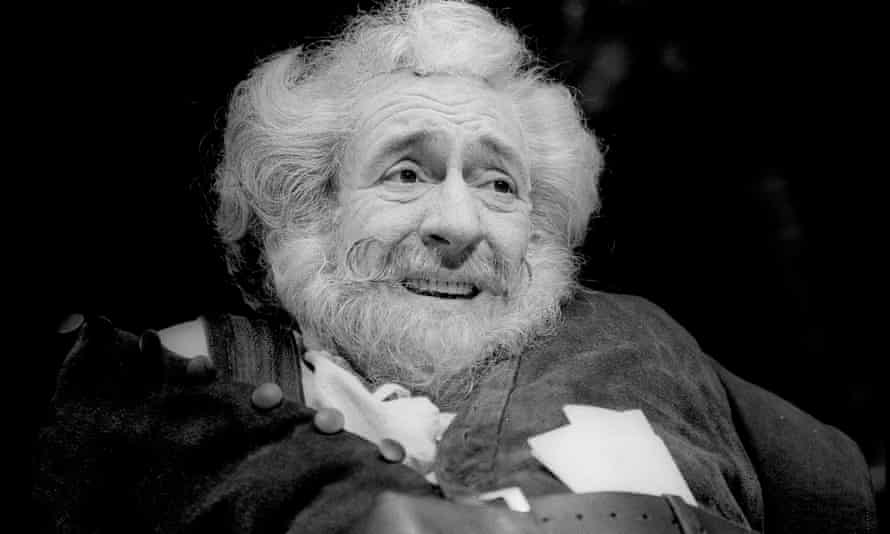
The PM’s Friday “pep talk” to his remaining staff drew not on Shakespeare directly, but on a Hamlet spin-off, Disney’s The Lion King. Quoting Rafiki, a version of the play’s good-natured but ineffectual buddy Horatio, Johnson observed “change is good, and change is necessary, even when it’s tough”. It’s not quite the swan of Avon. Many more apposite quotations present themselves. Perhaps, from The Tempest, “Canst thou bring me to the party?”, or the reassurance in Titus Andronicus that “the ambush of our friends be strong”. Or even, in response to Sue Gray’s report, “Dost thou think, because thou art virtuous, there shall be no more cakes and ale?” (Twelfth Night). There’s plenty more Shakespearean advice for any political leader on the ropes, from Henry V’s war with France diverting attention from domestic woes, to Richard III flanked by Catholic bishops and holding a Bible in a performance of piety (surely we must be due a christening?).
Johnson is certainly no Othello: that soldier of firm principle, dignity and fatal uxoriousness is a distant comparison. Nothing would get Othello on to a zip wire, and his take on “watermelon smiles” would be worth hearing. An indulgent Shakespearean analogy might rather cast Johnson as Falstaff, the cheerful, carnal and pragmatic companion to the young Prince Hal in the two parts of Henry IV.
Falstaff might well – if he could be bothered – have written two columns advocating opposite views. He might well have refused to divulge the number of his children. He would certainly cadge off wealthier friends. Johnson’s repetition at a press conference of the myth that The Merry Wives of Windsor was commissioned by a Queen Elizabeth in love with Falstaff doesn’t augur well for his book’s accuracy, but does tell us something about his identification with this degenerate. In Windsor, Falstaff tries to present himself as a ladies’ man. The wives are immune to his perjured romance, and instead of getting his end away, he is thrown out in a basket of soiled laundry.
Comparisons between the braggart PM and Falstaff are commonplace. But few trace that character arc as Shakespeare himself does. Over the course of his Falstaffiad, Shakespeare makes clear that beneath the buffoon lies something disturbingly venal. His bonhomie is only skin deep. Turning his relationships into transactions – a loan here, a kickback there – he is loyal only to himself.
Falstaff’s ultimate degradation is his casual willingness to send his men “poor and bare” into battle, in the second part of Henry IV. His bleak dismissal of them as “food for powder. They’ll fill a pit as well as better” echoes the equivalent: “Let the bodies pile high.” Shakespeare reveals Falstaff to be a dangerous, narcissistic populist. Let’s hope Johnson is researching that for his book.
Oregon Shakespeare Society
Posted on January 25, 2022 by Royal Rosamond Press
On January 25, 2022, at 4:20 A.M. I John Presco founded the Oregon Shakespeare Society: The OSS.
John Presco
Copyright 2022
I Am Kin To Shakespeare
Posted on December 1, 2018 by Royal Rosamond Press

William Shakespeare’s grandmother, is my great, great, great grandmother, Abigail Shakespeare (Webb)
I implore the children of Elizabeth Rosemond Taylor to take the Rosamond Family DNA test. It was through this test I found Abigail. The Webb family went on crusade and is why they have a cross on their crest. I believe my grandfather picked up this relationship via genetic memory. So did I. I tried to read William’s complete set when I was eleven. Is there a Seer gene? Consider all the actors around Liz Taylor.
John Presco
Copyright 2018
A Rose Amongst The Woodwose
Study Page
by
John Presco
In my last post I suggested my family tree be studied after I become Governor of Oregon. In reading what I wrote, again, I clicked on a genealogical link and – Eureka! In looking at the genealogy of Sir Thomas Wilson, my alleged grandfather, I read that he was Secretary of the Navy and had died in Stratford on Avon. It said he was a torturer. Disguised as a fellow prisoner, it is alleged Wilson extracted information from Sir Walter Raliegh. However, it is clear Wilson was not a prisoner, but a member of the Privy Council, and known relative of Raleigh sent to get to the truth, and perhaps aid in his writing. Yesterday I found the theory of Deliah Bacon that Raliegh authored the work of Shakespeare with the help of a group of people who sere related. I found that group three years ago and began my novel…
A Rose Amongst The Woodwoses
The Oregon Shakespeare Society will meet several times a year in order to discuss the findings of a investigation into these matters. I made two copyrighted videos this morning to describe the formation and direction of the OSS. See below;
John Presco
President: Oregon Shakespeare Society, and, Royal Rosamond Press
Copyright 2022
“During the reign of King James I, Sir Walter Raleigh was imprisoned in the Bloody Tower for Treason, 1603-1617. Raleigh was pardoned and Letters Patent issued (26th August 1617) enabling him to embark on a private expedition to Guiana in search of gold. Raleigh was betrayed in advance and was ambushed in Guiana. See Raleigh’s letter to Sir Ralph Winwood, Secretary to King James I, dated 17th November 1617. Raleigh’s son, Wat was murdered, and Lawrence Kemish, Raleigh’s dear friend, slew himself. Reduced to failure, Sir Walter Raleigh was committed to The Wardrobe Tower on 10th August,1618. Thomas Wilson joined Raleigh on the 9th September, 1618 posing as a prisoner under strict orders to extract information from Raleigh, reporting to his superiors everything he knew. Both men were moved to the Brick Tower on 14th September and Sir Thomas Wilson was rewarded for his efforts in betraying Raleigh’s trust and was liberated on the 16th October 1618. Sir Walter Raleigh was executed on 29th October, 1618.
The Irish Rose of Windlesore
Posted on November 30, 2021 by Royal Rosamond Press
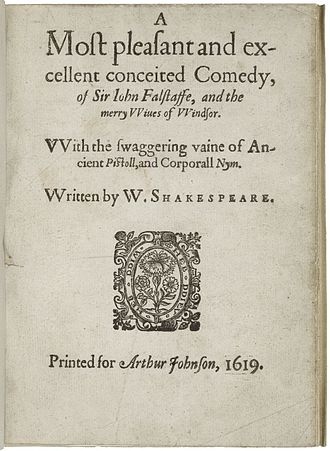
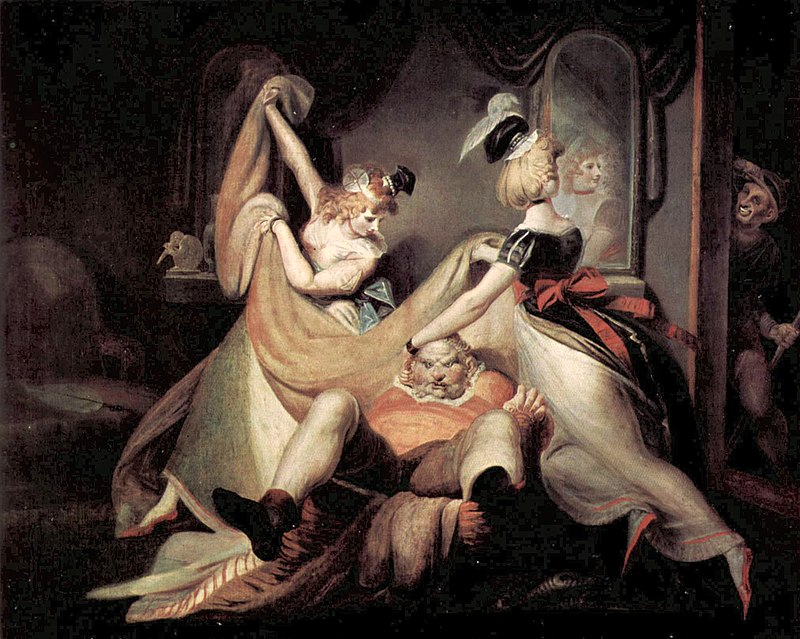

A Rose Amongst The Woodwose
by
John Presco
Copyright 2021
ALL RIGHTS RESERVED
CHAPTER TWO
The Irish Rose of Windlesore
“ And the king of Connaught shall accept hostages from all whom the lord king of England has committed to him, and he shall himself give hostages at the will of the king.“
Not but an hour had passed, and John Wilson is picking out his kinfolk in the crowd. They are all represented in the New World, the children of the founders of New Windsor, that was called ‘Windlesore’. Owning a love for words, John saw this name….ROSEWINDLE! His father and grandfather, both named William, talked endlessly about the treaty King Henry the Second made with the High King of Ireland, Hostages were exchanged. Henry could not keep his eyes off her the princess named Rose, and he rode to his camp at Woodstock. Ruaidhrí Ó Conchobhair had tried to hide his sixteen-year-old daughter as King Henry strolled amongst his children choosing this one, then that one. Henry spotted her right away. There was a glow about her even though she moved like the moon around the earth doing her best to not be seen. She fought back her tears as King Ruasidhri chose one of Henry’s daughters, for this was getting very serious. This is why the King of England chose Rose, last. He signaled to his men to hasten the retreat. Everyone could hear the crying of the Rose Princess, who would be captured in a clever labyrinth made for the Irish Hostages at Windlesore, lest the High King change his mind, and come for his daughter.
William Wilson the first, was granted a cote of arms after coming into a large inheritance from his father, Sir Thomas Wilson, who was a close councilor to Queen Elizabeth. Legend had it that the Protestant Queen made Thomas her Master Spy because he knew many languages. Elizabeth was determined to destroy the Habsburg Emperor who had found NEVER-ENDING TREASURE in the New World and had built a monolithic structure from where his Papal Knights would set out to overcome the world. Elizabeth wanted her own capitol, and thus she bid Thomas to see if he could intercept, or capture a Spanish ship laden with gold. Thomas allowed himself to be captured, and tortured. He was chained to an ore on a Spanish Gallion. The captain overheard Thomas giving lessons in English Rhetoric in perfect Spanish, and made Wilson his confidant. They became fast friends. When Sir Francis Drake captured the ship, he was hearing a wealth of un-ending information that led to the capture of two gold laden vessels heading to Spain from the New World.
Appearing before the Queen, Thomas was bid to elevate his kinfolk, and marry as many allies as possible. The Webb family is kin to the Wilson family in many ways – as well as the Shakespear family. It is alleged Thomas began the play ‘The Merry Wives of Windsor’ that his son William inherited. Then it was passed on the Willaim Shakespeare for finishing touches. John was told as a teenager the character in this play, are his close relatives who have to remain anonymous until it is safe to reveal them. It is alleged they all shared a NEVER-ENDING TREASURE and thus these words are written on the copperplate of John’s father in Saint Georges Cathedral. What was written on his great-grandfather’s plate, was lost, for no sooner was it laid with a great stone set, a gang of robbers broke into the cathedral, removed the Wilson Stone, and did extensive digging.
As John Wilson shook the hand of Alexander Webb, he beheld the gling in his eye, that asked;
“Did Thomas found a lost colony in New England, or, did he go to California with Drake?”
———————————–
The key to all these mysteries, and lost treasures, is identifying the character Falstaff. After World War One there was an Anti-German Crusade in America that eradicated most of the German worlds from the play that Shakespeare, loathed. Is it possible he did not write the Merry Wives of Windsor? While researching the history of Windsor I discovered another ROSE LINE amongst the Royals of Ireland, from where my Rosamond ancestors, hail. I made this discovery this morning on 12-30-21. For over twenty-five years I have been searching for the reason why Joan Clifford was called Rosamond. I have wondered why the Clifford family have not really – owned her. The English have a long history of making – everything their own – especially if they have failed to overcome peoples and their history. Queen Elizabeth was a master at this as she was The Leader of the Protestant Heresy in the Isles.
I am going to try to sell ‘A Rose Amongst The Woodwose’ as a series. There is too much here for one movie. Perhaps a Trilogy? I will contact Barbara Broccoli. I would like to SERALIZE my story in my newspaper-blog Royal Rosamond Press, because there is a Never-ending Treasure of Information.
John Presco
President Royal Rosamond Press.
Treaty of Windsor (1386) – Wikipedia
The Treaty of Windsor (1175) was a territorial agreement made during the time of the Norman invasion of Ireland.[1] It was signed in Windsor, Berkshire by King Henry II of England and the High King of Ireland, Rory O’Connor.
titles were changed and given more English-sounding names, including the royal family’s from Saxe-Coburg-Gotha to Windsor. Kaiser Wilhelm II (who as Queen Victoria and Prince Albert’s eldest grandson was a member of the House of Saxe-Coburg-Gotha through his mother, and who had been in line of succession to the British throne)[17] countered this by jokingly saying that he wanted to see a command performance of “The Merry Wives of Saxe-Coburg-Gotha.
Treaty of Windsor (1175) – Wikipedia
Overall, the agreement left O’Connor with a kingdom consisting of Ireland outside the provincial kingdom of Leinster (as it was then), Dublin and a territory from Waterford Dungarvan, as long as he paid tribute to Henry II, and owed fealty to him. All of Ireland was also subject to the new religious provisions of the papal bull Laudabiliter and the Synod of Cashel (1172).[citation needed]
O’Connor was obliged to pay one treated cow hide for every ten cattle. The other “kings and people” of Ireland were to enjoy their lands and liberties so long as they remained faithful to the kings of England, and were obliged to pay their tribute in hides through O’Connor.[2]
Gavin Newsom For The Arts
Posted on May 12, 2021 by Royal Rosamond Press
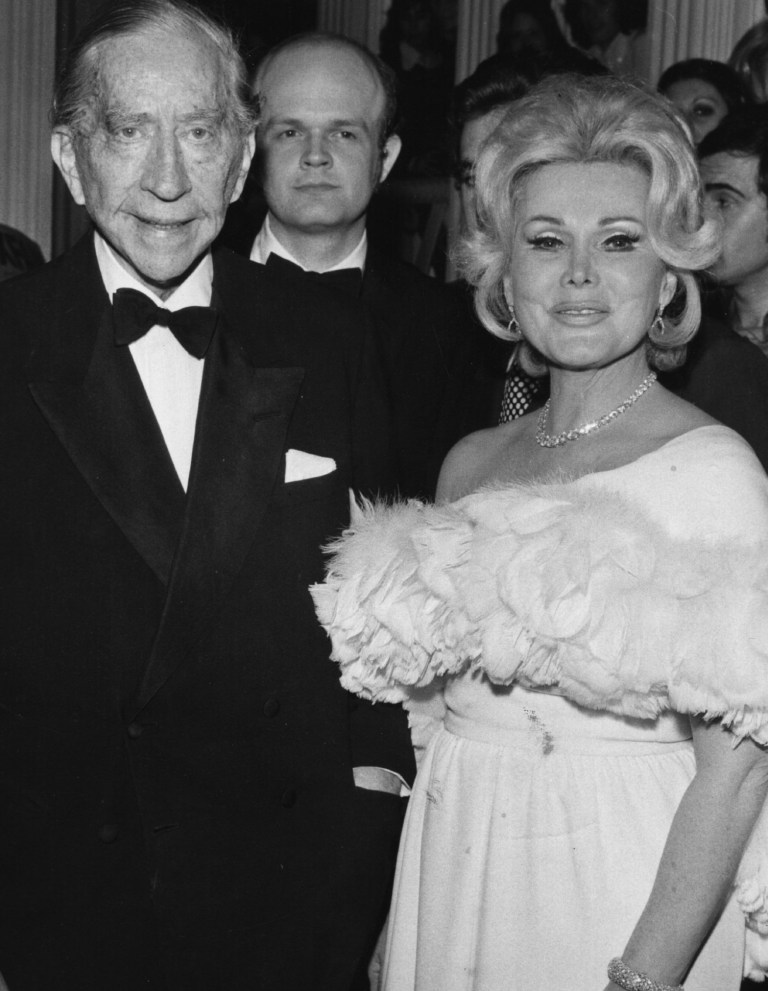
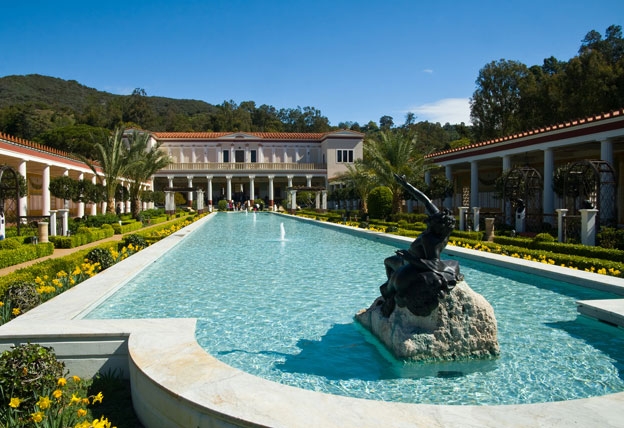

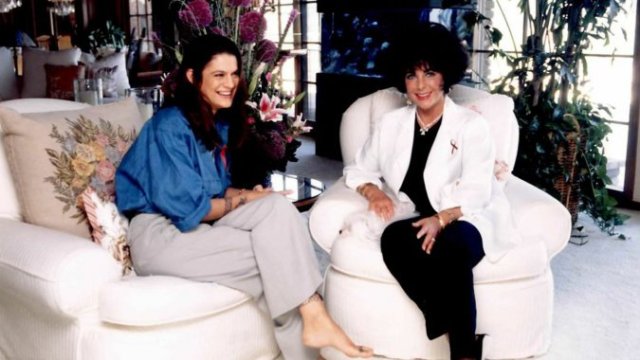
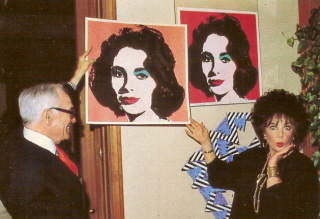

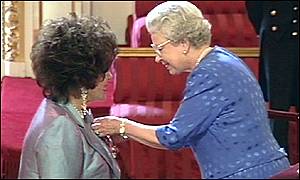
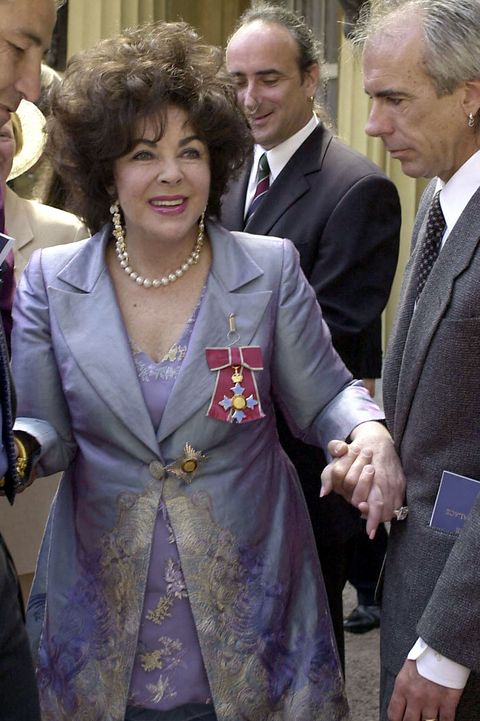
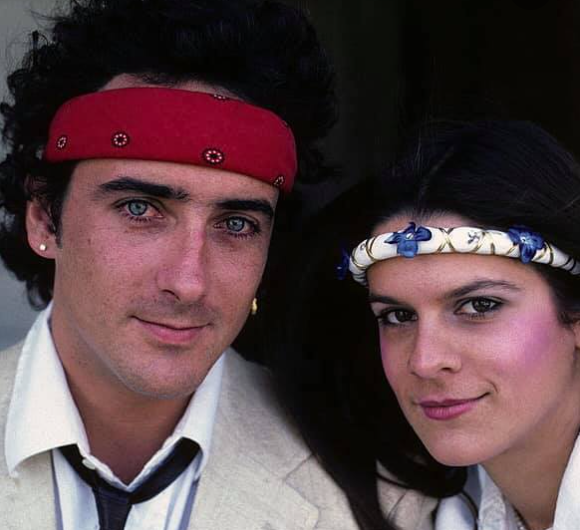
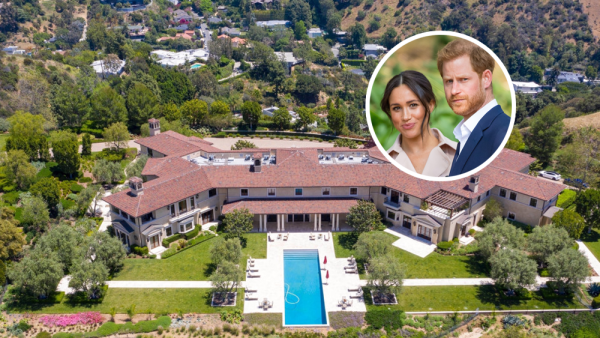
On cue, Governor Gavin Newsom held a press conference and announced massive aide for the Homeless and The Arts. I had just sent my business proposal to the City Government of Belmont, who have no Arts Program that I am aware of. I had talked with a friend about getting Grace Slick to do paintings in Charlatan Square as part of my Cultural Package for the Belmont that needs to get the Governor’s attention, being, I am kin to Elizabeth Rosemond Taylor, as is Belmont Pioneer, Carl Janke. Michael Wilding married Aileen Getty, and thus Carl Janke is in the Getty Family Tree. This Getty Tree For The Arts adopted Gavin when he was a teenager. The J. Paul Getty father and son moved to England. Junior was Knighted by the Queen and was titled “Sir” after he became a British subject. Liz Taylor was Knighted by the Queen for her contribution to the Film Industry that made California great.
John Presco
President: Belmont Soda Works
The investment would be broken into three parts: $8.75 billion for homeless housing units and affordable apartments; $3.7 billion for homeless prevention and rental support; and $1.5 billion to clean up roadways and public spaces.
His father, Bill, was a lifelong friend of Gordon Getty, the son of oil magnate J. Paul Getty — they attended high school together. Bill Newsom later managed the Getty family trust on behalf of Gordon, estimated by Forbes to be worth more than $2 billion in 2018. Bill Newsom was so close with the family that he helped deliver the ransom money after the 1973 kidnapping of J. Paul Getty’s grandson, John Paul Getty III.
In 1959, Sutton Place, a 72-room mansion, was purchased from George Sutherland-Leveson-Gower, 5th Duke of Sutherland, for £60,000, about half of what the Duke paid for it 40 years earlie
George Granville Sutherland-Leveson-Gower, 5th Duke of Sutherland, KT, PC (29 August 1888 – 1 February 1963), styled Earl Gower until 1892 and Marquess of Stafford between 1892 and 1913, was a British courtier, patron of the film industry and Conservative party politician from the Leveson-Gower family. He held minor office in the Conservative administration of Bonar Law and Stanley Baldwin in the 1920s and was later Lord Steward of the Household from 1935 to 1936. As a noted patron of the British film industry, the Sutherland Trophy, awarded by the British Film Institute, is named in his honour.
George Sutherland-Leveson-Gower, 5th Duke of Sutherland – Wikipedia
John Paul Getty Jr. – Wikipedia
Getty donated more than £140m to artistic and cultural causes from which the National Gallery received £50m. He was appointed Knight of the Order of the British Empire (KBE) in 1987, but as a foreign national could not use the title “Sir”. In December 1997, Getty was granted British citizenship and renounced his US nationality. The Queen reportedly commented: “Now you can use your title. Isn’t that nice?”[30]
His personal fortune was estimated at about £1.6 billion. His donations included support for the National Gallery, the British Museum, the British Film Institute,
The Cheyne Art Walk | Rosamond Press
Lord Hesketh at Belmont | Rosamond Press
Press Releases — Californians for the Arts
The campaign to recall Gov. Gavin Newsom has failed to gain momentum in recent months as significantly more California voters favor keeping him in office, and only anemic support has surfaced for reality TV star Caitlyn Jenner while other Republican candidates hoping to take the governor’s place have little backing, according to a new UC Berkeley Institute of Governmental Studies poll that was co-sponsored by the L.A. Times.
Why Queen Elizabeth’s Cousin’s Kremlin Scandal Pressures Royals Over Harry and Meghan (msn.com)
John Paul GETTY : Family tree by fraternelle.org (wikifrat) – Geneanet
Prince of Kent and Gordon Getty | Rosamond Press
Queen Elizabeth II’s cousin has been accused of offering access to the Kremlin for $10,000 a day—pressuring the royals to show Prince Harry and Meghan Markle are not the only family members they are willing to sanction.
They offered him $200,000 to make a pre-recorded speech endorsing the company for its launch event.
The journalists approached a friend of the prince, Lord Reading, who suggested that he could make open doors to access Russian President Vladimir Putin on behalf of the company.
This, the newspaper reported, would have cost them $50,000 for a four or five day trip by the prince to Russia.
During a Zoom meeting, they filmed Prince Michael saying: “I have never had any close connection before with gold and the idea makes me very happy.”
It saw him offer to film his speech at Kensington Palace and agree to reference his status as a royal.
The prince’s spokesperson told Newsweek the documentary was “nonsense” and denied he was leveraging his royal status.
An undercover investigation by The Sunday Times and @C4Dispatches: Prince Michael of Kent is alleged to be secretly selling his privileged access to Vladimir Putin’s Russian regime to business clients seeking favours from the Kremlin #Royalsforhire https://t.co/zXNhmtwW3i
BROAD COALITION OF ARTS, CULTURE & CREATIVITY SECTOR GARNERS DIVERSE STATEWIDE SUPPORT FOR BOLD, TRANSFORMATIONAL INVESTMENT URGING GOVERNOR NEWSOM AND THE CALIFORNIA STATE LEGISLATURE TO RESTART THE ARTS WITH STIMULUS FUNDING
California Arts Advocates, California Association of Museums and the California Chapter of the National Independent Venue Association join forces for an unprecedented $1 billion funding request.
Coalition gains support from over 500 businesses and organizations and sends over 3,500 letters to Sacramento from all legislative districts.
Sacramento, CA – May 11th, 2021 – A broad coalition representing arts workers, cultural institutions, nonprofit organizations, museums, and independent venues are calling on Governor Newsom and the California State Legislature for an unprecedented $1 billion investment in the arts, culture and creative economy. The brand-new coalition represents the first time that for-profit, non-profit, cultural organizations and arts workers have raised their voices together for the collective arts, culture and creative economies in California.
Prince of Royal Russian Art
Posted on March 17, 2021 by Royal Rosamond Press
Ready to board a train for Bozeman?
With Harry and Meghan living in California, a major royal chess piece in poised to unite with the Getty, Pelosi, and Newson family. Prince Michael Kent. and Harry Windsor, are close kin. The Buck Foundation, as Alcohol Justice, went after Newson and PlumpJack. Get ready for…
THE BATTLE OF THE BULGE
John Paul Getty Jr. – Wikipedia
Getty served as president of Surrey County Cricket Club and gave money to Lord’s Cricket Ground to build a new stand. He combined his loves of cricket and books when he purchased the ownership of Wisden, the famous publishers of the cricketing almanack. Getty built an extraordinary library at Wormsley, collecting such treasures as a first edition of Chaucer, Ben Jonson‘s annotated copy of Spenser, and Shakespeare Folios. He was a notable member of the exclusive Roxburghe Club, famous among book collectors.[31]
His personal fortune was estimated at about £1.6 billion. His donations included support for the National Gallery, the British Museum, the British Film Institute, Hereford Cathedral, St Paul’s Cathedral, the Imperial War Museum, and St. James Catholic Church.[32] Some of his donations, including contributions toward the purchases of Canova‘s The Three Graces by The National Galleries of Scotland[33] and the Madonna of the Pinks by Raphael, foiled acquisition efforts by the J. Paul Getty Museum endowed by his father. In June 2001, Getty gave £5 million to the Conservative Party. He endowed a £20 million charitable trust to support the arts, conservation and social welfare.[34]
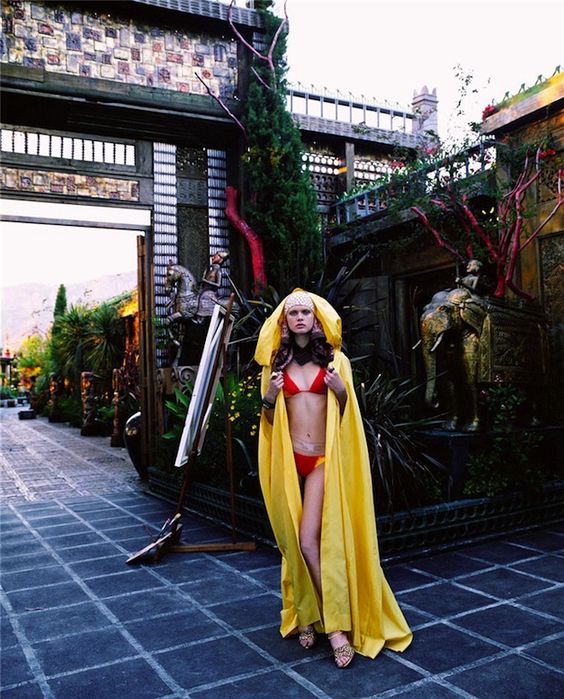


Garth, Getty, and Prince of Kent
Posted on August 26, 2012 by Royal Rosamond Press









Nobel Oil executive, Lawrence Chazen became a partner of my late sister, the world famous artist known as ‘Rosamond’. Chazen lent the Bentons money to open the first Rosamond gallery in Carmel.
Oil tycoons say drilling for oil is a risky business, and thus the American Tax Payer must fork over their tax money to make sure oil companies don’t take a bath. But, that will never happen because those who drive automobiles pay their tithe to just a few. And, when something goes wrong, the price of gasoline will rise to the occasion.
Investing in art and artists is a risky business. Judge Silver and Morris made sure the financial advisor and partner of the Getty family did not lose a dime. However, Rosamond’s daughters lost a bundle when Morris allowed Stacey Pierrot to hire a ghost writer to tell the story of our Rosebud.
When a seer told me I had two children, they appearing as faint leaves on the stem of the rose that represents their father, the reader said;
“These leaves are very faint. I don’t know why.”
At the time, I was not sure I had sired children, born a rosebud in the world. As fate would have it, Heather was born on Rosemary’s birthday, and, her favorite song she sang at the time, was ‘Rosemary’s Granddaughter’. She did not know my mother’s name. How can mere people see such things? This sight – is an art! Here is a Kane story about what really matters – in the end!
Chazen is a partner of the Getty family, he investing in Plumpjack, a brand name Gordom Getty took from Shakespeare. Gordon wrote an opera ‘PlumpJack’ and took it to Russia. Getty flew Prince Michael Windsor of Kent to Russia to hear his opera that was not paid for by the National Endowment for the Arts. It was paid for by the tax subsidies collected from the little people who get robbed at all the gas pumps the Gettys and Nobel Oil own.
Garth Benton sued his friend Gordon when he and his wife had a Benton mural painted over. What was the last word my ex-brother-in-law uttered on his death bed? Was it;
“Up the arts!”
 Rosamond Press
Leave a comment