Capturing Beauty
I have threatened to whip out ten Harlequin Romances – that will be inspired by Rena Victoria Easton – who is my muse for my novel ‘The Royal Janitor’. My ship has come in. This family survived a harrowing shipwreck! What can I say. I grieved for the loss of my niece, Drew Benton, because it was Rena who inspired her mother to take up art in 1972. How about Rena Easton of Hillsborough, weds John Janke of Belmont. I will now search the internet to discover if these Eastons are of the same bloodline. Thus far, Fate is our guide.
John Presco
Sir Easton and Sparwoude
Posted on February 4, 2018 by Royal Rosamond Press
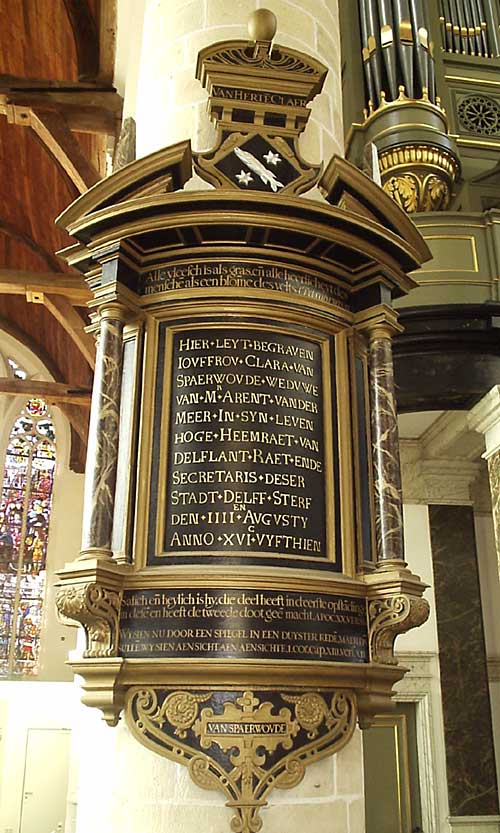

Sir Ian Easton married into the Van Duyn-Sparwoude bloodline and thus has ties to the Illuminate according to this author. Ian’s marriage was dissolved. Did he marry for money and a title? Rena was thirty-four when they got married. She had two children late in life. Did Ian do a background check?
Did Ian hound Margarethe to claim some of Clara’s money? Did she lie about getting it? We are talking about The Thirteen.
In 1970 I considered asking Rena to be my wife. In 1985 I married Mary Ann Tharaldsen who descends from Leif Ericson. Mary Ann was married to Thomas Pynchon who wrote Vineland.
Welcome
In the mid-1800s, The Howard, Mills and Easton families purchased vast tracts of windswept, barren land on the mid-Peninsula where they built huge country homes. The Howard estate was 6,500 acres—six times the size of Golden Gate Park. Each of these three families came from the East Coast, but they made their fortunes in Gold Rush California. Along the way, they suffered early deaths from disease and murder and endured fire, earthquakes and shipwrecks. Little wonder, then, that they sought a quiet refuge in the country 15 miles south of San Francisco.
St. Matthew’s Episcopal Church in San Mateo, CA is part of the Howard family legacy on the mid-Peninsula.
Image courtesy: © 2006 Steve Whittaker
Business interests linked their lives in San Francisco. In the country, the social institutions formed the glue. In particular, social life centered around St. Matthew’s Episcopal Church and later, the Burlingame Country Club. The County Road, also called El Camino Real, was the link between the estates. Filled with horses and buggies, the road was the way to San Francisco as well.
In the 1870s, the families engaged in a joint project to ensure that this County Road was handsomely lined with shady elm and eucalyptus. Well over two hundred of the majestic trees planted by the founding families still tower over El Camino Real today, providing the Burlingame-Hillsborough stretch of the road with a unique and distinctive look. In March 2012, following the nomination submitted by the Burlingame Historical Society, the grove was accepted for listing on the National Register of Historic Places.
El Camino Real linked the great estates of the mid-Peninsula.
Brief introductions to each family and their legacies are found in this exhibit by clicking on the family name. Then specific family members are presented in chronological order. (The Poetts and The Redingtons were related by marriage to the Howards. Because they also played an important role in the development of the mid-Peninsula, they have been given their own section.)
In addition to sharing the stories of the three founding families, this site contains a Virtual Museum. By clicking on the Virtual Museum tab, the reader has the choice of viewing additional photographs, letters, family trees and maps. The Virtual Museum allows the reader to view a portion of the archives of the Burlingame Historical Society, which has been collecting Burlingame and Hillsborough history since 1975.
Start reading the Founding Families story–>
The Easton Family
The Black Hawk ranch home was located at the end of the tree-lined Easton Drive near the present-day intersection of Armsby and Jackling Drives in Hillsborough.
Between the Howards’ El Cerrito country home in the south and the Millses’ country home in the north, sat Ansel and Adeline Easton’s Black Hawk ranch. The tree-lined Easton Drive was the entry drive into the ranch home, located near the present-day intersection of Armsby and Jackling Drives in Hillsborough. Modern-day Broadway served as the service road from the ranch to its stables and racetrack on the east side of the railroad tracks.
Today, the Easton family is famous for giving America’s famous photographer, Ansel Easton Adams, his name. The East Bay community of Black Hawk is also named after the original Burlingame ranch.
Continue reading the Founding Families story –>
Ansel I. Easton and Adeline Easton
Adeline Mills Easton survived a honeymoon shipwreck, but her husband died just 10 years later. A widow for nearly 50 years, Adeline published an account of their honeymoon shipwreck for her grandchildren, three of whom she raised after they were orphaned at an early age.
On August 25, 1857, a horse-drawn carriage carrying newlyweds still in their wedding attire headed toward the wharf at the foot of San Francisco’s Vallejo Street. The groom, Ansel I. Easton, jumped from the carriage and rushed to assist the bride as they walked up the gangplank of the ship SS Sonora.
The side-wheeler steamship SS Sonora was part of the fleet of the Pacific Mail Steamship Company, a private company subsidized by the government some 10 years earlier to ensure that mail flowed between the new state of California and the rest of the country. When the ship cast off that morning in 1857, it carried 38,000 letters and 1.6 million dollars worth of California gold, bound for the safety of New York banks. The ship also carried 500 passengers and approximately 100 crewmen. There were over 400 passengers in steerage; the Eastons were one of the privileged couples who were able to afford the $300 fare for a first-class cabin. The groom was a well-to-do ship chandler. The bride was the sister of the wealthy Gold Rush banker, Darius Ogden Mills.
On Monday, September 7 (exactly two weeks after its San Francisco departure), the Eastons’ ship was moored in Havana, Cuba. Thus far the trip had been routine. After disembarking the SS Sonora on the Pacific Coast of Panama, the Eastons, together with the rest of the ship’s crew and passengers, had crossed the isthmus by rail car and then boarded the SS Central America in the city of Aspinwall on the Atlantic Coast. The trip from Aspinwall to New York City typically took nine days, with one overnight stop in Havana.
Although the weather was fine when the ship left Havana on Tuesday morning September 8, by four o’clock Wednesday morning there were whitecaps on the water and a twenty-knot wind. By noon on Wednesday, many of the ship’s 500 passengers were too seasick to eat dinner. Even the ship’s doctor was ill.
All day Thursday, the storm got worse. One passenger in steerage said “nothing was to be heard but the crying of children and the moans of suffering seasickness . . . ”
On Friday afternoon, September 11, the ship sprang a leak. By 7 p.m. almost every man on the ship, some 500 in all, had formed a bucket brigade, lifting 20-pound buckets of water up, up, up from the hold and over the sides of the ship. On Saturday morning, the Captain confided to one of the passengers that they had no hope of surviving unless the storm subsided or a vessel came in sight. But the storm continued.
At 2 p.m. on Saturday a ray of hope appeared on the horizon. There were shouts of joy as one of the sailors yelled “Sail ho.” They had spotted the 120-foot brig Marine. It had been bound for Boston with a shipment of molasses. It was also damaged in the storm, but not as badly as the Central America. The captain prepared to evacuate ship—or at least part of it. It was a tense time as there were only 5 lifeboats. Normally, these boats could hold 40 to 50 people at most; however in seas like the ones they were experiencing, the oarsmen could only load 15 to 20 at a time—not nearly enough for the 600 people on board. Then the number of lifeboats went from five to three, when two were capsized or dashed against the ship. Meanwhile, the damaged Marine kept drifting at sea, sometimes as far away as five miles. The exhausted oarsmen of the lifeboats tried to keep up, but eventually they refused to make more trips. The sun was setting and darkness was enveloping them.
In the end, only 100 of the 600 people on the Central America made it to the Marine. Adeline Mills Easton was one of the 30 women and 26 children who made it. The oarsmen went back and forth with the three lifeboats. With each lifeboat, Adeline waited anxiously, hoping that her new husband would be on it. Then she felt a tap on her shoulder. It was the captain of the Marine. He handed her a scrap of blue paper. On it was written “My Dear Wife. . . If the captain of the ‘Marine’ will send a boat forward for me, you can give him what he will ask. I will watch for it and be on hand. Your aff husband, A.I.E.”
Adeline pleaded with the captain to send one more lifeboat back to the Central America, but the captain said no—it would never survive in a sea like that one, with darkness setting in.
After nightfall, on Saturday September 12, 1857, the Central America sank. Some men literally went down with the ship. Others clung to life bobbing in the cold waters in life preservers. At 1 a.m. that morning, another damaged ship, the Ellen, came into view. It had been headed to England with a load of mahogany from Belize. The crew heard “agonizing shrieks” in the water. They could not see the people in the dark, but knew they were in the vicinity of a shipwreck. By morning, the crew of the Ellen had pulled 49 men out of the sea. One of them was Adeline’s husband, Ansel I. Easton.
The Eastons were reunited on land and spent much of the rest of their honeymoon retelling the story of their shipwreck to friends and relatives in New York. When they returned to California, they made their home on their mid-Peninsula ranch, which they called Black Hawk because of the Black Hawk racehorses that they imported from Kentucky.
Apparently, the couple was independently wealthy because when Easton registered as a voter in San Mateo County he simply listed his occupation as “gentleman.” The commonly told story is that Adeline always wanted an adobe home, so Ansel built one for her, using old adobe bricks from the nearby Sanchez adobe.1 A large earthquake in 1868 leveled that home. Mr. Easton also died the same year, leaving Adeline with two small children: Ansel Mills Easton and Jennie M. Easton.
The year following Ansel I. Easton’s death, aviation history was made at the Eastons’ Shell Park racetrack when Frederick Marriott successfully tested a steam-powered prototype aircraft. Called the Avitor Hermes Jr. it remained airborne for approximately one mile. A replica of the aircraft can be found at the Hiller Aviation Museum in San Carlos, California.
In the mid-1980s, fortune hunters found the Eastons’ sunken honeymoon ship at the bottom of the Atlantic. The ship contained the California gold that had been on its way to the safety of the New York banks.2 Remarkably, it also contained the Eastons’ travel trunk, still intact after 120 years on the bottom of the ocean. In the trunk, the discovery group found a “shirt wrapped in a steamer edition of the New York News dated July 20, 1857. The newsprint was still legible.”3 They also found numerous items of clothing, jewelry, cologne, and writing instruments.
The story of the shipwreck and its discovery a century later is vividly told in Gary Kinder’s book, Ship of Gold in the Deep Blue Sea. Adeline Easton’s account of the shipwreck, a privately published pamphlet titled “The Story of our Wedding Journey” written for her children and grandchildren, can be found in the archives of the California Historical Society. The original note that Ansel wrote to Adeline imploring her to request the captain of the Marine to send a rescue boat for him can be found at the San Mateo County Historical Association archives.
 Rosamond Press
Leave a comment