The Republo-Gods are playing God again by claiming their BBB is all about GOING BACK TO WORK, and making MAGA – from the ground up! Seniors will be required to GO BACK TO WORK to pay for the FOUR TRILLIOM DOLLARS given to the…..RICH AT THE TOP!
Why cant I find Mike Johnson’s RANT ON GOD? Christians believe their prayers can win elections. This is why they DID not lose in 2020.
WHERE ARE THE JOBS?
“They’re coming as soon as the Tariffs kick in. We got a Christian Prayer Team in Texas working on that. They got delayed by the horrific flood. Go read their Amens on Facebook!”
John
Republicans praise ‘big, beautiful bill’s’ work requirement for Medicaid: ‘We’ve got to get back to work’
‘It’s just unfortunate you’ve got a lot of freeloaders in this country,” says Sen Tommy Tuberville
 By
By Published July 5, 2025 8:00am EDT
Republicans back Big, Beautiful Bill work requirement for Medicaid: ‘We’ve gotta get back to work’
Republican senators told Fox News Digital they support the Big, Beautiful Bill’s provision work requirements for Medicaid eligibility, saying, “We’ve gotta get back to work.” (Credit: Nicholas Ballasy)
NEWYou can now listen to Fox News articles!
Listen to this article
6 min
While Democrats predict major problems with a provision within the “one big, beautiful bill” that adds a work requirement for adults to be eligible for Medicaid, Republican senators are praising the requirement, saying, “We’ve got to get back to work.”
The provision requires able-bodied, childless adults between the ages of 18 and 64 to work at least 80 hours a month to be eligible to receive Medicaid benefits. Individuals can also meet the requirement by participating in community service, going to school or engaging in a work program.
“We have folks back home right now harvesting wheat that are working 20 hours in a day,” Sen. Roger Marshall, R-Kan., told Fox News Digital. “We want you to go to college, we want to volunteer, work 20 hours a week, it brings dignity, it brings purpose to your lives. Work is a great thing; it’s nothing to be ashamed of.”
“Seven million healthy American men out there of working age are not working right now,” Marshall continued. “We happen to have seven million open jobs as well. I think I want to do everything I can to help those seven million men find a job. Whether that’s through an education or community colleges, technical colleges, I think there’s lots of opportunity out there.”

From left to right, Sen. Ron Johnson, R-Wis., Sen. Tommy Tuberville, R-Ala., Sen. Mark Kelly, D-Ariz., and Sen. John Fetterman, D-Pa. (Nathan Posner/Anadolu via Getty Images | Drew Angerer/Getty Images | Tom Williams/CQ-Roll Call, Inc via Getty Images | Kent Nishimura/Getty Images)
Sen. Bill Hagerty, R-Tenn., said “the disincentives to work are a real problem here in America.”
“It’s amazing that Democrats are trying to make this argument,” he said. “I don’t think that taxpayers should be footing the bill at all for able-bodied citizens. And certainly, non-citizens should not be getting the benefit of this.”
“We need to incentivize work,” Hagerty went on. “And certainly, you don’t want to be incentivizing a burden on taxpayers.”
“We’ve got to take care of the people that need to be taken care of and it’s just unfortunate you’ve got a lot of freeloaders in this country,” said Sen. Tommy Tuberville, R-Ala.

Sen. Tommy Tuberville, a Republican from Alabama, speaks to members of the media outside the Manhattan Criminal Courthouse in New York on Monday, May 13, 2024. (Victor J. Blue/Bloomberg via Getty Images)
Tuberville claimed that many of those he deemed as freeloaders “are coming from the younger ranks because they’ve grown up, they’ve got all these student loans, they got a degree that’s not worth anything, they can’t get a job or they don’t want to work and so the way they’ve done they’ve turned into socialists, they started living off the government.”
“We can’t have that. We’ve got to get back to work. This country is built on hard work,” he said.
Meanwhile, Sen. Ron Johnson, R-Wis., said he also agrees with the work requirement, telling Fox News Digital that “quite honestly, what we’re trying to do is stop enrollment in that Obamacare addition to Medicaid.”
“They call it Medicaid expansion, but it’s Obamcare. It was Democrats’ way of trying to turn us into a single-payer system. And so, it incentivized the states to sign up single able-bodied individuals,” he claimed.
TREASURY SECRETARY PREDICTS UNPRECEDENTED GROWTH WITH TRUMP’S ‘BIG, BEAUTIFUL BILL’
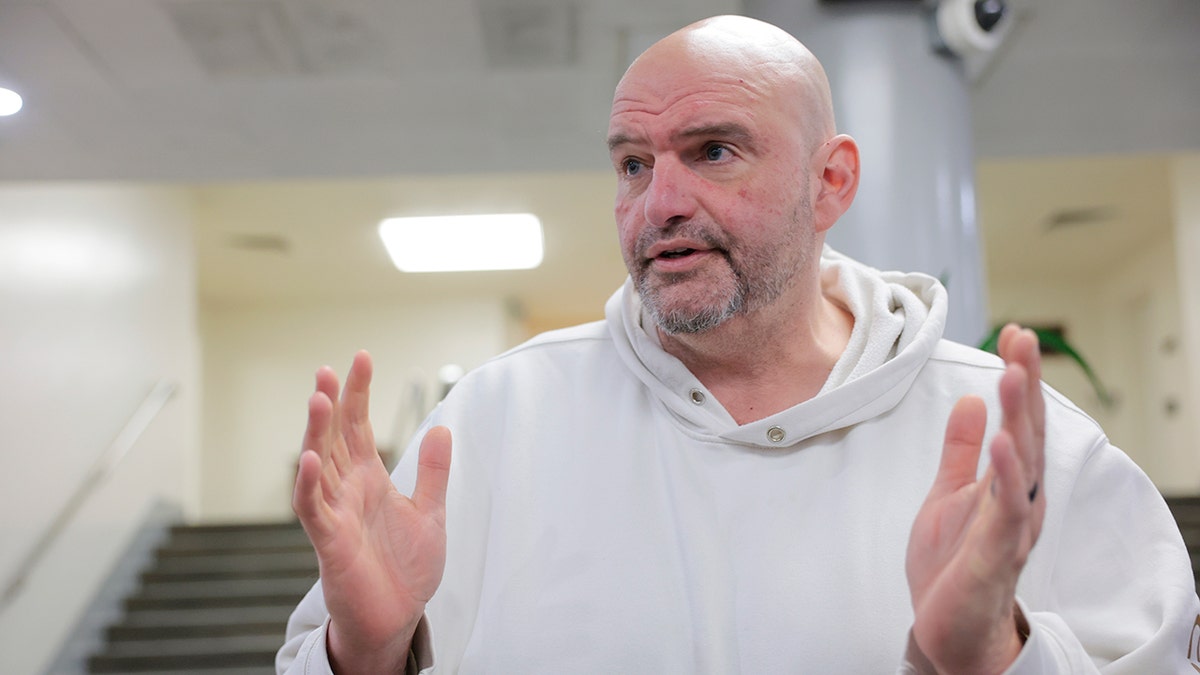
U.S. Sen. John Fetterman (D-PA) speaks to reporters on Feb. 12, 2025 in Washington, D.C. (Anna Moneymaker/Getty Images)
“As a result,” he went on. “We’ve created all kinds of [what] I would call legalized fraud on the part of states … Now that they’ve designed their budgets around that scam, now they’re screaming when we’re trying to end the scam.”
Additionally, while Sen. John Fetterman, D-Pa., expressed that “of course, we should always eliminate any kind of fraud and that kind of a waste,” other Democrats were much less enthusiastic about the work requirement.

“That provision is not designed for efficiency or to save people money that provision is designed to kick people off of Medicaid, like don’t believe the hype,” said Sen. Chris Murphy, D-Conn.
Murphy claimed that Republicans “have built a work requirement that they know people won’t be able to satisfy because they hate the idea that Medicaid actually helps the working poor in this country.”
“So, there’s going to be a whole bunch of people who work for a living who are not going to be able to comply with those provisions and are going to lose their healthcare, even though they’re working,” he said. “That’s the intent of the provision and everybody should just be honest about that.”
HAKEEM JEFFRIES BREAKS KEVIN MCCARTHY RECORD WHILE STALLING TRUMP’S ‘BIG, BEAUTIFUL BILL’

Sen. Mark Kelly, D-Ariz., indicated that the provision will “kick 17 million people off of health insurance.” (Eric Lee/Bloomberg)
Sen. Mark Kelly, D-Ariz., indicated that the provision will “kick 17 million people off of health insurance.”
“These are life and death situations that people are making,” he said, adding, “This legislation is going to kick 300,000 of my constituents off of their health care coverage.”
“These are people that I’ve spoken to that can’t afford it,” he continued. “They have no money in their budget to go and buy health care. So, then they got to make a decision between eating and their rent, or they just don’t go to the doctor.”
James Agresti, president of Just Facts, a public policy research institute, told Fox News Digital that despite Democrats’ claims about the work requirements, he believes reality tells a different story.
“The notion that able-bodied adults without young children cannot work, get an education, or volunteer for 20 hours a week is absurd,” he said.
AMERICANS WEIGH IN ON TRUMP’S ‘BIG, BEAUTIFUL BILL’: POLLS
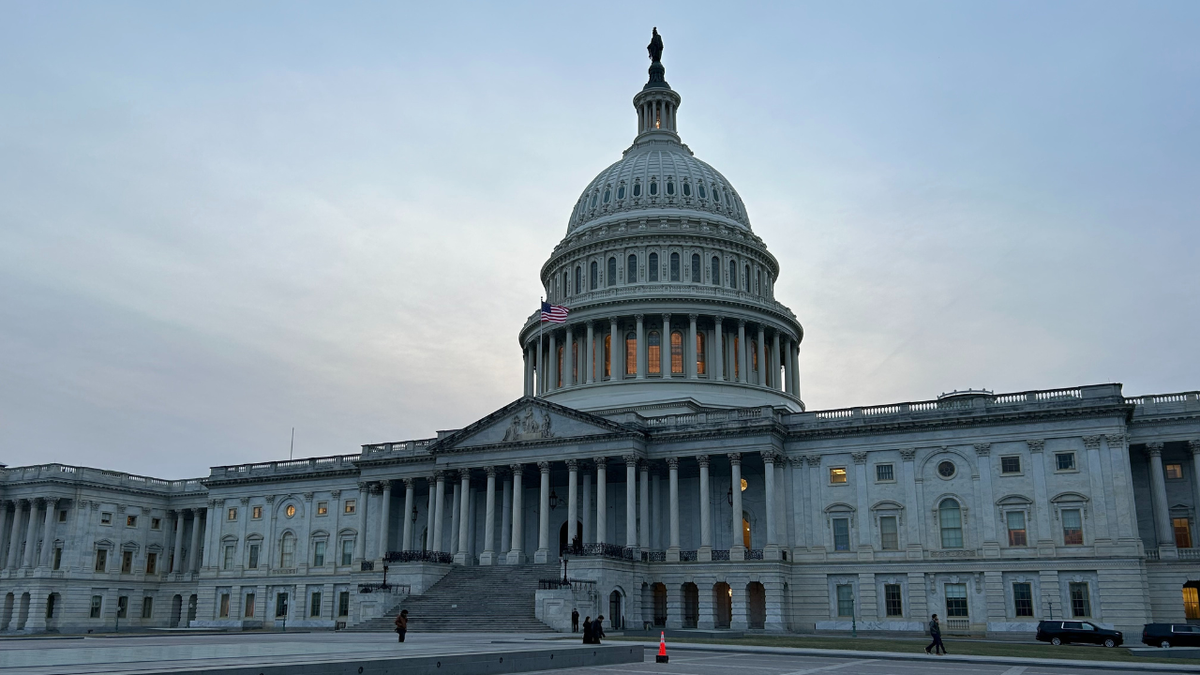
U.S. Capitol Building at sunset on Jan. 30, 2025. (Fox News Digital)
“Murphy’s rhetoric is refuted by decades of experience with other welfare programs that have work requirements, like Temporary Assistance for Needy Families,” he explained.
Agresti said that according to an estimate by the Congressional Budget Office (CBO), 1.4 million noncitizens and 9.2 million able-bodied adults who won’t work or are engaged in fraud will be removed from Medicaid eligibility.
A spokesperson for Kelly’s office told Fox News Digital that “a bunch of actual experts and media outlets correctly interpreting that same CBO report” estimate that 11.8 million people will be without health insurance by 2034 because of the provision, plus an additional 5.1 million because of the bill ending expanded Affordable Care Act credits.
In response, Agresti said the bill “doesn’t revoke the expanded Obamacare subsidies, which were a temporary COVID-era handout that Democrats enacted in the American Rescue Plan and extended in the Inflation Reduction Act.”
“Even the New York Times has reported that adding these numbers into the tally for the big, beautiful bill ‘is an exaggeration’ and not ‘the real number,’” said Agresti.
He also said that numerous studies have proven that the disincentive to work is a real problem in America.
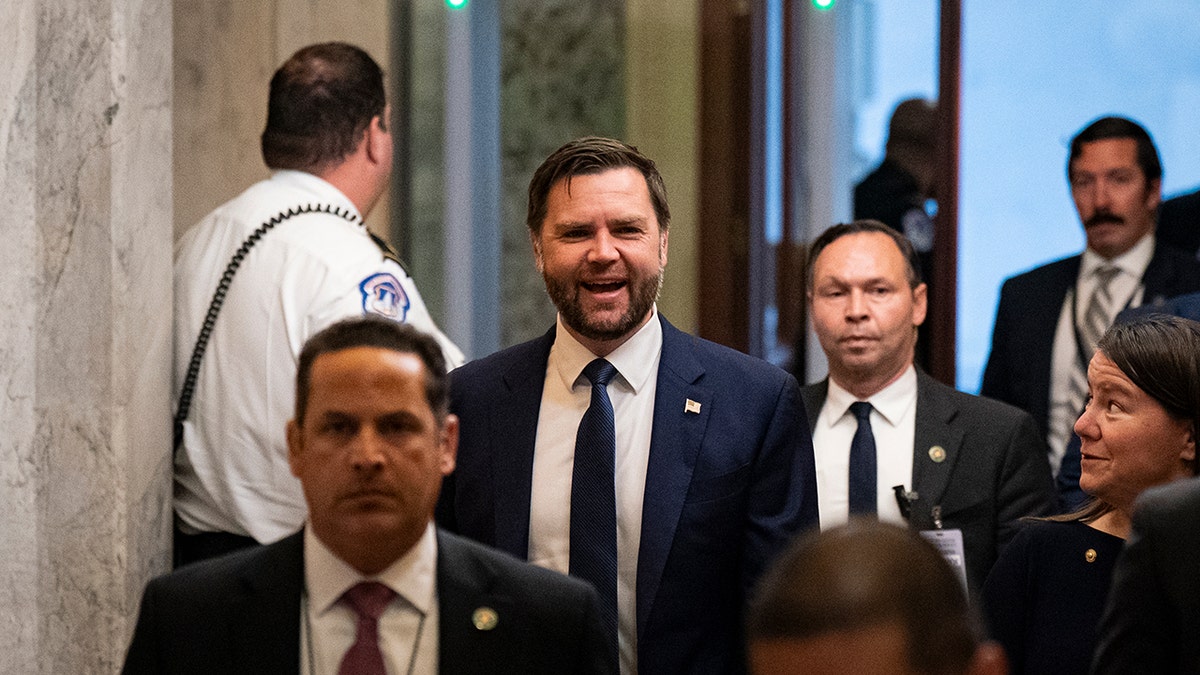
Vice President JD Vance, center, arrives during a vote-a-rama at the U.S. Capitol on July 1, 2025 in Washington, D.C. (Al Drago/Getty Images)
“Even Lawrence Summers, Obama’s chief economist and Clinton’s Treasury Secretary, has written that ‘government assistance programs’ provide ‘an incentive, and the means, not to work,’” he said.
Medicaid Is a Lifeline for Older Adults
Nearly 80 million people, including over 7 million seniors, rely on Medicaid for health and long-term care. Without Medicaid, most older adults who need help with daily activities would not be able to afford home-based or nursing facility care. Medicaid helps millions of older adults pay their Medicare cost-sharing and also covers vital benefits that Medicare does not, such as dental, vision, hearing, and non-emergency medical transportation. Many paid and unpaid caregivers for older adults also rely on Medicaid for their own health coverage.
Medicaid “reform” proposals that aim to take federal funding away from states or restrict eligibility would all lead to the same result: cutting health and long-term care for seniors. Here’s what is at risk for older adults if policymakers implement these proposals.
Cap or Cut Federal Medicaid Funding to States
Medicaid is a state-federal partnership that guarantees federal financial support to every state to provide essential health and long-term care to older adults and other people with limited income and savings. As the number of older adults who need long-term care grows and state Medicaid costs increase, the federal government helps meet those rising costs by matching a percentage of each dollar the state spends. Here are three ways proposed “reforms” would cut Medicaid funding:
- Under block grants or per capita caps, states would receive a fixed amount of federal Medicaid funding, regardless of actual costs. This means federal funding would no longer keep up with increased costs, shifting those costs to states. Medicaid would shrink over time for all populations, including older adults, and would not be able to adequately respond during emergencies such as pandemics or natural disasters when Medicaid has historically been a key resource.
- Reducing the federal match (Federal Medical Assistance Percentage or FMAP), including removing the minimum 50% FMAP, would shift costs to states, forcing them to cut overall Medicaid spending. Ending the enhanced 90% FMAP for Medicaid Expansion, which covers millions of older adults under age 65 as well as paid and unpaid caregivers, would automatically end expansion in several states and force other states to scale back Medicaid programs and services that older adults rely on.
- Restricting allowable provider and insurer taxes, which every state uses to help fund all of their Medicaid programs, would reduce state budgets and force Medicaid cuts.
All of these proposals would starve Medicaid, forcing states to reduce spending by cutting programs and services that federal law does not require to be covered. The first target will be the home and community-based services (HCBS) that older adults and people with disabilities rely on daily because these programs account for a large share of Medicaid spending. Other benefits like dental, vision, and hearing, as well as expanded eligibility for Medicare Savings Programs and nursing facilities would also be on the chopping block.
With reduced Medicaid budgets, states would also cut provider payment rates, reducing provider access and worsening direct care workforce shortages. As a result, older adults would have a harder time finding HCBS providers and people living in nursing facilities would be at increased risk of poor care.
Cutting Medicaid would also amount to cutting Medicare. More than 1 in 5 people with Medicare depend on Medicaid to afford and access health and long-term care, and 30% of all Medicaid spending supports Medicare enrollees.
Limit the Number of Eligible Individuals Who Enroll in Medicaid
Because Medicaid eligibility and enrollment is complicated, many older adults who are already eligible for HCBS, Medicare Savings Programs, and other benefits are not enrolled. Some proposed Medicaid “reforms” aim to capitalize on this complexity to prevent enrollment and take away coverage from eligible people. Here are two ways imposing additional red tape would cut Medicaid:
- Repealing the recently finalized Streamlining Medicaid Eligibility and Enrollment rules and other regulations would threaten federal actions currently underway to help eligible individuals access and maintain Medicaid. These rules help older adults with low, fixed incomes and few assets by simplifying asset verification, limiting the frequency of eligibility redeterminations, automatically enrolling people on SSI into the Qualified Medicare Beneficiary program, and allowing people with disabilities to project their HCBS expenses when spending down to Medicaid eligibility.
- Adding red tape such as work requirements would make it harder for older adults and their caregivers to keep Medicaid. Experience shows work requirements will take away coverage from older adults and people with disabilities who are already working, are retired or have difficulty finding work, and family caregivers. Such red tape also puts older adults age 65 and older at risk of gaps in access to health care by slowing down program administration, including timely processing of Medicaid applications for all populations.
The primary aim of these repeals and red tape would be to take away Medicaid to cut spending, despite increasing costs to administer needlessly complex eligibility and renewal processes.
Any Size Medicaid Cut Will Take Care Away from Older Adults
Regardless of what shape or size these “reforms” take, they are all cuts with the same explicit goal: to reduce Medicaid spending to pay for other priorities such as tax cuts for the wealthy and corporations. The result of every cut is also the same: taking away health care and HCBS from older adults, people with disabilities, and their caregivers.
Justice in Aging Resources
- A Cut to Medicaid is a Cut to Medicare Fact Sheet and Issue Brief (2025)
- Work Requirements Would Cut Medicaid for Older Adults (2025)
- How Medicaid Funding Caps Would Harm Older Americans (2025)
- Final Rule to Streamline Access to Medicaid (2024)
Medicaid Is a Lifeline for Older Adults
Nearly 80 million people, including over 7 million seniors, rely on Medicaid for health and long-term care. Without Medicaid, most older adults who need help with daily activities would not be able to afford home-based or nursing facility care. Medicaid helps millions of older adults pay their Medicare cost-sharing and also covers vital benefits that Medicare does not, such as dental, vision, hearing, and non-emergency medical transportation. Many paid and unpaid caregivers for older adults also rely on Medicaid for their own health coverage.
Medicaid “reform” proposals that aim to take federal funding away from states or restrict eligibility would all lead to the same result: cutting health and long-term care for seniors. Here’s what is at risk for older adults if policymakers implement these proposals.
Cap or Cut Federal Medicaid Funding to States
Medicaid is a state-federal partnership that guarantees federal financial support to every state to provide essential health and long-term care to older adults and other people with limited income and savings. As the number of older adults who need long-term care grows and state Medicaid costs increase, the federal government helps meet those rising costs by matching a percentage of each dollar the state spends. Here are three ways proposed “reforms” would cut Medicaid funding:
- Under block grants or per capita caps, states would receive a fixed amount of federal Medicaid funding, regardless of actual costs. This means federal funding would no longer keep up with increased costs, shifting those costs to states. Medicaid would shrink over time for all populations, including older adults, and would not be able to adequately respond during emergencies such as pandemics or natural disasters when Medicaid has historically been a key resource.
- Reducing the federal match (Federal Medical Assistance Percentage or FMAP), including removing the minimum 50% FMAP, would shift costs to states, forcing them to cut overall Medicaid spending. Ending the enhanced 90% FMAP for Medicaid Expansion, which covers millions of older adults under age 65 as well as paid and unpaid caregivers, would automatically end expansion in several states and force other states to scale back Medicaid programs and services that older adults rely on.
- Restricting allowable provider and insurer taxes, which every state uses to help fund all of their Medicaid programs, would reduce state budgets and force Medicaid cuts.
All of these proposals would starve Medicaid, forcing states to reduce spending by cutting programs and services that federal law does not require to be covered. The first target will be the home and community-based services (HCBS) that older adults and people with disabilities rely on daily because these programs account for a large share of Medicaid spending. Other benefits like dental, vision, and hearing, as well as expanded eligibility for Medicare Savings Programs and nursing facilities would also be on the chopping block.
With reduced Medicaid budgets, states would also cut provider payment rates, reducing provider access and worsening direct care workforce shortages. As a result, older adults would have a harder time finding HCBS providers and people living in nursing facilities would be at increased risk of poor care.
Cutting Medicaid would also amount to cutting Medicare. More than 1 in 5 people with Medicare depend on Medicaid to afford and access health and long-term care, and 30% of all Medicaid spending supports Medicare enrollees.
Limit the Number of Eligible Individuals Who Enroll in Medicaid
Because Medicaid eligibility and enrollment is complicated, many older adults who are already eligible for HCBS, Medicare Savings Programs, and other benefits are not enrolled. Some proposed Medicaid “reforms” aim to capitalize on this complexity to prevent enrollment and take away coverage from eligible people. Here are two ways imposing additional red tape would cut Medicaid:
- Repealing the recently finalized Streamlining Medicaid Eligibility and Enrollment rules and other regulations would threaten federal actions currently underway to help eligible individuals access and maintain Medicaid. These rules help older adults with low, fixed incomes and few assets by simplifying asset verification, limiting the frequency of eligibility redeterminations, automatically enrolling people on SSI into the Qualified Medicare Beneficiary program, and allowing people with disabilities to project their HCBS expenses when spending down to Medicaid eligibility.
- Adding red tape such as work requirements would make it harder for older adults and their caregivers to keep Medicaid. Experience shows work requirements will take away coverage from older adults and people with disabilities who are already working, are retired or have difficulty finding work, and family caregivers. Such red tape also puts older adults age 65 and older at risk of gaps in access to health care by slowing down program administration, including timely processing of Medicaid applications for all populations.
The primary aim of these repeals and red tape would be to take away Medicaid to cut spending, despite increasing costs to administer needlessly complex eligibility and renewal processes.
Any Size Medicaid Cut Will Take Care Away from Older Adults
Regardless of what shape or size these “reforms” take, they are all cuts with the same explicit goal: to reduce Medicaid spending to pay for other priorities such as tax cuts for the wealthy and corporations. The result of every cut is also the same: taking away health care and HCBS from older adults, people with disabilities, and their caregivers.
Justice in Aging Resources
Final Rule to Streamline Access to Medicaid (2024)Here’s what’s in Trump’s GOP megabill and how it will affect Texans
A Cut to Medicaid is a Cut to Medicare Fact Sheet and Issue Brief (2025)
Work Requirements Would Cut Medicaid for Older Adults (2025)
How Medicaid Funding Caps Would Harm Older Americans (2025)
The wide-ranging bill is the vehicle for much of Trump’s domestic policy agenda, containing key changes that will affect daily life for millions of Texans.
By Gabby Birenbaum and Owen Dahlkamp
July 3, 20257 PM CentralShare
/https://static.texastribune.org/media/files/ef288fc4f76cb548d8e7a06f8d5653fc/Johnson%20Trump%20Bill%20Sign%20REUTERS.jpg)
https://audio.adauris.ai/v2/widget/kJdMwATp9zKnrhK0cHGq/Q3IQJCeVLqpa00OCt5Tc?distribution=trueAudio recording is automated for accessibility. Humans wrote and edited the story. See our AI policy, and give us feedback.
Sign up for The Brief, The Texas Tribune’s daily newsletter that keeps readers up to speed on the most essential Texas news.
After months of intense back-and-forth negotiations, on-the-floor haggling and threats to tank the legislation, Republicans’ massive tax and spending bill is heading to President Donald Trump’s desk to become law.
The wide-ranging megabill is the vehicle for much of Trump’s domestic policy agenda for his second term in the White House, with major changes in health care, immigration and tax policy that are sure to touch nearly every American. Here are the major ways Texas will be affected.
ACA and Medicaid
Over 300,000 Texans could lose their health insurance once the Medicaid changes passed by Congress take effect in 2027.
Medicaid, a federal-state health insurance program for low-income and disabled people, insures over 4 million Texans. The federal government paid for nearly two-thirds of the program’s $57 billion costs in Texas during the 2023 fiscal year, according to KFF, a nonprofit health policy organization. Using estimates from the nonpartisan Congressional Budget Office, KFF projects that Texas stands to lose 10% of its federal Medicaid funds over the next decade, or $39 billion.
The Texas Tribune thanks its sponsors. Become one.
The cuts could be particularly potent in the Rio Grande Valley, which has an outsized number of Medicaid recipients, and in rural areas, where hospitals rely on Medicaid payments. Texas already has the highest uninsured rate in the nation.
Beyond Medicaid, the bill makes it harder to enroll in coverage through Affordable Care Act marketplaces and allows for the expiration of Biden-era enhanced premium tax credits that lower out-of-pocket costs for people with ACA marketplace coverage. Because Texas is among the 10 states that have never expanded Medicaid under the ACA, its residents rely heavily on marketplace coverage and the soon-to-expire tax credits.
Taken together, KFF estimates that the megabill’s provisions will lead to 1.7 million Texans losing their coverage, adding to the nearly 5 million children and adults under 65 who currently lack health insurance.
The GOP megabill also imposes national work requirements on Medicaid for the first time in the program’s history — but only for enrollees in states that have expanded Medicaid, meaning they will not apply to existing Texas Medicaid recipients.
Catch up on news about the economy with our weekly newsletter
Catch up on news about the economy with our weekly newsletter
This site is protected by reCAPTCHA and the Google Privacy Policy and Terms of Service apply.
Before the Senate passed the bill this week, Sen. John Cornyn, R-Texas, said in a floor speech that the work requirements would strengthen Medicaid for its intended recipients — children, the disabled and pregnant women.
“It’s not fair to the taxpayer to have them subsidize people sitting on the couch playing video games all day when they can contribute to their community and their family,” he said.
Texas Democrats have homed in on Medicaid cuts as the most devastating portion of the bill.
“You’re talking about a health care disaster that is going to take place — not just in the Dallas-Fort Worth area, but in every major metropolitan area in the state,” said Rep. Marc Veasey, D-Fort Worth. “When you add that on top of the rural hospitals that are going to close and the smaller areas in Texas, it’s going to create a health care nightmare scenario.”
The Texas Tribune thanks its sponsors. Become one.
SNAP
The Republican bill also includes deep cuts to the Supplemental Nutrition Assistance Program, previously known as food stamps.
But the size of Texas’ SNAP cut is up in the air, dependent on how often the state errs in over- or underpaying benefit recipients.
Under the bill, states will have to cover a portion of SNAP benefits — which are currently paid for by the federal government in full — based on the percentage of erroneous payments made. States with an error rate under 6% will not have to share the cost, while states above that will be on the hook for escalating costs tied to their error rate.
Texas logged an error rate of 8.3% in fiscal 2024 — meaning that, had the law been in place, the state would have been responsible for 10% of the cost of SNAP benefits, or $716 million per year, according to the North Texas Food Bank.
The Texas Tribune thanks its sponsors. Become one.
The SNAP benefit cut is scheduled to kick in fiscal 2028, unless Texas’ error rate falls under 6 percent. States with the highest rates of over- or underpayments — anything above 13.3% can delay the onset of the cost sharing, a last-minute provision included to win the support of Sen. Lisa Murowski, R-Alaska
In addition, Texas will now need to pay for 75% of the administrative cost of running the SNAP program, up from the current 50% rate. Feeding Texas, the statewide network of food banks, estimates that the new arrangement will cost the state $89.5 million annually.
Republicans also tightened SNAP work requirements in the bill. Previously, recipients over age 52 and those with children under 18 in their house were exempted from having to meet such requirements. Now, able-bodied Texans between the ages of 52 and 65 and those with children over 14 must prove they are working at least 80 hours per month to qualify for benefits.
Immigration and the border
Among the top priorities for Texas members was securing money to reimburse the state for the billions it spent on immigration enforcement along the southern border under the Biden administration. That money is now poised to flow to Texas after making it into the bill’s final draft.
The Texas Tribune thanks its sponsors. Become one.
Gov. Greg Abbott, who spearheaded the state’s multibillion-dollar border security program known as Operation Lone Star, has been lobbying Trump and lawmakers for federal dollars since Biden left office in January.
Texas’ GOP delegation at first pushed congressional leaders to include $12 billion in reimbursements for states that spent money on border enforcement. Cornyn secured an additional $1.5 billion in the Senate version, upping the available grants to $13.5 billion. The rules for this pot of money ensure that Texas has the largest claim to the funds of any state.
Apart from these grants, GOP lawmakers gave U.S. Immigration and Customs Enforcement nearly $30 billion to revamp its workforce and equipment, with the goal of speeding the agency’s rate of deportations — a hallmark Trump campaign pledge.
The reconciliation bill also puts billions into new surveillance technology and construction of a wall along the southern border.
The Texas Tribune thanks its sponsors. Become one.
Clean energy
The bill rolled back several key provisions of former President Joe Biden’s landmark Inflation Reduction Act, which created tax credits for clean energy projects to spur industry investment.
Those subsidies will be phased out under a provision that reserves the tax credits only for solar and wind projects that are up and running by the end of 2027. Projects that start construction within a year of the law’s enactment — including those that become operational post-2027 — also will remain eligible.
Several Republicans, including U.S. Rep. Chip Roy of Austin, wanted to see the credits abolished immediately. Roy claimed that clean energy cannot reliably power Texas’ grid, as some energy generators, such as solar panels and wind turbines, can only produce electricity in favorable weather conditions. He also said the credits subsidize foreign manufacturers whose renewable energy products dominate the American market.
Clean energy advocates say any cuts are bound to hamper the Texas labor market, as workers on renewable projects could be fired as their employers’ tax incentives disappear. With Texans’ energy demand expected to skyrocket in the next decade, supporters say clean energy could quickly and cheaply fill in the gaps.
Tax cuts
The centerpiece of the Republican megabill is the extension of an array of income tax cuts from the 2017 tax-cut package Trump signed into law during his first term.
Set to expire at the end of the year, the cuts were permanently enshrined in the bill, allowing most Americans to continue benefiting.
Republicans on the tax-writing House Ways and Means Committee estimate that a family of four earning the median income in Texas — $75,780 — would have seen its tax bill rise by $1,550 if the 2017 cuts had expired and tax rates had reverted to their Obama-era levels.
Independent analyses of the bill have found that its benefits will mostly flow to the wealthy, while tax savings for the lowest earners will be largely offset by benefit cuts.
A state-by-state analysis by the Institute of Taxation and Economic Policy, a left-leaning think tank, found that the top 1% of Texans — or those making over $806,800 — will see the biggest share of the tax cuts. Those top earners will save 3.4%, or an average of $114,680 per year, on their federal income tax due to the passage of the bill.
The richest Texans will receive a larger average tax cut than their top one percent counterparts in all but two other states, according to the ITEP analysis.
Though the bill’s tax-cut provisions largely focused on preserving existing cuts, Republicans also created a host of new temporary tax relief programs aimed at workers and seniors. Texans who work in roles that traditionally receive tips will get to claim a deduction of up to $25,000 — a priority of Sen. Ted Cruz — through 2028. Those earning overtime can deduct up to $12,500 through the same time period, with lesser deductions for high earners.
And seniors can add $6,000 to their standard deduction, also through the 2028 tax year.
Trump accounts
Born out of a late-night poker game last year, Cruz championed the idea of “Trump accounts,” a provision included in the bill that will seed $1,000 in a tax-deferred investment account for nearly every child born in America in 2025 and beyond. As each recipient ages into adulthood, family, friends and nonprofits will be able to contribute up to $5,000 annually. Once they reach 18, the beneficiaries will be able to access half the funds for limited purposes — such as educational expenses, starting a small business or placing a down payment on a home. They can withdraw the rest once they reach age 31.
To accrue wealth, the account will be pegged to a broad stock index that has yet to be determined. Assuming an average market growth of 7% per year, the accounts will be worth anywhere from $3,500 to $170,000 after 18 years, depending on yearly contribution amounts.
Children born between 2025 and 2028 will be automatically enrolled in the program via their parents’ tax returns as part of the initiative’s pilot program. It is set to cost about $3 billion a year.
Cruz views the new accounts as a way to sell the next generation of American children on the free-market system.
“It gives every kid some skin in the game,” he said in an interview with The Texas Tribune earlier this month.
Pell Grant program
The megabill narrowly avoided cuts to the Pell Grant that would have devastated nearly half a million Texas students who depend on the aid to pay for college.
The House initially proposed stricter requirements to qualify for the Pell Grant, which helps cover costs for low-income students and is the largest source of grant aid in Texas. Students would have had to take more college credits each semester to get the full award, and students who are enrolled less than half-time would have lost access to the aid entirely.
In the end, the Senate stripped those changes after college access advocates sounded alarms about the educational barriers they would have raised.
The bill does prevent students from qualifying for the Pell Grant if their college already covers the full cost of attendance. Many schools across Texas offer so-called “promise programs” that cover tuition and fees after Pell grant kicks in.
Republicans on Capitol Hill also extended Pell Grants to short-term workforce training programs, which can last just eight to 15 weeks. Some GOP members tried to make unaccredited training programs eligible for the aid, but the proposal was quashed by the Senate parliamentarian.
Incentives for K-12 scholarships
The legislation also includes one of Cruz’s priorities: annual tax credits for people who donate to nonprofits that give scholarships to elementary and secondary school students — a framework supporters call “school choice” and that is similar to private school vouchers.
To comply with Senate parliamentary rules, Cruz’s original proposal was scaled back so it could pass the chamber with a simple majority rather than the typical 60-vote threshold needed to overcome a filibuster.
Under the provision, donors will receive a tax break equal to the amount they give to K-12 scholarship-granting organizations, including those that help students pay to attend private schools. The credit will max out at $1,700 annually, down from an earlier cap of 10% of the donor’s income, and states will get to opt in, meaning Democratic-controlled states could decline to participate.
This caveat, which was added in Senate negotiations, almost certainly sets the stage for another round of political fights in states wary of incentivizing private school attendance with public dollars.
Despite the trepidation, Cruz touted the measure repeatedly, calling school choice the “civil rights issue of the 21st century.”
Moving the Space Shuttle Discovery
Another provision secured by Cornyn requires the NASA administrator to consider moving the Space Shuttle Discovery from its current home in Virginia to the Johnson Space Center in Houston.
In 2010, the NASA Authorization Act mandated the four now-retired space shuttles be gifted to cities with ties to their orbital missions. None were allocated to Houston in what Cornyn called a political stunt by the Obama administration.
Given the city’s central role in space exploration and coordinating each of the shuttle flights, Cornyn called Houston “the cornerstone of our nation’s human space exploration program” and said it would right an “egregious wrong” to move the shuttle to Texas.
The senior Texas senator also secured an additional $10 billion in funding to support programs at the Houston space center and more money for the International Space Station and NASA’s Moon and Mars exploration program, known as Artemis.
Editor’s note: This story has been updated to note that the bill’s Medicaid work requirements only apply to enrollees in states that have expanded Medicaid under the Affordable Care Act.
Disclosure: Feeding Texas has been a financial supporter of The Texas Tribune, a nonprofit, nonpartisan news organization that is funded in part by donations from members, foundations and corporate sponsors. Financial supporters play no role in the Tribune’s journalism. Find a complete list of them here.
 Rosamond Press
Leave a comment