

“The Damsel of the Holy Grail” by Dante Gabriel Rossetti (1874),


Where Art Thou?
by
John Presco
ALL RIGHTS RESERVED
Last night I purchased BELMONTSODAWORKS.COM
I own this domain KNIGHTSTEMPLAROFTURIN.COM
I own this domain CALIFORNIABARRELCOMPANY.NET
There have been many books published in the last thirty years that connect Jesus to Mary Magdalene in un-common ways. A million women believe Mary and Jesus were married. Ten years ago I began to consider Jesus was a Moabite King after Boaz, and – was married to Mary who was – HIS RUTH! This would constitute the Jesus Holy Blood Holy Grail Iiniage several authors have eluded to, Dan Brown eavesdropped on several E-Groups I belong to, and authored The Davinci Code. Brown emploued a famois work of art ‘The Last Supper to tell his Mystery Tale. Has the Getty Villa ever show a Leonardo Davinci work?
How long ago has it been since I took about five negatives to Dot Dotson’s and got them developed. The woman who did this, POINTED OUT the man sitting next to MARY MAGDALENE ROSAMOND…is holding a gum. The Codex scene from Brown’s movie came to mind. Who is that guy?
There is not other name. Mary Magdalene Rosamond is a name that stands – by itself. She could look up into her Rosy Tree, and see artists, and grandchildren at the Getty Villa. Consider….The Louver!
Four days ago I contacted The Villa. This post is a portion of the history I will be sending to them. I want them to sponsor a three day visit to the Villa, so I conduct my earnest search for….
THE GRAIL
Flames Lap At Getty Villa!
Posted on January 8, 2025 by Royal Rosamond Press

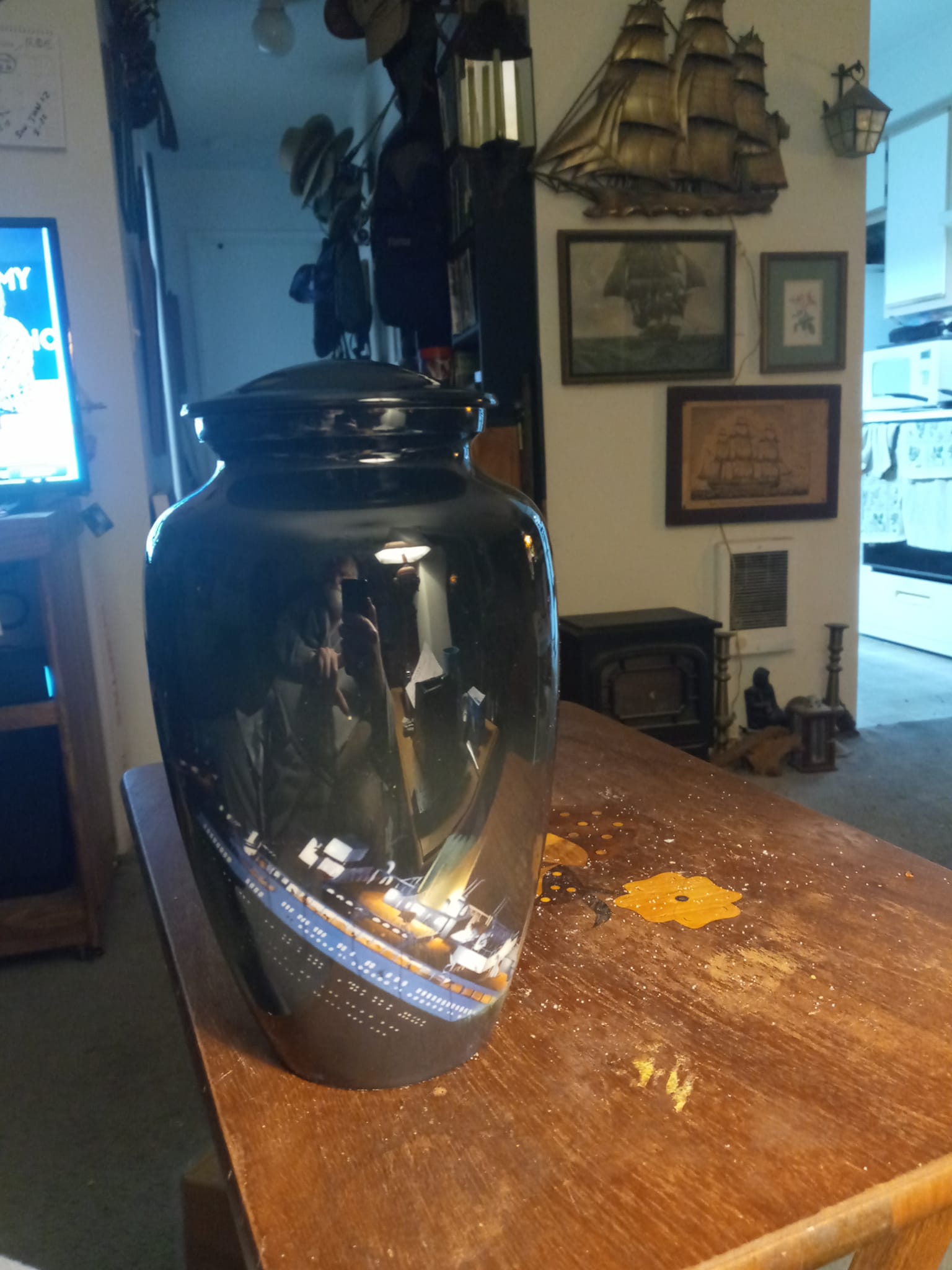
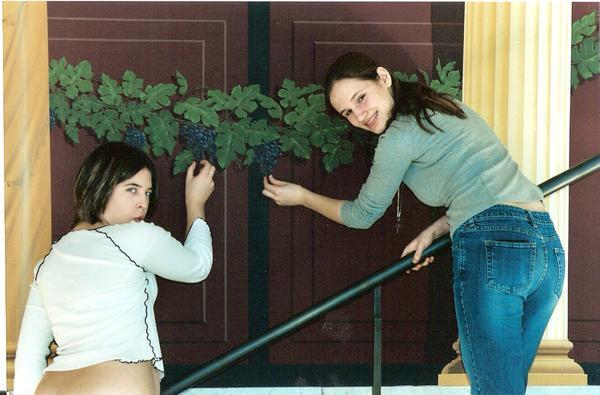
Around four this afternnon, I got a box containing the urn for Drew Benton’s ashes. It was not what I ordered. It was black, with an object I could not identify on it. Then I saw it was the Titanic! WTF?
What potence has this brought. On the news I see homes on fire. Three hours later I see the Getty Villa is at the edge of the INFERNO that may burn a large area of residential LA.
JRP
EXTRA!
EVACUATION ORDER ISSUED FOR NORTHERN SANTA MONICA
Nancy Kirkwood Crane Davis was also the daughter of mystery writer Frances Crane, a fact uncovered by Tom and Enid Schantz while researching Davis’s life for their introduction to the Rue Morgue Press editions of his books. If you’re interested in learning more about Norbert Davis and his life, you’re strongly urged to read it. It’s excellent and definitely worth your while.

NORBERT DAVIS (1909-1949): A BIBLIOGRAPHY –
by Steve Lewis, Bill Pronzini & Victor A. Berch
NOVELS & COLLECTIONS –
The Mouse In The Mountain. Morrow, hc, 1943. [Doan and Carstairs.]
McLelland, Canada, hc, 1943.
Grosset & Dunlap, hc reprint, 1944.
Cherry Tree #190, UK pb, 1944, as Rendezvous with Fear.
Handi-Books #40, pb, 1945, as Dead Little Rich Girl.
Rue Morgue Press, trade pb, 2001.
If there was a bloodline of Jesus – was it located in southern France or the deserts of Qumran in modern Israel? Did Jesus die on the cross or did he somehow survive to raise a family? There are legends that Mary Magdalene fled to France after the crucifixion and carried out missionary work across Provence. There is a sanctuary at Sainte-Baume, long thought to be a cave where Mary lived and prayed.
Anniversary of Getty Villa
Posted on June 16, 2024 by Royal Rosamond Press
Today is Father’s Day. I’m sure my niece, Drew Benton, misses her father, Garth Benton, who did the murals for the Getty Villa that is celebrating 50th. birthday. Two days ago I discovered John Moffitt helped my brother-in-law with the Getty murals, and many murals they did for Movie Stars.
John Presco
50 Years of the Getty Villa Museum
As it evolved from a private estate to a vibrant hub for antiquity, the Getty Villa Museum became a beloved Los Angeles institution
Topics


Yesterday, The Belmont Soda Works – rose from the ashes like a Phoenix Bird. That a Senator refers to Jason Bourne and “spy movies and books” is a REAL COUP for me, and a testimonial to my amazing research, and this blog. My Man In The Field, Spooky Noodles, suggested more than once, important people -must be reading Royal Rosamond Press! Four of my characters suffer from a Generalized Anxiety Disorder. Victoria Rosemond Bond, does sculptures to deal with her GAD at BAD. I wanted my spies to be VERY HUMAN, for in looking within for what makes us tick, they have boosted their powers of observation.
WE ARE FLAWED
We own….”sticky thoughts”?
John Presco
President: Royal Rosamond Press; Belmont Soda Works; California Barrel Company
Belmont Soda Works California – A School for Spies and Propaganda Making
Belmont School of Espionage – Belmont Soda Works California
Belmont Soda Works – Reborn
Posted on April 13, 2021 by Royal Rosamond Press

Capturing Beauty
by
John Presco
Capturing The Beautiful Hill
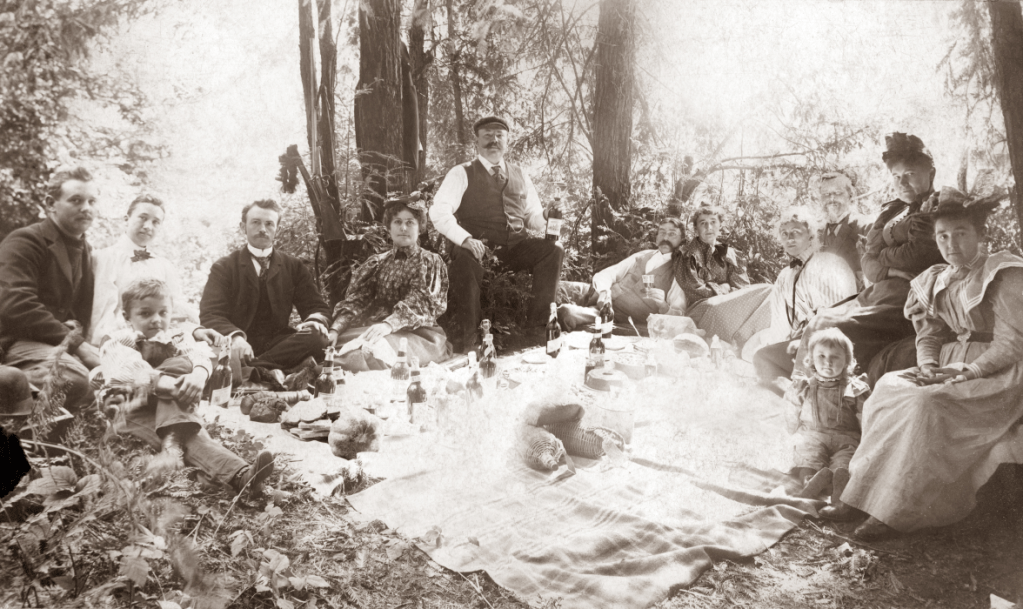
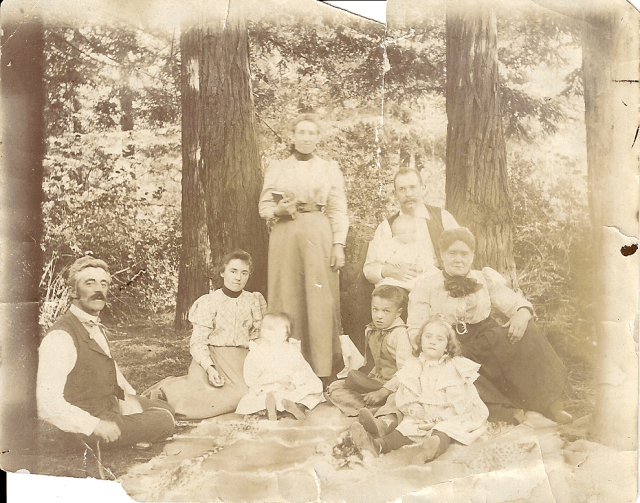
At 1:38 A.M. on April 13, 2021, I founded the new Belmont Soda Works. An hour later I found a branch of the Janke family, born of Elizabeth Janke, the daughter of Carl. Her children and grandchild lived and worked in many places in Belmont. I also found proof that my great, great, grandfather brought six portable houses around the Cape and erected them in Belmont, a city that means ‘Beautiful Hill’. This makes Janke a premiere pioneer builder in the Bay Area, and the owner of one of California’s first Theme Parks. Cark and his family are business peers of Walt Disney. I also found the copyrighted post of my families achievements, that precedes all copyrights by anyone who had written about this very important and historic family. Elizabeth and Melba Broderick, my father’s mother, look alike. This post remains untouched, and contains the double posting of images that was occurring at this time, until I learned how to fix this. I will now make the Janke family the premiere family genealogy. I believe the photos above were taken in Janke’s Park. This is one of the or the First Families of the Bay Area. Anyone interested in manufacturing a soda, please e-mail me.
JohnPresco@belmontsodaworks.com
History of the San Francisco Bay Region: History and Biography – Bailey Millard – Google Books
.




History of the San Francisco Bay Region: History and Biography – Bailey Millard – Google Books
The Life Summary of Eva Adelia
When Eva Adelia Johnson was born on 27 February 1880, in California, United States, her father, Amassa Parker Johnson, was 43 and her mother, Elizabeth Dorothy Janke, was 35. She married Lewis Charles Vannier on 19 October 1901, in Marin, California, United States. They were the parents of at least 1 son and 2 daughters. She lived in Judicial Township 2, San Mateo, California, United States in 1940 and Belmont, San Mateo, California, United States in 1969. She died on 21 December 1974, in San Mateo, California, United States, at the age of 94.
Vol6.pdf (belmonthistoricalsociety.com)
Black Mask Authors
Posted on July 28, 2013 by Royal Rosamond Press


This extremely rare photo of the first west coast Black Mask get-together on January 11, 1936 captures possibly the only meeting of several of these authors.
Pictured in the back row, from left to right, are Raymond J. Moffatt, Raymond Chandler, Herbert Stinson, Dwight Babcock, Eric Taylor and Dashiell Hammett. In the front row, again from left to right, are Arthur Barnes (?), John K. Butler, W. T. Ballard, Horace McCoy and Norbert Davis.
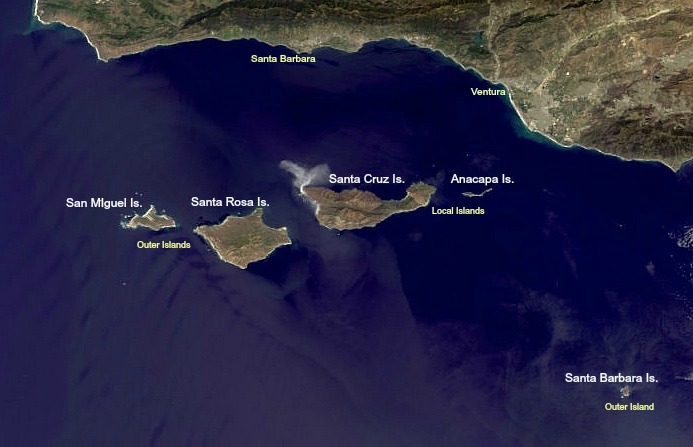
Rosemary told me her father, Royal Rosamond, used to sail to the Channel Islands and camp with his friend, Dashiell Hammett who is seen standing on the right in the photo above.
Aunt Lillian told me she would fall asleep listening to Royal and Erle Stanley Gardner on the typewriter in the living room. Royal was Gardner’s teacher and a member of the Black Mask. I believe I can almost recoginize Black Mask authors under the tree on Santa Cruz Island sitting under a tree with my grandmother, Mary Magdalene Rosamond, who does not look very happy as she embraces a black dog. Who is that woman? Is she a writer? She looks a bit crazed, as does the guy holding a gun. Is Mary hearing some far-out and weird ideas around the campfire?
When I was fifteen Rosemary showed me about six magazines wherein her father’s stories appeared. There were several mysteries. I am going to send the camping photo to some experts. That looks like Raymond Chandler in front of the tent. Is he the guy packing heat?
Hammett wrote the Maltese Falcon that begins with a story about the Knight Templars. Was this a tale passed around the campfire on Santa Cruz Island?
Jon Presco
Copyright 2013
Stuttmeister-Janke Wedding at Ralston Hall
Posted on September 9, 2011 by Royal Rosamond Press


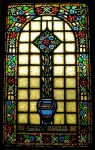
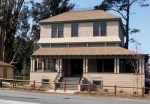


This morning I opened an email from my kin, Murray Oltman, and read the proof of what I have been saying for over ten years, being, Augusta Stuttmeister, the beloved wife of William Oltman Stuttmeister, is kin to Carl Arugusta Janke the co-founder, if not sole founder of the City of Belmont California.
William August Janke, native of Hamburg, Germany, born Dec. 25, 1842, died Nov. 22, 1902, son of Carl August & Dorette Catherine Janke.
Carl Janke came to San Francisco in 1848, one year before the Gold Rush. According to an article in the DAR, he brought six portable houses around the Cape and erected them in Belmont for gold miners who had struck it rich. As fate would have it, William Ralston ‘The Man Who Built San Francisco’ and his partner, lived in Belmont in a house that still stands, called Ralston Hall. I believe this is one of Janke’s homes that Coun Leonetto Cipriani purchased, and added on to. This house had 5,000 screws in it according to one (lost) article I read. Another lost article said these homes were manufactured in Mass. then shipped to California. I suspect two of these homes are found on Dolores Street in the Mission. One article said one house was moved a distance from the Tanforan ranch. The name Tanforan may have been the name of the Theme Park that Janke built in Belmont, perhaps the first in California. It also might be Turnverein, the German gymnastic clubs of the Forty-Eighters. There is much evidence the Stuttmeisters were members of the Turner Societies of Free-thinkers.
What is truly astounding, is that Sir Thomas Hesketh married Florence Sharon at Ralston Hall, and Florence Breckenridge married their son. Florence descends from John Witherspoon,and thus is kin to the Jessie Benton Fremont, thus the Presco family, when Christine Rosamond Presco married Garth Benton.
This is truly a Rags to Riches story. Christine and I used to take walks in Piedmont where the Sharon family lived. The Hesketh family are in the Peereage.
Then there is the Oddfellow gathering in Belmont that may have been staged by William Ralston. The Oddfellows were forming a union with the Freemasons and holding Knights Templar titles. Was the Stuttmeister-Janke union a Masonic-Odfellow marriage? If so, my family owns all those legends that Dan Brown gathered into his basket to create a money-making work of fiction.
When my daughter gets married, I will do all that is humanly and divinely possible to see that she ties the night at Ralston Hall, because; “All’s wll, that ends well!”
Jon Presco
Copyright 2011
Florence Louise Breckinridge was born in November 1881 at California, U.S.A..2 She married Thomas Fermor-Hesketh, 1st Baron Hesketh, son of Sir Thomas George Fermor-Hesketh, 7th Bt. and Florence Emily Sharon, on 9 September 1909 at British Embassy Church, Paris, France.
1888: From the Daily Alta, an article on the marriage of Dr. William O.
Stuttmeister and Augusta D. Janke.
Daily Alta California, Volume 42, Number 14175, 24 June 1888
STUTTMEISTER-JANKE.
One of the most enjoyable weddings of the past week took place at
Belmont, Wednesday morning last, the contracting parties being Miss
Augusta Janke, daughter of Mr. and Mrs. August Janke of Belmont,
and Dr. Wm. Stuttmeister of San Francisco. The house was
handsomely decorated with a rich profusion of ferns and flowers, and
at the appointed hour was filled with the relatives and intimate friends
of the contracting parties. At 11 o’clock the wedding march was played
and the bridal party entered the parlor. The bride was attended by Miss
Alice Stuttmeister, a sister of the groom, and Miss Minnie Janke, a
sister of the bride, as bridesmaids, and Dr. Muldownado and Wm.
Janke, a cousin of the bride, were groomsmen. The Rev. A. L. Brewer
of San Mateo performed the beautiful and impressive ceremony under
an arch composed of flowers and greens very prettily arranged, after
which the guests pressed forward and offered their congratulations.
The bride was attired in a very pretty and becoming costume of the
crushed strawberry shade, and wore a corsage bouquet of orange
blossoms. She carried a handsome bouquet of white flowers. After the
guests had paid their compliments the bride and groom led the way to
the dining-room, where the wedding dinner was served and the health
of the newly married pair was pledged. The feast over, the guests
joined in the dance, and the hours sped right merrily, interspersed with
music singing and recitations, until the bride and groom took their
departure amid a shower of rice and good wishes. Many beautiful
presents were received. Dr. and Mrs. Stuttmeister left Thursday
morning for Santa Cruz and Monterey, where they will spend the
honeymoon. On their return they will make their home in Belmont.
1911: Dr. Willian O. Stuttmeister was practicing dentistry in Redwood
City, CA. (Reference: University of California, Directory of Graduates,
1864-1910, page 133).
Records from Tombstones in Laurel Hill Cemetery, 1853-1927 – Janke
– Stuttmeister
Mina Maria Janke, daughter of William A, & Cornelia Janke, born
February 2, 1869, died March 1902.
William August Janke, native of Hamburg, Germany, born Dec. 25,
1642, died Nov. 22, 1902, son of Carl August & Dorette Catherine
Janke.
Frederick William R. Stuttmeister, native of Berlin, Germany, born
1612, died January 29, 1877.
Mrs. Matilda Stuttmeister, wife of Frederick W.R. Stuttmeister, born
1829, died March 17, 1875, native of New York.
Victor Rudolph Stuttmeister, son of Frederick W.R. & Matilda
Stuttmeister, born May 29, 1846, died Jan. 19, 1893, native of New
York.
http://www.ebooksread.com/authors-eng/daughters-of-the-americanrevolution-
california-s/records-from-tombstones-in-laurel-hill-cemetery-
1853-1927-gua/page-6-records-from-tombstones-in-laurel-hillcemetery-
1853-1927-gua.shtml
http://www.ralstonhall.com/tour/video.html
John Witherspoon BRECKENRIDGE
The great grandmother of John Witherspoon Owen Breckenridge, is the Ann Witherspoon, the daughter of Signer, John Witherspoon. His great grandfather, was John Breckenridge, Attorney General of the United States in the Cabinet of President Thomas Jefferson. I lived with Dottie Witherspoon in Boston, and met many Witherspoons in South Carolina who are kin to the actress, Reese Witherspoon.
I have been exchanging e-mails with a member of the Sharon family about revising the Sharon Family reunion at the Palace Hotel in San Francisco. I was invited to go to Europe with a member of the Hesketh-Fermor family, who are kin to my niece, Drew Benton, and thus the Prescos. We are all kin to Lloyd Tevis the President of Welles Fargo Bank.
I have put on pause my homework of family relations. I do know some of the California Sharons and I am familiar with the reunion that use to take place in San Francisco, but I have been swamped. I would love to refresh the reunion for our family. I am not familiar with the names on your email yet. I don’t know if you sent email to Philip or had misplaced my name. I will start more family connections with the Sharon clan soon.
Patrick Sharon
Hi Jon- Get ready- much info coming now- please go ASAP to tatler.com- June issue page 102- big article on the new owner of Easton Neston- Leon Max- I’m headed there with James Baring and Bob and Joanne Fermor tomorrow.
Anne
Florence Louise Breckinridge1
F, #152844, b. November 1881, d. 4 March 1956
Florence Louise Breckinridge|b. Nov 1881\nd. 4 Mar 1956|p15285.htm#i152844|John Witherspoon Breckinridge|b. 22 Dec 1850\nd. 9 May 1892|p15285.htm#i152845|Florence Louise Tevis|b. 12 Oct 1858\nd. 19 Dec 1938|p15285.htm#i152846|General John C. Breckinridge|b. 16 Jan 1821\nd. 17 May 1875|p15287.htm#i152867|Mary C. Burch|b. 16 Aug 1826\nd. 8 Oct 1907|p15312.htm#i153115|Lloyd Tevis|b. 20 Mar 1824\nd. 24 Jul 1899|p15285.htm#i152847|Susan G. Sanders|b. 9 Feb 1831\nd. 29 Apr 1902|p15312.htm#i153112|
Last Edited=13 Feb 2010
Florence Louise Breckinridge was born in November 1881 at California, U.S.A..2 She married Thomas Fermor-Hesketh, 1st Baron Hesketh, son of Sir Thomas George Fermor-Hesketh, 7th Bt. and Florence Emily Sharon, on 9 September 1909 at British Embassy Church, Paris, France.1 She died on 4 March 1956 at age 74 at Easton Neston, Towcester, Northamptonshire, England.3,4 She was buried at St. Mary’s Church, Easton Neston, Northamptonshire, England.4
She was the daughter of John Witherspoon Breckinridge and Florence Louise Tevis.1 From 9 September 1909, her married name became Fermor-Hesketh.1 As a result of her marriage, Florence Louise Breckinridge was styled as Baroness Hesketh on 25 January 1935.
Children of Florence Louise Breckinridge and Thomas Fermor-Hesketh, 1st Baron Hesketh
Lt. Hon. Thomas Sharon Fermor-Hesketh1 b. 7 Sep 1910, d. 21 Jun 1937
Hon. Louise Fermor-Hesketh+5 b. 15 Dec 1911, d. 1994
Hon. Flora Breckinridge Fermor-Hesketh+1 b. 23 Feb 1913, d. 15 Sep 1970
Major Frederick Fermor-Hesketh, 2nd Baron Hesketh+1 b. 8 Apr 1916, d. 10 Jun 1955
Major Hon. John Breckinridge Fermor-Hesketh5 b. 7 Mar 1917, d. 8 Nov 1961
John Witherspoon Breckinridge1
M, #152845, b. 22 December 1850, d. 9 May 1892
John Witherspoon Breckinridge|b. 22 Dec 1850\nd. 9 May 1892|p15285.htm#i152845|General John Cabell Breckinridge|b. 16 Jan 1821\nd. 17 May 1875|p15287.htm#i152867|Mary Cyrene Burch|b. 16 Aug 1826\nd. 8 Oct 1907|p15312.htm#i153115|Hon. Joseph C. Breckinridge|b. 24 Jul 1788\nd. 1 Sep 1823|p15310.htm#i153094|Mary S. C. Smith|b. 30 Aug 1787|p692.htm#i6913|Clifton R. Burch|b. 1792\nd. 28 Dec 1834|p15315.htm#i153141|Alethia Villey|b. 18 Nov 1793\nd. 4 Sep 1838|p15315.htm#i153142|
Last Edited=3 Dec 2006
John Witherspoon Breckinridge was born on 22 December 1850 at Kentucky, U.S.A..3 He married, firstly, Florence Louise Tevis, daughter of Lloyd Tevis and Susan Gano Sanders.3 He and Florence Louise Tevis were divorced before 1881.3,4 He married, secondly, Harriett Turner, daughter of W. C. Turner, after 1881.3 He died on 9 May 1892 at age 41 at Merced County, California, U.S.A..3 He was buried at Lexington Cemetery, Lexington, Fayette County, Kentucky, U.S.A..3
John Witherspoon Breckinridge also went by the nick-name of Owen.4 He was the son of General John Cabell Breckinridge and Mary Cyrene Burch.2,3 He held the office of Member of the California State Assembly between 1884 and 1885.5,4 He lived between 1884 and 1885 at Merced County, California, U.S.A..4 He lived at San Francisco, California, U.S.A..1
Children of John Witherspoon Breckinridge and Florence Louise Tevis
Lloyd Tevis Breckinridge3 b. 1878, d. 1901
John Cabell Breckinridge+3 b. 1879, d. a Mar 1914
Florence Louise Breckinridge+1 b. Nov 1881, d. 4 Mar 1956
Hon. Joseph Cabell Breckinridge1
M, #153094, b. 24 July 1788, d. 1 September 1823
Hon. Joseph Cabell Breckinridge|b. 24 Jul 1788\nd. 1 Sep 1823|p15310.htm#i153094|Hon. John Breckinridge|b. 2 Dec 1760\nd. 14 Dec 1806|p15310.htm#i153095|Mary Hopkins Cabell|b. 22 Feb 1769\nd. 26 Mar 1858|p15314.htm#i153135|Robert Breckenridge|b. c 1720\nd. a 16 Aug 1772|p15313.htm#i153121|Letitia Preston|b. Jul 1728\nd. Mar 1797|p15314.htm#i153131|Colonel Joseph Cabell|b. 19 Sep 1732\nd. 1 Mar 1798|p15314.htm#i153136|Mary Hopkins|b. Jan 1735\nd. 12 Jul 1811|p15314.htm#i153138|
Last Edited=16 Aug 2005
Hon. Joseph Cabell Breckinridge was born on 24 July 1788 at Albemarle County, Virginia, U.S.A..2 He married Mary Stanhope Clay Smith, daughter of Reverend Samuel Stanhope Smith and Ann Witherspoon, on 11 May 1811. He died on 1 September 1823 at age 35 at Frankfort, Franklin County, Kentucky, U.S.A., from an epidemic.2
He was the son of Hon. John Breckinridge and Mary Hopkins Cabell.1,2
Child of Hon. Joseph Cabell Breckinridge and Mary Stanhope Clay Smith
General John Cabell Breckinridge+1 b. 16 Jan 1821, d. 17 May 1875
http://en.wikipedia.org/wiki/Benton-Brown-Fremont-Clay-McDowell_family
The Benton-Brown-Fremont-Clay-McDowell family is a family of politicians from the United States. Below is a list of members:
John Brown (1757-1837), Virginia State Senator 1783-1788, Delegate to the Continental Congress from Virginia 1787-1788, U.S. Representative from Virginia 1789-1792, U.S. Senator from Kentucky 1792-1805. Brother of James Brown.
John Breckinridge (1760-1806), candidate for U.S. Senate from Kentucky 1794, Attorney General of Kentucky 1795-1797, Kentucky State Representative 1798-1800, U.S. Senator from Kentucky 1801-1805. Cousin of John Brown and James Brown.
James Breckinridge (1763-1833), Virginia House Delegate 1789-1802 1806-1808 1819-1821 1823-1824, U.S. Representative from Virginia 1809-1817. Cousin of John Brown and James Brown.
Francis Preston (1765-1836), Virginia House Delegate 1788-1789 1812-1814, U.S. Representative from Virginia 1793-1797, Virginia State Senator 1816-1820. Cousin of John Brown and James Brown.
James Brown (1766-1835), Secretary of the Louisiana Territory, U.S. District Attorney of Louisiana Territory, U.S. Senator from Louisiana 1813-1817 1819-1823, U.S. Minister to France 1823-1829. Brother of John Brown.
Henry Clay (1777-1852), U.S. Senator from Kentucky 1806-1807 1810-1811 1831-1842 1849-1852, U.S. Representative from Kentucky 1811-1814 1815-1821 1823-1825, Speaker of the U.S. House of Representative 1811-1813 1813-1814 1815-1817 1817-1819 1819-1820 1823-1825, candidate for President of the United States 1824 1832 1844, U.S. Secretary of State 1825-1829. Brother-in-law of James Brown.
Thomas Hart Benton (1782-1858), U.S. Senator from Missouri 1821-1851, U.S. Representative from Missouri 1853-1855. Cousin-in-law of James Brown and Henry Clay.
Belmont park has history of sun, libations, mystery and disasters
October 22, 2001, 12:00 AM By Paul D. BuchananDaily Journal Feature Writer
The most popular daytime excursion destination on the Peninsula during the late 19th century once occupied the area in Belmont now known as Twin Pines Park. The Belmont Picnic Grounds proved so popular, in fact, that scores of picnickers would travel regularly from San Jose and San Francisco for sun, fresh air and libations.
The size of the crowds and the fondness for libation, however, eventually led to the attraction’s demise.
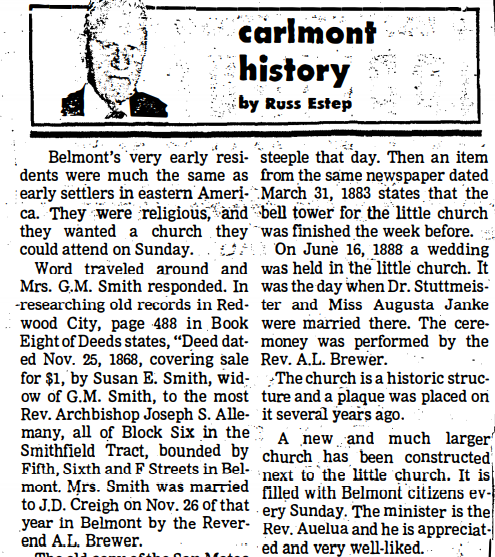
According to Belmont Historical Society records, Dorothea and Carl August Janke sailed around Cape Horn from Hamburg, Germany, in 1848. After landing in San Francisco, they settled in Belmont in 1860. Industrious and entrepreneurial, Carl Janke purchased land in the vicinity of 6th and Ralston. Janke set out to create a site for leisure activities, modeled after the biergarten in his native Hamburg. His creation became Belmont Park.
Janke’s park offered all the necessary provisions for an outdoor holiday, which included a dance pavilion to accommodate 300 large glassless windows, a conical roof and a dance floor situated around a large spreading tree. The pavilion was also equipped with a bar, an ice cream parlor and a restaurant.
Outside the pavilion, the park provided a carousel for children, footpath bridges crossing the meandering of creeks, and a shooting gallery, with picnic benches and lathe houses situated about the shady grounds. Brass bands performing from bandstands could be heard all around the woodland.
In 1876, Janke opened Belmont Soda Works, located north of Ralston along Old County Road. Janke’s sons, Gus and Charlie, operated the soda works, which offered a variety of sarsaparillas. Within two years, the Soda Works produced more than 1,000 bottles a month — a large percentage of which would be sold at Belmont Park. Between the Soda Works and the several bars situated in and around the park, the liquid refreshment flowed abundantly.
Belmont Park became so popular that Southern Pacific Railroad began reserving exclusive trains for the sojourn to Belmont. Several local organizations and fraternities used the grounds for the celebrations, such as the Germania Rifles, the Apollo Verein, the Blue Bells, the Bunker Hill Association, the Ignatian Literary Society, the Hibernians and the Purple Violets. Races – foot, three-legged, and pony cart – as well as other amusements became commonplace at the gatherings.
The same year the Belmont Soda Works opened, the Independent Order of Odd Fellows (I.O.O.F.) hired 75 Southern Pacific railroad cars to transport 7,000 of its members from San Francisco to Belmont Park. There, 1,000 other members met them there, making the largest picnic ever held at Belmont Park.
With all the alcohol, dancing and overheated bodies gathered in a relatively small place, trouble seemed destined to follow.
In 1880, rival gangs started a small riot at Belmont Park, leaving one person dead and several injured. On another occasion, a young girl named Anne Mooney mysteriously disappeared. Authorities assumed she had been kidnaped, but a suspect was never identified. The fate of Anne Mooney remains a mystery.
By the turn of the century, the weekly treks to Belmont had become something of a nuisance. The drunken tussling would often begin at the on-board bars, continuing and intensifying by the time the passengers reached Belmont. The small communities through which the trains rumbled complained about the outsiders cavorting and otherwise disturbing their peaceful Peninsula neighborhoods. Southern Pacific, tired of the rowdies and the damage inflicted to the railroad cars, finally stopped operating the excursions in 1900.
In her book “Heritage of the Wooded Hills,” Ria Elena MacCrisken writes, “… if the railroad looked down its nose at the San Francisco picnickers, the little town of Belmont welcomed them with open arms. These early-day tourists brought lively times to Belmont and revenue to its stores…” Unfortunately for the Jankes , when the train stopped bringing carloads of revelers, much of Belmont Park’s clientele disappeared.
By 1910, the property had sold to George Center, the director of the Bank of California, who built a home on the property. Later Dr. Norbert Gottbrath opened a sanitarium called “Twin Pines,” which operated until March of 1972. The City of Belmont took over the property, dedicating Twin Pines Park in June of 1973.
Odd Fellowship was established in California in 1849 with the formation of San Francisco Lodge No. 1 in San Francisco. Odd Fellowship spread throughout the state, particularly to the gold rush towns such as Marysville, Rough and Ready, Grass Valley, Whiskey Flat, Hangtown (a.k.a. Placerville), Comptonville, San Juan, Downieville, etc. The Grand Lodge of California was established in 1853, making it the first Grand Lodge of Odd Fellows established on the Pacific. By 1856, the jurisdiction of California consisted of sixty lodges with a membership of more than two thousand four hundred.
Early in the history of California, the two largest fraternal orders, the Odd Fellows and the Freemasons embarked on a unique cooperative project to benefit the State. The two fraternal orders created the first hospital in the new State of California in 1850 following the great flood of the winter of 1849-1850. It was called the Odd Fellows and Masons Hospital, and admitted and cared for any patient regardless of affiliation, making no distinction between members and non-members. All funds for operating the hospital were to be contributed only by the members of the two fraternal organizations.
In 1869, California hosted the Supreme Lodge session in San Francisco (opening September 20, 1869), an event memorable for two reasons: the Supreme Lodge officers became the first organized body to cross the continent to the Pacific by the newly completed transcontinental Rail Road; and the financial panic known as “Black Friday” occurred during the sessions. Delegates traveled free, thanks to the generosity of Templar Lodge No. 17, San Francisco: A Templar Lodge member, William Chapman Ralston (president of the California Bank) underwrote the $10,000 pledged by Templar Lodge. Subsequent to the 1869 session, California was host to Supreme Lodge sessions in 1888, 1904, 1915, 1949, 1960 and 1994. In 1871, Past Grand Master of California Odd Fellows, John F. Morse succeeded in establishing the Order in Germany and Switzerland. For the pleasure of members and their families, the Odd Fellows maintained several outdoor resort areas in California, including the Odd Fellows Beach and Park on the Russian River near Healdsburg, CA
Belmont is a city in San Mateo County, California, United States. It is in the San Francisco Bay Area, located half-way down the San Francisco Peninsula between San Mateo and San Carlos. It was originally part of the Rancho de las Pulgas, for which one of its main roads, the Alameda de las Pulgas, is named. The town was incorporated in 1926. The population was 25,835 at the 2010 census.
Ralston Hall is a historic landmark built by Bank of California founder, William Chapman Ralston, on the campus of Notre Dame de Namur University. It was built around a villa formerly owned by Count Cipriani, an Italian aristocrat. The locally famous “Waterdog Lake” is also located in the foothills and highlands of Belmont.
One of two surviving structures from the Panama-Pacific International Exposition is on Belmont Avenue (the other is the Palace of Fine Arts in San Francisco). The building was brought to Belmont by E.D. Swift shortly after the exposition closed in 1915. Swift owned a large amount of land in the area.
Carlmont High School and Ralston Middle School are located in Belmont and are both Distinguished California Schools.
Belmont has attracted national attention for a smoking ordinance passed in January 2009 which bans smoking in all businesses and multi-story apartments and condominiums; the ordinance has been described as one of the strictest in the nation.
Ralston Hall Mansion located in Belmont, California, was the country house of William Chapman Ralston, a San Francisco businessman, founder of the Bank of California, and financier of the Comstock Lode. It is an opulent Italianate Villa, modified with touches of Steamboat Gothic and Victorian details. It is a California Registered Landmark and is designated a National Historic Landmark[4]. It is now part of Notre Dame de Namur University.
Contents
[hide]
1 The mansion
2 Uses of the mansion
3 References
4 External links
The mansion
Ralston Hall Mansion is situated on the campus of Notre Dame de Namur University, on the San Francisco Peninsula. The mansion has been built around the villa of Count Leonetto Cipriani, former owner of the Estate. It took three years to build and was completed in 1867, when San Francisco’s leaders and first citizens had large summer homes on the Peninsula and was an integral part of San Francisco high society. Architect John Painter Gaynor, who later worked with Ralston on the Palace Hotel in San Francisco is thought to have worked on it. Several of the design elements of Ralston Hall Mansion were copied in the design of the Palace.
A history of San Francisco speaks of the palatial grandeur of Ralston Hall: “In a domed wing was the oval ballroom. Its walls were mirrored, and from the frescoed ceiling hung a great crystal chandelier whose reflected lights and sparkle filled the room. I have never seen a more effective setting for a ball.”
The Hall is a four-floor, 55,000 square foot (5,000 m²) mansion, with a stately dining room, a mirrored ballroom in the Versailles tradition, an opera box modelled after the Opéra Garnier in Paris, a grand staircase, 23 crystal chandeliers, and in-laid wood floors. Ralston greatly admired the Palace of Versailles and incorporated several of the palace’s elements in his design of the mansion. The mansion has a number of elegant sitting rooms and parlours. The Oriental Music Room has a set of Chinese high-tea chairs and buffets. Ralston Hall houses a collection of antiques accumulated by Ralston, including some valuable Thomas Hill paintings.
The grounds of the mansion contain numerous gardens, a stoney grotto, and a garden of 150-year-old bamboo trees.
Uses of the mansion
After Ralston’s death, the estate passed to his former business partner, United States Senator from Nevada William Sharon, whose family lived in the house. Sharon’s daughter Flora’s wedding to Englishman Sir Thomas George Fermor-Hesketh, 7th Baronet, of Rufford was one of the last elaborate social events of the time, taking place in the mansion’s ballroom. After Senator Sharon’s death in 1885, the mansion became Radcliffe Hall, a girls’ finishing school. From 1900 to 1922 it was the Gardner Sanitarium.
Since 1922, Ralston Hall has been on the campus Notre Dame de Namur University, formerly the College of Notre Dame. It contains the admissions office and is rented out for society weddings and other occasions.
A few of the notable persons who have been entertained at Ralston Hall include:
President Ulysses S. Grant
Admiral David Farragut
Leland Stanford
Mark Hopkins
http://www.worldmastiffforum.com/post?id=4925767
http://query.nytimes.com/mem/archive-free/pdf?res=F40713F8395B1B7A93C1AB1789D95F448884F9
I’m also trying to find out where Adelaide (Murphy) Breckenridge-Roberts is buried. John Cabell Breckenridge, Sr., born 1879 was her 1st spouse. He was the son of Louise (Tevis) and John Witherspoon “Owen” Breckenridge. Adelaide was living in Cowfold, England in 1954. If there is anything in your information about her I would appreciate hearing of it.
Hello Gareth,
Many thanks for the posting. Since my initial query I have located more information for this line.
I have seen photographs of the home at East Neston that you mentioned. It is very beautiful.
The Breckenridges and the Fermor-Hesketh family lines has been very interesting to research.
Does your information show where Florence Louis (Breckenridge) and Thomas Fermor-Hesketh are buried?
Dear Gloria:
Congrats! You’ve hit the big time. The FERMOR-HESKETHs are a still existing line of the British nobility seated at the FERMOUR ancestral home at Easton Neston, Northamptonshire. It is a royal retreat – no visitors allowed. The FERMO(U)Rs trace their lineage back through the royal lines of Europe, starting with Edward I of England and David I of Scotland. They were Earls of Pomfret from the late 1600’s through circa 1867 when the FERMOR male line failed and the title lapsed. Lady Julianna FERMOUR m.
Gov. Thomas PENN, son of Wm. PENN. If you would like additional info please call me
BOMFORD Genealogy
Sir Thomas George FERMOR-HESKETH
(1849 – 1924)
John Witherspoon BRECKENRIDGE
Florence Emily SHARON
(1858 – 1924)
m. 1909
Sir Thomas George FERMOR-HESKETH
Florence Louise BRECKENRIDGE
b. 1881
ch.
d. 1935
bur.
occ.
edu.
rel.
b. 1881
ch.
d. 1956
bur.
occ.
edu.
rel.
Landmark 67
Tanforan Cottage 1
214 Dolores Street Between 15th and 16th Streets
Mission Dolores
Built 1853
This is one of a pair of redwood cottages built by the Tanforan ranching family on land that lay within the 1836 Mexican Grant to Francisco Guerrero. Located only half a block from Mission Dolores, the oldest building in San Francisco, these two cottages are probably the oldest residential buildings in the Mission District.
Landmark 68
Tanforan Cottage 2
220 Dolores Street Between 15th and 16th Streets
Mission Dolores
Built 1854
The following is quoted from Here Today, San Francisco’s Architectural Heritage by Roger Olmsted and T. H. Watkins, published by Chronicle Books in 1969:
Two very old houses that have maintained their original appearance can be seen side-by-side at 220 and 214 Dolores Street. The “Tanforan Cottages,” so called because members of the family of Toribio Tanforan occupied them from 1896 to 1945, are simple frame structures with modified late Classical Revival facades. Though very nearly identical in appearance, they were not constructed at the same time; 214 Dolores is said to have been built a little before 1853, 220 not long after that date. This dating is questionable, though, as the first substantiated date is 1866, when Revilo Wells, owner of 214, had water piped in. There is still a small carriage house behind 220 Dolores – occupied as late as 1940 by one of the Tanforan carriages. The large gardens of these houses have been well-maintained and contain many specimens of turn-of-the-century San Francisco taste in flora.
Since 1995, Tanforan Cottage 2 has been the Richard M. Cohen Residence, a residential care facility for homeless men and women living with disabling HIV or AIDS. For more information, see Dolores Street Community Services.
Sir Thomas George Fermor-Hesketh, 7th Baronet
From Wikipedia, the free encyclopedia
Jump to: navigation, search
Sir Thomas George Fermor-Hesketh, 7th Baronet (9 May 1849 – 19 April 1924) was a British baronet and soldier.
Born Thomas George Hesketh, he was the second son of Sir Thomas Fermor-Hesketh, 5th Baronet, and Lady Anna Maria Isabella Fermor, daughter of William Fermor, 4th Earl of Pomfret. In 1867 he and his father assumed by Royal license the additional surname of Fermor and in 1876 he succeeded his elder brother as seventh Baronet of Rufford.
Fermor-Hesketh gained the rank of Lieutenant in the Rifle Brigade and was also an Honorary Colonel in the service of the 4th Battalion, Liverpool Regiment of Militia. In 1880, Sir Thomas was instrumental in the rescue at sea off the coast of Mexico of a number of citizens of San Francisco. In recognition of this, he was honoured by the city, and at a party in his honour he came to the attention of the San Francisco heiress Florence Emily Sharon (1858–1924). Florence Emily Sharon was the daughter of the Hon. William Sharon (1812–1885), who had made an enormous fortune in the gold, silver, banking and hotel business in California and Nevada. The first United States Senator from Nevada, Sharon was also the wealthiest man in the state. By the early 1880s, his empire was such that he was the largest single tax payer in California. When he died in 1885, he left the bulk of his estate to his daughter Florence Emily Sharon — and this she brought with her to the marriage. When her brother died, the whole of the Senator’s fortune passed to her. The two were married at the Ralston Hall Mansion of Belmont, California, in 1880, and had two sons.
In 1881 he was appointed high Sheriff of Northamptonshire.
Fermor-Hesketh died on April 19, 1924, aged 74, and was succeeded in the baronetcy by his son Thomas, who in 1935 was elevated to the peerage as Baron Hesketh. Lady Fermor-Hesketh died by falling down the stairs at Euston Hall in September of the same year as her husband.
http://belmont-ca.patch.com/articles/belmont-unveils-renovated-emmett-house#video-5343759
Share this:
Secular-Socialist Foundation of Zion
Posted on December 21, 2011 by Royal Rosamond Press
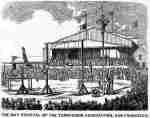
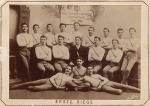
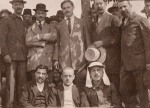


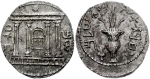
It was radical socialist Jews, who belonged to sports clubs, that founded the state of Israel, and not Rabbis or a Messiah. The only person giving the title ‘Messiah’ was Harry Truman, a Democrat. The group that gets most of the credit is the Israelitische Turnverein, a group of Jewish gymnasts who were expelled from the Berlin Turnverien. My Stuttmeiser, Janke kinfolk were members of the Tunrverein, and were radical Forty-Eighters who are also give credit for the founding of Israel. These Forty-Eighters made up John Fremont’s and Jessie Benton’s bodyguard. The Freemasons are here. Other clubs that followed were named after “Bar Kochba” who was seen as a Messiah until he failed to drive the Romans out of Judea. His name was changed to “Simon bar Kozeba” (Hebrew: בר כוזיבא, “Son of lies” or “Son of deception”).
Whne you add it all up, for some strange reason my kindred are right there at the center of the Zionist controversy that has overcome the Republican Party, all but destroying it. The Zionist Evangelicals – disguised as Patriots – have brought our Democracy to a halt. In order to keep the focus on them, budgets are not going to be passed. Millions will be hurt financially. These religious fanatics use our Federal Taxes like a secular tithe in order to spread their propaganda that backs the Hawks of Israel. The only thing that keeps them hidden in the wings, is they have failed to capture the White House. When they do, the Capitol building that houses the Senate and Congress, will be turned into the Evangelical Vatican. They do these things because they know their cosmology is not tenable, is based on delusions and lies. They are Decietful Parasites looking for a legitimate host. This is why I registered as a Republican two years ago.
Get out of the Republican Party founded by my kindred. Form you own party.
Jon the Nazarite
As early as the 19th century, Jewish sports clubs were founded in Eastern and Central Europe. The first club was the Israelite Gymnastic Association Constantinople (German: Israelitischer Turnverein Konstantinopel) founded in 1895 in Constantinople, Turkey by Jews of German and Austrian extraction who had been rejected from participating in other social sport clubs. Two years later, haGibor was formed in Philipople, Bulgaria and 1898 saw the founding of Bar Kochba Berlin along with Vivó és Athletikai Club in Budapest, Hungary.
Other clubs that followed were named after “Bar Kochba” or Hebrew names such as “Hakoah” or “Hagibor” that symbolized strength and heroism. One of the basic premises behind the founding of these clubs was Jewish Nationalism. The concept was that Jews were not only a religious entity, but also one based on a common historical and social background, having special cultural and psychological concepts that have been preserved to this day, resulting in a strong recognition of collective belonging.
In 1906, the first Jewish gymnastics club was formed in Palestine. Clubs later would spring up in other cities. By 1912, all of them joined the Maccabi Federation of Israel. That same year, the first relations were established between them and their European counterparts, when a decision was taken at the Maccabi Conference in Berlin to begin group trips to Palestine.
Camping On Anacapa by Roy Reuben Rosamond
Posted on August 23, 2013 by Royal Rosamond Press
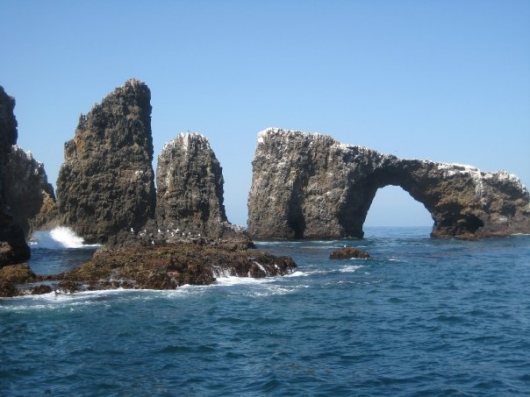
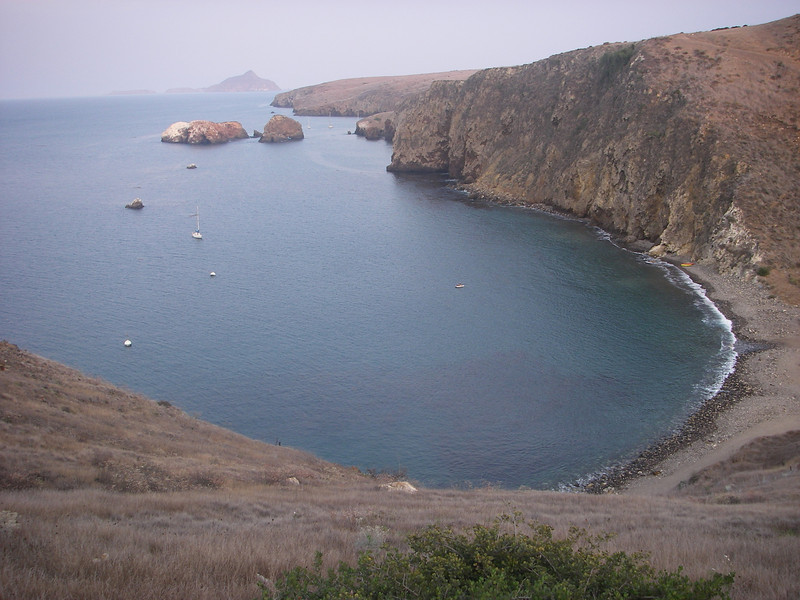


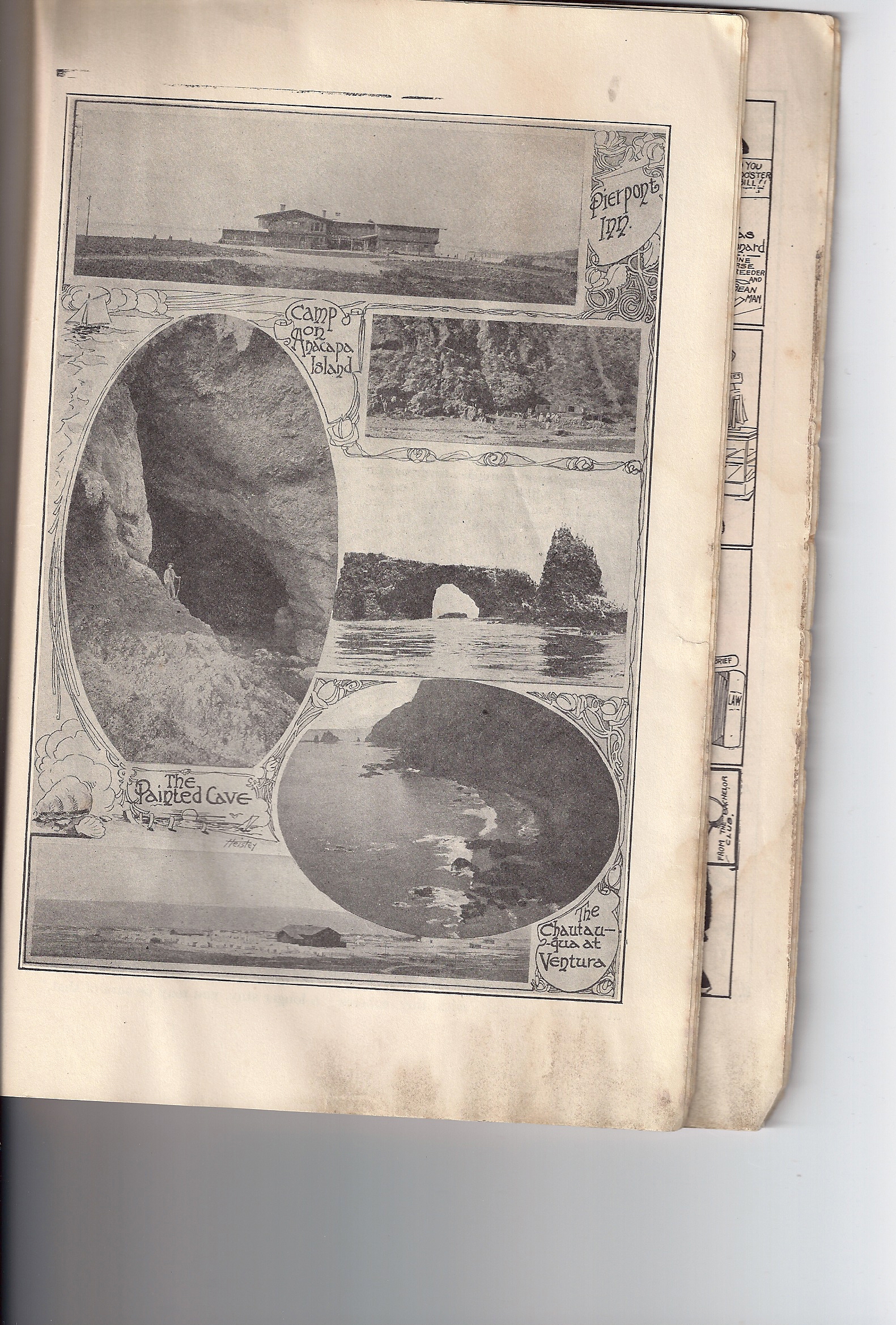
My grandfather, Royal Rosamond, was encouraged to take up writing by Jack and Fanny Cory, tow creative siblings not unlike I and my sister, the world famous artist known as Rosamond.
The Channel Islands remind me of the Isle of Wight where the poets Tennyson and Swineburne lived. It was Royal’s dream to found a retreat for poets. Both of these English poets were inspired by Fair Rosamond.
http://www.jstor.org/stable/2917899
http://www.sacred-texts.com/etc/ml/ml22.htm
Freeing The Shekinah
Posted on February 28, 2024 by Royal Rosamond Press
In 1987 Marilyn bid me to get a reading at the Berkeley Psychic Institute when I was in the Bay Area. I agreed, but was highly skeptical. A young woman began the reading by saying this;
“You own your own creation – You Died!”
In 1988, I went back to the rock I fell on, and climbed the top. It was a scene out of Tommy. You can see the cave I would later see The Tree of Life in, as I composed The Lion of God. My kin, Mother Mary Dominique went to Italy to visit the sacred sites of Saint Francis. She had visions, a relative still had not published. I suspect he is a devout Catholic, and these visions are not the orthodox. Meher Baba entered the real cave of Saint Francis, and had visions.


“The cave we found was an ideal spot and perfectly suited to Baba’s requirements. Herbert had thought out everything with such care that there was nothing left to be desired. Herbert is always very meticulous and careful in all he undertakes. The light was beginning to go a little as we entered the woods. It was just after sunset. I remember the birds and their song dying away gradually.
We settled Baba in and he told us that no one must look at him and, above all, not to touch him.
“It was arranged that Herbert and Chanji were to keep watch outside the cave during the night, to be relieved by Kaka and myself at 9 o’clock the next morning. Baba said that Kaka and I were to go to mass at 7 A.M. the next morning and then we were to kiss the Tomb of St. Francis. We bade them goodnight and found our intricate way out of the woods.
“After mass we shouldered our rucksacks and toiled up the streets through Assisi to the hills of Monte Subasio. As we got out of town, it began to get warmer and warmer.
“Poor Kaka was laden down, and not in such good training as I, so we had to stop from time to time for him to rest and get his breath and cool off. At last we arrived, a little late —about 9:15, and we were glad to reach the cool shade of the wood where we found Herbert and Chanji waiting for as after a wakeful night.
“Nothing had transpired and there had been no interruptions of the calm and peace which pervaded the woods. We settled down to our vigil outside the cave. Herbert and Chanji returned to Assisi to rest.
“The sun rose higher, but we were well shaded from the heat by the trees. An intense calm was everywhere, but the woods were alive with birds whose song was deafening. As if in memory of St. Francis, they seemed to throng around us. Butterflies were often near; several lit on our hands and bodies.
“Gradually it grew warmer, and even in the deep shade, one felt the heat of midsummer.
“Towards midday I heard sounds from inside the cave. Forgetting Baba’s instructions about not looking at him, I saw him stand up with his eyes shut and face the sun. He made strange noises. Not daring to look again, I lay quiet.
“At one o’clock he clapped his hands. We pulled away the branches from the entrance. Taking the board he spelt out directions, telling Kaka to go to Assisi and ask Herbert and Chanji to be with him at 4:30, but that I was to call him there.
“Baba came out of the cave but told us not to come near him or touch him. He walked about alone in the woods for half-an-hour and then went into the cave again.
Spiritual Work With Saint Francis
Posted on June 17, 2019 by Royal Rosamond Press
Saint Francis and The Perfect Master
Posted on December 24, 2014by Royal Rosamond Press

Old Highway Route 399
Posted on November 10, 2015 by Royal Rosamond Press

My mother Rosemary told me her mother, Mary Magdalene Rosamond wanted to see me before she died. I suspected she was going to anoint me – her favorite grandchild – and did not see her. Aunt Lillian told m she was close with the Theosophical Society in Ojai, where her brother lived. Mary and I lived together on Greenville in Westwood when I was seven. A woman came to meet me.
I moved in with The Loading Zone. James Taylor found a large Victorian in Oakland. I lived in the attic where my brother-in-law came. The woman with him said;
“There’s a gold aura around that man!”
When I was twenty, James was leaving books on the Indian religion. I wanted to go to India. James put up a poster of Baba, and I saw how he suffered. I used to beat my head against the wall for hours when I was two. Rick Chapman and I have much information to share.
Rena danced for the Royal Ballet and taught modern dancing in Bozeman.
John
Mother Mary Dominica Wieneke
Posted on February 5, 2014 by Royal Rosamond Press
Here lies the hoarded love the key
To All the treasure that shall be
Come fated heart the gift to take
And smite the sleeping world awake.”
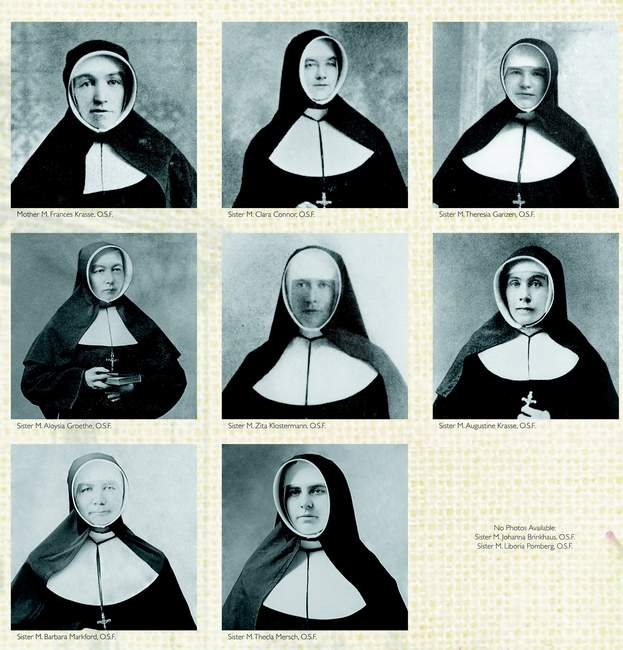
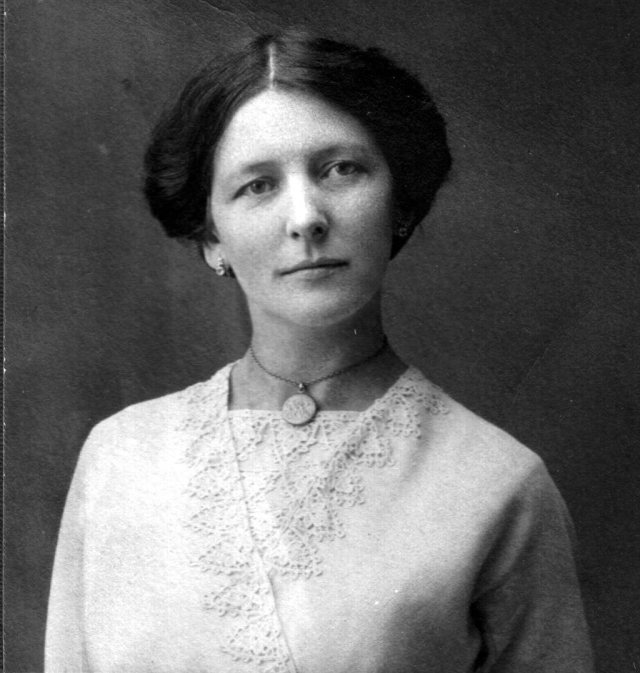
Here is a video that contains a photo of Mother Mary Dominica Wieneke, Major Superior of the Sisters of Saint Francis of Dubuque. Her cousin, Mary Magdalene Wieneke-Rosamond, was my grandmother, the mother of Rosemary Rosamond.
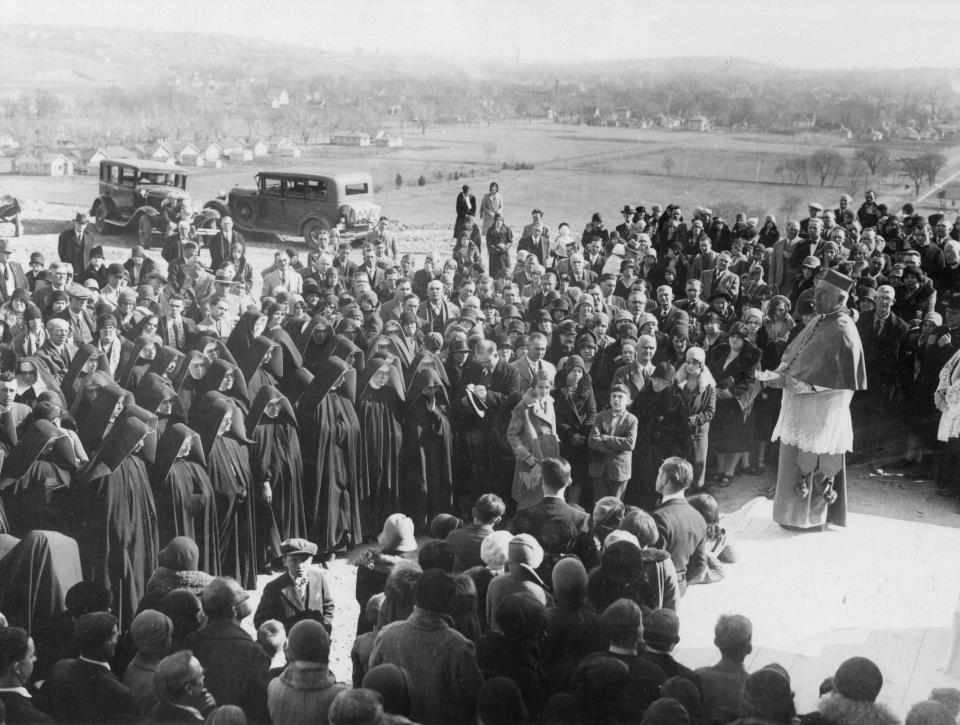
Above is an amazing photo of the groundbreaking ceremony for Briar Cliff College that is located on the Missouri River overlooking the states of South Dakota and Nebraska. I might do a painting of this scene because more than likely there are more than twenty of my kindred in it. My grandmother Mary is above in white.
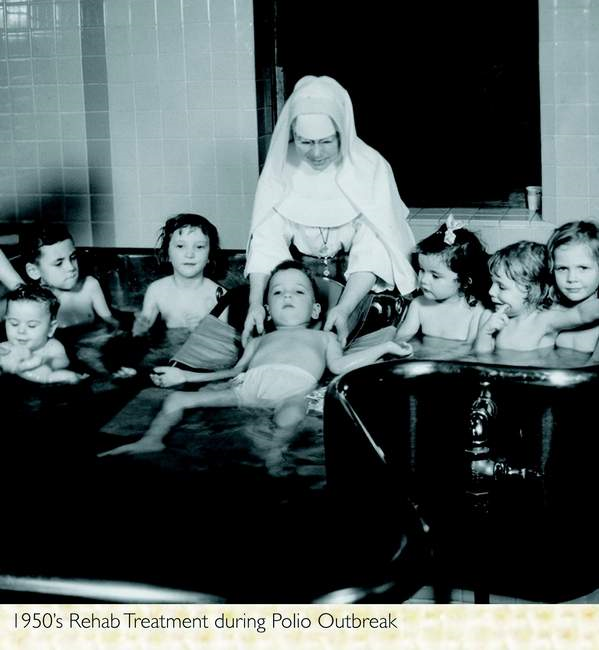
Look at those beautiful children who want their shot at life even though they know they are crippled. They are filled with hope. How can anyone who claims they are a Christian, talk about taking away hope from any child who suffers?
Jon Presco
SISTERS OF THE THIRD ORDER OF ST. FRANCIS OF THE HOLY FAMILY (OSF)
Jump to navigationJump to search
SISTERS OF THE THIRD ORDER OF ST. FRANCIS OF THE HOLY FAMILY (OSF). The order was founded to care for the wounded of the Austro-Prussian War and a CHOLERA plague. (1) In 1860 four members of the Holy Cross Sisters of Strasbourg, France came to Herford, Germany to operate an orphanage. One was Josephine Termehr who made her final vows as Sister Mary Xavier Termehr in 1862. When the sisters were recalled from the orphanage in 1864, Sister Xavier refused and established a new order of sisters with encouragement from the local pastor and bishop.
As the superior of the new order, Sister Xavier became Mother Xavier and the order took its name from St. Francis of Assisi. In 1875 the sisters were expelled, along with all religious orders, from Prussia by Bismarck. They moved from New York City to Iowa City at the invitation of Rev. William Emonds, pastor of St. Mary’s Parish. In 1876 they opened Mount St. Mary’s Orphanage. Deeply in debt and increasingly at odds with Emonds, a group of eighteen sisters, seven novices and four postulants came to Dubuque in 1878, at the invitation of Bishop John HENNESSY, to start the diocesan orphanage. (2)
The vacant HOLY TRINITY CATHOLIC CHURCH at 8th and White became their first Dubuque home. One year later the sisters and twelve orphans moved to the Duncan House on Davis Avenue. This became ST. MARY’S ORPHAN HOME. The sisters also accepted responsibility for SAINT MARY’S SCHOOL and five of their number began supervision of the domestic department at St. Joseph’s College.
The Sisters built their motherhouse, later IMMACULATE CONCEPTION ACADEMY near the orphanage on Davis Street in 1881. (3) A larger motherhouse was constructed in 1925 at its present location on Windsor Extension. The sisters established a mission in Chowtsun, China in 1931, but were forced to leave by the Communists in 1947. In 1965 a mission was established in Chile. (4) The Holy Family Hall, an infirmary, was added in 1961 with a novitiate wing built later. The Franciscans have carried out a wide range of service in Dubuque.
In 1949 the Dubuque Franciscans built XAVIER HOSPITAL. (5) They have taught in HOLY TRINITY CATHOLIC CHURCH, ST. MARY’S CATHOLIC CHURCH, SACRED HEART CHURCH, and WAHLERT CATHOLIC HIGH SCHOOL. In addition, the Sisters operated MARY OF THE ANGELS HOME for workingwomen, the Saint Francis Home for the Aging, the domestic departments of the Archbishop’s residence, and STONEHILL CARE CENTER.
The decision was made in 1981 to consolidate services at Dubuque’s two Catholic hospitals to contain healthcare costs and eliminate duplication. Xavier Hospital took on the task of housing for the elderly. Sister Helen HUEWE, who had been the president of Xavier, transitioned to the same role at MERCY MEDICAL CENTER from 1986 to 1997.
In 1989 the Sisters opened the SHALOM RETREAT CENTER.
Mirroring the activities of other religious orders, the Franciscans during the 1990s and beyond focused on closing the School of the Americas which it said trained human rights violators, opposition to the death penalty racial injustice, immigration concerns and issues relating to women. Members of the order protested police brutality in Chicago. (6)
Historical Highlights of the OSFs in the Dubuque Area (7)
1864–Order begins in Herford, Germany
1875-OSFs emigrate to Iowa City
1878-OSFs move to Dubuque at the invitation of Bishop Hennessy; make residence in old Holy Trinity Church at 8th and White
1881–OSFs open Sacred Heart School; live in motherhouse on Davis St.
1884–Mary of the Angels (former home of Bishop Loras) opens as home for working girls
1897–OSFs open Holyt Ghost School
1905–St. Francis Home for the Aged opens
1907–Academy of the Immaculate Conception opens
1910–OSFs open Holy Trinity School
1925–Sisters move into Mount St. Francis on Windsor Ave.; Immaculate Conception Academy transferred from 17th and Iowa to former convent on Davis Avenue and our Lady of Lourdes Home, a home for working girls, opens in its location
1935–OSFs open Our Lady of Lourdes, a music conservatory
1957–Sisters begin teaching at Wahlert Catholic High School
1979–Alverno Apartments groundbreaking; residence for low income and elderly
1998–OSFs join others to form OPening Doors, Inc., resulting in Maria house and Teresa Shelter for women and children
—
Source:
1. “Women of Courage and Conviction,” Celebrating 125 Years, Mercy Medical Center, 2004, p. 5
2. Ibid.
3. Fyten, David. “100 Years in U. S. for Dubuque Franciscans,” Telegraph-Herald, August 31, 1975, p. 24
4. Ibid.
5. “Women of Courage and Conviction…”
6. Nevans-Pederson, Mary. “Demonstrating Their Belief,” Telegraph Herald, December 5, 19988, p. 17
7. “Historical Highlights of the OSFs in the Dubuque Area,” Telegraph Herald, November 30, 2014, p. 95
In March 1929, Mother Mary Dominica Wieneke, Major Superior of the Sisters of Saint Francis of Dubuque, along with the Most Rev. Edmond Heelan, Bishop of the Sioux City Diocese, co-founded Briar Cliff College after meeting with members of the Sioux City community, who committed to raising $25,000 to support the establishment of a Catholic women’s college in Sioux City. The twelve foundresses of the College were carefully chosen by Mother Dominica. They were led by Sister Mary Servatius Greenen, who was named the first president.[2]
http://www.osfdbq.org/history.php
http://en.wikipedia.org/wiki/Third_Order_of_Saint_Francis
Congregation with Motherhouse at St. Francis’s Convent, Dubuque, Iowa. Founded in 1876 by Mother Xaveria Termehr and Sisters from the House of Bethlehem, Herford, Germany, who, on account of the infamous “May laws”, were compelled to leave Germany. Sisters, 399; novices, 34; postulants, 20; orphan asylums, 2; industrial school, 1; academy, 1; home for aged, 1; schools, 43; pupils, 6829.
Going To Ojai – With Muse!
Posted on November 26, 2023 by Royal Rosamond Press

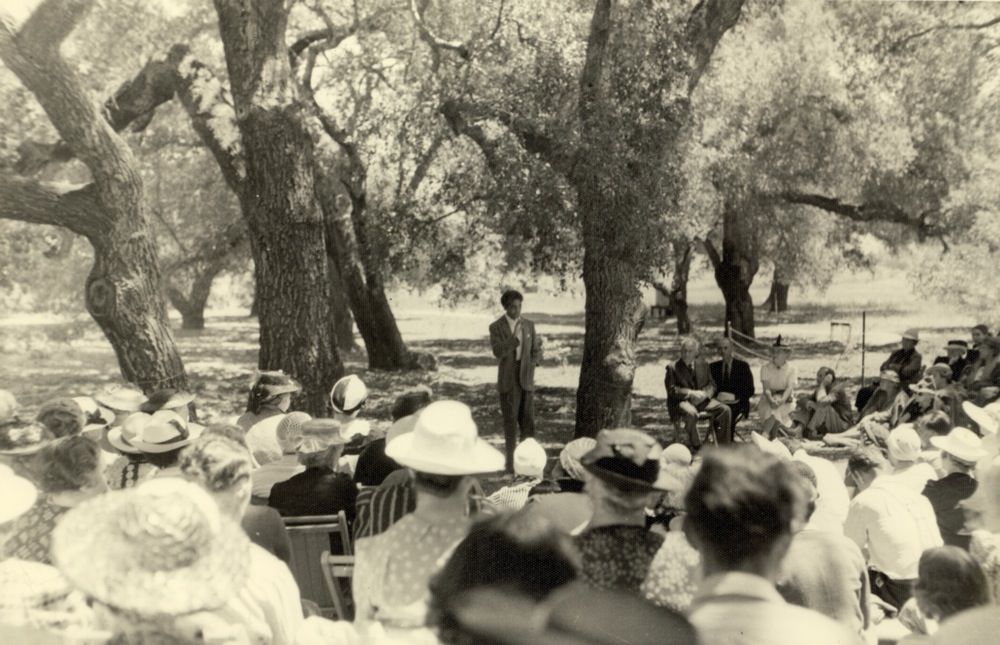


I am going to Ojai.- in my mind and spirit? I might be God. I might not be able to die! Meher Baba went to Ojai – and Krishnamurti! My grandmother knew the leaders of the Theosophic Society. The Rosicrucian’s are here. Conrad Wienke raised bees and sold honey on Route 33.
Calling All Nazarite Angels
Posted on October 8, 2019 by Royal Rosamond Press
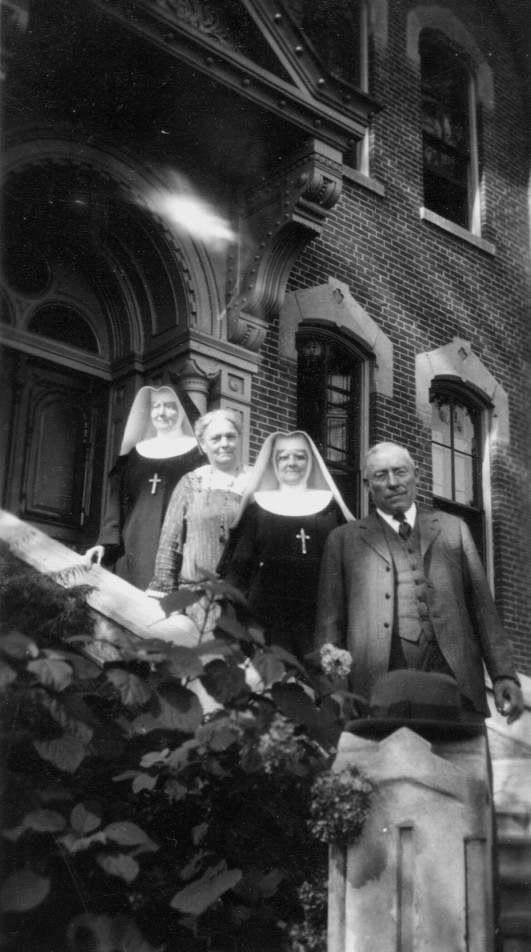

Five days ago, I sent my daughter and her unborn child a photograph of what I believe is an angel hovering over the head of Mary Dominica who is Mary Magdalene Rosamond’ cousin.
Here.
“bstark1990 Hello, I have access to it; the book is my father’s and was gifted to my grandfather by his aunt, Mother Dominica. The information related to the early family history of the Wieneke family in Iowa was added to my record for Phillipine Wieneke.
There’s a family story that says three of John Wieneke daughters married Starks and three entered the convent– from the ridiculuous to the sublime! I have a document saying that there were two Stark families near Cedar Rapids, Iowa, related only through the Wieneke’s. Heinrich and Anna Catharina (sp) Kleinschlau Wieneke’s son John (Johan, in our family lore, 12-9-1834) had a sister, Anna Maria (7-23-1832), who married Andrew Stark.
 Re: Andrew Stark
Posted: 28 Jul 2004 07:55PM
Beringer, Sr. Jean <beringerj@osfdbq.org>
To:braskewitz@yahoo.com
Dec 12, 2014 at 1:36 PM
John,
It took me some time to figure out that you had gotten the information through the Briar Cliff history. The biographical information that is there is familiar to me, but I don’t know where you got the question about her journey to Assisi. I have nothing about that and have no knowledge that she went there. If there are other things you want to know you can reach me better by e-mail.
Sr. Jean Beringer, OSF
“The cave we found was an ideal spot and perfectly suited to Baba’s requirements. Herbert had thought out everything with such care that there was nothing left to be desired. Herbert is always very meticulous and careful in all he undertakes. The light was beginning to go a little as we entered the woods. It was just after sunset. I remember the birds and their song dying away gradually.
We settled Baba in and he told us that no one must look at him and, above all, not to touch him.
“It was arranged that Herbert and Chanji were to keep watch outside the cave during the night, to be relieved by Kaka and myself at 9 o’clock the next morning. Baba said that Kaka and I were to go to mass at 7 A.M. the next morning and then we were to kiss the Tomb of St. Francis. We bade them goodnight and found our intricate way out of the woods.
“After mass we shouldered our rucksacks and toiled up the streets through Assisi to the hills of Monte Subasio. As we got out of town, it began to get warmer and warmer.
“Poor Kaka was laden down, and not in such good training as I, so we had to stop from time to time for him to rest and get his breath and cool off. At last we arrived, a little late —about 9:15, and we were glad to reach the cool shade of the wood where we found Herbert and Chanji waiting for as after a wakeful night.
“Nothing had transpired and there had been no interruptions of the calm and peace which pervaded the woods. We settled down to our vigil outside the cave. Herbert and Chanji returned to Assisi to rest.
“The sun rose higher, but we were well shaded from the heat by the trees. An intense calm was everywhere, but the woods were alive with birds whose song was deafening. As if in memory of St. Francis, they seemed to throng around us. Butterflies were often near; several lit on our hands and bodies.
“Gradually it grew warmer, and even in the deep shade, one felt the heat of midsummer.
“Towards midday I heard sounds from inside the cave. Forgetting Baba’s instructions about not looking at him, I saw him stand up with his eyes shut and face the sun. He made strange noises. Not daring to look again, I lay quiet.
“At one o’clock he clapped his hands. We pulled away the branches from the entrance. Taking the board he spelt out directions, telling Kaka to go to Assisi and ask Herbert and Chanji to be with him at 4:30, but that I was to call him there.
“Baba came out of the cave but told us not to come near him or touch him. He walked about alone in the woods for half-an-hour and then went into the cave again.


Above is a photo of the Wieneke farm in Iowa. Here Sisters of the Order of Saint Francis were grounded in America after they were forced to flee Germany due to Bismark’s Kulturkampf. This is a story of how a religious order was helped by an American family who had immigrated from Germany fifty years before. The Wieneke family was given credit for preparing the way for Saint Francis, and, Jesus Christ. They were seen as Saints.
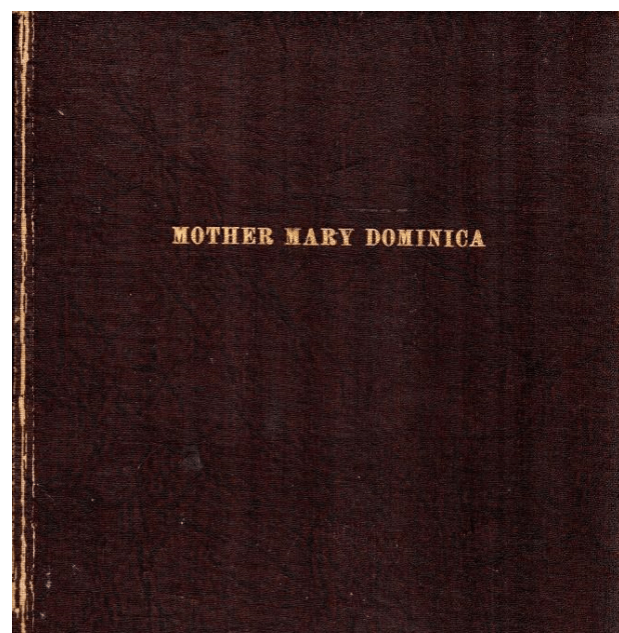
Last night I read this book again, online. I was hoping John Stark would have posted the rest of the book on ancestry.com. He has not. I tried to get him to give this book to the Sister’ of Briarcliff. John said the book contained accounts that ranged “from the reidulous to the sublime”. You are going to have to cut and past this to url.
file:///C:/Users/jongr/Downloads/Mother%20Mary%20Dominica.pdf
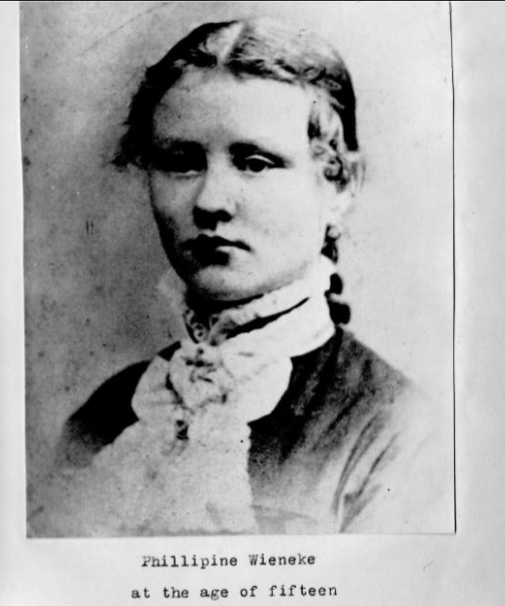
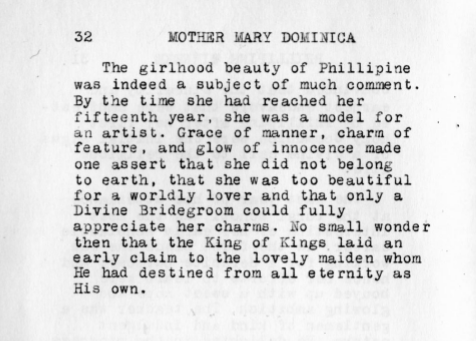
Phillipine was a muse to an artist. Her brother studied at Louvain. There is a missing chapter on the “Family Grotto”. I suspect there were sightings here. Please, John, publish the rest of this book!
Members of the Wieneke came in close contact with the Order of Saint Francis that was forced to flee Germany. It appears they were The Keepers of The Miriam Cult. They wanted to spread the Devotion of Mary in America. The Wieneke Family were chosen to be The Messengers. They spoke German in their homes, as did the Sisters. Below is Father John, and his three sisters born from the same womb. My mother wanted me to become a Franciscan Monk. Her mother, Mary Magdalene Rosamond, said I was destined for the church. These are her cousins, and the sibings of Eutropia.
The name Philippine is a German. In German the meaning of the name Philippine is: loves horses.
There is a scene of the Wienekes taking the Sisters to church in their horse and wagon. This is the opening scene to a movie. I see the rolling hills of golden grass. The camera come closer in this Western secene, and everyone is speaking German. That John Kelly came home severely wonded in his fight with the secular evil in Germany, was very important. These Sisters knew their flock, and shen they did not hear from John and Eutropia, they sent an emisary to Ventura By The Sea. This is a Papal Emisary, as you shall read in my newspaper…………..Royal Rosamond Press.
My sisters awoke to see a Blue Angel standing at the foot of their bed. There was a High Mass held in the Wieneke home to honor the dying mother who had given birth to the first American Sisters of the Order of Saint Francis. The term “papal rank” is used.
The Oak of Meher Mont
Posted on December 10, 2017 by Royal Rosamond Press

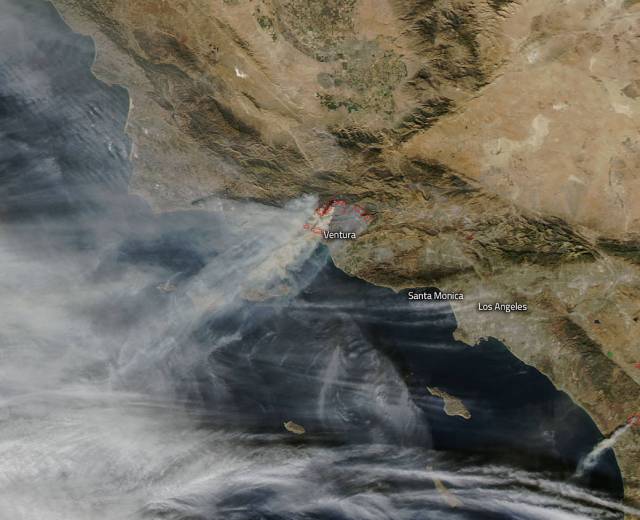

I posted this in 2009.
“When I awoke yesterday morning, my Angel bid me restore the Shekinah. The day before I had read a theory put forth by Fridrich von Suhtscheck that the story of Parzival is based upon the Song of the Pearl, or, the Hymn of the Pearl, or, the Hymn of Judas Thomas who was born of royal Parthian parents. For the reason Meher Baba was born of a Parthian father, I looked at Sulphur Mountain above Ventura as the new home of the Shekinah, or, the Rosa Mystica.
There is a rose garden atop Sulpher Mountain. Those who wish to connect with the Shekinah on Santa Rosa can see the Channel Islands from Meher (Mithra) Baba’s retreat. Anyone who seeks the light of God and the Rosa Mystica are forbidden to set foot on Santa Rosa Island until the end of the world.”
Jon
Jai Baba!
Update #7 from Sam Ervin
Yesterday, Dec. 8, Buzz and Ginger, Manager/Caretakers, were again at Meher Mount. They learned a lot more about the aftermath of the fire, and the news is troubling and leaves us with considerable uncertainty. I’ll combine the latest news with much of the report from update #6 to give a more complete picture of what we have learned. The “Thomas Fire”, named after St. Thomas Aquinas College because it started near there, has been raging across Ventura County since Monday, Dec. 4, and is still not nearly contained, having burned more than 100,000 acres. It has been driven by winds up to 80 MPH and extremely low humidity. In its first few days it burned the entire area, rural and wilderness, between the towns of Ojai, Santa Paula and Ventura, including all of Sulphur Mountain, where Meher Mount is located. Fire fighters played a role in saving some structures, as did effective weed and fire hazard abatement, as Buzz and Ginger did at Meher Mount.
Latest Summary:
We won’t know how damaged the water system is until we get power back, which Edison estimates could take 1-3 months. Water from the well will not be available until power is back on. Therefore we may not be able to open Meher Mount for an extended period. The electrical control box at the well is damaged and likely will need to be replaced, the pipe coming from the well is burned and broken, we have quite a bit of melted PVC pipe which needs to be assessed and replaced as needed, both at the well and at the water treatment site. Power lines are down, the poles burned, and fallen trees lie across some of the lines. There may be other damage we have not yet seen. Meanwhile, federal officials are taking over tomorrow from locals to manage access to the entire burned area, so we don’t know if even residents will be able to get to their homesites. I was hoping to go up on Sunday, but they may not allow it. Of course they are concerned about looters.
Baba’s Tree:
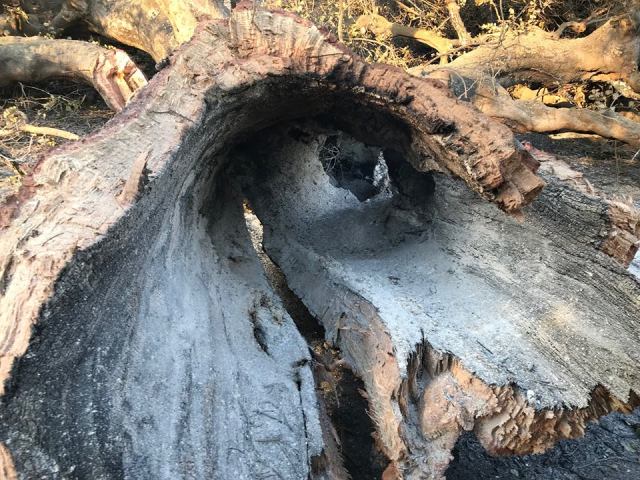
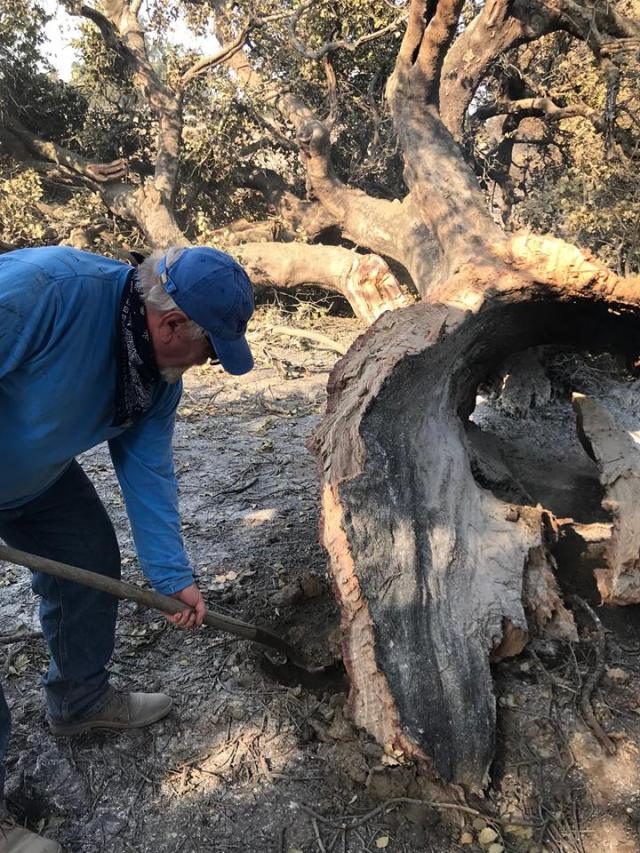
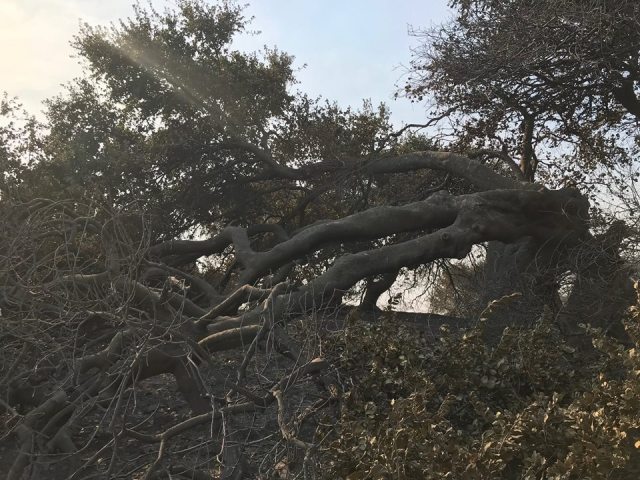
The part of Baba’s Tree that fell and burned was still smoldering on Dec. 8. B&G believe the largest and tallest part of the tree was knocked over by the 80 MPH winds, fell to the ground and then burned in the fire that came up the slope from the South. Buzz thinks the remainder of the tree may survive, though it will be considerably shorter and smaller. He said the part that fell was hollow inside for something like fifteen feet above the hollow at the base, and that it may have been a blessing it happened when no one was under the tree, as it clearly was quite weakened. This tree survived the New Life Fire in 1985, 32 years ago, so it is a survivor. It is Baba’s Tree, so we will see what He has in mind.
Buildings:
Fire came right to the two main buildings, the Visitor Center and the Workshop/patio. A small part of the wooden verandah trellis at the Visitor Center was burned and fell off. The rest of the building was not burned, but hot ash had been blown under the doors, and Buzz considered it a minor miracle the curtains did not catch fire and the part of the trellis that burned fell to the ground so the fire did not spread further into the trellis and house. The two main buildings are basically intact, as are their contents, the tractor, etc. They were very smoky inside.
Other:
• They had to walk down the canyon to the wellhead because of many fallen and burned trees blocking the road. The electrical panel at the well, which was new in 2016, and the wires and PVC pipes will need to be repaired or replaced once power is restored to the mountain and down to the well.
• The wooden fence at the entry gate was burned, so the place is less secure than before the fire.
• The water treatment system by the pool appeared relatively intact, though some PVC pipes had melted holes and the ozonator was burned.
• The large outdoor propane tank was charred underneath but intact and still 75% full.
• The Fire fighters had clearly been there, as there was a ladder against the house and the entry gate had been removed from its hinges.
• It’s clear the fire visited nearly every part of the upper section of the property they saw, and they were amazed at how the fireline seemed to stop at critical points. The huge eucalyptus burned, as did other trees. There remain some hot spots on the property, but Buzz feels they are far enough away not to threaten the structures.
• Though the damage appears less than it might have been, a lot of cleanup and repair will be needed, and volunteers will be appreciated, recognizing it may be some time before we get access to the property. Thank you to those who have already offered to help when the time is right.
• Buzz noted that while the whole place is covered with gray ash, there is a beauty to the wooded areas of oak forest where all the underbrush has been burned away.
Buzz and Ginger drove back to Santa Barbara, though they say the smoke is so bad there they are thinking of moving even farther away. They had to show a drivers license with an Upper Ojai address to get access. They were told the federal agents will take over management of access today.
I will plan to drive up to view the property when access is allowed for non-residents and we’ll begin to develop an action plan.
Meher Mount came through this crisis much better than it might have, and this is due in no small part to Buzz and Ginger’s outstanding fire hazard and weed abatement, which was also praised by the Fire Dept. Also, until all hot spots have been eliminated, there will continue to be risk of further damage.
Thank you all for your concern and support through this sudden and for many, devastating, firestorm. We will continue to let you know about what we learn over the next couple of weeks and how you might be able to help.
Avatar Meher Baba Ki Jai!
photos by Buzz and Ginger Glasky
The Shekinah of Rose and Cross
Posted on November 18, 2015by Royal Rosamond Press

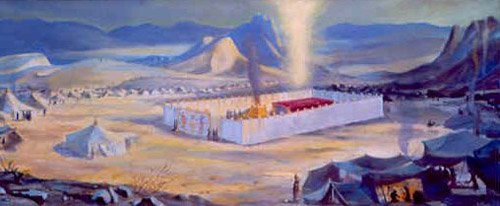
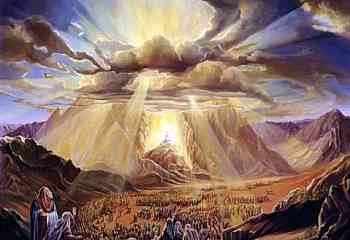
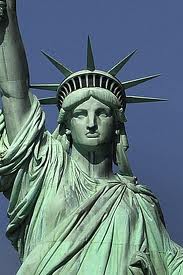
I posted this 2009. I had a real vision of things to come. This vision lost me my family and friends. The news tonight showed the peril of the Syrian refugees fleeing to the island of Lesbos while Red State leaders of the Selfish Jesus, tear down the Statue of Liberty, after snuffing out her light. They do not care if the world saw them do this, because they believe their Savior just came for them. But, I send to all, the Compassionate Shekinah!
Jon ‘The Nazarite’
http://www.crystalinks.com/shekinah.html
“who, at the beginning of the Israelites’ settlement in the land of Canaan, was often referred to as Yahweh’s Consort.
The literature also calls her the “Holy Spirit” which, in Hebrew, is also a feminine form. The feminine nature of the Shekhina is so easy to establish in Hebrew, because the gender of the subject plays an important role in the sentence structure.
In English, you can say “The Glorious Shekhina returned to bless us” without mentioning gender.
In Hebrew, both verbs and adjectives have a male or female forms, and many names suggest gender to anyone who understands the language. The simple sentence above indicates three times that the Shekhina is female, and the fact sinks easily into the consciousness of the reader.
From the first covenant, Yahweh presented an image of a harsh, daunting God. His character almost demanded the birth of an entity like Shekhina. Also, He could not be seen by human eyes, and only a few prophets heard His voice. Yet almost every religion shows that human nature seeks intimacy with a deity.
The manifestation of a loving maternal entity, ready to defend her people even from God Himself, brings a feeling of comfort that a paternal, invisible entity like Yahweh cannot bestow upon His worshipers.
Shekhina represented compassion in its purest form, and despite being, officially, the female side of God, she was visible and audible as a feminine entity in her own right.”
c
 Rosamond Press

Leave a comment