


La Bond
by
John Presco
ALL RIGHTS RESERVED
After James Bond became good friends of Liz and Richard Burton. this Hollywood Movie Brand suggested 007 get in the Blue jeans business, and make his own BRAND of jeans. They came up with the name for them…..
BONDABLE BLUES
Russian Teenagers had just fallen in love with a famous blue jean that were flooding the black market. When they saw ads and commercials with James Bond posing in his BBs, they had to have a pair. When James told his manufacturer there is wool from special sheep that emits a smell that is a aphrodisiac for men and women alike, there appear an ad showing British soldiers protecting these sheep in Whales enclosed in barbed wire. This is a sub-plot that I would hire Peter Sellers to handle, if he were alive.
“Who would want to steal these sheep>”
“The Soviets for one. Just to keep them off the market!”
In one ad they concetrated on the leather lable, that read..
“Sign here, and become a Bondable Citizen of Bonds World of Love!”
A magic pen came with the Bondable Blues, that was filled with invisible ink – not! It was the idea that you could make a Bond with the Free World, that was a real TURN-ON! There was allot of tight butt-rubbing, and, sniffing. Then you read the BB label where all kinds of codes scratches that the KGB was beside itself the read. There are fake reports about how Russian secret agents tried to kidnap
THE LOVE SHEEP
Then, one day the Russian community in San Pedro underwent a transformation. Russians who lived in Fort Ross, came to San Pedro and built a isolated community. In 1967 the Soviet bought Harbor View House that had been turned into a Insane Asylum. Nearby was Cabrillo Beach that studding blondes began to go to and make it their own. The local girls were intimidated, and could not compete. Then, a
RUSSIAN ELVIS
appeared. and the first container containing Bondable Blues – was blown up! Then, the door to the underground garage opened up – and out rode
THE RUSSIAN BLUE MOTOTCYCLE GANG! THE BLUE MEANIES!
They headed for Sunset Bulvard in order to disrupt and destory..
AMERICAS LOVE GENERATION
This was
THE RUSSIAN INVASION!
James was hired as head of securtty for the movie set where they were making
LOVE SONG!
This was a Love Generation musile, that woud overcome the world. There was going to be
A NEW DANCE!
To be continued
Play both videos at the same time, but, turn off sound on Knight Wolves/
This article is more than 12 years old
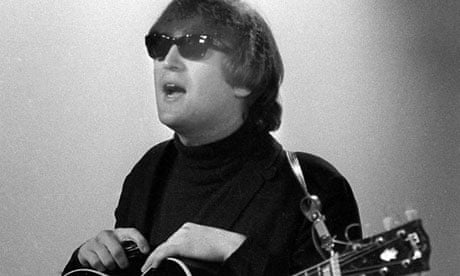
For young Soviets, the Beatles were a first, mutinous rip in the iron curtain
This article is more than 12 years old
The band inspired dissidents and musicians and, a new book claims, meant more to youth in the USSR than in the west

Sat 20 Apr 2013 09.00 EDTShare255
Crossing the famous Finland station in Leningrad one day in the early 1960s, Kolya Vasin was stopped by a policeman who had spotted his long hair. “You are not a Soviet man!” charged the officer. “And he grabbed my hair,” recalls Vasin, who was then hauled across a platform while dozens of people laughed. “I was crying from the pain, but I had to keep silent. I was afraid the man would drag me off to prison.”
Vasin was a diehard Beatles fan. The Beatles’ music had given him, he said “all the adventures of my life”, for which “I was arrested many times, accused of ‘breaching social order’. They said anyone who listened to the Beatles was spreading western propaganda.” More than that, in the USSR, the Fab Four “were like an integrity test. When anyone said anything against them, we knew just what that person was worth. The authorities, our teachers, even our parents, became idiots to us.”
Around this time, in Britain in 1962, a young Russian speaker from Yorkshire called Leslie Woodhead joined Granada TV in Manchester as a junior researcher, whose job included “persuading … local officials or champion knitters” to appear on a programme called People and Places. One week, a show featuring a brass band needed a further item. “There are these kids making a lot of noise in a cellar in Liverpool,” advised a fellow researcher. “They haven’t made any records yet.”
Woodhead duly met them for a drink, and shot the first film of them playing – a lunchtime gig at the Cavern – but transmission was delayed because of a problem with the brass band’s union fees. Instead, Woodhead urged his producers to allow the Beatles into Granada’s studio, and play on live TV for the first time. They sang Love Me Do and Some Other Guy. Four months later, they reached No 1 with Please Please Me. Despite Woodhead’s part in Beatles history, it was not the band’s story in north-west England – where he still lives – but in the Soviet Union that became, Woodhead says, “an essential narrative of my times”, and that propels his effervescent new book, How the Beatles Rocked the Kremlin.
This tells the remarkable story of precisely how and why, as Woodhead explains, “the Beatles came to mean more, and were more important, to that generation of Soviet youth than they were here, or in America – for several reasons”.
The book’s main character, the Russian writer and critic Art Troitsky, makes the claim that: “In the big bad west they’ve had whole huge institutions that spent millions of dollars trying to undermine the Soviet system. And I’m sure the impact of all those stupid cold war institutions has been much, much smaller than the impact of the Beatles.”
A grand assertion, maybe – but widely shared. “Beatlemania washed away the foundations of Soviet society,” explains Mikhail Safonov at the Institute of Russian History. And the Russian rocker Sasha Lipnitsky – snowflakes falling on his beret as he talks to Woodhead in a park bandstand – insists: “The Beatles brought us the idea of democracy. For many of us, it was the first hole in the iron curtain.”
All this became Woodhead’s story, too. Before joining Granada, Woodhead had undergone his national service by eavesdropping on radio traffic between Soviet pilots at an airbase near Berlin. He later went on to become the documentary film-maker who, more than any other, recorded – often clandestinely and at risk – the anti-Stalinist underground in eastern Europe, and its eruptions during the late 1980s and early 1990s.
Since then, Woodhead has often travelled through the new Russia to explore the Fab Four’s role in the unravelling of a superpower. And of course, among his first ports of call was Kolya Vasin – yellow submarine on the wall of his apartment full of Beatles memorabilia and a cat called Hey Jude.
There are so many others – rock musicians, eccentrics, writers, dissidents – of the same vintage, with different stories to tell, but all variations on the theme. “There was not a band anywhere in the Soviet Union”, says Woodhead, “that did not start life as a Beatles tribute band.”
The rock musician Boris Grebenshchikov was eventually allowed to cut an album, first with the official Melodiya label, then with CBS in America, after a concert in Leningrad with Dave Stewart of Eurythmics. He speaks of the Beatles with a “mystical musing” that Woodhead says he could not tolerate in any other context. Andrei Makarevich formed a Beatles-inspired band called Time Machine , who became huge in Russia from the 1970s – only to be later denounced as “un-Russian”, “advocates of indifference” – and who remain iconic today.
Indeed, the repression and harassment of the music ebbed and flowed as the party controls lapsed or intensified. “It went in waves: sometimes you could be approved for an official recording, and sometimes you were banned, losing your job or education. It must have driven them insane,” says Woodhead. He not only excavates the minds of the rebels but also the propaganda machine at work. He recounts how a school staged a mock trial of the Beatles – broadcast on radio – with a prosecutor and denunciations in the manner of Stalin’s show trials of the 1930s. A critical bulletin shown on state TV, entitled Pop Quartet the Beatles, told the story of how “these gifted guys could be real cash earners” while, “struck down with psychosis, the fans don’t hear anything any more. Hysterics, screams, people fainting!” So ran the TV commentary, accompanied by shots of dancing fans intercut with images of the Ku Klux Klan and dire poverty in the American south. “Keep on dancing, lads, don’t look around,” the programme taunted, “You don’t really want to know what’s happening. Keep going, louder and faster! You don’t care about anyone else.”
As Woodhead points out, to Beatles fans in 1970s Russia, “Everything west was good. The kids came to believe the exact opposite of everything they were being told all those years. Whatever the authorities said was terrible was bound to be wonderful.”
Moreover, Woodhead says: “Once people heard the Beatles’ wonderful music, it just didn’t fit. The authorities’ prognosis didn’t correspond to what they were listening to. The system was built on fear and lies, and in this way the Beatles put an end to the fear, and exposed the lies.”
“The more the state persecuted the Beatles,” concurs Mikhail Safonov, “the more they exposed the falsehood and hypocrisy of Soviet ideology.”
Looking through the other end of the telescope, it is enlightening to find what the Soviet authorities approved of. They “positively encouraged” disco music – the Bee Gees‘ Saturday Night Fever, Abba and Boney M (though Rasputin was officially banned) – because, says Woodhead, “it was musically rigid and could be contained within the dance floor, it wasn’t going to spill out on to the streets”.
A concert by Santana and Joan Baez was cancelled, leading to what Russian history calls the “Rock Riot”, crowds dispersed with water cannon and smoke grenades. But, writes Woodhead: “The culture commissars were untroubled by Elton John‘s Song Book.” At Boris Grebenshchikov’s concert of 1988, however, Woodhead observes how, “looking out over the kids from the best seats set above the crowd, officials and party bosses sat stiff and uneasy, spectators at a revolution they could not control”.
Among Woodhead’s themes is that, unlike the Beatles themselves, their insurgent followers in the USSR came from families of the cultural and even political elite: Makarevich’s father was a respected architect permitted to travel to the west; Lipnitsky’s grandfather interpreted meetings between Nikita Khrushchev and John F Kennedy; one rocker called Stas Namin was the grandson of a former prime minister, and friend of the great composer Dmitri Shostakovich.
The Beatles’ imprint on even post-communist Russia is deep and enduring – a punk band called the Oz belts out Working Class Hero and Crippled Inside. And Woodhead’s story is woven through with the ironies of “liberation” from communism; at a deeper level this is a book about all rock’n’roll – protest and pop, indeed – not just the Beatles in Russia.
At first, Soviet fans tried to cope as their home-grown but Beatles-inspired idols were tempted, argues Woodhead, by co-operation with the state – only to watch them try to assert themselves in a capitalist west that was entirely indifferent to their work. “Boris Grebenshchikov toured America, and he was a complete non-event there,” says Woodhead, “after which, it took him years to recover the esteem of his Russian fans. But then, we in the west are completely unaware of this history. It doesn’t help that a bunch of Soviets are singing in Russian what we think of as our music – but there’s obviously a great deal of cultural arrogance on our part.”
More serious was the eagerness with which capitalism devoured – and was devoured by – Russian society: Woodhead describes Paul McCartney’s concert in Kiev, sponsored by an oligarch colossus, just as his famous performance in Red Square, Moscow (at which Vladimir Putin chatted with Makarevich of Time Machine) had been promoted by Alfa-Bank. “Wasn’t that a perfect 21st-century deal between rock, money and politics?” writes Woodhead.
In Kiev, he sees crowds shelter from a downpour under Coca-Cola umbrellas and girls on stilt heels flocking to hear McCartney via the shopping mall “in pursuit of pink fripperies”. Then, “surrounded by heavy security guards”, he reflects, in our conversation, “I found myself asking, is this the Russia these kids inherited from those utopian expectations? Well, yes it is; it opened the Pandora’s box.”
“I used to struggle against the cops,” laments Kolya Vasin, “now I struggle with these fools who do business and worship the dollar.”
Then there was that realisation that the west was not the opulent land of stretch limousines it was presumed to be. Some of Woodhead’s cast know this; one even has a copy of Back in the DHSS by another Liverpool band, Half Man Half Biscuit. Makarevich was surprised and appalled to find, upon finally making his pilgrimage to Merseyside, that it was so “small and poor”. “We were, and still are, exponentially wealthier than they,” says Woodhead. “But when did they realise that we’re as fucked as they are? Not until after the end of communism.”
Why the Beatles? There is no hint of the Rolling Stones or the Who in all this. In Czechoslovakia, the underground was being inspired by dark dissonance in the Velvet Underground and Frank Zappa. “I think the Czechs had that recent memory of democracy, before the war,” reflects Woodhead. “And their culture has roots in Kafka and the surreal. But Soviet taste was more melodic, they like tunes above all, even a little sentiment, verging on the beautiful – and there, I’m describing a McCartney song, not hypersexual rock’n’roll, or Street Fighting Man.
“It was also the right music at the right time. There had been this moment of Gagarin in space, the possibility that the Soviets may even win the cold war. Then it just fell to bits, and in the fear and disappointment, and as they said themselves: they ‘needed the vitamins’, and the vitamins were provided by the Beatles’ music.”
- This is the archive of The Observer up until 21/04/2025. The Observer is now owned and operated by Tortoise Media.
History
[edit]
The Army and Navy Y.M.C.A. was dedicated in 1926 as a recreation center for servicemen at Fort MacArthur, offering 300 dormitory rooms, a gymnasium, running track, banquet room, patio, pool, boxing and wrestling rooms, and a coffee shop. It provided recreation and temporary quarters for over four million men during World War II, and was visited by celebrities, including Bob Hope and Lucille Ball.[2] The facility was converted to civilian use in 1947, offering accommodations to young travelers and senior citizens.
From September 1967 to November 2018, as the Harbor View House, the building operated as a residence serving the mentally ill.[2] It was licensed as a 204-bed Adult Residential Facility, Mentally Ill by the California Department of Social Services, and an 83-bed Intermediate Care Nursing Facility by the California Department of Public Health Services. It was owned and operated by HealthView, a nonprofit organization. It also housed HealthView Behavioral Services an outpatient mental health clinic operated under contract from the Los Angeles Department of Mental Health.
Harbor View House was sold in April 2018 to a developer planning to convert the historic building into a combined residential-commercial property. The terms of the sale allowed HealthView to rent the space until July 2019. However, after the elevator broke down in November 2018, all residents of Harbor View House were moved out. The building currently sits empty awaiting renovation.[3]
Cabrillo Beach is a historic beach situated within the small coastal community of San Pedro. Cabrillo Beach is named after Juan Rodriguez Cabrillo, who was the first European to sail along the coast of California.[2] The city of San Pedro was in consideration of being the host of a major port in Southern California. After much deliberation, the federal government selected San Pedro.[2] Construction of the San Pedro Breakwater began in 1899 for the purpose of protecting San Pedro Bay and the new, major port.[2]
Along with the inner and outer beaches of Cabrillo Beach, the 370 acres (150 ha) of land also encompasses several complexes that are open to the public. The Cabrillo Marine Aquarium is a major complex of Cabrillo Beach. Situated within the parking lot, the aquarium has been teaching the public about the coast and its marine life for over 75 years. An emphasis on education is the main reason for Cabrillo Marine Aquarium’s longevity and success.[5] The aquarium has over 90 employees, some full-time and most part-time. The employees are either professional educators, marine biologists, or caretakers for the animals. Along with employees, the aquarium also has 350 volunteers that help aid the aquarium’s mission of educating the public and fostering an appreciation of the marine life through special events, monthly coastal clean-ups, and tours.[5]
The Fleming Collection and Bond St. Gallery
Posted on July 13, 2018 by Royal Rosamond Press
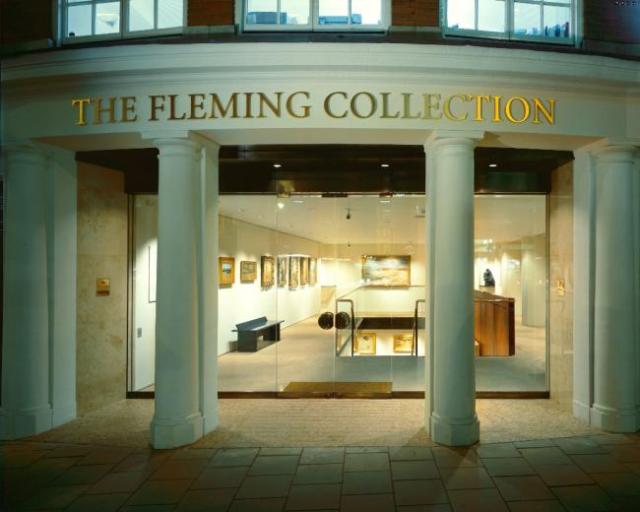

What I have been putting together here is an Art Dynasty of people who share the same DNA, and are ‘Of The Art Blood’. Elizabeth Rosemond Taylor, artists, Christine Rosamond and Garth Benton, along with the Fleming family, are in the same tree. Did I leave out the Getty family? How about the Rothschilds?
What really irks folks, is – I am dirt poor! Who do I think I am? Jesus had no money – and he founded a world religion! Now – I am mad! Whatever……..I am the Touchstone! The next two Bond movies – BELONG TO ME!
John Presco
http://news.getty.edu/inaugural-getty-rothschild-fellowship.htm
LOS ANGELES – The Getty and the Rothschild Foundation today announced the creation of the Getty Rothschild Fellowship, which will support innovative scholarship in the history of art, collecting, and conservation, using the collection and resources of both institutions. The fellowship offers art historians, museum professionals, or conservators the opportunity to research and study at both the Getty in Los Angeles and Waddesdon Manor in Buckinghamshire, England. The inaugural fellow is Dr. David Saunders, a foremost expert in the area of conservation science who will work on museum and gallery lighting during the fellowship.
“The Getty and the Rothschild Foundation hold similar values regarding the understanding and conservation of visual art around the world, and it is only appropriate that we would work together to support individuals who demonstrate these values through their research,” says Jim Cuno, president and CEO of the J. Paul Getty Trust. “We are pleased to award the inaugural Getty Rothschild Fellowship to Dr. Saunders, whose work in museum lighting has been of long-standing interest to the Getty Conservation Institute and the Getty Museum.”
http://jewishweek.timesofisrael.com/nicky-hilton-weds-jewish-heir-james-rothschild/

Valentine Fleming 
| Gender: | Male |
|---|---|
| Birth: | 1882 Newport-on-Tay, Fife, Scotland |
| Death: | May 20, 1917 (35) Picardy, France |
| Immediate Family: | Son of Robert Fleming and Sarah Kate Fleming Husband of Evelyn Beatrice Saint Croix Rose and a Fleming Father of Peter Fleming; Ian Fleming; Michael Valentine Paul Fleming and Major Richard Evelyn Fleming Brother of Philip Fleming and Dorothy Hermon-Hodge (Fleming) |
| Added by: | James Borthwick on May 26, 2007 |
| Managed by: | Tina and Michael Lawrence Rhodes |
The firm of Robert Fleming & Co., known as Flemings, was founded in Dundee, Scotland in 1873 by Robert Fleming, a successful manufacturer of jute fabrics used for sandbags in the American Civil War. The firm was originally formed as a series of investment trusts, pooling money from Scottish investors into overseas ventures, and later moved into merchant banking. In 1909 the firm moved its headquarters to London.
http://www.getty.edu/art/collection/video/399854/history-of-the-getty-villa/
One of the most prestigious galleries of Scottish art, with a renowned private collection of Glasgow Boys and Scottish Colourists, is to close.
The Fleming Collection gallery in Mayfair, London, is to shut next year, and the Fleming-Wyfold Art Foundation, which runs it, is to pursue a new “museum without walls” strategy.
The collection comprises over 600 oils and watercolours from 1770 to the present day.
After the sale of the Fleming’s merchant bank in 2000, the Foundation was established by members of the Fleming family with the aim of “furthering the understanding and fame of Scottish art outside Scotland through exhibitions, education and publishing.”
James Knox, director of the Foundation, said: “From now on our collection will support and initiate exhibitions to expand the audience for Scottish art in the UK and overseas.
“Indeed, this process of cultural diplomacy has already begun with our loan of key paintings and contribution of art-historical advice to the first ever survey of Scottish art to be staged in France [at the Musee du chateau des ducs de Wurtenberg, Montbeliard].
Rory Fleming, chairman of the Foundation, said: “This is a great moment in the history of the Foundation, which will build on our track record of raising the profile and influence of Scottish art and creativity.”
The Fleming Collection dates back to 1968 when Flemings, the former merchant bank, moved into new offices in London.
As a celebration of the Scottish origins of the bank, founded by Robert Fleming in Dundee, the Board began to acquire works by Scottish artists.
The collection includes works dating from the 18th century, including paintings by Allan Ramsay and Henry Raeburn.
It also includes two seminal images of the Highland Clearances: Thomas Faed’s The Last of The Clan and John Watson Nicol’s Lochaber No More.
It also owns works by the Glasgow Boys, Scottish Colourists as well as later twentieth century masters, such as Anne Redpath and John Bellany.
When the bank was sold to J.P Morgan in 2000, the collection was purchased by members of the family and vested in the Fleming-Wyfold Art Foundation.
The Wyfold name was added to the name to commemorate the life of the last Lord Wyfold, a grandson of Robert Fleming
Cleopatra Rosemond Bond of 35 Bond Street
Posted on May 25, 2018by Royal Rosamond Press







http://www.sothebys.com/en/news-video/videos/2016/07/bowie-collector.html
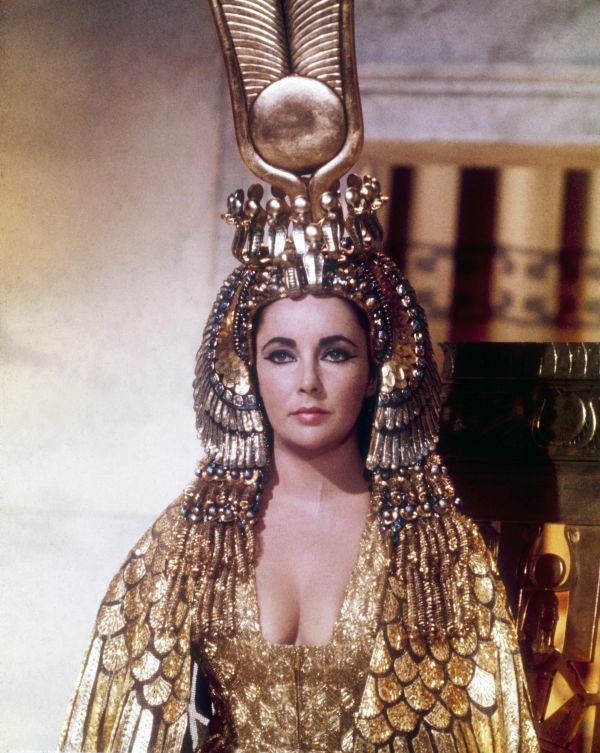
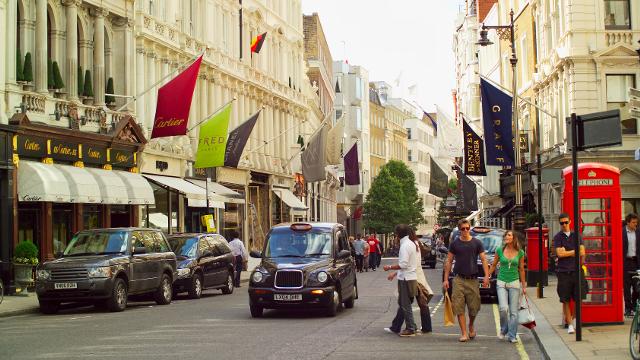
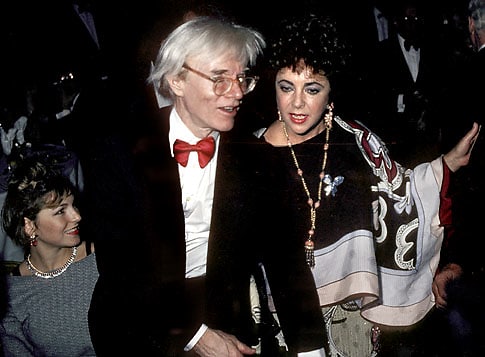
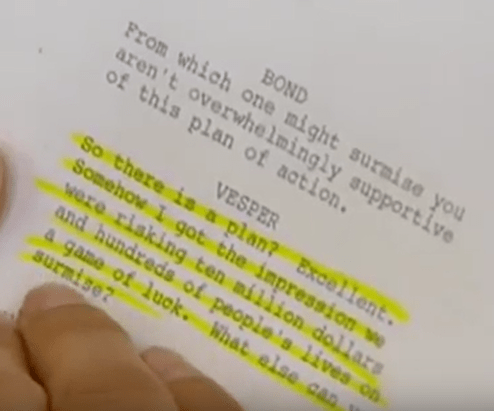
Richard Burton was Ian Fleming’s first choice to play James Bond. Richard married my kin, Dame Elizabeth Rosemond Taylor, whose father ran an art gallery at 35 Bond Street, that was named after Jame’s fictional ancestor. Roger Moor was in a movie with this famous married couple, separately. There is the term ‘Hollywood Royalty’ that is now applicable to Meghan Markle, who was granted a coat of arms. The Bond name is a real name in the Peerage. The sons of Princess Diana ‘England’s Rose’ are assuming real roles in worldly affairs, and thus the time of them being merely figureheads, is coming to an end. What I suggest, is, that James Bond movies and book, can play a big role in making this world a better place to live.
http://www.thepeerage.com/p33432.htm#i334317
_____________________
I awoke this morning from a dream. I was James Bond (somewhat) and I was writing myself a check. It was for an emergency, just incase I got hurt and suffered from memory loss. It would pay for my hospital bill, a hotel room, and dinner at a fine restruant. Is $10,000 enough? How about $50,000? Is the sky the limit?
I did not want to get rid of the idea for a Female Bond. Who would be my model? Who would understand? Who would get behind my cause? Who would not give me all this grief? Then, she came to me. My Savior. My kindred………Elizabeth Rosemond Taylor!
I got up and looked at Richard Burton who is in my family tree. Ian Fleming wanted him to be the first James Bond. I then looked at the paintings and drawings of Augustus John, that Francis Taylor and Liz owned. John had a daughter, Amaryllis, who was the mother of Ian Flaming. Elizabeth Taylor’s father had a art gallery at 35 Old Bond Street that was named after Sir Thomas Bond that is the ancestor of James Bond. Liz and Richard are in the Getty family tree, and we are kin to Talkitha Getty.
Caspar John is in my rosy family tree. He was a Sea Lord, and half-brother of Poppet Pol (John) There is no doubt that Rena’s late husband, Commander Sir Ian Easton, and John, knew each other. Tabitha Getty is Caspar’s second-niece. She was a Bohemian fashion model, and step-mother of John Paul, who was abducted. John is the subject of a movie and television series titled ‘Trust’. Why are these knighted men marrying beautiful American women? May I dare wonder?
Rena was the muse of my late, Christine Rosamond, and I. This is the love story of our time. The children born at the end of the World War were given a special mission. Rena and I were destined to meet – and part – so our spirits can rescue Britain from her enemies. Britannia rules the waves! Like Phoenix Birds…………..We will rise from the ashes?
Sotheby’s is located at 35 Bond Street. Is it on the same building that Francis Taylor had his art gallery? Did Elizabeth Rosemond Taylor ever go into this gallery? Today, there is a statue of Sekhmet above the door. She is The Guardian. She is the Daughter of God Ra!
On this day, May 25, 2018 at 9:00 A.M. PST…….Cleopatra Rosemond Bond…..is born! She will be called ‘Cleo Bond’. Cleopatra ‘Rose of the World’.
I bury Victoria Bond, and dismiss Lara Roozemond as the model of my Bond Woman. However, she might be my model for Cleo’s arch rival.
I FOUND a incredible connection that already existed. It lie there, dead, waiting for The Heir to come along – and resurrect the Rose-Bond Lineage. I am a immortal! I am in the cat-bird-seat. I have been given a blank check – from beyond the grave! There is a great battle brewing on the horizon! I am with ‘The Champions’! When I get my first royalty check, I’m moving to Bond Street. I want to open a Art Gallery on Bond Street, called –
‘The John Gallery’
John Presco
President: Royal Rosamond Press
Copyright 2018
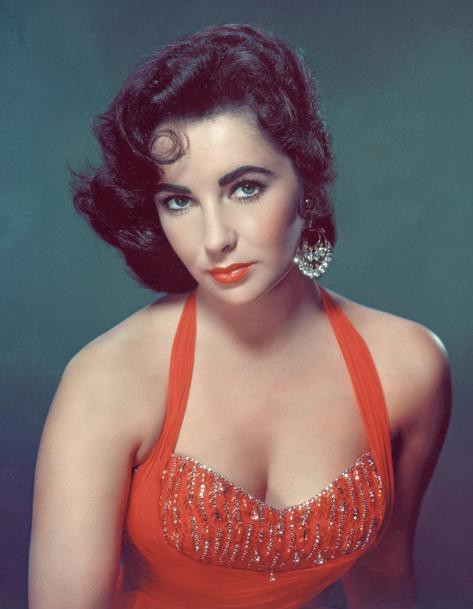
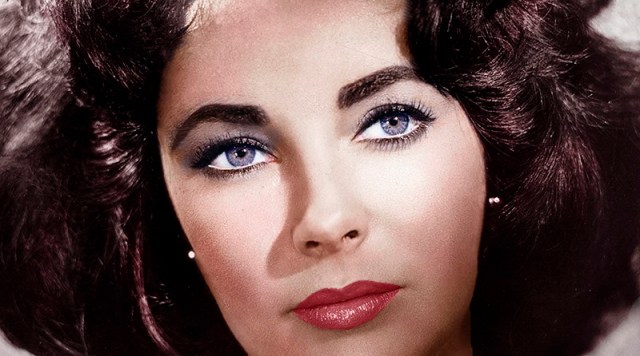


Artist Augustus John auction by Elizabeth Taylor. See Tamara Cohen story.
- Hereinafter cited as The Complete Baronetage.
Marie de la Garde Peliot1
F, #171980, d. circa August 1696
Last Edited=20 Feb 2007
Marie de la Garde Peliot was the daughter of Charles Peliot, Sieur de la Garde.1 She married Sir Thomas Bond, 1st Bt., son of Thomas Bond and Catharine Osbaldeston.1 She died circa August 1696 at Hengrave, Suffolk, EnglandG.1 She was buried on 12 August 1696 at Westminster Abbey, Westminster, London, EnglandG.1 Her will (dated 9 August 1695) was proven (by probate) on 20 August 1696.1
Her married name became Bond.1
Children of Marie de la Garde Peliot and Sir Thomas Bond, 1st Bt.
- Mary Bond+1
- Sir Henry Bond, 2nd Bt.+1 d. bt 22 Aug 1721 – 31 Dec 1721
- Thomas Bond+1
- http://www.thepeerage.com/p17199.htm#i171987Sir Charles Bond, 4th Bt. was born posthumously in December 1734.1 He was the son of Sir Thomas Bond, 3rd Bt. and Dorothea Wynne.1 He died on 22 June 1767 at age 32 at Beaumaris, Anglesey, WalesG, unmarried.1
He succeeded as the 4th Baronet Bond [E., 1658] in December 1734.1
On his death, his death became possibly extinct, or at least, dormant.1
London’s famous Bond Street is revered throughout the world for its wealth of elegant stores, exclusive brands, designer fashion, luxury goods, fine jewels, art and antiques. Set in the heart of historic Mayfair, in London’s popular West End, Bond Street has become a haven for gracious living.
Since its foundation in 1700, Bond Street has been a playground for society’s wealthiest, most stylish and influential people. Past residents of the street have included Admiral Horatio Nelson and Lady Emma Hamilton as well as a number of renowned authors and poets. Today over 300 years on, Bond Street remains a much-loved destination for celebrities, socialites and the international jet set.
Home to some of the world’s most prestigious retailers including Asprey, Bulgari, Burberry, Chanel, Cartier, Dolce Gabbana, Hermès, Jimmy Choo, Louis Vuitton, Mulberry, Ralph Lauren and Tiffany Co. Bond Street offers an unrivalled mix of history, traditional elegance and modern luxury.
Bond Street and its surrounding area boasts a impressive number of Royal Warranties and is home to some of the world’s most individual and unique hotels and restaurants, including Claridge’s and The Ritz, as well fine establishments such as The Royal Academy of Art and the world famous auction house, Sotheby’s.
Elizabeth grew up with an understanding and appreciation for fine art. Her father, Francis Taylor, was an art dealer with a gallery located at 35 Old Bond Street in London. He learned the business under the tutelage of his uncle, Howard Young. After relocating with his family to sunny California during the war, Francis opened an art gallery at the Château Elysée, but quickly relocated it to the more impressive Beverly Hills Hotel. It was at that location that such celebrities as Howard Duff, Vincent Price, James Mason, Alan Ladd, Hedda Hopper, and Greta Garbo could be found selecting art for their own collections. Francis Taylor was also a trendsetter; responsible for the popularity of Augustus John in the United States. Francis, who had a keen eye, asked John if he could buy some of the paintings John had discarded. John felt they weren’t good enough to sell, and gave them to Francis free of charge. They were sold back at the art gallery in the States, where Augustus John paintings would be sold exclusively for many years. Francis would soon find an art connoisseur in his daughter, Elizabeth, who would amass one of the great private collections of Impressionist art in America.
 Rosamond Press
Leave a comment