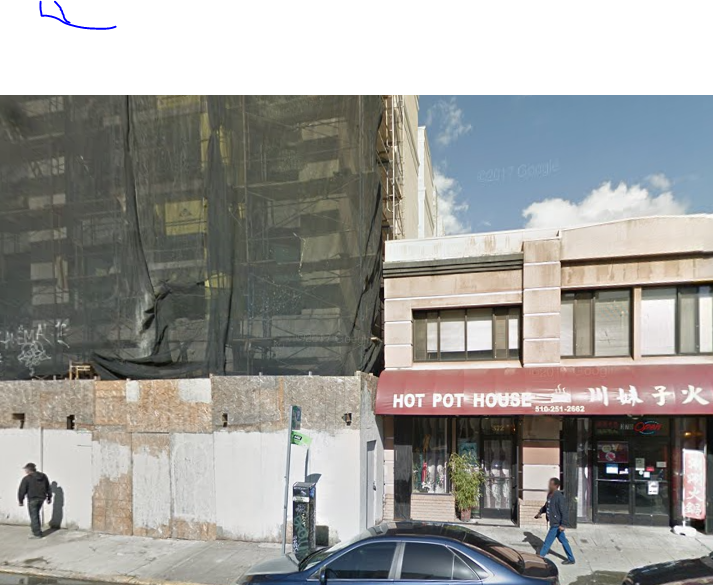
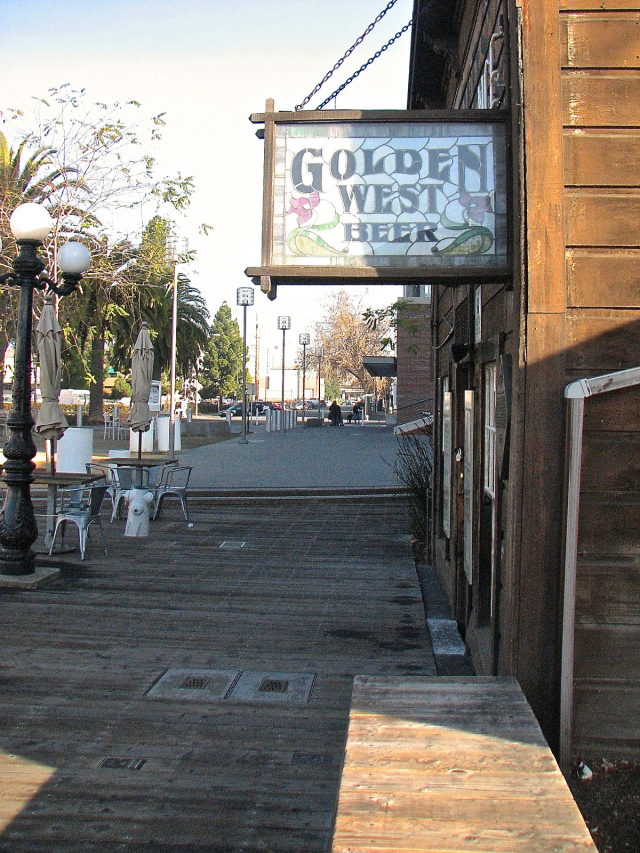


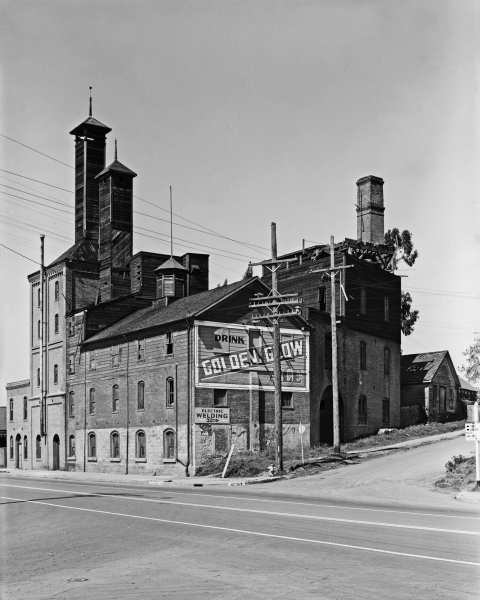
Little Mae was a Modoc, and took me to the Golden West bar on Twelfth street at 6:00 A/M.Mae rescued me. She was the Downtown Mascot. I was in like flint. Her man was…….Bolagard! Here he come in the door wearing his wool overcoat.
I lived at the Will Rogers Hoterl that was renamed the Saint George, which was the hotel I lived in in New York, that was my first home.
John Presco
UNDER CONSTRUCTION
Explore 12th. with this link. I would love to live here, and eat.
Golden West Hotel
The Golden West Hotel opened in 1906 at the northwest corner of 8th and Franklin. It shared the building with the Oakland Tribune from 1906 until 1918 when the Tribune moved into its signature building at 13th and Franklin. The building was demolished in 1957. 1
When constructed, the building was referred to as the New Tribune Building as they were arranging the construction. The timing of its completion was fortunate, as the 1906 earthquake happened and forced numerous businesses and government offices from San Francisco. Within days of the quake, W.R. Grace, a large commercial firm in S.F. opened an office there, 2 as did commissioner W.V. Stafford of the State Bureau of Labor. 3
19081911 Sanborn excerpt1950 Sanborn excerpt
Links and References
Links and References
- Razing of Hotel Stirs Memories Oakland Tribune July 19, 1957 (photos)
- Grace Co. Locates Oakland Tribune April 22, 1906
- Get Work For Unemployed Oakland Tribune April 23, 1906
- San Francisco Blue Book 1907
https://pcad.lib.washington.edu/building/17452/?fbclid=IwY2xjawKsJRxleHRuA2FlbQIxMQBicmlkETFzT1FuUXhyYko1alFod2lVAR6K3Lv5V4bLV6R67HB8KgNRIYHsKd2e0PBX3RWF5FJPVewxnqHJ9S8LUffJfg_aem_tkGicAE8pqd95O-zYWQyFg
Hotel St. George
The Hotel St. George was located at 371-75 Thirteenth Street, Oakland, California, and is currently the site of the Clarion Hotel. The Colonial Revival – Mansard hotel building was designed by Walter J. Mathews, who was the builder as well from 1906-1908. It was constructed in part to house the Winedale Company and initially completed in 1907.
An August 1909 classified for the St. George describes it as “just opened”, 2 though it may have been operating under a different name before that. Ironically, a fire had destroyed the St. George Hotel in San Francisco a few months before.
In 1911, Peter Andrews, a teamster from Contra Costa, fell to his death in the light well. His death was determined to be accidental. 3
It was the Will Rogers Hotel from at least 1944 to 1967. 5,6
Building
This is a six story mansard roofed brick masonry hotel and store building with simple Classical ornamentation, on an interior lot. The facade is four bays wide, in a three part vertical composition with a commercial ground floor base, a three story, stucco surfaced shaft, a one story capital, and a one story attic with a sheet metal mansard roof with four pedimented dormers. Windows are set singly in slightly recessed molded bays. A molded belt course and modillion block cornice articulate the capital. The ground floor storefront has been altered; wood clerestory windows remain on the left side above the entry and lobby window of the residential hotel.
This building was developed by capitalist and wine merchant Charles Jurgens as a “lodging house,” perhaps originally for 1906 earthquake refugees, and also housed Jurgen’s wine business headquarters. The mansard top story, a rarity in Oakland, appears to have been added in 1907-1908. It is an unusual design by Oakland’s prolific and influential early architect Walter J. Mathews. 1
This historic building is #38 on the list of District Contributors for the Downtown Oakland Historic District Registration Form.
Links and References
- National Register of Historic Places Registration Form: Downtown Oakland Historic District
- classified ad Oakland Tribune August 7, 1909
- Coroner Probing Teamster’s Death Oakland Tribune August 22, 1911
- ohrphoto.dpoa4.062 Oakland History Center, Oakland Public Library
- Oakland Directory 1944
- Oakland Directory 1967
From Fairmont to Belmont
Posted on March 5, 2021 by Royal Rosamond Press
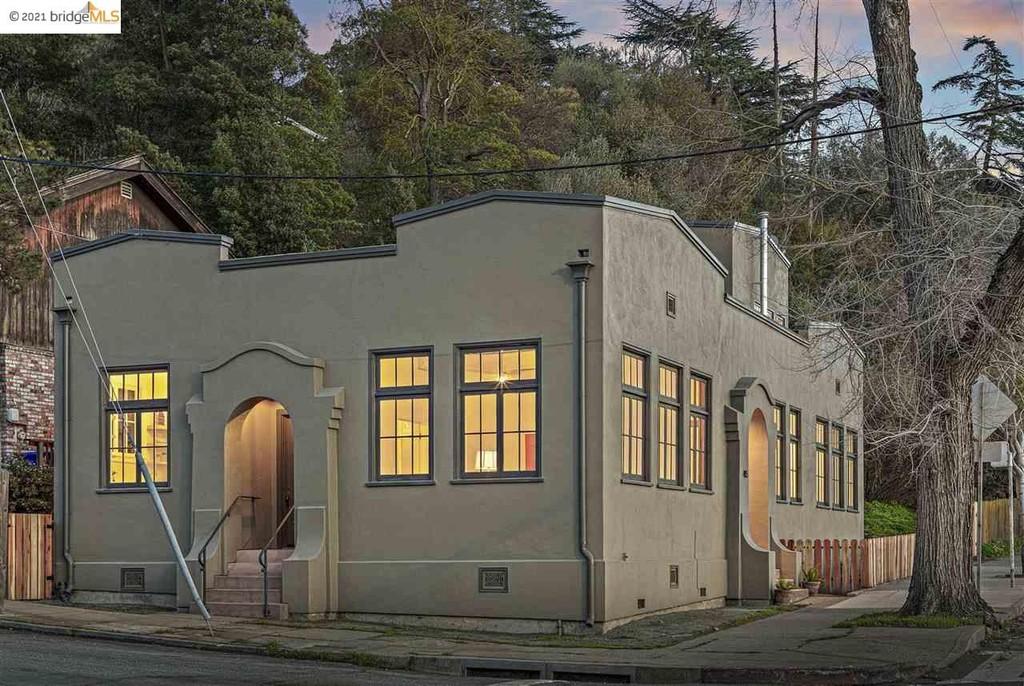
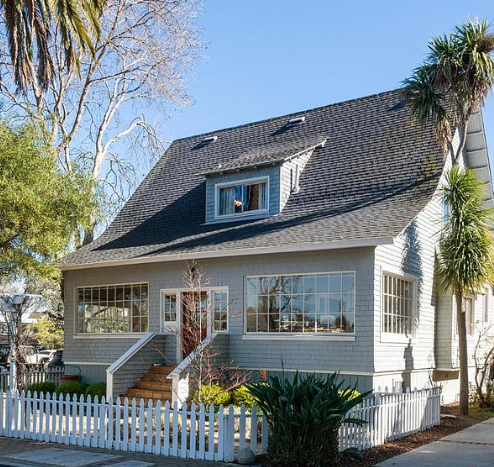

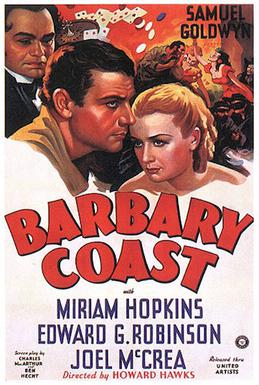


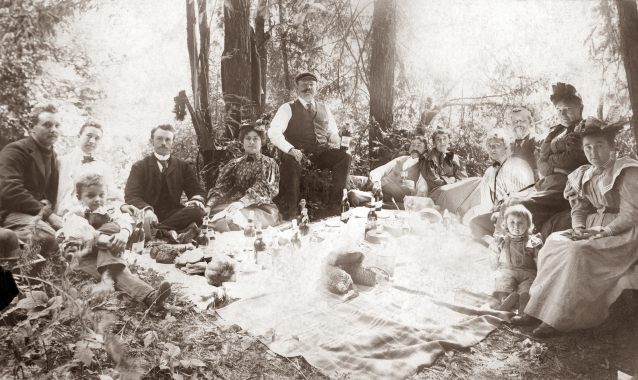

1 / 9
I am now going to put forth a proposal for a film titled
From Fairmont to Belmont
It will be about the history of Bohemianism in Oregon, California, and NewYork. The movie ‘The Barbary Coast’ is from The Bozone. It is the model for my life. It is Victor Hugo Presco marrying Melba Charlotte Broderick the granddaughter of Augustus Janke of Belmont whose father built Belmont, and helped rebuild this famous Bohemian Capitol after the 1906 earthquake. My father’s mother is name after Charlottenburg Palace. The Stuttmeister lived on a street they made, at No.1 Berlin Way. They developed about fifty homes in the town of Fruit Vale, that like Fairmont, was swallowed up. Berlin Way is on my birth certificate. But, what is still blowing my mind, is where Wensel Anton Braskewitz-Prescowitz came from. He was born in Bohemia.
This is why I was anxious to find a backer to buy the old telephone exchange in Crockett. I wanted to live in a gallery-museum. Rosemary told me Victor Hugo gambled in the Barbary Coast of San Francisco. I found an address on Mission Street. Victor Hugo (named after the famous author) worked on Eddy Street. This Raymond Chandler and Norbert Davis. You can’t get any sleazier than this.
There was a sign over a street in San Francisco called ‘The International Settlement’. What went on there far surpasses the Tell-all permission given to Stacey Pierrot and her bevvy of ghost writers (by Robert Buck) one who says Ron Schwary “optioned” the story of our “Rosamond”. Is this true? How do I find out? Maybe Belmont will swing wide their golden gates for Julie Lynch who invented the testimony of Christine’s kindergarten teacher. Does this constitute stalking – and child abuse?
The International Settlement must rise again from the ashes of the plague, or, we are dead! I inherited the Bohemian Blueprint. That no one will fund me – spells DOOM!
“Rosebud!”
Rose Mont
John Presco
Copyright 2021
Victor Hugo Presco a Bohemian | Rosamond Press
The Royal Crockett Gallery | Rosamond Press
La Belle de San Francisco | Rosamond Press
Julie is a writer, producer and director, obsessed with movies that matter.
As a screenwriter, Julie has been commissioned and optioned several times.
Her biopic on the artist Rosamond was optioned by Oscar-winner Ron Schwary (Ordinary People).
Julie’s legal thriller, 27, placed second out of three thousand scripts in the IndieProducer Screenplay Contest. Julie and Vicki Light are producing.
Julie’s romantic thriller, Dark Desire, starring Kelly Lynch (Drugstore Cowboy) and Michael Nouri (Flashdance), was bought by LIFETIME and garnered excellent ratings.
Down For The Count On Eddy Street
Posted on October 2, 2016 by Royal Rosamond Press


My grandfather worked for Max Silver at 186 Eddy Street. He lived at the infamous Thomas Hotel that caught fire and killed 20 people. At 891 Mission Street, elderly folks were jumping out windows on to piles of mattresses the fireman had made in order to save their lives. How many millions of us had visualized doing this – as kids? To do so as abandoned seniors your brats don’t care about, is the height of existentialism.
“To jump, or, not to jump? Is it better to be consumed in the fires of hell, or, survive to suffer the indignation of your daughter and son-in-law not coming to visit you in the hospital, which tells you they wanted you to perish so they can be free of you – alas!”
Victor Hugo Presco jumped from the Roof of Life, and made sure he landed at the Very Bottom of Life. He quit! He was once a house painter, but, knocked that shit off. If he was an artist or a poet, then he would have owned A Life Excuse.
I have been drawn to this man I met, once. That was enough for him. Hugo was not a family man. Had he found the Buddha? Did he get a secret teaching from the owner of a Chinese Laundry on Mission Street? Was he an opium addict? He was a professional gambler. Did Max run a secret card room? There is a movement afoot to rename Eddy Street, that is farcical. One father sends out a warring to stay away from Eddy Street.
Victor Hugo of the Barbary Coast
Posted on May 26, 2016 by Royal Rosamond Press


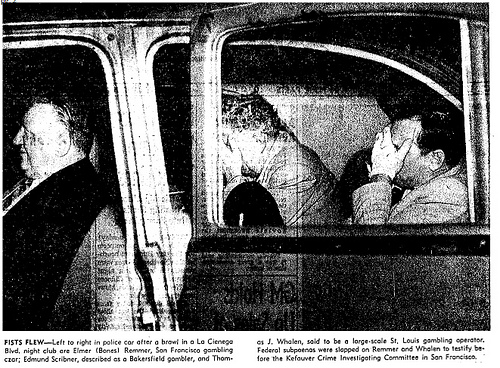
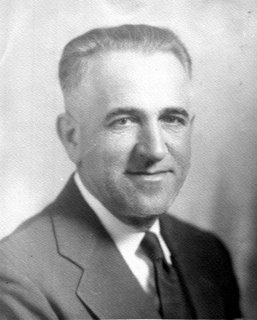
My brother, Mark Presco, described Melba as a ‘Control Freak’. Coming from a master control freak, this is quite an honor. Mark stopped seeing our grandmother, because she put him to work every time he did. That was my experience. Vic was the same way. This is why I almost conclude the Stuttmeisters were Prussian Royalty. Vic and Melba have the look and baring. Hugo could not hang!
Rosemary Rosamond made porno movies for Big Bones Bremmer. Later, she was a high class hooker working out of the Beverly Hills Hotel. Hollywood Stars has seen he infamous movies. Our mother was hardly ever home. I was the family cook. Christine watched me render large canvases in the little studio I built in the back of our home on Glendon.
There are blue-eyed Austrian Jews. I was befriended by one. Hugo had amazing blue eyes. After getting away from the ‘Control Freak’ he moved to the Barbary Coast in San Francisco. When he discovered he was a great poker player, we will never know. He made a living sitting at a table with gamblers. Victor Hugo Presco, was a professional gambler of the Barbary Coast. You can’t get any more Bohemian than this. Did he have a room above the Hippodrome? I would. When evening falls, I would put on my best duds and head for a card room. Who wants to get stuck with a bossy bitch and her spoiled brat – who demand all your attention? Victor Hugo – is my main man! I’m going to hang with his memory – till I die! We would have made great pals. Screw the Hansons!
1849: Badly drawn paintings of nude women adorn the walls of the best cafes in the city. Prostitutes begin to arrive from the east. They are frequently auctioned off from the decks of the arriving ships. Cafe owners often hire them to pose nude in displays in the dining halls. Gambling houses were everywhere. At the El Dorado it was reported that $80,000 once changed hands on the turn of a single card. Liquor and female companionship were often provided free of charge by the house as an incentive to frequent patrons.
This place was the Sin City of the world. It had an international reputation. It made the Capitol of Bohemianism, great. If we were told the truth, then we would know from where the dilemma came that ruined out lives. Melba’s father ran the California Barrel Company and delivered wood barrels to Bootleggers all over America. Rosemary made porno movies for Big Bones Remmer, the only Mafia boss working the West Coast out of Emeryville. Hugo and Rosemary would have gotten along great. Did they ever meet?
Men wanted to get drunk, see naked women, and get laid. There is nothing new under the sun. They also wanted to be bedazzled and entertained. I love the pic of the Bella Union Dance Hall. Looks like an exotic dancer sitting on a crescent moon. Human beings also love to dance. Here is the rebirth of Ancient Rome. Here is the new Hippodrome. Then came Bill Graham and the………..
THE HIPPIEDROME
Then there was the Red Mill, later called ‘The Moulin Rouge’. We Prescos got it covered. The Faux Caretakers have destroyed us. I will sell our True Story to HBO! We will be reborn. We will dance naked again, in the woods with the Woodminster and the Faun. Did Hugo meet any artists?
Captain Gregory
Copyright 2016
http://hoodline.com/2015/04/art-supply-store-artist-craftsman-has-storied-barbary-coast-past


Interior of the Moulin Rouge nightclub in the Barbary Coast, 1911
555 Pacific was such a place, going through multiple iterations of clubs and dance halls. The existing building is pretty much a reconstruction of a saloon that was there before the earthquake, but was known as the Red Mill, later renamed in French to Moulin Rouge in attempts to class up the joint. The exterior was covered in plaster reliefs of satyrs chasing naked wood nymphs. By the late 1930s, the Hippodrome moved into the spot.
http://sf.curbed.com/2013/5/24/10239866/have-a-good-time-at-the-hippodrome-on-terrific-street
BARBARY COAST
Historical Essay

Barbary Coast, 1909.

The Hippodrome by day, c. 1900-1920.
Photos: San Francisco History Center, SF Public Library
1849: Badly drawn paintings of nude women adorn the walls of the best cafes in the city. Prostitutes begin to arrive from the east. They are frequently auctioned off from the decks of the arriving ships. Cafe owners often hire them to pose nude in displays in the dining halls. Gambling houses were everywhere. At the El Dorado it was reported that $80,000 once changed hands on the turn of a single card. Liquor and female companionship were often provided free of charge by the house as an incentive to frequent patrons.
1860-1880: It was in the mid-1860s that the term “Barbary Coast” came into being. It derived its name from its similarity to the notorious Barbary Coast in Africa, and stretched from Montgomery to Stockton along Pacific Street, with branches off into Kearny and Grant Ave. The area had already been cleaned out twice before by the Vigilantes, but once again it began to grow with dives gambling halls, and houses of prostitution. One particularly dangerous block on Pacific between Kearny and Montgomery was known as Terrific Street. A writer in 1876 described the area:
The Barbary Coast is the haunt of the low and the vile of every kind. The petty thief, the house burglar, the tramp, the whore monger, lewd women, cut-throats, murderers, are all found here. Dance halls and concert-saloons, where blear-eyed men and faded women drink vile liquor, smoke offensive tobacco, engage in vulgar conduct, sing obscene songs and say and do everything to heap upon themselves more degradation, are numerous. Low gambling houses, thronged with riot-loving rowdies, in all stages of intoxication, are there. Opium dens, where heathen Chinese and God-forsaken men and women are sprawled in miscellaneous confusion, disgustingly drowsy or completely overcome, are there. Licentiousness, debauchery, pollution, loathsome disease, insanity from dissipation, misery, poverty, wealth, profanity, blasphemy, and death, are there. And Hell, yawning to receive the putrid mass, is there also.
–from Lights and Shades of San Francisco by Benjamin Estelle Lloyd, 1876.
One of the more colorful and memorable characters of the Barbary Coast was a one-time actor whose only name was Oofty Goofty. Oofty Goofty’s great claim to fame was his insensitivity to pain. For many years he made his living along the Barbary Coast by being the willing victim of physical abuse. For ten cents a man might kick Oofty Goofty as hard as he pleased; for a quarter he would let himself be hit with a walking stick; and for fifty cents he would take a blow from a baseball bat.

The Old Hippodrome and Bella Union Dance Halls at 557 Pacific Street between Kearny and Montgomery. Jesse B. Cook on sidewalk, February 1925.
Photo: Jesse Brown Cook collection, online archive of California I0050526A

Hippodrome, early 1930s.
Photo: San Francisco History Center, SF Public Library
Those who escaped the clutches of the crimps and runners trying to shanghaithem frequented the dance halls of the Barbary Coast, where “dancing” with a woman could take any form or degree the patron wished. Those who desired serious drinking could choose from a variety of establishments, the most dangerous of which was The Whale–as tough a bar-room as San Francisco ever boasted. The most famous criminals of the time could frequently be found there, as for the most part, even the police were afraid to enter. Another famous drinking establishment was the Cobweb Palace, run by Abe Warner, a lover of spiders, who let them spin their webs without interference. The webs hung were festooned across the ceiling and down the walls. Liquor was especially cheap at Martin and Horton’s, where one of its most infamous patrons was a shy little man who tended to sit unobtrusively at the back of the room. He was in fact, Black Bart, the highway bandit who held up stages with an unloaded gun and always left behind a bit of poetry signed “Black Bart the PO8.”
The primary industry of the Barbary Coast was prostitution. Three particular types of brothels were to be found: the cow-yard, which served as both apartment building and brothel; the crib, the lowest and most disreputable of the houses; and the parlor house, whose employees were considered the “aristocracy” of San Francisco’s red-light district.
The women who worked in the dives, regardless of their age, were called “pretty waiter girls.” They were usually paid $15 to $25 a week to serve as waitresses, entertainers and prostitutes. For a small fee a man could view any pretty waiter girl free of her clothing. During the 1870s one Mexican fandango den dressed its girls in no more than red jackets, black stockings, garters and slippers. This dress code was abandoned in a few weeks due to overwhelming and uncontrollable crowds.
More often than not the owners of these brothels, regardless of what kind of house they operated, came away with great fortunes. The more frequented parlor houses seemed each to have its own speciality. Madame Bertha, who ran a parlor house located in Sacramento Street, in addition to the usual activities of such an establishment, gave organ recitals on Sunday afternoons to specially invited guests. The prostitutes sang popular songs while Madame Bertha accompanied.
Madame Johanna employed three French girls who gave erotic exhibitions and were known as the Three Lively Fleas. She was also the originator of “direct mail advertising” for brothels, sending pictures of the naked girls to specially procured mailing lists.

Little Egypt on the Barbary Coast, 1890
The bagnio owned by Madame Gabrielle at Geary and Stockton featured a weekly show in which the participants were black men and white women. Frequently a parlor house had its own particular motto which could be found framed in every room. The motto of a California street house was What is Home Without Mother?Each of the parlor houses in Commercial Street boasted a chamber called the “Virgin Room,” where a gullible customer could be accommodated at double or triple the usual price. Usually the room was staffed with a girl young enough, and enough of an actress to simulate fright and bewilderment. She was usually paid slightly more than the other prostitutes.

The Hippodrome in 1890; Photo: San Francisco History Center, SF Public Library
A frequent patron of these house was San Francisco’s most notorious murderer of the time, Theodore Durrant. When not frequenting prostitutes or murdering them, Durrant spent his time as a medical student and an assistant superintendent of Sunday school, prominent in the work of the Christian Endeavor Society. His modus operandi was to bring a small bird to the parlor house and at some time during the evening slit its throat and let the blood drip over his body.In the cribs and cow-yards, customers were not permitted to remove their shoes, or often any garments at all–except for their hats. Only a specific kind of crib, called a “creep joint” permitted the removal of clothing, and the reason for that was in order that an accomplice could steal all his money and valuables. It was, however, customary to leave a shiny new dime in the customer’s pocket. The origin of the custom is unknown–perhaps it was left as car-fare.
Cribs were located throughout the Barbary Coast, but black and Hispanic establishments were concentrated on Broadway between Grant and Stockton. The French houses could be found primarily in Commercial Street.
1900: Three blocks of dance halls with the loudest possible music blasting forth from orchestras, steam pianos and gramophones in such establishments as The Living Flea, The Sign of the Red Rooster, Ye Olde Whore Shop. Extended from the foot of Telegraph Hill to the shoreline, largely along Pacific Street and Broadway. The Dew Drop Inn, Canterbury Hall and Opera Comique all specialize in erotica of a high order. Dead Man’s Alley, Murder Point and Bull Run form a secret network of tunnels through which people as well as booty were smuggled. The area takes in Chinatown, and Asians are often blamed for this blight on the city.
The San Francisco Examiner, the newspaper owned by William Randolph Hearst, is nicknamed The Whore’s Daily Guide and Handy Compendium due to the thinly disguised ads for prostitutes in the classified section.
Dancers at Spider Kelly’s on the Barbary Coast, 1911.
Photo: San Francisco History Center, SF Public Library
The worst of cribs were to be found on Morton Street (now ironically enough called Maiden Lane). The most notorious was the Nymphia on Pacific Street, the Marsicania on Dupont Street (Grant Ave.), and the Municipal Brothel on Jackson Street near Kearny. On a slow night the pimps might sell the privilege of touching a prostitute’s breasts for the fee of ten cents. On a good night a prostitute might service as many as a hundred men.
The Nymphia, a three-story building with about a hundred and fifty cubicles on each floor, was erected in 1899. The intention of the owners was to name the place the Hotel Nymphomania and to stock it with women suffering from that condition. When the police refused to permit that name, the owners compromised, calling it the Nymphia. Each female resident was required to remain naked at all times and was obliged to entertain any man who called. For a dime a customer would view the activities in any room through a narrow slit in the door. The place was first raided by police in 1900 and after several legal battles, finally closed down in 1903.
The San Francisco Call described the Marsicania as “one of the vilest dens ever operated in San Francisco.” Its population was about 100 prostitutes, each of whom paid $5 a night rental cost. It was opened in 1902 and enjoyed a period of prosperity when the police were legally restrained from blockading or entering the premises except under extreme emergencies. This decision was overturned in 1905 and the Marsicania was forced to close.
On Jackson Street the Municipal Brothel or the Municipal Crib was called so due to the fact that most of its profits went into the pockets of city officials and prominent politicians. It was build in 1904 on the site of the underground Chinese tenement known as the Devil’s Kitchen, or (with great sarcasm) the Palace Hotel. The women were graded by floors with the Mexican prostitutes in the basement, and the black women on the fourth floor. In between a variety of nationalities were represented. The Municipal Crib was protected from police raids until the prosecution of formerMayor Eugene Schmitz and Abe Ruef, who had received regular payments from the profits.
When it was at last closed in 1907, the Municipal Crib was the last significant cow-yard to operate in San Francisco. For all intents and purposes the flesh-pits that were the Barbary Coast were wiped off the face of the map by the great earthquake and fire of 1906.
The opium dives, slave-dens, cowyards, parlorhouses, cribs, deadfalls, dance-halls, bar-rooms, melodeons and concert saloons were all turned to ash. The destruction of Sodom and Gomorrah, it was called by the clergymen. The day following the great fire, men lined up for blocks in order to patronize the brothels of Oakland. The slave-trade of Chinatown came to an end and the opium dens were never rebuilt. But the entrepeneurs of the Barbary Coast were determined to rebuild the quarter upon the ruins of the old. By 1907 it was once again in full operation.
While the city of San Francisco officially disdained the goings-on of the Barbary Coast, it took a secret pride in this area widely proclaimed as the wickedest town in the U.S.A. After the great earthquake and fire, the Barbary Coast became more of a tourist attraction than its predecessor. Such luminaries as Sarah Bernhardt and ballet dancer Anna Pavlova were known to frequent the area. British poet John Masefield is to have said immediately after disembarking, “Take me to see the Barbary Coast.” Dance-floors and variety shows designed to shock the tourists replaced prostitution as the chief business. Indeed, many of the dance crazes that swept America during this period were originated in this section of San Francisco: the turkey trot; the bunny hug; the chicken glide; the Texas Tommy, the pony prance, the grizzly bear, and other varieties of semi-acrobatic dancing. Among the many dance halls on the Barbary Coast, the Thalia, on Pacific between Kearny and Montgomery, remained the most popular. It usually featured a “Salome dancer” or strip-tease artist.
The number of women working on the Barbary Coast during this period ranged from 800 to 3,000. They were paid from $12 to $20 a week to dance and drink with the customers and to appear on stage in ensemble choruses. Many engaged in prostitution but usually in their after hours. Their dress was described as “of the cheapest fabric, many of them torn and stained, none reaching below the knees, and here and there hooks missing and bodices yawning in the back, but always the silk stocking as the inevitable mark of caste.” [San Francisco Call, 1911] Often the girls were barely in their teens, and the dance-halls frequently served as recruiting agents for the brothels.
Barbary Coast after the ’06 quake
The first dive to open after the earthquake, and perhaps the most notorious establishment on the Barbary Coast of the post-earthquake period, was the Seattle Saloon and Dance Hall, in Pacific St. near Kearny. The women employed there were paid from $15 to $20 a week, and following the custom of an earlier deadfall, they were forbidden from wearing underwear. Advertisements of this feature were discretely passed around the saloons of the city. The women were also paid a slight percentage of the drinks they sold and entitled to half of whatever they might pick from the pockets of their dance partners. (The proprietors often complained that the girls were dishonest in reporting the true amounts they had stolen.) But the women of the Seattle soon developed another source of income by supposedly selling their house keys to drunken patrons who would pay from $1 to $5 each for a key. The keys of course were bogus, and the police soon put an end to this practice after receiving numerous complaints from homeowners about drunken men searching hopelessly in the middle of the night for locks their keys might open.
When the Seattle was sold in 1908, its name was changed to the Dash. The waitresses were replaced by male cross-dressers who for $1 would perform whatever sex act was requested. It was soon revealed that the new managers were two officers of the Superior Court under Judge Carroll Cook. The place was closed six months after it had opened.
1910-1920: In 1911 the Board of Health established a Municipal Clinic which compelled every prostitute to submit to examination and necessary treatment for disease. Prostitutes were required to carry a booklet listing her record of medical examinations, and no woman was permitted inside a brothel without a medical certificate. The Clinic existed for only two years, but in that time reduced venereal disease in the red-light district by 66 percent. The Clinic was fought bitterly by nearly every clergyman in the city. Mayor James Rolph, Jr., who had gone on record as supporting the work of the clinic, eventually succumbed to the political pressure brought to bear by the clergymen and ordered police protection withdrawn from the clinic. Soon afterward the Clinic closed its doors and diseases once again raged unhindered throughout the red-light district.
The defeat of the Union Labor Party in 1911 marked the beginning of the end of the Barbary Coast. Gone was the general feeling of Gold Rush days that San Francisco must remain a “wide-open” city. In 1912 the new Police Commissioner Jesse B. Cook launched a direct attack on the Barbary Coast publishing his plans in the newspapers:
1) All dance-halls and resorts patronized by women in Montgomery Avenue (now Columbus) west of Kearny Street and on both sides of Kearny Street to be abolished.
2) Barkers in front of the dance-halls in Pacific Street to be done away with and glaring electric signs forbidden.
3) No new saloon licenses to be issued until the number had been reduced to 1500 which was to be the limit in future.
4) Raids to be made against the blind pigs.
In February of 1913 another resolution was adopted:
Resolved, That no female shall be employed to sell or solicit the sale of liquor in any premises where liquor is sold at retail to which female visitors or patrons are allowed admittance. The enforcement of this resolution proved completely futile, but it did send out the message that the Barbary Coast of old was not to be tolerated.
But it was the San Francisco Examiner under the leadership of William Randolph Hearst which led the crusade that eventually brought down the Coast. Many churches and welfare organizations promptly jumped on the Examiner’s bandwagon, and on September 22, 1913, the Police Commission adopted the following resolution:
Resolved, That after September 30, 1913, no dancing shall be permitted in any cafe, restaurant, or saloon where liquor is sold within the district bounded on the north and east by the Bay, on the south by Clay street, and on the west by Stockton Street. Further Resolved, That no women patrons or women employees shall be permitted in any saloon in the said district. Further Resolved, That no license shall hereafter be renewed upon Pacific Street between Kearny and Sansome Streets, excepting for a straight saloon.
In September of 1913 the Thalia displayed the following sign:
THIS IS A CLEAN PLACE FOR CLEAN PEOPLE — NO MINORS ALLOWED.
This sign perhaps more than any other signalled the end of the Barbary Coast. Even the most notorious of the dance halls now had trouble attracting enough customers to stay in business.

The Thalia Dance Hall at 732 Pacific Street, with Jesse B. Cook on sidewalk, February 1925.
Photo: Jesse Brown Cook collection, online archive of California I0050528A
In 1914 the Red-Light Abatement Act gave the city authorities the right to impose civil court actions against any property used for purposes of prostitution. Also during this same time a young Methodist clergyman, Reverend Paul Smith, took it upon himself to launch a tireless campaign against whatever sin and vice yet remained on the Barbary Coast. (It was reported that his sermons were so provocative that prostitutes flocked to the vicinity of his church after the services, where they found eagerly aroused customers). Rev. Smith’s campaign against immorality came to a head on a January morning when more than 300 prostitutes dressed and perfumed in their finest marched to the Central Methodist Church to confront the minister. When admitted to the church they posed the question, “How are we to make a living when all the brothels have closed?” The Rev. is said to have replied that he would work tirelessly to establish a minimum-wage law and would assist the women in finding new employment. He claimed that a virtuous woman with children could live on $10 a week. “That’s why there’s prostitution!” came the reply, at which point the ensemble left the church in disgust.

January 25, 1917, three hundred prostitutes march to Central Methodist Church to protest anti-prostitution campaigning by Rev. Paul Smith.
In 1917 the Supreme Court rendered its final decision on the Red-Light Abatement Act. Dancing was now prohibited in all cafes and restaurants anywhere in the vicinity bordered by Larkin, O’Farrell, Mason and Market; all private booths were removed in establishments where liquor was sold; and unescorted women were to be ejected from such premises. These regulations effectively closed down such notorious Barbary Coast establishments as the Black Cat, the Panama, the Pup, Stack’s, Maxim’s, the Portola, the Louvre, the Odeon and the Bucket of Blood.
1920s: In one final gasp at life, the Barbary Coast recalling its former glory as the most notorious section of San Francisco, once again attempted to resurrect itself in 1921. The Neptune, Palace, Elko and Olympia again opened their doors, selling near beer and featuring a few dancing girls. But the watchful eye of Mrs. W. B. Hamilton, Chairman of the Clubwomen’s Vigilante Committee, soon saw to it these newly opened dens of iniquity were not to be endured. She reported to the newspapers, “I have visited dancing places in Honolulu, Tahiti and various islands of the South Pacific, but I saw nothing in those places more obscene and morally degrading than I saw in the Neptune Palace.” The police took immediate action and the Barbary Coast was at last closed down for all time.

Patrons in the Hippodrome, 1934.
Photo: San Francisco History Center, SF Public Library
1940s: U.S. military insists on shutting down brothels and bars around the city as tens of thousands of soldiers pour through San Francisco en route to and from the Pacific Theatre of War.
1950s: Mayor George Christopher appoints a beat cop as police chief and Chief Ahern instigates a crackdown on police corruption and vice tolerance.

Pacific Avenue looking west between Montgomery and Kearny, November, 1953.
Photo: Charles Ruiz collection

The Old “International Settlement” sign at Kearny and Pacific just before its final removal, June 6, 1957.
Photo: Bancroft Library
1960s: Carol Doda takes off her top at the Condor Club at Broadway and Columbus. She becomes a big celebrity and contributes mightily to San Francisco’s now-restored reputation as a town where anything goes.
1970s: Pornography industry gets a big boost by the entry of two Bay Area brothers, the infamous Mitchell Brothers. Their first feature porn film, Behind the Green Door, brings hardcore pornography into wide circulation. Their club on O’Farrellendures hundreds of raids by SFPD Vice officers, but is never shut down. “Lap Dancing” and other forms of nude entertainment are accepted in the City.
Living At The Moose Club
Posted on February 23, 2020 by Royal Rosamond Press
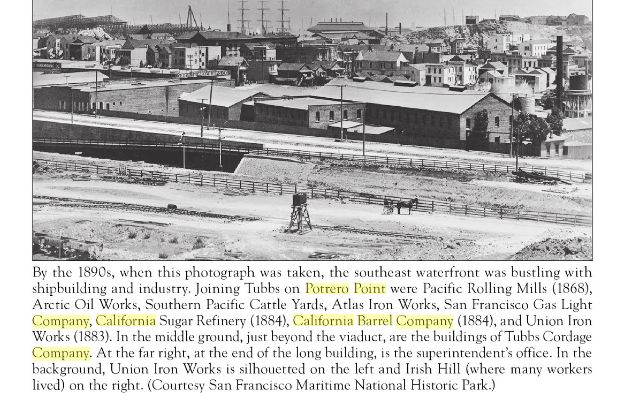
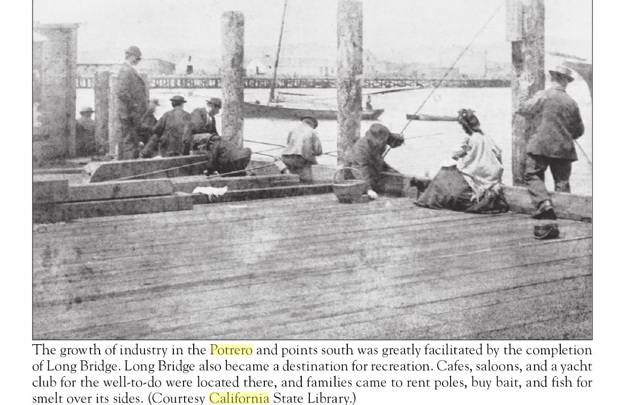

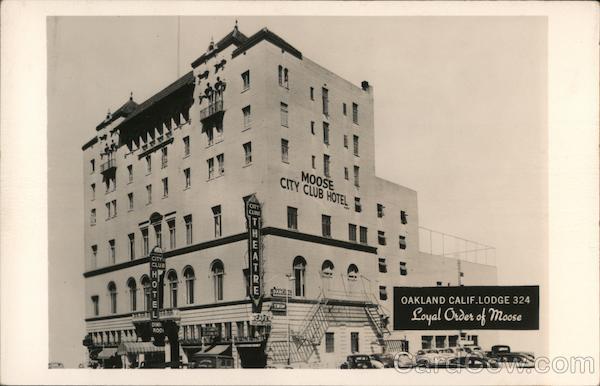

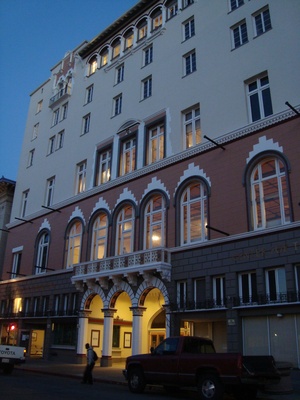


The Moose Club
At the end of my first session with my woman therapist, I almost asked;
“Have you seen ‘The Sopranos’? They are fictional characters. The Prescos are-were, for real. I’m the last man standing.
Alas with the discovery of ‘The Artist’s Tea Room’ scow, I got my McGuffin. Everything I write, everything I do, is going to come out of there.
When Rosemary stabbed Vic between the eyes, and drove him from our home, he moved into a crash pad on Ashby and Telegraph with his best friend, Pat Burns. Captain Vic took us there. Everyone was hung over. Someone had done a painting on the window shade. There were poker chips on a table. We picked up the deck of cards, and looked at The Nudies. I am sure Vic and his Bohemian Brotherhood, were smoking weed. This is 1959. Instead of our father helping us with our pubescence, our coming of age, we are drafted in the struggle to give Vic a second chance, another childhood. Maybe this time he will get it right. When he did not pay a dime of childhood, our mother cut him off. She forbad him to see his children again. That ban, is legend!
When Pops came to visit me at Peter Shapiro’s house, he spotted a piano and sat down.
“Can you teach me to play the piano? I always want to play?”
There was a set of drums that Big Kid got behind, and he picked up the sticks. Peter and I lived together with The Loading Zone in a large Victorian in downtown Oakland. Vic got himself a crash-pad on Alice Street with Dirty-DeeDee who was the craziest woman I ever met – after Laurie Landis. On Alice, I got a Royal Flush in Spades while playing with bad dudes connected to the Mexican Mafia. Vic loved this place. Everyone got it, what this place was: This was the home of Wolf Larsen. Go down Alice street seven blocks and you are in the heart of Jack London Square. Directly across the bay is Dogpatch, where the California Barrel Company was located. Vic’s grandfather was an executor at this company.
The Moose Club is next door to Captain Larsen’s pad. I lived at the Moose when I had to get away from bad-ass Laurie, who one morning, early, climbed the fir escape six floors…to take me out for a drink. It was 5:00 A.M.
I made a point to keep Vic and Laurie, apart. I wish I had taken Rena to meet my Old Man of the Sea, and then, walked out of his life – forever…..A Man?
Six months ago I talked with an attorney about a guy connected to Meg Whitman using my copyrighted name California Barrell Company that is now associated with Crocket’s floating bordellos. This company is real Bay Area History that needs to be preserved. We got chase out of San Francisco by a famous Earthquake and Fire. We co-founded Fruit Vale, that was consumed by the City of Oakland.
John Presco
Copyright 2020
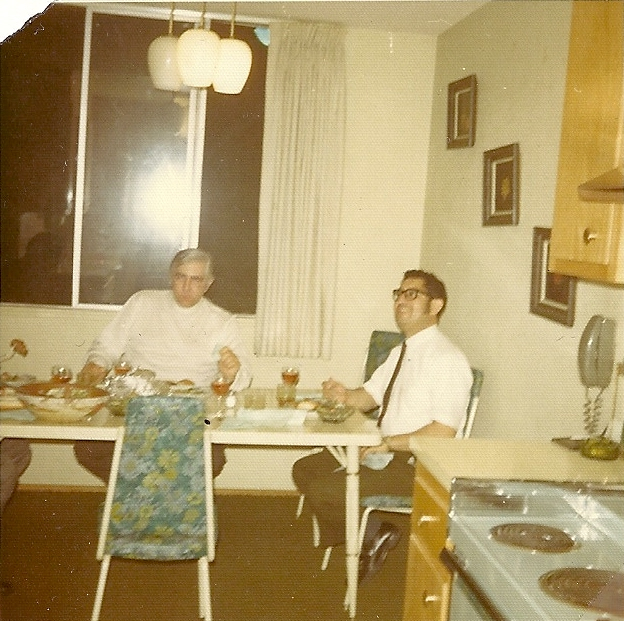
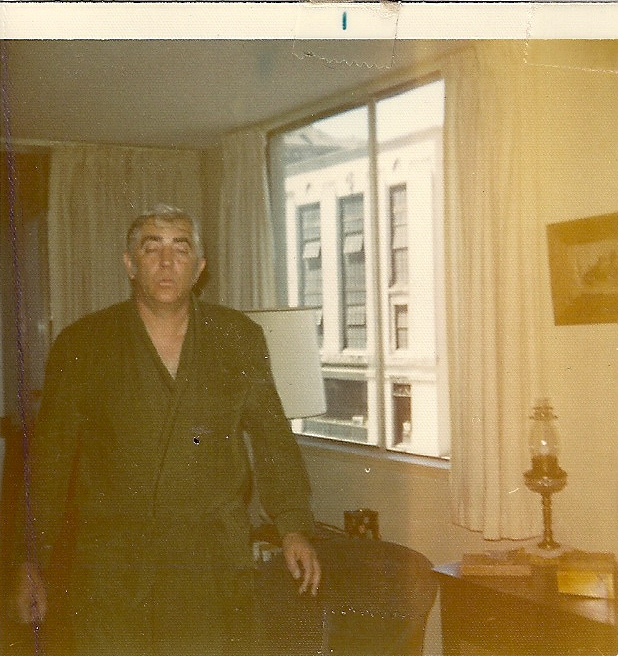
My father, Vic Presco, told me Garth Benton’s father served time in the Fed lock-up for making a False Deed of Trust. Two weeks after Christine drowned, Stacey Pierrot told me on the phone Garth’s father was coming into the Rosamond gallery, and, making her nervous. Before the funeral, Vicki Presco told me Garth was in a lot of trouble. Garth and his buddy, Lawrence Chazen, tried to become the Executor of my sister’s estate. The Benton divorce was just finalized. Chazen got his antique furniture back after he filed a lein. Christine filed Bankruptcy. The Benton’s were on file as the owner of Vic’s house in Lafayette that he claimed he owned. He built a large addition to house his fiancé and her six kids that was going to smuggle across the border in a marijaha shipment.
I told this guy that met Chazen at an foreclosure auction, that my father met him at the Copper Penny bar&grill where all the Realtor’s hangout. If you have a California Real Estate license, you can make Home Loans. How are the recorded? Can you stay under the radar? You could keep track of home owners in trouble, right there in the bar! Chazen and his Team makes high interest loans, then, wait for the new owner to default, and run the scam again, and again. Then, you bundle these loans up and sell them overseas to big European banks. MELTDOWN!
Oakland, Fairmont, and Harris
Posted on August 14, 2020 by Royal Rosamond Press

Kamala Harris is for Oregon and we are for Kamala.
I was born and raised in Oakland and took part in this cities redevelopment.
The Promoter of Fairmont
Posted on February 4, 2019by Royal Rosamond Press
The Lost Promoter of Fairmount
March 17, 2014


George Melvin Miller was titled ‘The Prophet of Lane County’. Lane County was named after Joseph Lane who ran with John Breckenridge for the White House. John is my kindred via John Preston who is kin to Jessie Benton Fremont who authored her husband’s journal about his expedition into the Oregon Territory.
 Rosamond Press


Leave a comment